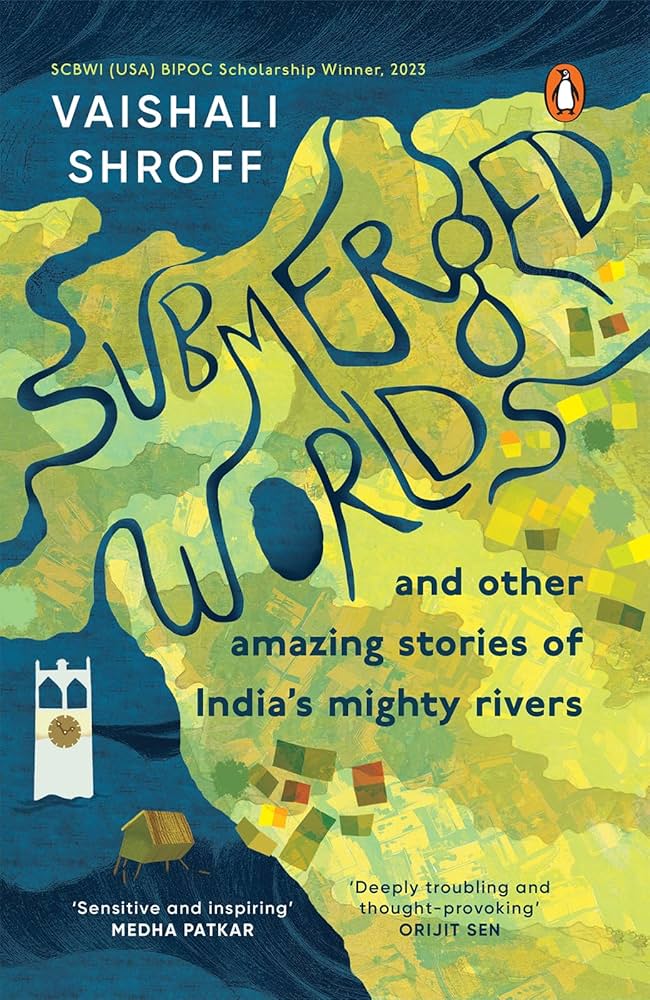
“All rivers are living entities. The job of any river is to flow. And it flows in a most systematic and sophisticated manner. As it flows, it nurtures everything around it, everything within it. A flowing river, whether it’s gurgling, bubbling and frothing on rocks and cobbled valleys or silently meandering along its course on the plains, is a happy and healthy river. Like a lap of a mother, the river allows many living beings to make a home and live together…” These introductory lines from the recently published book “Submerged Worlds and Amazing Stories of India’s Mighty Rivers” highlights the significance of a free-flowing river.
Continue reading “Book Review: Submerged Worlds & Amazing Stories of India’s Mighty Rivers”Tag: Sand Mining
Yamuna Manthan 100425: Blasting at Lakhwar Dam Shaking Hills, Damaging River
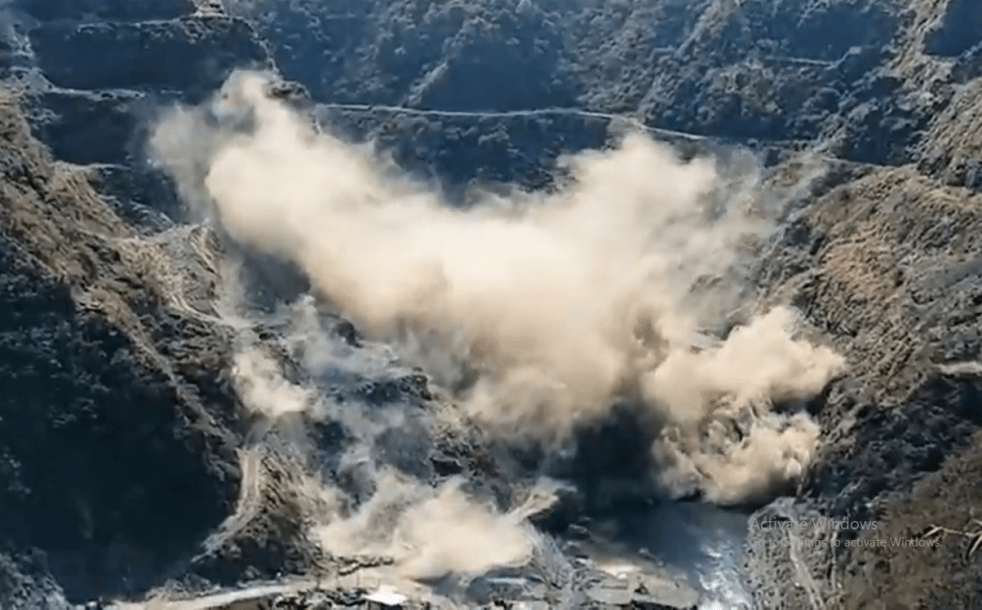
Feature Image: Screen grab of social media video shows scale of impact of heavy blasting work at Lakhwar dam on 07 April 2025)
A viral social media video media shows the frightened impact of a huge scale blasting work done for building the main structure of controversial Lakhawar dam on Yamuna river in Dehradun district, Uttarakhand. As per the locals, the blast took place in the morning hours of April 07, 2025, and caused shaking of hills to a large extent apart from blocking the flowing course of river with enormous debris for several hours forcing the project authority to employ heavy machines to clear the blockage.
The social media post shared with the video mentioned that the heavy blast scared the birds in the area and questioned how the company was allowed to destroy the entire hill environment. The heavy blast has indeed created havoc for the aquatic life in the river and downstream projects.
Continue reading “Yamuna Manthan 100425: Blasting at Lakhwar Dam Shaking Hills, Damaging River”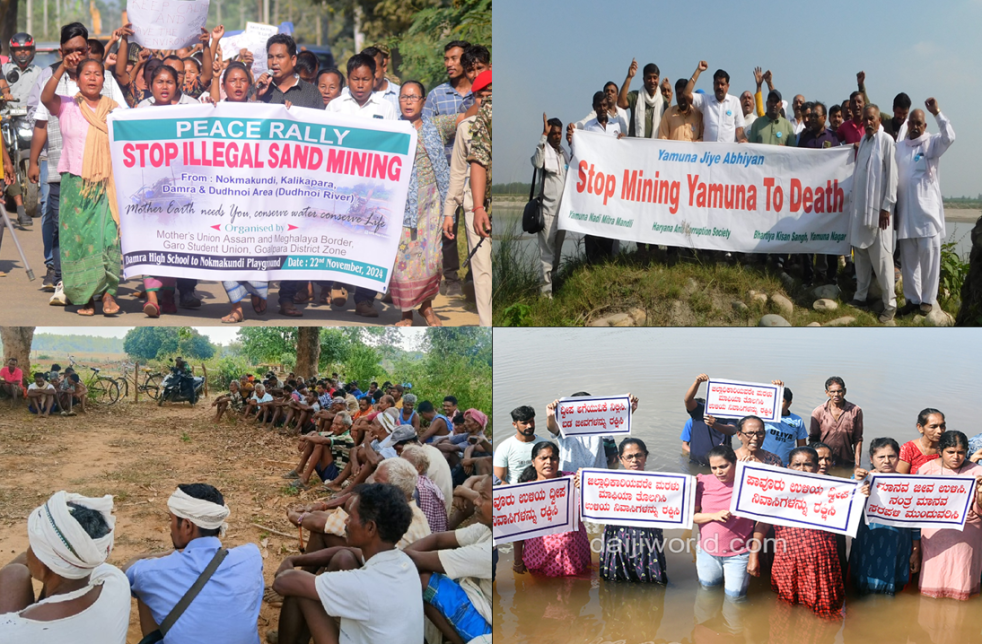
Indian People’s Fight Against Destructive Riverbed Mining
Since 1997, March 14 has been observed as an International Day of Action for Rivers across the world. This year the 29th event on the topic will be celebrated with the theme ‘Our Rivers, Our Future’. Marking the day, SANDRP through this account highlights the exemplary work being done by activists and organizations in protecting the rivers from destructive riverbed mining practices in India.
Continue reading “Indian People’s Fight Against Destructive Riverbed Mining”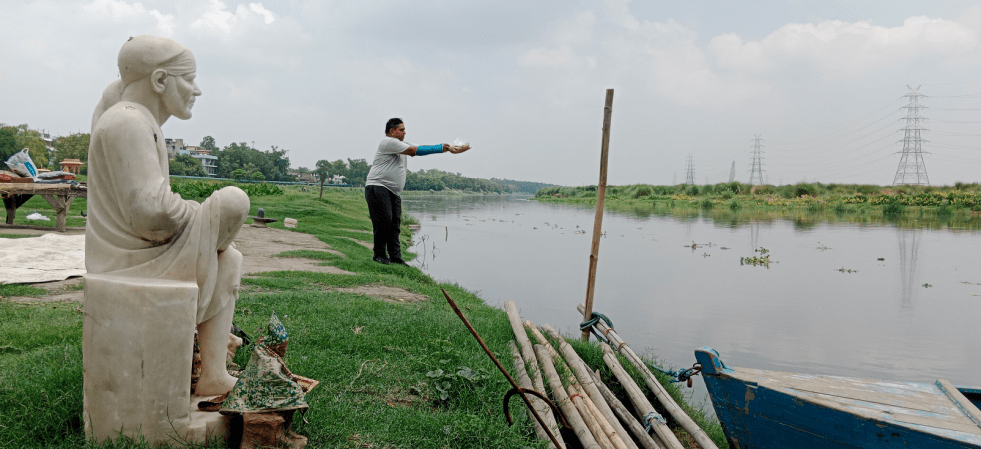
दिल्ली में नई सरकार: क्या अब निर्मल होगी यमुना?
दिल्ली विधानसभा चुनाव प्रचार के दौरान यमुना नदी प्रदूषण एक महत्वपूर्ण राजनितिक मुद्दा बना। चुनाव जीतने के बाद स्वयं प्रधानमंत्री और भाजपा पार्टी के वरिष्ठ नेताओं ने ‘आप’ सरकार की हार के लिए यमुना की दुर्दशा को एक प्रमुख कारण बताया। साथ में यमुना को साफ करने की बात कही। ऐसे में क्या दिल्ली के नागरिक एक स्वच्छ बहती नदी की उम्मीद रख सकते हैं?
Continue reading “दिल्ली में नई सरकार: क्या अब निर्मल होगी यमुना?”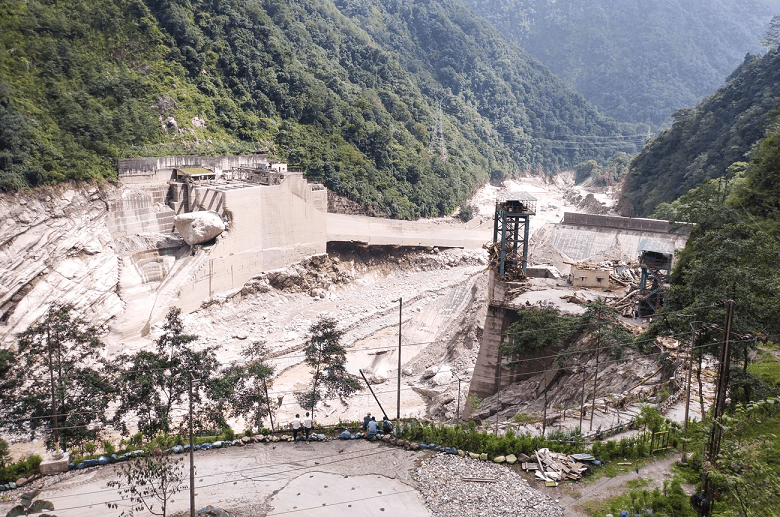
DRP 100225: EAC & MoEF’s shocking decision to clear Teesta 3 Dam raises a stir
(Feature Image: Teesta III HEP dam was washed away on the intervening night of Oct. 3-4, 2023 on account of a GLOF. The flood in the downstream was magnified by the dam disaster. Photo: Mayalmit Lepcha/Source: Sanctuary Nature Foundation)
The decision of Union Ministry of Environment and Forests (MoEF)’s Expert Appraisal Committee (EAC) on River Valley Projects on Jan 10 2025 has understandably raised a stir and earlier the EAC and MoEF reviews and reverses this decision, better it will be. The decision is shocking on a number of counts. The EAC itself had raised a number of issues related to the project in its earlier meeting, but decided to clear the project without getting satisfactory resolution of the issues.
Continue reading “DRP 100225: EAC & MoEF’s shocking decision to clear Teesta 3 Dam raises a stir”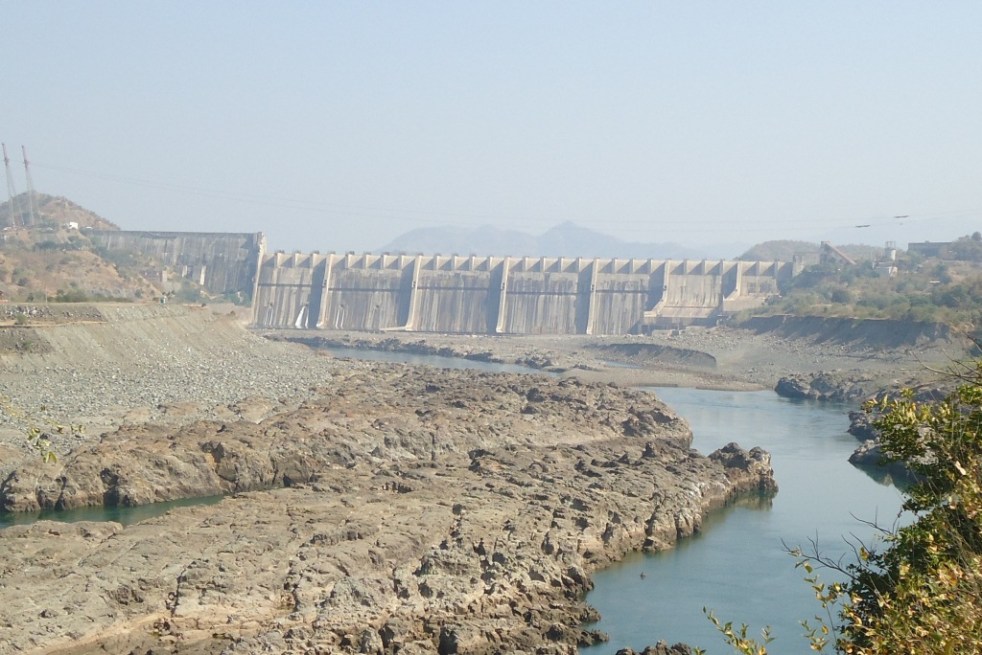
DRP 030225: Water Anarchy in Gujarat in Narmada water allocation?
A report this week quotes a Govt of Gujarat (GOG) insider saying that GOG is giving 16.7% of SSP (Sardar Sarovar Project) water for industries (with more in pipeline) against planned allocation of just 2% (0.2 Million Acre Feet or MAF). Similarly, against planned allocation of zero for Urban areas in Ahmedabad, Gandhinagar, Vadodara, Kheda and Bharuch, most large urban areas are getting Narmada water. However, the insider says, the area irrigated by the SSP is only 33% of the targeted area, with largest water quantities going to already irrigated central Gujarat. Similarly, with the Narmada Water Disputes Tribunal (NWDT) asked Gujarat to provide water for the SSP Downstream areas from its allocated share, but Gujarat keeps claiming it has no water for this and asks other states to provide water for the downstream areas from common pool. It seems the worst fears of the project critiques are coming true. The insider has in fact characterized this state of affairs as water anarchy in Gujarat.
Continue reading “DRP 030225: Water Anarchy in Gujarat in Narmada water allocation?”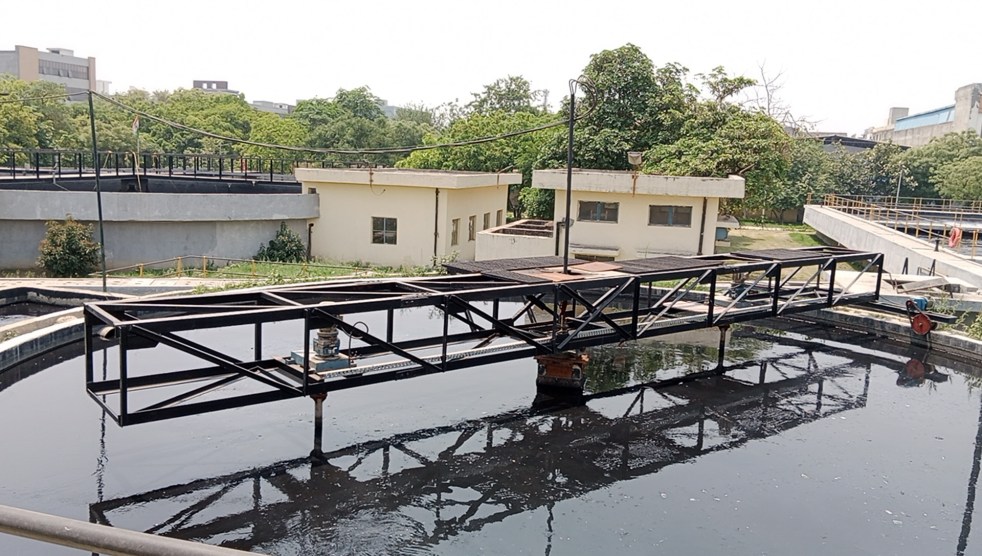
DRP 270125: India’s non-functional Sewage Treatment Plants
(Feature Image: 10 MLD Kundli CETP in Sonipat. BS Rawat/SANDRP/May 2023)
A detailed report in this week’s DRP News Bulletin below shows how India’s Sewage Treatment Plants (STPs), Govt’s main weapon against pollution of rivers in Urban areas, have been a failure for decades. It is pertinent to note that this is the golden jubilee year of Water Pollution Control Act of 1974, that led to the formation of Central, state Pollution Control Boards, and the whole water pollution control bureaucracy, institutions and legal architecture. There should be little doubt that whole architecture has abysmally failed in achieving basic objective for which it was created, including ensuring proper treatment of urban sewage.
India has spent thousands of crores of rupees on these STPs, mostly, mega, centralized projects. But there has been little effort to address governance of the STPs, to ensure that they function as required and provide the results that they have been set up for. Whether they function or not, qualitatively or quantitatively, year after year and decades after decades, there are no consequences! In fact, if treated properly, sewage can become a asset rather than nuisance that it now is. The Judiciary too, right up to the apex court, have badly failed in achieving any improvement in this eminently justiciable issue.
Continue reading “DRP 270125: India’s non-functional Sewage Treatment Plants”
DRP 200125: Whither Env Clearance Rejection rate from Expert Appraisal Committee or MoEF?
A detailed review of functioning of Union Ministry of Environment and Forests’ (MoEF) Expert Appraisal Committee (EAC) on River Valley Projects (RVP) for 2024 by SANDRP shows that the committee or for that matter MoEF has almost non-existent rejection rate. Even when a project is not cleared, when it applies again, it gets clearance, whether the application if for stage I (Terms of Reference) or Stage II (Environment Clearance- EC) clearance. Even in some cases like Pump Storage Projects (PSP) in Western Ghats or the Hydropower projects in disaster prone Himalayas, including the disaster-stricken projects like the 1200 MW Teesta III projects in Sikkim, the scrutiny including field visits by the EAC Sub committees is minimal, not worthy calling even scrutiny.
Continue reading “DRP 200125: Whither Env Clearance Rejection rate from Expert Appraisal Committee or MoEF?”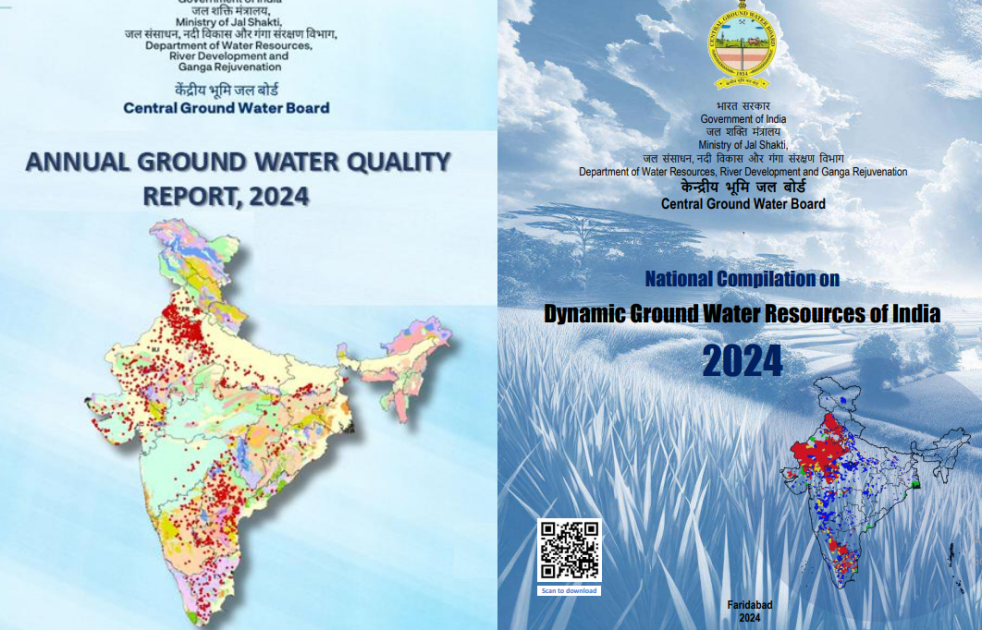
DRP 060125: Concerns about & Contradictions in CGWB’s Reports
The Central Ground Water Board (CGWB) released two important reports last week. While the Annual Ground Water Quality Report 2024 reveals rise in nitrate fluoride, arsenic and uranium contimination of groundwater resource in India, the Dynamic Groundwater Resource Assessment Report 2024 claims substantial rise in annual groundwater recharge and decline in extraction of the resource.
As per the first report, the number of districts affected by high nitrate levels in groundwater has gone up to 440 (near 56% of all 779 districts in country) from 359 found in 2017 assessment which means in 7 years 81 more districts have been found having excessive nitrate levels in groundwater. This should concern us from a number of points of view.
Continue reading “DRP 060125: Concerns about & Contradictions in CGWB’s Reports”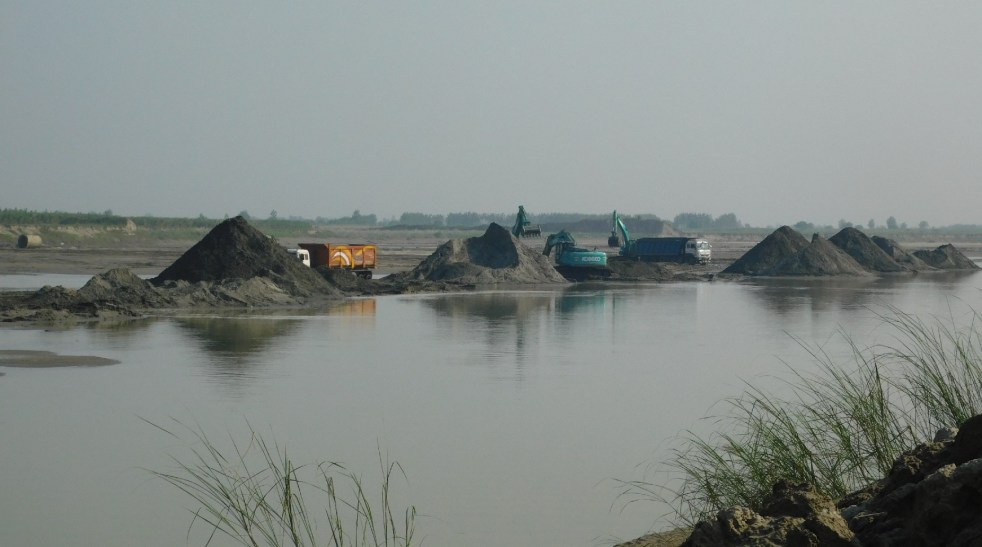
Yamuna Manthan 020125: River Dying by Design or Default?
(Feature Image: Instream mechanized mining going on in Yamuna river at Gumthala Rao near Karnal-Yamuna Nagar border in Haryana in Oct. 2024. Source: Yamauna Nadi Mitra Mandli)
This twelfth edition of monthly Yamuna updates and the first one of the new year 2025, rounds up the critical issues impacting the river eco-system during the past year. The updates of the past one month only hint towards the bleak future the river is heading to. Without addressing the adverse effects and exploring cost effective alternatives, foundation stones of two massive river interlinking projects namely Ken-Betwa and Parbati-Kalisindh-Chambal have been laid. The work of unjustifiable Renuka and Lakhwar dams in climatically sensitive and geologically fragile region of Himalaya is going on.
Continue reading “Yamuna Manthan 020125: River Dying by Design or Default?”
