
On April 16, 2019, Delhi High Court bench decided to initiate a Public Interest Litigation based on a newspaper report that not much rainwater harvesting or groundwater recharge is happening in spite of years of talk that seems to have remained empty. This is a welcome move and one hopes HC takes the issue to its logical conclusion.
Continue reading “DRP: 06052019: Delhi HC takes Suo moto action on RWH in Delhi”Tag: rivers
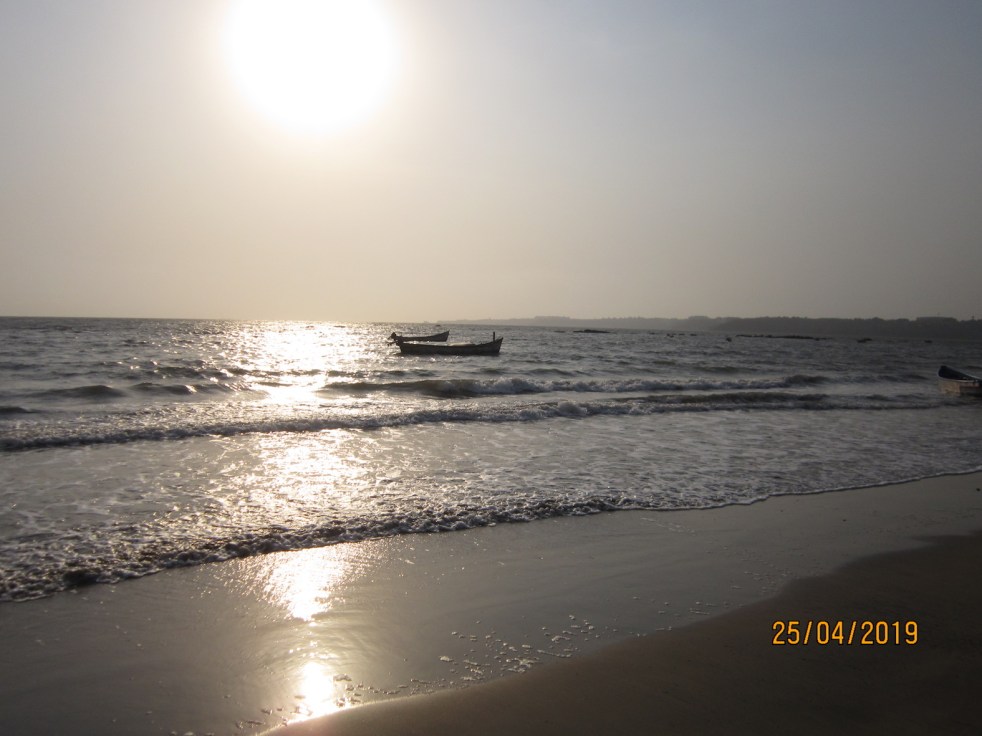
Surest way to defeat Solastalgia: Zuari River Fishing Community
Guest blog by Sebastiao Anthony Rodrigues
A dozen years has passed by ever since Glenn Albrecht has defined home sickness suffered at home as ‘Solastalgia’. In an article published in a Journal ‘Australasian Psychiatry’ in February 2007 issue he liked up human distress to eco-systemic distress. Healthy home he argued leads to healthy human lives. Home refers to the ecological well being of the surroundings of Human. Even though his article provoked in the context of Australian Indigenous and non-indigenous people’s response to the companies engaged in open cut coal mining the concept makes sense in other parts of the world that experiences ecological distress as well as human distress. There is hardly any place in the world today that is not faced by eco-systemic distress due to natural or anthropogenic factors.
Due to my engagement with Zuari river fishing community in Goa over the past few years its possible to share certain Solastalgic points involving life with fishing and beyond fishing. Certain development came to my attention that were viewed by fishing community as threat to their lives and has potential to escalate into ecological and human stress. Continue reading “Surest way to defeat Solastalgia: Zuari River Fishing Community”

DRP: 29 Apr 2019: Sindhudurg shows the way for wetlands documentation & protection
Sindhudurg has become the country’s first district to have successfully documented and mapped wetlands, following a Mumbai HC order in Vanashakti petition. Engaging community participation in the eight-month long process, the district is now training bodies of other districts in the state to replicate its documentation model. This was the state response to Mumbai HC as a pilot in Sindhudurg district. The district administration approached the team of local organization Syamantak, which suggested engaging community participation in the documentation and mapping process.
– “Conducting mapping through community is an effective way to save public money. If this model is implemented across the state, the government can save crores,” said Sachin Desai, who is running Syamantak’s study centre for experiential learning in Dhamapur. The committee completed the task of mapping 57 wetlands in the district in about eight months. Sindhudurg will soon be releasing the first volume of magazine ‘Sindhudurg — Land of Wetland’, the first-of-it-kind in the country. The district planning and development council (DPDC) is giving financial support to the magazine through the forest department.
Continue reading “DRP: 29 Apr 2019: Sindhudurg shows the way for wetlands documentation & protection”
Election Manifestos of 2019: Which party shows faith in people, rights & democracy?
Even as India’s General Elections 2019 are underway, by now the manifestos of most major parties[i] are out now. The latest one to come out was from AAP on April 25, 2019. Here we have tried to capture the key aspects of the manifestos of main political parties, particularly on aspects that we work on. While looking at the promises in the manifestos, we also look at the track record of the outgoing government, since that is the most relevant and current experience. We try and see how the parties try to come to grips with the massive water and environment crisis that India faces and how the poorest are the first and many times the only victims of the crisis. Continue reading “Election Manifestos of 2019: Which party shows faith in people, rights & democracy?”

Lakhwar & Vyasi Dam: Different reality before the window dressing for EAC
Field Observation Report, 20-21 April 2019 at Lakhwar Multipurpose Dam Project, Lohari and Vyasi Hydro Electric Project, Juddo. This author, also an applicant in NGT petition, visited the Lakhwar and Vyasi project area before the sub committee of MoEF’s Expert Appraisal Committee (EAC) for River Valley Projects visited the site on Apr 22, 2019.
The proposed site of Multipurpose Lakhwar dam project was seen affected with multiple landslides. One such fresh landslide was seen right at the site where the 204 meter high dam is supposed to be built. Locals revealed that many of the landslides in and around the location have become perennial.
Continue reading “Lakhwar & Vyasi Dam: Different reality before the window dressing for EAC”
 DRP: 22 Apr 2019: Swami Aatmabodhanand to give up water; Why is Gov so little concerned about Ganga?
DRP: 22 Apr 2019: Swami Aatmabodhanand to give up water; Why is Gov so little concerned about Ganga?
Following death of Swami Gyan Swaroop Sanand (Prof G D Agarwal) while on fast unto death on Oct 11, 2018 and disappearance of Swami Gopal Das ji from AIIMS-Delhi, Swami Aatmabodhanand ji has been on fast unto death at Matri Sadan, Haridwar since Oct 24, 2019. In a letter to the Prime Minister on April 19, 2019 he has said that if the government does respond by April 25, 2019 to the four demands for which the fast undo death is undertaken, he will leave water from April 27, 2019. The four demands are well known:
- Cancel all under construction and proposed dams on Bhagirathi, Alaknanda and their tributaries.
- Prohibit all mining and tree cutting in the Ganga flood plains, particularly in Haridwar
- Enact Ganga Act for the preservation of River Ganga, the draft of which has been sent to the govt.
- Constitute an autonomous Ganga Council

DRP: 15 Apr 2019: Bundelkhand villages demand ponds, not Ken Betwa Link
A pond dug a few years ago in Jignanda village of Hamirpur district still holds plenty of water despite scanty rainfall (Photo by Soumya Sarkar)
In a remarkable campaign during the ongoing general elections, Bundelkhand villages have demanded PONDs for Votes. This is exactly what is required for Bundelkhand, and not the destructive, costly and contractor driven Ken Betwa link that BJP has been trying to push here. Congratulations to the Bundelkhand people and People’s Science Institute that has led this campaign.
Continue reading “DRP: 15 Apr 2019: Bundelkhand villages demand ponds, not Ken Betwa Link”
DRP: 8 April 2019: PM Modi asks: Are Dams ATM for Politicians?
Prime Minister Shri Narendra Modi, has possibly inadvertently, started a debate that really needs to be honestly looked at: ARE BIG DAMS ATM MACHINES FOR POLITICIANS? He may have raised the issue only in the context of Polavaram Dam and Andhra Government, but the question is equally valid for all big dams across the country. Including for Sardar Sarovar Dam, as Andhra Water Resource Minister has possibly only rhetorically asked.
As analysis by SANDRP and others including by numerous CAG reports have shown, dams are not adding to Net National Irrigated area since over 25 years. They in fact worsen the groundwater recharge and sustainability situation, directly and indirectly. And groundwater remains our water lifeline since several decades and will remain so. And yet, thousands of crores get spent on big dam every year, while such resources are not available for sustenance of groundwater, India’s water lifeline. This election, we wont have that honest debate, since both the initiator and responder are not particularly serious about it. Nor the media seems to have the stomach for such a debate. WHEN WILL WE HAVE AN HONEST DEBATE THAT WILL ANSWER THIS QUESTION: ARE DAMS ATM MACHINES FOR POLITICIANS?
Continue reading “DRP: 8 April 2019: PM Modi asks: Are Dams ATM for Politicians?”
DRP: 1 Apr 2019: Dead Sabarmati shows failure; Ganga going the same way?
As joint monitoring report by Paryavaran Surakhsha Samiti (PSS) and Gujarat Pollution Control Board (GPCB) shows, Sabarmati is severely polluted river, downstream of Ahmedabad and is practically a dead river. Upstream of Ahmedabad, the once perennial river has no water of its own and is stealing the Narmada water meant for drought prone areas.
This incidentally is supposed to be model river rejuvenation as told to SANDRP coordinator on a television channel by no less than Executive Director (Technical) of National Mission on Clean Ganga. In fact posters during the 2014 Parliamentary elections in Varanasi, where Mr Modi fought from, said exactly that. So is the National Ganga river going down that path? Narmada itself is in same situation downstream of the dam in Gujarat as another report here shows. Gujarat model has many examples to show, it seems.
Continue reading “DRP: 1 Apr 2019: Dead Sabarmati shows failure; Ganga going the same way?”
Western Japan floods 2018: Hiroshima and the Summer of the Deluge
Guest blog by Aparna Datar
Hiroshima Hiroshima’s moral grip on our consciousness extends, beyond the Hiroshima Peace Dome, straight to the heart of India’s most urgent problem. The problem of balancing urbanization, growth, floods, and droughts in the face of climate change.
In the summer of 2018 devastating floods and landslides (blamed upon climate change) ravaged western Japan. With an unusually high death toll, for a nation that is used to counting the collateral damage more in terms of economic loss, than in terms of human lives, this one left a tragic number of people dead. Floods washed away large parts of Hiroshima, Kyoto, Okayama and Ehime. I joined Prof. Moe Nakazora, an anthropologist with the University of Hiroshima on a study tour of two of the worst affected villages in the eastern part of Hiroshima. These were the villages of Hachihonmatsu and Kouchi. Both the villages are located in Higashihiroshima which had more than 2000 landslides.[i] Continue reading “Western Japan floods 2018: Hiroshima and the Summer of the Deluge”
 SANDRP