Dams · DRP News Bulletin

DRP: 31 Oct. 2016 (North to South India: Pharma Firms’ Waste Poisoning Rivers, People & Animals)

National The cost of cheap drugs The Bollaram-Patancheru region in Hyderabad, Telengana is famous for being one of the most polluted industrial areas in India. The periphery around the area has become so toxic one that 2001 article recommended that “most of the soils should be removed from agricultural production” in Patancheru. There is an increase in higher abortion rates to birth defects and stunted growth in children, as well as greater incidence of skin diseases in the region. In the district of Medak in the state of Telangana, Greenpeace in its several reports has identified that people, animals, crops and land have been afflicted by the pollution of industrial waste. Villagers report many serious health issues, including miscarriages, skin disorders, cancers and intestinal problems. The livestock suffer from the same problems. Most, not to say all, food grown in the village is unfit for human consumption. An inspection report published by CSE in November 2015 noted that most companies in Pattancheru-Bollaram were manufacturing pharmaceutical ingredients for which they did not have permission; using more water than the permitted limit and dumping more hazardous waste than allowed. Two of the units were operating without clearance from authorities.

In the case of the Ghaggar river in Punjab, all along its river course, one can witness foul smell, contamination of subsoil water, spread of water borne diseases and chances of damage of crop due to the presence of industrial chemical waste due to industrial waste from the industries in Punjab and Himachal. Media reports report similar occurrences around the Bhiwadi belt, where pharmaceutical companies discharge untreated effluents into drainages which then seep into the groundwater, making way into drinking water supply and agricultural land, resulting in environmental and health risks of unimaginable proportions.

In many low and middle income countries, weak laws and ineffective regulatory bodies have led to rising incidences of industrial waste flowing into ponds, lakes and rivers. If we examine the causes, the role of the pharmaceutical industry is similar to printing, chemical and paint industries. Pharma effluents contain hazardous chemicals which are leading to antimicrobial resistance or AMR where the human body is resistant to antibiotics, and thus, becomes susceptible to common infections. The very same ingredients used to manufacture antibiotics get mixed up with the bacteria during waste disposal, through our waters. Studies have shown that high levels of antibiotics are found in streams and lakes in the area close to many plant than in the body of human beings. The phenomenon is such that it is assuming the form of a serious public health issue in developing as well as developed countries. Over 700,000 people die every year because of antimicrobial resistance (AMR) all over the world. If this trend persists and resistance continues, McKinsey studies has shown that by 2050, around 10 million people globally will die because of AMR (Antimicrobial Resistance)

It is pertinent to note that New Delhi metallo-beta-lactamase superbug (NDM-1), a bacteria, first found in New Delhi’s public water supply in 2008, is resistant to almost all known antibiotics and has spread to over 70 countries in the world.

On the other hand, scientists from multiple institutes having done a detailed study on river pollution concluded that arsenic in the study areas poses potential health risk to the residents and indicates that the “ingestion of water over a long time could magnify the probabilities of cancer.  They collected and assessed concentrations of 27 trace elements in surface water samples from 48 sites of waterways (lakes, canals, and tributaries of major rivers) in four states: Karnataka, Tamil Nadu, Kerala, and Telangana. Analysis revealed that elements such as chromium, selenium, arsenic, iron, and manganese are the major pollutants, as their concentrations exceeded the acceptable national and international water quality standards in several sites of Vrishabhavathi, Ennore, Adyar, Cooum and Periyar rivers. Further, statistical analysis revealed that the Cauvery, Ennore, Adyar, Cooum and Periyar river basins are affected by various anthropogenic activities, leading to moderate-to-high pollution by arsenic, chromium, manganese, iron, and selenium. According to the scientists, potential pollution sources are industrial waste, sewage intrusion, paint industry waste, and automobile runoff. 

Continue reading “DRP: 31 Oct. 2016 (North to South India: Pharma Firms’ Waste Poisoning Rivers, People & Animals)”
Cauvery · Inter State Water Disputes

Cauvery: Is there will for way forward? Will constitution of CMB help?

Above Map of Cauvery basin from Indian Express, Sept 22, 2016

Higher demands than availability is the key problem in Cauvery basin. transparent, participatory, democratic, rule based management of demands over supply is the key need. Unfortunately, we do not have that. Greater misfortune is that the Cauvery Water Disputes Tribunal Award of Feb 2007, even as it is significantly flawed, is yet to be implemented since the Special Leave Petitions of Karnataka and Tamil Nadu, admitted in the Supreme Court, remain pending for over nine years now. The Supreme Court, in the meantime, (through its orders of Sept 5, 12 and 20) deals with the issue in a manner, that seems ad hoc in absence of clarity as to how all the relevant factors have been taken into account.  Continue reading “Cauvery: Is there will for way forward? Will constitution of CMB help?”

Dams · DRP News Bulletin

DRP: 12 Sep 2016 (Hydro Projects Causing Mass Fish Extinction: HP Fisheries Dept.)

Hydro power projects impact riverine fisheries The bleak future of fisheries is reflected in the “Vision and Perspective Plan” released by the Department of Fisheries earlier this week. The department is keeping its fingers crossed to even maintain the production of 5,393 tonnes in 2014-15 as it feels that with the commissioning of 294 hydro power projects in the recent years, the downward trend will be difficult to arrest. 

It says that the expansion of the hydro power sector has resulted in the shrinking of rivers and streams and high silt levels. Rampant sand mining and indiscriminate use of pesticides have further aggravated the problem. 

The fish production from the rivers and streams is falling drastically each year and the multi-pronged environmental assault is proving to be too damaging for the fisheries promotion. The state has some precious mahseer reserves. Though the power policy stipulates a minimum discharge of 15% ecological flow of rivers, the failure of the regulatory authority to check this has converted riverbeds into sandy deserts. That’s how the department perceives the threat from hydro power generation. As a further blow to the riverine fisheries, under the revised hydro-power policy, there is no requirement for micro hydel project developers to prepare environmental and social impact reports.

The vision document reflects that the coming up of hundreds of micro-hydel projects has drastically affected the streams environmental flow in Kangra, Kullu and Chamba. The picture is so grim that the project commissioned on the Sujan Nullah is virtually threatening the hatchery of the prestigious Indo-Norwegian trout project which is the lifeline of the entire trout farming programme of the state.Perceived as one of the major threats, the commissioning of 92 power projects, in the last few years has altered the river hydrology and blocked migratory routes exterminating spawning and feeding grounds of fish.Adding to the already bad situation is the array of pesticides and insecticides being used by farmers and fruit growers.

Continue reading “DRP: 12 Sep 2016 (Hydro Projects Causing Mass Fish Extinction: HP Fisheries Dept.)”
Dams

Landmark Supreme Court Order on Govt Failure in Tackling Drought

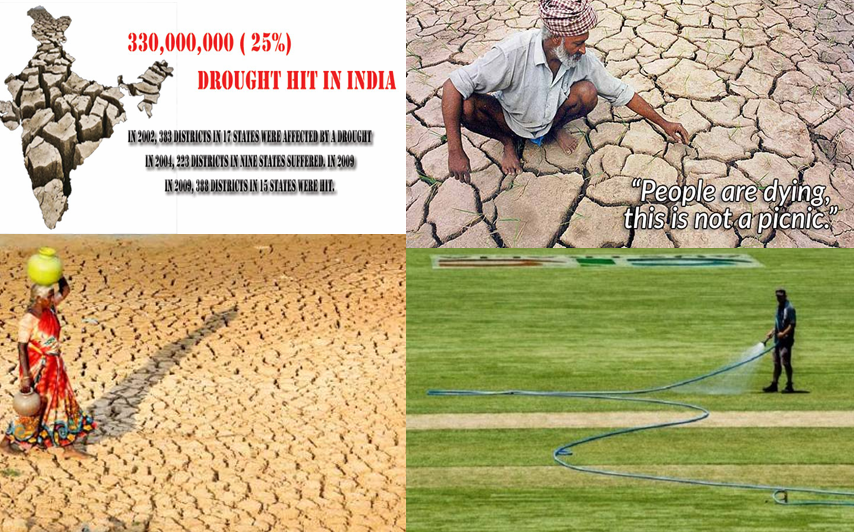
A PIL under Article 32 was filed by the NGO, Swaraj Abhiyan praying for directions for declaration of drought and relief in affected areas. The apex court came out with a 3 part judgment earlier this month – the first one dealt with the issue of drought and the latter judgments took up the poor implementation of the National Food Security Act, 200513 (NFSA) and the Mahatma Gandhi National Rural Employment Guarantee Act, 2005 (NREGA). These directions largely signify the failure of the governance in tackling drought and suggest actions to be taken hence, we need to be thankful to the petitioners and apex court for this. We also hope the apex court continues to monitor the implementation of the directions. 

Continue reading “Landmark Supreme Court Order on Govt Failure in Tackling Drought”

Dams · DRP News Bulletin

DRP: 23 May 2016 (WHY LARGE HYDRO IS NOT JUSTIFIED)

Chenab river runs its course amid spate of threats Chenab river’s money-spinner hydropower fate appears to run parallel to that of Sohni-Mahiwal – the legendary lovers who drowned into the river because their love was unacceptable. The govt as usual has shut its eyes to the needs of the river and its catchment area. There are multiple factors hidden below its surface. One is melting of glaciers sooner than anticipated. If glaciers lose their ice cover quicker, the Chenab would swell up abruptly before hitting a cruel, dried-up phase in as much deathly suddenness. There are several hydro projects coming up on the river which don’t have the approval of the Geological Survey of India. Once all the identified hydroelectric projects are installed, it will have a negative impact on the river. It may not get even a kilometre free space for running the course. At that point of time, it will not be a river, but a small stream. Meanwhile scientists have warned of large scale earthquake in J&KThe situation in Arunachal Pradesh is also grim. And yet the Parliamentary committee recommends further sops for Hydr. Misguided recommendations, to put is most charitably. There should be no question of subsidies to destructive Hydropower projects.  Continue reading “DRP: 23 May 2016 (WHY LARGE HYDRO IS NOT JUSTIFIED)”

Dams · DRP News Bulletin

DRP: 21 March 2016 (‘Towards Noyyal’ A people’s initiative to restore a river’s glory)

Tamil Nadu A people’s initiative to restore a river’s glory The Noyyal River Restoration Federation will launch ‘Noyyalai Nokki’ (Towards Noyyal), a people’s initiative to restore the Noyyal river system on 26 March. Social activist Anna Hazare will launch the project at Kooduthurai in Alandurai in Coimbatore district. The river originates in the Western Ghats and runs through the four districts to join the Cauvery at Noyyal village. Known as Jungle stream, in olden times as many as 34 streams used to feed water into it and the river would flow throughout the year with two or three annual flood spell.  But now, just 4 or 5 streams feed the river. In many places, the river is encroached upon, sewage is let into it, or the river needs to be desilted. The river is all set to regain its glory with the ‘Noyyalai Nokki’ initiative. What is encouraging is the willingness of the public to be part of it. The project proposes to divide the river into segments of 500 metres for restoration and maintenance. Ownership groups will be formed for every 500 metres and it will consist of the local people, experts and patrons (divide-distribute-develop model).

Continue reading “DRP: 21 March 2016 (‘Towards Noyyal’ A people’s initiative to restore a river’s glory)”

Dams · DRP News Bulletin

DRP: 14 March 2016 (No Rain Dance, Only Dry Holy This Time: Pune District Administration)

Dam levels down, ‘rain dance’ for Holi dropped Pune district, where a water cut is in effect due to depleting water levels in the dams, will not have any kind of “rain dance” functions this Holi. As water reserved in the dams is to be used only for drinking purposes as per the district administration’s instructions, the collectorate has urged people to go for a “Dry Holi” this year and will ensure that there are no such functions during Holi. With dam levels coming down to as much as 23% of their capacity, the entertainment department of the collectorate will ensure that permissions are not given for events like the “rain dance” during the festival. Meanwhile, a BJP legislator in Mumbai has written to the Brihanmumbai Municipal Commissioner seeking a ban on “rain dance” functions in Mumbai in the metro during Holi. Ameet Satam, in a letter to the BMC, said that the civic body should ban rain dance and even asked the corporation to slap a fine of Rs 50,000 on those who indulge in waste of water.

Continue reading “DRP: 14 March 2016 (No Rain Dance, Only Dry Holy This Time: Pune District Administration)”

Dams

Blow by Blow, how pollution kills the Yamuna  river: A Field Trip Report

              Yamuna River from Hathini Kund Barrage to Delhi (All maps from Google Earth, created by author)

A field trip along the Yamuna River this April 2015 showed how the river is killed blow by blow, by the pollution and diversion. The visit was planned with an objective to study and observe actual status of industrial and domestic pollution reaching River Yamuna via various Escapes and Drains in Haryana, upstream Delhi. A team of two members Sri Manoj Misra, Yamuna Jiye Abhiyan and Bhim Singh Rawat, SANDRP spent three days (03-05 April 2015) closely travelling along the river through four districts of Haryana (Sonipat, Panipat, Karnal and Yamuna Nagar) and tracking various drains, escapes (from origin) which pour massive amount of effluents  in River Yamuna . Continue reading “Blow by Blow, how pollution kills the Yamuna  river: A Field Trip Report”

Dams

Landslide dam threat in Zanskar Valley to continue for more weeks: Update 2

In the most significant event so far on the issue of landslide blockage of Phutkal River in Zanskar Valley in Kargil District in Kashmir, the National Crisis Management Committee[1] (NCMC) chaired by the Union Cabinet Secretary Shri Ajit Seth met[2] on Feb 20, 2015 and approved the Action Plan whose implementation will begin within next 15 days and is to be completed by end of March. This decision is based on assumption that the snowmelt will cause landslide dam threatening situation only in April.

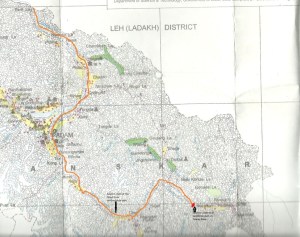
Tsarap Landslide location and floodpath: Map by SANDRP based on Kargil District Map from NATMO

Continue reading “Landslide dam threat in Zanskar Valley to continue for more weeks: Update 2”

Delhi

NGT Orders MAILY SE NIRMAL YAMUNA – WILL THIS LEAD TO A REJUVENATED YAMUNA?

Guest Blog by Manoj Misra (yamunajiye@gmail.com), Yamuna Jiye Abhiyan, Delhi

The National Green Tribunal (NGT) in a landmark judgment pronounced on 13 January 2015[1], has set an ambitious road map for a rejuvenated river Yamuna by 2017. Naming it as “Maily se Nirmal Yamuna rejuvenation project, 2017” the green court in the judgment spread over almost 100 pages has detailed steps necessary to achieve what all previous efforts have miserably failed. Continue reading “NGT Orders MAILY SE NIRMAL YAMUNA – WILL THIS LEAD TO A REJUVENATED YAMUNA?”