
In the just concluded June 2021, the first month of India’s South West 2021 monsoon, India received 182.9 mm rainfall, 10.96% or about 11% more than the normal June rainfall of 166.9 mm as per India Meteorological department. In June 2020, the rainfall was 196.9 mm, or about 18% above normal and in June 2019 it was 33% below normal.
Continue reading “June 2021: District wise rainfall in India’s SW Monsoon”Tag: Karnataka
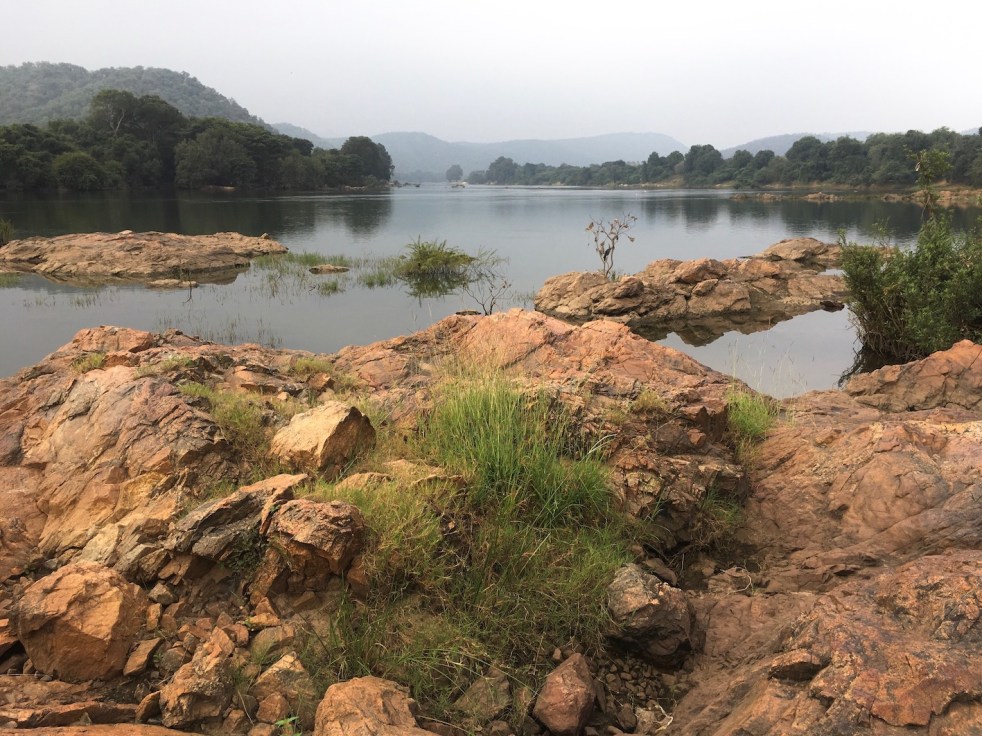
My mother is the river. The river is my mother.
Guest Article by Nirmala Gowda
This is time of immense grief and loss for me. Unable to face the harsh reality of my mother gasping for each breath in the ICU, I was drowning myself in work. Co-incidentally or so I think, I was working on a report analysing asphyxiation of Vrishabhavathi, Arkavathi and Cauvery rivers and suffocation of aquatic lifeforms the rivers supported. As the dissolved oxygen graph took shape, I realized : The million times I had held the dissolved oxygen meter under water to measure oxygen saturation levels across rivers was no different from the million times we plugged the oximeter to my mother’s forefinger to check for oxygen saturation levels. The realization that the very element my mother was gasping for, is the very element the rivers have long been gasping for – Oxygen and this pushed me deeper into a state of despair.
Continue reading “My mother is the river. The river is my mother.”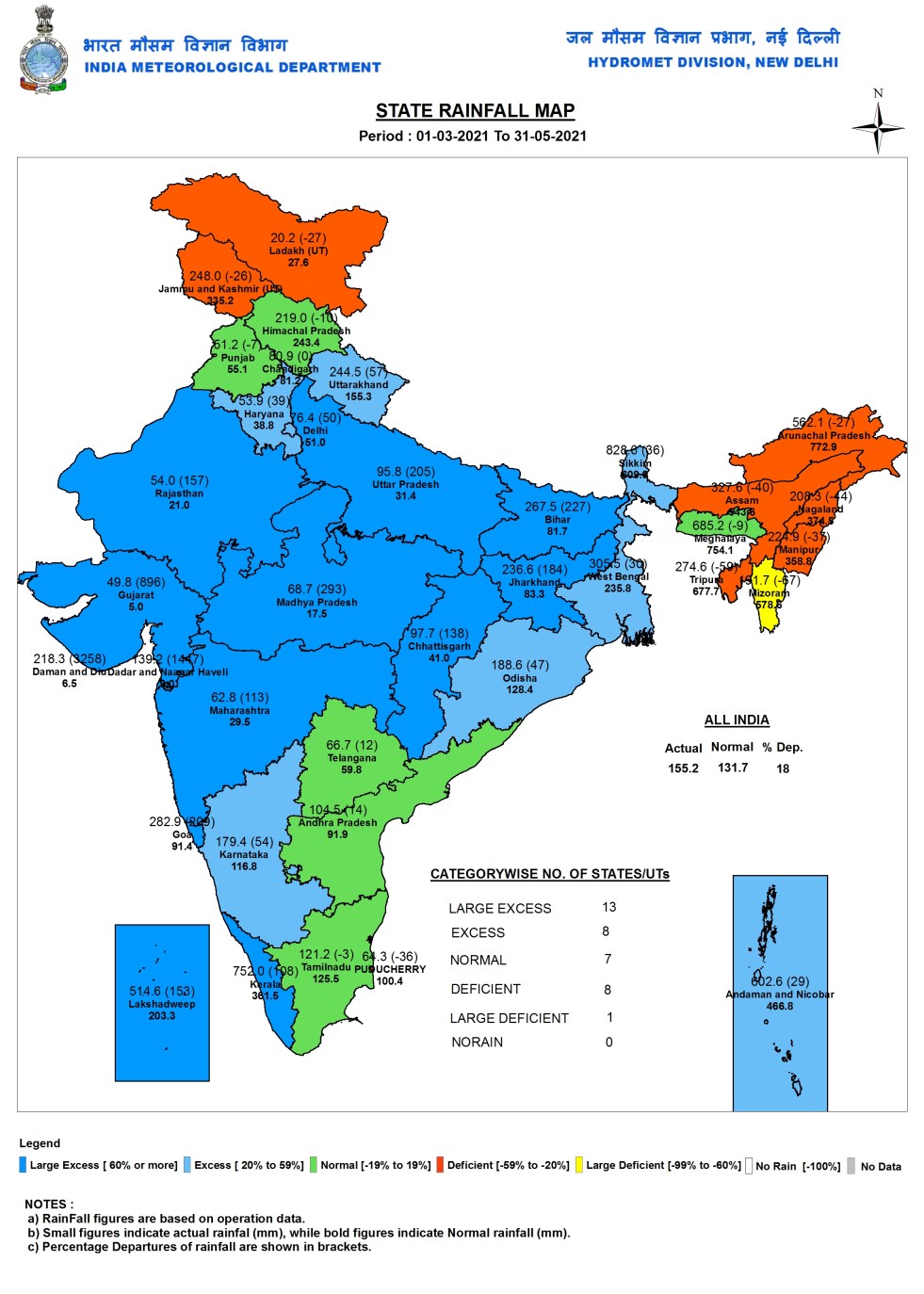
Pre Monsoon 2021 season – State Wise, District Wise Rainfall
In the just concluded pre monsoon season (March 1 to May 31, 2021) India received 155.2 mm rainfall, 18% above the normal rainfall of 131.7 mm as per the India Meteorological Department (IMD). This is similar to the case in 2020[i] when India received 158.5 mm or 20% above normal rainfall.
Continue reading “Pre Monsoon 2021 season – State Wise, District Wise Rainfall”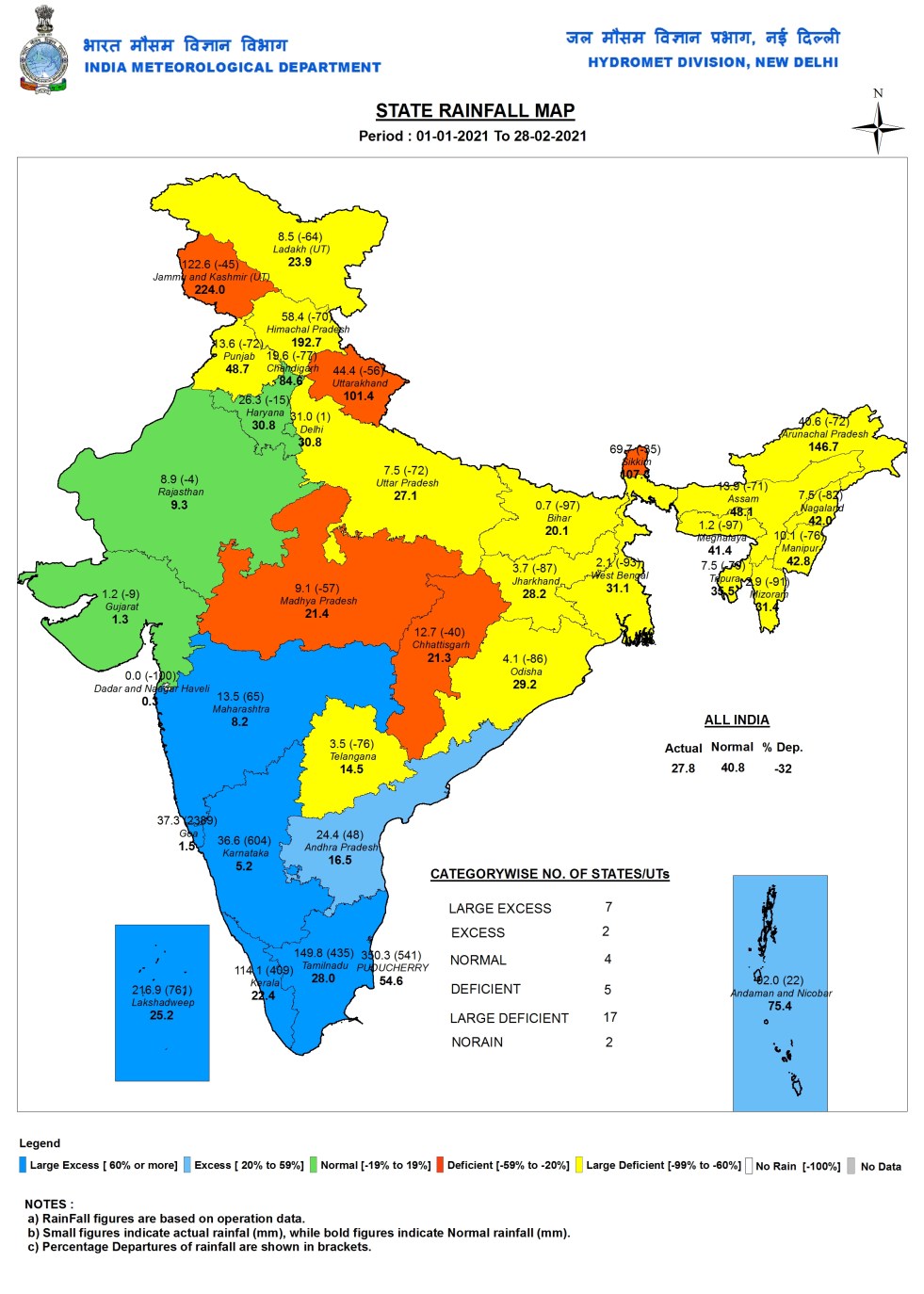
District wise Winter 2021 Rainfall in India
In the just concluded Winter Season (Jan 1 2021 to Feb 28 2021), as per India Meteorological Department (IMD), India received 32% below Normal Rainfall. The Normal rainfall in this two-month season is supposed to be quite low at 40.8 mm, but the actual rainfall was just 27.8 mm, which means rainfall was less than 0.5 mm per day in the season. Out of this the Rainfall in January 2021 was 20.2 mm, 17% above the normal rainfall of 17.3 mm. So in February 2021, the rainfall was 7.6 mm, against the normal rainfall of 23.5 mm, so the February rainfall was 68% below normal!
Continue reading “District wise Winter 2021 Rainfall in India”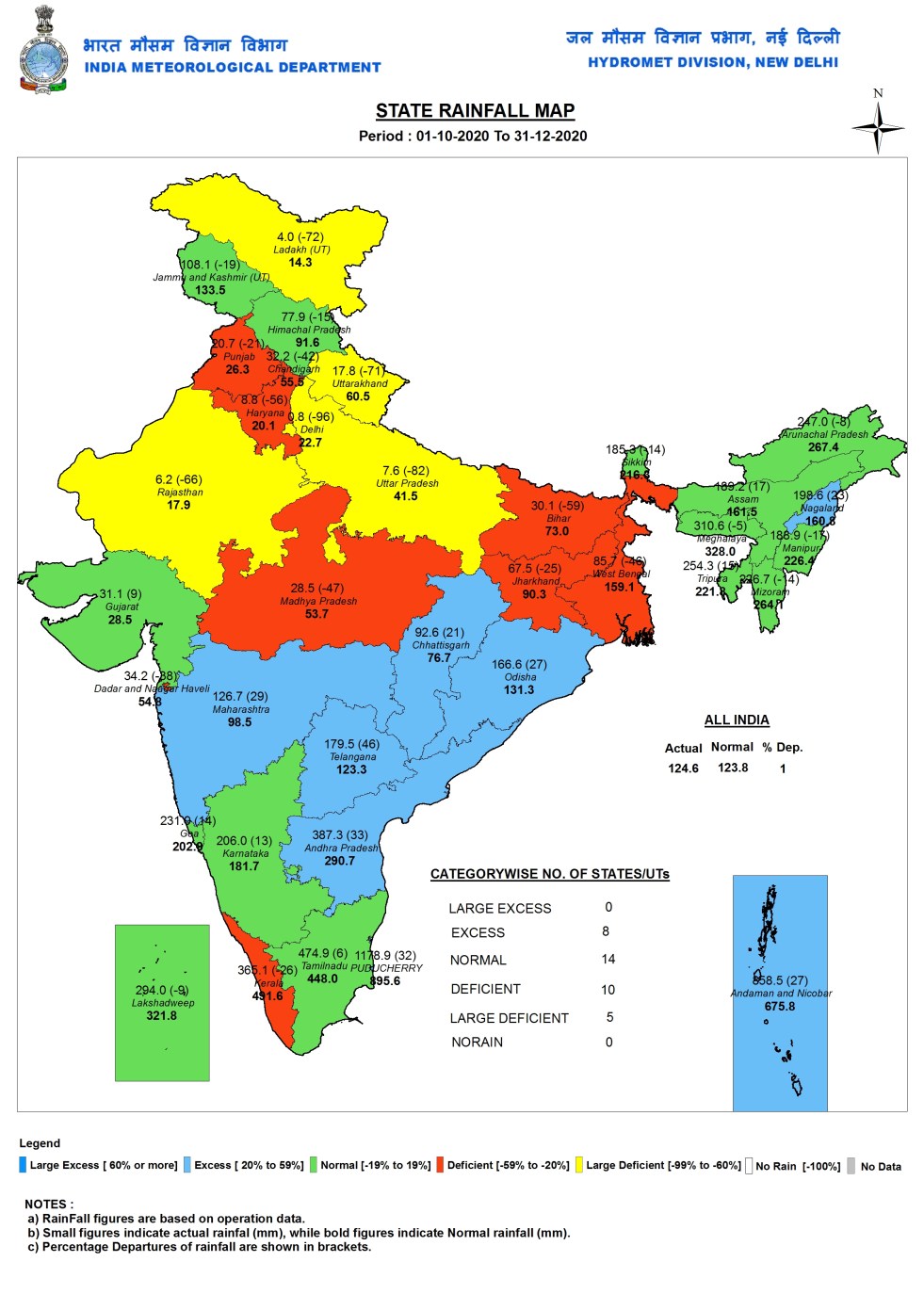
Post Monsoon 2020: State wise Rainfall
According to India Meteorological Department (IMD), during the just concluded Post Monsoon Rainfall for 2020, that included rainfall during Oct-Dec months, India received 124.6 mm rainfall, 0.64% above the normal rainfall of 123.8 mm during the period. As per IMD[i] definition, the rainfall was thus normal.
This three-month period from Oct 1, to Dec 31 includes the North East Monsoon that mainly affects parts of South India including Tamil Nadu, Puducherry, Rayalseema, parts of Karnataka and Kerala. IMD declared on Jan 1, 2021 that the of NE Monsoon ended on Dec 31, 2020 with normal overall rainfall: TN had 6% above normal, Karnatak 13% above normal, Puducherry 32% above normal, Andhra Pradesh 33% above normal. However, Lakshadweep had 9% below normal and Kerala 26% below normal. This monsoon provides 48% of the annual rainfall of TN so it is most imp for that state.
The rainfall revived only towards the end of November, mainly due to two consecutive cyclones — Nivar and Burevi — both of which developed in the Bay of Bengal. While Cyclone Nivar crossed the coast close to Karaikal near Puducherry and brought heavy showers for the east and coastal districts of Tamil Nadu, Cyclone Burevi weakened before it reached land.
Continue reading “Post Monsoon 2020: State wise Rainfall”
South Zone Sand Mining Dialogue: The grain of sand is habitat for many lives
One of the central themes of the lively presentations and discussion at the South India Sand Mining Dialogue was that the grain of sand is a habitat for so many lives, as so brilliantly put forward by Munmun Dhalaria, one of the panelists. Another key highlight was that Yogeshwaran, the lawyer painfully noted that sand mining laws are neither environment friendly nor people friendly and can be environment friendly only if they are people friendly.
Continue reading “South Zone Sand Mining Dialogue: The grain of sand is habitat for many lives”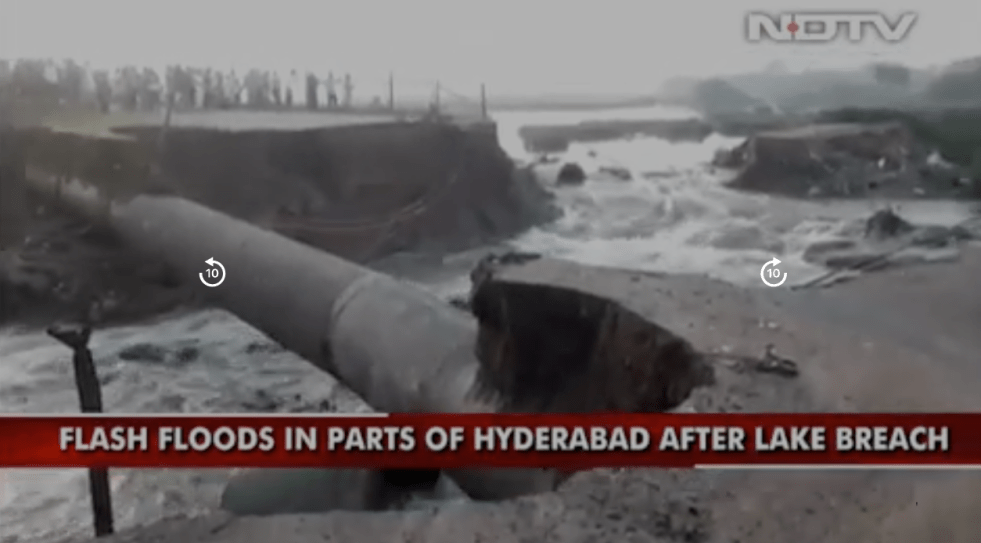
Krishna-Bhima basin floods in Oct 2020 breaks 56-year-old record
Krishna basin is again facing unprecedented floods, for the second straight year. Unprecedented is a bit of overused word these days, but consider the facts: At no less than ten locations, the Highest Flood Levels (HFL) ever recorded at those locations in the Krishna basin were surpassed (nine locations) or equaled (one location). Some of the HFLs surpassed this year were amazing 56, 51 and 44-year-old records! And imagine most of this happening in second half of Oct 2020, when South West monsoon is traditionally over by end of Sept! There is no doubt the floods were unprecedented.
Continue reading “Krishna-Bhima basin floods in Oct 2020 breaks 56-year-old record”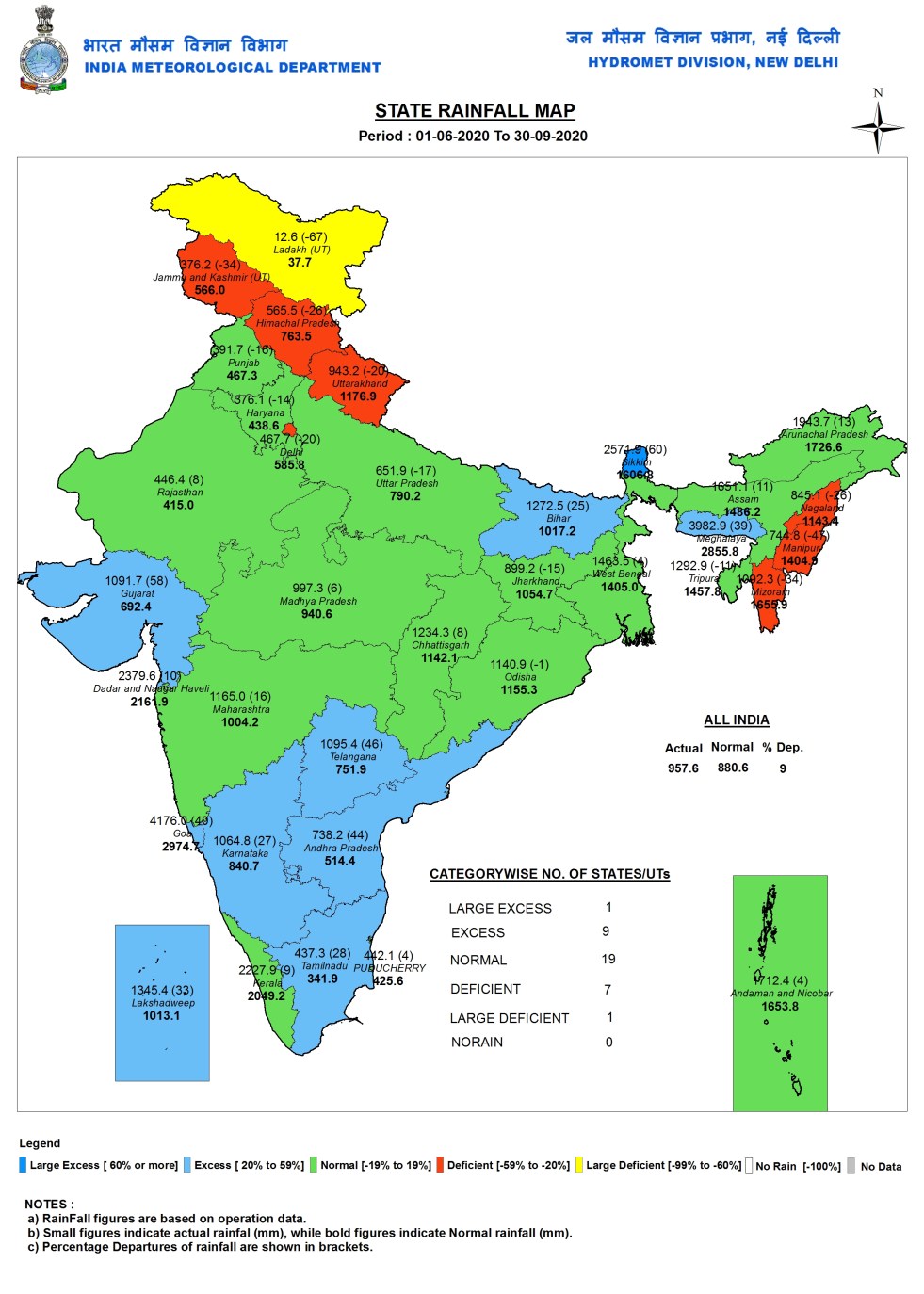
SW Monsoon 2020: District Wise Rainfall
India received 957.6 mm rainfall in Just concluded South West Monsoon 2020, during the scheduled 4 month monsoon from June 1 to Sept 30, 2020. This is 8.74% above normal monsoon rainfall of 880.6 as per India Meteorological Department (IMD). This is considered ABOVE NORMAL rainfall, since rainfall is in the range 4-10% above Normal rainfall. This sounds good at national level, but the situation on ground could be very different, if we see the rainfall across the country.
It is noteworthy as per even IMD, monsoon has not yet withdrawn from most parts of the country. But IMD closes its monsoon rainfall account at 0830 hours on Sept 30, so all rainfall after that hour has to be counted in “Post Monsoon” rainfall book, even though the rainfall is very much part of monsoon as per IMD.
Continue reading “SW Monsoon 2020: District Wise Rainfall”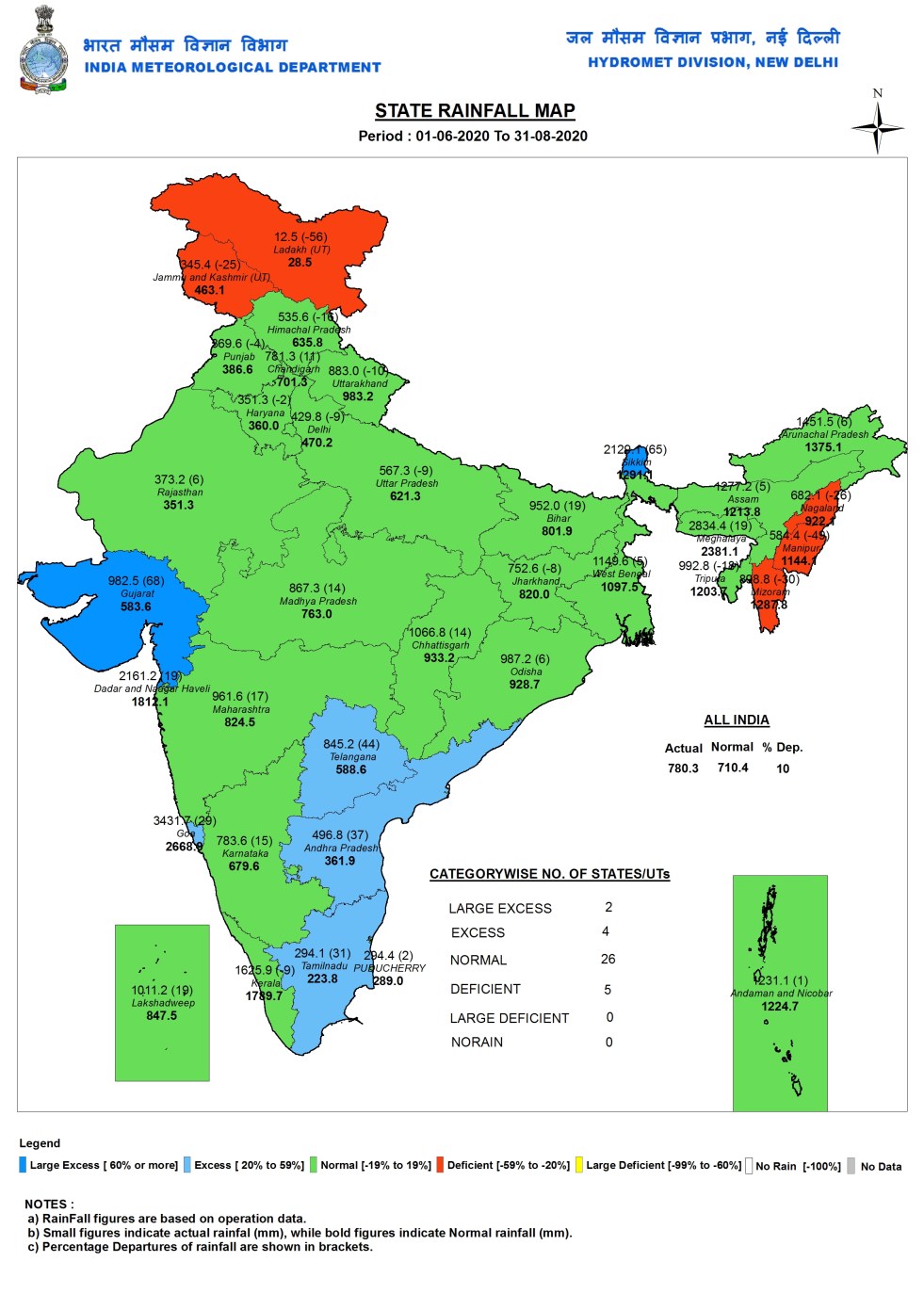
District wise rainfall in June-Aug 2020 in India
In the ongoing South West Monsoon, India received 44 year old high surplus rainfall of 327 mm in just concluded Aug 2020, 26.6% above normal rainfall of 258.2 mm. This helped the total June-Aug 2020 rainfall to achieve 10% surplus, with actual rainfall 780.3 mm, 69.9 mm higher than normal rainfall of 710.4 mm. In June the country received 18% above normal rainfall and in July it received 9.9% below normal rainfall, the rainfall at the end of June was just 1.1 mm above normal. Thus almost the entire surplus rainfall is thanks to the rainfall during Aug 2020. The rainfall distribution has however, been far from normal that these figures suggest, as we can see from the state wise and district wise figures below.
Continue reading “District wise rainfall in June-Aug 2020 in India”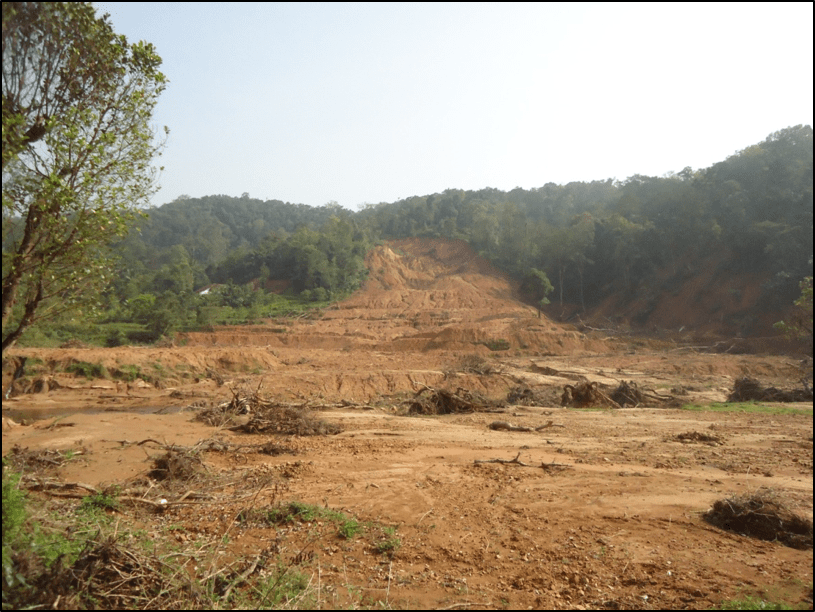
Landslides in Kodagu & Western Ghats: A critique of GSI report
Guest Article by Prof Mysooru R. Yadupathi Putty
Introduction This write-up is with regard to the news-paper reports on the “The Geological Survey of India (GSI) Report on the landslides in Kodagu”. This is based on the information furnished by the news-papers and by the scanned copies of the original report of the GSI. The report attributes the landslides to excessive rainfall and extensive slope modifications due to anthropogenic activities, and puts blame on the people who have been using the land to their benefit. This brief article is written in order to bring it to the notice of the authorities concerned, and the people in general, that some of the observations of the GSI are highly ill-conceived, mutually contradictory and technically unsound. They unnecessarily go to rake up untoward feelings and create an impression that the people of Kodagu (Karnataka’s ‘Male-naadu’, in general) responsible for pulling the wrath of the Nature on to themselves. The author of this critique is a Hydrologist, who has been working in the region on Runoff processes, Land-use and Soils for nearly three decades. The following is a review of the available material of the report, point by point. Continue reading “Landslides in Kodagu & Western Ghats: A critique of GSI report”
 SANDRP