
This week’s DRP News Bulletin brings two encouraging reports about revival of Kham River in Sambhajinagar district in Maharashtra. The Bulletin also brings report of Gujarat Human Rights Commission sending notice to the state and city government to uphold the environment rights of citizens in Vadodara. There is also here the news of signing of MOU for beginning of 4 km water taxi along Yamuna in Delhi upstream of Wazirabad barrage, of course without any environment or social impact assessment, any environmental clearance, any public consultation process, with blind faith in Sabarmati River Front Development model.
Continue reading “DRP 170325: Can we work for more Kham Rivers and Less Sabarmati Rivers?”Tag: Inland Waterways

DRP 100325: “Good Floods Reduce the Risk of Bad Floods”
(Feature Image: An aerial view of the flooded collectorate ghat at the bank of Ganga river in Patna. PTI Photo/Source: The Asian Age)
This remarkable report this week, quoting the work of Gilbert F White, also considered “father of floodplain management” provide a number of lessons in flood management. These include: – “Floods are ‘acts of God’, flood losses are largely acts of man” (By ‘acts of God,’ he meant that floods are perfectly natural events);
– “Yes, floods will happen. Whether or not those floods are good floods or bad floods, whether or not they cause damage is largely up to us”;
Continue reading “DRP 100325: “Good Floods Reduce the Risk of Bad Floods””
DRP 030325: Supreme Court asks: How a city can become smart without protecting the water bodies, wetlands
In a welcome development, the Supreme Court of India has asked, in the context of Ajmer City in Rajasthan, how can a city become smart without protecting the water bodies/ wetlands? How cities will become smarter by encroachments on the water bodies and wetlands? The Supreme Court bench threatened the Rajasthan government of contempt of court for non-compliance of order dated Dec 1 2023 as also the order of National Green Tribunal on Dec 13 2021.
The Supreme Court here has hit the nail and raised a very fundamental question that is relevant to all the cities across India as they are all guilty of allowing encroachments and destruction of local water bodies in their respective areas. This is a suicidal step as it has adverse impact on the cities in multiple ways and yet, most cities consider this smart and in fact get away with it. There is also no National Urban Water Policy guiding the cities solve the puzzle of multiple issues handled by multiple departments, including some by the local, state and central governments. This self-created mess in the cities comes handy for the various vested interests in encroaching more water bodies. The judiciary, so far has also not been effective in addressing this issue with any effectiveness.
Continue reading “DRP 030325: Supreme Court asks: How a city can become smart without protecting the water bodies, wetlands”
DRP 240225: Unanswered questions on Ken Betwa Project
At a well-attended meeting at India International Centre in Delhi on Feb 20 2025, organised by VIDHI Centre for Legal Policy, a panel of speakers including Shri Shashi Shekhar (former secretary, Union Ministry of Water Resources) and Shri Jasbir Singh Chauhan (former Principle Chief Conservator of Forests, Madhya Pradesh) and Himanshu Thakkar of SANDRP, a number of fundamental questions were raised about the controversial Ken Betwa River Link Project. Unfortunately, no clear answers are forth coming from the authorities.
Continue reading “DRP 240225: Unanswered questions on Ken Betwa Project”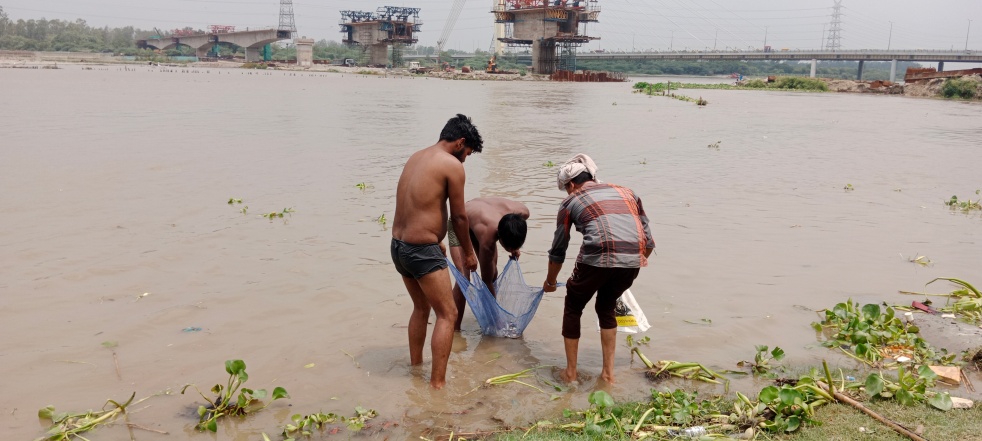
DRP 201123: Inland fisheries need attention: World Fisheries Day 2023
(Feature Image: Recreational fishers catching fish in Yamuna river downstream Wazirabad barrage in Delhi in June 2023. Image: BS Rawat, SANDRP.)
On the World Fisheries Day, celebrated on Nov 21 every year, there is urgent need to focus attention on the well-being of one of the poorest and socio-economically weakest and much neglected section of population: Inland fisherfolks. They are in huge number, more than 2 crore directly dependent on inland fisheries, many others indirectly dependent. They, unfortunately have no voice in development discourse or decision making processes, nor any even in mitigation measures. Creating an inland fisheries policy, department and institute in every state and at centre can be an important step forward.
Continue reading “DRP 201123: Inland fisheries need attention: World Fisheries Day 2023”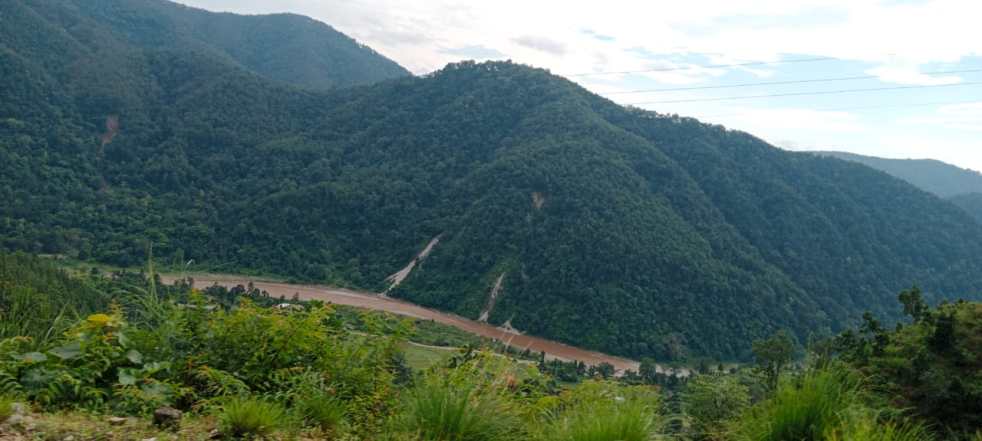
DRP 110923: Another independent institution-CEC destroyed
(Feature Image: Ramganga River near Marchula. SANDRP 08 Sept. 2023)
The Govt of India’s Sept 5 2023 notification reconstituting the Central Empowered Committee completely destroys the independent nature of this institution of accountability and course correction. This institution, set up by the Supreme Court in 2002 and reconstituted in 2008, worked as eyes and ears of the Supreme Court on environmental issues. The new committee has no independent members, it will be constituted by the MoEF, MoEF itself has such an abysmally poor track record.
The notification, reports said, diluted the CEC’s autonomy on four key counts: the committee will report to the ministry, instead of the SC; the ministry will pick all the members and the SC will have no role in the process; the ministry, and not the court, will fund the committee; the provision of having two NGOs in the committee has been done away with.
Continue reading “DRP 110923: Another independent institution-CEC destroyed”
DRP 030723: Peak Hour Tariffs to be implemented from April 2024
(Feature Image: Vyasi HEP power station at Hathyari, Dehradun. SANDRP, June 2023)
This announcement by the government is indeed much belated but welcome step that India plans to increase peak hour power tariff compared to non-peak hour power tariff, beginning with commercial and industrial consumers from April 2024 a year later for others excluding agriculture consumers. The notification mentions it as daytime tariff (during solar hours) and night time power use, but this essentially also helps peak management.
This will not only put a premium on peak hour power consumption and hence generation, but also hopefully ensure that assessment of impacts of the peak hour power generation including at hydropower projects is done and done in a credible way, along with compensating those affected. It will also hopefully ensure that existing hydro capacity is used optimally for peak hour power generation before going for new hydro projects in the name of increasing peak our power generation.
One also hopes that it will lead to better peak hour power management and also considering all the options for such power generation rather than pushing hydro projects blindly in the name of peak hour power generation.
Continue reading “DRP 030723: Peak Hour Tariffs to be implemented from April 2024”
DRP 260623: National Framework for Sediment Management
A National Framework for Sediment Management is certainly a long standing requirement and any move in that direction would have been welcome. Not only because the sediment accumulation destroys storage capacity of India’s Dams, created at such massive costs. But also because sediment is an integral part of river flow and also very important for the rivers to stop or reduce erosion at deltas. There are other issues related to sediment including creation and disposal of toxic sediment and impact of sediment free water flowing downstream from the hydropower projects.
But we need much more serious and sincere efforts in this direction than what has been suggested in following government press release. The movement on such an important subject is so snail paced, half hearted, non-comprehensive, unscientific and non-sincere that it is not clear how this is going to help.
Continue reading “DRP 260623: National Framework for Sediment Management”
India Lost 10 More Gangetic River Dolphins In One Year in 2022-23
(Feature Image: Post mortem being done of a dolphin carcass found at gate number 01 of Girija barrage in Bahraich, UP. Image Source: Dainik Bhaskar, Nov. 2022)
May 18, 2023, would mark 13 year of declaration of Gangetic dolphin as a national aquatic animal. However, the habitats of this ‘highly endangered’ species continue to suffer anthropogenic threats including wrong operations of dams & barrages, inland waterways projects, decreasing flows & increasing pollution in rivers, sand mining and poaching etc. in India. As a result, there are frequent incidents of mysterious and unnatural deaths of these fresh water mammals.
SANDRP has been tracking such incidents since January 2020 and our previous two reports published in January 2021 & April 2022 on the subject have complied deaths of at least 21 Gangetic dolphins in 2 years (2020 and 2021). In continuation of the same, this account covers the incidents of deaths of Gangetic river dolphins during past one year.
Continue reading “India Lost 10 More Gangetic River Dolphins In One Year in 2022-23”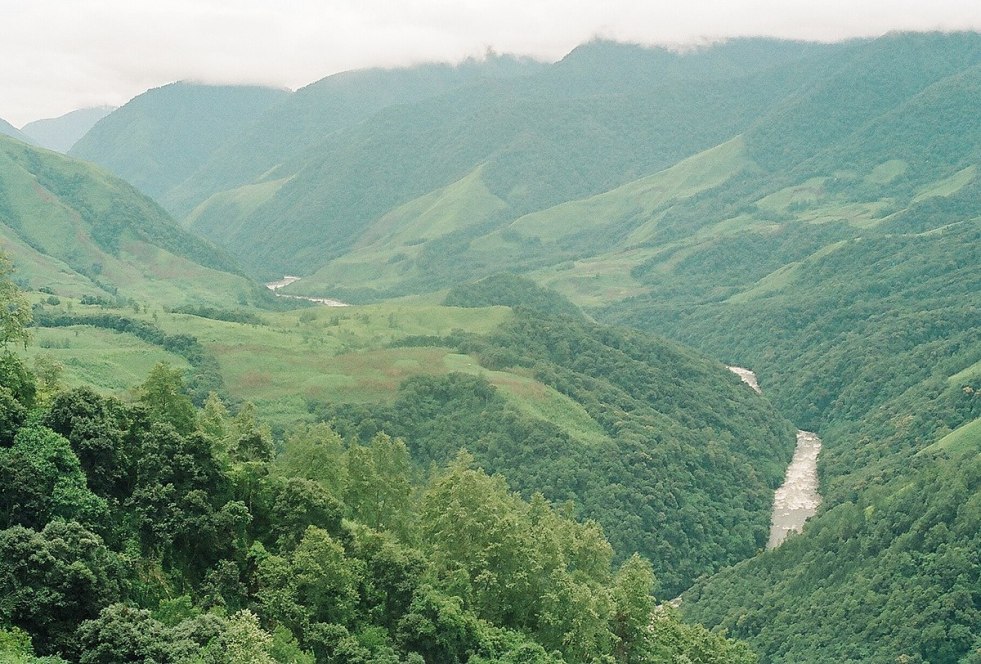
DRP 230123: Welcome decision of FAC to deny clearance to Etalin HEP
(Feature Image:- Upper Dibang Valley District, Arunachal Pradesh, India (Source: Wikipedia Commons/IWP)
It’s rather rare that we get a hydropower project related decision from official decision makers that can be welcomed. It has happened this week when the MoEF’s (Ministry of Environment, Forests & Climate Change) Forest Advisory Committee declined to give forest clearance to the controversial 3097 MW Etalin Hydropower Project in Dibang sub basin of Brahmaputra basin in Arunachal Pradesh and North East India. The project was under consideration for this clearance since 2014 and finally in the meeting on Dec 27, 2022, FAC conveyed that the current proposal cannot be considered for the clearance and revised proposal may be submitted. It is not a blanket rejection of the project, but considering the history of consideration of this project in FAC, it is closest we can come to that.
It is also welcome to know that the FAC has also looked at the poor track record of compliance of conditions of earlier forest clearances for the hydropower projects in Arunachal Pradesh among the many reasons why the project is rejected in current form. Arunachal Pradesh may do well to improve its track record before applying for forest clearance to any new projects in the state.
This decision is also a lesson for the MoEF’s Expert Appraisal Committee on River Valley Projects and also for MoEF itself for not even looking at the track record of compliance of the conditions of environment clearances that the EAC and MoEF give to the river valley and hydropower projects. They also never look at the implementation of the Environment Management Plans. Same is the case with the MoEF’s National Board of Wildlife.
Continue reading “DRP 230123: Welcome decision of FAC to deny clearance to Etalin HEP”
