
The World Water Day is celebrated on 22nd March annually across the globe. The theme selected for 2024 is ‘Water for Peace’. On this occasion, this report puts together the top ten positive water stories from Rural India during past one year. The compilation underlines the successful collective actions from village communities in the creation, protection and revival of local water sources including ponds, lakes, tanks etc. which are far better, sustainable and cost-effective measures for meeting potable and irrigation water requirements at local levels.
Continue reading “World Water Day 2024: Top Ten Positive Actions from Rural India”Tag: Forest
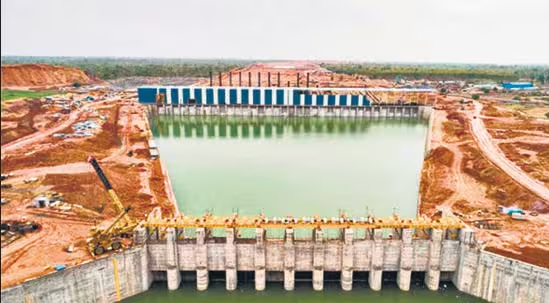
DRP 180324: Electoral Bonds disclosures confirm political economy of large dams
(Feature Image: A controversy over alleged engineering lapses in the ₹1 lakh cr Kaleshwaram project on Godavari triggered an electoral slugfest. HT, 03 Nov. 2023)
The Electoral bonds details now in public domain, thanks to the Supreme Court of India orders, has once again highlighted the political economy of large dams, hydropower projects and irrigation projects. It has once again confirmed what was publicly known that such large water projects involve kickbacks to political parties.
The details so far available involves companies like Megha Engineering, Rithwick Projects Pvt Ltd, Navayuga Engineering Company Ltd, among others. The projects so far that seems to be involved include Polavaram Dam, Kaleshwaram Lift Irrigation Project, Sunni Dam and Hydro projects, Kundah Pump Storage Hydropower project in Tamil Nadu and Silkyara Tunnel, almost all of them also involved in some kind of disaster or other.
Continue reading “DRP 180324: Electoral Bonds disclosures confirm political economy of large dams”
DRP 110324: Bangalore reminds us: Ignore groundwater at your own peril
(Feature Image: People stand in a queue with water cans to get drinking water at Jnana Jyothi Nagar, in Bengaluru. Image Source: PTI/Live Mint, 10 March 2024)
One central lesson of the ongoing Bangalore water crisis is essentially that ignore groundwater sustainability at your own peril. The surface water availability in Bangalore has not decreased, it is the groundwater depletion that is leading to crisis. There is of course the expansion of the city both horizontally and vertically that is increasing demands, but simple arithmetic tells us that if groundwater levels are sustained, it can take care of these increased demands.
The Groundwater sustainability includes sustaining the groundwater recharge and ensuring that extraction does not go past the recharge. Sustaining the groundwater recharge means first understanding the groundwater recharge mechanisms, zones and protecting them. BDA has been sitting for four years on desilting of two lakes: Bellandur and Varthur, which has caused huge impact on groundwater depletion. It also means increasing the groundwater recharge through rainwater harvesting (Bangalore’s failure here is apparent from the fact that government is collecting crores of rupees as fines from those not following the mandatory rainwater harvesting requirements), groundwater recharge wells and diverting tertiary treated sewage, available in Bangalore of upto 300 Million Liters per Day, to lakes and other such recharge zones.
Continue reading “DRP 110324: Bangalore reminds us: Ignore groundwater at your own peril”
DRP 040324: Ganga Water not fit for even bathing in Uttarakhand, UP, Bihar, W Bengal
(Feature Image: A drain falling into Ganga in Varanasi. Source: Amar Ujala)
A number of reports given below from this week shows that Ganga River water is not fit for even bathing at a number of locations in Uttarakhand, Uttar Pradesh, Bihar and W Bengal. These are all official statements, mostly given in reports submitted to judicial bodies or statements by the judicial bodies.
This shows how little progress has been achieved by the government, including by the Prime Minister, central and concerned state governments including by schemes like Namami Gange and scheme of National Mission for Clean Ganga and expenditure of tens of thousands of crores of rupees. This is in spite of the promises given in the past by the Prime Minister and Union Ministers including Nitin Gadkari to clean the river by deadlines that have come and gone.
The worst part is that if we look at the trajectory of various work being done in this regard, we see no hope of any improvement in the foreseeable future unless there is major change in the way this problem is dealt with. But how will such a major change happen?
Continue reading “DRP 040324: Ganga Water not fit for even bathing in Uttarakhand, UP, Bihar, W Bengal”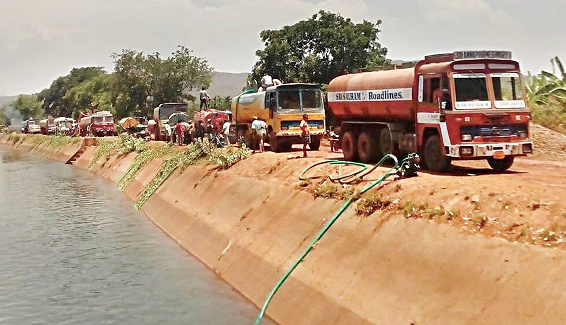
DRP 260224: Karnataka faces Drought, Farmer Distress, water scarcity
(Section 144 imposed near Bhadra Canals to stop illegal water lifting amid supply crisis. Representational image. TNIE)
As the two reports from media today shows, Karnataka is facing drought in 223 of 236 talukas, water scarcity and even farmer distress and suicides. The state government is aware of the situation and taking necessary measures. The situation could be similar in a number of states including Maharashtra, Telangana, Andhra Pradesh and even some of the eastern and northern states. The North Himalayan states have experienced hugely below normal snowfall in the ongoing winter. The Winter Rainfall at all India level for the period Jan 1 2024 to Feb 25 2024 is already 31% below normal.
There is role of global warming and El Nino in this and these factors are going to persist at least till the end of Indian Summer. So the governments both at centre and in states needs to be ready for the crisis.
The current Karnataka govt is awake to reality and seems to be taking the appropriate steps. Karnataka had deficit rainfall in SW Monsoon 2023.
Continue reading “DRP 260224: Karnataka faces Drought, Farmer Distress, water scarcity”
DRP 190224: NBWL decision of no clearance without compliance of previous projects
The decision of National Board of Wild Life (NBWL) not to clear any projects affecting wildlife areas till there is compliance certificate from previous such projects is certainly welcome, was long overdue. We hope NBWL comes out with clearly defined norms for implementing this decision and also implements the decision in letter and spirit. Needless to add, the compliance certificate must come through an independent assessment done by a body that involves no conflict of interest and has independent track record.
Unfortunately, the news this week that NBWL has given green light to the Jamrani Dam in Uttarakhand without a clearance from National Tiger Conservation Authority (NTCA) is a significant dampener. Similarly, the past track record of NBWL, including the way it gave clearance to Ken Betwa River Link Project does not inspire too much confidence that NBWL is serious about this.
Continue reading “DRP 190224: NBWL decision of no clearance without compliance of previous projects”
DRP 120224: Report of Parl Com on Yamuna wants 23 cumecs water in the river
(Feature Image: Flowless Yamuna downstream Vyasi HEP, Dehradun in June 2023. Bhim Singh Rawat/SANDRP)
In a welcome move, the Parliamentary Committee report on Yamuna River has suggested at least 23 cumecs (Cubic Meters for Second) water needs to be released from Hathnikund barrage at least in nine non monsoon months from Oct to June as per the recommendation of the National Institute of Hydrology, a govt of India body. The report has said that almost no water is being released for the river from the Wazirabad barrage in Delhi.
The 10 cumecs water now being released (how regularly even this is being released is also a question) is inadequate as most of it evaporates or percolates soon after it is released. The committee has asked the Union Jal Shakti Minister to take urgent steps in this direction. In fact, the committee should have given a time limit for this. We hope these urgent steps will be taken soon.
Continue reading “DRP 120224: Report of Parl Com on Yamuna wants 23 cumecs water in the river”
DRP 050224: IMD needs to improve forecasting and sharing, but doing the opposite?
(Feature Image: Climate change catoon by Jug Suraiya & Partho Sengupta. ToI, 23 June 2018)
The decision of the IMD to shut down 199 of its district agromet units across India is disturbing on a number of counts. In the era of climate change when the key parameters are undergoing such rapid change, there is need for increasing monitoring and sharing of climate information by the IMD and need to in fact decentralize the whole effort. But this decision of IMD is going against this basic requirement.
In fact, the IMD has become a sort of holy cow, while in reality its performance in monitoring, forecasting and sharing information in time is far from satisfactory. This is increasingly evident every year when IMD fails to provide not only accurate, actionable, rainfall forecasts sufficiently in advance to help reduce the flood disasters and also take timely decisions on reservoir operations, IMD also fails to provide even timely information about the actual rainfall on ground and how that rainfall is going to get converted to inflows in rivers and reservoirs. Similarly, the district agromet units can provide farmer level and decentralized accurate rainfall monitoring and forecasting information that can help farmers take timely decisions.
Continue reading “DRP 050224: IMD needs to improve forecasting and sharing, but doing the opposite?”
DRP 290124: Wetlands and Human Wellbeing: So little reflected in wetlands governance
(Chest nut clutivators removing water hycinth from Giri taal of Kashipur in US Nagar, Uttarakhand in April 2023. Bhim Singh Rawat/SANDRP)
As the world approaches the World Wetlands Day on Feb 2, we notice a proliferation of news related to wetlands, but mostly bad news in this week’s DRP NB: Loktak lake in Manipur facing impact of inland waterways project, the Supreme Court having to intervene for the Futula lake in Nagpur, TN Govt telling NGT that 38% of Pallikaranai marshland is under encroachment, in Bangalore, NGT is asking for response from KSPCB and others regarding the lake buffer zone encroachment. There is also a lot of bad news about the worsening state of our rivers, including Ganga.
One piece of good news is that people have come out with their own plan for restoration of Ennore wetland in TN. In Assam, Maguri Motapung Bill is regaining biodiversity after earlier being polluted by oil spill, but that is only control of damage earlier. Similarly, while it is good news that SC has intervened to protect Futula lake in Nagpur, but the fact that the govt wanted to encroach on it in the name of “temporary” construction is not at all good news.
Continue reading “DRP 290124: Wetlands and Human Wellbeing: So little reflected in wetlands governance”
DRP 220124: Welcome news about Rainfall related issues
There are a number of welcome developments this week related to rainfall. Firstly, forecasters say that the El Nino may start weakening from Feb and may weaken by June 2024 and neutralize thereafter. This can possibly mean good rainfall in SW Monsoon 2024.
Second bit of welcome development is that IMD, on turning 150, has declared that it will set up more doppler radars, rainfall measuring stations and use supercomputers to predict state and district level rainfall, currently it only does at national and four regions.
The study of tehsil level rainfall trends over the last four decades is the third piece of welcome development on rainfall. We need many more studies like this, possibly from IMD itself. More details given below.
Continue reading “DRP 220124: Welcome news about Rainfall related issues”
