Recently, when the government of India certified that cities like Indore, Surat, Hyderabad, Vizag, etc are Water Plus, it raised a number of questions including the credibility of the claim, lack of credit worthy independent assessment, how sustainable are the claims, etc. The author of the following article rightly raises the question if the cities are at all Water Plus. They are clearly not. While recycling and reuse of 30% of treated sewage and full treatment of waste water is welcome in view of the current pathetic status of city water management in cities, this achievement, if it is real as assessed by credit worthy independent assessment & judged against a set of well-defined criteria of sustainability among others, is worth appreciating, but it certainly does not deserve Water Plus City label. To achieve that label, a lot more and a lot different kind of achievements will be required.
Continue reading “DRP 130921: Misleading claim of Water Plus cities”Tag: Fisherfolks
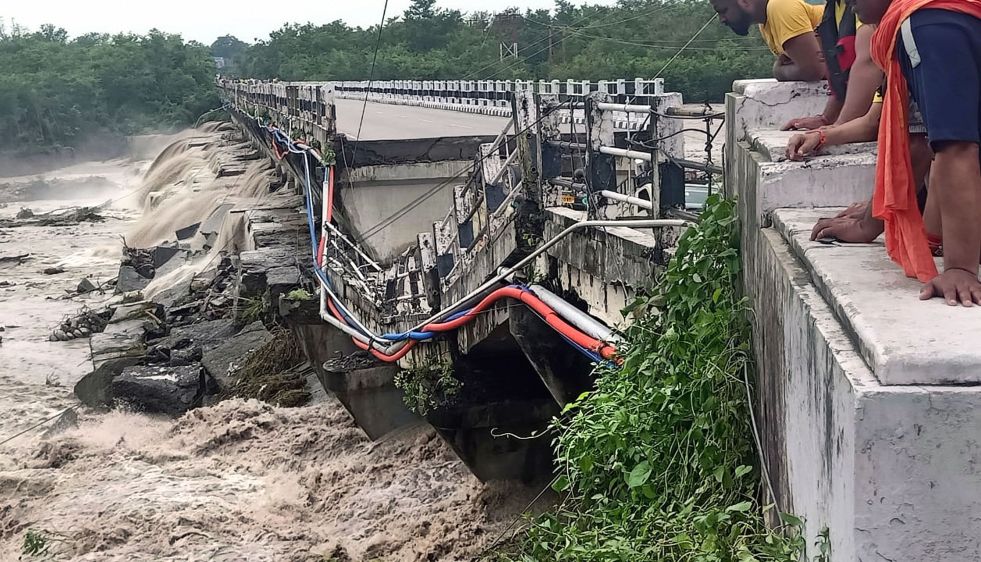
DRP 060921: DISASTERS GOING UP in Himalayas, across India & Globally
(Feature image: Rani Pokhri bridge on the Dehradun Rishikesh highway collapsed near Dehradun, August 27, PTI https://www.thequint.com/news/india/uttarakhand-rains-bridge-on-dehradun-rishikesh-highway-collapses-no-casualties#read-more)
Data published this week (see below) shows that disasters are going up almost five fold in the Himalayas (data from Uttarakhand, HP below, but this is not different in rest of Himalayas), nationally and even globally. The data from UN report this week shows that the disasters are up five fold in recent years. Damage is up even more. As the data of landslides due to Char Dham High way and hydropower projects show, the contribution from these projects to the disaster is clear. So much so that even the editorial in The Hindustan Times this week asked to stop these disastrous projects. While it is unlikely that the governments or politicians would wake up to this reality anytime soon, one expects the judiciary, media, civil society and academics to take up this issue on urgent basis.
Continue reading “DRP 060921: DISASTERS GOING UP in Himalayas, across India & Globally”
DRP 230821: World Water Week: 30 years long enough for stock taking?
This week (23-28 Aug 2021) it is Stockholm World Water Week (SWWW) with a 30 year history. The organisers say: “World Water Week 2021 is unlike any other week in our 30-year-old history.” But provide no clear reasons why they are saying that. Their possible explanation: “In 2021 people across the world are really beginning to understand the gravity of the situation we are facing – within a decade we must halve carbon emissions, restore the degraded natural world, and achieve the Sustainable Development Goals. This will require massive transformations of all sectors of society. World Water Week 2021 is entirely focused on the role of water for these transformations and on developing real solutions.” https://www.worldwaterweek.org/news/join-the-most-important-world-water-week-ever
Continue reading “DRP 230821: World Water Week: 30 years long enough for stock taking?”
DRP 020821: Disappointing UKD HC order on Chamoli disaster: Will SC intervene please?
( Feature image:- Women members of Raini village’s gram sabha, Source: Atul Sati/ Facebook/The Quint)
The July 14, 2021 order of Uttarakhand HC, dismissing the petition of those affected by the Chamoli disaster of Feb 2021 and asking that NTPC, developer of the Tapovan Vishnugad project be accountable, is most distressing. While Indian judiciary is rightly credited with doing a lot for the cause of environment and people in general, in the unequal battle of the communities and activists against injustice and negligence of giant projects and their developers, the judiciary has more often failed to ensure that the developers are held accountable and are not allowed to bulldoze ahead using their might, supported by the state, to crush attempts to achieve just and democratic results. In the Chamoli disaster, there are many many questions that remained unanswered and one expected the HC to use the petition to seek those answers. But in stead, the HC has chose to question and fine the petitioners. One hopes the higher judiciary will correct this and stay the order and in stead seek answers from the developers of the hydro projects in such fragile, disaster prone areas and those that sanctioned such projects, including the environment ministry, the state government, the CWC, the CEA, the Geological Survey of India and also the project developers.
Continue reading “DRP 020821: Disappointing UKD HC order on Chamoli disaster: Will SC intervene please?”
DRP 120721: Will Bhupender Yadav improve India’s Environment Governance?
It’s rather rare when some of the most well-known environmentalists of India, including Ritwick Dutta and Manoj Misra welcome the arrival of Bhupender Yadav as India’s new Environment Minister. The state of the environment governance under the outgoing minister, Prakash Javadekar has worsened so much, both in perception and substance, that possibly any change would look better. In fact Javadekar may be front runner for the label of India’s worst ever environment minister according to some analysts.
The environment appraisals, the constitution of committees including the various Expert Appraisal Committees, the Forest Advisory Committee and the Standing committee of National Board of Wildlife, the public hearings and consultation processes, the state of pollution and rivers, biodiversity, wetlands, floodplains, sand mining, to name just a few areas, were all seen going downhill on a steep slope during the Javadeker period. The monitoring and compliance remained non existent. Some would argue that was it much different before Javadekar. The point is Javadekar had no pretentions of trying to improve the environment governance. He was out to dilute every available norm and he seemed to have succeded significantly.
Even if Yadav were to genuinely wish to improve matters, how much will he be allowed to do, by the perceived imperatives of the economic fundamentalist agenda, the well-entrenched vested interests and the bureaucracy is a question that only time will tell, but there is little doubt that a lot can and needs to be done rather urgently and none of these perceived obstacles should come in the way if there is will. The climate change is making the improvement in environmental governance rather urgent.
Continue reading “DRP 120721: Will Bhupender Yadav improve India’s Environment Governance?”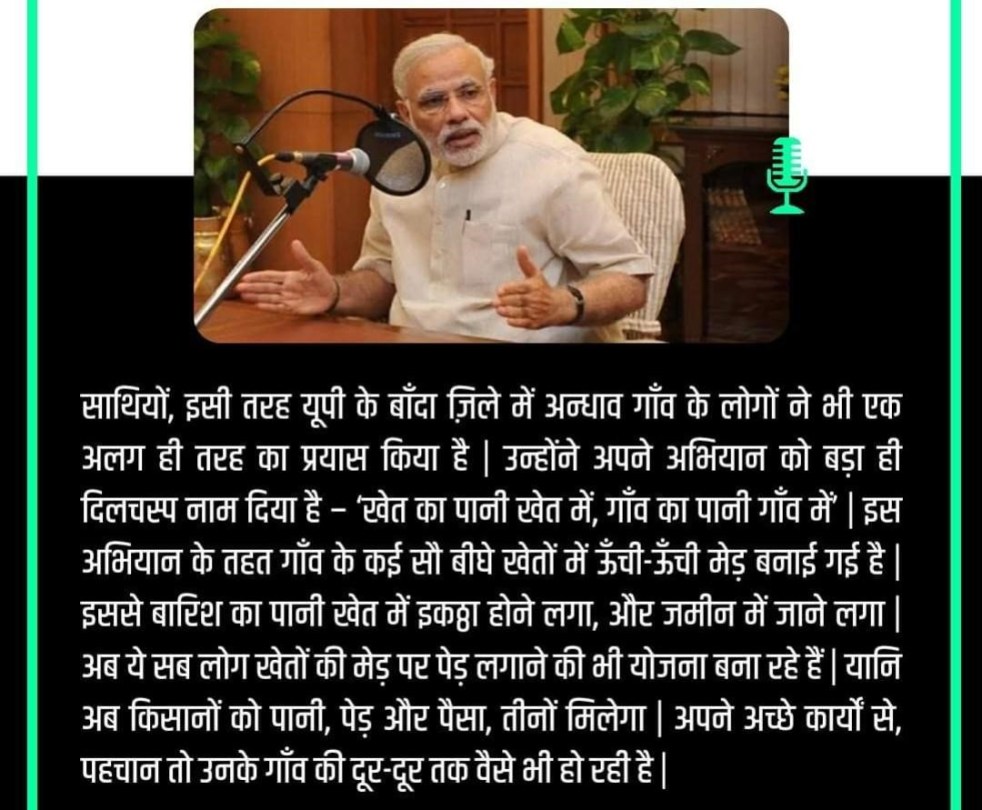
DRP 280621: Where is the impact of lessons of the water conservation efforts that PM praises, on his govt’s water projects & policies?
When the Prime Minister Shri Narendra Modi Mentioned some exemplary water conservation efforts in his Mann ki Baat on June 27, 2021, it was not for the first time he was doing it. These are certainly most welcome.
However, these mentions raise a number of questions. If the Prime Minister considers these local water options as exemplary, which they indeed are, where do we see the reflection of the lessons from such efforts in government programs and policies? In fact why there is no reflection of such lessons in what the government does in water sector? How can the government justify the destruction of Panna Tiger Reserve, over 9000 ha of forests, some 46 lakh trees, the catchment of Ken river and large part of Bundelkhand in the name of Ken Betwa Link Project, in the same Bundelkhand. How can his government justify the destructive projects like the Char Dham Highway, the big hydro projects and so on in the same Uttarakhand where Sachidanand Bharati (who was incidentally recipient of the Bhagirath Prayas Samman of India Rivers Week) works, whose efforts the PM praised? One hope the PM and his government will be awake to the implications and lessons of the works that PM praises.
Continue reading “DRP 280621: Where is the impact of lessons of the water conservation efforts that PM praises, on his govt’s water projects & policies?”
DRP 070621: Local Water Options Stories from Five states
(Feature image A big main pond that has been constructed in the Phular village, Damoh. (Pic: Shahroz Afridi, News 18))
This week we would like to highlight some remarkable local water option stories from five states spread across India: Madhya Pradesh from Central India, Punjab from North India, Karnataka from South India, Rajasthan & Maharashtra from western India. These are stories just from this week among many others that show that local water options exist, they are the cheapest, sustainable, equitable, democratic and with least impacts and most appropriate in the climate change context. In a country like India where groundwater has been India’s water lifeline for over four decades now, these options are best suited for ensuring optimum recharge of groundwater aquifers at local level and sustaining those lifelines. Particularly when South West Monsoon is on our doorstep to gift its annual bounty to India. As UN starts the International Decade for Ecosystems Restoration with the theme of preventing, halting, reversing the degradation of ecosystems, these become even more important.
Continue reading “DRP 070621: Local Water Options Stories from Five states”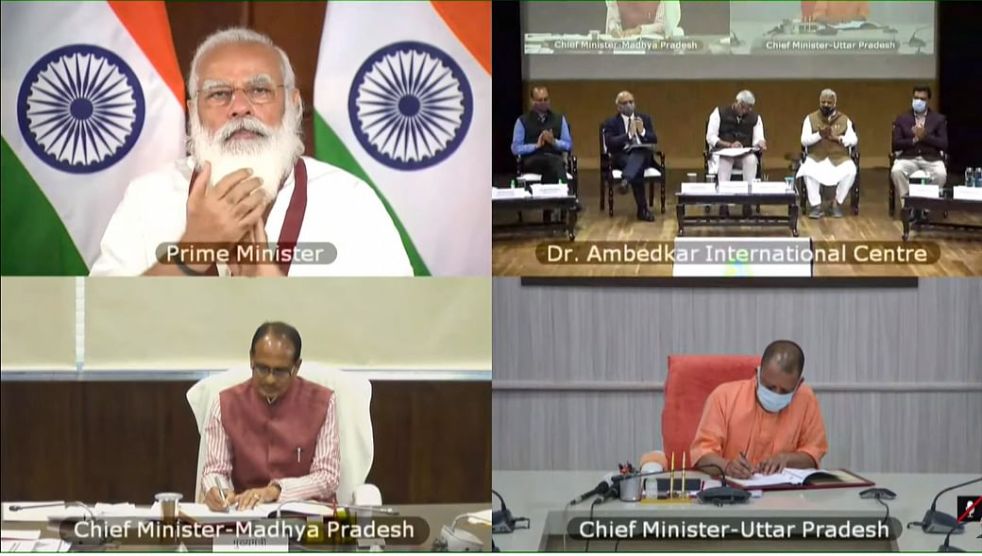
DRP 220321: PM presiding over proposal for destruction of 46 lakh trees, Bundelkhand & Panna Tiger Reserve on World Water Day?
There cannot possibly be any worse news on World Water Day for India than that the Prime Minister is presiding over the agreement between Uttar Pradesh and Madhya Pradesh Chief Ministers to destroy some 46 lakh trees, Panna Tiger Reserve, Ken River, Bundelkhand and also downstream Banda district. All to export water from Bundelkhand to Upper Betwa basin. All this in the name of pushing the mindless project called Ken Betwa River Link Project. Why is the government pushing this destructive project, a Rs 38 000 Crore proposition? The answer to that question is in that question: it is a Rs 38 000 Cr proposition!
There is still some hope though for the people of Panna, Banda and Bundelkhand if there is any respect for the law of the land. This is because the project does not have final forest clearance and the conditions of the stage I forest clearances are not implementable. The Wild Clearance of the project is challenged by the Central Empowered Committee of the Supreme Court, following a petition. The Environment Clearance to the project has also been challenged before the National Green Tribunal. Let us hope there is sufficient respect for the law of the land, to ensure that the project does not go ahead even with the agreement signed. But a key propriety question arises is, should the prime minister endorse a project that does not have all the statutory clearances and legal challenge to whose clearances are before the judiciary?
But the prime minister’s advocacy for rainwater harvesting on the same also loses a lot of its credibility, seeing that he is presiding over this destruction that goes totally against the central message of harvesting rain where it falls, when it falls.
Continue reading “DRP 220321: PM presiding over proposal for destruction of 46 lakh trees, Bundelkhand & Panna Tiger Reserve on World Water Day?”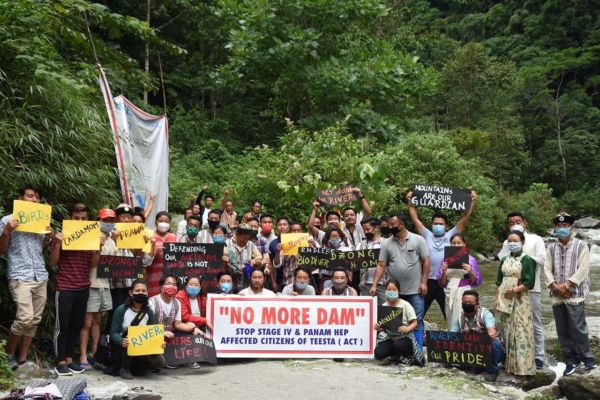
DRP 150321: MoEFCC & NMCG join March 14 celebrations on the Day of Action for Rivers
The International Day of Action Against Dams and For Rivers, Water and Life, or in short, “International Day of Action for Rivers” as used now, was adopted by the participants of some 20 countrties, at the first International Meeting of People Affected by Dams in March 1997 in Curitiba Brazil. Representatives from 20 countries including India, USA, Brazil & other countries from Asia, Americas, Europe, Africa decided that the International Day of Action would take place on March 14. Thus, the celebration started from 1997. The aim on this International Day of Action for Rivers is to raise voices against destructive water development projects, reclaim the health of our watersheds, and demand the equitable and sustainable management of our rivers.
This year, among many other events happening on this day in South Asia, we have reported in this weekly bulletin, besides the blog from SANDRP highlighting the resistence against destructive hydro and dam projects in India in last one year, the online discussion by the Endangered Himalayas on “Extinct Rivers or free flowing rivers: The future of Himalayan Rivers”, Official launch of Right of Rivers South Asia Alliance and Pakistan Fisherfolk Forum’s 14-days long campaign Rights of the River and personhood rights to Indus River and Indus delta.
Continue reading “DRP 150321: MoEFCC & NMCG join March 14 celebrations on the Day of Action for Rivers”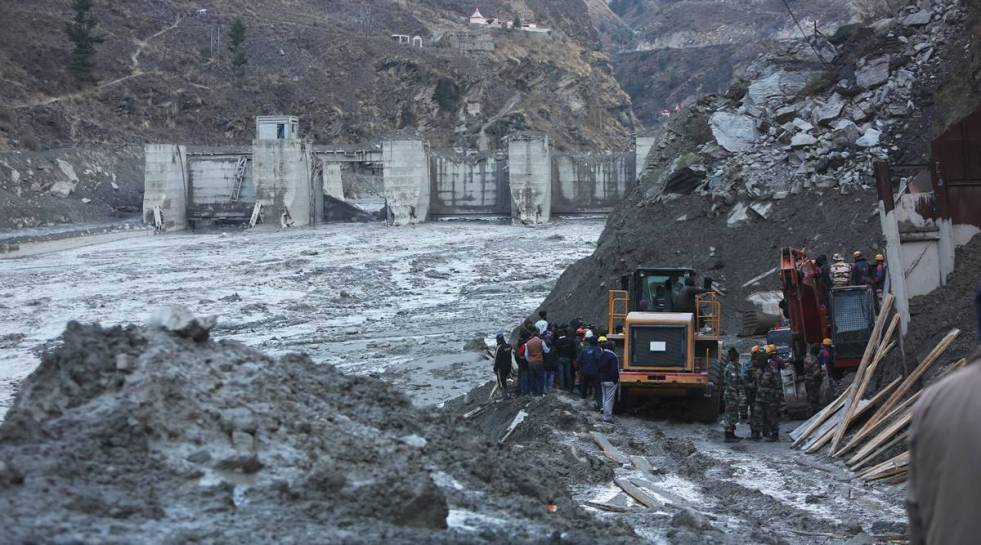
DRP 150221: Why Mangshri Devi of Tapovan Should Head Uttarakhand’s Disaster Management Department?
Feature image Tapovan-Vishnugad hydropower project in Chamoli district on Feb., 7 by Gajendra Yadav, Express Photo
In a fantastic story, Shivani Azad of The Times of India has reported possibly the most remarkable story of the Chamoli avalanche disaster that started on Sunday morning on Feb 7, 2021. She reported that Vipul Kairuni of Dhaak village in Tapovan, working at the time at the now destroyed Tapovan Vishnugad project, got saved thanks to frantic calls by his mother Mangshri Devi as she and his wife saw from their village home, situated at a height from the river, that a massive flood is approaching the dam site. It was thanks to frantic, repeated calls by Mangshri Devi that not only Vipul, but at least two dozen more people could run to safety of a ladder and saved their lives.
So effectively, Mangshri Devi has saved at least two dozen lives in Chamoli disaster. Who else can claim to have achieved anything like that in the disaster? The disaster management department seems completely absent from the scene either in terms of pre disaster monitoring or in taking steps to save lives during the disaster. In fact, there should have been an early warning system in place that could have saved many more lives. But it does not exist. Either in Rishiganga/ Dhauliganga basin or anywhere else in Uttarakhand. NTPC’s Tapovan Vishnugad Project has faced so many disasters already since 2008, but is only now talking about putting in place early warning system. Should not the NTPC and power ministry top brass as well as Uttarakhand disaster management department held accountable for that?
Continue reading “DRP 150221: Why Mangshri Devi of Tapovan Should Head Uttarakhand’s Disaster Management Department?” SANDRP