DRP News Bulletin

DRP 221121: Dangerous competitive populism in Karnataka in the name of Mekedatu Dam

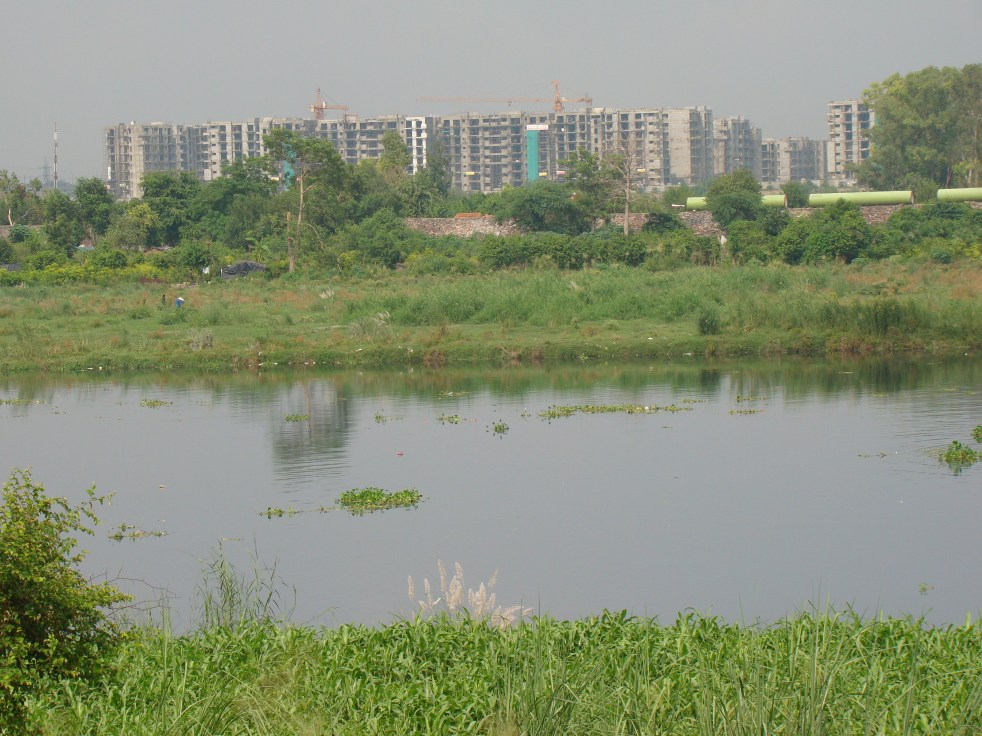
(Feature Image:- Explainer: What is the Mekedatu dispute between Tamil Nadu & Karnataka? The News Minute)

A very dangerous competitive populism in Karnataka is going on in the name of Mekedatu dam on Cauvery River in the name providing drinking water to Bangalore and other surrounding areas. BJP, the party in power as well as the opposition parties like Congress and JD (U) are indulging in activities to outdo each other in showing their support for the project. Unfortunately, we see very little informed debate on the need, optimality, justification or possible alternatives to the project or the hydrologic, legal, environmental justification or any discussion if such a project is at all appropriate in the context of changing climate. Unfortunately, even media has not painted itself in glory on this issue. The following article is like a whiff of fresh air in such a situation. Hope the civil society friends will take up an informed debate on this issue.   

Continue reading “DRP 221121: Dangerous competitive populism in Karnataka in the name of Mekedatu Dam” →
DRP News Bulletin

DRP 151121: District Level Vulnerability Assessment in India

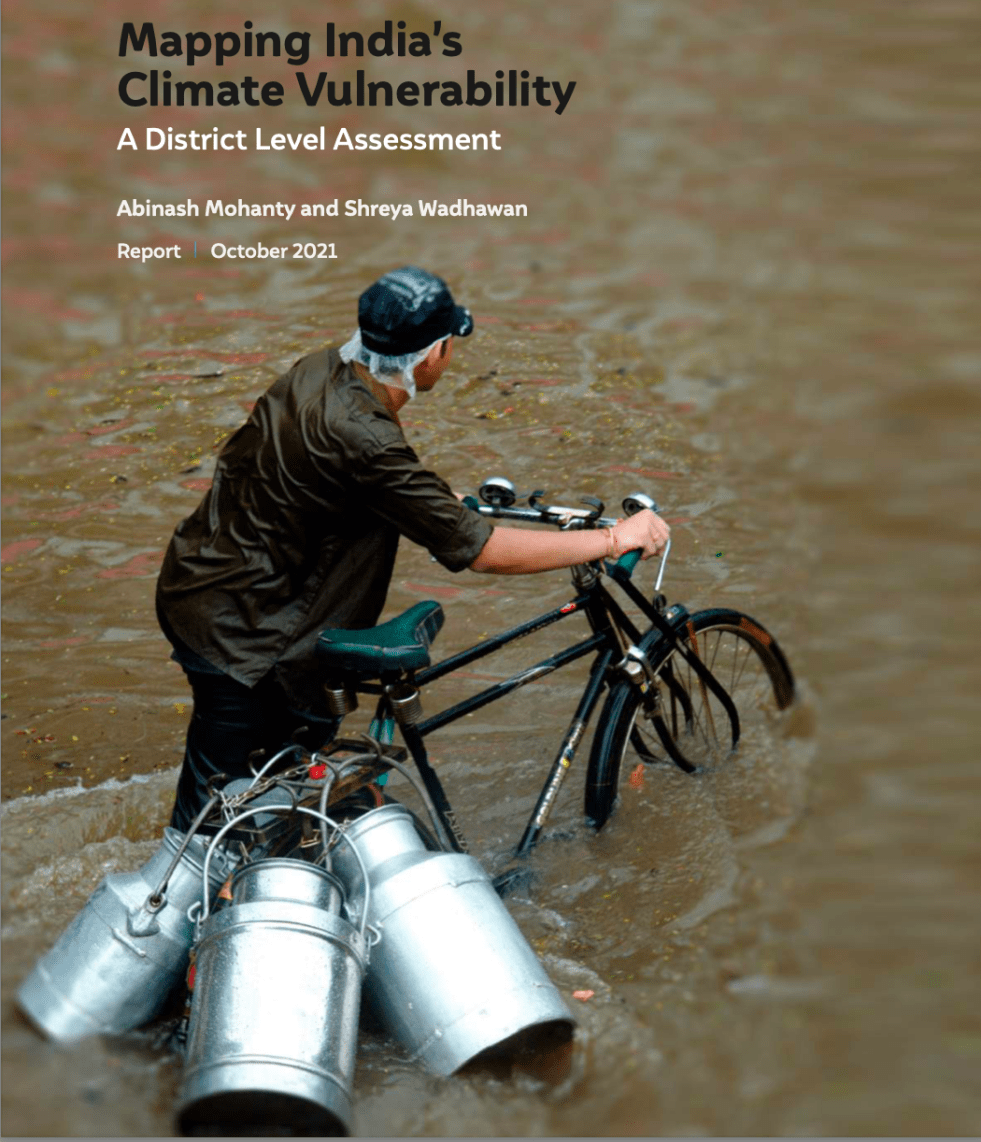
This is the kind of study that was long overdue. In fact such a study should have been done before formulating India’s National Action Plan on Climate Change (NAPCC) as SANDRP has been saying since 2009 (see SANDRP critique of NAPCC published under the title “THERE IS NO HOPE HERE) when NAPCC was made public by a dozen wise individuals sitting in a room without any participatory or transparent exercise. One hopes that India will restart the exercise of fresh formulation of NAPCC after doing such a study on an urgent basis, on the lines of the study described below. In any case one hopes the union and state governments will wake up and take up District level vulnerability assessment in India in an independent way on urgent basis.

“This study undertakes a first-of-its-kind district-level vulnerability assessment of India, which maps exposure, sensitivity, and adaptive capacity using spatio-temporal analysis. To do this, we developed a climate vulnerability index (CVI) of Indian states and Union Territories (UTs). Instead of looking at climate extremes in isolation, we map the combined risk of hydro-met disasters and their compounded impacts on vulnerability. By doing so, we aim to inform policy goals in the resource-constrained context of India.

Continue reading “DRP 151121: District Level Vulnerability Assessment in India” →
DRP News Bulletin

DRP 011121: Why is Ganga not ENTHU about Ganga Utsav?

The Government of India, through the National Mission for Clean Ganga (NMCG) under the Union Ministry of Jal Shakti has announced the celebration of Ganga Utsav this year from Nov 1-3, 2021. The Ganga Utsav is supposed to mark the anniversary of announcement of River Ganga as the ‘National River’ i.e. 4th November, 2008. It is supposed to be celebrated not only in Ganga basin, but across the country as River Festival. There is little enthusiasm or even knowledge about this across the country or even in Ganga basin, though.

Ganga River itself continues to face the onslaughts all across the basin in the name of development, some noteworthy aspect of these include: pushing unviable hydropower project in the upstream; pushing disastrous projects like the Lakhwar Dam project and the Ken Betwa River Link project in the Ganga basin; construction of Char Dham and other highways without any assessment of impacts of the project on the river; construction of huge infrastructure along the river in the name of Ganga waterway, further impacting the river and its biodiversity, again without any impact assessment or participatory decision making; continuously increasing water extraction, diversion, use, pollution and dumping of solid wastes along the river; increasing and indiscriminate sand and boulder mining and quarrying from the river bed and floodplain, without any credible impact assessment; increasing encroachments into the river bed in the name of solid waste dumping, river front development, channelisation etc, in absence of any policy, rules or regulation about the space belonging to the river, to name a few. No wonder, the rivers in the Ganga basin has shown no enthusiasm for the Ganga Utsav!

Continue reading “DRP 011121: Why is Ganga not ENTHU about Ganga Utsav?” →
DRP News Bulletin

DRP 200921: Policy needed for Urban Rivers, not Riverfronts

There is no doubt that India urgently needs a guidance note and policy for Environment Sensitive, Climate Adaptive and Socially inclusive Urban Rivers Planning and Development. But this is required for the Urban Rivers and not just Urban Riverfront. The NMCG attempt like that of Sabarmati and numerous other river fronts unfortunately are not bothered about rivers, they are only interested in grabbing land from the Urban Rivers and convert the rivers into concrete channels on two and in some cases three sides (include the sides and the bed of the rivers). That is clearly death knell for the rivers. There is no doubt that there is need connect the people with the rivers, not just river fronts. The NMCG and other government bodies know the difference, so it is not out of ignorance that they have come out with the guidance note for river fronts rather than one for rivers. Unless people, civil society, experts and judiciary raise these issues, the future of Urban rivers seem bleak in India, as can be seen from the stories of Urban rivers compiled here from this week. 

Continue reading “DRP 200921: Policy needed for Urban Rivers, not Riverfronts” →
DRP News Bulletin

DRP 130921: Misleading claim of Water Plus cities

Recently, when the government of India certified that cities like Indore, Surat, Hyderabad, Vizag, etc are Water Plus, it raised a number of questions including the credibility of the claim, lack of credit worthy independent assessment, how sustainable are the claims, etc. The author of the following article rightly raises the question if the cities are at all Water Plus. They are clearly not. While recycling and reuse of 30% of treated sewage and full treatment of waste water is welcome in view of the current pathetic status of city water management in cities, this achievement, if it is real as assessed by credit worthy independent assessment & judged against a set of well-defined criteria of sustainability among others, is worth appreciating, but it certainly does not deserve Water Plus City label. To achieve that label, a lot more and a lot different kind of achievements will be required.

Continue reading “DRP 130921: Misleading claim of Water Plus cities” →
DRP News Bulletin

DRP 060921: DISASTERS GOING UP in Himalayas, across India & Globally

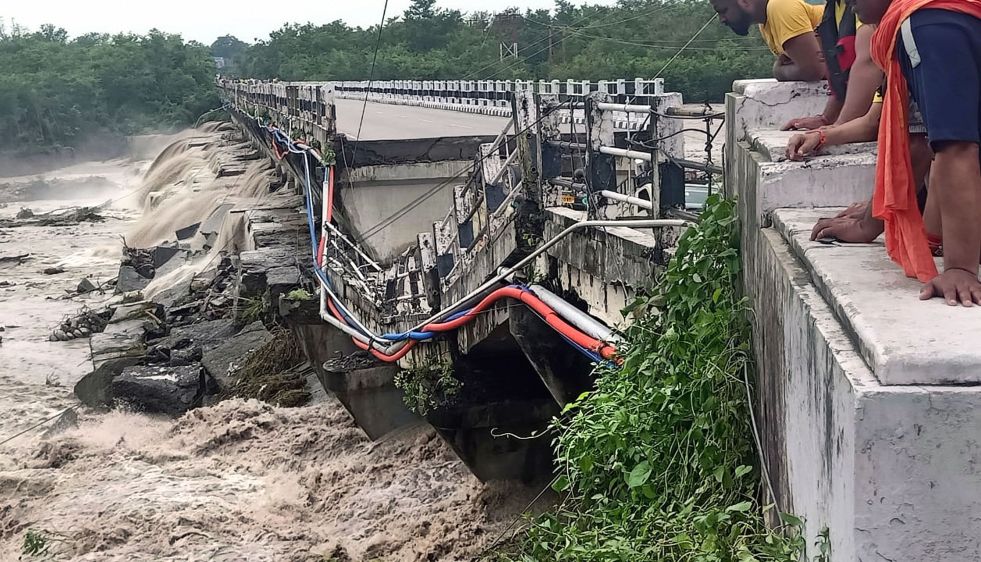
(Feature image: Rani Pokhri bridge on the Dehradun Rishikesh highway collapsed near Dehradun, August 27, PTI https://www.thequint.com/news/india/uttarakhand-rains-bridge-on-dehradun-rishikesh-highway-collapses-no-casualties#read-more)

Data published this week (see below) shows that disasters are going up almost five fold in the Himalayas (data from Uttarakhand, HP below, but this is not different in rest of Himalayas), nationally and even globally. The data from UN report this week shows that the disasters are up five fold in recent years. Damage is up even more. As the data of landslides due to Char Dham High way and hydropower projects show, the contribution from these projects to the disaster is clear. So much so that even the editorial in The Hindustan Times this week asked to stop these disastrous projects. While it is unlikely that the governments or politicians would wake up to this reality anytime soon, one expects the judiciary, media, civil society and academics to take up this issue on urgent basis.

Continue reading “DRP 060921: DISASTERS GOING UP in Himalayas, across India & Globally” →
DRP News Bulletin

DRP 090821: Doubtful validity of GOI’s July 15 notification on AP-Telangana water disputes

(Feature image: Two Telugu states, one river — why Andhra & Telangana are fighting it out over the Krishna https://theprint.in/india/two-telugu-states-one-river-why-andhra-telangana-are-fighting-it-out-over-the-krishna/696801/)

The July 15 2021 Govt of India notification on Andhra Pradesh-Telangana water disputes is of doubtful legal validity and the Supreme Court urgently needs to examine this. The 2014 AP Regorganisation Act didn’t make provision for the Centre to take over water infrastructure of the two states, which is what effectively the centre has done through the July 15 notification. The Jul 15 notification effectively dismissing powers of Andhra Pradesh and Telangana without any consultations and there is no provision in constitution for this.

There is no doubt that the long lingering water sharing disputes between Telangana and Andhra Pradesh and which was the major reason for the bifurcation of Andhra Pradesh, needs to be resolved. But the blame for not achieving any resolution of the disputes also lies with the Centre, the KRMB and GRMB are not even functioning with necessary urgency or effectiveness.

Continue reading “DRP 090821: Doubtful validity of GOI’s July 15 notification on AP-Telangana water disputes” →
DRP News Bulletin

DRP 020821: Disappointing UKD HC order on Chamoli disaster: Will SC intervene please?

( Feature image:- Women members of Raini village’s gram sabha, Source: Atul Sati/ Facebook/The Quint)

The July 14, 2021 order of Uttarakhand HC, dismissing the petition of those affected by the Chamoli disaster of Feb 2021 and asking that NTPC, developer of the Tapovan Vishnugad project be accountable, is most distressing. While Indian judiciary is rightly credited with doing a lot for the cause of environment and people in general, in the unequal battle of the communities and activists against injustice and negligence of giant projects and their developers, the judiciary has more often failed to ensure that the developers are held accountable and are not allowed to bulldoze ahead using their might, supported by the state, to crush attempts to achieve just and democratic results. In the Chamoli disaster, there are many many questions that remained unanswered and one expected the HC to use the petition to seek those answers. But in stead, the HC has chose to question and fine the petitioners. One hopes the higher judiciary will correct this and stay the order and in stead seek answers from the developers of the hydro projects in such fragile, disaster prone areas and those that sanctioned such projects, including the environment ministry, the state government, the CWC, the CEA, the Geological Survey of India and also the project developers.

Continue reading “DRP 020821: Disappointing UKD HC order on Chamoli disaster: Will SC intervene please?” →
DRP News Bulletin

DRP 260721: “Unprecedented rainfall” used to escape responsibility?

(Feature image source: India TV https://www.indiatvnews.com/news/india/monsoon-mayhem-maharashtra-floods-landslides-death-toll-latest-news-721924)

As Maharashtra faced the worst flood disaster of SW Monsoon 2021 in India, we see the phrases like “unprecedented rainfall”, “record breaking rainfall”, “frequent landslides” etc. with increasing frequency along with phrases like climate change floating around. While these are not entirely incorrect claims, these should not be used to escape the responsibility and accountability for failing to either accurately forecast the rainfall or to manage the proportions of disasters, including operation of dams, encroachments into water bodies and water path, not accurately marking locations vulnerable to landslides in landslide prone areas or taking up inappropriate “development” projects in vulnerable areas. All of these factors can be seen at play in disasters this monsoon in Maharashtra, Uttarakhand, Himachal Pradesh among others.

Using such phrases, there is an attempt to escape the accountability or responsibility. This is a culture increasing being propagated by Central Water Commission as they did in Kerala in 2018 and Krishna basin floods in Maharashtra in 2019 as in numerous other occasions. It is known now to everyone that climate change is going to lead to more instances of heavy rainfall that can frequently fall in unprecedented category, but that only means we need to take measures to reduce the damage in such instances, predict them accurately and manage them effectively. That is what the Action Plans for Climate Change and Disaster Management apparatus needs to work on, but we have clearly failed there so far.

Continue reading “DRP 260721: “Unprecedented rainfall” used to escape responsibility?” →
DRP News Bulletin

DRP 120721: Will Bhupender Yadav improve India’s Environment Governance?

It’s rather rare when some of the most well-known environmentalists of India, including Ritwick Dutta and Manoj Misra welcome the arrival of Bhupender Yadav as India’s new Environment Minister. The state of the environment governance under the outgoing minister, Prakash Javadekar has worsened so much, both in perception and substance, that possibly any change would look better. In fact Javadekar may be front runner for the label of India’s worst ever environment minister according to some analysts.

The environment appraisals, the constitution of committees including the various Expert Appraisal Committees, the Forest Advisory Committee and the Standing committee of National Board of Wildlife, the public hearings and consultation processes, the state of pollution and rivers, biodiversity, wetlands, floodplains, sand mining, to name just a few areas, were all seen going downhill on a steep slope during the Javadeker period. The monitoring and compliance remained non existent. Some would argue that was it much different before Javadekar. The point is Javadekar had no pretentions of trying to improve the environment governance. He was out to dilute every available norm and he seemed to have succeded significantly.

Even if Yadav were to genuinely wish to improve matters, how much will he be allowed to do, by the perceived imperatives of the economic fundamentalist agenda, the well-entrenched vested interests and the bureaucracy is a question that only time will tell, but there is little doubt that a lot can and needs to be done rather urgently and none of these perceived obstacles should come in the way if there is will. The climate change is making the improvement in environmental governance rather urgent.

Continue reading “DRP 120721: Will Bhupender Yadav improve India’s Environment Governance?” →