DRP News Bulletin

DRP 191222: Question marks over viability of pump hydro projects

(Feature Image: 1772 Mw PSHPs Spain. Photo courtesy of Iberdrola/ ENR)

The question marks over viability of huge number of pump storage hydro projects (PSHP) being pushed forward in India currently were flowing in the rivers for long. This week, Moody’s investors Service (MIS) seems to have strengthened this after it downgraded Greenko Energy Holdings’ corporate family rating. It may be noted that Greenko is the biggest investor in PSHPs in India from private sector and a major part of Greenko’s new investments are in PSHP.

This makes the implications of MIS’s downgrade all the more interesting. MIS has noted that PHSPs are capital intensive and each PHSP will generate cash flow only after at least 2-3 years of construction (in reality it can be much longer than 2-3 years, the operative phrase here is at least). It also noted that the additional debt to be raised from Greenko’s capital spending, coupled with a rising interest environment will put further pressure on “GEH’s already weak financial metrics” and that Greenko’s high financial leverage due to its substantial capital spending program will keep its financial metrics below its downgrade trigger “for an extended period of time”.

Continue reading “DRP 191222: Question marks over viability of pump hydro projects” →
DRP News Bulletin

DRP 121222: Green Hydrogen from Hydropower is false solution

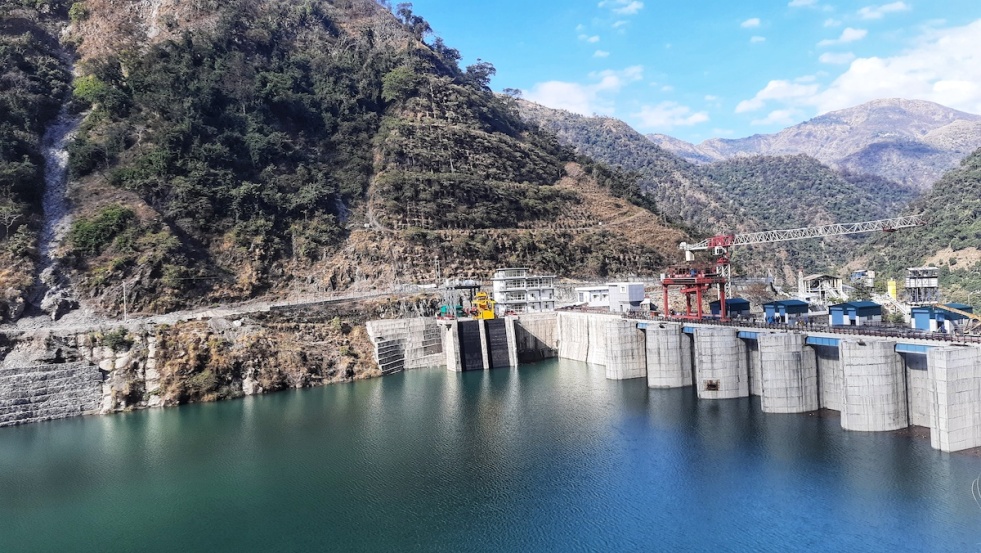
(Feature Image: Reservoir of Vyasi hydro project dam on Yamuna river in Dehradun. Credit: Varsha Singh/The Third Pole.)

A section of the hydro lobby has been trying to push hydropower in the name of producing green hydrogen as an alternative energy source. However, it has been known for a long time that this is a false solution. There cannot be green hydrogen when sourced from hydropower as not only hydropower projects have huge social and environmental footprint, they also have huge carbon footprint as the following article shows. It would be best to out rightly reject any such claim of green hydrogen when sourced from hydropower project.  

Continue reading “DRP 121222: Green Hydrogen from Hydropower is false solution” →
DRP News Bulletin

DRP 211122: IRF focus on Rivers as waterways as the World celebrates Fisheries Day

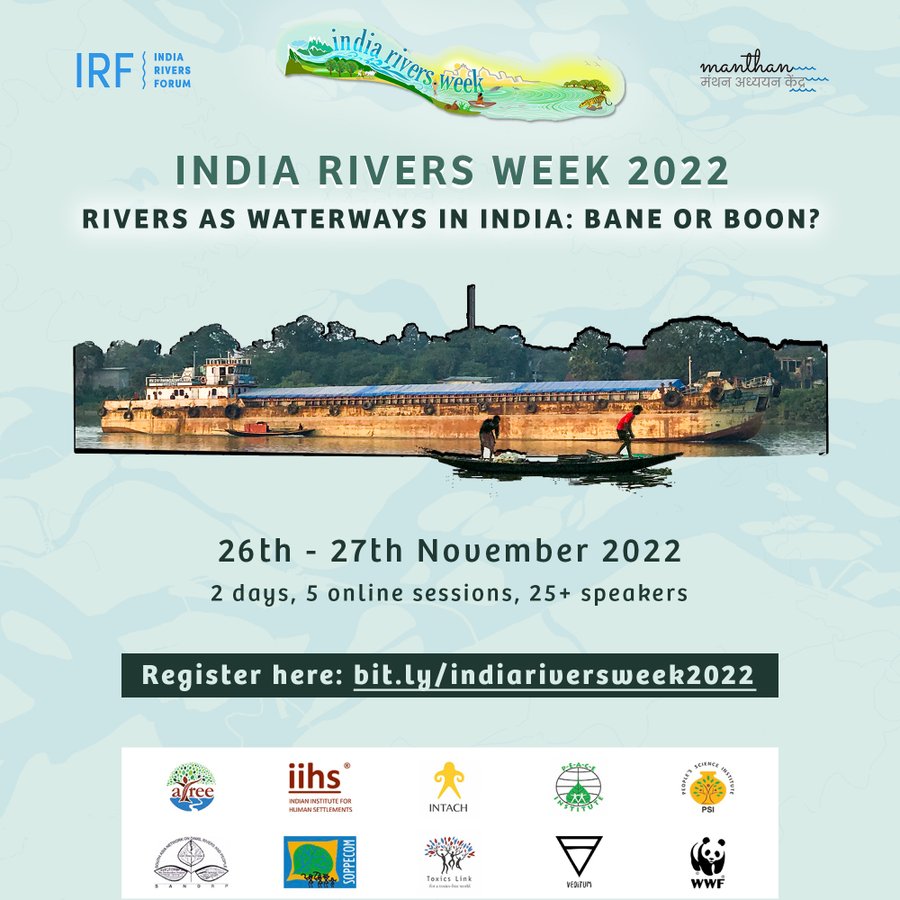
As the World Celebrates Fisheries day today, the India Rivers Forum (IRF) focusses this week on use of Rivers as waterways in its annual program. Spread over five sessions, the online event on Nov 26-27, 2022 is co-organised by Manthan Adhyayan Kendra and IRF. Riverine fisheries and fisherfolk are adversely affected by the current waterways program of the government, and as usual, the government does not even find it necessary to assess the impact of the program on these poorest, weakest, most neglected and most vulnerable section of our population, leave aside the question of compensating them or involving them in the program. The IRF program “Rivers as Waterways in India: Bane or Boon?” will highlight this and many other aspects of the waterways initiative of the government, which aims to include 111 rivers across the length and breadth of the countries.

The five sessions of the IRF program will be titled: “Overview of Indian Inland Waterways”, “Viability of Indian Inland Waterways”, “Impacts of Indian Waterways”, “Governance of Indian Waterways” and “Rivers as Waterways in India: Bane or Boon?”. The two event will have more than 25 speakers. The final session will be chaired by former judge of Supreme Court of India, Justice (Retired) Madan Lokur. Justice Lokur will also give away the Bhagirath Prayas Samman awards of 2022 and Anupam Mishra Medal 2022, the names of the recipients this year will be shared in that final session on Nov 27, 2022.

Continue reading “DRP 211122: IRF focus on Rivers as waterways as the World celebrates Fisheries Day“ →
DRP News Bulletin

DRP 071122: Increasing focus on Urban Rivers; they continue to face destruction

(Feature Image Source: Question of cities)

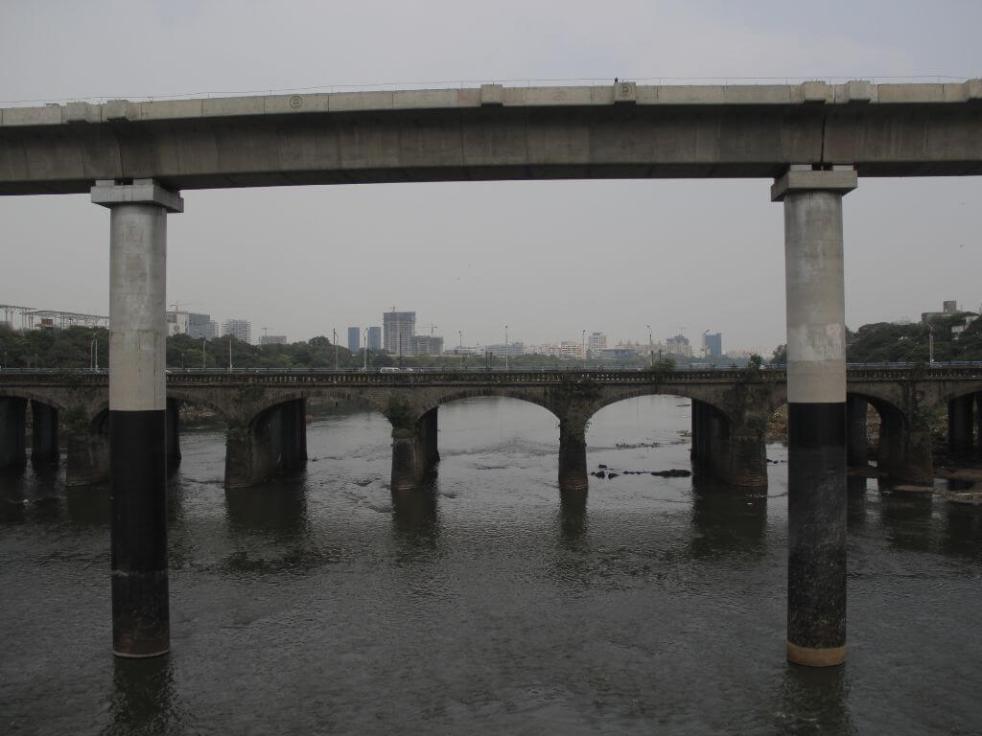
It is good to see that focus on Urban Rivers is increasing not only in media, but also by the government. The focus of the latest edition of “Question of Cities” is on Urban Rivers, carrying articles on, beside the lead article by SANDRP coordinator, Article “Rivers & Cities”, Sabarmati (Ahmedabad), Mula-Mutha (Pune), on River Centric Urban Planning Guidelines from Union Ministry of Housing and Urban Planning. In addition, this SANDRP DRP update also carries articles on Dravyawati River of Jaipur, Godavari river in Nasik and a report on Mandakini river in Badrinath.

All this increased focus is welcome, but will be worthwhile only when we see an effective impact of this on rejuvenated Urban rivers. We have yet to see that. In fact, if at all, the movement is hugely in opposite direction, with increasing destruction of Urban Rivers.

Continue reading “DRP 071122: Increasing focus on Urban Rivers; they continue to face destruction“ →
DRP News Bulletin

DRP 17×22: SSP Fails To Provide Promised Water, Rehabilitation: Former Gujarat CM from BJP 

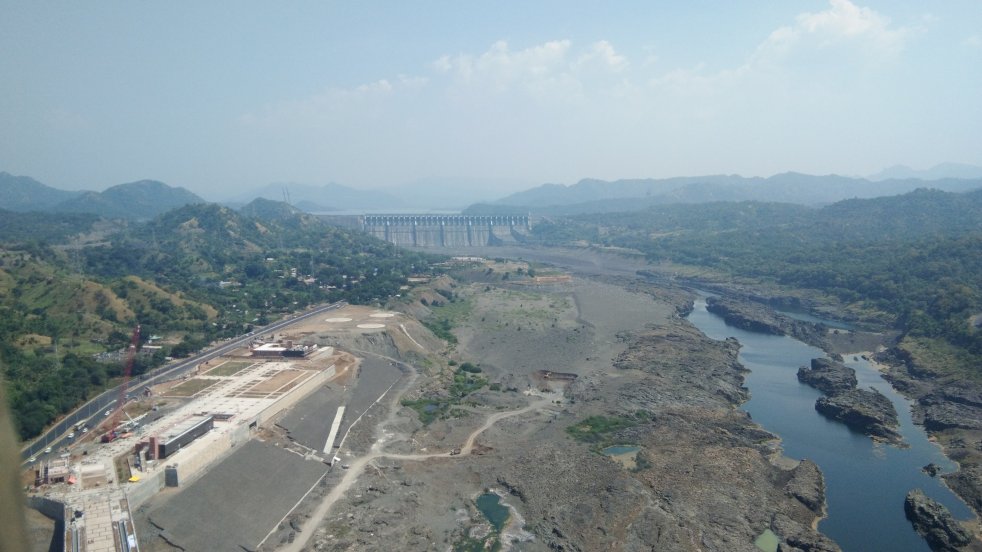
(Feature Image: An aerial view of Narmada river downstream Sardar Sarovar Project in Oct. 2018. Source: CMO Gujarat twitter handle)

With Gujarat state assembly election round the corner, Bhartiya Janta Party (BJP) the party ruling the state and Centre has been evoking the Sardar Sarovar Project as a big achievement in the face of contrasting ground realities as suggested by no less than former Gujarat Chief Minister of BJP Shri Suresh Mehta. The project has failed to provide promised irrigation water to farmers of Kutch and Saurashtra in whose name the dam was pushed as the canal system remains not fully built. The people of Kutch, in whose name Gujarat got 9 Million Acre Feet of water, disproportionate to its catchment area at SSP, were incidentally last to get the water and not first as it should have been. Kutch canals remains largely unfinished and command area largely unirrigated. Who stopped this area to get the water over a decade after the water started flowing from the dam is a question, Gujarat rulers refuse to answer.

Similarly, thousands of project affected people continue to struggle for rehabilitation and compensation despite court orders. The Gujarat rulers have gone silent over unending and unfolding ecological and hydrological impacts of the dam on Narmada river system downstream from the dam including delta area. Thousands of villagers living in miserable conditions submerged in backwater of the dam but have not been officially recognized as project affected people. At this moment, the timely, just rehabilitation and compensation of these villages and project affected families should be top priority of concerned governments including the Central government.

Continue reading “DRP 17×22: SSP Fails To Provide Promised Water, Rehabilitation: Former Gujarat CM from BJP “ →
DRP News Bulletin

DRP 10×22: All Pervasiveness of Climate Change and Anthropocene Impacts

(Feature Image:- Odisha: 10 stranded in flash flood after sudden release of water from Gohira dam. Source: TNIE )

A large number of reports in this week’s news bulletin from SANDRP are tied by a common threat. The report in NYT about how the South Asian Monsoon is becoming more intense. How the droughts like the one in western US are becoming more likely.

In Bengal people killed in October rains while they were doing visarjan of Durga idols and in Odisha people stuck by sudden release of water from a dam. In these cases of W Bengal and Odisha, strangely, there was no warning and no one is even asking why. In both cases it is the destruction of the river in the that led to create the crisis, but again no questions are being asked.

The report of death by avalanches, the more frequent landslides in monsoons are also in the same league. The SW Monsoon is officially over as per India Meteorological Department, but even as we write, the extreme floods in Uttarakhand, Uttar Pradesh and Madhya Pradesh are breaching the Highest Flood Levels in several rivers.

Continue reading “DRP 10×22: All Pervasiveness of Climate Change and Anthropocene Impacts“ →
Dams · DRP News Bulletin

DRP 120922: Decisive judicial action dire necessity for wetlands

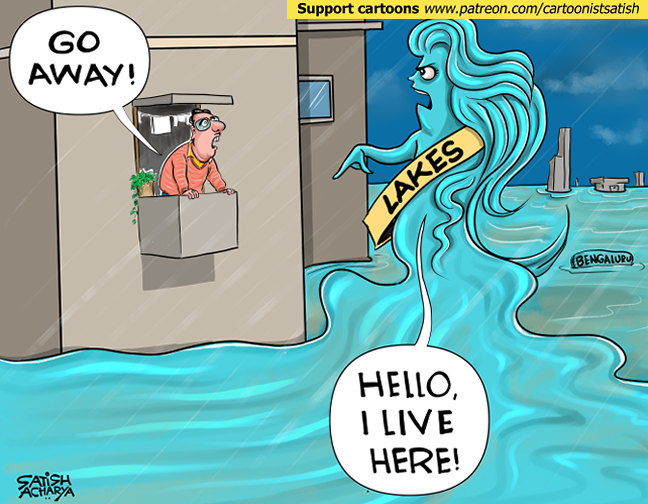
( Feature Image:- Satish Acharya’s illustration on Bengaluru floods: Whose land is it anyway? 07 Sept. 2022)

The wetlands reports tell us a lot, but the key point is that decisive judicial action is necessary if our wetlands are to have any future. The directions of the Tamil Nadu High Court to geo reference all wetlands of Tamil Nadu, including small (Less than 2.25 ha area) is good beginning, but the court will need to ensure continuous monitoring and ensure implementation. Because the past shows that the government and other stakeholders have collectively failed to take any decisive action to save our wetlands. The disastrous results are evident at so many places, this week it is most clear from the flooding of Bangalore, mainly due to encroachment of lakes, wetlands, water channels and their catchments.

Continue reading “DRP 120922: Decisive judicial action dire necessity for wetlands“ →
DRP News Bulletin

DRP 290822: MP’s Dam safety mess: Publish the Karam inquiry report

(Feature Image: Karam dam after breach. Source: Patrika)

Every week we get more evidence of the massive Dam safety mess in Madhya Pradesh. The Karam dam disaster that started on the eve of independence day is still unfolding. The inquiry committee report has been submitted, but it has not been made public. This is totally wrong and shocking. Dam Safety is a public interest issue and all information related to dam safety has to be in public domain. The inquiry committee report should be immediately put in public domain. More importantly an independent inquiry should be set up as the inquiry set up earlier was more of an in-house inquiry.

Close on heals of Karam dam disaster comes the news of risks due to unattended Maheshwar dam, a massive dam on Narmada river that remains unfinished and unattended, with one of the gates damaged and story of stolen motors, wires and other spare parts and power cut, which means the hydraulic system for gates is non-functional. Again the report of the NVDA-MWR officials after visit to the dam site should be in out in public domain, as also the reports of the dam safety committee reportedly set up the MP govt for assessing safety of all the dams of MP.

Continue reading “DRP 290822: MP’s Dam safety mess: Publish the Karam inquiry report“ →
DRP News Bulletin

DRP 080822: Why is Centre not taking action against violations, defects of Kaleshwaram Project of Telangana?

(Feature image source: Pratidin News)

Union Water Resources or what is now called Jal Shakti minister Shri Gajendra Shekhawat made a rare and rather interesting statement this week about Kaleshwaram Lift Irrigation Project of Telangana, supposed to be the world’s biggest lift irrigation project, India’s most expensive ever irrigation project. The Union Minister publicly said that the Kaleshwaram project did not have all the clearances, project thus involved violations, and had defects, leading to submergence of three barrages and a massive power house last month. It is not clear if the Union Minister has also written to this effect to the Telangana state government and also taken action against the project. This is because the allegations made by the Union Minister are about such a huge project and are serious in nature.

If the Union Minister has done neither, as seems to be the case, he hope he is doing something on these lines soon. We do not expect a responsible Union Minister not take any action on such an important matter and is only making such statements for public consumption (incidentally, he seems to have made these statements in Karnataka, not in Telangana). Questions will be raised if the Union Minister fails to take such an action.

Continue reading “DRP 080822: Why is Centre not taking action against violations, defects of Kaleshwaram Project of Telangana?“ →
DRP News Bulletin

DRP 01 Aug 2022: Dams reduce sediment load in rivers leading to higher coastal erosion

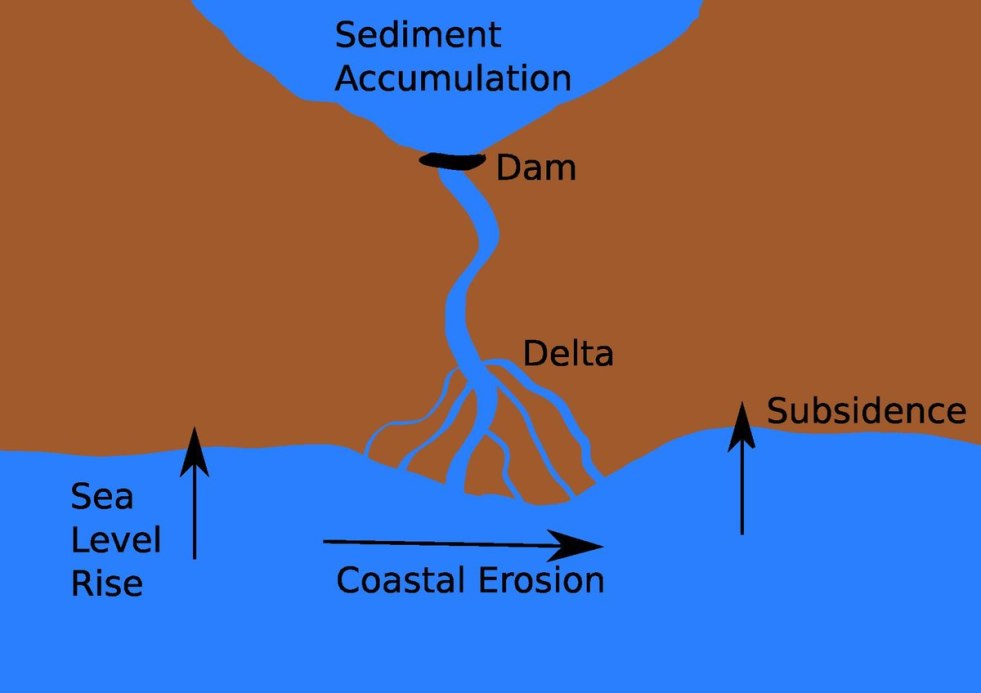
(Feature image: Delta Land Loss Mechanisms. Source Wikimedia Commons)

A new study this week has reminded us what has been known for long. Dams not only store water but also trap the sediment flowing in the river. Whatever smaller quantity of water flow from dams to downstream areas, has much lower or no silt. A lot of that silt was supposed to reach the coast, helping fight against the erosion of the coast due to sea tides and waves. With drastically lower sediment reaching the coasts, higher coastal erosion is the result. While climate change is definitely contributing to the increased coast erosion due to more frequent and higher intensity storms from the sea, the role of dams tend to work as force multiplier in increasing the coastal erosion due to less sediment reaching the coasts from river.

While a new study by a Pune University has highlighted this phenomena in case of Godavari river, peninsular India’s biggest river, this is also happening at most other rivers and where they meet the coasts. As in case of Farakka, closer the terminal dam is to the coast, greater is its effectiveness to trap the river sediment and higher is its contribution likely to be to the increase in coastal erosion.

Continue reading “DRP 01 Aug 2022: Dams reduce sediment load in rivers leading to higher coastal erosion” →