Dam Disaster

2022: When Polavaram project further unraveled

(Feature Image: Flood water discharging from Polavaram Project to the downstream, in West Godavari district, on Jyly 12, 2022. The Hindu)

Polavaram is the largest and costliest big dam project under construction in India currently, though not much has been written about this projects and its impacts in mainstream in India. The project was given various clearances through a manipulated process, basic studies were not done before clearing it. Several petitions are pending before the various High Courts and the Supreme Court of India, but the project is allowed to go ahead without resolving them or the inter-state issues. A number of issues related to the project has been unravelling over the years and in 2022, the project further unraveled as the news reports compiled here reveal.

A snapshot of the status at Polavaram Project: The downstream coffer dam is damaged, the Gap 1 and Gap 2 of the Dam are yet to be constructed, the 1.7 km long Diaphragm wall of the ECRF dam is submerged in flood waters, it was earlier damaged (scoured at two places over an an area of 200 m X 200 m) in 2019 floods implying additional expenditure of Rs 600 cr, the water flow at the dam site on July 15, 2022 was highest since 1920 for July, the assessment of the earlier damage to the diaphragm wall and future options that was underway when the floods struck in the second week of July 2022, had to be stopped while still incomplete, the rehabilitation colonies have been submerged as the engineers assessment proved wrong about their elevation. There is an uncertainty on the structural stability of the other facilities of the irrigation project due to incomplete construction of the main dam, as it is receiving an unprecedented inflow. The height of the upper Coffer dam was increased by 1 m to 44 m between 17 and 19 July, 2022, in the middle of high floods, but that had impact on upstream Telangana and they opposed that this was done without consulting them.

Continue reading “2022: When Polavaram project further unraveled” →
DRP News Bulletin

DRP 191222: Question marks over viability of pump hydro projects

(Feature Image: 1772 Mw PSHPs Spain. Photo courtesy of Iberdrola/ ENR)

The question marks over viability of huge number of pump storage hydro projects (PSHP) being pushed forward in India currently were flowing in the rivers for long. This week, Moody’s investors Service (MIS) seems to have strengthened this after it downgraded Greenko Energy Holdings’ corporate family rating. It may be noted that Greenko is the biggest investor in PSHPs in India from private sector and a major part of Greenko’s new investments are in PSHP.

This makes the implications of MIS’s downgrade all the more interesting. MIS has noted that PHSPs are capital intensive and each PHSP will generate cash flow only after at least 2-3 years of construction (in reality it can be much longer than 2-3 years, the operative phrase here is at least). It also noted that the additional debt to be raised from Greenko’s capital spending, coupled with a rising interest environment will put further pressure on “GEH’s already weak financial metrics” and that Greenko’s high financial leverage due to its substantial capital spending program will keep its financial metrics below its downgrade trigger “for an extended period of time”.

Continue reading “DRP 191222: Question marks over viability of pump hydro projects” →
DRP News Bulletin

DRP 121222: Green Hydrogen from Hydropower is false solution

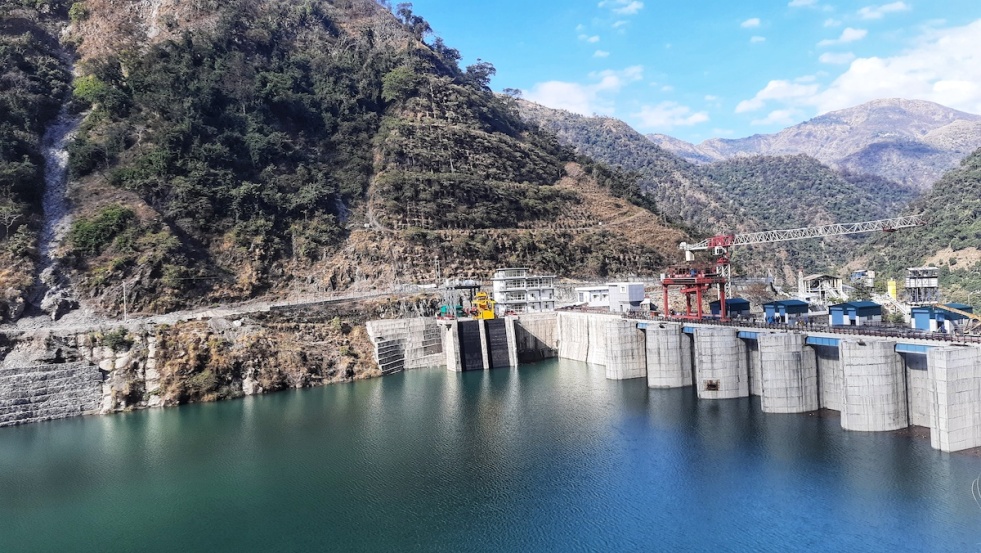
(Feature Image: Reservoir of Vyasi hydro project dam on Yamuna river in Dehradun. Credit: Varsha Singh/The Third Pole.)

A section of the hydro lobby has been trying to push hydropower in the name of producing green hydrogen as an alternative energy source. However, it has been known for a long time that this is a false solution. There cannot be green hydrogen when sourced from hydropower as not only hydropower projects have huge social and environmental footprint, they also have huge carbon footprint as the following article shows. It would be best to out rightly reject any such claim of green hydrogen when sourced from hydropower project.  

Continue reading “DRP 121222: Green Hydrogen from Hydropower is false solution” →
DRP News Bulletin

DRP 051222: World Soil Day 2022: Soil where food begins

(Feature Image:-Several practical principles for soil and water conservations are important to be understood and combined. Source Wiki Farmer)

United Nations is celebrating today, i.e. Dec 5, as the World Soil day, the theme this year is “Soils: Where food begins”. The World Soil Day is held on Dec 5 each year since 2014, following the recommendation the International Union of Soil Sciences (IUSS) in 2002. The FAO Conference unanimously endorsed World Soil Day in June 2013 and requested its official adoption at the 68th UN General Assembly. In December 2013, the UN General Assembly responded by designating 5 December 2014 as the first official World Soil Day as a global awareness raising platform.

In the context of climate change, the soil organic content assumes additional huge significance. While the organic content in soils is decreasing globally, it can be reversed. If we can increase the soil organic content, it will not only help in mitigation of climate change by helping reduce the carbon in the atmosphere, it can also help in adaptation as soil with higher organic context has much greater capacity to store soil moisture, which can then be helpful in both flood mitigation (as more of the rain water is stored in the soil), and drought mitigation (soils with most moisture storage will help crops survive longer dry spells).

Continue reading “DRP 051222: World Soil Day 2022: Soil where food begins” →
DRP News Bulletin

DRP 281122: Justice Lokur at IRW 2022: We need to be vocally more aggressive to make a difference

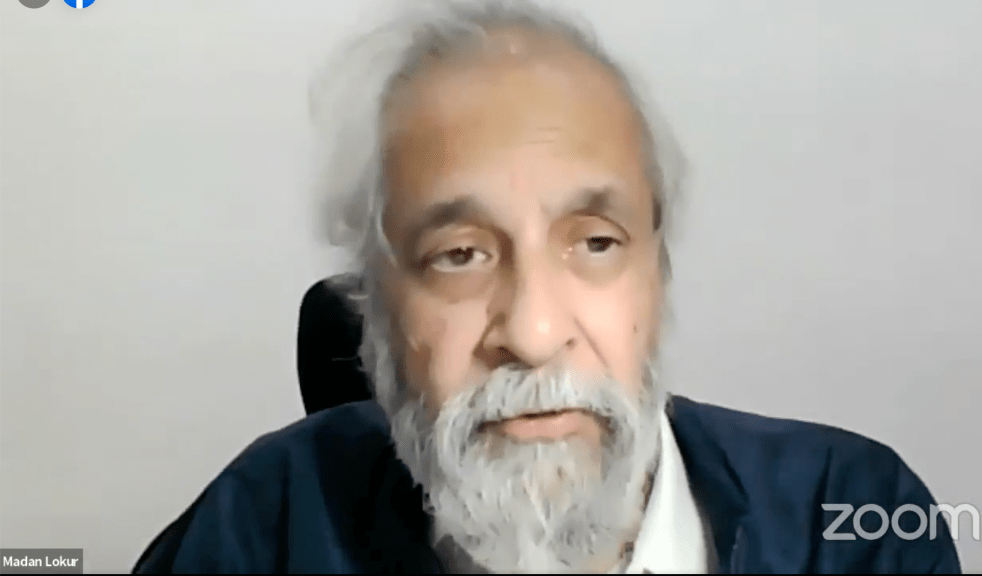
In his key note address at the final session of India Rivers Week 2022, Justice Madan Lokur, former judge of Supreme Court of India said, “Time has come we need to be a little more active and aggressive vocally to ensure that we are listened to about the problems we all are facing. Farmers struggle, the CAA amendment etc. are good examples. There is need for a political will to bring about any change. How do we generate such a political will is the issue.”

Among other messages Justice Lokur gave in his key note address at the final session of India Rivers Week 2022 on Nov 27, 2022 included: “Rivers belong to all, not a select few… We need to ensure that we are effective in our work, our messages.”

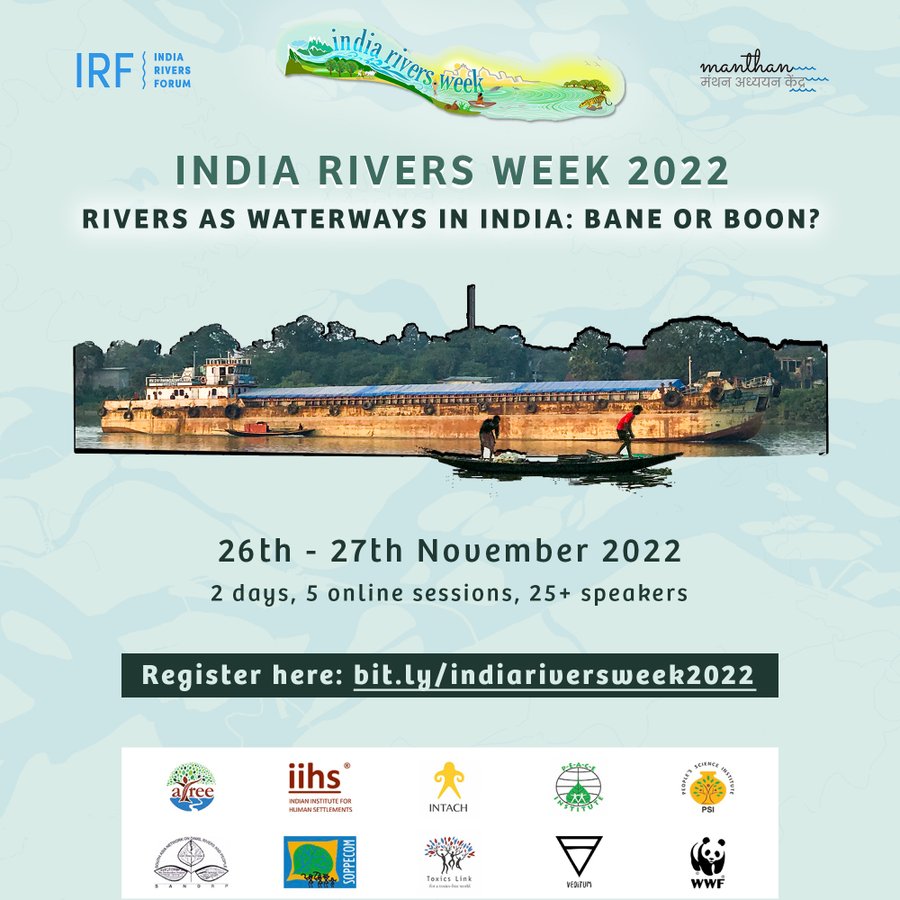
The two day, five session India Rivers Week 2022 function focused on use of rivers as waterways, organized in collaboration between India Rivers Forum (IRF is constituted by ten organizations now) and Manthan Adhyayan Kendra ended on Nov 27, 2022. The IRW 2022 sessions had a number of highlights, we will try to bring them to you in separate articles.

Continue reading “DRP 281122: Justice Lokur at IRW 2022: We need to be vocally more aggressive to make a difference” →
Fish, Fisheries, Fisherfolk

WFD 2022: Protect Aquatic Biodiversity for Fish to prosper

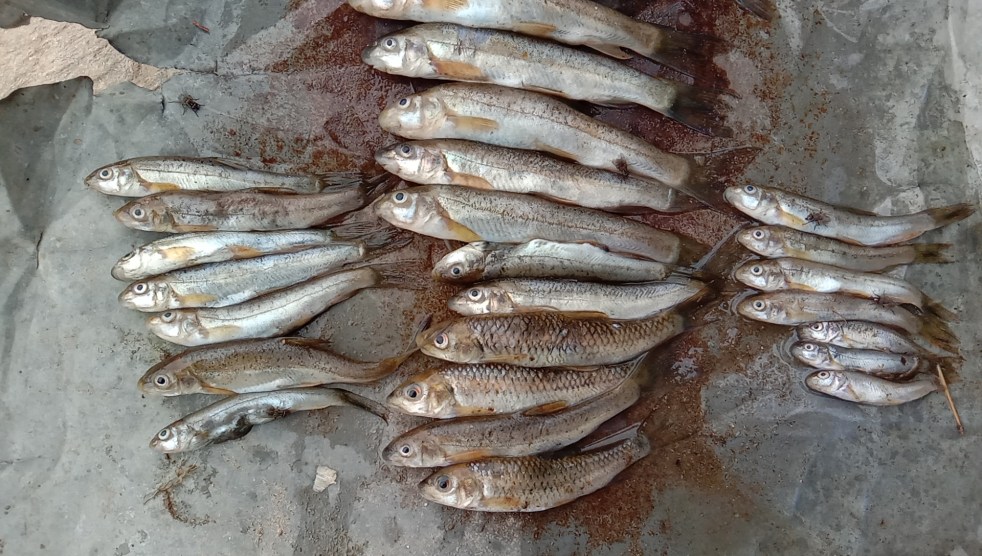
(Feature image: Fish species caught in small Ramganga stream in Pauri Garhwal. Bhim Singh Rawat/SANDRP)

On the occasion of World Fisheries Day (WFD) 2022, this report by SANDRP tracks developments related to aquatic biodiversity in India over the last year.  The first, second, third and fourth parts of the WFD 2022 reports covered positive reports on rivers’ fish and fishermen; mass fish deaths in rivers and emerging threats; mass fish kills in lakes, ponds in the country and issues concerning rights & livelihoods of inland & coastal fishers reported during the past one year.

Continue reading “WFD 2022: Protect Aquatic Biodiversity for Fish to prosper“ →
DRP News Bulletin

DRP 211122: IRF focus on Rivers as waterways as the World celebrates Fisheries Day

As the World Celebrates Fisheries day today, the India Rivers Forum (IRF) focusses this week on use of Rivers as waterways in its annual program. Spread over five sessions, the online event on Nov 26-27, 2022 is co-organised by Manthan Adhyayan Kendra and IRF. Riverine fisheries and fisherfolk are adversely affected by the current waterways program of the government, and as usual, the government does not even find it necessary to assess the impact of the program on these poorest, weakest, most neglected and most vulnerable section of our population, leave aside the question of compensating them or involving them in the program. The IRF program “Rivers as Waterways in India: Bane or Boon?” will highlight this and many other aspects of the waterways initiative of the government, which aims to include 111 rivers across the length and breadth of the countries.

The five sessions of the IRF program will be titled: “Overview of Indian Inland Waterways”, “Viability of Indian Inland Waterways”, “Impacts of Indian Waterways”, “Governance of Indian Waterways” and “Rivers as Waterways in India: Bane or Boon?”. The two event will have more than 25 speakers. The final session will be chaired by former judge of Supreme Court of India, Justice (Retired) Madan Lokur. Justice Lokur will also give away the Bhagirath Prayas Samman awards of 2022 and Anupam Mishra Medal 2022, the names of the recipients this year will be shared in that final session on Nov 27, 2022.

Continue reading “DRP 211122: IRF focus on Rivers as waterways as the World celebrates Fisheries Day“ →
Fish, Fisheries, Fisherfolk

WFD 2022: Positive River Fisheries Reports from India & Dam Removal Abroad

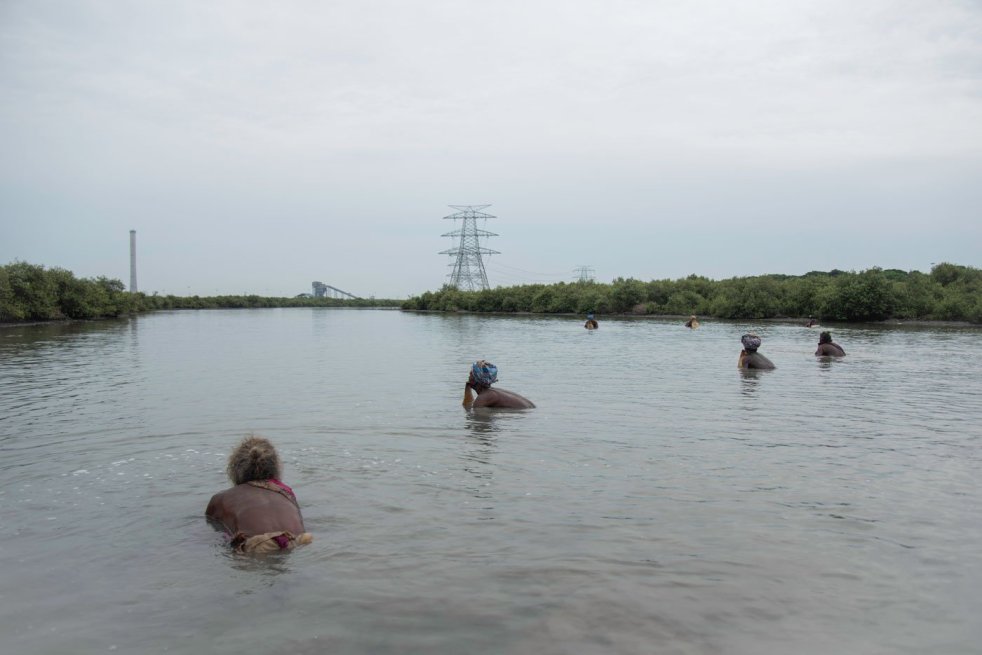
(Feature Image: Govindamma (extreme left) fishing for prawns in Kosasthalaiyar river with others from her Irular community. They wade through the water for 2-4 kms to catch them. Credit: People’s Archive for Rural India (PARI))

On the occasion of World Fisheries Day (WFD) 2022, this report by SANDRP tracks some positive stories on river fish and fisher in India & Dam removal action abroad. In subsequent part on this occasion, the mass fish death incidents in Indian rivers, wetlands, lakes would be covered along with updates on emerging threats of invasive fish, riverbed mining, pollution, encroachments, microplastic over the past one year. The third part would cover the mass fish death incidents in lakes and ponds in India and the fourth part would focus on continuing struggle of coastal fisherfolks and relevant issues.  The fifth and last part on the series would highlight issues concerning aquatic bio-diversity in the country.   

Continue reading “WFD 2022: Positive River Fisheries Reports from India & Dam Removal Abroad“ →
DRP News Bulletin

DRP 141122: Jal Shakti Ministry says: Groundwater extraction down, recharge up???

This sounds so counter intuitive. The Ministry Jal Shakti on Nov 9, 2022 made some findings of its latest “National Compilation on Dynamic Ground Water Resources of India, 2022 public, strangely, without making the report public. It is not clear why the govt did not make the report public, though the counter intuitive nature of the findings provide some hint. The report claims that at all India macro level, the ministry claimed that the groundwater extraction is the lowest in 2022 since 2004, or 18 years and that the groundwater recharge has gone up.

Continue reading “DRP 141122: Jal Shakti Ministry says: Groundwater extraction down, recharge up???“ →
Climate Change · Wetlands

Conserving wetlands to realize global climate and biodiversity goals

Guest Article by Mridhu Tandon [i]

The Sudd wetland in the Nile basin is one of the world’s largest freshwater ecosystems. Nourished by the White Nile-a tributary of the Nile, Sudd is a mosaic of open water and submerged vegetation, seasonally inundated woodlands, rain-fed grasslands, and floodplain scrubland. An integral part of Africa’s largest intact savannahs-the Jonglei plains, Sudd supports the world’s second-largest mammal migration after Serengeti. An estimated 1.3 million antelope: white-eared kob, taing, and Mongalla gazelles move from Sudd every year to reach Ethiopia’s Gambella National Park. Sudd has been in the international news recently. Revival of the 40-year-old 240-mile Jonglei canal will divert the waters of the White Nile around the Sudd wetland and send it to Egypt. The canal will desiccate the wetland, and end seasonal flooding of the Jonglei grasslands. Why is it necessary to protect Sudd from drying up? Why has the subject received global attention? More generally, why protect wetlands at all?

Continue reading “Conserving wetlands to realize global climate and biodiversity goals” →