Dams · DRP News Bulletin

DRP: 6 Nov 2017 (NGT Asks For Fresh Appraisal Of Lower Subansiri Hydro Project)

In a remarkable development, the National Green Tribunal (NGT) on October 24 has suspended the clearances given to the 1750-megawatt (MW) Demwe Lower Hydroelectric Project  (HEP) planned on the Lohit river in Arunachal Pradesh.

In its detailed order, released on October 27, the NGT ruled that the Environment Minister as Chairperson of the National Board for Wildlife (NWBL), a statutory body constituted under the Wildlife Protection Act, 1972, could not “just brush aside” the views of the majority of NBWL standing committee members.

Suspending the clearances given by the Centre and the state govt, the NGT order added that “the decision taken by the Standing Committee is not in accordance with established principles of law and hence the Standing Committee shall reconsider the issue and pass appropriate orders within a period of six months from the date of the judgment”.

Environmental clearance for the project was given by the Union environment ministry’s Expert Appraisal Committee (EAC) for river valley and hydroelectric projects back in 2009. An in-principle forest clearance for the Lower project was given in February 2012 and agreed upon in 2013.

However, the in-principle clearance of the project was opposed by a majority of the Standing Committee of the NBWL but subsequently cleared by the then-environment minister of state (independent charge), Jayanthi Natarajan, who was also the chairperson of the Standing Committee.

Natarajan is currently under the CBI’s scanner for alleged anomalies in clearance given for diversion of land in Saranda forest in Singhbhum district, Jharkhand to mining company Electrosteel during the previous UPA regime.

The NGT said that it is “of the view that either the Chairperson (Natarajan) should have given a proper reason for rejecting the objection of the majority of the non-official members or the decision ought to have been arrived at based on the opinion of the majority of the members. Even though the Standing Committee is a recommendatory body, the same being a statutory committee, is bound by the laudable principles of justice and fair play”.

Continue reading “DRP: 6 Nov 2017 (NGT Asks For Fresh Appraisal Of Lower Subansiri Hydro Project)”
Dams · DRP News Bulletin

DRP: 17 July 2017 (Northeast Continues To Experience Floods As Disaster Majorly due to Man-made Reasons) 

Since May 2017, several flood related incidents have taken place in the North East showing how our shortsightedness in understanding the rivers, how our thoughtless construction along the rivers in the name of flood control and how our careless operation of dams have converted floods into a disaster.

At the same time, there have been incidents raising suspicion over quality of construction of built and ongoing dams. Then the news of NHPC being accused of forging Gram Panchayats signs to build 520 MW Teesta IV dam is shocking revelation in itself. Contribution of such factors in worsening the floods is always underplayed. 

The countless landslides and Cyclone Mora (http://www.hindustantimes.com/india-news/cyclone-mora-reaches-northeast-many-houses-damaged-in-mizoram/story-UzcDuPOge0drAklftXW38L.html) have already left the region crippling, despite this there is no regular monitoring of flood situation and no timely warning being issued by States or Central Agencies about the rainfall and floods. All this is enough to prove that the ongoing flood devastation in North East has very much to do with the way we are destroying rivers with hydro projects, dams and embankments and disturbing the fragile environment of North East. These incidents also put question mark before govt agencies which are first pushing the destruction in the sensitive region and then lagging way behind in monitoring and issuing timely precautionary warnings.  

Continue reading “DRP: 17 July 2017 (Northeast Continues To Experience Floods As Disaster Majorly due to Man-made Reasons) “
Dams · Ganga

About Matri Sadan Fight Against Illegal Mining In River Ganga  

Finally on World Environment Day, Swami Shivanand has withdrawn[I] his fast unto death agitation. It was thirteenth day of his indefinite hunger strike including six days of water fast (from May 25 – 30, 2017) against illegal mining in Ganga.

The saint ended his protest around 6pm on June 05, 2017, only after receiving written assurance from the Central Government. As per information, referring to Matri Sandan repeated pleas, UP Singh Director General of National Mission for Clean Ganga has accepted that there were violations[II] of rules specially Rule No. V of Environment Protection Act during mining in Ganga. Subsequently he has asked Chairman, Central Pollution Control Board initiate criminal proceedings against the officials[III] concerned for non-compliance of the rules.

Continue reading “About Matri Sadan Fight Against Illegal Mining In River Ganga  “

Dams · DRP News Bulletin

DRP: 3 Oct 2016 (Role of Uttarakhand Hydro Projects in Kedarnath Disaster 2013)

Book Review:  Rage of the Rivers: Role of Uttarakhand hydro projects in Kedarnath disaster 2013 by Hridayesh Joshi Rage of the River reads not unlike a gripping thriller. Thing is, it is not fiction. It is a true ‘story’ of a cataclysmic event, exacerbated by greed, and twisted notions of development manifested in blasting fragile hills, tunneling rivers, denuding forests, and encouraging illegal encroachments and mindless construction and tourism infrastructure. This is an important chronicle of one of the worst disasters of our times. Joshi has thoroughly analysed the role of endless, ill-planned hydel projects, but inexplicably fails to take into account the wreckage wrought by unrestrained tourism. Joshi points a finger at the unethical practices of construction companies, contractors and operators of hydel dam projects, even in the face of this monumental disaster. The officials of the Vishnuprayag project refused to listen to the pleas of the villagers to open the dam gates and allow the excess water to flow safely from under the barrage. The advice was ignored, either in ignorance of the gravity of the situation, or with an eye on the opportunity to generate more power. The rising waters broke the barrage flooding the valley and its villages.  

Continue reading “DRP: 3 Oct 2016 (Role of Uttarakhand Hydro Projects in Kedarnath Disaster 2013)”
Dams · Maharashtra

Pune plans more STPs while existing plants under perform and there is no attempt to fix them

Above: Children trying to understand why their River Mutha is so polluted Photo: Parineeta Dandekar

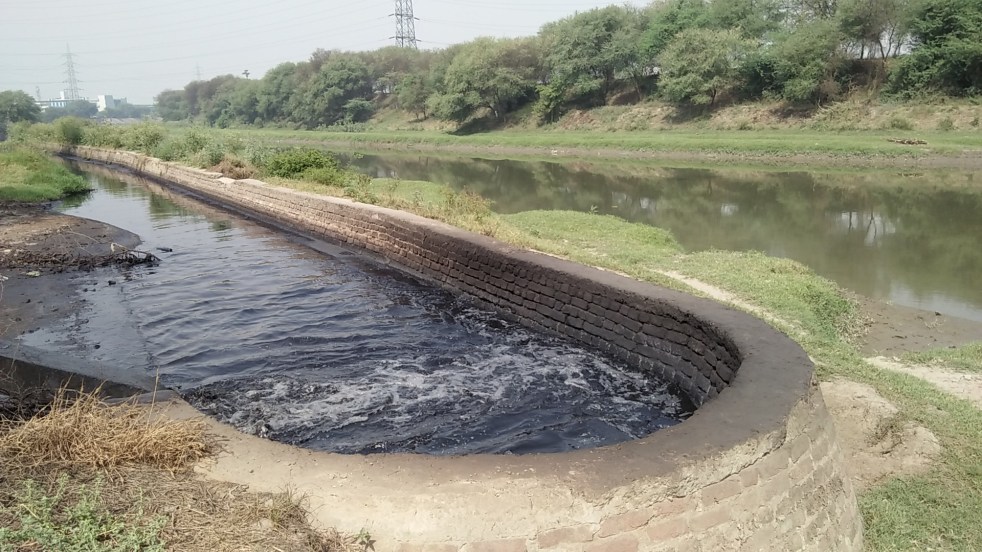
Treating even 50% of its sewage is a dream that has been eluding Pune for decades. Mula, Mutha, Pavna and Indrayani Rivers crisscrossing Pune have routinely made headlines for pouring Pune’s sewage into Ujani Dam in the downstream, which supplies drinking water to several towns and villages, including the city of Solapur. All these rivers are classified as one of the 35 most polluted river stretches of India by Central Pollution Control Board (CPCB).[1]

Japan International Cooperation Agency (JICA) has recently agreed to extend a loan of 1000 Cr. under project ‘pollution abatement of River Mula-Mutha’.[2] Utilizing this funding PMC has proposed to build 11 new sewage treatment plants (STPs) with treatment capacity of 396 MLD. It is one of the star projects under Smart City programme and engineers of water supply department are gearing up for the construction of new STPs. As stated in the PMC newsletter of Feb 2016, the 11 new STPs will increase treatment capacity of Pune from current 477 MLD (Million Liters a Day) to 873 MLD which, it is claimed, will be sufficient to cater to sewage generation till year 2027.[3] Continue reading “Pune plans more STPs while existing plants under perform and there is no attempt to fix them”