Dams · DRP News Bulletin

DRP: 31 Oct. 2016 (North to South India: Pharma Firms’ Waste Poisoning Rivers, People & Animals)

National The cost of cheap drugs The Bollaram-Patancheru region in Hyderabad, Telengana is famous for being one of the most polluted industrial areas in India. The periphery around the area has become so toxic one that 2001 article recommended that “most of the soils should be removed from agricultural production” in Patancheru. There is an increase in higher abortion rates to birth defects and stunted growth in children, as well as greater incidence of skin diseases in the region. In the district of Medak in the state of Telangana, Greenpeace in its several reports has identified that people, animals, crops and land have been afflicted by the pollution of industrial waste. Villagers report many serious health issues, including miscarriages, skin disorders, cancers and intestinal problems. The livestock suffer from the same problems. Most, not to say all, food grown in the village is unfit for human consumption. An inspection report published by CSE in November 2015 noted that most companies in Pattancheru-Bollaram were manufacturing pharmaceutical ingredients for which they did not have permission; using more water than the permitted limit and dumping more hazardous waste than allowed. Two of the units were operating without clearance from authorities.

In the case of the Ghaggar river in Punjab, all along its river course, one can witness foul smell, contamination of subsoil water, spread of water borne diseases and chances of damage of crop due to the presence of industrial chemical waste due to industrial waste from the industries in Punjab and Himachal. Media reports report similar occurrences around the Bhiwadi belt, where pharmaceutical companies discharge untreated effluents into drainages which then seep into the groundwater, making way into drinking water supply and agricultural land, resulting in environmental and health risks of unimaginable proportions.

In many low and middle income countries, weak laws and ineffective regulatory bodies have led to rising incidences of industrial waste flowing into ponds, lakes and rivers. If we examine the causes, the role of the pharmaceutical industry is similar to printing, chemical and paint industries. Pharma effluents contain hazardous chemicals which are leading to antimicrobial resistance or AMR where the human body is resistant to antibiotics, and thus, becomes susceptible to common infections. The very same ingredients used to manufacture antibiotics get mixed up with the bacteria during waste disposal, through our waters. Studies have shown that high levels of antibiotics are found in streams and lakes in the area close to many plant than in the body of human beings. The phenomenon is such that it is assuming the form of a serious public health issue in developing as well as developed countries. Over 700,000 people die every year because of antimicrobial resistance (AMR) all over the world. If this trend persists and resistance continues, McKinsey studies has shown that by 2050, around 10 million people globally will die because of AMR (Antimicrobial Resistance)

It is pertinent to note that New Delhi metallo-beta-lactamase superbug (NDM-1), a bacteria, first found in New Delhi’s public water supply in 2008, is resistant to almost all known antibiotics and has spread to over 70 countries in the world.

On the other hand, scientists from multiple institutes having done a detailed study on river pollution concluded that arsenic in the study areas poses potential health risk to the residents and indicates that the “ingestion of water over a long time could magnify the probabilities of cancer.  They collected and assessed concentrations of 27 trace elements in surface water samples from 48 sites of waterways (lakes, canals, and tributaries of major rivers) in four states: Karnataka, Tamil Nadu, Kerala, and Telangana. Analysis revealed that elements such as chromium, selenium, arsenic, iron, and manganese are the major pollutants, as their concentrations exceeded the acceptable national and international water quality standards in several sites of Vrishabhavathi, Ennore, Adyar, Cooum and Periyar rivers. Further, statistical analysis revealed that the Cauvery, Ennore, Adyar, Cooum and Periyar river basins are affected by various anthropogenic activities, leading to moderate-to-high pollution by arsenic, chromium, manganese, iron, and selenium. According to the scientists, potential pollution sources are industrial waste, sewage intrusion, paint industry waste, and automobile runoff. 

Continue reading “DRP: 31 Oct. 2016 (North to South India: Pharma Firms’ Waste Poisoning Rivers, People & Animals)”
Dams · DRP News Bulletin

DRP: 17 Oct 2016 (IMD’s River Basin Rainfall Maps Useful But Needs Improvement)

SANDRP Blog IMD’s River Basin Rainfall Maps Useful But Needs Improvement We have noticed during just concluded South West monsoon season that IMD has started a new and welcome feature in rainfall data reporting. The Data is available in maps, on daily, weekly and seasonal basis. We are not sure when this practice started, we noticed it only during 2016 monsoon season. This is most welcome development, since getting rainfall data at basin level is most appropriate and useful, since basin is the hydrological unit that will experience the impact of rainfall or lack of rainfall in the basin, in form of floods or droughts. There a number of limitations as of now. We hope IMD will take necessary steps to remove these limitations and improve the availability and access of basin wise rainfall maps and data in coming years.

Continue reading “DRP: 17 Oct 2016 (IMD’s River Basin Rainfall Maps Useful But Needs Improvement)”
Dams · DRP News Bulletin

DRP: 11 Oct 2016 (Is there any justification for DESTRUCTION of Panna Tiger Reserve?)

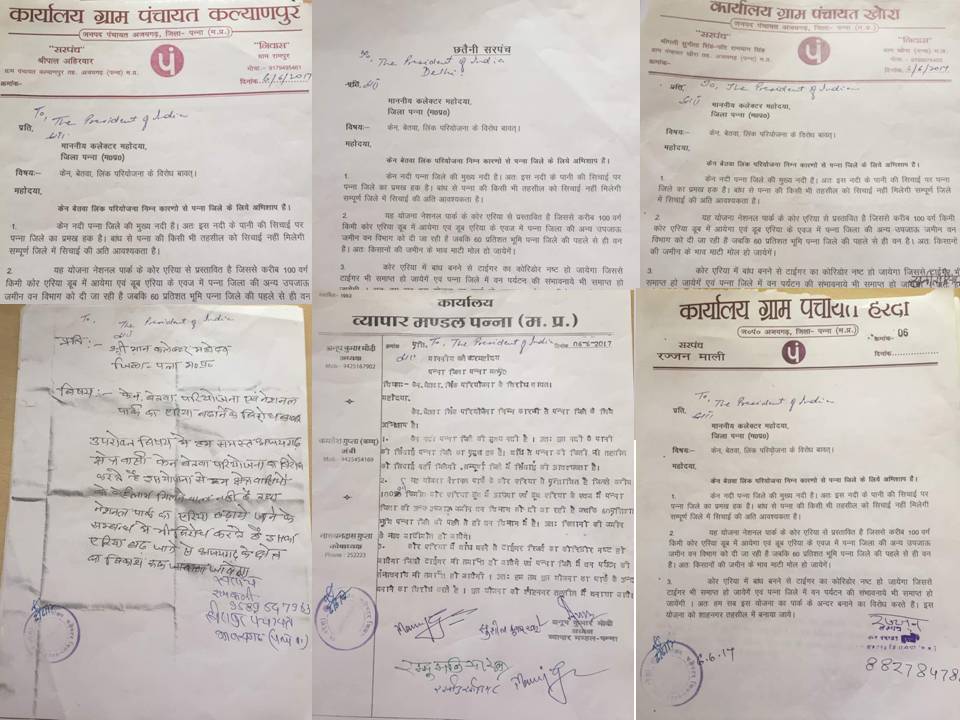
Is there any justification for DESTRUCTION of Panna Tiger Reserve? Can we save our Natural Heritage like the Panna Tiger Reserve (PTR) from being destroyed in the name of baseless, questionable, non transparent, undemocratic and manipulated projects like Ken Betwa inter linking ? It will facilitate export of water from Bundelkhand to OUTSIDE Bundelkhand. Whatever little benefits are claimed, some of them are already available and much more can become available at much lower costs, faster and without destroying the Forests and Tiger Reserve. The project will actually lead to destruction of Ken catchment and hence the Ken River itself. Watch this FASCINATING, AWESOME story of tigers of PTR. This BBC film where Raghu Chandawat is the story teller and Pradip Kishen is lending his voice, tells the story of Tigers of Panna till 2003, it seems. Please watch and let us all try to save it from destruction that is now writ large in terms of Ken-Betwa Link Project (KBLP). One more short film by wildlife biologist Koustubh Sharma illustrates how the Daudhan Dam under KBLP will submerge and destroy the PTR.

Meanwhile, a new analysis of rainfall data reveals that monsoon shortages are growing in river basins with surplus water and falling in those with scarcities, raising questions about India’s Rs 11 lakh crore plan to transfer water from “surplus” to “deficit” basins. According to Himanshu Thakkar of SANDRP river basin interlinking should be considered only after exhausting the local potential for harvesting rain, recharging groundwater, watershed development, introducing better cropping patterns (non water-intensive crops) and methods (such as rice intensification), improving the soil moisture-holding capacity and saving and storing water. Raising alarm over significant increase in ground water use, increasing reliance and fast declining ground water table, he warns that inter-basin links would actually reduce groundwater recharge because forests would be destroyed, the river flow stopped and the local systems neglected.

Continue reading “DRP: 11 Oct 2016 (Is there any justification for DESTRUCTION of Panna Tiger Reserve?)”
Dams · DRP News Bulletin

DRP: 26 Sep 2016 (Victory to tribals protest; Jispa HEP calls back staff)

Finally, tribals struggle wins, sends Jispa HEP company packing up Facing stiff opposition from the tribal community against the construction of 300 MW Jispa Dam in Lahaul-Spiti valley has forced the Himachal Pradesh Power Corportaion Ltd (HPPCL) to suspend the project for the time being. The dam which was declared a project of national importance now has residents from 14 villages oppose it. HPPCL has invested Rs 3 crore and has stated that it would begin study work only when locals extend their support.

Since 2009, people from the Todh valley in Lahaul-Spiti district were opposing the Jispa Dam project proposed over Bhaga river, a tributarJy of Chenab at Jispa village. The government had sanctioned Rs 7,000 crore for this project but local residents did not allow officials to work in smoothly for three years now.

Confirming the development, managing director, HPPCL, D K Sharma told that some people were continuously opposing the project without realizing that construction of project could have ushered development in the area. He said constant opposition of local people had resulted into wastage of limited human resource so HPPCL board had decided to withdraw the manpower as project was only at investigation stage.

Continue reading “DRP: 26 Sep 2016 (Victory to tribals protest; Jispa HEP calls back staff)”
Dams · DRP News Bulletin

DRP: 19 Sep 2016

EAC Panel Visiting the site in Dec 2015

Centre EAC defers clearance to Yadadri Power project The Expert Appraisal Committee (EAC) under the Ministry of Environment has deferred its decision for granting environmental clearance for the 8,000 MW Yadadri Thermal Power Station in Telangana by TSGENCO due to a “lackadaisical” approach in preparing documentation. The EAC said the Environmental Impact Assessment (EIA) report was incomplete and there was lack of clarity on many issues raised by the Committee earlier. EAC on Thermal Power Companies has in its minutes meeting held on 29-30 2016 held the EIA consultants guilty of cut & paste jobs which can be found here.  At some places, it is mentioned that coal will be transported from two ports and in some other places, four ports are mentioned. Hence, complete and specific details regarding coal import ports and coal transportation routes were not given. Further it is also observed that two important sections of the EIA report- “risk assessment” and “disaster management plan”- are almost entirely generic and contain hardly any site or project specific aspects.

Continue reading “DRP: 19 Sep 2016”
Dams · DRP News Bulletin

DRP: 12 Sep 2016 (Hydro Projects Causing Mass Fish Extinction: HP Fisheries Dept.)

Hydro power projects impact riverine fisheries The bleak future of fisheries is reflected in the “Vision and Perspective Plan” released by the Department of Fisheries earlier this week. The department is keeping its fingers crossed to even maintain the production of 5,393 tonnes in 2014-15 as it feels that with the commissioning of 294 hydro power projects in the recent years, the downward trend will be difficult to arrest. 

It says that the expansion of the hydro power sector has resulted in the shrinking of rivers and streams and high silt levels. Rampant sand mining and indiscriminate use of pesticides have further aggravated the problem. 

The fish production from the rivers and streams is falling drastically each year and the multi-pronged environmental assault is proving to be too damaging for the fisheries promotion. The state has some precious mahseer reserves. Though the power policy stipulates a minimum discharge of 15% ecological flow of rivers, the failure of the regulatory authority to check this has converted riverbeds into sandy deserts. That’s how the department perceives the threat from hydro power generation. As a further blow to the riverine fisheries, under the revised hydro-power policy, there is no requirement for micro hydel project developers to prepare environmental and social impact reports.

The vision document reflects that the coming up of hundreds of micro-hydel projects has drastically affected the streams environmental flow in Kangra, Kullu and Chamba. The picture is so grim that the project commissioned on the Sujan Nullah is virtually threatening the hatchery of the prestigious Indo-Norwegian trout project which is the lifeline of the entire trout farming programme of the state.Perceived as one of the major threats, the commissioning of 92 power projects, in the last few years has altered the river hydrology and blocked migratory routes exterminating spawning and feeding grounds of fish.Adding to the already bad situation is the array of pesticides and insecticides being used by farmers and fruit growers.

Continue reading “DRP: 12 Sep 2016 (Hydro Projects Causing Mass Fish Extinction: HP Fisheries Dept.)”
Dams · Ganga

दो बाॅधों की कहानीः क्या बिहार की अप्रत्याशित बाढ़ एक टाली जा सकने वाली मानव जनित त्रासदी है?

बाणसागर बाॅध, सोन नदी, गंगा नदी और पटना को दर्शाता मानचित्र

21 अगस्त 2016 की सुबह, गंगा नदी का जलस्तर लगातार बढ़ते हुए, पटना में 50.43 मीटर पर पहुॅच गया। जिससे पटना में गंगा नदी अपने पहले के उच्चतम बाढ़स्तर 50.27 मीटर से 16 सैंटीमीटर ऊपर बह रही थी। 22 अगस्त 2016 तक पानी का जलस्तर गंगा नदी के किनारे तीन अन्य स्थानों पर उच्चतम बाढ़स्तर को पार कर गया। जिसका विवरण निम्न हैः-

       स्थान                        22.08.2016 को उच्चतम बाढ़स्तर                      पुराना उच्चतम बाढ़स्तर
बलिया उत्तरप्रदेश                         60.30 मीटर                                     60.25 मीटर (14 सितंबर 2003)
हाथीदाह, बिहार                           43.17 मीटर                                      43.15 मीटर (07 अगस्त 1971)
भागलपुर बिहार                           34.55 मीटर                                      34.50 मीटर (05 सितंबर 2013)

इस तरह से हम देखते हैं कि पटना में उच्चतम बाढ़ का रिकार्ड तोडने के बाद, अब यह बाढ़ गंगा नदी के किनारे बसे बिहार और उत्तरप्रदेश के अन्य इलाकों में पहुॅच रही है। यहाॅ यह बात उल्लेखनीय है कि बिहार में अब तक वर्षा औसत से 14 प्रतिशत कम हुई है। सवाल यह उठता है कि इसके बावजूद गंगा में रिकार्ड तोडने वाली बाढ़ क्यों आयी?

Continue reading “दो बाॅधों की कहानीः क्या बिहार की अप्रत्याशित बाढ़ एक टाली जा सकने वाली मानव जनित त्रासदी है?”

Dams · DRP News Bulletin

DRP: 22 August 2016 (NGT failed its mandate by allowing AOL event)

Op-Ed NGT failed its mandate by allowing AOL event This is such an amazing editorial on the issue of destruction of floodplain by Art of Living, whose behaviour is brazen, but predictable, it says! So amazingly forthright, it says “ Far more unfortunate, however, is the manner in which the NGT appears to have conducted itself in this affair. It is a sad commentary on the state of environmental governance n the country that its premier green body”, NGT, “ has to prevaricate on its earlier order”. It concludes. NGT failed to protect such an ecologically sensitive area.  It is deeply disturbing that the country’s apex environmental tribunal allowed itself to be pressured and intimidated. Salutes to the Author of this forthright editorial! Meanwhile, the  committee of experts, appointed by Green has found that the “entire floodplain area used for the main event site” has been “completely destroyed” causing “invisible loss of biodiversity” that “may never be able to return”. In its 45 page report, submitted to the NGT on July 28, the seven-member panel, said “the entire floodplain area used for the main event site, i.e. between the DND flyover and Barapullah drain (on the right bank of river Yamuna) has been completely destroyed, completely destroyed not simply destroyed. The ground is now totally levelled, compacted and hardened, totally devoid of water bodies or depressions, and almost completely devoid of any vegetation (except a few large cattails at the base of of the DND flyover)”. On the contrary AOL alleged that NGT appointed committee is biased, unscientific and lacks credibility. 

Continue reading “DRP: 22 August 2016 (NGT failed its mandate by allowing AOL event)”
Dams · DRP News Bulletin

DRP: 16 Aug 2016 (When shall We Start Respecting Our Rivers & Provide Space to Them)

In absence of clear and strict laws to define the rivers zone and demarcate flood plains, our rivers are increasingly becoming subject to exploitation. When the river spaces of our National River Ganga & Yamuna River which flow through National Capital are not well protected, then the plight of other rivers across country can be understood.

This week, there are two news reports which again are highlighting this cause. Interestingly in both cases, legal fight is going on in green tribunal which indirectly deals with the issue though with no success so far. In  fist case, NGT has directed Govt. of Uttarakhand to demarcate floodplains of Ganga river from its origin in Gomukh till Roorkee, a 65-km long stretch in the state. The tribunal has posted the matter for the next hearing on Oct 20 and asked the state government to submit its compliance report by then. The bench also sought a report on the total number of hotels on the 65-km stretch from the govt. The green panel allowed the state govt to take the help of Roorkee-based National Institute of Hydrology for identification of flood plains. Construction on flood plains and inside river zones is a sure invitation to disaster such as Kedar Nath Floods in 2013 when human made infrastructures erected very much inside river zones were raised down like sand dunes  by enraged rivers. It is sad and even more worrisome that we have learnt nothing from such events.  

In second incident Govt. of Uttar Pradesh has drawn green tribunal’s ire over constructions in floodplainsThe apex court for environmental issues, expressed its dissatisfaction over the manner in which State Govt filed its report on the distance of various real estate projects from the Yamuna flood plain zone in the city. Coming down heavily in the state govt and various Agra authorities, Agra Development Authority (ADA) & irrigation department, it stated that “authorities were expected to act fairly and judicially while complying with its directions.” The tribunal appointed registrar general Mukesh Kumar Gupta as local commissioner and asked him to file a correct position of flood plains and the distances of the various projects. Meanwhile,  ADA has been asked to produce the original records before the tribunal on the next date of hearing, Aug 19.

Floods & floodplains are integral part of a river eco-system. Both has essential role to play in smooth functioning of multiple ecological processes that takes place throughout  the journey of a river. It is abused of floodplains that our cities are facing flood threats. It is surprising to see how govts have so far failed in protection of flood plain.

With incidents of excess rainfall, cloud burst & land slides happening at increased frequency, it is time to define our river zone and flood plain clearly in the own interest of human being.

Continue reading “DRP: 16 Aug 2016 (When shall We Start Respecting Our Rivers & Provide Space to Them)”
Dams · DRP News Bulletin

DRP: 8 August 2016 (Aug 06, ILR meeting is no dialogue)

SANDRP BLOG Aug 06, ILR meeting is no dialogue  While dialogue is necessary and welcome in any democracy, the meeting that was organized on Aug 06 at Constitutional Club is certainly not the right step in almost every sense. We hope MoWR and those who gather at the constitution club today will deliberate on these issues and resolve to correct them before a dialogue can really begin on the issue of ILR, and in fact Rivers. SANDRP coordinator was invited at this meeting on ILR being held at Constitution Club at 4 pm today as a speaker, but have decided to decline the invite, as elaborated in the note here. Please help us spread the word. Feedback is welcome.  As was expected, Minister Uma Bharti reiterated that the Ken Betwa Link project will be implemented, even though the project has none of the clearances as yet! The reporter should have mentioned that. 

Continue reading “DRP: 8 August 2016 (Aug 06, ILR meeting is no dialogue)”