Dams · Rivers

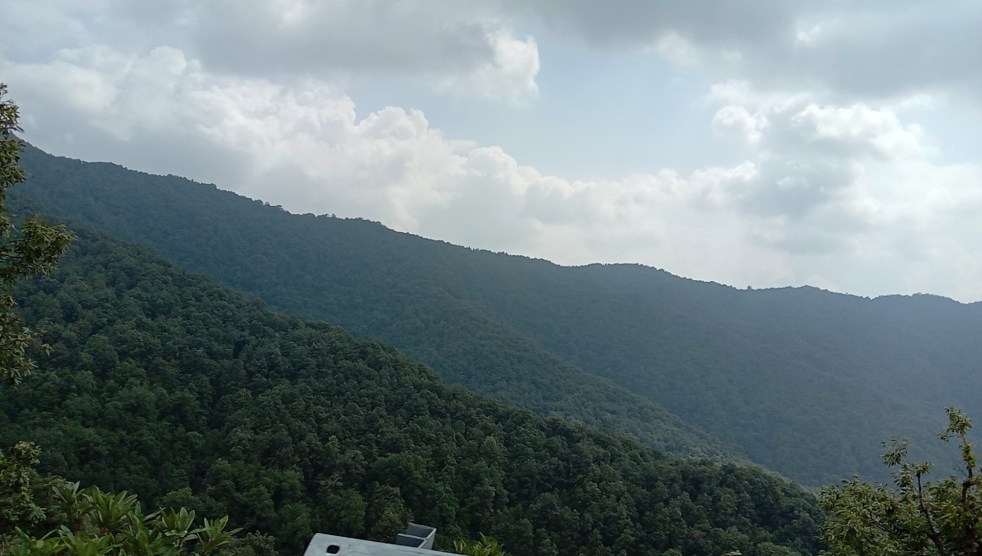
Travelling through Ramganga and Nayaar Rivers Basin

Fed by Dudhatoli forest range, the Ramganga West and Nayaar East and West in Uttarakhand are perennial rivers of immense scenic beauty amid emerging and looming threats. This photo blogs highlights some of the charms and concerns of these non-glacial rivers of the Ganga Basin.

Continue reading “Travelling through Ramganga and Nayaar Rivers Basin”

Art, Literature, Culture · Culture · Dams · Goa · Rivers and Culture

The magic of 24th June: Water Worship around the World

“Sao Joao, Sao Joao, Viva Sao Joao!”

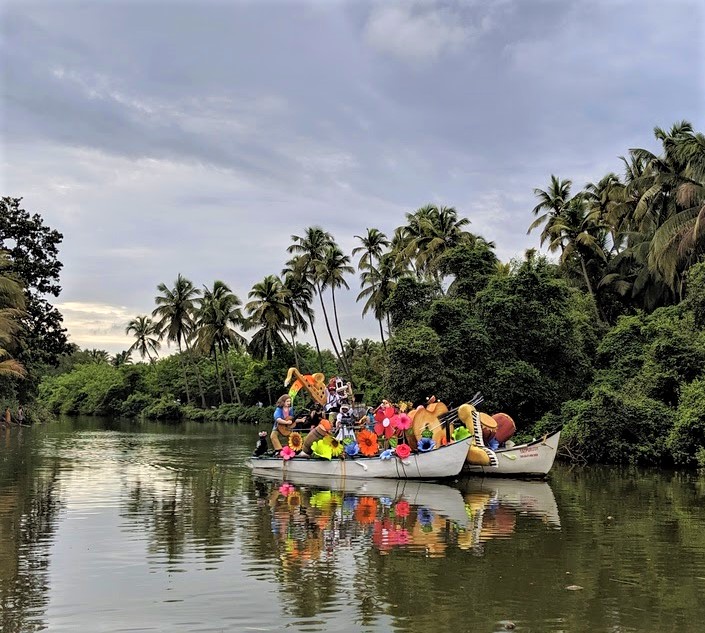
The shouts were followed by unbelievably loud splashes in a red laterite well. The well itself was decked up like a bride. All along the way to Siolim in North Goa, on the banks of river Chapora, the road blossomed with people wearing big smiles and bigger floral wreaths, ‘Kopels’.

At Siolim, flows a tiny river called Anjuna. The ivory white church of St. Anthony overlooks a small bridge across Anjuna which was festooned extravagantly with ribbons, balloons and flowers. On the grassy riverbank, hundreds of chairs were laid out and a makeshift stage creaked under the weight of musicians, dancers, announcers, and impromptu performers jumping up from the audience. Continue reading “The magic of 24th June: Water Worship around the World”

Book Review

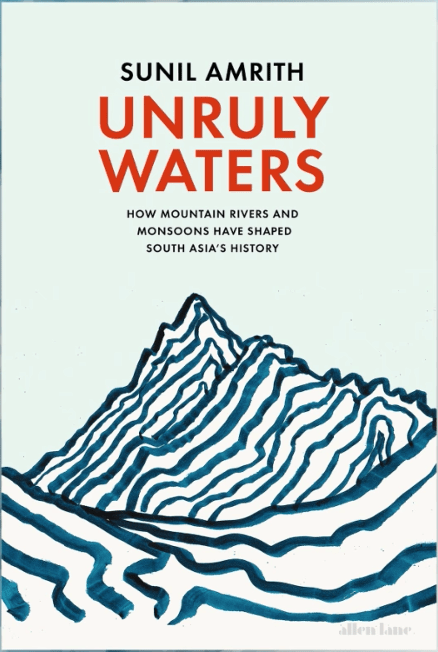
Review Essay on UNRULY WATERS: How Mountain Rivers & Monsoons have Shaped South Asia’s History

Guest blog by Dr. Ruchi Shree

Unruly Waters: How Mountain Rivers & Monsoons Have Shaped Asia’s History (by Sunil Amrith (2018), Penguin/ Allen Lane, New Delhi) unfolds the mysteries of monsoon in countless ways. It is written by Sunil Amrith, a historian and professor at Harvard University and the book has much more to offer to numerous other disciplines ranging from geology to ecology and political economy to name a few. Interdisciplinary as well as multidisciplinary orientation of the book makes it an interesting read for even the lay persons.

Although, I must admit that its non-ideological nature may at times lead to difficulty in placing the book in a certain category of left and right. Probably, the author has consciously done so and we will deliberate on this issue little later. Continue reading “Review Essay on UNRULY WATERS: How Mountain Rivers & Monsoons have Shaped South Asia’s History”

Indian Meteorological Department · Monsoon · Rainfall

District Wise rainfall in India in June 2020

Here we present the rainfall figures from India Meteorological Department in the just concluded month of June 2020, the first month of SW Monsoon 2020. The overall rainfall at all India level in June 2020 was 196.2 mm, 18% above normal rainfall in the month at 166.9 mm. It was 33% deficit last year.

This is India’s wettest June 12 years, The Times of India reported on July 1, 2020. Agriculture Ministry Data shows that sowing is 68% higher at 31.56 m ha. The June rainfall was 202 mm in 2008, the rainfall this year is the highest since then. All four IMD regions (Northwest, Central, South, East & NE) have recorded surplus rainfall, the surplus is the highest in Central (30.5% surplus) and E-NE (15.7%) regions. North West India had the lowest surplus at 3.5%. IMD Head Mrutyunjay Mohapatra said that whole of India was covered by monsoon on June 26, 12 days ahead of the normal date of July 8.

State wise rainfall Three states had large excess rainfall (above 60% surplus rainfall), namely Bihar, Madhya Pradesh and Sikkim. Eight states/UTs (Union Territories) had excess rainfall (20-59% surplus): Assam, Meghalaya, UP, Chhattisgarh, Maharashtra, Telangana, Andhra Pradesh & Andaman and Nicobar. Nine had deficient rainfall (20-59% deficit): Lakshadweep, Mizoram, Manipur, J&K, Ladakh, Himachal Pradesh, Delhi, Dadar & Nagar Haveli. Rest of India had Normal Rainfall. Continue reading “District Wise rainfall in India in June 2020”

DRP News Bulletin · Groundwater

DRP: 29 June 2020: Don’t blame NGT for Govt failure on Groundwater regulation

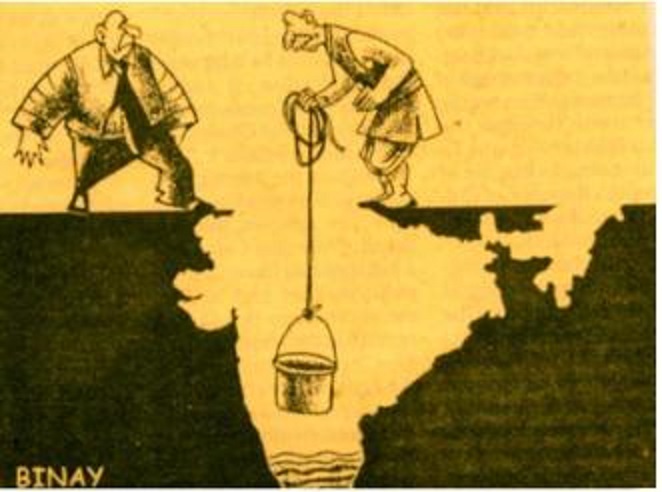
In a strange twist of logic, CII and FICCI have indirectly blamed National Green Tribunal (NGT) for the abject failure of the government in coming out with a credible set of regulations for groundwater use by industries. Groundwater is India’s water lifeline, most of the water that India uses comes from groundwater, be it rural or urban water supply, industrial & commercial water supply and also irrigation. However, the levels are going down and quality is deteriorating at most places. Basically because the government has shown ZERO interest ensuring credible regulation of groundwater use.

Continue reading “DRP: 29 June 2020: Don’t blame NGT for Govt failure on Groundwater regulation”
Hydropower · Landslide · Sikkim

Landslide in Sikkim damages NHPC’s Teesta V Dam Project

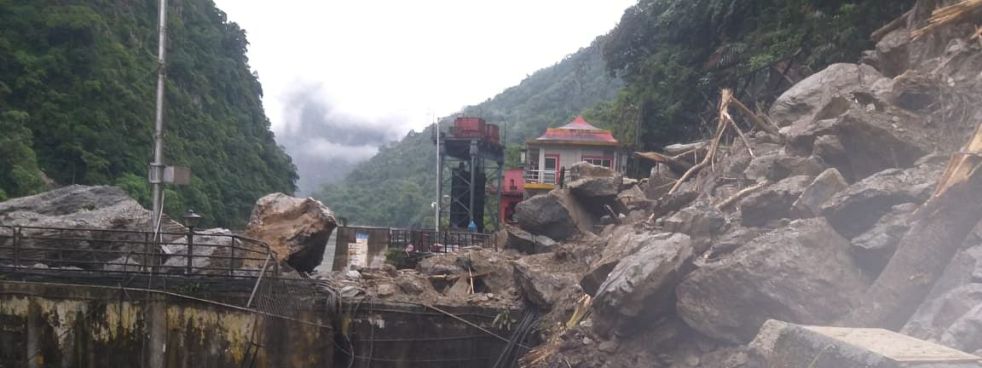
This photo is possibly the worst advertisement for a hydropower project with landslide rocks sitting on top of the dam. A massive landslide has severely damaged the 55 m high dam of the 510 MW Teesta Hydropower Project of NHPC, at 00.20 hours on June 27, 2020. This is a major blow to NHPC, considered India’s premier hydropower company. It’s also a major blow to the propaganda of International Hydropower Association, falsely pushing this very project as an example under IHA’s Hydropower Sustainability Assessment Protocol[i].

NHPC PR on June 28 afternoon said the landslide happened “at Dam Axis on left abutment hill side from a height of about 40 meter from Dam top NHPC Teesta-V Dam at Dikchu, East Sikkim. The access to Dam Control Room (DCR) as well as electrical connection to Dam top was cut-off due to this slide.”  The electricity supply was restored about 9 hours later.  (https://www.facebook.com/1764846020501239/posts/2689927154659783/)

Continue reading “Landslide in Sikkim damages NHPC’s Teesta V Dam Project”

Dams · Hydropower

Vyasi Hydro is draining muck and Rs. 40 lakh geo jute work into Yamuna

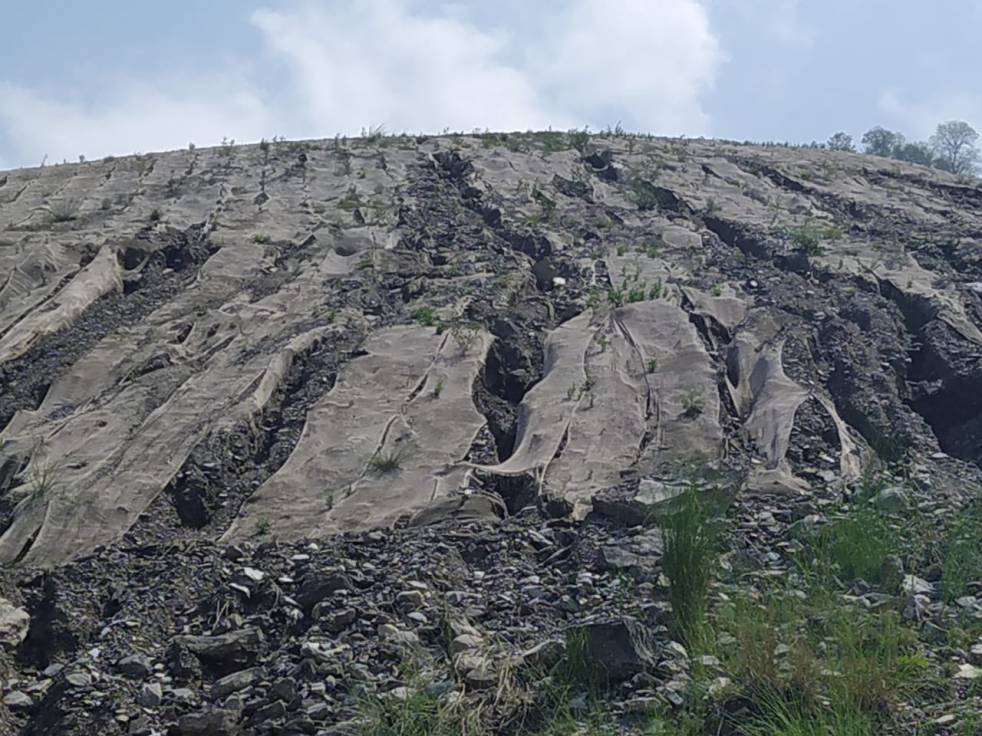
During the night of June 20, 2020 pre-monsoon showers left series of gully formations on one of the muck dump sites of the under construction 120 MW Vyasi Hydro Electric Project (HEP) in Hathiyari area of Vikas Nagar tehsil, Dehradun district in Uttarakhand. Huge amount of muck washed down into Yamuna River, exposing the credibility of the Uttarakhand Jal Vidyut Nigam Ltd. (UJVNL), the developer of Vyasi HEP. 

Local people said that since June 2019, the UJVNL has spent over Rs. 40 lakh on geo jute and hydro seeding (grass slope protection) work at Hathiyari muck dumping yard. The project has already missed several deadlines, the work is far from complete. The careless handling of muck generated during the construction of 2.7 km long, 7-m dia tunnel in last eight years has added -+to the woes of local people and Yamuna river.

Continue reading “Vyasi Hydro is draining muck and Rs. 40 lakh geo jute work into Yamuna”

Environment Impact Assessment · Ministry of Environment and Forests

Draft EIA Notification 2020: Dilutes EIA process & encourages violations

Guest Blog by Amruta Pradhan

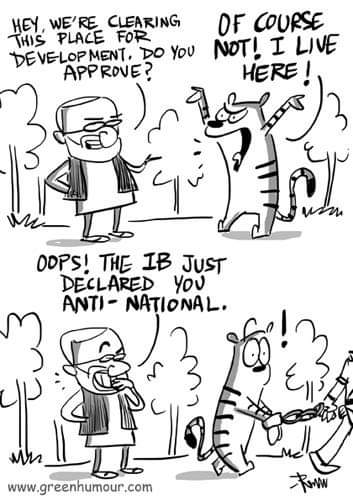
The Ministry of Environment Forests and Climate Change (MoEFCC) has issued Draft Environmental Impact Assessment (EIA) Notification 2020 in March 2020. The opening paragraph of the draft notification 2020 states that the purpose of the notification is “imposing certain restrictions and prohibition” on the development projects. The purpose of amending the notification is said to “make the process more transparent and expedient”. However, as one reads through the 83 paged verbose notification and puts several pieces of the proposed amendments together, it becomes more and more clear that the purpose is in fact dilution of the EIA process, protecting the project proponents from any kind of public scrutiny, covering up for the violations and making the Environmental Clearance (EC) process more and more non-transparent, undemocratic, unjust and unaccountable. Continue reading “Draft EIA Notification 2020: Dilutes EIA process & encourages violations”

Dams · DRP News Bulletin

DRP: 22 June 2020: Seven years after Uttarakhand Disaster: Any lessons learnt?

This past week we just completed seven years since the worst ever flood disaster in Himalayas, the Uttarakhand-Himachal Flood disaster that got launched with the massive unseasonal rainfall during June 15-17, 2013, along with the Glacial Lake Outburst Flood from Chorabari glacier upstream from Kedarnath. It was a massive wake up call.

To briefly recall, that unprecedented rainfall occurred when monsoon had not even set in Uttarakhand and neighbouring Himachal Pradesh. The first thing that strikes about this disaster where by official accounts over 6000 people died and by unofficial accounts over 20 000, is that we do not even have a comprehensive report from the government about this disaster. It would have told us a lot of things, including what we can learn from this disaster.

Second big thing that strikes is that big dams and hydropower projects, both due to their construction and operation impacts, both completed and under construction projects played a big role, as brief SANDRP video films in English and Hindi shows. But we continue to play with the Himalayas, the Ganga and lives of the lakhs of people by pushing more dams and such destructive activities (e.g. Char Dham Highways) in the fragile mountains without even honest impact assessments.

Continue reading “DRP: 22 June 2020: Seven years after Uttarakhand Disaster: Any lessons learnt?”
Dams · Sand Mining

Telangana Riverbed Mining 2020: Tribals, Godavari robbed

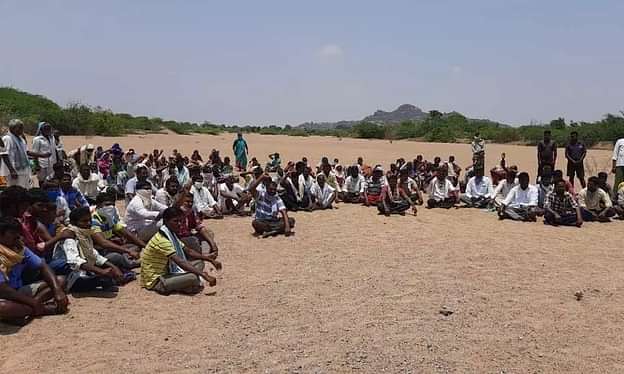
In 2019 overview, we found at least three people had died in Telangana due to illegal sand mining related incidents amid growing number of cases of illicit excavation of riverbeds. The state govt was seen laying stress on technological solutions to curb illegal sand mining and even reportedly had taken significant steps towards manufacturing and use of M-sand as a viable alternative, while its viability and impacts on environment during production remain to be fully studied and understood.  https://sandrp.in/2019/02/26/sand-mining-2018-telangana-and-andhra-pradesh/ Here we track the key developments in the state since then.

Continue reading “Telangana Riverbed Mining 2020: Tribals, Godavari robbed”