Interlinking of RIvers

ILR fundamentalism: Union Minister threatens regulators, media and civil society

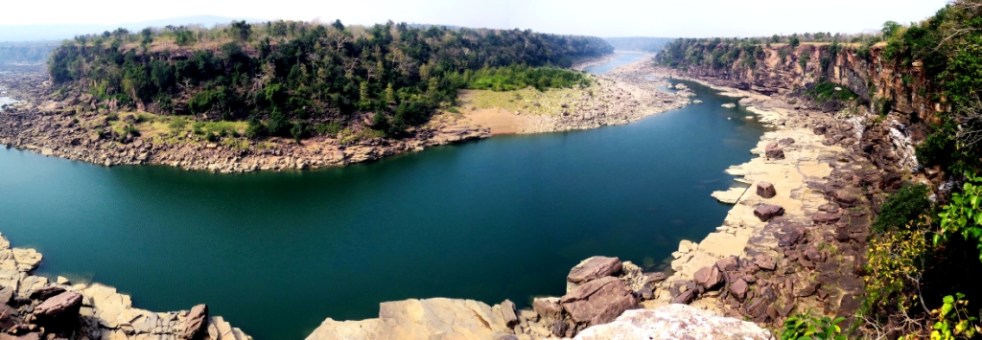
Above: A fabulous view of Ken river. Nesting sites of Long-billed vultures are to the right. All will go under water if Ken-Betwa linkup is carried out, PHOTO by: AJT Johnsingh

It’s a curious case of Dam fundamentalism: now manifest as ILR fundamentalism. On June 7, 2016, (as widely reported by media[i]) Union Water Resources Minister Uma Bharti “threatened to go on hunger strike if the Ken-Betwa river linking project is further delayed and termed the attempt to delay the project by environmentalists as a “national crime”” as reported by Business Standard. The threat was directed against all those raising questions about Ken Betwa River Link proposal of her ministry. Continue reading “ILR fundamentalism: Union Minister threatens regulators, media and civil society”

Cumulative Impact Assessment · Dams · Ministry of Environment and Forests

Transparency in Environment Governance? Expert Meeting on River Projects does not have documents in open domain

Above: Protest against Lower Subansiri Project in Assam. Basin Study of Lower Subansiri is also a part of intense debate in Assam. Now these studies are under wraps by the MoEF and CC

Non-transparent Environment Governance does not help anyone, neither is it legal. In the upcoming Expert Meeting of the MoEF and CC on River Valley Projects (read dams), documents pertaining to 6 of the 8 projects being considered are not available!

We have appealed to the new Minister to take swift action against this non-transparent and non-democratic governance in the MoEF and CC. Please feel free to send similar letters to the email addresses mentioned below. Continue reading “Transparency in Environment Governance? Expert Meeting on River Projects does not have documents in open domain”

Dams · Environmental Laws · Ministry of Environment and Forests

The New License Raj: License to Violate Environmental Laws through Environmental Supplemental Plan

Above: Sonthi Barrage in Karnataka standing without Environmental Clearance

The Ministry of Environment, Forests and Climate Change has issued a Draft Notification which aims to “regularise” projects which have violated the basic tenet of Environment Law and Governance in the country: starting work without securing Environmental Clearance. While any such violation should be punishable to deter any contempt of the much-abused environment laws, the Ministry is seeking to do just the opposite: Regularize the violations by constituting a wishy-washy Environmental Supplemental Plan, as outlined in the Draft Notification.

This seems like one of Mr Prakash Javdekar’s last acts as Environment Minister (before he got transferred to HRD with promotion to cabinet rank) that, typically similar to his other acts during his seriously problematic two year tenure, was totally against what he was expected to do: Protection of environment. We hope the new incumbent at MoEF&CC will cancel this notification immediately.  Continue reading “The New License Raj: License to Violate Environmental Laws through Environmental Supplemental Plan”

CGWB · Urban Water Sector

Groundwater of Pune: An Over-exploited and ungoverned lifeline

While more than allocated and more than enough water supply from Khadakwasla Project Complex steals the water supply show in Pune, water below the ground remains pretty much out of sight and out of mind for Pune Municipal Corporation (PMC) and everyone else. Roughly estimated use close to one thousand million cubic feet (TMC) remains not just ungoverned but completely unacknowledged. Though groundwater use forms an important component of non-potable water use in the city total quantity of the groundwater extracted remains unassessed. Drilling of borewells has been going on unregulated and groundwater level has been falling at the rate of quarter of a meter per annum. Neither PMC nor any other State agencies like Maharashtra Water Resources Regulatory Authority (MWRRA functioning as State Groundwater Authority) or Groundwater Survey and Development Agency (GSDA) is governing the resource and have taken any concrete steps for its conservation. Continue reading “Groundwater of Pune: An Over-exploited and ungoverned lifeline”

Dams · DRP News Bulletin

DRP: 4 July 2016 (In Proposed Hydro Policy, Govt Pushing Hydro Through Subsidies)

New Hydro Policy: Govt unjustifiably pushing hydro through subsidies A comprehensive policy to promote hydropower generation is set to be announced by September—with viability gap funding for projects, compulsory hydropower purchase obligations for distribution companies and a set of good practices that states have to follow. The idea is to address factors that currently drive hydropower costs up way above those of other sources of power and give policy support in its market development, according to a government official, who asked not to be named. The policy being prepared by the power ministry will have provisions for viability gap funding, which will help in meeting the shortfall in project costs and reducing hydroelectricity tariffs for consumers. Hydropower is expensive and in some cases more than double the cost of power from coal-based thermal plants, which is available at Rs.3-5 per unit.The ministry will also expand the scope of power distribution companies’ renewable power purchase obligations to include hydropower from projects with a capacity greater than 25 Mw. At the moment only power from those with less than 25MW is considered renewable power. According to officials, compulsory hydropower purchase from large projects will either be made part of the existing renewable power purchase obligation of distribution companies or a separate requirement, so that its inclusion does not affect the market for other renewable sources of energy like wind, solar or biomass. Govt unjustifiably pushing hydro through subsidies in proposed new hydro policy can be lead story. It is not going to help push hydro.  

Continue reading “DRP: 4 July 2016 (In Proposed Hydro Policy, Govt Pushing Hydro Through Subsidies)”
Interlinking of RIvers

River Ken, as I saw it

Guest Blog by: Manoj Misra, Yamuna Jiye Abhiyaan

Rivers are often seen merely as carriers of utilizable water and little more. Such utilization could be for supply of water to meet human domestic, commercial, irrigation or industrial needs or as a motive force to produce electricity. That there could be far more to a river than water flowing in it is rarely appreciated far less investigated. The reason also is that in case of perennial rivers water flowing in them tends to hide from public view a lot residing in their interiors, including their living and non living components. So a drought, notwithstanding its adverse impacts on water dependent people and their commensals[i], is an opportunity nevertheless to easily see what is otherwise normally hidden.     Continue reading “River Ken, as I saw it”

Dams · Hydropeaking · Hydropower · Narmada

नदी के बदले नदी दे सकते है? ..on Maheshwar, Narmada and fishing communities of India

What separated Maheshwar Ghats on the mighty Narmada from most other rivers I have seen was the sheer gaiety and joy which people were experiencing, jumping in the Narmada.  The beautiful, jutting steps of the ghats were designed (and used) like diving boards by men, boys and women. For someone who had just seen a dry Godavari and drier rivers of Marathwada, this mirth was therapeutic. Ferry Boats and laidback ferrymen were relaxing on the river, bobbing up and down rhythmically. In the distance was a tiny sailboat, held together by white fluttering sails, zipping through the waters at a startling speed without the din of a diesel engine. A fisherman and his daughter were returning to their village, taking stock of their catch.. Occasional fish rose above the waters and glistened in the evening sun. Continue reading “नदी के बदले नदी दे सकते है? ..on Maheshwar, Narmada and fishing communities of India”

Wetlands

Threats to East Kolkata Wetlands are threats to Kolkata: Majhi jo nau dubaaye…

Guest Blog by: Chicu Lokgariwar (chicu.l@gmail.com), Usha Dewani (usha.dewani7@gmail.com)

‘Majhi jo nau dubaaye, to usey kaun bachaaye’ laments a popular song[i]. It literally translates as: ‘If an oarsman sinks his boat, who can save it?’

This is a question that concerned citizens of Kolkata are asking themselves today in connection with the famed East Kolkata Wetlands. A notified Ramsar site, this extensive wetland spread over 12,500 Ha has been protected for decades by the communities who live within it and by The East Kolkata Wetlands (Conservation and Management) Act, 2006. Today, it is the Environment Minister of West Bengal who has taken it upon himself to destroy the wetlands. Continue reading “Threats to East Kolkata Wetlands are threats to Kolkata: Majhi jo nau dubaaye…”

Dams · National Water Ways

In the Pits: the Ganga River, dredged to death

Guest Blog by Nachiket Kelkar (rainmaker.nsk@gmail.com)

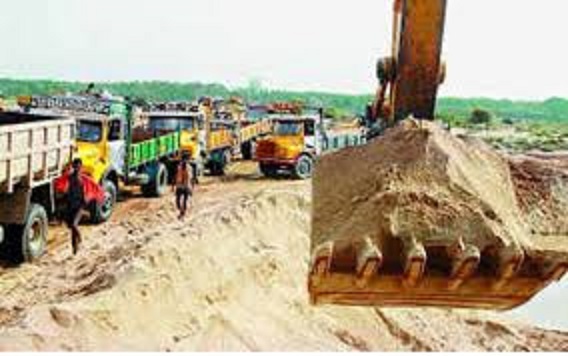
When human beings fall into manholes or die in traffic accidents on a highway they are all over the news. We pity and fear such news, and feel sad for the deceased, just because the whole event is so unfortunate. We are angered by the condition of traffic – that continues to remain appalling despite having six-lane highways that look deceptively magnificent. We wonder if these cases could have been avoided. It is therefore even more disturbing that not a single news item has covered a series of major accidents that have happened right in the middle of the Ganga River National ‘Waterway’ (India’s National Waterway No. 1; see Dams, Rivers & People: Feb-March 2016 issue: p. 1-7, 2016 for details[i]) in the last six months.

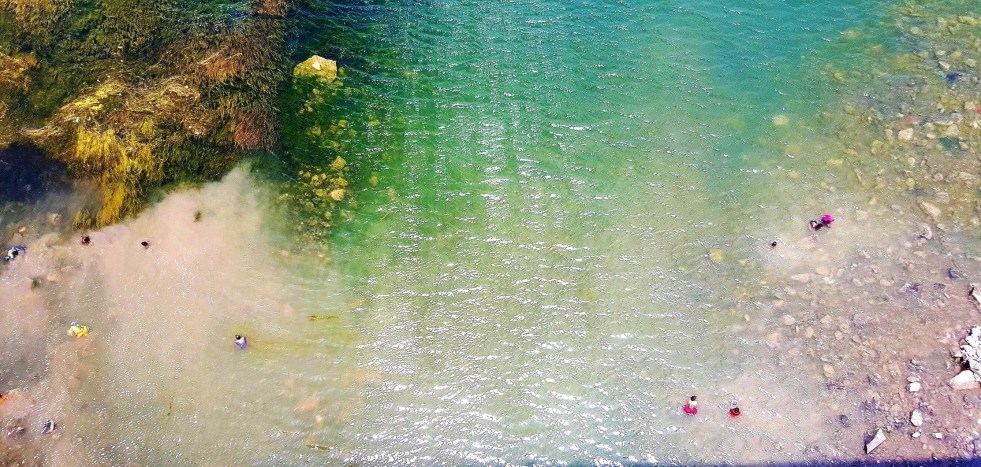
Over twenty people have died by drowning at the Barari Ghat (Image 1) at Bhagalpur in Bihar in this period. Offering prayers, taking dips, or lunging in for a calm swim, these people have slipped away as their feet have lost the ground all of a sudden. The river, scouring off the silt from under the concrete, has been catapulting their bodies into the deepening abyss on the fringes of the ghats. Many bodies have not even been found. Family members of many, whose bodies were found, must have never suspected that they would have to carry back their kin’s corpses. What made the same Barari Ghat, which people traditionally visited for years, so dangerous suddenly?

Continue reading “In the Pits: the Ganga River, dredged to death”

Floods · Interlinking of RIvers · Kosi · Narmada · Uttarakhand

CWPRS: A 100-year-old institute remains uni-dimensional; has no achievement to show

Jawaharlal Nehru who famously celebrated large dams as “temples of modern India” later termed them as “disease of giganticism”.[i] The fascination wore out after witnessing the huge sacrifice of the vulnerable and unfulfilled promises. Government of India however has continued with the worship of giant structures such as big dams, ports, hydropower projects etc. Even after nearly seven decades of independence, ‘engineering approach’ still dominates the idea of river planning which views river as an entity to be engineered and planned for irrigation, hydropower, industrial and urban water use rather than as a living eco-system. 17 study models that were displayed at Central Water and Power Research Station (CWPRS) open house day at Khadakwasla near Pune on June 14, 2016, its completion of 100 years of existence, stood testimony to this. Continue reading “CWPRS: A 100-year-old institute remains uni-dimensional; has no achievement to show”