brahmaputra · China · Siang

Muddy Siang is sign of danger ahead, wake up call for Indian authorities

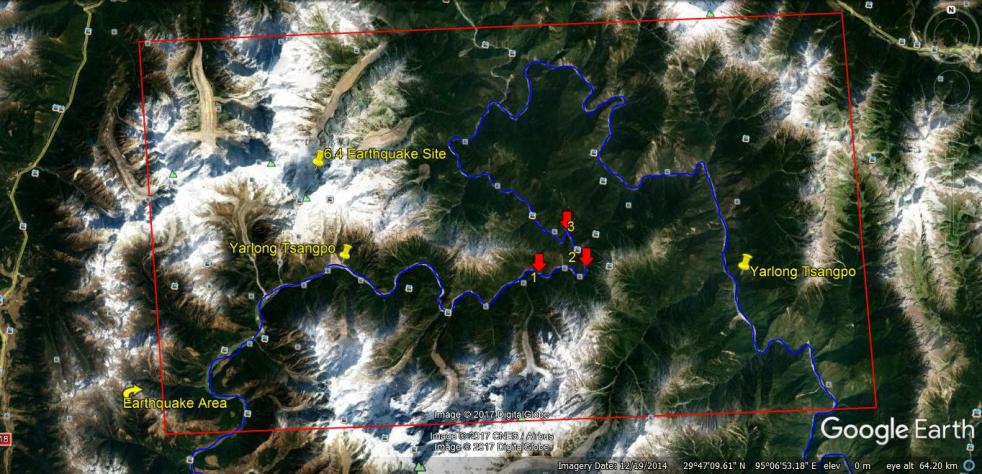
The current ongoing episode of Muddy Siang River water in Arunachal Pradesh is due to landslides in the upstream Tibet, triggered by the earthquakes starting on Nov 17, 2017 or possibly earlier. This is revealed by the satellite pictures and work of two researchers, first published in Arunachal Times on Dec 21, 2017[i]. These landslides are partly blocking the Siang flow and could lead to massive floods in the downstream Arunachal Pradesh and Assam any day.

A similar event in year 2000 led to sudden, massive floods in Siang River in Arunachal Pradesh on June 1, 2000. That episode, like the current one, started about 53 days before the floods, on April 9, 2000 due to landslides along a tributary of Yarlung Tsangpo, as Siang is known in Tibet. Continue reading “Muddy Siang is sign of danger ahead, wake up call for Indian authorities”

Bhagirath Prayas Samman · Dams · Kerala · Western Ghats

Remembering Latha

It took some time to write. Latha chechi and me talked just 4 days before she passed away on Nov 16, 2017. As usual, it was about when we will meet next and go to Athirappilly Falls and travel to the river together. Her voice was light, it had a surreal gentleness. We agreed on everything, which was rare. After just a few minutes, Unni gently took the phone from her and told me she needed to sleep. It just didn’t feel right.

We first met virtually about 10 years back, discussing rivers and forests and then, through her initiative, came together to organize the first civil society workshop on Environmental Flows in January 2009 with SANDRP.  Since then, Latha Chechi has been a bubbling, enthusiastic and wise constant. We worked on several submissions together, discussed strategies and ideas, eating each other’s heads about what worked and what can work and always, I was always taken aback by her unmatched way of linking issues.

She told me, “You need one particular river. Work on all the rivers of world, but have that one river to go back to.” Continue reading “Remembering Latha”

Dams · Environmental Flow · Fish Sanctuaries · Free flowing rivers · Ganga · Inland Waterways · Interlinking of RIvers · Karnataka · Kerala

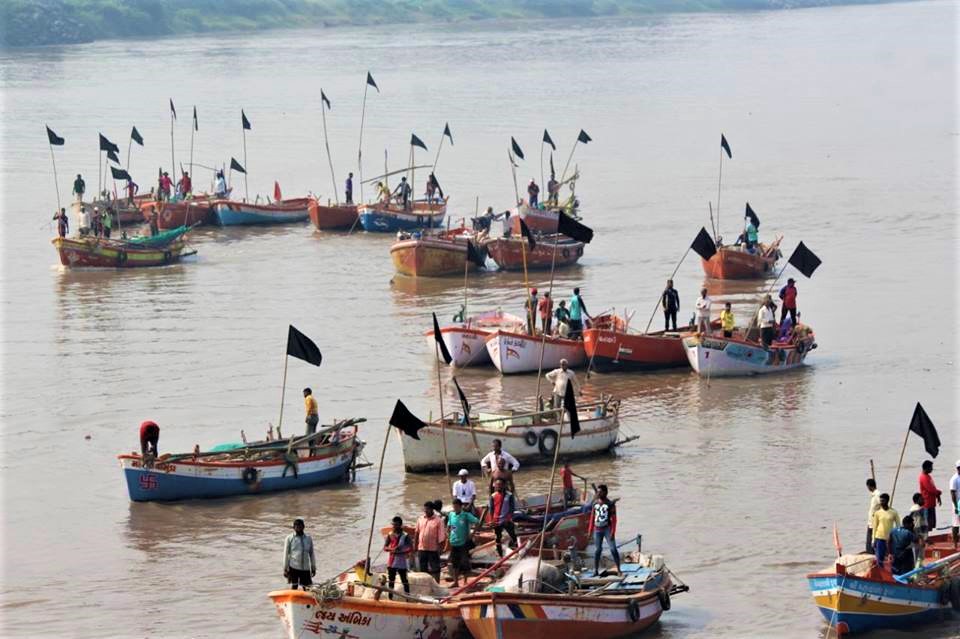
Riverine Fisherfolk as Mascots of flowing rivers and how 4 projects treat them today

When I was documenting a tiny, free-flowing river in Maharashtra Western Ghats named Shastri, the common thread from headwaters to estuary was Fishing! It was everywhere, in all forms, including dozens of fish species and fishing practices, including everyone: men, women, children, otters, crocs, storks. Across the country, buzzing, diversified fisheries with old, complex narratives indicate a rich river. And the palette just gets more vivid, nuanced and colorful with the size of the river.

More than 10 million Indians from some of the most vulnerable groups depend on rivers for their livelihood and nutritional needs. This staggering number can be an underestimate as several riverine fisherfolk do not bring their produce to the market and our livelihood census hardly captures the intricacies of riverine fisheries sector. Despite the huge dependence and critical importance of riverine fisheries, the sector continues being ignored and abused. The reasons behind the exploitation are at the heart of a deeper, more troubling discourse: ownership and appropriation of the river as a natural resource. Continue reading “Riverine Fisherfolk as Mascots of flowing rivers and how 4 projects treat them today”

Interlinking of RIvers · Madhya Pradesh · Ministry of Environment and Forests · Ministry of Water Resources

NGT Admits Appeal Challenging Environment Clearance to Ken Betwa Project

Press Release                                                                                                                  Oct 30, 2017

National Green Tribunal Admits Appeal Challenging

Environment Clearance to Ken Betwa Project:

No claim of equity for work done during pendency of application

The Principle Bench of National Green Tribunal on Oct 27, 2017 admitted a comprehensive Appeal (No 33 of 2017) challenging the Environment Clearance to Phase I of Ken Betwa River Linking Project. The order of the Bench comprising of Hon’ble Justice Swatanter Kumar (Chairperson of NGT), Hon’ble Justice Jawad Rahim (Judicial Member) and Hon’ble Bikram Singh Sajwan (Expert Member) on Oct 27, 2017 (available on Oct 28, 2017) noted: “Learned Counsel for the respective respondents accepts notice and prays for time to file reply. Copy of the application be furnished during the course of the date. Let the reply to be filed within two weeks from today and rejoinder within two weeks thereafter. List the mater on 27th November, 2017.” Ritwick Dutta, Rahul Choudhary and Meera Gopal are the lawyers representing the petition.  Continue reading “NGT Admits Appeal Challenging Environment Clearance to Ken Betwa Project”

Gujarat · Narmada

India’s Dam Mania gives acche din for Dam lobby and Gando Vikas

(Above: Protest in Bharuch on Oct 8, 2017 when Prime Minister laid foundation stone for Bhadbhut Dam on Narmada)

“Vikas Gando Thayo Chhe” is these days a super hit song in Gujarati, which literally means “Development has gone mad”. In the just concluded Garba (form of traditional social dance in Gujarat) festival, this was hugely popular this year through out Gujarat. The song became popular, even before Prime Minister of India celebrated his birthday on Sept 7 by declaring completion of an incomplete Sardar Sarovar Project, heaping totally unnecessary, unjustified and unjust displacement on 40 000 families of Narmada Valley and killing the largest west flowing river of India. So much for the river rejuvenation claims his government has been making since May 2014. As if to complete the process, they have started another dam on Narmada, few kilometers downstream of Sardar Sarovar Dam, at Garudeshwar, even without any environmental impact assessment. Continue reading “India’s Dam Mania gives acche din for Dam lobby and Gando Vikas”

Arunachal Pradesh · Assam · brahmaputra · Dams · Lohit River

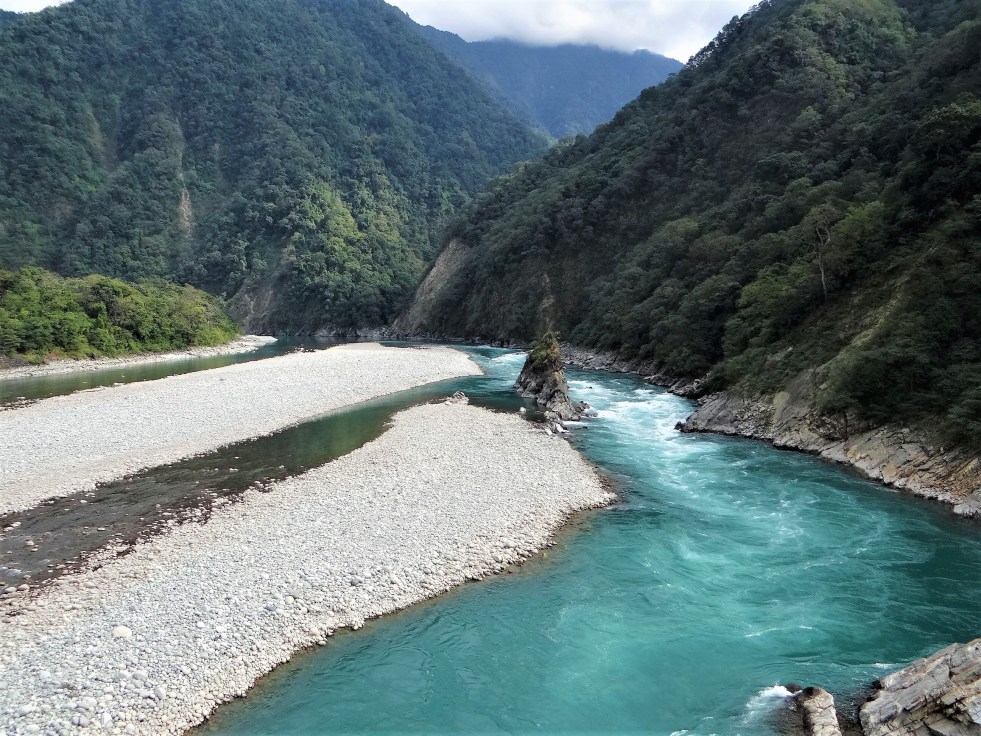
‘Banks of the Lohit will shine’: Glimpses of a free-flowing river

Above: Lohit River, Parshuram Kund on the right. Photo: Parineeta Dandekar

Assam, Arunachal and the North East India, West Bengal and Bangladesh are riverine entities in many ways. Ancient rivers flowing through this landscape have moulded not only the mountains and the silt-heavy banks, but cultural identity of the region itself.  Rivers permeate through the literature, folklore, songs, poems, cuisine, even dressing… Bhupen Hazarika, the Bard of the Brahmaputra, likened the red ripples of the Assamese Gamcha (red and white stole)  to the braided filigree of the Red River. When Guwahati University opened on the banks of Luit, Hazarika sang “Jilikabo Luiter Paar”..Banks of the Luit will Shine. Rivers stood for revolution as they stood for Love.. Jyoti Prasad Agarwal wrote “Luitar Parore Ami Deka Lora.. Moribole Bhoi Nai.” (“We are the youth from the banks of the Luit/ We are not afraid of death”). Older poets like Parvato Prasad Baruah wrote entire books full of poems of Luit and today modern poets in Assam like Jeeban Narah  link their creative processes inextricably to rivers. Continue reading “‘Banks of the Lohit will shine’: Glimpses of a free-flowing river”

Environment Impact Assessment · Ganga · Nepal · Public Hearing · Uttarakhand

Letter to MoEF’s Expert Committee: Why Pancheshwar Project should not be considered for Environment Clearance

(Above: Protest outside MoEF on Oct 24, 2017 when EAC met to consider EC for Pancheshwar Project)

Oct 23, 2017

To

Chairman and Members, Expert Appraisal Committee (River Valley Projects), Union Ministry of Environment and Forests, Jor Bagh, New Delhi

Respected Chairman and Members,

The agenda of the EAC (for RVP) to be held on Oct 24, 2017, put up on the EC website only on Oct 18, 2017, just six days before the EAC meeting includes the 5040 MW Pancheshwar Multipurpose project (PMP), India’s largest proposed hydropower projects. The agenda should be available at least ten days before the meeting, and this should also be a reason for not considering the Pancheshwar project by EAC for its meeting on Oct 24. Moreover agenda mentions 5600 MW Pancheshwar project, where as the capacity as per EIA is 5040 MW. Is MoEF just callous in mentioning wrong installed capacity or has the capacity gone up? In either case, the 5040 MW Pancheshwar project should not be on EAC agenda. Continue reading “Letter to MoEF’s Expert Committee: Why Pancheshwar Project should not be considered for Environment Clearance”

Dams · Delhi · DRP News Bulletin · Floods · Ganga · Groundwater

DRP: 16 Oct 2017: New Groundwater Guidelines threat to India’s Water Lifeline

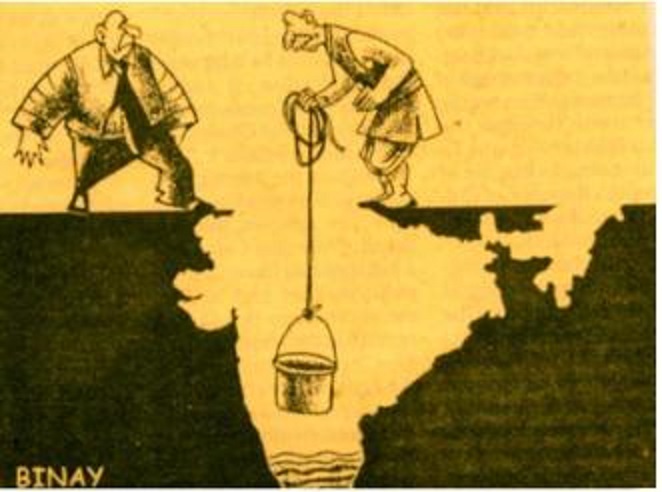
GROUND WATER

New Draft Guidelines designed to privatise & destroy Groundwater The Ministry of Water Resources of the Union Government has on Oct 11, 2017 (see notice: http://www.wrmin.nic.in/forms/List.aspx?lid=1180&Id=6) put up draft guidelines on Groundwater management in India (see draft Guidelines: http://www.wrmin.nic.in/writereaddata/guideline-NOC-CGWA.pdf), with comment period of 60 days. The comments are to be sent to: Member Secretary, Central Ground Water Authority, West Block-2, Wing 3 (Ground Floor), Sector 1, RK Puram, New Delhi – 110066, e-mail: cgwa@nic.in.

New Draft Groundwater guidelines designed to destroy groundwater further and open floodgates for privatisation of common property resource? “Groundwater is a common property resource and should be used for greater good. But these guidelines are not doing that. Groundwater governance and management should happen in a transparent, participatory and accountable way but that too is not happening through guidelines,” Thakkar said.

Explaining, Thakkar said that the guidelines are “trying to make a system wherein state or district level authorities will be giving NOCs but whether those authorities have capacity to give NOCs after understanding the implications is the question.” “The draft guidelines also take out the need to recharge groundwater. Present regulations say that you if you take out groundwater you need to put in recharge capacity but now they are saying that’s not necessary and are only seeking charges. These things will definitely lead to further destruction of groundwater,” he added. http://www.livemint.com/Politics/irx1jFCWMFjGJk82Z8VZ2O/Govt-proposes-new-guidelines-on-groundwater-usage-by-industr.html, http://www.newindianexpress.com/nation/2017/oct/13/centre-proposes-water-conservation-fee-for-use-of-groundwater-1673480.html, http://www.newindianexpress.com/nation/2017/oct/14/townships-with-gym-club-must-pay-water-fee-1673790.htmlhttp://www.hindustantimes.com/environment/centre-proposes-nixing-recharge-requirement-for-industries-extracting-groundwater/story-kN3iPmO9m4MIoYkUX32n7I.html  

Continue reading “DRP: 16 Oct 2017: New Groundwater Guidelines threat to India’s Water Lifeline”
Interlinking of RIvers · Madhya Pradesh

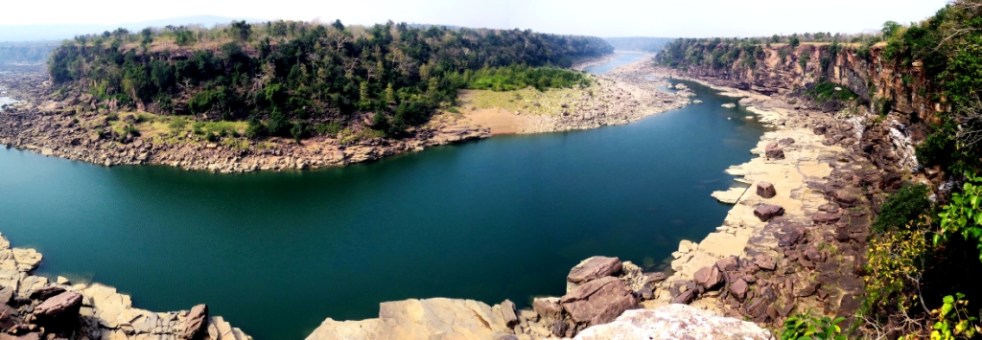
Ken Betwa Project to destroy Raneh Falls: India’s Mini Grand Canyon-cum- Mini Niagra

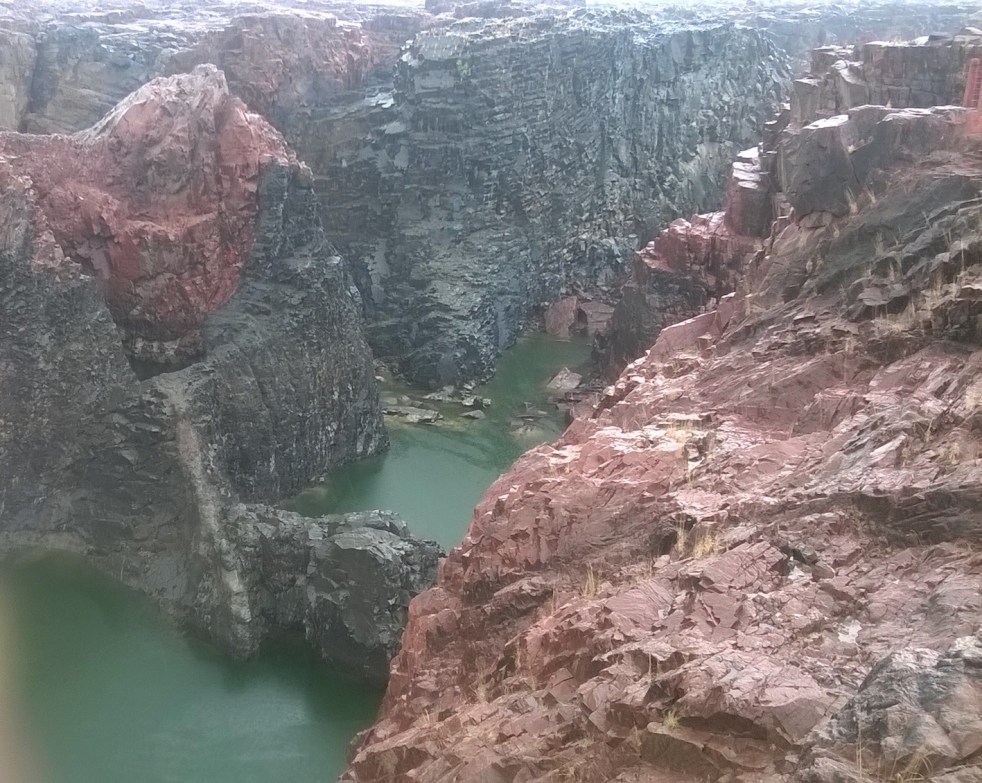
“Oh my god! I wont have believed that such an amazingly beautiful river canyon exists in India had I not seen this!” These were my first words, believe or not, on seeing Raneh Falls earlier this year. It was such mesmerizingly beautiful scene that I could not believe no one has even mentioned that this whole site is likely to be destroyed by the proposed Ken Betwa Project (KWP).

In fact, there are Amazing number of untold stories of the destruction that the proposed Ken Betwa link will cause. One of them is the story of Raneh Falls. The name is a bit of misnomer, but let us stick to it. Continue reading “Ken Betwa Project to destroy Raneh Falls: India’s Mini Grand Canyon-cum- Mini Niagra”

Delhi

Decentralized STPs in the Delhi Capital Region

Guest blog by Kelly D. Alley and Nutan Maurya

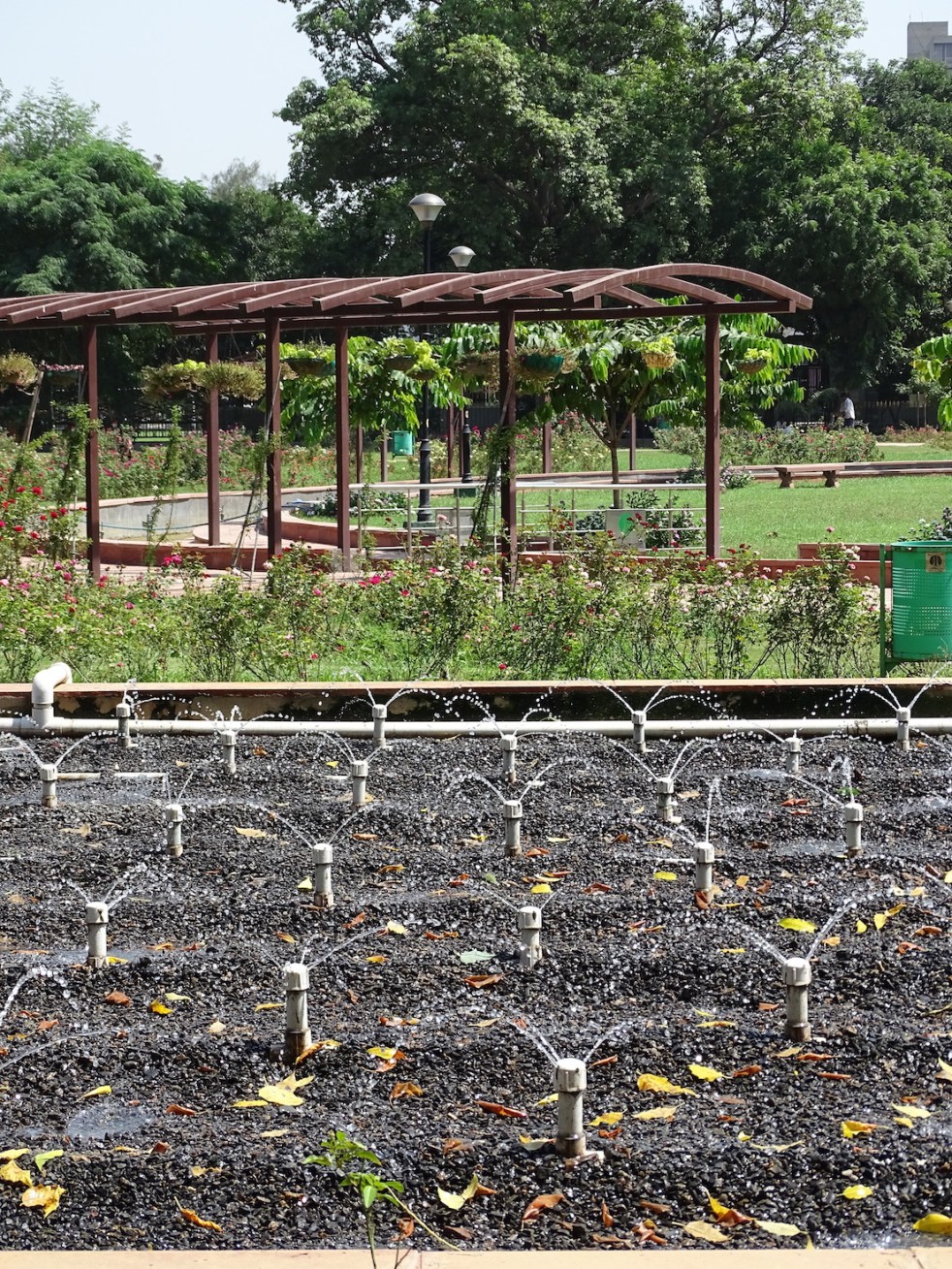
The territory under the jurisdiction of the New Delhi Municipal Council, or Lutyen’s Delhi, is lush with beautiful gardens. The New Delhi Municipal Council maintains around 8,000 parks and uses about 80 million gallons of water a day for grass, plants, shrubbery and trees. The Delhi Jal Board estimates that the total water treated at its sewage treatment plants is about 455 million gallons a day (mgd) of which they provide 142 mgd for horticulture and irrigation in the Delhi metropolitan region. With groundwater levels depleting to over 300 feet in some sections of Delhi, there has been increasing focus on curtailing use of groundwater for horticulture and other non-essential services. In this context, the National Green Tribunal has directed all urban municipalities to use treated wastewater for horticulture.    Continue reading “Decentralized STPs in the Delhi Capital Region”