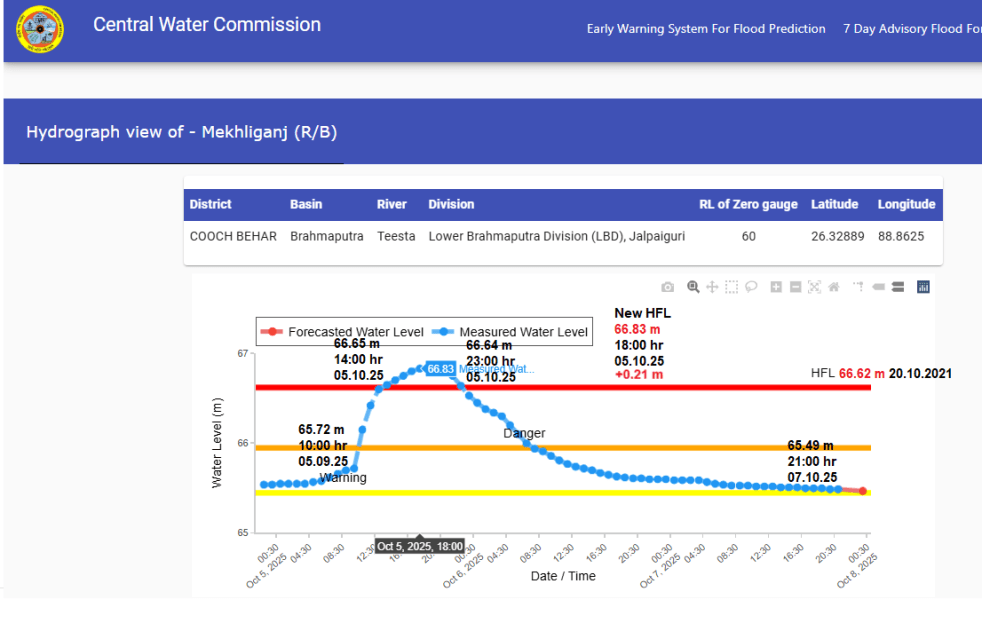
In Oct. 2025, we could find at least 06 flood monitoring sites of Central Water Commission (CWC), where rivers have crossed their Highest Flood Levels (HFL) after the end of South West Monsoon season 2025 on Sept 30 2025. Of the 6 sites, 2 each are in Brahmaputra basin in W Bengal and Ganga basin in Bihar. 1 site Anantharam on Musi river in Telangana is part of Krishna basin and 1 site Marella on Gundlakamma river in Andhra Pradesh is part of East Flowing Rivers between Mahandi and Pennar basin.
Continue reading “India’s Rivers in Extreme Floods in Oct 2025”Category: Department/Ministry
All departments/ministry related to which content is posted
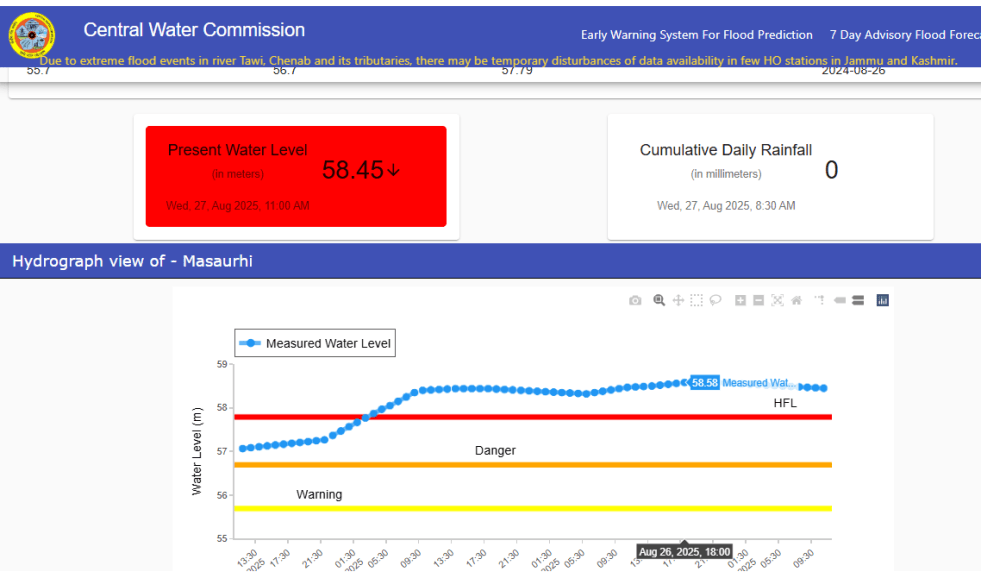
Rivers Crossing the Highest Flood Levels in Aug 2025
In the third month of South West Monsoon season 2025, we have been able to track at least 23 flood monitoring sites of the Central Water Commission (CWC) where the respective rivers have crossed their Highest Flood Level (HFL). These 23 sites are spread over 5 river basins -11 sites in Ganga basin, 9 sites in Indus basin & 1 each in Mahi, Godavari and Krishna basins.
Continue reading “Rivers Crossing the Highest Flood Levels in Aug 2025”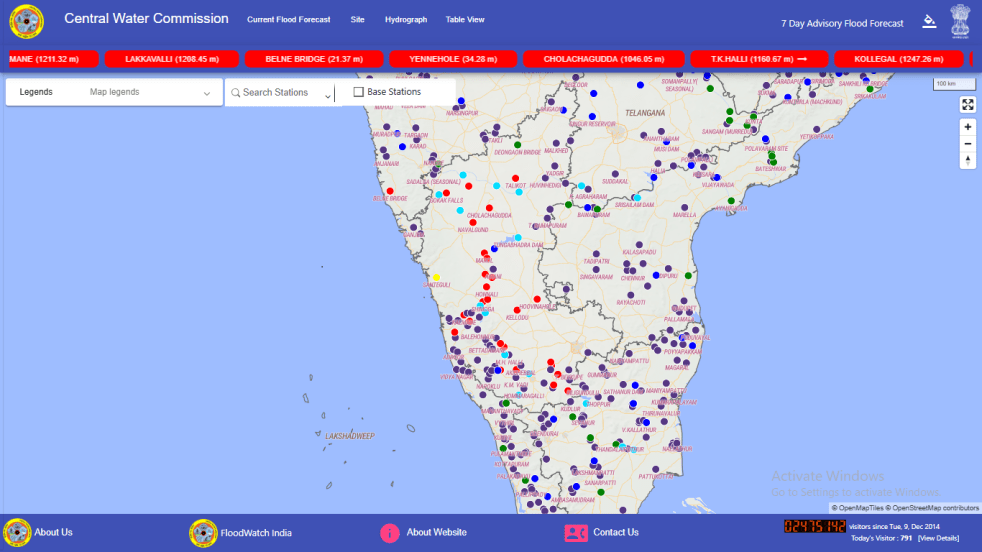
Rivers Crossing the Highest Flood Levels in July 2025
(Feature Image: Hydrograph of Pin river at Gulling site in Lahul & Spiti on July 04, 2025)
In July 2025 during the South West Monsoon, we have found rivers crossing their respective Highest Flood Levels (HFL) at least at 12 flood monitoring sites of Central Water Commission (CWC). Of the 12 sites, 11 are in Ganga basin and 1 site is in Narmada basin. The details of all these sites are given in table below. The sixth column of the table is the information about rise in meter (m) over the old HFL, duration (hours-hrs) the river has stayed in extreme floods and number of years (yrs) after the HFL is breached. The 12 sites are spread over 5 states: Madhya Pradesh, Uttar Pradesh, Bihar, Uttarakhand and Jharkhand.
Continue reading “Rivers Crossing the Highest Flood Levels in July 2025”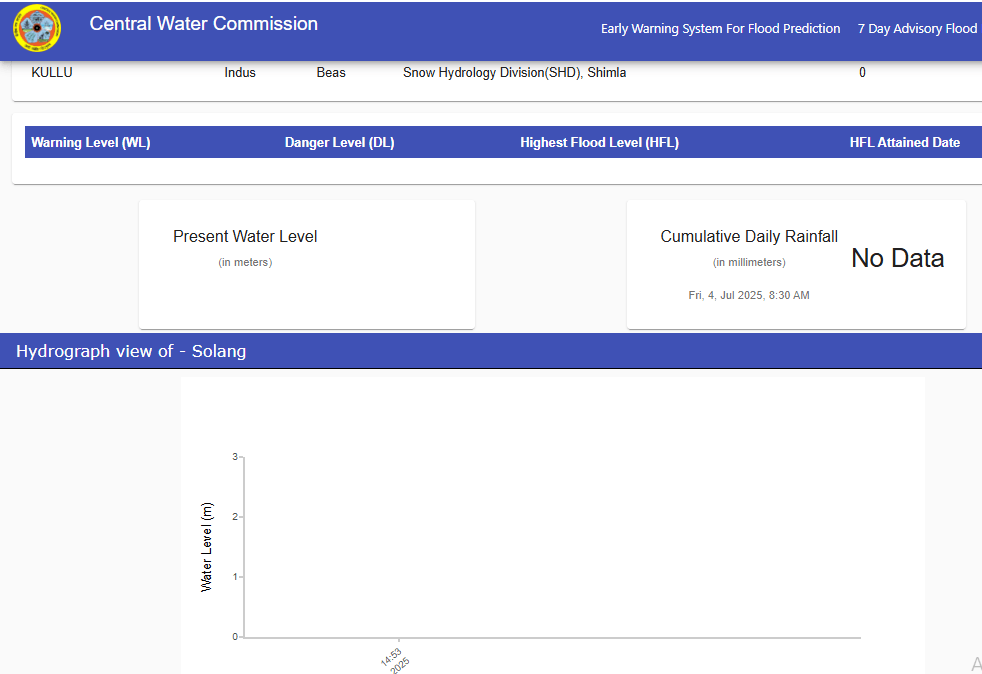
Himachal Pradesh: Why CWC’s Forecasting is Unavailable Amidst Flood Disaster?
(Feature Image: Screenshot of inactive hydrograph for Solang station on Beas river in Mandi district. Source: CWC Flood Forecast website)
Despite disastrous flood events causing significant destruction to human lives and infrastructures for past three years, the state of Himachal Pradesh has not seen much required improvements in flood monitoring and forecast servicesby the Central Water Commission’s (CWC) to help minimize the destruction toll.
Continue reading “Himachal Pradesh: Why CWC’s Forecasting is Unavailable Amidst Flood Disaster?”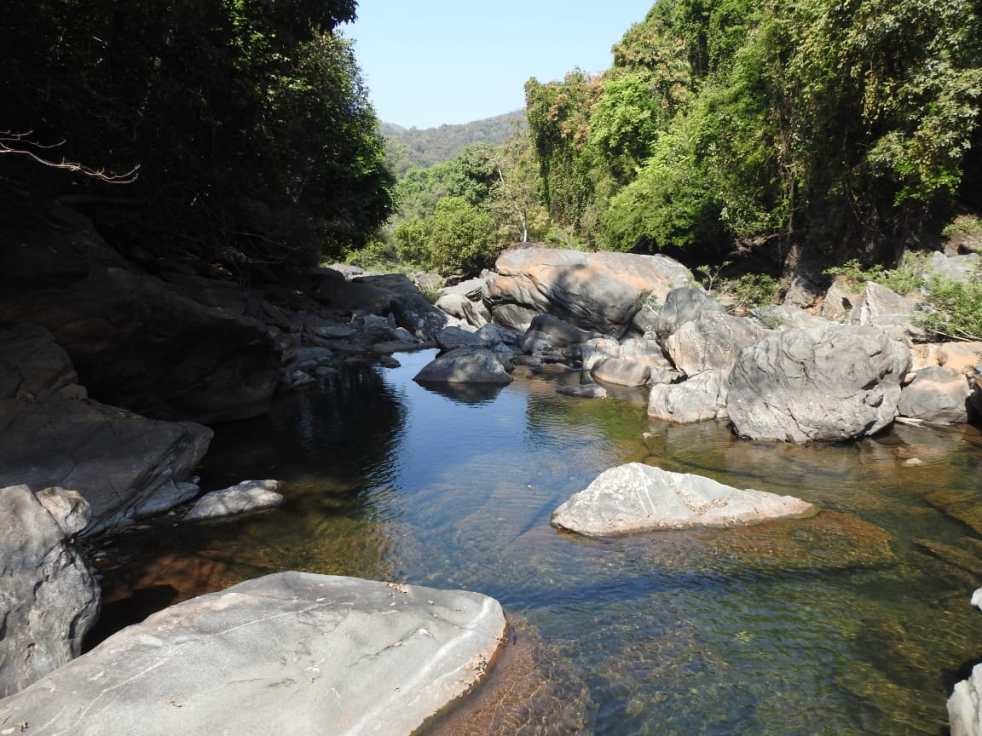
Dabhil Mauli: Stories and Struggles of a Small River in the Western Ghats
At the window of his new house, in a crowded suburb of Pune sits Aba Gawas. He looks out at the traffic and talks of his river Dabhil, more than 400 kms away from him. For years, Aba has fought hard to protect the river. He calls it Dabhil Mauli, a term of endearment reserved for mothers and deities. He is not keeping very well and longs to return to Dabhil Mauli. I realize with a sudden pang, rivers are home.
Continue reading “Dabhil Mauli: Stories and Struggles of a Small River in the Western Ghats”
Hydropower-GLOF Nexus in Chenab Headwaters: Absence of credible studies and accountable governance
Increasing incidences of Glacial Lake Outburst Floods (GLOFs) are being experienced in the Indian Himalayas. One of the most notable examples of GLOF was the Chorabari Lake GLOF that occurred on 16th June 2013 in Kedarnath, Uttarakhand[1] which was triggered by heavy rainfall induced mass movements into the lake. The GLOF devastated villages of Kedarnath, Rambara, and Gaurikund. Around 6,000 people were officially killed, and a significant number of the deaths were linked to the GLOF. Countless bridges and roads were washed away, and about thirty hydropower plants were affected or completely devastated. Several Hydropower projects resulted in exponential losses to life and livelihoods. Whole of Uttarakhand was affected in the disaster, and a significant proportion of it was related with GLOF.
Continue reading “Hydropower-GLOF Nexus in Chenab Headwaters: Absence of credible studies and accountable governance”
2023: EAC & FAC Decisions on Dams, Hydro, Irrigation Projects
(Feature Image: Yamuna river deprived of e-flows downstream 120 Mw Vyasi HEP dam in Dehradun, Uttarakhand in June 2023. Bhim Singh Rawat/SANDRP)
This annual overview examines minutes of meetings held by Expert Appraisal Committee (EAC) for River Valley and Hydropower Projects between 15 December 2022 and 24 November 2023 for consideration of Dams, Hydroelectric Power (HEP), Pumped Storage Hydro Projects (PSP) and Irrigation related proposals seeking Terms of Reference (TOR) and Environment Clearance (EC) approvals. The report further analysis various water projects related proposals considered by the Forest Appraisal Committee (FAC) between 27 December 2022 and 18 December 2023 for Forest Clearances (FC).
Continue reading “2023: EAC & FAC Decisions on Dams, Hydro, Irrigation Projects”
Oct 2023: CWC Flood Forecast FAILS during Teesta Glacial Floods
(Feature Image: NHPC’s Teesta VI hydro project at Sirwani, Sikkim affected by GLOF deluge on Oct. 04, 2023. Image Source: Weatherman Shubham.)
The Teesta River has witnessed unprecedented scale of floods following South Lohnak Glacial Lake Outburst Flood (GLOF) event in the intermittent night of October 03-04, 2023. The details and impact of the deluge can be seen here. The incident has once again underlined shortcomings in Central Water Commission’s (CWC) flood monitoring and forecasts work.
Continue reading “Oct 2023: CWC Flood Forecast FAILS during Teesta Glacial Floods”
July-August 2023: Problems in CWC Flood Monitoring & Forecast
(Feature Image: CWC’s Delhi Railway Bridge forecast site showing abrupt changes in Yamuna water level during unusual flood spell in July 2023)
July and August are peak months of South West monsoon. There has already been flood related destruction in several states including Himachal Pradesh, Punjab, Haryana, Delhi and Uttarakhand so far. Amid these flood spells, SANDRP has observed many serious issues plaguing Central Water Commission’s (CWC) flood forecasting and monitoring work and some of these are described below.
Continue reading “July-August 2023: Problems in CWC Flood Monitoring & Forecast”
Rivers Breaching Highest Flood Levels in July 2023
( Feature Image: CWC’s water level gauge set up along Yamuna river at Old Railway Bridge, Delhi. 28 June 2023/ SANDRP)
The analysis of hydrographs being published on Center Water Commission’s (CWC) Flood Forecasting website shows that the previous Highest Flood Levels (HFL) have been breached at least at 34 flood monitoring sites across the country in July 2023. The river basin wise details of all these sites are given in tables below.
Continue reading “Rivers Breaching Highest Flood Levels in July 2023” SANDRP