Dams · Sand Mining

Bihar Sand Mining 2020: Ruining rivers; aggravating floods

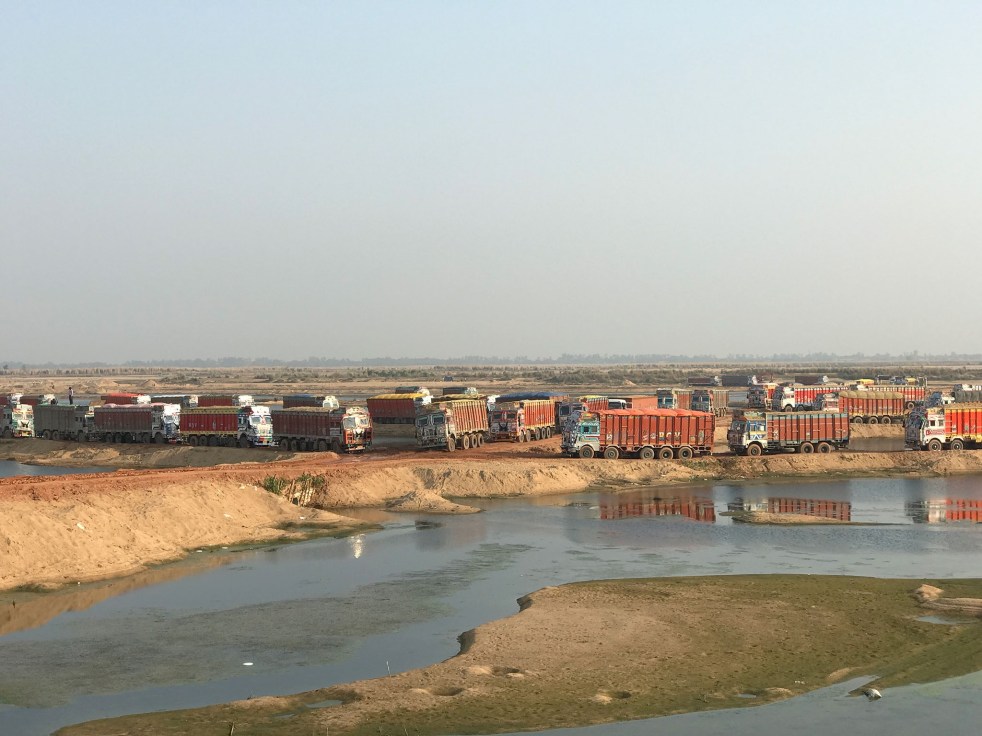
{Feature image: Up to 300 trucks a day take their fill of sand at a mine on the Sone River in Bihar state. India’s construction boom is stripping large volumes of sand, a vital ingredient in concrete, from its rivers. Environmentalists say the extraction is unsustainable, harming local hydrology and wildlife. Paul Salopek}

The 2018 review of sand mining[i] for Bihar highlighted how mismanagement by govt and then National Green Tribunal (NGT) ban on sand mining in Ganga river, Son rivers particularly during monsoon months resulted in sand scarcity and soaring prices affected public and livelihoods of mining laborers.

The video report featuring local people revealed that illegal mining was causing floods in West Champaran by damaging embankments. Similarly, the report on Gaya mentioned sand mining among reasons behind increasing air pollution. The death of four kids by drowning into sand mine pits was shocking. This compilation presents the situation after 2018 so far.

Continue reading “Bihar Sand Mining 2020: Ruining rivers; aggravating floods”
Dams · DRP News Bulletin

DRP NB 20 July 2020: Will the Supreme Court stop destruction of Ganga & Himalayas in the name of WIDER Char Dham Road?

Feature Image: Pithoragarh-Tanakpur Road widening work going and muck being dumped in Saryu river under Chardham project. (Manoj Matwal, April 2019) 

The Supreme Court appointed Ravi Chopra committee has submitted the report on Char Dham Road. It has not said NO to the all weather road which is the slogan of Gadkari and rest of the Union Government. It has in fact, going by the Union Ministry of Road Transport’s’ circular, as late as 2018, suggested that the road be of 5.5 m width with necessary precautions. It has provided elaborate justifications and reasons why it took this decision. And yet twelve govt members of the committee, claiming in the name of religion (as per interview by one of these twelve members in media today) has insisted that the road should be of 10 m width. Not bothering that religion was not part of their mandate, not bothering what impact such a road will have on the Ganga (and the impact will be massive, we will know the full extent only if the impacts are scientifically assessed), on Himalayas (again starting from deforestation, landslides, flash floods and so on will be unbelievably huge) and on people and future generations. One only hopes the Supreme Court will see through the mindlessness of the economic fundamentalism being pushed in the name of religion and not allow the proposal to go ahead.

The Union Environment Ministry is clearly out to destroy even the Bhagirathi Eco-Sensitive Zone by sanctioning the Zonal Master Plan without due process and in complete violation of the letter and spirit of the Bhagirathi notification. This will further open the flood gates for destruction of remaining stretch of Bhagirathi, considered original Ganga stream as it flows from Gangotri. Again one hopes the judiciary will strike this down.

One wonders what is the NMCG, National Mission for Clean Ganga, whose mandate is Ganga rejuvenation, is doing amidst all this? Why is it silent?

Continue reading “DRP NB 20 July 2020: Will the Supreme Court stop destruction of Ganga & Himalayas in the name of WIDER Char Dham Road?”

Dams · DRP News Bulletin

DRP NB 13 July 2020: “Rainwater harvesting is key to solving India’s water woes”

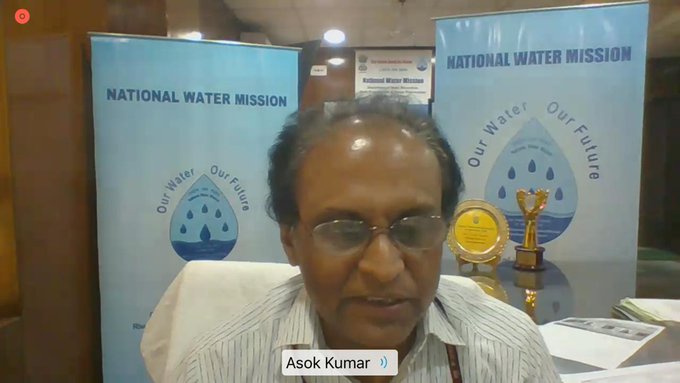
INDEED. With all the emphasis available at our command. We are in the midst of the rainiest season and such a statement is indeed music. It would become even more melodious if one knows who said it: it was none other than Mr G. Asok Kumar, Additional Secretary & Mission Director, National Water Mission, Department of Water Resources, River Development & Ganga Rejuvenation, Ministry of Jal Shakti, Government of India who said it. Speaking on July 8, 2020, he said: “Rainwater harvesting has become inevitable in the current scenario of water scarcity across the country… The idea is to save the rainwater be it on the rooftop, compounds, and premises.” Mr Kumar also emphasised the importance of groundwater recharge. 

We can pass it as run-of-the-mill statement from the government, but one is tempted to think there is more to it than that. One wishes if there was a way to hold these officials accountable for such statements and ask as to how this translates into policies, projects and practices. There is no evidence of any of these, unfortunately. Unless we were to interpret it cynically the way Central Water Commission ideologues do: Dams are also rain water harvesting structures! By that definition, even river linking is also rain water harvesting structure!! But Mr Kumar do not seem to suggest that. So let us hold on to this statement optimistically and push the water resources establishment to implement through right policies, practices and projects. Since that is where solution to India’s water problem indeed is. Unfortunately so far there is no sign that this wisdom is accepted in any serious way by the water resources establishment.

Continue reading “DRP NB 13 July 2020: “Rainwater harvesting is key to solving India’s water woes””

Dams · Yamuna River

Uttarakhand govt must remove illegal bridge on Yamuna to prevent flood disaster

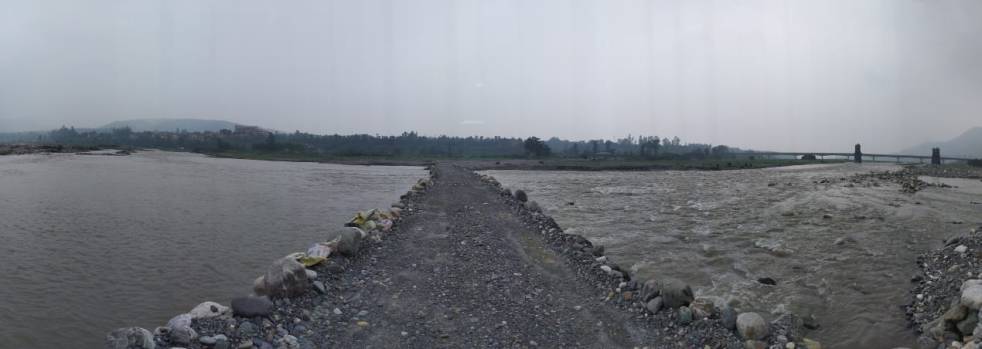
Locals of Vikas Nagar tehsil in Dehradun have shared revealing and disturbing images and videos of riverbed mining activities done in Yamuna river over past couple of months. Though in wake of ongoing monsoon the mechanized extraction of riverbed minerals (RBMs) has seen a halt since July 01, 2020, the miners have left an illegally made makeshift bridge on Yamuna river. And that’s cause of worry for local people.

“Since May we have been requesting local administration not to allow deep, in-stream and mechanized mining in Yamuna river compromising rivers flow as it could change river course and create damages during floods. But all our pleas fell on deaf ears”, says a local villager on the condition of anonymity.

He further says that, a causeway bridge built across river in the last week of May 2020 to transport the minerals has been left unattended which could lead to a flood disaster if not safely removed immediately.

Continue reading “Uttarakhand govt must remove illegal bridge on Yamuna to prevent flood disaster”

Dams · Landslide

JAJRED perennial landslide in Yamuna basin, Uttarakhand

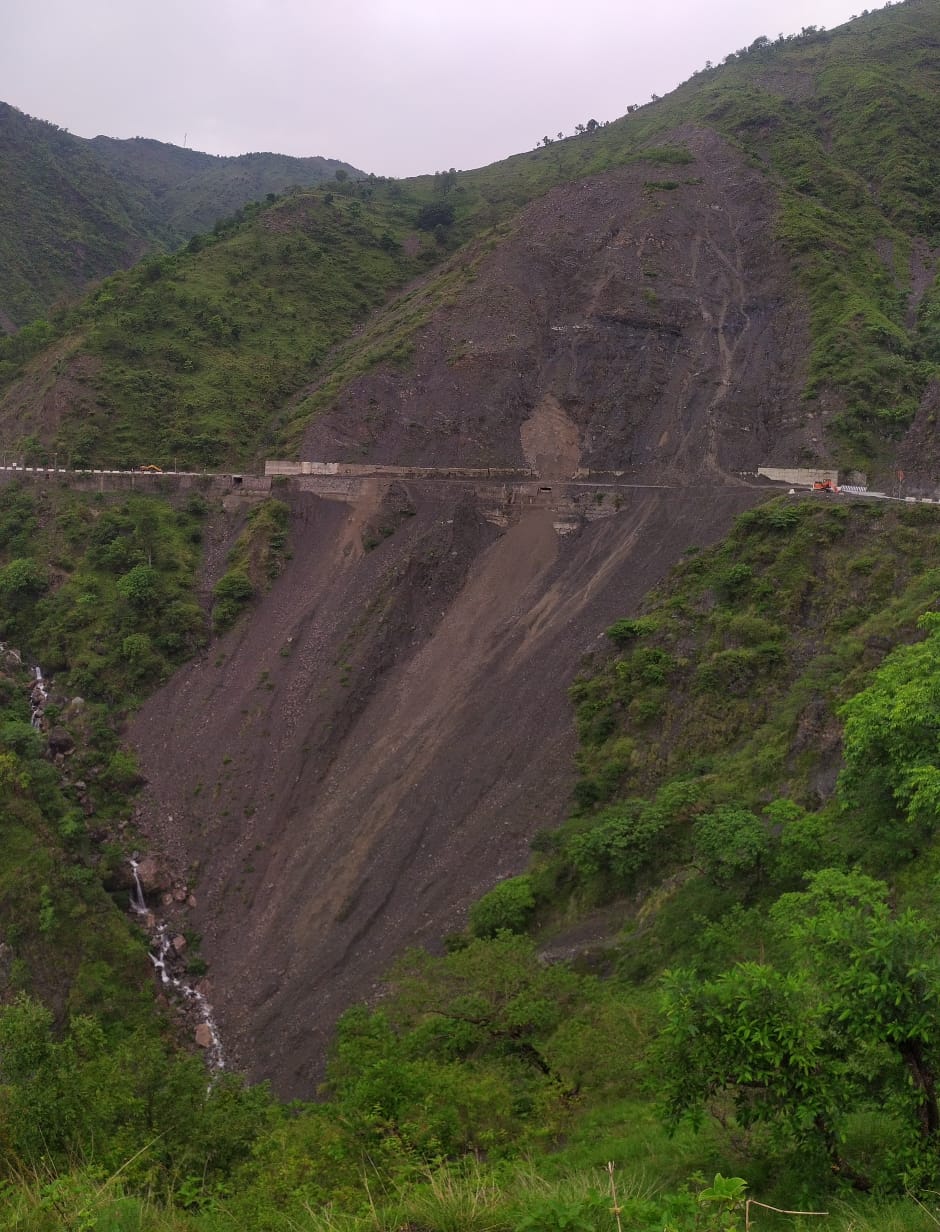
Banner image Jajred landslide zone which just reactivated with commencement of monsoon rains. (Nishant Panwar, July 07, 2020) 

Come monsoon and the Jajred mountain in Kalsi tehsil, Dehradun district in Uttarakhand starts falling apart. Located about 11 km away from Kalsi town, the landslide site near Amraha village blocks the vehicular movement on Kalsi-Chakrata state highway running through the zone for weeks sometimes for months.

This is a routine affair during monsoon for past many years damaging about 250 metre road stretch frequently thus cutting off the hundreds of villages in Jonsar-Bawar area from tehsil and state capital.

Continue reading “JAJRED perennial landslide in Yamuna basin, Uttarakhand”

Dams · DRP News Bulletin

DRP NB 6 July 2020: Dear NGT, Yamuna Monitoring Panel needs extension

In July 2018, the National Green Tribunal appointed a Yamuna Monitoring Panel for Delhi, the term of this panel is over and it has submitted its final report. NGT had also appointed similar committees for Haryana and Uttar Pradesh stretch of Yamuna, but those panels never functioned as actively as did the Delhi panel. We urge NGT to accept the petition now filed by Manoj Mishra to give extension to the Delhi Yamuna Monitoring Committee (DYMC) and direct that this committee will continue to function and monitoring and compliance panel for Yamuna river in Delhi.

There is a lot one can say positively about this committee, but arguably the biggest factors are its activeness, responsiveness and transparency. This can be easily seen visiting its website or its twitter page (https://twitter.com/ngtmcyamuna2). The committee also acted as a bridge between various institutions dealing with Yamuna in Delhi and ensured better coordination. The committee’s work is also evident in the number of reports it has submitted, all available on its website. There is always room for improvement in functioning of any such organisation, but this a lot and there are very few cases where one can say this.

Continue reading “DRP NB 6 July 2020: Dear NGT, Yamuna Monitoring Panel needs extension”

Dams · Rivers

Travelling through Ramganga and Nayaar Rivers Basin

Fed by Dudhatoli forest range, the Ramganga West and Nayaar East and West in Uttarakhand are perennial rivers of immense scenic beauty amid emerging and looming threats. This photo blogs highlights some of the charms and concerns of these non-glacial rivers of the Ganga Basin.

Continue reading “Travelling through Ramganga and Nayaar Rivers Basin”

Art, Literature, Culture · Culture · Dams · Goa · Rivers and Culture

The magic of 24th June: Water Worship around the World

“Sao Joao, Sao Joao, Viva Sao Joao!”

The shouts were followed by unbelievably loud splashes in a red laterite well. The well itself was decked up like a bride. All along the way to Siolim in North Goa, on the banks of river Chapora, the road blossomed with people wearing big smiles and bigger floral wreaths, ‘Kopels’.

At Siolim, flows a tiny river called Anjuna. The ivory white church of St. Anthony overlooks a small bridge across Anjuna which was festooned extravagantly with ribbons, balloons and flowers. On the grassy riverbank, hundreds of chairs were laid out and a makeshift stage creaked under the weight of musicians, dancers, announcers, and impromptu performers jumping up from the audience. Continue reading “The magic of 24th June: Water Worship around the World”

Dams · Hydropower

Vyasi Hydro is draining muck and Rs. 40 lakh geo jute work into Yamuna

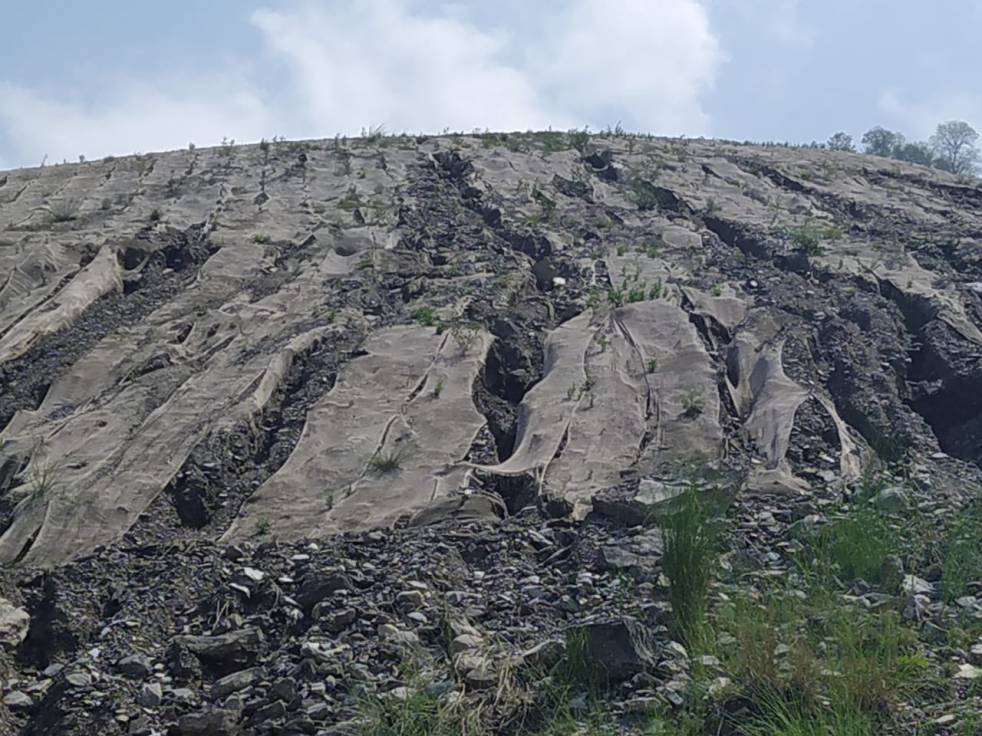
During the night of June 20, 2020 pre-monsoon showers left series of gully formations on one of the muck dump sites of the under construction 120 MW Vyasi Hydro Electric Project (HEP) in Hathiyari area of Vikas Nagar tehsil, Dehradun district in Uttarakhand. Huge amount of muck washed down into Yamuna River, exposing the credibility of the Uttarakhand Jal Vidyut Nigam Ltd. (UJVNL), the developer of Vyasi HEP. 

Local people said that since June 2019, the UJVNL has spent over Rs. 40 lakh on geo jute and hydro seeding (grass slope protection) work at Hathiyari muck dumping yard. The project has already missed several deadlines, the work is far from complete. The careless handling of muck generated during the construction of 2.7 km long, 7-m dia tunnel in last eight years has added -+to the woes of local people and Yamuna river.

Continue reading “Vyasi Hydro is draining muck and Rs. 40 lakh geo jute work into Yamuna”

Dams · DRP News Bulletin

DRP NB 22 June 2020: Seven years after Uttarakhand Disaster: Any lessons learnt?

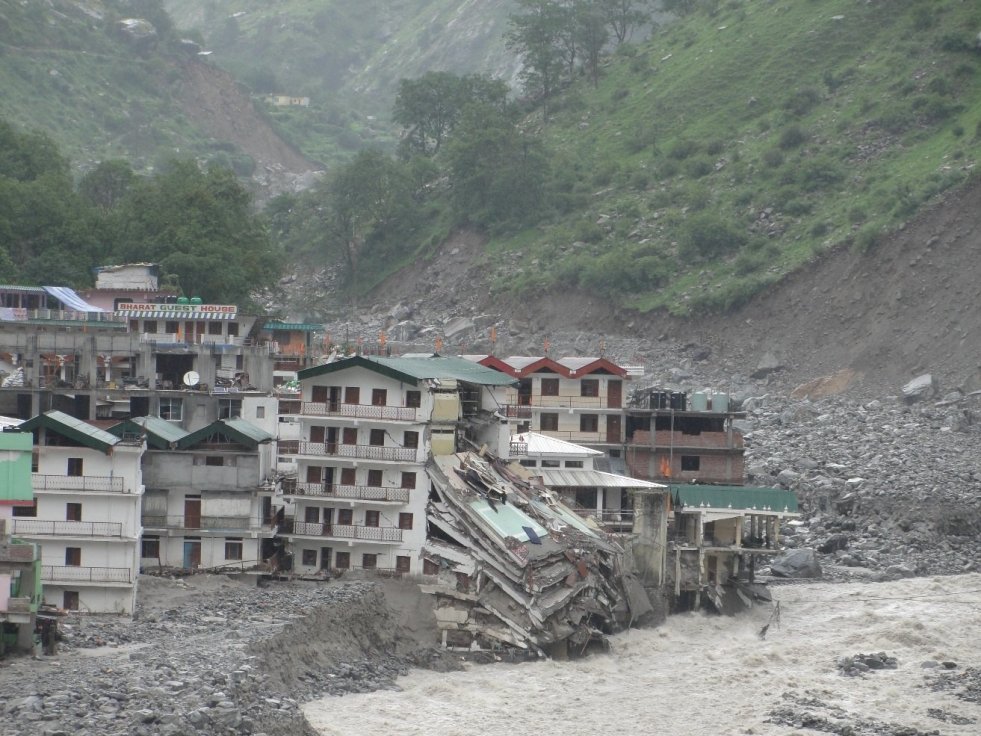
This past week we just completed seven years since the worst ever flood disaster in Himalayas, the Uttarakhand-Himachal Flood disaster that got launched with the massive unseasonal rainfall during June 15-17, 2013, along with the Glacial Lake Outburst Flood from Chorabari glacier upstream from Kedarnath. It was a massive wake up call.

To briefly recall, that unprecedented rainfall occurred when monsoon had not even set in Uttarakhand and neighbouring Himachal Pradesh. The first thing that strikes about this disaster where by official accounts over 6000 people died and by unofficial accounts over 20 000, is that we do not even have a comprehensive report from the government about this disaster. It would have told us a lot of things, including what we can learn from this disaster.

Second big thing that strikes is that big dams and hydropower projects, both due to their construction and operation impacts, both completed and under construction projects played a big role, as brief SANDRP video films in English and Hindi shows. But we continue to play with the Himalayas, the Ganga and lives of the lakhs of people by pushing more dams and such destructive activities (e.g. Char Dham Highways) in the fragile mountains without even honest impact assessments.

Continue reading “DRP NB 22 June 2020: Seven years after Uttarakhand Disaster: Any lessons learnt?”