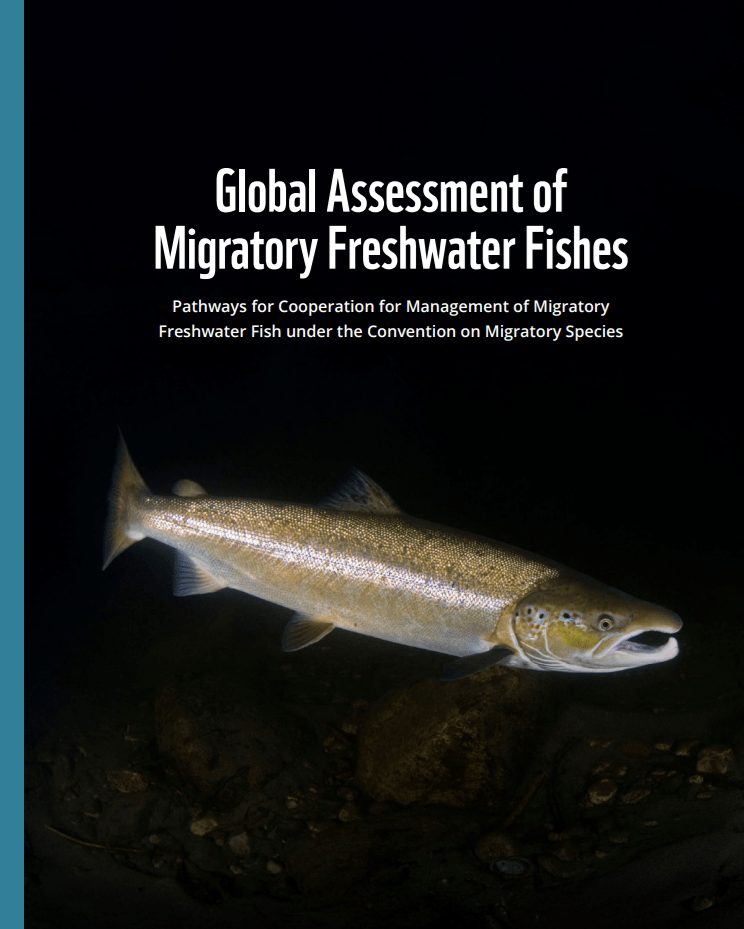
(Feature Image: Cover page of CMS summary report on Global Assessment of Migratory Freshwater Fishes)
The key CMS (Conservation of Migratory fish Species) report this week once again highlights the sad state of migratory Riverine fish, fisheries and fisherfolks in India. Shockingly, even when thousands or tens of thousands of fisherfolks lose their livelihoods due to projects on rivers, there is not even assessment of impacts of such projects on fish, fisheries and fisherfolks, leave aside consideration of compensation or rehabilitation for them. The Sardar Sarovar Project on Narmada River in Gujarat, one of the most celebrated dams of India, as an apt example of this situation. Farakka Dam is another such example.
In US and Europe, thousands of dams are getting decommissioned and one of the most frequent reasons for the decisions decommissioning is protection of fish, fisheries and fisherfolks. In India, the fish, fisheries and fisherfolks never find honest mention in Environment and Social Impact Assessments of dams, hydropower projects and barrages. Same is the situation about environmental flows in India.
FISH, FISHERIES, FISHERFOLKS
New global report flags risks to migratory freshwater fish in India’s rivers A new global assessment identifies freshwater migratory fish as one of the most threatened vertebrate groups. The report identifies the Ganga-Brahmaputra-Meghna systems as priority basins for conservation because they support important migratory fish populations but are under pressure from dams, altered flows and river fragmentation. The report discusses the need for basin-level and cross-border cooperation, including better monitoring and stronger coordination on harvest and river management.
Freshwater fishes are among the “most imperilled vertebrates”, according to a new global assessment prepared for the Convention on the Conservation of Migratory Species of Wild Animals (CMS), which lays the legal foundation for internationally coordinated conservation measures throughout a migratory range. The Global Assessment of Migratory Freshwater Fishes report 2025 notes that many migratory freshwater species are declining because of “loss of connectivity, flow alteration, habitat degradation, exploitation, pollution, and interacting pressures across borders.” Out of 349 migratory freshwater fish that may qualify for protection under the CMS, only 24 are currently listed — leaving 325 still without legal protection, of which about 205 concentrated in Asia.
Himanshu Thakkar, coordinator at SANDRP, who is not associated with the report, said the issue is not limited to a few cross-border rivers. “CMS report is mainly for transboundary rivers, but what we are discussing applies to all rivers, not just transboundary rivers,” he told Mongabay-India. “Dams and barrages definitely have the biggest impact on riverine biodiversity, not just fisheries, actually, in a number of ways.” Thakkar also noted that an impoundment, and how that impacts a river is a challenge. “In the upstream of the dam, the water is no longer flowing. Stagnant water for large stretches of the river, and there are many days downstream of the river, there is no water,” he added.
Environment Flows While noting that environmental flows in India are not understood well, Thakkar argues, “India’s regime of environmental flows is very, very poor.” Even where some water is released, he said, it often does not help fish or biodiversity move up and down the river. “One of the key aspects of that environment flow is to ensure continuity of water flow for the biodiversity, but the environment flow, even when it is released, it’s not released in a way that will help the fish and the biodiversity to migrate up and down,” he said.
“Environment flows are not just water,” he said. “The river flow includes the silt flow, the nutrient flow and the biota flow.” These factors have implications for river management. Thakkar said structures such as fish passes and fish ladders are important where dams interrupt migration routes, but they are rare in India. “You need something called fish pass, or fish ladder, or something like that, which are hardly there in four or five dams in India, and even where they are there, we have done surveys, and it seems none of them are functioning properly,” he said.
Farakka Pointing to the Farakka barrage on the Ganga as a key example, Thakkar said, “Farakka is supposed to have a fish pass, actually, but it’s not functioning,” he said. Hilsa once travelled much farther upstream, including to Kanpur, Allahabad, Varanasi and tributaries in Bihar, he said.
Lack of acknowledgement of impact of dams on fisheries According to Thakkar, the first gap is not technical but institutional. “Step one is to acknowledge that the dams and barrages have an impact. The second step is to assess the impact. The third, is to see what are the possible options available for ensuring continued migration,” he said. Those options, he said, could include fish passes, fish ladders and environmental flows. But in some cases, he added, retrofitting may not be realistic because dams are too high. In such situations, he said, environmental flows should at least be mandated in an environmentally-friendly way.
Livelihoods lost Thakkar also argued from the perspective of river governance and livelihoods in India. “No project has ever assessed the impact of the dam or the hydropower project or such barriers on livelihoods,” he said. Once the impacts are properly measured, it becomes possible to ask what the actual losses are and whether compensation, rehabilitation or mitigation are needed, he added.
Narmada Pointing to the Narmada river as an example of how these impacts extend beyond the structure itself, Thakkar said, “The Sardar Sarovar project did not even assess the downstream impacts. At least 10,000 fisherfolk families lost their livelihoods in the Narmada estuary.”
Transboundary Rivers “There are 55 transboundary rivers between India and Bangladesh,” he said, adding that similar questions arise for rivers shared with Bhutan, Nepal, China, Pakistan and Myanmar. He noted that existing transboundary mechanisms remain too narrow in scope. “All of these bodies only look at the water issue,” he said. Sometimes, he added, they also look at floods. “But in terms of the impact on the transboundary fish and transboundary livelihoods or such other impacts, there hasn’t been much (research).”
Future steps Thakkar added that the first response should be built into law and project clearance systems. “It should be mandatory legally, that if any dam comes up, any obstruction comes up, or any project comes up, which affects the riverine fish, then there should be impact assessment, both environmental impact assessment and social impact assessment,” he said. He also pointed to the need for closer scrutiny of existing projects and river regulations. He said Farakka should be independently reviewed, and argued that the Ganga’s environmental-flow notification should be monitored by an independent body rather than government agencies alone. Calling for a similar approach in all river-altering projects as well, Thakkar said, “Every such project which has an impact on the riverine fisheries & fisher people, there should be an assessment as a first step, an impact assessment and then mitigation about what needs to be done about the impacts.”
Global Assessment of Migratory Freshwater Fishes The global assessment represented by these reports identifies 349 migratory, transboundary freshwater fishes that potentially meet CMS Appendix criteria; of which 24 are already listed, leaving 325 candidates for prospective action.
The Global Assessment Results Asia (n=205) stands out by far with the highest number of migratory freshwater fish that are threatened and cross-borders, followed by South America (55), Europe (50), Africa (42), North America (32), and Oceania (6)—highlighting global relevance across basins and governance contexts.
River basins with high number of candidates include South America’s Amazon and La Plata–Paraná, Europe’s Danube, Asia’s Mekong and Ganges-Brahmaputra-Meghna, and Africa’s Congo, Lake Chad and Nile Basins.
The new assessment identifies hundreds of migratory freshwater fish with an unfavourable conservation status and underlines that protecting migratory fish requires managing rivers as connected systems rather than isolated national waterways.
In South Asia, fish such as mahseer, goonch catfish and hilsa are also declining under pressure from dams, overharvesting, sand mining, pollution and habitat loss, even as they remain central to fisheries and river cultures across the Ganges, Brahmaputra and Indus basins.
The Mekong river basin is in particular trouble, with all the large migratory freshwater fish now at risk of extinction, including the colossal giant catfish, which has halved in size in recent years due to overfishing. However, none of the key Mekong nations – Thailand, Cambodia, Laos and Vietnam – are yet members of the CMS treaty. Brazil’s main political goal for the summit, Cop15, is to get more countries onboard.
Scores of dead fish were found in Itaunja area of Gomti river in Lucknow on March 22-23. ADM Revenue Rakesh Kumar Singh, who was hearing the case in Tehsil Samadhan Diwas, after watching the viral video, said that fish are dying due to pollution. However, in this report a police official is quoted claiming that the fish seen floating in the river had not died due to contamination or any environmental cause but were allegedly dumped into the river by a local.
HYDRO POWER PROJECTS
SC notices on legality of Teesta-3 reconstruction The Supreme Court Bench of Justice Vikram Nath and Sanjeev Mehta on March 23 2026 issued notice on a plea questioning the legality of Teesta-III dam reconstruction and disinvestment, citing environmental risks, lack of public consultation and post-disaster assessment. The Bench was hearing an SLP against the Sikkim High Court dismissal of the PIL on Aug 7, 2025. The petitioners argue that, despite the scale of devastation, no comprehensive post-disaster assessment report, environmental impact study, or public consultation was conducted before taking the decision to rebuild the dam.
A key challenge raised in the plea is against the environmental clearance granted by the Ministry of Environment, Forest and Climate Change in January 2025 for reconstructing the 1200 MW Teesta III hydropower project. The clearance is given without any public hearing. The petition argues that such a move ignores the fragile and seismically sensitive Himalayan ecology, especially in light of repeated warnings by environmental experts and prior studies highlighting the risks associated with glacial lakes and extreme weather patterns in the region. It further alleges that the 2023 disaster itself was a consequence of ignoring these warnings.
The plea also questions the State government’s decision to disinvest its 60.02% stake in the project in favour of a private entity. It alleges that disinvestment was neither financially necessary nor in public interest. It further alleges that the move resulted in undue private gain at the cost of public resources, raising concerns of potential irregularities.
The plea highlights that local tribal communities, particularly the Bhutia and Lepcha populations inhabiting the Teesta basin, were not consulted prior to the decision. It asserts that this omission violates established safeguards governing development in protected and restricted areas, including those requiring Inner Line Permit (ILP) compliance.
Public hearing for SUHEP held The environmental public hearing for the proposed 1,605 mw Subansiri Upper Hydroelectric Project (SUHEP) was conducted in Upper Subansiri district on March 23 by the Arunachal Pradesh State Pollution Control Board.
Thousand families affected by Hydro projects in Kishtwar dist in J&K 1,004 families have been affected due to the development of hydroelectric projects — Dulhasti power station, Pakal Dul, Kiru and Kwar — in the Kishtwar district of Jammu and Kashmir, the government informed Parliament. Replying to an unstarred question by Sajjad Ahmad Kichloo, Minister of State for Power Shripad Naik stated that 60 families were affected by the 390 MW Dulhasti power station.
Draft hydel power policy 2025 in J&K J&K CM Omar Abdullah on March 27 announced a draft J&K hydel policy 2025, now open for public feedback. The policy aims to attract private investment for small hydro projects, generating employment, boosting local socio-economic conditions, and providing cheaper electricity by requiring developers to supply free power or royalty.
Mukerian hydel channel shut for repairs The Mukerian Hydel Channel (MHC) has been shut for annual repair work at the Mukerian Hydel Power House (MHP) I and II, following a request from the PSPCL authorities. According to a letter issued in this regard, the closure will directly impact power generation, as all four power houses on the Shah Nehar system will remain non-operational from March 23 to April 24. Officials said 207 MW per day generation would be hit. The prolonged suspension of power production is also expected to put pressure on the state’s power supply system. Experts believe if alternative arrangements are not adequately managed, Punjab may face a potential power shortage, especially during peak demand hours.
DAMS
Can CWC help survival of Chambal River Sanctuary? The Ministry of Environment, Forest and Climate Change has instructed the Central Water Commission (CWC) to provide recommendations on how to sustain environmental flows in the Chambal River during the lean season, ensuring that conservation efforts related to the Ganges River dolphin are not adversely affected. Concerns arose following the initiation of a series of dam constructions under the East Rajasthan Canal Project (ERCP) over the tributaries of the Chambal River, including the Banas, Kuno, Parbati, and Kalisindh rivers in Madhya Pradesh and Rajasthan. No environmental impact assessment has been conducted to evaluate how the project will affect dolphin conservation and potentially affect other aquatic life including dolphins, Gharials and Turtles.
According to a study by the Wildlife Institute of India (WII), dolphins require a minimum depth of three metres in flowing rivers to survive during lean seasons. The WII study highlighted that the decreasing flow of the Chambal River has been affecting dolphin movement. During the lean season, dolphins tend to concentrate in the deeper pools of the river. The WII’s study analysed field data on the distribution of Ganges River dolphins, gharials, and other important aquatic life, including turtles. It also assessed water depth, water quality, and seasonal river flow patterns, along with 10-day flow data from CWC.
The findings underscored the importance of maintaining adequate environmental flows in the Chambal River to support aquatic biodiversity and ecological integrity. During recent discussions at the National Wildlife Board meeting, it was noted that the issue involves aspects of river flow regulation and water management, which fall under the CWC’s mandate.
COMMENT: Central Water Commission has very poor track record all environmental issues related to water and rivers. So expecting CWC to come up with recommendations in this regard sounds counter intuitive.
Status of Sardar Sarovar Project According to status update by Gujarat Government as on Jan 31 2026, 5890 km of canal network is still to be completed including 35.7 km of Branch Canals, 157.9 km of distributary canals, 1038 km of minor canals and 4658.4 km of sub minor canals. 2.45 lakh ha of irrigated area is still to be fully developed.
Bihar: Story of Chandan dam’s decline The Chandan Reservoir Dam, located in Bihar’s Banka district, was once considered the backbone of agriculture. Due to continuously falling water levels, the dam is now in crisis. Its water storage capacity has declined by 65.7% over the past five decades. Farmers are facing difficulties with irrigation due to silt accumulation and malfunctioning canals. The government has proposed dredging, but the matter is currently under judicial review.
Decisions of MoEF’s Expert Appraisal Committee Meeting on River Valley Projects held on March 11 2026 1. Veeraballi Closed Loop Pumped Storage Project (1800 MW) in 489.91 ha at Village Vangimalla, Sub-District Veeraballe, District Annamayya, Andhra Pradesh from Annamayya Pumped Storage Project Private Limited for EC: More Info Sought
2. Saundatti (1200 – 1600 MW) (Integrated Renewable Energy with Pumped Storage Project) in 307.42 Ha (213.7 ha existing + 93.72 Ha additional) in Village Badli, Mallor, Yekkundi, etc., Sub Dist Savadatti, Dist Belagavi Karnataka by Greenko Ka01 IREP Pvt Ltd: For TOR: Approved
DAM SAFETY
Kaleshwaram barrages: Telangana officials questioned by NDSA Chair National Dam Safety Authority (NDSA) chairman Anil Jain gave irrigation department officials an earful over the handling of repairs at the stricken barrage at Medigadda, and the problem-plagued ones at Annaram and Sundilla of the Kaleshwaram lift irrigation scheme (KLIS), at a review meeting on March 27. The officials were quizzed about the delays in even starting on drawings for repair and rehabilitation works for the three barrages, particularly the one at Medigadda.
Officials sought to clarify that the delays were on account of delays by the Central Water and Power Research Station (CWPRS), Pune, in completing the required tests but this triggered a slew of questions on why a large number of boreholes was being drilled at the barrages. Jain said such drilling would be sufficient in the broken Block 7 of Medigadda and the blocks under which leaks sprang from at Annaram and Sundilla.
When officials explained that they were doing those tests so as to design a scale model, Jain said a model already exists at IIT Rourkee. It was agreed upon that a team will visit Rourkee to do some fresh model tests. Jain asked them to come up with a more concrete plan of action in three to four weeks.
Data and dam safety Ensuring the safety and performance of hydropower and multipurpose dams requires both reliable technical information and robust governance frameworks. Recent publications from India and Japan illustrate how these elements are being addressed in different national contexts. In India, researchers have developed a comprehensive, open-access dataset describing physical, climatic, and human-influenced characteristics of more than 5,700 dam catchments, providing a consistent foundation for hydrological and dam safety analysis. In Japan, a World Bank report documents the legal, institutional, and operational systems that underpin dam safety management across a large and diverse portfolio of dams operating under complex natural and social conditions. Together, the two reports provide complementary perspectives on the role of data and governance in dam safety practice.
For India, recognising the need for consistent, catchment-scale information to support these activities, Tiwari and Aadhar (2025) have developed a comprehensive, open-access dataset describing physical, climatic, and anthropogenic attributes for dam catchments across the Indian subcontinent. The dataset, referred to as DAM-IN, covers 5715 dam catchments across 18 river basins and brings together more than 45 attributes derived from observed data, reanalysis products, and remote sensing sources. The complete DAM-IN dataset is hosted on Zenodo and is organised by river basin and individual dam catchment. Each catchment folder contains static attributes and time-series data in standard formats. The authors also provide code used to generate the dataset.
JAPAN The World Bank report Dam Safety Management in Japan (2025) documents the country’s legal, regulatory, institutional, and operational approaches to dam safety, with the objective of sharing practices and lessons that may be relevant for other countries seeking to strengthen their own dam safety assurance systems. Japan has more than 3100 large dams. In addition to large dams, Japan has more than 150,000 irrigation ponds, of which approximately 61,000 serve irrigation areas larger than 2 ha. Around 70% of these ponds were constructed during the Edo period (1603–1868) or earlier, before modern regulatory frameworks.
The legal foundation for dam safety in Japan is anchored in the River Act, which establishes responsibilities for river administration, dam operation, and flood control. The report details how different dam purposes are governed by specific laws & administrative arrangements, while remaining integrated within a national framework.
IRRIGATION
Irrigation crisis in Monugode mandal in Telangana The irrigation crisis in Munugode mandal has reached a critical stage, with groundwater levels plunging amid record summer heat. Farmers who invested heavily, often through loans, are now watching crops wither, forcing them to find desperate ways to survive. In an unprecedented trend, irrigation water has turned into a market commodity. Small farmers with working borewells are selling surplus water after meeting their needs, while those without sources are spending thousands to save crops.
Ground reports underline the severity: water is being sold at Rs 150 for 5,000 litres, with tractor tankers queuing at borewells from early morning. The situation persists across nearly 15 villages. Farmer G Narasimha Reddy alleged that promises of canals under the Brahman Vellemla–Udayasamudram project misled farmers into expanding cultivation, only to face losses as works remain incomplete despite available water.
URBAN RIVERS
Review Musi Riverfront Project, Stop Displacement, Safeguard Musi River Basin Ecology: Concerned Citizens A growing chorus of citizens, activists, and experts has raised urgent concerns over the proposed Musi Riverfront Project, warning that it risks large-scale displacement, ecological damage, and diversion from genuine river rejuvenation. The letter calls for a transparent, science-based review that prioritizes pollution control, protection of floodplains, and the rights of riverbank communities over commercial infrastructure. It questions inflated costs, inconsistent displacement figures, and the bypassing of legal safeguards. Emphasizing democratic consultation and ecological integrity, the appeal urges the Telangana govt to halt the current approach and adopt sustainable, least-displacement alternatives for the Musi basin.
500 people petition CM against Musi project Over 500 people, including those directly affected by the Musi Riverfront Project, in an open appeal to the CM A. Revanth Reddy, demanded that alternative proposals for river rejuvenation and river-basin ecology conservation be diligently considered in relation to the project.
Anger on the banks of the Musi With the govt ready to implement the Musi Riverfront Development Project in Hyderabad, residents along the river are facing possible displacement and uncertainty over compensation. The Moosa and Esi tributaries, once seasonal streams, now flow with sewage and industrial effluents, raising questions about ecological restoration.
Musi rejuvenation – prioritising people or real estate? People must remain at the centre of any development initiative. Crucially, the development of the river basin areas must be both environmentally sustainable and oriented toward the public welfare. If the govt genuinely desires urban development, it must refrain from adopting an obstinate stance; instead, it should engage in dialogue with the affected parties to seek a middle ground. (Dr. Arroju Srinivas)
Recreational facility proposed along Pune rivers After launching the Riverfront development (RFD) project in Pune in its previous term, the ruling BJP in PMC on March 24 announced recreational facilities and adventure sports on the riverfront of Mula and Mutha river. The BJP leader said that for the public of Pune, a riverfront experience park will be built which will have recreational facilities like Sky Wheel, multimedia river shows and cultural festivals.
RIVERS
Ravi ka Kinara Kaisa hai? River Ravi through its people Absolutely fascinating account of River Ravi as seen through its people. It traces the river from 3300 BC to today, with names including Parushni, Iravati, Hydraotes. The literary figures mentioned include Amrita Pritam, Akhtar Sheerani, Faiz, Gulzar, Iqbal, Manto, Shiv Kumar Batalvi, Yaska… the list is indeed long.
Robust Streamflow Increases in Indian Rivers Summary: -Reliable information about how India’s major rivers will respond to a changing climate is critical for the food, water, and energy security of approximately 2 billion people. Yet, current estimates of future river flows differ largely, limiting their usefulness for long-term planning. In this study, we use long-term records of streamflow and global mean surface temperature to narrow the uncertainties in future projections for nine major Indian rivers. By combining observations with climate model outputs through a Bayesian framework, we substantially narrow the range of possible future streamflow changes and increase confidence in the projections. The constrained projections show that most Indian rivers are likely to experience higher flows in the coming decades, though some regions, such as the Cauvery basin, may experience declines in the near term. These findings provide more reliable information to support long-term water-resource planning and climate adaptation in India.
Study shows drying of Cauvery to persist until 2050 While a warming climate is expected to significantly increase the flow of most major Indian rivers, the Cauvery basin stands out as an exception. The river faces a potential “near-term decline” of approximately 3.5% of its waters between 2026 and 2050, even as its northern counterparts brace for floods, according to a study by researchers at the IIT, Gandhinagar, published in the peer-reviewed journal Earth’s Future.
The study finds that the Cauvery experienced a 28% decline in streamflow between 1951 and 2012, based on data from Kollegal which, one of the authors told The Hindu, “well represented” actual flows in the Cauvery.
Crucially, the researchers simulated “naturalised” flows, meaning the study focused purely on climate-driven changes without accounting for human interventions like dam operations or irrigation withdrawals. In the real world, these human pressures could potentially exacerbate the projected shortages in the Cauvery.
HKH glaciers losing ice at double the rate since 2000 Glaciers across the Hindu Kush Himalaya (HKH) are melting at an accelerating rate, with ice loss rates doubling since the year 2000, according to two new landmark reports that released by the International Centre for Integrated Mountain Development (ICIMOD) to mark World Day for Glaciers.
The reports highlight that glacier losses are spatially skewed, with the highest percentage of area loss in the eastern Hengduan Shan mountains, where some areas lost up to 33% of their glacier area in just three decades. However, the largest absolute area losses are concentrated in the Indus, Ganges, and Brahmaputra basins, where over 74% of the region’s glaciers are found, underlining their critical vulnerability.
The larger glaciers above 10 km² hold nearly 40% of the region’s natural water reserves. The heavily glaciated Karakoram range, home to 18 of the 25 largest glaciers, remains highly vulnerable to long-term water, food, and disaster risks with ramifications for the entire region.
Changing dynamics of glaciers in the HKH region from 1990 to 2020 By linking glacier dynamics to water security, climate adaptation, and transboundary challenges, the report provides an essential evidence base for policymakers, researchers, and practitioners working to address the growing impacts of climate change in one of the world’s most vulnerable mountain systems.
Standard tests miss vast majority of ‘forever chemicals’ in Ganga Conventional testing for per- and polyfluoroalkyl substances, or PFAS — many linked to health risks — captures just the tip of the iceberg, missing more than 99% of these long-lasting compounds in sediments along a stretch of the Ganga basin, according to a new study. The gap likely means the true scale of chemical pollution in one of the world’s most populous river systems is underestimated, said the study’s corresponding author, Viktoria Müller of the University of Graz in Austria.
Ganga as Civic Actor: Rethinking Governance in Varanasi Recognising the river’s role in governance does not imply moving beyond anthropocentric frameworks. The meanings attributed to the Ganga—through cultural practices and social norms—are mediated by human interpretation. As such, advocating for the river’s protection reflects a reconfiguration of anthropocentrism rather than its rejection.
This, however, does not undermine the case for treating the Ganga as a civic actor. The objective is not to replace human-centred governance, but to develop frameworks that take non-human dynamics seriously in shaping outcomes. Reimagining governance in this context requires expanding the scope of decision-making to account for ecological systems alongside institutional and social considerations. (Pragya Tiwari, Amrita Sen)
Delhi: ₹9,000 cr for water supply infra, new STPs The Delhi government has set aside ₹9,000 crore in the budget for the water and sanitation sector to plug leaks, expand treatment capacity and narrow a daily supply gap that still leaves the Capital short by 250 MGD of drinking water.
Presenting the budget in the Delhi assembly on March 24, CM Rekha Gupta, said the allocation of ₹9,000 crore – about 8.68% of the total expenditure – was meant to operationalise new water treatment plants, expand supply networks and replace ageing transmission lines. Of this, around ₹1,500 crore will go towards constructing STPs with a combined capacity of 480MGD, with central assistance under the NMCG.
Gupta said her government has set an ambitious target of reducing non-revenue water (NRW)—losses due to leakages and theft—from 45% to 15%. Two major infrastructure upgrade projects in the catchment areas of the Wazirabad and Chandrawal water treatment plants, covering around 19 assembly constituencies, are also planned. A provision of ₹475 crore has been made for the Chandrawal project.
To address pollution in the Yamuna, Gupta said Delhi’s installed STP capacity has increased from 707 MGD to 814MGD, with a target of reaching 1,500 MGD. “The approval of 35 decentralised STPs and the proposal for 10 new STPs demonstrate our unwavering commitment to eradicating this problem from its very roots,” she said.
Against a demand of 1,250MGD, the city can currently treat and supply only about 1,000MGD, leaving a deficit of 250MGD. The government said commissioning underground reservoirs in Rajokri, Bijwasan, Siraspur and Palla, along with a new 50 MGD water treatment plant in Dwarka, will augment supply.
Bhim Singh Rawat, Yamuna activist and member of the South Asia Network on Dams, Rivers and People (SANDRP), said that intent to increase the treatment capacity is good but Delhi needs to bolsters the monitoring system of the outlet of these STPs. “Local communities need to be involved in monitoring along with experts and RWAs to ensure accountability. Almost half of water in Delhi in Non Revenue Water which is a clear policy failure. Delhi needs a holistic urban water management policy rather than simply adding more and more expenditure on the issue.”
25% of sewage treatment capacity unused in Delhi The Delhi Economic Survey released on March 23 reveals that over 25% of STP and 67% of CETPs remain unused. This significant underutilization allows large amounts of untreated waste to pollute the Yamuna River, despite existing infrastructure and ongoing plans to increase treatment capacity and intercept drains.
675 slum clusters in Delhi without sewers Two civic bodies, the Delhi Urban Shelter Improvement Board (DUSIB) and the Delhi Jal Board (DJB), have washed their hands off the responsibility to lay sewer lines in Delhi’s slums, filings before the NGT show. Both bodies have told the NGT that it is the responsibility of the other to lay the sewers. Consequently, 675 slum clusters in Delhi remain with no sewers. While the DUSIB has said that laying sewer lines is DJB’s job, the latter has maintained that it cannot build sewage treatment plants in those areas without DUSIB first laying that very network.
Delhi in talks for more water from Haryana and UP for summer Delhi also receives a total of 256 MGD of water from UP through the Upper Ganga Canal, while the Munak Canal, which channels over 1,000 cusecs of Yamuna water from Haryana daily, is one of the main sources of raw water in Delhi. The Munak Canal accounts for 60% of the total water supply in Delhi.
As per a water sharing arrangement between north Indian states, Haryana is expected to provide approximately 1,133 cusecs of water to Delhi via Munak Canal and the Yamuna, the official added. However, Verma said, there is a significant water loss in transmission from Haryana, which puts further strain on demand-supply gap in the city. “We are talking to the neighbouring government to also repair major canals through which water is received. Delhi should receive the total water it is allocated, excluding transmission losses,” he said.
Besides this, the DJB official quoted above said that the government has also written to Haryana, demanding the release of 51 cusecs of water—originally allocated for irrigation—which Delhi has not received for several years. “The government is also requesting 140 MGD (270 cusecs) of water from Uttar Pradesh. In exchange, the government has proposed supplying treated water to Uttar Pradesh for irrigation purposes,” the DJB official further said.
Govt to create 2,500 acres of reservoirs to prevent floods The government is deliberating on an ‘Urban Flood Mitigation Program Delhi’ ahead of the monsoon, with a budget of ₹21,068 crore, multiple officials told The Hindu. The plan includes creating three ‘off channel’ reservoirs — two 1,000-acre facilities in Palla and Mayur Vihar, and a 500-acre reservoir in Okhla along the Yamuna floodplains — at a total cost of ₹90 crore.
15-day deadline for STP sampling in Haryana State Pollution Control Board (HSPCB) has set timelines for interventions under Yamuna Action Plan, directing officials to complete fresh sampling of STPs within 15 days and finish mapping of all pollution sources within three months. The directions were issued during a review meeting chaired by HSPCB member secretary Yogesh Kumar at Vikas Sadan on March 27, where the progress of ongoing works to curb pollution in drains flowing into the Yamuna was assessed.
RIVERS BIODIVERSITY
Two never-before-seen snakes discovered in Arunachal The WII study documents the Rakhine Keelback (Herpetoreas davidi) in Ngengpui Wildlife Sanctuary, and the Kachin Hills Keelback (Hebius gilhodesi) in Namdapha National Park and Kamlang Tiger Reserve. Until now, both species were believed to exist only in neighbouring Myanmar.
Keelback snakes are typically non-venomous and are often found near water bodies such as streams and wetlands. Their presence is considered an indicator of healthy ecosystems, particularly in forested and riparian habitats. The newly recorded species are believed to inhabit moist, tropical forest environments, which are increasingly under pressure from habitat loss and climate change.
Dolphin found dead in Bengal The carcass of yet another Gangetic dolphin was found on the banks of the Bhagirathi river in Katwa on Jan. 29 and, as in the previous case, it had been killed by poachers, experts said after examination. The carcass was that of a matured female dolphin. It was recovered close to Char Bishnupur near Agradwip, about 30 km by road from Katwa town. The eight-foot long aquatic mammal was apparently done to death by the poachers using an iron fishing blade that was still stuck on its back.
On 22 Jan, the carcass of a baby dolphin was found hanging from a tree at Jhaudanga in the Agradwip area. “Officially, this is the ninth such cruel murder since March 2025. But according to my estimate, this will be 11th within a 20-km stretch of the river here on the Katwa-Nadia border,” said Ganesh Chowdhury, voluntary Dolphin Conservator operating from Nayachar in Katwa.
UP: 10-foot-long Gangetic dolphin found dead A 10-foot-long Gangetic dolphin was found dead under the Ganga bridge in the Jajmau area of Kanpur late on Jan. 02 evening. Jajmau police, with the help of boatmen, pulled the carcass out of the river and handed it over to the forest department. Officials said the dolphin weighed around 3.5 quintals. Local residents said pollution could be the cause, as water quality in this stretch of the Ganga is usually poor.
SAND MINING
Shamli DM get NGT notice over Yamuna mining The NGT on March 23 issued notices to the UP govt, pollution control board and Shamli district magistrate over illegal mining on the Yamuna floodplain, directing them to file a reply at least a week before the next hearing on July 3.
The directions were issued while hearing an application filed by Amit Kumar, who alleged that M/s Yamuna Mines carried out mining activities in the villages of Nai Nangla and Manglaura without obtaining mandatory environmental clearance (EC) and consent to establish or operate from the competent authorities. Kumar said that despite complaints lodged with the Uttar Pradesh Pollution Control Board, the DM, and the local police, no action was taken to stop the activity.
Mining breaking Kashmir’s farms Sand mining is not new to Kashmir, but its present scale is staggering. Here, operations often dig as deep as 50 feet, far beyond the legal limit of three. The impact is devastating, in south Kashmir, aquifers have been pierced, springs have dried, and entire communities are losing dependable water.
Official data shows sand and other minor minerals extraction doubled from 4.74 lakh metric tonnes in 2021–22 to 11.42 lakh in 2022–23, driven by infrastructure projects like the Delhi–Katra motorway. In the Rambiara and Romshi sub-basins of south Kashmir, excavations have pierced shallow aquifers, lowering water tables and drying up springs and wells. Entire communities are losing access to reliable water. The damage ripples beyond fields. The Veshav River, once famous for trout, now runs choked with silt and stone-crusher pollution. Breeding grounds vanish as sand and gravel are hauled away.
I&FC employees injured in alleged ‘sand mafia’ attack Two employees of the Irrigation and Flood Control (I&FC) Dept were injured on Jan. 31, 2026 afternoon after they were allegedly attacked by sand mafia members in Jahama village of north Kashmir’s Baramulla district.
Odisha Additional Tehsildar attacked by sand mafia An Additional Tehsildar and his driver were allegedly attacked by sand mafia in Balasore district on March 23 after intercepting an illegal sand-laden vehicle, prompting police to initiate an investigation and detain suspects. Anantapur police in Balasore district on March 24 detained two persons from Ainri in connection with the attack on Soro additional tehsildar Krushna Mohan Singh.
Mines dept vehicle attacked In a shocking incident, a vehicle of the Mines Department was allegedly attacked by sand mafia in Pipili late on March 10 night.
Telangana CM orders CID probe in all mining scams CM A Revanth Reddy on Mar 28 ordered a comprehensive inquiry by the Crime Branch-Criminal Investigation Department (CB-CID) into all mining-related irregularities in the state from the BRS government’s on June 2, 2014, till date.
WETLANDS, LAKES, WATER BODIES
Wetlands under threat in Manipur According to a report titled “Wetlands of Manipur” published by the Directorate of Environment and Climate Change, Government of Manipur, the State harbours a total of 119 wetlands. Of these, 23 have been identified through ground truthing, and 7 key wetlands from these wetlands have also been recommended for notification under the Wetlands (Conservation and Management) Rules, 2017.
Despite their immense ecological and cultural value, the wetlands are under increasing pressure from both human activities and environmental changes. Pollution from domestic waste, agricultural runoff, and untreated sewage has steadily degraded water quality, disrupting the delicate balance of these ecosystems.
WATER OPTIONS
Gujarat’s Mahi River Bank villages recover from flood disasters The Mahi River Bank villages of Gujarat faced massive flood and erosion disaster in 1973 and again smaller ones in 2019 and 2023. How some of them recover & regain the cultivable land is described here. The basic principle: Let water flow slowly, stop its flow where possible to percolate.
Delhi’s forgotten Anangpur dam Hidden in the Aravallis stands a dam built around 1,100 years ago, a structure that tells the forgotten story of early Delhi and the Tomars, among the region’s earliest known rulers. Constructed of large stone-masonry blocks, the dam reflects an early method of water control adapted to rocky terrain. The placement between hill slopes allows runoff to collect within a natural basin. The structure measures about 101 metres in length. The width varies, approximately 19.8 metres at the top and nearly 27.4 metres at the base. The height rises to over 10 metres from its base, though the surrounding terrain gives the impression of greater elevation in parts.
Along the wall are multiple water-release passages, estimated locally at atleast 7 outlets. These include grooved slit-like channels, which appear to have functioned as regulating devices to control the discharge of water, a system that anticipates later hydraulic practices. Anangpal II has been credited for the foundation and construction of the structure. The dam is believed to have been built to store water and regulate its flow towards the Surajkund reservoir.
GROUNDWATER
Groundwater: Rising Depletion and Contamination in 2025 in India This annual overview compiling reports on groundwater situation in India highlights that the contamination and depletion are rising through 2025. Most of the reports are based on Central Ground Water Board’s (CGWB’s) Annual Ground Water Quality Report 2025. In NW states like Punjab, Haryana and Rajasthan, groundwater use far exceeds recharge, driven largely by water-intensive crops and subsidized electricity. Punjab extracts over 150% of its annual recharge, with most districts now classified as overexploited. Even above-normal rainfall in Rajasthan has failed to restore aquifers, pointing to failures in recharge & water management.
Groundwater: GW management in Agriculture in 2025 The reports on groundwater management in Agriculture in India in 2025, focusing on effective solutions compiled here underline the urgency to address this issue. Water-saving techniques like System of Rice Intensification (SRI), direct seeding and alternate wetting show potential but face low adoption due to non-sincere efforts from the government, reduced farm profits, while solar-powered pumps risk accelerating over-extraction, not help GW management.
Fluoride contamination grips over 30 Rajasthan districts According to a Jan 2026 CGWB report, which tested 643 groundwater samples statewide, found 41 samples exceeding the safe limit of 1.5 mg/L. The crisis spans the entire state, hitting desert regions like Barmer and Jaisalmer just as hard as developed hubs like Jaipur and Alwar. The contamination has also been recorded in Ajmer, Banswara, Bharatpur, Bhilwara, Bikaner, Bundi, Chittorgarh, Churu, Dausa, Dholpur, Dungarpur, Sriganganagar, Hanumangarh, Jalore, Jhalawar, Jhunjhunu, Jodhpur, Karauli, Nagaur, Pali, Rajsamand, Sawai Madhopur, Sikar, Sirohi, Tonk, and Udaipur.
“The spread across districts indicates a systemic groundwater quality concern. The solution requires at least state level intervention and mass micro mapping to avoid use of such water,” said Laxmi Kant Sharma from the Central University of Rajasthan’s dept of Environmental Science. While schemes like the Jal Jeevan Mission aim to expand safe piped water and install purification units in high-risk zones, experts demand urgent, localised monitoring.
Unsafe uranium in groundwater doubles in 6 years in Punjab Figures presented in the Rajya Sabha on March 23 reveal that 53.04% of groundwater samples in Punjab in 2024 had uranium levels above the prescribed safe limit of 30 parts per billion (ppb), up from 24.2% in 2019. In a written reply, Union minister of state for jal shakti Raj Bhushan Choudhary said the spike marks a significant increase from 32.6% in 2023, underlining a worsening trend in the state.
Year-wise data shows a steady rise: 24.2% of 302 samples in 2019, 33.75% of 323 in 2022, 32.6% of 908 in 2023, and 53.04% of 296 samples in 2024 exceeded the safe limit set by the WHO and EPA. Punjab now has the highest share of uranium-contaminated groundwater samples in the country.
Haryana also reported contamination, though at lower levels, with 15% samples exceeding the limit in 2024, down from 18.7% in 2023. At the national level, 6.71% of 3,754 groundwater samples analysed in 2024 were found to have uranium above permissible levels, up from 3.04% in 2019.
Punjab’s groundwater stress remains among the highest in the country, with extraction at 156.36% of its annual recharge — the highest nationally — followed by Rajasthan (147.11%) and Haryana (136.75%). The national average stands at 60.63%.
NGT issues notice on illegal groundwater extraction in Uttar Pradesh Expressing concern over illegal GW extraction in Uttar Pradesh, the Principal Bench of the NGT has issued strict directives to the concerned govt agencies regarding the assessment of GW extraction and the conduct of water audits. The Bench emphasized compliance with its previous orders concerning the assessment of groundwater extraction and environmental compensation. During the hearing, it was observed that the order dated Jun 19, 2020—specifically the directives regarding the assessment of illegal groundwater extraction and water audits—had not been fully complied with.
The Tribunal also clarified that since the Supreme Court, in its order dated March 26, 2025, did not modify these directives, they remain in force. The Tribunal has reiterated its directive that a realistic assessment of groundwater extraction must be conducted. The Tribunal has directed the inclusion of additional representatives from the CPCB and IIT Delhi in the Joint Committee constituted previously. The Bench has directed the Member Secretary of the Board to ensure that the committee undertakes the prescribed proceedings and submits a report within six weeks. The next hearing in the matter has been scheduled for July 16, 2026.
Water conservation works down the drain in MP A new phase of the ‘Jal Ganga Samvardhan Abhiyan’ (Water Ganga Conservation Campaign) commenced in the state on March 19; however, the statistics and ground realities from the past two years are alarming. The government claims to have spent ₹3,556 crore to clean and clear encroachments from over 1.25 lakh water bodies.
When Bhaskar investigated these claims, it discovered that influential individuals are currently cultivating crops on the very land designated for the ‘Amrit Sarovars’ sites that were once touted as models for water conservation. The structures built under the ‘Khet-Talab Yojana’ lie dry for eight months of the year, failing to provide farmers with any tangible benefits for irrigation.
The accountability for the thousands of crores spent previously has not translated into concrete results on the ground, yet a new ‘plan’ worth ₹195 crore has already been prepared for the current year. The critical question remains: will this new budget merely go toward filling the same old financial “pits,” or will it truly succeed in quenching the thirst of the parched land?
Himachal residents protest against India’s first API plant over pollution claims Around 1,000 people staged a protest and rally in Nalagarh in Himachal Pradesh on March 23, 2026, accusing pharmaceutical firm Kinvan Pvt Ltd of causing water, air and noise pollution. Protesters claimed that wastewater from the facility had polluted groundwater and caused a persistent foul smell in the area. The rally was organised by local groups including the Kenwan Sangharsh Samiti, Hundoor Parivaran Mitra Sanstha and Him Parivesh Sanstha.
In a memorandum submitted to the state’s Deputy CM, protesters raised concerns about the plant’s water usage. They said the facility had been permitted to use around 6.71 kilolitres of water per day, but questioned whether this limit was being exceeded given the scale of operations.
The memorandum also pointed out that the factory is located close to a local river system, which supports at least 16 government drinking water and irrigation schemes serving Nalagarh town and surrounding villages. Residents warned that excessive water extraction could lead to shortages in the near future. They also alleged that groundwater levels had fallen since the plant began operating, with handpumps and wells in some areas nearing depletion.
Arresting GW depletion to avert water bankruptcy Without immediate, decisive and comprehensive structural reforms anchored in scientific accountability, regulatory enforcement, and robust community-led action, India will soon become mired in a state of water bankruptcy from which recovery may prove a daunting task. India must urgently articulate the true depth of its groundwater crisis and prepare a coherent, whole-of-society response strategy commensurate with the scale of this impending catastrophe. (Dhaval Desai)
URBAN LAKES, WETLANDS
Centre orders action on toxic Navi Mumbai flamingo wetlands Acting on a complaint to the PMO on three flamingo wetlands turning toxic, the MoEF&CC on March 23 directed the Maharashtra State Wetland Authority to take immediate action and submit its report to both the complainant and the Centre. The complaint, filed by environmental watchdog NatConnect Foundation on March 22, World Water Day, flagged the rapid ecological decline of DPS Lake, NRI Lake, and T S Chanakya Lake at Nerul in Navi Mumbai. The complaint was backed by tests commissioned by NatConnect Foundation, with analysis by a Thane-based laboratory, which found that all water samples failed prescribed quality norms.
NatConnect director B N Kumar described the situation as a “wetland emergency”, noting that the affected sites are part of the larger wetland system linked to the Ramsar-listed Thane Creek Flamingo Sanctuary. Test results pointed to severe pollution and stagnation. The complaint also highlighted restricted or blocked tidal flow as a key factor, indicating disruption of natural hydrological processes and reduced flushing, leading to accumulation of pollutants. The communication, signed by Pankaj Verma, Scientist ‘F’ in the wetlands division of MoEFCC, placed the matter before the Maharashtra State Wetland Authority for examination and necessary action.
Three Flamingo habitats have high toxin levels, report Water samples collected from three key flamingo habitats in Navi Mumbai show rising toxicity levels, sparking concerns over long-term ecological damage. The findings indicate a stressed wetland system, posing significant risks to migratory birds and urban biodiversity, and underscoring the urgent need for sustained conservation efforts.
The tests were commissioned by environmental groups flagged the deteriorating condition of DPS, NRI and T.S. Chanakya lakes at Nerul in Navi Mumbai, which serve as satellite wetlands for the Ramsar site, the Thane Creek Flamingo Sanctuary (TCFS). Activists link the deterioration to both local stagnation and upstream pollution. Observations along the Belapur–Vashi stretch of the Panvel creek point to untreated sewage discharge, with visible inflows near the NRI complex.
The Vanishing birds of Mumbai The decline of birds in Mumbai and MMR is no accident. It is the sum of all those decisions that were made, and those that were not. Wetlands, mangroves, and scrublands across Mumbai are being concretized for infrastructure, wiping out native and migratory birds. Authorities ignore conservation needs, while large-scale bird tagging and research, pioneered by Salim Ali in the 1960s, has collapsed, leaving critical gaps in understanding migratory patterns. Rising flamingo numbers signal pollution, not recovery; but growing citizen awareness through birdwatching offers the best hope for protection.
Mumbai-Thane on ecology protection march Across Mumbai and Thane, individuals and groups have been coming together to resist ecological damage by the authorities in the name of development. Undeterred by governments and the courts, they have been fighting in Mumbai, Thane, Navi Mumbai against projects like the Versova-Bhayandar coastal road extension, opening eco-sensitive zones of the Sanjay Gandhi National Park, the Internal Ring Metro project and more. What kind of a city do we want, is the question protesters ask.
Powai lake sewage-free project nears completion The Brihanmumbai Municipal Corporation’s plan to make Powai lake sewage-free is nearing completion, and the civic body is now preparing the area for visitors with a new Rs 1.1 crore upgrade. The next phase will focus on improving the lake precinct with basic public amenities, including benches, better lighting and a public address system. In a meeting with the residents of the area on March 16, officials said the entire diversion work will be completed by May 2026. In the long term, the civic body also plans to build a dedicated sewage treatment plant in Powai.
Greens oppose commercial complex in Mysuru’s Kukkarahalli lake buffer zone Proposed construction of a private commercial multi-storied complex around Kukkarahalli lake eco sensitive buffer zone in Mysuru has sparked a row. Environmentalists of Parisara Samrakshana Horaata Samithi, Parisarakkaagi Naavu, Mysore Grahakara Parishat and other environmentally concerned organisations are all up in arms against the project. They are anxious of its impact on the lake-which is the biodiversity hotspot & an identity of the city. They are concerned about protecting its serenity, natural beauty which has inspired authors like Kuvempu & RK Narayan.
Reviving water bodies in Delhi difficult, NGT told The revival of several water bodies in the national capital is proving difficult, with many excessively encroached or having completely dried up, according to the Delhi State Wetland Authority (DSWA). The statutory body is currently carrying out an exercise to identify and demarcate the over 1,300 water bodies Delhi has, on paper, on the direction of the NGT.
In a fresh affidavit, dated March 9, the body said it has received information from land-owning agencies regarding Delhi’s water bodies, finding that multiple water bodies under the Delhi Development Authority (DDA), the revenue department, and the Archaeological Survey of India (ASI)have either been encroached upon or have completely dried up.
EC received on illegal water extraction to be used for rejuvenation of water bodies The Delhi Pollution Control Committee (DPCC) has informed National Green Tribunal that over Rs 70 crore in environmental compensation has been levied on illegal groundwater extraction in the city so far. The funds are proposed to be used for rejuvenation of water bodies across the capital. The report dated March 17 said, “The EC funds will be allocated to the restoration of waterbodies that are not restored under the Gramodaya scheme. The expenditure shall be in accordance with the area of the waterbody and in accordance with the guidelines of the govt of India”.
Narela’s Rani ka Talab among 63 water bodies to be revived Govt agencies are conducting topographical surveys across 60 villages to prepare an action plan for rejuvenating 63 water bodies in the city’s rural areas, officials said on March 16. The project aims to restore water bodies impacted by unplanned construction. The Delhi Development Authority (DDA) will rejuvenate the historic Rani ka Talab in Narela, and this model will be replicated across other rural water bodies.
A government official said that topography surveys are being carried out in more than 60 villages and the process will culminate in April. These villages include places like Tikri Khurd, Ghewra, Jat Khor, Sannoth, Jaunti, Akbarpur Majra, Nangal Thakran, Mukhmelpur among other places.
URBAN WATER
BWSSB upgrading 20 of 34 STPs by year-end Of 34 existing STPs, 20 have been taken up under the NGT norms among which 7 are at a cost of around Rs 33.4 crore and are expected to be completed by the end of this year. Alongside the rehabilitation works, BWSSB is also rolling out new STPs in the CE (Project) zone to cater to growing urban settlements. These new plants, located in areas such as Jakkur, Pillaganahalli, Thalagattapura, Hemmigepura, Sampigehalli and Nagasandra, range from 4 MLD to 13 MLD capacity. Each project, costing between Rs 10 cr & Rs 39 cr, is designed to meet increasing sewage treatment demand in developing localities.
As per the Economic Survey of Karnataka 2025-26, as of March 2026, Bengaluru, with an urban population of 1.5 cr, generates an estimated 1,480 MLD sewage. The city is currently served by 34 STPs with a total installed capacity of 1,348.5 MLD. Of this, 1,212.7 MLD of wastewater is being treated at present, indicating a gap between sewage generation & STP capacity.
Gargai Dam to be placed before Standing Com again The controversial Gargai dam is to be again placed before the BMC standing committee soon after BMC standing committee sent it back two weeks ago. The contractor has agreed to reduce the dam construction cost by Rs 269 Cr. The project does not have forest or wildlife clearances at state of central level.
Mamallan Reservoir and the politics of ‘poramboke’ If projects such as Mamallan point to anything, it is the urgent need for robust legal protections for common property rights beyond forests. While forest commons have gradually entered the legal imagination through decades of struggle, non-forest commons—wetlands, grazing lands, and coastal dunes—remain dangerously exposed.
An efficient and accountable state cannot rely on administrative ownership as a substitute for democratic processes. If eminent domain is to be exercised, it must be done transparently, through open consultation and legal scrutiny, rather than by sidestepping affected communities. Any development model that claims growth with social justice, such as the DMK’s Dravidian Model, will ultimately be judged by how it treats its commons and by whether it chooses convenience over consent. (T Hari Bharathi)
GCC to purchase 6 suction-cum-jetting machines to desilt stormwater drains The Greater Chennai Corporation is set to procure six vehicle-mounted high capacity suction-cum-jetting machines at a total cost of Rs 12 crore for desilting stormwater drains across three regions — North, Central, and South Chennai. Each region will be provided with two machines. It may be noted that last year, the corporation had deployed one machine in each region across the city to clean stormwater drains ahead of the monsoon in July. Officials then said that the initiative was part of efforts to eliminate manual desilting. The silt collected during the process was transported to dump yards at intervals of every 25 km using dumpers.
Metro Water gets approval for underground sewer in Thoraipakkam Chennai Metropolitan Water Supply and Sewerage Board (Metro Water) has obtained Coastal Regulation Zone (CRZ) clearance to construct an underground sewage network in Okkiyam Thoraipakkam area in Sholinganallur zone, which presently lacks an organised sewage disposal system. The clearance has been accorded during a recent Expert Appraisal Committee (EAC) meeting.
As per the proposal, the Metro Water will construct underground sewage lines for a total of 84 kilometers at a cost of Rs 266 crore. The project will include six new pumping stations and three lifting stations. Of the total 84 kilometres of proposed sewage lines, about 4 kilometres fall within the CRZ area. The project was first announced in the state assembly in August 2021. The Metro Water has estimated a sewage generation of 38 MLD in Okkiyam Thoraipakkam by 2055.
CMDA may miss its deadline for notifying third Master Plan The Chennai Metropolitan Development Authority (CMDA) that is in the process of preparing the Third Master Plan (TMP) of Chennai Metropolitan Area (CMA) may miss the September deadline, as the planning authority is still trying to incorporate various studies it conducted over the last five years.
The planning authority commenced the process to prepare the third master plan in December 2020, and conducted public consultations in December 2022. As per the norms, the CMDA ought to release the draft for public view and collect opinion and suggestions before notifying the final plan. But, the draft plan is yet to be completed. If completed and notified, the third master plan will have a horizon period till 2047.
Andhra govt approves SOP for drinking water quality monitoring in ULBs The Andhra Pradesh government has approved a comprehensive State Action Plan and Standard Operating Procedure (SOP) to strengthen drinking water quality monitoring across all Urban Local Bodies (ULBs), aiming to ensure safe supply and prevettnt waterborne diseases. Brought by the Municipal Administration and Urban Development Department on March 25, the initiative introduces a technology-driven and accountable system integrating field-level testing, laboratory upgrades, and real-time digital reporting through the APCMMS platform.
Ulwe residents stage ‘Handa March’ over water shortage Anger erupted in Navi Mumbai’s Ulwe on Mar 27 morning as residents of Ananta Towers, a housing project developed by CIDCO, held a ‘Handa March’ outside the CIDCO office in Bamandongari. The demonstration saw strong participation from residents, who said repeated complaints to authorities have yielded no results.
55% of Delhi’s groundwater ‘unfit’ for drinking: CAG report More than half of the ground water samples tested between 2017 and 2022 were found to be unfit for drinking and pose a “serious risk” to public, said a report by the Comptroller and Auditor General (CAG) of India, raising serious concerns over the quality and safety of drinking water supplied in Delhi. The report, tabled in Delhi Assembly on March 23, also flags glaring lapses in water testing, monitoring, and infrastructure including use of carcinogenic polyelectrolytes in treatment process.
The CAG report “Functioning of Delhi Jal Board”, said, “Quality testing of groundwater was carried out on 16,234 samples by 8 zonal laboratories of the DJB during 2017-18 to 2021-22. Out of the samples tested, 8,933 samples (55 %) were found unfit for potable purposes.” The percentage of failed water samples ranged from 49% to 63% during the audit period. “Supplying groundwater from areas where samples were found unfit poses serious health risks to the public,” it added.
18% of Delhi has no sewer network The Economic Survey 2025-26 has revealed that 18% of Delhi is without sewer network, with entire uncovered area lying in the 1,799 unauthorised colonies. At present, the drain coverage stands at 82%. The economic survey highlighted that sewer has been laid at 1,235 colonies, while the process was underway at 145 other sites. It further mentioned that the NOC was awaited for 99 colonies and work was at estimate, tender and award stage at 270 sites.
Delhi govt in its economic survey report (2025-26) tabled on March 23 has stated that the STP capacity of Delhi’s STPs has been increased from 742 MGD in Dec 2024 to 794.26 MGD in 2025. It adds that projects have been initiated to increase the capacity to 964.5 MGD by December 2026 including rehabilitation of old plants, and new plants at Delhi Gate and Sonia Vihar. “It will be sufficient to treat the sewage of 924.8 MGD (80% of 1156 MGD Water Supply) in future.
Janakpuri sewer line work to be over by April 30 Delhi Jal Board has told National Green Tribunal (NGT) that out of 1,140 metres of sewer lines to be laid in Janakpuri’s A Block, it has replaced around 450 metres, and the remaining will be done by April 30.
NGT notice over ‘illegal’ groundwater drilling in Guwahati A petition brought by Milan Kanti Das and others flagged unpermitted extraction in Barshapara, citing possible environmental harm and rule violations. The tribunal’s Eastern Zone Bench, with Justice Dinesh Kumar Singh and expert member Merriber Ishwar Singh, asked the authorities to respond within four weeks. A follow-up hearing is planned for May 8.
The petitioners presented information from the Right to Information Act suggesting that no formal permission was granted for groundwater use in the area. They also claimed that multiple borewells have been operating without approval, extracting water for long periods each day. Barshapara is considered a zone facing water stress, and over-extraction has reportedly caused groundwater levels to fall, affecting local water availability. The applicants added that some water is being sold commercially instead of being supplied solely for drinking, and that no strict monitoring or enforcement has been implemented.
Urban Water Contamination: Technocratic Fixes, Systemic Risks Interventions must move beyond mere leak repairs and prevention to establishing a comprehensive water quality governance framework. Urban local bodies (ULBs) and parastatal water authorities in cities such as Delhi, Bengaluru, and Chennai must ensure coordinated urban planning to synchronise activities and prevent inadvertent damage to water and sewerage networks during road excavation, pipeline installation, and infrastructure expansion. Further, all cities must have contingency plans in place to ensure that overall water supply is not compromised if the main supply line or source becomes contaminated.
Ultimately, a paradigm shift is required: from growth-centric, technocratic urban water management to an ecologically integrated and equity-first governance framework. This transition is essential not only to safeguard public health but also to uphold the Sustainable Development Goals and build cities that are resilient and adaptive to climate stress. (Soma Sarkar)
WATER POLLUTION
NGT probes Fairmine over Sadabah River pollution in Palamu On Jan 20, the NGT passed an order signalling its intention to scrutinise allegations that Fairmine Carbons Pvt. Ltd., a mining firm, had polluted the Sadabah River in Jharkhand by discharging untreated wastewater from a coal mine. The firm was also accused of violating environmental clearance conditions by mining in the river instead of maintaining a 15-metre safety barrier on its banks. Fairmine Carbons outbid Adani for the Rajhara North mine. NGT will weigh economic gains against environmental damage. Sadabah River is a lifeline for local residents who depend on it for irrigation and domestic use.
JJM/ RURAL WATER SUPPLY
Audit blames Karnataka’s flaws for low federal funding Karnataka received less than half of Rs 24,819 crore allocated under the Jal Jeevan Mission (JJM) due to the state govt’s “inability” to utilise funds that were already released, CAG said on March 24. The CAG report on the implementation of JJM for the 2019-24 period was tabled in the Assembly. Between 2019 and 2024, Karnataka received central grants of Rs 11,189.37 crore, which is 45 per cent of the allocation. “The non-receipt of balance assistance is attributable to the fact that the state failed to utilise the available funds and there were delays ranging from 3-9 months in submission of utilization certificates and audited accounts by the state government,” the audit said.
WATER RIGHTS
MONSOON
Unpredictable weather causes concern in Arunachal The scientists observed that the unpredictable rainfall pattern is a growing concern for the affected farmers as the combined effect of reduced yields, rising costs, and climatic uncertainty continues to impact farm income and livelihood security. The drought-like situation became more severe during the winter as rainfall deficits of 90.1% to 91.3% were recorded during the months of December last year to February this year. The crucial monsoon period recorded sharp declines, with June and July receiving 39.5% and 48.3% less rainfall than normal average, while September last year witnessed a severe shortfall of 58.3%, adversely affecting crops at critical growth stages.
Precipitation observing network gaps limit climate change impact assessment Abstract Here we evaluate the distribution of 221,483 internationally exchanged precipitation gauges worldwide, with records across 1900–2022, and further explore where new gauges are most needed under different scenarios.
Tt present only 13.4% of the global land surface meets the World Meteorological Organization requirements for annual precipitation monitoring. Europe has the highest continental gauge density (2.4 gauges per 1,000 km2), with Germany leading among countries over 50,000 km2 (22.4 gauges per 1,000 km2).
Globally, 25% of land surface already requires urgent expansion of gauge networks because of climate variability, including northern South America, northern North America, Central Africa and southern Asia. Considering projected precipitation changes and socioeconomic conditions under a high-emission scenario further identifies high-need regions in India, Greenland, Bolivia and China because of climate sensitivity and socioeconomic vulnerabilities, increasing this share to 32.1% of global land. Our findings highlight important gaps in global precipitation monitoring that require strategic investments in new gauges and underscore the need for open data access.
ENVIRONMENT GOVERNANCE
SC concerned about Post Facto Env Clearance The Supreme Court on March 25 2026 expressed concerns that allowing the grant of post-facto environmental clearance would result in projects, which are harmful to the environment, continuing until state intervention. The Court noted that in contrast, if a prior environmental sanction is treated as non-negotiable, authorities would be duty-bound to stop any activity undertaken without it.
A bench of Chief Justice Surya Kant, Justice Joymalya Bagchi and Justice Vipul Pancholi was hearing a batch of writ petitions challenging post-facto environmental clearances. The matter arises from the Court’s earlier decision recalling its own order that had prohibited retrospective environmental approvals. The petitioner (Advocate Srishti Agnihotri, for NGO One Life, One Earth) highlighted that even Central and State governments have initiated projects without prior clearance, when they are the ones who frame environmental regulation.
“Doctrine of proportionality and doctrine of sustainable development is baked into the environmental regulation. You cannot make the Regulation and then say that the impact on us is disproportionate. It is reducing concept of polluted pays to the concept of pollute and pay”, she highlighted. Next hearing in next week.
The grant of “prior” environmental clearance to projects is not a mere formality but a substantive safeguard and the principle of “polluter pays” must not be reduced to “pollute and pay”, the Supreme Court was told on March 25. The submissions were made before a bench comprising Chief Justice Surya Kant and justices Joymalya Bagchi and Vipul M Pancholi by lawyer Srishti Agnihotri, who is opposed to the idea of granting of retrospective environmental clearances on payment of heavy penalty to projects which are found violating green norms.
Agnihotri, appearing for one of the petitioners, argued that the requirement for “prior” environmental clearance is not a mere formality but a substantive safeguard. She contended that once a project is operational, any analysis of alternatives becomes a “paper exercise” because the damage is already done.
On March 23, the bench resumed its final hearing on the pleas. The top court’s Vanashakti ruling in May 2025 had barred the MOEFCC and authorities concerned from granting retrospective environmental clearances to projects which are found in violation of environmental norms.
SC weighs public good in post-facto environmental nod debate The Supreme Court on Mar 23 observed that the legislature should not be completely “denuded” from granting environmental clearances (EC) to projects long after they have commenced work, particularly when such a decision leads to serving a higher public good such as a hospital or a public utility.
Examining a challenge to two Central government orders of 2017 and 2021 providing for ex-post facto EC (granting clearance after commencement of project), a bench headed by Chief Justice of India (CJI) Surya Kant noted a classic paradox that while India contributes not even 10% to global warming, the burden of protecting environment is much more on courts, even as countries having a bad track record of having increased carbon footprints remain “indolent” and “indifferent”.
The court made the observations while hearing a batch of petitions led by Vanashakti and others which held that while the legislature can grant exemptions for projects from the mandatory requirement of prior EC, the 2017 and 2021 notifications fall foul for giving a “blanket” exemption to all mining and development projects that commenced work without the green nod.
EDIT: Mind the expertise gap in NGT Environmental concerns associated with development projects — including displacement of people, pollution, groundwater depletion, harm to biodiversity, and inadequate waste management — cannot be resolved solely through legal interpretation. They require specialised knowledge. That is why the NGT Act mandates the agency to have 10-20 judicial members and an equal number of expert members.
Expert positions in the NGT, however, have rarely been filled, forcing its benches to function without the technical acumen envisioned by the law. The tribunal’s pool of experts has been drawn largely from the Indian Forest Service. While former administrators bring valuable domain knowledge to the table, the complexity of today’s environmental challenges require inputs from scientists, economists, engineers, urban planners and legal scholars. This expertise deficit has contributed to uneven decision-making and raised questions about the NGT’s ability to independently evaluate scientific claims.
Climate change has made environmental governance more complex. An effective watchdog today must be adept at-risk assessment and planning adaptation. Strengthening the NGT’s technical capacity will, thus, require more than filling vacancies. It calls for equipping it with multidisciplinary expertise. This newspaper’s investigation should serve as a wake-up call.
Why India must start pricing environmental damage The economy has always been helped by nature. The problem is that the economy doesn’t often return the favour. Environmental damage will keep being seen as less important until it has a price. And as long as it isn’t stressed, the costs to the economy, society, and environment will keep going up. The main question is not if nature has a value in money. The question is whether India can keep acting like it doesn’t matter at all. (Anusreeta Dutta)
Madhya Pradesh tops forest land diversion list with 22% share According to the latest report “State of India’s Environment 2026” released by the Centre for Science and Environment, the state accounts for the highest share (22%) of forest land conversion for non-forest use in the country over the past decade (2014–15 to 2023–24). In the last 10 years, 38,553 hectares of forest land in Madhya Pradesh has been converted for development projects. Notably, 23,054 ha of this conversion occurred in just the past five years. Across India, a total of 1,73,397 ha of forest land has been converted over the last decade. This is more than the total forest area of Haryana (1,61,426 ha) and even larger than Delhi’s total geographical area (1,48,300 ha).
Sonbhadra villagers oppose Bina coal mine expansion As public sector Northern Coalfields Ltd pushes ahead with plans to expand its opencast mining project in Uttar Pradesh’s Sonbhadra district, 400 rural residents have signed a detailed ‘suggestions and objections letter’, raising questions about the govt’s environmental compliance, compensation & rehabilitation plans.
The villagers want to know what concrete plans are in place to mitigate these impacts and whether any baseline studies were actually conducted. Moreover, questions have been raised about the lack of information regarding issues such as comprehensive impact assessment, hydrological & GW studies and the relocation of schools within the project area. There is particular concern about the absence of a clear public plan regarding the relocation of schools and its impact on children.
CLIMATE CRISIS
Is Climate Change Accelerating? Scientists who study global warming are currently wrestling with a question that, while seemingly technical, is profoundly consequential: Is climate change accelerating? The debate spilled into the open this month, after new research found that the rate of global warming has nearly doubled over the last decade. The findings set scientific circles buzzing, and not all researchers agree with the conclusion. A growing number of scientists do agree on another troubling development: The effects of climate change are intensifying in ways that have surprised even experts.
Many of the consequences of global warming — such as more intense storms, warming oceans and melting glaciers — are arriving faster and more powerfully than many scientists had expected. A study about the pace of global warming, published on March 6, found that, even after accounting for other phenomena such as volcanic eruptions, solar radiation and natural variability, the rate of global warming has accelerated since 2015. Antarctic sea ice is also plummeting, with the four lowest readings in the 47-year satellite record all occurring over the past four years.
“Sea ice loss in Antarctica is very concerning, because if it continues to melt, we risk self-perpetuating processes, whereby you expose more of the ocean, and that warms the surface of the ocean,” said Bethan Davies, a geologist at Newcastle University. “It’s a tipping point.” Worldwide, the rate of sea level rise is now picking up pace, more than doubling since satellite measurements began in 1993, leading to warnings about the fate of coastal cities from Miami to Jakarta. And at the same time, the ability of the planet’s natural systems to absorb planet-warming gases like carbon dioxide appears to be diminishing. Oceans, which have absorbed much of the carbon dioxide that humans have added to the atmosphere, are becoming less efficient at storing carbon. The same is true for forest and soils.
Earth’s climate swings increasingly out of balance WMO’s State of the Global Climate report 2025 confirms that 2015-2025 are the hottest 11-years on record, and that 2025 was the second or third hottest year on record, at about 1.43 °C above the 1850-1900 average. Extreme events around the world, including intense heat, heavy rainfall and tropical cyclones, caused disruption and devastation and highlighted the vulnerability of our inter-connected economies and societies.
The ocean continues to warm and absorb carbon dioxide. It has been absorbing the equivalent of about eighteen times the annual human energy use each year for the past two decades. Annual sea ice extent in the Arctic was at or near a record low, Antarctic sea ice extent was the third lowest on record, and glacier melt continued unabated, according to the report.
In the 2024-25 hydrological year, glacier mass loss from reference glaciers was among the five worst on record. This continues a trend of accelerated glacier mass loss since records started in 1950, with 8 of 10 years with the largest glacier ice loss occurring since 2016. In 2025, exceptional levels of glacier mass loss occurred in Iceland and along the Pacific coast of North America.
SOUTH ASIA
Nepal plans to double its hydropower exports to India this summer Nepal plans to nearly double its contribution to India’s grid to about 1.1 GW this summer. Exports to go up to 2.5 GW as transmission infrastructure improves. India’s peak demand this summer is likely to be 283 GW.
India, China, and How Not to Save the Brahmaputra India’s hydro-diplomacy remains remarkably passive and reluctant to secure the mighty river. Instead of building stronger regional institutions or persuading China to join basin-wide multilateral negotiations to manage shared waters and resolve disputes, New Delhi has turned inward, following a dam-for-dam policy that risks domestic instability and ecological uncertainty. In the Brahmaputra River basin, China and India are locked in a competitive but stagnant relationship. Both are guided by a sense of “entitlement rights” over the shared waters in their territories.
China-India hydro-diplomacy remains confined to the hydrological data sharing Memorandum of Understanding (MoU) signed in 2002 and renewed in 2008, 2013, and 2018. This MoU expired on June 5, 2025 but has not yet been renewed. Similarly, the expert-level meetings were established in 2006. Beyond these preliminary arrangements, the Indian government has not initiated robust hydrological diplomatic collaboration with China in the last two decades.
Indo Bangladesh Ganga Water Sharing Treaty India has already made its position fairly clear: shorter treaty (10-15 years instead of 30) and more water (additional 30,000-35,000 cusecs [cubic feet per second, the unit to measure water flow] during the lean season, also referred to as dry season, citing “development needs”. Additionally, West Bengal wrote a letter to the Indian internal committee tasked with consulting the stakeholders in the Ganga Water Treaty outlining its increased “industrial and drinking water needs” in the renewed post-2026 treaty. Unless Bangladesh reframes this discussion by declaring obsolescence due to climate change, it will negotiate over dividing water that no longer exists as before and under a framework designed for extinct climate conditions.
According to a 2023 study, climate change quadrupled flood-causing extreme monsoon rainfall events in Bangladesh and northeast India. Atmospheric rivers cause 73 percent of floods. The treaty allocates dry-season water but cannot manage droughts or flooding dominated by atmospheric floods. As Farhana Sultana said it in an article published by The Daily Star, the treaty “treats water as divisible commodity… rather than shared, interconnected ecological system. It lacks flexible mechanisms for climate adaptation, enforceable environmental flow regimes, or joint data-sharing platforms.” In climate-stressed world, this static agreement “becomes another mechanism of control.”
The 1996 treaty contains zero sediment provisions. Without sediment, Bangladesh’s delta subsides at 5-7 mm yearly. Saltwater advanced 15-20 kilometres inland, up 64 percent since 1973. Bangladesh extracts around 32 cubic kilometres of groundwater annually, the vast majority for irrigation, with aquifer levels falling 15-20 mm yearly. In contrast, groundwater usage is increasingly surging. These compound crises cannot be addressed by negotiating slightly different dry-season allocations. They require climate-adapted transformation, which the 1996 framework was never designed to accommodate.
If the crisis is systemic, the response requires rethinking how the river itself is governed. Climate-adapted sediment management—such as mandatory bypass during monsoon periods and minimum annual sediment delivery targets—can extend reservoir life upstream while restoring downstream systems Bangladesh depends on. Dam operations should be integrated with climate forecasting, allowing pre-release of water ahead of extreme events. Governance must be basin-wide, covering all tributaries and seasons, and include upstream actors like China on the Yarlung Tsangpo. Crucially, any new framework must move beyond voluntary compliance towards enforceable mechanisms with third-party monitoring, binding arbitration, and real consequences. (By Ahad Chowdhury, a geologist, currently teaching at Jefferson Community and Technical College in Louisville, Kentucky, US)
THE REST OF THE WORLD
Microplastics are falling from the sky and polluting forests Summary: Tiny plastic particles aren’t just choking oceans and cities—they’re quietly infiltrating forests too. Scientists discovered that most microplastics arrive through the air, settling onto treetops before being washed or dropped to the forest floor in rain and falling leaves. Once there, natural processes like leaf decay help bury and store these particles deep in the soil. The findings reveal forests as hidden reservoirs of airborne pollution—and potentially a new frontline in the growing microplastics crisis.
SANDRP
Also see: DRP 23 March 2026 & DRP 16 March 2026
Follow us on: www.facebook.com/sandrp.in; https://twitter.com/Indian_Rivers

 SANDRP