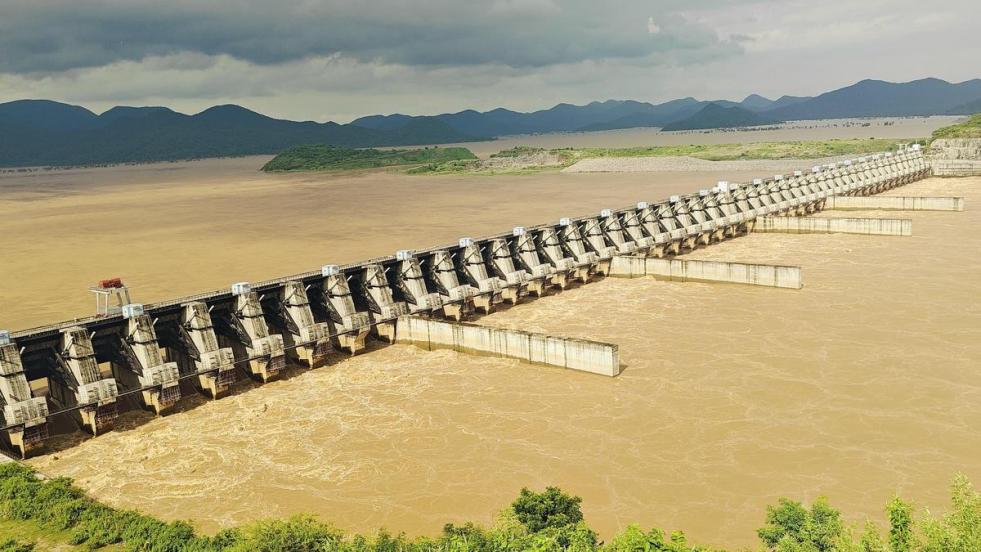
(Feature Image: Polavaram Dam. Source: The Hindu)
The safety issues related to Polavaram dam has been under focus for some weeks now. It has come under sharper focus last week due to some very specific questions about various aspects of the Dam, from CWC, Centre for Liberty and former MP Vundavalli Arun Kumar. The project has also been under scrutiny by a panel of experts from abroad. However, the work of the Panel of Experts has remained under wraps so far, which should not have been the case.
So far, the only public response from the Andhra Pradesh has been denial. However, the report about AP CM taking a meeting of officials on March 6 and warning about any laxity on these issues adds weight to the seriousness of the situation.
Union Government bodies including CWC, Jal Shakti Ministry, Godavari River Management Authority and Polavaram Project Authority have a big role to play in this project that the government has declared a national project. The National Dam Safety Authority seems absent from the scene so far. One only hopes that the concerned agencies at the centre and state will take necessary steps to ensure that Polavaram does not go down the Kaleshwaram fate. It would be in the public interest that all the safety related information and documents are in public domain.
AP CM Naidu warns officials about Polavaram dam Safety issues The latest concerns trace back to a communication from the Central Water Commission (CWC) dated 30 January 2026, which reportedly flagged serious discrepancies in data, design inputs and hydrological modelling related to certain components of the Polavaram dam works.
The issue gained wider attention after Vundavalli Arun Kumar wrote a blistering open letter to the Chief Minister on 5 March urging the government to address the red flags before proceeding further. In the letter, Arun Kumar cited the CWC’s observations and argued that inaccuracies in historical data and revisions in design parameters must be examined thoroughly in the interest of public safety.
The former MP drew particular attention to Gap-2 of the Earth-Cum-Rock-Fill (ECRF) dam, which forms a critical part of the structure. According to him, the approved riverbed level at the site stands at +8.32 metres, while construction activities were reportedly proceeding from around +15.50 metres, creating a difference of about 7.18 metres. Such a mismatch, he warned, could have implications for the stability of the structure if not carefully addressed.
Arun Kumar also noted that the diaphragm wall beneath the dam essentially acts as a cut-off wall rather than a structural foundation. With the deep river channel below the dam prone to erosion, he cautioned that the issue required close technical scrutiny. Warning against rushing ahead with construction without resolving these fundamentals, he said such a course could pose serious risks along the Godavari basin, affecting downstream habitations and infrastructure. He further pointed out that design documentation from the international consultant AFRY for certain sections of the dam was yet to be fully completed, and urged the state government to order a comprehensive technical review.
At the review meeting on 6 March, AP CM Chandrababu Naidu told officials that irrigation projects must be completed in a time-bound manner. He directed the authorities to ensure strict adherence to quality standards, says this report dated March 8 2026.
Polavaram: Allegations of serious flaws The Centre for Liberty(CFL) has alleged serious engineering flaws and violations of safety standards in the construction of the Polavaram project. The CFL has urged the Union Ministry of Jal Shakti, the Central Water Commission (CWC), and the Andhra Pradesh government to immediately constitute an independent international review panel to audit the safety of the Polavaram Project, particularly the integrity of the diaphragm wall (D-Wall).
At a press conference in Vijayawada on March 2 2026, CFL presented documentary evidence and expert reports to highlight the risks. Nalamotu Chakravarthy, through a detailed presentation, pointed to five critical failures:
1. Defects in the diaphragm wall due to concrete bleeding,
2. Unauthorised reduction of wall height,
3. Unsafe alterations to Gap-I trench depth: Changes in foundation trench levels in Gap-I from the approved elevation of 23 metres to 24 metres without adequate justification or approval from the Central Water Commission. Such unilateral alterations could compromise the stability of the dam foundation, they argued.
4. Neglect of the spillway guide bund damaged in 2023, and
5. Manipulation of excavation figures leading to a halt in approach channel works.
CFL urged authorities to halt any attempt to cover the diaphragm wall under embankment works until it is certified safe after comprehensive testing and corrective measures, even if that requires construction of a new wall. Construction works on the earth-cum-rock fill (ECRF) dam should be slowed down until concerns over concrete quality and structural safety are fully investigated.
Chairman A.B. Venkateswara Rao criticised the lack of coordination among agencies such as the CWC, PoE (Panel of Experts), and contractors, arguing that the absence of accountability has led to repeated failures. He questioned who would take responsibility if the diaphragm wall itself were to collapse.
The organisation demanded immediate corrective measures, including the appointment of an independent international expert committee to test the diaphragm wall, deployment of independent quality control agencies, slowing down dam works until safety is assured, prioritising guide bund repairs. They also called for strict action against those responsible for the 2023 guide bund failure. He said if these violations are ignored, it will approach the Supreme Court seeking a safety audit to safeguard people living downstream of the project. They sought a white paper explaining design alterations made in Gap-I without the approval of the Central Water Commission.
CFL insisted that all daily concrete pour logs, quality control reports and the “daily bleeding” reports related to diaphragm wall construction be placed in the public domain, along with the results of Cross-Wall Sonic Logging (CSL) tests conducted to assess structural integrity.
Narasimha Murthy, the Engineer in Chief of Andhra Pradesh WRD, through a press release, refuted all the allegations.
Vundavalli to CM: Address Polavaram discrepancies Former Lok Sabha member Vundavalli Arun Kumar has addressed a letter to Chief Minister N. Chandrababu Naidu, on March 5 seeking resolution of discrepancies in the ongoing construction at the Polavaram Project. He said discrepancies in the foundational levels of GAP-2 ECRF Dam, the erosion of sand underneath the base of the dam at main stream deep portion may lead to first-of-its-kind disastrous consequences in the world, endangering downstream communities, infrastructure and ecosystem along the Godavari River. He sought a high-level intervention to safeguard both the Polavaram project and public interest.
HYDRO POWER PROJECTS
Sharavathi PSP gets nod Nearly 10 years after the NGT order directed the state government to look into the carrying capacity of the Western Ghats before approving projects, the government continues to green signal projects. This, even as a carrying capacity report, accessed by DH, has been gathering dust. The MoEF&CC set up the committee after an order by the NGT in Feb 2016. Its mandate was “to conduct a comprehensive study to assess carrying capacity of Western Ghats region in Karnataka”. Asked why the report was not considered, department sources said there was no government order passed to that effect.
Last year, Forest, Ecology and Environment Minister Eshwar Khandre set up a new committee of senior IFS officers to assess the carrying capacity of the Ghats. The order came following protests from conservationists that approvals were given without assessing cumulative impact of projects on the Ghats.
Sharavathi PSP public hearing sidelines thousands of written objections While both the public hearing conducted on Sept. 16 and 18 last year, saw thousands of people waiting to speak up against the project, documents obtained under the RTI Act reflect a much higher participation. Yet, the proceedings of the two events now made available to the public, give space for only 47 people in Shivamogga and 57 in Uttara Kannada district to speak against the project. A careful reading of the proceedings shows the written submissions being relegated to a list of annexures. There is no information with regard to the nature of these submissions, with activists noting that this effectively undermines the participation of people who took their time to write their suggestions and objections.
The RTI documents show that officials were flooded with written submissions. As per the information provided by the KSPCB’s Karwar regional office, the written submission exceeded a whopping 11,078 pages in Uttara Kannada while the KSPCB Shivamogga regional officer put the number at 948 pages. Apart from an online petition which had about 15,000 signatures by the end of September 16, activists and conservationists had held a signature campaign to gather support for their opposition to the project. All these materials were printed and submitted to the officials during the public hearing but do not get a mention in the proceedings.
Western Ghats under threat Without urgent action, both scientific guidance and local livelihoods risk being drowned out by unchecked development, leaving the Western Ghats’ unique biodiversity and fragile ecosystems in peril. In fact, the Ghats already bear heavy weight. Apart from the 26 mini-hydel projects, many of them in critically sensitive areas, an average of two national highways and state highways run through the forests in the 10 Ghats districts. More pumped storage projects and river diversion projects are in the pipeline.
The devastation caused by large-scale projects such as the Yettinahole drinking water project in Hassan district is rarely studied, leaving ecosystems without any restoration measures. The lack of acknowledgement has paved the way for proposals like the Aghanashini-Vedavathi river diversion project, even though a carrying capacity study of Uttara Kannada district by Prof T V Ramachandra of the Indian Institute of Science warns that such projects could spell ecological disaster.
NGT finds Ratle HEP responsible for illegal muck dumping
Mohra HEP to be restored The J&K govt on March 06 said it is moving ahead with the restoration of the 124-year-old heritage Mohra Hydroelectric Power Project in Uri area of Baramulla district under the Public-Private Partnership (PPP) mode. The tendering process is likely to be initiated this year after a gap of more than three decades. Managing Director of JKSPDC), Rahul Yadav, said the IIT-Roorkee team is expected to visit the site again in April for spot inspection.
Last year, in a written reply to a question raised by the Uri MLA in the Assembly, the Power Minister had stated that the 10.5 Mw HEP, originally approved under the PMDP-2015 package at an estimated cost of ₹112.91 crore (2018 price level), could not be taken forward due to limited financial feasibility.
The reply further stated that a feasibility study conducted by IIT Roorkee, commissioned by MNRE in 2022 and submitted in November 2024, revised the project cost to ₹135.02 crore (2022 price level) and recommended funding support. However, no funds were sanctioned by MNRE to the J&K government or JKSPDC.
Located along the banks of the River Jhelum on the Srinagar-Baramulla NH in Mohra area of Uri, the project is considered one of the oldest hydroelectric power projects in South Asia. The project was constructed in 1902 by Canadian-born engineer Major Alian de Litbniere and had unique engineering features, including an 11-km long wooden flume that acted as a water conductor.
“The project was first damaged during the 1959 floods, but engineers restored it and expanded its capacity from 4 MW to 9 MW, which was later increased to 10.5 MW,” Mohammad Younis, a 70-year-old retired power department employee said. The project was formally handed over to the J&K government in 1962. However, after the 1992 floods caused severe damage, its restoration has remained pending for more than three decades.
Himachal CM pushes for water royalty amid revenue grant cuts The CM Sukhvinder Singh Sukhu urged the central government to provide a 50 percent royalty on water used by hydroelectric plants. This request follows the discontinuation of Revenue Deficit Grants to Himachal by the Centre. Sukhu argues this royalty could make the state self-sufficient.
DAMS
Singur dam safety is top priority: Uttam During a high-level meeting at the Secretariat, the Minister for Irrigation and Civil Supplies Uttam Kumar Reddy examined the safety features of several dams in the state, noting that caution was sounded by the NDSA regarding the Singur Project and that officials have initiated necessary follow-up measures. He directed immediate technical interventions, underwater inspections, and accelerated repair works to avert risks. He ordered sonar checks and underwater surveys below the bund level to detect hidden damage without draining, with findings to be submitted within three days.
Protest over Zuari dam project in Goa Assembly Four people were detained on March 6 after they staged a protest from the visitors’ gallery in the Goa Assembly on the opening day of the budget session, over the proposed dam on the Zuari River. The protesters were part of the agitation against the proposed dam on the Zuari River at Mirabag village in Kushawati district, where villagers have been staging a sit-in protest for the last 25 days against the project, over fear that 500 houses would be inundated due to the reservoir.
Nod for Lower Chatta Munnar Dam in Idukki The state govt has granted administrative sanction for the construction of the Lower Chatta Munnar Dam proposed on the Pambar River as part of efforts to fully utilise the water allocated to Kerala under the Cauvery tribunal award. The approval comes soon after the completion of the Pattissery Dam, which has strengthened the Idukki district’s irrigation and drinking water infrastructure.
The Lower Chatta Munnar Dam project is estimated to cost Rs 102 crore and is designed with a storage capacity of 0.78 TMC (780 million cubic feet). The reservoir is planned to cover an area of 80 sqkms. Steps will be initiated soon to begin construction of the Lower Chatta Munnar Dam, Water resources minister Roshy Augustine said. Apart from the Mullaperiyar Dam, which is under the control of Tamil Nadu, Idukki district currently has 12 dams operated by the KSEB and two under the irrigation department.
HP to stop work on Renuka, Kishau for pending dues The govt will not move forward with the proposed Kishau and Renuka Dam hydropower projects until neighbouring states provide concrete assurances to clear long-pending arrears of the Bhakra Beas Management Board (BBMB), chief minister Sukhvinder Singh Sukhu said on Feb 24 2026.
Agenda of MoEF’s Expert Appraisal Committee on River Valley Committee meeting to be held on March 11 2026 – Veeraballi Closed Loop Pumped Storage Project (1800 MW) in 489.91 ha at Village Vangimalla, Sub-Dist Veeraballe, Dist Annamayya, Andhra Pradesh from Annamayya Pumped Storage Project Pvt Ltd: Environmental Clearance
URBAN RIVERS
Students protest waste dumping in Mula–Mutha riverbed Students and staff members of the MIT Art, Design and Technology (ADT) University in Loni Kalbhor staged a protest at the university entrance gate on March 4, demanding an immediate halt to the ‘illegal’ dumping of untreated waste into the Mula–Mutha riverbed. The protest witnessed participation from students and residential staff from MIT Vishwashanti Gurukul, MIT Junior College, and MIT ADT University. Massive heaps of waste dumped in the riverbed caught fire on Feb.26, and continued to smoulder for nearly four days, releasing dense toxic smoke across the surrounding area. On Feb. 27, six to seven students from the MIT-ADT campus experienced breathing difficulties and suffocation due to the smoke and had to be admitted to a nearby hospital.
5 Million kg Plastic Dumped into Mumbai’s Sea Every Year Nearly 5 million kilograms of plastic waste flow into the Arabian Sea from around 50 nallahs across Mumbai every year, according to a year-long study conducted by The Ocean Cleanup (TOC), a Netherlands-based non-profit working to remove plastic pollution from oceans and rivers. The study, carried out between May 2024 and May 2025, mapped plastic flows through rivers and tributaries that eventually drain into the city’s network of stormwater channels before entering the sea. Thane Creek, Malad Creek and Vasai Creek were identified as the three largest contributors to plastic pollution in the Mumbai metropolitan region.
RIVERS
Cauvery contaminated by banned plastics A major new scientific report reveals that Tamil Nadu has emerged as India’s largest contributor to plastic waste, generating approximately 7.82 lakh tonnes annually and accounting for nearly one-fifth of the nation’s total plastic pollution, despite having only six percent of India’s population.
The Cauvery River, which flows through Tamil Nadu covering 54 percent of the basin, has become a critical pollution hotspot. Monitoring conducted across six sites during three seasonal campaigns revealed alarming levels of macroplastic contamination. The monitoring, conducted during the northeast monsoon of Nov 2024, the dry season of Feb 2025, and the southwest monsoon of September 2025, documented that 51.7 percent of all plastic waste observed in the Cauvery catchment was packaging material, with food packaging being the most dominant type. The report notes that packaging represents the dominant type of plastic litter observed, with sachets representing the majority at 31.1 percent within this category.
Direct dumping of waste into the river remains a critical issue. During 11.6 percent of visual observation measurements, people were observed discarding one or more bags of litter from the bridge directly into the river channel. Despite India’s ban on single-use plastics introduced in 2016 and expanded in 2021 and 2022, the study found that 19.3 percent of observed macroplastic litter consisted of banned single-use plastic items, predominantly plastic bags below the legal minimum thickness of 75 to 120 microns. Measurements confirmed that most bags recovered ranged between five and 20 microns, far below legal requirements.
Activist raises concern over river pollution in Dakshina Kannada Activist Bhuvan Mangaluru brought to the attention of the senior environmental officer, Karnataka State Pollution Control Board (KSPCB), an ongoing environmental and public health emergency concerning the Phalguni (Gurupura), Nandini, and Netravathi rivers in Dakshina Kannada district. These critical freshwater systems are undergoing severe degradation due to unchecked discharge of untreated sewage and industrial effluents, he alleged.
In addition to river pollution, there was a serious and growing concern regarding contamination of groundwater sources, particularly open and bore wells located in the surrounding areas of the Phalguni and Nandini river basins. Local observations indicated that these wells were becoming increasingly unsafe, suggesting infiltration of polluted river water and sewage into groundwater systems, thereby posing a direct risk to drinking water security and public health. Further, there was credible evidence and field indication of industrial discharge into the Phalguni river, contributing significantly to chemical pollution and oxygen depletion.
Yamuna in Delhi: Is there hope for the River? Despite over three decades of efforts, Yamuna continues to be increasingly polluted through its passage across Delhi. Yamuna is now one of the most polluted major rivers in the country. The successive governments have been trying to clean the river for at least three decades. Despite the scrutiny of the Supreme Court and the National Green Tribunal (NGT), the quality of the river passing through Delhi is nowhere close to even bathing standards. A parliamentary panel in its report last year likened Yamuna to an almost dead river saying its capacity to sustain life is almost non-existent in the Delhi stretch.
“For all practical purposes, the Delhi stretch of the river (downstream of Wazirabad) is lifeless and it is a man-made disaster” says Himanshu Thakkar of SANDRP. When The Hindu travelled from Palla, where the river enters Delhi, to Okhla, the last main barrage before the river leaves Delhi, the discolouration of the water was visible as it travels through the city and more drains empty out into the river. Neighbouring States also contribute to the pollution of the Delhi stretch of the river. Six drains from Haryana flow into the Najafgarh drain, and four major drains from Uttar Pradesh discharge into the Shahdara drain.
The river exits the city as one of the most polluted rivers, at Asgarpur, after travelling about 54 km. Here, the level of Fecal Coliform (microbes from human and animal excreta) reaches up to — 32,000 times — the ‘desirable level’, shows official figures of last year. This means pollution of the river water must be brought down by up to 99.99% for Yamuna to be even fit for bathing. In a written reply to Rajya Sabha during the Winter Session of Parliament, the Jal Shakti Ministry said Delhi had a sewage treatment gap of 414 Millions of Litres per Day (MLD).
“It is not rocket science to clean the river, but the criminal apathy of both central and state governments over the years that has led to the current situation,” says Mr. Thakkar. The history of unsuccessful attempts at cleaning the river, despite thousands of crores of rupees and legal scrutiny at the topmost level, makes it a daunting task.
In July 2025, Union Home Minister Amit Shah directed the Delhi government to nearly double its sewage treatment capacity from 764.2 million gallons per day (MGD) to 1,500 MGD by 2028 to make sure that no untreated sewage enters the Yamuna. Under the new plan, apart from the sewage treatment, different options, including diverting water from Ganga to dilute the pollution in the Delhi stretch of Yamuna are being considered. “Earlier, there was a lack of coordinated efforts and monitoring at the highest level, even though courts were directing to do it,” a senior central government official said on why there is a renewed hope now.
However, Himanshu Thakkar of SANDRP is skeptical pointing out the lack of accountability despite numerous court orders over the last three decades to clean Yamuna. “If the river has to be cleaned, governance has to be fixed and there should be accountability and transparency,” Mr. Thakkar says, adding “with the current system and situation, there is no hope in cleaning Yamuna.”
Froth at Wazirabad raises alarm Yamuna activist Pankaj Kumar posted visuals of the froth at Wazirabad on X, tagging government functionaries, and wrote: “Normally, the stretch downstream of Wazirabad does not have this kind of visible toxic froth. Now, there is visible foam appearing upstream of the Najafgarh drain confluence point, and this same water is being treated and supplied to the people of Delhi. What is the reason for this froth in the upstream sections?”
Bhim Singh Rawat, a Yamuna activist and member of the SANDRP, said froth formation at the Wazirabad barrage is alarming. “The city draws its drinking water from the barrage. There should be no phosphate or pollutant load at this point, but the situation is deteriorating. There are three drains in Haryana — drain number 8, drain number 2 and Dhanora — that release untreated effluents into the river. Drain number 8 is the main problem and has also caused large-scale fish deaths in the past,” he said. Rawat added that negligible rainfall in February may have reduced freshwater flow, limiting dilution of pollutants.
Foam becomes a non-Story February 2026 is almost ending. In Delhi, there are no elections around the corner, no Chhath Puja approaching… and so, there is no urgency about the condition of the Yamuna, no heated debates, and no loud media outrage either. During this lull, I went to Kalindi Kunj, where the Yamuna River flowed silently, almost unnoticed… its pollution met with silence.
Delhi pushes for upstream Yamuna dams The irrigation and flood control (I&FC) department found that creating reservoirs to store excess floodwater during monsoon in Delhi is not feasible, senior officials said, citing high siltation level during flooding cycles, poor land availability and very high land rates as key impediments to the project.
The previous government in the state, in 2019, initiated the Palla floodplain project to tap excess water during the monsoon flooding cycles. The previous government estimated that the pilot reservoir led to groundwater recharge of 2,280,000 cubic metres in 2023 alone. However, the project was not expanded to cover 1,000 acres at full scale due to high costs and high silt levels.
The I&FC, instead, batted for expediting work on dams upstream, in Himachal Pradesh and Uttrakhand, for better regulation of river flow and moderation of floods in Yamuna. Once completed, the Lakhwar dam will supply 135 mgd of water to Delhi. The Renukaji and Kishau projects have the potential to provide the city with 275 mgd and 372 mgd of water respectively.
The construction of the Lakhwar dam is underway, Renukaji is in tendering phase, while Kishau is in interstate agreement stage, the official cited above said, estimating that they may be commissioned between 2031 and 2033. A fourth proposed dam was envisioned after the 2023 floods at Yamunanagar, 4.5km upstream of the Hathnikund barrage, at a cost of ₹6,134 crore.
9.1 MCM silt choking Najafgarh drain A government-commissioned bathymetric survey has found that over 150 sub-drains from Delhi and Gurugram empty into the 57km channel, while nearly 9.1 million cubic metres of silt have accumulated on its bed. Officials say the findings have laid bare the scale of deterioration and are now guiding an ambitious clean-up under “Mission Sahibi”. “Overall, the Najafgarh drain is 57.14km long and has a complex system of 150 big and small drains originating in Gurugram and Delhi. We are using 32 advanced machines for the desilting work, which will restore the original water-carrying capacity of the drain,” the official said.
Earlier interventions focused primarily on 32 major feeder drains and 74 smaller sub-drains, while the main channel continued to choke. Its reduced carrying capacity has been blamed for recurrent waterlogging in Dwarka and other parts of Delhi. Bhim Singh Rawat, a Yamuna activist and member of the SANDRP, said, “Delhi’s overall sewage generation estimates are also faulty as we do not factor in the groundwater being used by people in the sewage output. This could be a massive chunk.” He added that there is a significant contribution of sewage from Harayana via Badshahpur and drain number 8. “The Shahdara drain gets its pollution load from Uttar Pradesh. Cleaning the Yamuna will have to be a coordinated interstate effort. More importantly, the government should put the findings of the survey in the public domain to involve the community.”
38 machines to clean river The irrigation and flood control (I&FC) department has procured 38 specialised machines for desilting, weed removal and drain maintenance to intensify cleaning of the Yamuna, water minister Parvesh Verma said, as part of the Delhi government’s aim to restore the water quality of the river by 2028. The procurement plan for 2025-27 includes nine categories of machines designed to address different aspects of river and drain cleaning.
5km-long flood wall along river A nearly 5km-long flood wall from Majnu Ka Tila to Kashmere Gate along the Yamuna has been planned to prevent flooding of vulnerable areas in north Delhi during heavy monsoon spells. The project, with a sanctioned estimate of around Rs 50 crore, seeks to create a protective barrier along Ring Road to stop floodwater from entering nearby low-lying city areas and causing widespread damage. After receiving administrative approval, it was cleared by Yamuna Standing Committee in Feb 2026.
A boundary wall will be built from Magazine Drain to Old Railway Bridge. The flood wall will run for a total length of 4.72km. Of this, around 850 metres will be built as a reinforced cement concrete retaining wall, which is a stronger structure designed to hold back soil and water pressure in more vulnerable sections near the river. The remaining 3,870 metres will be constructed as a boundary wall using brick or stone masonry, which will act as a protective barrier to prevent floodwater from entering city areas, said officials.
NGT finds ‘glaring’ pollution lapses at Haryana industrial unit The NGT came down heavily on the state govt over a matter pertaining to an industrial plant and has demanded a fresh action-taken report within six weeks. The matter will next be heard on May 15. The NGT rap on Feb 25 comes after a joint committee report that flagged a series of “glaring” pollution-control failures at the cement plant — from missing green belts to dust clouds drifting into a nearby village.
गायत्री गंगा की दुर्दशा पर एनजीटी में बड़ा खुलासा हमीरपुर में बहने वाली गायत्री गंगा की बदहाल स्थिति पर एनजीटी में दाखिल रिपोर्ट ने गंभीर सवाल खड़े कर दिए हैं। उत्तर प्रदेश प्रदूषण नियंत्रण बोर्ड के हलफनामे के मुताबिक नदी में गिरने वाले सभी नाले बिना टेपिंग के सीधे इसमें मिल रहे हैं और गंदे पानी के उपचार के लिए फाइटोरिमेडिएशन या बायोरिमेडिएशन जैसी कोई अस्थाई व्यवस्था मौजूद नहीं है।
हैरानी की बात यह है कि सरकारी रिकॉर्ड में गायत्री गंगा को ‘नदी’ के बजाय ‘नाले’ के रूप में दर्ज किया गया है, जिसके चलते इसकी सफाई और संरक्षण की दिशा में जरूरी कदम नहीं उठ पाए। संयुक्त समिति के निरीक्षण में अतिक्रमण और अव्यवस्थित सीवेज प्रबंधन भी सामने आया है, जिससे साफ है कि फिलहाल यह नदी बिना उपचार के गिरते गंदे पानी के कारण लगातार प्रदूषण का बोझ झेल रही है।
FISH, FISHERIES, FISHERFOLKS
Two new fish species from Nagaland Abstract: -Two new species of fishes are described from the tributaries of the Brahmaputra River in Nagaland, Northeast India. Glyptothorax sentimereni, described from the Dikhu River, is distinguished from congeners in having the following combination of characters: ventral surfaces of pectoral spine and first pelvic-fin ray with plicae, serrated posterior edge of dorsal-fin spine, thoracic adhesive apparatus completely encinctured by striae, length of dorsal-fin spine 13.7–16.1% SL, body depth at anus 17.1–19.6% SL, length of dorsal-fin base 12.0–13.1% SL, post-adipose distance 20.8–22.2% SL, head depth 16.5–17.0% SL and dorsal-to-adipose distance 21.8–23.5% SL.
Oreichthys elianae, described from the Tsurang River, is distinguished from its congeners by a combination of characters that include 19+1 scales (with 5 pored scales) in longitudinal series, ½3/1/2½ scales in transverse row, 9 predorsal scales, 14–15 pores on cheek, a black spot on the caudal-fin base, and reddish fins.
The species belongs to a group of torrent-dwelling catfishes adapted to fast-flowing mountain streams and possesses a specialised adhesive structure on its underside that helps it cling to rocks in strong currents. Researchers said the discoveries add to the known aquatic biodiversity of the Brahmaputra river basin and highlight the ecological richness of Nagaland, located at the intersection of the Eastern Himalaya and Indo-Burma biodiversity hotspots.
A bumper year for freshwater fish descriptions! Three hundred and nine new names added to the ledger of freshwater fish diversity. A staggering number really – nearly one ‘new’ species each day through 2025. It is the most in one year since 2017, and the third highest number since records began way back in 1758. From Asian karst caves and peat swamps to Amazonian rapids, African seasonal wetlands to Appalachian rivers, it is a reminder that freshwater biodiversity is still unfolding before us.
SAND MINING
Illegal mining razed J&K’s Sukhnag river A government-constituted fact-finding committee has confirmed that illegal riverbed mining has caused massive destruction to the Sukhnag River in the Beerwah area of central Kashmir’s Budgam district, officials said on March 07. The seven-member panel, formed by the Deputy Commissioner of Budgam in August last year following a directive from the NGT, has submitted its report to the Tribunal through the J&K Pollution Control Committee (JKPCC).
According to the report, the river—recognized as a designated trout fish stream—has suffered severe ecological degradation due to extensive and illegal mining operations. To restore the water body, the committee, led by the Sub-Divisional Magistrate (SDM) Beerwah and the Divisional Forest Officer (DFO) Pir Panjal, has recommended filling the deep trenches created by mining, levelling the riverbed, and constructing gabion structures and check-dams. The panel has also suggested the creation of artificial pools to facilitate trout breeding.
The NGT, which is hearing a petition filed by Dr. Raja Muzaffar Bhat, had previously constituted a supervisory committee to oversee the investigation. During the recent hearing on February 26, the NGT directed the expert panel to visit the site within weeks. “The expert committee is expected to visit the site shortly as the case is listed for the next hearing on March 27, 2026,” said the petitioner, Dr. Raja Muzaffar Bhat. He added that the report must be submitted to the tribunal a week prior to the hearing. The NGT had previously imposed a complete ban on mining in the Sukhnag river in January 2025 after a joint fact-finding team reported extensive devastation during a site visit in December 2024.
Setback for Punjab, SC refuses to vacate NGT stay on mining at 85 locations The Punjab Government has failed to get relief from the Supreme Court on the National Green Tribunal’s (NGT) stay on the process of desilting and dredging in all 85 sites across the state on Feb 11 2026. Mining is often carried out on the pretext of desilting and dredging. SC has asked Punjab govt to go back to NGT. Next hearing in NGT on May 14. The sites were identified by state Water Resources Dept, the NGT application was moved by Gahrli Gram Panchayat from Dorangla block of Gurdaspur district, pleading that regular EIA and EC must be required. Such illegal mining had played a role in massive floods in the state in last year.
Mining threatens Power Transmission Line in Phillaur The illegal sand mining has mined the sand so much along Sutlej in Phillaur that the power transmission line is under threat of collapse. Strangely, the transmission company person says they do not know about it, as reported by Dainik Bhaskar on March 3 2026.
NGT orders strict action against 13 stone crushers in Punjab The NGT has taken serious note of illegal mining and environmental violations in the Shivalik Hills and directed strict action against 13 stone crushers operating in Rupnagar district of Punjab. According to a report submitted by the Punjab Pollution Control Board (PPCB), mining activities were being carried out illegally in forest and mountainous areas, and several stone crushers were found operating in violation of environmental norms in the district.
The PPCB informed the tribunal that action has been initiated against 13 stone crushers found violating environmental norms and indulging in illegal mining. The Pollution Department has imposed environmental compensation of Rs 7.25 lakh on Sidhi Vinayak Stone Crusher, leased by Jeewan Kumar of Village Haripur in Rupnagar district. As per the PPCB report, environmental compensation ranging from Rs 37,500 to Rs 54.75 lakh has been imposed on various units. Closure directions have been issued against multiple crushers, DG sets have been sealed in certain cases, and criminal complaints have been filed against the violators. The Board further reported that heavy penalties have been imposed and recovery proceedings initiated against the defaulting units.
NGT admits appeal challenging EC granted to Dhenkanal quarry The NGT, East Zone Bench, Kolkata, has admitted an appeal challenging the environmental clearance (EC) granted to a private lessee for the Tolarpasi Road Metal Quarry in Dhenkanal district. The bench took cognisance of the appeal filed by Sanjib Dhal, a local resident. Dhal challenged the EC granted by the State Environment Impact Assessment Authority (SEIAA), Odisha for the quarry spread over 12.25 acre at Tolarpasi under Gondia Tehsil.
The appellant contended that the EC was granted without considering the tribunal’s earlier October 13, 2025 order directing SEIAA and the deputy director of mines (DDM), Talcher, to examine his grievance by treating it as a representation and to pass appropriate orders within three months. According to Dhal, the authorities failed to address his concerns and proceeded to issue the impugned environmental clearance. The matter has been listed for further hearing on March 10, 2026.
Andhra Pradesh Mines and Geology Department has evolved an action plan that includes installation of AI-enabled CCTV cameras and deployment of thermal drones across sand reaches in Rajamahendravaram. Officials have admitted that installation of CCTV cameras at sand reaches failed to yield results due to lack of effective monitoring and data review. As a corrective step, AI-based surveillance cameras will now be installed to record registration numbers of vehicles transporting sand, quantity of sand being transported, and other details.
The data will be transmitted directly to a central command and control centre, enabling officials to identify unauthorised transport of sand and take swift action. Authorities have also decided to deploy thermal drones to monitor illegal sand dredging during night. A private firm has already conducted a trial run, while another agency has expressed interest in implementing the system.
WETLANDS, LAKES, WATER BODIES
Traditional Knowledge and India’s Wetlands
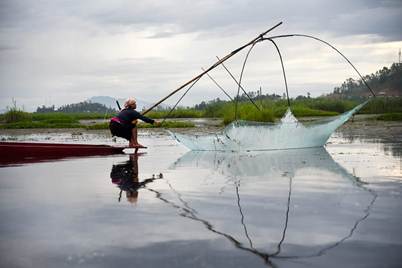
Where wetlands persist, it is often because people learned to live with water rather than control it. Human activities and behaviors shape landscapes through knowledge systems attuned to ecological rhythms.
Traditional wetlands have long supported food systems precisely because they are adapted to flooding, salinity and seasonal water availability. In Kerala, agricultural production in the Kol wetlands, the below-sea-level farms of Kuttanad, and the traditional Pokkali rice–prawn systems are closely aligned with monsoon rains and tidal cycles. These unique landscapes allow rice cultivation to alternate with fisheries and aquaculture, enabling food production to coexist with natural flood buffering, freshwater storage and the ecological functions of coastal wetlands. In Manipur, communities around Loktak Lake have built their livelihoods around phumdis — floating mats of plants — that support fishing and naturally recycle nutrients in the lake. In neighboring Arunachal Pradesh, the Apatani community practices a unique rice–fish farming system, while the floodplain wetlands (beels) of Assam combine fishing, farming and community-based management. Near Rajasthan’s Sambhar Lake, herders use rotational grazing on seasonal salt marshes, helping control plant growth while retaining soil moisture in a dry landscape.
Uttar Pradesh is establishing a Sarus Circuit in the state, officials said on March 06. The Sarus Circuit, being developed in the wetlands of Mainpuri and Etawah districts, will include the wetland areas of Kirthua, Sahas, Kurra Jarawan, Soj and Saman in Mainpuri, and Sarsai Nawar and Parauli Ramayan in Etawah, the Uttar Pradesh government said in a statement.
RAMSAR WETLANDS
Wular Lake, restoration, and the people of Kashmir Once the pride of Kashmir’s wetlands, Wular now stands at a crossroads. Here is a ground report from India’s largest freshwater lake on dredging, displacement, and ecological repair caught between community care and cosmetic conservation.
WATER OPTIONS
Apartments breaking free from tanker water Century Saras, an apartment complex of 128 flats in Yelahanka New Town, does not have a piped water connection. Yet it does not rely on tanker water, thanks to the water management measures the apartment has followed since residents began moving in around 2016, says Satish Mallya, resident and president of the Bangalore Apartments’ Federation (BAF).
In 2021, the apartment received a commendation certificate as a ‘Water Donor’ from World of Water, Bengaluru, for saving about one crore litres of water annually for the city. This includes around 72 lakh litres through its sewage treatment plant, 18 lakh litres through aerators, and 12 lakh litres through rainwater harvesting. Last year, the Karnataka government recognised its sustainability efforts.
“We have eight recharge wells, each about 20 metres deep. During the rains, water from the terrace catchment area of one block is diverted into rainwater harvesting tanks. This meets nearly three months of our water requirement,” says Mallya. The system saves residents about Rs 1 lakh a year that would otherwise be spent on tanker water.
The apartment currently meets its freshwater demand through borewells – two are functioning, and efforts are under way to rejuvenate two that have dried up. The apartment also installed an open well last year. According to Mallya, the groundwater table in the area is relatively healthy, at around 15 m in the shallow aquifers and about 150 m in the deeper aquifers.
GROUNDWATER
Haryana’s groundwater extraction stands at around 136% of its annual recharge. The state has an annual extractable groundwater resource of about 9.3 lakh ham, but actual extraction is estimated at around 12 lakh ham.
Across Haryana, several districts reported severe groundwater stress. Panipat recorded one of the highest extraction levels at 217.8%, followed by Karnal at 196.9%. Other districts with high extraction levels include Fatehabad (175.3%), Mahendragarh (156.8%), Faridabad (139.6%) and Ambala (130.1%), according to the report. Some districts, however, remain in relatively safer categories. Rohtak recorded an extraction stage of 48.8%, Panchkula 62%, Jhajjar 72.7% and Nuh (formerly Mewat) 72.3%, indicating comparatively lower groundwater stress.
CGWB assessment evaluated 143 groundwater assessment units across Haryana, of which 88 (61.5%) were classified as “over-exploited”, 11 as “critical” and eight as “semi-critical”. Only 36 units (25.1%) fell in the “safe” category, according to the report.
URBAN LAKES, WETLANDS
Old maps reveal lost north Delhi lake A nearly two-mile-long lake that once stretched across north Delhi has resurfaced; not on the ground, but on old maps. While examining 19th and early 20th century maps for a recent exhibition of old charts and atlases, the Intach identified traces of a massive water body north of Bhalswa Lake, much of which has been built over, though parts may still be revived, Intach officials said. A comparison of a 1932 map of Delhi, which shows the water body spread across Qadipur and Nagli-Puna (present-day Kadipur), with current satellite imagery indicates that most of the area has now been built upon.
URBAN WATER
Teething troubles affect Kochi water distribution after Suez takeover Water-supply disruptions have surfaced in several parts of Kochi days after French multinational Suez took over operations of the city’s water distribution system under the Kerala Urban Water Services Improvement Programme (KUWSIP). Areas around Kaloor reported irregular supply over the past two days, even as residents in other parts of the city flagged early signs of summer water stress.
Kerala Water Authority (KWA) officials attributed the disruption to “minor operational issues” following the transition of operations to the French utility firm on February 27. However, the disruption has also highlighted the city’s growing water demand and ageing infrastructure, which have been contributing to irregular supply in several areas. Localities such as Palluruthy, West Kochi, Poonithura, Panampilly Nagar, and Vaduthala are among those frequently reporting shortages. Residents say tanker water has already begun supplementing supply in some neighbourhoods.
195% more groundwater drawn by Gurgaon The city continues to extract far more groundwater than it can naturally replenish, with withdrawals reaching 194.6% more than the permissible limit, according to the latest National Compilation on Dynamic Ground Water Resources of India, 2025, released by Central Ground Water Board (CGWB). While this is a slight improvement from 2024, when extraction stood at 195%, the change is negligible — a concerning trend given the persistent gap between extraction and natural replenishment. In 2023, the figure was even higher, at 212%. The report shows that the city drew 40,396 hectare-metres (ham) of groundwater against a sustainable extractable resource of 22,923 ham.-
The city currently receives about 570 MLD of treated surface water, which falls short of its peak summer demand of around 675 MLD, forcing residents and industries to increasingly depend on groundwater, experts said. The data also shows that industrial demand forms a significant share of groundwater extraction in the city. Of the total withdrawal, about 17,142 ham is attributed to industrial use, while around 5,191 ham is used for domestic consumption. Irrigation accounts for over 21,267 ham, largely in peri-urban villages of the district.
This comes despite repeated warnings from the NGT and environmental activists about the depletion of the natural resource. Nearly two weeks ago, the tribunal criticised the Haryana govt for failing to curb rampant illegal groundwater extraction. It ordered inspections of construction sites, farmhouses, industrial units, educational institutions and pharmaceutical units to check for illegal borewells.
Delhi 44% tap samples fail safety test A day in any Delhi household begins with an act of trust: turning on the tap. Millions of people assume that the water flowing out is safe. Other than daily washing and cleaning needs, this water fills bottles for schoolchildren, goes into morning tea, and is used in the food we eat (water purifiers are still not as ubiquitous as most people think they are). But a seven-day sampling exercise conducted by Hindustan Times at 18 complaint-prone locations suggests this trust may not always be warranted. Laboratory analysis found that nearly 44% of the samples violated basic microbiological safety standards.
Bhim Singh Rawat, a water sector expert and member of SANDRP, said Delhi needs an integrated water policy focused on infrastructure overhaul, reducing distribution losses and protecting water bodies. “Health of rivers, infrastructure and demand are interlinked. We need comprehensive reform, not piecemeal projects,” he said. For now, the data does not suggest a citywide collapse. Ten of the 18 samples were clean. But the fact that nearly half violated zero-tolerance safety norms, and that the contamination was confined to domestic taps, should raise dangerous alarm bells for residents and officials alike.
WATER POLLUTION
110 ill in Ferozepur village Hazara Singh Wala, a border village in Punjab’s Ferozepur district, remains gripped by a serious water-borne disease outbreak, with the number of patients rising to 110, even as medical camps are open and emergency response measures are in place. Alarm bells rang across the district administration following the death of 12-year-old Sehaj Kaur from suspected Hepatitis E on February 24, triggering widespread concern and fear among villagers.
Water safety has emerged as the central concern in the crisis. The health department collected 24 water samples from households and the premises of a school in the village last week. All samples tested non-potable, reinforcing villagers’ claims about unsafe drinking water. According to Deputy Commissioner Deepshikha Sharma, all 110 patients report symptoms including fever, abdominal pain, and jaundice. Importantly, 36 of the total cases tested positive for leptospirosis, a bacterial infection spread through water or soil contaminated with animal urine. Residents blame long-standing unhygienic conditions in the village for the outbreak, particularly an overflowing pond that has remained unattended for years.
WATER MANAGEMENT
Water Governance in Changing Climate
AGRICULTURE
With no rainfall for nearly six months, small tea growers in Tengani under Sarupathar subdivision of Golaghat district, Assam are staring at an uncertain future as their tea bushes wither under prolonged dry conditions.
MONSOON
Driest February of last six decades The winter season had a pan-India rainfall deficiency of 60% and the month of February exclusively had a shortfall of 81% rainfall. The Indian sub-continent has not seen a surplus winter rainfall for the last seven consecutive years. Month of Feb 2026 recorded the lowest ever rainfall since 1960. Feb 2026 registered a total of 4.2 mm rainfall against a normal of 22.7 mm. Earlier, in 1960, the country had received mere 2.7 mm rainfall in February. The northern plains and northeast India remained the poorest of all. While North India had a shortfall of about 85% rainfall, northeast India suffered a deficit in excess of 90% rainfall.
URBAN FLOODS
How landscape memory, hysteresis shape the way Indian cities flood In India’s cities, streets remain waterlogged long after the downpour has passed. These scenes are often dismissed as failures of their drainage systems, but hydrology offers one more insight: landscapes don’t respond to rain instantly or forget it quickly. Instead they respond to hydrological hysteresis, a ‘memory’ of past rainfall.
CLIMATE CRISIS
Urgent Warnings That Could Have Saved A Village ignored: A Case Study Of Rising Himalayan Blunders The story of Bandal, a small village of 120 people in Kullu district in Himachal Pradesh, that got washed away in 2025 monsoon after warnings in two reports from GSI geologists after the 2023 monsoon, in Oct 2023. In 2023 monsoon there was a landslide affecting the village. The report examined the causes of the landslide and offered recommendations to prevent a recurrence. The recommendations included lined drainage, retaining structures with weep holes, crack filling, construction restrictions, and a detailed site-specific study for Bandal village. A second report by IIT Mandi, following the 2023 Kullu floods, made similar recommendations, including regulating construction, stabilising slopes, improving drainage, and conducting detailed geotechnical assessments. The IIT Mandi report was commissioned by the Himachal Pradesh State Disaster Management Authority and District Disaster Management Authority, Kullu
Nothing was done regarding the warnings or recommendations.
Concerns of road widening in Uttarkashi Forest clearances granted to two projects in Uttarkashi as part of the Char Dham Highway ought to be recalled and all work here must be re-evaluated in the wake of disasters such as the Dharali flash flood, a group of people including former ministers Murli Manohar Joshi and Karan Singh have urged the government.
The Meghalaya govt treated the State Disaster Response Fund (SDRF) like a personal discretionary account, illegally diverting over Rs 2.15 crore to fund donations to other states and even pay for the cleaning of the Shillong Secretariat, according to a scathing CAG report.
ENVIRONMENT GOVERNANCE
Centre withdraws seismic zone notification Following the advice of the Union cabinet secretariat on March 04, the Bureau of Indian Standards (BIS), department of consumer Affairs, has withdrawn its Nov 2025 Gazette notification that had revised the country’s earthquake-resistant design standards, specifically the seventh revision of IS 1893 (Part 1): 2025, which also included an update of the seismic zonation map for India. The real estate sector across Gujarat has breathed a collective sigh of relief following the withdrawal.
When the BIS notification was first issued in Nov 2025, it elevated major cities like Ahmedabad, Surat, Vadodara, and Rajkot to Seismic Zone 4, mandating stricter ductile detailing and earthquake-resistant designs. While most civic bodies observed a transition window, the Ahmedabad Municipal Corporation (AMC) mandated immediate compliance under BIS’s revised ‘Design Earthquake Hazard and Criteria for Earthquake-Resistant Design Structures – Code of Practice’ via its circular on Jan 19, refusing to pass plans under old BIS codes.
This created a problem for developers, who argued that switching standards mid-stream for projects in advanced planning was “technically unfeasible” and would spike construction costs by 20%. The issue had stalled approximately 15 major high-rise projects in Ahmedabad.
SOUTH ASIA
Pakistan: Floating wetlands helps clean sewage In the Chak 13/1L village in Okara district in Pakistan, nature-based solutions are cleaning water. The floating wetland in Chak 13/1L consists of buoyant platforms made from jumbolon and styro-foam sheets, placed directly on the surface of the pond. These platforms support wetland vegetation while allowing plant roots to extend freely into the wastewater below. This facilitates the absorption of contaminants from the water, thereby improving the water quality and removing odor. At the heart of the floating wetland system is Common Reed (locally called sar-kanda), a plant well known for its ability to absorb nutrients, organic matter and pollutants. The dense root network beneath the floating wetland acts as a natural filter. Since the installation of the floating wetland, residents report reduced odor, fewer mosquitoes and improved drainage.
THE REST OF THE WORLD
Amazon riverfolk warn blasting rocks for shipping route will kill fisheries As Brazil moves to explode the deep, rocky river territory of the Lourenção Rocks, locals on the Tocantins River say the government’s refusal to recognize them as “impacted” excludes thousands of fishers from protections. Scientists compare the 43-kilometer (26.7-mile) rocky stretch to an “underwater Galapagos,” warning that detonations will destroy the quiet water pockets and deep rocks where rare species breed. The industrial shipping route is designed to accelerate global exports of soy and minerals, a move critics say prioritizes corporate profit over the survival of traditional peoples.
Satellite Takes Stock of World’s River Water In a first, a space mission led by NASA and France has tracked Earth’s rivers swelling and shrinking from month to month over the course of a year and found significantly less of a swing than previous model-based estimates. A record drought in the Amazon likely influenced the tally made by the Surface Water and Ocean Topography (SWOT) satellite. The findings also reveal new details about the underwater topography of the world’s river channels.
The analysis paints a picture of some 127,000 river segments rising and falling between October 2023 and September 2024. In aggregate, river volumes varied by almost 83 trillion gallons (313 cubic kilometers). That’s about 28% less of a swing than the lowest previous estimates, a result likely skewed by extremely dry conditions during that period in the Amazon, home to Earth’s largest river by volume.
SANDRP
Also see: DRP 02 March 2026 & DRP 23 Feb. 2026
Follow us on: www.facebook.com/sandrp.in; https://twitter.com/Indian_Rivers

 SANDRP