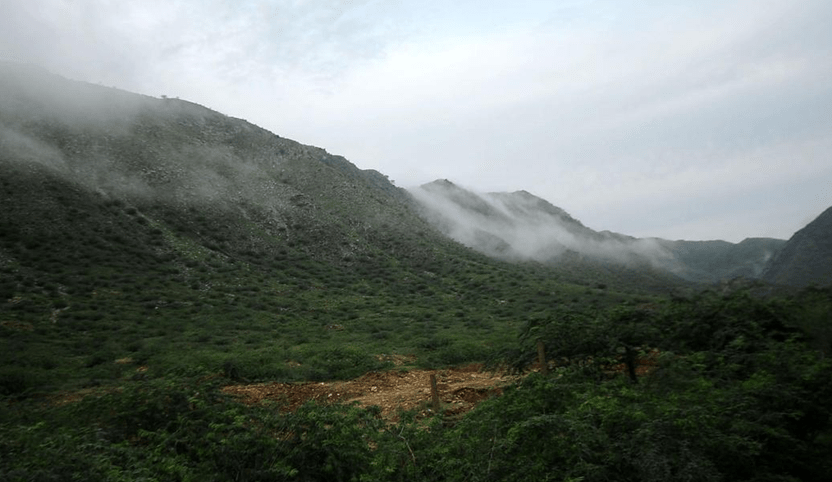
(Feature Image: Aravalli mountain ranges along the Bewar-Jaipur stretch. Credit.)
Why is it so difficult, for the Union Govt, MoEF, its experts, but most shockingly, for the Supreme Court to understand the importance of Aravalli Mountains – India’s most ancient and ecologically sensitive range? What exactly is driving the unacceptable decision of the apex court? According to the Forest Survey of India, applying the new definition would result in only around 8.7% of the mapped Aravalli landforms being eligible for protection, leaving a substantial portion unregulated.
The technical classification that the Court has depended on is completely divorced from the historical, ecological context and constitutional protection. The decision is against the basic tenets of the rights and framework of the constitution.
The Aravalli decision has so many implications, including those related to groundwater, rainfall, desertification, climate vulnerability, air quality, public health, stabilising slopes, providing wildlife corridors, moderating local climate, among many others. Does a 99 m or lower hill provide none of this and as soon as it crosses 100 m, there is magical transformation and becomes eligible for protection? What exactly is the science behind this definition? One can only hope that this environment protection defining decision will be reversed sooner rather than latter, before it is too late.
Aravalli Reclassification & Constitutional Environmentalism: A Legal Critique The Aravalli controversy ultimately exposes a deeper tension within India’s environmental legal order—between constitutional duty and administrative convenience. Environmental protection cannot be reduced to technical classification divorced from ecological context and constitutional values. Indian environmental jurisprudence, developed through decades of judicial engagement, demands caution, foresight and restraint.
In an era of climate vulnerability, groundwater depletion and escalating ecological stress, the Constitution requires that environmental protection remain robust and precautionary. The law must err on the side of conservation rather than convenience. Any dilution of this commitment risks not only environmental degradation but erosion of constitutional environmentalism itself. Overall all things exist due to nature and mother earth. (Bandhan Kumar Verma, Advocate, Rajasthan High Court)
SC accepts Centre’s definition of Aravali Hills In a verdict aimed at safeguarding the world’s oldest mountain systems, the Supreme Court has accepted a uniform definition of the Aravali Hills and Ranges and banned grant of fresh mining leases inside its areas spanning Delhi, Haryana, Rajasthan and Gujarat until experts’ reports are out. In its last judgement, Chief Justice B R Gavai on Nov 21 accepted the recommendations of a committee of MoEF&CC on the definition of Aravali Hills and Ranges to protect the Aravali Hills and Ranges.
“Aravali Hill” will be defined as any landform in designated Aravali districts with an elevation of 100 metres or more above its local relief and an “Aravali Range” will be a collection of two or more such hills within 500 metres of each other. The committee, while defining Aravali Hills, said, “Any landform located in the Aravali districts, having an elevation of 100 metres or more from the local relief, shall be termed as Aravali Hills… The entire landform lying within the area enclosed by such lowest contour, whether actual or extended notionally, together with the Hill, its supporting slopes and associated landforms irrespective of their gradient, shall be deemed to constitute part of the Aravali Hills.”
SC ruling sparks alarm Residents allege that the ruling opens up ecologically sensitive Aravalli tracts to mining and commercial exploitation, posing risks to forests, groundwater sources and human settlements. In response, the Mewat RTI Manch has submitted memoranda through the Naib Tehsildar of Nagina to the President of India, the Prime Minister of India, the Union home minister, state governors, the High Court and the Supreme Court, seeking an urgent review of the decision.
Centre rejects allegations MoEF&CC Minister Bhupendra Yadav strongly asserted that nearly 90% of the Aravalli landscape will remain under the protected zone, rejecting all allegations that the Centre has diluted protections for the Aravalli hills. Mining will be permitted only in a minimal area, subject to strict Supreme Court scrutiny. He stressed that only 2% of the mountain range spanning about 1.47 lakh square kilometres was eligible for mining. Shedding light on the “100-metre” definition, Bhupendra Yadav said misinformation was being spread.
Why Aravali mountain range is important Apart from being nearly two billion years old and India’s oldest mountain range, they serve as an important ecological barrier to prevent the desertification of the Indo-Gangetic plains. They help arrest the eastward spread of the Thar Desert into Haryana, Rajasthan and western Uttar Pradesh, and play a major role in stabilising climate, supporting biodiversity, and recharging groundwater. Stretching from Delhi to Gujarat across 650 km, the mountains support water-recharge systems and are the source of important rivers such as the Chambal, Sabarmati, and Luni.
It is richly endowed with sandstone, limestone, marble, granite, and minerals such as lead, zinc, copper, gold, and tungsten. While historically mined for these resources, it has in the past four decades been excessively quarried for stone and sand. This has contributed to deteriorating air quality as well as plummeting groundwater recharge. A proportion of the mining has also been illegal. The Court noted that India is bound by international commitments, under the UN Convention to Combat Desertification, to protect vulnerable ecosystems such as the Aravalli range.
CLIMATE CRISIS
Climate Change will hit South Asia the hardest South Asia (Afghanistan, Bangladesh, Bhutan, India, Maldives, Nepal, Pakistan, Sri Lanka) is one of two regions that will be most affected by climate change, the other being the Sahel region in Africa. South Asia has a quarter of the world’s population but has emitted only 3.6% of the world’s cumulative emissions (1751-2024). South Asia’s vulnerability is caused by two factors. The first is its geography. Its large land mass makes heat waves more severe, and its river deltas promote increased sea rise. Greater snow and glacier melt with warming will decrease water flow in snow-fed rivers and consequently cause water stress.
The second reason is its low economic development, which makes its population less resilient to meet climate change impacts. Its current per capita GDP is about a fifth of the global average (US$13,664 in 2024) and its low per capita energy use, reflected in low per capita CO2 emissions, is less than a third of the global average (2024 global average per capita–energy use = 1.86 toe/person, 2023 global average CO2 per capita emissions = 4.7 tCO2/person). (By Sagar Dhara, See Part I of this article.)
Bengaluru is building ward-level climate action plans The Climate Action Cell will develop ward action plans for ten wards in five city corporations of Bengaluru. These will be replicated in other wards. The Bengaluru Climate Action and Resilience Plan (BCAP) was launched in November 2023. Following this, in February 2024, a Climate Action Cell (CAC) was formed to facilitate the BCAP. One of its key proposals was to prepare local-level climate action plans. The Bruhat Bengaluru Mahanagara Palike (now Greater Bengaluru Authority) budget for 2025-26 proposed ward-level plans and earmarked ₹28 crore for the year, the budget report stated.
HYDROPOWER PROJECTS
2025: Corruption in Dams and Hydro Projects in India In May 2025, Sikkim Vigilance Police conducted raid in several cities to probe allegations of financial corruption and fraud in 1200 Mw Teesta III HEP dam project claiming that the material gathered could unearth massive scandal that compromised the dam’s safety and led to its structural failure in Oct. 2023. The Assam GST department in Sept. 2025 has uncovered ₹8.2 cr irregularities in tax filings and transactions by the company involved in constructing the dam of 2000 Mw Subansiri Lower HEP.
In J&K, the CBI, after three years of investigation into 624 Mw Kiru HEP corruption filed chargesheet against former Governor and seven others in May 2025. On Dec. 14, the CM has demanded probe into complaints and allegations of blackmailing and threats by 850 Mw Ratle HEP official against local MLA. In Himachal Pradesh, a CBI investigation is going on into the mysterious death of HPPCL chief engineer in March 2025 which led to corruption allegations involving two projects including 450 Mw Shongtong Karcham HEP.
2025: Pump Storage Projects Developments in India 2025 has seen increase in concerns and protests against pump storage projects (PSP) across the country. While citizens and experts have criticized Sharavathi PSP in Karnataka, Sillahalla PSP in Tamil Nadu, Shahbad PSP in Rajasthan, Bargi PSP in Madhya pradesh and numerous PSPs in western ghats in Maharashtra for their potential adverse impacts on forest, environment, endangered animals, the Sileru, Pedikota and Yerravaram PSPs in Andhra Pradesh faced resistance for undermining tribal and forest rights. Indeed, most of the PSPs are being proposed in sensitive region of Western Ghats and tribal dominated population endangering both the wildlife and vulnerable population.
Arunachal signs away entire LSubansiri power share to cover 2007 advance The In 2007, Chief Minister Dorjee Khandu’s government took an advance of Rs 225 crore from the NHPC. Because of the advance, the state is burdened with a debt exceeding Rs 1,000 crore, which continues to accrue compound interest at 9% per annum on the advance taken nearly 18 years ago. The government had then stated that an advance was taken from NHPC to revive the Arunachal Pradesh Cooperative Apex Bank Limited. Since its inception in 1978, the bank has primarily been known for various frauds and irregularities committed by its officials, and politicians, with little accountability.
“In the original allocation order, 12% of the free power (including 1% for the local area development fund) was earmarked for the Government of Arunachal Pradesh… The MoA authorises the NHPC to sell the free power on behalf of the state to recover the advance amount, with compounded interest at 9% per annum, from the first project commissioned in the state, including the Subansiri Lower HEP, at the CERC-determined tariff. Subsequently, the state government, via a letter dated 4 March, 2025, requested the NHPC to sell both 11% of the free power and 1% of the LADF power at the CERC-determined tariff,” according to the official document.
The Uttar Pradesh Power Corporation Limited (UPPCL) and the Tripura State Electricity Corporation Limited (TSECL) have given their consent to procure Arunachal’s 12% share of free power at the CERC-determined tariff, according to the document. Corresponding power purchase agreements (PPAs) have been executed with both the UPPCL and the TSECL. The UPPCL will purchase 215 mw, while Tripura will purchase 25 mw.
Tripura has raised concerns over the tariff, noting that it has increased significantly since the signing of the power purchase agreements, due to substantial delays in the project’s execution. The rise in tariff has been referred to a committee for further discussion.
In essence, Arunachal Pradesh state or the people got no benefit from the LSHEP. All the free power benefit has gone to those who benefited from Arunachal Pradesh Cooperative Apex Bank Ltd, known for unaccountable practices as per the report.
Ratle HEP: J&K CM seeks probe into coercion allegations CM Omar Abdullah has demanded a probe against two BJP MLAs after a MEIL alleged interference and extortion in connection with the Rs 3,700 crore Ratle HEP. The allegations made by the MEIL should be investigated, he said.
Patel Engineering to revive 144 Mw Gongri HEP Patel Engineering Ltd on Dec. 18 said it signed a MoU with the Arunachal state govt to restore and develop the 144 MW Gongri Hydropower Project in West Kameng district. The project, estimated to cost around ₹1,700 crore, is expected to be completed in about four years. Located near Dirang town on the Gongri river—a tributary of the Bichom river in the Kameng basin—the hydropower project had earlier been terminated.
DAMS
2025: Silt accumulation in Indian Dams: Reducing entry of silt is the only viable option Silt accumulation is defeating the very ‘multi-purposes’ for which they were built. While the reduced storage has been hampering dam-based water supplies, it is also leading to their fast filling up and untimely releases in monsoon season thus creating avoidable floods. It is in some case has also been resulting in plans to construct additional reservoirs and increase in dam height.
Unfortunately, once silt is inside the large dam storage, there is no economically viable way to remove it. But the governments seem least bothered about reducing the entry of silt into the reservoir by maintaining better catchment health and ensuring that upstream projects do not dump silt into the river. Talking, planning about silt removal from the dams have remained just that so far: Talks. We still lack a national silt management policy and credible action plan. The siltation will be affecting the utility of more dams in coming years, making even more convincing case for decommissioning of dams.
Himachal conditions to centre on Kishau Dam The state placed three key requirements before the central government: full central funding of the project, the release of around Rs 4,000 crore in pending arrears of the Bhakra Beas Management Board (BBMB) and the settlement of long-pending issues regarding the oustees of the Pong Dam and BBMB projects. These demands were placed at a Upper Yamuna Board meeting held in New Delhi on December 13, under the chairmanship of Union Home Minister. Representatives from Uttarakhand, Punjab, Haryana and Delhi were also present at the meeting.
2025: Polavaram Project Developments Amid concerns over safety and construction quality, the Polavaram project work has moved during 2025 to achieve Dec. 2027 completion target. However, not much progress has been made regarding the backwater study and addressing the issues of affected tribals and areas in Telangana, Odisha and Chhattisgarh. Meanwhile, after failing to push PBLP (Polavaram Banakacherla Link Project), the Andhra govt has proposed another contentious PNLP to divert Godavari River waters. The Stop Work order issued by the MoEF in 2011 remains suspended for all these years, making a mockery of the MoEF regulations. Wrapping up the available information, this overview shares the year-round updates on safety, progress, backwater study and linking plans related to the controversial Polavaram dam project in 2025.
Polavaram: PAFs look to tide over livelihood crisis Families said that farming or fishing in their abandoned villages, even for temporary sustenance, has become nearly impossible due to the inaccessibility from the R&R colonies. Despite being pushed into penury, the families remain hopeful that the govt will honour the entitlements in both letter and spirit.
As of October 2025, of the total 38,060 PDFs across 172 habitations in the submerged areas of the erstwhile East and West Godavari districts, 14,371 PDFs have been relocated to 26 R&R colonies, according to the Polavaram Project Authority. A total of 89,996 acres of land has been acquired for constructing 121 R&R colonies and allotment. The acquisition of 1,00,100 acres requires ₹12,832 crore, but nearly half of the funds are yet to be released by the Centre.
In a meeting with MoJS minister on Dec. 19, the CM Naidu appealed for the immediate clearance of pending approvals related to various components of the Project.
Kaleshwaram Project 2025: Inquiries Done, Actions Missing The year 2025 has seen revealing information on three inquiry reports highlighting how the Kalewshwaram project have become a massive failure on all fronts be it designing or implementing the dam project or even acting on probe reports. While govt seems to reverify liability of officials indicted in V&E report, it ended up seeking CBI investigation after tabling Ghose panel report in state assembly in Aug 2025. Similarly, the NDSA report is being followed only for fixing the damages while action against the responsible govt officials and private players is clearly missing.
KLIP: Govt readies criminal action against contractors After months of deadlock with contractors over repairing the damaged barrages of the Kaleshwaram lift irrigation scheme, the Telangana govt is preparing to initiate criminal proceedings against the executing agencies, including L&T, which built the Medigadda barrage. The decision follows the failure of the three agencies – L&T, Afcons and Navayuga – to come to terms with the govt on carrying out repair works at their own cost. The irrigation department has sought legal advice on the next course of action, drawing on findings from multiple probe reports, including the Justice (retd) PC Ghose commission and vigilance and enforcement authorities, both of which have cleared the way for criminal action.
Official sources said the restoration of the Medigadda barrage alone could cost the govt Rs 600-700 crore. The state has been pressing L&T to bear the cost of repairs, but there has been no positive response from the company or the other contractors. Irrigation department officials said notices would be issued to the three agencies, formally conveying the govt’s intent to initiate criminal proceedings if the barrages are not repaired at their own cost.
Medigadda Barrage rehabilitation Irrigation department is gearing up to take up a critical open foundation inspection of Block 7, a step critics say is long overdue and driven solely by mounting public and political pressure. An EoI process for reputed design agencies was completed in Oct 2025 and the upcoming inspection is expected to feed data into final rehabilitation blueprints. Full restoration work could begin in early 2026, but complete irrigation benefits from Medigadda are unlikely before 2027.
AP CM raises Almatti Dam height issue with MoJS The CM raised the issue during the meeting with Union Jal Shakti Minister C R Patil on Dec. 19, saying that raising the height of Almatti could adversely impact Andhra Pradesh. Pointing out that Karnataka had initiated land acquisition for the expansion, he requested the Centre to restrain Karnataka, especially since the matter is currently before the Supreme Court.
The CM also expressed concern that the Vamsadhara Water Disputes Tribunal (VWDT) verdicts were yet to be fully implemented. Highlighting the urgent need to construct the Neradi Barrage to address drought conditions in Srikakulam district, he sought clear guidelines from the Centre to ensure Andhra Pradesh’s rights are safeguarded. Odisha has been raising objections to the construction of the Neradi Barrage over potential submergence and flooding on its side of the order.
Agenda of EAC meeting to be held on Dec 19 2025 1. Kalai II Hydro Electric Project (1200 MW) in 869.3503 Ha at Village Kamdi, Tehsil Hawai Town, Anjaw District of Arunachal Pradesh by THDC India Ltd – Environmental Clearance
2. Dulhasti-II Hydro Electric Project (260 MW) in 60.3 Ha at Village Hariyal, Pakalan, Poochal, Seergwar etc, Subdist & Dist Kishtwar, Jammu & Kashmir by NHPC Ltd -Env Clearance
3. Pane Off-Stream Open Loop Pumped Storage Project (1500 MW) in 293.5 Ha at Village Khanu, Vagheri, & Pane, Sub-district Mahad and Velhe, District Pune and Raigarh, Mah, JSW Energy PSP Seven Ltd- Environmental Clearance
4. Rewa Closed Loop Pumped Storage Project (600 MW) in 449.47Ha Village Nevrhiya, Uprohit Pura, Bajara, Chaura & Chhataini etc., Sub-dist Teonthar & Hanumana, Dist Rewa, Madhya Pradesh by Dhakara Energy Psp Pvt Ltd – Terms of References
Decisions of EAC meeting on River Valley Projects held on Dec 10 2025 1. Hiran Closed-Loop Pumped Storage Project (1000 MW) in 300 Ha at village Tala, Kanra, etc., Sub-District Patan & Jabera, Dist Jabalpur and Damoh, Madhya Pradesh by Renew Green (Tnj Two) Pvt Ltd – Terms of References: APPROVED
2. Savitri Open Loop Pumped Storage Project (2400 MW) in 310.76 Ha at Village Javali, Dare, Haroshi, Karanje etc, Sub-dist Poladpur and Mahabaleshwar, Dist Satara and Raigarh, Mah by NHPC ltd – Terms of References: Deferred. EAC suggested the Project Proponent to obtain the requisite No Objection Certificate/Clearance from the competent authority in accordance with the provisions of the Mahabaleshwar–Panchgani Eco-Sensitive Zone Notification, S.O. 52(E) dated 17.01.2001.
3. Assam/PSP-02 Closed-Loop Pumped Storage Project (1000 MW) in 259.6 Ha at Village Baithalangso and Sardangang, Sub Dist Donka, Dist West Karbi Anglong, Assam by Assam Power Distribution Company Ltd – Terms of References: Deferred: PP Absent
4. Gosaintari Closed-Loop pumped storage project (920 MW) in 261.13 Ha at Village Dhamni, Jhirkhi, Planki, Sarki, etc, Sub-Dist Rajauli and Gobindpur, Dist Nawada, Bihar by Sun Hydro Energy Private Limited – Terms of References: Deferred: PP Absent
5. Expansion of Tembhu Lift Irrigation Project in 2284.601 ha at Village Tembhu, Ranad, Govare and etc, Sub Dist Khatav, Atpadi, Karad and etc, Dist Satara, Sangli and Solapur, Mah by Minor Irrigation Division, Sangli WRD, MKVDC–Environmental Clearance: APPROVED
DAM FLOODS
NGT issues notice to BBMB, Govt of India and Punjab on Dam induced floods The NGT on Dec 15 issued a notice to the Bhakra Beas Management Board (BBMB), Punjab govt, and other respondents on a petition filed by the Public Action Committee (PAC) and others concerning repeated floods in Punjab and issues relating to dam operations, data transparency, and dam safety. PAC stated that the focus will shift to whether statutory duties under the Dam Safety Act, 2021, including duties relating to data disclosure, flood cushion maintenance, and precautionary dam operation, were complied with. The petition also raises concerns relating to the structural behaviour of the Bhakra Dam.
PAC members Jaskirat Singh and Kuldeep Singh Khaira, in a release on Monday, said PAC, after analysing dam inflow and outflow data in 2023, approached the central and Punjab govts to seek an investigation into the causes of floods in Punjab. They said after these representations, BBMB stopped placing critical dam operation data—relating to inflows, outflows, and reservoir levels—in the public domain from Oct 2023. They pointed out that Section 35(1)(e) of the Dam Safety Act, 2021 mandated authorities to make information relating to anticipated inflows, outflows, flood warnings, and downstream impacts available in the public domain. The discontinuation of disclosure, PAC said, deprived downstream administrations, farmers, and the public of timely information during periods of severe flooding.
In Aug 2025, after receiving information from reliable sources, PAC again analysed dam operation data and apprehended a renewed flood risk in Punjab. In keeping with the precautionary principle and the Dam Safety Act, PAC served a notice on Aug 9, 2025, upon BBMB, the Union ministry of jal shakti, and the Punjab govt, urging immediate preventive action. PAC has submitted that the reservoir operation targets, including the practice of achieving around 1,680 feet by the end of August, appear arbitrary and unscientific in the context of ageing infrastructure, unchanged rule curves since 1990, and altered climate patterns. According to PAC, these factors have contributed to repeated flooding events in Punjab, including three major floods in the last six years.
The petition further added that the Punjab government failed to stop illegal mining in and along both the rivers, and despite complaints, protests and issues raised by nearby villagers, the mining has continued, resulting in weakening of dhusi Bundhs. Further, continuous illegal mining along the Sutlej and Beas, as well as in the Gaggar river, is also one of the major causes of damage due to floods in Punjab.
DAM SAFETY
Pune: Khadakwasla dam boundary wall turns hazardous The boundary wall constructed several years ago by the Khadakwasla Dam Irrigation Department along the lower side of the dam, on the road connecting Khadakwasla village to Uttamnagar, has deteriorated to a highly dangerous condition. The boundary wall has been weakened due to continuous water seepage, changing weather conditions and structural instability. Large cracks have developed, raising fears that the wall could collapse at any moment.
Local residents and tourists have warned that failure to take prompt action could result in a major accident. Girija Kalyankar, Branch Engineer, Khadakwasla Irrigation Department, said, “The serious condition of the boundary wall has been brought to the notice of senior officials. A detailed report has been prepared and submitted. Once approval is received, repair, strengthening and safety-related works will be undertaken immediately.”
JJM/ RURAL WATER SUPPLY
W Bengal The Centre has informed Parliament that there are no pending central dues payable to West Bengal under the Jal Jeevan Mission (JJM). Union Jal Shakti Minister CR Patil said that although West Bengal was allocated Rs 24,645 crore as the central share under JJM between 2019-20 and 2024-25, the state was able to draw only Rs 13,027.84 crore. He attributed this shortfall to delays by the state in submitting proposals, utilisation certificates and other mandatory documents as required under Ministry of Finance and JJM norms.
Implementation in Meghalaya Implementation of the JJM remains incomplete in Meghalaya, even as contractors await the clearance of an estimated Rs 700 crore in pending dues from the state government. The state has achieved 83.15% coverage, according to the JJM dashboard. Since the Mission’s launch, 5,37,402 households have received tap water connections, falling short of the intended target of 6,46,304 households. Of Meghalaya’s 6,456 villages, 4,285 have achieved 100% household tap connection status. Work is currently in progress in 2,160 villages, while 11 villages have yet to see construction begin.
CM seeks early release of funds for J&K CM Omar Abdullah on Dec. 19 discussed with Union Jal Shakti Minister C R Patil key issues related to the implementation of the JJM, including the early release of pending central funds to clear work-done claims and restart stalled schemes. The meeting, attended by senior officers, conducted a comprehensive district-wise review focusing on functional household tap connection (FHTC) coverage across all 20 districts. According to data of the Jal Shakti Ministry for Jammu and Kashmir, 81.22 % rural households had tap water connections as on Dec 8. In October, the J&K govt informed the Assembly that an additional Rs 6,254 cr would be required to complete all water supply schemes under the JJM.
AP CM seeks additional ₹1000 cr for 2025-26 The CM in meeting with Union Jal Shakti Minister C R Patil in New Delhi on Dec. 19, requested an additional Rs 1,000 crore for Andhra Pradesh under the JJM for the 2025–26 financial year. He informed the Union Minister that the state had already contributed Rs 524.41 crore as its share.
BJP alleges graft in JJM in Jharkhand BJP claimed contractors secured projects through forged guarantees and withdrew huge sums without executing the work.
State govts taking action against corruption: MoJS Six States, namely Tamil Nadu, Tripura, Gujarat, Assam, Maharashtra, and Rajasthan, have reported significant action in imposing penalty and recovery process in cases of financial irregularities and poor quality of works under the JJM, the Lok Sabha was informed on Dec. 18. In addition, two states (Uttar Pradesh and Tripura) have reported to have made recovery from contractors on account of liquidated damages, while two states (Karnataka and Tripura) on account of forfeiture of EMD/ FDR.
URBAN WATER
Hyderabad: soak pits in homes can eliminate need for Krishna phase IV: HMWS&SB The Hyderabad Metropolitan Water Supply and Sewerage Board (HMWSSB) said that it had rolled out a 100-day action plan with a strong push for mandatory soak pits (rainwater harvesting pits) in residential and commercial premises which if successful would eliminate the need for Krishna Drinking Water Supply Phase-IV. Board managing director Ashok Reddy said effective rainwater harvesting could channel up to 10 tmc ft of water into the ground. “Current supplies are adequate for drinking needs. If every home harvests rainwater, the groundwater level will rise, borewells will revive, and crores spent on pumping water from distant reservoirs can be saved,” he said. At an awareness program in Madhapur, the MD said every house built on 200 square yards must install a soak pit, while premises above 300 square yards must compulsorily construct one.
Ashok Reddy lauded residents of an apartment complex in Kakatiya Hills, where an injection borewell has helped overcome water scarcity. He said the effort showed how public participation could deliver sustainable water conservation outcomes. He said unchecked concretisation had severely reduced natural percolation of rainwater, causing groundwater levels to plunge. Despite Hyderabad receiving 85-89 cm of annual rainfall, only 0.75–0.95 % percolated into the ground, rest going to waste.
A recent field survey identified 40,209 premises, of which only 22,825 had soak pits; 17,384 did not. Notices have been issued to 16,000 households, and a plan is in place to cover another 25,000 homes by March. To reduce tanker dependence, the Water Board has identified premises booking more than 20 tankers a month.
HMWSSB to upgrade over dozen STPs under AMRUT The HMWSSB is preparing to upgrade more than a dozen STPs under AMRUT 2.0.
Bengaluru: tanker city? In just six months between May 9 and Nov 20, 2025, the board logged 24,743 tanker bookings, deploying 250 branded vehicles at fixed rates and earning about Rs 2.5 crore in revenue.
Shillong: PHE Minister lays blame for water pipe burst on NHIDCL The National Highway and Infrastructure Development Corp Ltd (NHIDCL) has been blamed for damaging the water line that provides much of Shillong with its supply, leaving the city short of precious H2O. This is the second incident in the past few weeks where NHIDCL work has led to problems for the public. The first was when a contractor hired by the company caused soil and debris to wash into the Umngot River, leading to the waterway famed for its clarity to become murky.
This time, work the NHIDCL work in Upper Shillong led to the bursting of the main water pipeline at 101 Area more than a week ago, leaving lakhs of residents scrambling for private sources of water. The matter has also been taken up by the Meghalaya High Court.
HC seeks report on water crisis The Meghalaya High Court on Dec. 16 has taken suo motu cognizance of the ongoing water crisis in Shillong, directing the state government to submit a report on the matter by Dec. 17.
URBAN RIVERS
Mithi river: Will deep tunnels finally turn the tide? Mumbai’s latest attempt to revive the polluted Mithi river is also its most ambitious and expensive so far. Anchored by a 6.6-km underground diversion tunnel and a sweeping overhaul of the river’s tidal stretch, the new plan seeks to intercept nearly 60% of the sewage currently choking the river. Together, the two projects involve an investment of over Rs 2,000 cr, adding to over Rs 2,200 cr already spent over the past two decades on earlier clean-up efforts.
Ecologists warn of gaps as Mithi engineering push ramps up Experts say that while the current works are substantial, smaller localised measures, such as basic screens at outfalls, could also have delivered meaningful improvements.
Panchkula: Lapses in river pollution data spark credibility concerns Serious questions are being raised over the credibility of recent water quality data of the Kaushalya and Ghaggar rivers after official records showed a sudden and unexplained drop in pollution parameters at the tail end of the river system, despite multiple sewage and drain discharges upstream. Environmental observers have termed the trend “scientifically implausible”, pointing out that several drains feeding into the river show extremely high pollution loads, including BOD levels ranging from 50-125 mg/l and COD levels reaching as high as 444 mg/l at certain locations. Experts warn that such discrepancies, if left unaddressed, could undermine pollution control efforts and mask the true ecological health of rivers flowing through the Tricity region. They have demanded an independent audit of sampling procedures, laboratory testing methods, and supervision by pollution control authorities.
YMCR for river cleaning efforts recognized The union Ministry of Housing and Urban Affairs (MoHUA) included the Youth Mission for Clean River (YMCR) work in its recent publication, ‘Mountains of Change: Transforming Waste Management in Hilly Areas’. The YMCR’s inclusion highlights a community solution that functions effectively where standard city services might struggle. The ministry’s report specifically details how the YMCR, often in collaboration with local bodies, educational institutions, and self-help groups, has mobilised hundreds of volunteers. Key aspects of the YMCR initiative mentioned in the publication include specific actions, such as the massive drive on the Yagamso river, where volunteers successfully removed approximately 12 tonnes of garbage from a mere one-kilometre stretch.
Musi RFD: MRDCL seeks 3D modelling even before DPR is ready Even before the Detailed Project Report (DPR) for the much-hyped River Musi Rejuvenation project is ready, the Musi Riverfront Development Corporation Limited (MRDCL) has begun roping in agencies for 3D modelling of structures on either side of the river banks. The entire exercise is expected to be completed within three months.
RIVERS

(Sampurna Das @sampurnahere https://x.com/sampurnahere/status/2002369446422458576?s=20)
Past & future change in global river flows Abstract: This Review summarizes the current understanding of past and projected changes in global river flow, focusing on annual volumes, seasonal dynamics and sudden changes. River flow observations reveal distinct regional trends, including increased flows in high-latitude regions and decreased flows in parts of the mid-latitudes and subtropics. Snow-dominated regions in particular show shifts in their seasonal cycle towards earlier flows. These patterns align broadly with historical climate model simulations, suggesting an anthropogenic climate change signal. However, attribution is complicated by the interplay of greenhouse gas emissions, CO2-driven vegetation response, land-use change and water management. Future projections indicate continued change, with certain regions experiencing wetter conditions and others intensified drying. Seasonal changes, particularly those due to altered snow dynamics, are also expected to intensify. Despite modelling and observational advances, uncertainties remain regarding the combined effects of anthropogenic climate change and direct human interventions in terrestrial systems. Closing these gaps requires improved monitoring, advances in modelling and robust attribution frameworks, in support of efficiently managing water resources, sustaining ecosystems and adapting to a changing climate.
Prehistoric civilisation sites along the Vaigai river The banks of the ephemeral Vaigai river of southern India have shed light on the history of Tamil Nadu, including the pre-Sangam and Sangam eras. The plains on the banks of the Vaigai river were the cradle of ancient history, culture, urban settlements, agriculture and industries that flourished here between 6 and 3 BCE. Recent excavations at Keezhadi village by the archaeological department exposed structures built from bricks and advanced drainage systems of the historical past. They are buried under flood deposits of sand, silt and clay. Luminescence geochronology of quartz in the sediments suggests that flooding and burial of structures occurred ca. 1140 years ago.
J&K: Kolahoi Glacier shrinks by 30% in 33 years The Valley’s Himalayan glaciers, led by the Kolahoi, which are the primary source of its rivers and irrigation systems in the region, have shrunk dramatically as warming winters and falling snowfall cut meltwater to rivers, farms, and ecosystems, pushing the region toward a mounting water and climate crisis. Scientific observations show that it has lost nearly 30 percent of its area between 1992 and 2025, with the highest recession recorded in the last decade. Romshoo said the retreat is closely linked to weakening winter precipitation.
Environmentalists caution that human activity is intensifying the risks associated with glacial retreat. “These rivers naturally shift course, but construction within their active zones and along riverbanks leaves communities exposed. Even a minor cloudburst can be devastating,” said an environmental expert, pointing to commercial structures along the major streams in upper reaches of Kashmir. With winters turning warmer and drier, scientists and farmers alike fear another year of shrinking rivers and rising agricultural stress unless urgent steps are taken to restore forests, protect riverbanks and strengthen climate resilience.
Snow drought The India Meteorological Department (IMD has reported a drastic reduction in snowfall. In the last two months, Kashmir has experienced a 46.63% snowfall deficit. Satellite-based assessments show 23% reduction in snowfall over the past five years with Nov showing downfall by 40–45% and Dec by 28%. 46.63% deficit in snowfall by December is set to break the previous 50-year old record. Amid prolonged dry spells spreading to the peak winter period, 2025 is projected to be one of the driest years. This season so far Gulmarg, Zojila Pass, Miminarg, Baltal and Tulail received a thin layer of snowfall which otherwise used to be draped by heavy snow spells.
Snowmelt accounts for 50% of streamflow in Kashmir, making winter snowfall critical for sustaining hydrology and water availability. Dr Rashid, who has done extensive studies on climate change, states that any reduction in snow cover or snowfall directly translates into diminished spring and summer runoff. ‘As observed in the past, such changes adversely affect irrigated agriculture, horticultural productivity, and hydropower generation, thereby posing serious challenges to the region’s water security and climate resilience.”
Kashmir: Review of floodplain zoning along Jhelum Divisional Commissioner Kashmir, Anshul Garg, on Dec. 17 chaired a meeting of the Irrigation and Flood Control (I&FC) Department to review the notification status for delineation and demarcation of flood plain/flood basins identified post 2014 floods in Jhelum basin to regulate landuse and human activity for obviating flood threats and minimise flood damages. The Div Com directed the modelling of a once-in-twenty-five-years flood area for the regulatory zone, freezing the boundary of regulatory zone to put the process on fast track. Assistant Commissioner Central was asked to ensure the availability of revenue records of Anchar and Wullar lakes to the I&FC Department.
DDA to rent out Asita Park lawns for events After Baansera, DDA has opened bookings for the green lawns of Asita Park, near ITO, for various socio-cultural events. The daily rental charges will vary depending on the lawn booked and range from Rs 40,000-3.3 lakh. In addition, cleaning charges will be levied at the rate of Rs 2.75 per sqm, while rental charges will include parking for 40 vehicles. A maximum of three days will be permitted for installing and dismantling of essentially non-permanent, eco-friendly tents.
Ghaziabad: Deposits of silt, garbage choke Hindon Officials of the UP irrigation department said the river water and its quality are not maintained by them, and the municipal corporation area has many untreated drains flowing into the river. “We are managing the barrage area, and the gates are generally opened to cause the outflow of water in the Hindon canal. The sludge/silt is an issue that is to be taken up by the municipal corporation and the UP Jal Nigam,” said Dheeraj Verma, sub-divisional officer, UP irrigation department (Okhla).
The river that starts from Saharanpur, flows for about 55km in Ghaziabad district. Civic officials said that of the 55km stretch, the municipal corporation has about 6-7km of area in its jurisdiction, and the sludge probably came in from upstream areas. “There are nine drains that flow into the river, and only two of these are treated at present. For four of these, the Jal Nigam has prepared a feasibility report for a project of about ₹450 cr. Work is being done for three other drains. Once these projects get approved, the work will start. A desludging project, prepared about two years ago, for about ₹38 cr was also in the pipeline,” said municipal commissioner Vikramaditya Malik.
GROUNDWATER
Rajasthan: Farmers issue 20-day ultimatum over ethanol factory The grand Mahapanchayat of farmers protesting against the proposed ethanol factory in Hanumangarh passed off peacefully on Dec. 17. The Mahapanchayat demanded the closure of Asia’s largest ethanol factory being planned in Rathikhera village of the Tibbi area. After talks between farmer leaders and the district administration, the farmers’ body called off the protest for the moment, but it has issued a 20-day ultimatum to the Rajasthan government to announce the closure of the controversial project being set up in the fertile region of the State. Farmer organisations allege that the ethanol factory will hurt the region’s water resources, groundwater, environment, and agriculture, which has caused great anger among the local farmers.
Groundwater quality concerns in Baddi-Barotiwala-Nalagarh Industrial Belt This region, known for its natural beauty and biodiversity, has undergone rapid industrialization, raising questions about environmental safety. Studies indicate that contaminants from industrial activities may be affecting groundwater reserves, which serve as a critical resource for both human consumption and agricultural use. The findings underscore the need for continued monitoring of water quality to assess long-term implications for public health and environmental sustainability in the region.
Delhi: Uranium in groundwater Rising uranium levels in Delhi’s groundwater are well-documented in government reports. What’s missing is a plan to keep contaminated water out of the city’s taps, tankers and homes.
FISH, FISHERIES, FISHERFOLKS
New Species of Snakehead from Meghalaya Abstract: Channa bhoi, a new species of snakehead fish, is described from the Ri-Bhoi district of Meghalaya, India. It belongs to the Gachua group and differs from all its related congeners. The discovery brings the total number of Channa species recorded from India to 26 and highlights Meghalaya as a major hotspot for snakehead fish diversity. Researchers note that the complex geological history of the Shillong–Mikir Plateau, combined with isolated mountain streams, has contributed to high levels of endemism in the region. Scientists have emphasised that many hill-stream species in Meghalaya remain understudied and may still be awaiting discovery. The authors have also underscored the importance of integrating field surveys, morphological studies, live colour documentation, and genetic analysis to avoid taxonomic confusion in future research. The study adds to growing scientific evidence that Meghalaya’s freshwater ecosystems are of exceptional ecological importance and warrant stronger conservation attention, particularly in the face of habitat alteration and unregulated collection of ornamental fish species.
Brown trout returns to Kashmir About 3 lakh eyed brown trout ova imported from Denmark have been successfully reared and released into more than 40 streams and 12 lakes across Kashmir, officials of the Fisheries Department said. The project aims to restore aquatic biodiversity and revive angling tourism in the region. Native to Europe and Scandinavian nations, the brown trout was introduced to J&K by the British around 1900. Following scientific assessments, about 2.50 lakh fingerlings, each weighing between 5 and 15 grams, were approved for release into suitable cold-water streams. Stocking sites include Lidder, Brengi, and Kapran in Anantnag; Aharbal in Kulgam; Herpora in Shopian; Lam and Laristan in Tral; Dachigam stream in Srinagar; Doodganga in Budgam; Sindh stream in Ganderbal; Ferozepora in Baramulla and Mawar in Kupwara. High-altitude alpine lakes were also selected due to their cold temperatures. The streams were evaluated for ecological compatibility before approval. Officials acknowledged threats from pollution, climate change and illegal fishing but said the project could play a crucial role in restoring aquatic biodiversity and strengthening river health.
Fisherfolk ask govt to withdraw notification on wetland privatisationn A notification issued by the Department of Land & Land Reforms allowing private individuals, entrepreneurs, and other govt institutions to participate in competitive bidding for govt-owned waterbodies has sparked a debate on the balance between modernisation and the preservation of traditional livelihoods and environmental conservation. The notification, which threatens the livelihood of over 17,00,000 registered members of more than 800 cooperative societies, has drawn a sharp response from fishermen’s cooperative societies and environmentalists. Four cooperative societies have written to the govt, demanding the immediate withdrawal of the notification.
The amendments made to the West Bengal Land and Land Reforms Manual, 1991, on September 18 state that water bodies owned by the govt will now be settled through tender or auction. While it states that fishermen’s cooperative societies, fish production groups, and self-help groups will receive price preferences and discounts on the earnest money deposit, traditional fisherfolk fear being edged out by those with financial resources but lacking the necessary skills for sustainable fish production.
SAND MINING
Telangana: Third check dam collapses in Manair Concerns over the structural integrity of irrigation projects along the Manair River have intensified following the collapse of a third check dam in less than a month in the erstwhile Karimnagar district. A 120-metre stretch of a check dam located between Adavisomanpalli village in Manthani mandal and PV Nagar in Malhar Rao mandal was found damaged on Dec. 17. This comes after two earlier collapses, on November 21 at Gumpula village in Peddapalli district and at Thanugula village in Jammikunta mandal of Karimnagar district, triggering allegations of substandard construction and possible sabotage by the sand mafia.
In a similar incident at Vallekunta village, a 10-metre portion of another check dam collapsed, nearly drowning two fishermen, who managed to swim to safety. The series of collapses has sparked a political controversy. To prevent further unrest and secure sensitive stretches along the river, heavy police deployment, including four DSPs and CRPF units, has been made. While Manthani police initially declined to register a case citing jurisdictional issues, irrigation officials later lodged a formal complaint with the Jayashankar Bhupalpally district police.
Kerala: Constitute panel to regulate sand mining from Thottappally Spillway: HC The committee shall be constituted within two months and shall comprise senior-level officers and experts from the irrigation/water resources department, forest and wildlife department, Kerala coastal zone management authority, representatives of the Purakkad and Thakazhi grama panchayats and a representative of a local NGO with relevant expertise, as identified by the district collector. The court issued the direction while considering petitions filed by the Green Roots Nature Conservation Forum and others challenging the district collector’s order permitting the removal of sand from the spillway to address the perennial flooding of the Kuttanad region during monsoon.
URBAN LAKES, WETLANDS
GBA to survey Bellandur Lake buffer zone for proposed Road The Greater Bengaluru Authority (GBA) will conduct a detailed survey to assess building a road in the buffer zone of Bellandur Lake. GBA Chief Commissioner M Maheshwar Rao has directed officials to submit a report soon. On Dec. 16, Rao and senior officials from the Bengaluru East and South corporations inspected ongoing projects in various areas. “To mitigate congestion along the Bellandur Lake bund road, a stretch of about 1 km long and 24 metres wide is being developed. Once completed, it is expected to substantially reduce congestion in the area,” he said.
EKW: Power snapped at 8 illegal plastic warehouses & processing units Power supply to eight plastic warehouses and processing units built illegally inside the East Kolkata Wetlands were cut off by the authorities on Dec. 18. There are hundreds of cases of unauthorised construction and illegal conversion of the nature of land inside the notified East Kolkata Wetlands area, but authorities have acted against only a handful till now. The East Kolkata Wetlands Management Authority has filed more than 500 FIRs against such illegal acts, said an official of the state environment department.
WETLANDS, LAKES, WATER BODIES
Kerala: Activists demand removal of soil dumped in Kottooli wetlands Demanding the immediate removal of soil dumped in the Kottooli wetlands, activists of the Sarovaram Environment Protection Committee staged a protest at the site on Dec 18, condemning the alleged failure of the authorities to enforce orders to protect the urban biodiversity hotspot during the Vijil murder investigation.
URBAN FLOODS
Is Chennai ready for the next flood? Chennai residents were once again reminded of their city’s vulnerability last month, as Northern Tamil Nadu battled heavy rains that left streets waterlogged, homes damaged, and lives disrupted following rainfall caused by remnants of Cyclonic Storm Ditwah over the Bay of Bengal.
From 2021 to 2025, the Greater Chennai Corporation (GCC) undertook a massive initiative to improve the city’s drainage network. Over this period, the GCC laid 1,144.5 km of stormwater drains, spending approximately Rs 5,000 crore, with 74% of the works completed by mid-2025. A flagship Asian Development Bank–backed project in the Kosasthalaiyar basin alone accounts for 641 km of integrated drains in North Chennai, costing an estimated Rs 3,059 crore. Yet, experts caution that even this scale of construction is insufficient. While drains have been laid across the city, flooding continues because major canals and rivers remain silted, and thousands of encroachments obstruct the free flow of water.
Bengaluru Flood Solutions: Nature-Based Drainage Tips City officials are shifting from concrete drains to “nature-based solutions” that help the ground absorb rainwater, aiming to prevent both flooding and summer water shortages. At a meeting by the Jana Urban Space Foundation, officials said the city’s drainage system is failing. Despite sufficient rainfall, too much ground is paved. This prevents rain from soaking into the earth, causing it to flood the streets. “Despite over 900 mm of annual rainfall, rapid urbanisation has broken natural recharge pathways,” said M Maheshwar Rao, Chief Commissioner, Greater Bengaluru Authority (GBA). He noted the city’s geography should prevent major flooding, but sewage mixing with drains and loss of open ground cause problems.
FLOOD MANAGEMENT
CAG report on disaster management in Karnataka CAG Disaster Management in Karnataka (2017-23) report. Tabled in assembly on 17.12.2025.
Summary includes: State Disaster Management Authority (KSDMA) was constituted in the year 2008. However, the State Government published the State Disaster Management Policy only during the year 2020 i.e., 12 years after constitution of KSDMA. KSDMA constituted the Advisory Committee consisting of experts in the field of disaster management, in Dec 2019. The State Disaster Management Plan for each year was being approved during/after Sep of the year to which the SDMP pertained.
Sixteen departments (dealing with functions vulnerable to disasters and as decided by SEC) prepared their DMPs only during 2020-21 but had not reviewed and updated them.
The State Emergency Operation Centre (SEOC) was under-equipped in terms of human resources and infrastructure, which affected its functioning. As regards the forecast mechanism for different disasters, Audit noticed that the data collection, forecasting and dissemination mechanism was flawed with defunct/faulty equipment, deficient data, improper contract management, non-creation of disaster models, non-installation of sensors, etc.
The Disaster Response Force units had huge vacancies (mainly in the cadres of police and fire service personnel) ranging from 67 to 96 per cent of the sanctioned strength whereby the units faced difficulties in managing shift-wise duties and rescue operations. As regards the National Disaster Management Information System (NDMIS), a comprehensive online application, developed by the Ministry of Home Affairs, the database was not being updated on a regular basis either at the State level or district level, failing which information regarding damages/losses on account of disasters could not be accurately captured.
Funds released (as per orders from the State) were not ‘calamity specific/ component specific’, making it difficult to monitor the actual utilization of NDRF/SDRF grants.
The State Government was yet to bring out region-specific guidelines for management of drought. KSNDMC installed Telemetric Rain Gauges (TRGs) and TWSs in a phased manner (2009-2015), however as of December 2023, the percentage of defective instruments was 43 per cent and 52 per cent respectively, with the reason attributable being non-revision of the AMC since March 2022.
Karnataka Groundwater Authority could not control illegal and inordinate extraction of groundwater for commercial purposes through private water tankers and did not possess either time-series data on the number of borewells in the State or data on the total number of borewells drilled in the water distressed notified taluks.
In the absence of basic data, the State Govt/KSNDMC could not create the envisaged hydrological models for flood forecasting in the State/region, rendering the investment of ₹2.45 crore on the sensors and stream gauge monitors largely unfruitful. The purpose of installing equipment at grassroots level for alerting endangered population from flood early warning through a wireless broadcasting system was not achieved.
Telemetric Water Stations (TWSs) and 04 ultrasonic water level sensors to be installed under the work ‘Preparation of urban flood model for Bengaluru’ funded by the Department of Science and Technology, GoI, were installed and the project remained unimplemented. As of December 2023, 49 out of 100 Water Level Sensors (WLS) installed on storm water drains in Bengaluru were non-functional and no information/data was available in respect of five WLS installed at flood vulnerable streets. Further, 69 out of the 184 equipment viz., Telemetric Rain Gauge, Telemetric Weather Stations, Telemetric Water Level sensors installed under smart cities of Mangaluru, Belagavi and Hubballi-Dharwad remained nonfunctional (Dec 2023).
Despite mentioning the requirement of legal framework in its Flood Action Plan, the State did not establish a legal framework for obtaining mandatory clearances by agencies for construction of public infrastructure in flood-prone areas, as a result of which there were instances of National/State highways, Railways and other roads getting flooded/inundated.
Under landslide management, the State’s response had been inadequate, with a delayed State Action Plan. Critical gaps include inaccurate landslide hazard zonation maps, lack of a landslide inventory and lack of early warning systems. The State Government had rolled back the ban imposed on land conversions from agriculture to non-agricultural purposes in Kodagu district. The DC office (District Disaster Management Authority) building at Kodagu was built on a landslip vulnerable site and remained insecure despite an expenditure of ₹6.25 crore.
Recommendations included: The state govt should ensure effective functioning of institutions like SDMA, SEC, DDMAs etc., duly complying with provisions of the DM Act & ensure preparation of integrated disaster management plans at all levels.
Formulate guidelines for mitigating drought considering geo-spatial climate variations and ensure effective coordination among all the sectors in enhancing drought mitigation efforts.
Emphasise measures for water conservation and water harvesting as well as enforce regulations on unchecked groundwater extraction.
Take immediate measures to prepare floodplain zoning of all vulnerable locations and should enact regulations thereon. It also should contemplate shifting villages persistently affected by floods to safer elevations to avoid recurrent damage as well as expenditure towards compensation. https://cag.gov.in/ag1/karnataka/en/audit-report/details/123611
CAG slams govt over failed flood model CAG revealed that the two-year project, which cost nearly Rs 2 crore, failed to generate any usable data or deliver a functional flood forecasting system. Terming the outcome as “zero output,” the audit recommended a probe to ascertain the reasons behind the project’s failure. Launched in March 2019, the Rs 2.3-crore urban flood model project, funded by the department of science and technology, was implemented by the Karnataka State Natural Disaster Monitoring Centre (KSNDMC).
A total of Rs 1.8 crore was released between 2018 and 2020, including Rs 16.7 lakh for installing 25 telemetric weather stations and four ultrasonic water-level sensors in the limits of the erstwhile Bruhat Bengaluru Mahanagara Palike (BBMP). However, the audit report revealed that Rs 1.6 crore was spent – nearly 90% on staff salaries – without achieving any of the objectives by Dec 2023. KSNDMC did not have records of the locations where equipment was installed or the data generated.
The report took further exception, stating that though the State Flood Action Plan had mentioned that the state government had appointed many committees/working groups/ task forces, and the details of the institutional support for flood management were “not mentioned” in the Action Plan nor “furnished” to the audit. KSNMDC had installed Telemetric Rain Guages (TRGs) and Telemetric Weather Stations (TWSs) in a phased manner between 2009 and 2015, but as of December 2023, it was found that 43% of TRGs and 52% of TWSs were defective. Another lapse highlighted was the non-functional water level sensors installed on stormwater drains in Bengaluru. In March 2021, the KSNDMC took up the project. “Strengthening the flood early warning system of BBMP through installing water level sensors (WLS)” with an outlay of Rs 22.36 crore out of the state disaster response fund (SDRF) grants. The project included the installation of 105 water level sensors (100 on stormwater drains and five in flood-vulnerable streets) at different locations at a cost of Rs 1.03 crore.
CAG critical of Karnataka Flood Management A CAG report on disaster management in Karnataka, tabled in the legislature on Dec 17, has flagged that projects implemented by the Karnataka State Natural Disaster Monitoring Centre (KSNDMC) for flood warning system and a flood model for Bengaluru are responsible for wasteful expenditure and highlighted that several water level sensors were either non-functional or stolen.
“Audit observed that KSNDMC, despite being the implementing and monitoring agency, did not possess either the details of the location of installation of equipment or the data obtained through the equipment since installation. Thus, while Rs 1.61 crore has been expended on salaries, the preparation of the flood forecast alert model is absent. The reasons for this lapse are to be investigated,” the report said.
Another lapse highlighted was the non-functional water level sensors installed on stormwater drains in Bengaluru. In March 2021, the KSNDMC took up the project. “Strengthening the flood early warning system of BBMP through installing water level sensors (WLS)” with an outlay of 22.36 crore out of the state disaster response fund (SDRF) grants. The project included the installation of 105 water level sensors (100 on stormwater drains and five in flood-vulnerable streets) at different locations at a cost of Rs 1.03 crore.
“Audit scrutiny of records showed that the work order was issued during July 2021 and the firm completed (January 2022) the installation and was paid Rs 20.98 crore (annual maintenance charges to be paid accordingly for five years). Audit verification (December 2023) revealed that 49 out of 100 WLS installed on stormwater drains were non-functional and no information/data was available in respect of five WLS reportedly installed at flood-vulnerable streets. This affected the objective of strengthening the flood early warning system besides rendering the expenditure (incurred out of SDRF grants) on non-functional WLS unfruitful,” the report noted.
The CAG observed that Telemetric Rain Gauges (TRGs) and Telemetric Weather Stations (TWSs) installed by the Karnataka State Natural Disaster Monitoring Centre (KSNDMC) between 2009 and 2015, were largely dysfunctional. As of December 2023, 43 per cent of TRGs and 52 per cent of TWSs were found to be defective.
National and State Level Plans for desilting rivers and streams A “National Framework on Sediment Management (NFSM), October 2022” has been published by Department of Water Resources, River Development & Ganga Rejuvenation, Ministry of Jal Shakti, for comprehensive and holistic management of sediment in rivers, stream including reservoirs sedimentation. It emphasises on reducing silt generation rather than silt removal. (We see no impact of the National Framework on minimizing silt generation, in fact NHAI and other organisations have been accused of dumping silt into rivers by courts among others.)
The NFSM is a guiding document for handling the issues of sediment management across the river basins of the country including Punjab, and to assist various stakeholders such as State Governments/UTs, Ministries, and Departments in formulating strategies and executing projects with due consideration for environmental and ecological factors. NFSM also includes the relevant references of existing guidelines/notifications issued by departments/ministries of central agencies.
Desilting of rivers is not considered a technically viable solution for flood control as it can marginally minimize the magnitude of floods and is effective only for a short period. Selective dredging in specific reaches such as tidal rivers, confluence points with narrow constrictions, etc., sometimes may have to be undertaken based upon local site conditions; however, the same should be backed by proper scientific study.
Flood management and anti-erosion schemes are formulated and implemented by concerned State Governments as per their priority. The Union Government supplements the efforts of the States by providing technical guidance and also promotional financial assistance for management of floods in critical areas.
Government of India is implementing “Flood Management and Border Areas Programme (FMBAP)” for providing Central Assistance to States for works related to river management, flood control, anti-erosion, drainage development, anti-sea erosion, etc. A total Central Assistance of Rs 8737.66 Crore has been released to the States/UTs since the inception of the scheme including a Central Assistance of Rs 67.51 Crore to the State Govt. of Punjab. The information was provided by the minister of Jal Shakti Shri CR Patil in a written reply to a question in Rajya Sabha on Dec 15 2025.
WATER OPTIONS
A water conservation project in Rajasthan This is the case of a water conservation project taken up very recently in Jogipura village of Sapotra block (Karauli district of Rajasthan). The people here are quite convinced that once the rabi or winter crop is harvested, this water potential development and water conservation project would have more than recovered its entire cost in just one year. In addition this project adds greatly to sustainability by increasing the water level in this village and in fact a part of this benefit spills over to two neighbouring villages as well. It was decided to take up reconstruction and renovation of an old water harvesting site that was no longer functional. As a result of this water conservation work, a significant part of farmland which could not be cultivated earlier could be cultivated now while the productivity on other farmland also increased. (By Bharat Dogra)
Challenge of Stepwells restoration For the almost 20 years, Arun Krishnamurthy has worked to bring India’s blighted bodies of water back to life through his organization Environmentalist Foundation of India (EFI). EFI has restored 657 water bodies across 19 states — from lakes to ponds, and most recently — stepwells. Stepwells are uniquely demanding. Restoring these ancient structures calls for specialized traditional knowledge and craftsmanship — and maintaining them is an ongoing struggle. It has just begun planning the renovation of a stepwell in Devanahalli, near Bangalore. It will also need community engagement and accountability to safeguard its future.
These ornately carved reservoirs capture and store rainwater, which slowly filters through layers of sand and porous stone, making it clean for drinking. The addition of descending steps allowed people to access the water year-round, even as levels fluctuated. The Moosi Rani Sagar stepwell in Alwar, Rajasthan, was the first structure EFI restored in 2022. “There’s so much science behind it, the kind of material they use, the kind of artisan skill sets with which they developed and built them,” Krishnamurthy says, “so learning all of it and working on stepwells has been quite a remarkable experience.”
POWER OPTIONS
Battery storage cost drops to Rs 3 per unit The cost of Battery storage of energy has dropped from Rs 10.18 per unit (through competitive bidding in 2022-23) to Rs 2.1 per unit, making renewable energy more viable and affordable. This cost is close to solar power cost now. Centre is also supporting battery storage projects.
ENVIRONMENT GOVERNANCE
Centre opens bids for third party environmental auditors The Union environment ministry has published a request for a proposal (RFP) for selection of Environment Audit Designated Agency (EADA), an autonomous organization under the central govt, which will specialise in conducting third-party environmental audits of projects, processes, and activities regulated under various environmental laws. The processes to be audited include environmental, social, and governance (ESG) disclosures by corporations and the implementation of the Green Credit Program, a market-based system incentivising voluntary environmental actions such as tree planting.
To be sure, the State’s own monitoring mechanism has significant capacity constraints. The third party auditors are expected to fill the huge vacuum in environmental monitoring capacity within the government.
CSR must include Environmental Responsibility: SC In a significant pronouncement expanding the scope of corporate accountability, the Supreme Court has held that Corporate Social Responsibility cannot be divorced from Corporate Environmental Responsibility, observing that companies cannot claim to be socially responsible while disregarding the protection of wildlife and fragile ecosystems affected by their operations. Delivering a detailed judgment in the long-running litigation concerning the conservation of the critically endangered Great Indian Bustard, the Court underlined that corporations, as legal persons and key organs of society, share the constitutional duty under Article 51A(g) to protect and improve the natural environment and to show compassion for living creatures.
MONSOON
87% of India’s total area covered by Doppler Radars: Govt There are currently 47 Doppler weather radars (DWRs) across the country to survey weather patterns and forecast, Minister of State for Earth Science Jitendra Singh has said in response to a query in Parliament in Dec 2025. He added, “In the western Himalayan States, Doppler Weather Radars (DWRs) have been installed at ten locations — Srinagar, Jammu, Banihal Top, Mukteshwar, Surkanda Devi, Lansdowne, Leh, Kufri, Jot, and Murari Devi. These radars are operational and support real-time monitoring and nowcasting (short-range forecasts of a few hours) of various extreme weather events such as heavy rainfall and snowfall.”
In a different response, Singh stated that DWRs cover 87% of the country’s total area, and the government will install these radars in the remaining areas.
In radars, a beam of energy, called radio waves, is emitted from an antenna. When this beam strikes an object in the atmosphere, the energy scatters in all directions, with some reflecting directly back to the radar. The larger the object deflecting the beam, the greater is the amount of energy that the radar receives in return. Observing the time required for the beam to be transmitted and returned to the radar allows weather forecasting departments to “see” raindrops in the atmosphere, and measure their distance from the radar.
A DWR can provide information on both the position of targets as well as their movement. It does this by tracking the ‘phase’ of transmitted radio wave pulses; phase meaning the shape, position, and form of those pulses. As computers measure the shift in phase between the original pulse and the received echo, the movement of raindrops can be calculated, and it is possible to tell whether the precipitation is moving toward or away from the radar.
In India, DWR of varying frequencies — S-band, C-band and X-band — are commonly used by the IMD to track the movement of weather systems and cloud bands, and gauge rainfall over its coverage area of about 500 km. The radars guide meteorologists, particularly in times of extreme weather events like cyclones and associated heavy rainfall. An X-band radar is used to detect thunderstorms and lightning, whereas a C-band radar helps in cyclone tracking. With the radar observations, updated every 10 minutes, forecasters can follow the development of weather systems as well as their varying intensities, and accordingly predict weather events and their impact.
The phase shift in these radars works on the same lines as the “Doppler effect” observed in sound waves, in which the sound pitch of an object approaching the observer is higher due to compression of sound waves (a change in their phase). As this object moves away from the observer, the sound waves stretch, resulting in a lower frequency. The discovery of the phenomenon is attributed to Christian Doppler, a 19th-century Austrian physicist. According to the US National Weather Service, in an hour, a DWR transmits a signal for only over seven seconds, and spends the remaining 59 minutes and 53 seconds listening to returned signals.
Warm, dry winter in North India North-west India has experienced a largely dry post-monsoon season in 2025. Maximum and minimum temperatures have remained above normal for weeks. Meteorologists link the anomalies to weak western disturbances. An unusual shift in the subtropical westerly jet stream has altered winter weather. Smog levels have risen as limited rainfall fails to disperse pollution.
Greening of Thar: Blessing or a curse The greening of the Thar Desert, driven by a dramatic rise in rainfall and human interventions like canals, is not only transforming the arid landscape but also its ecosystem.
SOUTH ASIA
Nepal: Locals shut down HEP over non-payment of compensation Locals of Kepilasgadhi Rural Municipality in Nepal shut down the Upper Rawa Khola Small Hydropower Project after landowners staged a protest demanding proper compensation and indemnification for the private land occupied by the project. As a result, electricity generation from the 3-MW project has completely stopped. The 3-megawatt electricity generated from the Rawa River, located on the border of Sungdel and Kepilasgadhi Rural Municipality-6, Dipsung, was connected to the national grid in September 2020.
An agreement was reached on November 22, 2025, between the company representatives and landowners to provide compensation by December 11, 2025. However, as the agreement was not implemented, locals diverted water from the turbine back into the river, halting power generation. The locals had also shut down the hydropower project in March last year. It was brought back into operation after an agreement was reached to provide compensation. However, locals have shut it down again, claiming the agreement was not implemented. They have also demanded the release of at least 10–15 per cent of water into the river during winter.
Pakistan seeks clarification over flow of Chenab Pakistan on Dec. 18 voiced concerns over the alleged variations in the flow of the Chenab River, saying it has written a letter to India seeking clarification. “Our Indus Water Commissioner has written a letter to his Indian counterpart seeking clarification on the matters in accordance with the procedures enshrined in the Indus Waters Treaty,” Foreign Office Spokesperson Tahir Andrabi said while addressing the weekly press briefing.
ASIA
Iraq’s Tigris River in danger of disappearing In the past 30 years, Turkey has built major dams on the Tigris and the amount of water reaching Baghdad has decreased by 33%. Iran too has built dams and diverted water away from shared rivers that feed the Tigris. Within Iraq, water is frequently overused, especially in the agricultural sector that uses at least 85% of the country’s surface water. The climate crisis is taking a toll. Iraq has recorded a 30% decline in precipitation and is in the grip of its worst drought in nearly a century. Demand for fresh water is expected to exceed supply by 2035. This summer, the Tigris was so low people could easily walk across it.
Salman Khairalla, the founder of Humat Dijlah, an NGO dedicated to protecting the river believes that upstream dams & mismanagement are the areas of biggest concern because as the river’s volume drops, the concentration of pollutants increases. “The water quality depends on the quantity,” he said. The Iraqi government has had to repeatedly press its northern neighbour to release more water from its dams. Wastage in Iraq is one of the concerns frequently raised by Turkish officials in these discussions.
Oil for water Years of corruption and mismanagement have also left Iraq in a vulnerable negotiating position when it comes to water-sharing agreements, experts said. As its water crisis escalates, Iraq has entered a controversial cooperation deal with Turkey. In November, the two countries formalized the multi-billion-dollar Water Cooperation Framework Agreement, under which Turkish firms will build new infrastructure to improve Iraq’s water efficiency and storage. The projects will be financed with Iraqi oil revenues, effectively an attempt to convert the country’s crude oil exports into water security.
Under the deal, Iraq will sell an agreed number of barrels of oil each day, with the proceeds deposited into a fund to pay Turkish companies for work on water infrastructure projects, said Torhan al-Mufti, water affairs adviser to Iraqi PM Mohammed Shia Al-Sudani. Initial projects will include water harvesting dams and land reclamation initiatives.
The agreement, however, has drawn skepticism and concern from some Iraqi politicians and water experts. Shurook Alabayachi, a water policy expert and politician based in Baghdad, said water is a human right and should not be a commodity tied to oil revenues. She warned the deal with Turkey “departs from internationally recognized principles of water diplomacy.” It is not a solution to Iraq’s water crisis, she said, calling instead for “a long-term, sovereign, professional, and internationally aligned water policy,” including reforming the country’s agriculture sector. Some fear the deal could weaken Iraq’s long-term control over its natural resources.
Turkey’s Konya Basin is caving in: Nearly 700 sinkholes are swallowing farms and fields A mix of drought, climate change and groundwater over-extraction is causing dramatic sinkhole formation across Turkey’s key agricultural region, threatening farmland and rural livelihoods.
THE REST OF THE WORLD
Orange rivers and melting glaciers: federal report shows rapid change in the Arctic Hundreds of Arctic rivers and streams are turning bright red-orange, not from chemical pollution, but from naturally occurring iron spilling from long-frozen ground as temperatures warm. The “rusting rivers” phenomenon, which has been documented across the Brooks Range in northern Alaska, offers a vivid example of the effects of climate change in a region that is warming faster than the global average. The finding was reported in the National Oceanic and Atmospheric Administration’s annual Arctic Report Card, released Dec. 16. NOAA has released the report for 20 years as a way to track rapid changes in the northernmost part of the planet.
Rusting Rivers: Assessing the Causes and Consequences in Alaska and Across the Arctic In Arctic Alaska, surface waters have changed from clear to orange in over 200 watersheds, with most changes occurring within the past decade. Evidence suggests this “rusting” is an emerging issue due to iron release from thawing permafrost soils. Rusting rivers have degraded water quality and habitat, with increased acidity and toxic trace metal concentrations contributing to a loss of aquatic biodiversity in headwater streams. Ongoing research aims to understand the causes and consequences of rusting rivers, particularly regarding impacts to drinking water supplies for rural communities and subsistence fisheries.
SANDRP

 SANDRP