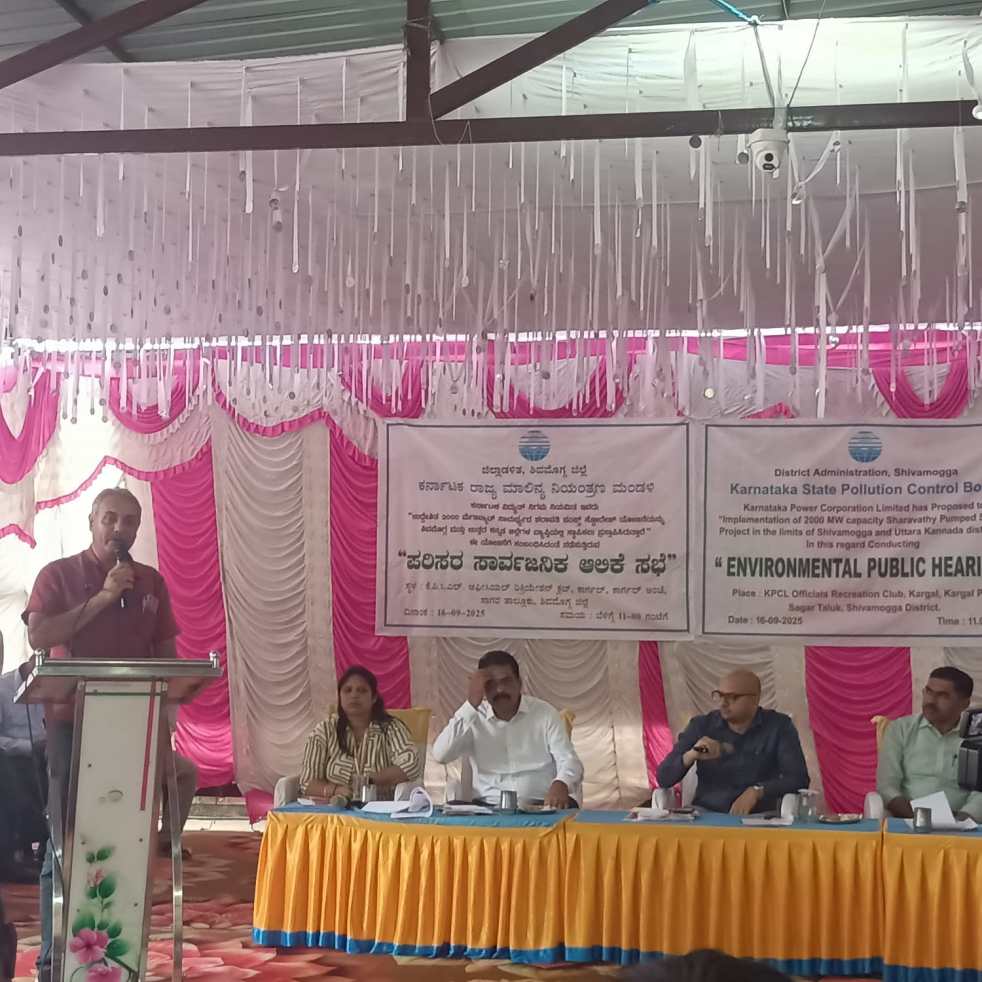
(Feature Image: People raising objections against Sharavathi PSP at a Public Hearing in Shivamogga on Sept. 16)
It is interesting that this week there are reports about growing opposition to Pump Storage Hydro Projects across the country including in Rajasthan, Karnataka, Andhra Pradesh, Madhya Pradesh (proposed project near Bargi reservoir in Narmada Valley) besides similar opposition seen earlier in Maharashtra. This should wake up the authorities and realise that the assumption of such projects being socially and environmentally benign is totally wrong.
The Union Environment Ministry’s Expert Appraisal Committee on River Valley Projects has been indiscriminately rubber stamping approvals for Pump Storage Projects across the country without any credible environmental and social impact assessments and in complete absence of cumulative impact assessment or carrying capacity studies and without any real options assessment study or even considering CEA’s assessment of how much PSP capacity is viable and needed in India. The EAC really need to wake up before considering any further PSPs for TORs or Environment Clearances.
The Central Electricity Authority also needs to come out with assessment as to how much PSP capacity is needed across India in different time scales and communicate the same to the EAC and MoEF. The kind of pain the PSP projects are bringing across the country is something that the MoEF, CEA or EAC seems to have absolutely no clue about and a lot of that may be completely avoidable. The kind of frauds, displacements and deforestation that these projects are bringing is shocking, particularly when these projects are not even location specific.
Opposition to Sharavathy PSP grows Growing opposition to the Karnataka state govt’s pumped storage project in the Sharavathi Valley echoed strongly in Bengaluru on Oct 11, as citizens from across Karnataka — including former Supreme Court judges, environmental activists, pontiffs from various mutts, and students — gathered at a symposium to express their strong resistance under the banner ‘People for Environment’. During the symposium, experts pointed out that both the Sharavathi and Varahi pumped storage projects are located within legally notified wildlife sanctuaries, violating key provisions of the Wildlife (Protection) Act. They noted that these projects have been proposed in dense, landslide-prone evergreen forests of the Central Western Ghats — regions that are carbon sinks and home to a rich biodiversity.
Ex-SC judges oppose Sharavathi PSP Justice Gowda questioned why the government was not making the DPR public, and how it could pose a threat to national security. The government is answerable as it is spending taxpayers’ money on the project. Justice Gowda also questioned how the contracts were issued when the project licence was not yet obtained. Justice Hegde, who was also former Karnataka Lokayukta, said the project is not in public or environmental interest. The government, which speaks of environment protection in the cabinet and at other forums, should think of people’s future and protect the area, he said.
In Shahbad, drown a forest, grow a PSP Dam The pristine forest used by thousands of people, has been marked for a pumped storage hydro project (PSP) of 1,800 MW by the Greenko Group. It will drown 408 hectares of land in the Shahbad forest, and 216 ha of land outside the forest is needed for roads, housing, transmissions and project offices. The habitats of many wildlife species will go, and a proposed cheetah corridor – linking Kuno National Park to Gandhi Sagar sanctuary – will end pretty much near its starting point. Thousands of Sahariya Adivasis and Dalits who depend on the forests will lose their livelihoods. Environmental clearance (EIC) was also given, in August 2024. It has since been deferred and is currently (Sept 2025) being challenged in the Rajasthan High Court in Jodhpur.
A group of activists have filed an interim application in the suo moto petition being considered by the Rajasthan High Court in Jodhpur seeking “Protection of 1.19 lakh trees proposed to be felled for the establishment of the Pumped Storage Project in Shahbad Block, Baran District.”
“But even existing hydropower at peak hours is not being optimised or monitored,” says scientist Himanshu Thakkar of SANDRP. He goes on to add that there is no scientific basis for PSPs being projected as ‘environmentally friendly’. On the contrary, a major infrastructure intervention like PSP will have significant social and environmental impacts, he adds.
CPI(M) seeks cancellation of PSPs The CPI(M) has urged CM N. Chandrababu Naidu to revoke the approvals granted to the hydro-power projects in the tribal areas and restore the natural condition of the Epurupalem Strait Cut canal in Prakasam district. In separate letters addressed to the CM on Oct. 09, CPI(M) State secretary V. Srinivasa Rao alleged that the government’s decision to sanction pumped storage hydro- power projects in the Fifth Schedule areas of Alluri Sitharama Raju, Parvathipuram-Manyam, and Anakapalli districts violated tribal rights and environmental laws.
He said the G.O.s (51, 13, and 2) issued to companies such as Navayuga, Megha, Adani, and Sri Shirdi Sai were issued without the consent of the local tribal gram sabhas, contravening the PESA Act, Forest Rights Act, and the 1/70 Land Transfer Regulation. These projects, he warned, would submerge nearly 20,000 acres of land across 250 villages, displacing around 50,000 tribals and threatening forest ecosystems. Mr. Srinivasa Rao recalled that two Adani-linked projects in Parvathipuram-Manyam had been cancelled in July following protests, yet others continued despite strong opposition. He demanded the immediate cancellation of all related G.O.s, legal action against companies intimidating tribals, and independent inquiry by the NHRC and NCST.
HYDRO POWER PROJECTS
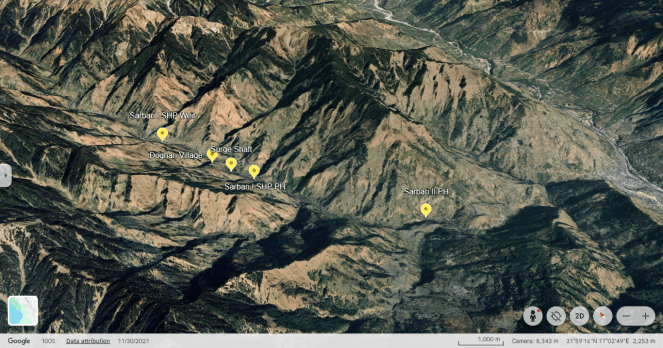
Himachal Pradesh: Kullu Villagers Demand Suspension of Sarbari-I SHEP Blaming Sarbari I Small Hydro Power (HEP) project for causing reoccurring disasters, the villagers of Mashana panchayat in Lag Valley of Kullu district have demanded suspension of the 4.5 Mw project operation. As per the villagers the leakages in the surge shaft and head race tunnel and burst of penstock of the project in August and Sept. months this year have caused landslides and flash flood disasters impacting their land and livelihoods. They have said that due to these disasters about 80 meter Mashana link road, some houses, a water tank and over hundreds of bigha of fertile farmland have been severely damaged.
Hundreds protest against Upper Subansiri HEP in Arunachal Hundreds of people took to streets to protest against the proposed 2,000MW Subansiri Upper Hydroelectric Project in Daporijo in Arunachal Pradesh’s Upper Subansiri district on Oct 8. The protesters, mostly from Subansiri Upper Hydroelectric Project Land Affected People’s Forum and students, demanded the state govt to scrap the project.
The protesters went around the town and shouted slogans such as, ‘No Dam over Ane Subansiri River’, ‘Our ancestral land is precious, we cannot exchange it for compensation’, and ‘Protect lives, stop displacement’. Later, the protesters staged a dharna in front of the DC’s office. The Subansiri Upper Hydroelectric Project has been allotted to the NHPC Ltd.
Consultative discussion on SUMP held A consultative discussion on the proposed Siang Upper Multipurpose Project (SUMP) between the NHPC and delegates of the East Siang Downstream Dam Affected People’s Forum (ESDDAPF) was held at the NHPC office here in East Siang district on Oct. 11. NHPC Siang Lower Project General Manager (Civil) Amar Nath Jha appealed to the ESDDAPF to support the activities related to preparing the PFR, and to create grassroots awareness regarding the importance and necessity of the SUMP. Tamuk, Ering, and Mengu from the ESSDAPF also expressed their views and concerns over the SUMP. They were informed that vulnerable locations, susceptible to soil erosion of riverbanks due to dam discharge, would be identified during the DPR stage for consideration in the EMP studies.
Arunachal Pushes 2200 MW Oju HEP in Subansiri basin “When the Subansiri Lower Dam was being cleared, one of the conditions was that there would be no further construction upstream.” said Himanshu Thakkar, of SANDRP. “This was appealed and now projects such as Oju have been allowed on a case-to-case basis.”
Hearing for Naying HEP on Nov. 12 The environmental public hearing for the 1,000 MW Naying hydroelectric project will be held in Shi-Yomi district on 12 November, an official said on Oct. 08. The project is proposed over the Siyom (Yomgo) river and the project will be implemented by the North Eastern Electric Power Corporation (NEEPCO). The construction work, including a concrete dam, an underground powerhouse and a tunnel, is likely to begin around 2028, and the project is planned for commissioning by 2032.
The project received Central Electricity Authority concurrence in 2013, and the construction work was expected to start in 2015, but environmental and social considerations have hampered it. The project requires diversion of significant forest land and will impact tens of thousands of trees. Additionally, the project faced protests related to concerns about dams and their environmental and social impacts.
MLA seeks support for Menga HEP Local MLA Rode Bui urged the public & the project-affected families to cooperate with the govt and the NHPC for smooth implementation and commissioning of the Menga hydro project in the larger interest of the locals, the state and the nation as a whole. The MLA was addressing a coordination meeting organized by the Upper Subansiri district administration with the project-affected people from the Subansiri river’s left bank.
EAC recommends EC to Sawalkote HEP on Chenab The 1,865 MW project entails a 192.5-metre-high concrete gravity dam with a reservoir capacity of 530 million cubic metres spread over 1,159 hectares. The installed capacity will be 1,406 MW in Stage I and 450 MW in Stage II. The panel had earlier recommended the project for environmental clearance in January 2017, but the final approval was held up pending forest clearance for diversion of 846 hectares. This will involve cutting 2,22,081 trees, the maximum (1,26,462) in Ramban district.
During appraisal on September 26, the EAC noted that since the project could not move forward after 2017, a fresh proposal was submitted with updated baseline studies. Primary data for the earlier EIA had been collected in 2012; the project proponent has now gathered new data across three seasons — monsoon (July 2022), winter (January 2023), and pre-monsoon (May 2023).
Under the Ministry’s norms, projects that fail to secure in-principle forest clearance within 18 months must update baseline studies. The EAC noted no significant changes in environmental baseline data from 2012 to 2023, though it recorded “an increasing influence of anthropogenic activities such as domestic wastewater discharge, road construction, and runoff from settlements and agricultural areas on water bodies”.
On the issue of public hearing, the panel said a fresh one was not required since key project features such as location, technical parameters, land requirement, and affected villages remain unchanged. The last hearing was held in January 2016 in Udhampur and Ramban. The Chenab basin already hosts three operational projects — the 390 MW Dulhasti in Kishtwar, the 890 MW Baglihar in Ramban, and the 690 MW Salal in Reasi.
Need for Transboundary research & Climate informed hydropower governance in Brahmaputra Basin The Brahmaputra river basin holds immense hydropower potential but faces climate risks, ecological uncertainties, and geopolitical tensions. China’s proposed Medog dam amplifies downstream vulnerabilities. Limited data-sharing and fragmented research hinder sustainable planning. This article underscores the urgent need for transboundary research and climate-informed hydropower governance.
India must engage persistently with China to ensure that sufficient information about upstream projects is made publicly available. Access to transparent and scientifically backed data would enable downstream nations to assess the potential impacts more accurately. Concurrently, India should advocate at the international level for China’s adherence to transparency norms and its commitment to water-sharing agreements.
Mizoram plans 2400 MW PSP Mizoram Chief Minister Lalduhoma on Oct 10 said his government was planning a Rs 13947.5 Cr, 2400 MW Pump storage project in Hnahthial district across Darzo Nallah, a tributary of Tuipui river.
Tiger deaths trigger demand to reject SHP proposals in M.M. Hills, Cauvery ESZ Consequent to a spate of tiger deaths in the M.M. Hills Wildlife Sanctuary, the Karnataka government has been petitioned to reject forest diversion proposals for mini hydel projects along the river Cauvery in the M.M. Hills Wildlife Division, BRT Tiger corridor and the Eco-Sensitive Zone of the Cauvery Wildlife Sanctuary.
Wildlife conservationist Giridhar Kulkarni has red-flagged the proposed MHPs on grounds that they would further fragment the habitat which was already witnessing an increase in conflict situations, and drew attention to the recent poisoning of six tigers in M.M. Hills Wildlife Sanctuary during the last four months. He has written a letter to Eshwar B. Khandre, Minister for Forest, Ecology, and Environment stating that the three proposals involve the Ranganathaswamy Mini Hydel Project by Pioneer Power Corp, the Barachukki 2×2.5 MW Mini Hydel Project by Madhyaranga Energy Pvt. Ltd., and a 24.5 MW Hydroelectric Project by Balaji Cauvery Power Pvt. Ltd. — all located near Shivanasamudra and Sathegala in Kollegal taluk.
He cautioned that the proposed project involving tree felling, blasting, tunnelling, and construction near the river would obstruct wildlife movement and escalate conflict in the adjoining villages. Kulkarni said that the Cauvery riverine belt and the adjoining forests form a vital elephant habitat, recognised by the Karnataka Elephant Task Force, 2012. The mini hydel projects create physical barriers for elephant and wildlife movement leading to disruption of migration and ranging patterns, increased crop depredation in nearby villages, and an escalation of conflict situations resulting in retaliatory killing of wild animals.
DAMS
Decisions of MoEF’s EAC meeting on Sept 26 2025 1. Shirawta Open Loop Pumped Storage Project (1800 MW) in 197.797 ha at Village Khandshi, Rakaswadi, Thoran etc, Sub-dist Mawal, Dist Pune, Maharashtra by Tata Power Company Ltd – Environmental Clearance: Approved
2. Sawalkote Hydro Electric Project (1856 MW) on river Chenab in 1401.35 Ha at Village Bhajmasta, Sub-dist Ramban, Dist Ramban, Jammu & Kashmir by NHPC Ltd- Environmental Clearance: Approved
Agenda of EAC meeting to be held on Oct 13 2025 1. Saidongar 1 – Karjat Open Loop Pumped Storage Project (3000 MW) in 377 Ha at Village Potal, Saidongar, Ambot, etc, Sub Dist Karjat, Dist Raigarh, Maharashtra by M/s Torrent Psh 3 Pvt Ltd- Environmental Clearance
2. Sitapur-Hanumana Micro Irrigation Project (CCA: 1,29,060 Ha) at Village Hatwa, Murtiha, Orani, Etc, Sub-Dist Hanumana, Sihawal, Chitrangi, Gopadbanas, etc, Dist Rewa, Sidhi, Singrauli, Mirzapur, Prayagraj and Sonbhadra, Madhya Pradesh and Uttar Pradesh by Naigarhi Micro Irrigation Project, Division- Rewa, MP – Terms of Reference
3. Bargi Open Pumped Storage Hydro Project (1000 MW) at Village Pindrai Mal. (Sahajpuri), Salaiya Mal.(Barangada), JAMTHAR, KHAPA, NEWARI and PONDI, Sub- Dist Narayanganj, Dist Mandla, Madhya Pradesh by Serentica Renewables India 21 Pvt Ltd – Terms of Reference
Relevant decision FAC meeting held on Sept 26 2025 – Diversion of 87.520 ha of forest land for Hidsing Irrigation Project including Alternate Road in Angul Dist by Cuttack of Water Resource Dept, Odisha: More Info Sought: Elephant Corridor affected.
Mah opposes AP’s Godavari Bankacharla Project Throwing a huge spoke in AP’s plans to divert 243 tmc ft of ‘flood’ water a year from the Polavaram dam on the Godavari to the Banakacharla regulator on the Srisailam right main canal on the Krishna river — a project that Telangana has been opposing — the Maharashtra government wrote to the Union Jal Shakti ministry on Oct 8 primarily saying that if any lower riparian state were to be allowed to use flood or ‘all waters’ on the Godavari, then Maharashtra reserved the right to do so.
EOI for Kaleshwaram rehabilitation designs The Telangana government says it wants to fix the structural issues in the Kaleshwaram Lift Irrigation Project (KLIP) barrages, including the one at Medigadda. Based on this, the Irrigation Department invited Expressions of Interest (EOI) for rehabilitation designs to repair the Medigadda, Annaram, and Sundilla barrages by October 15. However, Irrigation Minister N. Uttam Kumar Reddy appears inclined to work closely with a premier Indian Institute of Technology (IIT). At a review meeting on October 7, he said a leading IIT was “likely” to be the department’s main technical partner. This institution would collaborate with the department’s Chief Design Organisation (CDO) on tests and repair plans.
Fast-track Pranahita–Chevella project DPR, Tummidihetti barrage: Minister The State Government has decided to fast-track the preparation of a revised Detailed Project Report (DPR) for Pranahita–Chevella project with priority to construct a barrage at Tummidihetti. At a review meeting held here on Oct 11, Minister for Irrigation N. Uttam Kumar Reddy examined the field observations submitted by officials who recently visited Tummidihetti and Sundilla, where detailed technical surveys are underway. Officials explained that the original canal alignment and hydraulic structures remain largely intact and could be reused after minor rehabilitation.
Report on Ecological Connectivity and Land Restoration (Sept. 2025) by the United Nations Convention to Combat Desertification (UNCCD) and the Convention on the Conservation of Migratory Species of Wild Animals (CMS): -The report focuses on land as a social-ecological system and its interactions with freshwater systems and terrestrial and freshwater biodiversity. It also considers the connections between these systems through the natural and social processes that create ecological connectivity. It explores the potential of enhanced ecological connectivity to promote sustainable land management and restoration, addressing global environmental crises such as desertification, land degradation and drought (DLDD), biodiversity loss and climate change. Summary in PDF ; Full Report

Over 60% of world’s rivers diverted or dammed Rivers are being cut by dams and urban growth is putting food, water, biodiversity and livelihoods at risk unless urgent action is taken, said the report. The report reveals stark findings. More than 60 per cent of the world’s rivers have been diverted or dammed. It cites the striking example of Asia’s Mekong, which was once the world’s most productive inland fishery and has now been fragmented by dams, disrupting fish migrations and threatening the food security of millions.
The report says healthy ecosystems are nature’s own infrastructure. They keep water flowing, protect communities from extreme weather and secure food and drinking supplies. “When landscapes are restored at scale, they also lock away carbon, reduce disaster risks, protect biodiversity and create jobs,” it states.
IRRIGATION
Crop water consumption shows an overall increase of 9% for 46 agricultural crops from 2010 to 2020 Abstract:- Agricultural crop production is the largest water user worldwide. Here we compute the blue and green water consumption (WC) of global crop production at 5 arcminutes (~10 km at the equator) for the year 2020, differentiating between 46 crops, using the most recent Spatial Production Allocation Model 2020 crop data. Total crop WC amounts to 6,668 km3, or 6,817 km3 including the flooding phase of paddy rice, of which green WC amounts to 5,588 km3 and blue WC to 1,080 km3 (increasing to 1,228 km3 with paddy flooding). Over a period of 20 years, five major crops increased in total WC by 23–82%. For 2010–2020, global total crop WC increased by 9% from 6,270 km3 (with paddy flooding). Alongside observed increases in cropland area, higher crop WC puts additional pressure on limited water resources.
Tamil Nadu Farmers demand check dam in Thollagadhu The Chinnar Dam is a key reservoir in Palacode taluk, which passes through dozens of panchayats, irrigating over 4,500 acres of agricultural land. The waters from this dam are crucial for the revival of dozens of lakes, including ‘Thollagadhu’, a waterfall located amidst several hills. For years, farmers in the region have been urging PWD (WRD) to take steps to construct a check dam here to improve cultivation. Now, with the release of water from Chinnar Dam, farmers are again pushing for this demand.
RIVERS
Evolving landscapes: long term land use and climate-induced changes in the Brahmaputra floodplain This study assesses land-use land-cover changes from 1913 to 2023, by analyzing the impacts on biodiversity, and assessing the relationship between climate trends and habitat loss. The methods involving geometric and radiometric corrections of historical maps and satellite images, identified key LULC classes such as agriculture, forest, waterbodies, settlements and grasslands. Climate trends were analyzed using statistical methods, including the Theil-Sen estimator and Mann-Kendall test, to determine significant changes. The analysis indicated a 15% increase in agricultural land and a 10% decline in forest cover, primarily due to encroachment and habitat conversion for farming. Furthermore, the correlation study revealed that climatic variability, such as rainfall and soil moisture, significantly influenced habitat conversion, driving agricultural expansion while restricting grasslands. The study emphasizes the critical importance of management approaches that link ecological monitoring with climate resilience efforts, reaching the need for collaborative conservation initiatives to safeguard reserve’s unique biodiversity and maintain its ecological functions.
WII study: Kaziranga grasslands lost over 300 sqkm in 110 years Researchers integrated historical topographic maps, satellite imagery spanning 110 years and climate data from 1980 to 2022 to examine land-use and climate dynamics in the Brahmaputra floodplain. The analysis shows that while grasslands have steadily declined, forest cover has expanded dramatically — from just 0.6 sq km in 1913 to 229.2 sq km in 2023. Waterbodies, which initially expanded until 2013, have since begun shrinking, reflecting shifts in river morphology and hydrology.
Significantly, the findings by WII scientists emphasised the need for adaptive management strategies focusing on habitat regeneration, hydrological balance and climate resilience to withstand this sensitive floodplain ecosystem.
Telangana crackdown on pharmaceutical bulk drug industries Confronting widespread environmental degradation, state authorities have launched a crackdown on pharmaceutical bulk drug industries in the Choutuppal–Chityal belt, where groundwater contamination, air pollution and damage to agricultural lands continue to impact thousands of residents.
The pollution crisis, stemming from 46 pharmaceutical units across Choutuppal, Pochampally, Bibinagar and Chityal mandals, was the focus of a high-level review meeting held recently at the Secretariat. The meeting came in response to years of community complaints over deteriorating air and water quality, which have previously led to court cases, closure orders and hefty penalties.
Jojari Pollution: Pending appeals be heard together with suo motu case: SC The Supreme Court on Oct. 09 has said that pending appeals against the NGT order in a matter relating to pollution in Jojari river in Rajasthan should be heard together with a suo motu case over contamination of the river. A bench of Justices Vikram Nath and Sandeep Mehta passed the order in the suo motu case titled ‘In Re: 2 million lives at risk, contamination in Jojari river, Rajasthan’. It directed the apex court registry to place the papers before the Chief Justice of India for seeking direction of an analogous hearing for all these matters with the suo motu case.
Locals flag rapidly shrinking glaciers in Bhagirathi region Villagers in Sukhi, Uttarakhand, witness severe glacier retreat, impacting agriculture and livelihoods due to climate change and increased monsoon intensity. The solution to preventing disasters in the para glacial zones is consultation with locals, said Mohan Singh, Gobind Singh’s brother who is retired from the army and now focuses on environmental issues in the region.
A sore point for locals here is a bypass planned under the Char Dham project, an all weather road that connects with the India-China border, considered to be a strategic route from a defence point of view by the Centre. The last 150 km-long stretch of Char Dham road, which will pass through the Bhagirathi Eco-Sensitive Zone, will have to adhere to a minimum width of 10m, Union transport minister Nitin Gadkari said in Parliament last year.
The bypass alignment is through the toe of old landslide debris that extends down from Sukhi Top to the Bhagirathi River, experts have flagged in the past. Then there is a 10 km stretch with old growth deodar trees that is up for widening also under the project.
The high powered committee on char dham project headed by Ravi Chopra had warned against construction of dams and other large infrastructure above the main central thrust or the paraglacial zone in the BESZ. According to the master plan of BESZ, 238 glaciers are in the Bhagirathi basin of which many may be receding.
Scientific studies on springs remain fragmented: Vinod Kothari Several states – including Sikkim, Nagaland, and Uttarakhand – have launched spring shed revival programs at scale since 2017. But the lack of a comprehensive spring inventory and data makes it challenging. Vinod Kothari is a field practitioner and has worked on water in the Himalayas for almost two decades. He has also contributed to government thinktank Niti Ayog’s “Inventory and Revival of Springs in the Himalaya for Water Security”. Kothari is the executive director of Dehradun-based non-profit Himmotthan Society, an associate of Tata Trusts. He recently explained to Down to Earth as to how a district-wise spring inventory based on spring data collected from two districts (Tehri and Almora) of Uttarakhand can aid spring revival programs of the state. (Megha Prakash)
Manoj Misra’s Yamuna movement that endures “Nadiyon se lagaav aisa hai jaise maa se mohabbat (The attachment to rivers is similar to the love one has for mother),” said Mustqeem Mallah from Uttar Pradesh’s Shamli, one of the community leaders who has been working for Manoj Kumar Misra’s ‘Yamuna Jiye Abhiyan’ as he attended a memorial event on Tuesday for the environmentalist who died in 2023.
He joined a dozen others, including farmers, activists and villagers from across northern states, people who had once worked beside Misra, at Manav Mandir Gurukul in Delhi to mark his seventy-second birth anniversary and to formally dedicate the day as Yamuna Rivers Day. Two years after Misra’s death, the river movement he founded 15 years ago has not died down — citizen campaigners pledged to continue the cause.
HC slams Delhi govt for failing to curb Yamuna pollution The Delhi High Court on Sept. 11 expressed concern over the Delhi government’s failure to prevent treated water from mixing with contaminated wastewater before entering the Yamuna River, despite significant public expenditure on the issue. The court said this practice undermined the very purpose of STPs and CETPs. The court called for expert analysis to understand how these networks run parallel, connect to the main drain after treatment, and require upgrades, if necessary, as part of a drainage master plan. This followed the court’s review of “contrasting reports” submitted by a special committee it had constituted to inspect all STPs and CETPs, and the Delhi government’s own report on the functioning of these treatment plants.
Panipat under lens as HSPCB unveils action plan HSPCB has launched a special action plan, prioritising Panipat, Sonepat and Gurugram for intensified monitoring. A high-level meeting will be held in Panipat on Oct. 13 to review the situation and finalise enforcement measures. Panipat, in particular, figures among the 43 critically polluted cities listed by the Central Pollution Control Board (CPCB), with a CEPI score above 70. A total of 800 industries are registered with the HSPCB portal of which seven fall under the highly polluted category, 450 under red and around 300 under orange.
FISH, FISHERIES, FISHERFOLKS
Activists rejuvenate a Trout bearing stream in J&K The illegal riverbed mining in the Doodh Ganga, Shaliganga and Sukhnag was halted in the last two to three years. “The joint committee will ensure that committee constituted by Deputy Commissioner, Budgam by the order dated 27.08.2025 assesses the damage caused due to mining/short-term permit/illegal mining by taking into account all the relevant factors and consideration and also ascertain the persons responsible without showing any favour or bias towards any person. If need arises, a joint committee formed by the Tribunal can send its representative to the spot when the verification is done by the five members joint committee appointed by Deputy Commissioner, Budgam. Let report be submitted by the joint committee within 10 weeks,” reads the NGT’s order following petitions by the author of this report before the National Green Tribunal, paving the way to rejuvenation of the streams. (By Raja Muzaffar Bhat)
Manipur University achieves first-ever Mahseer breeding success Researchers at Manipur University have successfully bred the Mahseer (Neolissocheilus stracheyi cf), locally known as Ngara, for the first time in Northeast India. A team of fishery scientists led by Dr. Rameshori Yumnam, head of the Freshwater Ichthyology and Sustainable Aquaculture (FISA) Laboratory in the Department of Zoology at Manipur University, achieved the milestone in collaboration with Dr. M.S. Akhtar of the ICAR-Central Institute of Coldwater Fisheries Research (CICFR), Bhimtal, Uttarakhand, and Mr. Somirin Varam, a young professional involved in the university’s Mahseer Project. The team carried out the successful breeding at the newly established Mahseer Hatchery at Manipur University, marking a significant step forward in conserving one of India’s most iconic and endangered freshwater fish species.
Fisheries & aquaculture in India: Past, present and future Get access Arrow ABSTRACT Currently, the Indian fisheries sector, contributing to rural livelihoods and food security, including eliminating hidden hunger, reflects a blend of traditional practices and modern innovations. However, several sustainability challenges exist, including overfishing, habitat degradation, climate change, disease outbreaks, and socioeconomic vulnerability of fishing communities. Addressing these, and moving towards resilient, inclusive, and sustainable aquatic food production systems will require a multifaceted approach integrating policy reforms, ecosystem-based management, technological innovation, and community participation—all of them aligning with the Sustainable Development Goals and the Food and Agriculture Organization Blue Transformation strategy.
RIVERBED MINING
NGT forms Delhi & UP task force to curb Yamuna sand mining On Oct. 10, the NGT’s principal bench asked the chief secretary of Delhi to nominate officials for the new joint task force, which will work alongside their UP counterparts. The team will be tasked with holding joint meetings, conducting field visits to sites where illegal mining is reported, and preparing detailed reports on action taken to prevent further violations. The reports, along with minutes of meetings, must be filed with the tribunal and uploaded to the websites of relevant district magistrates and state govts, ensuring transparency and public accountability. The tribunal has set Oct 29 as the final date of hearing, requiring all parties to submit compliance reports and responses to earlier directions.
WETLANDS, LAKES, WATER BODIES
Madras HC orders disciplinary action against officers who granted sanction for public buildings on waterbodies The Court was considering a PIL pertaining to the new buildings of the Primary Health Centre and Panchayat Office on the land which has been recorded as water body. The Court noted that it was stated in the Counter Affidavit that on the land in dispute, the Primary Health Centre is being run since many decades and the public interest litigation was filed only when the dilapidated building was demolished and new structure was raised. It also found from the counter that on this land, which is recorded as Karikulam, there are as many as six structures, which accommodate public buildings used by the people at large. It thus directed the State to submit appropriate proposal for shifting of these buildings so as to clear the water body, within eight weeks.
The Court further directed that in the meantime, the remaining area of Karikulam shall not be allowed for raising any construction whatsoever. “We find that, in many cases, various public buildings are being constructed on water bodies. Such constructions obviously must have been permitted by an authority, under his sanction, without verifying from the records as to the nature of the land”, the Court observed. The matter has been adjourned to December 03, 2025.
Forest dept drafting proposal to get Ramsar recognition for Samanatham tank in Madurai The forest department is preparing a proposal to include the Samanatham tank – an ecological hotspot and one of the district’s significant waterfowl habitat – under the Ramsar Convention, and is likely to be submitted to the State Wetland Authority soon for review, according to a senior forest official. Activists have been raising concerns over the rise in pollution and the loss of green cover near the waterbody, which attracts thousands of migratory bird species. Each winter, a large number of waterbirds flock to the tank, located on the outskirts of Madurai.
Haryana to demarcate 1.8k wetlands after SC ultimatum Haryana govt has asked all deputy commissioners (DCs) to complete ground verification and digital boundary demarcation of 1,881 wetlands identified across the state in two weeks. The directive came after a Supreme Court ultimatum. The apex court’s orders, issued on Aug 19 and Sept 19, had cautioned that environment secretaries of states that don’t comply with the directive will be required to appear before it on Oct 7.
District administrations were sent a list of 1,881 water bodies on Sept 1 for verification and boundary marking. The process will form the basis for legal notification of wetlands under the Wetlands (Conservation and Management) Rules, 2017.
The total wetland area in Haryana grew from 33,649ha in 2017-18 to 36,984.5ha in 2023-24, marking a 10% increase of 3,335.5ha. This growth is largely due to the creation and expansion of human-made wetlands, such as artificial ponds, tanks and waterlogged areas, as per a report titled “Indian Wetlands: High Resolution Remote Sensing Assessment and Analysis” by SAC.
WATER OPTIONS
First-of-its-kind rainwater recharge system Bengaluru-based siblings – Veruschka Pandey (17) and Vedansh Pandey (20) – have been awarded an Indian patent for designing what is believed to be the country’s first groundwater recharge system that channels stormwater through city drains into open wells. The system, developed after years of observation and experimentation, integrates precision-drilled concrete rings and slotted galvanised iron (GI) pipes into existing stormwater drains (SWDs). It diverts rainwater runoff into the ground, allowing it to naturally percolate into aquifers — thereby helping both prevent flooding and mitigate water scarcity. Experts say the innovation offers a scalable model for water-stressed urban regions, especially as climate extremes become more frequent. The siblings’ invention has drawn interest from urban planners and sustainability experts across India.
GROUNDWATER
North India Groundwater Crisis: 20 Years of Massive Loss North India has been losing over 700 thousand million cubic ft of water every year in the last two decades, making it one of the global hotspots for the loss of terrestrial water storage, an international team of scientists has found using US satellite data. Agriculturally crucial Punjab, Haryana, Uttarakhand, Uttar Pradesh, Bihar and West Bengal, along with Rajasthan and a few North Eastern states have been losing the ground water at an unprecedented rate, the scientists said, adding that the monsoon rain was inadequate to make up for the loss.
The revelation is part of a new satellite-based analysis of global freshwater storage over the last two decades that shows every continent has experienced unprecedented drying since 2002. “India has lost about 15,400 tmcft of water since 2002. The biggest losses are seen in Rajasthan, Uttar Pradesh, Uttarakhand, Haryana, Himachal Pradesh, Punjab, Arunachal Pradesh, and Bihar. The total volume of losses from these states exceed 800 tmcft per year,” said Hrishikesh Chandanpurkar, first author of the study from Arizona State University.
Groundwater-Inclusive Practical Guide This paper provides a summary of the knowledge required to understand this technique and a guide to implement it. It also recommends to represent groundwater in hydrological models, as groundwater is key to maintain reliable access to water and a healthy environment in the future. This research fills a gap by linking climate, hydrology, communication, and decision-making disciplines. Such links are required to produce the best insights on future water resource availability and support adaptation to climate and hydrological changes.
URBAN LAKES, WETLANDS
Man Made waterbody cannot enjoy protection of a wetland: SC The Supreme Court on Oct 7 held that an artificial lake or man-made waterbody cannot enjoy the statutory protection of wetlands but every government is bound to protect it under the salutary principle of doctrine of public trust in the larger interest of promoting ecology and environment. The court passed the order while deciding that the Futala lake in Nagpur is a man-made waterbody and permitted constructions in and around the lake that provided for a plaza, floating restaurant, musical fountain, viewers gallery among other facilities.
A bench of justices K Vinod Chandran and NV Anjaria concluded that the the Futala Tank, also known as Telangkhedi Tank, was constructed in the year 1799 with a catchment area of about 200 hectares by the then ruler of Nagpur to cater to irrigation needs. The court concluded, “Undoubtedly, the lake is a man-made lake for the city of Nagpur.” The court upheld the decision of the HC by declaring that the Futala Lake is a man-made waterbody and is not a ‘wetland’ as defined in Rule 2(1)(g) of the 2017 Rules as this definition excludes human made water bodies and those constructed for irrigation purposes.
An affidavit filed by Centre on Monday revealed that out of the 231,195 wetlands inventoried in the SAC Atlas 2021, ground-truthing of 189, 270 wetlands has been completed, and boundaries of 112, 460 wetlands have been demarcated. The court granted time till October 19 for the exercise to be completed for the remaining wetlands and posted the matter for further consideration on October 28.
The High Court recognized Futala Lake as not a statutory wetland but applied environmental principles to protect it directing to not raise any permanent structures and allowing sanctioned projects to proceed with strict safeguards against ecological harm. Challenging the High Court’s decision, the NGO moved to the Supreme Court, where the Court in Jan, 2024, had ordered the status quo on construction of temporary structures in and around the Futala Lake and sought the response from the State Government on the status of ‘temporariness’ of the structures concerned.
The judgment went on to state, “All those man-made or artificial bodies created from natural resources which contribute to the environment and are eco-friendly in their existence, have to be subject to the doctrine of public trust.”
Swacch Association’s claim was rejected by the Bombay high court’s Nagpur bench on July 5, 2023 against which they approached the top court. The ruling clears the way for the musical fountain, lakeside restaurants, and parking plaza to finally open—all stalled due to prolonged litigation. Residents said the project will create a new civic landmark blending heritage, recreation, and tourism, transforming Futala into a cultural hub.
Did degradation of EKW contribute to Kolkata floods? It is fortuitous that to the Kolkata city’s east are river systems like the Matla and Bidyadhari and what was once the enormous East Kolkata Wetlands (EKW). These wetlands cover around 12,500 hectares of the state of Bengal, covering parts of Kolkata and two other districts. A Ramsar site since 2002, these criss-crossings of natural and man-made wetlands have functioned as the kidney of the city, ensuring Kolkata did not need an artificial system of treatment of sewage in the city. Left on its own, rainwater would flow naturally into the EKW.
It is here that the role of an authority that Mamata Banerjee did not mention comes into play – her own. Over the past few years, the EKW has shrunk at alarming rates. Construction on it has been encouraged by successive governments and now flourishes both legally and illegally. There is also the Eastern Metropolitan Bypass, a 32-kilometre roadway to the east of the city that was made accessible to vehicles by 1982. “The bypass acts as a dam or a dyke, stopping the flow of water into the EKW,” says JU professor Datta. “Culverts were needed but they were not put there.”
Priyanka Jha & her co-authors at New Delhi’s Jamia Millia University – Pawan Kumar Yadav, Priyanka Jha, Md Saharik Joy and Taruna Bansal, have published multiple studies on the EKW. In one paper published last year at the Journal of Environmental Management, they studied the evolution of the EKW over 32 years from 1991 to 2023. Their conclusion: Human activities are linked to the declining health of the wetland ecosystem. The dumping ground at the heart of the EKW, which has only grown in size between 2011 and 2023, as a symbol of the blatant disregard for the EKW’s health. While degradation had well begun much before 2011, the year Banerjee came to power, it has been almost fast-tracked since then, the satellite images show.
CMDA issues order to ban construction in and around Pallikaranai Marshland A few days after the southern bench of the National Green Tribunal (NGT) directed the Chennai Metropolitan Development Authority (CMDA) not to grant any building plan approvals in the Pallikaranai marshland and its zone of influence, the planning authority has issued a circular reiterating the Tribunal’s order. According to the circular issued by the chief planner of Master Plan Unit (MPU), dated October 6, building permissions will not be issued within the boundary of the Ramsar recognised wetland and its influence zone up to one kilometre. Moreover, the circular also instructed the local bodies concerned to comply with the NGT order and the CMDA circular.
Buffering Karnataka’s waterbodies In the monsoon session, the govt introduced the Karnataka Tank Conservation and Development Authority (Amendment) Bill, 2025, which amends the 2014 Act to define graded buffer zones around tanks based on their size, from 0 metre for tanks under 0.05 acres to 30 metre for tanks over 100 acres. Following this, the Urban Development Department issued a draft notification reducing the buffer zones of storm-water drains.
While there is no universally accepted definition of buffer zones, in many countries they are designated areas around waterbodies intended to minimise the negative impacts of human settlements. From an ecological perspective, buffer zones are considered “protected zones” that help mitigate the effects of human activity and land disturbance, while also providing critical habitats for fish and other wildlife.
Bill will not impact big lakes: Minister Minor Irrigation Minister NS Boseraju said on Oct. 08 that most of the 187 lakes in Bengaluru were bigger than 100 acres and would remain unaffected by the Karnataka Tank Conservation and Development Authority (Amendment) Bill. Overall, there are 41,849 lakes in the state. As per the bill, lakes up to 0.05 guntas, or 544 sq ft, will not have a buffer zone. For a lake measuring up to one acre, the buffer zone will be 3 metres. It will be 6 metres for lakes sized 1-10 acres, 12 metres for lakes sized 10-25 acres, 24 metres for lakes sized 25-100 metres and 30 metres for lakes above 100 acres.
Bill will be sent soon to Governor: Minister Minister for Minor Irrigation, Science and Technology NS Boseraju said on Oct. 08 that an explanation regarding the lakes’ buffer zone amendment bill will be submitted to Karnataka Governor Thaawarchand Gehlot shortly after consulting legal experts. A Bengaluru-based organisation had submitted a memorandum to Governor Thaawarchand Gehlot seeking rejection of the Karnataka Tank Conservation and Development Authority Amendment Bill 2025. The group had warned that reducing lake buffer zones to 30 metres violates constitutional and environmental safeguards, and urged reconsideration to expand them to 100-300 metres to protect water security and ecosystems.
HYDRAA Restores Nizams’ Prized Lake The restoration and rejuvenation of the historic Bum Rukn-ud-Dowla Lake in the Old City, once a primary drinking water source for the Nizams, is nearing completion and is expected to be inaugurated by the end of this month or in early December. This is the first lake restoration project undertaken by the Hyderabad Lakes Protection and Rejuvenation Authority (HYDRAA), which began by clearing encroachments and launching large-scale cleanup and beautification efforts.
Spread across 18.575 acres within its Full Tank Level (FTL) area, with a water spread of 8.915 acres, the Bum Rukn-ud-Dowla Lake dates back to the 18th century. On August 10, 2024, HYDRAA launched a demolition drive, clearing illegal constructions within the FTL and buffer zone. The agency has since expanded its lake rejuvenation efforts to other water bodies, including Amberpet Bathukamma Kunta, Kukatpally Nalla Cheruvu, Madhapur Sunnam Cheruvu, Uppal Nalla Cheruvu and Madhapur Thammidi Kunta.
‘Bound to declare’ Dhanauri a wetland: Govt to NGT The assurance from UP government came on September 4, during a hearing on a plea filed by seasoned bird-watcher Anand Arya. NGT recorded that the state sought time to clarify whether it would forward the site’s proposal for Ramsar recognition to the Union environment ministry, provided the Yamuna Expressway Industrial Development Authority (Yeida) raised no objections. The matter will be heard again on October 17, 2025. Arya’s petition, filed in October 2023, seeks Ramsar recognition to secure long-term protection for Dhanauri, especially given rapid development pressures in the region, including the upcoming Jewar international airport. Earlier hearings revealed that while the district administration forwarded a Ramsar proposal in 2022, the Wetland Authority raised objections, which were later addressed by the conservator of forests in April 2023.
URBAN WATER
Ground subsidence: Satellite monitoring can guide smarter urban planning India faces a silent crisis as cities and farms sink due to the shifting of rock layers and soil in the ground below. Interferometric Synthetic Aperture Radar (InSAR) offers real-time data to act on.
Sinking due to groundwater extraction Excessive groundwater extraction and tectonic changes are causing cities and towns, from Gujarat to West Bengal, Punjab to Assam and Kerala to the Himalayas, to sink gradually.
PMRDA issues stop-work order to two Wagholi projects A stop-work order passed by PMRDA has given a measure of relief to residents of Wagholi’s internal Baif Road, after being forced to wade through sewage around their homes for almost two years now. The order passed on Oct 9 puts a stop to two ongoing constructions in the area, issuing a 60-day deadline to the builders to come up with an alternative building development plan, which must ensure a proper vision to manage the drainage and sewage these buildings will generate in future.
KSEB serves disconnection notice to 8 apartments The KSEB has served power disconnection notices to 8 apartment complexes situated along the banks of Thevara-Perandoor Canal yet again. Acting upon the direction of the Pollution Control Board (PCB), KSEB has warned the owners of apartment complexes that power will be disconnected within seven days from October 7, for failure to install STP on their premises.
The KSEB had earlier served disconnection notices on 71 apartment complexes along the banks of the Thevara-Perandoor Canal at the end of July. Following this, the apartment authorities had got the deadline extended. While many apartments started STP construction immediately, many were left out without enough space or financial viability to set up STPs.
Two weeks ago, the apartment owners had filed a writ petition in the Kerala High Court challenging the KSEB move, following which the court appointed a four-member high-level committee to study the issue, and explore the possibility of setting up a centralised STP network as suggested in the PIL. The court had asked the high-level committee to submit the report by October 27. At the same time, the PCB officials said that the new notice has only been sent to apartments that did not respond to the first one.
Bengaluru Urban among 5 districts with 100% plus groundwater extraction Five districts in Karnataka, including Bengaluru Urban, have worrying groundwater extraction levels of over 100%, even as the state as a whole has seen an improvement when compared to the previous estimation by the Union government.
As per the official data accessed by DH, Kolar (193.35%) leads the districts with overexploitation of groundwater, followed by Bengaluru Urban (186.7%), Chikkaballapura (164.33%), Bengaluru Rural (147.05%) and Chitradurga (144.44%).
To address the issue, the Minor Irrigation Department is taking up the ‘Water is Future’ project, the first phase of which will cover 525 gram panchayats (GPs) in 27 taluks of 15 districts marked as “critical” or “overexploited”. Of the 525 GPs, as many as 86 GPs are from the Bengaluru Urban district itself.
Blast in Dwarka basement triggers panic A blast took place in the basement of Tower A at Triveni Heights in Dwarka Sector 16B on Oct. 05 evening when a combination of accumulated gases and high groundwater pressure cracked the ground, pushing it upwards and causing flooding in the area, the Delhi Development Authority (DDA) said on Oct. 06. The incident took place around 7.30pm, when residents noticed that the basement was filled with water and slabs of cement were scattered across the floor. Residents said no one was injured, as the basement was vacant at the time. Locals also reported structural damage. In a statement, the DDA said there was no threat to residents’ safety.
DDA seeks technical help from IIT and DTU DDA has sought technical assistance from IIT Delhi & Delhi Technological University to determine the cause behind the sudden damage to the flooring and the release of pressurised groundwater in the basement of Triveni Apartments in Dwarka’s Sector 16B. One of the two govt institutes will be engaged long-term to recommend corrective measures and oversee restoration.
Aditya Sharma, a structural engineer, said that constructing two underground basements requires a depth of 11 metres into the ground. At such levels, the chances of seepage increase if there are lapses in soil testing or a lack of understanding of the geological characteristics of the area. “There are channels and aquifers that are inactive most of the time, but which become active due to continuous rain or an increase in water level in certain areas. This could lead to damage to the flooring when pressure builds up. There have been instances where people reported continuous seepage in basements after monsoon,” Sharma said.
Gangajal supply halted for desilting The supply of Ganga water to Ghaziabad and Noida has been suspended till Oct 20 due to the annual desilting of the Upper Ganga Canal, affecting nearly 20 lakh residents who rely on it for drinking water. The UGC was built by the British in the 1850s primarily for irrigation. Although its water is now also treated for drinking at the Pratap Vihar plant, irrigation remains its main purpose. Every year after the monsoon, the canal must be drained and desilted. This is necessary because the silt level, which is normally 300 particles per million (ppm), rises to over 5000 ppm, blocking the water flow.
The UP Jal Nigam operates 3 WTPs: 2 plants of 120 MLD each & 1 of 240 MLD. From one 120 MLD plant, GMC’s share is 60%, while 40% is allocated to Noida. In another 120 MLD plant, 80% of the water’s share is for Noida and 20% for the UP Housing Board. In the 240 MLD plant, 75% is allocated to Noida, 30 MLD to the UP Housing Board, and 15% to the Board.
URBAN MANAGEMENT
Solid Waste Management in Bangalore A collaboration between the municipal corporation and collectives of waste-pickers with the help of an NGO has made it possible to segregate recyclables in several wards every day so that less trash reaches landfills. The city generates 5,000 tonnes of solid waste every day. In 2017, the Bruhat Bengaluru Mahanagar Palike (BBMP) signed a Public-Private Partnership (PPP) with Hasiru Dala or Green Force, and waste-pickers — making them responsible for collecting dry waste, sorting it, segregating it, selling it and thereby reducing the waste that makes its way to landfills. Dry waste collection centres (DWCCs) have been set up by the BBMP where dry waste is collected and segregated into reusable and recyclable waste. Hasiru Dala has trained waste-pickers to manage 33 DWCCs. The city has 225 wards.
Hasiru Dala has slowly extended its operations to other districts of Karnataka, including Mysuru, Mangaluru, Tumakuru, Hubbali-Dharwad, Davanagere, Chamarajanagar, Kodagu (Coorg), Chikkaballapura, and the cities of Coimbatore, Trichy, and Rajahmundry.
Map can help protect cities environment As large swathes of natural ecology in our cities are sacrificed for development and construction, not only do we lose the trees and rivers and lakes, but also the imagination of cities defined by its natural elements. Land use does not have to mean shrinking ecology but this binary increasingly means land use policies de-value ecology. While people and collectives fight to save ecology they can. The relationship between land use and ecology in cities is, ultimately, a political one, says Dr Harini Nagendra, well-known ecologist and author, and director at the School of Climate Change and Sustainability, Azim Premji University. Having publicly available comprehensive ecological maps, with students collecting local knowledge, can be a step towards ecological conservation, she says in this interview.
JJM/ RURAL WATER SUPPLY
MoA to strengthen digital monitoring of rural water & sanitation The Department of Drinking Water & Sanitation (DDWS), Ministry of Jal Shakti on Oct. 06 signed a Memorandum of Agreement (MoA) with the Bhaskaracharya National Institute for Space Applications and Geo-informatics (BISAG-N), an autonomous scientific society under the Ministry of Electronics and Information Technology (MeitY), Government of India at CGO Complex, New Delhi.
The partnership marks a significant step towards the development of a GIS-integrated, decision-support platform for the Jal Jeevan Mission (JJM) and Swachh Bharat Mission (Grameen) [SBM(G)] portals. The new platform will enhance data-driven decision-making, planning, monitoring, and evaluation of rural water supply and sanitation initiatives across the country. The platform will also support the creation and mapping of Rural Piped Water Supply Schemes (RPWSS), enabling unique scheme-level IDs and will allow for granular monitoring of water delivery at the household level, facilitating convergence with other rural infrastructure initiatives.
All JJM pipelines to be mapped on PM Gati Shakti portal Since the launch of the JJM in 2019, 6.41 lakh water supply schemes, with an overall cost of Rs 8.29 lakh crore, have been approved to provide tap connections to 12.74 crore households. A total expenditure of Rs 3.91 lakh crore has been incurred so far, as per the information available on the JJM dashboard. While the mission ended in 2024, Finance Minister Nirmala Sitharaman, in her budget speech on February 1, 2025, announced its continuation with enhanced financial support till 2028.
Following this announcement, the Jal Shakti Ministry approached the EFC, seeking approval for enhanced outlay of Rs 9.10 crore including Central share of Rs 4.39 crore. The Jal Shakti Ministry said the Centre had already released Rs 2.08 lakh during 2019-24, therefore, the ministry now requires Rs 2.79 lakh crore. However, the EFC has recommended only Rs 1.51 lakh crore — 46 per cent less than the amount demanded by the Jal Shakti Ministry. The extension of the JJM till 2028 is yet to be approved by the Union Cabinet.
WATER
Book explores life of water in climate change era An excerpt from ‘Living Waters: Pulse of the Planet’, edited by Romola Butalia.
AGRICULTURE
Floods alter soil profile in Punjab Floods have significantly altered the soil profile of agriculture land across Punjab, causing nutrient imbalance and posing a threat to productivity by adding an impermeable layer that hinders water infiltration and root growth. This was revealed in a study by Ludhiana-based Punjab Agricultural University (PAU). The university had conducted tests in Amritsar, Gurdaspur, Ferozepur, Kapurthala and Patiala to assess the impact of floodwaters that had brought large quantities of silt from higher reaches and deposited it in the fields.
University Vice-Chancellor Satbir Singh Gosal said the floods impacted the very foundation of Punjab’s agriculture — its soil. “While mineral-rich silt from the Himalayan foothills has added nutrients, it has also disturbed native soil profiles. Restoring balance is now critical,” he said. The findings show sediment deposits ranging from a few inches to over one metre, with textures varying from sandy to fine loam. The pH levels were alkaline and electrical conductivity remained low, indicating no immediate salinity threat.
Floods reshaped native soil in Punjab Sand removal is a major challenge in preparing the land for the next crop since it is time-consuming and costly, said the V-C. The university has calculated that removing 1 foot of sand from 1 acre of land will take at least 350 trolleys. “Since the recommended time for sowing for the wheat crop is just three weeks away, sowing in such areas will get delayed, and may impact productivity,” he said.
In order to restore soil texture, PAU has advised farmers to integrate organic matter into the soil. All manure — farmyard, poultry and green — can help in this by stimulating microbial activity and supporting healthy root systems, the V-C said. To remove hardpans, PAU suggests deep tillage with a ‘chisel plough’ (it has sharp points that break up hardpans to aerate and loosen earth without turning it). In lighter soils, the deposited silt and clay should be mixed thoroughly to prevent layering, Dr. Ajmer Singh Dhatt, PAU’s director of research, advised.
MONSOON 2025
High Rainfall days in India’s districts in Sept 2025 An analysis of the daily district wise rainfall data from India Meteorological Department (IMD) for the month of September 2025 shows that there were 417 (546 in Sept 2024, 406 in Sept 2023[i], 417 in Sept 2022[ii] and 489 in Sept 2021[iii]) instances when district rainfall of a day was above 50 mm. Such high rainfall instances included 376 (438, 330, 365 and 374 in Sept 2024, Sept 2023, Sept 2022 and 2021 respectively) instances in Sept 2025 when rainfall was 50-100 mm, 34 (73, 64, 47 and 84 in Sept 2024, Sept 2023, Sept 2022 and 2021 respectively) instances in Sept 2025 when it was 100-150 mm, 4 (30, 10, 3 and 20 in Sept 2024, Sept 2023, Sept 2022 and 2021 respectively) times in Sept 2025 when it was 150-200 mm and 3 (5, 2, 2 and 11 in Sept 2024, Sept 2023, Sept 2022 and 2021 respectively) instances in Sept 2025 when rainfall in a day was above 200 mm.
IMD locking up data hampers public weather alerts: Experts Weather analysts DTE spoke with want the data portal to be reopened for public access, explaining the significance of this data and their analysis for public good.
DAM FLOODS
Six die in Markonahalli Dam disaster in Karnataka in Oct 2025 In a dam induced tragedy, six people died, of them four bodies have been found and two more are being searched for. This happened after gates of the Markonahalli dam across Shimsha river (a 221 km long tributary of Cauvery River) in Mandya district in Karnataka suddenly opened on Oct 7 at around 3.30 pm. The tragedy occurred in a village near Yadiyur in Kunigal taluk of Tumakuru district on the border of Tumakuru and Mandya districts, about 100 km from Bengaluru. The Hindu reported earlier in Oct 2000 that the dam gates are poorly maintained.
Ranganadi Dam Floods For decades, Assam’s floodplains have been both a source of life and loss, with an average of 2.6 million people impacted annually. Districts like Lakhimpur and Dhemaji, downstream of the Ranganadi Dam, face devastating flash floods caused by sudden water releases from NEEPCO’s hydroelectric projects. These man-made disasters, compounded by a lack of early warnings and inadequate research, have turned fertile lands into zones of destruction. Families like Toramai’s lose not only their homes and livelihoods but also their sense of security. As infrastructure controls rivers without regard for communities, the floods in Assam reveal a deeper crisis—one where nature’s cycles are worsened by human hands, leaving millions to rebuild from nothing.
Himachal: Sainj villagers blame NHPC for flood damage
FLOODS 2025
Maharashtra Floods Extreme weather-induced heavy rainfall damaged crops over 6.9 million acres of Maharashtra’s agriculture land, affecting thousands of farmers across 30 districts. Precipitation in the past two months has surpassed annual average rainfall by 109 per cent. Maharashtra received nearly 1,000 millimetres of rainfall between June and September. Nanded, Beed, Solapur, Yavatmal and Buldhana are the worst affected districts. One hundred and fifty villages have been submerged, with floodwaters slowly receding.
Over 1.8 million acres of crops have been ravaged in Nanded district alone. Solapur, Yavatmal and Dharashiv (formerly Osmanabad) have recorded losses of 0.99 million acres, 0.85 million acres and 0.82 million acres respectively. Districts including Beed, Ahilyanagar (formerly Ahmednagar), Washim, Buldhana, Jalna, Hingoli, Akola and Amravati have each reported crop losses for over 0.1 million acres.
Sutlej swells again after fresh dam releases Around 250 residents who had barely resettled after the recent floods were forced to leave again as the water level increased, though marginally.
Reasons behind Punjab floods In this deeply investigative episode of Adbi Baithak, journalist Anju Agnihotri (Indian Express) and host Harpreet Singh Kahlon break down the devastating Punjab floods of 2025, which have reopened painful memories of the 1988 disaster.
Erosion caused by Siang river cuts off power lines Rampant soil erosion by the Siang river has triggered a major power crisis, disrupting electricity supply to several villages across East Siang and Lower Dibang Valley districts. The situation reached a critical point when a massive 1-kilometre stretch of an 11 kv power line was completely washed away.
URBAN FLOODS
33-cr smart road to be dug up for sewage repair The ₹33.02-crore Killipalam–Attakulangara smart road is set to be excavated to repair a sewage line leakage. The rupture was detected in the middle of the road, opposite Kothuval Street. The excavation comes as a setback to authorities’ earlier assurances that smart roads would not require digging for maintenance of drinking water and sewage pipelines, or for electric and telephone cables. Flooding along the road during recent rains, despite the presence of wide drains, had already sparked public concern. The leak was found in a 900 mm-wide pipe. As the repair was urgent, officials from the Water Authority’s Kuryathi sub-division coordinated with smart road authorities and secured permission for excavation.
HIMALAYAN DISASTERS
SC Sept. 23 order on plea relating to environmental conditions in Himachal Pradesh 1. The instant writ petition has been registered suo moto to tackle the issues relating to ecology and environmental conditions prevailing in the State of Himachal Pradesh.
2 Pursuant to the registration of the writ petition in public interest, the State Government was directed to file its response to the issues highlighted in the order dated 28th July, 2025. In compliance of the aforesaid direction, a report, which appears to be interim in nature, has been submitted by the State of Himachal Pradesh.
3. Considering the wide-ranging issues falling for consideration, we had, by order dated 25th August, 2025 appointed Shri K. Parameshwar, Senior Advocate assisted by Ms. Akashi Lodha, Advocate, to assist the Court in this matter as amicus curiae.
4. Learned amicus curiae carried out a detailed study and analysis of the report and have highlighted following issues which require pertinent response/answers from Himachal Pradesh: –
A) Zoning, B) Tree cover/forest cover, C) COMPENSATORY AFFORESTATION D) Disaster Management Plan, E) Roads, F) HYDROELECTRIC PROJECTS G) Mining and Use of Heavy Machinery, H) Tourism/Multi-Storey Buildings
5. The questionnaire, so submitted by the learned amicus curiae is exhaustive and the answers thereto would be essential for carrying the matter forward. These responses would assist the Court in arriving at a considered decision for the purpose of framing guidelines/measures to protect the citizens at large and the fragile ecological system in the State of Himachal Pradesh.
6. Himachal Pradesh shall furnish response to the above queries supported by an affidavit of the Principal Secretary, Department of Forest, State of Himachal Pradesh by the next date of hearing with an advance copy to the learned amicus curiae. List again on 28th October, 2025.
Himalayan disasters point to reckless construction, not merely climate change As Jammu and Kashmir, Himachal Pradesh, and Punjab struggle to recover from the widespread devastation this monsoon, it is futile to only blame climate change. The ground situation and studies point to reckless construction – even over-construction – in the eco-fragile region.
ENVIRONMENT GOVERNANCE
MoEF tweaking a rule for cement plants The change that the environment ministry wants to make in the Environment (Protection) Rules, 1986, could mean that the Adani Group will not need to consult with locals at Ambivli, Maharashtra, who have already raised environmental and livelihood concerns regarding a proposed cement grinding plant.
People from at least 10 villages near Kalyan, which is part of the Mumbai Metropolitan Region, have been rallying against an Adani cement grinding plant that is coming up near their homes. It will pollute their air, land and water, they said. On September 16 at a public consultation meeting, they made it clear: they do not want the plant. But their say will no longer matter, if the union environment ministry’s latest draft rules get their way.
SOUTH ASIA
Indus Treaty India started building the Salal Hydroelectric Power Project over Chenab uphill in Reasi district in 1970. Pakistan objected to its construction under the Indus Water Treaty and in 1978 India and Pakistan resolved their differences diplomatically. Under this resolution, the Permanent Indus Commission, a body set up under the Indus Water Treaty for implementation of the agreement and for settling disputes oversaw the cementing of the outlet bottom gates of the dam. The locals believe that these gates were blasted open after April 23 but my source denied that. India was sharing 280 sets of river data with Pakistan under the former Indus Water Treaty on a regular basis.
Oct 2025: Bhutan’s Tala Dam Overtopped In a major scary incident, the Tala Dam on Wangchhu River in Chukha district of south Bhutan has overtopped for the first time ever, on Oct 5 following unprecedented rainfall in western Bhutan, prompting flood warnings for downstream areas in India’s north Bengal. Bhutan’s NCHM confirmed that DGPC reported that the dam gates failed to open, leading to river water flowing over the dam, considered most dangerous situation for any dam as dams are not designed for such an eventuality.
China’s Medog Dam The proposed project requires the drilling of multiple 12.5-mile tunnels to divert the river, with rate of flows sufficient to fill 3 Olympic-sized swimming pools every second.
NEPAL: Enhancing Hydropower resilience through dynamic rule curve operation Abstract: Amid Nepal’s expanding hydropower sector, the Sunkoshi Multipurpose Scheme is a pivotal inter-basin transfer project. As the country seeks to maximize its abundant water resources, strengthening hydropower resilience against the inevitable impacts of climate change is imperative for ensuring long-term energy sustainability. This study conducts a comprehensive assessment of climate change impacts on the Sunkoshi River Basin and proposes an adaptive management strategy through dynamic rule curve modifications, optimizing reservoir operations in response to projected shifts in water availability across time horizons of the 21st century.
The anticipated inflow data served as input to the Hydraulic Engineering Center- Reservoir System Simulation (HEC-ResSim) software to simulate the reservoir operation and propose modified rule curves for Sunkoshi No.1, Sunkoshi No.2, Sunkoshi No.3, and Dudhkoshi hydropower projects for the time frame of 2030s, 2060s, and 2080s. Six different rule curves were proposed and average yearly energy generations were maximized ranging from 25.5%, 61.07%, 71.26%, and 10.50% for Sunkoshi 3, Sunkoshi 2, Sunkoshi 1, and Dudhkoshi plants respectively.
SANDRP

 SANDRP