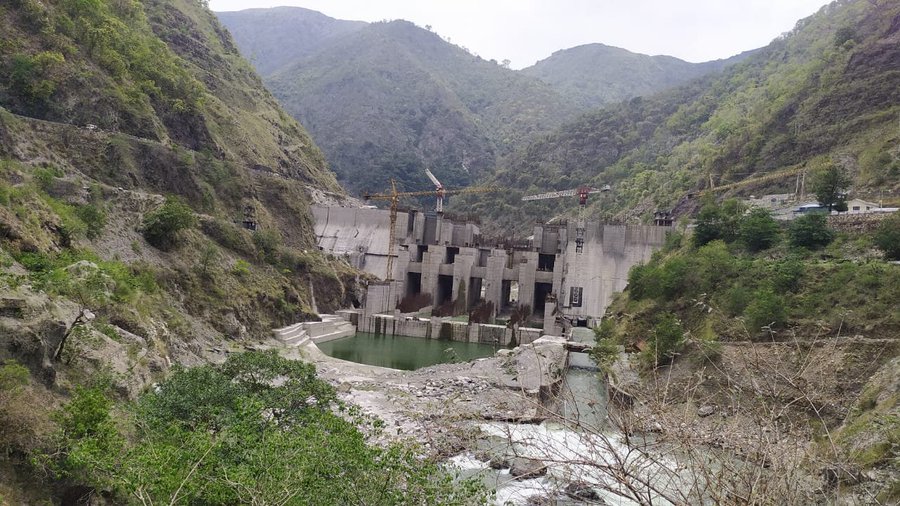
Analyzing a recent paper authored by 37 persons mainly from academics and hydropower related companies on “Sustainable Hydropower”, Eugene Simonov shows why the phrase is an oxymoron, a contradiction in terms. The paper fails to even refer to the most important work on hydropower projects, the report of the World Commission on Dams.
The team of authors does not include anyone from affected communities, indigenous people, non-government organisations, conservation groups or anyone else known to be critique of the hydropower projects. The paper opens with a statement from the International Hydropower Association.
Clearly the paper fails to convince anyone that there is any sincerity in the hydropower industry to make any significant changes to improve the state of hydropower industry.
The Oxymoron of “Sustainable Hydropower” This analysis Eugene Simonov of “Rivers without Boundaries International Coalition” of a recently published paper, “Global Horizon Scan of Emerging Challenges and Opportunities for Sustainable Hydropower,” authored by Irene Boavida and 36 others, offers a compelling look into the global hydropower industry’s view of its own future.
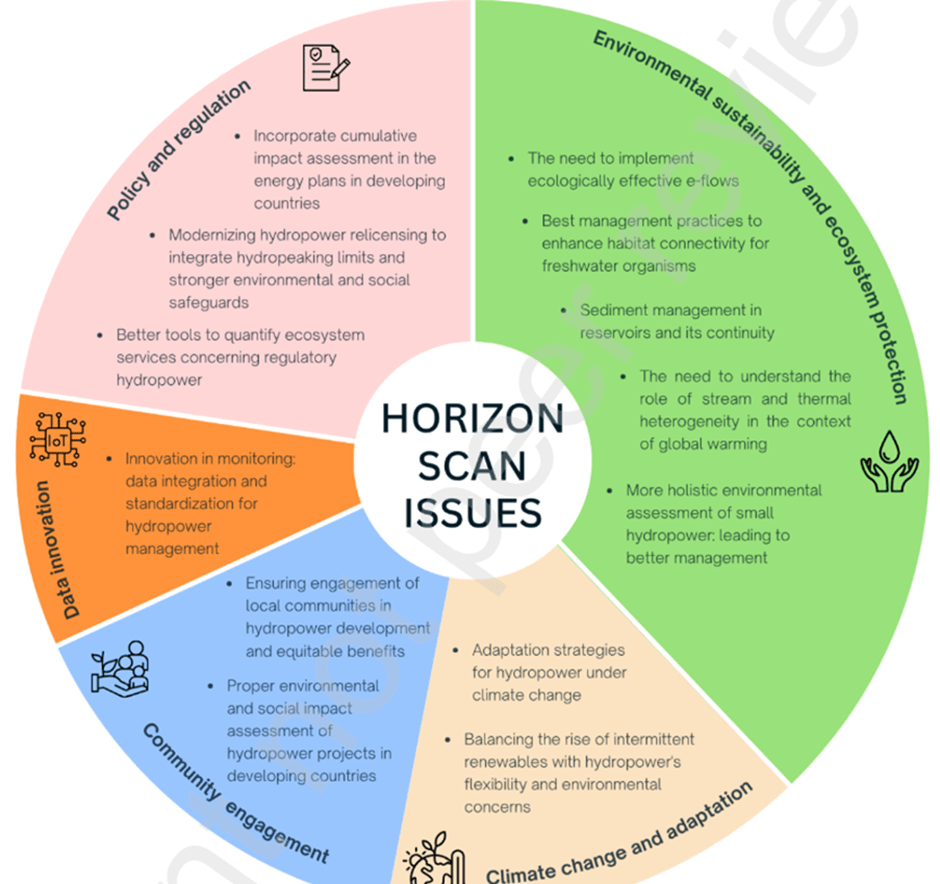
The paper presents over ten well-known, and largely intractable, problems common in hydropower development. These are grouped into five “priority areas”: (i) environmental sustainability and ecosystem protection (5 issues), (ii) climate change and adaptation (2 issues), (iii) community engagement and social sustainability (2 issues), (iv) data innovation and monitoring (1 issue), and (v) policy and regulation (3 issues). These issues were extensively documented in the seminal reports of the World Commission on Dams (2000), a source conspicuously absent from the paper’s references. In the intervening 25 years, these challenges have not only persisted but have exacerbated, with no viable solution pathway having been widely adopted by the industry or governments.
The paper opens with the statement that “Hydropower is the backbone of renewable electricity generation worldwide,” a claim taken directly from the International Hydropower Association (IHA). It neglects to mention that by 2024, hydropower’s share of newly installed renewable capacity barely exceeds 2%, and its global production has stagnated for years, while solar and wind together now generate far more electricity. Furthermore, it is silent on the fact that over the last 15 years, the cost of hydropower-generated energy has increased substantially; in 2024, it is 30% more expensive than solar and 65% more than wind, with construction costs twice that of onshore wind and three times that of solar. In essence, the paper is built on the questionable premise that conventional hydropower is a crucial precondition for the “green transition.” The statistics, however, strongly suggest this assumption is at best, outdated.
Under “Community Engagement and Social Sustainability,” the authors rightfully observe that community engagement is typically inadequate and that environmental and social assessments in the “Global South” are often treated as a mere “tick-the-box” exercise. They recommend Free, Prior, and Informed Consent (FPIC) as a “first step” for involving affected communities. However, the paper omits the critical principle that FPIC is not just a first step, but a process that must respect a community’s right to say “no”.
The paper represents a moment where hydropower proponents themselves acknowledge the immense, perhaps insurmountable, challenges and controversies facing their sector. For industry insiders, it is a bold and progressive work that reveals the deep conflict between continued hydropower development and the underlying social, environmental, sustainability, preservation of global biodiversity and climate change issues.
The paper lacks clear conclusions about the feasibility of or credible pathways for resolving them. It stops short of addressing the fundamental question of whether “sustainable hydropower” is achievable at all.
The composition of the authors strongly suggests a group of industry insiders—consultants, engineers, and officials—who, while knowledgeable, are not positioned to question the fundamental legitimacy of continued hydropower development. Notably absent are experts from affected communities, indigenous groups, academics known for critical reviews of hydropower, conservation organizations, and environmental NGOs. It appears this group explicitly excluded any voices that might fundamentally question the future of the hydropower industry. It is time to begin a genuine dialogue.
HYDRO POWER PROJECTS
Dibang Dam: Arunachal Villages set 24 Aug deadline to resolve safety concerns Discontent over the 2,880 MW Dibang Multipurpose Hydropower Project in Arunachal Pradesh’s Lower Dibang Valley has escalated sharply, with downstream communities threatening street protests and legal action over broken promises and official neglect. The Dibang Multipurpose Hydro Project Downstream Affected Area Committee (DMHPDAAC) has accused the government of failing to carry out crucial downstream protection works, despite the sanctioning of Rs 154-crore budget. In a letter to the Deputy Commissioner, Roing, the committee warned that over 150 villages in Arunachal Pradesh and Assam face risks to their land, livelihood, and quality of life from the ongoing dam construction.
Setting Aug 24 as a hard deadline for work to begin, the committee cautioned that any further delay could trigger a massive, region-wide democratic agitation. Adding to the pressure, the Uttama Bor Abor Sanrakshana Sanrachana (UBSS)—one of Arunachal’s few public charitable trusts—is preparing to challenge in court the “unjust exclusion” of downstream communities from the list of officially recognised project-affected areas. Earlier on August 4, Leader of the Opposition (LoP) in the Assam Assembly, Debabrata Saikia, had urged the Union government to address Assam’s downstream concerns before moving ahead with the Dibang Project.
CCEA approves ₹8,146.21 Cr for Tato-II HEP The Cabinet Committee on Economic Affairs (CCEA), chaired by PM Narendra Modi, on Aug 12 approved investment of Rs 8,146.21 crore for the construction of the Tato-II Hydroelectric Project (HEP) in Shi-Yomi district. The estimated completion period for the project is 72 months. The project will be implemented through a joint venture between the North Eastern Electric Power Corporation Ltd (NEEPCO) and the Government of Arunachal Pradesh. The Government of India will extend Rs 458.79 crore as budgetary support for construction of roads, bridges and associated transmission line, besides central financial assistance of Rs 436.13 crore towards equity share of the state.
Etalin HEP gets EC The Expert Appraisal Committee has recommended environmental clearance for the 3,097 Mw Etalin Hydroelectric Project (HEP). The SJVN Limited owned project, located in Dibang Valley district, involves the construction of two concrete gravity dams on the Dri and the Tangon (Talo) rivers. The project’s estimated cost stands at Rs 30,037.36 crore. The project requires a land area of 1,175.03 hectares, all classified as unclassed forest land. Stage-I forest clearance was granted by the MoEF&CC on 20 June, 2025.
Assam people Roar against Ranganadi HEP Lakhimpur district was under severe flood conditions on Aug 13 after a sudden release of water from the North Eastern Electric Power Corporation Limited (NEEPCO)’s Ranganadi dam triggered widespread inundation in nearby villages. Residents scrambled to safer ground as torrents surged into settlements, submerging homes, roads, and farmland. Local youth activist from the Asomiya Yuva Mancha confirmed that the embankment breach caused catastrophic flooding. “This is the roar to break the NEEPCO dam,” the activist said, warning that if the authorities fail to act, the public may forcibly intervene to prevent further disasters. This is repeat of what happened in the beginning of 2025 monsoon.
PSP: Pushing Sahyadri People into deep waters The expert committee also decided to conduct a site visit before further consideration of the proposal. “But that seems to be a formality again,” says Himanshu Thakkar (SANDRP). “See EAC has always been like that. It is a rubber stamping authority more or less. Its rejection rate is practically zero,” says Himanshu. “Even Adani’s Warangi-Warasgaon Pumped Storage Project in Pune; we had written to them [EAC] saying that this has a serious impact including on the community fishing conservation zone. They still approved it. It’s very careless, the way they appraise the project, the way they look at the impacts.”
Sharavathy PSP: FAC questions incomplete info on impact The Forest Advisory Committee (FAC) has sought explanation from state and central authorities over the proposal to build a 2000 MW power plant in the Sharavathy Valley Lion Tailed Macaque (LTM) Sanctuary. The FAC noted that crucial details were missing in the proposal. “It (the proposal) does not highlight the cumulative impact of the projects, existing and upcoming hydro-power projects in the basin and carrying capacity of the river basin. So, the User Agency may be directed to take up both the studies as part of the EIA report,” it said. Further the FAC said the EIA by WAPCOS failed to provide details. “In that particular report the impacts of the project on aquatic flora & fauna is deliberated. But in the report, the impacts are not discussed in detail,” seeking a mitigation plan.
DAMS
Decisions of EAC-RVP meeting held on July 30 2025 The decisions of MoEF’s Expert Appraisal Committee Meeting for River Valley Projects held on July 30 2025: 1. Khadakwasala Fursungi Tunnel Project substitute to New Mutha Right Bank Canal KM 1 to Km 34 in an area of 23.8364 Ha located at Village Akole, Rui etc, Sub-district Indapur, Haveli, Pune City, etc. Dist Pune, Mah– Environmental Clearance: Approved
2. Etalin H.E. Project (3097 MW) in 1175.03 Ha at Village Adapowa, Aguli, Emuli etc., Sub-district Etalin & Anini, District Upper Dibang Valley, Arunachal Pradesh by SJVN Ltd– Environmental Clearance: Approved
3. Damanganga-Vaitarna-Godavari Intrastate Link Project in 1203.38Ha at Village Poshera, Kurnoli, Met Humbhachi etc., Sub-district Mokhada, Igatpuri & Trimbakeshwar etc., Dist Palghar & Nashik by Godavari Marathwada Irrigation Development Corp- Terms of References: Approved
4. Kandhaura Pumped Storage Project (1680 MW) in 569.707 Ha at Village Sashnai Sub- dist Robertsganj, District Sonbhadra, Uttar Pradesh by JSW Energy PSP Six Ltd – Environmental Clearance: Approved
5. Sirkari-Bhyol Rupsiabagar Hydro Electric Project of 120 MW in 30 ha by UJVN LTD in Tehsil Munsiyari, Pithoragarh Dist (Uttarakhand) – Environmental Clearance: Approved
6. Extension, Renovation & Modernization of Kamla Irrigation Project (CCA: 29,711 Ha) in 342.67 ha (existing) at Sub District Jainagar, Basopatti, Khajauli etc, Dist Madhubani, Bihar– Terms of Reference: Approved
Agenda of EAC_RVP meeting on Aug 14 2025 1. Oju Hydro-Electric Project- 2220 MW at Village Reddi, Tehsil Limeking Circle, Dist Upper Subansiri, Arunachal Pradesh by Oju Subansiri Hydro Power Corp Pvt Ltd – Env Clearance
2. Chhadgada Closed Loop Pumped Storage project (900 MW) in 292.4Ha at Village Chhargarh, Deoghat, Devhat & Katra, Sub-dist Koraon & Lalganj, Dist Prayagraj & Mirzapur, Uttar Pradesh by GSC PSP Uttar Pvt Ltd – Terms of Reference
3. Construction of Pailani Barrage on Ken River under Ken Betwa Link Project in an area 287 Ha at Village Achhraund, Laraka Purwa, Adari etc. Sub- dist Banda, Maudaha & Hamirpur, Dist Banda & Hamirpur, Uttar Pradesh by Ken Betwa Link Canal Construction Division-1, Mahoba Irrigation and Water Resources Department, Uttar Pradesh – Terms of Reference
4. Medium Irrigation Project to Various Panchayats of Jawalamukhi (CCA: 2590 Ha) in 17.89 Ha Village Salasi, Kotla, Kotu Dhorian (869) and etc., Sub-district Nadaun, Jawalamukhi, Khundian & Dera Gopipur etc., District Hamirpur & Kangra, Himachal Pradesh By Executive Engineer, Jal Shakti Vibhag Division – Terms of Reference
DAM SAFETY
Mud Slip at Upper Coffer Dam of Polavaram Project There has been a 10 X 10 mud slip between the 80–90 stretch at the left bank of the upper coffer dam of the Polavaram irrigation project on Aug 15. It has been repaired. Earlier, when the Godavari River witnessed floods, a scoured portion of the upper coffer dam witnessed seepage of water.
During the unprecedented Godavari floods of August 2022, the cofferdam’s height was raised by two metres and widened to nine metres. Friday’s slide occurred in the very portion where this extension had been carried out.
NDSA orders urgent repairs on Singur Dam The National Dam Safety Authority has warned of serious structural damage to Singur Dam, ordering urgent repairs and reduced storage to 20 TMC. Officials cautioned that a breach could flood downstream areas, urging residents and farmers along the Manjeera River to stay alert. The breach could also damage the Nizam Sagar and Manjeera dams and other check dams downstream. The NDSA recommended immediate temporary measures, such as reinforcing damaged areas with sandbags, followed by permanent repairs post-monsoon.
Singur Dam storage capped at 20 TMC In the wake of the Dam Safety Review Panel’s (DSRP) warning to the Irrigation Department on the Singur dam’s safety, the department has decided to restrict the storage in the reservoir to 20 TMCft against its full storage capacity of 29.91 TMCft. Telangana Irrigation officials have lifted 11th crest gate of the Singur multipurpose project across the river Manjeera at Singur village in Pulkal mandal to release 7,694 cusecs of water. Meanwhile, TG Genco also started operating the power plant and started releasing 1,265 cusecs, taking the total outflow to 8,959 cusecs. The project is receiving 4,336 cusecs. Since the project was constructed in 1999, this is the first time the Irrigation Department has restricted the storage in Singur. The project had 40,000 acres of ayacut in Sangareddy district and it will also be a source of drinking water supply for Hyderabad, Sangareddy and Medak districts.
HC asks govt to submit implementation report about safeguarding Kaleshwaram project since Oct 2023 Chief Justice Aparesh Kumar Singh and Justice G.M. Mohiuddin of the Telangana High Court on Aug 12 directed the State government to file an implementation report detailing the measures taken to protect the Kaleshwaram project and the steps initiated under Section 39 of the Disaster Management Act. Further hearing on Aug 28.
Farmers worried over poor state of TB dam’s 6 crest gate The six (gate number 11, 18, 20, 24, 27 and 28) rickety and defective crest gates of the Tungabhadra reservoir have become a cause for worry to farmers. Water release from these crest gates has been stopped as the dam authorities claimed that they have lost 80 to 90% of their strength. Officials say that these six gates may break if water is released through them and that the other gates have around 50-60% strength. However, they maintained that there will be no problem as long as they maintain the storage level at 80 TMC against full reservoir capacity of 105 TMC till the gates are replaced before June 2026. Last year, gate number 19 had washed away and a temporary gate was placed in its place.
INTERLINKING OF RIVERS
Thousands protest Par Tapi Narmada River Link Proposal in Gujarat On Aug 14, thousands of protesters, including tribal communities from across south Gujarat, thronged Dharampur in Valsad to oppose the Par-Tapi-Narmada river link project. Organized by the Dam Sangharsh Samiti, marched peacefully under the watch of a heavy police deployment. Despite the govt’s assurances, the rally in Dharampur highlights the deep-seated concerns and mistrust among the tribal communities regarding the project’s potential impact on their lands and livelihoods. The disciplined and peaceful nature of the protest underscores the community’s resolve to protect their interests. “It is now clear that the DPR was prepared in 2017 by the BJP govt. We do not believe the verbal assurances of suspension, and the govt should release a white paper declaring that the project will never take place,” said Anant Patel. The project involves 9 dams across the Par, Tapi, and Narmada rivers, which threatens to submerge 118 villages and displace nearly 5 lakh people—mostly tribals.
URBAN RIVERS
Pune Mass fish death in Mula Hundreds of fish were found dead on Aug 14 morning in Pune’s Mula River. Residents who witnessed the scene called it a grim indicator of the dangerously polluted state of the water. The fish deaths were also attributed to untreated sewage and effluent discharge, along with the Naidu STP’s functionality, which might have released untreated sewage as well. Environmental experts have consistently recommended that any true river rejuvenation must begin with stopping pollution at its source, ensuring proper sewage treatment and protecting riparian forests. Without these steps, cosmetic beautification projects risk turning the river into a lifeless canal.
RIVERS
YAMUNA Delhi Cruise services expected to begin in November Under the project, an 8 km stretch of the river—from the Wazirabad barrage (Sonia Vihar) to Jagatpur (Shani temple)—has been developed to promote tourism. The DDA will provide a land for the development of a jetty, while the Irrigation and Flood Control Department will offer navigational aids and shore facilities with charging infrastructure for the cruises, officials said. Ticket pricing is yet to be finalised. In the initial phase, two cruises will be deployed. A minimum of four trips per day will be mandatory.
Territorial Army to protect river Govt has requested the Centre to deploy the Territorial Army along the banks of Yamuna to safeguard the river, Water Minister Parvesh Verma said on Aug 13. A proposal to deploy the Territorial Army to safeguard the river from dumping, mining, encroachment and theft was first discussed in April this year.
LG unveils statue The 10-foot-high statue standing on a 7-foot pedestal, at Nigambodh Ghat weighing 150 kg. The site is accessible through the DDA parking lot and connected to Vasudev Ghat through a dedicated cycle track and pedestrian walkway. It has several kiosks for visitors as well.
SAND MINING
Parliament panel calls for state action A parliamentary panel has urged the Centre to direct state governments to conduct field verifications to address illegal mining and associated revenue losses. According to a report by the Comptroller and Auditor General (CAG), illegal mineral excavation spread over 268.91 hectares across 11 districts of Uttar Pradesh between 2017 and 2022 caused a revenue loss of ₹408.68 crore.
Goa: Act responsibly: HC The high court of Bombay at Goa on Aug 12 asked all govt officers, including those in the revenue department and the police, to act responsibly and with accountability not only before the court but also before the state to curb illegal sand mining. “If its wealth in the form of sand is excavated and exported, or sold in the black market, it will adversely impact the state itself, and if an officer is working for state govt, he is expected to be the custodian of all property belonging to the state,” observed the division bench comprising Justices Bharati Dangre and Nivedita Mehta.
The HC made the statement after instances of illegal sand stacked at Naibag, Pernem, and being loaded into trucks were brought before it with photographs. In order to ensure better coordination and prompt action, the taluka-level flying squads entrusted with acting against illegal mining, extraction, storage, and transportation of sand have been reconstituted, director of mines and geology Narayan Gad submitted to court.
WETLANDS, LAKES, WATER BODIES
Hokersar gets new lease As Srinagar’s biggest wetland readies to receive winter winged visitors, environmentalists insist on round-the-year water retention else J&K govt’s revival efforts could go down the drain with paddy growers encroaching fringes.
WATER POLICY
Parl Committee urges MoJS to implement National Water Policy The 9th report of the Parliamentary Standing Committee for Ministry of Jal Shakti (18th Lok Sabha) was tabled in both houses of the Parliament on Aug 11 2025, on the “Action Taken by the Government on the Observations / Recommendations contained in the Fourth Report”.
On New National Water Policy, the report said (Chap 1, para 8): “Hence, the Committee reiterate their recommendation and urge the Ministry to urgently ensure the implementation of the New National Water Policy on priority, so that all suitable systems are in place to address the current/emerging challenges in the Water Sector and ensure resilience against scarcity, pollution and climate driven disruptions. The Committee would like to be apprised of the steps taken by the Ministry in this regard, within 3 months of presentation of this Report.”
On Inadequate staff in State Dam Safety Organisations, the report says: “In this regard, the Committee are of the view that the issue of dam safety is directly related to the safety of the common man and therefore, strengthening all responsible agencies for the purpose, is essential and given the gravity of the issue, swift and concrete measures are imperative to address this critical aspect. Hence, the Committee reiterate their recommendation that the Department take all necessary measures to ensure that all organizations are sufficiently staffed and equipped to implement the Act effectively. In this regard, the Committee would like to be appraised about the progress in the matter within three months from the presentation of this report.”
Amend Dam Safety Act to include Elected representative in Dam Safety from planning stage The Parliamentary Committee in its 4th report had stated: “However, the Committee felt that since the uses, functioning, safety and O&M of Dam Structures are very crucial public issues, it is imperative that a local public representative may be included in the bodies/organizations under NDSA, from the planning phase of any project, so that a seamless implementation process is ensured. This will facilitate bridging the gap between the local people and the Authority and also address the needs and concerns of local people of the area in an inclusive way. Therefore, the Committee recommended that necessary provision may be incorporated for inclusion of elected public representatives (Member of Parliament / Member of Legislative Assembly) in the bodies / organizations under NDSA by suitably amending Dam Safety Act, 2021 to further strengthen the NDSA.” Not satisfied with the MoJS response on this, the Standing Committee in its 9th report said: “In this regard, the Committee accept the reply of the Ministry, however, here, the Committee are of the opinion that, in any dam project, addressing the concerns of the local people is essential and in view of the seriousness and apprehensions of the Committee on this issue, the Ministry may proactively intervene in the issue by mooting a proposal / advisory to the States / UTs/ PSUs for inclusion of elected public representatives (Member of Parliament / Member of Legislative Assembly) from the planning phase of any dam project. In this regard, the Committee would like to be appraised about the progress in the matter within three months from the presentation of this report.”
GROUNDWATER
Bundelkhand’s Groundwater is safe: CGWB Groundwater resources in the drought-prone Bundelkhand region are mostly “safe,” according to an assessment done by the Central Ground Water Board (CGWB) in 2024. Union Minister of Jal Shakti (Ministry of Water Resources), C.R. Patil, told the Parliament on July 24 that groundwater levels in ten districts of Bundelkhand region were found to be safe, while three were found to be critical, and one to be semi-critical. He was citing the CGWB’s 2024 Dynamic Groundwater Assessment data. The Ken Betwa project will not only submerge 10% of the Panna Tiger Reserve in Madhya Pradesh, but could interfere with rainfall patterns over the long-term and worsen climatic stressors.
Tamil Nadu plans to install artificial recharge shafts The State government has recently approved a proposal to install nearly 576 artificial recharge shafts in 23 districts at a cost of ₹6.74 crore. The WRD’s State Ground and Surface Water Resources Data Centre will implement the projects in districts, including Ranipet, Salem, Erode, Tirupattur, Vellore, Tiruvannamalai, Cuddalore, and Tenkasi. Officials said recharge shafts would be installed close to waterbodies or storage structures such as check dams to direct rainwater into the deeper aquifers.
URBAN LAKES, WETLANDS
Mumbai: Campaign to clean Powai lake Ahead of the Independence Day, environmentalists launched a focused campaign seeking freedom from sewer for Mumbai’s 600-hectare Powai Lake which has turned into a reservoir of lth with the draining of 18 million litres-a-day of untreated sewer. With the title, “I Am Powai Lake, I need freedom from your sewer”, the NatConnect Foundation’s campaign pointed out that the lake was once a jewel of Mumbai as a prime attraction. The campaign asks BMC to include ‘Clean Powai Lake’ mission as part of its Swachh Bharat campaign.
Gurugram ‘Illegal dumping site’ emerges near Sultanpur NP An illegal dumping site has surfaced within the eco-sensitive zone (ESZ) of Sultanpur National Park, raising alarm among environmentalists, residents, and public health experts. The site is located just three kilometers from the park’s boundary in the revenue estate of Garhi Harsaru and falls under the jurisdiction of the Municipal Corporation of Manesar (MCM). Despite the ecological importance of the region – and the fact that both the DFO (Wildlife) and DFO (Territorial) are members of the ESZ monitoring committee — no immediate action has been taken to halt the dumping.
JJM/ RURAL WATER SUPPLY
Concerns over authenticity of JJM data Parliamentary Standing Committee on Water Resources in its sixth report on the Ministry of Jal Shakti’s 2024-25 Demands for Grants, tabled in Parliament on Aug 11, has flagged concerns over the authenticity of data being fed into the Jal Jeevan Mission’s (JJM’s) Integrated Management Information System (IMIS), recommending that the Centre institute checks to verify figures uploaded by states. It warned that without reliable data, assessing ground realities and plugging gaps in rural water supply would remain difficult.
The Committee said actual verification of state-uploaded figures was “essential for realising the actual ground situation” and reiterated that the Department of Drinking Water and Sanitation should make “sincere efforts to ensure the authenticity of the data”. The panel’s scrutiny comes amid broader concerns over the slow pace of Har Ghar Jal coverage. Only 11 states and Union Territories (UTs) have achieved full household tap water connections since JJM’s launch in 2019, and six major states of Odisha, Andhra Pradesh, Madhya Pradesh, Jharkhand, Kerala and Rajasthan are performing below the national average.
The report also criticised the quality of public infrastructure restoration after pipeline works, calling it “substandard in many States/UTs” and urging better coordination among state departments, contractors and local elected representatives. Operations and maintenance (O&M) planning also remains patchy, with only 20 states having notified comprehensive O&M policies by mid-2025.
Assam JJM in jeopardy The Centre has finally endorsed long-standing charges of widespread malpractices and corruption in the execution of the Jal Jeevan Mission (JJM) in Assam. The ambitious scheme to provide safe and potable drinking water to all rural homes has been tainted by unchecked corruption and commission-based malpractices, leading to a virtual breakdown of budgetary restraint and project timelines. Even after the national deadline had passed by a long time, the state of Assam has only achieved the coverage of 15 percent of the target within the given timeframe. This colossal lag not only hindered the progress but also loaded the Centre with more financial burdens because the construction of the project could not be finalized according to the timeline.
For Assam, the next frontier is not merely about pipes and pumps – it is about people, participation, and permanence. As the state races towards the deadline, the mission must evolve from a government scheme to a community movement.
Meghalaya ₹8 cr JJM project in 3-yr limbo Seven villages clustered under one project of the Jal Jeevan Mission (JJM) have raised serious concerns as their project has not even taken off despite more than three years having passed since approval. The villages were grouped under the Depa Garat Combined WSS project, sanctioned in 2021-22 at a cost of just under Rs 8.5 crore. However, work is yet to begin, largely because parts of the project fall under forest land. Reports state that New Sarangma, Dangkong Rabha and Dankong Garo lie entirely within forest land, while parts of the other villages include both patta and forest areas. Following complaints, villagers from all seven villages gathered at Sarangma to discuss the non-implementation of their water project.
FLOOD 2025
Centre issues flood plan zoning guidelines The Centre has circulated with states a nationwide framework for regulating development in flood-prone areas, introducing a three-tier classification of floodplains, setting standards for demarcation, monitoring, and environmental safeguards. The move aims to curb flood damage, improve climate resilience, and ensure that human activity in floodplains is subject to strict regulation. The Ministry of Jal Shakti’s Technical Guidelines on Flood Plain Zoning, finalised with the approval of Minister C R Paatil in July 2025, have been circulated to all states and Union Territories for implementation. Until floodplain mapping is completed, a nationwide 100-m no-development zone from a river’s edge will be enforced.
States and Union territories must designate a nodal agency to map flood-prone areas using satellite data, hydrological modelling, and climate change projections, and integrate these maps into land-use planning and revenue records, as per the new guidelines.
Permanent construction, waste dumping, and storage of hazardous materials will be banned in ‘protected zones’ (area covered by 1 in 5-year flood), except for essential public infrastructure such as bridges, embankments, and flood protection works.
The area of flood plain covered by floods between 1 in 5-year return period and 1 in 25-year return period will be termed as Regulatory Zone. The activities in this zone will be regulated.
The warning zone is the outermost zone in which most of the activities can be permitted by mapping their vulnerability. This part of flood plain corresponds to the area covered by floods between 1 in 25-year return period and 1 in 100-year return period.
Special provisions address hilly and Himalayan regions, factoring in slope stability, cloudburst threats, and glacial lake outburst floods. The guidelines also recommend phased removal of encroachments, relocation of vulnerable communities, and regular public alerts for those living in high-risk areas.
Environmental safeguards include a ban on landfill sites within 500 metres of rivers, a prohibition on dumping municipal and industrial waste in floodplains, and mandatory effluent monitoring under the Water (Prevention and Control of Pollution) Act, 1974.
“This document represent a strategic reimagining of how we can coexist with our rivers,” claimed Debashree Mukherjee, Secretary of Water Resources, in the guidelines. The framework will be periodically reviewed to address emerging threats.
India, the second most flood-affected country after Bangladesh, loses an average of 1,654 human lives, over six lakh cattle, and 75 lakh hectares of land to floods every year. The Central Water Commission (CWC), which prepared the guidelines, stressed that traditional measures like embankments and reservoirs cannot provide absolute protection and must be supplemented with non-structural interventions. The floodplain zoning legislation has seen poor implementation with only four states of Manipur, Rajasthan, Uttarakhand, and the erstwhile Jammu & Kashmir complying despite repeated reminders.
Bharat Forecast System The Bharat Forecast System (BharatFS) is based on the newly implemented Triangular Cubic Octahedral (TCo) dynamical grid that enables the model to operate at 6 km horizontal resolution, surpassing its predecessor (GFS T1534 ~ 12km) and typical global operational models having horizontal resolution of 9–14 km. The recently acquired supercomputing facilities, Arka (IITM-Pune) and Arunika (NCMRWF-Noida), enabled the model to be used for real-time weather prediction by reducing the runtime from ~12 hours to just 3–6 hours.
This information was given by Dr. Jitendra Singh, Union Minister of State (Independent Charge) for Science and Technology, Earth Sciences, MoS PMO, MoS Personnel, Public Grievances & Pensions, Department of Atomic Energy and Department of Space, in a written reply in the Rajya Sabha Aug 07.
Yamuna Flood 17.08.2025 Peak discharges from Hathni kund barrage has crossed 1 lakh cusecs which is highest in last two years. This flood will reach Delhi within next 40 hours and in all likelihood cross the Danger Level of 205.33 meter.
13:00 hour 1,09,029 cusecs
14:00 hour 1,04,306 cusecs
15:00 hour 1,28,280 cusecs
16:00 hour 1,78,996 cusecs
17:00 hour 1,29,896 cusecs
18:00 hour 1,19,943 cusecs
19:00 hour 1,27,030 cusecs
20:00 hour 1,22,937 cusecs
21:00 hour 1,16,881 cusecs
22:00 hour 1,08,485 cusecs
23:00 hour 1,07,805 cusecs
24:00 hour 1,04,309 cusecs
Yamuna Flood Update 14.08.2025
River getting season’s highest peak discharges from Hathni Kund Barrage,
Time Flow rate in cusecs
13:00 hour ~61414 cusecs
14:00 hour ~58872 cusecs
15:00 hour ~65861 cusecs
16:00 hour ~65384 cusecs
17:00 hour ~56667 cusecs
18:00 hour ~63664 cusecs
The hourly discharge of Yamuna water in Haryana’s Hathnikund barrage crossed the 100,000 cusecs threshold on Aug 17, for the first time this season. The forecast by CWC suggests that the water level is likely to touch 205.70 metre at 8pm on Aug 18 and 206 metre by 2am on Aug 19. “The above forecast may further be affected with the releases from Wazirabad and Okhla barrages,” CWC said in a flood advisory issued on Aug 17. “This is by far the season’s highest discharge at Hathnikund, nearly triple the previous peak recorded on August 14. With this spell, the water level should cross the danger level in the next 36 hours,” said Bhim Singh Rawat, associate coordinator at the SANDRP.
The water level in the Yamuna rose sharply on Aug 15 and nearly reached the danger mark in Delhi. At 8pm, the level stood at 205.25 metres — the season’s highest — at Old Railway Bridge, compared to the danger level of 205.33 metres, according to the Central Water Commission (CWC). Bhim Singh Rawat, associate coordinator, SANDRP, said, “This is the first time this monsoon season that the Yamuna has got over 40,000 cusecs in discharges from Hathnikund barrage in the past 27 hours. The river level is likely to surpass the danger level in the next few hours.” These discharges, Rawat added, are required to help the river restore its essential hydrological functions and recharge the shallow aquifers. “The continual adequate discharges from Hathnikund barrage will ensure a much cleaner, flowing Yamuna in the Delhi stretch — at least for a week. The more of this flood is allowed to spread on the floodplain in Delhi, the more it will help in floodplain rejuvenation and groundwater recharge in the city,” he said.
The Yamuna’s water level in Delhi rose more than a metre on Aug 15, touching this season’s highest point and crossing the “warning level” for the third time this year. “We have been seeing consistent discharges in the range of 40,000 to 60,000 cusecs since Aug 14 afternoon, which are now reflecting in the water level. At this rate, the water should cross the danger level,” said Bhim Singh Rawat, associate coordinator at SANDRP.
The hourly discharge from Hathnikund Barrage reached a seasonal peak of over 65,000 cusecs on Aug 14, driven by heavy rainfall in the upper reaches of the Yamuna. Experts said that due to the high discharge, the water level in the river in Delhi is likely to rise close to the danger level during the weekend. It usually takes around 48 hours for water to travel from Hathnikund Barrage to Delhi’s Old Railway Bridge. Bhim Singh Rawat, associate coordinator of SANDRP, said, “For almost five hours between 1pm and 6 pm, the river received 50,000 cusecs. As seen last week, discharges of similar volume helped the river breach the warning level for the first time in the season and fell short by 0.18m to breach the danger level. Chances are good that the river this time may reach further close to the danger level in Delhi within the next 45 hours.” Rawat said increased water flow would keep the river in a free-flowing condition throughout the Delhi stretch. “This will also help the Yamuna dilute contamination, flush out effluents and remain stink-free in the national capital in the coming days.”
HFL BREACH
Telangana: River Dindi in Krishna basin at Suddakal site in Nagarkurnool district has crossed its HFL 430.93 meter dated 10.10.2017 at 14:00 hour on 14.08.2025 and continues to flow in extreme flood situation.
CLOUD BURSTS
Devastation at Chasoti: Underlining the vulnerability of Chenab Basin again As of now, the reasons behind flooding at Chasoti-possibly the Jasnai Nalla, are unclear. It might be cloudburst, landslide, GLOF or a combination of causes. This nalla that flows through Chasoti is not an inconsequential stream. It arises close to the 21,000 feet elevation Brammah II Peak of Kishtwar Himalayas and flows down the extreme steep slopes to Chasoti to meet Bhut Nallah which in turn meets the Chenab/ Chandrabhaga in Gulabgarh. The region is famed for its rare Sapphire/ Neelam mines.
The tragic loss of life in Chashoti must serve as a wake-up call for governments, planners, and citizens alike. The sacred mountains of the north are telling us something—that development without harmony, and faith without foresight, can be fatal. Delaying action is no longer an option—the time to prepare is now. The tragedy in Chashoti is part of a disturbing regional pattern.
Himachal reels under cloudburst fury Cloudbursts and flash floods struck parts of Kullu, Shimla, and Lahaul-Spiti districts on Aug 13, leaving four civilians stranded and one injured, rescue operation are underway in kinnaur district.
Cloudburst causes destruction in village A cloudburst in Angrim village in Dibang Valley district has caused huge destruction in the area, including blockage of the main roadway connecting Anini to Chigu. Reportedly, the cloudburst occurred in the late hours of Aug 16 night, and the sudden downpour caused mudslides and landslides, causing much damage to crops and plantations. Two private residences, the anganwadi centre, community hall, panchayat hall, an animal shelter, and the main water storage tank of the area were also destroyed. A number of culverts have also reportedly been destroyed.
Inadequate geological investigations, very sharp slopes going up to 60-70 degrees, roads being too wide, roads right by the riverside, deforestation are increasing disasters in Himalayan states, says environmentalist Ravi Chopra.
Cloudbursts are no longer freak events – flash floods in Kashmir’s Kishtwar come barely 10 days after a similar extreme weather event in Uttarakhand’s Dharali. Such sudden, intense downpours over a small area have increased in recent years due to climate change – glofs, flash floods and landslides are the terrible new normal. But fact is, the damage and losses suffered on ground are also due to unplanned development in mountainous areas. There is nothing muddy about the impact of climate change, the hydrological system out of whack or mountainsides destabilized with construction activities. One feeds into the other. Dharali yesterday, Kishtwar today, another one awaits. It rains in violent bursts, glaciers are melting faster while aquifers are draining without recharge.
DISASTERS
Dharali Disaster: Bhagirathi River Blockage Partially Removed While, the partial removal of blockage has increased the discharges from the lake, however river water in large volume continues to flow along right bank causing erosion threats to homes, government buildings and orchards in Harshil.
Bhagirathi returns to old path Satellite imagery from Isro’s Cartosat-2S, comparing data from June 2024 and Aug 7 this year, revealed a vast fan-shaped debris deposit roughly 20 hectares in size – measuring about 750m by 450m – at the confluence of Kheer Gad and the Bhagirathi, just above Dharali. These images showed extensively altered river channels, submerged or buried buildings, and major topographical shifts. Hydrologists warned such sudden geomorphic changes could have cascading effects far downstream. Altered river channels can increase flow velocity, change sediment transport, and destabilise banks kilometres away from the flood site. Over time, this can create new erosion hotspots, threaten bridges, and change floodplains, forcing riverside communities to adapt to a new hydrological pattern.
CDP could spell disaster: Experts Two members of an SC-appointed committee have warned the Char Dham all-weather road widening project in the Bhagirathi eco-sensitive zone, if built as currently planned, will cause disaster in the fragile Himalayan terrain. Their caution, sent in a letter on Tuesday (Aug 12) to Union ministry of road transport and highways, came days after the Aug 5 flood in Dharali brought down massive debris from glacier-fed streams, washing away homes. Senior geologist Navin Juyal and environmentalist Hemant Dhyani, both members of the scrutiny committee for the Bhagirathi eco-sensitive zone’s zonal master plan, had submitted a detailed report in Oct 2023 as sought by MoRTH. The Aug 5 flood played out almost exactly as they had predicted.
DROUGHT
India Drought Monitor, Standardized Precipitation Index (SPI) Ending on: Wed Aug 13, 2025 https://indiadroughtmonitor.in/#/standardized-precipitation-index
ENVIRONMENT GOVERNANCE
NGT gets new judicial, expert members The MoEF&CC has issued an order appointing two judicial members and four expert members to the NGT, which is currently functioning below its sanctioned strength. The Centre’s order, dated August 11, also ended with immediate effect the extended tenure of two judicial members – Justice Sudhir Agarwal and Justice B.Amit Sthalekar, and two expert members, K Satyagopal and Arun Kumar Verma. It has not been specified when the new judicial and expert members will take charge, and their exact place of assignment is also not clear. The Supreme Court had on Jan 16, 2023 order, granted tenure extension to three judicial members and two expert members of NGT, given the vacancies and continuing search and selection process.
SOUTH ASIA
India China conflict over dam on Tsangpo-Siang Such conflict is regrettable, particularly since, to achieve the tangible results of the kind the government seeks, “there has to be a diplomatic solution, a dialogue solution, and not a dam solution”, Sumit Vij, assistant professor at Netherlands-based Wageningen University noted. He added, “If they get into this dam race, India will harm its own environment much more than what is expected to be harmed by China.”
All the four countries that use the Brahmaputra basin – China, Bhutan, India, and Bangladesh – have diverse interests, ranging from hydropower generation to flood management and economic development. But so far, discussions between them on cooperating over the river have been limited.
Nepal: India approves purchase of additional 200 Mw power India will purchase an additional 200 MW power from Nepal. The Central Electricity Authority has approved importing electricity to Haryana under a mid-term agreement, valid for four years. According to Nepal Electricity Authority, approval has been granted to export an additional 199.70 MW from June 15 to Oct end from six hydropower projects in Nepal under the new agreement. “Earlier, India had given permission to export 941 MW, which will now go up to 1,140.70 MW (from 34 projects).” There is a provision for additional 10% purchase. NEA will now sell 435.2 MW to Haryana alone, up from 235.5 MW previously.
In fiscal year 2024-25, Nepal imported electricity worth Rs12.92 billion from India and exported electricity worth Rs17.46 billion, becoming net exporter for the first time. Of this, Rs 17.19 billion worth was exported to India and Rs266.98 million worth to Bangladesh.
Pakistan: Massive cloud Burst kills 307, dozens missing A massive cloudburst has triggered flash floods in north-west Pakistan, killing at least 307 people by Aug 16, as rescuers continued to search for people missing after floods in neighbouring India. 78 bodies were recovered from various parts of Buner district (184 confirmed dead in this district by Aug 16) in the north-west province of Khyber Pakhtunkhwa by noon on Aug 15, and a further 79 were pulled later from the rubble of collapsed homes and flooded villages, dozens are still missing. Bajaur district, close to Afghan border was also affected.
ASIA
Rapidly changing river patterns in High-mountain Asia a challenge for Hydro An international team of researchers led by the University of Massachusetts Amherst has tracked changes in more than 114,000 rivers in High-mountain Asia (HMA) over a 15-year period from 2004 to 2019. The paper, published in AGU Advances, reported that nearly 10% of these rivers saw an increase in flow, particularly of the Syr Darya, Indus, Yangtze, and Yellow River basins, with an increasing proportion of that water coming from glacial ice melt compared to precipitation.
The ratio of total glacial melt and precipitation received by individual river reach showed an average significant increase of 2.2% per year, particularly in the Syr Darya, Amu Darya and Western Indus rivers. Across HMA, results also indicate that 8% of river reaches with either planned and existing hydropower plants or dams experienced a statistically significant average increase of 2.9% per year in stream power. Hydropower plants and dams in HMA are thus experiencing increasing stream power.
Increased river flow subsequently increases stream power. This may sound like a benefit for hydroelectricity, but in reality, it means that the river can push more and larger pieces of sediment downstream.
“The dams are designed for specific stream power or discharge,” Flores says. “With that design, it has a limit for energy generation as well. The capacity and the energy supply stay the same, but the sediment that is clogging up the turbines and reducing the capacity of the reservoir increases.” This, ultimately, limits the amount of energy a plant can generate or raises the cost of doing so.
SANDRP

 SANDRP
Himalayas has always been a source of spirituality and unending supply of valuable resources like water and medicinal plants in addition to aesthetic values. The morale should have been how to safeguard this natural heritage.
No developed country opts for hydropower as more solar and wind power generation are on the rise, except in India where centre is hellbent on allowing more dams in the himalayas, felling large amount of forest and destabilising traditions of the local people that is not only irresponsible but it shows that they don’t care about people’s lives.
If we consider recent incidents where two large flash floods came down and innumerable lives were lost, one area ie Dharali, is disturbed by road widening project, using dynamite; the other in Kishtwar district that has dams at every 10 kms on the river. Each time, government officials call it “climate change” and get away. Even Dharali flash flood had been caused by “cloud burst” by all the news channels. They didn’t even bother to wait for the full scientific report to come out.
Monsoon in the himalayas isn’t new. We know how local people struggle to find their resources amid blocked roads due to landslides. But the incidents happening in sequence, are not normal. They are taking place in a new order and we will watch more loss of lives in these himalayan states as more hydropower projects are being allowed at tax payer’s cost, by the ministry. If expert committee members like Dr. Ravi Chopra, Dr. Hemnat Dhyani are silenced/ignored that doesn’t mean nature would comply. It will show us who rules.
LikeLike