(Feature Image: Lahaul Spiti Ekta manch holds a protest rally against hydel projects at Udaipur in Lahaul Spiti on Friday May 23. Source: The Tribune)
Some of the most prominent reports this week are related to wide spread opposition to large hydro projects in Arunachal Pradesh, Himachal Pradesh, Kerala, among other states. Indeed, there is little sense in building large hydro projects as strategic assets as seems to be the case in Himachal Pradesh and J&K (Chenab basin) and Arunachal Pradesh (Siang basin, among others). Use of security forces to complete pre-feasibility survey when local communities are strongly against the project, as is being done in case of Siang Upper Multipurpose Project is clearly counter-productive in so many ways. In Kerala people have again gathered to oppose the destructive Athirapally Hydro projects that they have been successfully opposing since late 1990s.
Communities in Lahaul district in Himachal Pradesh have for years opposed large hydro projects in Chandra, Bhaga rivers and their tributaries. The confluence of Chandra and Bhaga rivers makes Chenab. They once again came out on the streets in recent days including in large numbers on May 23 so that neither state nor central government harbors plans to push Chenab basin hydro projects as strategic projects. Some of the hydropower projects in J & K are also facing opposition.
As recent reports on SANDRP website by Parineeta Dandekar shows, the Himalayan areas are vulnerable to several kinds of disasters, made worse by climate change and mindless infrastructure development projects as also seen in case of the Jammu Srinagar Highway in J&K and NH66 in case of Kerala. We clearly need to mend the ways we plan these projects in highly vulnerable areas.
HYDRO POWER PROJECTS
Himachal Pradesh Mass protest against proposed HEPs in Chenab valley On May 23, under the banner of Lahaul-Spiti Ekta Manch, hundreds of local residents gathered in Lahaul-Spiti’s Udaipur to protest against the proposed hydropower projects in the Chenab Valley. In a memorandum submitted to CM Sukhvinder Sukhu, the protesters demanded immediate cancellation of the MoU signed with the Telangana government for the Seli and Miyar hydropower projects on the Chenab River.
-According to the Manch, Lahaul is a cold desert region that is extremely fragile both geographically and ecologically with very limited vegetation cover. It is also one of the most disaster-prone areas in the Himalayas. Furthermore, this is a tribal region protected under the Fifth Schedule of the Constitution — therefore before implementing any developmental project in this area, tribal rights and ecological concerns must be prioritised priority.
-The Manch has demanded that all proposed hydropower projects in the Lahaul Valley be put on immediate hold until the full CEIA report is released to the public and proper public hearings are held in accordance with the Fifth Schedule protections. Local residents argue that a re-evaluation of the Seli and Miyar hydropower projects is urgently needed, as their current EIA reports are incomplete and inadequate. They fail to address critical issues such as the presence of glacial lakes, avalanche risks, impacts of tunnel construction on water sources, and the large-scale deforestation involved. https://www.downtoearth.org.in/governance/mass-protest-in-himachal-pradeshs-lahaul-spiti-against-proposed-hydropower-projects-in-chenab-valley (23 May 2025)
Guman Singh, coordinator of the Himalayan Niti Abhiyan, called upon residents to unite and reject these ‘destructive developments’, asserting that the government’s push for such large-scale projects is driven more by commission-based gains than public welfare. Sachin Mirupa, Pradhan, Koksar panchayat, warned that these projects threaten the very existence of the Lahaul Valley and advocated for intensified resistance. Former state minister Dr Ramlal Markanda echoed this concern, vowing that the people of Lahaul will not allow any displacement and actively oppose any construction activity. https://www.tribuneindia.com/news/himachal/protest-against-proposed-mega-hydropower-projects-in-lahaul/ (24 May 2025)
Protest against hydel projects on May 23 The residents of Lahaul-Spiti have planned a mass protest in Udaipur on May 23 against proposed hydroelectric projects in the district. The decision was made at a recently held meeting of panchayat representatives from Udaipur sub-division and members of Lahaul-Spiti Ekta Manch (LSEM), an environmental protection body from the district. According to LSEM president Sudarshan Jaspa, the protest is part of a movement against nearly 18 large hydroelectric projects proposed in the Chenab basin of Lahaul valley. https://timesofindia.indiatimes.com/city/chandigarh/lahaul-spiti-locals-to-protest-against-hydel-projects-on-may-23/articleshowprint/121276523.cms (20 May 2025)
As per Guman Singh from Himalaya Niti Abhiyan ” The transfer of 20,000 hectares (88 square miles) of land in Pang (Kyangchuthang) by Ladakh UT to the ‘Solar Power Corporation of India’ for generating 15,000 megawatts of electricity . From Pang, this ready-to-use electricity will be plugged into North India’s grid (via the ‘Power Grid Corporation of India’ at a cost of ₹21,000 crores) by crossing the Baralacha, Rohtang, and two other passes in the Ladakh region—then through Lahaul-Kullu-Mandi-Bilaspur-Kiratpur, reaching Kaithal. https://himachalheadlines.com/news/uproar-against-proposed-mega-hydroelectric-projects-in-lahaul-massive-protest-rally-announced-in-udaipur-on-23rd-may/ (20 May 2025)
हिमालय में सामान्य से एक अंश ज्यादा तापमान में वृद्धि दर्ज की जा रही है, और इसमें बांध जनित मीथेन गैस का भी योगदान माना जा रहा है। जल विद्युत के लिए बने बांधों की झीलों में जैविक पदार्थों के ऑक्सीजन रहित सडऩ से मीथेन गैस पैदा होती है जो कार्बन डाईआक्साइड से भी सात गुणा ज्यादा तापमान वृद्धि का कारण होती है, जिससे लाहुल घाटी में यदि सामान्य से ज्यादा तापमान वृद्धि होती है तो बारिश के दौर में भी वृद्धि हो सकती है, जिसके लिए यहां की धरती बनी नहीं है। बारिश यहां भूस्खलन का बड़ा कारण बन सकती है। कुलभूषण उपमन्यु, पर्यावरणविद https://www.divyahimachal.com/2025/05/dam-in-lahaul-be-careful/ (24 May 2025)
Protests have intensified in Lahaul-Spiti against the hydro project agreements made by the Himachal government with the Telangana government. Lahaul-Spiti Ekta Manch and other local organizations have termed this decision against public sentiments and have demanded the government to cancel the MOU. The organizations have warned that if the government does not accept their demand, a big movement will be started. The govt has signed an agreement with the Telangana government regarding the Miyar (120 MW) and Seli (400 MW) hydropower projects. The Ekta Manch said in clear words that if the government does not cancel the MOU soon, then a massive protest will be started in Lahaul-Spiti. Forum member Tanzin Katoch also expressed displeasure over this decision of the government and called it against the rights of the local people. https://www.youtube.com/watch?v=ZHJk_uLuNgc (31 March 2025)
HC transfers Vimal Negi death case to CBI The high court on Friday (May 23) transferred the probe into the recent death of Himachal Pradesh Power Corporation Limited (HPPCL) chief engineer-cum-general manager Vimal Negi from the state police to the Central Bureau of Investigation (CBI). The high court ordered that no HP-cadre officer should be attached with the CBI team for a fair investigation. As per state advocate general Anup Rattan, govt won’t be filing an appeal (against the order)”.
-The high court order came two days after state director general of police Atul Verma raised questions about the SIT’s impartiality in probing Vimal Negi’s death. The DGP said that a pen drive was recovered from Vimal Negi’s pocket on March 18, but was hidden by an assistant sub inspector of police and even formatted. In his status report, the DGP said: “This is a serious misconduct on the part of the SIT as a pen drive, presumably found on the body of the deceased, containing crucial evidence has been tampered with or destroyed after recovery.” https://www.hindustantimes.com/cities/chandigarh-news/himachal-pradesh-high-court-transfers-vimal-negi-death-case-to-cbi-101747982681850.html (23 May 2025)
Shimla SP accuses DGP of misconduct Day after the high court transferred the Vimal Negi death case to the CBI, Shimla SP Sanjeev Gandhi on Saturday (May 24) publicly hit out at DGP Atul Verma, terming the DGP’s HC affidavit as “irresponsible”. He said that he will challenge the affidavit through a revision petition. The SP also levelled allegations of misconduct against the DGP and his staff. Gandhi claimed that the DGP’s affidavit came as senior police officers posted at the headquarters “held a grudge against him”.
On the May 23 high court ruling, Gandhi said, “As the SIT probe is being targeted for political ends, we have decided to challenge the order for justice to the victim’s family.” Gandhi accused the DGP of interfering in investigations, abuse of authority and obstruction of justice. “A case was registered at the Chotta Shimla police station and the accused included personnel from the DGP’s staff. When we tried to question them, hurdles were created,” Gandhi said. “Recently, we got a complaint alleging that the DGP had coerced a junior inspector into drafting a manipulated report. The officer made an entry in the DD register in CID. The complainant submitted this record, and it was brought to the attention of the advocate general,” he added. https://www.hindustantimes.com/cities/chandigarh-news/vimal-negi-death-case-daggers-out-as-shimla-sp-accuses-dgp-his-staff-of-misconduct-101748114442193.html (25 May 2025)
Warring top cops On March 19, Shimla SP Gandhi formed an SIT under his own supervision to investigate the case. On 22 March, DGP Verma formed another SIT as the matter snowballed. This SIT was also headed by the SP, but under the overall supervision of the state police headquarters. During previous hearings, the HC asked the SP to file his report and also sought an independent status report from the DGP.
The matter took a dramatic turn when the DGP filed an affidavit criticising the SP-led SIT’s handling of evidence, specifically the alleged targeting of Assistant Sub-Inspector (ASI) Pankaj who allegedly concealed a pen drive found on Negi’s body and deleted its data. The second SIT, which was formed by the DGP, recovered the pen drive which contained nearly 14,000 pages of data currently under review. However, Verma’s affidavit did not mention if any disciplinary action was taken against Pankaj, prompting sharp questions from the court about accountability within the force. https://theprint.in/judiciary/vimal-negi-death-warring-top-cops-himachal-hcs-tirade-against-mouthpiece-govt-as-case-handed-to-cbi/2635638/ (24 May 2025)
Jammu & Kashmir Chenab Valley: The Candle That Burns At Both Ends As hydropower dams and tunnels carve through fragile mountains, locals pay the price—in mudslides, poverty and neglect. Chenab Valley sits with a gun to its head. On one side: dams that dictate the river’s course and the valley’s fate. On the other geologically fragile, young mountains are being cut, drilled, and dynamited to carve highways and tunnels, all in the name of utilitarianism. If progress comes at the price of instability, we are not advancing — we are circling disaster. This is not sustainable development. It is a disaster, only to be deferred.
– What sharpens the wound is the hypocrisy. After every landslide, every deadly rockfall, a predictable cycle begins: media buzzes, experts warn, committees are formed, and environmental “concern” resurfaces. Yet on the ground, nothing changes, blasting resumes, and hills continue to be hollowed out. The next disaster is only to be scheduled in.
– Home to hydropower giants like Baglihar, Pakal Dul, and Dul Hasti, the region generates electricity for millions. Yet its people remain in the dark. According to NITI Aayog’s debut MPI report, Ramban tops the poverty charts at 35.26%, followed by Doda at 28.92%. The irony is stark: the valley lighting the nation is looming under the darkness of poverty, illiteracy and unemployment, living the proverb—”chirag tale andhera”. (By: Aqib Javed Katoch-aqibat.aj@gmail.com) https://kashmirreader.com/2025/05/22/chenab-valley-the-candle-that-burns-at-both-ends/ (22 May 2025)
CBI chargesheets ex-Guv Satya Pal Malik, 7 others -After three years of probe, the CBI has filed a chargesheet against former Governor Satya Pal Malik and seven others in connection with alleged irregularities in the award of civil works contracts worth over Rs 2,200 crore for the Kiru Hydroelectric Power Project in Kishtwar. Patel Engineering Ltd, the company that ultimately secured the lucrative contract, has also been named in it. Meanwhile, Malik in a message on X said he was admitted to the hospital and not in a condition to talk to anyone.
-In the FIR, the CBI had claimed that the protocol of opting for transparent re-tendering through e-procurement and reverse auction was not followed despite a resolution at the 47th board meeting of Chenab Valley Power Projects Pvt Ltd. (CVPPPL) — the agency overseeing the project. Instead, the contract was directly awarded to Patel Engineering Ltd, raising serious questions about procedural violations and favouritism. https://www.tribuneindia.com/news/india/cbi-chargesheets-jk-ex-guv-malik-7-others/ (23 May 2025)
The investigation stems from a request made by the Jammu and Kashmir government in 2022, seeking a CBI inquiry into suspected irregularities in the awarding of two major contracts. These concerns were initially raised by Satya Pal Malik, who served as the governor of J&K from August 23, 2018, to October 30, 2019. Malik had publicly alleged that he was offered a Rs 300 crore bribe to approve two files, one of which related to the Kiru project.
The CBI has booked Navin Kumar Choudhary, then chairman of Chenab Valley Power Projects Private Limited (CVPPPL), along with officials M S Babu, M K Mittal, and Arun Kumar Mishra, and Patel Engineering Limited. The FIR alleges a re-tender decision taken in the 47th board meeting was not followed through, and the contract was eventually awarded improperly. https://timesofindia.indiatimes.com/india/kiru-hydropower-corruption-case-cbi-files-chargesheet-against-former-jk-governor-satya-pal-malik/articleshow/121339454.cms (22 May 2025)
Arunachal Pradesh Protests over huge hydro project In the dense foothills of Arunachal Pradesh, where the Siang River carves through forests and sustains generations of indigenous communities, a quiet rage has turned into a loud, unrelenting resistance. Villagers from Siang, Upper Siang, and West Siang districts have launched an indefinite sit-in at Beging — the proposed survey site for what could become one of the largest hydroelectric projects in the world. The protest is led by the Siang Indigenous Farmers’ Forum (SIFF), a local body representing families who say they have never consented to the project that threatens to submerge not only their land, but also their way of life. The proposed Siang Upper Multipurpose Project (SUMP), with an estimated capacity of 11,500 MW, would involve the construction of a nearly 300-meter-high dam on the Siang River, a major tributary of the Brahmaputra.
– On Thursday, May 23, the Central Armed Police Forces (CAPF) were deployed in several areas, including Beging, Geku, Jengging, and district headquarters Pasighat, Boleng, and Yingkiong. According to The Dibang Resistance — a community that has actively opposed the construction of the dam — the paramilitary presence is meant to assist officials from the National Hydro Electric Power Corporation (NHPC) in carrying out a pre-feasibility survey. They allege that drilling machinery has already been installed at the Beging site, sparking widespread anger. “What kind of consent is consent taken by force of guns?” asked The Dibang Resistance in a strongly worded statement. “This is a blatant violation of our fundamental rights under the Constitution of India.” The local opposition to dam projects on the Siang River dates back to the early 1980s. For decades, indigenous Adi communities have expressed fears of land submergence, cultural erosion, and seismic vulnerabilities. Despite these long-standing concerns, villagers say they were neither consulted nor informed about the renewed survey activities. “Are we not Indians?” The Dibang Resistance asked in their public statement. “Why should we be coerced into giving up our land for a dam we never agreed to?” https://eastmojo.com/arunachal-pradesh/2025/05/23/dammed-without-consent-protests-in-arunachal-over-huge-hydro-project/ (23 May 2025)
Villagers launch protest against deployment of CAPF for SUMP The families in Siang and Upper Siang districts who would be affected by the proposed Siang Upper Multipurpose Project (SUMP) launched a protest on Friday (May 23) in Begging village in Siang district against the deployment of Central Armed Police Forces (CAPF), who have been deployed in the region to facilitate survey work for the SUMP.
-The protesting villagers informed that they have served a three-day ultimatum to the Siang and Upper Siang district administrations and the police to withdraw the CAPF deployed in Geku, Yingkiong, Peging, Boleng, and Pangin. They claimed that they called off their protest following assurance given by the Siang district administration that the CAPF would be withdrawn from Begging village. The villagers said that their demand is still the same. “We will wait till 27 May, and if the administration violates its assurance, we will continue the protest,” they said. https://arunachaltimes.in/index.php/2025/05/24/villagers-launch-protest-against-deployment-of-capf-for-sump/ (24 May 2025)
Villagers protest deployment of armed personnel for SUMP The Siang Indigenous Farmers Forum (SIFF) has reported that Central Armed Police Forces (CAPF) have been forcibly deployed in Begging, the proposed site for carrying out activities to prepare a pre-feasibility report (PFR), despite constant protests by the affected villagers.
-SIFF president Lamuk Padun said: “On the night of 19 May, when the forces arrived, we politely requested them to leave and not to conduct the survey here, but they didn’t listen. We will not allow any survey without our consent. So far, we have not been given a clear decision or shown the full project report. Back in March, during a meeting at the Yingkiong deputy commissioner’s office, we demanded transparency. However, the report has still not been shared with us.” https://arunachaltimes.in/index.php/2025/05/23/villagers-protest-deployment-of-armed-personnel-for-sump/ (23 May 2025)
Tensions in Siang Valley Tensions escalated in Arunachal Pradesh’s Siang district on Thursday after the Central Armed Police Forces were deployed near the site of the proposed Siang Upper Multipurpose Project. The personnel were deployed to ensure that a survey for India’s largest hydroelectric power project on the river Siang could be carried out, a senior police official told Scroll. Residents of the region told Scroll that the personnel have been deployed in Boleng, Beging and Geku in the Siang Valley.
– On Thursday (May 22), protests and arguments broke out between officials and residents of the Beging village in Siang district after the personnel were deployed. “Central forces have been deployed at Geku in Upper Siang,” Tajom Ejing, a resident of Geku village in Upper Siang district, told Scroll. “All the dam-affected people in the area are protesting against the forceful armed personnel deployment. The mega dam should not be constructed over the Siang river.”
– The Adi Students’ Union, which represents the interests of the Adi tribe, also condemned the deployment, calling it a “draconian activity”. “We are deeply disturbed by the recent forceful deployment of armed forces in Beging, a proposed area for PFR [pre-feasibility report] activity, despite significant protests from affected landowners,” Jirbo Jamoh, president of the Adi Students’ Union, said. “This heavy-handed approach is unjust and undermines the voices of those who will bear the brunt of these decisions.” https://scroll.in/latest/1082666/arunachal-pradesh-tensions-in-siang-valley-as-armed-forces-deployed-to-conduct-dam-survey (22 May 2025)
‘Will die for our lands’ Since May 23, villagers have gone on an indefinite dharna (sit-in protest) against the deployment of armed forces in the area to implement the first phase of the project – a study for pre-feasibility report – at the village. Protesters also burnt down a hanging bridge to prevent the army from entering the village. During the protest, villagers also clarified their two immediate demands: that the government remove the armed forces deployed in the area in three days; and that it also remove the drilling machines brought to the area for the pre-feasibility study.
Local communities’ main concerns about the hydropower project – which is being implemented by the National Hydroelectric Power Corporation (NHPC) – include displacement, loss of homes and agricultural lands, as well as the environmental impacts, such as the loss of rich biodiversity that the area is home to. To make matters worse, the Upper Siang project – set to be India’s largest hydropower project, if it is built – is also proposed in a seismically-active area. https://thewire.in/environment/we-will-die-for-our-lands-villagers-in-arunachals-siang-district-protest-against-mega-dam-plan (24 May 2025)
According to an NHPC official, the equipment required for this was moved to Beging on May 20 after being given the go-ahead by the state administration and after Central Armed Police Forces (CAPF) were deployed there. The Beging or Paring site is one of three proposed project sites along the Siang — the other two being Ugeng and Dite Dime. https://indianexpress.com/article/india/siang-dam-locals-protest-arunachal-drilling-equipment-10024697/ (23 May 2025) The Congress party, while opposing large dams in the ecologically sensitive region, expressed support for medium and small hydropower projects in the state. “When India is facing energy crisis and hydropower could enrich coffer of fund-poor Arunachal, Congress would support execution of hydropower projects but not very large but medium and small dams without any risk in future,” former minister and working president Bosiram Siram said in a press statement. https://arunachaltimes.in/index.php/2025/05/26/cong-opposes-large-dams/ (26 May 2025)
PEL gets ₹711cr hydro project by NEEPCO Patel Engineering Ltd (PEL) has received a Letter of Acceptance (LoA) from North Eastern Electric Power Corporation Ltd (NEEPCO) for the construction of the 240 Mw HEO hydroelectric project at a contract value of ₹711.29 crore. The project, located in Shi Yomi district, will be executed under the Engineering, Procurement and Construction (EPC) mode with a completion timeline of 44 months. PEL was previously declared as the L1 (lowest) bidder for the project.
The contract scope includes execution of civil and associated infrastructure works, supply, installation, testing and commissioning of hydro-mechanical plant and machinery, and ensuring successful operation and performance of all generating units of the HEO hydroelectric project. Established in 1949, Patel Engineering Ltd operates in hydropower, tunnelling and irrigation segments and has executed more than 85 dams, 40 hydroelectric projects, and over 300 km of tunnelling in India and abroad. https://energy.economictimes.indiatimes.com/news/power/patel-engineering-awarded-711-cr-hydro-project-in-arunachal-by-neepco/121309981 (21 May 2025)
Lower Subansiri HEP Wildlife institute warnings overlooked as Subansiri project endangers elephant passage. https://assamtribune.com/assam/wildlife-institute-warnings-overlooked-as-subansiri-project-endangers-elephant-passage-1578709 (26 May 2025)
Nagaland 2.4 Mw Duilumroi HEP commissioned at Poilwa Speaking at the inauguration at Duilumroi Power House, Minister for Power and Parliamentary Affairs, K.G Kenye said that in more than 60 years of statehood, Nagaland has been able to generate only 26 MW of power. He also urged engineers to identify and develop more potential areas. Nagaland is a power deficit state, with a peak demand of 193 MW. The state relies on power imports to meet 95 per cent of its requirement during the lean season and 90 per cent during the monsoon.
Duilumroi SHP is on the Duilumroi river. Construction work began in April 2021, with major components awarded to Hyderabad-based firm M/s Prakriti Technics Pvt. Ltd. under EPC contract mode. The project has an installed capacity of 2.4 MW, with a net head of 165 metres and a design discharge of 1.72 cumecs. It is expected to generate 11.95 million units annually at 60 per cent Plant Load Factor (PLF). The substation is synchronised with the grid and the power is evacuated through a 33 kV transmission line to the 132/33 kV substation at Kohima via Zubza. With a total project cost of Rs 40.29 crore and unit generation cost of Rs 5.51 per unit, the project is estimated to save the state approximately Rs 6.5 crore annually on power purchases. https://morungexpress.com/24-mw-duilumroi-hydro-electric-project-commissioned-at-poilwa (23 May 2025)
Kerala Tribes rise again; vow to block dam revival A decade after they believed they had buried the threat of the 163 MW Athirappilly hydroelectric project for good, its resurrection has jolted the indigenous people back into action – once again, they are on their toes, ready to defend their land. At a recent gathering, the leadership of the Vazhachal CFR Coordination Sangham – representing the nine tribal hamlets entrusted with the care of over 400 sq km of forest under the Forest Rights Act, 2006 – vowed to resist Kerala State Electricity Board’s (KSEB) latest move, renewing their pledge to defend the land they hold sacred. https://english.metrovaartha.com/news/kerala/athirappilly-tribes-rise-again-vow-to-block-dam-revival (19 May 2025)
Uttarakhand बांध प्रभावितों की हितों का प्राथमिकता से रखें ख्याल:डीएम शुक्रवार (May 23) को आयोजित बैठक में डीएम मयूर दीक्षित से लखवाड़ बांध प्रभावित काश्तकार संघर्ष समिति ने परियोजनाओं के कारण ग्रामीणों को होने वाले नुकसान से अवगत कराया। कहा कि परियोजना के कारण ग्रामीणों का हक-हकूक प्रभावित हो रहे हैं। उन्होंने भूमि मुआवजा की धनराशि को बढ़ाने, प्रभावितों की परिसंपत्तियों का सर्वेक्षण, राजस्व ग्रामो का विस्थापन, कृषि मजदूरी में वृद्धि, परियोजना में रोजगार देने, प्रभावितों के बच्चों को तकनीकी शिक्षा देने की मांग की । डीएम ने एसडीएम धनोल्टी मंजू राजपूत को संबंधित विभागों से समन्वय कर समय निर्धारित करते हुए एक माह में सभी जगह का सर्वेक्षण कर रिपोर्ट प्राप्त कर उपलब्ध कराने को कहा। डीएम ने एलएंडटी कंपनी को कुशल और अकुशल कर्मचारियों की नियुक्ति हेतु समिति से संपर्क कर स्थानीय लोगों को रोजगार देने के निर्देश दिए। https://www.livehindustan.com/uttarakhand/tehri/story-district-magistrate-mayur-dixit-addresses-concerns-of-lakhwad-dam-affected-farmers-201747998058228.amp.html (23 May 2025)
बांध प्रभावित क्षेत्र के बाहर बजट खर्च करने पर जताई आपत्ति लखवाड़ बांध विस्थापित श्रम सहकारी समिति ने इस संबंध में वनमंत्री को ज्ञापन में कहा है कि जल विद्युत निगम के वन विभाग को कैट प्लान के तहत उपलब्ध कराई गई 90 करोड़ रुपये की धनराशि का उपयोग बांध प्रभावित क्षेत्र में पौधरोपण आदि कार्यों में होना है। जबकि वन विभाग धनराशि को गैर प्रभावित क्षेत्र में खर्च कर रहा है। उन्होंने कहा है कि लखवाड़ गांव पिछले 50 वर्षों से अधिक समय से भूस्खलन की गंभीर समस्या से प्रभावित है। जिसके चलते प्रस्तावित बांध निर्माण से गांव को गंभीर खतरा हो सकता है। ज्ञापन में कैट प्लान के तहत वन विभाग को दी गई धनराशि का उपयोग बांध प्रभावित क्षेत्र के सुरक्षात्मक व पर्यावरण संबंधी कार्यों पर किए जाने की मांग की गई है। https://www.amarujala.com/dehradun/objection-raised-on-spending-budget-outside-the-dam-affected-area-vikas-nagar-news-c-39-1-vkn1004-119677-2025-03-20 (20 March 2025)
Tamil Nadu EAC grants preliminary nod to PSP in Nilgiris The EAC has granted preliminary permissions to carry out an environmental impact assessment (EIA) study for a proposed 1,000 MW Upper Bhavani pumped hydropower project in the Nilgiri Hills, located in the ecologically fragile Western Ghats. Developed by NTPC Tamil Nadu Energy Company Limited, a joint venture of National Thermal Power Corporation Limited and Tamil Nadu Generation and Distribution Corporation Limited (TANGEDCO), the pumped hydropower or pumped storage project aims to harness the waters of the Upper Bhavani Dam and Avalanche-Emerald reservoirs in the Nilgiris to generate 1,000 MW of power. https://indianexpress.com/article/india/environment-ministry-grants-pumped-hydropower-in-eco-sensitive-nilgiris-10008353/ (16 May 2025)
Report Western Ghats Is NOT a Power Plant -Legally Protected Wildlife Sanctuaries in the Western Ghats Are Under Direct Threat from Coal-Powered Pumped Storage Projects. This report examines how the diversion of evergreen forests and critical wildlife habitat violates key environmental laws, highlights governance failures at both state and national levels, and debunks the project’s claim of being green, clean, and renewable. (Nirmala Gowda, Mapping Malnad) https://drive.google.com/file/d/1HnSJEx5lVL7PaOpIw4aw6TJna_NpOVQF/view (19 May 2025)
MoEF Decisions of EAC meeting held on May 14, 2025. –1. Greenko Assam – 01 Closed Loop Pumped Storage Project (900 MW) in 251.94 Ha in Village Amguri, Baithalangso, Kiling Bagicha, Nali Bagicha No. and Sardangang, Sub Dist Marigaon and Donka, Dist Morigaon and West Karbi Anglong, Assam by Greenko Energies Pvt Ltd – Terms of Reference: APPROVED
2. Guruvarya Late Laxmanraoji Inamdar Lift Irrigation Scheme (Jihe Kathapur), Phase I & II (CCA: 60437 Ha) in 173.614 Ha in Sub dist Man, Koregaon, Khatav and Satara, Dist Satara, Mah by Ex Engr Jihe Kathapur Li Div Satara – Terms of Reference: APPROVED
3. Kalu Patti Pumped Storage Project (600 MW) in an area of 267 Ha in Village Devhat, Mudel, Lain, etc, Sub Dist Lalganj, Dist Mirzapur, Uttar Pradesh by Renew Hydro Power Pvt Ltd – Terms of Reference. APPROVED
4. Damanganga (Ekdare) – Godavari intrastate link project (CCA: 12998 Ha ) in 257.85 Ha at Village Ekdare, Gonde, Shinde, etc., Sub Dist Peth and Dindori, Dist Nashik, Mah – Amendment in Terms of Reference: More Info Sought
5. A. Consideration of EAC Sub-Committee Site Visit Report of Saidongar-1 Karjat Pumped Storage Project (3000 MW) at village Dhak, Saidongar, Ambot, Bhaliwadi and Pali T. Kothal Khalathi, Taluka Karjat, District Raigad, Mah and, B. Saidongar-2 Maval Pumped Storage Project (1200 MW) at village Dhak, Kusur, Pali T. Kothal Khalathi and Saidongar, Taluka Karjat, Dist Raigad, Mah: EAC recommended that observations by the EAC Sub-Committee may be suitably addressed while preparing EIA/EMP report. https://parivesh.nic.in/utildoc/127593393_1747914246710.pdf
Relevant agenda of FAC meeting to be held on May 26, 2025:- Proposal for NON-FORESTRY USE OF 193.01 HA OF FOREST LAND FOR PUMPED STORAGE PROJECT (9X150MW) AT UPPER SILERU VILLAGE IN BETWEEN EXISTING GUNTAWADA RESERVOIR (UPPER RESERVOIR) AND EXISTING DONKARAYI RESERVOIR (LOWER RESERVOIR) IN FAVOUR OF ANDHRA PRADESH POWER GENERATION CORP Ltd IN CHINTAPALLI DIVISION OF ALLURI SITHARAMA RAJU (ASR) DIST OF ANDHRA PRADESH.
– Proposal for DIVERSION OF 50.17 HA ADDITIONAL FOREST LAND (19.42 HA IN KURNOOL RANGE, KURNOOL DIVISION AND 30.75 HA IN PANYAM RANGE, NANDYAL DIVISION) IN FAVOR OF GREENKO ENERGIES Pvt Ltd- HYD, FOR INTEGRATED RENEWABLE ENERGY PROJECT AT PINNAPURAM
– Proposal for DIVERSION OF 151.18 OF FOREST LAND in NELANUTHALA RF OF GUNDLUR BEAT, MUDDANUR RANGE, YSR (T) DIVISION, KADAPA IN FAVOUR OF VICE- CHAIRMAN & MANAGING DIRECTOR, NREDCAP FOR GANDIKOTA PUMPED STORAGE POWER PROJECT AT GANDIKOTA RESERVOIR, YSR DISTRICT
– proposal OF SATLUJ JAL VIDYUT NIGAM LTD. (SJVN) FOR USE OF 1175.03 HA. OF UNCLASSED FOREST LAND FOR ETALIN HYDRO ELECTRIC PROJECT (3097 MW) ON DRI RIVER AND TALO (TANGON) RIVER WITHIN THE JURISDICTION OF ANINI FOREST DIVISION, DISTRICT- DIBANG VALLEY IN THE STATE OF ARUNACHAL PRADESH
– Proposal OF NORTH-EASTERN ELECTRIC POWER CORP LTD., FOR NON-FORESTRY USE OF 313.88 HA. OF UNCLASSED FOREST LAND FOR TATO-II HEP (700 MW) ON SIYOM RIVER WITHIN THE JURISDICTION OF DAPORIJO FOREST DIVISION, DISTRICT- SHI YOMI IN ARUNACHAL PRADESH
– Proposal FOR NON-FORESTRY USE OF 261.53 HA. OF UNCLASSED FOREST LAND FOR ATTUNLI HYDRO ELECTRIC PROJECT (680 MW) ON TALO (TANGON) RIVER IN ANINI FOREST DIVISION, DIST- DIBANG VALLEY IN ARUNACHAL PRADESH
– Proposal FOR NON-FORESTRY USE OF 1.3463 HA FOREST LAND (DPF AND UPF) FOR SOURCE LEVEL AUGMENTATION OF WSS/LWSS BY PROVIDING LWSS FROM GOVIND SAGAR LAKE AT KUT BOUNGER IN BILASPUR FOREST DIV, DIST- BILASPUR IN HIMACHAL PRADESH
– Proposal FOR MP30 GANDHI SAGAR OFF-STREAM PSP FALLING UNDER RAMPURA PATHAR R.F, NEEMUCH FOREST DIVISION IN KHEMLA BLOCK(V), RAMPURA (T) IN NEEMUCH (D), MADHYA PRADESH.
– Proposal for DIVERSION OF 49.32 HA RESERVED FOREST LAND (34.45 HA IN SENDHWA FOREST DIVISION AND 14.87 HA IN KHARGON FOREST DIVISION) for WATER RESOURCE DEPT FOR THE SONKHEDI TANK PROJECT UNDER BARWANI DISTRICT OF MADHYA PRADESH.
– Proposal FOR NON-FORESTRY USE OF 740.1592 HA RESERVE FOREST LAND for WR DEPt FOR DAM AND MICRO IRRIGATION SYSTEM UNDER MUNJARI MAJOR IRRIGATION PROJECT UNDER SHEOPUR DIST, MADHYA PRADESH
– Proposal for NON-FORESTRY USE OF 136.724 HA FOREST LAND for WR DEPT, CHHINDWARA FOR CIC (CHHINDWARA IRRIGATION COMPLEX PROJECT) BALANCING RESERVOIR (PANDHURNA DAM) UNDER PANDHURNA DISTRICT (FORMALLY IN CHHINDWARA DISTRICT) OF MADHYA PRADESH
– Proposal for DIVERSION OF 2250.05 HA (INSTEAD OF 2272.05 HA) FOREST LAND FOR MORAND – GANJAL IRRIGATION PROJECT IN HOSHANGABAD, BETUL, HARDA AND KHANDWA DISTRICTS OF MADHYA PRADESH for NARMADA VALLEY DEVELOPMENT AUTHORITY
– Proposal FOR DIVERSION OF 22.57 HA ADDITIONAL FOREST LAND FOR SUBMERGENCE OF JAMPHAL DAM, PIPELINE, RISING MAIN-4B AND GRAVITY MAIN-4 UNDER THE SULWADE-JAMPHAL KANOLI LIFT IRRIGATION SCHEME, DISTRICT DHULE, MAH
– PROPOSAL FOR DIVERSION OF 286.47 HA. OF FOREST LAND FOR HATHIYADEH MEDIUM IRRIGATION PROJECT IN BARAN DIST, RAJ
– Proposal of JAL VIDYUT NIGAM (UJVN) LTD. FOR NON-FORESTRY USE OF 29.997 HA. OF FOREST LAND FOR CONSTRUCTION OF SIRKARI BHYOL RUPSIABAGAR HEP, DIST- PITHORAGARH IN UTTARAKHAND https://forestsclearance.nic.in/AgendaDetail.aspx (May 2025)
Agenda of EAC meeting to be held on May 29, 2025: 1. Bhavali Pumped Storage Project (1500 MW) in 278.92 Ha in Village Kalbhonde, Kothale and Jamunde, Sub District Shahapur and Igatpuri, Dist Thane and Nashik, Mah by JSW Energy PSP Two Ltd – Environmental Clearance
2. Construction of Thana Plaun HEP (191 MW) in 432.79 Ha in Guini Village, Mandi Dist, Himachal Pradesh by Himachal Pradesh Power Corp Ltd. – Environmental Clearance
3. Tato-II 700 MW Hydroelectric Project in 278.92 Ha in village Tato Village, Lower Heyo, Tagur, Quing and Tadogita, Sub District Tato, Dist Shi Yomi, Arunachal Pradesh by North Eastern Electric Power Corp Ltd. – Extension validity of Environmental Clearance
4. Saundatti HEP (1260 MW) (Integrated Renewable Energy with Pumped Storage Project) in 213.70 Ha in Village Badli, Mallor & Yekkundi, Sub District Savadatti, District Belagavi by Greenko Ka01 Irep Pvt Ltd – Amendment in Environmental Clearance
5. Ambegaon Open-loop Pumped Storage Project in 69.41 Ha in village Kanase, Mahalunge Tarf Ghoda and Phulvade, Sub – Dist Ambegaon, Dist Pune, Mah by Renew Hydro Power Pvt Ltd – Terms of Reference https://parivesh.nic.in/utildoc/127445709_1747740629310.pdf
DAMS
Srisailam Project Drone checks plunge pool The experimental operation, conducted on Saturday (May 17) in the Gundala area of the Srisailam reservoir, aimed to visually inspect the submerged structural integrity of the plunge pool, which has suffered wear and tear over the past four decades due to continuous hydraulic energy dissipation. The footage collected during the Srisailam experiment is expected to aid civil engineers and dam safety experts in identifying structural damages—particularly to the cylindrical structures in the plunge pool—and plan phased rectification measures. https://www.deccanchronicle.com/southern-states/andhra-pradesh/underwater-drone-checks-srisailam-plunge-pool-1879887 (19 May 2025)
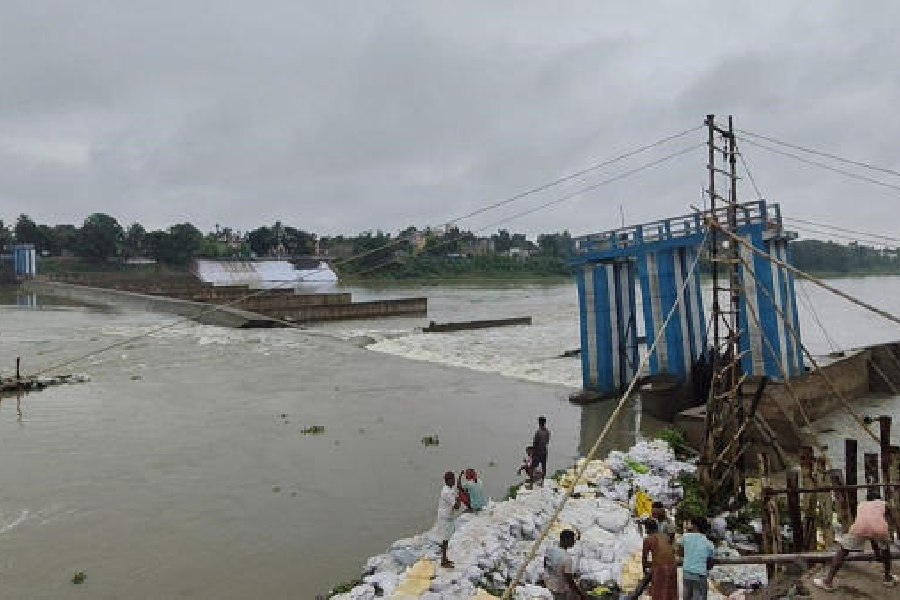
Polavaram Project Telangana objects to AP’s plan to draw dead storage water The Telangana government has raised strong objections against the Andhra Pradesh government’s reported plans to construct a new Lift Irrigation Scheme (LIS) drawing water from the dead storage of the Polavaram Irrigation Project. The Telangana government has called on the Godavari River Management Board (GRMB) to take immediate action as mandated under the Andhra Pradesh Reorganisation Act (APRA), 2014. On Saturday, Engineer-in-Chief (General) G Anil Kumar wrote a letter addressed to the Polavaram Project Authority (PPA) and the GRMB to prevent the proposal from moving forward. This objection comes in the wake of a news report published in a vernacular daily on May 21, which stated that the Andhra Pradesh government plans to lift water from a 35-metre level in the dead storage of the Polavaram reservoir during the current financial year. The report cited G.O. RT No. 134, issued on April 19, 2021, as the basis for the plan. https://www.newindianexpress.com/states/telangana/2025/May/25/telangana-objects-to-aps-plan-to-draw-polavaram-dead-storage-water-calls-it-unauthorised (25 May 2025)
Kaleshwaram Project Agencies tasked with fresh assessment of barrages Amid logistic concerns and financial issues, the construction agencies that implemented the Kaleshwaram Lift Irrigation Project (KLIP) have reportedly been asked to submit detailed reports on the current condition of the Medigadda, Annaram, and Sundilla barrages, the key components of the project. This move follows recommendations by the National Dam Safety Authority (NDSA) to establish a baseline for the rehabilitation of these critical structures.
– The rehabilitation programme, which includes the demolition and reconstruction of the seventh block of the Medigadda barrage, is slated to commence only after November, when river inflows subside with the monsoon’s retreat. As part of the rehabilitation strategy, the government has prioritized geotechnical and geophysical assessments, including borehole and core sampling tests, as recommended by the NDSA. These tests, aimed at evaluating the structural integrity of the barrages, have been conducted and shared with the Central Water and Power Research Station (CWPRS) in Pune for further analysis. https://telanganatoday.com/telangana-kaleshwaram-agencies-tasked-with-fresh-assessment-of-barrages (21 May 2025)
Barrages to lie fallow this year too For the second straight year, the Medigadda, Annaram, and Sundilla barrages of the Kaleshwaram lift irrigation scheme (KLIS), will not put to any use. There is little or no scope for conducting any of the scientific tests needed prior to taking up repairs, before the flood season begins in a few weeks. It is learnt that the government, its latest efforts to get things moving, had asked the agencies that built the barrages to take up geophysical and geotechnical studies as per the National Dam Safety Authority (NDSA)’s expert committee final report.
– The agencies were learnt to have politely pointed out, any work to be taken up at the sites would require fresh contracts. They were learnt to have informed the officials that bills for geotechnical, and geophysical tests already done as sought by the NDSA to determine the extent of damages at the barrages were yet to be paid by the government. Sources said senior government and irrigation department officials discussed with representatives of Navayuga, Afcons, and L&T late on Monday the need for conducting the tests urgently as this year’s flood season is almost upon the Godavari. But this meeting got nowhere with the agencies pointing out the government first needed to finalise an institution that would do the required repair designs, and that this institution — after its assessment of current conditions – should specify its requirements on what tests, and how it would want them done.
– The NDSA expert committee, had pointed out in its final report that the Central Designs Organisation (CDO) of the irrigation department, which was the original designer of the barrages, had declared that it was not capable of doing any work or provide designs with respect to the required repairs. The NDSA asked the Telangana government to finalise an institution, or a group of institutions with expertise in such matters, before any work could be done at the barrages.
– It may be recalled that just last week the irrigation department officials were instructed by the government to ensure all the required tests are done before the onset of the monsoon, which incidentally, is moving into India a week ahead of schedule. The NDSA expert committee, had in its final report, suggested that any design plans for repairs, and other aspects of repair work, should be first vetted by the Central Water Commission.
– The sources also said that given the current circumstances, any possibility of using the barrages in any which way this year appears remote and their gates will most likely be kept open throughout the flood season to protect the barrages from any potential further damages. https://www.deccanchronicle.com/southern-states/telangana/medigadda-annaram-sundilla-barrages-to-lie-fallow-this-year-too-1880239 (21 May 2025)
Ghose panel to summon KCR, Harish Justice PC Ghose, who heads the one-man commission of inquiry, has decided to summon former chief minister K Chandrasekhar Rao, former irrigation minister T Harish Rao, and ex-finance minister Eatala Rajender for questioning. KCR and the former ministers will be given two weeks to appear before the commission and clarify certain key issues. To facilitate the questioning of the former CM and ministers, the govt has extended the term of the Ghose Commission by two more months, until July 31. Previously, the deadline for submitting the final report was May 31. https://timesofindia.indiatimes.com/city/hyderabad/kaleshwaram-probe-ghose-panel-to-summon-kcr-harish/articleshowprint/121276101.cms (20 May 2025)
Reddy criticises shift from Pranahita-Chevella to Medigadda Irrigation Minister N Uttam Kumar Reddy has reiterated that the Pranahita-Chevella project would have been a more viable option compared to the Medigadda barrage to utilise Godavari water. Addressing a press conference on Friday (May 23), he emphasised that the Central Water Commission had confirmed the availability of 160 TMC at Thummidihatti, making Pranahita-Chevella a preferable choice. https://telanganatoday.com/uttam-kumar-reddy-criticises-shift-from-pranahita-chevella-to-medigadda (22 May 2025)
Karnataka Amusement park at KRS dam: HC issues notice to state, Centre A vacation bench comprising Justices BM Shyam Prasad and KV Aravind also issued notices to National Dam Safety Authority of India and other respondents. The matter is scheduled to be heard again on June 9, 2025. The PIL was filed by K Boraiah and four other residents, questioning the govt’s March 15, 2025 tender notification, inviting proposals for a commercial project spread across 198 acres, for an estimated cost of Rs 2,663 crore.
According to the petitioners, the proposal involves non-agricultural commercial development in a sensitive zone surrounding the KRS dam. They argue that the authorities have overlooked important considerations such as dam security, environmental and ecological impact, and the protected status of the area. They further submitted that the state govt had not sought prior approval from the NDSA, nor had it invited public feedback on the proposed development or disclosed its potential impacts.
“The grievance of farmers in the catchment and Cauvery basin for several decades has been the need to upgrade water canals and desilt tanks to improve storage capacity. To date, no such measures have been taken, but a project worth Rs 2,663 crore from public revenue is being initiated without addressing these long-standing demands,” the petitioners stated. The petitioners have sought judicial intervention to review and halt the proposed commercial development, citing risks to agriculture, water security, and the region’s ecological balance. https://timesofindia.indiatimes.com/city/bengaluru/amusement-park-at-krs-dam-karnataka-hc-issues-notice-to-state-centre/articleshow/121323678.cms (22 May 2025) The first notification was issued on September 9, 2024, and the third notification on March 15, 2025. The urgency for the writ petition is the arbitrary decision taken on May 13, 2025, calling for a tender for the project, in addition to the Cauvery arathi event at Rs 100 crore. They requested the court to stay the tender. The next hearing will be on June 9. https://www.newindianexpress.com/states/karnataka/2025/May/22/farmers-move-karnataka-hc-against-brindavan-garden-makeover (22 May 2025)
EDIT Shelve ill-conceived park project The park represents a case of misplaced priorities, especially when farmers in the Cauvery basin have long demanded investments in canal modernisation and improved water storage infrastructure. Rather than proceeding with this ill-conceived project, the government should invest in long-term water security. If an amusement park must be built, it should be located far from critical water reservoirs, ensuring no risk to the dam or public safety. It is time to shelve this dangerous project before irreversible damage is done. https://www.deccanherald.com/opinion/editorial/shelve-ill-conceived-amusement-park-3553491 (23 May 2025)
Mullaperiyar Dam SC sets timelines to facilitate repair The Supreme Court on Monday (May 19, 2025) gave positive directions facilitating Tamil Nadu and Kerala to address and resolve long-contentious issues such as cutting trees that block access to the 125-year-old Mullaperiyar dam, transportation of materials to repair the approach roads and even grouting of the main super-structure of the dam. https://www.thehindu.com/news/national/sc-sets-timelines-to-facilitate-repair-of-mullaperiyar-dam-tree-felling-near-site/article69595087.ece (20 May 2025)
Maharashtra Cabinet approves ₹18K cr for 4 dams The state cabinet on May 20 has approved funding of Rs 18,842 crore for four major dam projects. The first dam will be constructed on the Poshir River with a total capacity of 12.344 TMC and a budget of Rs 6,394.13 crore. This dam will provide a live storage of 9.721 TMC, of which 7.933 TMC is allocated for drinking water and 1.859 TMC for industrial purposes. The second project involves building a 6.61 TMC capacity dam on the Shilar River. This dam will cater to the drinking water needs of Panvel and Navi Mumbai municipal corporations.
The cabinet also cleared the revised administrative approval for two major irrigation projects. In Dhule district, Rs 5,329.46 crore has been allocated for the Sulwade-Jamphal-Kanoli Lift Irrigation Scheme. This project will irrigate 36,407 hectares in Shindkheda and Dhule tehsils; according to a Hindustan Times report as of March, Rs 2,407.67 crore has already been spent. Additionally, Rs 2,250 crore was approved for the Aruna irrigation scheme in Sindhudurg district, which will benefit 5,310 hectares of land across Vaibhav Wadi tehsil in Sindhudurg and Rajapur tehsil in Ratnagiri. https://www.freepressjournal.in/mumbai/mmr-to-receive-drinking-water-from-two-new-dams-in-karjat-maharashtra-cabinet-approves-18k-crore-budget (21 May 2025)
Sardar Sarovar Project Seepage and waterlogging lay waste to agriculture in Luni delta At 458 km, the Narmada canal network is the second longest in India and the largest by water carrying capacity. Jalore and Barmer districts in South-Western Rajasthan lie at the tail end of this network that became fully operational in 2008. But a combination of geological factors and flawed implementation of the irrigation scheme swept the area of its fertility.
-“The Narmada canal was considered a blessing for this arid belt. Who would have thought the land would be rendered barren in a few years only?” said Naveen Kumar, secretary of Parivartan, a non-profit working on drinking water and agriculture in the region.
-While people only engaged in rainfed farming before the Narmada canal network, after 2008, both Rabi and Kharif cropping started. According to a 2021 report of the Comptroller and Auditor General of India (CAG), the irrigated area under cultivation went up from 50,000 lakh ha to 2.5 lakh ha. People grew wheat, cumin, castor, mustard and Isabgol (psyllium husk) in the Rabi season, where only cumin grew earlier.
-The abundance, however, was short-lived. Excess water from the main Narmada canals is released in the minor canals whose designed capacity does not allow for such overflow. “Seepage from the canals also fills up nearby fields, resulting in waterlogging,” said Chaudhary. https://101reporters.com/article/environment/Curse_of_the_canal_Seepage_and_waterlogging_lay_waste_to_agriculture_in_Rajasthans_Luni_delta (21 May 2025)
INTERSTATE WATER DISPUTES
BBMB ‘Punjab should have right over Yamuna’: Mann At the 10th Governing Council meeting of the NITI Aayog on May 24, the Punjab CM said its rivers Ravi, Beas and Sutlej rivers are already in decit and water should be diverted from surplus to deficit basins. He said Yamuna river, like the Ravi and Beas, owed through the erstwhile Punjab state but while apportioning the river waters between Punjab and Haryana, it was not considered while waters of Ravi and Beas were taken into account. “If Haryana has a claim over the waters of Ravi and Beas rivers, Punjab should also have an equal claim on the Yamuna waters. These requests have been ignored adding that due to non-construction of storage structure on Yamuna River, water is going to waste,” he said. https://www.deccanherald.com/india/water-war-at-niti-aayog-if-haryana-claims-ravi-beas-river-water-punjab-should-have-right-over-yamuna-mann-3555925 (24 May 2025)
New water quota Punjab and Haryana Thursday outdid each other with claims and counter-claims on the amount of water being released to the two states by Bhakra Beas Management Board from Nangal Dam, a day after the fresh water distribution cycle kicked. The BBMB, which regulates the water quota, in a meeting last week decided that Punjab will get 17,000 cusecs, Haryana 10,300 cusecs, and Rajasthan 12,400 cusecs of water in the new distribution cycle that will remain in effect till May 20, 2026. https://indianexpress.com/article/cities/chandigarh/new-water-quota-haryana-punjab-sharing-bbmb-10023279/ (23 May 2025) “The days when Punjab would share water with partner states from its quota are gone. Previous governments didn’t fully utilise the state’s share. But this AAP government will not share even a drop from its quota with Haryana. It’s for the first time that Punjab used maximum water, 91% of its share,” Mann said.
-The CM said that Haryana was allocated 15.06 lakh cusecs of water during the last cycle, which ended on Tuesday (May 20). “Against the allocated share, Haryana used 16.48 lakh cusecs. Thereafter, it demanded more water, expecting it from Punjab’s quota. But we did not allow it,” Mann said. https://www.hindustantimes.com/cities/chandigarh-news/bbmb-releases-water-to-haryana-punjab-cm-advises-judicious-use-101747820651692.html (21 May 2025)
Decision not taken by competent authority: Punjab to HC The Punjab Government was arguing its application before Chief Justice Sheel Nagu and Justice Sumeet Goel, seeking recall of Court’s May 06 order, which paved way for release of ‘extra water’ from Bhakra Nangal Dam to Haryana. A contempt plea was filed by a Gram Panchayat for non compliance of Court’s May 06 order. Pertinent to note that On May 06, along with direction restraining the Punjab Police from “interfering” in the day-to-day functioning of the dam, the Court had also directed the Punjab Government “to abide by decision of the meeting held on 02.05.2025 under the Chairmanship of the Home Secretary to the Government of India.” https://www.livelaw.in/high-court/punjab-and-haryana-high-court/punjab-haryana-water-dispute-bhakra-nangal-dam-extra-water-incompetent-authority-293048 (22 May 2025) Punjab govt on May 22 submitted that the May 2 meeting was called on the issue of law and order, and not on the water-sharing matter, and this “fact was concealed” from the court. The case is listed for further hearing on Friday (May 23). https://timesofindia.indiatimes.com/city/chandigarh/bbmb-row-in-high-court-punjab-accuses-haryana-govt-centre-of-concealing-fact/articleshowprint/121346898.cms (23 May 2025) BBMB, in its affidavit, said Punjab’s application lacked merit and came too late. “In case there was any infirmity in the May 6 judgment, the application should have been filed immediately after the judgment and not after directions were issued for compliance,” it said. The BBMB said even if the court’s direction regarding water release was recalled, the main order restraining Punjab officials from interfering in the dam operations still stood, as do contempt proceedings. https://www.tribuneindia.com/news/punjab/in-hc-haryana-centre-oppose-punjab-plea-in-bbmb-case/ (21 May 2025)
Punjab gets one day from HC The Punjab and Haryana High Court on Tuesday (May 20) gave the Punjab government one last opportunity to respond to the replies filed by the Central Government, the state of Haryana, and the Bhakra Beas Management Board (BBMB) opposing its plea to recall a key direction in the court’s May 6 order. The order had directed Punjab to release additional water to Haryana amid the latter’s ongoing water crisis. https://indianexpress.com/article/cities/chandigarh/punjab-high-court-centre-haryana-bbmb-water-release-10016345/ (20 May 2025)
Centre backs BBMB decision to release extra water to Haryana Validating the Bhakra Beas Management Board’s (BBMB) move to release additional water to Haryana, the central govt has stated that no intervention is required under Rule 7 of the BBMB Rules, 1974, at this stage.
-The Centre has pointed out that the water level in Bhakra reservoir has increased since the last technical committee meeting (TCM), and considering this, water may be supplied to the partner states of BBMB depending on their requirements.
-Further requesting the high court to direct Punjab to comply with HC’s May 6 and 9 orders, the Centre has prayed for dismissal of Punjab govt’s plea with cost. According to the Centre, it has not received any reference from Punjab under Rule 7 BBMB Rules 1974. https://timesofindia.indiatimes.com/city/chandigarh/centre-backs-bbmb-decision-to-release-extra-water-to-haryana/articleshowprint/121299946.cms (21 May 2025)
Punjab fails to maintain BBMB staff quota, 2.5K posts vacant According to the data accessed by The Tribune, of the 2,891 lower-rung positions (Class III and IV) in the irrigation wing allotted to the state, 1,669 are vacant. At present, only 1,188 Punjab employees are working in the wing in Class III and IV positions. Of late, 34 employees from other states were adjusted in the state quota. When it comes to higher positions in Class I and II groups, Punjab has been allotted 152 of 312 positions. The positions that fall in the category include that of the Superintending Engineer and Executive Engineer. However, the state has failed to clear names for 84 positions.
-Similar is the case in the power wing of the board. Of the 1,672 allotted to the state in the Class III and IV groups, 1,316 are vacant, with the strength of Punjab employees standing at 326. In the power wing, under the said category, 30 employees from other states have been adjusted against the Punjab quota. When it comes to posts of senior engineers, the state has been allotted 151 of the 345 positions. However, 29 posts of the Punjab cadre are still vacant. https://www.tribuneindia.com/news/punjab/state-fails-to-maintain-board-staff-quota-2-5k-posts-vacant/ (19 May 2025)
Withdraw CISF men from Bhakra Dam: Punjab CM Bhagwant Mann today (May 23) asked PM Modi to withdraw the decision with regard to deployment of 296 personnel of the Central Industrial Security Force (CISF) at Bhakra Dam, Nangal, without any delay. Mann said in case the Centre deployed CISF personnel at the dam, then Punjab would also deploy its police there. In such a situation, any engineer of the BBMB would only be able to enter the dam to open its gates if the Punjab Police allowed him to enter the site, he added. He further said neither Punjab would allow payment of Rs 8.58 crore through the BBMB for deployment of 296 CISF personnel, nor would it give even a single penny from its state exchequer. https://www.tribuneindia.com/news/punjab/withdraw-cisf-men-from-bhakra-dam-mann-to-pm/ (23 May 2025)
Will flag issue of BBMB reconstitution at Niti Aayog meeting: Punjab CM With the beginning of the new water-sharing cycle, the Bhakra Beas Management Board (BBMB) on Wednesday (May 21) released water from the Bhakra-Nangal dam to Haryana. Punjab CM Bhagwant Mann said the state government will flag the issue of reconstitution of BBMB in the Niti Aayog meeting slated for Saturday (May 24).
-He said that as the level of water is changing frequently, every water agreement should be reviewed once every 25 years. He said that this same BBMB had taken Rs 32 crore from Punjab for important projects, adding that this money was never returned. He noted that BBMB owes the state Rs 142 crore to be precise and said that the government will soon initiate proceedings for the recovery of this money. Mann said that 3000 posts of Punjab’s quota have been left vacant deliberately by BBMB to weaken the state’s claim over the waters.
-Meanwhile, the BBMB stipulated that Punjab would get 17,000 cusecs of water, Rajasthan 12,400 cusecs and Haryana 10,300 cusecs in the new cycle of water-sharing that began on Wednesday, during a meeting held on May 15. https://www.newindianexpress.com/nation/2025/May/21/wont-allow-our-waters-to-be-stolen-will-flag-issue-of-bbmb-reconstitution-at-niti-aayog-meeting-punjab-cm-mann (21 May 2025) Mann reiterated his demand of reviewing water agreements every 25 years due to the fragile ecological conditions across the world. “Punjab, being a border state, is fighting the nation’s war to combat terrorism and drugs, but, unfortunately, we are asked to pay a hefty fee for it,” Mann said. Citing an example, he said after the terrorist attack took place in Dinanagar (Pathankot), the Centre demanded Rs 7.5 crore from the state for sending paramilitary forces. https://timesofindia.indiatimes.com/city/chandigarh/not-paying-for-cisf-personnel-at-nangal-dam-punjab-cm-bhagwant-mann-to-centre-amid-water-dispute-with-haryana/articleshow/121346854.cms (23 May 2025)
Centre decides to post CISF at Bhakra dam Amid the ongoing water-sharing dispute between Punjab and Haryana, Centre has approved deployment of Central Industrial Security Force (CISF) at the Bhakra dam project. The move follows a recent move by Punjab police to take control of certain critical points of the dam.
-Sources said MHA sanctioned the creation of 296 posts in CISF’s security wing for induction at the Bhakra project in Nangal, Punjab and a letter to this effect was sent to the central paramilitary force on May 19. Subsequently, CISF issued directions to facilitate accommodation, transport, communication equipment, security gadgets and other basic amenities for deploying its personnel at BBMB, Nangal.
-In court, BBMB had demanded that CISF personnel be deployed at the dam. While hearing the matter on May 6, the Chief Justice-headed bench refused to pass orders for CISF deployment, but observed that most central installations in states are manned by central paramilitary force. https://timesofindia.indiatimes.com/india/punjab-haryana-water-dispute-centre-decides-to-post-cisf-at-bhakra-dam/articleshowprint/121323650.cms (22 May 2025)
The central government took stern action, deploying CISF to protect the Bhakra Dam as the fresh cycle to water distribution started. In the evening, the Union Home Ministry issued new orders asking the CISF to take charge of the Bhakra dam. An amount of Rs 8.5 crore has been allocated and the government has approved 296 personnel of CISF. Instructions have also been given to arrange for their accommodation and communication. https://www.ndtv.com/india-news/centres-big-bhakra-dam-security-move-amid-punjab-haryana-water-row-8472131 (21 May 2025) The Punjab Govt approved the deployment of CISF at the Bhakra Dam project during a full board meeting in a 2021 board meeting. The decision was taken during a full board meeting, attended by junior-level officers from Punjab. Sources stated that the initial plan was to deploy 400 CISF personnel. However, Punjab and Himachal Pradesh objected to the retrenchment of their security staff from BBMB. https://www.tribuneindia.com/news/himachal/punjab-approved-cisf-deployment-at-bhakra-dam-in-2021-board-meeting/ (22 May 2025)
URBAN RIVERS
Mula-Mutha; Pune Human chain every Sunday against RFD project The citizens who are participating in the protests said the current rainfall has made them more concerned about RFD. “As we can all see, the rivers of Pune are dying. There is a lot of pollution in the river, people are facing issues related to the foam that forms in it, and fishes and other aquatic animals are dying. Trees are being cut, but instead of addressing these issues, the government is intent on river beautification,” says Ganesh Bora, an environment-conscious citizen.
He adds that the felling of trees on the river banks and the construction of concrete walls on both sides of the river reduced its space. “We are seeing that there is a change in the behaviour of the rain. There is a lot of rain in a short duration. If the river’s width is reduced, we are looking at a catastrophe in the future,” says Bora. “We highlight the issue every day but keep Sundays for the special human chain in different parts of the city to generate public awareness.” https://indianexpress.com/article/cities/pune/pcmc-witnesses-human-chain-sunday-against-rfd-project-10025689/ (24 May 2025)
River flora and fauna The dataset consists of multi taxa species occurrences from a observational study carried out at the confluence zone of the Mula and Ram river, Baner, Pune. The survey included various riverine habitats including the channel, bed, bank, adjacent riparian forest and the streams that flow into the river. https://www.gbif.org/dataset/bbae6ccc-af83-4866-bed0-498b9adacbbe (02 May 2025)
A concrete threat Rivers plays a key role in maintaining groundwater levels due to their natural composition. Their beds and banks are usually made of porous materials such as soil, sand, and rock layers known as aquifers. If the water cannot easily seep into the ground due to concrete, groundwater recharge will be blocked. Angad Patwardhan, a young activist from Pune, says, “In the name of a riverfront, the river’s banks are being covered with cement and concrete, which disrupts the natural water absorption process.” https://idronline.org/ground-up-stories/a-concrete-threat-to-mula-muthas-future-pune-riverfront-project/ (May 2025)
Hyacinth chokes river Once a vital lifeline for Pune, the Mula-Mutha River is now gasping under thick layers of water hyacinth, an invasive aquatic plant that has engulfed large stretches—especially around Keshav Nagar, Mundhwa and Kharadi. Residents are raising alarms over growing health risks and accusing the Pune Municipal Corporation (PMC) of negligence. https://www.punekarnews.in/pune-water-hyacinth-chokes-mula-mutha-river-in-mundhwa-kharadi-area-residents-slam-pmc-inaction/ (16 May 2025)
Mithi; Mumbai Desilting fraud: Bail of 2 intermediaries rejected An additional chief judicial magistrate court on Thursday (May 22) rejected the bail pleas of two intermediaries arrested in the Mithi river desilting scam. The detailed court order hadn’t been uploaded online at the time of going to press, so it isn’t clear why the bail pleas were rejected. The two arrested accused, Ketan Kadam and Jay Joshi, allegedly charged the BMC an inflated amount to rent silt pusher machines and dredging equipment supplied by a Kochi-based firm https://www.hindustantimes.com/cities/mumbai-news/mithi-river-desilting-fraud-bail-of-2-intermediaries-rejected-101747941748790.html (23 May 2025)
ED launches probe against desilting scam Highly placed sources confirmed the development and said that the central agency has begun a parallel inquiry. The agency, however, is yet to register an official case but it may soon do so based on the predicate offence registered by the Mumbai police, the sources added. Earlier this month, the SIT under the Mumbai police’s Economic Offences Wing booked 13 people, including five private contractors and three BMC officials, for causing wrongful loss to the civic body worth more than Rs 65.54 crore in the alleged scam. https://indianexpress.com/article/cities/mumbai/ed-probe-bmc-officials-contractors-multi-crore-mithi-river-desilting-scam-10019953/ (21 May 2025)
Sabarmati; Ahmadabad River cleaning drive makes progress Due to pre-monsoon repair and maintenance work of gates at the Vasna Barrage, the Sabarmati Riverfront is running dry from May 12 till June 5. The barrage has around 30 gates and usually goes into pre-monsoon repair work annually. Also, as the work of constructing an earthen ramp in the upstream of Vasna Barrage is to be undertaken, the Sabarmati river is required to be completely emptied.
-Even as Sabarmati which boasts to be the first riverfront in the country, the challenges concerning its maintenance and upkeep continue to pose a Herculean task before the administration. Within two days, on May 15 and 16, a total of 118 metric tons of garbage was removed. A massive 76 tons was removed on the first day itself when the cleaning campaign was launched from the ghat behind Gandhi Ashram. https://indianexpress.com/article/cities/ahmedabad/dry-spell-sabarmati-river-cleaning-drive-progress-10017017/ (20 May 2025)
Study Sabarmati 1 of 4 rivers with nonylphenol contamination A new report by Toxics Link, an Indian environmental research and advocacy organisation based in New Delhi, in collaboration with the Environmental Defense Fund, a global non-profit headquartered in New York, has raised the alarm that Sabarmati is one of five rivers across India found to contain unacceptable levels of nonylphenol (NP), a chemical linked to “exposure to carcinogenic outcomes, including prostate cancer in men and breast cancer in women.”
-While noting that high NP levels were also found in the Cooum and Adyar rivers in Chennai, Buddha Nullah in Ludhiana, and Bandi in Pali, Rajasthan, the report adds that NP is “an endocrine-disrupting chemical (EDC) that adversely affects the hormonal system, can mimic oestrogen (the main female sex hormone), and can cause developmental abnormalities in embryos, foetuses, and children.” (Rajiv Shah) https://www.counterview.in/2025/05/environmental-report-raises-alarm.html (21 May 2025)
Dehradun रिस्पना–बिंदाल एलिवेटेड रोड -रिस्पना और बिंदाल नदी के किनारों पर करीब 26 किलोमीटर लंबी दो एलिवेटेड रोड का निर्माण 6252 करोड़ रुपये के बजट से प्रस्तावित किया गया है। दून में एलिवेटेड कारिडोर के तहत रिस्पना नदी पर 11 किमी व बिंदाल नदी पर 15 किमी लंबे चार लेन एलिवेटेड रोड का निर्माण किया जाएगा। https://www.jagran.com/uttarakhand/dehradun-city-dehradun-rispana-bindal-elevated-road-threatens-2600-homes-notices-issued-23943842.html (22 May 2025) -बिंदाल और रिस्पना पर 26 किमी एलिवेटेड रोड निर्माण की योजना है। इसको लेकर लोक निर्माण विभाग ने डीपीआर तैयार की थी। इसके अलावा परियोजना से जुड़े अन्य कार्य शुरू किए थे। अब इस प्रोजेक्ट को एनएचएआई को देने की तैयारी है। लोक निर्माण विभाग और एनएचएआई अधिकारियों के बीच इसे लेकर बातचीत भी हुई है। https://www.amarujala.com/dehradun/preparations-underway-to-hand-over-work-of-bindal-rispana-elevated-road-to-nhai-uttarakhand-news-in-hindi-2025-05-19 (19 May 2025)
Srinagar Doodh Ganga Pollution As the administration has failed to set up STPs around Doodh Ganga in Chadoora town and Srinagar municipal corporation limits , the NGT has directed the Commissioner Secretary Environment & Forest Department UT of J&K to file a written statement through an affidavit mentioning the timeline for setting up the STPs. The order was pronounced on Thursday (May 22) in the case of Raja Muzaffar Bhat who moved to NGT around 4 years back when authorities failed to control the illegal waste dumping , discharge of sewerage and illegal mining in Doodh Ganga around Chadoora and Srinagar areas. https://www.knskashmir.com/doodh-ganga-pollution-195273 (23 May 2025)
Nagaland NLA panel orders ban on waste dumping into rivers The Committee on Environment & Climate Change of the Nagaland Legislative Assembly (NLA) has directed all three municipal bodies in the state to pass resolutions banning discharge of septic waste and dumping of solid waste into local rivers. This followed a consultative meeting of the committee with municipal bodies on Friday May 23, after a comprehensive spot verification of Chümoukedima and Dimapur. Further, the committee asked the municipal bodies not to issue new permits for riverbed mining (sand, gravel, boulder extraction) within town limits to prevent further erosion and protect river health. https://nagalandpost.com/index.php/2025/05/24/nla-panel-orders-ban-on-waste-dumping-into-rivers/ (24 May 2025)
RIVERS
Opinion Legal personhood ruling gave symbolism, not solutions In recent years, India’s higher judiciary has increasingly ventured into domains traditionally reserved for the legislature or executive, issuing rulings that, while well-intentioned, often blur legal boundaries. A striking example of this trend is the Uttarakhand High Court’s 2017 decision in Mohd Salim v. State of Uttarakhand, which conferred legal personhood upon the Ganga and Yamuna rivers. Another serious critique concerns the asymmetry of the legal status. By declaring the rivers to have rights akin to humans but not defining their duties, the court leaves unresolved a fundamental legal dilemma: how to ensure accountability. If a legal person can sue, it must also be capable of being sued. But rivers are not sentient; they cannot act independently. They cannot defend their actions or make choices. Responsibility inevitably falls on their guardians, opening the door to complicated and often politicised litigation.
– The court could have avoided this trap by following a more grounded legal path—recognising rivers as holders of environmental rights derived from human duties, in line with the “interest theory” of rights. Such an approach, rooted in the public trust doctrine, would allow citizens to act on behalf of nature without the need to ascribe anthropomorphic legal identities to natural entities.
– What the court could have done—and still can, if the Supreme Court revisits the issue—is to develop a doctrine of environmental personhood that rests not on faith, but on ecological necessity. Rivers are vital public commons. Their degradation threatens biodiversity, water security, and livelihoods. A more pragmatic framework would involve:
* Defining specific enforceable rights of rivers (e.g., the right to remain free of pollution, to flow, to recharge aquifers).
* Appointing interdisciplinary river trusts, comprising environmental scientists, civil society members, legal experts, and state officials.
* Creating jurisdictional clarity for river governance across states.
* Utilising existing environmental laws (like the Environment Protection Act and Water Act) to operationalise such rights.
– Legal personhood for rivers may one day be a meaningful concept in Indian law. But only if it rests on a foundation more robust than religion, more inclusive than symbolism, and more practical than sentiment. Until then, the judgment remains a poetic gesture—beautiful, perhaps, but legally fragile. – (By Amrita Pankaj Satija) https://www.policycircle.org/opinion/legal-personhood-to-ganga-river/ (27 April 2025)
Report 46% vacant posts in SPCBs: NGT April 30 deadline missed A report submitted by the Central Pollution Control Board (CPCB) to NGT revealed that 5,401 posts (or 46.53%) of the 11,606 sanctioned posts in 26 states and eight UTs continue to be vacant. Except Arunachal Pradesh and Nagaland, the remaining 26 SPCBs face recruitment delays and stretched timelines that extend far beyond the NGT’s April 30 deadline. It was in September last year that the NGT ordered states outside the Delhi-NCR region to fill vacant SPCB and PCC posts by April 30. The Supreme Court, in an order on August 27, had already ordered filling of vacant posts across SPCBs in Delhi-NCR.
Bihar led with 90.47% vacant posts, followed by Uttarakhand (72.62% vacant posts), Andhra Pradesh (71%), Gujarat (60.92%), Karnataka (62.65%), Madhya Pradesh (63.02%) and Odisha (60.04%). According to the CPCB’s affidavit, Andhra Pradesh, Assam, Mizoram, Manipur and Rajasthan have cited pending government approvals as a reason behind delays in recruitment. Some, like Goa, Kerala, Meghalaya, and Rajasthan are relying on outsourced or contractual staff to meet operational needs. In many other states, posts are vacant either due to absence of eligible candidates in feeder cadre or administrative delays for approvals.
The status report also submitted details on the number of labs and equipment available with the SPCBs and PCCs. For wastewater monitoring, only 5 states — Gujarat, Karnataka, Madhya Pradesh, Maharashtra, Telangana — were fully equipped to take samples and test water. https://indianexpress.com/article/india/posts-pollution-boards-vacant-states-uts-miss-ngt-deadline-10026368/ (25 May 2025)
SC sets Sept 30 deadline for filling DPCC vacancies The Supreme Court on Monday (May 19) castigated the Delhi government for its failure to fill posts in the Delhi Pollution Control Committee (DPCC), ordering all 204 vacancies — of a sanctioned strength of 344 — to be filled by September 30, 2025. The court initiated proceedings on May 8 by summoning the Delhi chief secretary after being informed that 55% posts in DPCC lay vacant. Describing the situation as a “sorry state of affairs”, the bench noted that the DPCC—essential for enforcing pollution-control laws—was “virtually defunct”.
-At a prior hearing, the court was informed that state pollution boards in Uttar Pradesh and Rajasthan had 45% vacancies, while Haryana’s stood at 35%. The Central Pollution Control Board (CPCB) also presented nationwide data showing that Bihar and Jharkhand faced vacancy rates as high as 90%, with several states registering more than 60% unfilled posts. The court extended the September deadline to all state boards and directed the CPCB itself to achieve full strength by the end of August 2025. https://www.hindustantimes.com/cities/delhi-news/sc-sets-sept-30-deadline-for-filling-dpccvacancies-101747678172599.html (20 May 2025)
GODAVARI Maharashtra HC notices over non-compliance of order “This contempt petition has been filed for non-compliance with the order, dated Dec 18, 2018, passed in PIL No. 176 of 2012. Issue notice to respondents 1 (Khatri), 2 (NMC) and 3 (MPCB regional officer) returnable after ensuing summer vacation,” the HC bench of Chief Justice Alok Aradhe and Justice M S Karnik said on May 8. The HC order was uploaded on the court’s website on Tuesday (May 13).
Environmentalist Rajesh Pandit filed the petition on May 5, praying for necessary contempt action to be initiated against six out of the eight respondent authorities named in the petition, for ‘violation and committing willful breach’ of the HC’s judgment and order in PIL No. 176 of 2012. The HC had then directed the respondent authorities to comply with the various directions for the purposes of rejuvenation of the Godavari and also to make the river free from all types of pollution, generally which is caused due to sewage water, industrial waste, which are released into the main stream of the river.
Pandit told TOI on Tuesday, “Apart from giving directions through its Dec 18, 2018, judgment, the HC had asked the authorities to follow the recommendations made by the NEERI to make River Godavari pollution-free. Among other things, the court had directed the upgradation of NMC’s old Sewage Treatment Plants 100% collection of sewage generated in the city, action against encroachments within the blue flood line of River Godavari. The court had also directed the MIDC to construct a CETP in MIDC, Ambad.” Pandit has pleaded for the court’s direction to ban the use and bathing activities in the Godavari river during the Simhasta Kumbh mela unless the authorities implement the court’s previous orders. https://timesofindia.indiatimes.com/city/nashik/high-court-notices-to-nashik-civic-chief-others-in-contempt-plea-over-non-compliance-of-order/articleshow/121146452.cms (14 May 2025)
Telangana Saraswati Pushkaralu in Kaleshwaram With the once-in-12-years Saraswati Pushkaralu under way, the town of Kaleshwaram has transformed into a sacred theatre of ritual and riverine power. But beyond the ritual and crowd control lies something deeply transformative. As pilgrims swirl around the ghats, Raj Kamal Reddy, a geologist from Karimnagar, urges a different kind of reflection. “This is not just about a holy bath or religion. Our rivers are dying. Festivals like these must also serve to remind us of our duty — to protect the rivers that sustain us, to honour their self-purifying power, and to let them flow freely for generations to come.”
Until the late 1970s, bullock carts were the only way to reach Kaleshwaram. The dense forests of Mahadevpur mandal, once a hotspot of Naxalite activity, kept it secluded and sacred. The arrival of bus services in 1976 and road projects in the 1980s. Today, NH 353C cuts through the region, bringing pilgrims from across Telangana, Maharashtra’s Gadchiroli and Chandrapur, and Bijapur and Jagdalpur in neighbouring Chhattisgarh. Yet, even amid the trucks and tour buses, one can still find farmers from nearby villages arriving in bullock carts, honouring tradition.
The State has allocated ₹40 crore for the festival and promised an additional ₹200 crore to develop Kaleshwaram into a major spiritual tourism hub ahead of the 2027 Godavari Pushkaralu. A 17-foot statue of Saraswati, carved from a single stone by Tamil Nadu artisans, now stands at the newly developed Saraswati ghat, lending grandeur to the bathing ghats where pilgrims take their ritual dips. A 100-room choultry was also inaugurated ahead of the festival to host pilgrims. https://www.thehindu.com/news/national/telangana/saraswati-pushkaralu-in-kaleshwaram-when-rivers-meet-and-faith-overflows/article69607910.ece (23 May 2025)
Goa STP project stokes ire of Assolda locals At the Assolda gram sabha on Sunday (May 18), locals voiced strong opposition to the under-construction sewage treatment plant (STP) at Hodar, near the banks of a Zuari tributary. Locals expressed outrage that the NOC for the STP was granted by the authorities without conducting an environmental impact assessment (EIA) study. The STP project, the locals said, is located close to a water body, and could harm ecosystems and pose health risks to people. They demanded the immediate cancellation of the NOC and a thorough environmental study before any further permissions are considered. https://timesofindia.indiatimes.com/city/goa/sewage-treatment-plant-project-stokes-ire-of-assolda-locals/articleshowprint/121253203.cms (18 May 2025)
SUTLEJ Punjab NGT seeks report on water contamination in Malwa region The NGT bench directed the respondents to file replies at least one week before the next hearing date, set for September 18, 2025. The news items highlighted the serious water pollution problem in the Malwa region of Punjab, particularly in canals across the Ferozepur, Faridkot, Muktsar, and Fazilka districts in the southwestern part of the state, due to the inflow of contaminated water. The situation arose because polluted water flowed into the Sirhind Feeder Canal from the Harike barrage. https://timesofindia.indiatimes.com/city/chandigarh/ngt-seeks-report-on-water-contamination-in-malwa-region/articleshowprint/121374570.cms (24 May 2025)
GANGA Uttarakhand रामगंगा: स्रोत से संगम तक उत्तराखंड की महत्वपूर्ण नदी है पश्चिमी रामगंगा जिसका उदय चमोली ज़िले के दूधातोली से होता है। रामगंगा की कई सहायक नदियां भी हैं। रामगंगा के साथ पदयात्रा करके जीवन के बारे में बहुत कुछ सीखा जा सकता है। इस वीडियो में देखिये हृदयेश जोशी के साथ। https://www.youtube.com/watch?v=xLscTGuqlHk (20 May 2025)
Bihar Toxic mercury in breast milk of Ganges moms Nearly three in four lactating women sampled in Gangetic plains have dangerously high mercury concentrations in their breast milk, researchers have warned, calling for source-tracing investigations and medical interventions to mitigate the risk. This is the first study to report high mercury levels in breast milk from eastern India, a region where earlier research has already documented widespread exposure to arsenic and lead in the environment, the researchers from multiple academicinstitutions said in their research study.
The researchers collected breast milk and blood and urine samples from 181 women from 11 districts — Bhojpur, Buxar, Saran, Patna, Vaishali, Samastipur, Nalanda, Darbhanga, Begusarai, Munger and Khagaria — who consented to participate in the study. They collected urine samples from 172 infants. They found mercury concentrations above the safety threshold in the breast milk, blood, and urine samples only from Bhojpur, Buxar, Patna, Nalanda, Begusarai, Khagaria and Darbhanga.
An analysis of the locations from where the samples were collected suggests that populations in Bhojpur, Patna and Nalanda along the southern bank of the Ganges are exposed to the highest concentrations of mercury. Potential sources could be industrial effluents or other human-generated wastes. https://www.telegraphindia.com/india/toxic-mercury-in-breast-milk-of-ganges-moms-in-bihar-study-urges-immediate-intervention-prnt/cid/2093655 (12 April 2025)
गंगा की जगह भूमिगत पानी ले रहा पेप्सी प्लांट गंगा की जगह भूमिगत पानी ले रहा पेप्सी प्लांट:12 फीट गिरा जलस्तर, रोज लाखों लीटर पानी निकालती कंपनी; गिरिराज बोले- बंद हो प्लांट. बेगूसराय के बरौनी में बियाडा (बिहार इंडस्ट्रियल एरिया डेवलपमेंट अथॉरिटी) की जमीन के 10-20 किमी के दायरे में 3 साल में 20 फीट तक जलस्तर गिर गया है। भूगर्भ शास्त्री और ग्रामीणों का कहना है ऐसा पेप्सी कंपनी के बॉटलिंग प्लांट के कारण हो रहा है। https://www.bhaskar.com/local/bihar/begusarai/news/pepsi-plant-is-taking-underground-water-instead-of-ganga-135081380.html (23 May 2025)
YAMUNA Delhi Architects outrage as DDA hires freshers to restore floodplains A senior architect called the DDA ad “outrageous”. “It is a 1,000-hectare, ambitious project. Shouldn’t DDA get an interdisciplinary team of experienced consultants, professionals, instead of getting junior people in their office to design this landscape?” said a senior architect in a conversation with The Print. “Is DDA even serious about the project?” The walk-in interview advertisement by DDA has triggered a flurry of concern and conversation within Delhi’s architecture community. Well-known, senior architects are questioning the workings of DDA. They say there were no consultations with senior architects who have worked closely with the government. And such ads have caught them off-guard.
Their concern is corroborated by the history of such landscaping projects along Yamuna floodplains. In 2023, a devastating flood took Yamuna floodplains back by years after wiping out the work of 10 projects taken up by DDA on 1,000 hectares along the river. Reports suggested around 90 per cent of 90,000 saplings and riverine grass were damaged due to the floods in 2023. It was when the DDA had begun work on seven projects. Of these, at least three projects—Asita East, Kalindi Aviral, and Yamuna Vatika—were nearing completion. The projects had witnessed investments of Rs 13.3 crore, Rs 13 crore, and Rs 14.3 crore, respectively.
“The problem is that the DDA doesn’t have an overarching vision,” said KT Ravindran, retired professor and Head of Urban Design at the School of Planning and Architecture. “Flood management is a crucial component of Yamuna floodplain restoration. Those without experience are unfit for executing such complex work on the ground. The only logical explanation I can see is that they are hiring junior people to provide assistance.”
A senior official from DDA, who didn’t want to be named, said that there is tremendous pressure from the newly elected BJP government in Delhi to finish the Yamuna floodplains restoration project. “If there are any architects who have any concerns, they can directly contact us. We have a long-standing team of architects, and we are very serious about the proper restoration and renovation of Yamuna floodplains,” said the official, who is involved in the thick of the project. https://theprint.in/feature/around-town/dda-hiring-freshers-restore-yamuna-floodplains/2635453/ (23 May 2025)
Questions over new STPs plan Constructing new STPs is also a time-consuming and complex undertaking, Kumar pointed out. “Delhi’s largest STP—also the biggest in Asia—is located in Okhla and has a capacity of 124 MGD. It took seven years to complete. To trap the Najafgarh drain alone, the DJB would need to build an STP at its mouth with three times Okhla’s capacity. That is practically unfeasible and unrealistic” says environmentalist Pankaj Kumar, founder of Earth Warrior.
Bhim Singh Rawat, Associate Coordinator at the South Asia Network on Dams, Rivers & People (SANDRP), echoed the concerns. “The decentralised STPs and tapping of drains are essential works and should have started long back. However, STPs must not be built in the river floodplain. Doing so would not only amount to encroachment of the already shrinking floodplain but would also expose the structures to flood damage, rendering them defunct,” he said.
-Rawat added that STPs already exist at the mouths of some drains along the western bank of the Yamuna, such as at ISBT and the Indraprastha metro station, but these have not been effective in reducing pollution. “So, the key question remains—how to make the STP system functional, accountable, and transparent. There are also STPs discharging treated sewage water back into the same drains, which defeats the very purpose of cleaning the river,” Rawat said.
-He further pointed out that the actual sewage and wastewater generation in Delhi is grossly underestimated, leading to failed river-cleaning efforts. “The government has yet to form a policy for the reuse of treated wastewater and has not put in place the required infrastructure. Tapping and diverting effluents from drains to selected STPs may negatively impact their functioning. So, the success of the plan will depend on several factors and must be supplemented with missing links,” he added. https://thepatriot.in/reports/experts-call-delhi-jal-boards-sewage-plan-flawed-and-unlawful-70300 (21 May 2025)
STP upgrade delays hits clean-up Bhim Singh Rawat, a Yamuna activist, and member of the SANDRP said the national capital is stuck in a cyclic problem of upgrade and capacity enhancement, citing similar delays over the past 15 years. “DJB has a very poor record in treatment of effluents. Its projects have been so slow that by the time a plant is upgraded or installed, the sewage generation of that area is already beyond the upgraded levels. The very foundation of sewage generation estimates are flawed and we need to be honest to do a course correction,” he said. https://www.hindustantimes.com/cities/delhi-news/stp-upgrade-delays-hits-delhi-yamuna-cleanup-101747764844377.html (21 May 2025)
Demolition drive fails to clear path for Taimoor drain But a critical section of the drain’s outfall—where it meets the Yamuna—remains heavily constricted, threatening to undo the progress just weeks before the monsoon sets in. https://www.hindustantimes.com/cities/delhi-news/demolition-drive-fails-to-clear-path-for-taimoor-drain-101747678113160.html (20 May 2025)
River dirtier in May DPCC monthly analysis shows that while the river was more polluted at its exit from the city at Asgarpur, it also entered the city at Palla with substantial pollution levels. The samples of the river were collected on May 1, a day before the city recorded heavy rains. The pollution load in major drains like Maharani Bagh, Shahdara and Najafgarh also increased in May.
Experts, however, were concerned about the various test readings published by DPCC. Pankaj Kumar, environmentalist and founder of Earth Warrior, said, “If fecal coliform is high, then BOD must also increase. However, we see that BOD at Nizamuddin Bridge is 37mg/l and fecal level is 2.4 lakh MPN/100ml. At the next station at Okhla barrage, BOD drops to 23 and fecal coliform increases to 3.3 lakh. DPCC must recheck this rather big anomaly. At Palla, the DO level is 9.8mg/l and BOD is 4, which seems a bit unlikely because for DO as high as 9.8, BOD must be 1-2mg/l.” https://timesofindia.indiatimes.com/india/yamuna-dirtier-in-may-pollution-load-in-major-drains-increases-too/articleshow/121348245.cms (23 May 2025)
River water quality worsens: Report Water quality of the Yamuna has worsened in May, clocking a spike in biological oxygen demand (BOD) and faecal coliform levels from April, according to the monthly water quality report of the Delhi Pollution Control Committee (DPCC). The monthly reports comply with a NGT order, based on readings from eight points of the Yamuna in the Capital. https://www.hindustantimes.com/cities/delhi-news/yamuna-water-quality-in-delhi-worsens-report-101747938086821.html (23 May 2025)
Dirty water at Palla raises a stink A sudden and significant rise in visual pollution in the Yamuna upstream of the Wazirabad barrage, which is generally clean and pollution-free, has raised concerns. Incidents of fish dying around Palla surfaced recently while yellowish murky water in the main river stream could be seen from Palla to Wazirabad. Recently, Delhi Pollution Control Committee’s monthly analysis for April also pointed out a spike in pollution at Palla, the entry point of the Yamuna in Delhi, which showed above-normal fecal levels and very low DO, a first in many years. https://timesofindia.indiatimes.com/city/delhi/dirty-water-at-palla-raises-a-stink/articleshow/121240854.cms (18 May 2025)
17 STPs fail norms Citing a report by the CPCB, the NGT in its recent order said: “17 STPs are not complying with the norms in reference to the faecal coliform and are possibly discharging the treated water with high faecal coliform in river Yamuna or in some other natural water body or stream.” https://www.telegraphindia.com/india/yamuna-plan-hits-green-wall-as-17-delhi-sewage-treatment-plants-fail-pollution-norms-prnt/cid/2101591 (25 May 2025)
Take holistic approach: Amit Shah Union Home Minister Amit Shah on Thursday (May 22, 2025) directed the Ministry of Jal Shakti to develop a Standard Operating Procedure for all STPs to ensure consistency in their quality, maintenance, and discharge. He also said that these standards should be shared with all States for broader adoption. He emphasised that all planning related to the Yamuna, drinking water, and drainage must be done with a 20-year horizon. Highlighting the crucial role of the DJB, Mr. Shah called for urgent steps to fill all vacant posts and strengthen institutional capacity. The Home Minister underlined the need to boost water distribution efficiency, reduce pipeline leakages, and use world-class technology for desilting drains. “Effective water management is essential for ensuring a reliable drinking water supply across the city,” he said. https://www.thehindu.com/news/cities/Delhi/take-holistic-approach-to-clean-yamuna-amit-shah/article69607679.ece (23 May 2025)
Centre clears ₹800-cr financial aid The Expenditure Finance Committee, a key body within the Department of Expenditure, Ministry of Finance, recently approved the DJB’s proposal for the construction of 40 decentralised STPs and extension of sewer lines in Outer Delhi at an estimated cost of Rs 3,104.57 crore. Of the total amount, the Centre will provide financial assistance of Rs 804.58 crore to Delhi under the AMRUT 2.0 scheme. “The rest of the funds will be arranged by the UT from their funds,” the official document reads. Earlier this year, soon after it was elected to power in the Capital, the BJP government in the Capital allocated the biggest share of Rs 9,000 crore in the 2025-26 Budget to the water and sewerage sector. https://indianexpress.com/article/cities/delhi/centre-delhi-jal-board-amrut-scheme-10026380/ (24 May 2025)
DJB puts up STPs for adoption According to DJB’s proposal, the agency is inviting sponsorship in four broad areas — installation of modular STPs, deployment of plug-and-play STP units, adoption of in-situ sewage treatment technologies, or support for innovative eco-friendly treatment methods. “We’ll take care of identifying sites and securing permissions. Once installed, DJB will take over operations and maintenance,” the official said. Under the scheme, private firms or individuals will pay the equipment suppliers directly, choosing vendors whose products meet the CPCB standards. DJB’s role will be to supervise the installation, assist in technical approvals, and oversee long-term operations. The utility has already identified a list of drains for the project, several of which — including the Najafgarh, Shahdara and Barapullah drains.
Still, challenges remain. DJB has faced criticism in the past for delays in STP commissioning, poor maintenance, and lack of transparency. Moreover, environmentalists warn that while decentralised treatment plants are welcome, they cannot replace the need for robust sewerage networks and long-term pollution control policies. Diwan Singh, an environmental activist, said the responsibility of cleaning the Yamuna rests with the government and DJB, which should not try to pass the buck to private entities or CSR efforts. https://www.hindustantimes.com/cities/noida-news/yamuna-clean-up-jal-board-puts-up-waste-treatment-plants-for-adoption-101747680153155.html (20 May 2025)
DDA plans irrigation project for 750 parks The DDA plans to construct sewage treatment plants to generate treated water under a comprehensive irrigation project for its 750 green spaces, officials said on Monday (May 19). The land-owning agency, which maintains numerous parks, biodiversity parks, reserved forests, the Yamuna Riverfront, green belts, golf courses, and sports complexes spanning across over 10,000 acres, is planning a water management project focusing on — cost-effectiveness and self-sufficient irrigation systems. Officials said currently the treated water for green spaces is provided directly through water tankers, or pipelines, laid down by DJB for supplying water to the parks. https://www.ptinews.com/story/national/DDA-plans-comprehensive-water-irrigation-project-for-its-750-parks/2569145 (19 May 2025)
Delhi 60km road along Najafgarh drain To improve connectivity and rejuvenate the stretch along the Najafgarh Drain or Sahibi river, a road development project worth Rs 600 crore has been planned, officials said. As per the scheme, nearly 60.77km of new roads will be constructed along the drain. The project envisions a two-lane road on the left bank from Jhatikra Bridge to Chhawla Bridge, covering a length of 5.94km.
-Additionally, a two-lane road will be built on both banks of the drain between Chhawla Bridge and Basaidarapur Bridge, adding another 54.83 kms to the corridor. Later, a riverfront project will be developed along the Sahibi river, also known as the Najafgarh Drain. https://timesofindia.indiatimes.com/city/delhi/60km-road-along-najafgarh-drain-to-boost-connectivity/articleshowprint/121253395.cms (19 May 2025)
Panipat How drain number 2 in Panipat has been severely polluting the Yamuna and affecting aquatic life in river and potable water supply of Delhi. https://www.youtube.com/watch?v=XErWM94ZiuQ (22 May 2025)
Gurugram Toxic waste dumped by industrial units At several points along the Badshapur stormwater channel are industrial units that routinely release untreated wastewater into the drain, which eventually flows into Yamuna river, dumping in it a cocktail of toxic pollutants. Wastewater laced with chemicals was seen being discharged into the 29km Badshapur channel in Sector 34 of the city, and Kankrola village of Manesar on Friday (May 23).
Residents said waste dumping was not a one-off exercise. “We have seen at least 20 tankers openly dumping untreated sewage and waste illegally into the drain at the same area. It’s a common practice at night and early mornings, when they think no one is watching,” said Rakesh Yadav, who lives in Khandsa village in Sector 34.
Activists have voiced similar concerns for years. It isn’t that authorities are unaware of untreated wastewater flowing into the channel and inevitably polluting the Yamuna. In 2019, the SPCB had documented that at least 26 spots in the city from where sewage or industrial waste was being illegally dumped into the Badshapur channel. Haryana govt’s Yamuna Action Plan, prepared in Nov 2018, also identified the Badshapur channel as one of the key sources of pollutants being dumped into the river.
Yet, little has changed on the ground. An SPCB official on Friday acknowledged that untreated effluents being released into the stormwater channel was a problem but added that the agency has resource constraints. “We are aware of the violations and have issued notices to several industrial units. However, we need more manpower and equipment to enforce regulations. We have shut down several polluting units in the past,” the official said. https://timesofindia.indiatimes.com/city/gurgaon/what-adds-to-yamuna-pollution-toxic-waste-dumped-by-citys-industrial-units/articleshow/121374213.cms (24 May 2025)
Govt vows to plug toxic flow A day after CM Nayab Singh Saini met his Delhi counterpart Rekha Gupta in the national capital, the state govt announced that it was going to “clean up its act” to help BJP govt in Delhi fulfil its promise to clean the Yamuna. Industry and environment minister Rao Narbir Singh said on Friday (May 23) Haryana govt will “fully support” the central govt’s mission to clean Yamuna river.
Treated water will be redirected for agricultural and horticultural purposes, reducing the dependency on fresh drinking water supplies, the minister said. The minister said similar inspections and meetings will be held in different districts that discharge drainage water into Yamuna. Residential societies have been directed to ensure their STPs are fully operational and to stop discharging untreated wastewater into open areas. Construction sites are now required to use treated water from STPs, with relevant agencies tasked to monitor compliance. He has ordered thorough inspections of STPs installed by builders within their project sites.
“A plan is underway to supply treated water from STPs to approximately 30 villages in in the Farrukhnagar and Pataudi for agricultural and horticultural use,” the minister said. Providing details of his inspection tour, the minister said currently, 75 MLD of treated water is being discharged into the STP channel between Gurgaon and Jhajjar from the Dhanwapur plant, which has a total capacity of 218 MLD, for agricultural purposes in Jhajjar. The channel itself has a capacity of 500 MLD. This treated water is already being utilised by farmers in the Jhajjar district for irrigation. Rao said, “With modern water purification technologies, STP-treated water is now safe and effective for agricultural use. Utilising this water can also help to curb the depletion of groundwater and also provide farmers with a reliable alternative for irrigation purposes. https://timesofindia.indiatimes.com/city/gurgaon/haryana-vows-to-plug-toxic-flow-to-shield-yamuna-from-urban-waste/articleshow/121374270.cms (24 May 2025)
Directed 10 illegal dyeing units to shut down: SPCB Closure notices have been issued to ten dyeing units that were found to be operating illegally in residential areas of the city, the SPCB has told NGT. HSPCB’s response came on notices issued by NGT to Haryana govt, Union environment ministry, central and state pollution control boards and the Gurgaon district administration after TOI reported in Aug 2024 and March 2025 that dyeing units were illegally operating in sectors 36, 103 and Basai. https://timesofindia.indiatimes.com/city/gurgaon/directed-10-illegal-dyeing-units-operating-in-residential-parts-of-gurgaon-to-shut-down-hspcb/articleshow/120136781.cms (09 April 2025)
RIVERS BIODIVERSITY
Odisha Gharial breeding recorded for 5th year in a row in Mahanadi Gharial conservation in Odisha has taken another leap forward with birth of 29 more crocodile babies in the freshwaters of Mahanadi river this year, making it the fifth consecutive breeding of the threatened species in the river system. PCCF (wildlife)-cum-chief wildlife warden Prem Kumar Jha informed that the gharial hatchlings were found in Baldamara area of the river within Satkosia gorge sanctuary.
Divisional forest officer of Satkosia wildlife division Saroj Kumar Panda said as part of the conservation efforts, surroundings of the nesting site in Satkosia gorge was declared a no-fishing zone and ban on all kinds of fishing activities imposed. Fencing has also been done along the river banks to protect the area. “The site has now been secured and all human activities restricted for the next 48 hours as more gharial babies are expected to hatch,” Panda said. He further added that the hatchlings would be monitored through CCTV surveillance. The breeding of gharials in their natural habitat in Mahanadi was first witnessed in 2021 after a gap of nearly 40 years.
According to forest officials, Mahanadi is the southernmost limit of gharials in India. It was on the verge of getting locally extinct until the species recovery program was launched in 2019. Accordingly, the same year, around 20 gharials were reintroduced in the river near Tikarpada in the first phase. Around 28 hatchlings were found in a nest in Baldamara area of the river within Satkosia gorge sanctuary in May 2021 after a gap of nearly four decades. Eventually, 30 baby crocodiles took birth at the same site in 2022 and 35 each in 2023 and 2024, informed forest officials. The second phase of the program was launched in April. https://www.newindianexpress.com/states/odisha/2025/May/20/gharial-breeding-recorded-for-fifth-year-in-a-row-in-odishas-mahanadi (20 May 2025)
Assam What aquatic insects reveal about the health of Jatinga River A study titled “Aquatic insects as indicators of water quality: Seasonal distribution and biomonitoring insights from a hilly river in the Eastern Himalayan region, India” by Tanushree Chakravarty and Susmita Gupta focuses on the Jatinga River — a 71-km-long tributary of the Barak River that flows through the Indo-Burma biodiversity hotspot. The river supports thirteen tribal communities and runs along the Barail Wildlife Sanctuary, one of Assam’s ecologically rich protected areas.
-The research explains how aquatic insects can act as precise, reliable bioindicators of water quality and ecosystem health. “The richness and diversity of aquatic insects offer powerful insights into a river’s condition,” says the report, emphasising that their presence, absence, or dominance can reflect not just current pollution levels but the cumulative impacts of seasonal changes and human activity.
-Anthropogenic pressure — especially in the form of unregulated sand mining, agriculture, and settlement waste — was a recurring theme in the study. “Such activities reduce substrate stability and increase sediment load,” the authors explained. This not only impacts insect communities but also reduces the river’s self-purifying capacity.
-The report makes strong policy am stretches,” the authors state, adding that “restoring riparian vegetation and preventing soil erosion should be prioritised.” They also emphasise the importance of involving local communities. “The hill district is home to thirteen tribes. Their traditional knowledge, if integrated with scientific monitoring, can play a crucial role in river conservation,” the report said. https://www.indiawaterportal.org/rivers-and-lakes/what-aquatic-insects-reveal-about-the-health-of-assams-jatinga-river (17 May 2025)
Delhi World Turtle Day: Wake-up Call from wetlands Last year in July, a joint operation by Delhi Police and People for Animals (PFA) seized 100 rare and live turtles from the bag of a man on a scooter. These included Indian roofed turtles, black-spotted pond turtles, Indian-eyed turtles and Indian softshell turtles. “Most turtle species are endangered now because cities have lost wetlands and rivers. Several species are sharply declining, some even wiped out by pollution, urbanisation and poaching,” said Sipu Kumar, researcher at the Wildlife Institute of India. Some efforts have been undertaken to create rare city spaces to provide the shelled species a safe abode and the good news is that they are even hatching. The rehabilitated wetlands in DDA’s Yamuna Biodiversity Park, for example, have emerged as breeding sites for turtles, including the softshell species, with one documented sighting of a black pond turtle. https://timesofindia.indiatimes.com/city/delhi/world-turtle-day-wake-up-call-from-delhis-wetlands/articleshow/121374873.cms (24 May 2025)
Suspected grey wolf sighted after decades A possible sighting of the Indian grey wolf (Canis lupus pallipes) has been reported in Delhi, after a wildlife enthusiast photographed a lone animal resembling the elusive species along the Yamuna floodplains near Palla, in north Delhi, where the river enters the city. The rare encounter occurred on Thursday (May 15) morning, when the animal was seen along the riverbanks before vanishing into the tall riverine grasses.
-YV Jhala, a leading wildlife scientist and expert on Indian wolves, said the animal in the photographs did appear “wolfish”, but hybridisation was a growing concern. “It does look like a wolf. But the dark colour and the curve of the tail suggest possible dog gene introversion. Without genetic analysis, everything remains speculative,” he said.
-Experts agree that while this may be an isolated incident, the sighting carries great ecological significance for Delhi. The forest department is yet to confirm the sighting but said they are reviewing the images and may conduct a site inspection. https://www.hindustantimes.com/cities/delhi-news/suspected-grey-wolf-sighted-in-delhi-after-decades-101747678112489.html (20 May 2025)
Report Chambal Riverine Habitat Winding through gullies and ravines, the Chambal River is one of India’s most misunderstood water bodies—infamous, untamed (Chambal is not untamed as there are already four major dams built on the river), and largely unexplored. Born in the highlands of the Vindhyas, this ancient river has witnessed countless stories of death, survival, and wild beauty. https://www.youtube.com/watch (11 April 2025)
Arunachal Pradesh Incredible creature resurfaced The Himalayan velvet worm had been missing from scientific literature for over a century, leading many to presume it extinct. Its rediscovery in the Siang Valley—a biodiversity hotspot with complex forest ecosystems—suggests that remote and undisturbed habitats may shelter species previously believed lost. Protecting these environments is critical to conserving Earth’s biodiversity, especially in areas vulnerable to climate change and human impact. https://indiandefencereview.com/extinct-100-years-creature-resurface-india/ (21 May 2025) Rediscovery and phylogenetic position of a long-lost Typhloperipatus williamsoni Kemp, 1913 (Onychophora: Peripatidae) after 111 years. https://www.tandfonline.com/doi/full/10.1080/00222933.2025.2483434 (11 April 2025)
World Turtle Day Ancient creatures with modern challenges Freshwater turtles act like cleanup crews. They feed on decaying plants and dead fish, keeping ponds and rivers clean. Their presence makes the water healthier for other species too. https://www.earth.com/news/world-turtle-day-2025-ancient-creatures-with-modern-challenges/ (23 May 2025)
Report Grass is more than just a patch of green: Ecologist Mahesh Sankaran’s research includes studying grasslands in Africa and India and determining how these ecosystems have evolved and contribute to the biosphere. With over two decades of experience working on the subject, Sankaran emphasised on the need to conserve the second most widespread habitat.
However, he mentions that India’s grasslands face many conservation challenges. “I think one of the biggest reasons is that most of them are administratively classified as wastelands; this is a legacy from colonial foresters who looked at vegetation only from the perspective of forestry. Anything that didn’t generate revenue was classified as a wasteland. Unfortunately, that is still the case today.” https://www.thehindu.com/sci-tech/science/grass-is-more-than-just-a-patch-of-green-below-your-feet-ecologist-mahesh-sankaran/article69577881.ece (21 May 2025)
FISH, FISHERIES, FISHERFOLKS
Meghalaya Cave-dwelling fish that can survive on surface found A team of zoologists from Gauhati University, Lady Keane College in Shillong, and the ICAR-National Bureau of Fish Genetic Resources in Lucknow discovered Schistura densiclava — a new species of fish that thrives underground but can adapt to surface conditions as well — in Krem Mawjingbuiñ, a cave in Meghalaya.
“This discovery highlights the untapped biodiversity thriving in Meghalaya’s underground ecosystems. It’s the ninth new fish species we’ve described from Northeast India, and the sixth known cave-associated fish from Meghalaya” said Professor Dandadhar Sarma, head of Zoology department at Gauhati University. https://www.hindustantimes.com/india-news/cavedwelling-fish-that-can-survive-on-surface-found-in-meghalaya-101748198387950.html (26 May 2025) https://www.thehindu.com/sci-tech/energy-and-environment/meghalayas-new-cave-dwelling-fish-adapts-to-streams-overground/article69616871.ece (26 May 2025)
SAND MINING
Kerala Govt to resume river mining after a decade Kerala government to resume river sand mining after a Decade The Revenue Department has issued an order approving the guidelines for resuming river sand mining in the state. The new guidelines have been drawn up on the basis of the Enforcement & Monitoring Guidelines for Sand Mining (EMGSM), 2020, and the directives of the Supreme Court and the NGT on legal and scientific mining of river sand in the country.
-Under the new guidelines, a District Survey Report (DSR) has to be drawn up for rivers in each district. The DSR will form the basis for the application for environmental clearance. The DSR has to be updated every five years. CSIR-National Institute of Interdisciplinary Sciences and Technology (CSIRNIIST), Thiruvananthapuram, has drawn up DSRs for 11 districts. Of this four – Malappuram, Palakkad, Thrissur and Kollam – have been approved by the State Environment Impact Assessment Authority (SEIAA) in January 2024; they are now being subjected to further revision before publication.
-DSRs are prepared with inputs from the sand auditing conducted in Kerala between 2021 and 2024. In this period, sand audit of 32 of the 44 rivers in Kerala has been done. It was found that “restricted sand mining” could be permitted subject to environment clearance in 16 rivers. In 15 other rivers, sand mining has been banned for three years. Sand auditing has three phases. One, resource estimation: a realistic estimation of the sand resource in a given stretch. Two, resource allocation: assessment of the sustainable level of sand mining. Three, performance evaluation: gauging the performance of mining activities during the period of auditing. https://www.onmanorama.com/news/kerala/2025/05/21/kerala-river-sand-mining-resumes.html (21 May 2025)
Odisha NGT forms panel to probe ‘illegal’ sand mining in Sundargarh The NGT has formed a three-member committee to inspect alleged illegal extraction of sand from the Brahmani river at Tendra in Sundargarh district and submit a report. The committee includes senior scientists from the SPCB and SEIAA, and the district collector or his representative. Jhadeswar Pradhan (60), a resident of Tendra village, had alleged that the private lessee was carrying out excess extraction of sand through mechanical mining and transporting them in heavy vehicles day and night through the villages over private plots and agricultural lands. Around 4,000 cubic metres of sand was being extracted daily when the permission was only for 30,000 cubic metres for the entire year, the petition alleged.
Advocates Sankar Prasad Pani and Ashutosh Padhy made submissions on Pradhan’s behalf in virtual mode. NGT’s east zone bench of Justice B Amit Sthalekar (judicial member) and Afroz Ahmad (expert member) on April 4 said, “Considering the allegations made we deem it appropriate to constitute a committee which shall visit the site in question and submit its report with regard to the allegations made in the petition.” “The collector & district magistrate, Sundargarh shall be the nodal office for all logistic purposes and for filing the inspection report on affidavit.,” the bench directed while posting the matter on July 8. https://timesofindia.indiatimes.com/city/bhubaneswar/ngt-forms-panel-to-probe-illegal-sand-mining-in-sundargarh/articleshow/120136008.cms (09 April 2025)
Goa Massive sand mining racket unearthed A sophisticated illegal sand extraction operation being conducted behind the facade of a registered fisheries firm at Xelvona, near Curchorem, was uncovered by the authorities on Wednesday (April 30). A joint inspection team comprising the Quepem mamlatdar, department of mines and geology, and Curchorem police conducted a surprise inspection of an industrial unit registered as a fishery plant, only to reveal that the premises housed no actual fishery activities.
Instead, the inspection team discovered an elaborate sand mining set-up complete with industrial-grade suction pumps and huge stockpiles of illegally extracted sand stacked by the riverside. Officials suspect the operation may have been running for a considerable time, successfully concealing its true nature of activities through its registration as a fisheries unit.
A rather unusual situation unfolded when the officials arrived at the site. Workers claimed they were locked inside the compound and that only the owner had access to the keys. The gate was finally opened, at which point a number of labourers fled from the premises. A senior official said it was a serious case of misuse of commercial licensing. Sources said that apart from environmental violations, the raiding team also found the working condition of the labourers in violation of laws. The department of mines and geology began the process of sealing all equipment on site and confiscating the extracted sand. https://timesofindia.indiatimes.com/city/goa/sand-mining-racket-uncovered-at-xelvona-under-fisheries-firm-facade/articleshow/120774170.cms (01 May 2025)
Bihar In past 3 years, 50 SHOs faced action At least 50 police station heads in Bihar have either been suspended or sent to police lines in the last three years for their alleged collusion with private vehicle drivers in collecting bribes from the state’s liquor and sand mafia, The Indian Express has learnt. The reason: a massive paucity of official police drivers, which compels the Bihar police to engage private vehicles. Response to RTI application by activist Shiv Prakash Rai showed that against 10,390 sanctioned driver posts of the constable and head constable levels, only 3,488 posts are filled. This is despite the Bihar Police having 9,465 vehicles. https://indianexpress.com/article/india/in-past-3-years-50-shos-faced-action-in-bihar-for-taking-bribes-from-sand-liquor-mafia-10026838/ (25 May 2025)
Uttarakhand Mining revenue crosses Rs 1100 cr in FY 2024-25 According to the state government, for years, the mining sector remained a hotbed of scams, brokerage and maa culture. Revenues could never go beyond Rs300-Rs335 crore. Forget action against illegal mining, it used to get protection. But CM Dhami not only challenged this, but also established a “corruption-free mining system” – that too with the help of technological innovation and a strong monitoring system. https://economictimes.indiatimes.com/industry/indl-goods/svs/metals-mining/uttarakhand-mining-revenue-crosses-rs-1100-crore-in-fy-2024-25/articleshow/121378802.cms (24 March 2025)
खनन से मिला रिकॉर्ड 1025 करोड़ का राजस्व सरकार को इस वर्ष खनन से 1025 करोड़ रुपये के राजस्व की प्राप्ति हुई है। इस वर्ष अवैध परिवहन, अवैध खनन और अवैध भंडारण से 74.22 करोड़ की रिकाॅर्ड धनराशि वसूली भी की गई है। सचिव खनन बीके संत के अनुसार इस वर्ष प्रदेश सरकार ने खनन विभाग के समक्ष 875 करोड़ रुपये का राजस्व लक्ष्य रखा था। राज्य में अवैध खनन, अवैध भंडारण व अवैध परिवहन पर छापेमारी कि इस वर्ष 2176 प्रकरणों में 74.22 करोड़ रुपये का जुर्माना वसूला गया है। वर्ष 2020-21 में 2752 प्रकरणों में 18.05 करोड़ का जुर्माना वसूला गया था। https://www.jagran.com/uttarakhand/dehradun-city-uttarakhand-mining-revenue-hits-record-1025-crore-highest-penalty-collected-for-illegal-mining-23907415.html (28 March 2025)
Tamil Nadu Truck owners call off strike -The TN Sand Truck Owners Association on Thursday (May 22) decided to call off the indefinite strike it was planning from May 23 after mineral resources minister Raghupati on May 20 committed to reopening sand quarries soon. Sella Rasamani, president of the association stressed on the need for the regularization of quarries and crushers to ensure a steady supply of quality M-sand, P-sand and gravel at affordable prices, while advocating for enforcement of load regulations to prevent overloading and promote safety on TN roads. https://timesofindia.indiatimes.com/city/coimbatore/tamil-nadu-sand-truck-owners-call-off-indefinite-strike-plan/articleshow/121347521.cms (23 May 2025)
WETLANDS, LAKES, WATER BODIES
Manipur Threats from new project Now, amid the plethora of dangers that Loktak faces, a proposed project — the Loktak Lake Experience — may become the breaking point for this lake. Conceptualised as a part of the Government of India’s ‘Special Assistance to States for Capital Investment — Development of Iconic Tourist Centers to Global Scale’, the Loktak Lake Experience will include a full-fledged luxury resort, a “marine” experience zone and a space for adventure activities. Through all of this, the state government has forgotten to keep in mind what is actually crucial for Manipur’s development — its people and its environment.
If the Loktak Lake Experience project is allowed to proceed, it will destroy the wetland ecosystem restrict fishing areas, reduce the space for migratory birds, and more critically set a legal precedent that will allow such more destructive projects. The Loktak Lake Experience must be scrapped. A new thinking must evolve on tourism that revolves around wetlands and the communities. (Ram Wangkheirakpam) https://imphalreviews.in/loktak-lake-experience-loktak-machet-machet-seygaibagee-warolsing/ (24 May 2025)
Tamil Nadu Mining proposed in Ramsar wetland Despite its ecological significance, Tamil Nadu Minerals Limited has sought to establish an opencast semi-mechanised silica sand mine only 480 metres from the sanctuary boundary, which falls within the ESZ, the designated area around protected sites that acts as a buffer. Curiously, the Tamil Nadu State Environment Impact Assessment Authority (SEIAA) granted environmental clearance in 2023, and subsequently, the State government leased 3.73 hectares of land for a period of 10 years, according to documents available with The New Indian Express. Ironically, around the same period, the Kazhuveli Bird Sanctuary received the coveted Ramsar recognition. https://www.newindianexpress.com/nation/2025/May/18/silica-mining-proposed-inside-eco-sensitive-zone-of-ramsar-recognised-kazhuveli-bird-sanctuary (18 May 2025)
Survey finds 397 wetland bird species A total of 397 bird species were recorded in the wetland bird survey, while 401 species were identified in the terrestrial bird survey this year, according to the synchronised bird survey report released by Forests Minister R.S. Rajakannappan during the inaugural of International Biodiversity Day events on Thursday (May 22).
The wetland survey revealed that 397 species are directly or indirectly associated with wetlands. Notably, 136 long-distance migratory species were observed, making up 34% of the total species recorded. The terrestrial survey covered 1,093 locations across urban, rural, and protected areas, again aiming for around 20 spots per forest division. The survey identified 401 bird species associated with terrestrial habitats, with 2,32,519 individual birds directly counted. https://www.thehindu.com/sci-tech/energy-and-environment/tamil-nadu-records-397-wetland-bird-species-401-terrestrial-bird-species-in-synchronised-survey/article69607383.ece (23 May 2025)
WATER OPTIONS
Rajasthan Women turn water warriors to battle drought Until about 15 years ago, Sampatti Devi and many women like her in Karauli district lived in constant fear, dreading the day their husbands might not return home. Repeated droughts, driven in part by declining rainfall linked to climate change, had turned their lands barren. Water sources dried up, crippling agriculture and animal husbandry, the lifeblood of their livelihood. With no other way to survive, many men were forced into dacoity, hiding in jungles and risking their lives every day to evade police.
Karauli’s average annual rainfall dropped from 722.1mm (1951-2000) to 563.94mm (2001-2011), according to govt data. But in the 2010s, something remarkable happened. The women, weary of fear and despair, resolved to reclaim their lives. They convinced their husbands to come out of the jungles and give up arms. Together, they began reviving old, dried-up ponds and constructing new pokhars (water bodies) with the help of Tarun Bharat Sangh (TBS), an Alwar-based NGO dedicated to water conservation since 1975. https://timesofindia.indiatimes.com/india/in-chambal-ex-dacoits-wives-turn-water-warriors-to-battle-drought/articleshow/121398982.cms (26 May 2025)
Delhi Revamp of Rajon ki Baoli complete Restoration work on Rajon ki Baoli, a 16th-century stepwell in Mehrauli Archaeological Park, which began in July 2024, is now completed. It had been handed back to the Archaeological Survey of India (ASI) on May 16, an ASI official said. Surrounded on three sides by high walls and open to the north, the stepwell remains partially filled with natural groundwater—an oasis amid ruins.
Among the more challenging aspects of the restoration was cleaning out the waterbody itself. “One of our main tasks was removing the thick debris from the bottom of the baoli. The high-water level made it difficult at first,” the official said. The source of the baoli is underground water, which had originally risen almost to the topmost steps. On the southern side lies a well, connected to the baoli at two levels to ensure water equilibrium. ASI plans to install a water-level-sensitive pump to manage excess water and maintain balance between the baoli and the well. ASI has also reintroduced fish into the water, hoping they will keep algal growth under control and bring life back to the stepwell. https://www.hindustantimes.com/cities/delhi-news/revamp-of-rajon-ki-baoli-in-south-delhi-complete-handed-over-to-asi-101748110420850.html (25 May 2025)
Punjab A farmer going beyond wheat, paddy Amrit Singh Chahal, 36, a progressive farmer from the Wahegurupura village in Barnala district has redefined modern agriculture by adopting zero-budget natural farming on 8 acres of his 15-acre farm. But his efforts don’t stop there — he is also on a mission to preserve and promote rare traditional seed varieties, once staples of rural farming but now at risk of extinction, by breeding them on his fields. Chahal has built a seed bank with over 150 types of seed varieties, including rare ones like Veena Kaddu (pumpkin), Damru and Tumbi Kaddu, seeds of five coloured carrots, and much more. https://indianexpress.com/article/cities/chandigarh/farmer-seed-bank-zero-budget-natural-farming-10027494/ (25 May 2025)
GROUNDWATER
Punjab Govt forgot to start crop diversification projects In its 2024-25 budget, the government announced the Punjab Horticulture Advancement and Sustainable Entrepreneurship (PHASE) scheme with an allocation of Rs 5 crore. In its earlier budget, (in 2023-24), the government had proposed a price risk mitigation scheme titled Bhav Antar Bhugtan Yojana to cushion horticulture growers against market price fluctuations. However, neither has any work started on the ground for the two schemes nor has there been any mention of the two in the recent budget. Government sources said that a committee was to be formed to study PHASE scheme, however, to date, no such committee has been constituted.
Despite the rising demand and profitability of fruits, vegetables, and flowers, diversification efforts have consistently been hampered by price volatility, lack of storage and processing infrastructure, and the absence of assured procurement — precisely the challenges the delayed PHASE and Bhav Antar Bhugtan Yojana schemes were designed to address. Both schemes had offered a ray of hope for farmers battling sudden price crashes. But without timely implementation, their very purpose is defeated, said a officer. https://indianexpress.com/article/cities/chandigarh/punjab-crop-diversification-project-horticulture-phase-scheme-9964633/ (25 April 2025)
Maharashtra Cotton exports could threaten GW Cotton is one of India’s top agricultural exports and between 2011-12 and 2020-21, the country’s cotton exports consumed roughly 40 trillion litres of water. Top cotton-producing districts in Maharashtra, the second leading state for cotton production, extract dangerously high levels of groundwater. Experts suggest a comprehensive approach to solve the groundwater problem, including groundwater monitoring, water rationing, and policy changes to support sustainable cotton farming. https://india.mongabay.com/2025/05/indias-cotton-exports-could-threaten-maharashtras-groundwater/ (22 May 2025)
URBAN LAKES, WETLANDS
Bengaluru Rain fills 63 lakes -A new Bruhat Bengaluru Mahanagara Palike (BBMP) report says 63 lakes in Bengaluru are now at full capacity after three days of heavy rain. Another 40 are close to reaching their brim. The data, released by the BBMP Lakes Department, covers 183 lakes under its watch. Mahadevapura tops the list with 13 lakes full, followed by 19 in Yelahanka, 16 in RR Nagar, and 7 in Bommanahalli.
Visuals of the Kanteerava Stadium made the rounds on the internet, with a user saying that “it’s Sampangi Lake reclaiming its legacy. Nature always finds a way.” Before the stadium was built, the area was home to Sampangi Lake, a 35-acre water body dating back to the 1500s. https://www.indiatoday.in/cities/bengaluru/story/heavy-rains-fill-63-bengaluru-lakes-to-capacity-bbmp-launches-cleanup-drive-across-high-inflow-zones-2728202-2025-05-21 (21 May 2025)
Chennai Mangrove belt takes root along Buckingham Canal TN Forest Dept has launched an initiative to restore a stretch of the canal by establishing a green belt of native mangrove species along its edge. “A flourishing new mangrove forest has come up near Buckingham Canal in Kazhipattur in Chennai. Under the Green TN Mission, Forest Dept had planted 12,500 mangrove seedlings from 5 different species last year,” wrote Supriya Sahu, Additional Chief Secretary to Departments of Environment, Climate Change, and Forests in social media platform X. https://www.thehindu.com/news/cities/chennai/mangrove-belt-takes-root-along-buckingham-canal-in-chennai/article69598312.ece (21 May 2025)
Mumbai Powai Lake: Musical fountain sparks concern BMC’s plan to install musical fountain at Powai Lake criticised by activists who say it will badly impact lake’s reptile population. Stalin says, the lake is home to crocodiles and other forms of fauna. Has any study been conducted to assess the impact of these lights and fountains? Wildlife expert and Honorary Wildlife Warden of Thane, Pawan Sharma, emphasised that Powai Lake is not just a water body but a thriving habitat. “Thousands of species of mammals, birds, reptiles, amphibians, and aquatic creatures depend on this ecosystem. Any development, including beautification, will impact the lake’s food chain and ecological balance.
Lights and musical fountains will disturb everything, from top predators like crocodiles to prey like fish and birds. Even slight disturbances affect nesting and breeding in reptiles, birds, amphibians, and fish. Vegetation like trees, shrubs, and grasses is also impacted by heavy lighting and sound. An Environmental Impact Assessment (OEIA) will answer many of these concerns.” https://www.mid-day.com/mumbai/mumbai-news/article/activists-tears-for-powais-crocodiles-as-bmcs-new-musical-fountain-sparks-concern-23549556 (23 May 2025)
BMC to set up STP to rid Powai lake of water hyacinth While about 25,000 tonne has been cleared in the past six months, its growth rate has far outpaced clean-up efforts. Currently, two machines are engaged in the task, but five more will be deployed immediately, along with additional manpower in two shifts. After the monsoon, six machines will be permanently stationed at the site. The weed will be transported to landfill sites for disposal, said BMC.
To address the issue, BMC initiated two tenders: one for laying a new sewer line and another for setting up an 8 MLD STP. Together, these are expected to help treat the 18 MLD of sewage currently entering the lake. While 8 MLD will be treated at the proposed plant at the now defunct Powai pumping station and released back into the lake, another 8 MLD will be diverted through an existing sewer line to the Bhandup treatment facility. The remaining 2 MLD will be routed via the Peru Baug pumping station to Mithi river’s 9 MLD plant. The project is expected to take 18 months from issuance of the work order, which officials said is likely next week. https://timesofindia.indiatimes.com/city/mumbai/bmc-to-set-up-sewage-plant-to-rid-powai-lake-of-water-hyacinth/articleshow/121299514.cms (21 May 2025)
60k mangrove trees face axe The BMC’s ambitious northward extension of the Mumbai Coastal Road, running from Versova to Bhayander, is expected to impact around 60,000 mangrove trees. Of these, approximately 9,000 mangroves spread across 10 hectares will be cut for the proposed road. Officials said that while the BMC has sought forest clearance for diverting around 102 hectares of land, the actual area with mangrove vegetation that will be cut is significantly smaller.
-“Destroying nature to this mega extent to build a road will be catastrophic for Mumbai,” said activist Zoru Bhathena. The alignment cuts across diverse urban landscapes—mangroves, creeks, salt pans, marshy land, and dense city areas. A cable-stayed bridge is proposed at the waterway crossings, designed with a longer span to minimise ecological disruption to the aquatic biodiversity. https://timesofindia.indiatimes.com/city/mumbai/60k-mangrove-trees-face-axe-for-coastal-rds-northward-extn/articleshowprint/120073466.cms 18 April 2025)
Bhopal NGT to probe waste dumping in Kaliyasot wetland Taking suo motu cognizance of media reports about dumping of solid waste in the Full Tank Level (FTL) area to facilitate illegal and unauthorised encroachments on the Kaliyasot reservoir land in Bhopal, the NGT recently constituted a joint committee which will visit the site and submit an action taken report. The joint committee has to submit the report within six weeks. The state PCB will be the nodal agency for coordination and logistic support.
Media reports pointed out that in the Bhopal Master Plan of 2005, which is currently enforced, lands and forests up to 33 mts around the Kaliyasot reservoir are to be kept open for a green belt. However, dumpers are allegedly being used to throw solid waste in the wetland’s FTL area, in an attempt to level it up to the surface. This is allegedly being done for the plotting and allotment of land of the catchment area, in complete violation of Wetland Rules, 2017, Environmental (Protection) Act, 1986, and Water Act 1974. Likewise, media reports also mentioned that in the village of Mahua Kheda, within the FTL of the wetland of the Kerwa dam, the land has been filled up in the last month. A photo of the area was also circulated with the reports. https://www.freepressjournal.in/bhopal/kaliyasot-reservoir-ngt-takes-note-of-media-reports-forms-panel-to-probe-waste-dumping-in-wetland (22 May 2025)
Udaipur Birds flock to Menar wetland Two wetlands — large and deep Brahma and small and shallow Dhandh — along with a host of ponds constitute the Menar wetland complex, providing habitat to nearly 200 species of birds every winter. A bird census earlier this year, conducted by the BNHS and the state’s forest department, revealed presence of several species of vultures and a large number of resident and migratory wetland birds around the grasslands of the hamlet.
However, the move has evoked mixed reactions from the locals, popularly known as Menarians. While residents are happy with the recognition to their collective conservation efforts running into generations, their primary concern stems from the apprehension whether such legal protection would restrict their rights to graze livestock or extract fertile soil from wetlands. A proposed 765-KV sub grid power station near the Kheroda wetland, also part of the Menar complex, is also a reason for their concern as locals believe the project could endanger migratory birds that traverse Kheroda on their way to Menar. The gram panchayat of Kheroda has objected to the proposal, according to documents seen by HT. https://www.hindustantimes.com/india-news/threatened-near-threatened-birds-flock-to-udaipur-s-menar-wetland-101747592769108.html (19 May 2025)
Guwahati Minister encroaching wetland The Assam Pradesh Congress alleged that BJP Minister Jayanta Mallabaruah has encroached upon Bondajan, one of the city’s vital wetlands, to construct a 254-meter road leading to his residence. The road, reportedly named after his late father Kailash Mallabaruah, was built using Rs 2.99 crore sourced from the 15th Finance Commission’s allocation for 2021-22. Borthakur further criticised the selective nature of eviction drives in the state. “When local residents in Silsako lost their homes built from hard-earned money, bulldozers were brought in overnight. But when a minister builds a road through a water body, the state remains silent. Where is the Chief Minister’s sense of justice now?” https://assamtribune.com/guwahati/mira-borthakur-accuses-minister-jayanta-mallabaruah-of-encroaching-guwahati-wetland-with-public-funds-1578417 (23 May 2025)
Govt institute demolished to expand Silsako Beel’s storage Assam govt on Tuesday (May 20) demolished a govt-funded research institute building as part of efforts to expand the water storage capacity of the Silsako Beel, a protected wetland in the city. Housing and urban affairs minister Jayanta Mallabaruah, who was present during the demolition of the Omeo Kumar Das Institute of Social Change and Development (OKD), said the Institute of Cooperative Management will also be demolished by the end of this month. The OKD institute, located in Chachal, was established in 2007.
-“In the next month, the Institute of Hotel Management is scheduled for demolition, followed by the removal of the All Assam Tennis Association court and the Ginger hotel. State govt will provide necessary provision to compensate these institutions and efforts are being made to initialise the process” he added.
-According to the data procured from Guwahati Metropolitan Development Authority (GMDA), the Silsako Beel will be excavated to restore a water-holding capacity of 3.5 million cubic meters. Official sources from the GMDA said over the years, large-scale encroachments reduced the size of Silsako Beel from 450 acres to approximately 80 acres by 2021. “State govt launched a major restoration drive, successfully reclaiming 270 acres of the wetland,” the official added. https://timesofindia.indiatimes.com/city/guwahati/govt-funded-research-institute-demolished-to-expand-silsako-beels-water-storage-capacity/articleshowprint/121298801.cms (21 May 2025)
Kolkata Goan artist Rai shines through her works on coastal wetlands at Kolkata exhibition. https://www.indulgexpress.com/culture/art/2025/May/24/goan-artist-rai-shines-through-her-works-on-coastal-wetlands-at-kolkata-exhibition (24 May 2025)
Greater Noida For Sarus, hope glides over drying waters of Dhanauri wetland For years, birders and activists have demanded that Dhanauri be officially notified as a wetland under Indian law—something that, astonishingly, still hasn’t happened. They also want it declared a Ramsar site under the international convention that provides legal protection to wetlands critical to biodiversity. But caught in bureaucratic limbo, Dhanauri’s status remains unclear.
-Discovered around 2014 by a group of birders, the site isn’t a classic wetland ringed by forests or fed by rivers. It began as a depression among wheat fields where runoff water lingered, creating a shallow marsh. That accidental geography proved perfect for the Sarus. At its peak, birders reported over 150 Sarus cranes gathered here—possibly the highest number seen together anywhere in India. https://www.hindustantimes.com/cities/delhi-news/for-sarus-hope-glides-over-drying-waters-of-dhanauri-wetland-101747765624917.html (21 May 2025)
URBAN WATER
Report India needs to urgently rehaul STPs Indian cities and towns produce about 72,368 million litres of sewage per day (MLD) but has the operational capacity to treat only 37% of it, and actually treats only 28%. Even the sewage treatment plants India has are often unable to cope during monsoons, are impacted by frequent power cuts, and unable to treat heavy metals and most pharmaceutical contaminants. Experts say India needs a better system of sewage treatment that is decentralised, nature-based, and more suited for filtering pollutants that are common in India.
– According to NITI Aayog, less than 1,000 MLD of treated wastewater is currently being reused in India. This accounts for just 3% of the total treated wastewater and only about 1% of the total wastewater generated in the country.
– “Nature-based or hybrid solutions–like wetlands, biofilters, or soil-based decentralised treatment–can be effective in theory,” said Depinder Kapur. “But their implementation is severely limited in Indian cities due to space constraints, political priorities, and a lack of integrated urban planning.” https://www.indiaspend.com/pollution/why-india-needs-to-urgently-rehaul-sewage-treatment-plans-954097 (22 May 2025)
Hyderabad Water level in dams hit record low There is a drop in the water levels at all the major drinking sources that provide drinking water to Greater Hyderabad while the groundwater reserves in most parts of the city have depleted drastically. Given the scenario, to sustain a comfortable availability of water, copious rains this monsoon is a key factor. All six major drinking water sources, including Godavari, Krishna, Manjira, Singur, Osman Sagar, and Himayat Sagar, have dipped below their Full Tank Levels (FTLs). https://telanganatoday.com/hyderabads-key-drinking-water-sources-levels-hit-record-low-hmwssb-hopes-for-the-ensuing-monsoon (25 May 2025)
Tanker demand tripled over the last 3 summers Officials and experts point to a mix of factors – rising population and human activity, groundwater depletion, overexploitation of available groundwater, misuse of water, inadequate rainwater harvesting systems, and poor urban planning – for the spike in water tanker demands.
-“Overall, the rising demand for tankers is an indication that municipal supply is short, there are problems with groundwater, and there is inaccessibility built into the expansion of Hyderabad,” said researcher and environmental activist Narasimha Reddy Donthi. https://www.thenewsminute.com/telangana/hyderabads-water-tanker-demand-tripled-over-the-last-three-summers-heres-why (24 May 2025)
HMWSSB’s trenchless tech to detect water pollution The Hyderabad Metropolitan Water Supply and Sewerage Board (HMWSSB) is set to deploy the Quick Identification of Water Pollution Source, a pollution detection machine designed to pinpoint the source of water pollution in a given location, such as water pipelines and conduits. It utilises trenchless technology to examine pipelines without disruption and can help identify pollution issues and address them swiftly.The machine weighs between 23 to 28 kg, making it suitable for inspecting drinking water pipelines with diameters ranging from 60 mm to 300 mm. An Annual Maintenance Contract (AMC) is included for a period of five years. https://www.newindianexpress.com/cities/hyderabad/2025/May/24/hmwssbs-trenchless-tech-to-detect-water-pollution-in-hyderabad (24 May 2025)
Pune Failed STPs: 184 societies face action The Pimpri-Chinchwad Municipal Corporation (PCMC) has announced that water supply to 184 housing societies will be cut off starting 1st June due to their failure to activate STPs, despite receiving three prior notices.
-Out of 456 large housing societies in the city, only 264 have functioning STPs. Despite repeated instructions from the civic body, the remaining 184 societies have kept their STPs inactive due to various reasons, leading to administrative action.
-On the other hand, society representatives argue that operating an STP involves high maintenance costs—estimated at around ₹40,000 per month. They also claim that builders often fail to construct fully functional STPs, leaving societies to bear the burden. They have demanded action against such builders and called for an inspection of the condition of STPs installed by the municipal corporation itself.
-Currently, the rapidly expanding city of Pimpri-Chinchwad supplies approximately 620 to 630 MLD water. However, due to the growing population and increasing demand, many large societies still rely on private water tankers, indicating a shortage in municipal water supply. https://www.punekarnews.in/pimpri-chinchwad-pcmc-to-disconnect-water-supply-to-184-housing-societies-over-non-functional-stps/ (20 May 2025)
Mumbai Rethinking Gargai dam Supply-side augmentation approach to achieving urban water security undermines the crucial need for circular, climate-resilient approaches that prioritise demand-side management, decentralised water systems, and the rejuvenation of urban waterbodies. To ensure climate resilience, the city must transition from extractive to regenerative and inclusive water strategies. This requires an overhaul of existing hydro-geographies and the ethics of sourcing, distributing, and governing water in our urban futures. (Soma Sarkar) https://www.orfonline.org/expert-speak/rethinking-mumbai-s-gargai-dam-and-urban-water-futures (23 May 2025)
Residents struggle with dirty water Over the past two months, the residents have developed a primitive technique for identifying and separating water that they suspect to be contaminated from potentially clean water. For the first half an hour, the water is usually filthy. This is allowed to flow straight back into the drain. Then they judge the water’s colour. Yellow, black and blue water is again thrown out. Water which is somewhat turbid and translucent is stored in the 250-litre blue drums which are covered and kept outside the homes. This is used to wash clothes and take baths with.
-If, by chance, the residents receive clean and transparent water (which is identified by how it sparkles in light and its odourlessness), they store it in steel handis and use it for drinking or cooking. As of now, the residents receive clean water on an average of once every three to four days, for about 15 to 30 minutes. Hence, water is used sparingly. https://thewire.in/rights/water-mumbai-govandi-contaminated-health-bmc/ (22 May 2025)
Bhopal BMC taps tubewell option to keep supply on Under the AMRUT 2.0 scheme, Bhopal Municipal Corporation (BMC) have begun work on managing shallow aquifers.BMC will implement Recharge Structure construction at 10 locations under AMRUT 2.0 Shallow Aquifer Management (SAM 2.0) project. MC chief engineer (water supply), Udit Garg, said that the corporation has sanctioned roughly 200 tubewells, which extract about 5 lakh litre of water daily. This volume constitutes approximately 1% of Bhopal’s overall daily water distribution.
In 2022, the SAM pilot program was launched across 10 cities. This project sought to educate city authorities and local residents about shallow aquifers’ significance whilst showcasing effective recharge structures to address vital concerns such as declining groundwater levels, pollution and urban flooding. https://timesofindia.indiatimes.com/city/bhopal/groundwater-depleting-bmc-taps-tubewell-option-to-keep-supply-on/articleshow/120289601.cms (15 April 2025)
Mohali Use bucket to take bath: GMADA Watering of lawns, washing cars and courtyards with hosepipes, and use of tullu pumps have been strictly prohibited for optimum water supply to the residents till July 30. Those indulging in wastage of water would be fined as much as Rs 10,000. The water connection of the repeat offenders will be terminated, Greater Mohali Area Development Authority (GMADA) has warned residents in a recent public notice.
While the residents are asked to follow all austerity measures, GMADA, on its own part, continues to squander all rainwater and fails to reuse wastewater. The development authority’s own wastewater recycling is abysmally low. Its major STPs at Aerocity, Sector 83 and Eco City are barely recycling wastewater. Tertiary water supply lines are yet to be made fully operational. GMADA Chief Engineer Anuj Sehgal said, “The Aerocity STP has started partially. In three-four months, all three major STPs will become functional.” G-Block resident Arshleen Ahluwalia said, “Two months ago, GMADA had started supplying tertiary water on a trial basis. As the water was too dirty, the supply had to be stopped. Since then, the authority sends water tankers to irrigate parks.” https://www.tribuneindia.com/news/chandigarh/use-bucket-not-shower-to-take-bath-gmada-appeal-to-mohali-residents/ (24 May 2025)
Noida Treated sewage reuse to touch 48% by 2026 Authority has informed the NGT that it aims to increase reuse of treated sewage water to nearly 48% by 2026 from current 30% to reduce dependency on groundwater for horticulture, construction, and other non-potable needs. In its report, the authority stated that it currently treats around 260 MLD of municipal sewage, of which about 78 MLD (30%) is being reused.
-“Pipelines from the STP (sewage treatment plant) in Sector 123 to Sectors 68–72 have already been laid, increasing treated water reuse from 68 MLD to 78 MLD,” the authority said, adding that another 42 MLD will be brought under reuse through two additional pipeline projects.
-The commitment was made in a detailed compliance affidavit submitted before the tribunal on May 13, as part of ongoing proceedings in a suo motu case triggered by a June 11, 2024 HT report. Details of the affidavit were made available this Saturday (May 17).
-The compliance report also highlights other initiatives. “The authority has made it mandatory to use treated water in construction and road-cleaning activities. Treated water is being provided to private builders at ₹5 per kilolitres,” the affidavit said, adding that this has generated revenue of ₹14.66 lakh in 2021–22, ₹20.66 lakh in 2022–23, and ₹24.55 lakh in 2023–24.
– An additional 26 MLD is proposed to be utilised through a new pipeline connecting STP-50 to Sectors 46, 47, 48, 99, and 100, expected to be completed by financial year 2025–26. https://www.hindustantimes.com/cities/noida-news/treated-sewage-reuse-to-touch-48-by-2026-noida-to-ngt-101747679792799.html (20 May 2025)
Gurugram 40% of Aravallis choked by garbage Despite last month’s devastating waste fires that destroyed over 80 acres of Aravalli forest, nearly 40% of the forest cover in Gurugram, Faridabad and Nuh continues to be buried under mounds of garbage and construction debris, a recent survey has revealed. The survey, conducted on the orders of Forest Minister Rao Narbir Singh, found that massive amounts of waste — primarily spilling over from the Bandhwari landfill site — have been illegally dumped across forested areas. Shockingly, the culprits include contractors empanelled by the municipal corporations of Gurugram, Faridabad and Nuh, who continue to operate unchecked. https://www.tribuneindia.com/news/haryana/40-of-aravallis-choked-by-garbage-mc-begins-inquiry/ (19 May 2025)
Opinion Water in the city: A matter of ecology, public health, and livelihoods As the sceptre of capitalist growth continues to affect the waterbodies, and grand schemes like Smart Cities Mission create a high demand for land to develop private infrastructure like tech parks and IT hubs – built over natural areas and waterbodies marshlands – it is time to return to the father of modern town planning in India, Sir Patrick Geddes. More than a century ago, he had pointed out that neglect and sacrifice of local waterbodies for grand statist schemes to boost colonial commerce would debilitate the local economy and ecology, impacting the place and people. It is imperative to restore the urban watershed. (Amitangshu Acharya) https://questionofcities.org/water-in-the-city-a-matter-of-ecology-public-health-and-livelihoods/ (23 Sep. 2022)
WATER POLLUTION
Punjab Resampling underway in 8 Sangrur schools Days after the test reports suggested water contamination in eight schools, the district administration has ordered a retest. The regional water testing laboratory, on the directions of the administration, had collected 68 water samples — 29 from private schools and 39 from government ones — between April 1 and May 16. The reports revealed that the samples from four private schools as well as four government schools failed to meet the quality standards.
The findings prompted the administration to order a new round of testing in the affected schools. Sources said most of the schools use reverse osmosis (RO) systems to purify water, but the water samples were taken reportedly from submersible pumps that draw underground water. https://www.hindustantimes.com/cities/chandigarh-news/water-contamination-resampling-underway-in-8-sangrur-schools-101747770690169.html (21 May 2025)
JJM/ RURAL WATER SUPPLY
Tweak tender rule led to Rs 16,000-cr extra cost Over the past month, The Indian Express scrutinised details of over 1 lakh schemes for which work orders were issued on or after June 21, 2022, when the rules were amended, to August 3, 2024 when the last set of work orders were recorded on the dashboard maintained by the Ministry of Jal Shakti.
-Of the 1,03,093 listed schemes during this period, in 14,586 schemes, the value of sanctioned work orders after tenders were awarded — known as “discovered cost” — was far higher than the cost estimated by state governments before the tenders were issued. The discovered cost of these schemes was Rs 1,32,307 crore, which is 14.58 per cent higher than the estimated cost of Rs 1,15,468 crore.
-In as many as 6,470, or 44 per cent of these schemes, the discovered cost was at least 10 per cent higher than the estimated cost. The discovered cost was higher than the estimated cost by over Rs 500 crore in three schemes and Rs 250-499 crore in ten — all of these 13 schemes were in Madhya Pradesh. And in 30 schemes across four states, the discovered cost was Rs 100-249 crore higher than the estimated cost.
-Of the 14,586 schemes that recorded an escalation, the discovered cost of 24 schemes was over Rs 1,000 crore each; 33 were in the range of Rs 500 crore to Rs 999 crore; and 133 in the cost bracket of Rs 100 crore to Rs 499 crore. A bulk of the cost escalation, i.e., almost 80 per cent of Rs 16,839 crore — was in schemes worth over Rs 100 crore each.
-The escalation was more pronounced in Madhya Pradesh, Maharashtra, Chhattisgarh, West Bengal, Rajasthan, Karnataka and Tamil Nadu. Madhya Pradesh accounted for only 508 schemes or less than 4 per cent of the total 14,586 schemes during this period, but contributed almost 64 per cent to the total cost escalation. https://indianexpress.com/article/express-exclusive/tweak-in-jal-jeevan-tender-rule-removed-cap-on-expense-led-to-rs-16000-crore-extra-cost-10018644/ (21 May 2025)
MoJS invites over 60 MPs to discuss concerns about its schemes Jal Shakti Minister C R Patil has invited around 60 Lok Sabha members to hold an informal interaction Thursday (May 22) on the points and concerns they had raised during a discussion on his Ministry’s Demand for Grants for financial year 2025-26. The meeting, which will be held at the Parliament House Annexe building, is likely to see members discussing issues related to different schemes of the Ministry including the Jal Jeevan Mission and Namami Gange. The meeting comes at a time when the Centre has decided to send 100 teams of Central Nodal Officers (CNO) for ground inspection of Jal Jeevan Mission schemes across the country amid concerns over irregularities in several states. https://indianexpress.com/article/india/jal-shakti-schemes-mps-meet-today-to-discuss-issues-concerns-10020860/ (22 May 2025)
Govt to send 100 teams to ‘inspect’ JJM schemes The govt has decided to send 100 teams of Central Nodal Officers for “ground inspection” of the Jal Jeevan Mission schemes across the country. The move follows a meeting chaired by the Cabinet Secretary on May 8 to review the mission’s schemes. The order issued by the Department of Personnel and Training on Monday identified 99 nodal officers to inspect as many as 183 schemes across 135 districts in 29 states and Union Territories. Of these schemes, learnt to have been selected randomly, Madhya Pradesh has the most — 29, Rajasthan and Odisha 21 each, Karnataka 19, Uttar Pradesh 18, Kerala 10, and Gujarat and Tamil Nadu eight each.
-The decision for a review comes two months after an Expenditure Secretary-led panel proposed a 46 per cent cut to the Water Resources Ministry’s proposal demanding Rs 2.79 lakh crore for completing the mission over four years ending December 2028. The cut came following hard questions by the Ministry of Finance over cost escalation, and concerns in some government sections that work contracts were inflated in some states.
-According to sources, many of the 183 schemes shortlisted for inspection entail a cost of Rs 1,000 crore. The cumulative cost of these schemes is about Rs 1.50 lakh crore, which is about 20 per cent of the total cost of all schemes approved under the JJM since its inception, said a source. https://indianexpress.com/article/india/after-cost-overrun-govt-to-send-100-teams-to-inspect-jal-jeevan-schemes-10016566/ (20 May 2025)
States scramble to verify Jal Jeevan works As central teams begin to fan out for ground inspection of Jal Jeevan Mission (JJM) implementation from Monday, several states such as Uttar Pradesh, Madhya Pradesh and Rajasthan are scrambling to conduct their own “physical verification” and “review” of the works carried out under the flagship rural tap water scheme. https://indianexpress.com/article/india/before-central-teams-hit-ground-states-scramble-to-verify-jal-jeevan-works-10028752/ (26 May 2025)
Uttar Pradesh Minister to check water projects Amid reports of laxity in work and discrepancies in implementation of ‘Har Ghar Jal’ scheme, jal shakti minister Swatantra Dev Singh will visit villages in Bundelkhand and Vindhya regions for ground level fact-check and to evaluate progress of Jal Jeevan Mission.
-The inspection will be conducted in phases, with nine districts included in first phase. Singh will speak to locals to gather feedback on tap water connections. To maintain accountability, third-party inspections will be conducted, with daily reports submitted to govt.
-During a review of the scheme on Tuesday (May 20), additional chief secretary Anurag Srivastava had expressed concern over reports of progress of the project in Mirzapur. He told officials to probe implementing agencies Ramki Baba and Megha and initiate necessary action if discrepancies were found and also directed ADMs and executive engineers to conduct regular block-level monitoring to ensure efficient execution of water supply initiatives. https://timesofindia.indiatimes.com/city/lucknow/up-jal-shakti-minister-to-check-water-projects/articleshowprint/121300310.cms (21 May 2025)
Opinion Water in village taps Govt officials have been working hard to speed up pipelines and provide taps in all villages. However, in nearly a dozen villages that I visited recently in various states, people still face water scarcity because water sources being tapped for pipelines are themselves getting depleted. The problem will worsen as summer peaks. (By Bharat Dogra) https://civilsocietyonline.com/rural-reporter/water-in-village-taps/ (20 May 2025)
Decentralisation is the only way ahead As a result of global deliberations and constitutional amendments, different governments have tried to create a decentralised and community-driven drinking water supply. However, we are yet to achieve a decentralised mechanism. (Amit Kumar Srivastwa) https://indianexpress.com/article/opinion/columns/challenges-of-jal-jeevan-mission-decentralisation-is-way-ahead-10015234/ (19 May 2025)
Jammu & Kashmir Water shortage hits Handwara villages An acute water shortage has hit the twin villages of Muqamia and Yahama in the Handwara’s Mawer area of Kupwara district, causing major inconvenience and hardship for the residents. Locals lament that both villages have been grappling with a water crisis for years. Despite Government claims of providing piped water to every household under various schemes, these areas still lack access to potable water. https://www.dailyexcelsior.com/water-shortage-hits-handwara-villages/ (26 May 2025) Scores of households in south Kashmir’s Shopian town are grappling with an acute water crisis for the past two weeks, forcing residents to take to the streets in protest. On Thursday (May 23), women from Bongam locality staged a protest demonstration against the Jal Shakti Department, blocking a road to draw attention to their plight. https://www.greaterkashmir.com/kashmir/score-of-households-in-shopian-rue-lack-of-potable-water-stage-protest/ (23 May 2025) Baramulla Following surge in public complaints over persistent water supply disruptions, which sometimes escalate into protests and road blockades, the Executive Engineer, Jal Shakti Department, Baramulla Division, Aijaz Ahmad, has issued a circular warning technical and ground staff of strict disciplinary action for negligence. https://www.greaterkashmir.com/latest-news/persistent-water-disruption-exec-eng-jal-shakti-department-baramulla-issues-circular-warning-its-technical-field-staff-of-stern-action/ (24 May 2025)
WATER
Study Impact of temperature shocks on household water poverty in India Conclusion Temperature shocks heighten the risk of water poverty and limit households’ access to clean, reliable water. By estimating the impact of temperature shocks on household water poverty, we found that temperature shocks significantly increase water poverty. Using a double-bounded Tobit model, the results show that additional days above 9 °C sharply increase household water poverty, with the most pronounced impact of 0.003 unit increase in water poverty occurring when temperatures exceed 33 °C. Furthermore, our heterogeneity analysis shows that households in regions with higher temperature variability experience lower increment in water poverty due to temperature shocks as compared to regions with lower temperature variability. Therefore, in line with the United Nations’ recognition of access to safe water as a basic human right47,64, this study highlights the urgency of addressing the threats posed by climate change to domestic water security. https://www.nature.com/articles/s41598-025-01732-6 (13 May 2025)
Climate change fuelling water poverty in India The researchers developed a Water Poverty Index that looks at multiple aspects of water access — including how far people have to travel for water, the quality of their supply, and whether it’s enough for daily needs. They found that with each additional hot day — especially those above 33°C — water poverty scores rise. The effect may seem small per day, but over weeks and across millions of households, it adds up. https://carboncopy.info/climate-change-fuelling-water-poverty-in-india-study/ (14 May 2025)
MONSOON 2025
Report Monsoon arrives in Kerala, earliest onset since 2009 As the monsoon has arrived in Kerala before time, this marks the earliest onset over the Indian mainland since 2009, when it began on May 23, according to IMD data. https://www.hindustantimes.com/india-news/imd-monsoon-to-arrive-in-kerala-ahead-of-schedule-within-24-hours-101748066896348.html (24 May 2025) This is the earliest date of monsoon onset over Kerala after 2009 when it set in over the state on May 23, said IMD. Besides showers in Kerala and other parts of south peninsula, including Tamil Nadu and parts of Karnataka, the monsoon on Saturday (May 24) simultaneously arrived in Mizoram (NE) – 12 days before the normal onset date of June 5. Though the monsoon’s arrival simultaneously over Kerala and NE is quite an uncommon phenomenon, this time it has happened second year in a row. Before 2024, simultaneous onset happened on May 30, 2017. Normally southwest monsoon sets in over Kerala on June 1 and it advances over most part of northeast India by June 5. https://timesofindia.indiatimes.com/india/earliest-monsoon-in-kerala-in-16-years-hits-northeast-same-day-conditions-favourable-for-advance-of-southwest-monsoon/articleshow/121387210.cms (25 May 2025) The southwest monsoon arrived in Maharashtra on Sunday (May 25, 2025), making it the earliest onset of the annual rainfall season over the state in 35 years, the India Meteorological Department said. The southwest monsoon is expected to advance to Mumbai and some other parts over the next three days, the IMD added. In 1990, the southwest monsoon made its onset over Maharashtra on May 20, IMD scientist Sushma Nair said. The monsoon advanced into some more parts of the Arabian Sea, Karnataka, entire Goa, parts of Maharashtra, the north Bay of Bengal, and parts of Mizoram, parts of Manipur and Nagaland on Sunday, the IMD said. https://www.thehindu.com/news/national/southwest-monsoon-weather-forecast-rains-live-updates-may-26-2025/article69619688.ece (26 May 2025) The southwest monsoon has already covered Goa and reached Devgad in Maharashtra’s South Konkan region. The usual date for the monsoon to reach Maharashtra is 5th June, but this year, it has arrived 10 days early. https://www.cnbctv18.com/india/environment/monsoon-reaches-maharashtra-goa-within-24-hours-of-its-onset-over-kerala-sets-a-new-record-imd-mumbai-forecast-19610093.htm (25 May 2025) Mumbai could see its earliest-ever monsoon arrival, with IMD Sunday (May 25) stating that conditions are favourable for onset within the next three days. The current record for the city’s earliest monsoon onset is May 29, logged in 1956, 1962 and 1971. If the weather bureau’s forecast holds, 2025 could break that record. As of May 25, southwest monsoon reached Devgad in Konkan – nearly 10 days ahead of its normal onset date of June 5 for Maharashtra and Goa. https://timesofindia.indiatimes.com/india/mumbai-could-see-earliest-ever-monsoon-arrival-imd/articleshow/121398988.cms (26 May 2025) Multiple, large-scale atmosphere-oceanic and local factors developed and favoured the early monsoon onset this year. https://indianexpress.com/article/explained/explained-climate/early-monsoon-onset-india-reason-factors-meaning-10027688/ (25 May 2025)
Lack of pre-monsoon rains in Northeast Delhi and Haryana received heavy rainfall due to the above systems on May 24-25. Delhi received 44.4 mm absolute rainfall on May 24-25 which was 8,782 per cent more than the normal for the day. The highest rainfall of 77.1 mm occurred over central Delhi, a 6,321 per cent excess. Haryana received 29.5 mm absolute rainfall on May 24-25 which was 9,737 per cent more than the normal for the day. Panipat received the highest rainfall of 55.6 mm, a humongous 55,483 per cent excess. https://www.downtoearth.org.in/climate-change/monsoon-makes-rapid-progress-amidst-lack-of-pre-monsoon-rains-in-northeast (26 May 2025)
Bharat Forecast System launched to address extreme weather events The earth sciences ministry on Monday (May 26) launched a high-resolution (6 km) numerical global model—Bharat Forecast System—for operational forecasts up to the panchayat level, which is expected to help address extreme rainfall events, among other things. The system was inaugurated as India faces extreme weather events.
The Indian Institute of Tropical Meteorology (IITM), an autonomous body of the earth sciences ministry, indigenously developed the Bharat Forecast System, which was in use on an experimental basis since 2022 and showed a 30% improvement in extreme rainfall forecasts. The rain forecast in the core monsoon region improved by 64%. Cyclone track and intensity forecasts also improved, IITM scientists said.
The previous system took 12-13 hours to run models. Bharat Forecast System has cut down the time to around 3-4 hours. IMD director general Mrutyunjay Mohapatra said the new model can also help strategic sectors, including defence, with rescue operations. India launched its first numerical model in 1994, followed by the Climatology and Persistence Model in 1999. “Thereafter, we were using global models. This [Bharat Forecast System] is also a superfine global model developed by India,” Mohapatra said. https://www.hindustantimes.com/india-news/highresolution-bharat-forecast-system-launched-to-address-extreme-weather-events-101748243943294.html (26 May 2025)
Mausam app The IMD offers a dedicated mobile application called Mausam that provides real-time weather updates, forecasts, radar images, and alerts for extreme weather events such as heatwaves and heavy rainfall. Mausam app is like any other weather app that allows users to check latest and updated weather conditions in a particular location. Not only this, the app also offers updated notifications for heat wave, thunderstorms or any other possible weather hazards. There’s the weekly update for weather too and Feels Like data is also available within the app. https://www.moneycontrol.com/technology/mausam-app-how-to-download-indian-government-s-official-weather-app-to-receive-heavy-rainfall-and-heat-wave-alerts-article-13044607.html (25 May 2025)
Karnataka After rains, rivers swells in Belagavi Due to heavy rains in Belagavi district, the water level in the Krishna River and its tributaries has gone up by 2-4 feet, solving the drinking water problem that persisted in most places. According to the Karnataka State Natural Disaster Monitoring Centre, Belagavi district was supposed to receive 69 mm of normal rainfall from March 1 to May 23 but received 162 mm of rainfall. The pre-monsoon rainfall increased by 134%.
During the period from March 1 to May 23, Savadatti taluk received 207 mm of rain, Bailhongal taluk 204 mm, Nippani received 187 mm, Kittur taluk 182 mm, Kagwad taluk 181 mm, Belagavi taluk 177 mm, Yaragati taluk received 176 mm, Chikodi taluk 172 mm, Ramdurg 155 mm, Khanapur taluk 153 mm, Hukkeri taluk 147 mm, Raibag taluk 143 mm, Gokak taluk 134 mm, and Mudalagi received 116 mm of rainfall. https://timesofindia.indiatimes.com/city/hubballi/water-level-in-rivers-rises-with-incessant-showers-in-belagavi-district/articleshow/121372348.cms (24 May 2025)
Delhi Govt plans cloud seeding Dr. Anil Kumar Gupta, a member of the Delhi Pollution Control Committee (DPCC) and an environment expert, questioned this step. He said that cloud seeding is still in the testing stage in India, and its results are limited. He also warned that changing natural processes could cause serious problems. He believes it’s more important to fix the main causes of pollution instead of depending too much on technology. He stressed that the government should focus on a long-term and well-planned strategy to control pollution. https://www.etvbharat.com/en/!bharat/delhi-plans-artificial-rain-to-fight-pollution-experts-say-focus-on-root-causes-enn25050402933 (04 May 2025)
FLOOD 2025
Dam Flood Himachal Pradesh 2 tourists washed away in Parbati river A tragic incident unfolded near the banks of the Parbati River today as two tourists, reportedly from Uttar Pradesh, were swept away by its powerful currents. The sudden surge in water levels is suspected to have resulted from the release of water from the Barshaini Dam, part of the Parbati Hydro Electric Project-II (PHEP-II). Search and rescue teams were promptly deployed, initiating intensive efforts to locate the victims. After several hours, authorities recovered one body downstream, while the search continues for the second tourist. Divers from the National Disaster Response Force (NDRF), along with local officials, are working tirelessly under challenging conditions.
– Nirmal Singh, Executive Director of PHEP-II, claimed that safety protocols were followed during the water release. He clarified that as per GRID instructions, power generation was halted and machines were shut down. The discharge was conducted in a phased manner to prevent abrupt water level rise. Singh also noted that warning boards had been installed at multiple locations between Barshaini and Bhuntar, especially in Kasol. https://www.tribuneindia.com/news/himachal/2-tourists-from-uttar-pradesh-washed-away-in-parbati-river/ (23 May 2025) The incident reportedly happened after the Parbati-II hydroelectric project began releasing water from its reservoir in the morning. However, whether the two incidents are linked can only be ascertained after the inquiry’s conclusion. A magisterial inquiry has been ordered to find out if the protocol of warning and alert was followed, and the Kullu SDM would submit the report within a week, Kumar said. https://www.tribuneindia.com/news/himachal/2-swept-away-near-kasol-in-kullu-as-water-level-of-parvati-river-rises/ (22 May 2025) Kullu deputy commissioner, Torul S Raveesh had a meeting with the dam management on Wednesday (May 21). Necessary instructions were given to everyone regarding releasing water from the dam. A magisterial inquiry has been ordered to find out if the protocol of warning and alert was followed or not, and Kullu SDM would submit its report within a week, Kumar said. https://www.hindustantimes.com/cities/chandigarh-news/dam-gates-opened-up-tourist-drowns-in-swollen-kullu-river-101747941931920.html (23 May 2025)
पार्वती नदी में बह गए दो लोग मणिकर्ण घाटी की पार्वती नदी का जलस्तर बढ़ने से दो लोग बह गए। इसमें एक व्यक्ति का शव पुलिस ने बरामद कर लिया है, जबकि दूसरे की तलाश जारी है। नदी में बने एक टापू के बीच फंसे यूपी के एक मिस्त्री को रेस्क्यू कर लिया गया है। घटना वीरवार (May 22) दोपहर करीब 2:00 बजे की। बताया जा रहा कि बरशैणी स्थित एनएचपीसी के डैम से बिना सूचना पानी छोड़़ा गया, जिससे यह हादसा पेश आया।
-पार्वती नदी का जलस्तर बढ़ने से बहे दो लोगों के मामले को लेकर अतिरिक्त उपायुक्त कुल्लू अश्वनी कुमार ने मजिस्ट्रेट जांच के आदेश दिए हैं। जांच का जिम्मा एसडीएम कुल्लू निशांत कुमार को दिया गया है। उन्हें एक सप्ताह में जिला प्रशासन को रिपोर्ट देने को कहा है। नदी का जलस्तर कैसे बढ़ा, क्या एनएचपीसी ने डैम से पानी छोड़ा या नहीं, इसकी जांच होगी। इसके लिए वे परियोजना के अधिकारियों के साथ स्थानीय लोगों के बयान दर्ज करेंगे। जिला में लगातार बिना सूचना के डैम से छोड़े जा रहे पानी से जिलावासी परेशान हैं। इस हादसे में भी दो लोगों के बहने की सूचना है जिसमें एक पर्यटक का शव बरामद हुआ है। दूसरे की तलाश की जा रही है। अतिरिक्त उपायुक्त कुल्लू अश्वनी कुमार ने कहा कि पानी कैसे बढ़ा इसका पता जांच रिपोर्ट आने पर होगा। https://www.amarujala.com/shimla/water-released-from-dam-two-people-swept-away-in-parvati-river-due-to-sudden-rise-in-water-level-2025-05-22 (02 May 2025)
एनएचपीसी की पार्वती जल विद्युत परियोजना के डैम से वीरवार (May 23) दोपहर करीब पौने 2 बजे बिना किसी पूर्व सूचना या हूटर बजाए पार्वती नदी में पानी छोड़ दिया गया। जिसके कारण पार्वती नदी का जलस्तर अचानक बढ़ गया। इसके चलते कसोल में नदी किनारे बैठे 5 सैलानी पानी के तेज बहाव की चपेट में आ गए। पुलिस और स्थानीय प्रशासन ने घटना की जानकारी मिलते ही तुरंत रेस्क्यू अभियान शुरू किया। इस अभियान में 3 पर्यटकों को तो सुरक्षित निकाल लिया गया। लेकिन 2 सैलानी नदी के तेज बहाव में बह गए। सर्च ऑपरेशन में एक पर्यटक का शव बरामद कर लिया गया है, जबकि दूसरा अब भी लापता है। बचाव दल उसकी तलाश में जुटा हुआ है। https://surbhinews.com/78921/ (23 May 2025)
Assam NEEPCO opens floodgates at Kopili Dam Four gates of the Kopili Hydro dam have been opened, leading to flooding risk in Kampur area villages in Assam. https://northeastlivetv.com/topnews/neepco-opens-7-floodgates-at-kopili-dam-flood-risk-rises-in-several-assam-villages/ (22 May 2025)
West Bengal Six engineers suspended, one showcaused following collapse of a dam on Atrayee river The Bengal irrigation department has suspended six engineers and showcaused a senior engineer following the collapse of a dam on the Atrayee river in Balurghat. The department also filed a complaint at the Balurghat police station against the firm that had built the dam.
-In November 2021, the govt began the construction of the dam to control the flow of its water to Bangladesh. The river is an important source of water for farmers and hundreds of fishermen depend on the Atrayee. The water is drawn from the river and supplied to Balurghat after filtration and treatment.
-The project that entailed an expenditure of ₹32 crore was completed in January 2024. The dam, measuring 222m in length, 20m in width and 2m in height, was built at Chakbhrigu in Balurghat.
-“A portion of the dam, including its stairs, collapsed in February this year when there wasn’t much water in the river. On May 19, another portion of the dam collapsed and a stretch of the adjoining embankment was breached,” said a source. This led to questions over the quality of the work.
-CM Mamata Banerjee had referred to the dam’s damage at the administrative review meeting in Siliguri on Wednesday (May 21). Following her instruction, the irrigation department took up the repairs on war footing. https://www.telegraphindia.com/west-bengal/six-engineers-suspended-one-showcaused-following-collapse-of-a-dam-on-atrayee-river-prnt/cid/2101441 (24 May 2025)
Bangladesh Flood fears loom as Atrai dam collapses The Atrai River dam on Indian side collapsed once again on Tuesday (May 20) morning under pressure from rising water levels, only four months after its previous breach. The sudden collapse has sparked widespread concern among residents along both sides of the border, particularly in Bangladesh, where the river continues its downstream course. The Atrai River, which originates in Bangladesh, briefly flows into India before re-entering Bangladeshi territory. The river’s cross-border course means any disruption in flow or structural integrity can have ripple effects on both sides.
The controversial dam was constructed just last year at a cost of approximately Taka 30 crore, as part of India’s attempt to regulate flooding, which it blamed on a rubber dam installed by Bangladesh. Following damage in February 2025 due to floodwaters, partial repair work was undertaken near Jarosore in India. The dam collapse has also triggered political controversy in India. Sukanta Majumdar, Member of Parliament from South Dinajpur and a central minister, visited the site and accused local authorities of massive corruption. “They used TMT rods meant for housing construction in building the dam. This is blatant misuse of public funds,” he alleged, calling for a high-level investigation.
Meanwhile, residents along the Atrai River remain caught in uncertainty. With the monsoon season approaching, they are demanding urgent repair of the dam and assurances from the administration. However, as of now, no concrete rehabilitation or compensation plan has been announced, fueling anger and fear among the local population. https://www.observerbd.com/news/526384 (20 May 2025)
Assam Govt signs MoU with IIT-G to train WRD engineers As per the agreement signed on May 22 between IIT-Guwahati director, Sukumar Nandi, and chief engineer of the water resources department, Bhaskar Sharma, 20 engineers from the department will be able to enrol in an online course on water resources each year. As part of a comprehensive project under the Assam Flood and River Erosion Management Agency (FREMAA), with World Bank assistance, the initiative aims to provide advanced technical knowledge to about 200 engineers from the department over the next 10 years. The course will focus on flood control, sediment studies, climate resilience and sustainable water management.
-As per the WRD minister Pijush Hazarika the WRD operates with an annual budget of approximately Rs 2000 crore and managed to reduce flood impact by 60-70% over the past four years. He also mentioned that the state has about 4500 km of embankments, many portions of which urgently need renovation with modern technology. The minister also noted that the department successfully completed embankment repairs using geo-mega tubes during heavy rains in a short period. https://timesofindia.indiatimes.com/city/guwahati/assam-signs-mou-with-iit-g-to-train-wrd-engineers/articleshowprint/121346102.cms (22 May 2025)
Arunachal Pradesh ‘5 Rivers’ initiative launched in Kamle The third edition of the flagship initiative ‘5 Rivers towards Public Safety and Disaster Response’ was launched in Kamle district on Saturday (May 24), with the formal inauguration of a two-day river search & rescue training program at the Kamle River. This event marks a significant milestone in strengthening emergency preparedness and response capabilities across the riverine landscapes. All the speakers emphasised the pressing need for robust and responsive disaster management mechanisms, particularly in remote and “river-prone” districts like Kamle.
The program is being conducted under the aegis of the Disaster Management Department and the SDRF, in collaboration with BAC Voyages, which continues to support social and safety-oriented grassroots initiatives. The ‘5 Rivers’ initiative, now in its third edition, aims to create a structured platform for developing trained first responders and community-based rescue teams, thereby enhancing the overall disaster resilience of the region. The first edition of the training was conducted in Yingkiong in Upper Siang district, and the second edition was held in Seppa in East Kameng district. https://arunachaltimes.in/index.php/2025/05/25/5-rivers-initiative-launched-in-kamle/ (25 May 2025)
URBAN FLOODS
Bengaluru Govt may ban basement parking in flood-prone areas Karnataka is considering a ban on basement parking in flood-prone zones of Bengaluru to improve resilience against urban flooding. While real estate experts agree the move could help mitigate waterlogging risks, they caution it may lead to higher construction costs and design limitations for developers. https://www.hindustantimes.com/real-estate/bengaluru-floods-karnataka-may-ban-basement-parking-in-flood-prone-areas-experts-flag-higher-costs-design-challenges-101747935363549.html (23 May 2025) As per this report some efforts by BBMP have partially solved the chronic flooding problem affecting Rainbow Drive Layout, Kendriya Vihar, and EcoSpace on Outer Ring Road (ORR) areas in the city. https://timesofindia.indiatimes.com/city/bengaluru/bengaluru-rain-how-did-the-regular-flood-spots-remain-cool-and-clear/articleshowprint/121299594.cms (21 May 2025)
Rain crisis leaves 5 dead Despite a dry Tuesday (May 20) night, parts of Sai Layout in North Bengaluru remained submerged on Wednesday (May 21), exposing the area’s long-standing vulnerability to flooding. A record rainfall of 140 mm between Sunday (May 18) night and Tuesday (May 20) wreaked havoc across the city, but the impact on this low-lying locality has been especially severe. Homes on the ground and even first floors are still under water. Civic authorities are on site, yet the pace of relief operations has triggered anger among locals.
-In the city’s tech zones near Manyata Tech Park and Silk Board Junction, residents were seen wading through knee-deep water. Vehicles were stranded across arterial roads, making movement nearly impossible. Sai Layout resembled an island, with ground floors of houses half-submerged. Areas like Koramangala, BTM Layout, HSR Layout, and Marathahalli also saw severe waterlogging. In the city’s tech corridors — from Manyata Tech Park to Silk Board — vehicles oated, and movement came to a standstill.
-A key issue lies beneath a nearby railway line. A culvert meant to channel rainwater regularly gets clogged, and no one seems able — or willing — to fix it. “BBMP states that they are unable to clear the vent as it falls under the jurisdiction of Indian Railways, while railway oicials have reportedly denied receiving any such request. This impasse has become a recurring justication, with no tangible progress observed year after year,” a local resident told PTI.
-In Assam, Guwahati witnessed overnight rains that ooded major roads and homes across areas like Zoo Road, Ganeshguri, and Chandmari. Water reached chest level in some places. Schools shut down and power cuts were reported. https://economictimes.indiatimes.com/news/bengaluru-news/bengalurus-rain-crisis-city-records-heaviest-deluge-since-2017-leaves-five-dead-hundreds-of-homes-submerged-in-indias-it-capital/articleshow/121303422.cms (21 May 2025)
Garbage blocks SWD TNM visited waterlogged areas of JD Mara, Bilekahalli, and Bannerghatta road on Tuesday, May 20, and found that water flow has been completely impeded by accumulated garbage, not allowing the water to be drained. This, in turn, has contributed to more traffic jams.
-In JD Mara, a stretch of area near Vega City that’s home to slum areas and crowded local markets, the smell of unattended garbage hits long before you reach the site. Piles of garbage lay next to homes constructed with metal sheets. The rain had forced most of the garbage into homes. Residents could be found clearing their homes of the water, as no help had arrived for them.
-Garbage has been dumped on every side of the street, ranging from bricks and construction waste to spoilt fruits and vegetables. This is not the first time the area has been inundated like this.
-Sarojamma, a domestic worker and resident, said, “It’s the same story every year. It rains, and then the drains get clogged due to garbage that is left in the corners, and dirty water enters our homes. We are removing flood water all night without a break. Nobody comes; nobody listens to us.” https://www.thenewsminute.com/karnataka/water-levels-on-bengaluru-roads-fail-to-subside-quickly-as-garbage-blocks-storm-drains (21 May 2025)
Urban floods return in city Floods have been a recurring phenomenon in Bengaluru in recent years. Experts partly blame rapid construction over the city’s lakes and wetlands and poor urban planning for the crisis. https://www.bbc.com/news/articles/c7800l27ynzo (20 May 2025) As heavy rains flood Bengaluru, residents of slum areas like Vinobha Nagar are facing severe waterlogging, damaged homes, food shortages, and health risks. https://www.thenewsminute.com/karnataka/wet-beds-spoiled-rations-and-no-wages-the-rain-toll-on-bengalurus-poor (19 May 2025)
Decoding urban flood woes Life in Bengaluru came to a halt due to overflowing lakes and waterlogged streets after a heavy spell of rain. Here are the possible causes behind the city’s flooding woes. Raj Bhagat Palanichamy https://www.indiatoday.in/amp/news-analysis/story/decoding-the-causes-behind-bengaluru-flooding-woes-1997488-2022-09-07 (07 Sept. 2022)
Guwahati Flooded city grinds to a halt Guwahati is grappling with severe flooding after a night of heavy rain, submerging roads and homes and disrupting daily life. Schools were shut, vehicles were stranded, and traffic snarled across the city. The weather department forecasts more rain, raising concerns about further waterlogging and potential landslides, while a minister has blamed water runoff from Meghalaya hills for exacerbating the crisis. On May 20, Guwahati had already received 112.5 mm of rain, according to official records. The flooding has once again brought attention to the city’s poor drainage system and the urgent need for long-term solutions. https://economictimes.indiatimes.com/news/new-updates/assam-schools-shut-traffic-chaos-and-more-flooded-guwahati-grinds-to-a-halt-imd-warns-of-more-rain-ahead/articleshow/121293114.cms (20 May 2025)
Inspect earth cutting in Meghalaya hills: Govt The state govt has written to the Central Empowered Committee of the Supreme Court regarding earth cutting in the hills of Meghalaya, bordering Guwahati, to inspect the same, CM Himanta Biswa Sarma on Wednesday (May 21). While responding to questions regarding the recent floods in Guwahati following spells of incessant rain, the CM said there are no ways to completely make the area flood-free because of the continuous construction by filling new low-lying places every year.
-The Gauhati High Court last year criticised Sarma’s govt, stating that it was ‘not serious’ in solving the perennial waterlogging problem in the city. Earlier, on several occasions, the CM pointed out that the construction of the university by cutting the Meghalaya hills is one of the factors behind worsening floods in Guwahati. https://timesofindia.indiatimes.com/city/guwahati/inspect-earth-cutting-in-meghalaya-hills-assam-writes-to-sc-panel/articleshowprint/121323232.cms (21 May 2025)
Govt seeks probe in hill cutting The situation follows a punishing spell of rain on Tuesday (May 20), when the city recorded 112.5 mm of precipitation since Monday (May 19) night, crossing the 100 mm mark and throwing life out of gear. Housing and Urban Affairs Minister Jayanta Mallabaruah was seen navigating waterlogged lanes on a two-wheeler during an inspection. Admitting that the city’s unplanned expansion and challenging topography were key culprits, he said, “We simply don’t have the means to flush out the water in a day. This can’t be resolved overnight, but work is on at a war footing.” https://assamtribune.com/guwahati/assam-seeks-sc-panel-probe-into-hill-degradation-around-guwahati-amidst-floods-1578188 (21 May 2025)
Mumbai Flooded Underpasses Unseasonal heavy rainfall, accompanied with gusty winds, thunderstorms and lightning, in parts of Maharashtra, including Mumbai and Pune, brought much-need relief from the scorching heat but triggered widespread water logging and traffic chaos. https://www.ndtv.com/india-news/fallen-trees-flooded-underpasses-heavy-rain-causes-chaos-in-mumbai-pune-maharashtra-8465455 (21 May 2025)
Delhi Severe storm triggers water logging across Delhi-NCR With this latest spell of rain — 81.2 mm recorded till 5:30 am — Delhi has already received 186.2 mm of rainfall this month, making it the wettest May on record. The previous record stood at 165 mm in May 2008, according to IMD data. On May 2, Delhi recorded 77 mm of rain in a single day — the second-highest May rainfall on record. In three previous major weather events this month, at least 12 deaths have been reported in the city due to house collapses, electrocution, and falling trees. https://www.hindustantimes.com/india-news/severe-storm-triggers-water-logging-across-delhi-ncr-causes-flight-delays-101748142579300.html (25 May 2025) Streets were waterlogged, trees were uprooted and flight operations were hit as Delhi and surrounding areas witnessed heavy rains, thunderstorms and strong winds overnight. Severe waterlogging was reported in Moti Bagh, Minto Road, Delhi Cantonment and Deen Dayal Upadhyay Marg. The city’s primary weather station recorded winds gusting up to 82 kmph and 81.2 mm of rain in six hours — between 11.30 pm and 5.30 am. https://www.ndtv.com/india-news/disrupted-flight-ops-severe-waterlogging-as-delhi-receives-heavy-rains-8500764 (25 May 2025) Four persons were killed in Delhi and Ghaziabad during a major storm that hit Delhi-NCR on Wednesday (May 21) evening. While many vehicles were damaged and trees uprooted, traffic was disrupted at several locations, and Metro services were affected. Also, power outages because of trees falling on electricity lines were reported from across the Capital. https://indianexpress.com/article/cities/delhi/storm-hits-ncr-again-4-dead-in-delhi-and-ghaziabad-traffic-power-disrupted-10020902/ (22 May 2025)
Rain preparedness strained already The weather anomaly broke all records for the Capital, making this the wettest May ever, with Delhi logging a copious 186.4mm of rainfall this month, according to data from the IMD available since 1901. The previous record for May was 165mm in 2008, data showed. Till 8.30 am on Sunday (May 25), Delhi recorded 81.4mm rainfall in 24 hours, making Sunday (May 25) the city-state’s second wettest 24-hour rain spell ever in May. The highest is 119.3mm in 24 hours on May 20, 2021.
Widespread waterlogging was reported in parts of the city in the early hours of the day. Infamous waterlogging hotspots such as Minto Road bridge, Azadpur, ITO, T1 IGIA and Zakhira flyover remained inundated till noon. Commuters were left stranded in the underpasses and roads leading to Delhi airport. Visuals also emerged of multiple vehicles and buses stranded in at least two underpasses in Delhi, including under the Minto Road bridge.
The Public Works Department said it received a total of 117 waterlogging-related complaints. The Delhi traffic police also issued multiple advisories throughout the day, asking people to avoid stretches such as GT Karnal Road and the Azad Market underpass, among others. According to the MCD monsoon report, complaints related to waterlogging were received from Moti Bagh, Puna Apartments near Patparganj and West Patel Nagar.
The storm uprooted over 180 trees across the city, some falling on power cables, leading to outages. A senior PWD official said that more than 168 tree-related complaints were filed with the agency after the storm, but several were related to leaning branches. The complaints come from across the city, including Paschim Vihar, Mukherjee Nagar, GK1 and Ashok Vihar, among others. https://www.hindustantimes.com/india-news/rain-preparedness-in-delhi-strained-already-101748197966278.html (26 May 2025)
Overnight rain drowns Delhi Intense thunderstorms and rainfall on the intervening night of Saturday (May 24) and Sunday (May 25) laid bare authorities’ “pre-monsoon preparedness” plans, with usual waterlogging hot spots—Minto Bridge, Azadpur, ITO, airport approach and Zakhira—severely inundated with knee-deep water on arterial stretches waist-high water in underpasses. As Delhi was battered overnight, flights were disrupted, trees and electricity poles were uprooted, and roads filled with water were a common sight. According to the IMD, Delhi received 81.22mm of rainfall—classified as “very heavy” and certainly unusual for May—between 11.30pm on Saturday (May 24) and 5.30am on Sunday (May 25). Gust winds of 82 kms per hour speed also stormed through the city, as per IMD data. https://www.hindustantimes.com/cities/delhi-news/overnight-rain-drowns-delhi-101748196769189.html (26 May 2025)
Converging weather systems reason for May 25 thundershowers The city was lashed by another intense storm late Saturday night, the fourth such event to batter the Capital this month. While thunderstorms aren’t out of the ordinary during the pre-monsoon period, however, this year’s May has turned out to be the wettest on record—a result of an unusual confluence of weather systems and ample moisture. https://www.hindustantimes.com/cities/delhi-news/experts-blame-converging-weather-systems-for-may-25-thundershowers-in-delhi-101748196777868.html (26 May 2025)
Gurugram People wakes up to an underwater cityscape A heavy pre-monsoon spell on Saturday (May 24) night drenched Gurugram with 74mm of rainfall, according to data from district administration, plunging the district into chaos with widespread waterlogging, stalled traffic, and civic breakdowns. The intense showers, compounded by strong winds, uprooted trees, damaged infrastructure, and reignited public fury over the city’s perennial monsoon preparedness failures. https://www.hindustantimes.com/cities/gurugram-news/after-74mm-rainfall-gurugram-wakes-up-to-an-underwater-cityscape-101748196701489.html (26 May 2025) A few hours of overnight rain and thunderstorm led to waterlogging and prolonged power cuts in several parts of Gurgaon on Sunday (May 25) morning. The development angered residents as agencies promised monsoon preparedness. In April, the Gurgaon Metropolitan Development Authority (GMDA) stated it is working on desilting stormwater drains and deploying tractor-mounted pumps and suction tankers in flood-prone areas along main roads. https://indianexpress.com/article/cities/delhi/gurgaon-residents-slam-authorities-rain-leads-to-water-logging-power-cuts-10027884/ (25 May 2025) Residential areas in Sector 23A, South City 1, Sushant Lok 1 Palam Vihar and sectors 31 and 40, were flooded with rainwater and sewage from clogged drains. “Our living room was flooded, and the main road outside was completely submerged. We couldn’t step out till the water receded. There was no power all night,” said Anil Kumar, a resident of Sector 4. In Sector 109, residents of ATS Tourmaline said the society had turned into an island. “We couldn’t step out of our society. Water was flowing like a stream,” said Amit Saxena, a resident. https://timesofindia.indiatimes.com/city/gurgaon/4-hours-of-storm-but-felt-like-a-cyclone/articleshow/121398608.cms (26 May 2025) Days after MCG’s tall claims, Gulmohar Park in Sector 15 once again turned into a virtual swimming pool, with photos of the waterlogged area flooding social media. Meanwhile, MCG has suspended a junior engineer for negligence. Residents lashed out at the authorities for their tokenism. “This is what the park looks like now, after just one spell of rain. And they claimed everything was fixed,” a local resident said. During a visit by Union minister Rao Inderjit Singh on May 21, MCG officials claimed that waterlogging issues in the park were resolved. https://timesofindia.indiatimes.com/city/gurgaon/sector-15-park-flooded-again-junior-engineer-suspended-in-gurgaon/articleshow/121398810.cms (26 May 2025)
Tambaram Underground drainage project to start at 3 localities The Tambaram Corporation was formed by merging five municipalities and five town panchayats, the underground drainage had been completed in Tambaram, Pallavaram, Chromepet, and Hasthinapuram. The project, initiated at Pammal and Anakaputhur by the Tambaram Corporation, is about to be completed. The Tamil Nadu government has approved the Corporation’s proposal for implementing the project in 12 wards of Chitlapakkam, Sembakkam, and Madambakkam. The total cost will be ₹750 crore, says an official. The work is likely to be completed in a year. https://www.thehindu.com/news/cities/chennai/underground-drainage-project-to-start-at-three-tambaram-localities/article69617129.ece (25 May 2025)
CLOUD BURSTS
Himachal Pradesh शिमला के रामपुर में बादल फटने से तबाही जानकारी के अनुसार, शनिवार (May 24) की शाम 6.00 बजे के करीब रामपुर के बगलत में जगातखाना इलाके में अचानक बादल फट गया. इससे भारी तबाही मची. लोगों का कहना है कि बादल फटने से ऊपर से भारी मात्रा में मलबा नीचे आया है, जिसमें सड़क पर खड़ी गाड़ियां तबाह हो गईं. शुरुआती आकलन में 10 गाड़ियों के बहने की बात कही गई थी. हालांकि, अभी सही संख्या की जानकारी नहीं है. https://www.abplive.com/states/himachal-pradesh/shimla-rampur-cloud-burst-havoc-from-heavy-water-logging-rescue-operation-continues-2950269 (25 May 2025)
Uttarakhand रुद्रप्रयाग जनपद के अगस्त्यमुनि क्षेत्र में हुई भारी बारिश से जनजीवन अस्त व्यस्त हो गया है। भारी बारिश के कारण विजयनगर इलाके में स्थानीय गदेरा उफान पर आ गया और सड़क के किनारे खड़े कई दो पहिया वाहन की चपेट में आकर बह गए। सुबह के समय लोग गदेरे में किनारे दूर तक अपने वाहन तलाशते नजर आए। वहीं कई भवनों और गौशालाओं की छत उड़ गई। आंधी तूफान के चलते कई पेड़ों को भी क्षति पहुंची है। https://navbharattimes.indiatimes.com/state/uttarakhand/dehradun/heavy-rain-in-uttarakhand-many-two-wheelers-swept-away-news/articleshow/121377756.cms (24 May 2025)
DISASTERS
SANDRP Blog NH-44 An Unfolding Long Term Disaster in Ramban District? After April 20, 2025 ‘cloudburst’ disaster in Ramban, the role of Jammu-Srinagar National Highway (NH) 44 has been under criticism for adding into the devastation trail. While a significant portion of the NH has been severely damaged in the aftermath, the residents have also blamed the NH work for compromising the drainage system and increasing destruction toll in the affected area.
https://sandrp.in/2025/05/21/jammu-srinagar-nh-44-an-unfolding-long-term-disaster-in-ramban-district/ (21 ay 2025)
Kerala NH collapse: Wake-up call for engineering practices According to senior geotechnical engineering consultant Jayakrishnan Menon, the 200-metre embankment collapse appears to be a classic case of bearing capacity failure where the soil beneath the embankment could not support the weight, leading to the structural failure. “It may look like just another landslide to an untrained eye; but to engineers, this is a textbook case of bearing capacity failure – a type of failure where the ground simply cannot handle the weight placed on it,” said Mr. Menon.
Veteran engineer and Metroman E. Sreedharan was quick to respond to the collapse as an engineering failure. He said the viaduct method should have been used in such a low-lying area. According to Mr. Menon, it was not just a construction error, but rather an engineering failure. “From the photos, it is so clearly visible that they could be used in civil engineering textbooks to explain this type of failure,” he said. https://www.thehindu.com/news/national/kerala/nh-66-embankment-collapse-a-wake-up-call-for-engineering-practices/article69607282.ece (22 May 2025)
NHAI ignored flood of plaints The collapse of a section of the under-construction six-lane National Highway 66 at Kooriyad, Malappuram, has vindicated the stand of residents in the area who had raised serious ecological concerns right from the beginning of the work. Visuals emerged after the shocking collapse, showing cracks all over the road and across the paddy field.
-The highway in this region was built by raising the ground level and levelling the paddy field, an area known for heavy waterlogging. Residents had demanded that the road be constructed on supporting pillars instead, warning that the soft terrain would not withstand the load. The worst fears came true as the road collapsed along with a portion of the embankment.
-M Arifa, the local ward further alleged that the construction company had obstructed a natural stream owing through the area during the highway works, contributing to drainage issues.
-A technical expert who had overseen the construction of NH projects in Kerala said that cracks on the road and the paddy field indicated heavy unsettlement of the earth. “From the preliminary assessment, such a collapse and formation of cracks happen when there is a displacement of earth beneath the ground under a heavy impact. Another reason could be water percolation. But the design, alignment, and choice of structure are selected after detailed soil evaluation studies, which are done by an accredited technical agency,” he said.
-NHAI officials who attended a review meeting of the District Collector blamed heavy showers for the collapse. People find the argument silly. They said that their long-standing concerns about the district’s fragile geography and hydrology were ignored. Vengara panchayat president Haseena Fasal said the panchayat had submitted multiple complaints to NHAI and the project director, pointing out that soil from the construction was dumped into nearby streams, disrupting natural water ow and leading to waterlogging in surrounding areas.
-“Just a week ago, locals pooled money and spent around ₹60,000 to clear a large amount of soil from the stream’s banks using an earthmover. It took nearly five days,” said resident Anvarudheen. “We had approached the District Collector and disaster management authority earlier, but when no action was taken, we did it ourselves,” he added.
-According to panchayat records, at least 350 acres of paddy cultivation in Vengara have been affected by persistent flooding due to the highway construction. In Kolappuram, new drainage channels were constructed without dismantling older systems, leading to a build-up of waste and overow of drainage water into nearby homes.
-Residents say that the new service roads are 2.5 metres lower than the old highway due to faulty elevation, worsening water retention. They demand that the road near the collapsed Kooriyad section be raised by at least 2.5 metres to prevent future flooding. They also cite an alarming trend— despite the water level dropping in the Kadalundi River, adjacent paddy elds remain flooded, indicating disrupted underground water ow. Locals allege that natural streams were either lled or narrowed, choking water ow into the river.
-Residents now demand the construction of two-metre-wide drainage systems on both sides of the highway, connected to main streams, and underpasses below major bridges to link service roads safely. https://www.onmanorama.com/news/kerala/2025/05/21/cracker-excuse-nhai-ignored-flood-plaints-protests-against-nh-66-works-blames-rain-collapse.html (21 May 2025)
Cracks and landslips on NH spark protests As several sections of roads constructed under the NH 66 widening project continued to cave in and develop cracks in various parts of northern Kerala, people’s representatives have sought the urgent intervention of Union Minister for Road Transport and Highways Nitin Gadkari.
-“The landslip took place at a site where a hill had been excavated for ongoing NH construction.The absence of a proper drainage system caused the mud and debris to enter nearby homes,” said Biju, Kuppam resident. After the protest halted vehicular movement, police personnel reached the spot to manage traffic and divert vehicles from the affected area.
-Meanwhile, unrest is also brewing in Kunniyoormala in Koyilandi, Kozhikode, with residents complaining that their houses are under threat due to unscientific land excavation and road construction.
-An expert committee appointed by the collector to study disaster management on NHs in the district found identified problems at 56 places. Its detailed report was presented at a meeting of people’s representatives and officials on Wednesday (May 21). https://www.newindianexpress.com/states/kerala/2025/May/22/cracks-and-landslips-on-nh-spark-protests-in-kerala-gadkari-urged-to-act (22 May 2025)
GSI study had warned NHAI of faulty road work on NH-66 The Geological Survey of India, Kerala unit, which carried out a prima facie site assessment during September 2024 at Bevinchi, Thekkil, Veeramalakunnu and Mattalayi hills in Kasaragod where NH-66 road extension works and excavation was under progress had warned about probable landslides along the cut slope as ‘moderate to high.’
-Incidentally, it was very near to the study area at Mattalayi, near Cheruvathur, that a hillock collapsed during construction resulting in the death of a person, and leaving two others injured on May 12. According to the GSI study, the soil thickness and composition vary significantly throughout the road stretch. The susceptible sectors should be identified, and site-specific engineering solutions should be implemented based on on-site situations. A detailed study must be carried out on the stretches, the GSI study had recommended. https://www.newindianexpress.com/states/kerala/2025/May/24/gsi-study-had-warned-nhai-of-faulty-road-work-on-nh-66-in-kerala (24 May 2025)
New cracks reported at Thalappara After the collapse of the under-construction National Highway at Kooriyad on Monday (May 19), fresh cracks were discovered on the same stretch of road at Thalappara on Tuesday (May 20) morning. Manorama News reported that the cracks appeared at the spot where the road was elevated.
-Addressing the media, National Highways Authority of India (NHAI) Project Director Anshul Sharma said a cavity had developed on the surface of the road following incessant rain, which led to the collapse. Dismissing allegations of unscientic construction, he stated that an expert committee would study the incident and submit a report. https://www.onmanorama.com/news/kerala/2025/05/20/malappuram-kooriyad-road-collapse-nhai-dismisses-allegations-of-unscientific-construction.html (20 May 2025)
Collapses in under construction NH raise concerns The CM Pinarayi Vijayan on Tuesday (May 20) described the recent landslips and collapses along underconstruction national highways in Kerala as “unfortunate”, adding that discussions would be held with the National Highways Authority of India (NHAI) to assess whether construction had been carried out in accordance with the natural terrain.
-The statement came amid a series of structural failures reported from Malappuram, Kozhikode and Kasaragod districts, raising safety concerns as monsoon approaches. These recent incidents, compounded by prior warnings and fatalities, underscore the structural vulnerability of ongoing highway works, especially in monsoon-prone Kerala. With many stretches yet incomplete, the onset of heavy rains poses serious risks to infrastructure, commuter safety, and project timelines. https://english.mathrubhumi.com/news/kerala/kerala-braces-for-monsoon-cracks-collapses-in-underconstruction-6-lane-nh-raise-concerns-xiq3ppky (20 May 2025)
Reconstruction to take over 18 months Current construction rogress across many southern districts remains sluggish, with several stretches reporting less than 65% completion. Some sections are now projected to be ready only by March 2027. Notably, the Ramanattukara–Valanchery reach, which includes Kooriyad, suffered a major collapse just as it was nearing full opening in June. Authorities now estimate six months to clear the damaged road alone, followed by at least another 12 months to build a supporting bridge using pillar-based construction.
Worryingly, several under-construction reaches may require redesigns in the wake of the collapse. Reports suggest that pressure from the National Highway Authority to cut costs may have led to the omission of more robust but expensive viaduct style structures in some locations. The extended delays and infrastructural setbacks raise serious concerns about planning, execution, and safety standards of ongoing highway projects in Kerala. https://english.mathrubhumi.com/news/kerala/its-going-to-be-a-long-wait-reconstruction-of-national-highways-in-kerala-to-take-over-18-months-dhn1gkdz (25 May 2025)
Kerala High Court slams NHAI Justice Devan Ramachandran asked the National Highway Authority of India whether it still has confidence in the expertise of the contractors engaged in the construction. The Court made it clear that the people’s faith in public infrastructure cannot be betrayed and said that it expects comprehensive answers from NHAI in the next hearing. https://www.barandbench.com/news/kerala-high-court-slams-nhai-over-nh66-road-collapse-due-rains (23 May 2025)
MoRTH blacklists KNR Constructions over NH-66 collapse The political storm over damage to portions of the NH-66 in the state showed no sign of easing even as the Union Ministry of Road Transport and Highways (MoRTH) on Thursday (May 22) blacklisted Hyderabad-based KNR Constructions, holding it responsible for the collapse of the under-construction stretch at Kooriyad in Malappuram on May 19. This is the second time that the MoRTH has placed KNR Constructions in blacklist. While the NHAI acknowledged the “lapse” on the part of the contractor in the case of Kooriyad incident, it dismissed concerns being raised over the formation of cracks in other work sites.
In a release, the MoRTH said, “Taking strict action against the concessionaire, NHAI has disallowed KNR Constructions Ltd from participating in ongoing/future bidding forthwith (for “one month period or completion of investigation by the expert committee whichever is later).” It said the Highway Engineering Consultant (HEC), entrusted with overseeing the widening of NH-66 into a six-lane facility on the stretch from Ramanatukkara to Valanchery bypass, has also been disallowed from participating in ongoing and future bidding. Two senior officials, one from each company, were placed under suspension. https://www.newindianexpress.com/states/kerala/2025/May/23/political-storm-intensifies-as-morth-blacklists-knr-constructions-over-nh-66-collapse-in-malappuram (23 May 2025)
KNR black listed 2nd time This is the second time that the MoRTH has placed KNR Constructions in blacklist. While the NHAI acknowledged the “lapse” on the part of the contractor in the case of Kooriyad incident, it dismissed concerns being raised over the formation of cracks in other work sites. https://www.newindianexpress.com/states/kerala/2025/May/23/political-storm-intensifies-as-morth-blacklists-knr-constructions-over-nh-66-collapse-in-malappuram (23 May 2025)
Alarm over construction quality Built over a reclaimed paddy field, the collapsed stretch in Kooriyad damaged a service road and retaining wall, and left four vehicles trapped in the debris. While six people sustained minor injuries, similar cracks and road damage have since been reported in parts of Kozhikode and Thrissur as well, raising serious questions about the quality of construction and the suitability of the chosen route. https://www.thenewsminute.com/kerala/kerala-newly-built-national-highway-collapses-raises-alarm-over-construction-quality (22 May 2025)
NHAI accepts lapses Following this, the court directed the NHAI to file a report by May 29, specifically mentioning the cause(s) for the collapse of the NH 66 stretches, and the rectification measures that the agency proposed to carry out. The directive came while the court was hearing a batch of petitions that referred to the poor condition of roads across Kerala. https://www.thehindu.com/news/national/kerala/collapse-of-nh-66-stretches-in-kerala-nhai-admits-to-lapses-before-hc/article69611490.ece (23 May 2025)
KNR accepts blame The preliminary investigation was carried out by a two-member team comprising Dr. Jimmy Thomas and Dr. Anil Dixit. Their report formed the basis for the Centre’s immediate action. A more indepth inquiry is now being led by Prof. G.V. Rao from IIT Delhi, who will submit a comprehensive report to the Union Government. In a broader move, the Centre has also directed a thorough review of all national highway development projects currently underway in Kerala.
In the wake of the partial collapse of a national highway under construction in Kerala’s Malappuram district, infrastructure firm KNR Constructions has accepted responsibility for the structural failure. The company’s Executive Director, Jalandhar Reddy, publicly acknowledged the lapse and assured that thorough investigations are underway to determine the precise cause of the incident. https://english.mathrubhumi.com/news/kerala/nh-collapse-in-kerala-construction-company-accepts-blame-vows-to-take-corrective-action-gutjzb44 (22 May 2025)
Karnataka Waterlogging on Bengaluru-Mysuru NH stretch raises safety concerns The Bengaluru-Mysuru National Highway, a critical stretch connecting two major cities of Karnataka, has become increasingly dangerous during the monsoon season due to severe waterlogging, especially between Mandya and Ramanagara. Commuters are raising serious concerns, urging authorities to act before more lives are lost.
-Persistent drainage issues led to repeated water stagnation in more than 10 identified pockets along the highway. These trouble spots pose a serious hazard to motorists, particularly at high speeds, often resulting in accidents — some of them fatal. “Though the road appears well-maintained during the dry season, it turns treacherous when it rains heavily,” said Rakshith (name changed). “The drainage system is poorly designed, leading to water accumulation that causes vehicles to skid or lose control. Govt collects crores in tolls, but the road’s safety standards are far from satisfactory.”
-Rakshith highlighted that many accidents occurred on this stretch, yet little has been done to address the core issues. “Even last year, the situation was the same. Despite multiple incidents and media attention, authorities remained silent for reasons best known to them. It’s time they wake up before more tragedies unfold,” he said. Motorists warn that driving at highway speeds of over 100kmph becomes extremely dangerous when encountering sudden stagnant water. The abrupt resistance can destabilise vehicles, leading to skidding, hydroplaning, and fatal crashes. https://timesofindia.indiatimes.com/city/mysuru/waterlogging-on-bengaluru-mysuru-nh-stretch-raises-safety-concerns/articleshowprint/121322712.cms 21 May 2025)
LANDSLIDES
Uttarakhand Hundreds stranded on Kailash Yatra after landslide A landslide in Pithoragarh district has stranded hundreds of pilgrims travelling on the Adi Kailash Yatra, according to Akashvani News. The landslide has completely blocked roads along the pilgrimage route, affecting both pilgrims and local residents. The BRO has deployed a team to the site and is currently working to clear the debris and restore road access.
-Located in the Kumaon region of the Himalayas, Pithoragarh is highly vulnerable to landslides—especially during the monsoon and pre-monsoon seasons. In December 2024, a major landslide on the Dharchula–Tawaghat National Highway near Zero Point stranded dozens of vehicles. Another landslide blocked the Tawaghat–Lipulekh road, cutting off access to the Darma, Byas, and Chauda valleys. In the 2024 monsoon season alone, Uttarakhand recorded 292 landslides, severely disrupting connectivity in hill districts. https://www.business-standard.com/india-news/kailash-yatra-landslide-pithoragarh-uttarakhand-pilgrims-stranded-125052000793_1.html (20 May 2025)
ENVIRONMENT GOVERNANCE
EDIT Stitch in time: Judiciary & MoEF notifications The Court in its final verdict has rightly, as previous courts have, emphasised the principle of “prior” clearance, though its action may be a little late as it has clarified that companies that had regularised themselves under the 2017 and 2021 orders would be “unaffected” by the judgment. That thriving industrial units in violation of the laws mushroomed is a testament to the collective failure of regional environmental boards to enforce laws. So it stands to reason that making these illegal units pay, under the purported new procedure, would have been a fruitless exercise. The judgment should ideally nip any “crafty” attempts by future governments to condone violations in the name of the economy though it must also trigger on-ground enforcement. https://www.thehindu.com/opinion/editorial/stitch-in-time-on-judiciary-and-environment-ministry-notifications/article69597948.ece (21 May 2025)
Report 55 projects benefited from 2017-2021 environmental amnesty By the time the stay was imposed last year, the Ministry of Environment had already cleared over 100 projects under a novel “violation category”. These projects include Coal, iron and bauxite mines, a greenfield airport, multiple distilleries, steel and iron factories, industrial estates, cement plants and limestone quarries, chemical units and building construction sites etc.
-Besides clearing over 100 projects, the ministry also issued terms of reference (ToR) for impact assessment to at least another 150 projects. Once a project is considered fit for appraisal, ToR is issued for assessing its environmental impact and a final decision on the clearance depends on that assessment. https://indianexpress.com/article/explained/explained-law/before-doors-closed-55-projects-benefited-from-2017-2021-environmental-amnesty-10011525/ (17 May 2025)
India lost 18,200 ha of primary forest in 2024 India lost 18,200 hectares of primary forest in 2024 compared to 17,700 hectares in 2023, according to new data from Global Forest Watch (GFW), a global collaboration of over 100 organisations. The country lost 16,900 hectares of humid primary forest in 2022, 18,300 hectares in 2021, 17,000 hectares in 2020, and 14,500 hectares in 2019, the data showed.
-The GFW said its tree cover loss data is based on the best available satellite information. However, the data may change over time as algorithms improve. Therefore, it advises users not to directly compare older and newer data, especially before and after 2015. According to the UN Food and Agriculture Organisation, India had the second highest rate of deforestation in the world between 2015 and 2020, losing about 6,68,000 hectares of forest per year. https://www.newindianexpress.com/nation/2025/May/21/india-lost-18200-hectares-of-primary-forest-in-2024-global-forest-watch (21 May 2025)
Haryana Will Aravalis be defined by height? Tasked by Supreme Court to define what constitutes Aravalis, Haryana govt is close to finalising its criteria and one of the proposals under discussion as a central component of this is to have a relative height benchmark of 100 metres from the surrounding geographical base, according to sources involved in the process. The exercise, whose purpose is to give Aravalis a uniform definition across the four states that the ancient ranges run across, began last year. On May 9, 2024, the Supreme Court directed the MoEF and the govts of Delhi, Rajasthan, Haryana and Gujarat to come up with a uniform definition during proceedings in an illegal mining case.
Environmental experts warned that an elevation threshold for classifying Aravali hills could exclude large portions of the ranges from vital legal protections. “The Aravalis form a complex ecosystem where even small ridges and hillocks play crucial roles in groundwater recharge, biodiversity conservation, and preventing desertification,” said MD Sinha, former conservator of forest, south Haryana. He added that if it is implemented Gurgaon, Faridabad and several areas of south Haryana could lose areas currently recognised as part of Aravalis. “The hills in Delhi and Haryana are at the tail end of the range, so height should not be a criteria here,” he added.
Forest analyst Chetan Agarwal said a height cutoff would even exclude Mangar Bani, which the govt itself has taken steps to protect, from Aravalis. “A quick review of the Survey of India map shows that the entire Aravali hills in Faridabad and Gurgaon, including the Mangar hills and Mangar Bani, would get excluded as the relative height of these hills is between 50 and 80 metres,” he said. Environmental organisations have, meanwhile, urged Haryana govt to adopt an inclusive, ecologically sound classification system for the Aravalis. https://timesofindia.indiatimes.com/city/gurgaon/as-state-finalises-its-terms-will-aravalis-be-defined-by-height/articleshow/121385798.cms (25 May 2025)
CLIMATE CHANGE
Opinion Progress should not just be fast but future-proof The lack of a comprehensive framework to evaluate and predict climate physical risks means that adaptation strategies are reactive rather than proactive in India.
-India’s climate future is not written in the stars — it is written in the rising temperatures, erratic monsoons, and intensifying disasters. The question is: what are we doing about it? The World Bank states that more than 80% of India’s population lives in districts at risk of climate-induced disasters. From unrelenting monsoon floods in the north-east to heat-induced crop failures in central India, these events are no longer isolated incidents — they are systemic threats to economic stability, public health, and national security. Yet, despite mounting evidence, India remains vulnerable due to gaps in risk assessment and preparedness. The lack of a comprehensive framework to evaluate and predict climate physical risks (CPRs) means that adaptation strategies are reactive rather than proactive.
-As climate change accelerates, extreme weather events are becoming more frequent and severe. CPRs extend beyond natural disasters, encompassing acute shocks, such as floods and heatwaves, and chronic stresses, such as shifting monsoon patterns and prolonged droughts. While disaster early warning systems and weather forecasts help mitigate immediate losses, CPRs require a long-term approach. Unlike short-term weather forecasts, climate projections analyse long-term trends, enabling policymakers to prepare for evolving climate hazards. (Sanjena N.D.) https://www.thehindu.com/opinion/op-ed/progress-should-not-just-be-fast-but-future-proof/article69597755.ece (21 May 2025)
Report SC seeks govt response on heat wave deaths amid climate crisis The Supreme Court on Wednesday (May 21, 2025) issued a notice to the Centre seeking its response on a petition that draws urgent attention to the escalating heat wave crisis linked to climate change, which has resulted in a high number of deaths across the country. A Bench headed by Chief Justice of India B.R. Gavai took cognisance of the petition filed by environmentalist Vikrant Tongad, represented by advocate Akash Vashishtha, who sought judicial intervention to uphold citizens’ fundamental rights under Articles 14 and 21 of the Constitution by ensuring living conditions free from the adverse impacts of heat waves, heat stress, and climate change. https://www.thehindu.com/news/national/supreme-court-seeks-government-response-on-heat-wave-deaths-amid-climate-crisis/article69601509.ece (21 May 2025)
57% districts facing extreme heat risk: Study The study by CEEW found that the 10 states and Union Territories most prone to heat risk were Delhi, Andhra Pradesh, Goa, Kerala, Maharashtra, Gujarat, Rajasthan, Karnataka, Tamil Nadu and Uttar Pradesh. It assessed heat conditions in 734 districts using 35 indicators to track how climate change reshaped heat risks between 1982 and 2022.
417 of these districts were in the “high to very high risk” extreme heat categories. These included some rural districts in Bihar, Kerala, Maharashtra and Uttar Pradesh, which have a large number of outdoor agricultural workers, according to the study. Two hundred and one districts faced moderate risk, the study showed. Even though the remaining 116 districts were in the low-risk category, they were only relatively less exposed and were not immune to the problem, the study found. https://scroll.in/latest/1082572/57-districts-facing-extreme-heat-risk-study (20 May 2025)
SOUTH ASIA
IWT Suspending the IWwt: Impact and Implications Discussion on “Suspending the Indus Waters Treaty: Impact and Implications”. Speakers: Dr Daniel Haines (Univ College, London) and Himanshu Thakkar (SANDRP). Moderated by Ranvir Singh, Supreme Court Advocate, held on May 25 2025: https://www.youtube.com/live/r91UDbnozkk (25 May 2025)
Opinion Should water be used as a weapon? This precedent is significant. It confirms that the legal architecture of the IWT is not only active but likely to be triggered again if India were to withdraw from the treaty. Far from giving India decisive leverage, such a move could backfire by inviting a flurry of legal, diplomatic, and reputational consequences.
– In both cases (Danube and Mekong), the central lesson was this: when nations retreat into unilateralism, the result is stalemate or escalation. But when legal and diplomatic channels are preserved, even deeply rooted disputes can be managed — if not fully resolved.
– Unilaterally withdrawing from the treaty would likely invite sharp international censure. India’s image as a responsible regional power would be undermined, especially at a time when it seeks a greater role in global governance. The World Bank, which served as guarantor to the treaty, would be compelled to intervene diplomatically, if not legally. Such a move could also alarm neighbours in the Himalayan basin, such as Nepal and Bangladesh, who might become vary about any future water cooperation.
– Water is not just a strategic asset — it is a basic human right. Using it as an instrument of retaliation raises ethical questions that go beyond borders. Cutting off or even reducing water flow could devastate downstream communities, especially during lean periods. Even in the theatre of national security, collective punishment violates moral norms. India’s true strength lies not in weaponising water, but in showcasing its commitment to a rules-based order.
– In war, not all may be fair, and in love for peace, some things must remain sacred. (K. Kannan, former Judge, Punjab and Haryana HC) https://www.thehindu.com/news/national/should-water-be-used-as-a-weapon-explained/article69601411.ece (22 May 2025)
Way forward Uttam Kumar Sinha explains the nuances of debate on Indus Water Treaty. India needed the exclusive use of the waters of the eastern rivers, which the treaty secured for us.
– Also, India has the right to create water storage capacity of up to 3.6 million acre-feet (MAF) on the western rivers. A capacity of only about .7 MAF on Salal and Baglihar dams havebeen achieved. With the Pakaldul dam nearing completition, the storage capacity is set to inch up to .8 maf. It helps to remember that the treaty was negotiated by civil engineers and not politicians and diplomats. So it took a pragmatic and utilitarian view of the Indus Basin. The system of rivers was apportioned or divided into eastern and western rivers and not volumetric allocations. If it was based on volumes, it would have required negotiating six separate agreements.
– Contrary to what sections in Pakistan have accused India of, keeping the treaty in abeyance does not mean blocking water to Pakistan. It means India will focus on the provision of the treaty on the western rivers and optimise it. India does not have the storage capacity to prevent water from flowing into Pakistan. But it can carry out ‘sediment flushing operation’ from the existing dams. There is a strategic intent as well. Suspending the treaty sends a strong signal to Pakistan that business as usual is not possible. https://indianexpress.com/article/explained/explained-global/indus-waters-treaty-fair-to-india-way-forward-10027741/ (26 May 2025)
Sudhanshu Roy, a student of Asian Studies, on India’s stand on Indus Water Treaty. https://www.eurasiareview.com/25052025-climate-irregularities-why-south-asia-is-prone-to-a-water-war-oped/ (25 May 2025)
We should use India’s share of Indus waters to address our challenges even as we hold the IWT in abeyance. Managed aquifer recharge in Punjab can be the start. Vivek Singh Grewal is a hydrogeologist and managing partner at WELL Labs. https://www.hindustantimes.com/opinion/recharge-punjab-s-aquifers-with-india-s-share-of-indus-waters-101747836164572.html (21 May 2025) Forgotten water war that led to the IWT by Mahendra Sudhindranath, senior research fellow, Department of Humanities and Social Sciences, IIT Madras. https://www.hindustantimes.com/ht-insight/governance/forgotten-water-war-that-led-to-the-indus-waters-treaty-101747896520098.html (22 May 2025)
Centre to fast-track Indus irrigation and power projects Centre has identified as priority irrigation and power generation, among other developmental projects, in the Indus River Basin in sync with its resolve to utilise additional waters of western rivers – Indus, Jhelum and Chenab – in J&K and its neighbouring states in a time-bound manner. The decision on how to streamline these projects by infusing additional funding under the “all hands on deck” approach was taken during an inter-ministerial meeting – involving officials of home, MEA, power & Jal Shakti ministries – on the issue Tuesday (May 20). It was the first such meeting after keeping the 1960 Indus Waters Treaty in abeyance following Pahalgam attack. https://timesofindia.indiatimes.com/india/centre-to-fast-track-indus-irrigation-and-power-projects/articleshow/121348124.cms (23 May 2025)
Delegations to justify IWT suspension In a briefing to members of three delegations, foreign secretary Vikram Misri briefed the delegations about India’s decision to put IWT in abeyance till the time Pakistan acted irrevocably against cross-border terrorism. Unfazed by Pakistan’s propaganda and its claim that it was an “act of war”, the delegates are set to take a firm position in defence of govt suspending the treaty.
-The foreign secretary reiterated India’s stand on the issue and urged the delegates to convey to the world that the unrelenting cross-border terrorism from Pakistan interfered with “our ability” to exploit the treaty as per its provisions. “It is only natural and well within India’s right to hold the treaty in abeyance when the fundamental ground situations have changed,” Misri is said to have told the delegates.
-“The treaty was negotiated on the assumption of good neighbourliness… It has been belied by Pakistan’s use of terrorism because of which we have not been able to realise even the share, inadequate as it was, allocated to us,” one of the members of the delegation led by JD(U)’s Sanjay Jha told TOI. Moreover, the challenge of climate change makes a relook at the technical design of dams and other projects an absolute necessity, one of the members of the delegation led by JDU’s Sanjay Jha told TOI. https://timesofindia.indiatimes.com/india/global-outreach-teams-to-justify-indus-treaty-stand-post-operation-sindoor/articleshowprint/121301430.cms (21 May 2025)
One month since IWT suspension: What satellite images reveal River flow data and geospatial evidence suggest that the government has made flushing of dams a regular exercise in the last month. Water inflow data from Pakistan’s Indus River System Authority (IRSA) for the Marala Dam — the first regulation point on the Chenab after it enters Pakistan — shows a sharp drop in water levels followed by a sudden spike.
-The outflow of water at Marala Dam – the rate at which water is released from the dam – stood at 14,800 cusecs when IWT was suspended , dropped to 8,087 cusecs on May 2, surged to 55,148 cusecs on May 3, and then fell sharply to just 3,761 cusecs by May 6. The outflow spiked again to 18,331 cusecs on May 9, before dropping to 3,470 cusecs by May 16 and then peaked to 20,648 on May 20.
-Satellite images of the Baglihar Dam on the Indian side show flushing operations underway on May 1, matching both news reports and a visible change in river water colour on the imagery indicating mud and sediments. Over the next 10 days, the dam’s gates remained closed until a sudden release on May 11. A similar pattern was observed the following week.
-While there are no drastic fluctuations in water levels at Pakistan’s Mangla dam on the Jhelum river, data indicates periods of increased flow, likely resulting from upstream flushing activities by Indian authorities.
Satellite images from the European Space Agency show the gates of the Kishanganga dam – the first major dam on the Jhelum’s tributary – fully open on April 29. Over the next week, only one gate remained open until it was finally closed on May 21.
-No clear pattern was observed over the month on the Indus River, as India currently has no operational storage dams on this stretch. https://www.indiatoday.in/india/story/india-pakistan-news-pahalgam-attack-ceasefire-indus-water-treaty-water-flow-dam-flushing-satellite-photo-2729373-2025-05-23 (23 May 2025)
Why India can’t choke Eastern Rivers By halting downstream flows and discharging untreated waste into riverbeds, India appears to be violating not only the spirit of the IWT, but also Article II(1) which obliges India to use the eastern rivers only for “specified purposes” and to avoid waste. This conduct also contravenes established principles of customary international water law. Furthermore, Article II(4) states that India shall “let flow all waters” of the eastern rivers, not required for permitted uses. https://thefridaytimes.com/19-May-2025/why-india-can-t-legally-choke-eastern-rivers (19 May 2025)
China helping Pakistan build dam Following suspension of Indus Waters Treaty by India, China has fast-tracked the construction of a multi-purpose dam in Pakistan’s Khyber Pakhtunkhwa. Can Islamabad ensure safety and security for Chinese workers given past attacks by Pak Taliban? https://timesofindia.indiatimes.com/toi-plus/international/pakistan-looks-to-china-after-indias-indus-water-blow/articleshow/121338561.cms (22 May 2025)
China ramped up Pakistan dam work in late 2024 Satellite images captured by the European Space Agency showed the Mohmand Dam’s main rock-fill embankments taking shape in September last year. Soon after, new structures sprouted nearby for support and auxiliary purposes. The latest satellite image from May 17, 2025, showed a large buildup of cement-like material next to the rock walls, indicating the project has moved into the advanced stage of concrete pouring and structural reinforcement. https://www.indiatoday.in/world/story/indus-water-treaty-satellite-images-show-china-ramped-up-pakistan-dam-work-late-2024-2728130-2025-05-21 (21 May 2025)
Is China stopping Sutlej waters? That’s the question being raised by Dr. Y Nithiyanandam, a geospatial researcher and former NASA station manager, who shared satellite data showing a dramatic drop in the Sutlej River’s flow before it crosses the border. In a post on X, Nithiyanandam pointed to findings, which show the water volume entering India via the Sutlej has fallen by over 75% in the past five years—declining from around 8,000 gigaliters to 2,000 gigaliters.
The sharp drop in flow, he noted, raises two possibilities. Either China has altered or diverted the water flow, or the reduction is due to natural causes. But if glacial melt is accelerating in the Himalayas—as climate data suggests—shouldn’t river flow be increasing, at least in the short term?
Upstream, China has built a barrage and hydroelectric infrastructure at Zada Gorge in Tibet. These facilities give Beijing the technical capability to regulate how much water reaches India. But with no formal water-sharing treaty between the two countries—only a data-sharing agreement that lapsed in 2023—China faces little obligation to disclose how it manages the Sutlej. While there is no public evidence confirming deliberate flow manipulation, China’s control capacity combined with the absence of transparent agreements leaves India exposed. https://www.businesstoday.in/india/story/is-china-cutting-off-indias-water-researcher-flags-steep-sutlej-drop-in-satellite-data-477605-2025-05-24 (24 May 2025)
India-Bhutan DGPC and PTC India have signed an MOU on May 22 to Develop a 100-150 MW HEP. The project will be identifed in 3 months. Bhutan demand for electricity is likely to rise to 4500 by 2040, for which hydro installed capacity of 25000 MW is necessary particularly to satisfy the demand in winter. https://kuenselonline.com/news/dgpc-and-ptc-india-ltd-partner-to-build-new-hydropower-project (24 May 2025)
India-Bangladesh This article provides key aspects of Ganga Treaty from Bangladesh perspective. https://countercurrents.org/2025/05/the-ganga-water-treaty/ (25 May 2025)
THE REST OF THE WORLD
USA Klamath River opens for visitors With the recent completion of dam removal along the California-Oregon border, the public is being invited in to see the results. A string of new recreation sites on the Klamath River began opening May 15. https://www.sfchronicle.com/california/article/klamath-river-dams-recreation-20328005.php (16 May 2025)
Decadal hydroclimatic changes in the Pantanal wetland Abstract: The Pantanal, the world’s largest tropical wetland, experienced unusual drying in 2000–2021, but the causes are poorly understood. Combining remotely sensed data of wetland extent and land cover with observed water level discharge and meteorological data, we quantify the relative contributions of climate and land use to changes in Pantanal wetland extent. Climate variability drove 96% of the runoff changes over four major hydroclimate regimes, including two wet (1951–1964; 1976–2000) and two dry (1965–1975; 2001–2021) periods. Reduced precipitation, runoff, and wetland shrinkage observed in 2001–2021 resembled the previous dry period (1965–1975), indicating decadal climatic variability. However, the higher aridity index in the recent period exacerbated the duration of the drought, and the rainfall-runoff relationship shifted over time, with more runoff for a given rainfall amount in recent periods. Wetland area is highly sensitive to climate variability, contracting to 25% of the maximum during dry years. Future warming and reduced rainfall will likely continue the recent drying trend, further reducing runoff, wetland area, and the Pantanal biodiversity. https://www.nature.com/articles/s41598-025-01980-6 (21 May 2025)
Why Tulare Lake is known as California’s ‘Ghost Lake’ Tulare Lake earned the nickname “ghost lake” because it vanished over a century ago after its water was diverted for farming. Once the largest freshwater lake west of the Mississippi, it was replaced by vast fields, leaving behind no visible trace. For years, its presence lived only in historical records and Indigenous memory. But during especially wet seasons, like in 2023, the lake mysteriously reappears, flooding farmland. This rare return gives it a haunting, almost supernatural reputation, as if nature is reclaiming what was lost.
Tulare Lake wasn’t always something from the past. Back in the 1800s, it was the largest freshwater lake west of the Mississippi River. But things started to change in the late 19th century. As more settlers arrived, massive irrigation systems were built to divert water for farming. Slowly, the lake dried up and was replaced by crops like cotton, almonds, and pistachios. https://timesofindia.indiatimes.com/etimes/trending/why-is-tulare-lake-called-ghost-lake-and-is-its-return-after-130-years-alarming/photostory/121297539.cms (20 May 2025)
Egypt Dredging a lake can cause irreversible change in its micro-ecology Researchers from the National Institute of Oceanography and Fisheries in Cairo studied Lake Manzala, a coastal lake of Egypt, for seven years during 2015-2022. They found that dredging increased salinity and reduced nutrients in the lake considerably in 2022 compared to 2015. This, in turn, changed the chemical parameters and zooplanktons in the lake’s northern and the middle regions. The findings were published in Evaluating the restoration of Lake Manzala after dredging using water quality parameters and zooplankton changes in the journal Nature in May 2025. https://www.downtoearth.org.in/environment/dredging-a-lake-can-cause-irreversible-change-in-its-micro-ecology-shows-study (23 May 2025)
Brazil Chemical spill turns Jundiaí River A chemical spill in Brazil’s São Paulo state has raised concerns about environmental safety and industrial transport. A truck carrying a blue dye solution crashed, causing the chemical to leak into the Jundiaí River. Local authorities responded quickly, but the incident has sparked worries about possible damage to the river’s ecosystem. Officials are now trying to stop the spill and protect the river’s fish and other aquatic life from further harm, according to a BBC report. https://timesofindia.indiatimes.com/etimes/trending/watch-chemical-spill-turns-jundia-river-and-ducks-bright-blue-whats-happening-now/articleshowprint/121289569.cms (20 May 2025)
SANDRP
Also see: DRP 19 May 2025 & DRP 12 May 2025
Follow us on: www.facebook.com/sandrp.in; https://twitter.com/Indian_Rivers

 SANDRP