At a well-attended meeting at India International Centre in Delhi on Feb 20 2025, organised by VIDHI Centre for Legal Policy, a panel of speakers including Shri Shashi Shekhar (former secretary, Union Ministry of Water Resources) and Shri Jasbir Singh Chauhan (former Principle Chief Conservator of Forests, Madhya Pradesh) and Himanshu Thakkar of SANDRP, a number of fundamental questions were raised about the controversial Ken Betwa River Link Project. Unfortunately, no clear answers are forth coming from the authorities.
The questions raised range from basic justifiability of the project, problematic decision-making process at each stage of the project violating the statutory processes, the severe long term adverse impacts in Bundelkhand in whose name the project is being pushed, lack of consideration of feasible, cheaper, faster and more appropriate alternatives, among others. The people of Bundelkhand are largely in dark about the projects, its costs and benefits and impacts. Though the statutory Forest Clearance requires that the current hydropower component be scrapped, the project inaugurated by the Prime Minister in Dec 2024 does not follow the conditions of statutory clearance.
A project of such massive scale, costs and impacts should not go ahead with such questionable basis and decision-making process. One hopes better sense prevails and judiciary also wakes up to the severely adverse report of Central Empowered Committee of the court on the wildlife clearance which violates the Wildlife Protection Act of 1972.
Ken-Betwa Link Experts question project Water expert Himanshu Thakkar while speaking at a public discussion on “Assessing the River Interlinking Project,” criticized the project and said that while it is presented as a solution to Bundelkhand’s water crisis, the “detailed project report says that this project’s primary objective is to provide water to the upper Betwa region, which is not part of Bundelkhand.” “Essentially, this project is facilitating the export of water from Bundelkhand,” he added. Thakkar, the coordinator of the South Asia Network on Dams, Rivers and People (SANDRP), highlighted that the Supreme Court-mandated Central Empowered Committee (CEC) had delivered a critical report on the project, but it was ignored. He also referenced the Forest Advisory Committee’s (FAC) recommendation in May 2017, which stated that “ideally, this project should not be given a clearance.” Thakkar pointed out that the FAC had never written such a strong objection before. Thakkar also recalled a 2016 incident when then-water resources minister Uma Bharti had “threatened to go on a strike” if the project did not receive clearance.
Additionally, Shashi Shekhar, a former secretary of the Ministry of Water Resources, argued that the region’s hydrology does not justify a project of such scale. “They have justified it by manipulating data. If you consider the correct data, the ground reality and ecological factors, this project should not have gone through,” he said to PTI. Shekhar also questioned the government’s claim that the project would irrigate 10.62 lakh hectares, calling it “coming out of the air” and inconsistent with the ground reality. He also criticized the Supreme Court for failing to act despite the CEC’s objections and the known ecological concerns.
When asked whether the Jal Shakti Ministry had explored alternative solutions for Bundelkhand’s water crisis, Shekhar responded, “To the best of my knowledge, the alternatives were never discussed.”
Jasbir Singh Chouhan, the former principal chief conservator of forests in Madhya Pradesh, also expressed that experts had warned against the project, but the government proceeded anyway. https://timesofindia.indiatimes.com/india/ken-betwa-linking-project-experts-claim-project-politically-motivated-shouldnt-have-been-approved/articleshow/118447235.cms (21 Feb. 2025)
Linking plan faces protest Environmental experts warn the project will submerge nearly 98 sq km (38 sq miles) of the Panna Tiger Reserve, a 543 sq km sanctuary that successfully brought tigers back from local extinction in 2009. This could undo years of conservation efforts. “It’s unprecedented. We have never seen a core area of a national park being used for such a large-scale infrastructure project before,” says environmentalist Amit Bhatnagar. Questions have also been raised against the claim that the project is meant to channel excess water from the Ken river. Critics point out that the government has relied on outdated data from 2003, without independent verification, to calculate the river’s annual yield. https://www.bbc.com/news/articles/c4gwj2qy9pxo (24 Feb. 2025)
HYDRO POWER PROJECTS
Jammu & Kashmir Hydropower generation plummets over 80% In a shocking indicator of the severe impact of climate change, J&K’s hydropower generation has dramatically plunged to just 606 megawatts (MW) out of a total installed capacity of 3500 MW, representing a staggering decline of over 80 percent. This significant drop is compounded by alarming precipitation levels, with major water bodies exhibiting a decline exceeding 70 percent this year. According to data obtained by Greater Kashmir, power generation from central sector plants is at a mere 432 MW, while state sector plants contribute only 174 MW.
A senior official addressed the gravity of the situation, saying, “Reduced water levels have led to a 60 percent drop in hydropower output. Key projects like Baglihar and Salal have seen their generation halved due to decreased river discharge.” The financial implications of this crisis are considerable, with Jammu and Kashmir having spent approximately Rs 55,254 crore on power purchases over the last decade, including Rs 8197 crore in 2021-22 for 16,207 million units. This represents a drastic increase from Rs 3382 crore in 2012-13. https://www.greaterkashmir.com/gk-top-news/jk-hydropower-generation-plummets-over-80/ (20 Feb. 2025)
Baglihar HEP feels climate change heat The prestigious Baglihar hydroelectric project, with an installed capacity of 900 MW, is currently generating a mere 150 MW of power, signifying a decline of 83 percent. A senior KPDCL official said, “Currently, to meet the demand of around 3000 MW in J&K, we are purchasing close to 2300 MW, which was not the case during the past few years.” As J&K’s power liabilities approach Rs 35,175 crore, the situation at Baglihar serves as a stark reminder of the urgent need for comprehensive reforms in the region’s power sector.
This dependency has led to substantial financial implications, with the region’s power purchase expenditure reaching Rs 55,254 crore over the past decade. This decline is part of a larger pattern affecting hydropower generation across Jammu and Kashmir, where power generation has fallen to 606 megawatts against an installed capacity of 3500 MW, marking an unprecedented decline of over 80 percent.
A senior KPDCL official said, “Currently, to meet the demand of around 3000 MW in J&K, we are purchasing close to 2300 MW, which was not the case during the past few years.” This dependency has led to substantial financial implications, with the region’s power purchase expenditure reaching Rs 55,254 crore over the past decade. https://www.greaterkashmir.com/front-page-2/baglihar-feels-climate-change-heat/ (22 Feb 2025)
90% decline in hydro power generation Amid acute deficit of hydro power generation, Jammu and Kashmir is currently relying on more than 85 percent of coal and solar power.
The official further said that the department is already in different Power Purchase Agreement (PPAs) with other states. “Last year we entered a PPA of coal based power of over 390 MWs under Shakti Policy. In future more coal based power and more PPA has to be entered to meet the demand of electricity in Jammu and Kashmir,” the official said.
n the month of January, the Power Development Department (PDD) was generating nearly 250 Megawatts of power from the local hydel projects that amounts to 20 percent of the total generation capacity. “However, the power generation has further decreased with the officials saying that the department was able to generate only 190 MWs of power in the ongoing month,” the official said. https://kashmirobserver.net/2025/02/20/jks-hydro-power-crisis-90-decline-in-generation/ (20 Feb. 2025)
J&K to face 29 pc Annual Electricity Deficit by 2034-35 According to the official documents, authorities in a report have projected that “Electrical energy demand for the UT of J&K and Ladakh is increasing with a CAGR of 4.2 percent from 2024-25 to 2034-35 as forecasted by 20th Electric Power Survey (EPS) of India.” It has further said that the projections of J&K also indicate that electrical energy demand may increase with a CAGR of 4.07 percent from 2024-25 to 2034-35.
The documents states that in view of the reduction in cost of solar panels and newer technology options like battery energy storage systems, planning for long term optimal generation capacity mix gains tremendous importance so as the future generation capacity mix is cost effective as well as environment friendly.
It further said that a study was carried out considering existing capacity, planned capacity and capacity required to fulfill the Renewable Purchase Obligations (RPO) for the UT. “It was observed that the total un-served energy in the year 2034-35 is expected to be about 9928 MU which is about 29 percent of annual energy during the year 2034-35,” it reads. https://thenorthlines.com/jk-to-face-29-pc-annual-electricity-deficit-by-2034-35/ (20 Feb. 2025)
Govt prepares backup plan Amid apprehensions of a power shortfall in the coming months due to less snowfall and declining water levels, the Power Development Department (PDD) on Saturday (Feb. 22) said it has a contingency plan in place to tackle the situation. Officials also stressed the need for more Power Purchase Agreements (PPAs) in the years ahead to meet growing electricity demand. A top PDD official said, “More PPAs need to be signed in the coming years to meet the increasing power demand.” https://kashmirlife.net/govt-prepares-backup-plan-amid-fears-of-power-shortfall-383671/ (20 Feb. 2025)
NHPC Will add 2,170 Mw in FY26: CMD NHPC’s chairman and managing director Raj Kumar Chaudhary: -In the current financial year, NHPC will commission the 800 MW Parbati-II hydroelectric project in Himachal Pradesh in March, which will take our total generation from hydropower to about 24,982 million units (MU) with a total installed capacity of 8,032 MW.
-For FY 2025-26, the 120 MW Rangit-IV Hydroelectric Project in Sikkim will be commissioned in December 2025. Besides, 5 out of 8 units of the 2,000 MW Subansiri hydroelectric project, each with a capacity of 250 MW, will be commissioned by March 2026. By the end of FY 2025-26, NHPC’s total installed hydropower capacity will reach 9,403 MW, with an estimated generation contribution of approximately 32,978 MU. The remaining 3 units of Subansiri will be energised in the following months. By May 2026, the entire 2,000 MW Subansiri hydropower plant will be commissioned.
-We are actively working on pumped storage projects (PSPs) and have identified at least 20 such projects. NHPC plans to realise a capacity of 20 gigawatt (GW), or 20,000 MW, through PSPs with an expected investment of about Rs 80,000 crore. For 12 of the 20 projects, we have completed pre-feasibility reports. Out of that, we have taken up DPR (detailed project report) in six projects. In another 8 projects the pre-feasibility study is underway. https://www.moneycontrol.com/news/interview/nhpc-to-add-2-170-mw-commission-india-s-largest-hydro-project-in-fy26-cmd-raj-kumar-chaudhary-12943972.html (18 Feb. 2025)
Shortly deciding on buying co-promoters stake in PTC: CMD NHPC Ltd, will shortly decide upon acquiring shares of other public sector entities in power trading major PTC India, and the state-run firm will inform the power ministry about its decision, said NHPC chairman and managing director Raj Kumar Chaudhary.
Interestingly, PTC shareholder NTPC has a separate power trading arm, NTPC Vidyut Vyapar Nigam Ltd. NHPC, however, does not plan to buy PTC India Financial Services (PFS), the controversy-hit financing arm of PTC India. Both PTC India & its subsidiary PFS have been under regulatory scrutiny over issues of corporate misgovernance and PFS’s ever-greening of loans.
The state-run hydropower company is looking at expanding its portfolio in the energy space from conventional hydro to renewable sources like solar, wind, pump storage projects, and green hydrogen. For the quarter ended December, its total income stood at ₹2,616.89 crore, 2.6% higher than ₹2,549.69 crore in the same period last fiscal. However, its consolidated net profit fell 47% due to higher expenses to ₹330.13 crore. https://www.livemint.com/companies/nhpc-buying-co-promoters-stake-in-ptc-cmd-chaudhary-ntpc-vidyut-nigam-power-grid-finance-corp-power-trading-11739964042705.html (19 Feb. 2025)
NTPC, EDF Join Forces for Pumped Storage and Renewable Energy Expansion. https://in.investing.com/news/ntpc-edf-join-forces-for-pumped-storage-and-renewable-energy-expansion-4681330 (24 Feb. 2025)
Power Ministry Bidding guidelines for renewable energy projects amended The Ministry of Power (MOP) has amended its tariff-based competitive bidding process guidelines for procuring power from wind, solar, wind-solar hybrid, and firm and dispatchable renewable energy projects with an energy storage system. The Ministry had issued bidding guidelines for wind-solar hybrid projects, wind, and solar projects in 2023. In four separate notifications amending the guidelines for solar, wind, wind-solar hybrid, and firm and dispatchable energy projects with energy storage, the Ministry said for location specific bids, procurers must specify the substation in the interstate or intrastate transmission systems-connected renewable energy projects. If a generator fails to meet the minimum capacity utilization factor (CUF) in the power purchase agreement (PPA) for two years, the yearly obligation will be reduced to the average of the actual CUF for those years. https://www.mercomindia.com/power-ministry-amends-bidding-guidelines-renewable-energy-projects (20 Feb. 2025)
Report India energy surplus and infrastructural bottlenecks As of early 2025, India’s installed power capacity stands at 462,065 MW — an addition of 230,050 MW since 2014. While this expansion has positioned India as self-sufficient on paper, ground realities reveal stark regional disparities. Weak transmission networks cause localised shortages which undermine the overall surplus.
India is expanding its power mix, but execution delays remain a concern. Thermal power remains central, with 80,000 MW planned by 2031-32. Currently, 28,020 MW is under construction, and contracts for another 19,200 MW were awarded in FY 2024-25. However, coal-based generation faces fuel shortages and environmental scrutiny, raising concerns over long-term sustainability.
Hydropower, with 13,997.5 MW under construction and 24,225.5 MW in planning, faces cost overruns and ecological opposition. Meanwhile, nuclear power’s slow progress— 7,300 MW under construction against a 100 GW target by 2047 —raises doubts about its role in India’s energy future. Renewables, key to India’s energy transition, face hurdles in grid integration, storage, and policy consistency. Without robust frameworks and faster execution, these ambitious targets risk delays. https://www.downtoearth.org.in/energy/power-ministrys-answers-to-rajya-sabha-pinpoint-indias-energy-surplus-and-infrastructural-bottlenecks-an-analysis (19 Feb. 2025)
Energy Storage: A grappling challenge If properly backed up by strict guidelines and mass awareness, lead acid batteries can prove to be the most feasible answer to the question of energy storage despite their limitations. We have options, resources as well as policies through which we look forward to facing this challenge in the future. (Gunjab Patel) https://energy.economictimes.indiatimes.com/news/renewable/energy-storage-a-grappling-challenge-for-green-energy-revolution/118381478 (19 Feb. 2025)
Himachal Pradesh Leakage in Parbati HEP tunnel has villagers worried Significant water leakage has once again been observed from the head race tunnel (HRT) of the 520 MW Parbati Hydroelectric Project Stage-III of National Hydroelectric Power Corporation (NHPC) Ltd near Bihali in the Sainj valley of Kullu district. Local residents are concerned over increase in leakage. The tunnel was leaking even before the project was commissioned in February 2014.
Villagers had raised concerns over water ingress at various points in a 500 metre area between Spangni and Bihali in the 7.98 km tunnel. Even the commissioning of the project was delayed for about seven months for this reason. While water ingress has continued, the authorities concerned had previously assured the residents that leakage posed no threat to nearby habitations and crops. Local residents, however, contend that the continuous leakage has weakened the hills of Bihali and Spangani, posing a threat to commuters. The seepage in Spangani is a particular concern, with villagers fearing that it can destabilise the hills, endangering many villages in the Sainj valley.
Talada panchayat president Mohar Singh claims that several families are at risk. He alleges, “Construction standards were ignored in the project, leading to rapid water spring emergence from head race tunnel’s seepage.” Villagers Mahendra Singh, Narender Kumar, Roshan Lal and Gambhir Singh criticise the NHPC management for underestimating the gravity of the situation as a major disaster may happen. https://www.tribuneindia.com/news/himachal/leakage-in-parbati-project-tunnel-has-sainj-valley-villagers-worried/ (20 Feb. 2025)
2 glacial lakes raise flood risk along Parvati, Baspa The expansion of Himalayan lakes Vasuki in Kullu district and Sangla in Kinnaur due to glacial melt and climate change has raised concerns about potential flooding in Parvati river in Manikaran Valley and Baspa river in Kinnaur. However, a recent survey report confirms that both lakes are currently stable, with no leakage detected. The findings were revealed in a survey report released on Friday by Chief Secretary Prabodh Saxena. Annual survey of both lakes is recommended. https://thenewzradar.com/environment/2-glacial-lakes-increase-alarmingly-in-size-raise-flood-risk-in-parts-of-himachal-along-parvati-baspa/ (22 Feb. 2025) Experts have recommended the installation of early warning systems and regular monitoring of the glacial lakes to check this danger. https://www.tribuneindia.com/news/himachal/studies-indicate-high-threat-of-glacial-lake-burst-in-kullu-lahaul/ (24 Feb. 2025)
Uttarakhand Govt focuses on infra, innovation The budget provisions dedicated to basic infrastructure development include Rs 625 crore for Jamrani dam project, Rs 285 crore for Lakhwar project, Rs 75 crore for Song project, Rs 1268.70 crore under capital expenditure head for PWD, Rs 1065 crore for rural development under PMGSY and Rs 1843.44 crore under Jal Jeevan Mission.
-The CM said that in this budget, a venture fund has been set up which also includes riverfront development plan. https://www.business-standard.com/india-news/uttarakhand-govt-presents-rs-1-trn-budget-focuses-on-infra-innovation-125022001025_1.html (20 Feb. 2025)
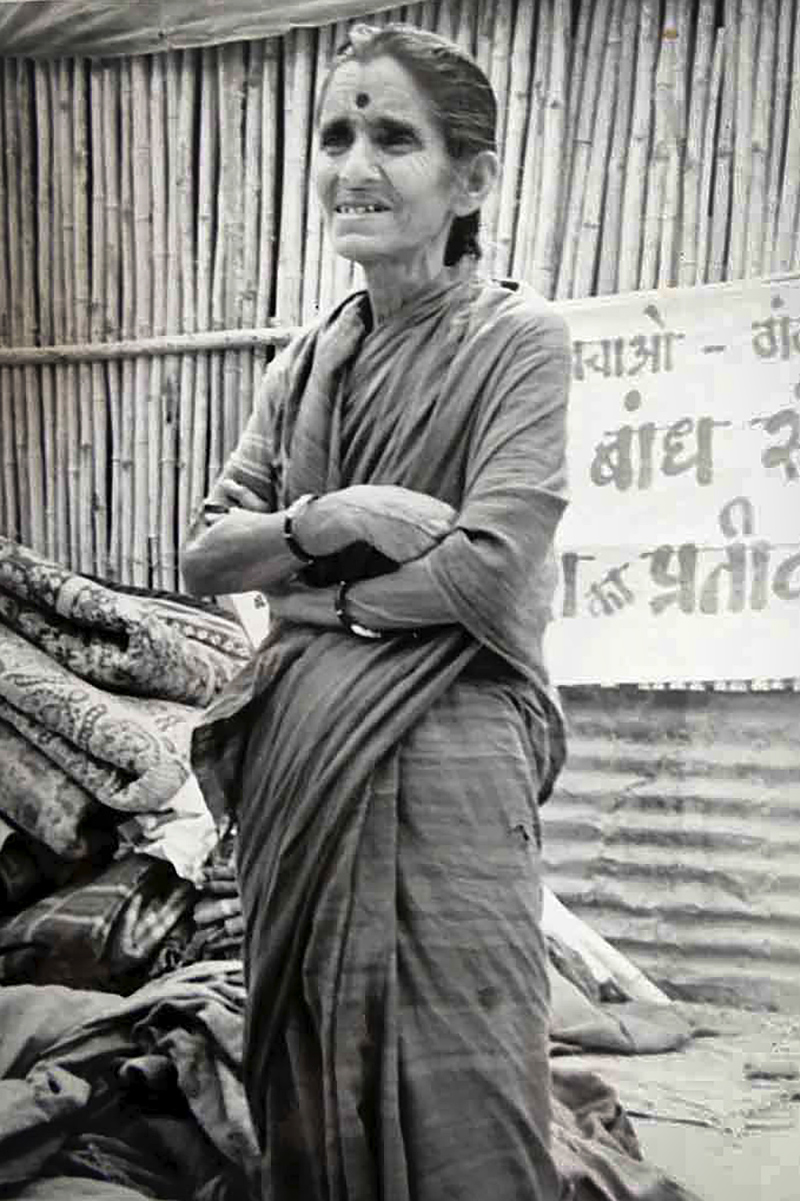
Legacy of Vimla Bahuguna Vimla Bahuguna’s role in the Tehri Dam resistance went beyond protest; she helped coordinate legal efforts, mobilised public support, and kept the issue alive when others had moved on. She remained firm even when faced with intimidation, advocating for sustainable development that did not come at the cost of uprooting entire communities. Despite the eventual construction of the dam, her efforts brought international attention to the environmental costs of such projects, influencing future policies and grassroots movements.
-She leaves behind a generation of activists who owe their resolve to her example. The forests she fought for still stand, the women she empowered continue to organise, and the principles she lived by remain relevant in a world increasingly grappling with the consequences of environmental neglect. Her life was a testament to the idea that true change does not come from rhetoric, but from years of patient, unyielding effort – work that she carried forward until the very end. https://india.mongabay.com/2025/02/steadfast-in-struggle-the-environmental-legacy-of-vimla-bahuguna-obituary/ (17 Feb. 2025)
Arunachal Pradesh Significant glacier retreat over past three decades Researchers from two leading universities in the Northeast have documented significant glacier retreat or shrinking of glaciers in Arunachal Pradesh over the past three decades, a development which may lead to water shortages in the future for communities relying on glacial meltwater. Several factors lead to glacial retreat, a development where glaciers shrink or reduce in size over a period of time owing to a decrease in ice accumulation or an increase in melting of ice, primarily caused by rising global temperature and changing precipitation patterns.
According to the researchers from the Nagaland University and the Cotton University in Assam, who conducted the study, there has been an estimated average glacier loss of 16.94 square kilometers per year. Smaller glaciers (less than 5 square kilometers) were found to be retreating faster. A statement issued by the Nagaland University on Wednesday (Feb. 19) also said the researchers have found there were 756 glaciers covering around 585.23 square kilometers in 1988 but by 2020, the number dropped to 646, with the total area shrinking to 275.38 square kilometers in 32 years, reflecting a marked reduction in glacier coverage. https://www.telegraphindia.com/north-east/researchers-document-significant-glacier-retreat-in-arunachal-pradesh-over-past-three-decades-prnt/cid/2084541 (20 Feb. 2025)
MoEF Agenda for EAC meeting to be held on Feb 27 2025: 1. Expansion of Tembhu Lift Irrigation Project in 2284.601 ha at Village Tembhu, Ranad, Govare and etc, Sub Dist Khatav, Atpadi, Karad etc, Dist Satara, Sangli & Solapur, Mah by Dept of Irrigation, Mah – Env Clearance
2. OA No. 71/2020 (SZ) in Gavinolla Srinivas Vs. UOI and Ors. Hon’ble NGT, Southern Bench, Chennai regarding Rayalasema Lift Scheme of Andhra Pradesh. – Compliance of Hon’ble NGT Order
3. Harmonization and Optimization of Environmental Clearance Conditions for River valley and Hydro-electric sector https://parivesh.nic.in/utildoc/120335449_1739857597297.pdf (Feb. 2025)
Relevant agenda of FAC meeting to be held on Feb 27 2025: 1. Proposal from GREENKO MP01 IREP PRIVATE Ltd FOR 17.5272 HA ADDITIONAL LAND FOR MP30 GANDHI SAGAR OFF-STREAM PSP FALLING UNDER RAMPURA PATHAR R.F, NEEMUCH FOREST DIVISION IN KHEMLA BLOCK(V), RAMPURA (T) IN NEEMUCH DIST, MADHYA PRADESH
2. DIVERSION OF 20.15 HA FOREST LAND FOR BHIVPURI OFF-STREAM OPEN LOOP PUMPED STORAGE PROJECT (1000 MW) of TATA POWER COMPANY Ltd IN PUNE & RAIGAD DIST of MAH https://forestsclearance.nic.in/AgendaDetail.aspx (Feb. 2025)
DAMS
Srisailam Dam Alarming situation says Telangana; Warns NDSA of potential catastrophe An alarming situation is emerging at the Srisailam Dam as major deterioration in the plunge pool area downstream of the spillway threatens the structural integrity of this vital infrastructure. In an urgent communication given to the NDSA, Telangana State Committee on Dam Safety (SCDS) chairman and Engineer-in-Chief (General) N. Anil Kumar has sounded an alarm, urging immediate action to prevent a potential catastrophe.
In his letter, the SCDS chairman urged NDSA to depute an expert team to conduct a comprehensive assessment of the plunge pool damage and review the structural integrity of the dam. Stressing on even immediate temporary measures, he wanted the NDSA to explore solutions such as the use of interlocking tetrapods to enhance energy dissipation and prevent further scouring during the upcoming rainy season. He also called for a coordinated action plan to initiate both immediate temporary measures and long-term rehabilitation strategies to safeguard the dam.
Recent inspections, coupled with reports from print and electronic media, reveal that the unprecedented discharge during the 2009 floods – approximately 25 lakh cusecs against the dam’s designed capacity of 14 lakh cusecs, caused substantial scouring and created a large void in the plunge pool area downstream of the spillway. This has raised serious concerns about the dam’s safety and stability. Studies conducted by the National Institute of Oceanography, commissioned by the Andhra Pradesh Government, indicate severe erosion. If left unaddressed, this could compromise the overall stability of the dam, which stands at a maximum height of 143.26 metres from its deepest foundation level. https://telanganatoday.com/alarming-situation-at-srisailam-dam-says-telangana-warns-ndsa-of-potential-catastrophe (20 Feb. 2025)
SLBC Tunnel Collapse Workers feared trapped as tunnel roof collapses Workers are feared trapped after a section of the under-construction Srisailam Left Bank Canal (SLBC) tunnel near Domalapenta collapsed in Nagarkurnool district on Saturday (Feb. 22) morning. According to PTI, at least six to eight workers are trapped and the rescue operation is underway.
-“A portion of the SLBC tunnel behind the Srisailam dam near Domalapenta experienced a collapse on Saturday (Feb. 22). In particular, at the 14th km point, the roof of the left-side tunnel collapsed for three meters. This happened when employees were performing their duties at the site,” said Vaibhav Gaikwad, Superintendent of Police, Nagarkurnool.
-He said that two rescue teams from the company handling the irrigation project had entered the tunnel to evaluate the situation. “We don’t have precise details yet. The location is about 14 km inside the tunnel, and we will only understand the full extent of the situation once the rescue teams return,” he was quoted as saying by Indian Express.
-There were 50 workers at the site during the incident, and around 43 have emerged safely, said an official, adding that the police were alerted about the collapse at around 10 a.m. https://www.news18.com/india/telangana-slbc-tunnel-collapse-several-workers-feared-trapped-rescue-operations-underway-9236828.html (22 Feb. 2025)
Ten updates The collapse occurred just four days after construction work had resumed following a lengthy hiatus. While some workers managed to escape, the eight remained trapped.Both the NDRF and SDRF teams faced challenges in reaching the collapsed section. “There’s no chance to go to the spot inside the tunnel. It has completely collapsed and mud is reaching up to the knees. We will have to take another step,” an SDRF official said.
Minister J Krishna Rao told reporters that the chances of survival under the circumstances are “not that good.” “Muck has piled up too high inside the tunnel, making it impossible to walk through. They (rescuers) are using rubber tubes and wooden planks to navigate through it,” PTI quoted Rao, who went inside the tunnel. https://www.hindustantimes.com/india-news/telangana-tunnel-collapse-ndrf-says-working-to-drain-out-water-from-tunnel-10-points-101740367831382.html (24 Feb. 2025)
Live updates Now, a team of rat miners have been included in the rescue team to extricate the workers trapped under the collapsed portion of the tunnel. Notably, these are the same rat miners who were deployed in the rescue team of the Silkyara tunnel collapse in Uttarakhand almost two years ago. https://indianexpress.com/article/india/telangana-tunnel-collapse-live-updates-rescue-operation-silkyara-9853087/ (24 Feb. 2025)
Hope fading for survivors According to the DC, the seepage continued but the authorities were taking all precautions to prevent any further damage. Achampet MLA Vamsi Krishna, who was also present at the site, said the Tunnel Boring Machine will be cut and the slush will be removed. According to him, a micro-camera will be sent inside the tunnel to check the points where Indian Army and NDRF couldn’t reach earlier, due to slush. The camera will be used to check the exact position of those trapped to ease the rescue.
Minister Jupally Krishna Rao said on Monday (Feb. 24) also mentioned that a team of rat miners, who rescued the construction workers trapped in the Silkyara Bend-Barkot tunnel in Uttarakhand in 2023, joined the rescue teams to extricate the men.
Meanwhile, the other workers at the site complained about non-payment of wages and the management’s high-handedness. They stated that they did not want to return to work on the tunnel. One of the workers who was present at the time of the tunnel collapse said: “We heard a loud noise and noticed a heavy flow of water and mud, after which we started running. We have not been paid our wages for the past three months, and now the management is forcing us to go back to the same spot. We are not willing to return after witnessing the accident.” https://www.indiatoday.in/india/telangana/story/telangana-tunnel-collapse-army-ndrf-deploy-machinery-to-rescue-trapped-people-2684496-2025-02-24 (24 Feb. 2025)
3 teams enter tunnel to assess strength “Three teams of the state and national disaster response contingents have assessed the tunnel to check if it is strong enough to let rescuers travel a distance,” Vaibhav Gaikwad, Superintendent of Police Nagarkurnool, told the Indian Express. A team of engineers and miners from the state’s Singareni Collieries, too, has reached the spot to assess the situation. On Saturday (Feb. 22) night, rescue teams reached the location of the collapse inside the SLBC tunnel and called out to the eight men trapped inside but received no response.
Rescuers and experts at the site told The Indian Express earlier that the tunnel has water that must be drained out before attempting a rescue. An expert said Jaiprakash Associates, one of the construction companies whose workers are also trapped in the tunnel, is in the process of pumping out the water. “The pumps are in place and the water will be pumped out. More, desilting too will have to be done as the tunnel is filled with debris, obstructing movement,” a senior expert told the Indian Express. The trapped men include two Indian engineers of American tunnelling firm The Robbins Company, while the rest are employees of JP Associates Ltd.
“There is a 15-metre working area between the rock which has collapsed and the tunnel boring machine. They are stuck there,” an official told The Indian Express. Authorities confirmed that the ventilation system inside the tunnel remains functional, ensuring oxygen supply to the trapped workers. The Telangana government is reaching out to tunnel rescue experts, including the team which rescued workers from Uttarakhand’s Silkyara tunnel during last year’s collapse. https://indianexpress.com/article/india/telangana-tunnel-rescue-tunnel-trapped-debris-movement-9851346/ (23 Feb. 2025)
Daunting task There is water in the tunnel because it is being built to carry Krishna River water to Nalgonda district. The work has been going on for the past five years. “There is water all around the tunnel and there has been seepage into the tunnel from the hillocks above. This seepage is reduced to some extent by the roof of the tunnel, and it is this roof which has caved in,” a senior rescuer explained. The first step in the rescue will be “dewatering” or pumping out water from the tunnel, the official said. For this, two pumps with horsepower of 100 and 70 have been brought to the spot. Once the water is drained, the next task at hand is to use the conveyor belt used for excavation to send people about 9 kilometres into the tunnel.
“The rest of the area will be covered by drones so that we do not risk the personnel who go in,” the senior rescue official who spoke to The Indian Express explained. However, drilling from above to reach the workers is a near-impossible option, another official told The Indian Express. “Thick rock sheets above the head of the tunnel structure mean rescuers have ruled out the possibility of drilling from the top to reach the location of the collapse,” a senior official said.
To add to this, there were two collapses inside the tunnel, rescuers said. “There were 50 people in total in the tunnel. When the first collapse happened and 42 people were retreating, about 150 metres away, there was another collapse. So the overall stability of the tunnel has to be assessed by the engineering team,” the rescuer said. “There is a 15-metre working area between the rock which has collapsed and the tunnel boring machine. They are stuck there,” an official told The Indian Express. Authorities confirmed that the ventilation system inside the tunnel remains functional, ensuring oxygen supply to the trapped workers. https://indianexpress.com/article/india/why-the-rescue-of-8-men-trapped-in-the-telangana-tunnel-is-a-daunting-task-9850794/ (23 Feb. 2025)
Muck, debris posing as challenge -Muck mixed with water spread over 200 metres poses a challenge to the rescuers trying to bring out the eight labourers trapped for over 24 hours in a collapsed tunnel in Nagarkurnool district. A brief report on the collapse said that noises of shifting boulders indicate the roof in the collapsed site is unstable. Water is gushing out from a fracture on the side of the tunnel wall, the report said, due to which dewatering is needed before the rescue operation. The report estimated the span of the collapsed roof to be 200 metres, about 13 km from the mouth of the tunnel. https://www.ndtv.com/india-news/water-debris-pose-challenge-to-rescuers-at-collapsed-telangana-tunnel-7774314 (23 Feb. 2025)
Desperate measures Minister Jupally Krishna Rao stated that rescue teams from the NDRF, Army, and Singareni are actively working to save the eight individuals trapped in the SLBC tunnel. “We will intensify the rescue operation and ensure the safe evacuation of those trapped,” Jupally assured. He added that the rescue efforts have accelerated following the dewatering process. Jupally emphasised that the SLBC tunnel collapse was an accident and not the result of human error. Minister Uttam Kumar Reddy and HYDRAA chief are overseeing the rescue operations. https://www.deccanchronicle.com/southern-states/telangana/slbc-tunnel-collapse-not-due-to-human-error-jupally-1862951 (23 Feb. 2025)
NDRF team returns Rescue teams of the National Disaster Response Force (NDRF) found the SLBC tunnel completely water logged and had returned after preliminary inspections and fate of eight persons trapped in the tunnel is not yet known. The NDRF teams travelled into the tunnel in vehicles upto 12 kilometers and trudged for another two kilometers, but found the collapse site completely submerged and full of slush, making it difficult for them to move ahead.
The SLBC tunnel collapsed on Saturday (Feb. 22) as the tunnel boring machine began work yesterday (Febryary 22) around 8 a.m. As water seepage was noticed at the worksite, around 14 km inside, 45 personnel working at the site rushed out, but 8 personnel – two engineers, two machine operators and four workers -got trapped as the tunnel collapsed. https://telanganatoday.com/slbc-tunnel-collapse-update-ndrf-team-finds-tunnel-water-logged-returns (23 Feb. 2025)
Kaleshwaram Project Man who took KCR to court on Medigadda issue murdered Social activist Nagavelli Rajalinga Murthy, 53, had shot to limelight for his legal battle against Chandrashekar Rao and former irrigation minister T. Harish Rao, accusing them of corruption in the construction of the Medigadda barrage under the Kaleshwaram lift irrigation scheme (KLIS). Alleging financial irregularities that had led to the sinking of the barrage piers in October 2023, he filed a case in the additional judicial magistrate court at Bhupalapalli.
-Murthy was murdered a day before the High Court’s scheduled hearing in this case. On October 25, 2023, soon after the Medigadda barrage collapsed, Murthy had lodged a complaint with the Bhupalapalli police, seeking an FIR against Chandrashekar Rao, Harish Rao and others, including officials and construction firms involved in the barrage project. However, the police closed the complaint citing jurisdiction compulsions. Subsequently, Murthy filed a private complaint before the additional judicial magistrate, which was dismissed on January 12, 2024.
Determined to pursue the case, Murthy approached the principal sessions judge at Bhupalapalli, who admitted the case and issued notices to Chandrashekar Rao and the others on July 5, 2024. Summons were issued five days later but the accused did not respond until Dec 23, 2024. Facing potential warrants, the two BRS leaders moved the Telangana High Court to quash the orders.
-On December 24, 2024, the Telangana High Court suspended the lower court’s orders and directed Murthy to file counter-affidavits by January 7, 2025. However, his legal counsel sought many adjournments. On February 13, Justice K. Lakshman of the Telangana High Court granted a final one-week extension, setting the next hearing for February 20. It was the day before this hearing that Murthy was murdered by unknown assailants. https://www.deccanchronicle.com/southern-states/telangana/man-who-took-kcr-to-court-on-medigadda-issue-murdered-1862244 (19 Feb. 2025)
Hearing adjourned to Feb 24 Justice Lakshman, after hearing the submissions, clarified that the court would not delve into the merits of the case given that the complainant is no more. However, he granted time for the public prosecutor to submit judgments supporting his contention and adjourned the matter to February 24. Earlier, Justice Lakshman had suspended the Jul 10, 2024 order of the Principal Sessions Judge, which granted relief to both the BRS leaders from appearing before the lower court. https://www.newindianexpress.com/states/telangana/2025/Feb/22/hearing-on-kcr-harish-raos-plea-in-medigadda-case-adjourned-to-february-24 (22 Feb. 2025)
Bhupalpally tense after Medigadda complainant’s murder A day after the brutal killing of Nagavelli Rajalingamurthy, an activist who had filed a police complaint against former CM K Chandrasekhar Rao and others, alleging corruption in the construction of Medigadda barrage, tension prevailed in Bhupalpally on Feb 20. Rajalingamurthy’s wife Sarala, a former councillor, and other relatives of the deceased staged a protest in front of the Bhupalpally Town Police Station in the early hours of Feb 20.
Sarala had lodged a complaint late on Feb 19 night, based on which the Bhupalpally police registered a case past midnight. Police have reportedly taken five suspects into custody and also seized the weapons used in the crime. https://www.newindianexpress.com/states/telangana/2025/Feb/21/telanganas-bhupalpally-tense-after-medigadda-complainants-murder (21 Feb. 2025)
Congress demands judicial probe Following the murder of activist Rajalinga Murthy on Wednesday, February 19, the Congress party has demanded a judicial probe into the murder. 52-year-old Rajalinga Murthy had filed a police complaint against former Telangana Chief Minister K Chandrashekar Rao (KCR) when his party, the Bharat Rashtra Samithi (BRS) was heading the state government. This was in relation to alleged corruption in the Kaleshwaram Lift Irrigation Project.
According to local reports, Murthy was attacked by a group of people with knives at Bhupallpally, the headquarters of Jayashankar Bhupalpally district and he succumbed to his injuries. Following the murder, Telangana Congress Committee general secretary Kota Neelima has demanded a judicial probe into the murder of Rajalinga Murthy. “The complaint was filed at a time when KCR was the CM and BRS leader Harish Rao was the Irrigation minister. The appeal hearing against Murthy’s petition was scheduled for Thursday in the High Court and he was murdered on Wednesday night,” Neelima said. https://www.thenewsminute.com/telangana/congress-demands-judicial-probe-into-murder-of-telangana-activist-who-took-on-kcr (21 Feb. 2025)
NDSA’s probe taking too much time Participating in the second All India State Water Ministers’ conference, organised by the Ministry of Jal Shakti in Udaipur, Rajasthan, Uttam said the NDSA investigation has been going on for several months for now and requested the Union ministry to intervene and see that the NDSA completes its inquiry at the earliest.https://www.newindianexpress.com/states/telangana/2025/Feb/19/minister-uttam-reddy-raises-concern-over-ndsas-klis-probe-taking-too-much-time (19 Feb. 2025) Regarding the NDSA investigation into the Medigadda project, he noted that the inquiry had been pending for several months and requested the Ministry of Jal Shakti’s intervention to ensure swift completion and a clear course of action for the Telangana government. https://www.thehindu.com/news/national/telangana/uttam-seeks-centres-intervention-in-krishna-water-dispute-seeks-funding-for-musi-river-irrigation-projects/article69235348.ece (19 Feb 2025)
Telangana NGRI to conduct seismic monitoring of Mallannasagar for 5 years The National Geophysical Research Institute (NGRI), Hyderabad, will take up seismic monitoring of the Sri Komaravelli Mallannasagar reservoir in Siddipet district for a period of five years. The NGT took up a suo motu cognisance after news reports and apprehensions that the reservoir was constructed without seismic studies.
– The Comptroller and Auditor General (CAG) also found fault with the government for constructing Mallannasagar without carrying out seismic studies. It also requested the NGRI, Hyderabad, to furnish an expert opinion on conducting further seismic studies for the reservoir. In this regard, Irrigation officials filed an affidavit before the NGT recently. “The seismic monitoring, delineation of seismically active faults/lineaments, and determination of peak ground acceleration (PGA) levels of Mallannasagar during the occurrence of near-field earthquakes will be carried out by the National Geophysical Research Institute. The bill for depositing the necessary funds for the NGRI was prepared and submitted to the government in January 2025. It will start the work once payment is made,” the affidavit said.
– An official pointed out that seismic studies were not carried out even for Medigadda barrage, located in Zone-III, a more dangerous area for earthquakes.
– Meanwhile, the preparation of Emergency Action Plan (EAP) for the reservoir has been entrusted to Central Water and Power Research Station (CWPRS), Pune, as required under the Dam Safety Act. The preparation of EAP has started and the report will be submitted by March 2025, the Irrigation department informed the NGT in the affidavit. https://www.newindianexpress.com/states/telangana/2025/Feb/17/ngri-to-conduct-seismic-monitoring-of-telanganas-mallannasagar-for-five-years (18 Feb. 2025)
Govt asks Centre to bear desilting Speaking at the 2nd All India State Water Ministers’ Conference, 2025, organised by the Ministry of Jal Shakti, at Udaipur on Tuesday (Feb. 18), Mr. Uttam Kumar urged the Centre to fully bear the cost of desilting and de-sedimentation of all major and minor irrigation projects in the State, in line with support provided to similar projects in other States. He also pointed out that the Telangana government had initiated desiltation and desedimentation efforts across major and medium irrigation projects as per the Central framework and sought financial assistance from the Centre for these initiatives. https://www.thehindu.com/news/national/telangana/uttam-seeks-centres-intervention-in-krishna-water-dispute-seeks-funding-for-musi-river-irrigation-projects/article69235348.ece (19 Feb. 2025)
Mullaperiyar Dam SC asks supervisory panel to resolve TN issues The bench said if the issues, including the clearance for felling trees, repair of the dam, construction of approach road, etc., were not settled amicably, the Supreme Court would adjudicate it. “It seems to us that a new supervisory committee along with its chairman has been appointed on January 3, 2025. It must look into the prayers made by Tamil Nadu and find out the solutions preferably to be accepted by both sides. However, in the event of any dispute regarding any of the disputes the committee is directed to submit a report in this court to adjudicate the left out issues,” the bench said.
-The top court, which asked for the report to be filed within four weeks, said some of the issues were “very childish” and could be resolved amicably between the two states. A “certain hype” was created about Kerala’s devastation if anything happened to the dam, the court added.
The bench said there were multiple cases pending before the top court seeking overlapping reliefs for or against either of the states, and one of the benches listed an issue before a three-judge bench. In the interest of justice, said the court, it would be prudent that all the petitions on Mullaperiyar Dam were clubbed and heard by a three-judge bench. The bench, therefore, directed for clubbing all the pending matters and placing it before the Chief Justice for the matters to be listed before an appropriate bench. https://economictimes.indiatimes.com/news/india/mullaperiyar-dam-row-sc-asks-supervisory-panel-to-resolve-issues-raised-by-tn/articleshow/118386995.cms (19 Feb. 2025)
Odisha Govt planning 32 dams on Mahanadi: Minister The state government is preparing a master plan for construction of dams and barrages on the upper and lower catchments of Mahanadi river for sustainable water conservation and development in the interest of Odisha, Parliamentary Affairs minister Mukesh Mahaling said on Thursday (Feb. 20).
Replying to a question from Prasanna Acharya (BJD) on behalf of chief minister Mohan Charan Majhi, Mahaling said in the Assembly that 32 big, medium and small dams along with 27 barrages are being planned for the Mahanadi river at different places in the state. Besides, there are proposals for construction of 72 in-stream storage (ISS) structures for water conservation. Stating that it is a long-term plan, the minister said around Rs 51,000 crore will be spent by the government during the next five years. Work on the detailed project report will start soon, he said.
Acharya also said the Chhattisgarh government has constructed 8-9 barrages on the upper basin area of Mahanadi due to which water flow in the river at the starting point in Odisha has reduced drastically. There were several questions relating to Mahanadi river and Hirakud dam. In a written reply to a question from Ranendra Pratap Swain (BJD), the CM stated, “Due to excess unplanned use of Mahanadi water in the upstream catchment of Mahanadi basin by Chhattisgarh, flow of water to the downstream of Odisha is gradually reducing as observed at Hirakud dam site located near the interstate border of Chhattisgarh and Odisha. The state has raised the issue before the Mahanadi Water Dispute Tribunal and filed its claims through a number of pleadings. The matter is now sub-judice.” https://www.newindianexpress.com/states/odisha/2025/Feb/21/odisha-planning-32-dams-on-mahanadi-river-minister-mukesh (21 Feb. 2025)
Tamil Nadu DC inspects Ellis Chatram check-dam repair work District collector, S Sheik Abdul Rahman on Thursday (Feb. 20), visited the Ellis Chatram check-dam at Yenathimangalam village to inspect ongoing repair activities after the dam was damaged by heavy rainfall and flooding in December last year. The right and left side embankment walls of the dam were severely damaged due to the recent floods, prompting an urgent need for permanent repairs.
-The dam, constructed in 1949-1950 across the Thenpennai river, serves as a crucial irrigation facility for 13,100 acres of agricultural land across several villages, including Yenathimangalam and Supoor. The CM ordered the restoration of the damaged dam, with an estimated cost of Rs 86.25 crore for permanent reconstruction. Temporary repairs were carried out in late 2024 following the floods, but permanent repairs are necessary for long-term stability, stated an official release. https://www.newindianexpress.com/states/tamil-nadu/2025/Feb/21/villupuram-collector-inspects-ellis-chatram-check-dam-repair-work (21 Feb. 2025)
Rajasthan Salgaon Dam inches closer to reality after 48 yrs Mount Abu moved a step closer to the Salgaon Dam project (with a storage capacity of 155.56 million cubic feet) after the State Wildlife Board’s Standing Committee granted approval Feb 18. A senior forest official said, “The state committee has granted ‘in-principle’ approval for diverting over 23.3 ha of Mount Abu Sanctuary. The proposal will now be sent to the National Wildlife Board for final approval.”
– Construction remained stalled due to pending forest clearance. An official said the project was initially proposed in 1977 at a cost of Rs 27 lakh but remained shelved for decades. It was revived in the 2022-23 budget announcement, leading to online tenders worth Rs 250.54 crore. “On May 16, 2023, the work order was issued, mandating construction to begin by May 26, 2023, and finish by Nov 25, 2026. However, work did not start due to lack of forest clearance.” https://timesofindia.indiatimes.com/city/jaipur/salgaon-dam-project-inches-closer-to-reality-after-48-yrs/articleshowprint/118365640.cms (18 Feb. 2025)
2nd State Water Ministers’ conference Union Minister of Jal Shakti, Shri C R Patil inaugurated the 2nd State Water Ministers’ Conference on Water Security, being held on Feb 18-19 in Udaipur (Rajasthan). https://pib.gov.in/PressReleasePage.aspx (Feb. 2025)
Sardar Sarovar Project Urbanism Reimagined Book Review: Graphic artist Orijit Sen delves into changing cityscapes and evolving lives. Known for River of Stories, a graphic novel about the construction of the Narmada Dam, his work serves as a reminder of the places we live in, the buildings that hold our history, and the stories that are often lost in the noise of progress. https://www.newindianexpress.com/bengaluru/2025/Feb/17/urbanism-reimagined (17 Feb 2025)
INTERSTATE WATER DISPUTES
Krishna Water Dispute Telangana raises concern Speaking at the 2nd All India State Water Ministers’ Conference, 2025, organised by the Ministry of Jal Shakti, at Udaipur on Tuesday (Feb. 18), Mr. Uttam Kumar urged the Centre to take steps to stop Andhra Pradesh from illegally diverting Krishna River water from the foreshore of Srisailam Dam and Nagarjuna Sagar Right Bank. He also insisted on the installation of telemetry instruments to monitor Krishna River water usage and called for an early resolution of the Krishna Water Disputes Tribunal (KWDT-II) case to safeguard Telangana’s rightful share. https://www.thehindu.com/news/national/telangana/uttam-seeks-centres-intervention-in-krishna-water-dispute-seeks-funding-for-musi-river-irrigation-projects/article69235348.ece (19 Feb. 2025) The minister demanded immediate intervention of the Centre in the Krishna river water issue, to prevent any injustice to Telangana. https://www.newindianexpress.com/states/telangana/2025/Feb/19/minister-uttam-reddy-raises-concern-over-ndsas-klis-probe-taking-too-much-time (19 Feb. 2025)
Telangana to complain against excessive water utilisation Taking serious note of Andhra Pradesh’s action, CM A. Revanth Reddy on Monday, February 17, asked the Irrigation department officials to lodge a complaint with the Union government against Andhra Pradesh for excessive utilisation of Krishna water. The CM said that the Union government should take the responsibility of stopping Andhra Pradesh from utilizing more water than it is allocated.
– The CM instructed Irrigation Principal Secretary Rahul Bojja to write a letter to Krishna River Management Board (KRMB) immediately informing that all the funds required for the implementation of the telemetry system are being paid by the Telangana government and to take necessary steps for the telemetry immediately. https://www.thenewsminute.com/telangana/telangana-to-complain-against-andhra-for-excessive-utilisation-of-krishna-water (18 Feb. 2025)
Telangana urges KRMB to stop AP With the KRMB postponing the special meeting scheduled on February 21, Telangana’s Principal Secretary, Irrigation and CAD Rahul Bojja, Engineer-in-Chief Anil Kumar, and Nagarjuna Sagar Chief Engineer Ajay Kumar met KRMB Chairman Atul Jain to demand a stoppage of all draws by Andhra Pradesh from common reservoirs of Srisailam and Nagarjuna Sagar Project with immediate effect. Bojja handed over a letter to the KRMB Chairman on behalf of the state government. “As on today, the AP state has already utilised far in excess of its entitlement as per the KRMB records and therefore the state cannot draw any waters from the common reservoirs,” it read. https://www.thenewsminute.com/andhra-pradesh/telangana-urges-krmb-to-stop-ap-from-drawing-water-at-srisailam-nagarjuna-sagar-dams (22 Feb. 2025)
Summer showdown over waters The KRMB, set up under the Andhra Pradesh State Reorganisation Act, 2014, made the ad hoc distribution of the waters. As part of the agreement, Telangana will get 299 tmcft and Andhra Pradesh 512 tmcft. The allocation was based on the extent of the command area, and it has to be reviewed year after year. The KRMB has met 18 times since 2015 and Telangana, which raised the demand for a 50:50 share in 2024, is hoping for an early resolution of the dispute. https://www.indiatoday.in/india-today-insight/story/andhra-telangana-brace-for-a-summer-showdown-over-krishna-river-waters-2682724-2025-02-20 (20 Feb. 2025)
Godavari Water Disputes MWRRA invites objections & claims Maharashtra Water Resources Regulatory Authority (MWRRA) has invited suggestions, claims, and objections from citizens regarding the “equitable water sharing plan” prepared by a team of experts from Maharashtra Engineering Research Institute (MERI), Nashik. MWRRA has published the ‘Godavari Study Group II Report’ on its website www.mwrra.maharashtra.gov.in. It was prepared and submitted by the group led by director general of MERI, Pramod Mandade, who recommended changes in the sharing of water from Godavari river between North Maharashtra and Marathwada regions. The authority has called for objections and claims before finalising the recommendations. https://timesofindia.indiatimes.com/city/nashik/mwrra-invites-objections-and-claims-to-revision-of-godavari-water-sharing/articleshowprint/118486619.cms (22 Feb. 2025)
Karnataka-Andhra Pradesh Row over proposed barrage on Tungabhadra The tender process has been completed. Andhra Pradesh politicians and farmers are opposing the proposed barrage on the Tungabhadra river in the Mantralayam constituency. They allege that the project, which aims to store 0.34tmc of water, will reduce the water flow to Kurnool district. Local legislators say most of the KC Anicut, located in Nandyal district, would be severely affected by this project. The proposed ‘bridge-cum-barrage’ is being planned by Karnataka near Chikala Parvi, close to the Mantralayam constituency, with a budget of Rs 397.50 crore. https://www.deccanchronicle.com/southern-states/andhra-pradesh/row-over-karnatakas-proposed-bridge-cum-barrage-on-tungabhadra-river-1862044 (19 Feb. 2025)
RIVERS AS NATIONAL WATERWAYS
West Bengal Bangladeshi vessel carrying fly ash-laden sinking in Muriganga river after hitting sandbar A Bangladeshi vessel carrying fly ash from Budge Budge to the neighbouring country is sinking in the Muriganga river in South 24 Parganas district after hitting a sandbar, an official said on Monday (Feb. 17). “The accident took place on the night of February 13 when the vessel was heading back to Bangladesh with fly ash. The evacuation process is now being carried out,” IWAI regional head GJ Reddy said. The vessel will be towed to the neighbouring country after evacuation of the cargo, the official said.
-Meanwhile, a video shared by a panchayat member from Ghoramara Island showed the sinking Bangladeshi vessel allegedly dumping fly ash into the Muriganga river. Local fishermen, who depend on the river for their livelihood, expressed concerns over contamination of the river. https://www.deccanherald.com/india/west-bengal/bangladeshi-vessel-carrying-fly-ash-laden-sinking-in-muriganga-river-after-hitting-sandbar-3408990 (17 Feb. 2025)
Arunachal Pradesh Jogighopa terminal dedicated to nation The foundation stone for the Inland Waterways Terminal at Jogighopa was laid by the PM Modi on 18 February, 2025. IWAI, Ministry of PSW has entrusted NHIDCL for construction of the terminal. Total cost of the project is Rs. 82.03 Crores. Spread over an area of 15 acres, the terminal is connected to MMLP at Jogighopa with 4 lane road and adjacent to NH17. The terminal is important for trade with Bangladesh and Bhutan.
-IWAI has envisaged to strengthen urban water transport system to develop water metro projects across 18 cities in 12 states — including one in Guwahati — to replicate Kochi Water Metro model, announced Sarbananda Sonowal.
-The average annual spending in the IWT Sector increased from a meagre Rs 58 Cr per year for 28 years from 1986 till 2014, to Rs 648 Cr per year during the last 11 years from 2014 till December 2024. https://pib.gov.in/PressReleasePage.aspx (Feb. 2025)
URBAN RIVERS
Report RFDs harming rivers They constrict river flow and harm their ecology. Experts say efforts should be directed towards improving water quality instead. (Vaishnavi Rathore) https://scroll.in/article/1079330/from-pune-to-delhi-riverfront-projects-are-all-the-rage-but-evidence-shows-they-harm-rivers (20 Feb. 2025)
Doodh Ganga; Srinagar Who is responsible for polluting river? In the last 4 years me and my counsels have appeared at least two dozen times before NGT in the Doodh Ganga case. I have written almost 50 articles on this issue alone which are like two PHD papers. I posted at least one dozen videos of sewage discharge into Doodh Ganga especially from the pump station located near Barzulla bridge Srinagar but it seems nobody is bothered to address the issue? By connecting the storm water drainage system with sewerage lines SMC has committed a criminal act but it needs to be seen, when the work was executed? Who okayed the design? If this was not done during the tenure of Athar Aamir Khan (2021-2024), why should he be prosecuted? Last year JKPCC indicted some tractor and truck drivers for illegal mining and gave clean chit to people who plundered Doodh Ganga with huge L&T cranes and JCBs. I will put all the facts before the NGT as well. (Dr Raja Muzaffar Bhat) https://www.greaterkashmir.com/opinion/who-is-responsible-for-polluting-doodh-ganga/ (21 Feb. 2025)
Mula-Mutha; Pune People protest RFD A ₹4,727 crore riverfront development project in Pune, Maharashtra’s IT hub, has been seeing opposition from citizens for about seven years. The project, planned by Bimal Patel, the architect of India’s Parliament, envisages a continuous promenade on the 44-km stretch of the city’s three interlinked rivers. Vinaya Deshpande Pandit delves into the ongoing protests, the litigations, and Pune’s municipal corporation plans. https://www.thehindu.com/news/national/maharashtra/on-the-waterfront-people-protest-a-promenade/article69216374.ece (16 Feb. 2025)
Salim Ali bird sanctuary has little hope of revival Dr Salim Ali Biodiversity Park has been closed for several years. The larger park land has been the subject of ownership disputes, with builders and activists moving the Bombay High Court. There have been several efforts by civil society to protect the park, with public protests even taking place against the PMC’s Metro and road construction routes that impacted the habitat provided by the park. The path to the gate has meanwhile become a dumping site. Construction rubble is heaped before it. Signs of neglect at the park, coupled with the mounds of debris on its riverbank, indicate that things have also gone steadily downhill due to the RFD project. https://indianexpress.com/article/cities/pune/salim-ali-bird-sanctuary-mula-mutha-ecosystem-9844200/ (20 Feb. 2025)
Musi; Hyderabad Govt seeks fund for RFD Participating in the second All India State Water Ministers’ conference, organised by the Ministry of Jal Shakti in Udaipur, Rajasthan, Uttam requested the Union government to allot Rs 4,000 crore for establishing trunk and interceptor sewer networks along Musi river. He sought Rs 6,000 crore for connecting Godavari river with Osmansagar and Himayatsagar reservoirs on Musi and also for the Musi rejuvenation project. https://www.newindianexpress.com/states/telangana/2025/Feb/19/minister-uttam-reddy-raises-concern-over-ndsas-klis-probe-taking-too-much-time (19 Feb. 2025)
Arkavathi; Bengaluru BWSSB plans PPP model amid concerns While critics worry that such a model could prioritise profits over environmental restoration, researchers actively involved in river conservation feel sidelined from the planning process. https://www.deccanherald.com/india/karnataka/bengaluru/bwssb-plans-ppp-model-for-arkavathi-rejuvenation-amid-concerns-3408633 (17 Feb. 2025)
Vishwamitri; Vadodara क्या सही मायनों में विश्वामित्री का शुद्धिकरण संभव ! http://youtube.com/watch?v=S2ijM-bR22I (16 Feb. 2025)
Dehradun Venture fund for RFD -The CM said that in this budget, a venture fund has been set up which also includes riverfront development plan. https://www.business-standard.com/india-news/uttarakhand-govt-presents-rs-1-trn-budget-focuses-on-infra-innovation-125022001025_1.html (20 Feb. 2025)
RIVERS
Tamil Nadu HC tells SPCB to file report on Isha Foundation’s event The Madras High Court has directed the SPCB to assess environmental and noise pollution concerns related to the upcoming Maha Shivaratri celebrations at Isha Foundation, located on the outskirts of Coimbatore, and submit a report by February 24. The direction was passed on Friday, Feb. 21, while the court was hearing a petition seeking to prevent authorities from granting permission for the event due to alleged past violations of pollution norms.
The court was hearing a petition filed by ST Sivagnanan, a resident of Coimbatore, who alleged that despite multiple court orders, Isha Foundation had failed to comply with environmental regulations and continued to operate in an ecologically sensitive zone. He submitted that the foundation did not take adequate steps to mitigate noise and sewage pollution, particularly during large-scale events. He also provided a copy of a video posted on Isha’s official YouTube channel to show the scale of the event. https://www.thenewsminute.com/tamil-nadu/madras-hc-tells-pollution-board-to-file-report-on-isha-foundations-maha-shivaratri-event (22 Feb. 2025)
Rajasthan कभी लाइफलाइन थी और अब विभीषिका बन गई ये नदी जोधपुर: सूर्य नगरी से बालोतरा तक बहने वाली जोजरी नदी अब नदी नहीं, बल्कि तेजाबी, गंदे पानी का नाला बन चुकी है. इस प्रदूषण ने न सिर्फ खेतों और पानी के स्रोतों को नष्ट कर दिया है, बल्कि ग्रामीणों और पशु-पक्षियों के जीवन को भी संकट में डाल दिया है. नदी में लगातार बहाने वाले पानी का केमिकल तेजाब से ज्यादा कहर बरपा रहा है. आलम यह है कि खेत खलियान, पशु-पक्षी और हजारों बीघा जमीन इस खाली पानी की जद में आ चुके हैं. वहीं, आसपास बसने वाले लोगों की जिंदगी मुहाल हो चुकी है. कभी इलाके की लाइफ लाइन रही इस नदी की बदतर हालात पर जब ग्रामीणों ने मदद की गुहार लगाई तो प्रशासन जागा, लेकिन हालात यह है कि सारी कवायद कागजों में सिमटी है. गांव वाले अब भी भगवान भरोसे हैं. ईटीवी भारत ने मौके पर जाकर हालात को कवर किया. https://www.etvbharat.com/hi/!state/ground-report-of-present-status-of-jojari-river-in-jodhpur-river-turned-into-a-drain-rajasthan-news-rjs25022201346 (22 Feb. 2025)
लूणी विधानसभा क्षेत्र की ग्राम पंचायत चिचड़ली में गुरुवार (Feb. 20) को जिला कलेक्टर गौरव अग्रवाल की अध्यक्षता में रात्रि चौपाल और जनसुनवाई का आयोजन किया गया. इस जनसुनवाई के दौरान एक युवक जोजरी नदी के प्रदूषण को लेकर अपनी पीड़ा व्यक्त करने पहुंचा. युवक ने जनसुनवाई में जहरीले पानी से भरी एक बोतल लेकर उपस्थित होकर बताया कि फैक्ट्रियों और सीवरेज से निकलने वाले केमिकल युक्त पानी के कारण नदी प्रदूषित हो रही है. इस प्रदूषण की वजह से आसपास के ग्रामीणों को गंभीर स्वास्थ्य समस्याओं का सामना करना पड़ रहा है.
युवक ने जिला कलेक्टर के सामने हाथ जोड़कर कहा कि नदी के दूषित पानी की बदबू के कारण ग्रामीणों का जीना मुश्किल हो गया है. उसने कलेक्टर को बोतल में भरा प्रदूषित पानी दिखाते हुए आग्रह किया कि वे स्वयं इसकी स्थिति का जायजा लें. साथ ही, युवक ने कलेक्टर को अपने गांव आने का न्योता देने के लिए पारंपरिक रूप से पीले चावल भी भेंट किए. https://hindi.news18.com/news/rajasthan/jodhpur-young-man-arrived-in-front-of-jodhpur-collector-with-a-bottle-of-poisonous-water-expressed-his-pain-dm-sir-was-shocked-local18-9051610.html (22 Feb. 2025)
पाली में जल समाधि लेने पर अड़े किसान हिरासत में:किसानों ने कहा- बांध में बढ़ते प्रदूषण के लिए इंडस्ट्री जिम्मेदार;उद्योगपति बोले- हमें बदनाम किया जा रहा https://www.bhaskar.com/local/rajasthan/pali/news/we-are-being-falsely-defamed-by-the-sdm-who-met-entrepreneurs-in-pali-131959920.html
Jammu and Kashmir Jhelum faces crisis as Verinag source runs dry The Jhelum River, flowing through Srinagar, is experiencing a dire situation with its main source, Verinag, drying up. https://www.indiatoday.in/india/video/jhelum-river-crisis-verinag-source-dries-up-2681151-2025-02-17 (17 Feb. 2025)
A river mourns -A few kilometers away in Bijbehara, 65-year-old Ghulam Hassan Dar sits outside his small shop, rubbing his hands together as he gazes at the riverbed. Hassan says that many see the Jhelum as just another water body, but those who are Kashmiris or have truly lived what Kashmir is, beyond external cultural and political influences, know that this river is deeply woven into our identity. “Jhelum is not just water—it is history, poetry, and memory. It carried the boats of kings, the bodies of fallen warriors, the cries of traders in the old city of Srinagar,” he says.
-As Abdul Ahad Gilkar stands by its side, he wonders if the Jhelum remembers the poetry written for it, the battles fought over it, or the tears shed into its waters. Perhaps, like the people who have lived by it for centuries, the river, too, is learning how to mourn. https://thekashmiriyat.co.uk/a-river-mourns-a-valley-watches-jhelum-rivers-lament-in-kashmir/ (19 Feb. 2025)
After Achabal & Tral, Pulwama’s Bulbul Nag spring dries up The centuries-old Bulbul Nag spring in Newa, Pulwama, has dried up completely, leaving thousands of residents without their primary water source. Traditionally supplying nearly six lakh gallons of water daily to 39 villages, the spring’s output has dwindled to less than one lakh gallons due to an ongoing dry spell. Earlier, the Mughal-era Achabal Garden spring — once famed for its cascading waterfalls — ran dry for the first time in history, leaving the iconic garden’s fountains and streams barren. Similarly, Tral’s historic Dilnag spring, a vital source of clean water, has turned into a lifeless pit, with pollution worsening the crisis. Experts warn that the depletion of these natural water sources signals an unfolding environmental catastrophe, threatening both livelihoods and biodiversity in the region. As more springs dry up, residents are left grappling with an uncertain future. https://freepresskashmir.news/2025/02/20/after-achabal-and-tral-pulwamas-bulbul-nag-spring-dries-up-locals-alarmed/ (20 Feb. 2025)
Water crisis looming as springs drying up After two consecutive dry winters, J&K is staring at a water crisis and the alert was sounded by CM Omar Abdullah on Wednesday. He has called a meeting of the Jal Shakti department to plan on how to deal with the developing crisis. There were multiple protests in summer last year as well against water scarcity. But this time it is more severe with water scarcity developing even in winter. The rain deficit in January and February is the main reason.
75% deficit precipitation this winter has led to the drying up of water sources in Kashmir Valley. The Jhelum river is seeing one of the lowest water levels, while there have also been several incidents of forest fires. The water in the Valley’s many springs, particularly the prominent Achabal spring in Mughal Garden of south Kashmir’s Anantnag, has either dried up or in a critical state. https://www.hindustantimes.com/cities/chandigarh-news/jk-staring-at-water-crisis-this-year-warns-chief-minister-omar-abdullah-101739956326023.html (19 Feb. 2025)
Springs dry up, rivers recede This week, a grim picture of changing weather patterns was reported by netizens across the Kashmir Valley. Dozens of videos of dried-up springs and receding streams were posted online by villagers from south Kashmir’s Anantnag, Kulgam, and Pulwama districts. It also included a canal fed by a revered spring at the famous Mughal garden of Achabal in Anantnag. Experts blame the receding water levels to shortening of winter period and rising temperature in Kashmir. Srinagar on Wednesday (February 19, 2025) recorded a maximum temperature of 17.4°C, which is seven degrees above the normal temperature.
According to MeT data, Kashmir saw a 79% rainfall deficit, with only 29.8mm of precipitation, from January 1 to February 19. This year, the month of February saw precipitation shortfall ranging between 70% and 80% in all districts. It resulted in the Jhelum river recording lowest water levels at multiple points. Officials said the water level at Sangam point was at -0.75ft, 3.73ft at Ram Munshi Bagh and 1.08ft at Asham. The average depth of the Jhelum river is between 2.4ft to 19.9ft in the Valley.
Water availability in Kashmir is already facing a challenge, with many areas downriver, especially Baramulla, complaining of water shortage. Braham Jyoti Sharma, Chief Engineer, Jal Shakti Department, said the department was mulling a contingency plan and diversion of channels to mitigate the water shortage. “Tanker services could be deployed to far-flung areas if required,” he added. https://www.thehindu.com/news/national/jammu-and-kashmir/dried-up-springs-receding-rivers-blow-bugle-of-looming-drought-in-kashmir/article69238854.ece (19 Feb. 2025)
Rains, snowfall rejuvenate Achabal spring The rains and snowfall have improved the water levels in all the rivers, lakes and springs of Kashmir valley, particularly rejuvenating the south Kashmir’s Achabal spring. After two days of intermittent rains in plains and snowfall in mountains, the water level in river Jhelum and all the lakes and springs have relatively come up. Jhelum, this winter, has been flowing at record low levels owing to 80 percent of deficit precipitation this winter. https://www.hindustantimes.com/cities/chandigarh-news/snow-rain-bring-relief-from-dry-weather-in-jammu-and-kashmir-101740165876107.html (22 Feb. 2025) With Kashmir experiencing a largely dry winter, recording an 80 percent precipitation deficit in January and February, the fresh wet spell has raised hopes of mitigating the impact of the dry conditions. https://www.greaterkashmir.com/kashmir/snowfall-in-baramulla-revives-orchards-water-sources/ (20 Feb. 2025)
GANGA Mahakumbh 2025 Weak attempts to refute pollution fly in the face of facts That the spike in fecal coliform has happened despite the “special measures” that authorities have taken in preparation for the Maha Kumbh shows the lack of political will to clean up the river over the long term, said Himanshu Thakkar, water expert and coordinator of SANDRP. The cleaning up of the Ganga should happen across the year and not just during the Kumbhs, and the information of water quality should be listed at the sites of the Kumbh because people have the right to know what they are getting into, he added.
– Water expert Thakkar told The Wire that there were several concerns here. Firstly, this huge increase in fecal coliform levels has occurred despite the “special measures” – such as diverting sewage from the areas where the Kumbh is happening, closing all tanneries nearby, ensuring that all STPs are operational and releasing more water upstream – that authorities take in preparation for the Kumbh melas, he said. “Secondly, the government is not only making all arrangements for the Kumbh, it is also inviting people for the Kumbh,” Thakkar added. “So the government has to ensure that the water in the Ganga at that time should not only be of bathing quality, but also possibly drinking quality too – because they know that people take aachman [a ritual where pilgrims drink the water after bathing in it]. But they’ve completely failed.” Thirdly, Thakkar underlined that there is data on water quality only for a “limited number of days in the CPCB report”. “While the rest of the data is still to come, all data should have been on the public domain promptly.” Noting the seriousness of the matter, he suggested that boards must be put at the Kumbh everywhere and specify that “this [water] is not bathing quality water, let alone aachman quality.” “This should have been publicised there in public interest so that people know what they are getting into,” Thakkar mentioned. “One of the excuses that the CPCB has put forward is saying that when so many crores of people take bath, then BOD and fecal coliform is likely to go up. That’s nonsense,” he added. “You’re supposed to make arrangements..ensure that only so many people come wherein the Ganga can still continue to have water quality that does not deteriorate despite that. If you don’t do that then you have not done your duty, and nor are you informing people on time.”
– According to Thakkar, there should be a cap on the number of people bathing in the water so that the water quality in the river does not deteriorate below set standards. But is such a carrying capacity feasible, especially when a religious event is in question? Thakkar definitely thinks it is, he cited the example of the carrying capacity imposed by the Uttarakhand government after 2013 when several pilgrims died on the Char Dham Yatra, another religious event. In the case of Ganga, temporary measures such as those being undertaken for the Kumbh alone, or “cosmetic changes,” will not work, Thakkar said. “The cleaning up of the Ganga should happen across the year and not just during the Kumbhs… treat the Ganga like a river all around the year. It is very much implementable if there is political will to do so.” https://thewire.in/environment/why-adityanaths-weak-attempts-to-refute-ganga-pollution-fly-in-the-face-of-facts/ (19 Feb. 2025)
Water unsafe on another parameter too Himanshu Thakkar, coordinator of the SANDRP, said the state government has been highly irresponsible in claiming that no harm has come to people who have bathed in the river, despite the water being unfit for bathing. “It is the government’s moral duty to provide clean water for bathing. When the water is not safe, there is always a high risk of infection,” he said. https://www.ndtv.com/india-news/ganga-water-at-maha-kumbhs-sangam-unsafe-on-another-parameter-too-data-7748943 (19 Feb. 2025)
FC limits 13 times higher Environmentalist Himanshu Thakkar of the SANDRP questioned why the state and union governments were encouraging more devotees to come to Prayagraj for a holy dip, in light of the CPCB’s claim that the large number of people at the Maha Kumbh led to higher faecal concentration. “The UP CM, Prime Minister and other ministers are inviting people to join the Kumbh. They should have ensured that people are bathing in rivers whose waters are within the safe limit,” he said. https://www.newslaundry.com/2025/02/18/mahakumbh-waters-unsafe-for-bathing-a-report-finds-faecal-bacteria-13-times-over-safe-limit (18 Feb. 2025)
Water fails bathing standards A CPCB report dated February 3 mentioned that faecal coliform levels at all monitored locations were above the permissible limit of 2,500 units per 100 ml, indicating significant sewage contamination. The issue is particularly concerning as millions of devotees take ritual baths at the Sangam, especially on auspicious days, increasing bacterial concentrations in the water.
-Additionally, over 6,000 cusecs of fresh water are being released from the Narora Dam in Bulandshahr into the Ganga to dilute pollutants. Officials have stated that more water will be released if required.
-The Uttar Pradesh government has earmarked Rs 1,600 crore out of the Rs 7,000 crore Maha Kumbh budget specifically for water and waste management. This includes investments in sewage treatment, waste disposal, and advanced pollution control technology. https://www.business-standard.com/india-news/maha-kumbh-mela-ganga-prayagraj-cpcb-report-pollution-sewage-contamination-125021800173_1.html (18 Feb. 2025)
High level of FC in Ganga at Prayagraj The CPCB report, filed on February 3, indicates a significant rise in faecal coliform bacteria during the Maha Kumbh Mela. The river water quality did not conform with the bathing criteria with respect to biochemical oxygen demand (BOD) during monitoring carried out on January 12-13. The river water quality did not conform with the primary water quality for bathing with respect to Fecal Coliform (FC) at all monitored locations on various occasions.
-The report also said that a huge number of people taking bath in Ganga during Maha Kumbh, especially on auspicious days, led to an increase in faecal concentration. While STPs in the area were generally operational, the report noted that contamination levels spiked during the Shahi Snans and other key rituals of the festival.
-The NGT reviewed the findings and summoned officials from the UPPCB to appear virtually on Wednesday (Feb. 19). The officials are required to explain the measures taken in response to the rising pollution levels.
-The tribunal had previously ordered the UPPCB to submit a detailed compliance report, but the board only provided water test results showing high faecal contamination. As a result, the NGT has given the UPPCB additional time to submit a comprehensive report and has instructed key officials to attend the next hearing on February 19. https://www.indiatoday.in/india/law-news/story/high-level-of-faecal-bacteria-in-ganga-at-prayagraj-green-court-summons-officials-2681452-2025-02-17 (18 Feb. 2025)
High Faecal Bacteria in river water: CPCB The NGT was informed on Monday, through a report by the CPCB, that various locations in Prayagraj during the ongoing Mahakumbh were not conforming to the primary water quality for bathing with respect to the level of faecal coliform. Faecal coliform, a marker of sewage contamination, has a permissible limit of 2,500 units per 100 ml, according to the CPCB.
– The bench noted that the CPCB had filed a report dated February 3, pointing out certain non-compliances or violations. “The river water quality was not conforming to the primary water quality for bathing with respect to FC at all the monitored locations on various occasions. A large number of people bathe in the river at Prayagraj during the Mahakumbh Mela, including on auspicious bathing days, which eventually leads to an increase in faecal concentration,” the report said.
– The bench also noted that the UPPCB had not complied with the tribunal’s earlier direction to file a comprehensive action taken report. The tribunal observed that the UPPCB had only filed a covering letter with certain water test reports. “Even upon reviewing the documents enclosed with the covering letter dated January 28, 2025, sent by the in-charge of the central laboratory, UPPCB, it is reflected that high levels of faecal and total coliform have been found at various locations,” it said.
– The tribunal allowed one day for the counsel for the state of Uttar Pradesh to examine the report and file a response. “Member Secretary, UPPCB, and the concerned state authority responsible for maintaining the water quality in the river Ganga at Prayagraj are directed to appear virtually at the next hearing, scheduled for February 19,” the tribunal said. https://www.ndtv.com/india-news/high-faecal-bacteria-levels-in-prayagraj-during-maha-kumbh-pollution-board-7732054 (18 Feb. 2025)
Ganga water is not fit for bathing: CPCB River water quality was not conforming with the primary water quality for bathing w.r.t. FC at all the monitored locations on various occasions. Huge number of people taking bath at Prayagraj during Maha Kumbh Mela in river including auspicious bathing days which eventually leads to increase in fecal concentration,” the report stated.
-“With respect to BOD, river water quality was not conforming with the bathing criteria during monitoring carried out on 12-13 January, 2025 at most of the locations; however after that, organic pollution (in terms of BOD) started to decrease due to freshwater intrusion at upstream locations. After 13th January 2025, river water quality conforming the bathing criteria w.r.t. BOD except Lord Curzon bridge on river Ganga on 19th January, 2025,” the CPCB report stated. https://www.barandbench.com/news/fecal-levels-maha-kumbh-river-water-concerning-not-fit-bathing-pollution-board-ngt (19 Feb. 2025)
CPCB drops fresh report The water in the Ganga at Triveni Sangam is currently ‘unsafe’ for bathing, as it exceeds the prescribed limit for BOD, according to the CPCB. While a higher BOD level indicates more organic content in the water, river water is considered ‘fit’ for bathing if the BOD level is less than 3 milligrams per litre.
“However, after that, organic pollution (in terms of BOD) started to decrease due to freshwater intrusion at upstream locations. After January 13, 2025, river water quality (is) conforming (to) the bathing criteria w.r.t. BOD except (at) Lord Curzon bridge on river Ganga on January 19, 2025,” the CPCB report read. Govt officials say10,000 to 11,000 cusecs of water is being released into the Ganga to ensure it meets bathing standards. https://www.hindustantimes.com/india-news/maha-kumbh-sangam-water-unsafe-due-to-high-bod-level-cpcb-drops-fresh-report-after-faecal-bacteria-findings-101739972091876.html (20 Feb. 2025)
“You made people bathe in sewage’: NGT “You have made 500 million people bathe in polluted sewage water, water that was not fit for bathing, and people had to drink that water,” the bench said. The bench, headed by Justice Prakash Srivastava, also criticised UPPCB for failing to submit a comprehensive report. “It seems you are under some kind of pressure,” the bench noted. The NGT bench further questioned as to why no significant action was taken to address pollution in the river before the start of the fair. It was clearly visible that sewage was directly flowing into the rivers. “Two weeks have passed and no concrete steps have been taken by UPPCB. This is very serious,” referring to a report filed by the CPCB on February 3, 2025, the NGT said. https://www.downtoearth.org.in/water/you-made-500-million-people-bathe-in-polluted-sewage-water-ngts-stern-remarks-on-uppcb-raises-safety-concerns (18 Feb. 2025)
NGT slams UPPCB over ‘old samples’, says ‘wasting our time’ The NGT pointed out saying that the samples taken for the report by the UPPCB were from January 12. “Why have you filed such a huge document then? To waste our time?” the NGT slammed the UPPCB. However, in response, the Additional Advocate General representing the UPPCB informed the tribunal that they have recent water samples and will submit them along with an action-taken report within a week. https://www.livemint.com/news/maha-kumbh-faecal-bacteria-row-ngt-slams-uppcb-over-old-samples-says-wasting-our-time-11740016190658.html (20 Feb. 2025)
The bench is presently hearing a plea moved by Varanasi-based Advocate Saurabh Tiwari, raising a grievance about the quality of water in river Ganga and Yamuna in Prayagraj. The bench is also examining the allegation of the discharge of untreated sewage through the drains in river Ganga and Yamuna with reference to Magh Mela and Kumbh Mela. https://www.livelaw.in/environment/cpcb-high-levels-faecal-bacteria-river-water-prayagraj-maha-kumbh-ngt-284324 (19 Feb. 2025)
This contains more data of Facel Coliform levels around Mahakumbh. https://www.downtoearth.org.in/water/maha-kumbh-2025-ganga-yamunas-long-term-sustainability-depends-on-continuous-monitoring-improved-wastewater-treatment-and-public-cooperation (21 Feb. 2025)

सीपीसीबी की रिपोर्ट में विशेष रूप से माघ मेला और कुंभ मेला उत्सव के दौरान, प्रयागराज में गंगा और यमुना नदियों में जल प्रदूषण के खतरनाक स्तर कि बात कि गयी है. इस रिपोर्ट में महत्वपूर्ण जल गुणवत्ता मानकों का सही से अनुपालन न होने की बात कही गई है. जिससे सार्वजनिक स्वास्थ्य और पर्यावरणीय स्थिरता पर चिंताएँ बढ़ती हैं.
इसके अलावा सीवेज ट्रीटमेंट प्लांट (एसटीपी) क्षमता से ज्यादा काम करते हुए पाए गए हैं. बता दें प्रयागराज में 340 एमएलडी की कुल उपचार क्षमता वाले दस (10) परिचालन एसटीपी हैं. 7 एसटीपी उपचारित अपशिष्ट जल को गंगा में छोड़ते हैं, जबकि 3 यमुना में छोड़ते हैं. सलोरी में 14 एमएलडी एसटीपी को छोड़कर अधिकांश एसटीपी अपनी स्थापित क्षमता से अधिक चल रहे थे. सभी एसटीपी पर कीटाणुशोधन सुविधाएं चालू पाई गईं.
जियो-ट्यूब फिल्ट्रेशन सिस्टम मानकों को पूरा करने में विफल रहा है. जानकारी के अनुसार 6-8 जनवरी और 18-19 जनवरी, 2025 के बीच प्रयागराज में सात (07) जियोसिंथेटिक डीवाटरिंग ट्यूब (जियो-ट्यूब) स्थलों का निरीक्षण किया गया. नमूना विश्लेषण में पाया गया कि सभी सात जियो-ट्यूब निर्धारित मानदंडों के अनुरूप नहीं हैं.
रिपोर्ट में सदर बाजार ड्रेन, राजापुर ड्रेन, एडीए कॉलोनी/ज्वाला देवी ड्रेन, झोंढवाल ड्रेन, शिवकुटी ड्रेन, सलोरी ड्रेन और ससुर खदेरी ड्रेन सहित प्रमुख नालों के इनलेट और आउटलेट बिंदुओं पर फ्लो मीटर की अनुपस्थिति पायी गयी है. पर्यावरण और सार्वजनिक स्वास्थ्य को ध्यान में रखते हुए तैयार की गई सीपीसीबी रिपोर्ट में प्रदूषण नियंत्रण प्रयासों में गंभीर खामियों का जिक्र किया गया है https://www.abplive.com/photo-gallery/states/up-uk-mahakumbh-2025-sangam-water-is-healthy-or-not-cpcb-report-to-ngt-for-holy-ganga-and-yamuna-ann-2886930 (18 Feb. 2025)
रिपोर्ट के मुताबिक संगम पर गंगा नदी की जल गुणवत्ता की निगरानी दिन में दो बार यानी सुबह और शाम को की गई। सुबह के दौरान, गंगा नदी की जल गुणवत्ता बाहरी स्नान जल गुणवत्ता मानदंड के अनुसार डीओ के लिए सभी अवसरों पर अनुपालक पाई गई, जबकि पीएच (06 अवसरों पर), बीओडी (16 अवसरों पर) और एफसी (06 अवसरों पर) बाहरी स्नान मानदंड के अनुपालन में नहीं पाए गए । वहीं, शाम के दौरान, डीओ बाहरी स्नान जल गुणवत्ता मानदंड के अनुसार सभी अवसरों पर अनुपालक पाया गया, जबकि पीएच (06 अवसरों पर), बीओडी (15 अवसरों पर) और फीकल कोलिफॉर्म (06 अवसरों पर) मानदंड के अनुपालन में नहीं पाए गए। https://indiaclimatechange.com/uncontrolled-crowd-turned-sangam-into-sewer/ (18 Feb. 2025)
NGT seeks response on open defecation NGT recently issued notice to the UP Govt, Prayagraj Mela Authority and the UPPCB over allegations that inadequate sanitation facilities at the Maha Kumbh Mela 2025 have led to open defecation along the banks of Ganga river.A bench sought responses from the authorities, directing them to file their replies one week before the next hearing. The case will be heard on February 24. “The application alleges that lakhs of ordinary people and families are forced to defecate in open on the bank of the river Ganga for want of adequate facilities. In support of the plea taken in the OA, the Applicant has enclosed a pen drive containing the videos,” the NGT noted. https://www.barandbench.com/latest-legal-news/ngt-seeks-response-up-open-defecation-maha-kumbh-mela (22 Feb. 2025)
Ganga water safe? “Padma Shri Dr. Ajay Kumar Sonkar, a renowned scientist, has challenged skeptics and debunked doubts about Ganga’s purity with scientific evidence,” stated the government release quoted in a PTI report. Environmental Science at Baba Saheb Bhimrao Ambedkar University (BBAU), told PTI that Ganga water is not static but is constantly flowing. “I wouldn’t be able to hazard a guess any which way on the quality of the Ganga water as of now. All that I can say is type; time of sampling also matters a lot,” Dutta said. https://www.hindustantimes.com/india-news/maha-kumbh-water-up-government-seeks-to-debunk-pollution-claims-by-quoting-scientist-101740088460985.html (21 Feb. 2025)
EDIT Ensuring a clean Maha Kumbh High bacterial presence in the water at Sangam can have grave consequences for public health. The two pollution regulators, CPCB and UPPCB, and NGT, must now clear the air. Given the metrics of water pollution are all clearly defined, it shouldn’t be too difficult. The faithful have a right to bathe at Sangam. And the state has a responsibility to ensure that the water is fit enough to do so – data and science (and not faith, however) should be the tools it uses. https://www.hindustantimes.com/editorials/ensuring-a-clean-maha-kumbh-101740064304265.html (20 Feb. 2025)
Watering down The Kumbh Mela highlights the urgent need for long-term solutions, not denialism. Science can come to the aid of the faithful; it is in no one’s interest to undermine scientific findings in the name of encouraging a spiritual journey. https://www.thehindu.com/opinion/editorial/watering-down-on-water-quality-at-prayagraj/article69243223.ece (21 Feb. 2025)
Opinion गंगा तब तक अपनी पुरातन अवस्था में नहीं लौट सकती, जब तक पारिस्थितिकी तंत्र को ठीक करने का रोडमैप न बने Shashi Shekhar https://hindi.downtoearth.org.in/river/why-did-ganga-lose-its-unique-power (09 Dec. 2024)
Should Faith be Used to Brush Away Filth? (Subhash Gatade) https://www.newsclick.in/should-faith-be-used-brush-away-filth (22 Feb. 2025)
Uttar Pradesh रामदत्त त्रिपाठी: गोमती में औद्योगिक प्रदूषण (भाग 1) https://hindi.indiawaterportal.org/pollution-and-water-quality/industrial-pollution-in-gomti-part-1 (30 Jan. 2025) गोमती में औद्योगिक प्रदूषण (भाग 2) https://tinyurl.com/585uufw7 (30 Jan. 2025) गोमती की सहायक सरायन, पेरई, कठना, भैंसा नदी में औद्योगिक प्रदूषण (भाग 3) https://tinyurl.com/4avnmsb4 (30 Jan. 2025) गोमती में पीलीभीत, शाहजहांपुर और हरदोई का औद्योगिक प्रदूषण (भाग 4) https://hindi.indiawaterportal.org/pollution-and-water-quality/industrial-pollution-of-pilibhit-shahjahanpur-and-hardoi-in-gomti-part-4 (30 Jan. 2025) लखनऊ गोमती में औद्योगिक प्रदूषण (भाग 5) https://hindi.indiawaterportal.org/river-and-pond/industrial-pollution-in-lucknow-gomti-part-5 (30 Jan. 2025) लखनऊ शहर में गोमती के प्रदूषण-स्रोत (भाग 6) https://tinyurl.com/ytcdx2xt (30 Jan. 2025) लखनऊ में गोमती बैराज की प्रदूषण में भूमिका (भाग 7) https://tinyurl.com/4xxdjasm (31 Jan. 2025) गोमती में बाराबंकी, सुल्तानपुर, जौनपुर और उन्नाव का प्रदूषण (भाग 8) https://tinyurl.com/4jy9s8kf (31 Jan. 2025) गोमती में प्रदूषण का दुष्परिणाम (भाग 9) https://tinyurl.com/yc35k5u6 (05 Feb. 2025)
Bihar Boatmen reach Kumbh via river On February 11, the group, consisting of experienced boatmen Manu Chaudhary, Sumant, Sandeep, Sukhdev, Aadu, Ravindra, and Ramesh, set out on their unforgettable journey. It was actually Manu, who regularly ferries passengers across the Ganga at Kotwa Narayanpur, Ballia, proposed that they can use the boat to reach Prayagraj. And with traffic bringing road travel to a standstill, the idea of sailing to Prayagraj seemed both practical and adventurous, which they managed to do so eventually covering 550-kilometer, 84-hour round-trip journey.
-It’s interesting to note that the boatmen used Google Maps for navigation although on the river, just like highway commuters. The program helped them navigate safely in the night’s darknes by showing the Ganga’s convoluted course. https://timesofindia.indiatimes.com/life-style/travel/news/how-7-bihar-youths-turned-the-ganga-into-their-highway-and-skipped-the-traffic-to-prayagraj/articleshow/118319445.cms (17 Feb. 2025)
YAMUNA Delhi Plan to appease middle class by imitating Sabarmati RFD As I noted in another blog, a sharp critique of the plan to clean the Yamuna along Sabarmati’s lines has already emerged. Senior environmentalist Bhim Singh Rawat (SANDRP) calls it “the most alarming proposal,” pointing out that in Ahmedabad, Narmada canal water is used to create an artificial reservoir in the city stretch of the Sabarmati, effectively turning it into a stagnant pond.
“Meanwhile,” Rawat adds, “untreated sewage continues to be discharged into the Sabarmati, and natural riverbanks are being replaced with concrete commercial developments.” https://www.counterview.net/2025/02/gujarat-in-delhi-plan-to-appease-middle.html (20 Feb 2025)
No move to restore natural flow -Insisting that this approach “contradicts the goal of reducing pressure on the Yamuna and improving its environmental flow,” B S Rawat, SANDRP points out contradictions in floodplain conservation policies. “On one hand, ₹700 crore has been allocated to make Delhi flood-free; on the other, commercial constructions under the guise of riverfront beautification are proposed. This raises concerns about potential violations of the NGT 2015 orders and setbacks to past conservation efforts.”
-“The most alarming proposal is to develop a Yamuna Riverfront like Ahmedabad’s Sabarmati Riverfront,” says Rawat. He notes, “In Ahmedabad, a canal supplies Narmada River water to create an artificial reservoir in the city stretch of the Sabarmati, effectively turning it into a stagnant pond. Meanwhile, untreated sewage continues to be discharged into the river, and natural riverbanks are being replaced with concrete commercial developments.” https://www.counterview.net/2025/02/no-move-to-restore-yamunas-natural-flow.html (19 Feb 2025)
Experts call clean up move ‘temporary’ According to Bhim Singh Rawat, of SANDRP, cleaning the river using heavy machinery has been tried before without success. “It is a temporary solution, designed to grab attention,” he said. He added, “From a scientific perspective, several key factors define the health of any river—its catchment area, tributaries, water flow and quality, aquatic and riparian biodiversity, floodplains, etc. However, over the past three decades, efforts to clean the Yamuna have been prioritised, while other crucial factors affecting the river—such as deforestation, the deterioration of its tributaries, excessive water extraction through dams and barrages, mechanised sand mining, and the decline of aquatic life—have received little attention.” https://www.newindianexpress.com/cities/delhi/2025/Feb/18/yamuna-clean-up-begins-but-experts-call-move-temporary (18 Feb. 2025)
Cleaning not possible in 3 years The 27th report of the Parliamentary Standing Committee on Water Resources titled ‘Review of Upper Yamuna River Cleaning Projects up to Delhi and Riverbed Management in Delhi’ has flagged a usually under-played but critical issue of environmental flows or e-flows for the river. The report emphatically states that lack of adequate fresh owing water due to upstream dams and water supply projects are the key factors behind continuous degradation of river, making all the pollution control and river cleaning projects into ineffective and futile exercises. ([Shailendra Yashwant) https://www.deccanherald.com/opinion/no-it-is-not-possible-to-clean-up-yamuna-in-three-years-3417047 (22 Feb. 2025)
EDIT A river must flow In 2006, the Sheila Dikshit government planned interceptor drains to connect the city’s STPs with localities that are outside the sewer lines. The Delhi government has spent about Rs 2,400-crore on the project, which has missed several deadlines. In many places, sewer lines have been laid, but the STPs have not been upgraded. The overhaul planned by the Delhi government will have to reckon with the fact that the volume of the city’s sewage has increased by at least 100 MGD in the 19 years since the interceptor project was planned.
The 30-year water-sharing agreement between five Yamuna basin states is slated to be renegotiated this year. In the past 10 years, the Delhi and Haryana governments have been at loggerheads over the river. The new Delhi government will have to engage better with its counterparts in neighbouring states for ensuring greater flows to the city. https://indianexpress.com/article/opinion/editorials/express-view-on-l-g-plan-to-clean-up-yamuna-a-river-must-flow-9852643/ (24 Feb. 2025)
River at City’s entry not fit for bathing: CPCB Report Soon after the CM took her oath at Ramlila Maidan, the CPCB submitted a report to the NGT stating that the water quality of the river at the Palla and Wazirabad monitoring stations were not even fit for bathing. According to the CPCB report, the BOD level at Palla was as high as 6 mg/litre and 5 mg/litre at Wazirabad on October 29, 2024. On December 16, 2024, the BOD rose dramatically to 13 mg/litre at Palla. On December 17, 2024, the BOD level at Wazirabad was 6 mg/litre. The faecal coliform at Palla on December 16, 2024, was 9,400 MPN per 100 ml, which has to be less than 2,500 MPN/100 ml as per Primary Water Quality for Outdoor Bathing, the CPCB said. The FC was within permissible limits at Wazirabad.
The CPCB carried out further tests, including Drain No. 8 which joins Yamuna near Palla at Haryana border on December 17, 2024. The value of BOD was 39 mg/litre. CPCB also told the NGT that according to the DPCC, in January and June 2024, the BOD at Wazirabad was 6-9 mg/litre and FC was 400-3,500 MPN/100 ml. https://www.tribuneindia.com/news/haryana/yamuna-at-entry-to-delhi-not-fit-for-open-bathing-cpcb/ (23 Feb. 2025)
Ammonia level rises yet again The ammonia level in the Yamuna spiked again in the past two days, and on Friday (Feb. 21), measured around 8ppm. This is likely to affect the water production at the water treatment plants, which are designed to manage ammonia only up to 1ppm. “The water treatment plants have not been shut down yet, but if the situation does not change, water production may be reduced,” said a DJB official requesting anonymity. Delhi Jal Board itself did not respond to TOI’s queries and neither confirmed nor denied the rise in ammonia levels in the river. https://timesofindia.indiatimes.com/city/delhi/ammonia-level-rises-in-yamuna-yet-again-may-hit-water-supply/articleshowprint/118460178.cms (22 Feb. 2025)
NGT slams DDA for not halting encroachments on floodplains The NGT on Feb. 06 reprimanded the Delhi Development Authority (DDA) for failing to comply with its 2019 order to remove encroachments from the Yamuna floodplains, adding that similar directives to the land agency from the Delhi high court and the Supreme Court have also fallen on deaf ears. The Tribunal referred to its latest directions from October 15, 2024, seeking details from DDA on the total number of encroachments on the floodplains in the river’s 22km stretch in Delhi, particularly in Majnu ka Tilla. It emphasised that floodplains cannot be occupied, as such encroachments harm the river’s ecology.
The tribunal had sought this information in the October order, but the report was only submitted on the morning of the hearing, violating court-mandated deadlines. The bench gave the DDA a time of three weeks to respond and submit a detailed affidavit. The tribunal expressed frustration that more than five years had passed since its 2019 order, yet compliance remained lacking.
To be sure, this is not the first time NGT has pulled up DDA over its handling of its projects on the Yamuna floodplains. Last month, the tribunal flagged excessive concretisation in six ongoing projects, including Asita East, two casting yards, two ghats, and the now-defunct Millennium Bus Depot site. It directed DDA to implement recommendations from the National Mission for Clean Ganga (NMCG) to restore ecological balance.
NGT has also been pushing for the completion of Yamuna floodplain demarcation, a process that has faced repeated delays. In March 2024, it ordered DDA and the Delhi government to finalise the demarcation using a one-in-100-year flood probability model instead of the earlier one-in-25-year approach. However, this directive remains unimplemented. https://www.hindustantimes.com/cities/delhi-news/ngtslams-dda-for-not-halting-encroachments-on-floodplains-101739297065832.html (12 Feb. 2025)
Orders to protect floodplain not yet implemented NGT had further directed that the Yamuna be kept free from encroachments, with DDA, DPCC, and forest department instructed to take action in accordance with the law,” the bench, headed by Justice Prakash Shrivastava, stated in its Feb 6 order.
TOI reported in Aug last year that nearly 75% of the Yamuna floodplain had been encroached upon. A Delhi govt report from the same period found that 7,362.6 hectares of the total 9,700 hectares in Zone O — comprising the Yamuna floodplain — were under encroachment. DDA had reclaimed 300 acres by removing six dairies and three cricket grounds in an anti-encroachment drive conducted between Aug 2022 and Jan 2024 around the Yamuna floodplain, including biodiversity parks, eco-tourism areas, and other green zones. https://timesofindia.indiatimes.com/city/delhi/orders-to-protect-yamuna-not-yet-implemented-in-city-ngt/articleshow/118154152.cms (12 Feb. 2025)
नालों की मानसून से पहले पूरी हो जानी चाहिए सफाई -एनजीटी ने सिंचाई एवं बाढ़ नियंत्रण विभाग के अतिरिक्त मुख्य सचिव को निर्देश दिया कि वे 25 फरवरी, 2025 तक यह सुनिश्चित करें कि 24 नालों की सफाई का काम निर्धारित समय सीमा के भीतर पूरा हो जाएगा। एनजीटी ने अतिरिक्त मुख्य सचिव को अगली सुनवाई में वर्चुअल रूप से उपस्थित होने के लिए कहा है। इस मामले में अगली सुनवाई को 27 फरवरी, 2025 को होगी। सुनवाई में उन्हें यह बताना होगा कि गाद निकालने का यह काम समय-सीमा के भीतर कैसे पूरा किया जाएगा और साथ ही उन्हें यह सुनिश्चित करना होगा कि मानसून के दौरान बाढ़ या ओवरफ्लो की स्थित न बने।https://hindi.downtoearth.org.in/river/24-drains-falling-into-yamuna-should-be-cleaned-before-monsoon-ngt (21 Feb. 2025)
Floodplain से Farmers को हटाकर Park बनाना कितना सही? अक्टूबर 2024 में हमने अपनी विस्तृत रिपोर्ट में बताया था कि कैसे दिल्ली विकास प्राधिकरण यमुना के फ्लड प्लेन में कई जगहों पर कंक्रीट बिछा रहा है. जबकि एनजीटी की सख्त गाइडलाइन है कि यमुना के फ्लड प्लेन पर किसी तरह की डंपिंग, निर्माण आदि नहीं होना चाहिए. बावजूद इसके दिल्ली विकास प्राधिकरण यमुना में अब एक और जगह पर पार्क बनाने और दिल्ली के लोगों के लिए प्रकृति से जुड़ाव के नाम पर नए सिरे से निर्माण और कंक्रीट बिछाया जा रहा है.
इस प्रोजेक्ट का नाम है डीडीए असिता वेस्ट और लोकेशन है राजघाट. इस पार्क को यमुना वाटिका भी कहा जा रहा है. बता दें कि जहां पर यह पार्क बन रहा है, वहां पर पहले दिल्ली के बहुत सारे किसान खेती करते थे. लेकिन बीते कुछ सालों में इन्हें यहां से हटा दिया गया है और उनके घरों पर भी बुलडोजर चला दिया गया है. लेकिन क्या किसानों को हटाकर उनकी खेती वाली जगह पर डीडीए द्वारा पार्क बनाना यमुना के फ्लड प्लेन के लिए उचित है? https://www.youtube.com/watch?v=LX0SXjtLico (17 Feb. 2025)
Yamuna’s pollution crisis is a multi-state failure. https://www.business-standard.com/india-news/beyond-delhi-yamuna-s-pollution-crisis-is-a-multi-state-failure-125021900400_1.html (19 Feb. 2025)
Crippled by decades of neglect and pollution, it poses a daunting restoration challenge. A look at the complexities and efforts to revive this vital waterway. https://www.newindianexpress.com/xplore/2025/Feb/15/yamuna-awaits-a-kiss-of-life (16 Feb 2025)
DPCC submits Yamuna rejuvenation plan to PMO The DPCC presented a document to the PMO last week regarding the cleaning and rejuvenation of the Yamuna. The plan to curb pollution includes a 100 per cent sewage treatment initiative, which involves upgrading 37 existing STPs and constructing new ones. The city’s sewage treatment capacity is set to increase from 792 MGD in 2023 to 964.5 MGD by December 2026, with a new STP planned at Delhi Gate and 40 new decentralised STPs (DSTPs) being prepared. Additionally, 14 existing STPs are scheduled for upgradation by December 2026.
To improve water quality, the document has emphasised the need for a minimum environmental flow (E-flow) of 23 cumecs (437 MGD). However, due to existing water shortages, the current flow into Delhi is nearly nil. Pending dam projects, including Renuka, Lakhawar and Kishau, could help address this gap, it said.
According to the DPCC’s document, 10 drains have already been tapped, two are partially tapped and eight remain untapped. Five major drains — Najafgarh, Shahdara, Barapullah, Maharani Bagh and Mori Gate — are yet to be addressed to divert 48.14 MGD of wastewater by December 2025. The plan also focuses on expanding the sewerage network in unauthorised colonies and JJ clusters, with 1,799 unauthorised colonies currently undergoing work. The target for completion is December 2026.
Addressing concerns over encroachment, the report states that over 1,500 acres of floodplain have been cleared in the past 31 months, with drone surveys assisting in further removal. For the beautification and restoration, the plan includes the development of 11 biodiversity parks and wetland areas covering approximately 1,600 hectares. Additionally, the removal of construction waste and debris from the floodplains is being prioritised, with the DDA coordinating efforts to clear materials left from bridge, metro and rail projects. https://www.ndtv.com/india-news/delhi-pollution-control-panel-submits-yamuna-rejuvenation-plan-to-pms-office-7748581 (19 Feb 2025)
Plan to clean river in 3 years: LG Vinay Saxena met the chief secretary and other top officials to discuss the river rejuvenation plan. “Initially, garbage and silt will be removed. Simultaneously, cleaning operations in all the major drains, including Najafgarh and Supplementary, will start,” said an official at the LG’s office. “A daily watch on the existing sewage treatment plants in terms of their capacity and output will be maintained, and a time-bound plan in terms of construction of new sewage treatment plants and decentralised sewage treatment plants will be put in place,” the official added.
The LG office further stated that the plan would require seamless coordination between various agencies and departments in the city, including Delhi Jal Board, Irrigation & Flood Control Department, Municipal Corporation of Delhi, Public Works Department, and Delhi Development Authority. “The river rejuvenation works will be monitored on a weekly basis…Delhi Pollution Control Committee has been directed to keep a strict vigil on the discharge of untreated effluent by industrial units into the drains,” it added. https://timesofindia.indiatimes.com/city/delhi/plan-to-clean-yamuna-in-3-years-lg/articleshow/118308673.cms (17 Feb. 2025)
DJB Proposes 100-Day Yamuna Plan In the next three months, the DJB will focus primarily on minimising untreated sewage discharge into the Yamuna while addressing issues of drain overflow in the city. Officials have confirmed plans for desilting major underground trunk sewer lines, implementing drainage trapping measures, and upgrading 4 STPs. The new BJP govt has pledged the cleaning of the Yamuna as a significant electoral commitment.
One of the major projects that could be commissioned in the next 100 days is the Okhla STP. The Okhla STP will have a capacity of treating 140 million gallons per day (MGD) of sewage once it’s fully operational. The project is a joint venture between the National Mission for Clean Ganga and DJB, started in 2017. It is now nearing completion and is expected to be ready soon.
According to DJB officials, the estimated cost of the project is Rs 665 crore. While almost 85% of the funds were contributed by the central govt under the Yamuna Action Plan-III, the remaining were given by the Delhi govt. DJB has 37 STPs and is trying to increase its treatment capacity by carrying out upgradation work on several plants. The work started in the previous govt, but the completion of these projects in Rithala, Rohini, Narela, and a few others is on the plan. https://timesofindia.indiatimes.com/city/delhi/with-fund-flow-assurance-djb-proposes-100-day-yamuna-plan/articleshow/118511098.cms (23 Feb. 2025)
Have 365 days plan: CM Rekha Gupta said on Feb 21, just over 30 hours after being sworn in, that dealing with pollution has to be a year-round activity and her govt will have a 365-day plan. Concerned about any water or power crisis this summer because of rising demand, Gupta said a long-term plan will be drafted to seek water from UP, Uttarakhand, Haryana and Punjab. “I am Haryana’s daughter too and I will ask them for more water,” she said, hopefully. Except for Punjab, all these states have BJP govts. https://timesofindia.indiatimes.com/india/year-round-plan-in-works-to-tackle-air-water-pollution-delhi-cm-rekha-gupta/articleshow/118462335.cms (22 Feb. 2025) CM Rekha Gupta performed ‘Yamuna Aarti’ along with her cabinet colleagues at Vasudev Ghat on Thursday (Feb. 20) soon after formally taking charge as the ninth CM of the national capital at the Secretariat. https://www.business-standard.com/india-news/delhi-cm-rekha-gupta-ministers-perform-yamuna-aarti-at-vasudev-ghat-125022001067_1.html (20 Feb. 2025) Interestingly, Arvind Kejriwal had also performed Yamuna Aarti at Gita ghat in November 2015 after becoming the chief minister to mark the beginning of his promise to clean the river. However, 10 years down the line Yamuna pollution was one of the key factors that led to his defeat. https://timesofindia.indiatimes.com/india/with-aarti-on-day-1-cm-rekha-gupta-takes-first-step-to-make-yamuna-identity-of-delhi/articleshow/118426172.cms (20 Feb. 2025)
‘River will be cleaned by Chhath’ Cabinet minister Pankaj Kumar Singh has made an ambitious claim, assuring residents that the Yamuna would be cleaned by the upcoming Chhath festival. “You will see a transformed Yamuna by the next Chhath… We will pass the necessary decisions in the first Cabinet meeting and implement development schemes. As someone from Purvanchal, I promise you a clean and beautiful Yamuna,” he said. https://www.tribuneindia.com/news/delhi/yamuna-cleanup-to-2500-aid-tough-road-ahead-for-bjp/ (21 Feb. 2025)
LG asks officials to talk to Haryana for water in summer LG VK Saxena chaired a high-level meeting on Tuesday (Feb. 18) to review the Summer Action Plan and strategies for uninterrupted water supply in the capital amid the impending summer heat. Senior officials from various departments, including the DJB, attended the meeting at the LG Secretariat. A major agenda was ensuring adequate water supply during peak summer months, with the LG directing officials to initiate talks with Haryana for sufficient water availability between May and June. https://www.newindianexpress.com/cities/delhi/2025/Feb/19/lg-saxena-asks-officials-to-talk-to-haryana-for-water-in-summer (19 Feb. 2025)
IWAI to prepare water taxi proposal in 2 weeks A proposal of water taxi project with an initial fleet of 20-25 passenger boats for inland water transport in Yamuna was made at a meeting of transport secretaries from NCR states. The project was proposed with tentative stations located at Madanpur Khadar, Film City, Nizamuddin and ITO to the NCR Planning Board (NCRPB), according to a report by the Times of India. The issue was discussed at length during the meeting.
An official from the Inland Waterways Authority of India (IWAI) informed during the meeting that 1-1.2 metre water level is required for water transport and the Yamuna river front in Delhi should not only be developed for water transport but also for tourism and recreational purposes. The official added that before carrying out feasibility, a hydrography survey and traffic study needs to be carried out, according to TOI. The NCRPB has asked the IWAI to share the details of works, feasibility studies and the DPRs with it. The Board has also asked the IWAI to prepare the proposal in two weeks and it will likely consider funding the water taxi project. https://www.moneycontrol.com/news/india/in-mega-plan-for-yamuna-rejuvenation-a-proposal-for-water-taxi-project-12947965.html (23 Feb. 2025)
Uphill task The BJP, which came to power in Delhi after 27 years promising to clean Yamuna River, seems to have hit the ground running, but is cleaning the Yamuna a simple task? https://www.indiatoday.in/india/video/yamuna-river-delhis-lifeline-struggles-with-pollution-and-neglect-2683505-2025-02-21 (21 Feb. 2025)
Haryana Make river water potable: CPS Chief Principal Secretary (CPS) to the CM Rajesh Khullar on Feb 22 held a meeting of the officials concerned on the Yamuna Action Plan at the DC Camp office and sought a detailed report to the headquarters by next week. He also directed the officials to clean the Yamuna and maintain the parameters at Tajewala Head in Yamunanagar district, from where the river water is released up to the last point in Haryana.
Khullar said approximately 11MLD sewage is being discharged into drains without treatment from the city. The capacity of STPs is more than 168.8 MLD, but the total discharge from the city is approximately 95 MLD. However, as per a report of the HSPCB, 70% of wastewater reaches STPs, the remaining 31 per cent is being directly discharged into the drain. Around 11.5 MLD is discharged into drain number 1 while 20.11 MLD is discharged into drain number 2, which is a big cause of pollution in Yamuna. DC Dahiya said Karnal drain and drain number-1 mixed with the Yamuna at Khojkipur village of the district. “We have a plan to make three pond systems near the Khojkipur village to clean the drain water. With this system, around 50 per cent water would be cleaned,” the DC maintained. https://www.tribuneindia.com/news/haryana/clean-yamuna-make-river-water-potable-cps-khullar-to-officials/ (23 Feb. 2025)
Aravali zoo safari Ph-1: Canal water to be supplied for wildlife “Treated water infrastructure for vegetation exists presently. Additionally, a 3 MLD pipeline of tertiary treated water is operational, recharging 20 waterbodies in Sakatpur and Gairatpur Bas. We intend to establish another canal water pipeline,” said Subhash Yadav, conservator of forest, south Haryana. Officials estimate that 10 cusecs of water will be needed for the first phase of development. The final figures will be released in the DPR. https://timesofindia.indiatimes.com/city/gurgaon/aravali-zoo-safari-ph-1-to-cover-2-5k-acres-canal-water-to-be-supplied-for-wildlife/articleshowprint/118310202.cms (17 Feb. 2025)
SPCB’s website down for 4 days Work by the SPCB came to a standstill four days ago after its official website became inaccessible, preventing the agency from processing documents such as consent to establish (CTE), consent to operate (CTO), no-objection certificates (NOCs) and other approvals or denials. Officials said the disruption started on Thursday (Feb. 20) evening, when they couldn’t access the portal, hrocmms.nic.in. Clicking on the link throws up: “Unknown (IO error)” and says, “The destination hrocmms.nic.in is not reachable.” The agency suspects it could be an online hacking attempt, and on Sunday, filed a complaint with the cyber cell of Haryana Police. An FIR is yet to be registered. https://timesofindia.indiatimes.com/city/gurgaon/haryana-pollution-boards-website-down-for-4-days-cyber-attack-suspected/articleshow/118511732.cms (24 Feb. 2025)
Faridabad 366 ‘polluting’ industries on NGT radar The NGT has constituted a joint committee to investigate if 366 industries are violating environmental norms in Faridabad and are responsible for polluting air and water. The committee is expected to submit its report to the tribunal within eight weeks. The order was uploaded on Saturday. Faridabad district magistrate will act as the nodal agency in the joint committee. The next date of hearing is on May 20.
The tribunal was hearing a petition by a resident who claimed that units in several villages are operating without necessary clearances and are causing substantial air and water pollution. On Wednesday (Feb 12), applicant Narender Sirohi — while supporting these claims with photographic evidence — said that these units were allegedly using coal in industrial furnaces, burning plastic and metal scraps and operating without the required consent to establish (CTE) and consent to operate (CTO) certificates. https://timesofindia.indiatimes.com/city/gurgaon/366-polluting-industries-on-ngt-radar-joint-panel-set-up-for-probe-in-haryana/articleshow/118397427.cms (20 Feb. 2025)
Noida To keep Ganga-Yamuna pollution free during Mahakumbh, the administration has claimed to ensure no effluents release in Hindon. Here is the Hindon river on Feb. 23 brimful of pollution in Noida. The same happened about two weeks back. No action has been taken on past complaints regarding the issue. https://www.facebook.com/reel/593789293644025 ( 24 Feb. 2025)
Residents seek a clean Yamuna, riverfront, write to deputy CM Members of the District Development Residents Welfare Association (DDRWA) wrote to the deputy chief minister, urging that officials organise a cleaning drive for the stretch of the river that flows in Noida. Citing sustained neglect and sewage disposal in the river, residents have also demanded the development of a riverfront in the city. Officials in the national capital have announced plans for an initiative to clean and develop the riverfront in Delhi following the recent elections. Residents in the city took inspiration from the project and raised demands for similar work to be conducted in the city as well. The Yamuna river stretches roughly 23km along Noida. https://timesofindia.indiatimes.com/city/noida/delhi-residents-seek-a-clean-yamuna-riverfront-write-to-deputy-cm/articleshow/118510896.cms (23 Feb. 2025)
Report HC directs survey of river course The Punjab and Haryana High Court has directed the Surveyor-General of India to carry out a comprehensive study of Yamuna River’s shifting course and its impact on the territorial boundaries between the Haryana and Uttar Pradesh. It has been asked to collaborate with the revenue agencies of the two States for the purpose. “Directions are passed to the Surveyor-General of India, with the help of both the revenue agencies in the State of Haryana and in the State of Uttar Pradesh, undertake the exercise of studying the pattern of changes in the course of the river Yamuna and the consequential effects thereof on the territories respectively falling in the State of Haryana and the State of Uttar Pradesh,” Justice Sureshwar Thakur and Justice Vikas Suri asserted. https://www.tribuneindia.com/news/haryana/high-court-directs-survey-of-yamuna-river-course-boundary-delineation-between-haryana-up/ (17 Feb 2025)
Shifting river fueled land ownership tussle The case in which the directions were laid out earlier this month is linked to landowners from Manjhawali village in Haryana, who possess 300 bighas of land along the Yamuna. The petitioners, Ishwar Singh and others, were seeking correction of revenue records concerning the land’s ownership status. Initially, this land was within Haryana’s territory, but due to changes in the river’s course, it shifted into Uttar Pradesh. However, under a settlement of 1984, Uttar Pradesh transferred the revenue records of the said land to Haryana, but state officials allegedly failed to update them accordingly. https://theprint.in/judiciary/how-yamunas-shifting-course-has-fuelled-a-decades-long-land-ownership-tussle-between-haryana-up/2506458/ (22 Feb. 2025)
Uttar Pradesh Adani company’s ‘illegal’ construction without green nod An application last week was filed with the NGT for an immediate stay on construction activities at the controversial 1,600 MW thermal power plant in Mirzapur district. Mirzapur Thermal Energy (UP) Private Ltd is a subsidiary of the Adani Group. It’s alleged to have built a boundary wall and levelled the ground without getting mandatory environmental clearance first. While hearing the petition yesterday (Feb. 19), a three-member principal bench of NGTsaid it was “dissatisfied” over construction. Justice Sudhir Agarwal asked the Adani Group if the project proponent had any environmental clearance to start construction. When the company’s counsel said no, Agarwal said, “If you don’t have a valid EC, how can you continue these activities?” https://www.newslaundry.com/2025/02/20/petition-seeks-immediate-stay-on-adani-companys-illegal-construction-without-green-nod (20 Feb. 2025)
Ujjain Shipra नदी की हालत देख भड़के संतों की चेतावनी मोक्ष दायिनी शिप्रा जिसके जल से सिंहस्थ में स्नान किया जाता है। इस नदी की स्वच्छ और प्रवाहमान बनाने के सरकार करोड़ो रूपए पानी की तरह बहा रही है। इसी शिप्रा की शुद्धता के लिए प्रदेश सरकार ने इंदौर से आने वाली कान्ह नदी का मुंह ही मोड़ दिया, ताकि शिप्रा नदी को दूषित होने से बचाया जा सके। शिप्रा में मिल रही गंदगी और नदी की दुर्दशा देखकर साधु संतों में खासा आक्रोष दिखा। संतों से प्रशासन को चेतावनी भी दी कि समय रहते इसमें सुधार कर लिया जाए वर्ना परिणाम अच्छे नहीं होंगे। https://www.youtube.com/watch?v=Z-D1fXuLeYU (22 Feb. 2025)
सिंहस्थ 2028 से पहले प्रदूषण से पूरी तरह मुक्त होगी शिप्रा सिंहस्थ 2028 से पहले मध्य प्रदेश की धर्मनगरी उज्जैन में स्थित मोक्षदायिनी शिप्रा को अविरल और प्रदूषण मुक्त बनाने के लिए नमामि गंगे की तर्ज पर ‘नमामि शिप्रा’ अभियान की शुरुआत होने जा रही है। इसके जरिये ही उज्जैन नगरी का भी कायाकल्प किया जाएगा। उज्जैन नगर की जरूरतों और विकास को ध्यान में रखते हुए सिंहस्थ 2028 पर केंद्रित कार्यों का क्रियान्वयन किया जाएगा। सरकार ने प्रोजेक्ट को पूरा करने के लिए पीआईयू यानी प्रोजेक्ट इंप्लीमेंटेशन यूनिट का गठन भी कर दिया है। प्रोजेक्ट इंप्लीमेंटेशन यूनिट को नमामि शिप्रा परियोजना प्रबंधन इकाई नाम दिया गया है। 2028 से पहले शिप्रा नदी पर निर्माणाधीन समेत सभी परियोजनाओं को 3 साल में पूरा करने का टारगेट सेट किया गया है। https://www.patrika.com/ujjain-news/shipra-river-will-completely-free-from-pollution-before-simhastha-2028-mp-government-master-plan-ready-19336338 (22 Jan. 2025)
Madhya Pradesh HC allows ‘trial run’ of Union Carbide waste disposal at Pithampur The High Court on Tuesday (Feb. 18) allowed the state government to carry out a trial run of the disposal of 40-year-old chemical waste from the defunct Union Carbide factory in Bhopal in Pithampur area of Dhar district. As per the HC order, the trial run will be carried out in three phases, with 10 tonness of waste being disposed of in each phase, said advocate general Singh who represented the government. In the phase of the trial, waste will be disposed of at a rate of 135 kilograms per hour. It will be accelerated to 180 kg per hour and 270 kg per hour in the second and third phases, he said.
As per the HC’s directions, the first trial run will take place on February 27, the second on March 4, followed by the third on a date yet unspecified, the advocate general added. Results of the trial runs will be submitted to the Central Pollution Control Board, which will then prescribe the ‘feed rate’ at which disposal of the remaining waste should be carried out, he said. A total of 337 tonnes of hazardous waste from the Union Carbide factory has arrived at the Pithampur disposal plant, over 200 km from Bhopal. A compliance report will be submitted to the court on March 27. Sumit Raghuvanshi, a local resident who has moved the high court against the planned disposal of the waste in Pithampur, said he and others were steadfast on their stand. https://www.business-standard.com/india-news/mp-hc-allows-trial-run-of-union-carbide-waste-disposal-at-pithampur-125021800593_1.html (18 Feb. 2025)
RIVERS BIODIVERSITY
Odisha Olive Ridley turtles lay eggs in mass along Rushikulya beach Nearly 700,000 Olive Ridley turtles have laid eggs in the Rushikulya rookery in Odisha’s Ganjam district during the eight days of mass nesting till February 23, 2025. It was a record and especially special since the endangered marine species gave the beach a miss last year. The mass nesting (arribada in Spanish) in the river mouth, one of the world’s major rookeries, started at a moderate pace on February 16. In the subsequent days, however, a large number of Olive Ridleys started climbing on the beach to lay eggs.
To be exact, 6,98,718 Olive Ridley turtles have laid eggs on the beach till February 23, surpassing the record set in 2023 of 637,000, said Sunny Khokkar, divisional forest officer (DFO) of Berhampur. Experts predicted that a second phase of nesting might take place on the beach. In 2023, arribada took place from February 23 to March 2, 2023, while some 550, 317 turtles visited the beach in 2022, during March 27 to April 4, the sources said. https://www.downtoearth.org.in/wildlife-biodiversity/happy-nesting-olive-ridley-turtles-swim-to-rushikulya-beach-in-record-numbers-for-arribada (24 Feb. 2025)
Gujarat Caracal sightings The semi-arid Kutch happens to be the caracal’s only abode in Gujarat and the last sighting of a single caracal was in Naliya, that too a couple of years ago. Neighbouring Rajasthan is the only other state in India with a confirmed caracal presence. Last year, the state govt okayed a Rs 10 crore allocation for the reserve in Chadva Rakhal. https://timesofindia.indiatimes.com/city/ahmedabad/caracal-sightings-pump-more-hope-into-conservation-efforts/articleshowprint/118337850.cms (18 Feb. 2025)
FISH, FISHERIES, FISHERFOLKS
10 popular fishes of Indian rivers https://timesofindia.indiatimes.com/life-style/spotlight/web-stories/10-popular-fishes-of-indian-rivers/photostory/118336891.cms (18 Feb. 2025)
SAND MINING
Planning to change SEIAA & DEIAA process: Union tells SC Additional Solicitor General (ASG) Aishwarya Bhati for the Union informed of the proposed changes that the government plans to bring in the composition of the SEIAAs. The Union also submitted that it would file an affidavit explaining the proposed changes to the threshold for environmental appraisals and introducing an Environmental Management Plan where the mining clusters are within 5 hectares. ASG verbally submitted that it also proposes to assign clusters between 5-25 hectares to SEIAA instead of DEIAA.
-Considering the same, the Court directed the Union to submit the proposed changes by February 24 in its affidavit. The CJI also verbally remarked on the need to ensure that equitable voting rights are given in the SEIAA while approving a mining lease proposal. He said : “We are making it very clear, as far as the voting rights are concerned, when it comes to accepting or rejecting the proposal, the 3 members of yours will have two votes, you will not have the casting vote….as far as experts are concerned, they will have 3 votes, else they will be outnumbered.
-ASG informed that for the composition of DEIAA, the following is proposed : (1) Chairman to be the Sub-divisional officer of the Forest Department, (2) representative of the State Pollution Control Board/ Committee to be the member secretary; (3) 4 experts. The matter will now be heard on February 27. https://www.livelaw.in/top-stories/planning-to-change-seiaa-deiaa-process-for-grant-of-environmental-clearance-union-tells-supreme-court-284538 (20 Feb. 2025)
Tamil Nadu Illegal beach sand mining: HC orders CBI probe The Madras High Court on Monday (Feb. 17) ordered a Central Bureau of Investigation (CBI) probe to find out if there was a nexus between politicians, government officials and private miners in the massive illegal mining of beach sand minerals (BSM) that had taken place in the State for years together since 2000-01 and even after the State government imposed a blanket ban on beach sand mining in 2013.
Justices S.M. Subramaniam and M. Jothiraman directed the CBI to get to the bottom of the matter since an illegality of such high magnitude, involving national security concerns too due to mining of radioactive mineral monazite (considered an ore of thorium), could not have been committed without there being “collusion, corruption and connivance” among politicians, the executive and the private miners. https://www.thehindu.com/news/national/tamil-nadu/illegal-beach-sand-mining-in-tn-madras-hc-orders-cbi-probe-to-unearth-political-nexus/article69228732.ece (18 Feb. 2025)
Illegal mining: Govt orders five firms to pay ₹2000cr The government through the Thoothukudi collector on February 10 ordered five beach sand mining companies to pay Rs 2,002.7 crore towards royalties and cost of minerals which were allegedly unlawfully mined and exported from the Thoothukudi port from January 2014 to December 2016.
These demand orders form part of the government’s decision to recover Rs 5,832 crore from the firms which allegedly mined excess amount of beach sand minerals like Garnet, Ilmenite, Rutile, Zircon, Sillimanite and Leucoxene from 2002 to 2016 as per reports submitted by Madras High Court appointed amicus curiae Dr V Suresh. The report pegs the total illegally transported raw sand alone at 88.4 lakh tonnes. The government had ordered a complete ban on mining in 2013. The Madras High Court earlier this week had ordered a CBI probe into the case. https://www.newindianexpress.com/states/tamil-nadu/2025/Feb/23/illegal-mining-tamil-nadu-orders-five-firms-to-pay-rs-2000-cr (23 Feb. 2025)
Stone quarries in Pudukottai hike prices of M-sand and P-sand The upward revision of rates of manufactured sand (M-sand), plastering manufactured sand (P-sand) and blue metals by stone quarries in Pudukottai has hit the construction industry in Tiruchi. M-sand and P-sand have been widely used for construction work by builders and engineers since the closure of most sand quarries in Cauvery and the Kollidam in Tiruchi, Karur and Thanjavur districts in 2017 following an order of the Madurai Bench of the Madras High Court. Though a few builders still prefer to use sand for plastering, but finding it difficult to source sand, they are forced to depend on M. sand and P. sand. They source it from quarries in Karur, Perambalur and Pudukottai districts. https://www.thehindu.com/news/cities/Tiruchirapalli/stone-quarries-in-pudukottai-hike-prices-of-m-sand-and-p-sand-construction-activities-in-tiruchi-take-a-hit/article69242918.ece (20 Feb 2025)
Illegal mining threatens a slender loris sanctuary According to activists, a new looming threat is the illegal red soil mining and brick-making units that have shifted to Kadavur from Coimbatore after interventions by the NGT and Madras High Court. “These miners exploit private farmlands, government lands, and streams near the sanctuary,” said R. Mohan Das, a geologist and activist. “The damage mirrors Coimbatore, where forests, water bodies, and elephant corridors were severely degraded. Despite petitions to officials, no significant action has been taken.”
The Madras High Court and NGT have issued orders banning red soil mining in Coimbatore, particularly in government and private lands as any industrial or development activity in areas adjacent to the hills will affect the ecology.
According to Mohan Das, miners in Kadavur target red gravelly soil, laterite, and sandy loam, which are ideal for making bricks. They buy farmland around Kadavur, inflating prices and negatively impacting the landscape. Firewood for kilns is also sourced from nearby government and farmlands. Given that these lands are less than two kilometres from the loris sanctuary, the activity is known to disrupt the delicate ecological balance, note the activists.
The extent of illegal mining in Kadavur is unclear due to a lack of official data. However, insights on the potential consequences of such mining can be drawn from the situation in Coimbatore, where 186 illegal brick kilns in Thadagam valley were shut down by court orders in 2021. These kilns left trenches 15-35 metres deep. After closures, operations shifted to eco-sensitive areas near the Western Ghats.
“Illegal red soil miners and brick makers violate key regulations, including approved mining plans, environmental clearance, pollution control, and conservation measures. They also build unauthorised roads and structures across streams without Hill Area Conservation Authority clearance,” says Thadagam S. Ganesh, a social activist from Coimbatore, and coordinator of the Thadagam Valley Mineral Wealth Protection Committee. https://india.mongabay.com/2025/02/illegal-mining-threatens-a-slender-loris-sanctuary/ (06 Feb. 2025)
Kerala Drone LiDAR survey report made mandatory The state government has made drone-LiDAR (light detection and ranging) survey report mandatory for quarrying permits. The Industries Department has issued a notication amending the Kerala minor mineral concession rules, 015 by inserting clauses related to submission of drone -LiDAR survey report.
As per the notication, after scrutiny of the documents and site inspection, the applicant for quarrying permit or quarrying lease shall submit the drone – LiDAR survey report regarding the reserve of the mineral in the applied area as estimated by the competent agency prior to the grant of Letter of Intent. If the applied area is not virgin, the extracted quantity shall also be included in the dron LiDAR survey. https://www.onmanorama.com/news/kerala/2025/02/19/mining-permit-conditions-drone-survey.html (19 Feb. 2025)
Centre moves forward with ₹ 35,000 cr sea sand mining project However, no scientic study has been carried out on the environmental impact of the mining or how long it would take for the area to return to its previous state. Another contentious issue is the method to be adopted to desalinate the sand mined from the sea. Another concern is the availability of land along Kerala’s coast to carry out desalination. Aggravating matters, the Centre has announced the project, even as recent studies indicate that heatwaves and cyclones have altered the ecosystem of the sea. https://www.onmanorama.com/news/kerala/2025/02/23/centre-state-sand-mining-kerala-coast.html (23 Feb. 2025)
Odisha Businessman shot amid sand mining dispute A 48-year-old man sustained injuries after allegedly being shot at by two unidentified bike-borne miscreants in a suspected case of business rivalry over sand mining, while he was driving back home on Saturday (Feb. 22). The injured, Bijay Lakra, is a Kuanrmunda-based businessman. Lakra was driving back home in his car when the miscreants fired at the running vehicle near the Sector 4 post office within Sector 3 police limits between 8.30 and 9 pm. As per reports, he received bullet injuries on his neck as a result of which he lost control of the vehicle and rammed it into the boundary wall of a roadside quarters of Rourkela Steel Plant. Video footage showed a bleeding Lakra holding his injured neck and accusing businessman and chairman of Birmitrapur municipality Sandeep Mishra, with whom he reportedly shares a bitter relationship due to rivalry over sand mining, of having hired people to attack him. He alleged Mishra had recently sent his men to threaten to kill him over the issue. https://www.newindianexpress.com/states/odisha/2025/Feb/23/odisha-businessman-shot-amid-sand-mining-dispute-accuses-rival-of-attack (23 Feb. 2025)
West Bengal Clash over ‘control of illegal sand mine’ injures 2 A violent clash involving throwing of crude bombs between two groups —allegedly backed by rival TMC factions — over control of illegal sand mining operations broke out on Tuesday (Feb. 11) in Birbhum’s Kankartala area. The clash allegedly stemmed from a struggle for control over the proceeds from an illegal sand mine in the Ajay river area of Jamalpur, Kankartala. Local sources alleged the fight was also about “establishing dominance” in sand extraction from the river.
A man, identified as Sheikh Saktar Ali, sustained serious injuries in the incident, with administration officials confirming the amputation of his right leg. Ten people have been arrested, including Saktar, who is undergoing treatment. The others are in police custody. The police said another person was also injured in the clash. Residents have long complained about the alleged illegal sand extraction from the Ajay river, accusing “local TMC goons” of the activity. The incident comes a month after CM reprimanded district magistrate Bidhan Ray during a live-streamed administrative meeting over sand smuggling in Birbhum. The TMC, however, has distanced itself from the violence. https://indianexpress.com/article/cities/kolkata/illegal-sand-mining-clash-birbhim-district-west-bengal-arrest-9832605/ (12 Feb. 2025)
Haryana Residents allege rampant sand mining in Yamuna Authorities in this Haryana district have set up 16 checkpoints to curb illegal mining and the unauthorised transportation of minerals. The move comes following a directive from deputy commissioner Parth Gupta in compliance with a NGT verdict and a request from the state’s mines and geology department. District officials have deployed personnel from multiple departments to monitor these checkpoints, inspect mineral trucks, and submit daily reports to the DC’s office. SDMs have been assigned to oversee operations in their respective areas and coordinate with local police, mining officials, and law enforcement. The teams will verify transit permits (e-Ravaana) for trucks, tippers, and tractor-trailers that transport mineral.
Despite this crackdown, concerns persist about rampant illegal mining, in the Jathlana area of the Yamuna river particularly. Haryana Anti-Corruption Society president, Waryam Singh, alleged that earthmoving machines kept extracting sand all night, while authorities turned a blind eye to this violation.” Locals such as advocate Sarvjeet Singh, Avtar Singh, Amarjeet, Balwant, Harnam, and Pankaj claimed that despite regulations prohibiting mining before sunrise and after sunset, this illicit activity had impacted the Yamuna’s natural river flow and degraded its environment. Waryam Singh accused some govt officials of facilitating illegal mining for personal gain. With mounting environmental and economic concerns, residents urge the state govt to enforce stricter measures against illegal mining in the region. https://timesofindia.indiatimes.com/city/chandigarh/yamunanagar-administration-place-special-check-posts-to-curb-illegal-mining-residents-allege-rampant-sand-mining-in-yamuna-river/articleshow/118460204.cms (21 Feb. 2025)
Jammu & Kashmir Unchecked mining causes irreparable damage to Jhelum The damage to the river’s ecosystem is clearly visible, particularly at Jahama, where large-scale extraction of sand and boulders has carved deep trenches into the riverbed, severely impacting its natural structure and flow. According to locals, due to a deficit in rainfall, the water level in the Jhelum has already fallen considerably. The illegal removal of sand further aggravates the situation by deepening the riverbed, causing water levels to drop even further.
The Jahama area of north Kashmir’s Baramulla district is surrounded by water. It resembles an island. The continuous sand mining has eroded banks of this tiny island and if the sand mining continues, it will create flood like situation in the area which will havoc not only the Jahama area but scores of adjacent villages too. The impact of the unabated sand mining has also affected severely the ecosystem of this waterbody. The Jehlum supports a diverse range of fish species and other aquatic organisms. The destruction of riverbeds due to sand mining disrupts breeding and feeding grounds, impacting local fisheries and the livelihoods dependent on them.
The local residents, while expressing concern over the authorities silence on the issue, said due to the damage to the river Jehlum, the illegal mining has of-late extended beyond social and environmental damage, deeply affecting the social fabric of the region. While urging the authorities to intervene immediately, the locals said that the government must take decisive steps to regulate sand mining. https://www.greaterkashmir.com/kashmir/jhelum-in-peril-unchecked-sand-mining-causes-irreparable-damage/ (17 Feb. 2025)
Will the Karewa Protection Bill Become a Law? The protection of Karewas is crucial for our sustenance, as Kashmir’s landmass is shrinking due to rapid urbanization. The excavated Karewa sites in Budgam and Pulwama now resemble the ravines of Chambal, contributing to severe dust pollution. Cases have been filed in the NGT against some construction companies for environmental violations. The J&K Government must accept this Private Member’s Bill and enact it into law immediately to protect Kashmir’s geological, agricultural, and environmental heritage. (Dr Raja Muzaffar Bhat) https://kashmirobserver.net/2025/02/22/will-the-karewa-protection-bill-become-a-law-in-jk/ (22 Feb. 2025)
Miners destroy, litigations silence Local communities in Sukhnag & Tosa Maidan wage a persistent battle to wrest control of their rivers and meadows from exploitative ventures of capitalist interest. https://kashmirtimes.com/opinion/comment-articles/grassroots-movements-in-kashmir-fight-for-environmental-justice-amid-legal-hurdles (28 Jan. 2025)
Uttarakhand HC seeks Centre’s explanation for heavy machinery approval The High Court (HC) has summoned the central govt’s director general (DG) of mining and safety (north zone), Ghaziabad, to appear in person on Feb 24 with comprehensive details on the authorisation granted for mining with heavy machinery in Bageshwar’s soapstone mines. Earlier, acting on the HC’s orders, police had seized 124 excavators involved in illegal mining in the district.
-During the proceedings, the state pollution control board informed the court that authorisation for 104 soapstone mines had been suspended due to regulatory violations, and 54 mine operators were issued show-cause notices for dumping debris in streams and other locations. Anil Kumar, chairman of the expert committee formed on HC’s orders, said 61 mines had been inspected so far, while amicus curiae Dushyant Mainali confirmed widespread violations of environmental regulations by the mine operators.
-The court directed Mainali to make the chief vigilance commission (CVC) and the DG parties to the case. It also instructed the state environmental impact assessment authority (SEIAA) to submit a detailed report on the number of permissions granted for mining with heavy machinery and the pending requests. The court upheld the ban on soapstone mining in Bageshwar and directed mine operators to submit copies of their environmental permits and green belt plans. The state govt was also instructed to inspect all mines and submit an investigation report by the next hearing on March 1.
-Residents of Kanda had written to the Chief Justice, saying that unauthorised mining had devastated agriculture, destroyed water lines, and caused fissures in their homes. Wealthier families had relocated to Haldwani and other areas, leaving only the impoverished in the villages. https://timesofindia.indiatimes.com/city/dehradun/bageshwar-mining-hc-summons-dg-seeks-centres-explanation-for-heavy-machinery-approval/articleshowprint/118337003.cms (17 Feb. 2025)
Meghalaya HC asks govt to probe illegal limestone mining in Jaintia Hills The High Court on Feb. 19 has directed the state government to conduct an inquiry into alleged illegal mining of limestone in the Jaintia Hills region by Amrit Cement Industries Limited. “It is alleged that without any license, they are indulging in illegal mining of limestone which they are using in their factory to make cement,” the court said. It added that this mining activity is governed, inter alia, by Section 23C of Mines and Minerals (Development and Regulation) Act, 1957, the Meghalaya Minor Mineral Concession Rules, 2016 and the Meghalaya Mineral (Prevention of Illegal mining, Transportation and Storage) Rules, 2022 framed thereunder. The court said before passing any substantive order at this stage, it would like to hear Amrit Cement Industries Limited and “other non-appearing respondents who have been directed to be served by this order.” The next hearing has been fixed on April 7. https://theshillongtimes.com/2025/02/20/hc-asks-govt-to-probe-illegal-limestone-mining-in-jaintia-hills/ (20 Feb. 2025)
WETLANDS, LAKES, WATER BODIES
Report Concerns rise over glyphosate use to combat water hyacinth invasions in wetlands Recent studies suggest that even low, non-lethal doses of these herbicides may have unintended consequences on beneficial species. Research has shown that glyphosate affects various biological pathways in aquatic and terrestrial organisms. Studies have demonstrated its toxicity to fish, algae, and invertebrates, raising concerns about its role in the decline of amphibian and aquatic species.
One of the major concerns with glyphosate is its persistence in soil and water. It binds to inorganic clays, organic matter, and sediments in freshwater environments, with a half-life ranging from 12 days to 10 weeks. Beyond environmental concerns, glyphosate residues in food pose potential risks to human health. In addition to its environmental and health risks, glyphosate has shown limited effectiveness in certain applications. Controlling hyacinth is tantamount to treating the symptoms. The only real solution would be to treat the root cause – urban untreated sewage. There is no alternative to 100 percent sewage treatment. Unfortunately, the STP capacity falls woefully short for the rapid growth of the city. https://www.indiawaterportal.org/environment/ecology/concerns-rise-over-glyphosate-use-to-combat-water-hyacinth-invasions-in-wetlands (17 Feb. 2025)
West Bengal Course on wetlands ecology & conservation St Xavier’s College will introduce a multi-disciplinary course for undergraduate students in wetlands ecology and conservation. Principal Father Dominic Savio said the one-semester course — aimed at protecting the wetlands to the east of Calcutta, the Sunderbans and the lower Gangetic floodplains — will be introduced this month. The course has been designed by ecologist and conservation expert Tiasa Adhya, who is a member of the freshwater committee of the International Union for Conservation of Nature (IUCN). https://www.telegraphindia.com/west-bengal/kolkata/st-xaviers-college-to-introduce-wetlands-ecology-and-conservation-course-for-undergraduate-students/cid/2075675 (06 Jan. 2025)
Uttar Pradesh Jodhpur Jhal wetland being developed as bird sanctuary Jodhpur Jhal, a wetland spread over 64 hectares in the Koh village of Mathura’s Farah block, is being transformed into a bird sanctuary, officials said. Located just eight kilometres from the Sur Sarovar Bird Sanctuary in Agra and 35 kms from the Keoladeo National Park in Bharatpur, the wetland is expected to become a significant attraction for bird watchers and tourists, they said.
Shailjakant Mishra, vice-chairman of the Uttar Pradesh Braj Teerth Vikas Parishad, visited the site to review its development. Mishra inspected the ongoing constructions and offered suggestions for improvements based on feedback from environment and bird experts. The sanctuary will feature seven water bodies, 13 islands, and a 2,200-metre nature trail with 13 huts for visitors to rest. The project is being executed with a budget of Rs 8.66 crore, they added. https://theprint.in/india/jodhpur-jhal-wetland-in-ups-mathura-being-developed-as-bird-sanctuary/2381425/ (30 Nov. 2024)
WATER OPTIONS
Delhi Take a walk into water rich past The walk was organized by Tales of City in collaboration with Niyogi Books, publisher of Delhi Heritage — Top 10 Baolis by Vikramjit Singh Rooprai, who led the walk. Tales of City is a travel and heritage enterprise that organizes curated walks across major Indian cities, offering a blend of history, art, tradition and interactions to present the true essence of a city to its people. The uniquely curated walk was a holistic experience that piqued interest in Delhi’s myriad heritage sites. https://www.civilsocietyonline.com/lifestyle/take-a-walk-into-delhis-fabulous-water-rich-past/ (22 Feb. 2025)
Arunachal Pradesh Nimok Pung set to boost tourism Nimok Pung is a unique treasure known for the salinity of its water, an anomaly in the area. Unlike other freshwater wells, this saltwater spring has been a part of local life for centuries. Historically, the well provided salt to the surrounding communities, including parts of Arunachal Pradesh and eastern Assam.
-The salt was processed and used in daily life, and during the time of the barter system, it became an essential trade commodity. Villagers would trade the salt for essentials like lentils and oil, illustrating how crucial the well was for local economies and cultural exchanges. https://timesofindia.indiatimes.com/life-style/travel/destinations/nimok-pung-arunachal-pradeshs-hidden-wonder-is-all-set-to-boost-tourism/articleshow/118333209.cms (17 Feb. 2025)
Karnataka Gowri digs 40-foot well in her backyard Unable to afford a trip to Prayagraj for the Mahakumbh Mela, 57-year-old Gowri has done something unique. She has dug a 40-foot-deep well in her backyard, bringing “Ganga” to earth. She has done it all by herself, and this is not her first time. In mid-2024, she dug a well to quench the thirst of Anganwadi children and staff amid opposition from the district administration. https://www.newindianexpress.com/states/karnataka/2025/Feb/17/gowri-digs-40-foot-well-in-her-backyard-in-karnataka-to-bring-ganga-to-earth (17 Feb. 2025)
GROUNDWATER
SANDRP Overview GW 2024 Top Ten stories on how Depletion continues alarmingly Like growing contamination of groundwater in India, its depletion is also increasing at alarming level as shows the top ten relevant reports from 2024 which we are able to compile in this third annual overview on the subject. At central level two reports on Atal Bhujal Yojna highlight that funds allocated for the flagship scheme have been grossly underutilized and the scheme is focusing more on meeting the deadlines and facing challenges in large scale community mobilization. The CGWB’s 2023 report published in June 2024 shows that the situation is worsening contradicting MoJS claim that the groundwater depletion situation is improving. About 87% of total groundwater extraction is used in farming. https://sandrp.in/2025/02/18/groundwater-2024-top-ten-stories-on-how-depletion-continues-alarmingly/ (18 Feb. 2025)
Groundwater 2024 Urban Issues Though several cities in India are already being supplied surface water from dams and rivers, groundwater use is increasing to meet significant portion of potable water demand. The unabated unplanned urbanization on one side has been damaging the groundwater recharge functions, sources and on the other putting more pressure on surface and underground water resources. At the same time the cities have been failing to adequately treat wastewater and harvest rainwater. The situation is only deteriorating fast in absence of a National Urban Water Policy. https://sandrp.in/2025/02/18/groundwater-2024-urban-issues/ (18 Feb. 2025)
Urban GW 2024 Top Ten Govt Actions This annual overview covers relevant media reports from ten cities, highlighting the groundwater management and recharge efforts made by the governments during 2024. https://sandrp.in/2025/02/19/urban-groundwater-2024-top-ten-government-actions/ (19 Feb. 2025)
Urban GW 2024 Top Ten Judicial Interventions The overview shows that the judicial bodies, particularly the NGT, have been dealing with various cases concerning the violations of groundwater extraction norms, including permission, use of treated sewage and rainwater harvesting by residential projects, and groundwater pollution by landfill sites and industrial waste across the country.
The overview of the court proceedings broadly suggest that the concerned governing bodies have been showing casual approach when it comes to ensuring the compliance to norms and improve governance, thus failing to stop the depletion & contamination of GW in Urban India. https://sandrp.in/2025/02/20/urban-groundwater-2024-top-ten-judicial-interventions/ (20 Feb. 2025)
Report भूजल स्तर में सुधार आंकड़ों की बाजीगरी! भारत में भूजल स्तर में वृद्धि भ्रामक हो सकती है, क्योंकि नए मूल्यांकन के तरीके वार्षिक रिचार्ज के आंकड़ों को बढ़ा-चढ़ाकर बताते हैं और जमीनी सत्यापन की आवश्यकता खत्म कर दी गई है https://hindi.downtoearth.org.in/water/ground-reality-improvement-in-ground-water-level-is-a-jugglery-of-figures (24 Feb. 2025)
Gujarat Bharuch records highest decline in a decade The Union govt informed Parliament on Monday that the depletion of groundwater was highest in Bharuch district over a decade between 2014 and 2023. The other districts that recorded higher groundwater levels depletion include Dang, Vadodara, Mahisagar, and Bhavnagar. https://timesofindia.indiatimes.com/city/ahmedabad/groundwater-depletion-bharuch-records-highest-decline-in-a-decade/articleshowprint/118337805.cms (18 Feb. 2025)
Delhi Was earthquake caused due to groundwater extraction? The second potential reason could be groundwater extraction. “Studies have shown that groundwater extraction could be a potential trigger. When there is less water, the pressure in the rocks is released, causing a quake,” explained CP Rajendran, adjunct professor, School of Natural Sciences and Engineering, National Institute of Advance Studies.
-The low magnitude but moderate seismicity rate of Delhi region exhibits significant variation, both in short-term at annual seasonal scale and in long-term at decadal scale, a 2021 study published in the journal Scientific Reports suggested. However, it correlates with the anthropogenic groundwater pumping for extensive irrigation, urban activities and seasonally controlled hydrological loading (related to changes in water storage), cycle of Indo-Ganga Basin-hosted freshwater aquifers.
-The link between groundwater extraction and earthquakes was reported in other parts of the world as well. More recently, a 2023 paper published in the Bulletin of the Seismological Society of America also linked groundwater extraction to a December 2023 magnitude 6.8 earthquake in the High Atlas Mountains (Morocco). More studies are needed to study this link, explained Rajendran. https://www.downtoearth.org.in/natural-disasters/was-the-delhi-earthquake-caused-due-to-groundwater-extraction-expert-calls-for-studies-to-explore-link (17 Feb. 2025)
Tamil Nadu WRD to expand study to assess GW vulnerability in Minjur belt After finding Danish technology suitable for the Managed Aquifer Recharge Project, the Water Resources Department (WRD) has proposed to continue the study on a large scale by sinking 150 borewells across the Minjur belt to study and mitigate seawater intrusion. The study is in progress to collect water samples from the borewells sunk at depths varying from 30 m to 100 m during different seasons to trace the level of seawater intrusion in Minjur, an official said.
The pilot study will be expanded to the entire Minjur block by sinking about 150 borewells to assess groundwater resources, changes in aquifers, and prevent seawater incursion. A proposal worth ₹10 crore has been submitted to the State government. The project is expected to be completed in three years. The project will assess groundwater vulnerability at different levels of the aquifer and adopt measures for optimal groundwater infiltration with the support of Danish technology, the official said.
Once the project is completed, the borewell network will be converted into monitoring and recharge wells to check quality and water level. The seawater had intruded up to 16 km inland in the Minjur-Ponneri region. A preliminary survey in the area found patches of paleochannels, which are remnants of river systems that have changed course over many decades. Recharge wells will be sunk in the areas that have sand formations to hold groundwater and mitigate seawater incursion, officials said. https://www.thehindu.com/news/cities/chennai/wrd-to-expand-study-to-assess-groundwater-vulnerability-in-minjur-belt/article69247766.ece (21 Feb. 2025)
Report Model developed to assess GW quality for irrigation Researchers at National Institute of Technology (NIT), Rourkela have developed a model based on Machine Learning to evaluate groundwater quality for irrigation purposes. The findings of the research, conducted in Odisha’s Sundargarh district, have been published in the prestigious Water Quality Research Journal. According to officials, the developed model can be significantly used across the country to assess groundwater stress for irrigation purposes.
According to Anurag Sharma, Assistant Professor, Civil Engineering Department, NIT Rourkela, advanced data analysis techniques were used to examine key water quality parameters and their variations across different parts of the district. The study examined groundwater samples collected from 360 wells across Sundargarh. These samples were tested for various chemical properties, including salts and minerals that can influence soil and crop health. Machine learning models and statistical tools were applied to predict water quality trends and understand how conditions have changed from 2014 to 2021.
One of the study’s key findings is that important water quality indicators have been showing consistent patterns of increase or decrease over time. This suggests that some regions may experience a further decline in groundwater suitability. “Additionally, it can provide real-time insights on waiter quality, enabling productive interventions to safeguard irrigation-dependent farming communities across the country,” Sharma said. https://theprint.in/india/nit-rourkela-develops-machine-learning-based-model-to-assess-groundwater-quality-for-irrigation/2506782/ (22 Feb. 2025)
URBAN LAKES, WETLANDS
Bengaluru NGT orders eviction notice on Hosakerehalli SWD Residents of two multi-storey buildings and 63 houses are facing eviction after the NGT ordered authorities to issue notices for the removal of encroachers from the buffer zone of a stormwater drain (SWD) that connects to Hosakerehalli Lake. The tribunal’s order followed a report by K Jagadeesh, Deputy Commissioner of Bengaluru Urban district, which detailed encroachments on the SWD’s buffer zone. According to the report, based on a spot inspection by the Bangalore South taluk tahsildar, the buffer zone requires a 15-meter clearance and is classified as a tertiary drain.
The Deputy Commissioner further informed that the multi-storey buildings were also owned by the Karnataka Slum Development Board. He requested at least two months to identify an alternative site for relocating the residents of these slums. Despite this, the bench directed authorities to begin the preliminary eviction process. “In the meantime, the Bruhat Bengaluru Mahanagara Palike (BBMP), as the responsible authority for clearing encroachments, is directed to issue the appropriate notices as per the law and proceed with the eviction,” the order stated. The tribunal has scheduled a further hearing on April 16.
The NGT is hearing an application from the Neighbourhood Watch Committee, which has raised concerns about the conservation of Hosakerehalli Lake. The encroachment of drains in the area has led to multiple instances of flooding, causing significant damage and loss. Although eviction drives have been conducted in the past to clear sheds, the construction of multi-storey buildings has continued. https://www.deccanherald.com/india/karnataka/bengaluru/ngt-orders-eviction-notice-to-multi-storey-buildings-60-houses-on-hosakerehalli-swd-3409917 (18 Feb. 2025)
Scene is set for land grab at lake land The residents and lake activists of Kodathi and Halanayakanahalli have been running pillar to post to prevent what they believe will turn out to be a land grab at Hadosiddapura Lake premises. The lake spreads to 36 acres and 30 guntas in Hadosiddapura village limits and two acres and 14 guntas in Kodathi village limits. Citizens fear that the land mafia have an eye on about three acres of this prime land. Lake activists have complained that a portion of the lake land has become vulnerable to encroachment as it is not fenced off. They said that some volunteers have developed a Miyawaki forest in between the lake land and the water body. It was suspicious activity that caught the attention of these citizens. https://bangaloremirror.indiatimes.com/bangalore/others/scene-is-set-for-land-grab-at-lake-land/articleshow/118494769.cms (23 Feb. 2025)
Lake cleaned up The Indian Ploggers Army, an environmental conservation organisation, conducted a lake cleaning drive at Madiwala Lake on Sunday (Feb. 16), collecting over 20 bags of trash. The Indian Ploggers Army will next be cleaning Chunchaghatta Lake this weekend. Those interested in volunteering can reach out through the organisation’s social media platforms. https://www.deccanherald.com/india/karnataka/bengaluru/indian-ploggers-army-cleans-madiwala-lake-3409925 (18 Feb. 2025)
Hyderabad HC summons HYDRAA official for ignoring guidelines Justice K. Lakshman of the High Court issued orders for the appearance of Rajasekhar, the inspector, before it on February 20 and explain the grounds for the demolition of several buildings in Muthangi of Sangareddy district on a holiday and only giving one day to the house owners to furnish the relevant documents. Most petitions flooding the court are about the highhandedness of HYDRAA officials. https://www.deccanchronicle.com/southern-states/telangana/telangana-hc-summons-hydraa-official-for-ignoring-court-guidelines-1861820 (17 Feb. 2025) The order came in response to a writ petition filed by Alagari Praveen of Muthangi village, Patancheru mandal, contending that HYDRAA unlawfully entered his land and demolished a tin shed without considering his explanation on January 7. He sought a directive preventing further interference with his property. https://www.newindianexpress.com/cities/hyderabad/2025/Feb/17/telangana-high-court-summons-hydraa-inspector-on-february-20 (17 Feb. 2025)
Bathukamma Kunta lake resurfaces On Tuesday, February 18 after digging through the thick layers of soil, Bathukamma Kunta Lake began to emerge, reigniting hope for the revival of the once-vital water body. “If all the soil that has been filled over the years is removed, the pond will be filled with water once again,” Hyderabad residents stated. However, the situation surrounding the ownership of the land remains contentious. Local leader Edla Sudhakar Reddy had previously approached the Telangana High Court, claiming the Bathukamma Kunta land as his own, but was advised to take the matter to a lower court.
Earlier, HYDRAA commissioner AV Ranganath emphasized that the restoration of Bathukamma Kunta would be completed soon, focusing solely on the existing 5.15-acre area. He assured that the project would not encroach on any residential spaces and that HYDRAA would remove the trees growing around the lake. Bathukamma Kunta often referred to as Gangamma, located in Bagh Amberpet, Hyderabad was officially recorded in Survey No 563 of Amberpet Mandal during the 1962-63 census. The lake originally covered 16.13 acres, including the buffer zone. However, due to encroachments and ongoing land disputes, only 5.15 acres remain today. https://www.siasat.com/bathukamma-kunta-lake-in-hyderabad-resurface-amid-hydraa-excavations-3182318/ (18 Feb. 2025)
HYDRAA starts work to restore 6 city lakes HYDRAA has initiated a rejuvenation project to restore six lakes — Bum-Rukn-ud-Daula (Shivrampally, Old City), Thammidi Kunta (Madhapur), Sunnam Cheruvu (Guttala Begumpet, Madhapur), Nalla Cheruvu (Kukatpally), and Nalla/Pedda Cheruvu (Uppal) — across the city. “The restoration is being funded by Hyderabad Metropolitan Development Authority (HMDA),” HYDRAA commissioner A V Ranganath said.
He further said that the first step in the rejuvenation process involves dewatering and desilting, with excavation work already underway. “HYDRAA aims to complete the revival of all six lakes by June. Detailed project reports (DPRs) have been prepared, and tenders would soon be issued to expedite the work,” he added. A 3D development model has also been prepared for Nalla Cheruvu in Uppal, showcasing the lake’s transformation after restoration. https://timesofindia.indiatimes.com/city/hyderabad/hydraa-starts-work-to-restore-6-city-lakes/articleshow/118366980.cms (19 Feb. 2025)
GW levels falling drastically Even after the Hyderabad Metropolitan areas received 858 mm rainfall against the normal of 747 mm, 15 per cent excess, the city limits have witnessed a net fall in groundwater levels of 1.33 metres and 0.58 metres in January and December 2024 in comparison to January 2024 and December 2023. These were the shocking findings from an exercise carried out by the groundwater department through 57 piezometers (monitoring stations) covering 46 mandals in GHMC area up to the ORR
Noted environmentalist Dr Lubna Sarwath points out that rapid urban expansion and construction activities have led to increased extraction of groundwater, especially among high-rise towers, apartment complexes and commercial units due to inadequate piped water supply. This over-reliance on groundwater has accelerated its depletion. Despite efforts like making rainwater harvesting structures mandatory for houses, much of the rainwater still goes into storm drains rather than being used to recharge aquifers. Dr Sarvath wonders where the government is spending the rainwater harvesting cess collected from the people. Referring to rainwater harvesting theme park at Jubilee Hills, she said that the theme park is neither functioning nor has it been constructed scientifically. https://www.deccanchronicle.com/southern-states/telangana/ground-water-levels-falling-drastically-in-hyderabad-despite-above-normal-rainfall-1862794 (22 Feb. 2025)
Mumbai Mangrove land to be used for wedding: Locals Nearly 30 acres of a coastal buffer zone of mangroves in Borivli  was illegally reclaimed by dumping truckloads of debris over the mangroves in the past 20 days, and a part of this encroached land is to be used for a private wedding function which is to take place on Sunday(Feb. 23), local residents have said.
While the local activists and members of the New Link Road Residents Forum have complained to the state mangrove cell, the tehsildar, and also the BMC, no immediate action was taken by the authorities to remove the illegally dumped debris at the site. Forum member Harish Pandey said, “It is shocking how brazenly an eco-sensitive CRZ area of mangroves was destroyed and the site reclaimed for commercial activities like wedding functions. Range forest officer Shankar Kavate confirmed that he had received the complaint from the New Link Road Residents Forum regarding mangrove destruction and that the site visit has been planned for Feb 25. https://timesofindia.indiatimes.com/city/mumbai/mangrove-land-in-borivli-to-be-used-for-wedding-locals/articleshow/118487704.cms (23 Feb. 2025)
URBAN WATER
Bengaluru Supply treated water for non-potable needs: Activists Citizen activist and founder of Bengaluru Praja Vedike NS Mukunda empahsised that instead of exploring costly alternatives like bringing water from Yettinahole, the government should focus on supplying treated water for non-potable needs through dedicated pipelines–just as it does for drinking water. Mukunda estimates that laying a separate treated water pipeline could cost over Rs 6,000 crore but insists that this is inevitable. “Countries like Australia have already adopted this. Given Bengaluru’s growing population and increasing pressure on Cauvery River water, supplying treated water will curb groundwater exploitation and reserve raw Cauvery water for agriculture.”
A senior BWSSB official maintained that the cash-strapped board is already contemplating to hike the water tariff to meet the operational expenses. “It is inevitable that one day we will have to depend on treated water. However, the board is currently not in a position to take up such big-ticket projects.” https://www.newindianexpress.com/cities/bengaluru/2025/Feb/20/supply-treated-water-for-non-potable-needs-activists (20 Feb. 2025)
High deposits for Cauvery water irk residents With Bangalore Water Supply and Sewerage Board (BWSSB) demanding huge amounts as deposits for fresh Cauvery water connections, residents at several apartment complexes in the city are left wondering whether piped water is pipe dream for them, leading to only a lukewarm response towards availing this facility.
According to documents accessed by TOI, BWSSB had, in March 2020, revised the deposits for water connections from Rs 250 per sqm to Rs 400 per sqm for residential buildings. The deposits are for both, piped water connections and sewage treatment plants (STPs). Residents of apartment complexes are now complaining that this is a huge burden for them.
The problem gets exacerbated for apartment complexes, possessions for which were handed out by the builders/developers years back after collecting the money towards BWSSB water connections. Many of these builders/developers are now unresponsive. BWSSB’s demand for huge deposits flies in the face of its own assertions that the water crisis in the city every summer can be mitigated only if everyone takes Cauvery water connections. https://timesofindia.indiatimes.com/city/bengaluru/rs-400/sqmt-deposit-for-cauvery-water-baulks-bluru-residents/articleshow/118367564.cms (19 Feb. 2025) BWSSB has announced that a three-member committee led by the Chief Engineer will be formed to address complaints related to charges residents must pay to get new Cauvery V Stage connections. The Board will also introduce a model calculator on its website, which will help communities to get a rough estimate of the charges they will have to pay to get new connections. https://www.thehindu.com/news/cities/bangalore/three-member-committee-to-resolve-disputes-over-new-cauvery-connections/article69247321.ece (22 Feb. 2025) With summer approaching, BWSSB chairman Ram Prasath Manohar announced on Friday (Feb. 21) that steps are being taken to simplify the process for apartments to obtain Cauvery water connections. The move follows a series of meetings he attended to raise awareness among apartment residents about potential water challenges during the summer and address their concerns regarding Cauvery water connections. The BWSSB chairman emphasised the need to streamline the application process and its follow-up. https://www.ptinews.com/story/national/bwssb-to-simplify-cauvery-water-connections-for-apartments-ahead-of-summer/2313995 (22 Feb. 2025) To address confusion over apartment water connection charges, the BWSSB will launch a model fee calculator on its website. This tool will allow consumers to easily estimate connection costs for their apartments or houses, ensuring greater clarity and transparency, said BWSSB Chairman Ram Prasat Manohar. Apartment residents with Cauvery water connections will receive a guaranteed daily supply of 200 litres of drinking water per household. https://www.newindianexpress.com/cities/bengaluru/2025/Feb/22/200-liter-drinking-water-per-house-daily-in-bengaluru (22 Feb. 2025)
₹5k fine to be imposed for wasting water BWSSB has imposed ban on the use of potable water for non-drinking and non-cooking activities, including gardening, washing vehicles, swimming pools, and construction work. The board has warned that violators will be fined ₹5,000, with an additional ₹500 penalty per day for repeated offenses. To prevent another severe water crisis similar to last year, BWSSB issued an order on Monday (Feb. 17) to all housing societies and residential welfare associations, urging them to comply with the restrictions. https://www.hindustantimes.com/cities/bengaluru-news/usage-of-potable-water-for-non-drinking-purposes-banned-in-bengaluru-rs-5k-fine-to-be-imposed-101739797691583.html (17 Feb. 2025) BWSSB) booked 112 cases of water misuse and collected fines amounting to Rs 5.6 lakh from violators as it intensified its crackdown on wastage of drinking water in the city. This directive is in accordance with Sections 33 and 34 of the Bangalore Water Supply and Sewerage Act-1964. https://timesofindia.indiatimes.com/city/bengaluru/112-cases-lodged-rs-5-6-lakh-fine-collected-for-water-misuse-in-bengaluru/articleshowprint/118511186.cms (24 Feb. 2025) BWSSB booked over 400 cases and collected ₹21 lakh in fines in 2024 for usage of potable water for non-essential purposes. The ban was brought in after the city faced an unprecedented water crisis following a drought-hit 2023. https://www.thehindu.com/news/national/karnataka/bwssb-collected-21-lakh-in-fines-in-2024-for-improper-usage-of-potable-water/article69234386.ece (18 Feb. 2025)
Dehradun Plan to restore wells stagnates In June 2023, following directives from the CM and chief secretary, MDDA instructed the administration and relevant departments to identify old wells, restore them, and repurpose them for water conservation. However, no progress has been made. “The sub-divisional magistrates (SDMs) were tasked with identifying wells through the revenue department, but the process never took off,” said a senior MDDA official. Initially, the project was delayed due to a shortage of manpower and a shift in focus toward major events like the G20 Summit and the Global Investors Summit. Over time, the initiative faded into obscurity, leaving the city’s historic wells neglected. Many of these wells, some dating back to the British era, were once integral to the city’s water supply system and even served as tourist attractions. Today, most have fallen into disrepair. https://timesofindia.indiatimes.com/city/dehradun/plan-to-restore-doons-historic-wells-stagnates-iconic-structures-in-ruins/articleshow/118509527.cms (23 Feb. 2025)
Shimla deputy commissioner (DC) Anupam Kashyap, while chairing a meeting regarding assessment of drought and water shortage due to less rainfall, on Saturday (Feb. 22) directed all departments should be ready to deal with drought-like situation in the district. https://www.hindustantimes.com/cities/chandigarh-news/all-depts-should-be-ready-to-deal-with-drought-like-situation-dc-101740231665131.html (23 Feb. 2025)
JJM/ RURAL WATER SUPPLY
Andhra Pradesh Centre agrees to provide ₹27K cr for Ph-I of JJM: CM N. Chandrababu Naidu on Thursday said the Union government agreed to provide ₹27,000 crore for implementation of Phase-I of the Jal Jeevan Mission (JJM), of which not even 1% had been utilised during the YSR Congress Party (YSRCP) government’s term. The Andhra Pradesh government had appealed for sanction of that amount, which the Centre did, subject to preparation of DPRs on the basis of revised guidelines being laid down by it. A sum of ₹54,000 crore was required for Phase-II of the JJM, the objective of which was to supply drinking water to every household through taps. “For now, the focus is on grounding Phase-I of the project,” Mr. Naidu told the media in New Delhi. The CM said the govt targeted to complete the Phase-I by the end of 2028. Once it was accomplished, efforts would be made to take up the second phase, he said. https://www.thehindu.com/news/national/andhra-pradesh/centre-agrees-to-provide-27000-crore-for-phase-i-of-jal-jeevan-mission-says-andhra-pradesh-chief-minister-chandrababu-naidu/article69243125.ece (20 Feb. 2025)
Jammu & Kashmir Govt to provide tanker water In a move to address water scarcity and ensure access to clean drinking water in city, the government on Sunday (Feb. 16) announced free water tanker service to the water deficit areas. This was revealed during a high-level review meeting chaired by Minister for Jal Shakti, Javed Ahmed Rana here at Civil Secretariat. https://thekashmiriyat.co.uk/water-shortage-hits-multiple-regions-in-jammu-kashmir-government-to-provide-free-water-tankers/ (17 Feb. 2025)
AGRICULTURE
Jammu & Kashmir Amid drought-like weather conditions, authorities on Tuesday (Feb. 18) advised farmers to cultivate crops which require less water. https://www.greaterkashmir.com/latest-news/farmers-in-kashmir-advised-to-cultivate-water-efficient-crops-amid-drought-like-conditions/ (18 Feb. 2025)
Kerala Microplastics flood rice fields: Study Microplastics ranging from 90 micrometre to 5 millimetres were found in alarming quantities in the low-lying rice elds of Ernakulam district, posing a threat to future production, according to a study by the Central University of Kerala’s Department of Environmental Science. The study confirmed that two common plastics — polyethene, widely used in carry bags and packaging, and polypropylene, used in durable goods like containers and household items — were present in “high levels” in the surface water of these fields. The research said microplastics, and the chemicals they release into the paddy elds, were disrupting the ecosystem of phytoplankton—the microscopic floating plants that enhance soil fertility and drive nutrient cycling.
The two places are around 30 km apart but sit on the edge of the Vembanad lake. “We picked the Vembanad region because the lake and its surrounding farmland act as natural buffers against annual floods, which also means they tend to trap plastic waste carried by rain and surface runoff. This makes the region a key area to study emerging pollutants such as microplastics in agriculture,” said Dr Ramana. The first such study on the impact of microplastic contamination on phytoplankton in paddy elds also exposes the problem of unscientific plastic waste disposal in Kerala, said the paper. Given the toxic effects of microplastics on phytoplankton and rice elds, urgent policy intervention is needed to protect food security, it said. https://www.onmanorama.com/news/kerala/2025/02/21/microplastics-flood-kerala-rice-fields-threaten-future-production-central-university-study-finds.html (21 Feb. 2025)
WINTER MONSOON
Himachal Pradesh 80% rain deficit The state has witnessed an 80 per cent rain deficit since January with only 29.7 mm precipitation having been recorded against the normal of 149.4 mm. Most of the rivulets and “khuds” like Neugal, Mand, Baner and Binwa in Kangra have dried up and most of the irrigation channels too have no water. Solan has suffered a cumulative deficit of 89 per cent in January and February as per data of the meteorological department. Popular hill station Kasauli in Solan has been hit hard with the district recording only 4.8 mm of rainfall against the normal of 54.9 mm — a 91.3 per cent shortfall. In the past 25 years, similar extreme deficits were witnessed in 2007, 2016 and 2024. Villages around Kasauli had seen severe water shortage last year also.
-Fearing that Himachal could face an acute water shortage in summer months, Jal Shakti Minister Mukesh Agnihotri has urged the Centre to fund a project for snow and water conservation to recharge groundwater. https://www.tribuneindia.com/news/himachal/80-rain-deficit-himachal-pradesh-stares-at-unusual-winter-drought/ (20 Feb. 2025)
Haryana 59% winter rain deficit IMD data shows Haryana received only 11.1 mm of rainfall between Jan 1 and Feb 20, significantly lower than the normal 27.2 mm, which is a 59% deficit. The average rainfall for the two winter months in 2024 was 13.6 mm—also a 50% deficit. -According to the IMD data, Kaithal, in northwest Haryana, received the least rain in the corresponding period—3.3 mm against a normal of 30.7 mm, an 89% deficit. It was followed by Karnal, about 150km north of Gurgaon, which received 5.7 mm of rainfall, which is 87% below the normal of 43.1 mm. At 20.2 mm, Gurgaon saw 9% deficit rain against a normal of 22.1 mm. Faridabad got 16.2 mm of rainfall, 36% below the normal 25.1 mm. Palwal received 11.3 mm of rainfall, 33% below the normal 16.7 mm. https://timesofindia.indiatimes.com/city/gurgaon/59-winter-rain-deficit-in-haryana-farmers-fear-dip-in-wheat-yield/articleshowprint/118461875.cms (22 Feb. 2025)
Jammu & Kashmir Lack of snowfall -The 5th edition of the Khelo India Winter Games, originally scheduled for February 22-25 in Gulmarg has been postponed due to insufficient snowfall. This is the second consecutive year the games have faced rescheduling due to poor snowfall, with the same issue arising last year when a dry January pushed the event to February.
-The postponement comes amid broader environmental concerns in the region. J&K experienced a significant dip in precipitation during January 2025, with rainfall recorded at 87% less than usual. This has contributed to the drying up of the Achabal spring in South Kashmir, further highlighting the ongoing water scarcity in the region, which is impacting both daily life and winter sports activities. https://thekashmiriyat.co.uk/khelo-india-winter-games-2025-postponed-in-gulmarg-amid-lack-of-snowfall-in-kashmir/ (17 Feb. 2025)
EDIT Spring breakers The extreme events are disrupting traditional weather cycles, shortening the spring season and altering its characteristic temperate status, which in turn endangers agriculture, biodiversity, and cultural practices rooted in seasonal transitions. North India skipped winter substantially, as the Himalayan snow decit affected Uttarakhand (-86%), Himachal Pradesh (-73%) and Sikkim (-82%). This has entailed a worsening of the water crisis as well, exacerbated by 96% rainfall deficit in Central India. Burying our heads in the sand on the strength of perceived ranking advantages won’t cut ice anymore. https://www.dtnext.in/edit/editorial-spring-breakers-823553 (19 Feb. 2025)
Report ‘No clear indications’ of El Nino, La Nina’ La Nina was expected to occur in July last year. Weather experts say the chances of developing La Nina are around 55 to 60 per cent. This may impact the intensity and timing of rains, and perhaps also the temperatures during the summer.If La Nina sets in early in 2025, it may result in a strong monsoon season, they add. https://www.tribuneindia.com/news/top-headlines/no-clear-indications-of-el-nino-la-nina-what-that-means-for-summer-southwest-monsoon-of-2025/ (13 Feb. 2025)
Study Decline in global ocean evaporation amid rising sea temperatures A study published in Geophysical Research Letters has challenged the conventional understanding of the relationship between global warming and ocean evaporation. A research team from the Institute of Geographic Sciences and Natural Resources Research of the Chinese Academy of Sciences discovered a phenomenon that, despite rising sea surface temperatures, global ocean evaporation has decreased over the past decade. The researchers identified a key factor behind this unexpected trend: a decline in wind speed, a phenomenon known as “wind stilling.” They suggest that wind stilling is likely linked to shifts in atmospheric circulation patterns, particularly the Northern Oscillation Index, which has recently transitioned from a positive to a negative phase.
Ocean evaporation plays a central role in the Earth’s hydrological cycle, contributing more than 85% of atmospheric water vapor. Historically, higher sea surface temperatures were expected to increase evaporation rates. While the decreasing trend in ocean evaporation may seem counterintuitive in the context of global warming, it highlights the complexity of Earth’s climate system and the intricate feedback mechanisms that govern the planet’s hydrological processes. https://phys.org/news/2025-02-scientists-unexpected-decline-global-ocean.html (21 Feb. 2025)
Jammu & Kashmer 80% rain deficit Kashmir has witnessed a dry winter this year with January and February recording an 80% precipitation deficit. As per Press Trust of India, the development has raised the possibility of a drought in the valley this summer, according to the MeT department officials. Water levels in several rivers, including the Jhelum, are alarmingly low, and many springs in south Kashmir have dried up due to the receding water table. The region has recorded a 79% precipitation deficit in January, with February showing even worse conditions. “If the dry weather continues, it will lead to a crisis regarding drinking water and irrigation,” a MeT department official stated. https://thekashmiriyat.co.uk/kashmir-may-see-drought-as-jan-feb-record-80-less-precipitation-met/ (18 Feb. 2025)
URBAN FLOODS
Noida Road over Shahberi drain to ease traffic The municipal corporation has prepared a detailed project report (DPR) for strengthening the Shahberi drain from near the ABES college intersection up to the Shahberi culvert to bring relief from urban flooding and has also proposed the construction of an “elevated motorable road” to bring relief from traffic congestion, the officials said on Thursday (Feb. 20). https://www.hindustantimes.com/cities/noida-news/road-over-shahberi-drain-to-ease-traffic-in-crossings-republik-101740075464937.html (21 Feb. 2025)
ENERGY OPTIONS
Report India’s solar capacity surges, but power output struggles to keep pace As of January 2025, India’s solar power installed capacity reached 100.1 GW, reflecting an addition of about 25.8 GW between January 2024 and January 2025. This represented more than double capacity addition during the previous year – January 2023 to January 2024, said Nitika Sharma, VP – corporate strategy and new business, Eninrac Consulting. “Despite the 25.8 GW capacity addition, solar energy has contributed an average annual power output of only about 15 per cent, resulting in an effective realised capacity of about 3.9 GW from January 2024 to January 2025,” she said. She added that despite notable progress in solar capacity installation, its share in India’s overall installed capacity has grown modestly, from 15 per cent in 2022 to 20.9 per cent in 2024. “Similarly, its contribution to the nation’s total power generation has seen a tepid increase, from 5.9 per cent in 2022 to 7.4 per cent in 2024,” she said. https://energy.economictimes.indiatimes.com/news/renewable/indias-solar-capacity-surges-but-power-output-struggles-to-keep-pace/118517379 (24 Feb. 2025)
Gujarat The State Electricity Corporation (GSECL) has invited bids for the engineering, procurement, and construction (EPC) of a 110 MW floating solar project at the Kadana dam reservoir in Mahisagar, Gujarat. https://www.mercomindia.com/gujarat-floats-epc-tender-for-110-mw-floating-solar-project (17 Feb. 2025)
ENVIRONMENT GOVERNANCE
Uttarakhand Afforestation funds misused A CAG report on the functioning of the Compensatory Afforestation Fund Management and Planning Authority (CAMPA) in the 2019-2022 period showed that Rs 13.86 crore was diverted for various activities other than compensatory afforestation – under which forest lands being used for non-forest purposes, like industry or infrastructure development, is mandatorily accompanied by afforestation efforts on at least an equal area of land. https://indianexpress.com/article/india/afforestation-funds-were-spent-on-iphones-laptops-and-building-renovation-in-uttarakhand-cag-finds-9847379/ (21 Feb 2025)
Meghalaya CM pitches for climate justice amid global warming CM Conrad K Sangma has made a strong pitch for climate justice, arguing that those least responsible for global warming are suffering its harshest consequences. While his call for equity struck a chord, questions linger over whether Meghalaya is indeed walking the talk on environmental protection.
Speaking at the recent Climate Investments Coalition for the Global South in New Delhi, Sangma emphasised the urgency of reshaping global climate policies to reflect the realities of vulnerable communities. However, it may be mentioned that the state has seen increasing deforestation, river pollution, and continued extractive activities that put its fragile ecosystems at risk.
Sangma also underscored the impact of erratic monsoon patterns on agriculture and livelihoods. “Unpredictable rainfall and extreme weather events have impacted millions worldwide, and Meghalaya is no exception,” he noted. Yet, earlier many experts have noted that deforestation and unchecked mining problems, that have long plagued the state, have exacerbated these climate vulnerabilities. https://theshillongtimes.com/2025/02/24/conrad-pitches-for-climate-justice-amid-global-warming/ (24 Feb. 2025)
Jammu & Kashmir Climate change threatens J&K’s future CM Omar Abdullah Thursday (Feb. 20) said that Jammu and Kashmir was facing a severe threat from climate change, particularly in the form of a water crisis, stressing the need for greater awareness and action. “We are not doing enough to educate our people about what is happening with climate change and the dangers it poses. A lot of that responsibility lies with us as political leaders,” CM Omar said. https://www.greaterkashmir.com/front-page-2/climate-change-threatens-jks-future-cm-omar-abdullah/ (20 Feb. 2025)
Uttar Pradesh Unseasonal rains, prolonged droughts due to global warming: CM Yogi Adityanath Adityanath added that if human activity has contributed to the deterioration of the environment, it is our responsibility to restore and heal the planet. https://www.deccanherald.com/environment/unseasonal-rains-prolonged-droughts-heavy-downpour-all-due-to-global-warming-yogi-adityanath-3417178 (22 Feb. 2025)
Opinion The road ahead Ram Chandra Guha If at all environmental matters figure in the Indian public square, it has to do with climate change. Here too, the matter is swiftly set aside through claiming that richer nations have no business preaching to us about abandoning our reliance on fossil fuels and shifting wholesale to clean energy.
-However, climate change is merely one, and perhaps not even the most important, of the environmental challenges that confront India today. The levels of air pollution in Delhi and other North Indian cities are among the highest in the world. Most Indian rivers are biologically dead, their water undrinkable by humans and domestic animals alike. Groundwater aquifers are depleting at an alarming rate across India, including in states like Punjab, long considered the country’s ‘bread basket’. The chemical contamination of farmland is well beyond permissible levels. Natural forests everywhere have witnessed the large-scale invasion of exotic weeds, such as Lantana, leading to a rapid shrinkage of biodiversity.
-There are four crucial things to understand about these varied forms of environmental abuse in India today. First, they have nothing to do with climate change; rather they are the product of badly designed economic policies, made worse by State corruption and corporate greed. Second, though they have occurred independently, climate change makes these problems even more deadly in their effects.
-Thirdly, the brunt of this pollution and degradation is borne disproportionately by the poor. Finally, there is now a vast reservoir of scientific and social scientific expertise available within India itself, that can help mitigate the human costs of such environmentally insensitive development.
-Sadly, indeed tragically, these domain experts are rarely, if ever, consulted by politicians in power, and if they are, their proposals are never implemented. The disregard for environmental sustainability of Indian politicians is ecumenical; it operates across parties.
-The academic expertise on offer in India and its wilful disregard by politicians and bureaucrats are showcased in a recent issue of the Economic and Political Weekly (dated January 11, 2025), which contains a set of excellent papers by leading scholars on a variety of vital subjects — wildlife and forest management, energy and water policy, pollution abatement, climate change, among others — with particular reference to Indian conditions.
-In the short-term, India’s environmental crises will only get worse, with greater negative consequences for the health and livelihood of the country’s less privileged classes. It may however be that the younger generation, unburdened by the prejudices and preconceptions of the past, could in time perhaps gather their energies to take their country down the path so bravely laid down by the Chipko pioneers half a century ago — a path that seeks to combine sustainability with social justice. https://www.telegraphindia.com/opinion/the-road-ahead-an-indian-path-to-sustainability-prnt/cid/2084992 (22 Feb. 2025)
Budget 2025 ignores environmental concerns The Economic Survey 2025 identified climate change adaptation as a key policy priority to achieve the Viksit Bharat goals. This vision is, however, not reflected in the urban sector allocations, and there are no specific financial commitments to meet environmental concerns.
-It has not made any specific financial commitment to reducing environmental risks in our city systems. If urban development prioritises concrete over climate resilience, the foundation of India’s economic ambitions could be at risk. (Tathagata Chatterji) https://www.thenewsminute.com/news/opinion-urban-infrastructure-push-in-budget-2025-ignores-environmental-concerns (12 Feb. 2025)
CLIMATE CHANGE
Study Glaciers melt caused ~2 cm of sea level rise this century Melting ice from glaciers worldwide has led to the sea level rising by almost 2 cm this century alone, a newly-published study has found. Glaciers have been losing 273 billion tonnes of ice each year — equivalent to how much water Earth’s entire population would consume over a period of 30 years — for the last 25 years, the study reported.
While the 2 cm sea level rise may seem insignificant, it can have disastrous consequences for the world. Andrew Shepherd, head of the Department of Geography and Environmental Science at the UK’s Northumbria University told The Guardian: “Every centimetre of sea level rise exposes another 2 million people to annual flooding somewhere on our planet.” The research paper titled ‘Community estimate of global glacier mass changes from 2000 to 2023’, was published in the journal Nature on February 19. It was carried out by scientists from the University of Edinburgh (Scotland) and the University of Zurich (Switzerland). https://indianexpress.com/article/explained/explained-climate/melting-glaciers-2-cm-sea-level-rise-9849231/ (23 Feb. 2025)
SOUTH ASIA
India-China Data deficiency is hindering hydro-diplomacy Fears that China’s mega-dam on the Brahmaputra could divert water, alter flows, or trap sediments are largely exaggerated due to a lack of hard data, fueling unnecessary geopolitical tensions. The real risk is dam failure due to the region’s high seismic activity and extreme climatic events. Scientific data shows that China cannot significantly control the river’s flow or sediment load, as monsoonal rainfall in India and Bangladesh contributes the majority of the water and sediment. India should focus on dam safety and real-time data sharing rather than alarmist narratives, advocating for improved hydrological cooperation through diplomatic channels and a comprehensive water-sharing agreement with China, write the authors of this commentary. https://india.mongabay.com/2025/02/commentary-how-data-deficiency-is-hindering-hydro-diplomacy-between-china-and-india/ (17 Feb. 2025)
World’s largest dam or Chinese trial balloon? It has been assumed that this will be a single dam, the largest in the world, which could produce three times more energy than the 22,500 MW Three Gorges Dam. A study of the Chinese media over the years however indicates that the construction of a single mega dam was abandoned well before this announcement in favour of a more elaborate project: a series of smaller HPPs from Deyang, a remote location near Pai town in Nyingchi City, Southern Tibet, to an area close to the Indian border in Arunachal Pradesh.
It is possible or even likely that Xinhua’s press release of December 25 was just a trial balloon to test India’s reactions including the official response from the Ministry of External Affairs. This would explain the vagueness of the communiqué.
It is clear that a decision to build HPPs on the Yarlung Tsangpo will be taken at the highest level, & while the scientific lobby is usually not in favour of these unsustainable mega structures, the dam lobby (which is motivated by the potential financial gains from massive contracts), is pushing Beijing to ‘invest’. https://360info.org/worlds-largest-dam-or-chinese-trial-balloon/ (17 Feb 2025)
Book Review Saving Himalayan rivers Three recent books about Himalayan rivers look at their history and geography, and how they nourished civilisations downstream. The thread running through all three books is the need to recognise the ecosystem services that the inhabitants of High Asia provide by protecting our rivers. Not all rivers need to be monetised, conserving rivers and the cultures they retain protects a nation’s natural wealth into the future as the humans of High Asia try to survive climate breakdown. The highlands will be under even more pressure in the coming decades as people in the plains migrate en masse to higher latitudes or higher altitudes to escape deadly heat and ocean expansion. https://nepalitimes.com/here-now/saving-what-is-left-of-himalayan-rivers (22 Feb. 2025)
Bhutan Japan provides loan for HEP The Govt of Japan has agreed to provide loan for three hydropower projects—Druk Bindu I (18 MW), Druk Bindu II (8 MW), and Jomori (90 MW). The loan agreement was signed on Feb 17. The Japan gov will provide loan of Yen 13.688 billion (approximately USD 92 million) to develop these projects and install necessary transmission lines. https://kuenselonline.com/japan-provides-loan-for-construction-of-druk-bindu-i-ii-and-jomori-hydropower-projects/ (18 Feb. 2025)
THE REST OF THE WORLD
Libya 2023 floods caused by aging dams and climate change -Using advanced satellite imaging techniques, researchers analysed structural vulnerabilities in the dams between 2016 and 2023. They found signs of differential settlement, a phenomenon where parts of a structure’s foundation sink at varying rates. The Bu Mansour and Elbilad dams exhibited an uneven sinking rate of approximately 1.8 mm per year, indicating progressive structural instability.
-The study also examined the role of climate change in intensifying the disaster. Researchers found that extreme rainfall overwhelmed Libya’s aging infrastructure, while ongoing political instability hindered necessary maintenance and retrofitting efforts. The lack of consistent governance has contributed to the deterioration of critical infrastructure, making the country more susceptible to such disasters. https://www.downtoearth.org.in/climate-change/aging-dams-and-climate-change-led-to-libyas-2023-flood-disaster-finds-new-research (19 Feb. 2025)
Report Can ancient lake survive us? “Most lakes are less than 10,000 years old and relatively short-lived. But some have endured for millions of years, surviving ice ages, volcanic eruptions, and shifting continents. These ancient lakes — including Lake Baikal in Russia, Lake Tanganyika in Africa, and Lake Ohrid in the Balkans — are not just bodies of water. They are living time capsules, preserving unique ecosystems and species found nowhere else on Earth.”

McKinnon explains that despite covering such a limited space, these lakes act as evolutionary museums, climate recorders, and biodiversity hotspots. For example, Lake Victoria, though much younger than Baikal or Tanganyika, has shown how quickly species can evolve. Over just 15,000 years, it has produced more than 500 species of cichlids — one of the fastest known cases of vertebrate evolution.
Meanwhile, Lake Baikal in Siberia contains more than 1,700 plant and animal species, two-thirds of which are found nowhere else. These include the Baikal seal (Pusa sibirica), the only exclusively freshwater seal species in the world, which probably adapted to lake life after being cut off from the ocean millions of years ago.
Within these lakes, there’s a microcosm of evolution. Scientists can track how species adapt to changes, compete for resources, and develop new survival strategies. In his book, called Our Ancient Lakes, McKinnon dives into fascinating discussions about how ancient lakes helped us better understand evolution, mutations, and even things like handedness.” https://www.zmescience.com/reviews/book-reviews/some-lakes-have-existed-for-millions-of-years-can-they-survive-us/ (17 Feb. 2025)
SANDRP
Also see: DRP 17 Feb. 2025 & DRP 10 Feb. 2025
Follow us on: www.facebook.com/sandrp.in; https://twitter.com/Indian_Rivers

 SANDRP