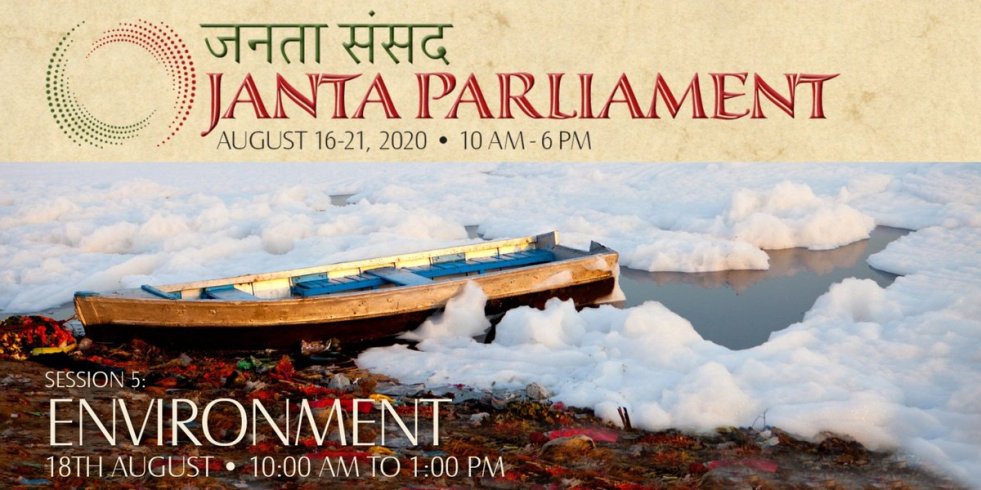
While Indian Parliament has not met since March 2020, Civil Society Groups came together and held a Janta (people’s) Parliament from Aug 16 to 21 Aug 2020, where citizens from across the country from all walks of life enthusiastically participated. On Aug 18 there was a three hour session on Environment issues (such a session is a rarity in Indian Parliament), as part of which, there was a presentation on Water related issues where SANDRP coordinator was invited to speak. Two water related resolutions were passed among others, by the Janta Parliament, one on Flood Management and another on Urban Water Management. See below for details.
Continue reading “DRP: 24 August 2020: Janta Parliament discusses some serious water issues”Tag: rivers
DRP: 17 August 2020: The Contempt of Court case against MoEF
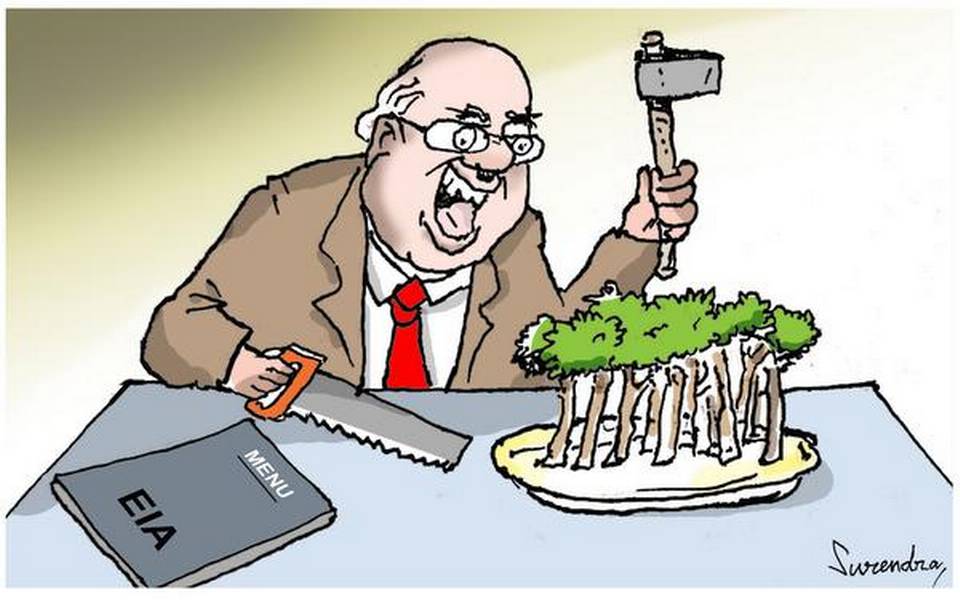
[Feature image: Cartoon on Draft EIA 2020 by Surendra, The Hindu https://www.thehindu.com/opinion/cartoon/cartoonscape-august-12-2020/article32328005.ece (12 Aug. 2020)]
This last week, one Contempt of Court case was deservedly in news, when on the eve of India’s 74th Independence day, the apex Court found public spirited Prashant Bhushan guilty of contempt of Court. Prashant Bhushan’s commitment for the cause of the people and responsible governance of various institutions is beyond question. He is known for being critical of the government and judiciary’s track record and is supported in this by most independent minded persons.
However, there was another contempt case this last week, related to environmental issues, that was not so much in the news. On June 30, 2020, Delhi High Court bench of Chief Justice D N Patel and Justice Prateek Jalan in response to petition by environmentalist Vikrant Tongad had directed, among other things, that Union Ministry of Environment and Forests (MoEF) should translate the Draft EIA (Environment Impact Assessment) Notification of 2020 into all the official languages of India and disseminate widely in ten days. (https://www.thehindu.com/news/cities/Delhi/delhi-hc-extends-public-response-deadline-to-draft-eia-2020/article31951610.ece)
Continue reading “DRP: 17 August 2020: The Contempt of Court case against MoEF”
DRP: 10 August 2020: CANCEL EIA 2020!
Anyone who cares for India, its people and their future and who even remotely understands environmental governance and democratic process will come to just one conclusion about the Draft EIA (Environment Impact Assessment) 2020: CANCEL IT.
We certainly need change in the current EIA process. The whole thing is a major fraud at every stage, from the exclusion from large number of activities from the scope of EIA process, to scoping to quality of EIA, to the track record of the EIA consultants, to the process of selection of EAC (Expert Appraisal Committee) and its functioning, to public hearing and consultation process, to the complete absence of capacity or even will to monitor and achieve compliance of the approved project, every step needs strengthening, from the current EIA process based on the 2006 notification.
Continue reading “DRP: 10 August 2020: CANCEL EIA 2020!”
DRP: 03 Aug 2020: India needs to demand info from China on Brahmaputra issues
Two important developments this week underline once again the need for Indian govt to demand clear responses from China. One is about the threat of landslide outburst flood that may enter India via Siang. A landslide dam has been formed on the Jianpu glaciers that feeds the Yigong Tsangpo, a tributary of Yarlung Tsangpo, as Siang is known by that name in Tibet. This landslide dam can breach anytime, and bring a high wave of sudden & destructive flood in Arunachal Pradesh. Chintan Sheth, who monitors this area through use of satellite imagery, has once again (his warnings on such landslide outburst dams in the past has been very accurate and useful) warned us about this through an excellent and detailed article quoted below, in Arunachal Times. Such information should actually be coming from Govt of India’s elaborate satellite imagery capabilities. At least now the Govt of India needs to ask China to share all information about this landslide dam and share that information with the people of Arunachal Pradesh at greatest risk due to such floods.
Continue reading “DRP: 03 Aug 2020: India needs to demand info from China on Brahmaputra issues”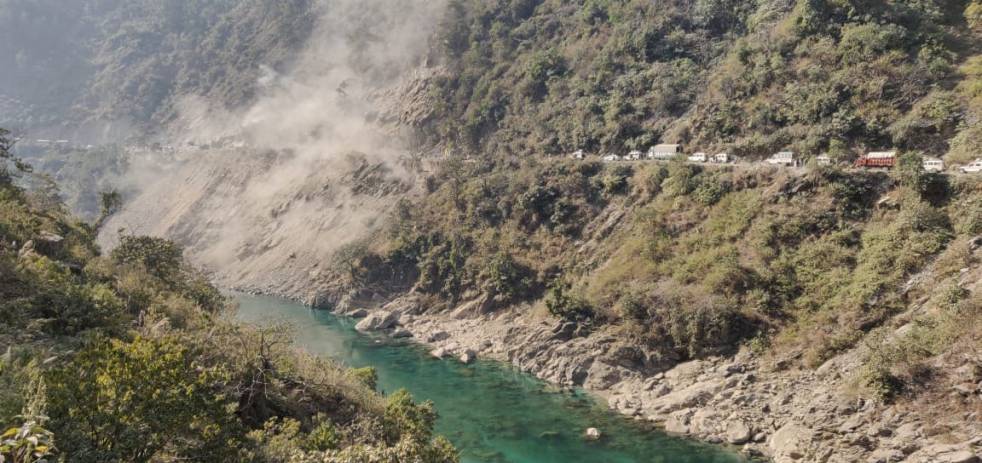
DRP: 20 July 2020: Will the Supreme Court stop destruction of Ganga & Himalayas in the name of WIDER Char Dham Road?
Feature Image: Pithoragarh-Tanakpur Road widening work going and muck being dumped in Saryu river under Chardham project. (Manoj Matwal, April 2019)
The Supreme Court appointed Ravi Chopra committee has submitted the report on Char Dham Road. It has not said NO to the all weather road which is the slogan of Gadkari and rest of the Union Government. It has in fact, going by the Union Ministry of Road Transport’s’ circular, as late as 2018, suggested that the road be of 5.5 m width with necessary precautions. It has provided elaborate justifications and reasons why it took this decision. And yet twelve govt members of the committee, claiming in the name of religion (as per interview by one of these twelve members in media today) has insisted that the road should be of 10 m width. Not bothering that religion was not part of their mandate, not bothering what impact such a road will have on the Ganga (and the impact will be massive, we will know the full extent only if the impacts are scientifically assessed), on Himalayas (again starting from deforestation, landslides, flash floods and so on will be unbelievably huge) and on people and future generations. One only hopes the Supreme Court will see through the mindlessness of the economic fundamentalism being pushed in the name of religion and not allow the proposal to go ahead.
The Union Environment Ministry is clearly out to destroy even the Bhagirathi Eco-Sensitive Zone by sanctioning the Zonal Master Plan without due process and in complete violation of the letter and spirit of the Bhagirathi notification. This will further open the flood gates for destruction of remaining stretch of Bhagirathi, considered original Ganga stream as it flows from Gangotri. Again one hopes the judiciary will strike this down.
One wonders what is the NMCG, National Mission for Clean Ganga, whose mandate is Ganga rejuvenation, is doing amidst all this? Why is it silent?
Continue reading “DRP: 20 July 2020: Will the Supreme Court stop destruction of Ganga & Himalayas in the name of WIDER Char Dham Road?”
DRP: 13 July 2020: “Rainwater harvesting is key to solving India’s water woes”
INDEED. With all the emphasis available at our command. We are in the midst of the rainiest season and such a statement is indeed music. It would become even more melodious if one knows who said it: it was none other than Mr G. Asok Kumar, Additional Secretary & Mission Director, National Water Mission, Department of Water Resources, River Development & Ganga Rejuvenation, Ministry of Jal Shakti, Government of India who said it. Speaking on July 8, 2020, he said: “Rainwater harvesting has become inevitable in the current scenario of water scarcity across the country… The idea is to save the rainwater be it on the rooftop, compounds, and premises.” Mr Kumar also emphasised the importance of groundwater recharge.
We can pass it as run-of-the-mill statement from the government, but one is tempted to think there is more to it than that. One wishes if there was a way to hold these officials accountable for such statements and ask as to how this translates into policies, projects and practices. There is no evidence of any of these, unfortunately. Unless we were to interpret it cynically the way Central Water Commission ideologues do: Dams are also rain water harvesting structures! By that definition, even river linking is also rain water harvesting structure!! But Mr Kumar do not seem to suggest that. So let us hold on to this statement optimistically and push the water resources establishment to implement through right policies, practices and projects. Since that is where solution to India’s water problem indeed is. Unfortunately so far there is no sign that this wisdom is accepted in any serious way by the water resources establishment.
Continue reading “DRP: 13 July 2020: “Rainwater harvesting is key to solving India’s water woes””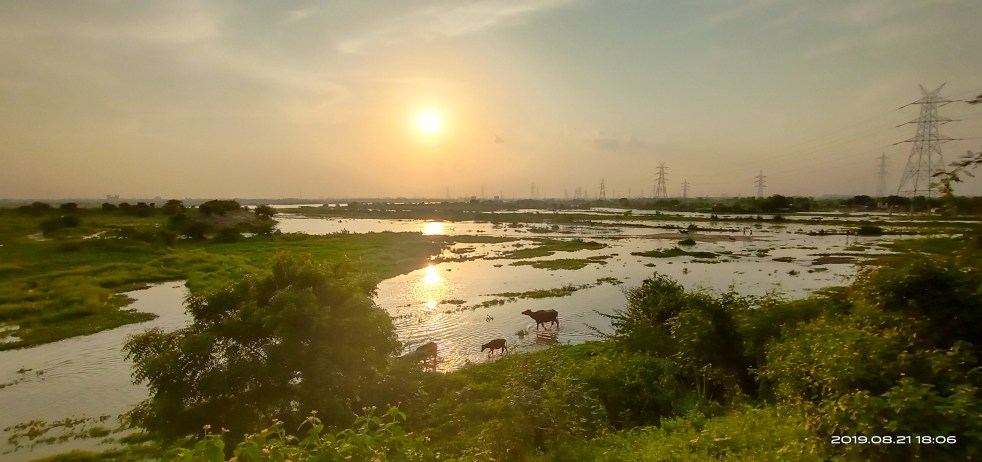
DRP: 6 July 2020: Dear NGT, Yamuna Monitoring Panel needs extension
In July 2018, the National Green Tribunal appointed a Yamuna Monitoring Panel for Delhi, the term of this panel is over and it has submitted its final report. NGT had also appointed similar committees for Haryana and Uttar Pradesh stretch of Yamuna, but those panels never functioned as actively as did the Delhi panel. We urge NGT to accept the petition now filed by Manoj Mishra to give extension to the Delhi Yamuna Monitoring Committee (DYMC) and direct that this committee will continue to function and monitoring and compliance panel for Yamuna river in Delhi.
There is a lot one can say positively about this committee, but arguably the biggest factors are its activeness, responsiveness and transparency. This can be easily seen visiting its website or its twitter page (https://twitter.com/ngtmcyamuna2). The committee also acted as a bridge between various institutions dealing with Yamuna in Delhi and ensured better coordination. The committee’s work is also evident in the number of reports it has submitted, all available on its website. There is always room for improvement in functioning of any such organisation, but this a lot and there are very few cases where one can say this.
Continue reading “DRP: 6 July 2020: Dear NGT, Yamuna Monitoring Panel needs extension”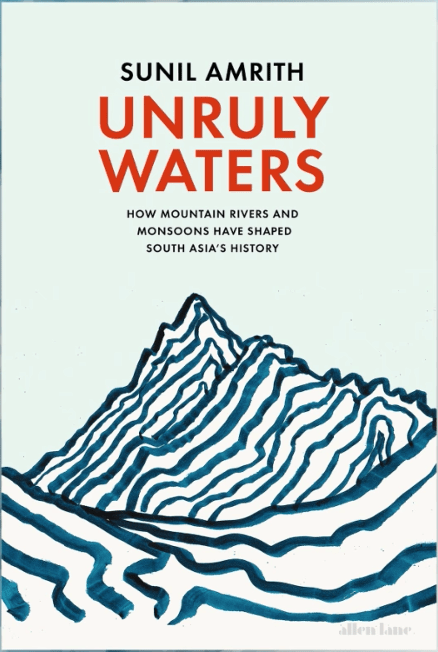
Review Essay on UNRULY WATERS: How Mountain Rivers & Monsoons have Shaped South Asia’s History
Guest blog by Dr. Ruchi Shree
Unruly Waters: How Mountain Rivers & Monsoons Have Shaped Asia’s History (by Sunil Amrith (2018), Penguin/ Allen Lane, New Delhi) unfolds the mysteries of monsoon in countless ways. It is written by Sunil Amrith, a historian and professor at Harvard University and the book has much more to offer to numerous other disciplines ranging from geology to ecology and political economy to name a few. Interdisciplinary as well as multidisciplinary orientation of the book makes it an interesting read for even the lay persons.
Although, I must admit that its non-ideological nature may at times lead to difficulty in placing the book in a certain category of left and right. Probably, the author has consciously done so and we will deliberate on this issue little later. Continue reading “Review Essay on UNRULY WATERS: How Mountain Rivers & Monsoons have Shaped South Asia’s History”

DRP: 22 June 2020: Seven years after Uttarakhand Disaster: Any lessons learnt?
This past week we just completed seven years since the worst ever flood disaster in Himalayas, the Uttarakhand-Himachal Flood disaster that got launched with the massive unseasonal rainfall during June 15-17, 2013, along with the Glacial Lake Outburst Flood from Chorabari glacier upstream from Kedarnath. It was a massive wake up call.
To briefly recall, that unprecedented rainfall occurred when monsoon had not even set in Uttarakhand and neighbouring Himachal Pradesh. The first thing that strikes about this disaster where by official accounts over 6000 people died and by unofficial accounts over 20 000, is that we do not even have a comprehensive report from the government about this disaster. It would have told us a lot of things, including what we can learn from this disaster.
Second big thing that strikes is that big dams and hydropower projects, both due to their construction and operation impacts, both completed and under construction projects played a big role, as brief SANDRP video films in English and Hindi shows. But we continue to play with the Himalayas, the Ganga and lives of the lakhs of people by pushing more dams and such destructive activities (e.g. Char Dham Highways) in the fragile mountains without even honest impact assessments.
Continue reading “DRP: 22 June 2020: Seven years after Uttarakhand Disaster: Any lessons learnt?”
DRP: 15 June 2020: Athirapally, Bodhghat, Cauvery, Dibang, Etalin: New growth alphabets from the PMO?
A for Athirapally, B for Bodhghat, C for Cauvery, D for Dibang, E for Etalin, seems to be the new growth alphabets from the Prime Minister’s Office. With the economic growth in negative territory, depression in the corner, the old and trusted Big Dams as major infrastructure to push up expenditure and hope for the growth was a formula used even in 1930s by US president Franklin D Roosevelt to bring the US economy out of the Great depression of 1929. It started with the Tennessee Valley Authority Act of May 1933, which then was pushed as growth model to other countries. In India it came in the form of Damodar Valley Corporation (DVC) Act of 1948.
However that 20th century model was a failure even then, as the first CEO of the DVC, Sudhir Sen wrote. That model is no longer relevant in 21st century except possibly as an easy route to corruption and kickbacks. These dams and hydropower projects are no longer even economically viable and better options are now available for irrigation and power. In the changing climate scene they are even less relevant places of worship (temples). Dams and hydropower projects are seeing slow down across the globe, not just in India.
Continue reading “DRP: 15 June 2020: Athirapally, Bodhghat, Cauvery, Dibang, Etalin: New growth alphabets from the PMO?” SANDRP