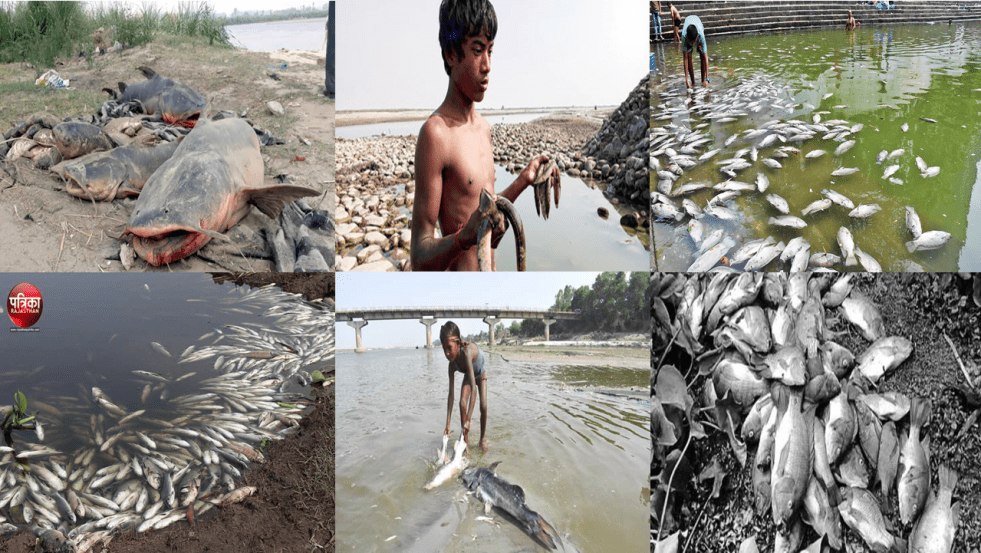
21 November is celebrated as world fisheries day across the world. Apart from crucial source of food and livelihood to lakhs of fisherfolks in India, fish diversity determines the health of the water body including lakes, ponds and rivers. However with growing threats and pollution mass fish mortality has been taking place in various rivers and lakes in the country every year. On World Fisheries Day 2018 SANDRP has put together known mass fish kill incidents that took place this past year to highlight the gravity of threat so that corrective measures can be taken by respective Governments and others concerned.
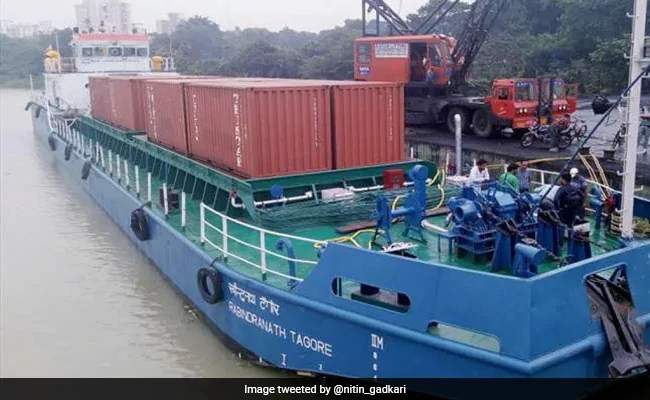
PM Modi inaugurated the first multi-modal terminal on the Ganga river in Varanasi on Nov. 12 under a project aimed at promoting inland waterways as a cheaper and more environment-friendly means of transport. The multi-modal terminals are being built as part of the central government’s Jal Marg Vikas Project that aims to develop the stretch of the river Ganga between Varanasi and Haldia for navigation of large vessels weighing up to 1,500-2,000 tonnes. https://www.ndtv.com/india-news/pm-modi-to-inaugurate-1st-multi-modal-terminal-on-ganga-river-in-varanasi-1944924 (9 Nov. 2018)
Explaining the negative impact of waterways projects on Ganga River, Shripad Dharmadhikary in Hindi report titled जलमार्गपरियोजनाबदहालनदियोंपरएकहमला writes that the projects lack public consultation “गंभीर बात है कि जलमार्ग विकास से सबसे ज्यादा प्रभावित होने की सम्भावना स्थानीय जनता को है। इसके बावजूद जलमार्ग के विकास से संबंधित ज्यादातर कामों के आयोजन और क्रियान्वयन के लिए न तो इनकी सलाह ली गई है, और न ही इनके बारे में जनता को जानकारी दी गई है। कुल मिलाकर इन जलमार्गों के सामाजिक और पर्यावरणीय प्रभावों का ठीक से आकलन नहीं हुआ है, ऊपर से इन्हें पर्यावरणीय मंजूरी के दायरे से बाहर रखा गया है और सारी प्रक्रिया में लोगों की सहभागिता का भी पूरा अभाव है। ऐसे में जलमार्गों के रूप में इतना बड़ा हस्तक्षेप हमारी नदियों पर एक और बड़ा हमला है जो पहले से बुरी हालत में हैं। https://www.downtoearth.org.in/hindistory/%E0%A4%A8%E0%A4%A6%E0%A5%80%E0%A4%B9%E0%A4%82%E0%A4%A4%E0%A4%BE-%E0%A4%AA%E0%A5%8D%E0%A4%B0%E0%A4%AF%E0%A4%BE%E0%A4%B8-62034 (5 Nov. 2018)
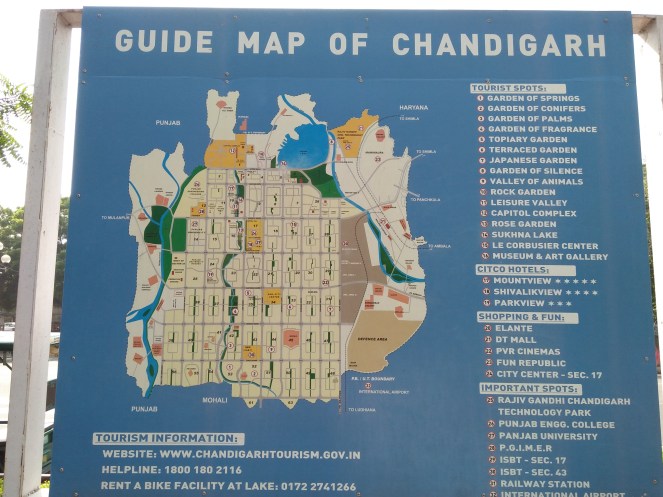
Chandigarh is widely known for its well-designed urban areas and associated amenities. No doubt, the city is relatively congestion free and cleaner. The roads are wider, sideways have adequate space for walkers and cyclists and they are mostly covered under thick tree canopy earning its tag of ‘City Beautiful’.
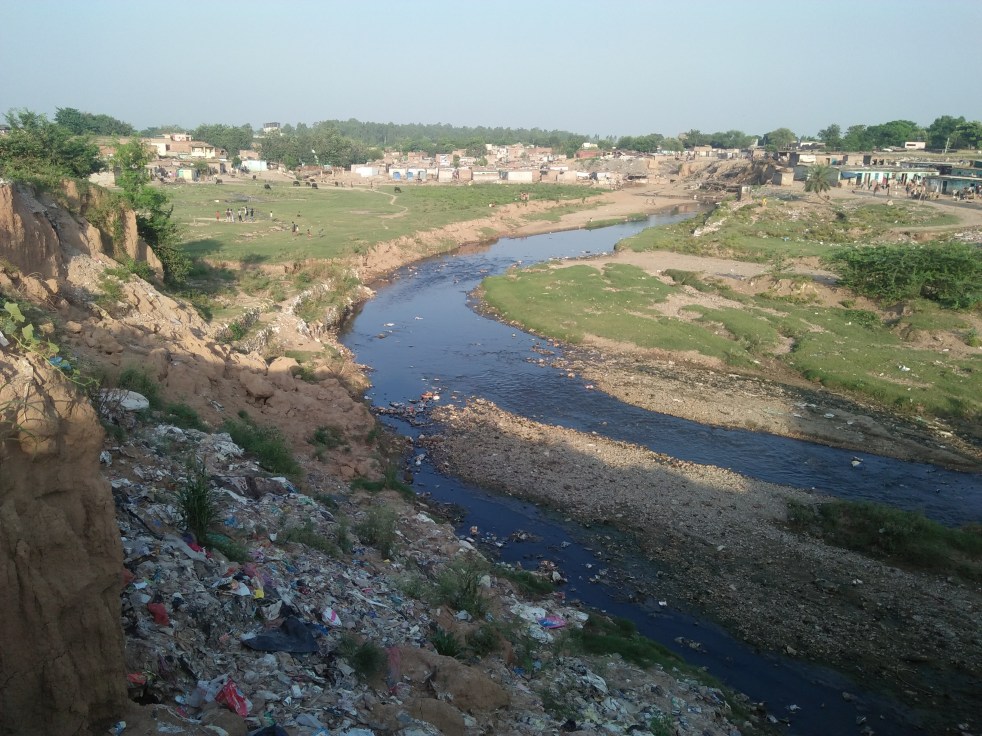
However less is known about and rivers. This pictorial account tries to throw some light on present day situation of water sources like wells, ponds and rivers in and around Chandigarh town.
International news agency, after independent research, have corroborated what SANDRP has been saying: Mismanagement of dams played big role in worsening Kerala floods.
-“The release could have started earlier so that by Aug. 9 there would have been left-over capacities in the reservoirs to store the water,” said Biswajit Mukhopadhyay, director of water resources at U.S-based engineering firm IEA, who analysed some of the publicly available data at the request of Reuters.
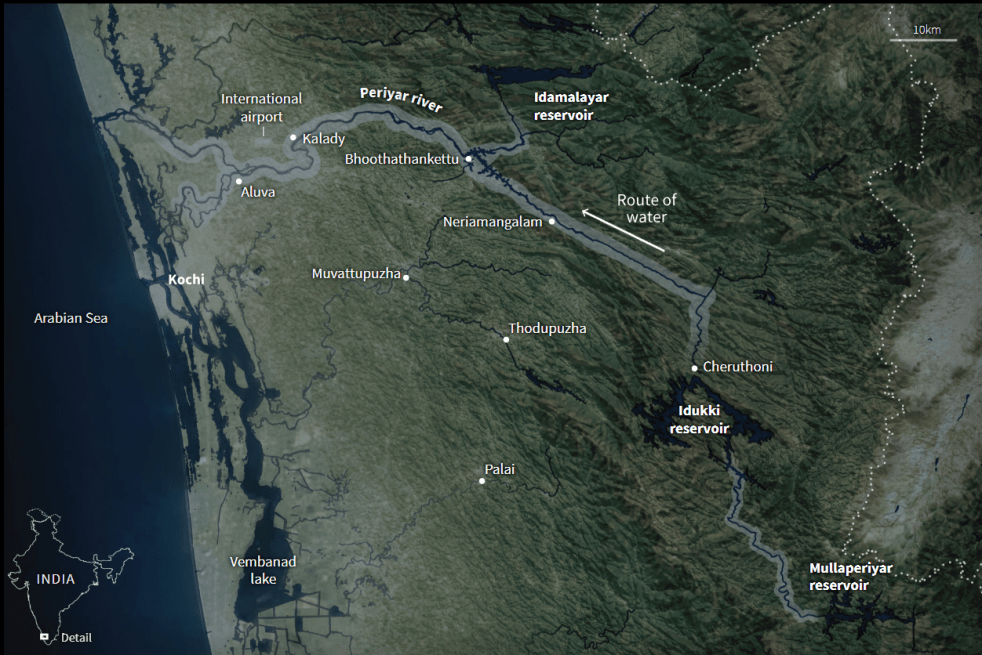
– Still, dozens of flood victims interviewed by Reuters, who live in villages dotting the banks of Kerala’s biggest river, the 244 km Periyar, say they faced no floods despite torrential rain in late July and early August. All of them said waters only rose overnight on Aug. 15. That was when more intense rainfall forced KSEB to rapidly ramp-up releases of water from Idukki and Idamalayar reservoirs, which feed into the Periyar.
– Kerala’s revenue secretary and head of disaster management, P.H. Kurien, told Reuters he has twice written to KSEB requesting EAPs and has yet to receive them. KSEB’s Pillai said EAPs and dam operation manuals were still being prepared. CWC said it was working with Kerala’s government to speed this up. The Kerala Chief Minister’s office did not respond to requests for comment. https://widerimage.reuters.com/story/did-dams-make-indias-once-in-century-floods-worse (11 Oct. 2018)
Further speaking to various regional media, Madhav Gadgil has said that irresponsible environmental policy is to blame for the recent floods and landslides in Kerala. He also called it a “manmade calamity”. He said that the committee report had recommended to protect the resources with the cooperation of local self-govt and people, but those recommendations were rejected.
Dams should never be filled before the end of the monsoons. Because then one doesn’t have any solution but to release the water in the surrounding areas: Himanshu Thakkar, SANDRP says as one of panellist discussing role of dams in aggravating Kerala floods.
Here is admission about sudden, excessive releases and not foreseeing the coming disaster. The Kerala crisis could have been contained had the state “gradually released” waters from at least 30 dams, officials said, adding that the local authorities failed to foresee the imminent danger with high rain prediction. “Such floods have probably recurred after 100 years, exposing the state’s unprofessionally run reservoir management system and unpreparedness on disaster mitigation and disaster resilience, an official pointed out. https://timesofindia.indiatimes.com/city/kochi/gradual-dam-water-release-could-have-contained-crisis/articleshow/65436339.cms (17 Aug. 2018)
On occasion of International Day for Biodiversity May 22, 2018, the Union Minister for Water Resources, River Development and Ganga Rejuvenation Nitin Gadkari released the report on “Status of Conservation of Select Aquatic Species” in river Ganga in New Delhi . The celebrations have been organised to mark the 25 years of coming into force of the Convention on Biological Diversity. He also inaugurated a day-long workshop organized by World Wildlife Fund (WWF) on the theme “Ganga and its Biodiversity: Developing a Road Map for Habitat and Species Conservation”.
A database of Ganga Praharis’, a self-motivated cadre, being created by Wildlife Institute of India (WII) was also launched by the Minister. Shri U.P. Singh, Secretary, Ministry of Water Resources, River Development and Ganga Rejuvenation said: “Ganga still has about 2,000 aquatic species.” He also pointed out that both aviralta and nirmalta of river Ganga are important and the government is committed to achieve both.
On 10th April 2018 around 500 fishers assembled at Majhdia, a town bordering Bangladesh in the district of Nadia (W Bengal), to publicly voice their protest against killing of rivers Mathabhanga and Churni. Majhdia town reverberated with the slogan Save River, Save Fish, Save Fisher People! Continue reading “Fisher-people lead Save Mathabhanga & Churni River Campaign in W Bengal”→
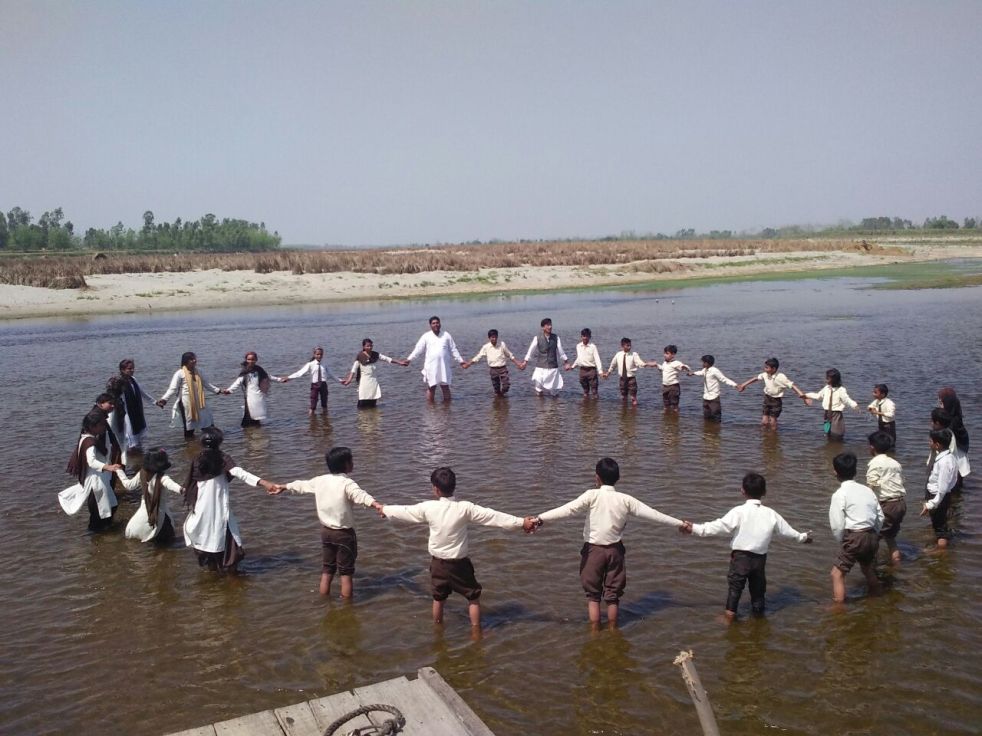
Every year on the sixth day of summer Navratra the birthday of Yamuna river is celebrated. This year it was on 23 March 2018. On this occasion, SANDRP has prepared a photo blog covering almost entire length of the river. The Yamuna Mitra Mandali (YNMM) (Friends of Yamuna River) group established by Yamuna Jiye Abhiyan has essential contributed for this pictorial blog.
The photo blog tries to show the present day situation of river Yamuna and activities of YNMM on the day of Yamuna Jayanti.
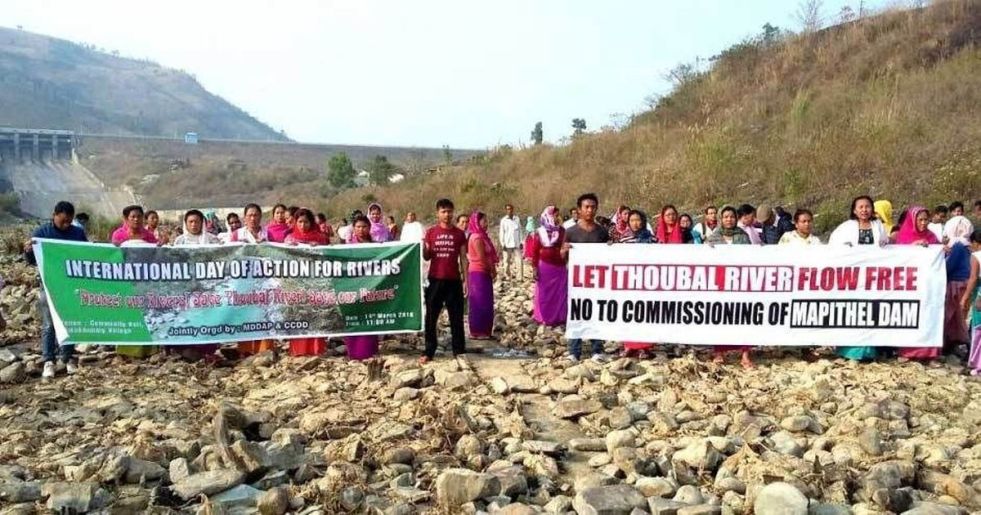
In an important development in Manipur this week, PM Narendra Modi could not commission the controversial Mapithel dam due to local protest. As per, the official statement notifying The PM was was supposed to launch is the Mapithel dam, part of the Thoubal Multipurpose Project.
As per CRA Manipur blog report, the forum of Mapithel dam affected “Joint Action Committee Against Forced Inauguration of Mapithel Dam had threatened a 48-hour shutdown to coincide with the dam’s scheduled inauguration by Modi. The committee withdrew its call late on March 14, reportedly after the Manipur government agreed to shelve the inauguration.
The action committee is primarily demanding compensation for the people displaced by the project as mandated by the Right to Fair Compensation and Transparency in Land Acquisition, Rehabilitation and Resettlement Act, 2013.
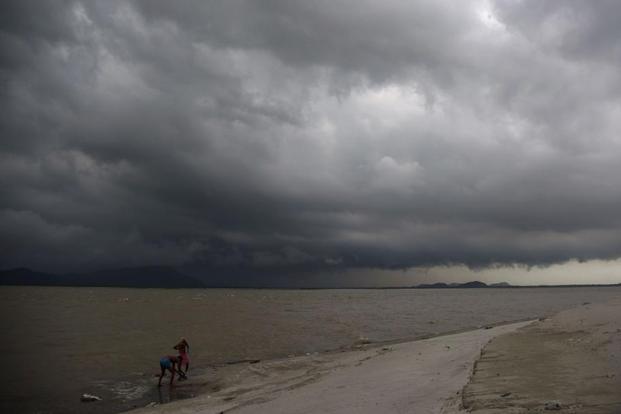
After reviewing status of India rivers, SANDRP presents an account of research, studies and important reports on erratic monsoon, climate change, floods which all are severely affecting the rivers, their aquatic life and livelihood of dependent communities.
Rivers and Monsoon
Number of rainy days falling across river basins in India The study has found that number of rainy days is falling across river basins in India and rainfall intensities are seen to be increasing. The analysis determined changes in heavy precipitation and peak flood for seven river basins in India—Krishna, Godavari, Mahanadi, Narmada, Cauvery, Sabarmati and Brahamani and Baitarani. For the study, data pertaining to daily flows for about 30 odd years and precipitation for 61 years (from 1951 to 2012) were analysed.
The analysis also said the rivers which flow from west to east direction (in India) have more rainy days compared to those which flow towards the west. The study also held that anthropogenic activities (construction of storage reservoirs, diversions, urbanization, land-use change, and soil and water conservation measures, among others) have probably affected the generation of peak floods in the rivers of India. http://www.livemint.com/Politics/c7v8oXmsMDHIldjDv9k6lK/Number-of-rainy-days-falling-across-river-basins-in-India-s.html (Live Mint, 27 April 2017)


 SANDRP