
Delhi Chief Minister Arivind Kejriiwal led govt seems to be now proposing privatisation of Delhi water supply.
Continue reading “DRP: 28 Sep 2020: AAP to privatise Delhi Water supply which Arvind Kejriwal opposed?”Tag: Pollution

World Rivers Day 2020: Celebrating Rivers across the world
The World Rivers Day[i] (WRD) is celebrated annually on the fourth Sunday of September. The event strives to highlight the invaluable ecological, hydrological services and cultural, recreational values offered by the rivers. Indeed, the most of the once wild, scenic, free flowing rivers across the globe are facing existential crisis on account of various anthropogenic activities hastened over the past century.
However, there are small but significant steps being undertaken by individuals, organizations and governments to restore some of the flowing eco-systems. This account attempts to compile some such positive developments that have taken place in the one year.
We have already published a compilation of the positive river stories of India on the occasion of International Day of Actions for Rivers being held on March 14 2020. In addition to Indian rivers, this compilation also covers some remarkable development concerning river conservation worldwide. There could be many more stories and developments happening, we invite readers to send us such stories they know about.
Continue reading “World Rivers Day 2020: Celebrating Rivers across the world”
DRP: 21 Sep 2020: IHA President accepts-Hydro faces massive slowdown & worse
International Hydropower Association (IHA) is essentially global leader of hydropower lobby. So when IHA President Roger Gill speaks about the problems hydro industry is facing, it becomes very interesting for all concerned.
In this interview the Roger Gill makes it clear that Hydro investments have been slowing down in last five years when compared with investments in immediate earlier decades. It has further slowed down in 2019 and has been further majorly affected by Covid-19 pandemic. Gill also accepts that the hydro is perceived as much more risky compared to solar and wind. The claim he makes of low levelised cost of electricity from hydro projects is a bit of fiction, since cost of any under construction or new hydro will be hugely costlier than solar and wind power projects. The IHA president is catching at the straws when he takes encouragement from investments in existing hydro projects and pump storage, though he keeps making it clear that market is still unclear as far as pump storage tariffs are concerned. A friendly interview also reveals a lot!!
It is high time that the Indian hydropower lobby led by NHPC and power ministry takes due note of the realities and would not push unjustified, unviable and destructive hydropower projects down the throats of reluctant states and people, using scarce public resources.https://energy.economictimes.indiatimes.com/news/power/hydro-power-requires-100-bn-investment-annually-roger-gill-international-hydropower-association/78131561 (17 Sep 2020)
Continue reading “DRP: 21 Sep 2020: IHA President accepts-Hydro faces massive slowdown & worse”
DRP: 14 Sep 2020: How should we define a Normal Monsoon?
IMD is happy to declare a monsoon as normal as long as total quantum of rainfall at national scale is within 4% of what is defined as normal monsoon rainfall during June 1 to Sept 30. Even if this means there is spatially or temporally or both spatially & temporally, the total rainfall or its distribution is abnormal in large parts of the country. It was good to see a national newspaper, asking question if the monsoon is normal even though it’s not temporally normal as was the case in large parts of the country this year.
The IMD normal only assures meteorological normal of national monsoon rainfall within given period. It does not assure hydrologic normal nationally or in different parts of the country, nor agricultural normal rainfall nationally or in different parts: sub divisions, states, river basins, districts, talukas/ tehsils or villages and wards. We clearly need much more realistic and nuanced definition of even meteorological Normal monsoon rainfall, which IMD needs to work on. But as far hydrological or agricultural normal rainfall is concerned, both temporally and spatially, those concerned outside IMD will need to work on.
Continue reading “DRP: 14 Sep 2020: How should we define a Normal Monsoon?”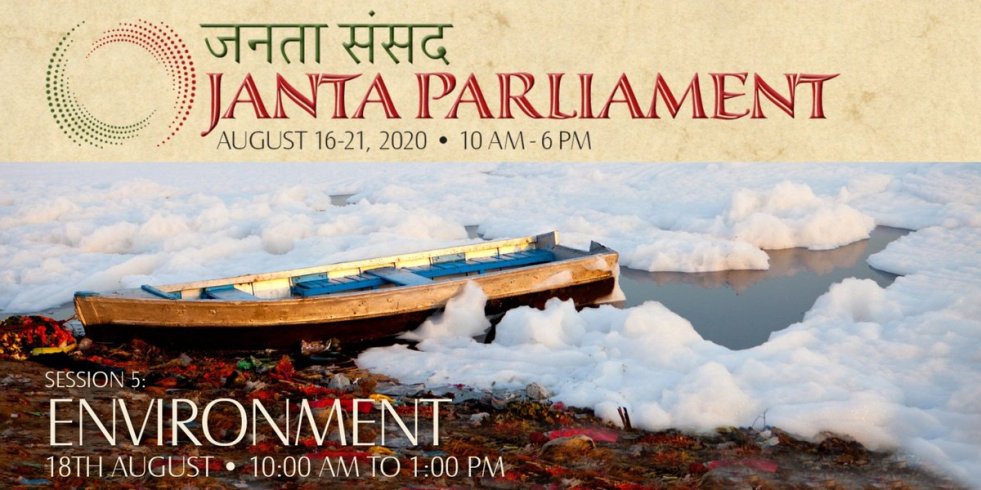
DRP: 24 August 2020: Janta Parliament discusses some serious water issues
While Indian Parliament has not met since March 2020, Civil Society Groups came together and held a Janta (people’s) Parliament from Aug 16 to 21 Aug 2020, where citizens from across the country from all walks of life enthusiastically participated. On Aug 18 there was a three hour session on Environment issues (such a session is a rarity in Indian Parliament), as part of which, there was a presentation on Water related issues where SANDRP coordinator was invited to speak. Two water related resolutions were passed among others, by the Janta Parliament, one on Flood Management and another on Urban Water Management. See below for details.
Continue reading “DRP: 24 August 2020: Janta Parliament discusses some serious water issues”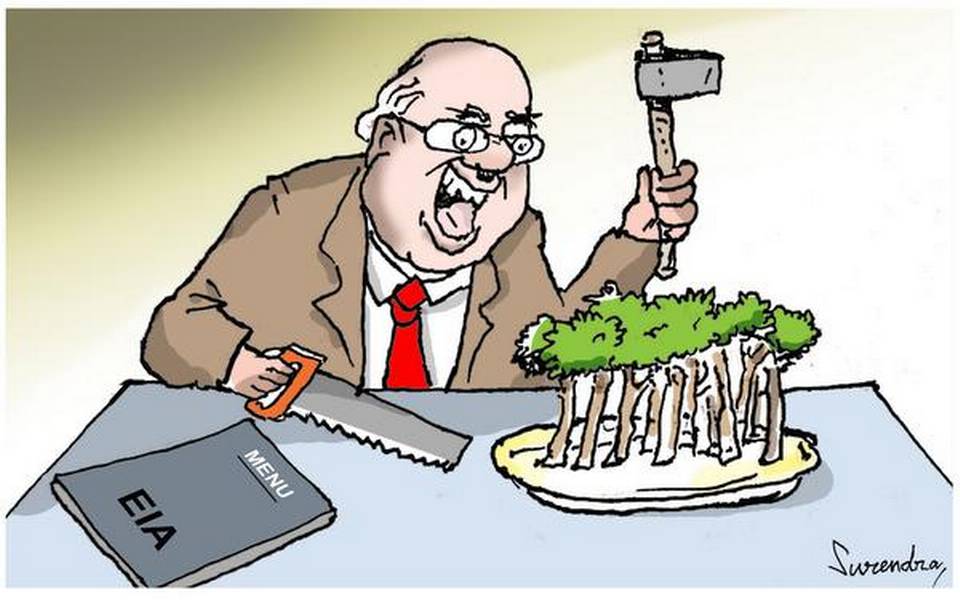
DRP: 17 August 2020: The Contempt of Court case against MoEF
[Feature image: Cartoon on Draft EIA 2020 by Surendra, The Hindu https://www.thehindu.com/opinion/cartoon/cartoonscape-august-12-2020/article32328005.ece (12 Aug. 2020)]
This last week, one Contempt of Court case was deservedly in news, when on the eve of India’s 74th Independence day, the apex Court found public spirited Prashant Bhushan guilty of contempt of Court. Prashant Bhushan’s commitment for the cause of the people and responsible governance of various institutions is beyond question. He is known for being critical of the government and judiciary’s track record and is supported in this by most independent minded persons.
However, there was another contempt case this last week, related to environmental issues, that was not so much in the news. On June 30, 2020, Delhi High Court bench of Chief Justice D N Patel and Justice Prateek Jalan in response to petition by environmentalist Vikrant Tongad had directed, among other things, that Union Ministry of Environment and Forests (MoEF) should translate the Draft EIA (Environment Impact Assessment) Notification of 2020 into all the official languages of India and disseminate widely in ten days. (https://www.thehindu.com/news/cities/Delhi/delhi-hc-extends-public-response-deadline-to-draft-eia-2020/article31951610.ece)
Continue reading “DRP: 17 August 2020: The Contempt of Court case against MoEF”
DRP: 03 Aug 2020: India needs to demand info from China on Brahmaputra issues
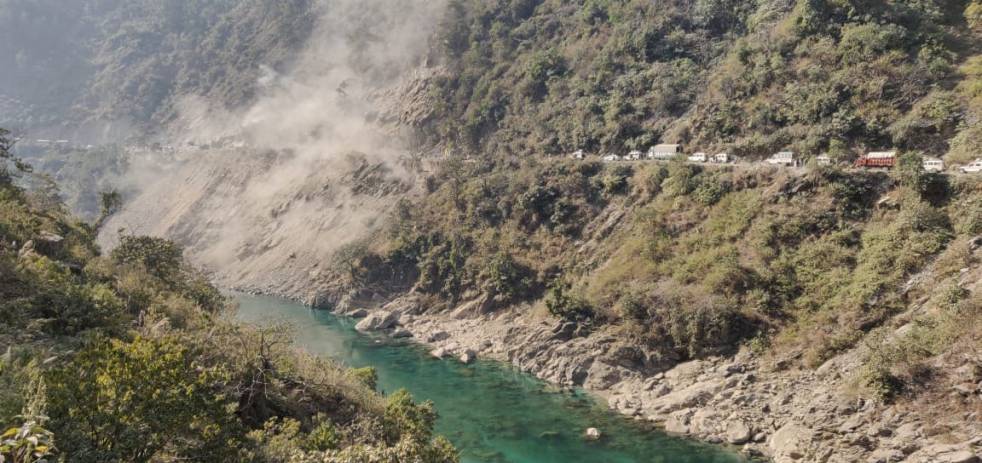
Two important developments this week underline once again the need for Indian govt to demand clear responses from China. One is about the threat of landslide outburst flood that may enter India via Siang. A landslide dam has been formed on the Jianpu glaciers that feeds the Yigong Tsangpo, a tributary of Yarlung Tsangpo, as Siang is known by that name in Tibet. This landslide dam can breach anytime, and bring a high wave of sudden & destructive flood in Arunachal Pradesh. Chintan Sheth, who monitors this area through use of satellite imagery, has once again (his warnings on such landslide outburst dams in the past has been very accurate and useful) warned us about this through an excellent and detailed article quoted below, in Arunachal Times. Such information should actually be coming from Govt of India’s elaborate satellite imagery capabilities. At least now the Govt of India needs to ask China to share all information about this landslide dam and share that information with the people of Arunachal Pradesh at greatest risk due to such floods.
Continue reading “DRP: 03 Aug 2020: India needs to demand info from China on Brahmaputra issues”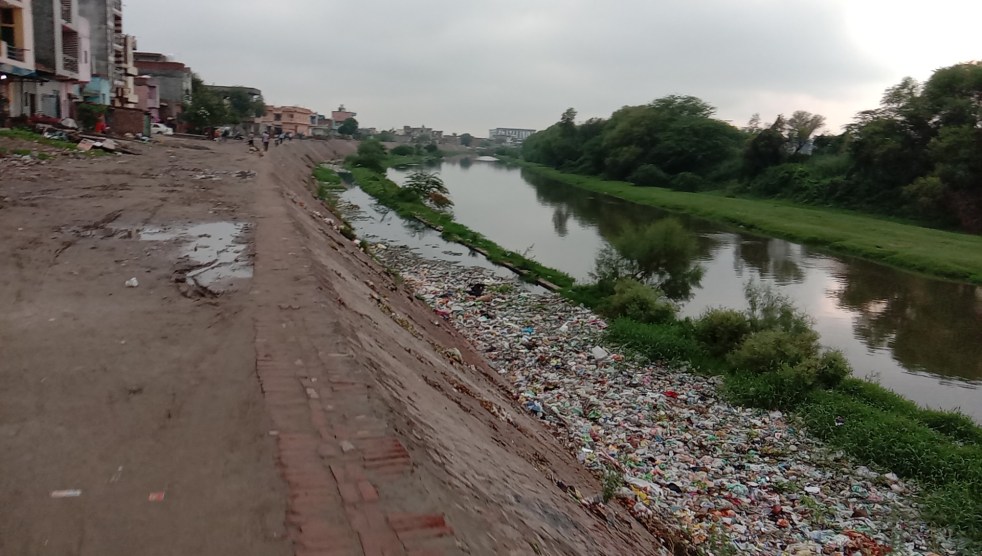
Delhi Drinking Water Canal gets toxic mix
In May 2019 SANDRP wrote, with photo evidence, after a visit to the Drain No 8 that brings Delhi’s drinking water that it is running next to drain no 6 carrying untreated industrial toxics from Haryana, with only sand bags separating the two. A visit on 21st July, 2020 provided video proof that water from drain no 6 is still happily mixing with drain no 8 at several places.
A visit to drain number 8, one of prominent canal carrying potable water supply of national capital can be shocking experience to anyone concerned with water quality and health of people. The canal (called escape) flows close to Delhi Haryana border in Sonipat district. The drinking water in the escape is being repeatedly contaminated with all sorts of industrial effluents.
Continue reading “Delhi Drinking Water Canal gets toxic mix”
DRP: 20 July 2020: Will the Supreme Court stop destruction of Ganga & Himalayas in the name of WIDER Char Dham Road?
Feature Image: Pithoragarh-Tanakpur Road widening work going and muck being dumped in Saryu river under Chardham project. (Manoj Matwal, April 2019)
The Supreme Court appointed Ravi Chopra committee has submitted the report on Char Dham Road. It has not said NO to the all weather road which is the slogan of Gadkari and rest of the Union Government. It has in fact, going by the Union Ministry of Road Transport’s’ circular, as late as 2018, suggested that the road be of 5.5 m width with necessary precautions. It has provided elaborate justifications and reasons why it took this decision. And yet twelve govt members of the committee, claiming in the name of religion (as per interview by one of these twelve members in media today) has insisted that the road should be of 10 m width. Not bothering that religion was not part of their mandate, not bothering what impact such a road will have on the Ganga (and the impact will be massive, we will know the full extent only if the impacts are scientifically assessed), on Himalayas (again starting from deforestation, landslides, flash floods and so on will be unbelievably huge) and on people and future generations. One only hopes the Supreme Court will see through the mindlessness of the economic fundamentalism being pushed in the name of religion and not allow the proposal to go ahead.
The Union Environment Ministry is clearly out to destroy even the Bhagirathi Eco-Sensitive Zone by sanctioning the Zonal Master Plan without due process and in complete violation of the letter and spirit of the Bhagirathi notification. This will further open the flood gates for destruction of remaining stretch of Bhagirathi, considered original Ganga stream as it flows from Gangotri. Again one hopes the judiciary will strike this down.
One wonders what is the NMCG, National Mission for Clean Ganga, whose mandate is Ganga rejuvenation, is doing amidst all this? Why is it silent?
Continue reading “DRP: 20 July 2020: Will the Supreme Court stop destruction of Ganga & Himalayas in the name of WIDER Char Dham Road?”
DRP: 6 July 2020: Dear NGT, Yamuna Monitoring Panel needs extension
In July 2018, the National Green Tribunal appointed a Yamuna Monitoring Panel for Delhi, the term of this panel is over and it has submitted its final report. NGT had also appointed similar committees for Haryana and Uttar Pradesh stretch of Yamuna, but those panels never functioned as actively as did the Delhi panel. We urge NGT to accept the petition now filed by Manoj Mishra to give extension to the Delhi Yamuna Monitoring Committee (DYMC) and direct that this committee will continue to function and monitoring and compliance panel for Yamuna river in Delhi.
There is a lot one can say positively about this committee, but arguably the biggest factors are its activeness, responsiveness and transparency. This can be easily seen visiting its website or its twitter page (https://twitter.com/ngtmcyamuna2). The committee also acted as a bridge between various institutions dealing with Yamuna in Delhi and ensured better coordination. The committee’s work is also evident in the number of reports it has submitted, all available on its website. There is always room for improvement in functioning of any such organisation, but this a lot and there are very few cases where one can say this.
Continue reading “DRP: 6 July 2020: Dear NGT, Yamuna Monitoring Panel needs extension” SANDRP