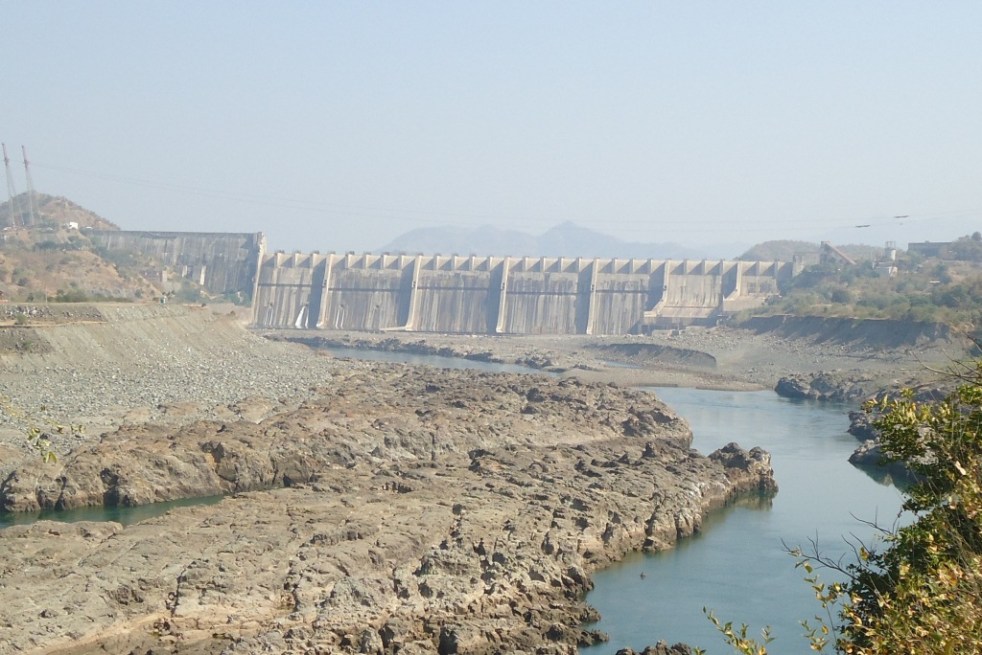
A report this week quotes a Govt of Gujarat (GOG) insider saying that GOG is giving 16.7% of SSP (Sardar Sarovar Project) water for industries (with more in pipeline) against planned allocation of just 2% (0.2 Million Acre Feet or MAF). Similarly, against planned allocation of zero for Urban areas in Ahmedabad, Gandhinagar, Vadodara, Kheda and Bharuch, most large urban areas are getting Narmada water. However, the insider says, the area irrigated by the SSP is only 33% of the targeted area, with largest water quantities going to already irrigated central Gujarat. Similarly, with the Narmada Water Disputes Tribunal (NWDT) asked Gujarat to provide water for the SSP Downstream areas from its allocated share, but Gujarat keeps claiming it has no water for this and asks other states to provide water for the downstream areas from common pool. It seems the worst fears of the project critiques are coming true. The insider has in fact characterized this state of affairs as water anarchy in Gujarat.
Continue reading “DRP 030225: Water Anarchy in Gujarat in Narmada water allocation?”Tag: Monsoon

2024: Siltation, Safety & Sustainability of Hydro, Dams in India
(Feature Image: Pune: Pavana, Mulshi, Panshet, and Khadakwasla Dams Release Water Due to Heavy Rain in Catchment Areas. Source: Pune Now News, Sept 2024)
This annual overview focusses on how siltation, muck dumping related issues are affecting the safety and sustainability of Hydropower projects and dams in India. Some of the key dams facing crisis in this regard include Bhakra, Ratle, Gangasagar, Hathnur among others. Some of the states where this issue is acute include HP, J&K, Maharashtra, Telangana, Kerala, Karnataka & Punjab.
Continue reading “2024: Siltation, Safety & Sustainability of Hydro, Dams in India”
DRP 130125: Will Judiciary take these matters to logical conclusion?
There are at least four cases in this past week where the judiciary has used strong words or taken up crucial issues in water, dams, hydropower projects, wetlands and riverbed mining related issues. In the case related to the safety of Mullaperiyar dam on Kerala-TN border, the Supreme Court has prodded the Centre to wake up from the slumber to ensure that National Dam Safety Authority quickly forms a panel to examine the project. This case has wide ranging repercussions not only about this project, but also functioning of NDSA and other bodies under the Dam Safety Act 2021. Indeed, there is huge question mark as to what extent NDSA and DSA has made our dams any safer.
Continue reading “DRP 130125: Will Judiciary take these matters to logical conclusion?”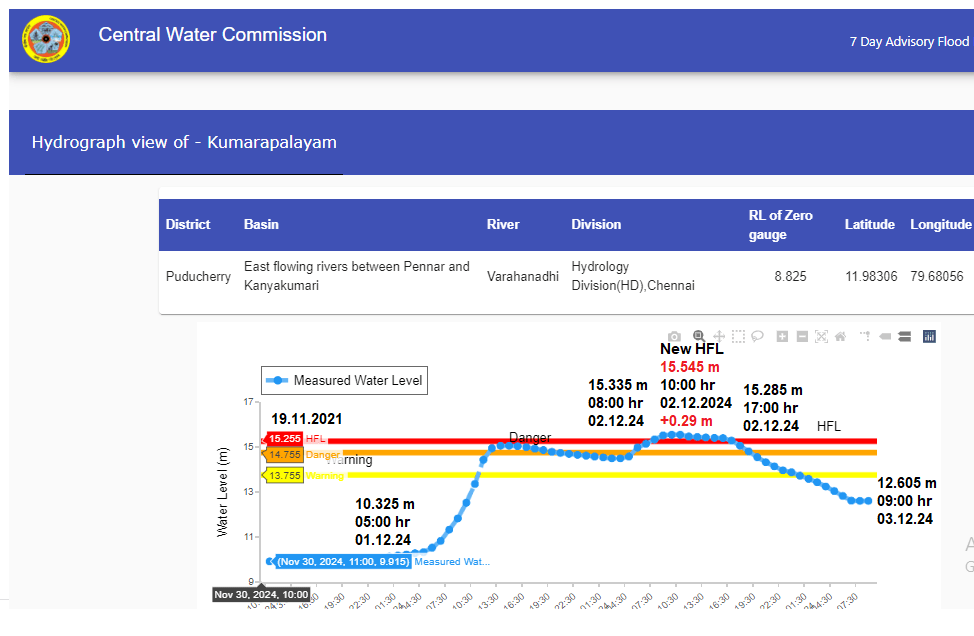
Rivers Flowing in Extreme Flood Situation during Northeast Monsoon 2024
In addition to rivers flowing in extreme flood situations at 64 flooding monitoring stations during Southwest Monsoon 2024, we have found that rivers have crossed highest flood level (HFL) at four stations during just concluded Northeast Monsoon season. Of these four stations, three are in Tamil Nadu state and one is in Union Territory of Puducherry.
Continue reading “Rivers Flowing in Extreme Flood Situation during Northeast Monsoon 2024”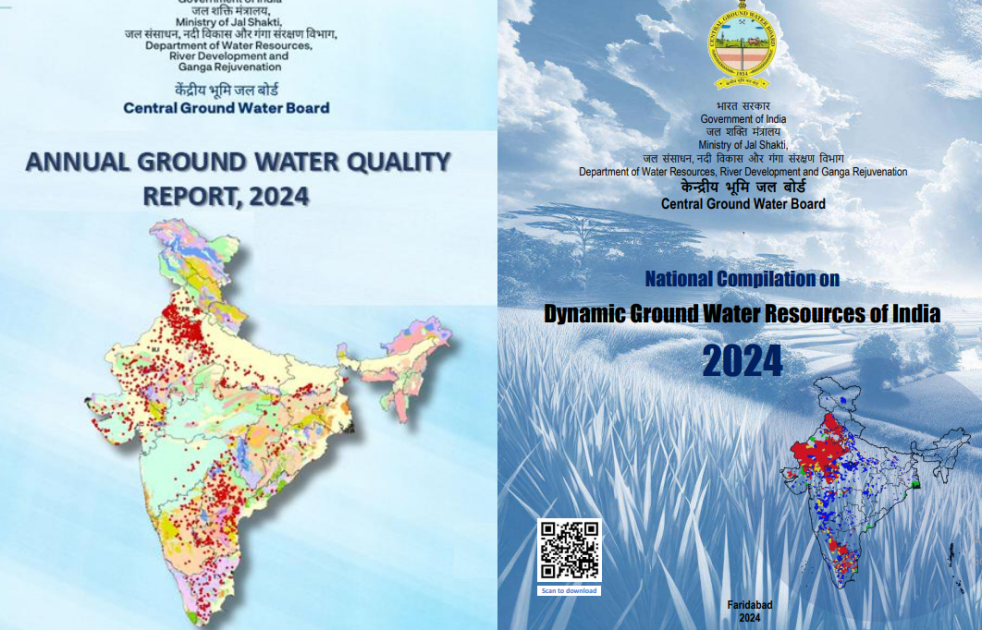
DRP 060125: Concerns about & Contradictions in CGWB’s Reports
The Central Ground Water Board (CGWB) released two important reports last week. While the Annual Ground Water Quality Report 2024 reveals rise in nitrate fluoride, arsenic and uranium contimination of groundwater resource in India, the Dynamic Groundwater Resource Assessment Report 2024 claims substantial rise in annual groundwater recharge and decline in extraction of the resource.
As per the first report, the number of districts affected by high nitrate levels in groundwater has gone up to 440 (near 56% of all 779 districts in country) from 359 found in 2017 assessment which means in 7 years 81 more districts have been found having excessive nitrate levels in groundwater. This should concern us from a number of points of view.
Continue reading “DRP 060125: Concerns about & Contradictions in CGWB’s Reports”
2024: Has NDSA made our dams any safer?
(Feature Image: Srisailam dam in Telangana. Source: Telangana Today)
This annual overview focusses on the functioning of National Dam Safety Authority (NDSA) and related institutions in 2024 to understand if the functioning of these institutions have made Indian Dams any safer? Here functioning of Central Water Commission (CWC) is also important as CWC people head all the dam safety panels. The dam safety related institutions were formed following the passage of Dam Safety Act 2021 and hence there were promises and hopes that these institutions will make our dams safer.
Continue reading “2024: Has NDSA made our dams any safer?”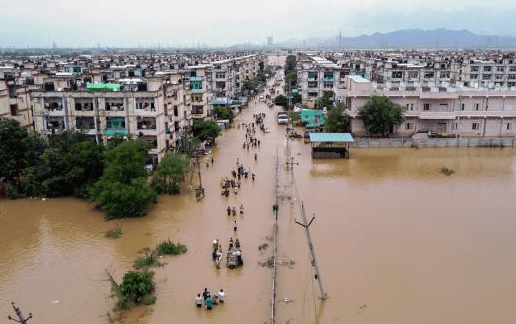
2024: Dam Induced Floods in Urban India
(Feature Image: A drone visual of the flood-affected areas of Vijayawada city on Sept. 6, 2024. Credit: ANI Photo/Source: Rediff.com)
Having covered dam induced flood incidents and embankment breach flooding events in part 1 and part 2, this third part on annual overview compiles media reports on manmade Urban flood disasters in India during the year 2024. While the cities of Pune, Nasik, Nagpur, Vadodara and Bharuch were affected by dam induced floods, the high discharges from Prakasam barrage and multiple breaches in Budameru river deluged the Vijayawada city. Interestingly, these urban flood episodes coincided with heavy rainfall events giving a reality check to dam and city managers.
In addition to failure in dam management, the deluge in Pune, Vadodara and Vijayawada city were particularly worsened by river front development projects and encroachment on river floodplains putting question marks on the urban planning and development works in these cities. Similarly, the breach in embankment of Munak canal in Delhi flooded several homes Bawana area during the monsoon season.
Continue reading “2024: Dam Induced Floods in Urban India”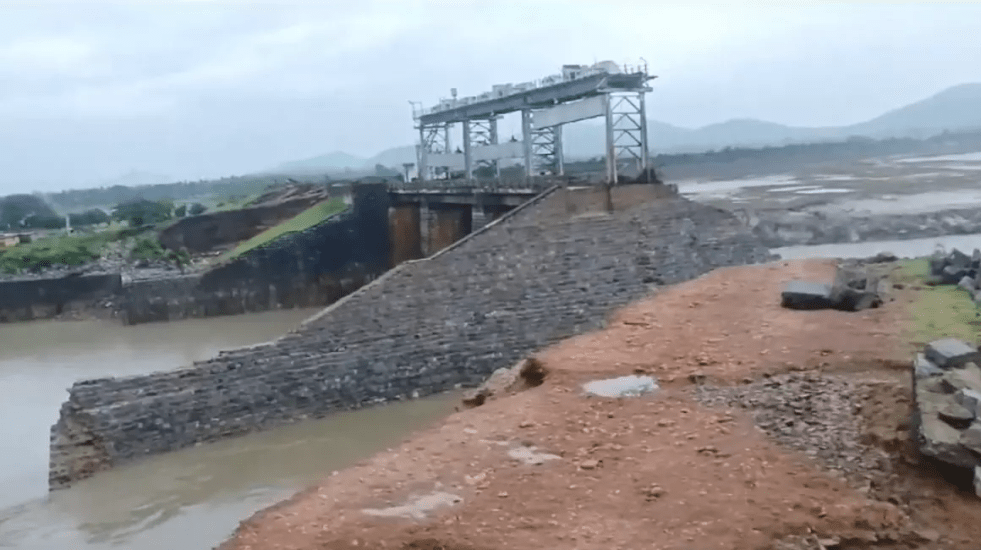
2024: Dam Induced Floods in India
(Feature Image: Breach in the earth dam of Peddavagu project flooded several villages in Telangana & Andhra Pradesh on July 17, 2024. Source: DC)
India has seen several manmade flood disasters during the 2024 monsoon. The mismanagement of dams in Narmada valley including Bargi, and SSP inundated several dam affected villages despite adequate actionable advance warnings. The uninformed excess releases from DVC dams have led to flooding in large areas in West Bengal as repeatedly raised by the state government. The extensive floods in Tripura have revealed glaring loopholes in flood prevention and disaster management.
The floods in the year have also washed away or damaged several earthen dams, tanks in Madhya Pradesh and Rajasthan affecting human population, agricultural lands in their vicinity. Even during Northeast monsoon, the sudden releases from Sathanur and Veedur dams in Tamil Nadu created avoidable flood damage in downstream areas. Similarly, the states of Gujarat, Telangana, Haryana and Delhi have seen deluge due to mismanagement or breaches in the canals. The case of Narmada canal waters flooding large areas of Little Runn of Kutch is quite concerning.
Continue reading “2024: Dam Induced Floods in India”
DRP 301224: We are not studying our rivers, Global North is studying
(Feature Image: Ramganga river at Marchula, Uttarakhand. Bhim Singh Rawat/SANDRP/Sept. 2024)
Exactly three months back, on Sept 30 2024, we had highlighted the urgent need for credible river studies in India (https://sandrp.in/2024/09/30/drp-nb-300924-focus-on-river-studies/). A new research report published last week in Nature has corroborated this, showing that volume of research across global south is disproportionately small compared to need based on basic population, water withdrawals and water consumption.
Based on review of 4237 publications using machine learning and desk review of 325 publications, analysis of 4713 case studies across 286 basins, it shows that river research currently in global south is predominantly led by global North institutions, thus the river research is shaped by selection of theme and locations done by such institutions.
Continue reading “DRP 301224: We are not studying our rivers, Global North is studying”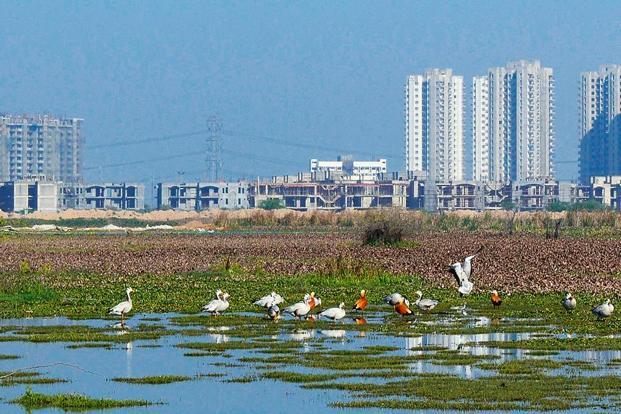
DRP 231224: Can we expect the Supreme Court to be more effective this time on Wetlands?
(Feature Image: The Basai wetlands in Gurugram. Photo by Pankaj Gupta at Live Mint)
It is indeed good to see an Editorial in a newspaper on the important issue of wetlands protection and rejuvenation. The Supreme Court’s order on wetlands last week shows its concern over the threat to wetlands as a natural feature of the environment that is under serious threat. The court ordered the protection of about 30,000 wetlands (each with area more than 2.25 ha) over the 201,503 protected by an order which it issued in 2017, and asked states to ensure their demarcation and ground-truthing which involves closer verification, within three months.
The order is in response to a PIL that said the Central government had abdicated its functions under the Environment Protection Act, 1986, to protect the wetlands. The petition also sought the identification and protection of around 5,55,557 wetlands which are less than 2.25 hectares in size. The court is likely to consider the proposal in March. One hopes the SC also gives effective orders for their protection.
Continue reading “DRP 231224: Can we expect the Supreme Court to be more effective this time on Wetlands?”
