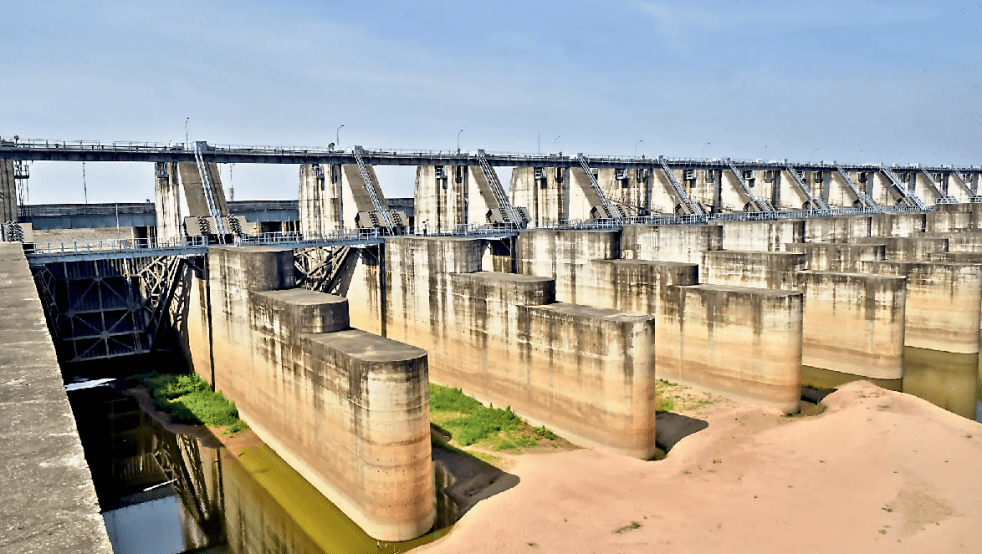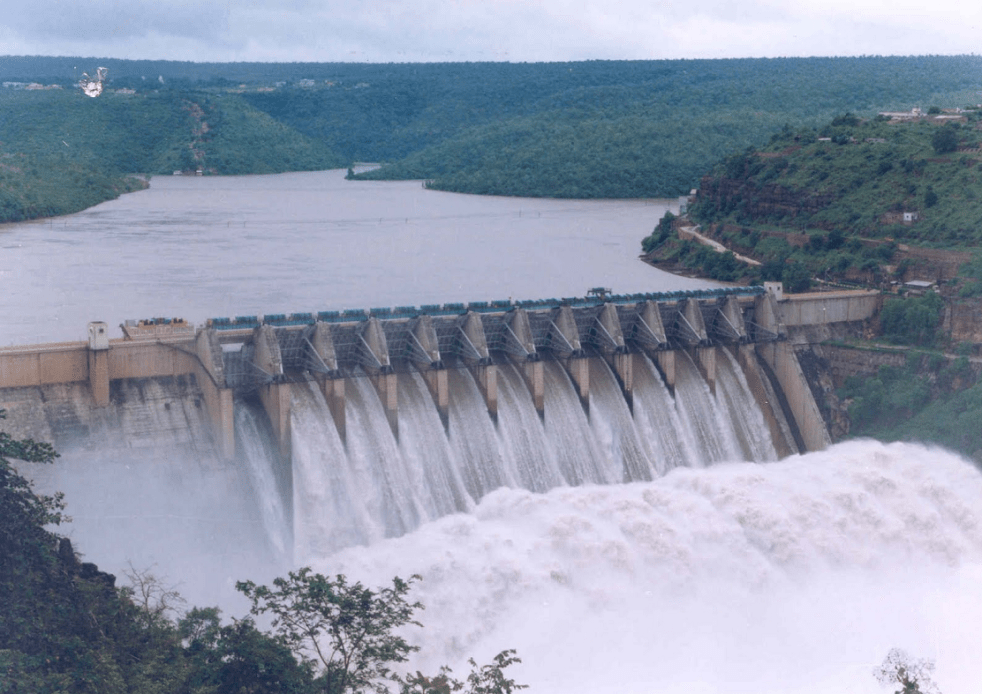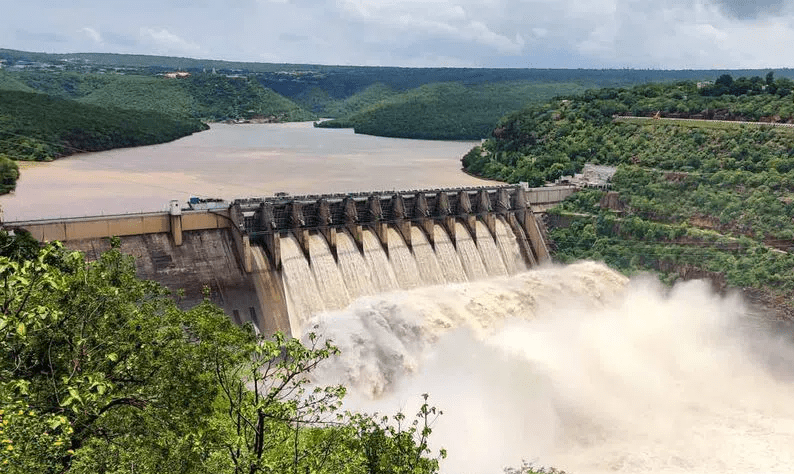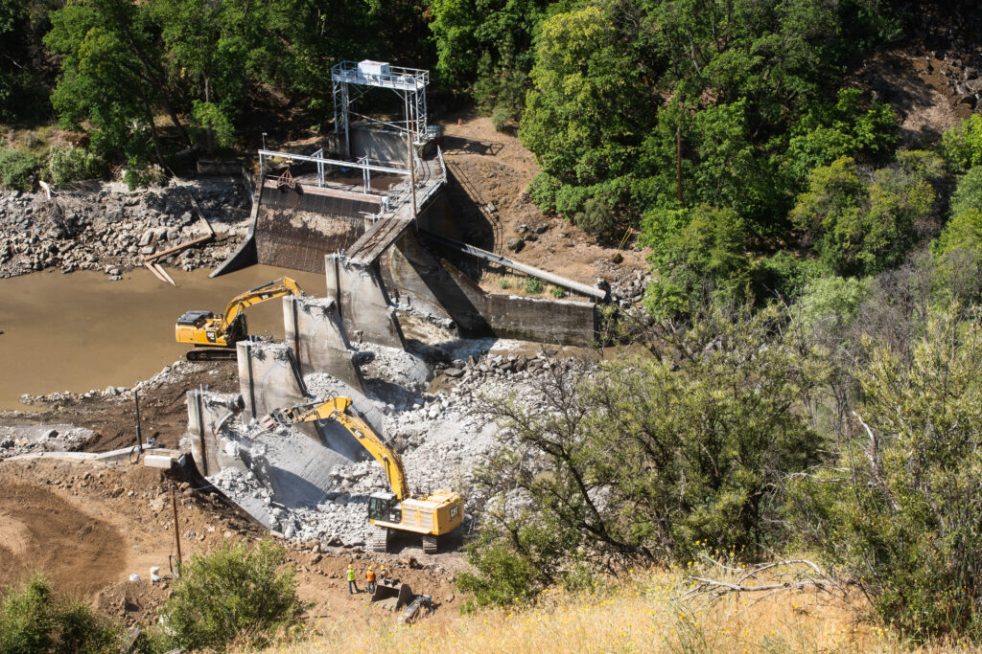
A report this week quotes a Govt of Gujarat (GOG) insider saying that GOG is giving 16.7% of SSP (Sardar Sarovar Project) water for industries (with more in pipeline) against planned allocation of just 2% (0.2 Million Acre Feet or MAF). Similarly, against planned allocation of zero for Urban areas in Ahmedabad, Gandhinagar, Vadodara, Kheda and Bharuch, most large urban areas are getting Narmada water. However, the insider says, the area irrigated by the SSP is only 33% of the targeted area, with largest water quantities going to already irrigated central Gujarat. Similarly, with the Narmada Water Disputes Tribunal (NWDT) asked Gujarat to provide water for the SSP Downstream areas from its allocated share, but Gujarat keeps claiming it has no water for this and asks other states to provide water for the downstream areas from common pool. It seems the worst fears of the project critiques are coming true. The insider has in fact characterized this state of affairs as water anarchy in Gujarat.
Continue reading “DRP 030225: Water Anarchy in Gujarat in Narmada water allocation?”Tag: Hydro Power Projects
DRP 270125: India’s non-functional Sewage Treatment Plants
(Feature Image: 10 MLD Kundli CETP in Sonipat. BS Rawat/SANDRP/May 2023)
A detailed report in this week’s DRP News Bulletin below shows how India’s Sewage Treatment Plants (STPs), Govt’s main weapon against pollution of rivers in Urban areas, have been a failure for decades. It is pertinent to note that this is the golden jubilee year of Water Pollution Control Act of 1974, that led to the formation of Central, state Pollution Control Boards, and the whole water pollution control bureaucracy, institutions and legal architecture. There should be little doubt that whole architecture has abysmally failed in achieving basic objective for which it was created, including ensuring proper treatment of urban sewage.
India has spent thousands of crores of rupees on these STPs, mostly, mega, centralized projects. But there has been little effort to address governance of the STPs, to ensure that they function as required and provide the results that they have been set up for. Whether they function or not, qualitatively or quantitatively, year after year and decades after decades, there are no consequences! In fact, if treated properly, sewage can become a asset rather than nuisance that it now is. The Judiciary too, right up to the apex court, have badly failed in achieving any improvement in this eminently justiciable issue.
Continue reading “DRP 270125: India’s non-functional Sewage Treatment Plants”2024 Dam Safety
(Feature Image: Coimbatore Corporation Commissioner M. Sivaguru Prabakaran inspecting the Siruvani dam on January 8, 2025. Photo, Text Source: The Hindu)
This annual overview complies the remaining relevant reports from 2024 concerning safety of dam structures in India. As per a report, the incident of damage to Tungabhadra dam gate in August 2024, raised alarm for other aging dams in Karnataka. In fact, the Bhadra dam also witnessed jamming of a gate due to rust in June 2024. Similarly, the Kabini reservoir has been dealing with a leakage for the past three years. The report further highlights negligence in dams’ monitoring and inadequate expertise and corruption often impacting the quality of maintenance works of dams in the state. As per another report taking sou moto action, the Karnataka High Court in January 2024, banned mining and blasting activities within a 20 km radius of the Krishna Raja Sagara dam in the state.
Continue reading “2024 Dam Safety”2024: Siltation, Safety & Sustainability of Hydro, Dams in India
(Feature Image: Pune: Pavana, Mulshi, Panshet, and Khadakwasla Dams Release Water Due to Heavy Rain in Catchment Areas. Source: Pune Now News, Sept 2024)
This annual overview focusses on how siltation, muck dumping related issues are affecting the safety and sustainability of Hydropower projects and dams in India. Some of the key dams facing crisis in this regard include Bhakra, Ratle, Gangasagar, Hathnur among others. Some of the states where this issue is acute include HP, J&K, Maharashtra, Telangana, Kerala, Karnataka & Punjab.
Continue reading “2024: Siltation, Safety & Sustainability of Hydro, Dams in India”DRP 130125: Will Judiciary take these matters to logical conclusion?
There are at least four cases in this past week where the judiciary has used strong words or taken up crucial issues in water, dams, hydropower projects, wetlands and riverbed mining related issues. In the case related to the safety of Mullaperiyar dam on Kerala-TN border, the Supreme Court has prodded the Centre to wake up from the slumber to ensure that National Dam Safety Authority quickly forms a panel to examine the project. This case has wide ranging repercussions not only about this project, but also functioning of NDSA and other bodies under the Dam Safety Act 2021. Indeed, there is huge question mark as to what extent NDSA and DSA has made our dams any safer.
Continue reading “DRP 130125: Will Judiciary take these matters to logical conclusion?”DRP 060125: Concerns about & Contradictions in CGWB’s Reports
The Central Ground Water Board (CGWB) released two important reports last week. While the Annual Ground Water Quality Report 2024 reveals rise in nitrate fluoride, arsenic and uranium contimination of groundwater resource in India, the Dynamic Groundwater Resource Assessment Report 2024 claims substantial rise in annual groundwater recharge and decline in extraction of the resource.
As per the first report, the number of districts affected by high nitrate levels in groundwater has gone up to 440 (near 56% of all 779 districts in country) from 359 found in 2017 assessment which means in 7 years 81 more districts have been found having excessive nitrate levels in groundwater. This should concern us from a number of points of view.
Continue reading “DRP 060125: Concerns about & Contradictions in CGWB’s Reports”DRP 301224: We are not studying our rivers, Global North is studying
(Feature Image: Ramganga river at Marchula, Uttarakhand. Bhim Singh Rawat/SANDRP/Sept. 2024)
Exactly three months back, on Sept 30 2024, we had highlighted the urgent need for credible river studies in India (https://sandrp.in/2024/09/30/drp-nb-300924-focus-on-river-studies/). A new research report published last week in Nature has corroborated this, showing that volume of research across global south is disproportionately small compared to need based on basic population, water withdrawals and water consumption.
Based on review of 4237 publications using machine learning and desk review of 325 publications, analysis of 4713 case studies across 286 basins, it shows that river research currently in global south is predominantly led by global North institutions, thus the river research is shaped by selection of theme and locations done by such institutions.
Continue reading “DRP 301224: We are not studying our rivers, Global North is studying”2024: People’s Resistance against Dam, Hydro Projects in Himalayan States
(Feature Image: Tribals in Siang river belt in Arunachal Pradesh demonstrating against a proposed mega hydropower dam. Photo Credit: Special Arrangement/The Hindu)
All through 2024, the vulnerable communities across Himalayan states have continued their resistance and struggles against proposed, under construction & damaged hydro and dam projects as can be seen in this yearend roundup.
The tribals in Siang valley have been urging Central and State govts to stop pushing the giant SUMP. In Teesta valley the GLOF, flood and landslide though have served as wake-up call, the planners seem to ignore the warnings. Facing adverse impacts, the native people in Manipur have resolved to stop further extension to Loktak lake HEP. In Nagaland, fearing damages, the villagers have made the future of Dikhu HEP uncertain.
Continue reading “2024: People’s Resistance against Dam, Hydro Projects in Himalayan States”DRP 021224: Why Ken Betwa Link should not go forward
A detailed report this week based on extensive field visit and interview of the concerned persons shows once again why there is no justification for Ken Betwa Link starting from lack of hydrological justification: There is no credible evidence or are not credible figures proving that Ken has surplus water and Betwa is deficit. The project will actually facilitate export of water from drought prone Bundelkhand in addition to bringing massive adverse impacts and as a former Panna collector said, will keep the upstream Ken Basin area permanently backward. This was also proved during the SANDRP initiated Ken Yatra from Ken Yamuna confluence upstream to the origin of the river.
The whole exercise of getting clearances for the project has been an exercise in manipulations at each step of the way, including EIA, Public Hearings, EAC process, Environment Clearance, Forest Clearance, Wildlife clearance and gram sabha clearances. This is also true as this report shows, for the people to be displaced by the project. The scathing CEC (Central Empowered Committee appointed by the Supreme Court) report on its wildlife related issue has not even been considered by the Supreme Court. We hope the Supreme Court will soon consider this and put a stop to the mindless project.
Continue reading “DRP 021224: Why Ken Betwa Link should not go forward”DRP 251124: Protest by Mothers Union against sand mining along Assam-Meghalaya border
(Feature Image: Mother’s Union protest rally against sand mining. Image Source: Nagaland Post, 03 Nov 2024)
The ongoing protest by the Mother’s Union against sand mining in Dudhnoi River along the Assam Meghalaya border has brought to focus the serious implications of unsustainable sand mining, whether legal or illegal. The campaign has wide based support from the Garo Students Union, All Bodo Students Union, Krishak Mukti Sangram Samiti and other groups.
The campaign has highlighted that due to use of motorized equipment to extract sand, the water level in the Dudhnoi river is dropping hugely, including during rainy season. The campaign has also pointed out that the forest, mining, transport and police departments have been allowing over loaded sand laden dumpers with or without proper challans.
Continue reading “DRP 251124: Protest by Mothers Union against sand mining along Assam-Meghalaya border”