DRP News Bulletin

DRP: 6 Jan 2020: When will Inland Fisheries get its due in decisions about rivers & other water bodies?

In shocking instance, the Govt of India has provided just 17 days for commenting (Submission of Comments of NPSSFW _Inland_ on the Draft NFDB Bill 2019_ with rejoinder) on Draft National Policy for Inland Fisheries (Draft_NFDB_Bill_2019). As can be seen from the comments by National Platform for Small Scale Fish Workers (Inland) on the draft policy, the draft policy has major lacunae. The most glaring one is the complete lack of any role for the Inland fisher people in the decision making about rivers and other water bodies in India. Every dam and hydropower project has adverse impact on the fishes and fisher people, but the impact assessment reports rarely if ever even mention such impacts, leave aside question of any rehabilitation for them or even compensating them for the losses.

This is in complete contrast to the situation in US and a number of other countries where fish and fisher people have a much bigger role. Even as millions of people depend on Inland fisheries in India, we do not have even reliable census of the people who depend on Inland fisheries. One had hoped that in new year, the situation would improve, but going by the Draft Policy, there is not too much hope on that front. The least the govt can do is to immediately accept the suggestions of the National Platform and circulate the draft in all major languages and provide three months for comment period and institute a confidence inspiring process of including such comments.

Continue reading “DRP: 6 Jan 2020: When will Inland Fisheries get its due in decisions about rivers & other water bodies?”
Sand Mining

Maharashtra Riverbed Mining Overview 2019: Mining Posing Bigger Threats As Government Fails To Act

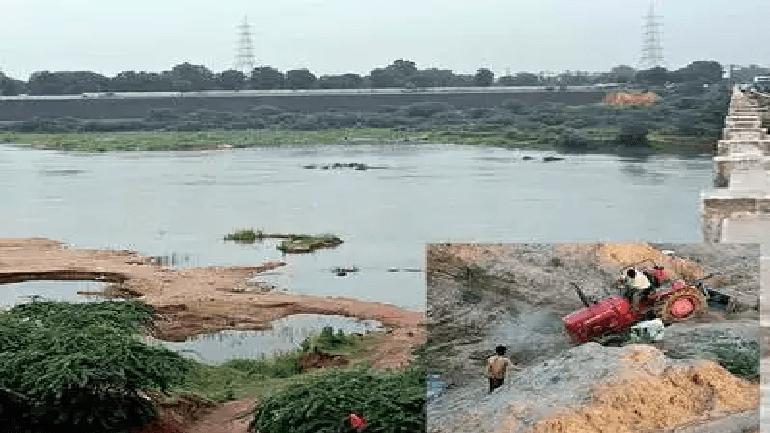
(Feature Image:In Sindhudurg, the pollution is already shrinking mangrove cover, taking away a source of shelter and food, shrinking hunting grounds and forcing marine species further outside their territories in search of fish, Sindhudurg coastline had the potential to become an International tourism destination. Pratik Chorge/HT PHOTO)

The beaches, creeks, rivers, mangroves in the state of Maharashtra all are bearing the brunt of unsustainable mining, amid several attempts by government, judiciary and civil societies to keep a tab on illegal sand mining activities. As the detailed compilation by SANDRP highlights that mining menace warrants immediate actions from government before the threats turns into a disaster.  

Continue reading “Maharashtra Riverbed Mining Overview 2019: Mining Posing Bigger Threats As Government Fails To Act”

Sand Mining

Gujarat Riverbed Mining Overview 2019: Six People Died Due To Illegal Sand Mining   

Most of the Indian states have been facing multiple environmental issues on account of unsustainable riverbed mining activities. Mechanized excavation, nexus between politicians-administration-mafia, violent attacks on people have become common features of the illegal sand trade across the country. The rampant mining of natural resource is also severely impacting rivers, wildlife and groundwater table. And the state of Gujarat is no exception to all this as shows the year end overview.

Continue reading “Gujarat Riverbed Mining Overview 2019: Six People Died Due To Illegal Sand Mining   “

DRP News Bulletin

DRP: 30 Dec. 2019: Attention to Groundwater is much needed, but will ABY help?

Groundwater is India’s water lifeline for some decades and will remain so. So attention to Atal Bhujal Yojana (ABY) is welcome, but key question is, will it help sustain our Water Lifeline? The World Bank funded project ABY has been in limbo for several years, but for some unknown reasons, took years to enter implementation phase. Secondly, why did it need the World Bank funding and how that will help for a scheme that essentially needs bottom up regulatory system, where the global banker has far from confidence inspiring track record?

Groundwater sustainability requires: 1. Identifying, understanding existing groundwater recharge systems 2. Protecting such recharge systems. 3. Enhance recharge from such systems. 4. Create additional recharge systems 5. Acknowledging in National Water Policy, programs and practices that Groundwater is India’s water lifeline and most importantly 6. Creating a bottom up legally empowered groundwater regulatory system.

Continue reading “DRP: 30 Dec. 2019: Attention to Groundwater is much needed, but will ABY help?”
DRP News Bulletin

DRP: 23 Dec 2019: Monsoons are more powerful than Wars

A new study has shown how powerful the monsoons and their abnormalities are: It’s these abnormalities that ended reigns of multiple dynasties in medieval India, not wars. But the society does not seem to understand this basic reality today, and we are not only doing everything in our power to make the monsoon abnormal through human induced climate and natural world changes, but not even valuing the rainwater in our water policies, programs and practices. The changes we are bringing in natural world is making even the smaller monsoon abnormalities bring catastrophic impacts as the capacities of the people and societies to cope with the changes is decreasing. These studies are another wake up call, if only we were interested one.

Continue reading “DRP: 23 Dec 2019: Monsoons are more powerful than Wars”
DRP News Bulletin

DRP: 16 Dec. 2019: Why the first NGC meeting signifies Govt’s Failure on Ganga

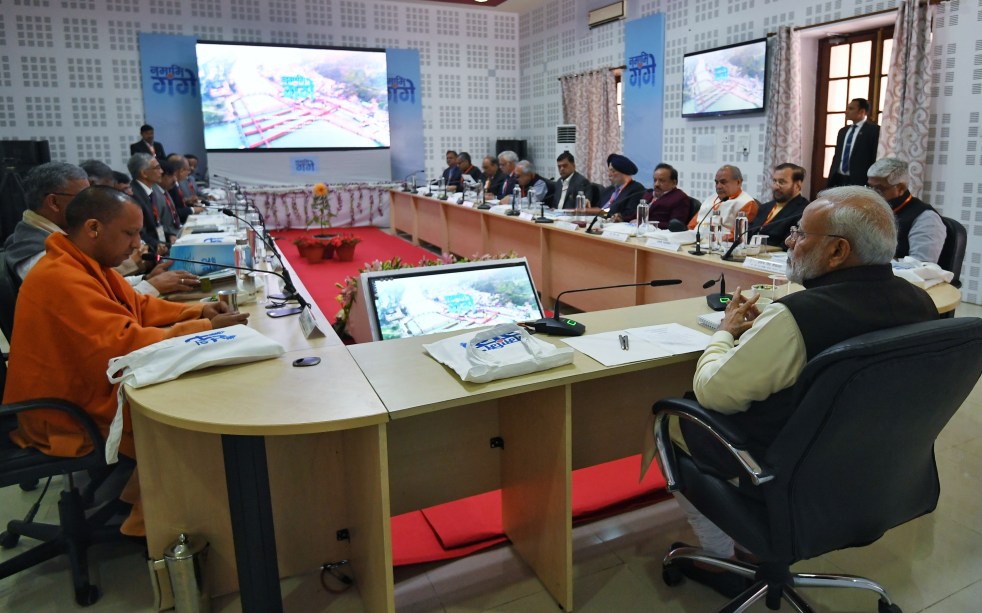
The Prime Minister finally found time to have the first ever meeting on National Ganga Council, over three years after the Ganga Notification of Oct 7, 2016. The meeting happened at Kanpur, where the NGT recently fined the state government for continuing to release untreated effluents into the Ganga. In fact NGT in recent weeks have taken several decisions that also shows how abysmally the govt has failed on Ganga front. And now after the first NGC meeting, the Prime Minister, in an effort to divert attention from Namami Gange failure, is proposing the new slogan of Arth Ganga, which basically seems to suggest focus on Money, which is Exactly what is not going to help the cause of Ganga. The Ganga is still on the lookout for the Ganga putra that promised a clean Ganga in May 2014.

Feature image above is of first NGC meeting, source is: PIB PR: https://www.pib.gov.in/PressReleasePage.aspx?PRID=1596482&reg=3&lang=2

PS: Second meeting of NGC happened on Dec 30 2022 in Kolkata, where the PM participated through video conferencing. No further meetings have happened till date (March 5 2026).

Continue reading “DRP: 16 Dec. 2019: Why the first NGC meeting signifies Govt’s Failure on Ganga”
DRP News Bulletin

DRP: 9 Dec 2019: CITIZENS REPORT ON WHAT AILS GANGA REJUVENATION

 The Hindustan Times editorial on Nov 27, 2019 has rightly said the following about “a recently-released Rejuvenating-Ganga River – A Citizen-Report, by the India Rivers Week, a consortium of seven NGOs”.

“A key reason for the failure of the river cleaning projects (Ganga and Yamuna action plans), says a recently-released citizen’s report, Rejuvenating Ganga,by the India Rivers Week, a consortium of seven NGOs, was their single-point focus on the main stem of the river, while the Ganga basin actually has eight major rivers (Yamuna, Son, Ramganga, Gomti, Ghaghra, Gandak, Kosi and Damodar). The majority of the funds were spent on pollution-abatement measures on the main stem of the Ganga and on the upper Yamuna basin, which constitute just 20% of the Ganga basin.”

Continue reading “DRP: 9 Dec 2019: CITIZENS REPORT ON WHAT AILS GANGA REJUVENATION”
DRP News Bulletin

DRP: 25 Nov. 2019: Cauvery is calling, but do we understand her message?

Interrogating Cauvery Calling N Ram questions Jaggi Vasudev’s Cauvery Calling, asks why it shifts goal posts Speaking at Interrogating Cauvery Calling seminar in Chennai, N Ram said that various state governments and the central government that endorses the project should also be questioned.

 “Now a very serious issue that must cause concern is the raising of public interest and public money for this project. Truly mega, in terms of money involved – 242 crore trees, 11,000 crore rupees. That is the kind of money involved. Only 0.5% collected. There is still time to put checks on this and prevent this from going further,” he said. “What is the management of this money? Who oversees it? There is no transparency, no verifiable document, no clear management structure for huge amount targeted. It is a matter of great concern.”

– N Ram also said that various state governments and the central government that endorses the project should also be questioned. “As a political journalist, this is the question that occurs to me. Who gave the Isha Foundation the right, the jurisdiction to transgress on what should be the commons. And why are governments being subservient to this idea? Apart from the risks, probable negative outcomes and over simplification of solutions for Cauvery, this is what is worrying,” he concluded.  https://www.thenewsminute.com/article/n-ram-questions-jaggi-vasudevs-cauvery-calling-asks-why-it-shifts-goal-posts-112838  (24 Nov. 2019)

Continue reading “DRP: 25 Nov. 2019: Cauvery is calling, but do we understand her message?”
Yamuna River

Rampant Unsustainable Riverbed Mining in Yamuna Basin

Yamuna River in Yamuna Nagar district of Haryana is facing severe threat from mechanized and unsustainable stone and sand mining happening at large scale in sheer violation of existing mining rules and guidelines and the responsible authorities are deliberately overlooking the gravity of the issue.

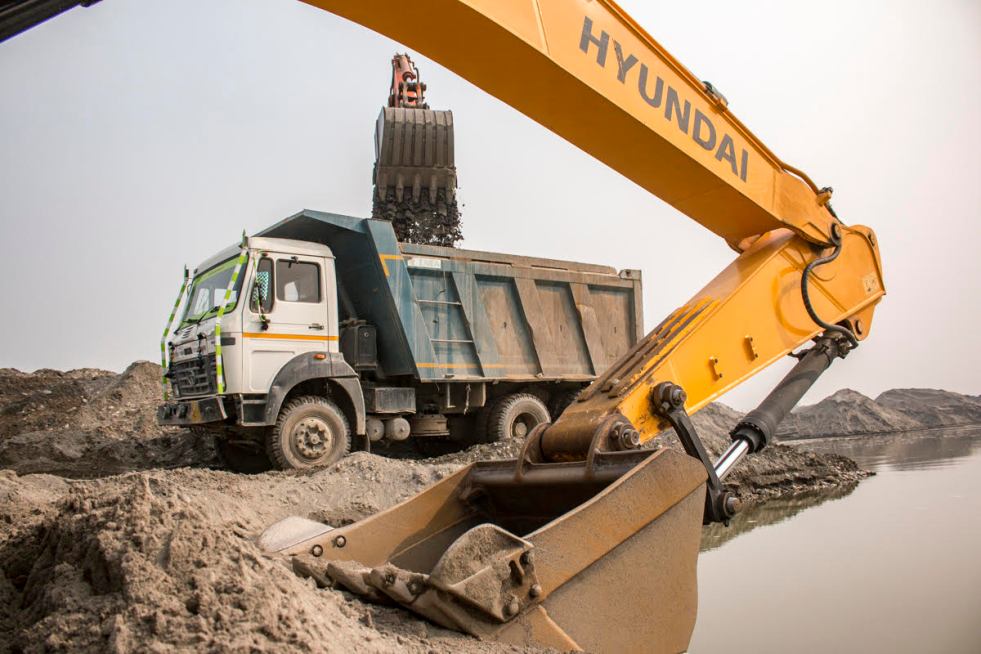
During a field visit to the mining sites, we found scores of heavy trucks plying on riverbed ferrying precious sand. Poclain and JCB machines in large numbers were seen busy digging dip pits in the riverbed. The active course of the river was blocked and even changed. In fact river was nowhere in sight as its entire course was converted in deep stagnant water pools caused by non-stop mechanized mining. Machines were digging the sand and piling it on floodplain and nearby farm lands.  

Continue reading “Rampant Unsustainable Riverbed Mining in Yamuna Basin”

DRP News Bulletin

DRP: 11 Nov 2019: Wetlands can help water security, help adapt to & mitigate climate change impacts

Wetlands are critical part of hydrological systems. They provide multiple ecological services to people living in proximal areas. The invisible contribution of wetlands in saturating aquifers and checking groundwater depletion is essential given the growing water scarcity. Additionally, wetlands are home to a variety of plants and animals species making them fully functional and self-sustaining eco-system. Sadly, despite the environmental significance and associated support services, wetlands have been subjected to degradation for past many decades.

Continue reading “DRP: 11 Nov 2019: Wetlands can help water security, help adapt to & mitigate climate change impacts”