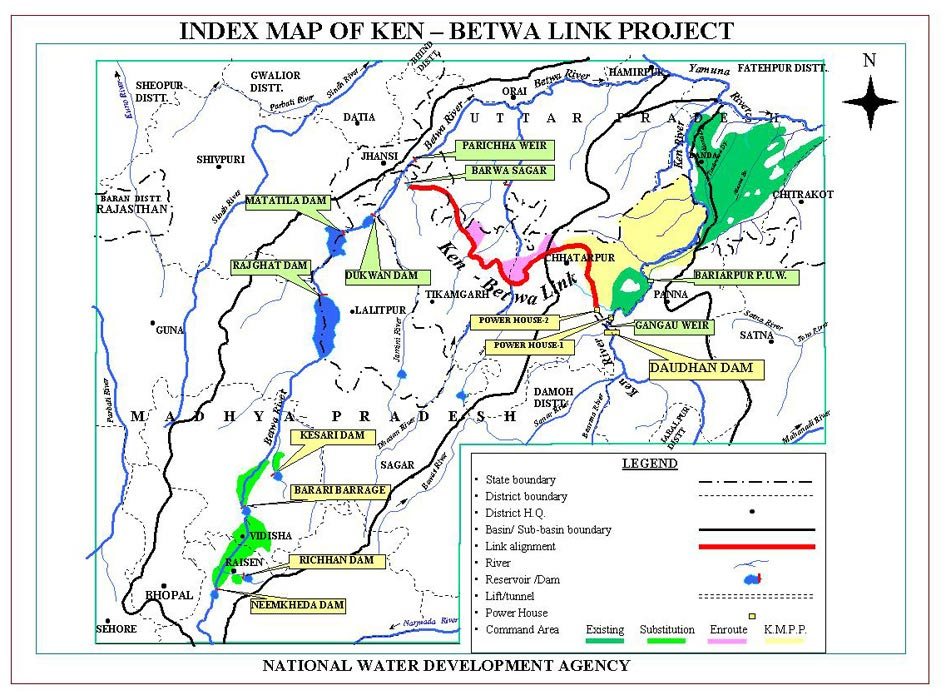
SANDRP BLOG Aug 06, ILR meeting is no dialogue While dialogue is necessary and welcome in any democracy, the meeting that was organized on Aug 06 at Constitutional Club is certainly not the right step in almost every sense. We hope MoWR and those who gather at the constitution club today will deliberate on these issues and resolve to correct them before a dialogue can really begin on the issue of ILR, and in fact Rivers. SANDRP coordinator was invited at this meeting on ILR being held at Constitution Club at 4 pm today as a speaker, but have decided to decline the invite, as elaborated in the note here. Please help us spread the word. Feedback is welcome. As was expected, Minister Uma Bharti reiterated that the Ken Betwa Link project will be implemented, even though the project has none of the clearances as yet! The reporter should have mentioned that.
Continue reading “DRP: 8 August 2016 (Aug 06, ILR meeting is no dialogue)”Tag: Ganga

DRP: 1 August 2016 (Increasing Water Conflicts in Times of Surplus Monsoon)
INTER-STATE WATER DISPUTES
Center Meeting held to sort out Mahanadi issue Union Water Ministry on July 31 called a Meeting of representatives of Odisha & Chattisgarh Govts to consider the various water resources issues/projects in Mahanadi Basin. It was decided that the Central 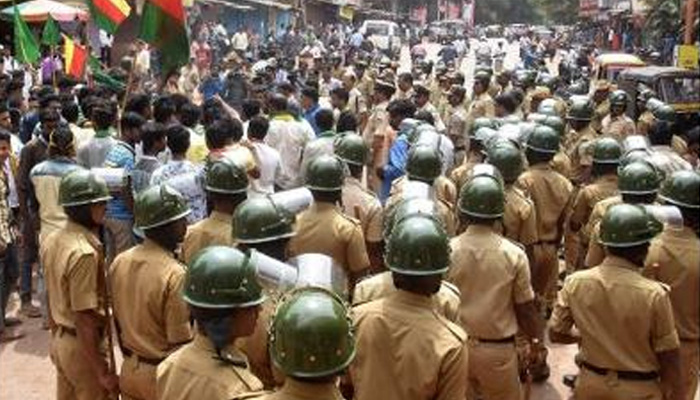 Water Commission would invariably ensure that the DPRs for the projects in Mahanadi basin which are appraised by it, are duly shared with the other riparian State and that the riparian State is given a period of 45 days to convey their views/comments on the project. It was also decided that the DPRs would be delivered to the Resident Commissioners of respective States and thereafter the representatives of the State would be invited to share their observations. The meeting was called in pursuance of the assurance given by Water Minister Uma Bharti in Parliament on July 26. Earlier, fearing that dams on river Mahanadi in Chhattisgarh would have adverse impact on Odisha, former union minister Jairam Ramesh has asked CM Naveen Patnaik to take up all party team to Delhi to raise the matter with the PM. He also said that Congress will send a delegation to Chhattisgarh in a week to study the sites where dam and barrages are proposed to be constructed. On the other hand, former CM Ajit Jogi having broken away from the Congress on July 25 attacked Congress over its opposition to Chhattisgarh’s plan to construct dams & barrages on Mahanadi river.
DRP: 25 July 2016 (Tawang residents protest against unfulfilled promises)
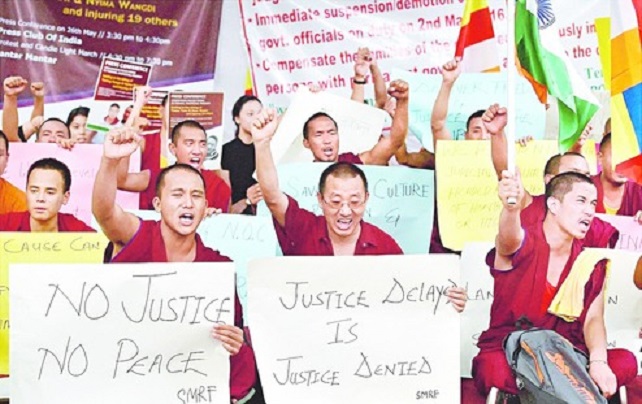
Arunachal Tawang residents protest against unfulfilled promises Hundreds of residents on July 22 marched through the streets of Tawang, the home district of newly elected CM Pema Khandu, in protest against non-fulfillment of their demand for jobs to kith and kins of two anti-dam activists killed in police firing on May 2. During the protest march they also led a signature campaign against large dams planned in Tawang, where the predominantly Buddhist Monpa tribe feared that many of the proposed hydro-power projects would damage sacred Buddhist sites in the district. At least 13 large hydro-power projects have been planned in the district, which shares border with China’s Tibet region. On June 21 the Lamas-led Save Mon Region Federation had issued six-point charter of demand to the state government for fulfillment in 30 days. Arunachal comprises a fragile, rich parcel of wildlife and ecosystem, among the richest ecosystems in India. But planning & building of hydro projects has been and will cause irreversible environmental damage. Perhaps it’s time for an aggressive freeze on all the un-built projects and an evaluation of other models of energy. Mr Prema Khandu must consider why Arunachal should become India’s mitochondria-the country’s energy provider, while losing its own enormous wealth. But contrary to this new while addressing a press conference, the new CM, on July 18 said that the govt would find ways to tap the petroleum resources & harness the hydropower potential which could be a money spinner for the state. On the 2000Mw Lower Subanisiri HEP at Gerukamukh, Mr Khandu has emphatically said he would discuss the issue with the Assam govt as well as the Centre for a solution. He said that in all the hydropower projects the affected people should be taken into confidence by both the executing agencies as well as the state govt. The new CM elected from Tawang, seeing the hydropower projects as money spinner does not sound very encouraging. Let us see how far he actually goes to take people into confidence as promised by him.
Continue reading “DRP: 25 July 2016 (Tawang residents protest against unfulfilled promises)”
DRP: 18 July 2016 (Remove inefficient Farakka Barrage: Bihar CM)
Bihar CM demands removal of Farakka barrage CM Nitish Kumar on July 16 demanded removal of Farakka barrage on river Ganga, saying “the disadvantages of the barrage appear to be higher than its benefits”. Raising the issue of Bihar’s share in Ganges waters at the 11th Inter State Council meeting in New Delhi, Nitish also sought the Centre’s intervention to ensure uninterrupted flow of water from the states of upper co-basin so that the entire length of Ganga has continuous supply of water even during lean season. The meeting was chaired by PM Narendra Modi and attended by CMs of different states and union ministers. The CM also told the meeting that responsibility to ensure the required water availability at Farakka barrage has been put solely on Bihar. Presenting Bihar’s views Nitish further added that about 16% of the catchment area of river Ganga is in Bihar, but in the lean season 3/4th of the total water flowing in Ganga comes from rivers of Bihar. Estimated 400 cusecs of water flow is received at the Uttar Pradesh border of Bihar in river Ganga. However, at Farakka barrage, 1500 cusecs of water flow is to be ensured, which is achieved mainly through the water contributed by the rivers of Bihar. Indeed, during lean season, not even 400 cusecs of water flow is available at the border of Bihar. In this regard, Centre’s intervention is required to ensure uninterrupted flow of water from the states of upper co-basin, so that the entire length of Ganga river in Bihar has continuous supply of water even during lean season. Nitish also demanded formulation of an effective National Silt Management Policy, saying such a body at the national level is essential for silt management as well as for ensuring uninterrupted flow of water not only in Ganga, but all the other rivers.
Continue reading “DRP: 18 July 2016 (Remove inefficient Farakka Barrage: Bihar CM)”
DRP: 11 July 2016 (Namami Gange proving mere an extension of Ganga Action Plan)
Ganga Manthan to Ganga Act: No progress made Chairing the 6th meeting of the National Ganga River Basin Authority on July 04 Water Minister Uma Bharti has said that a new act will be formulated for speedy implementation of Namami Gange programme. On July 06, giving a major boost to Namami Gange Programme Ms Uma Bharti has also announced that 231 projects will be inaugurated at various locations in Uttrakhand, UP, Bihar, Jharkhand, West Bengal, Haryana and Delhi on July 07. Incidentally, on July 07, 2014 NDA Govt. launched the Namami Gange programme to rejuvenate the river to be executed over five years. The project has a budget outlay of Rs 20K crore which is 10 times more than what was allocated in previous Ganga Action Plan (GAP) phase I and II. But more money and the PM minister’s zeal, notwithstanding, Namami Gange seems a carryover from its predecessor in one crucial respect. The overwhelming emphasis on pollution abatement that had led to the GAP’s failure bedevils Namami Gange as well. In certain respects, Namami Gange is an improvement on the GAP. It seems that the govt has not learnt lessons from the GAP’s failure. The lag between sewage generation and treatment has remained between 55% & 60% even as new STPs were built under the GAP. This is because a lot of the waste is generated outside the sewerage network and is not conveyed to the STPs. A large section of the country’s urban population lives outside this network. Moreover, the STPs can only do so much. The official statistics show that the STPs are currently running at a deficiency of 55%. The problem of STPs is three-fold: underestimation, shortage and underutilization due to lack of a well-connected underground sewage system.
The problems associated with river Ganga, however, do not end or begin in its middle course dotted by factories. The upstream of the river, where Bhagirathi and Alaknanda join to form the Ganga, is part of a very fragile Himalayan ecosystem. Caution is needed in implementing the Namame Gange projects along this stretch. The Kedarnath flood of Uttarakhand is an example of what a combination of melting glaciers and mindless construction can do to a sensitive geological zone. With more than 40 dams, barrages and weirs and many more planned aviral Ganga seems nothing more than an empty catchphrase. Ganga is the sum total of the contribution of some 12 major tributaries. Without a rejuvenation strategy for each of Ganga’s tributaries, there can be no Ganga rejuvenation.
Meanwhile, increased fishing activity and vessel traffic are proving to be the disturbing element downstream. Deploying more scientific methods for fishing and limiting it to levels enough for species’ sustenance might help without significantly affecting livelihoods. The direct consequences of climate change are also felt in the lower belts, around the Ganga Sagar region. Land is disappearing but no comprehensive plans have emerged as yet to provide for the rehabilitation of the region’s inhabitants.
Continue reading “DRP: 11 July 2016 (Namami Gange proving mere an extension of Ganga Action Plan)”
DRP: 4 July 2016 (In Proposed Hydro Policy, Govt Pushing Hydro Through Subsidies)
New Hydro Policy: Govt unjustifiably pushing hydro through subsidies A comprehensive policy to promote hydropower generation is set to be announced by September—with viability gap funding for projects, compulsory hydropower purchase obligations for distribution companies and a set of good practices that states have to follow. The idea is to address factors that currently drive hydropower costs up way above those of other sources of power and give policy support in its market development, according to a government official, who asked not to be named. The policy being prepared by the power ministry will have provisions for viability gap funding, which will help in meeting the shortfall in project costs and reducing hydroelectricity tariffs for consumers. Hydropower is expensive and in some cases more than double the cost of power from coal-based thermal plants, which is available at Rs.3-5 per unit.The ministry will also expand the scope of power distribution companies’ renewable power purchase obligations to include hydropower from projects with a capacity greater than 25 Mw. At the moment only power from those with less than 25MW is considered renewable power. According to officials, compulsory hydropower purchase from large projects will either be made part of the existing renewable power purchase obligation of distribution companies or a separate requirement, so that its inclusion does not affect the market for other renewable sources of energy like wind, solar or biomass. Govt unjustifiably pushing hydro through subsidies in proposed new hydro policy can be lead story. It is not going to help push hydro.
Continue reading “DRP: 4 July 2016 (In Proposed Hydro Policy, Govt Pushing Hydro Through Subsidies)”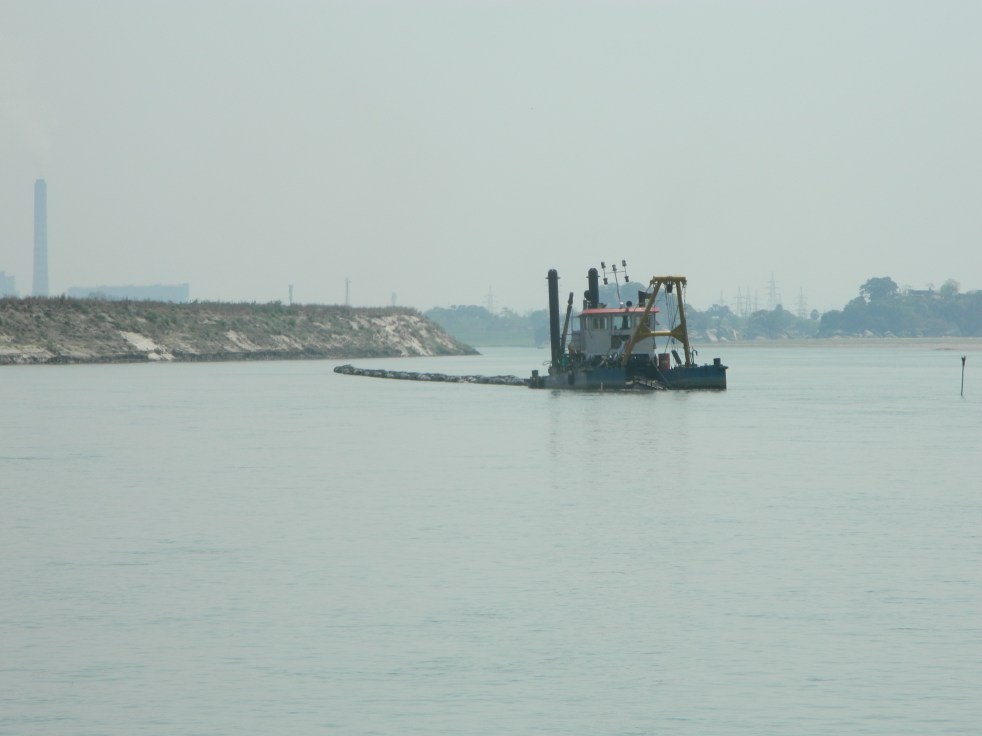
In the Pits: the Ganga River, dredged to death
Guest Blog by Nachiket Kelkar (rainmaker.nsk@gmail.com)
When human beings fall into manholes or die in traffic accidents on a highway they are all over the news. We pity and fear such news, and feel sad for the deceased, just because the whole event is so unfortunate. We are angered by the condition of traffic – that continues to remain appalling despite having six-lane highways that look deceptively magnificent. We wonder if these cases could have been avoided. It is therefore even more disturbing that not a single news item has covered a series of major accidents that have happened right in the middle of the Ganga River National ‘Waterway’ (India’s National Waterway No. 1; see Dams, Rivers & People: Feb-March 2016 issue: p. 1-7, 2016 for details[i]) in the last six months.
Over twenty people have died by drowning at the Barari Ghat (Image 1) at Bhagalpur in Bihar in this period. Offering prayers, taking dips, or lunging in for a calm swim, these people have slipped away as their feet have lost the ground all of a sudden. The river, scouring off the silt from under the concrete, has been catapulting their bodies into the deepening abyss on the fringes of the ghats. Many bodies have not even been found. Family members of many, whose bodies were found, must have never suspected that they would have to carry back their kin’s corpses. What made the same Barari Ghat, which people traditionally visited for years, so dangerous suddenly?
Continue reading “In the Pits: the Ganga River, dredged to death”

DRP: 20 June 2016 (MoWR invites suggestions on National Water Framework & Model Ground Water Bill)
Centre Suggestions invited on Draft National Water Framework Bill and Draft Model Bill for Conservation, Protection, Regulation and Management of Ground Water Ministry of Water Resources, River Development and Ganga Rejuvenation has uploaded the draft national water framework bill and draft model bill for conservation, protection, regulation and management of ground water on its website (http://mowr.gov.in). The Draft National Water Framework Bill provides an overarching national legal framework based on principles for protection, conservation, regulation and management of water as a vital and stressed natural resource, under which legislation and executive action on water at all levels of governance can take place. The comments/suggestions/views from all Individuals/Experts /Organizations/Institutions on the above bill may be sent to jspp-mowr@nic.in or sjcpp-mowr@nic.in latest by June 25, 2016. The Draft Ground Water Model Bill is based on the principles of subsidarity, equitable distribution in an integrated approach. The State should act as a public trustee of ground water, which should be treated as a common pool resource to make sure that groundwater is protected, conserved, regulated and managed. The comments/suggestions/views from all Individuals/Experts/Organizations/Institutions on the above bill may be sent to dirgw-mowr@nic.in or pratul.saxena@nic.in latest by June 25, 2016.

DRP: 13 June 2016(Minister Threatens Stir Over Delay In Ken-Betwa Clearances)
Uma threatens stir over delay in Ken-Betwa interlinking Water Minister Uma Bharti on June 07 threatened an agitation if there were further delays to the wildlife clearances necessary for the storied Ken-Betwa river-interlinking project. This is TOO Much! Union Minister threatening to go on Fast, demanding environment clearance to Ken Betwa link! Calling it a national crime to stop clearance to Ken Betwa link. Saying if the project is not cleared in next meeting, she will go on fast! Claiming that the link will help Marathwada!! It wont help even Bundelkhand, but the Union Minister seems to be setting completely wrong, precedent, which also ultra legal. On the other hand The Hindu has been consistently underplaying the impacts of the Ken Betwa project and over playing the official lines. Very strange to see this from THE HINDU. Before this in its June 02 meeting the expert appraisal committee (EAC) of environment ministry has deferred environment clearance for the ambitious Rs.10,000cr Ken-Betwa river linking project in its last meeting on June 2, and has sought more clarity on its wildlife & hydrological impact. The meeting could not come to a conclusion as the members of the EAC had several doubts regarding the project’s hydrological feasibility, its impact on hydrology and wildlife too and found that many serious issues related to the project are yet to resolved. In the last week of May 2016, SANDRP in a letter to EAC has written about Ken-Betwa project & why EAC should not clear this. Please help us spread the word and urgently write to EAC if you agree. Himanshu Thakkar coordinator SANDRP points out that the Ken-Betwa link, in essence, Ken-Betwa link will facilitate transfer of water from the Ken River Basin (Bundelkhand) to Upper Betwa Basin (outside Bundelkhand), so it is actually exporting water out of Bundelkhand.
Continue reading “DRP: 13 June 2016(Minister Threatens Stir Over Delay In Ken-Betwa Clearances)”

DRP: 6 June 2016 (India to be power surplus for next 3 yrs: why govt continue to pursue hydro projects)
India will not have power deficit situation in FY17 India won’t need any new power plants for the next three years as it is flush with generation capacity, according to a government assessment. The country can manage for the next three years with existing plants that are currently under-utilised, and those that are under construction and upcoming renewable energy projects, assessment made by the power ministry for reviewing the National Electricity Policy shows. Govt declares for the first time in history that India is POWER SURPLUS in 2016-17 with 3.1% power surplus in peak hours and 1.1% power surplus in off peak hours, both figures in 2015-16 were -3.2% during peak hours and -2.1% in peak hours. The western and Southern regions will be power surplus, but Northern, Eastern and Northeastern regions will have deficits. At the same time Power Minister Piyush Goyal says that Big hydro power units may come under renewable energy According to Minister the Centre has begun studies to decide whether to include big hydro power plants under the ambit of renewable energy. When India will be energy surplus for next three years why then Govt. of India is continue to pursue disastrous hydro projects on ground. Where ASSOCHAM is asking Arunachal govt. to do away with adverse tax policies on Hydro power to boost construction of hydro projects in the State. NHPC has also raised relief amount for Kishanganga HEP around Rs 60 lakh and Rs 70 lakh to each family for the land acquired. And despite Delhi Govt. openly rejecting water from Renuka dam NGT panel has visited the area to look into the rehabilitation issue.
Continue reading “DRP: 6 June 2016 (India to be power surplus for next 3 yrs: why govt continue to pursue hydro projects)”
