Ganga

Is there hope from National Mission for Clean Ganga? Listen to official agencies

In this second part of the Ganga article, let us listen to some official agencies about the state of Ganga River following the recent efforts.

Parliamentary Committee: Why is Ganga among the five most polluted rivers of the world? Said Parliamentary estimates committee (2016-17) for Ministry of Water Resources, Ganga Rejuvenation and River Development (MoWR for short) in a report on “Ganga Rejuvenation” submitted to the Lok Sabha (lower house of India’s Parliament) on 11th May, 2016[i]: “However, indiscriminate anthropogenic interventions like construction of HPPs[ii] in the seismically active and fragile Himalayas, diversion of 80 to 90 percent of water, discharge of extremely hazardous effluents by 144 drains and dumping of solid waste has converted the Ganga into one of the ten most polluted rivers of the world. Alarmed by the drying-polluted Ganga and taking note of the solemn resolve of the Prime Minister to rejuvenate the Ganga, the Committee decided to select the subject for in depth examination and report with a view to accelerate the work of Ganga rejuvenation.” The report also noted, “The Public Accounts Committee (2014-15) in their 8th Report on Water Pollution had expressed distress that the Ganga has become one of the five most polluted rivers in the world, despite launching of the ‘Ganga Action Plan’ and the ‘Mission Clean Ganga’ (2009) by the NGRBA[iii].” Continue reading “Is there hope from National Mission for Clean Ganga? Listen to official agencies”

Ganga · Ministry of Water Resources

What ails Ganga: Why Namami Gange is spectacular failure

Ganga river basin’s importance is well acknowledged. The World Bank, that is funding a currently ongoing USD 1 Billion project for Ganga Clean up says in its Project Appraisal Document[i]: It’s the most populous basin in the World. 50% of India’s poor are in the five states along the main stem of Ganga: Uttarakhand, Uttar Pradesh, Bihar, Jharkhand and W Bengal. The basin of the 2525 km long river spans four countries (China, Nepal, India, Bangladesh) and 11 Indian states. More than 60 million people came to the Ganga river in the city of Allahabad for pilgrimage in January 2007 during Kumbh Mela, making it the largest gathering in the world. It will again happen in January 2019. Continue reading “What ails Ganga: Why Namami Gange is spectacular failure”

Dams · DRP News Bulletin

DRP News Bulletin 3 Sept 2018: CHINA HAS STARTED DECOMMISSIONING DAMS

In a mountain village in southwest China’s Sichuan province, authorities have demolished seven small dam projects this year along a river to clear illegal developments in a new nature reserve. The demolition is part of a nationwide programme to close hundreds of tiny and often ramshackle dams and turbines and bring order to China’s massive hydropower sector after years of unconstrained construction.

The dams sat on an unnamed tributary of the fierce and flood-prone Dadu river, which feeds into the Yangtze, Asia’s largest and longest river, where the government says the “irregular development” of thousands of small hydropower projects has wrecked the ecology. But green groups say the campaign will not necessarily save the environment because it will not affect big state hydropower stations, which they say have caused the most damage.

On the 48 km Zhougong, authorities have already demolished small projects built in nature reserves or encroaching upon new “ecological red lines” drawn up to shield a quarter of China’s territory from development.

The government says small dams have disrupted the habitats and breeding patterns of many rare species of fish, although green groups argue the damage wrought by bigger dams is more severe, with entire towns and ecosystems submerged in water, which they say increases the risk of earthquakes, landslides and even climate change.

Continue reading “DRP News Bulletin 3 Sept 2018: CHINA HAS STARTED DECOMMISSIONING DAMS”

Dams · Floods

Overview of CWC Flood Forecasting Sites 2018: East India 

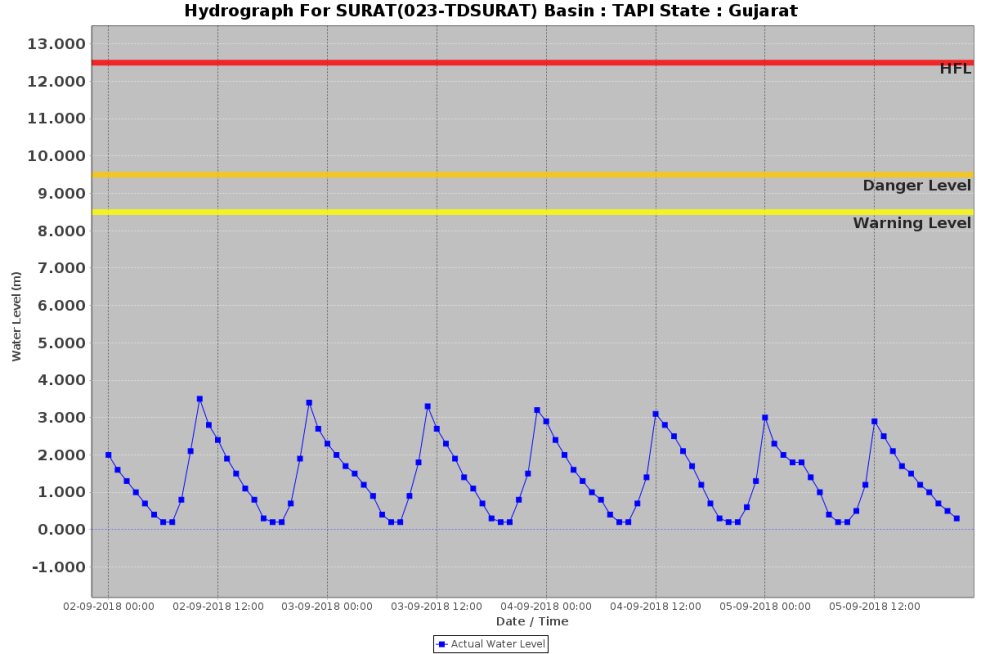
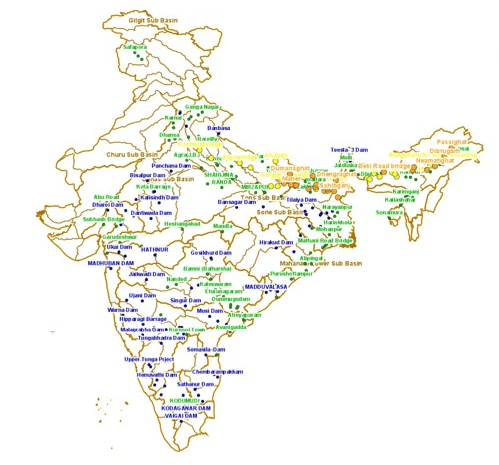
Central Water Commission is the only agency doing flood forecasting in India. As per CWC’s Flood Forecasting website[I] the Data Flow Map has information about 226 Flood Forecast Sites in the country comprising of 166 Level Forecast Sites and 60 Inflow Forecast Sites. It also monitors 700 Flood sites, information made available through List Based Exploration and Hydrograph View, but no flood forecasting is done for these sites.

In order to better understand the CWC’s flood monitoring and forecasting work, in this article we have given an overview of CWC’s flood forecasting and monitoring sites in East India. It includes state wise list of CWC’s Level Forecast, Inflow Forecast and level monitoring sites in East India. Similar report has been published for North India[II] and North East India[III] and we hope to publish reports covering other regions of India too. 

Continue reading “Overview of CWC Flood Forecasting Sites 2018: East India “

Dams, Rivers & People

DRP News Bulletin 20 August 2018: While Kerala Is Recovering From Unprecedented Flood Disaster, Will It Be Cauvery Or Krishna Basin Next?

Well-known ecologist Madhav Gadgil, founder of the Centre for Ecological Sciences at the Indian Institute of Science, Bengaluru, has described the devastating floods in Kerala as a man-made disaster and a reaction to the illegal excavations and stone quarrying done over a decade. https://www.hindustantimes.com/pune-news/illegal-forest-land-acquisition-major-reason-for-floods-in-kerala-says-ecologist-madhav-gadgil-calls-it-man-made-disaster/story-vMHPKUH623GEnjyQHI09NP.html  (19 Aug. 2018)

Further speaking to various regional media, Madhav Gadgil has said that irresponsible environmental policy is to blame for the recent floods and landslides in Kerala. He also called it a “manmade calamity”. He said that the committee report had recommended to protect the resources with the cooperation of local self-govt and people, but those recommendations were rejected.

He also pointed out that quarrying is a major reason for the mudslides and landslides. Other environmentalists also point fingers at the extensive quarrying, mushrooming of high rises as part of tourism and illegal forest land acquisition by private parties as major reasons for the recent calamity. https://energy.economictimes.indiatimes.com/news/power/kerala-floods-the-ghost-of-past-environment-policy-returns/65436707  (17 Aug. 2018)

Dams should never be filled before the end of the monsoons. Because then one doesn’t have any solution but to release the water in the surrounding areas: Himanshu Thakkar, SANDRP says as one of panellist discussing role of dams in aggravating Kerala floods.

https://twitter.com/ETNOWlive/status/1030487469320355840

Also see, NDTV discussion on Kerala flood crisis, it included SANDRP coordinator:

https://special.ndtv.com/kerala-floods-42/video-detail/kerala-floods-non-stop-special-coverage-of-the-unfolding-crisis-491815  (19 Aug. 2018)

Here is NDTV Hindi discussion on Kerala flood crisis, included SANDRP coordinator:

https://khabar.ndtv.com/video/show/ndtv-special-ndtv-india/ndtv-special-coverage-on-kerala-rain-crisis-491820  (19 Aug. 2018)

Here is admission about sudden, excessive releases and not foreseeing the coming disaster. The Kerala crisis could have been contained had the state “gradually released” waters from at least 30 dams, officials said, adding that the local authorities failed to foresee the imminent danger with high rain prediction. “Such floods have probably recurred after 100 years, exposing the state’s unprofessionally run reservoir management system and unpreparedness on disaster mitigation and disaster resilience, an official pointed out. https://timesofindia.indiatimes.com/city/kochi/gradual-dam-water-release-could-have-contained-crisis/articleshow/65436339.cms  (17 Aug. 2018)

Continue reading “DRP News Bulletin 20 August 2018: While Kerala Is Recovering From Unprecedented Flood Disaster, Will It Be Cauvery Or Krishna Basin Next?”

Dams · DRP News Bulletin

DRP News Bulletin 13 August 2018: Existing Sediment Management Draft Policy Promoting Navigation & Not Rivers’ Health

Traditionally, our river management strategies are mainly focused on the water flows, including flood management, and these have resulted in various interventions such as dams, barrages, canals and embankments. Most of these interventions have had very little consideration for sediment transfer and even if they did, they were generally defunct within a few years of their operations either due to improper design or inadequate maintenance.

A long-term sediment management strategy has never been a part of any protocol of river management, not just in India, but in several other parts of the world. It is amply clear that sediment management must form an important component of management strategies for the Himalayan rivers. The Union Water Ministry has recently circulated a draft policy on sediment management.

Continue reading “DRP News Bulletin 13 August 2018: Existing Sediment Management Draft Policy Promoting Navigation & Not Rivers’ Health”

Dams · DRP News Bulletin

DRP News Bulletin 6 August 2018 (2018 is Deficient Monsoon for Lakhs of Farmers)

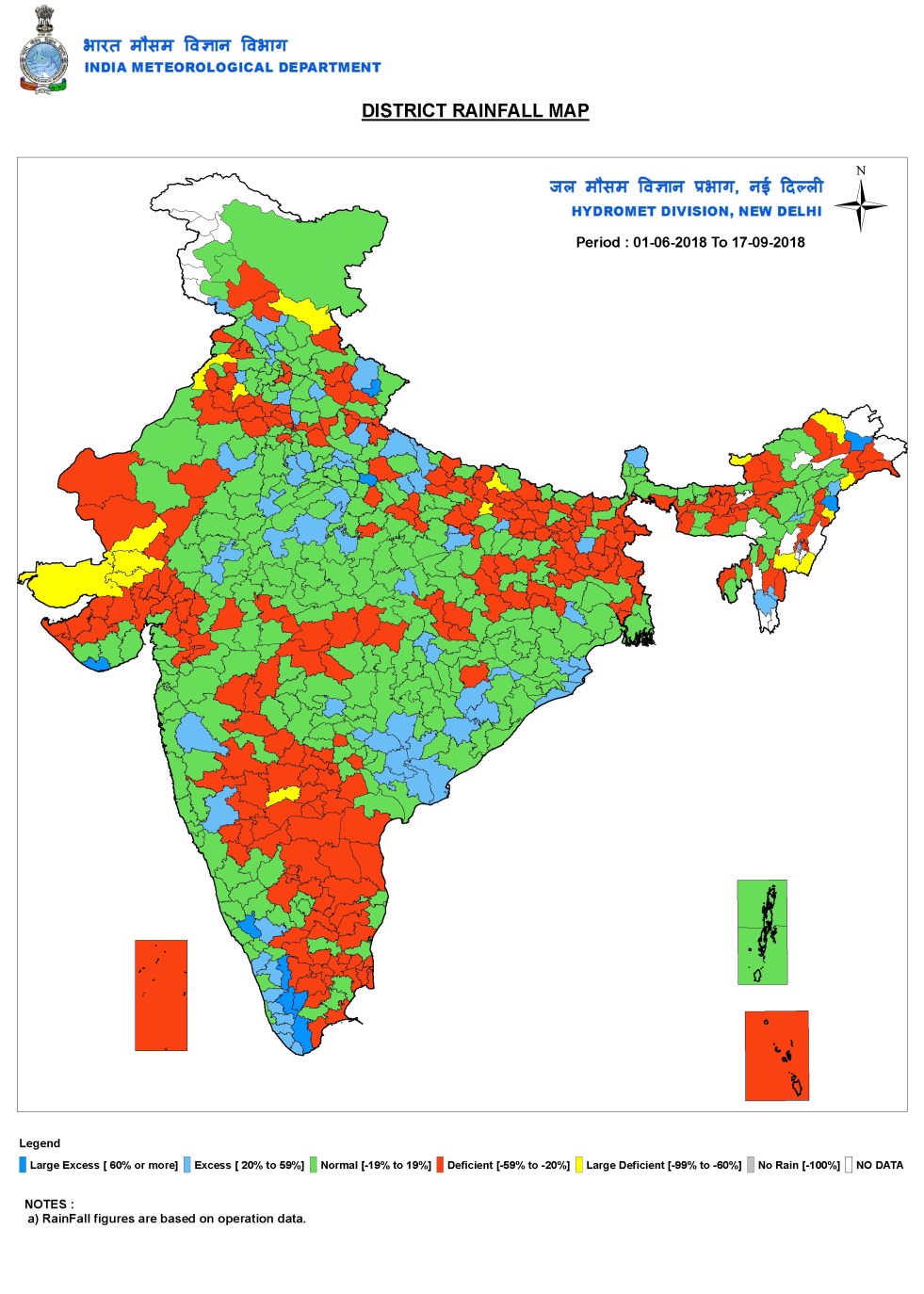
(Feature Image: IMD Sub-Division wise Weekly Rainfall Map 26 July – 1 Aug. 2018)

Amid news of monsoon being normal, farmers in several parts in the country have started facing irrigation water problems affecting sowing of Kharif crops. Apart from, insufficient rainfall, mismanagement of water resources is turning the situation grim for them.  

As per reports, water levels in Bhakra and Pong dams in Himachal has plunged to lowest in decades. As a result dam authority has issued advisory to lakhs of farmers in Haryana, Punjab and Rajasthan to use water judiciously. Some official also said that the beneficiary states lacks efficient water management practices which is making the situation tough for them.

The Sri Ram Sagar Project in Telangana has no irrigation water. As per state water minister, a Rs. 1100 crore work was going on to renovate the dam. Meanwhile farmers of about 24 villages have started protest demanding irrigation water form SRSP for their standing crops. Given the tense situation, the State Govt has deployed heavy police forces to control farmers agitation.

At the same time, farmers in North Gujarat farmers have lost 40% of sown crops particularly in Ahmedabad, Morbi and Surendranagar. Non availability of Narmada waters have added to the problems. It is worth to mention that mismanagement of water during past four months in Narmada dam by the authority, has worsened the plight of farmers. Meanwhile, there are reports of furious Surendranagar farmers themselves opening the dam gates going against authority.

Similarly, lack of rainfall in Beed district which is part of Marathwada in Maharashtra has affected the rural population badly. In fact, the rainfall situation in a fourth of India, including Bihar and Uttar Pradesh, was in stark contrast to the rest of the country. Overall, the southwest monsoon in 2018 was only 2 % below normal by July, 27.

The southwest monsoon in Bihar was almost 40 % below normal till July 27 and the state was set to be formally declared ‘drought-hit’. It is worth to mention that the monsoon scenario seems less than reassuring, based on Skymet latest forecast and reading between the lines of IMD Aug. 3, press release.

Continue reading “DRP News Bulletin 6 August 2018 (2018 is Deficient Monsoon for Lakhs of Farmers)”

Bihar · Ganga · Inland Waterways

National Inland Waterways in Bihar: Viable or desirable?

A new surge in the developmental interventions in the rivers in India is seen with the implementation of National Inland Waterways Act, 2016. Under this Act, 138 stretches of the rivers, creeks, backwaters, estuaries, etc. in 24 states and 2 union territories will be developed as the ‘national inland waterways’ for the transportation of huge cargo and passenger vessels. Being declared as “national” means that the control and regulation of these waterways will be in the hands of the central government and not state governments. This project of Central Government is being pushed forward with the claims of inland water transport being cost-effect, environmental friendly and safe for the transportation of hazardous goods. However, these so called benefits are neither universal nor automatic as they will be dependent on certain conditions, and will accrue if and when those conditions are met. Development of these waterways will be controlled and regulated by Inland Waterways Authority of India (IWAI). Continue reading “National Inland Waterways in Bihar: Viable or desirable?”

Bihar · Dams · Floods · Ganga

Will sluggish Farakka again create prolonged floods along Ganga in Bihar?

It’s a bit intriguing situation. IMD and Skymet experts are downgrading the monsoon rainfall from earlier forecast 100% to 92%. Both agencies are predicting even lower rainfall in remaining part of current South West Monsoon.  Bihar has received 413.2 mm rainfall till Aug 2, 2018, 22% below normal. And yet, starting Aug 1, CWC’s flood forecasting sites along the Ganga were showing ominous portents. For the first time this monsoon, the sites started showing steep upwards trend. Continue reading “Will sluggish Farakka again create prolonged floods along Ganga in Bihar?”

Dams · Floods

Overview of CWC Flood Forecasting Sites 2018: North India

Flood forecasting is an important activity during monsoon, considering the huge and increasing flood prone area, flood frequency, extent and flood damages. Accurate and timely flood forecasting can hugely help reduce the damages due to floods. Central Water Commission (CWC) is the only agency responsible for flood forecasting in India. To understand the CWC’s flood forecasting better, we have compiled the list of the various flood, inflow forecasting sites and flood monitoring sites in India.

In this compilation, we have given state wise list of CWC’s flood forecasting, flood monitoring and inflow forecasting sites, along with available details like rivers, sub basin, river basin, Warning level, Danger Level, High Flood Level, Full Reservoir Level, Maximum Water Level. As we see below, there are many gaps in this basic information for the sites that are part of CWC’s list.

Continue reading “Overview of CWC Flood Forecasting Sites 2018: North India”