
Bihar CM demands removal of Farakka barrage CM Nitish Kumar on July 16 demanded removal of Farakka barrage on river Ganga, saying “the disadvantages of the barrage appear to be higher than its benefits”. Raising the issue of Bihar’s share in Ganges waters at the 11th Inter State Council meeting in New Delhi, Nitish also sought the Centre’s intervention to ensure uninterrupted flow of water from the states of upper co-basin so that the entire length of Ganga has continuous supply of water even during lean season. The meeting was chaired by PM Narendra Modi and attended by CMs of different states and union ministers. The CM also told the meeting that responsibility to ensure the required water availability at Farakka barrage has been put solely on Bihar. Presenting Bihar’s views Nitish further added that about 16% of the catchment area of river Ganga is in Bihar, but in the lean season 3/4th of the total water flowing in Ganga comes from rivers of Bihar. Estimated 400 cusecs of water flow is received at the Uttar Pradesh border of Bihar in river Ganga. However, at Farakka barrage, 1500 cusecs of water flow is to be ensured, which is achieved mainly through the water contributed by the rivers of Bihar. Indeed, during lean season, not even 400 cusecs of water flow is available at the border of Bihar. In this regard, Centre’s intervention is required to ensure uninterrupted flow of water from the states of upper co-basin, so that the entire length of Ganga river in Bihar has continuous supply of water even during lean season. Nitish also demanded formulation of an effective National Silt Management Policy, saying such a body at the national level is essential for silt management as well as for ensuring uninterrupted flow of water not only in Ganga, but all the other rivers.
Continue reading “DRP: 18 July 2016 (Remove inefficient Farakka Barrage: Bihar CM)”
DRP: 11 July 2016 (Namami Gange proving mere an extension of Ganga Action Plan)
Ganga Manthan to Ganga Act: No progress made Chairing the 6th meeting of the National Ganga River Basin Authority on July 04 Water Minister Uma Bharti has said that a new act will be formulated for speedy implementation of Namami Gange programme. On July 06, giving a major boost to Namami Gange Programme Ms Uma Bharti has also announced that 231 projects will be inaugurated at various locations in Uttrakhand, UP, Bihar, Jharkhand, West Bengal, Haryana and Delhi on July 07. Incidentally, on July 07, 2014 NDA Govt. launched the Namami Gange programme to rejuvenate the river to be executed over five years. The project has a budget outlay of Rs 20K crore which is 10 times more than what was allocated in previous Ganga Action Plan (GAP) phase I and II. But more money and the PM minister’s zeal, notwithstanding, Namami Gange seems a carryover from its predecessor in one crucial respect. The overwhelming emphasis on pollution abatement that had led to the GAP’s failure bedevils Namami Gange as well. In certain respects, Namami Gange is an improvement on the GAP. It seems that the govt has not learnt lessons from the GAP’s failure. The lag between sewage generation and treatment has remained between 55% & 60% even as new STPs were built under the GAP. This is because a lot of the waste is generated outside the sewerage network and is not conveyed to the STPs. A large section of the country’s urban population lives outside this network. Moreover, the STPs can only do so much. The official statistics show that the STPs are currently running at a deficiency of 55%. The problem of STPs is three-fold: underestimation, shortage and underutilization due to lack of a well-connected underground sewage system.
The problems associated with river Ganga, however, do not end or begin in its middle course dotted by factories. The upstream of the river, where Bhagirathi and Alaknanda join to form the Ganga, is part of a very fragile Himalayan ecosystem. Caution is needed in implementing the Namame Gange projects along this stretch. The Kedarnath flood of Uttarakhand is an example of what a combination of melting glaciers and mindless construction can do to a sensitive geological zone. With more than 40 dams, barrages and weirs and many more planned aviral Ganga seems nothing more than an empty catchphrase. Ganga is the sum total of the contribution of some 12 major tributaries. Without a rejuvenation strategy for each of Ganga’s tributaries, there can be no Ganga rejuvenation.
Meanwhile, increased fishing activity and vessel traffic are proving to be the disturbing element downstream. Deploying more scientific methods for fishing and limiting it to levels enough for species’ sustenance might help without significantly affecting livelihoods. The direct consequences of climate change are also felt in the lower belts, around the Ganga Sagar region. Land is disappearing but no comprehensive plans have emerged as yet to provide for the rehabilitation of the region’s inhabitants.
Continue reading “DRP: 11 July 2016 (Namami Gange proving mere an extension of Ganga Action Plan)”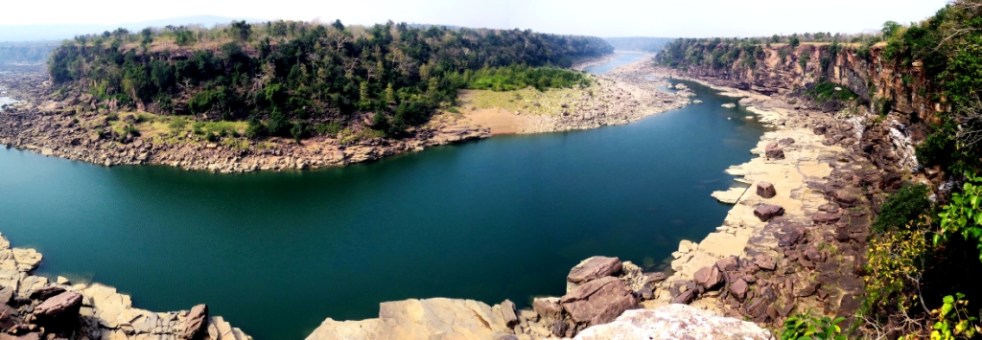
ILR fundamentalism: Union Minister threatens regulators, media and civil society
Above: A fabulous view of Ken river. Nesting sites of Long-billed vultures are to the right. All will go under water if Ken-Betwa linkup is carried out, PHOTO by: AJT Johnsingh
It’s a curious case of Dam fundamentalism: now manifest as ILR fundamentalism. On June 7, 2016, (as widely reported by media[i]) Union Water Resources Minister Uma Bharti “threatened to go on hunger strike if the Ken-Betwa river linking project is further delayed and termed the attempt to delay the project by environmentalists as a “national crime”” as reported by Business Standard. The threat was directed against all those raising questions about Ken Betwa River Link proposal of her ministry. Continue reading “ILR fundamentalism: Union Minister threatens regulators, media and civil society”
Transparency in Environment Governance? Expert Meeting on River Projects does not have documents in open domain
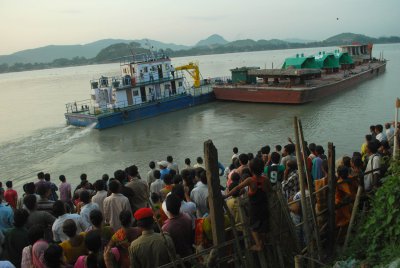
Above: Protest against Lower Subansiri Project in Assam. Basin Study of Lower Subansiri is also a part of intense debate in Assam. Now these studies are under wraps by the MoEF and CC
Non-transparent Environment Governance does not help anyone, neither is it legal. In the upcoming Expert Meeting of the MoEF and CC on River Valley Projects (read dams), documents pertaining to 6 of the 8 projects being considered are not available!
We have appealed to the new Minister to take swift action against this non-transparent and non-democratic governance in the MoEF and CC. Please feel free to send similar letters to the email addresses mentioned below. Continue reading “Transparency in Environment Governance? Expert Meeting on River Projects does not have documents in open domain”
The New License Raj: License to Violate Environmental Laws through Environmental Supplemental Plan
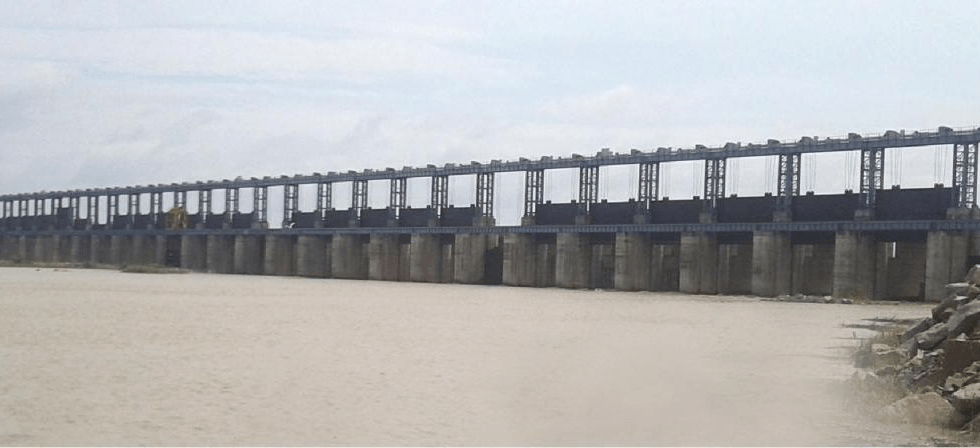
Above: Sonthi Barrage in Karnataka standing without Environmental Clearance
The Ministry of Environment, Forests and Climate Change has issued a Draft Notification which aims to “regularise” projects which have violated the basic tenet of Environment Law and Governance in the country: starting work without securing Environmental Clearance. While any such violation should be punishable to deter any contempt of the much-abused environment laws, the Ministry is seeking to do just the opposite: Regularize the violations by constituting a wishy-washy Environmental Supplemental Plan, as outlined in the Draft Notification.
This seems like one of Mr Prakash Javdekar’s last acts as Environment Minister (before he got transferred to HRD with promotion to cabinet rank) that, typically similar to his other acts during his seriously problematic two year tenure, was totally against what he was expected to do: Protection of environment. We hope the new incumbent at MoEF&CC will cancel this notification immediately. Continue reading “The New License Raj: License to Violate Environmental Laws through Environmental Supplemental Plan”
Groundwater of Pune: An Over-exploited and ungoverned lifeline
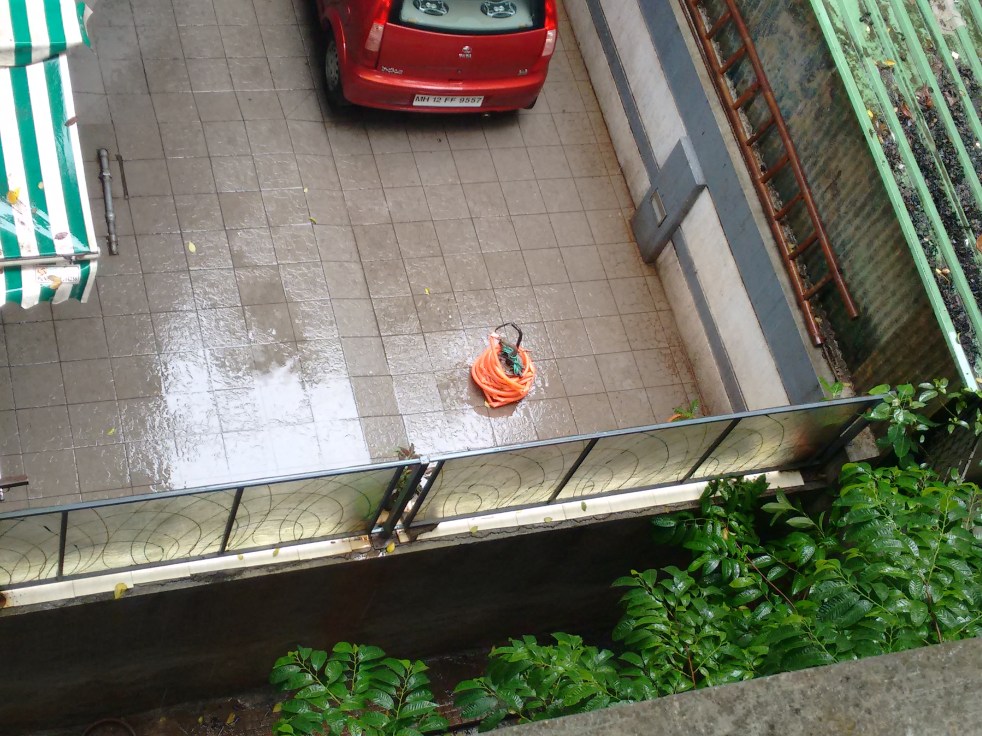
While more than allocated and more than enough water supply from Khadakwasla Project Complex steals the water supply show in Pune, water below the ground remains pretty much out of sight and out of mind for Pune Municipal Corporation (PMC) and everyone else. Roughly estimated use close to one thousand million cubic feet (TMC) remains not just ungoverned but completely unacknowledged. Though groundwater use forms an important component of non-potable water use in the city total quantity of the groundwater extracted remains unassessed. Drilling of borewells has been going on unregulated and groundwater level has been falling at the rate of quarter of a meter per annum. Neither PMC nor any other State agencies like Maharashtra Water Resources Regulatory Authority (MWRRA functioning as State Groundwater Authority) or Groundwater Survey and Development Agency (GSDA) is governing the resource and have taken any concrete steps for its conservation. Continue reading “Groundwater of Pune: An Over-exploited and ungoverned lifeline”

DRP: 4 July 2016 (In Proposed Hydro Policy, Govt Pushing Hydro Through Subsidies)
New Hydro Policy: Govt unjustifiably pushing hydro through subsidies A comprehensive policy to promote hydropower generation is set to be announced by September—with viability gap funding for projects, compulsory hydropower purchase obligations for distribution companies and a set of good practices that states have to follow. The idea is to address factors that currently drive hydropower costs up way above those of other sources of power and give policy support in its market development, according to a government official, who asked not to be named. The policy being prepared by the power ministry will have provisions for viability gap funding, which will help in meeting the shortfall in project costs and reducing hydroelectricity tariffs for consumers. Hydropower is expensive and in some cases more than double the cost of power from coal-based thermal plants, which is available at Rs.3-5 per unit.The ministry will also expand the scope of power distribution companies’ renewable power purchase obligations to include hydropower from projects with a capacity greater than 25 Mw. At the moment only power from those with less than 25MW is considered renewable power. According to officials, compulsory hydropower purchase from large projects will either be made part of the existing renewable power purchase obligation of distribution companies or a separate requirement, so that its inclusion does not affect the market for other renewable sources of energy like wind, solar or biomass. Govt unjustifiably pushing hydro through subsidies in proposed new hydro policy can be lead story. It is not going to help push hydro.
Continue reading “DRP: 4 July 2016 (In Proposed Hydro Policy, Govt Pushing Hydro Through Subsidies)”
River Ken, as I saw it
Guest Blog by: Manoj Misra, Yamuna Jiye Abhiyaan
Rivers are often seen merely as carriers of utilizable water and little more. Such utilization could be for supply of water to meet human domestic, commercial, irrigation or industrial needs or as a motive force to produce electricity. That there could be far more to a river than water flowing in it is rarely appreciated far less investigated. The reason also is that in case of perennial rivers water flowing in them tends to hide from public view a lot residing in their interiors, including their living and non living components. So a drought, notwithstanding its adverse impacts on water dependent people and their commensals[i], is an opportunity nevertheless to easily see what is otherwise normally hidden. Continue reading “River Ken, as I saw it”
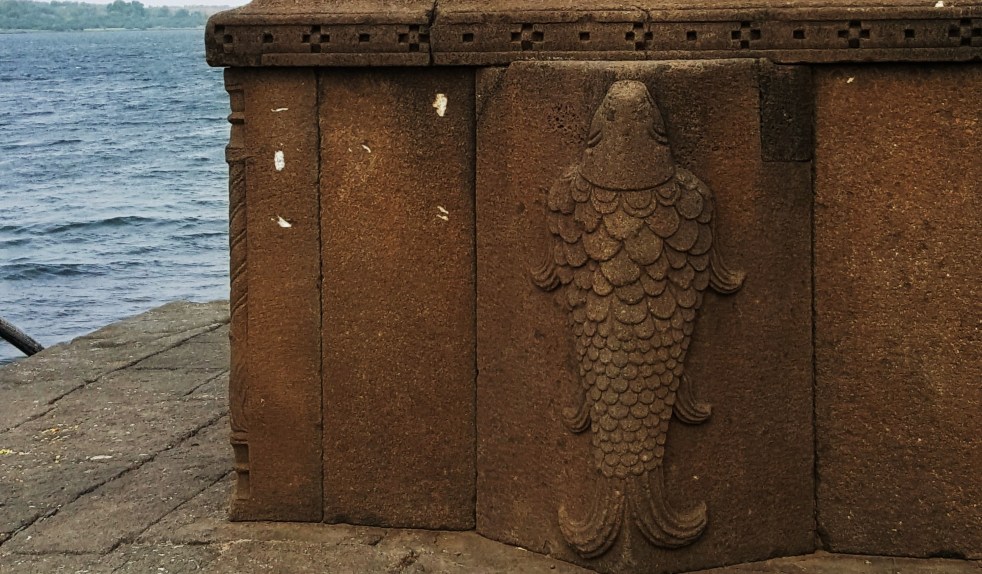
नदी के बदले नदी दे सकते है? ..on Maheshwar, Narmada and fishing communities of India
What separated Maheshwar Ghats on the mighty Narmada from most other rivers I have seen was the sheer gaiety and joy which people were experiencing, jumping in the Narmada. The beautiful, jutting steps of the ghats were designed (and used) like diving boards by men, boys and women. For someone who had just seen a dry Godavari and drier rivers of Marathwada, this mirth was therapeutic. Ferry Boats and laidback ferrymen were relaxing on the river, bobbing up and down rhythmically. In the distance was a tiny sailboat, held together by white fluttering sails, zipping through the waters at a startling speed without the din of a diesel engine. A fisherman and his daughter were returning to their village, taking stock of their catch.. Occasional fish rose above the waters and glistened in the evening sun. Continue reading “नदी के बदले नदी दे सकते है? ..on Maheshwar, Narmada and fishing communities of India”

Threats to East Kolkata Wetlands are threats to Kolkata: Majhi jo nau dubaaye…
Guest Blog by: Chicu Lokgariwar (chicu.l@gmail.com), Usha Dewani (usha.dewani7@gmail.com)
‘Majhi jo nau dubaaye, to usey kaun bachaaye’ laments a popular song[i]. It literally translates as: ‘If an oarsman sinks his boat, who can save it?’
This is a question that concerned citizens of Kolkata are asking themselves today in connection with the famed East Kolkata Wetlands. A notified Ramsar site, this extensive wetland spread over 12,500 Ha has been protected for decades by the communities who live within it and by The East Kolkata Wetlands (Conservation and Management) Act, 2006. Today, it is the Environment Minister of West Bengal who has taken it upon himself to destroy the wetlands. Continue reading “Threats to East Kolkata Wetlands are threats to Kolkata: Majhi jo nau dubaaye…”

