Reconstituted Expert Appraisal Committee on River Valley Projects:
MoEF has neither environment sense, nor guts: Unacceptable Committee
On Sept 5, 2013, Union Ministry of Environment and Forests came out with “Re-constitution of Expert Appraisal Committee (EAC) for River Valley & Hydro Electric Project” (see: http://envfor.nic.in/sites/default/files/EAC-Order-05092013.pdf). Mr Alok Perti, former Coal Secretary, has been made chairperson of the committee that appraises all major irrigation projects, dams, hydropower projects and river valley projects for Environment clearances at two stages (TOR and final). It is shocking to see that Mr Perti who has absolutely no environment credentials, who has been known to be anti environment, who has been accusing the environment ministry to be in road block of coal mining and who has shown his ignorance of environment issues on several occasions has been selected as chair person, putting aside basic environmental sense. This reconstituted EAC on RiverValley and Hydropower projects is completely unacceptable.
It is equally disturbing to see that the committee has no woman representation, no sociologist, no one from non-government organisations. All ten members are either from government, government organisations or government funded academic organisations. This means that none of them would be in a position to take a stand independent of the government stand. The committee also has no river expert, climate change-water expert or disaster management expert, all of which are crucially important issues for a committee like this that decides the fate of India’s rivers, even more so after the Uttarakhand disaster. P K Chaudhuri, one of the members of the new committee also has had nothing to do with rivers, water or environment. Hardip S Kingra, who was involved in Commonwealth games organisation and also chairman of National Scheduled Castes Finance and Development Corporation has had no work related to rivers or environment.
Specifically, Mr Alok Perti, who has been senior functionary, including secretary of currently controversial Coal Ministry from Oct 2009 to earlier this year and before Oct 2009 in ministries like defense and family welfare, clearly has had no background on environment or rivers. As coal secretary, he had accused MoEF for stalling the growth by not giving clearances to coal mining projects automatically. The Economic Times quoted Perti as saying in a report[1]: “India has to decide whether she wants electricity or tigers.” Such simplistic statements reflect he has absolutely no understanding of environment, biodiversity, leave aside rivers. Perti’s anti civil society stance was also exposed when he refused to discuss issues with activists and asked them to go and file RTIs[2]. These are only a couple of examples we are giving here, there are many others. By appointing such a person as chairman of the EAC on RVP, the MoEF has shown it has no guts or interest in protecting the environment or forests which is supposed to be its mandate. This committee is clearly unacceptable and will also not stand legal scrutiny.
Union Ministry of Environment and Forests, New Delhi, vrg.iyer@nic.in
Maninder Singh
Joint Secretary,
Union Ministry of Environment and Forests, New Delhi, jsicmoef@nic.in
Mr. B. B. Barman
Director (IA) River Valley Projects,
Union Ministry of Environment and Forests, New Delhi, bidhu-mef@nic.in
Subject: Urgent concerns about reconstituted Expert Appraisal Committee on River Valley Proejcts
Respected madam and sirs,
On Sept 5, 2013, Union Ministry of Environment and Forests came out with “Re-constitution of Expert Appraisal Committee (EAC) for River Valley & Hydro Electric Project” (see: http://envfor.nic.in/sites/default/files/EAC-Order-05092013.pdf). Mr Alok Perti, former Coal Secretary, has been made chairperson of the committee that appraises all major irrigation projects, dams, hydropower projects and river valley projects for Environment clearances at two stages (TOR and final). It is shocking to see that Mr Perti who has absolutely no environment credentials, who has been known to be anti environment, who has been accusing the environment ministry to be in road block of coal mining and who has shown his ignorance of environment issues on several occasions has been selected as chair person, putting aside basic environmental sense. This reconstituted EAC on River Valley and Hydropower projects is completely unacceptable.
It is equally disturbing to see that the committee has no woman representation, no sociologist, no one from non-government organisations. All ten members are either from government, or from government organisations or government funded academic organisations. This means that none of them would be in a position to take a stand independent of the government stand. The committee also has no river expert, climate change-water expert or disaster management expert, all of which are crucially important issues for a committee like this that decides the fate of India’s rivers, even more so after the Uttarakhand disaster. P K Chaudhuri, one of the members of the new committee also has done no work with rivers, water or environment, going by his CV. Hardip S Kingra, who was involved in Commonwealth games organisation and also chairman of National Scheduled Castes Finance and Development Corporation has had no work related to rivers or environment.
Specifically, Mr Alok Perti, who has been senior functionary, including secretary of currently controversial Coal Ministry from Oct 2009 to early 2013 and before Oct 2009 he has been in ministries like defense and family welfare, clearly has had no background on environment or rivers. As coal secretary, he had accused MoEF for stalling the growth by not giving clearances to coal mining projects automatically. The Economic Times quoted Perti as saying in a report[1]: “India has to decide whether she wants electricity or tigers.” Such simplistic statements reflect he has absolutely no understanding of environment, biodiversity, leave aside rivers. Perti’s anti civil society stance was also exposed when he refused to discuss issues with activists and asked them to go and file RTIs[2]. By appointing such a person as chairman of the EAC on RVP, the MoEF has shown it has no interest in protecting the environment or forests which is supposed to be its mandate. This committee is clearly unacceptable and will also not stand legal scrutiny.
Under the circumstances, we demand that:
1. The notification (No. J-12011/EAC /2010-IA-I dated Sept 5, 2013) of reconstitution of the EAC be cancelled;
Draft National Policy Guidelines for Water Sharing[1]: Comments[2]
Copied below are the Comments sent by SANDRP to the Union Ministry of Water Resources in response to MWR’s invitation to send comments by July 31, 2013.
1. What is the value added by these Draft National Policy Guidelines on Water Sharing? What is the immediate reason for bring out these guidelines? The guidelines do not make this clear. This becomes particularly important as under constitution, water is a state subject and among states there is increasing suspicion that centre is trying to take over the rights of deciding about the water resources. If that is the case, as it seems (see comments below), than the guidelines also seem to violate the constitutional provisions.
2. The guidelines use the word “National Interest” at least four times, without explaining who will decide this and how. This is likely to raise suspicions among the states. This is particularly true with provisions like that in section 4.6 (c) saying, “The quantum of water exported from the surplus basin in overall national interest will not be counted as water available for sharing in that basin.” This seems to give unfettered rights to the centre to decide about inter basin transfer of water citing “national interest”.
3. If the Union Ministry of water resources is going to decide what is in National Interest than it is likely to invite risk of ridiculous and risky propositions. For example, the ministry some years ago came out with a scheme of National Projects, but most of the projects under this scheme did not have statutory clearances, or were unviable or were controversial and involved unresolved interstate issues. Thus use of such terms without clear definition and clear checks and balances is not likely to be acceptable.
4. It is pertinent to note that conflicts over river waters, whether inter-country or intra-country, invariably seem to arise only in the context of large projects. So long as the river is flowing freely without any such big projects, there is no cause for any conflict between the upper and lower riparians. As soon as any riparian State plans an intervention (dam or barrage or other diversion structure), anxiety in other riparians is triggered, and a potential for conflict arises. It would appear that large projects tend to become the foci of conflicts. This is essentially because (a) they tend to drastically alter geography and hydrological regimes, and (b) they involve issues of control, power and political relations, social justice and equity. The best course to avoid conflicts is to refrain from such interventions as far as possible, keep them minimal, give advance notice of an intended intervention to all the other riparians, provide full information, take the concerns and consent of the lower riparian into account, and refrain from causing ‘substantial harm’ or ‘significant injury’ to the lower riparian. This point has not been covered in the guidelines.
5. On similar lines, the guidelines basically take a macro view and do not seem to have a place for micro, local, bottom up process or democratic perspective.
6. The sharing should be only of what is available for sharing after the ecological functions of the river (in all its manifestation and catchments) are ensured. These would include the sustaining of wildlife, aquatic life and vegetation; the maintenance of the river regime and the capacity of the river to cope with pollution and regenerate itself; the maintenance of the micro climate; the support of the lives and livelihoods of people dependent on the river on both sides of the political or administrative border; the recharging of aquifers; the preservation of wetlands; the protection of the health of the estuary; and so on. This does not find mention in the guidelines.
7. Its very important to note here that groundwater is increasingly the main source of water for all sources and more and more areas. This is likely to remain the situation whether we like it or not. Under the circumstances, sustenance of rivers flowing all round the year with freshwater as one of the most important groundwater recharge mechanism is also important, both at intrastate as well as interstate level. This aspect should have found a key place in these guidelines.
8. An inter-State river is not a sequence of Statewise segments, it is one continuous flow, one integral whole as a hydrological/ecological system. Allocating so much of its waters to State A, so much to State B, etc, involves a segmentation – a chopping up – of the river. The ideal course would be a joint, agreed, integrated, holistic, harmonious use of its waters by all the basin States coming together. Any statement of sharing principles should begin with this recognition.
9. If a sharing becomes necessary, equitable sharing for beneficial uses must of course be the governing principle, and the Ministry’s draft says this in section 4.3.
The word ‘apportionment’ is best avoided because it suggests an imposition by a judicial or other agency. As mutual agreement is also possible, the word ‘sharing’ seems better. As contending States often argue on the basis of other principles such as ‘territorial sovereignty’ (the Harmon doctrine) or ‘prior use’ or ‘prescriptive rights’, the National Statement of Principles should not merely lay down the principle of equitable sharing but specifically rule out other principles such as those referred to above. Three, it is not enough to say ‘equitable sharing’; the words ‘for beneficial and justifiable uses’ must be added, because the sharing is not for non-use or waste.
The term ‘equitable sharing’ immediately leads to the question of what constitutes ‘equity’, and the draft has something to say about this. The Helsinki Rules enumerate a large number of criteria and leave the actual applicable criteria and the relative weights to be attached to each criterion to be determined in accordance with the circumstances of each case. These are missing here.
Thus, it is not clear how this equitable sharing will be applied and how it will get change with other principles like prior use, high economic value use, etc come in the picture. This principle has always been there, and in spite of such principles, in Maharashtra, a state with largest number of big dams, 70% of irrigation water gets used up by 2% land under sugarcane. Similarly while parts of Krishna basin is highly drought prone, over 3 billion cubic meters of water get transferred from that basin to the high rainfall area of Konkan while the downstream areas in the Krishna basin is severely drought prone. This is also applicable at interstate level as is clear from the reservoir filling methods applicable in all basins, where the upstream dams will release water only when they are full and till than downstream areas wont get any water, irrespective of if the downstream areas are in the same state or another one. So in absence of clearly defined publicly accountable mechanism to implement this principle, it is of little value.
10. Incidentally, one of the criteria, namely the ‘contribution’ of each BasinState, is a bit dicey. Can that fact give unfettered rights over that water to that state? If not what will limit those rights? This is because, the State that receives the precipitation also needs downstream state to provide drainage; it follows that by virtue of providing that crucial drainage the lower State also acquires a certain right over those waters. This factor is not mentioned here.
11. The upper riparian tends to assume a primacy of rights, and in any case has control over the waters, putting the lower riparian at a disadvantage. The upper riparian often talks in terms of ‘giving’ water to the lower riparian or ‘sparing’ water for the lower riparian. It is necessary for the Statement of Principles to make it clear that there is no hierarchy of rights; that all co-riparians have equal use-rights over the waters of the inter-State river; that the lower riparian has a right to the waters. If there is a hierarchy, than the hierarchy should be made clear and also how that hierarchy is going to be ensured in real situation.
12. One of the key issues that a statement of principles must deal with is the problem of sharing in a low-flow year. This is clearly recognised in the India-Bangladesh Ganges Water-Sharing Treaty 1996. However, the draft guidelines do not make this clear.
13. The upper riparian, in using the waters, must not cause ‘substantial harm’ (Helsinki language) or ‘significant injury’ (UN convention language) to the lower riparian. (The India-Bangladesh Ganges Treaty contains a ‘no harm to either party’ clause.) The draft guidelines must include this.
14. Under the law as it stands at present, the parties to an adjudication under the ISWD Act are the State Governments. A more inclusive approach seems desirable so as to allow water-users (agriculture, industry, citizens, etc), as well as those likely to be affected by the projects in dispute, to be heard in the adjudication process.
15. Data of all kinds needed for the purposes these guidelines (e.g. section 6.1.1) shall be freely shared by the States concerned and put in the public domain for the information of all without any restrictions on the grounds of confidentiality or secrecy.
16. Section 4.3 mentions that storage of rainwater shall not qualify as direct use of rainwater. However, there are many techniques that require local storage of rainwater and such local storage should not disqualify from being considered as direct user of rainwater. This may be modified to say that storage of water beyond a certain quantity at one place (say 1 million cubic meter) may not qualify as direct use of rainwater.
17. The guidelines are only pertaining to interstate water sharing. However, any such (non binding) guidelines should also include provisions for intra-state, inter-sectoral water sharing.
18. Section 4.8 is problematic as it does not define what “existing use” is. Is the use of water by fish, plants and nature “existing use”? Does it count? It seems the existing use is entirely anthropocentric, but in case of an ecologically embedded entity like water this may be seriously problematic. Secondly, it seems to recognise use only when done through projects approved through due process. But there is a lot of informal use of water (e.g. by tribals) that is beyond the project-generated use. Does it count? Thirdly it makes a strange distinction of preplanned use. Do we have well documented and well recognised pre plan uses of water? Fourthly, the use of phrase “Every effort shall be made to protect the existing utilization” creates serious doubts as it gives an escape route that nothing is sacrosanct.
19. Section 4.9.1 also raises serious suspicions since it says even where an existing interstate agreement has approval of all the basin states, it may still not be good enough before “national interests”. This is bound to raise suspicion of all the states.
20. Section 4.10.2 is also likely to raise suspicions as it reads: “In the process of water sharing/distribution, in consultation with the co-basin States, the Centre would take care of the water sharing/distributions required in the national interest… Any State affected adversely due to such sharing/distribution would be adequately compensated by alternative means.” This seems to give rights to centre that so far belongs to the state. As far as the interests of the ecology and environmental flows are concerned, centre has the powers under Environment Protection Act, 1986 and do not have to resort to such seemingly extra constitutional guidelines.
21. The presence of section 4.12 on interlinking further raises the suspicion that this whole effort is geared towards pushing such projects. This should have had no place in these guidelines.
22. In section 5.1b there should have been explicit mention of groundwater use and climate change implications on water use and availability.
23. In section 5.4b(i) it is not clear what is the basis for review after 40 years.
24. The whole guidelines have no place for people, and also has no value for transparency, accountability or participatory processes.
25. Conclusion This exercise may be redone with more open ended terms of reference and holistic way of considering water in nature and with greater faith in the people and democratic processes.
The Ministry should not rush through this. It should give more time for feedback, take up extensive consultation and make the draft available in regional languages.
The Forest Advisory Committee (FAC) of the MoEF in its meeting on the 11th and 12th of July did not recommend Forest Clearance to Kikvi Drinking water project coming up in Nashik.The proposal entailed diverting 172 hectares of forest land and a massive 761.52 hectares of agricultural land, totalling 933.98 hectares, without even a rehabilitation or resettlement plan. The project proponents pushed the project claiming that Gangapur dam is being silted up, but shockingly, did not present any alternative of desilting Gangapur Dam or even mentioning that Nashik already has three more drinking water supply sources in the upstream and downstream of Gangapur Dam.
In its decision, the FAC noted that
· “The project proponent has not given due diligence in assessing water requirement of the area and available resources already in existence to meet this requirement.
· No evidence is made available to prove that an authenticated study has been conducted to assess water requirement
· There are three more drinking water/irrigation projects in Nashik but user agency could not establish any link between capacity of these and future water requirement.
· Possibility of enhancing storage capacity of Gangapur dam to its installed capacity of 7.2 TMC by way of desiltation has not been explored.
· It is also not understood how rehabilitation plan is not required if submergence of agricultural and is involved.”
FAC has asked for further clarification and reports before the project can be considered again. This includes a detailed study to assess present and future requirement of water for drinking irrigation and vis a vis available sources, an integrated plan which may include desilting study for Gangapur dam as well as a Rehabilitation and Resettlement Plan for the population whose agricultural land will be submerged. It has also asked for compliance of Forest Rights Act.
This is indeed a welcome decision by the FAC. The proposal highlighted callous and casual approach of the Nashik Municipal Corporation while diverting an entire river and affecting agricultural lands in over 10 villages in Nashik, without even mentioning agricultural submergence clearly in its application.
Institute independent enquiry into the role of HEPs in increasing the disaster
in Uttarakhand
July 20, 2013
To
1. Union Minister of State (IC) of Environment and Forests
Paryavaran Bhawan, CGO Complex,
Lodhi Road, New Delhi11003
2. Secretary,
Union Ministry of Environment and Forests
Paryavaran Bhawan, CGO Complex,
Lodhi Road, New Delhi11003
Respected Minister and Secretary,
Sub: Suspend ECs to Hydropower Projects in Uttarakhand
Institute independent enquiry into the role of HEPs in increasing the disaster
in Uttarakhand
1. Uttarakhand Disaster and Hydropower projects It is now beyond doubt that existing and under construction hydropower projects in Uttarakhand have played a significant role in increasing the proportions of disaster in Uttarakhand this June 2013. Here are a few examples just to illustrate:
Þ Srinagar HEP This 330 MW project under construction had been illegally dumping the muck into the river or piling heaps on the slope without an adequate retaining wall. Moreover, it is learnt that the project closed the gates of the dam on the evening of June 16, 2013, but opened them up suddenly in the early hours of next morning, which led to flooding of hundreds of houses and buildings in the downstream Srinagar town. The piled muck heaps were washed into the town. The town was submerged in not only water, but also 10-30 feet of muck. The project itself has suffered damages.
Þ Singoli Bhatwari and Phata Byung HEPs on Mandakini river The 99 MW Singoli Bhatwari and the 76 MW Phata Byung HEPs are both under construction projects on Mandakini river in Rudraprayag district. Both projects have been illegally dumping muck along the river banks, which was carried by the river to the downstream villages and towns upto Rudrapayag and beyond. Both the projects have suffered severe damages. Water levels in the MandakiniRiver rose 30 to 40 feet at various locations, destroying roads, private and public properties. All bridges downstram of the S-B project were washed away snapping links across the river and causing enormous hardships to the local people, rescue, relief anf rehabilitation efforts.
Þ Vishnuprayag HEP on Alaknanda River The operators of the 400 MW project did not open the gates in time, leading to the reservoir behind the gates filled with boulders, see before and after photos at: http://matuganga.blogspot.in/2013/06/press-note-30-6-2013.html. The river than bypassed the project and created a new path as can be seen in the photos, firstly, creating a huge flash flood in the downstream area and also eroding the banks and the road. Lambagad market and Govindghat township have suffered massive destruction of private property and public property, including the bridge to the Hemkund Sahib trek, endangering the lives of pilgrims and tourists.
Þ Maneri Bhali I and II Due to lack of protection wall and lack of timely opening of the gates, the people residing on the banks of the project suffered huge flood disaster, large number of houses were washed away and lives lost. Maneri Bhali I is itself damaged and yet to start generation, even Maneri Bhali II started generation only after July 12, 2013.
Þ Dhouliganga HEP This 280 MW Dhouliganga HEP of NHPC is also being held responsible for floods in the downstream area, the power house of the project itself was submerged and project is yet to start generation.
Þ Small HEPs A large number of small HEPs have suffered damages and are also being held responsible for increased disaster impacts. Such projects include 4 MW Kaliganga I and 10 MW Kaliganga II, 9.5 MW Madhyamaheshwar HEP, 5 MW Motighat HEP, Assiganga I and II HEPs, among others. We have been urging the MoEF to amend the EIA notification to include all hydro projects above 1 MW under category B1 so that they all have EIAs, EMPs, ECs, EAC sanction and public consultation process. Kindly make this change urgently.
2. List of Uttarakhand Hydropower projects with EC on the MoEF webiste As per the legal norms under the EPA 1986 and EIA notifications of 1994 and Sept 2006 (both are relevant since some of the projects got clearance under earlier notification), the developers are supposed to send six monthly compliance reports to MoEF and it is also legal obligation of MoEF to put such compliance reports on the MoEF website, see section 10(i) and (ii) of the EIA notification of Sept 2006. It is very important to note that these reports are supposed to reflect the extent to which the projects are complying with the conditions of environment clearance and environment management plans. These reports are an important mechanism for MoEF to know about the status of compliance of the projects. A perusal of the Environment clearance site of the MoEF (See: http://environmentclearance.nic.in/Search.aspx) and looking for the Uttarakhand river valley projects granted Environment clearance, we find that the site displays a list of seven hydro projects, in which since Srinagar project figures twice, the site effectively contains only six names. In the first place this is the first illegality of MoEF, since this is not a complete list. To illustrate, the 76 MW Phata Byung HEP under construction on Mandakini river does not figure on this, there are other projects too that does not figure on this list. We urge MoEF to kindly put up the full list here and also fix responsibility for this legal lapse for not putting up full list.
3. Compliance reports of Under Construction of HEPs not available Since full list of under construction HEPs of Uttarakhand is not displayed on MoEF website, the MoEF is also unable to fulfill its legal duty of putting up compliance reports. Even among the project displayed on the MoEF website, latest compliance report is available only for one project, namely Singoli Bhatwari HEP (it is file of massive size at 30 MB, most people wont be able to download this, MoEF should ask for file size of 1 MB or below and upload them in smaller size segments). So for the rest of the projects there is no compliance report on the MoEF website. This is clearly a serious violations on the part of the MoEF and MoEF needs to urgently hold accountable those who are responsible for this serious legal lapse. The MoEF also needs to take urgent action against those that have not submitted the reports as required, suspension of their environment clearance can be the first step.
4. Suspend Environment Clearance of the projects prime facie responsible for disaster damages MoEF should urgently suspend environment clearance of those projects that have been found to be prime facie responsible for the damages. We urge MoEF to suspend the clearances of following projects: Singoli Bhatwari, Phata Byung, Srinagar (all under construction projects), Vishnuprayag, Dhouliganga, Maneri Bhali I and II (all operating projects), for the reasons described in para 1 above. As a direct consequence there off, MoEF should also ask these projects to suspend their work including repair and reconstruction work till further orders. These are also required from the point of view of future safety of the downstream people and areas and also revisit the features of the projects from this perspective.
Such suspension is also necessary since the projects need a review considering that following issues have not been considered by giving clearances to the projects:
1. Change in climate due to HEPs leading to, among other changes, more erosion and landslides, more irregular rainfall patterns, more violent cloudbursts.
2 Inadequate assessment of landslide impacts of the project by GSI and MoEF.
3 The only norm for use of explosives has been made by Director General of Mines Safety for mines and pucca houses. These norms are being mindlessly applied to the fragile Uttarakhand hills and structures there.
4 Impact on forests of explosives via (1) losening of soil; (2) depletion of aquifers.
5 Impact on global warming by deforestation and depletion of aquifers.
6 Impact of project on disaster potential and implied cost of disaster.
7 Reservoir Induced Seismicity. NCSDP only looks at the safety of the dam structure. There is not agency that looks into the impact on the area, including hills, forests, water sources, houses and other structures.
8. The performance of the projects in view of changing climate, receding glaciers, possibilities of increased flashfloods, landslides and so on.
5. Institute credible, independent enquiry MoEF should urgently institute credible, independent enquiry into the disaster impacts due to the wrong and illegal functioning of the projects mentioned in first para above, including the impacts on people, their lives and property, on the property of the state and other institutions. This should be done on urgent basis so that an assessment of the existing situation can be done urgently before the ground realities change significantly and while the memory of the events are fresh in everyone’s mind.
6. Change EIA notification to include all hydro projects above 1 MW As noted in last bullet points in para 1 above, we urge the MoEF to amend the EIA notification to include all hydro projects above 1 MW under category B1 so that they all have EIAs, EMPs, ECs, EAC sanction and public consultation process.
7. Change EIA notification to include commissioned projects to send six monthly compliance reports and also undergo 5 yearly review For example, in US, the Federal Electricity Regulatory Commission has detailed regulations as to what happens once a project undergoes such emergency situation, see: http://www.ferc.gov/industries/hydropower/gen-info/regulation/dam-safety.asp. This includes, “Every 5 years an independent consulting engineer, approved by the Commission, must inspect and evaluate projects with dams higher than 32.8 feet (10 meters), or with a total storage capacity of more than 2,000 acre-feet (2.5 million cubic meters)… The Commission staff also evaluates the effects of potential and actual large floods on the safety of dams. During and following floods, the Commission staff visits project dams and licensed projects, determines the extent of damage, if any, and directs any necessary studies or remedial measures the licensee must undertake.”
Most hydropower projects of Uttarakhand would come under above description and MoEF as a regulator should be following similar review process for all projects sanctioned by it every five years and also ensure that even projects once commissioned also send six monthly reports to MoEF ensuring compliance of the norms. Such a mechanism has also been recommended by the BK Chaturvedi committee.
Hence we urge MoEF to urgently review the EIA notification to ensure submission of six monthly compliance reports for commissioned projects and also ensure 5 yearly review of the environment clearances.
We will look forward to your urgent response on these issues.
Submission to the Forest Advisory Committee, Ministry of Environment and Forests urging them not to grant Forest Clearance to Kikvi Drinking water supply Dam coming up in Trimbakeshwar, Nashik, in the absence of relevant studies and justifications. The project will submerge nearly 1000 heactres of agricultural and forest land in Western Ghats, and there is no justification provided that Nashik needs a new source. The city already takes water from 4 dams, is building a fifth weir and is allegedly supplying more drinking water to help India Bulls Thermal Power Project.
To,
Chairperson and members,
Forest Advisory Committee
Ministry of Environment and Forests
Delhi
Subject: Concerns about Kikvi Drinking Water Supply Project, Brahmanwade, Nashik
Respected Chairperson and Members,
We see from the agenda uploaded on MoEF Website that the FAC will be considering proposal of Kikvi Drinking Water Supply Dam in BrahmanwadeVillage in Nashik, Maharashtra diverting 172.46 hectares of Forest in its upcoming meeting on 11th and 12th July 2013. The entire submergence of the project is a massive 933.98 hectares in the Northern Western Ghats. Partners from SANDRP visited the site on the 7th July 2013, studied the ecology and talked with the local farmers to be affected by the project. Based on the visit and analysis of Site Inspection report (SIR), FormIA and Factsheet uploaded on MoEF Website, we would like to highlight some strong concerns about this proposal:
No evidence that Nashik needs a new source of drinking water: The Site Inspection Report of the Additional Principal Chief Secretary of Forest Department in June 2013 simply says “The project should be encouraged as it is a drinking water project”.
This is a strange statement coming from Forest Department, entrusted with protecting the dwindling forests of the country. There has been no supporting evidence provided by the Additional PCCF, Western Zone that Nashik actually needs this project for its drinking water supply needs.
In fact, there is no information provided in the Site Inspection Report, FormIA or the Fact sheet justifying the need for this project.
There is no estimation of Nashik’s current water demand, existing drinking water sources, future water demand, options assessment, demand management explored, etc.
In the absence of any such studies, how can Forest Department simply “encourage” a project to divert 172.47 hectares of forest (it will also submerge 776.52 hectares of agricultural land) only because it is a drinking water supply project? This is unacceptable and FAC should ask all the concerned officials to apply their mind before accepting to such proposals, including looking at the justifiability of the proposal and assessment that given project is the best option. This is important for all projects, but particularly so for a project that does even have environmental and social impact assessment.
2. Nashik has a number of existing drinking water supply projects There are already three dams in the upstream of Nashik city on the river Godavari and its tributaries. Nashik Municipal Corporation has a reservation for drinking water in each of these dams. These include the Gangapur Dam, Kashyapi Dam and Gautami Dam. Kashyapi and Gautami Dams were built to supplement Gangapur Dams water storage because it was silting up[1]. Kikvi project is also being pushed stating the same reason that Gangapur dam is silting up.
In addition, Nashik Municipal Corporation has a reservation of 350 million cubic feet on the Darna Dam, 28 kms downstream Nashik.
Nashik Municipal Corporation (NMC) is also building one more weir on DarnaRiver with a capacity of 144 million cubic feet. [2] There is no study to show that Nashik has been using all these available resources efficiently and that it is taking necessary steps to reduce the siltation of the Gangapur dam effectively and also considering the desilting of the reservoir.
It is clear that NMC already has many sources to supply drinking water. With efficient water supply, demand management, effective use of rainwater harvesting and gray water recycling (which have been compulsory since 2009, but which are yet not implemented effectively) the water demand of NMC may come down. These options should be explored first rather than a new dam project that is ecological, economically and socially costly. Forest Clearance to such projects should not be given in the absence of supportive studies.
3. The City Development Plan prepared by Nashik Municipal Corporation (NMC) under the JNNURM does not consider a new drinking water source in its Phase I work till 2016. Why then is there a hurry to divert forests and submerge agricultural lands? (http://nashikcorporation.gov.in/pagedetail.aspx?id=22&mid=69). Even for the phase beyond 2016, unless there is credible study that shows that Nashik is using its current resources efficiently and has exhausted all available options, there should not be any consideration for the current project.
4. No exploration of desilting Gangapur Dam While the Form IA and Factsheet claim that the project is needed as capacity of Gangapur Dam is decreasing due to siltation, it logically follows that the first attempt should be to arrest siltation and desilting of the reservoir. Gangapur Dam also provides irrigation water. Hence, desilting should be explored seriously. During the current 2012-13 drought, Government had undertaken desilting of some reservoirs in Maharashtra. In fact, the Chief Minister himself said that a capacity of 8 TMC has been added in Pune division due to desilting projects.[3] Thus, desilting should be carried out even before discussing new costly sources.
5. Wrong representation in Form IA FormIA states that there is no dependence on forests of the communities and the project does not involve any rehabilitation. This is incorrect.
The entire project involves submergence of 933.98 hectares of land, with 761.52 hectares of agricultural land. This also includes farm shelters and temporary houses of farmers. Farmers and tribals in this region depend heavily on the forests for a number of produce. Hence, the claim in FormIA that there is no dependence on forests is incorrect and should not be accepted.
In fact, there is a strong opposition to the project by villagers of nine villages which are losing agricultural lands to this project.
6. Fact sheet claims lands under submergence and not irrigated: As our partners witnesses this is a misleading statement. Large proportion of land under submergence is irrigated by groundwater through private shallow wells sunk by farmers. This irrigated area will also be submerged, along with the wells.
7. Over developed region The SIR, Form I and Fact sheet mention that there is no alternative alignment of Kikvi project possible due to existing projects in the upstream and downstream. This gives an idea of the overdeveloped region in terms of projects. One more project in this area will add to the cumulative impacts of the existing projects on ecology as well as sociology, but there is no cumulative impact assessment available.
8. Violation of Forest Rights Act: While it is clearly stated by the State Government in the Fact Sheet that: “10. The project authority has partially fulfilled the compliance under the Schedule Tribes and Other Traditional Forest Dwellers (Recognition of Right) Act, 2006. The compliance is not in proper format.” (emphasis added), it is surprising to see that the Form IA mentions that the project authority has fulfilled the compliance under Forest Rights Act 2006!
Thus, Forest Clearance should not be recommended unless the status of FRA compliance is known clearly.
9. Restoration of Forests needed, not further diversion The SIR by the Additional PCCF, Western Zone, notes that submergence of 1960 trees “ will have no ill effect on the area, in fact it will have positive impact due to water body”. This is a shocking statement to be coming from the Forest Department. How can loss of 1960 trees have no ill effect? As for the positive impact due to water bodies, this is a baseless claim for a region that has many water bodies and receives 2600-3000 mm rainfall annually.
The further justification given to divert forests is that the forest is pruned and lopped with low density. When partners of SANDRP visited the site on the 7th of July 2013, they found that the region is poorly managed by the Forest Department, with no security. This has encouraged encroachment and lopping. Instead of addressing these problems and restoring the forests under their control, Forest Department is using this as a justification to further divert forests. This argument is not acceptable.
10. No Environment Impact Assessment, Public Hearing or Environmental Clearance process: Due to an unsound and arbitrary exclusion in the EIA Notification 2006, drinking water supply projects are excluded from the ambit of EIA, Public hearing, Environmental Clearance and hence, Environment Management Plan and environment monitoring. The current project will submerge a total of 933.98 hectares of land without these checks and balances and hence, the FAC needs to consider this project very seriously. Not only will this affect the forest, it will also affect the agrarian economy of the region. FAC should first demand a project specific EIA, SIA and also cumulative impact assessment before even considering this project.
11. No mention of environmental flows: The proposed project will be entirely diverting the water of River Kikvi for drinking water use through Gangapur Dam in Nashik. Such a complete diversion of river has a profound ecological and social impact on the downstream. The issue is serious here as this region forms part of the Western Ghats. Hence, there has to be a study of the environmental flows that should be released from the project in the downstream for social and ecological needs.
As the project will not be applying for an Environmental Clearance, FAC needs to pay serious attention to these aspects.
We hope that the Forest Advisory Committee considers this project seriously and not simply as a drinking water supply project. Nashik Municipal Corporation has been reported to be supplying more drinking water to Nashik city than its need. This is allegedly to benefit the India Bulls Thermal Power plant which is based on the treated sewage water from Nashik Municipal Corporation.[4]
In this scenario, FAC should not recommend a forest clearance to this project, with no justification. The points becoming more pertinent considering that this is a project which has a potential to drown nearly 1000 hectares land in the Northern Western Ghats without any project specific EIA, SIA or cumulative impact assessment without any options assessment or study to show that Nashik is using its current resources efficiently.
Looking forward to a point-wise response to the issues raised above.
Thanking You,
Yours sincerely,
Parineeta Dandekar, SANDRP, Pune
Jui Pethe, Independent Botanist and Agriculturist, Trimbak, Nashik
Amit Tillu , Independent Wildlife Researcher and Agriculturist, Trimbak, Nashik
Select Independent persons with clean track report in transparent way:
Do not select any of the current EAC members
Over 50 individuals and organisations from 15 states all over India have written a letter to the minister and secretary in Union Ministry of Environment and forests about their concerns when the MoEF selects members of the Expert Appraisal Committee for River Valley Projects. The signatories include eminent persons like Prashant Bhushan, Akhil Gogoi, Ramaswamy Iyer, EAS Sarma, Vandana Shiva, Prof M K Prasad and Bittu Sehgal. At least eight organisations/ persons from the disaster affected states of Uttarakhand and Himachal Pradesh have endorsed the letter. The letter makes specific suggestions for the criteria of selection and has requested that none of the members of the outgoing EAC be selected, considering the track record of the outgoing EAC. The letter is self explanatory.
It is this EAC that considers all the dams and hydropower projects for environment clearance at initial (Terms of Reference of Environment Impact Assessment) and final (Environment Clearance) stage as also the adequacy of the EIAs, public consultation process and cumulative impact assessments. Selection of right kind of persons for chair and members of this committee is very important as past members and their conduct left a lot to be desired. Right selection of members of EAC can also go a long way in avoiding increased impact of the disasters like the one Uttarakhand is currently experiencing.
June 29, 2013
To
1. Union Minister of State (IC) of Environment and Forests
Paryavaran Bhawan, CGO Complex,
Lodhi Road, New Delhi11003
2. Secretary,
Union Ministry of Environment and Forests
Paryavaran Bhawan, CGO Complex,
Lodhi Road, New Delhi11003
Respected Minister and Secretary,
Sub: Reconstitution of Expert Appraisal Committee on River Valley Projects
We understand that the term of the current Expert Appraisal Committee on River Valley Projects has come to an end and the ministry is in the process of reconstituting the EAC. In this context, we would like to suggest that the ministry must follow some basic criteria while selecting the chair and members for the new committee. Firstly, the ministry must ensure that all the members of the new committee have credible track record on environmental and related social issues related to the River Valley Projects. This cannot be said to be the case of some members of the outgoing committee. In addition to sociologists, ecologists, hydrologists, the committee needs to have representation from tribal groups, members with proven work on services of the river as against hydrology, experts in climatology and disaster management. Secondly, all the members of the new committee must have a track record of unimpeachable integrity and professional independence, of taking position independent of government and developers. Thirdly, there should be no issues of conflict of interest for any of the members or their affiliated organisations with respect to the projects and sector they are dealing with.
The members of the EAC should be accountable for their actions. There should be a code of conduct for EAC members, and they should give an undertaking to the MoEF that they will adhere to it. The Code should include items such as a requirement for the members to read the EIA Reports and send it written comments before each meeting on what they consider are the significant issues, declaring conflict of interests, not taking on consultancy, etc.
Secondly, the committee has been at best inconsistent in applying:
basic parameters of the adequacy of EIA,
the adequacy of EMP,
need for cumulative impact assessment and carrying capacity,
adequacy of public consultation processes,
track record of the developers & EIA consultants,
adequacy of considering climate change issues,
adequacy of consideration of impact of the project on the disaster vulnerability of the area &
Most importantly, adequate application of mind to all these issues.
The committee has been sanctioning projects that have been rejected by other government bodies, without providing any reasonable case for rejecting such recommendations. This has in fact resulted in many of the projects that the EAC has cleared, but have remained stranded because of legal, regulatory interventions and people’s opposition. One of the direct consequences of what the EAC has done can seen in the hugely increased proportions of disaster that Uttarakhand is now facing. It was shocking to see the committee recommending final environmental clearance for the 108 MW Jelam Tamak hydropower project in one of the worst hit Chamoli district in Alaknanda basin in Uttarakhand. This was in spite of at least two government appointed studies recommending that the project should not be cleared, including the Wildlife Institute of India and also the Inter Ministerial Group headed by B K Chaturvedi and SANDRP & Matu jan sangathan writing to the EAC about this and also raising various concerns about the project. Media articles have also said that the current EAC members should be sacked, see: http://www.hindustantimes.com/India-news/NorthIndiaRainFury2013/Can-we-now-please-sack-these-experts/Article1-1081246.aspx.
MEF should realise that it can discharge its Constitutional obligation under Article 48A to conserve the ecology and ensure the sustainability of development only if the processes under the Environment (Protection) Act, 1986 are fully complied with. In this, the selection of the Chairman and the members of the EACs assume central importance.
We urge you in fact to set in place a transparent process of selection of EAC chair and members.
We hope you will take this into consideration.
Thanking you,
Yours Sincerely,
Endorsed by:
Himanshu Thakkar & Parineeta Dandekar, South Asia Network on Dams, Rivers & People, 86-D, AD block, Shalimar Bagh, Delhi, https://sandrp.in/, ht.sandrp@gmail.com, 09968242798
Analysing a natural disaster is a complex task. Many a times, a natural disaster and its human impacts are a result of multiple things occurring together. At the same time, disasters like the one being faced by Uttarakhand currently highlight the stark anthropogenic reasons which contribute towards causing the disaster as well as increasing its impacts manyfold.
SANDRP has been trying to analyse the situation, and looking at number of causes which precipitated in the current tragedy. These include the absence of early warning system, absence of responsible and active disaster management of monitoring system. While the calamity is natural in the sense that the region did receive extreme heavy rainfall and cloud burst, the root causes which increased the human tragedy include unchecked and unplanned infrastructure development along the rivers and development of hundreds of hydel projects in the fragile zone without proper checks and balances, transparent studies and decision-making processes.
A brief update on SANDRPs work on this issue as well a compilation of the numerous ways in which hydel projects in Uttarakhand are flouting norms of sustainability, transparency, participation or safety and what has been the response to this from the highest quarters: Prime Minister, Minster and Ministry of Environment and Forests as well as the state administration.
The first thing that strikes you when you analyse this disaster is that there was no specific and timely warning of impending disaster from the IMD or any other body (their claim to the contrary not withstanding). In fact we do not have a system in place to forecast cloud burst events, when technology is available to achieve that at approximate cost of Rs 15 crores, as informed to me by formed Director General of IMD, Dr S K Srivastava.
Secondly, even after the event of rainfall started and occurred, till date, six days after the event started on 15th, there is no account of how much rainfall occurred at what specific locations, and what was done to alert the populations that were at risk. This is again a failure of IMD and local administration. In fact it transpired that Kedarnath, one of the most affected area, has no raingauge, says Indian Express.
This shows how agencies like IMD, CWC, NDMA and SDMA have failed to put in place basic systems of warning, forecasting, monitoring and information dissemination that can greatly reduce disaster potential of any area.
From all accounts it is clear that areas around all four Pilgrimage centres (Gangotri, Yamunotri, Kedarnath and Badrinath) and the fifth one of Hemkunt Sahib have faced some serious floods this season. In addition, areas of Pithoragarh (Goriganga basin) and Himachal Pradesh (Kinnaur district, mainly Kashang area, a tributary of Sutlej) basin also faced floods during the same period. The rainfall event that lead to these floods started on June 15 and went on till June 16-17. It seems strange to see such vast area facing simultaneous high intensity rainfall. IMD officials tried to explain this (http://www.hindustantimes.com/India-news/NewDelhi/Westerlies-collided-with-monsoon-to-rain-death/Article1-1081810.aspx) as collision of western disturbance with the upcoming monsoon clouds. It is also true, as Anupam Mishra ji explained to me that the catchments of all these basins in their uppermost ranges are not too far from each other. Incidentally, Tibetan area is also not very far from these region, it would be interesting to know if that area also faced cloud burst events in this period.
In an interview with Rediff Editor Sheela Bhatt, NDMA Vice Chair M Shashidhar Reddy accepted that there are no rain-gauges at Kedarnath and Badri nath and hence we may never know how much rainfall feel at those sites and we will never have full scientific explanation of what happened on June 16-17.
The best we have is weekly district wise rainfall in Uttarakhand districts for the week June 13-19, from India Meteorological Department:
DISTRICTWISE RAINFALL DISTRIBUTION
13.06.2013 TO 19.06.2013
DISTRICT (NAME)
ACTUAL (mm)
NORMAL(mm)
% DEP
CAT.
ALMORA
208.7
26.3
694%
E
BAGESHWAR
391.2
26.3
1387%
E
CHAMOLI
316.9
22.6
1302%
E
CHAMPAWAT
351.0
33.5
948%
E
DEHRADUN
565.4
36.8
1436%
E
GARHWAL PAURI
149.7
15.8
847%
E
GARHWAL TEHRI
327.7
22.0
1390%
E
HARDWAR
298.8
21.6
1283%
E
NAINITAL
506.5
38.8
1205%
E
PITHORAGARH
246.9
73.0
238%
E
RUDRAPRAYAG
366.3
53.9
580%
E
UDHAM SINGH NAGAR
157.7
40.2
292%
E
UTTARKASHI
375.6
25.8
1356%
E
Events of June 16-17 at Kedar Nath Based on Media information, it seems Kedarnath shrine saw two massive flood events, one starting around 8.15 pm on June 16 and second at 6.55 am on June 17. The flood witnessed at the shrine (located at 3584 m above msl) originated from catchment that includes two mountain peaks: Kedarnath and Kedarnath Dome (6831 m elevation). Following torrential rains possibly triggered by cloude burst, huge boulders broke away from Kedar Dome and ruptured the downstream charbari lake reservoir, about 6 km upstream from the temple along the Mandakini river. This description seems to suggest that this was also an event of GLOF (Glacial Lake Outburst Flood), though no one seems to have used that term so far.
However, from all accounts, the massive rainfall and cloud burst events were happening at multiple places, including in Bhagirathi basin, Assiganga basin, Mandakini Basin, Badrinath region, other places in Alaknanda region, among others. The high rainfall started sometime on June 15 and went on till at least June 18. When I talked with Prof Bharat Jhunjhunwala staying at Devprayag along the confluence of Bhagirathi and Alaknanda, he said that the peak of the floods happened on the morning of June 17 (The Hindu reported this happened at 3 am on 17th), though massive flood event there in Alaknanda started the previous evening. He also mentioned that the massive amount of muck deposited on the Alaknanda riverbed by the under construction 330 MW GVK Srinagar Alaknanda Hydropower Prooject (the project has had no credible environmental impact assessment) accentuated the flood disaster in the downstream area. The Hindu reported (http://www.thehindu.com/todays-paper/tp-national/no-warning-of-dam-water-release/article4844604.ece) that sudden release of water from the dam along with the illegally dumped muck in the river bed lead to disaster in downstream Srinagar town.
A Sphere India report said that in Rudraprayag (this is likely to be one of the Mandakini hydropower projects, either Phata Byuang or Singoli Bhatwari), “The local are saying the muck of the dam was deposited along the river which has diverted the course of water.” (http://www.sphereindia.org.in/Download/Sitrep-3%20Flood%20Incident%20in%20Uttarakhand.pdf)
It is interesting to note that if these accounts are correct, the peak of flood event at Devprayag and Kedarnath (separated by about 150 km) happened on the morning of June 17, which possibly indicates that there were multiple could burst or very high intensity rainfall events in Alaknanda valley alone.
However, I had already received a detailed report from Uttarkashi Apda Prabanthan Jan Manch with photos of unfolding disaster on the evening of June 16, 2013, so the high rainfall event and beginning of flood disaster at Uttarkashi began much earlier. The news channels were already showing live footage of the event unfolding in downstream Rishikesh and Haridwar on June 17, again indicating that the flood event in the upstream mountains must have started at least two days earlier.
Unfortunately we still do not have an accurate account of this whole episode from any of the official agency. When Vice Chairman of National Disaster Management Authority M Shashidhar Reddy was asked about this by me on NDTV INDIA badi khabar programme on June 21 evening (see: http://khabar.ndtv.com/video/show/badi-khabar/280131), he accepted we still do not have that account six days after the event. This shows the poor monitoring situation from all concerned.
UTTARAKHAND AND GLOFS The mention of GLOFs in the context of current Uttarakhand floods above should trigger other thoughts. In fact not many observers are mentioning GLOFs in current context. However, Climate scientists including ICIMOD has been mentioning increasing risks of GLOFs all across Himalayas.
Anupam Mishra ji in fact mentioned in NDTV INDIA discussion (http://khabar.ndtv.com/video/show/hum-log/280415) mentioned is 1977 article (see in Hindi: http://mansampark.in/2013/06/22/uk/) where he describes the 1970 floods and also the 1893 glacial dam burst, flood due to bursting of which was monitored and local people alerted by the then British government in collaboration with local people.
Chorbari Glacier The Chorabari glacier that played a role in current floods in Kedarnath lies between latitudes 30°44′50″N and 30°45′30″N, and longitudes 79°1′16″E and 79°5′20″E, from an altitude of approximately 6,000 m (20,000 ft) at the slopes of Kedarnath peak, to 3,800 m (12,500 ft). The glacier is around 7 km in length, while the basin area of the glacier is approximately 38 sq km and the glacier ice cover is 5.9 sq km. The glacier slope is around 11 degrees and faces south. The glacier has two snouts. It is hypothesized by R. K. Chaujar that an original single glacier covered the area, which while receding, split into two snouts. One of the snouts is the source of the Mandakini River at 3,865 m (12,680 ft). The other snout, at 3,835 m (12,582 ft), drains into the Chorabari Tal. (http://chimalaya.org/2013/06/19/disaster-in-uttarakhand-india-huge-death-toll/)
DAMAGED HYDRO PROJECTSA large number of hydropower projects are likely to have suffered damage due to the flood disaster in Uttarakhand and Himachal Pradesh. Some of the projects that have suffered damage include:
According to the update from energylineindia.com on June 27, 2013, the 520 MW under construction Tapovan Vishnugad HEP has suffered damaged by rains on June 16, 2013: “While construction of diversion tunnel was completed in April this year, the same was washed away due to heavy rains on June 16. Diversion dyke has washed away and damages have been observed in chormi adit approach road. In August last year, the flash floods had caused serious damages in the coffer dam of the project.”
76 MW Phata Byung HEP of Lanco in Mandakini Valley in Uttarakhand
99 MW Singoli Bhatwari HEP of L&T in Mandakini Valley in Uttarakhand NDTV India reported that the water level of the river has gone up due to the silt dumped by dams. This is likely to be due to the Phata Byung and Singholi Bhatwari HEPs.
Assiganga I-IV projects on Assiganga river in Bhagirathi basin in Uttarakhand
Small HEP in Goriganga basin in Pithoragarh (name not known)
65 MW Kashang HEP in Sutlej basin in Himachal Pradesh
280 Dhauliganga Project of NHPC in Pithoragarh district of Uttarakhand (reports said the power house was submerged, but is now working, part of the township was submerged.)
Down to Earth (http://www.downtoearth.org.in/content/hydropower-projects-suffer-severe-damage) has given some details of damage to some of the hydropower projects, quoting UJVNL sources. It says: 19 small hydropower projects have been completely destroyed, while others have been damaged by the raging waters (see BOX)
Estimated losses from damage to hydropower projects on the Ganga
Project
Location
Capacity
Estimated Loss
Dhauli Ganga
Pithoragarh
280 MW
Rs 30 crore (project completely submerged)
Kaliganga I
Rudraprayag
4 MW
Rs 18-19 crore (power house and 4 houses washed away)
Kaliganga II
Rudraprayag
6 MW
Rs 16 crore (power house and 4 houses washed away)
In addition, a large number of projects had to stop generation temporarily due to high silt content, including Maneri Bhali I and II, Tehri, Tanakpur, Nathpa Jakhri, Karcham Wangtoo, among others.
NO LESSONS LEARNT FROM PAST DISASTERS In fact in August 2012, Uttarkashi district saw similar tragedy that left 29 dead, many more missing and collapse of houses like card board boxes. The Uttarakhand State Diaster Mitigation and Management Centre report of this disaster in Oct 2012 concluded, “It is therefore highly important to strictly regulate developmental initiatives in close vicinity of streams and rivers. Appropriate legislative interventions would be required for formulating a policy in this regard and firm executive action in accordance with letter and spirit of this policy would be required to ensure compliance of the same.”
NOTHING WAS DONE ABOUT THIS RECOMMENDATION.
Similarly in Sept 2012, Okhimath in Rudraprayag district (one of the epicentres of current tragedy) saw monsoon induced landslides killing 69 people among other damages. That state DMMC report of this tragedy in Oct 2012 made made recommendations to reduce the risks of landslides in landslide prone state, one of them read, “Use of explosives in the fragile Himalayan terrain for infrastructure developmental works introduces instability in the rocks and therefore use of explosives should necessarily be banned.” And “This provision would automatically ban habitation in the close proximity of seasonal streams and rivers. In case people are already residing in such areas provision has to be made for their timely relocation.”
AGAIN NOTHING WAS DONE ABOUT THESE RECOMMENDATIONS.
In fact Rudraprayag has faced monsoon related major disasters SEVEN times in last 34 years, including in 1979, 1986, 1998, 2001, 2005, 2006 and 2012, each involving death and destruction.
If implemented, these recommendations could have saved many lives. Each of the hydropower project in the state involves MASSIVE blasting of MASSIVE scale, but there is no regulation in place about this even after clear warning from state DMMC.
Uttarakhand Floods and Climate Change That the vulnerability of already disaster prone Uttarakhand to such events is increasing is well known. Secretary of Government of India Ministry of Earth Sciences Shailesh Nayak has now said that the cloudburst that triggered flash floods in Uttarakhand read like a weather phenomenon brought about by warming. He also narrated how the high intensity rainfall is increasing while low and medium intensity events are decreasing. (See: http://timesofindia.indiatimes.com/india/Earth-sciences-secretary-blames-Uttarakhand-rains-on-climate-change/articleshow/20709643.cms)
In this context, all developmental activities in such areas will need to factor in this increased vulnerability and how any intervention is going to affect the disaster vulnerability of the region. We have been writing to the Union Environment Ministry and its expert Appraisal Committee on River Valley Projects that the Environmental Impact Assessments of the hydropower and other projects need to include an assessment as to how the projects would affect the adaptation capacity of the local people in changing climate and how climate change would affect performance of such projects. There has been no change in the working of the ministry on this so far, but we hope this disaster will provide a wake up call to change that urgently.
Recommendation of National Himalayan Mission ignored National Mission of Sustainable Himalayas, one of the nine missions under National Action Plan on Climate Change, had made a recommendation for protection of areas around the four pilgrimage sites of Gangotri, Yamunotri, Kedarnath and Badrinath by creation of spiritual and ecological buffer zones around pilgrim places in the ecologically-sensitive region. The mission noted that construction of roads should be prohibited beyond at least 10 kms from protected pilgrim sites, which could have reduced the number of casualties. These areas, like national parks and sanctuaries, were to be maintained as special areas, where there would be minimal human interference. These measures could have lessened the extent of damage in these area suffered during current floods. However, the recommendations have been completely ignored and rampant construction were carried out at char dham, as tourist inflow boomed over the years. From 2.15 lakh in 2000, the number of Kedarnath pilgrims increased to 5.75 lakh last year. (http://newindianexpress.com/nation/National-Mission-moots-eco-zones-for-Himalayas/2013/06/26/article1653463.ece)
Geological fault lines ignored Prof KS Valdiya, an honorary professor at Bangalore’s Jawaharlal Nehru Centre for Advanced Scientific Research, said the heavy loss of life and property in the deluge was a result of “criminal oversight” over the decades of the state’s geological features and water channels by various authorities. These features are well-mapped and documented. But engineers and builders choose to overlook them, said Valdiya. The geologist identified four major ways in which constructions flouted scientific norms. First, he said, the seismic fault-lines of this earthquake-prone state were not kept in mind while building roads (and other infrastructure). “These tectonic fault-lines, which are active and see back-and-forth movements, have been cut in many places by roads. More dangerously, roads are built along the fault-lines at many places. As a result, tiny seismic movements in the fault-lines weaken the rocks at the base of the roads, making these stretches susceptible to cave-ins and slides,” Valdiya said.
The second area of rampant neglect, he pointed out, was drainage. “I have never seen road engineers provisioning for draining out all rainwater that can possibly enter the stretch. Where one to two metre bridges are required, they build small culverts. At places where drains have been provided for, these are usually filled with debris.” Buildings have been constructed over old drains and streams, blocking the natural pathways of rainwater, he said. “One of the reasons for the devastation at Kedarnath was that people had constructed houses on the west stream of the Mandakini river that had been dry for decades. When the river returned to its old course following the deluge, these constructions were washed away,” he added.
Valdiya said another type of transgression, similar to the previous one, was construction taking place on river flood ways. A flood way is the area covered by the river at the time of its biggest flooding in the past 100 years. “In places along Alakananda/ Ganga such as Karnaprayag and Rishikesh, constructions have taken place on the lower terraces which are part of the flood way. Sooner or later, water would get to these places,” the expert said.
Lastly, Valdiya said roads have been built over the debris of previous landslides because it’s costlier to build paths higher up on the hills where the rock is firmer. “Sadly, the department geologists are often no more than rubber stamps, okaying everything the engineers say. Independent geologists are never consulted,” he said. “Scientific engineering has very low priority in the state,” he lamented. Unfortunately, the state pays with human lives and huge property losses because authorities do not pay attention to basic scientific principles. (http://timesofindia.indiatimes.com/india/Geologist-explains-why-Uttarakhand-tragedy-was-man-made/articleshow/20780742.cms)
SANDRP’s On-ongoing analysis of the Hydel Power Development in Uttarakhand
Flash Flood of Hydel Projects in Uttarakhand: Uttarakhand is witnessing unprecedented development of Hydel Projects along its rivers: mainly Alaknanda, Bhagirathi and their tributaries as well as Ganga, Gori Ganga, Kali Ganga etc. Though exact estimates are not available, activists like Ravi Chopra have said that there are close to 680 dams in various stages of commissioning, construction, planning in the hill state.
Some maps on the Uttarakhand river basins that contain location and details of the hydropower projects (as in 2011, the maps do not have all the projects, but only those for which we could find details when they were made):
Throughout their lifecycle, from construction, deforestation, blasting, mining, obtaining materials from river bed for construction, muck disposal, debris dumping, damming, altering hydrological cycle to allied activities like colonies, roads, infrastructure deevlopment, Hydel power plants have a profound impact on geology and hydrology of the region.
Dams in various stages in Alaknanda and Bhagirathi Basins in Upper Ganga, also affecting prtected areas. Map by SANDRP
In response to this unprecedented development ( most of these are private hydel projects), Central Empowered Committee (appointed by the Supreme Court) referred the Kotlibhel IA, 1B & II projects back to the Forest Advisory Committee for reconsideration of Forest clearances issued under the Forest Conservation Act (1980). A sub-committee of FAC after visiting the area, recommended that a “thorough study of the carrying capacity of Ganga tributaries has to be undertaken.” MoEF hired The Alternate Hydro Energy Center of IIT Roorkee (AHEC IITR), without undertaking any bidding process.
MOEF commissioned two studies: Assessment of Cumulative Impact of Hydropower Projects in Alaknanda and Bhagirathi Basins which was given to AHEC, IITR &Assessment of Cumulative Impacts of Hydroelectric Projects on aquatic and terrestrial biodiversity in Alaknanda and Bhagirathi Basins, Uttarakhand, which was given to Wildlife Institute of India, Dehra Dun.
The supposed ‘Cumulative Impact Assessment Report’ conducted by IIT Roorkee is so pro dam, biased and unscientific that even the Expert Appraisal Committee of the MoEF (not known for any high standards) found plenty of faults in it.
At that time too, organisations like SANDRP, Himal Prakriti and others had raised the issue that this study is not looking at cumulative impacts due to muck disposal, bad management practises, seismicity, etc.
Parallelly Wildlife Institute of India submitted its report in 2012 which clearly suggested that 24 projects from the 70 projects in Upper Ganga should be shelved due to their high impact on ecology. The report said that these projects are, together, affecting nearly 10,000 hectares of land in this small state, with more than 3,600 hectares of forests going under submergence. There were some limitations to this report too, but it was a huge improvement on the IIT R Report.
It may be added here that the World Bank and Asian Development Banks are guilty of funding hydropower projects in Uttarakhand without adequate impact assessment in place.
Interministerial Group’s Report on Upper Ganga Projects: Continuing its modus operandi of appointing a committee when one committee’s decisions are unpalatable, MoEF appointed the Interministerial Group on Upper Ganga Projects, to study reports of IIT R and WII under the chairpersonship of B. K. Chaturvedi. The Committee was overshadowed with bureaucrats with three non governmental members: Rajendra Singh, Dr. Veerbhadra Mishra (who passed away) and Sunita Narain.
The report is largely biased towards hydro projects in Uttarakhand and does not say a word about WIIs recommendation of dropping 24 projects, without giving any explanations. The IMG report does not go at all into the issues of environmental destruction that such projects would cause and how they will increase the disaster vulnerability of the region, already prone to multiple disasters. IMG report did not even mention that the state is vulnerable to disaster in so many ways and how the projects would influence that.
IMG report also did not mention the increased vulnerability of the region to climate change and how the projects would affect the adaptation capacity and increase the disaster potential. CSE Director General Sunita Narian, member of the IMG, filed what she called “An alternate view” but closer scrutiny reveals that it is not much of an alternate view. It says adoption of three principles would make hydropower development in Ganga basin sound, but does not bother to apply two of the principles to the projects under review. She also does not mention the numerous environmental destruction this projects would cause, how it will impact the disaster potential, nor the increased vulnerability of the region to climate change. She is the member of the Prime Minister’s advisory committee on climate change and in that context, this is most glaring. She was also a member of the High Level Working Group Chaired by Dr Kasturirangan on Western Ghats and she signed on a report that certified all hydro projects as green and renewable. Something that most other countries wont do.
THE IMG REPORT IS NOT EVEN IN PUBLIC DOMAIN, NOR HAS ANY OF THE MEMBERS OF THE IMG DEMANDED THAT IT BE PLACED IN PUBLIC DOMAIN.
Is MoEF truly assessing Hydel Projects in the Upper Ganga?
Despite all these reports, several represenattions from affected population, PILs in National Green Tribunal, submissions from various organisations, the Expert Appraisal Committee of the MoEF did not deny granting Environmental Clearance to ANY projects in the Upper Ganga. This was depsite the fact that for projects like 300 MW Alaknanda HEP by GMR, the Forest Advisory Committee had actually rejected Forest Clearance TWICE and WII had also written strongly against the project. Not only did the project get Environmental Clearance, the EAC (Expert Appraisal Committee) haggled with the private proponent (GMR) about eflows release in the river. It did not keep to its mandate or the powers it has been given to deny EC in case the impacts of the projects are severe. SANDRP and partner organisations had also raised this point with the EAC, to no avail.
More on this issue: https://sandrp.in/drp/DRP_Jan_Feb_2012.pdf
When it comes to granting TORs and Environmental Clearance to Hydropower and Irrigation Projects, EACs track record is so exceedingly poor that since its conception six years ago, it has not rejected a SINGLE project for Environmental Clearance. From an Expert Appraisal Committee, its seems to be an Expert APPROVAL Committee.
Consistent advocacy about impacts of dams on hydrology, communities: Numerous organisations, notably the Matu Jan Sangathan, Ganga Avhan, individuals like Bharat Jhunjhunwala, and even CAG has been raising questions about the impact of unbridled hydel power development in Uttarakhand. Their concerns have gone largely unaddressed till now. In 2009, CAG performed an audit of Hydel Projects in Uttarakhand and concluded that:
“Audit scrutiny of project records revealed that no specific measures had been planned/ designed in any project to cope with the risk of flash floods The adverse consequences of such floods are acute as they can not only damage the project structures but can cause loss of live in low-lying down stream areas. Civil construction in projects is required to factor in this natural threat. Also the bigger the project, the greater should be the efficacy of the preventive measures.”
“Given the current policy of the State Government of pursuing hydro-power projects indiscriminately, the potential cumulative effect of multiple run-of-river power projects can turn out to be environmentally damaging.[Paragraph 5.3.2]”
“Negligence of environmental concerns was obvious as the muck generated from excavation and construction activities was being openly dumped into the rivers contributing to increase in the turbidity of water. The projects seemed oblivious of the gross negligence of environmental concerns”
“The plantation activity was highly deficient, as 38 per cent of projects reported hardly any plantation; posing severe hazards both for natural ecology and stabilization of hill slopes”
“Audit analysis revealed that, negligence in applying appropriate construction norms and structuring the project without appropriate technical counter measures may expose projects to enhanced seismic vulnerability”
“In conclusion, the above also shows inadequate construction practices being followed by project developers who failed to cater for such eventualities which are common place in the region. Additionally, it also highlights the ineffective monitoring by the GoU and the nodal agency as a result of which the slapdash approach of the project authorities towards project execution has gone on unchecked” http://www.cag.gov.in/html/cag_reports/uttranchal/rep_2009/pa_cont.htm
CAG report on Uttarakhand Hydro power projects in 2011 again repeats many of these warnings, but none of them were heeded.
“In a state like Uttarakhand, which is prone to disasters like cloud bursts, flash floods, land slides, the indiscriminate building of hundreds of hydropower projects in this state, each project entailing dam, tunnels that need to be blasted through, the roads, townships and deforestation, the disaster and damage potential goes up multi fold, particularly when there are no credible environment of social impact assessments at project or basin leve, nor any carrying capacity study, nor any credible compliance mechanisms. Even the wrong operation of projects can add to the disaster potential.” http://ibnlive.in.com/news/uttarakhand-needs-proper-weather-forecast-mechanism-himanshu-thakkar/400084-3-243.html
“The South Asia Network on Dams, Rivers and People (SANDRP) says too many hydropower projects, underground tunnels, roads, encroachments of riverbeds by buildings coupled with deforestation could have worsened the impact of the flash floods.
“We do not have credible environmental-impact assessment of infrastructure projects on these highly ecologically sensitive areas,” says Himanshu Thakkar of SANDRP. “Neither is there any credible mechanism to assure compliance with environmental regulations. These are places where there is a heavy tourist influx. The collapse of buildings like a set of playing cards shows these were encroachments on the riverbed and floodplains.”
Thakkar says there have been seven similar flood-related disasters in Rudraprayag in the last 34 years. “The administration should have learnt,” he says. “This is not the first time such a disaster has hit us. Both Uttarkashi and the Chamoli-Rudraprayag-Kedarnath area faced monsoon disasters last year, killing several people. There are a few hundred hydropower projects, for instance, in the various tributaries of the Ganga here. These may all be legal projects approved by the environment and forests ministry but have a serious bearing on the flow of the river.”http://timesofindia.indiatimes.com/india/Unchecked-infrastructure-projects-made-it-worse-in-Uttarakhand/articleshow/20673047.cms
In conclusion:
Managing disasters after they occur is at a huge human, ecological and economic cost. Predicting and controlling disasters transparently and swiftly is a crucial factor.It is clear that numerous organisations, groups, individuals, even government institutions had raised the issue of impacts of cascade hydel dams on Upper Ganga on Hydrology, Ecology and Communities in this fragile region. Most of the suggestions have been ignored.
Even gazette notification of 135 kms of Bhagirathi as an Eco sensitive Zone came in pretty late from the MoEF and is being opposed by the Uttarakhand Government.
The responsibility of the current calamity does not rest alone with Uttarakhand Government or Disaster Management unit. It lies squarely also with the MoWR, Ministry of Environment and Forests and the Prime Minister, who is the chairperson of the National Ganga River Basin Authority. Incidentally, the MoEF has been sitting on Draft River Regulation Zone Notification for more than 3 years now. The RRZ Notification could have helped in controlling infrastructure development like hotels and homes along the river.
At the cost of hundreds of lives, the current disaster is a bitter lesson for us. It is not a time to engage in a blame game of whether or not this is a man made disaster. The contributing reasons like Dams, tunnelling, blasting, mining are well known; History of projects on Assiganga and Dhauliganga is well know and so is the topographical, seismological, geological fargility of the region. It is now a time to act and actually implement recommendations given by so many committees and organisations since past many years.
Climate Change is no longer a distant, obscure event, it is in front of us now.
In keeping with all these factors, there is an urgent need to immediately stop the ongoing hydel projects in Uttarakhand, address pending issues raised by communities and groups, undertake transparent and true carrying capacity study of the region, scrap 24 projects mentioned by WII and more, considering geological impacts, monitor commissioned projects closely for compliance, decommission commissioned projects whihc flout environmental norms or have a severe downstream impact, manage 135 kms Ecosenstive zone on bhagirathi, have a similar one for Alaknanda and near all river origins in Uttarakhand.
When faced with a human toll that is feared to be close to a thousand, hydel power does not seem so bright or clean, green and sustainable like it is touted. It is not something for which India can risk the lives and well-being of its population or environment.
Legendary actor Naseeruddin Shah has extended his support and presence in the film Return of the Ganga, a bold new 3-part documentary film that explores the recent ongoing mad chaotic tension between conservation and exploitation of our land, water and people.
At the heart of the film is the river Ganga being dammed extensively and dried up. The film explores the options we have to save Ganga from over 600 hydro-power projects being built on her. It introspects why for the first time in the 5000-year history of our civilisation, we are facing the death of our very lifeline. Return of the Ganga also explores our choices against the backdrop of vast sweeping global changes. It makes a strong case for clean and renewable energy options and how we can get out and get our act together to ensure good sustainable sense prevails all around and especially in the corridors of power.
Naseeruddin Shah connected with filmmakers Marthand and Valli Bindana and agreed to anchor and narrate in the film. He was moved and affected by the issue and consistent with his effort to support new adventurous filmmakers, extended his involvement. Marthand and Valli are first-time filmmakers and have been working on the project since October 2012. A largely self-funded venture, the film made by this incorrigible 2-person crew, is heading towards completion the end of September. The filmmakers are looking for distribution channels.
Return of the Ganga brings people living by the river in remote regions of the Himalayas, environmentalists, scientists, renewable and solar energy experts, sadhus, politicians, Indian and international activists all together on a single platform discussing policies and demanding change. Change that will ensure conservation of our priceless natural habitats, and environments.
Featuring in the film are people who have been working in the field for decades – Himanshu Thakkar, Vandana Shiva, Rajendra Singh, MC Mehta, Harish Hande, GD Agarwal, Shivanand, Vinod Tare. International activists also throw in their weight behind this effort with Mark Dubois: River Activist, Tony Seba: author of Solar Trillions, Jason Rainey: Executive Director International Rivers and Brad Meikle: Expert on German clean energy policy. The crew is also trying to involve Union Ministers of Power, Environment and Renewables. Some have been reluctant to speak about this very hotly debated topic.
The following submission has been sent to the Expert Appraisal Committee, River Valley and Hydro Power Projects, Ministry of Environment and Forests, India. The current norms recommended by EAC while clearing hydropower and irrigation projects are hardly leaving any water for the rivers (eflows), thereby destroying rivers as well as livelihoods.
Norms on e-flows followed by EAC need to change
Respected Chairperson and members,
As you know, the Inter ministerial Group on Ganga Basin was constituted by the Union Ministry of Environment and Forests through an order issued on June 15, 2012. It has subsequently submitted its report to the MoEF in April 2013.
While there are several issues about IMG’s report and recommendations, some of the recommendations are the minimum, urgent stop gap measures that need to be implemented by the EAC. IMG’s recommendations are relevant for nearly all rivers across the country. All of the rivers have rich social and religious values and a large proportion of population depends on them for livelihood. Hence, the recommendations of IMG logically apply to all the rivers. In line with the IMG Report recommendations, we urge the EAC to modify its recommendations about eflows and environmental impacts as suggested below:
1. Eflows
a. Eflows to be based on daily uninterrupted flows, not seasonal flows
The IMG report states that: “An important component of the e-flows regime has to be mimicking of the river flows so as to keep it very close to the natural flows. Cumulative norms even on seasonal basis do not meet this objective. Daily inflow norms may, however, enable a sustained river flow as well as have large flows in the high season and hence are more suitable.” (emphasis added)
IMG has thus recommended that all dams and hydro projects should release water based on daily inflows, following the % releases recommended in each season, but the releases must change as per daily inflows.
b. Eflows as 30-50% of daily lean season flows
The IMG report recommends that releases should be 50% of lean season flows where average lean season flow is less than 10% of the average high season flow. Where average lean season flow is 10-15% of the average high season flows, the releases should be 40% of inflows and where 30% for the rest of the rivers.
In keeping with IMG recommendations, we urge that the EAC should be recommending 50% average daily flows in lean season as eflows.
c. Independent, community-based monitoring of Eflows releases
Monitoring of eflows releases from operating projects is crucial, given the fact that it is currently entirely in the hands of the proponent without any monitoring of compliance by the MoEF. In such a situation, proponents are not releasing any eflows as pointed out by the one person Avay Shukla Committee Report, recent CAG report of Himachal Pradesh.
IMG recommends: The IMG has considered the need for an effective implementation of the e-flows as cardinal to its recommendations. It is recommended that the power developer must be responsible for developing a monitoring system which is IT-based and gives on a real time basis the flow of water in the river, both at the inflow and in the outflow after the river gates in the river stream. This should be
(a) monitored by an independent group
(b) reviewed yearly by the Ministry of Environment and Forests in the first five years and
(c) put in public domain the e-flows. This real time public monitoring of e-flows will be the key.
We urge that that EAC recommends similar monitoring norms for all projects. Effective monitoring cannot be done if local affected population is not a part of this process, hence, in addition to above points, EAC should recommend that eflows should be monitored by an independent group which has at least 50% participation of downstream communities facing the impacts of these projects.
d. Assessing eflows only through participatory and true Building block Methodology (BBM)
The IMG states: “Considering environment, societal, religious needs of the community and also taking into taken in to account the status of river Ganga as national river, the IMG recommends adoption of Building Block Methodology (BBM) for assessing the e-flow requirements on a long-term basis. This recognizes the fact that the riverine species are reliant on basic elements (Building Block) of the flow regime, including low flows, and floods that maintain the sediment dynamics and geo-morphological structure. It also includes an understanding of the functional links between hydrology and ecology of the river systems.”
However, the EAC is accepting any eflows assessment as BBM, simply looking at the label provided by EIA consultants, without applying its mind. We have pointed out that BBM purportedly used by consultants like WAPCOS in Lohit Basin Study is not BBM in any sense.
We urge the EAC to:
· Recommend methodology of BBM assessment clearly at the time of granting TORs (This is available from WWF or here: King, J.M., Tharme, R.E., and de Villers, MS. (eds.) (2000). Environmental flow assessments for rivers: manual for the Building Block Methodology. Water Resources Commission Report TT 131/100, Pretoria, South Africa. ),
· Recommend sectors which should be included in BBM study of a specific river (downstream users, fishermen, geomorphology experts, ecologists, etc.) clearly at the time of granting TOR. Downstream users should form a part of the BBM Group in all circumstances.
· Check whether these sectors are duly represented in flows studies
And only then accept the study as being based on BBM methodology. The current practice of EAC of accepting any shoddy assessment as BBM is serving neither the rivers, nor the communities, nor is it expanding India’s experience with BBM.
e. Release of Eflows
It is not just how much the releases are, but how the releases are made that decides if the releases are useful for the rivers, biodiveristy and the society. Unfortunately, EAC has given no attention to this issue.
In this context, one of the guideline of the IMG says, “Fish passes may be made an integral part of hydropower projects. Regular monitoring for their effectiveness be done by project developers.”
EAC should follow this and make well designed eflow release mechanism mandatory part of the EIA study and post-construction monitoring.
2. Free flowing river stretch between projects
Currently, the EAC has a very lax norm of recommending 1 km distance of the river between two projects. In many cases, the EAC is not following even this minimalist distance criterion. Nor is it following recommendations of civil society, or expert committees of having minimum 5 kms of free flowing river before it meets the downstream project/submergence.
In this regard, the IMG notes “There is a clear need to ensure that adequate river length is available to meet the societal needs and River gets adequate time during its flow to regenerate itself.”
The EAC should include, as part of EIA and TOR a detailed study of:
· “Time” required by the river between two projects to rejuvenate itself and how much distance the river need to have such time to rejuvenate itself.
· Ecology (including livelihood fisheries) downstream of a project and how it will be affected by modified flows while granting TORs to hydro projects.
· Social and cultural use of the river downstream the project: presence of religious sites, river sanctuaries, etc. while granting TORs to hydro projects.
Based on this, the EAC should recommend distance of free flowing river that needs to be maintained downstream a specific project. This should be applicable even if this was not stated at the time of deciding TOR.
3. Recommend Free flowing and Pristine rivers in all basins
World over, there exist norms and laws to protect free flowing rivers as “Pristine, Wild or Heritage Rivers”. EAC has been recommending damming most of the rivers in the country in the recent years. The EAC should recommend that some rivers should be maintained in their pristine, undammed (or with the current stage of development, no further) condition.
In fact, the IMG has specifically recommended: “ The River Ganga has over a period of years suffered environmental degradation due to various factors. It will be important to maintain pristine river in some river segments of Alaknanda and Bhagirathi. It accordingly recommends that six rivers, including Nayar, Bal Ganga, Rishi Ganga, AssiGanga, Dhauli Ganga (upper reaches), Birahi Ganga and Bhyunder Ganga, should be kept in pristine form and developments along with measures for environment up gradation should be taken up.”
Unfortunately, currently the EAC is actually clearing projects when Cumulative Impact Studies or Basin Studies on such rivers are not completed or are on-going (Example: Chenab Basin Projects, Satluj Basin Projects, Lohit Basin Projects). We have pointed this out to the EAC on number of occasions, without any response.
We urge the EAC to recommend a few ecologically and socially important rivers in each basin as pristine rivers, to be protected from any projects at the time of clearing basin studies or cumulative impact assessment studies. At the same time, the EAC should analyse the present development stage of a basin while clearing specific projects and should recommend some rivers in pristine state. In places like North East India and western Ghats, certain river basins may need to be left in pristine state.
4. Recommendations to the MoEF about eflows from existing projects
The IMG has made a clear recommendation in this regard: “The suggested e-flows should be applicable to the existing power projects in operation in these States.” IMG has given maximum of three years for the projects to achieve e-flows.
We urge the EAC to make a recommendation to the MoEF to look at existing projects and recommend eflows norms on the same lines as those for new projects in time bound manner.
As the World Environment Day is drawing close, we are sure that the EAC will look at its role of protecting the Riverine environment and communities and will take proactive steps in this regard.
Looking forward to your point-wise response to the issues raised above.
Summary A month after its submission to the Union Ministry of Environment and Forests, the Inter Ministerial Group on Upper Ganga basin Hydropower projects and Ganga river in general is yet to be put in public domain. A detailed perusal of the report shows that the report is hugely biased in favour of large hydropower projects, and has not done justice to the task given to it or to the Ganga river, people or environment. Out of the three non government members (out of total 15 members) on the Group, Dr Veer Bhadra Mishra expired during the working of the group. Rajendra Singh has given a dissent note, not agreeing with the report in its totality. The “alternative view” note from Sunita Narain, the third non-government member, is not much of an alternative and is not in the interest of the river, people or the environment. However, the fact that none of the non-government members have endorsed the report speaks volumes about the credibility of the report.
The recommendations of the IMG report are an exercise largely in supporting the interests of hydropower lobby in the name of balancing the power & development needs of the region and local people. The IMG has actually attempted to make 69 large hydropower projects in the Upper Ganga basin a fait accomplice when only 17 of them are under operation and 14 are under construction. In many cases IMG has reached unscientific and unfounded conclusions. Some of the recommendations are also contradictory in some fundamental nature. In many cases IMG has made statements, and implied recommendations that are bad in law. In general, the report shows that IMG has poor understanding of the science of the rivers. Even where the IMG has sought to make some seemingly environment friendly recommendations, it is generally not serious about these recommendations.
A broad conclusion is inescapable that the IMG report (except the dissent note by Shri Rajendra Singh) is largely an exercise in deception, with a pro-hydropower bias. While this note points out key negative aspects of the IMG report, the IMG report is not without some positive aspects. The report gives a list of positive aspects of the IMG report on which there is a lot of scope for positive action, which the MoEF should initiate, while rejecting the report.
FULL TEXT
1. The Inter Ministerial Group (constituted by the Union Ministry of Environment and Forests through an order issued on June 15, 2012) report has been submitted around April 22, 2013, but it is still not in public domain a month later. The report should have been promptly put in public domain as in the case of the HLWG report on WGEEP panel recommendation on the Western Ghats, which was made public the day after the submission of the report to MoEF. These comments[1] are based on the hard copy of the final report made available by a colleague[2].
2. The IMG final report has been endorsed by all members, except the dissent note by Rajendra Singh attached at Annexure X and a note on “alternate approach” from Sunita Narain, attached at Annexure XI. Shri Veer Bhadra Mishra, who was the third non-government member, expired during the period of functioning of the IMG group. The committee constitution was heavily loaded in favour of the government officers (ten of the fifteen members were government officials), so its independence was already in doubt. With none of the non-government members endorsing the report, the report has little credibility. This review tries to look at the report with an open mind.
3. While SANDRP as a group is critical of large, destructive and non participatory hydropower projects, it does not mean the group is against all hydropower projects. For example, if the projects were to be set up through a participatory and informed, decentralized, bottom up decision making process or if projects were to follow the recommendations of World Commission on Dams, such projects would certainly have greater public acceptance. That is not the case for any of the projects today.
4. The main TOR given to the IMG was to decide the quantum of environment flows for the upper Ganga basin rivers, keeping in mind the IIT (Indian Institute of Technology Roorkee, the report was basically from some individual of Alternate Hydro Electric Centre of IIT-R) and WII (Wildlife Institute of India) reports on cumulative impact assessment of the projects in these river basins. However, IIT (Roorkee) report has been found to be so flawed and compromised (for details see: http://www.sandrp.in/hydropower/Pathetic_Cumulative_Impact_Assessment_of_Ganga_Hydro_projects.pdf) that it should have been rejected by the MoEF and the NGRBA. Even the MoEF’s Expert Appraisal Committee on River Valley Projects has been critical of the IIT-R report. However, since a member of the IIT-R was present on the IMG, it may not have been possible for the IMG to take an objective view of the merits of IIT-R report. It is however, welcome that IMG has relied on WII rather than IIT-R report while accepting recommendations on e-flows. WII report was better in some respects, though still suffering from some basic infirmities. Moreover, to set up an IMG to decide on the course of action considering these two reports (and any other relevant reports) was compromised at the outset and was an invitation for further dilution of the environment norms, considering the track record of the most of the members of IMG.
Ganga river flowing through a channel, diverted for the 144 MW Chilla hydropower project
5. The recommendations of the IMG report are an exercise largely in supporting the interests of hydropower lobby in the name of balancing the power & development needs of the region and local people. The IMG has actually attempted to make 69 large hydropower projects in the Upper Ganga basin a fait accomplice when only 17 of them are under operation and 14 are under construction. In many cases IMG has reached unscientific and unfounded conclusions. Some of the recommendations are also contradictory in some fundamental nature. In many cases IMG has made statements, and implied recommendations that are bad in law. In general, the report shows that IMG has poor understanding of the science of the rivers. Even
where the IMG has sought to make some seemingly environment friendly recommendations, it is generally not serious about these recommendations. All of these points are further elaborated in this note.
6. Cancelled projects & those on Bhagirathi Eco Sensitive Zone shown as under development Shockingly, even the projects like the Loharinag Pala, Pala Maneri and Bhairon Ghati that have been officially dropped are shown as under development by the IMG, see Annex VID! In fact in Table 12 and 13 IMG even calculates the reduction in power generation and increase in tariff at Loharinag Pala (among others) if the IMG recommended e-flows are implemented! The 140 MW Karmoli HEP on Bhagirathi, on a stretch that the MoEF has been declared as Eco Sensitive Zone, and on which the GOI has said no large hydro will be taken up, the IMG has actually suggested that the project can be taken up! The 50 MW Jadhganga project, very close to the Gangotri, is shown to be project under development by the IMG! These examples show how the IMG has played a role of supporter of the hydropower lobby.
7. Wrong classification of projects as under construction and under clearance projects IMG has divided the 69 hydropower projects in Upper Ganga basin (leaving our the Kotli Bhel 2, since it is on Ganga river and not on Bhagirathi or Alaknanda) in four categorie
s: Operating projects, under construction projects, under clearance projects and under development projects. It is here that IMG has done its biggest manipulation by classifying a number of projects as under construction when they are not and cannot be under construction. IMG classification of projects under clearances is equally problematic. IMG and even the “alternative View” by Sunita Narian says all these projects in first three categories can go ahead without any change, except the e-flows recommendations. This manipulation shows the stark pro hydro-bias of the IMG.
Dry Ganga river after the river is diverted for Chilla HEP. Photos by SANDRP
8. Manipulations about percentage length of river that the projects can destroy On the one hand, the IMG has recommended that “projects may be implemented so that not more then 60% of the length (of the river) may be affected.” There is no mention how they have arrived at this magic figure of 60%, what is the basis or science behind that magic figure. At the same time the IMG has said that if all the 69 projects were to be implemented than 81% of Bhagirathi and 65% of Alaknanda will be affected. Firstly these numbers are not correct if we taken into account the full length of the reservoirs and the bypassed river lengths by the hydro projects, in many cases the length of the submerged reservoir behind the dam has not been counted. Here we need to add the fact that the reservoir of the 70th Project on its list, the Kotlibhel 2 project will submerge parts of both Bhagirathi and Alaknanda rivers, which has also not been counted by the IMG. WII had to recommend 24 projects to be dropped, and even after that, WII assessed that 62.7% of the rivers would still be affected. However, the IMG has made no recommendation as to which of the projects need to be dropped (except vague review of the projects in Annex VI-D) to achieve that magic figure of 60%. This again shows how non serious IMG is, making this recommendation meaningless.
9. IMG double talk on distance criteria The IMG has said that “There is a clear need to ensure that adequate river length is available to meet the societal needs and River gets adequate time during its flow to regenerate itself” (emphasis added). This sounds good. But IMG has shown no will or interest in ensuring that this happens. In fact IMG exposes its understanding on this matter when it says, “the distance between two hydro projects should generally be such as to ensure that over-crowding is avoided”. What is over-crowding, how do you define it? This is a funny word IMG has used, not even bothering to define it. However, when it comes to implementation, dumping all these requirements, IMG has justified smaller distance (read zero distance) between projects where gradient is high. Now let us understand this: where gradient is high, if the distance left between the projects is less, will the time the river flows between projects be smaller or greater than if the gradient is low? Clearly, if gradient is high, for the same distance, the river will have less time to travel then if the gradient were low. It is in fact the time of free flow that is a crucial driving parameter for river to regenerate itself. So if the river were to have the same amount of time to flow between two points, with higher gradient, river will require more distance, not less. This again exposes the poor understanding of IMG members about science of the rivers.
The IMG even goes on to say that “distance will have to be smaller in view of technical requirement of the hydro power. This could result in continuity in some cases.” Firstly it is clear here again that IMG is basically catering to the hydropower lobby, it is completely non serious about the environmental issues. That is why after all those great sentences, it goes on to say that it is the technical requirement of the hydropower project that will be the decider! If technical requirements means no distance between two projects, then river can disappear, environmental issues do not matter! In case of many projects where the distance of free flowing river between projects is very little or nil and where the construction has not started or has not progressed much, there is today scope for change. For example in case of Vishnudgad Pipalkoti HEP on Alaknanda: the Full Reservoir Level of the VPHEP is same as the Tail Water Level of the upstream Tapovan Vishnugad HEP. This means that there is zero length of free flowing river between the projects. VPHEP does not have all the clearances and its construction has not started. Even for the upstream Tapovan Vishnugad HEP, the construction has not gone far enough and there is scope for change in both projects to ensure that there is sufficient length of free flowing river between the projects. IMG should have recommended change in parameters in this and other such cases, but it has done no such thing, it has shown no interest in any such matter! Even the “alternative approach” note in Annexure XI has not bothered to recommend such changes even while recommending 3-5 km free flowing river between two projects.
The IMG makes another unscientific statement in this context when it says, “With the recommendation of IMG for environment flow which will be available and which would have traveled throughout the diverted stretch, any significant gaps and large distance may not be required.” This is an unscientific, unfounded statement. Firstly where is the evidence that the environment flows that IMG has suggested would take care of the need for river to flow on stretches between the projects? Secondly, the need for river to flow between the projects to rejuvenate itself will also depend on the length of the rivers submerged by the reservoirs, and also depend on the biodiversity, the social, cultural and religious needs in addition to the ecological needs. By making such ad hoc unfounded statements devoid of scientific merit, the IMG has exposed itself.
While the IMG talks about the rich diversity of fish species and other aquatic diversity of the river, it has no qualms in saying that e-flows alone will address all the problems caused by bumper to bumper projects. As many including Government of India’s CIFRI (Central Inland Fisheries Research Institute) have concluded, Dams have been the primary reason for the collapse of aquatic diversity in India, not only because of the hydrological modifications and lack of e-flows, but also because of the obstruction to migration they cause, destruction of habitat during construction, muck disposal, trapping of sediments, destruction of terrestrial (especially riparian) habitats. But these concerns are not even considered by the IMG while saying that recommended e-flows will be able to solve all problems caused by bumper to bumper projects.
Dry Bhagirathi downstream Maneri bhali HEP Photo: Peoples science Institute
10. WII recommendation of dropping 24 HEPs rejected by IMG without any reason The IMG notes that WII has recommended that 24 hydropower projects of 2608 MW installed capacity should be dropped in view of the high aquatic and terrestrial biodiversity. However, IMG decides to dump this WII recommendation without assigning any reasons. This again shows the strong pro hydro bias of the IMG. WII report says that even after dropping these 24 projects, at least 62% of the river will be destroyed.
It is shocking that projects like Kotlibhel 1B and Alaknanda HEP, which have been rejected by WII and Forest Advisory Committee, is considered as “under development” by IMG, when they should have been rejected. While the IMG Report talks of unique biodiversity of the Ganga Basin, Valley of Flowers and Nanda Devi National Parks, it still supports projects which will be affecting these National Parks like the 300 MW Alakananda GMR HEP, which was also rejected by the WII and FAC (twice).
As a matter of fact, of the 24 projects that WII report recommended to be dropped, the IMG has shown 8 as under construction and 4 as “projects with EC/FC clearances”. This is sheer manipulation, in an attempt to make them a fait accomplice. Strangely, the “alternative approach” note in Annexure XI does not say anything about this manipulations and in fact says the projects in Annexure VI-B and VI-C can go ahead!
11. Non serious recommendation about keeping six tributaries in pristine state IMG (Para 3.70) “recommends that six rivers, including Nayar, Bal Ganga, Rishi Ganga, Assi Ganga, Dhauli Ganga (upper reaches), Birahi Ganga and Bhyunder Ganga should be kept in pristine form and developments along with measures for environment up gradation should be taken up. No new power projects should be taken up in these River Basins.” This sounds good, but turns out to be like a joke, since firstly, IMG recommends construction of projects on these rivers that yet to be constructed! If these rivers are to be kept in pristine state then IMG should have asked for immediate stoppage of under construction projects and also time bound decommissioning of the operating projects on each of these rivers. In stead, the IMG report shows that projects are under construction on rivers like Assi Ganga (stage I and stage II projects each of 4.5 MW), Birahi Ganga (24 MW stage I project), Bal Ganga (7 MW stage II project listed in Annex VI B of IMG report, in addition to the 1 MW Balganga and 5 MW Balganga I project are also under construction as per IIT Roorkee report) and Bhyunder Ganga (24.3 MW stage II project) and IMG has (implicitly) recommended that these projects be allowed to continue, on rivers that IMG says it wants to remain pristine! Moreover, Rishi Ganga (13.2 MW project) and Birahi Ganga (7.2 MW) have operating projects on these rivers to be kept pristine! In addition, on Assi Ganga the 9 MW stage III project, is considered by the IMG as ready for development since it has some of the clearances.
Rishiganga HEP Photo: Ashish Kothari, Courtesy The Hindu
The IMG has noted that 70 MW Rishi Ganga Stage-1 and 35 MW Stage II Project are under development on Rishi Ganga (IIT-R report mentioned another project on Rishi Ganga, namely the 60 MW Deodi project, it is called Dewali project by WII report; WII report also mentions 1.25 MW Badrinath II existing project on Rishi Ganga) and 24 MW Birahi Ganga-II project is under development. But the IMG does not recommend dropping of these projects.
So at least five of the six rivers that the IMG claims it wants to stay in pristine state are no longer pristine! They have multiple projects, most of them under construction or yet to be developed and the IMG has not said that any or all of these projects should be stopped, cancelled and those under operation be decommissioned in time bound manner. Even on Nayar, the sixth small tributary that IMG said should be kept in pristine condition has a 1.5 MW Dunao project under development by UJVNL, as per the UJVNL website. It’s clear how non serious IMG is about its own recommendation. IMG has included Dhauli Ganga (upper reaches) in this recommendation, but has not even bothered to define which stretch of the Dhauli Ganga this applies to, again showing the non-seriousness of IMG.
In para 4.22 IMG says, “Specifically, it is proposed that (a) Nayar River and the Ganges stretch between Devprayag and Rishikesh and (b)… may be declared as Fish Conservation Reserve as these two stretches are comparatively less disturbed and have critically important habitats for long-term survival of Himalayan fishes basin.” If IMG were serious about this, they would have also said that Kotli Bhel II project should be cancelled since it is to come in this very stretch.
IMG’s claim that not having any more projects on these six streams will mean loss of generating capacity 400 MW is also not backed by any sort of information or list of projects to be dropped, it seems IMG is in the habit of making such claims and does not feel the need to back them.
12. IMG on environmental impacts of Hydropower projects One of the key TORs given to IMG was “to make a review of the environmental impacts of projects that are proposed on Bhagirathi, Alaknanda and other tributaries of river Ganga and recommend necessary remedial action.” What has the IMG done about this TOR? IMG wrongly claims (Para 4.18), “The environment impact of proposed 69 hydropower projects has been considered by IMG.” It has done absolutely no justice to this very crucial TOR. First thing IMG has done in this regard is to dump the WII recommendation to cancel 24 hydropower projects, without giving any justifiable reasons. The IMG has produced a set of guidelines for the hydropower projects, which have almost nothing new, they are certainly not comprehensive or legally binding. They miss the most important issues of inadequate environment impact assessment, inadequate public consultation process, inadequate appraisal, lack of accountable governance and compliance.
What is required is certainly not new set of guidelines. MoEF already has a long list of environment and forest clearance conditions, environment management plans and manuals. But there is no interest, will or willingness to achieve compliance in MoEF. IMG is obviously aware of this state of affairs. Yet they have happily prepared a new set of five page guidelines just to show they have done something about this TOR. The “alternative approach” in Annex XI also has nothing to offer on this score.
Muck Disposal directly into the Alaknanda river by Srinagar Project Photo: Matu janSangathan
13. Unwarranted conclusion about BBM methodology The IMG has said, “Considering environment, societal, religious needs of the community and also taking into account the status of river Ganga as national river, the IMG recommends adoption of Building Block Methodology (BBM) for assessing the e-flow requirement”. This is good and needs immediate and credible implementation.
However, IMG says this will be applicable only “in situation where the required conditions are satisfied and resources, time and data are available.” The only basis for this conclusion by IMG is the fact that WWF took three years to do a study of environment flow requirements of three sites along Ganga involving large number of experts. This is clearly an unwarranted conclusion since WWF was only doing it first time and has much less resources at its disposal than the government have. By arriving at this unjustified conclusion that has no basis, the IMG implies is that BBM methodology is required and is justified, but Indian rivers including the Ganga won’t get it since IMG (wrongly) thinks that “required conditions” are not satisfied. This is clearly wrong and unwarranted conclusion. The BBM can and must be applied in all cases immediately, including for all existing and under construction projects and cumulative impact assessments.
Also, while stating multiple times that BBM for three locations for Ganga took three years, the IMG does not go into the details of what caused this delay. One of the important reasons stated by WWF itself is that required data was not made available to them, which contributed to the delay. So it is the government itself that was part of the reason for the delay in WWF study, and now IMG uses that delay to suggest that BBM is not practicable for Ganga! If the Government has the will to implement a more holistic methodology like BBM, it can be done and IMG conclusion is unwarranted and wrong.
14. Unjustified pro hydro bias of the IMG The IMG has shown its pro hydro bias at several places. At one place it says that a balanced approach needs to be taken as “It is important to see that the flows do not result in exorbitant cost of power which the people of the region may not be able to afford. This would make these power projects uneconomic and un-implementable”. Firstly, as far as people in immediate neighbourhood of the projects are concerned, history of grid connected hydropower projects in India shows that local and particularly the affected people almost never get power benefits from projects but they surely suffer all the negative impacts. IMG is wrong as far as this section of the people is concerned.
Secondly as far as the people of Uttarakhand in general are concerned, where all the projects in Upper Ganga basin are situated, the state would get 12+1 % of free power. Since most of the projects are in central or private sectors, the rest of the electricity would mostly go outside the state. As far as this 13% free power is concerned, since it is supposed to be free, there will be no impact of e-flows on the tariff of such projects, except some marginal reduction in quantum of power.
Lastly, is it the bottom line of the IMG that projects must be economic and implemented at all costs, by hook or by crook, as is apparent from the above quoted sentence? How can that be the bottom line of IMG considering its TORs? Moreover, by making the projects economic and implementable by hook or by crook, the IMG seems to be saying that irrespective of the social, environmental, cultural, religious and even economic costs, the projects must go on. Thus what IMG is suggesting is that artificially low cost electricity must be produced for the cities and industries irrespective of any concerns of costs and impacts on people, environment, future generations and rivers including the national river! This is clearly a plea to export the water, livelihood and environment security of the people for the short term economic prosperity of far off city dwellers and industrialists. Is this acceptable?
15. What is environment flow? IMG should have provided a definition of what is meant by river and environment flow. Since it is linked with enabling the river to perform its various roles and services in the downstream area, it cannot be just limited to water flow downstream. The downstream river also needs silt and nutrition from the upstream and the biodiversity and geomorphology in the river crucially depends on such flows of nutrition and silt. However, IMG has said nothing on this count.
Dry River at Uttarkashi Photo: Open Magazine
16. Environment flows = aviraldhara? The IMG has said, “Environment flows in the river must lead to a continuous availability of water (aviraldhara) in the river for societal and religious needs.” This equation of aviral river with continuous flow of water is clearly flawed, since by that token even a pipeline has aviraldhara, but a pipeline is not the same as aviral River. For a river to be flowing aviral, continuous flow of water is a necessary but not a sufficient condition. A river means so much more.
17. No attempt at assessment of social, religious, cultural needs The IMG keeps talking about social, religious and cultural perspective and needs of the society from the river and so on. However, there has been no attempt to assess what exactly this means in terms of river flow, quality, content of flow across the time and space. More importantly, how is all this to be decided and who all are to be involved in the process. IMG just assumed that this has already been done by IITR and WII, which is flawed assumption, since WII or IIT-R has clearly not done any such assessment. So in stead of giving standard monthly flow release percentage across the rivers (releases to vary based on daily flow variations, this recommendation of daily changing flow is certainly an improvement from IMG), IMG should have asked for actual assessment of such needs across the rivers and IMG should also have given the process for arriving at such decisions. But while deciding social, religious or cultural needs, the IMG sees no role for the society, religious groups or cultural institutions.
In this context it may be added that the IMG has also not taken note of the legal stipulations like the order of the Allahabad High Court that says that no project can divert more than 50% of river flows existing at the point of diversion.
DevPrayag: Confluence of Alaknanda and bhagirathi Threatened by Kotli Bhel I A, IB and II Projects. Photo: Wikimedia
18. IMG recommendation during High Flow Season (May-Sept) The IMG has recommended 25% of daily uninterrupted (no clear definition is given how this will be arrived at) flow, with the stipulation that the total inflow in the river would not be less than 30% of the season flows. This is same as 30% of mean seasonal releases recommended by WII (para 8.3 of WII report, para 4.11 of IMG report) and also used by even Expert Appraisal Committee on River Valley Projects currently. The recommendation of releases based on daily flow is an improvement compared to the earlier situation, but its implementation is in serious doubt considering the weak compliance requirements from IMG.
It should be added here that IMG has not mentioned how the environment flow will be released. Just dropping it from the top of the dam won’t help, the flow must be allowed to flow downstream in an environmentally sound manner that is as close as possible to the flow of the river and helpful for the biodiversity in the river to link up from downstream to upstream and vice versa. Moreover, while deciding flows, IMG has largely followed the recommendations of the WII. However, WII conclusion of classifying Upper Ganga basin under EMC class C itself is flawed. IMG should have corrected this flaw, before concluding on environment flows.
19. IMG recommendation during Lean Flow season (Dec-March) The IMG has recommended (Para 3.48) release of 30% of daily uninterrupted river flows, this will go up to 50% where the average monthly river flows during lean season (Dec-March) is less than 10% of average monthly river inflows of the high flow season (May-Sept) and to 40% (however, Para 3.51 does not mention this 40% norm) where this ratio is 10-15%. While this is an improvement in the current regime, this remains weak considering that IMG has not done project wise calculations where 30, 40 and 50% stipulation is applicable, which it could have easily done at least for the existing and genuinely under construction projects.
20. IMG recommends lower flow for India’s national river compared to what India promises Pakistan in Jhelum basin The IMG has recommended 30-50% winter flows for all projects as described above. This in case of a river everyone recognizes as the heart and soul of India, a river that has such an important social, religious, spiritual significance and it has been declared as the national river. Let us compare this with what e-flows Indian government has promised to Pakistan downstream of the Kishanganga Project in Jhelum river basin in Kashmir. In a case before the Permanent (International) Court of Arbitration (PCA), Indian government has assured that India will release more than 100% of the observed minimum flow from the dam all round the year, and now in fact the government is considering even higher than 100% of the observed minimum flow all round the year. The PCA is yet to decide if what India has proposed will be sufficient or more water flow is required. So, as against the assurance of more than 100% of minimum flow at all times on another river, for the river flowing into another country; for the national river Ganga, for India’s own people and environment, all that the IMG recommends is 30-50%. On most winter days, KishengangaRiver downstream of the hydropower project, flowing into Pakistan, thus will have higher proportion of its daily flows than what Bhagirathi or Alaknanda will have.
Dry Ganga at Haridwar in August 2012 Photo: SANDRP
21. Monitoring and compliance of Environment Flows The IMG has said that effective implementation is cardinal part of its recommendations. This is good intention. However, by asking the power developer to be responsible for the implementation, the IMG has made the recommendations ineffective. IMG has chosen to ignore the fact that there is clear conflict of interest for the power developer in assuring e-flows, since the e-flows would reduce the power generation and profits of the developer. Its faith in IT based monitoring is also completely untested and there is no evidence to show that such monitoring will be free of manipulation. Secondly, to ask the MoEF to do annual review, that too only for first five years ignores the track record of MoEF in such matters where MoEF has shown no will, capacity or interest in achieving post-clearance compliance of the environment laws of the country. Thirdly, to require this only for projects above 25 MW shows the lack of understanding of IMG as to how important the smaller streams are for the water, ecology and livelihood security of the community in hills. Its recommendation of monitoring by an independent group is welcome, but lacks credibility in the absence of sufficient involvement of local community groups in such a mechanism.
22. Baseless assumption of low water requirement for fish in the Himalayan region The IMG has assumed that in the Himalayan region, the water requirement for fish in the river is less and hence the rivers here will not require as much water as the rivers do in the plains. This is completely unscientific, flawed and baseless assumption. The amount of e-flows needed has to be assessed not only based on the requirement of fish (IMG has not done even that assessment), but entire aquatic and connected terrestrial biodiversity across the seasons, in addition to the water needs of a river for providing the social and environmental services.
23. Suggestions that are bad in Law The IMG report shows several projects as “Under Construction” (Annex VI B) category, when they do not even have statutory clearances and hence cannot even legally start the work. This is a ploy to make these projects a fait accomplice when these projects are perfectly amenable to review and rejection since the project work has not started. In fact to categorise such projects without having all the statutory clearances (e.g. Vishnugad Pipalkoti does not have forest clearance) as under construction project is plain illegal.
24. Wrong representations The IMG has shown several projects in Annex VI C, as “Hydropower projects with EC/FC Clearances and others”, basically a ploy to push the projects that do not even have all the statutory clearances. None of these projects have all the statutory clearances and are certainly not in position to start construction and hence these projects are the ones where dropping of the projects or modifications in dam location, dam height, FRL, HRT length, e-flows, capacities etc are still possible. But IMG did not do it for any of the projects. As mentioned above, four of these projects have been recommended by WII to be dropped, and IMG should have recommended dropping these or should have categorized them as ‘to be reviewed’.
25. No mention of impact of peaking operation of hydropower projects The IMG has missed many crucial environmental impacts. One crucial one that it has missed is the issue of peaking operation of hydropower projects on the downstream people, environment, flood plains, geo morphology, biodiversity and other aspects of the river. This is very important since one of the Unique Selling Proposition (USP) of hydropower projects is supposed to be that they can provide peaking power. However, peaking operation means sudden changes of huge magnitude of flows in downstream river, having far reaching impacts including those on safety of people, flood plain cultivation, impacts on cattle and property, impact on ecology, amongst many others. The IMG has completely missed this, which is very strange since this is a huge issue being taken up by people and campaigns in the North East against large hydropower projects there.
26. IMG cannot see through poor work of IIT-R It is well known that IIT-R report on Ganga basin study is of poor quality. In the IMG report there is an attempt to respond to only a couple of the criticism of IIT-R report, but IMG could not even see through the wrong facts presented by IIT-R report. For example, IMG report says, “The requirement of flushing during monsoon is not required in both rivers as all hydro projects except Tehri reservoir are run of river types where silt is not stored.” This is completely wrong. All the projects, even if run of the river, have storage behind the dam where the coarser silt will settle down and will need to be flushed out periodically. The dams are being provided with bottom sluices to facilitate this. A quick perusal of the EIA reports of some of the hydropower projects in the region shows that Vishnugad Pipalkoti, Srinagar, Kotli Bhel 1-A, Kotli Bheal 1-B, to name only a few all have proposed to provide bottom sluices for periodic release of silt accumulated behind the dam. Thus the contention that most projects do not need flushing is wrong. In any case, for all projects, the de-silting chambers would be releasing silt laden water and there is no attempt to assess the cumulative impacts of such actions. IMG’s attempt to provide scope for some defense for the IIT-R has clearly back fired on IMG! Moreover, even in case of Tehri, the biggest project in the region under review, IMG report has nothing at all, about it social, environmental impacts and performance, about its power generation, irrigation, water supply, flood control performance or even its silt management performance.
The contention that all projects except Tehri are ROR is entirely wrong and misleading. Even as per the WII report, out of the 69 projects, a whopping 13 projects are storage projects. This includes the biggest and most problematic projects like Srinagar, KotliBhel IB, KotlibhelIA, Koteshwar, Vishnugad Pipalkoti, Devsari, etc.
27. IMG on Srinagar HEP and Dharidevi Temple The IMG was also asked to “review the impacts of the Alaknanda (GVK) Hydro Power Project on flow of the River and the issues related to the temple relocation.” The IMG gave an interim report on this issue, which was so disappointing that Rajendra Singh and Late Shri Veer Bhadra Mishra both members of the IMG, gave a dissenting note, Rajendra Singh also suggested shelving the project. The IMG rejected the suggestion of its own members without giving any justifiable reasons.
DhariDevi Temple threatened by submergence
28. Time bound action plan for E-flows from existing projects The IMG says that the existing projects should also follow the suggested e-flows and this should be achieved in three years (Para 3.52). However, IMG should have been more clear about the role of different agencies (MoEF, state government, developers, state electricity regulatory commissions and power purchases) and what is the legal backing such a step will have.
29. Lack of understanding of conflicting projects and public protests The IMG report, Annex VI B shows 12.5 MW Jhalakoti (wrongly) as under construction project. In fact the Jhalakoti project has been recommended by WII to be dropped. The IMG seems to have no clue that Jhalakoti project is being strongly opposed by the local communities and no work has started on the project. The under construction status given by IMG for this project is clearly wrong. If the Jhalakoti HEP comes up then the existing 40 KW Agunda micro HEP will no longer be able to function. Many of the other projects including the Devsari and Vishnugad Pipalkoti HEP are also facing strong opposition, but the IMG has not taken note of these or any of the social impacts of the projects in the Upper Ganga basin.
Peoples protests against Large dams on Ganga. Photo: Matu Jansangathan
30. IMG onTOR on pollution abatement in Ganga It is good to see that IMG has suggested that “all users must be forced to plan for water needs based on what the river can spare, not what they can snatch.” However this should not mean an advocacy for more big dams and storages on the rivers. This seems to be the case when we read the IMG recommendation that says, “The government then has a choice to build storages to collect monsoon water for dilution within its territory or to ‘release’ water to rivers and make other choices for use in agriculture, drinking or industry”. Storages can come in many forms and sizes and IMG should be careful not to recommend more big storages on the rivers. The suggestion that “there will be a clear conditionality in Central government funding, which is matched to the quantum of ecological flow released by the state in the river” is welcome. Linking of JNNURM-II and National Mission for Clean Ganga to the above norm, incentivisation of use of innovative bioremediation and in-situ drain treatment are also welcome. However, IMG has shown no interest in understanding or tackling the real problem in river pollution: Lack of participatory, democratic governance in urban water and pollution control regime.
IMG has recommended in Para 6.7(i), “Ecological flow will be mandatory in all stretches of the river.” This is welcome. IMG goes on to suggest some norm for the urbanized stretches of rivers, but no norms are suggested for the non urbanized stretches of river in the lower river basin.
31. Report does not reflect the discussions in IMG? The dissent note by Shri Rajendra Singh, a member of IMG says that on several aspects, IMG report does not reflect what transpired in the IMG meetings. This is a very serious charge that puts a big question mark on the IMG report and its recommendations, particularly since Rajendra Singh is the lone independent voice in the IMG after the sad demise of Shri Veer Bhadra Mishra[3].
32. Incomplete project list The IMG does not seem to have full information about the existing, under construction and planned hydropower projects in the Upper Ganga basin in Uttarakhand. Some of the projects not listed in the IMG report include:
A. Operating projects under 1 MW: According to the website of UJVNL (Uttarakhand Jal Vidhyut Nigam), the state has 12 such projects with total capacity of 5.45 MW, see for details: http://www.uttarakhandjalvidyut.com/cms_ujvnl/under_operation1.php. Most of these projects are in Upper Ganga basin, though it is not clear how many.
B. UJVNL has larger list of schemes under development by UJVNL including in the Upper Ganga basin, not all of them are included in the IMG list, see: http://uttarakhandjalvidyut.com/bd2.pdf.
D. There is another “full list” of hydropower under development in Uttarakhand including sub-MW size projects, see: http://uttarakhandjalvidyut.com/bd5.pdf. Some of the projects here in Upper Ganga basin do not figure on IMG list.
One would expect better information base of the IMG than what they have shown.
33. No specific recommendation to save the prayags There are five holy prayags (confluence of rivers) along Alaknanda river in Uttarkhand, including Deoprayag, Vishnuprayag, Karnaprayag, Rudraprayag and Nandprayag.
Vishnuprayag has already been destroyed by the 400 MW existing Vinshnuprayag HEP of Jaiprakash Associates, rest would be destroyed by the projects listed by IMG. The IMG keeps talking about cultural importance of the rivers, but has not said a word about how it plans to save these culturally important confluences and how it plans to rejuvenate the Vishnuprayag already destroyed.
34. “Alternative View” in Annexure 21: How much of an alternative is it? In Annexure XI of IMG report, a note authored by one of the IMG members, Sunita Narian of Centre for Science is given, it is titled: “TOR (ii): Alternative View: Environment flow”. The Annexure opens with the line “The recommendations of this IMG report are not acceptable.” It is not clear if this sentence applies to all the recommendations of the IMG or about environment flows mentioned in the title or it applies to TOR (ii) that applies to all environmental aspects, not just environmental flows. The Annexure also deals with some issues besides environment flows, so one assumes this “alternative view” is about environmental aspects of hydropower projects.
The Annexure XI seems to give an impression that, principles of distance between dams, ecological flow and limit on % of river than can be “affected” will lead to “sound hydropower development, balanced for energy and environment”.
One of the three principles listed in the note says: “Distance between projects: 3-5 km”. The note does not say how this distance has been arrived at or how this distance is to be measured, the least the note should have mentioned was that this is not distance between projects but distances of flowing river between the Tailwater level of upstream and full reservoir level of downstream project. No elaboration is given about this criterion at all. Most importantly, there is not even any attempt to apply this criterion to the projects that IMG is supposed to look into. On the contrary, the note says that “The projects under construction can be built” (point 7(ii)) and “projects with EC and FC clearances can be taken up for construction” (point 7(v)). So in fact there is absolutely no application of the criterion to the projects on hand. The conclusion that this is half baked and non serious criterion is inescapable.
Another of the three principles listed in Annexure XI is: “Maximum intervention allowed in river length: 50-60 per cent”. Again there is no elaboration as to how these figures are arrived at, why there is a range, what is meant by “intervention”, which lengths it will apply and so on. Again, the note does not bother to apply this criterion to the rivers under review and actually says in point 7(ii) and 7(v) described above, that projects in Annexure VI (B) and VI(C) can go ahead without even checking if in that case this criterion will be violated or not. Again the conclusion that this is also a half baked and non serious criterion is inescapable.
The whole of the Annexure XI is basically devoted to application of the third principle: “Ecological flow regime: 30/50 per cent (high and lean period)”. About this, the annexure says: “The engineering design of the uninterrupted flow would take into account the need for sediment and fish transfer”, not clear how this will be achieved. The Annexure does not suggest any new measure of achieving compliance with its recommendations. The note mentions “design changes incorporated to maximize energy generation during high discharge season” but does not elaborate what these would mean.
Annexure XI says that IIT-R tried to suggest that e-flows must be low and in this effort did “big and large manipulation of data”. This is good. However, it would have been better if the full data and notes from IIT-R were annexed here to illustrate how the manipulation was done.
Bullet point 3 in Annexure XI reads, “It is important to consider that water of a river is similar to the coal or gas as raw materials used in thermal plants”. This statement needed to be qualified that the impact of taking out coal or gas from its source is not comparable to taking out water from the river, the latter’s impact is much more severe, since river is not equal to just water flowing in it.
Since Annexure XI does not raise objection to any other conclusions and recommendations of the IMG except the three principles mentioned above, it would not be incorrect to assume that author agrees to the rest of the IMG report. This, when taken together with the fact that at least two of the three principles in the alternative view note have not been applied to the projects under review, leads to the conclusion that there is not much of an alternative in “alternative view” note and this won’t help the cause of the river, people, environment or even sustainable and sound development.
35. Conclusion A broad conclusion is inescapable that the IMG report (except the dissent note by Shri Rajendra Singh) is largely an exercise in deception, with a pro-hydropower bias. While this note points out key negative aspects of the IMG report, the IMG report is not without some positive aspects. One of the positive aspect of this report is that possibly for the first time heads of central organizations like CWC and CEA have sat with some non government members to discuss some important subjects that have remained contentious for these official agencies.
However, as noted above, on most positive aspects, while IMG has been less than sincere, there is a huge potential to take the environment flow movement forward.
The MoEF and NGBRA should, considering all the above points, take some positive aspects forward. Some of the positive retrievable aspects of the IMG report include the following, on each of which there is a lot of scope for serious action:
Ensuring at least 50% E-flows in non monsoon months in all rivers.
Keeping some rivers in pristine form, stopping all ongoing and planned projects on suggested rivers and time bound decommissioning of existing projects on such rivers that are to be in pristine form. This should be immediately implemented on the rivers recommended by IMG and also in other selected rivers in all river basins.
Rejecting planned and under construction projects which have high impact on terrestrial and aquatic biodiversity, as per score developed by WII Report as well as projects which irreversibly impact spiritual and religious places like rivers, prayags, places of worship and ghats.
Give deadline of one year and maximum of two years for all the existing dams, diversions and hydropower projects across the Ganga basin (& other rivers) to achieve the suggested e-flows with clear inbuilt mechanisms for monitoring and compliance with participation of river basin communities, as a first step.
Accepting BBM as the standard methodology for E-flows assessment, e-flows to mimic the river flows and involving communities as an important stakeholder in this methodology.
Ensuring Aviraldhara.
Ensuring rivers have adequate free flow time between projects to regenerate itself. Mandating at least 5 km free flowing river between any two projects as an immediate measure pending site specific studies and reviewing all under construction, under clearance and under development projects in the basin keeping this in mind.
Releases based on daily flows rather than monthly or seasonal averages in all rivers. Define uninterrupted flows to arrive at uninterrupted daily flows.
Monitoring of e-flows and other environmental compliance by independent group involving at least 50% of the monitoring group from local communities.
Assuring that e-flows through well designed fish passages (taking consideration of Guideline 7, Annex IX).
The IMG has recommended that a technical group may be made to study alternatives including the alternative suggested by Prof Bharat Jhunjhunwala that only partial dams across rivers may be allowed. This should happen expeditiously. The proposed projects should be stopped till this is done.
[3] One of the members of the IMG started discussing the report in public domain through her writings even before the report was in public domain, see: http://www.downtoearth.org.in/content/training-engineers-not-ganga and http://www.downtoearth.org.in/content/ganga-saga-part-ii-redesign-dams-not-rivers. This can create misleading impression about the report, when the readers do not have benefit of cross checking what the report is actually saying. The articles in any case are full of serious errors, for example it said: “Most of the proposed projects are run-of-the-river schemes, which are seemingly benevolent as compared to large dams”, not understanding that EACH of the so called run of the river schemes ALSO involves a dam, most of them are large dams as per international definition. It incorrectly said, “Run-of-the-river projects, which used flowing water as the raw material for energy”, in reality NONE of the so-called ROR projects generate power from flow of the water in the river, they all dam and divert the water away from the river to produce power. It also tried to dilute the impact of the projects on rivers (akin to killing of rivers) by saying projects “affect” rivers. It misleadingly wrote, “The hydropower engineers argued for 10 per cent e-flow” without mentioning that the EAC of MoEF is prescribing 20-30% of mean season flows. The article claimed that figures of water flow and tariffs were modified by IIT-Roorkee, but in the entire IMG report, (except the Annexure XI written by author of the articles), there is no mention of any of these. The article talks about engineers’ claims that “this source provides power during peak demand hours”, but as we noted above the IMG has not even looked at the impact of peaking generation. There is not even an attempt to understand how much of the current generation from hydropower projects is happening during peaking hours, or what is the generation performance of hydropower projects, issues that SANDRP has been raising for many years.




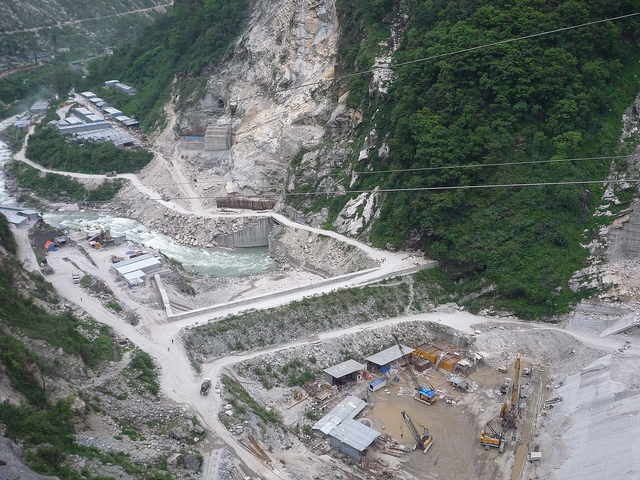


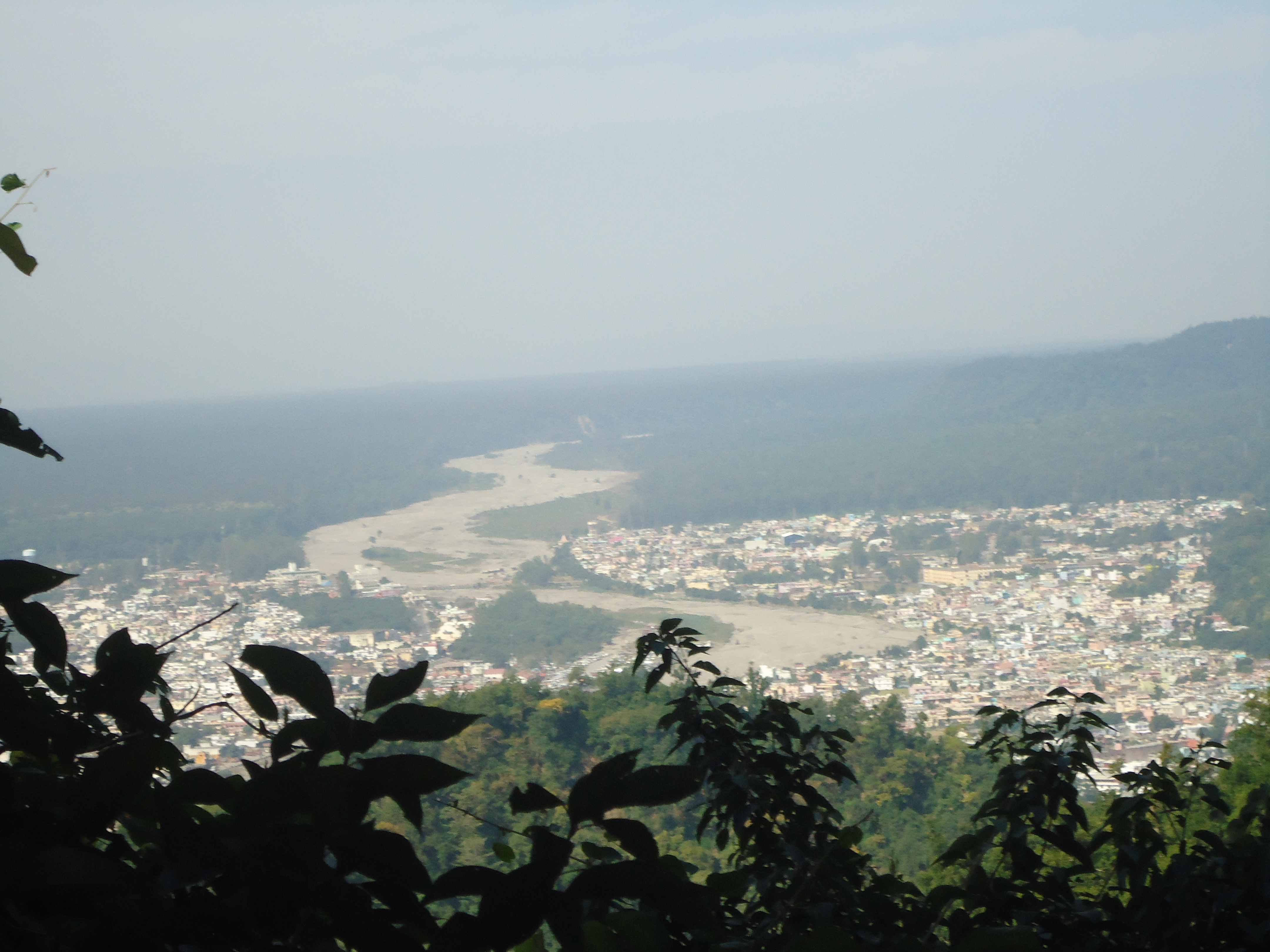


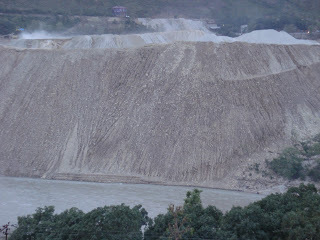

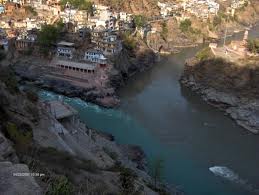


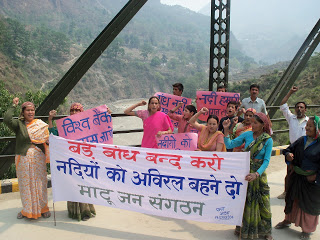
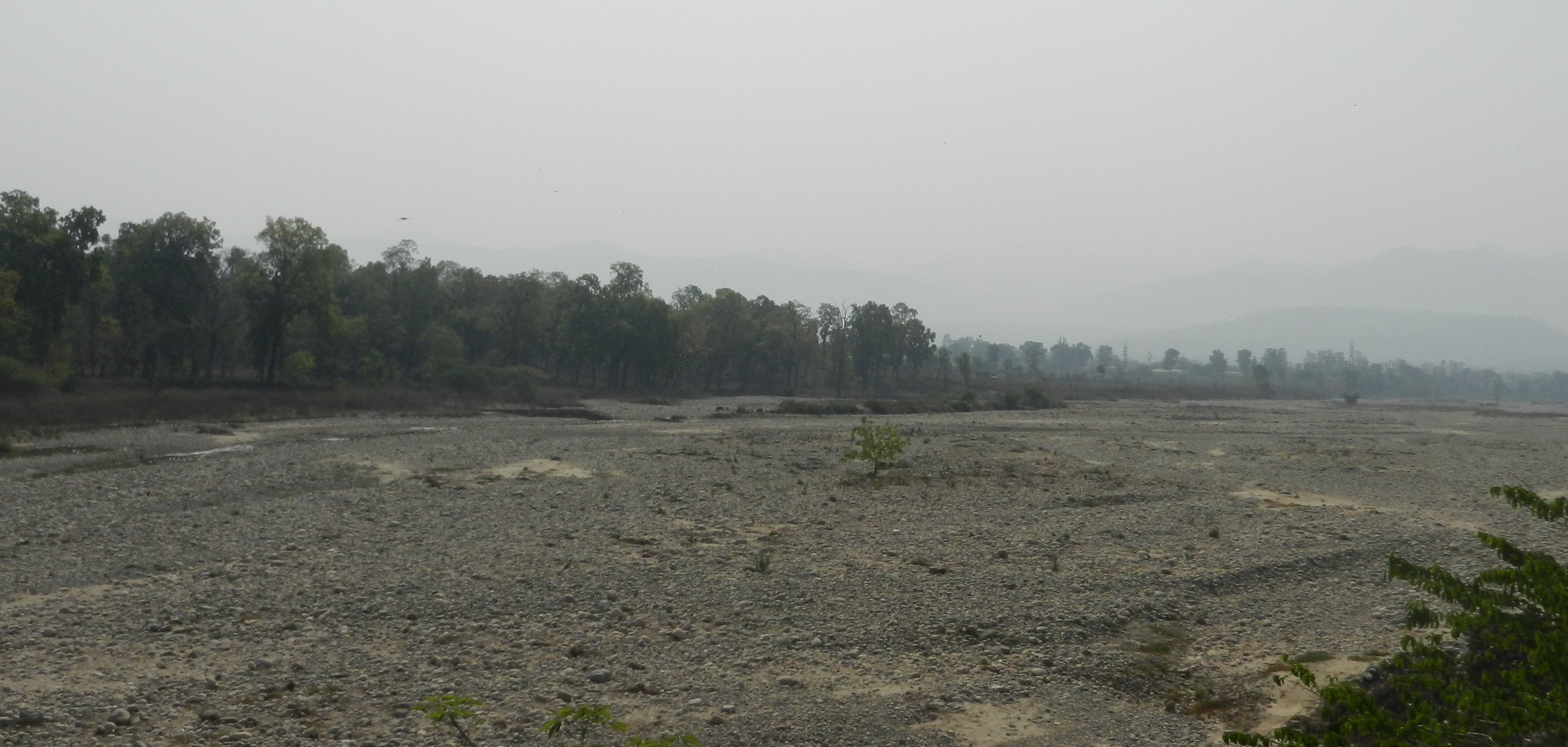
 SANDRP


