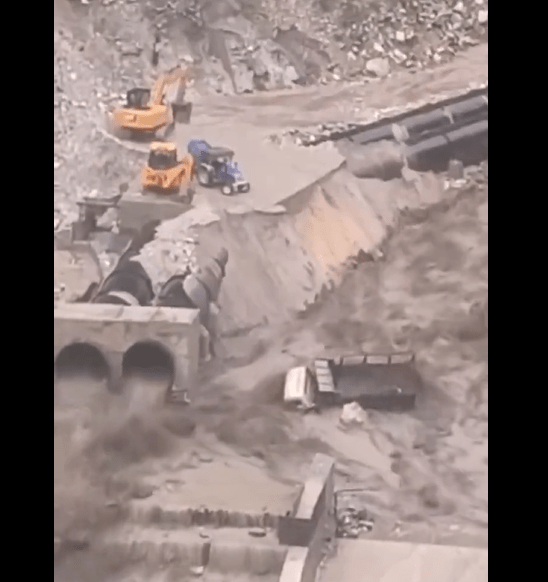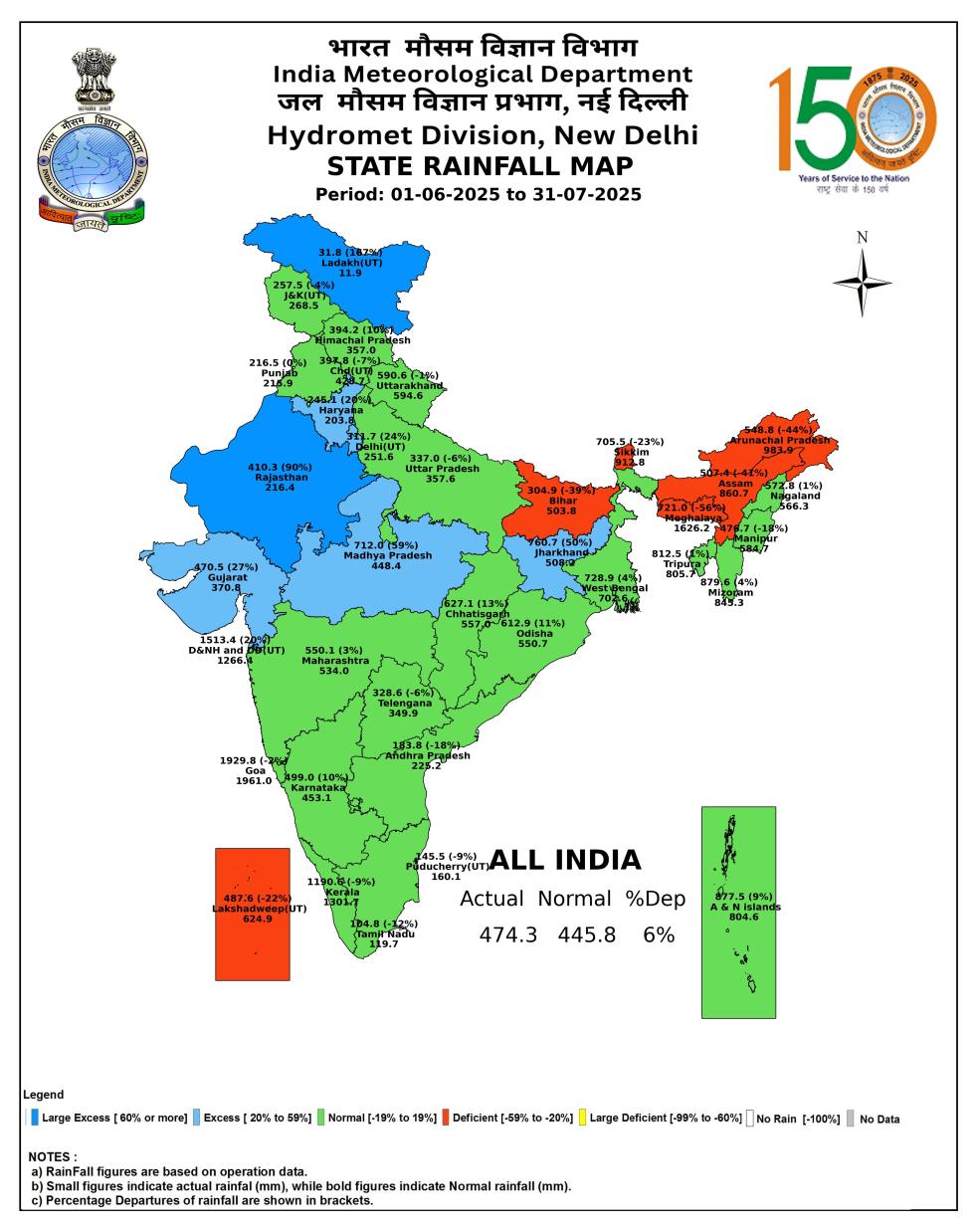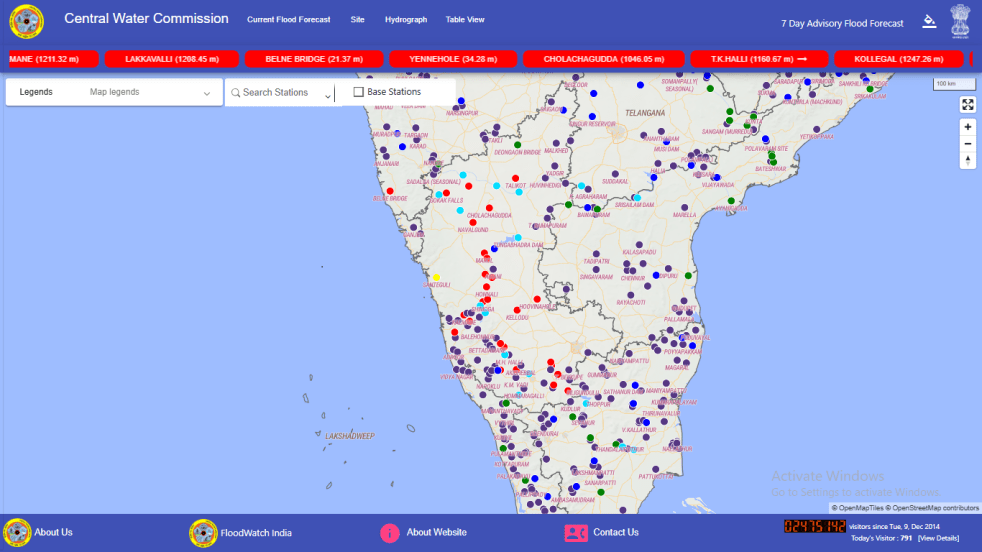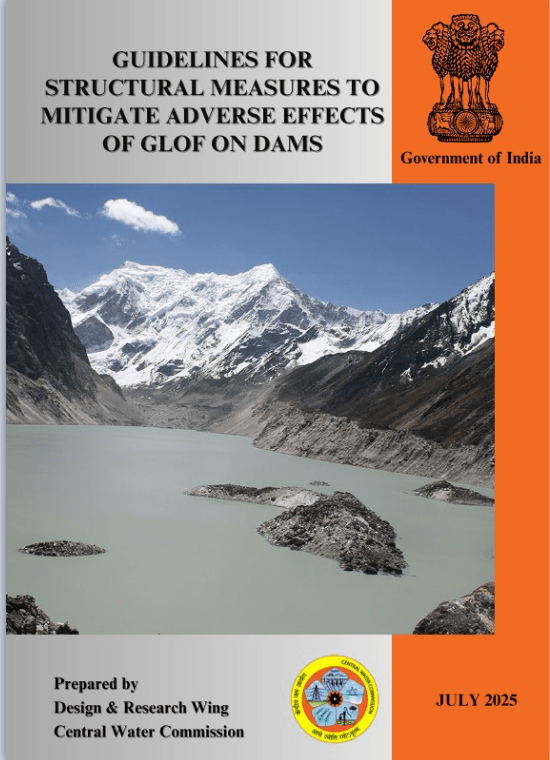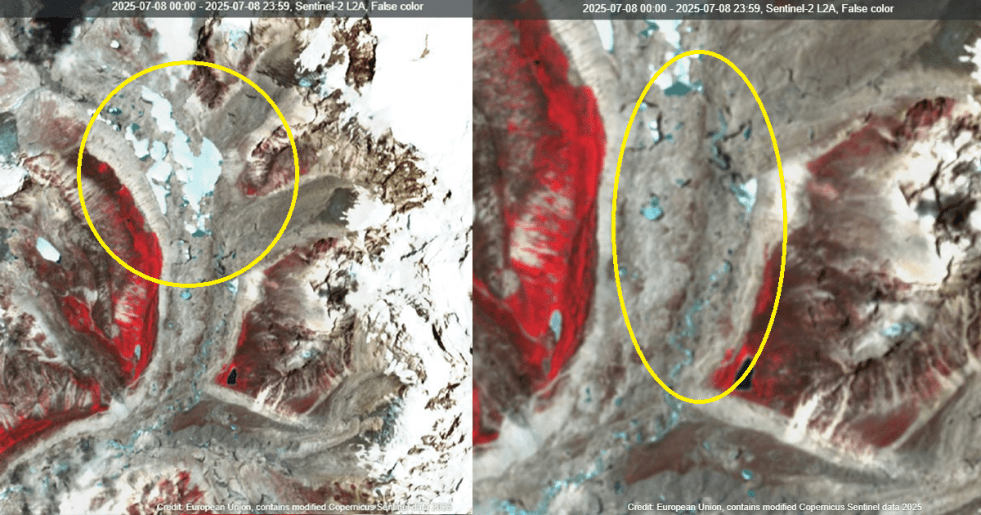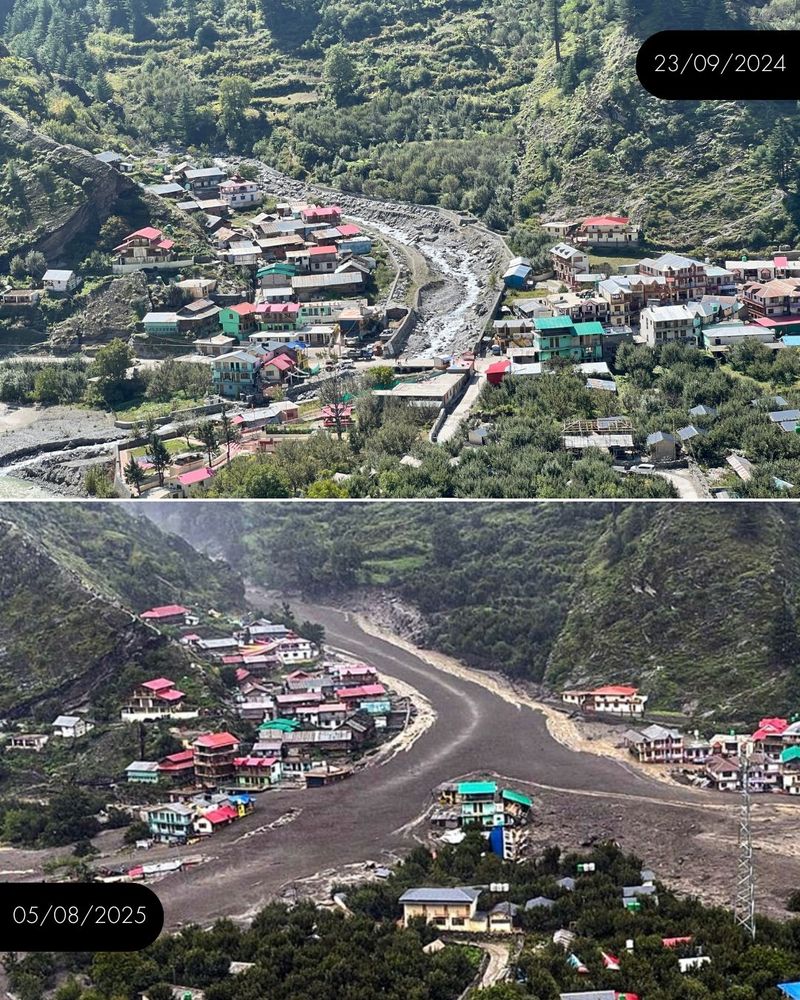
Increasing incidences of Glacial Lake Outburst Floods (GLOFs) are being experienced in the Indian Himalayas. One of the most notable examples of GLOF was the Chorabari Lake GLOF that occurred on 16th June 2013 in Kedarnath, Uttarakhand[1] which was triggered by heavy rainfall induced mass movements into the lake. The GLOF devastated villages of Kedarnath, Rambara, and Gaurikund. Around 6,000 people were officially killed, and a significant number of the deaths were linked to the GLOF. Countless bridges and roads were washed away, and about thirty hydropower plants were affected or completely devastated. Several Hydropower projects resulted in exponential losses to life and livelihoods. Whole of Uttarakhand was affected in the disaster, and a significant proportion of it was related with GLOF.
Continue reading “Hydropower-GLOF Nexus in Chenab Headwaters: Absence of credible studies and accountable governance”Author: SANDRP
MoJS Comm. Report on July 2023 Delhi Floods: Fails to explain unprecedented flood levels
(Feature Image: A view of overflowing Yamuna river at Wazirabad in New Delhi on 13 July 2023. Credit: HT_PRINT/Source: Live Mint)
Post July 2023 unusual flood spell in Yamuna river reaching unprecedented levels in Delhi, the Ministry of Jal Shakti (MoJS) on August 06, 2023, constituted a committee for conducting a “Joint flood management study of river Yamuna for its reach between Hathnikund and Okhla Barrage”. The Committee headed by Chairman, Central Water Commission (CWC) & Ex-Officio Secretary to Govt of India with members from Haryana, Uttar Pradesh, NCT of Delhi and expert Organizations was mandated to examine the meteorological aspects, return period of floods, discharging capacity of barrages, functional requirement of ITO barrage, etc.
Continue reading “MoJS Comm. Report on July 2023 Delhi Floods: Fails to explain unprecedented flood levels”DRP 070425: New Impact of Big dams: Increased oxygen intake in inland waters
(Feature Image: Merging point of of Badiyar gaad (left) and Yamuna river (right) at Gangani in Badkot, Uttarakhand. BS Rawat/SANDRP)
New research published this week reveals a startling change: the oxygen levels in inland waters has been dramatically reducing since 1900, due to human activities including big dams and pollution. This condition leads to dead fish, collapsing food chains and reducing water quality, among other impacts.
There are simultaneous processes ongoing in inland waters leading to production and consumption of oxygen. The location and processes for both the production and consumption of oxygen has been changing during 1900 to 2010. The Global oxygen consumption in inland waters, net of production has gone up by over 100% from 0.26 Pg/year in 1900 to 0.53 Pg/ year in 2010. While earlier climate change was considered major contributor to this reduction, new research shows it is big dams and pollution that are much bigger contributors. Inland waters now pull nearly 1 billion tons of oxygen from the atmosphere every year — half as much as the entire ocean emits back.
Continue reading “DRP 070425: New Impact of Big dams: Increased oxygen intake in inland waters”Unsustainable sand mining in Kashmir Rivers: Dr. Raja Muzaffar Bhat Interview
(Feature Image: Taken from a report titled “Mining in Nallah Romeshi: DMO Pulwama submits report” by Rising Kashmir, 04 Dec. 2024)
When it comes to environmental issues in Kashmir, the Srinagar based Dr. Raja Muzaffar Bhat dons many hats. He is an independent researcher, often tracking river courses, glacier zones and forest lands to gain firsthand insight into the unfolding impact of changing climate, land use on water sources, rivers and people. He is a writer with clear thoughts articulating concerns over ongoing environmental degradation in the region.
Continue reading “Unsustainable sand mining in Kashmir Rivers: Dr. Raja Muzaffar Bhat Interview”HAPPY BIRTHDAY YAMUNA Photo Blog: Springs & Streams that feed it in the Himalayas
(Feature Image: Aglar river (right) joining Yamuna upstream Yamuna bridge in Lakhwar dam site. Bhim Singh Rawat, 02 April 2025)
The sixth day of summer Navratri is believed to be the birthday of the river Yamuna, known as Yamuna Jayanti among devotees of the river. This year the day falls on April 04, 2025. Celebrating the day, we present a photo blog on springs, streams and major rivers feeding the Yamuna in its Himalayan segment. All the pics were taken by Bhim Singh Rawat, SANDRP on April 01-02, 2025.
Continue reading “HAPPY BIRTHDAY YAMUNA Photo Blog: Springs & Streams that feed it in the Himalayas”DRP 310325: Does Mumbai need Gargai Dam?
Maharashtra Chief Minister Devendra Fadnavis, brushing aside the concerns of forest officials, opposition, environment and available options this week has asked the officials to fast track the Forest and other clearances for the controversial Gargai dam for additional supply of water to Mumbai. This is shocking on several counts.
Our study earlier showed that Mumbai does not need any additional dam including Gargai if it utilizes available local resources including rainfall, reuse of treated sewage, desalinization, demand side management, groundwater recharge, among other cost effective and less destructive options. The Chief Minister of his government has not bothered to respond to these concerns or options. In fact, when our study was published, even government officials in Mumbai had supported our conclusions.
Continue reading “DRP 310325: Does Mumbai need Gargai Dam?”DRP 240325: Will the encroachments in Anasagar lake in Ajmer be removed?
Over the last about 4 years, very interesting events are playing out in India’s judiciary regarding the encroachments in Anasagar lake in Ajmer, Rajasthan.
The first order from the National Green Tribunal came to remove the encroachments from Anasagar lake in Dec 2021, reiterated in Aug 2023 as the encroachments were in violation of the environmental regulations and Wetland Rules of 2017. Apparently, the state government with investment of Rs 12 Cr was the biggest encroacher and the investment in the encroached land continued even while NGT order was awaiting implementation.
Continue reading “DRP 240325: Will the encroachments in Anasagar lake in Ajmer be removed?”World Water Day 2025: Top Ten Studies on Wastewater Treatment
(Feature Image: The NTU research team behind the solar-powered method to convert sewage sludge into green hydrogen and animal feed. Source: Science Tech Daily)
On the occasion of World Water Day 2025, SANDRP compiles ten studies and research papers revealing the various cost effective and efficient methods to treat sewage and recover nutrients from sewage sludge. The first part of the series highlights water efficient practices being adopted by farming communities in India and the second part covers the water sources conservation efforts being made by the rural communities in the country. The third part has focused on sewage treatment and rainwater harvesting efforts being made in various cities in the country.
Continue reading “World Water Day 2025: Top Ten Studies on Wastewater Treatment”World Water Day 2025: Smart Cities, Rain & Sewage
(Feature Image: Members of Mount Rain drops Appartment residential Association posing for a picture at STP set up at a private gated community in Coimbatore. Source: EPS)
Rains and sewage are biggest resources available to Indian cities which can be harvesting and treated to meet the ever-increasing water needs. This can not only help significantly in checking groundwater depletion but also reduce pollution levels in urban water bodies. On the World Water Day 2025, we compile top ten media reports highlighting progress in utilizing these viable alternatives in urban India. The reports suggest that while some south Indian cities particularly Bengaluru and to some extent Chennai is taking some positive steps in this direction, there is very little action happening in the rest of cities. Interestingly, 6 of the ten top stories here are from South India and only one each from Central and North India.
Continue reading “World Water Day 2025: Smart Cities, Rain & Sewage”World Water Day 2025: Top Ten Positive Initiatives from Rural India
(Feature Image: The Jal Saheliyon ki Jal Yatra or the ‘Water walk of Women friends of Water,’ an over 300 km-long march for water conservation started in Feb 2025. Source: Global Bihari)
Marking World Water Day 2025, this compilation highlights top ten positive efforts made during last one year by village communities and women groups in India for restoration and protection of their water resources. The report also shares some important water conservation initiatives being taken by the various governments in India. The first part of the series has covered water efficient practices being adopted by the Indian farmers.
Continue reading “World Water Day 2025: Top Ten Positive Initiatives from Rural India”