“If you really want to see Panihars, you should visit Chhatradi” says the shy Aditya. He is 15 years old and studies in class X. We are standing on a busy and dusty bridge across a tributary of Ravi in Chamba, Himachal Pradesh. Beside us is the legendary Fulmutala spring fountain (Panihar). Hundreds of people come here every evening to collect cool and clear drinking water. Most have piped water supply in their homes but insist that waters of Fulmutala are peerless.
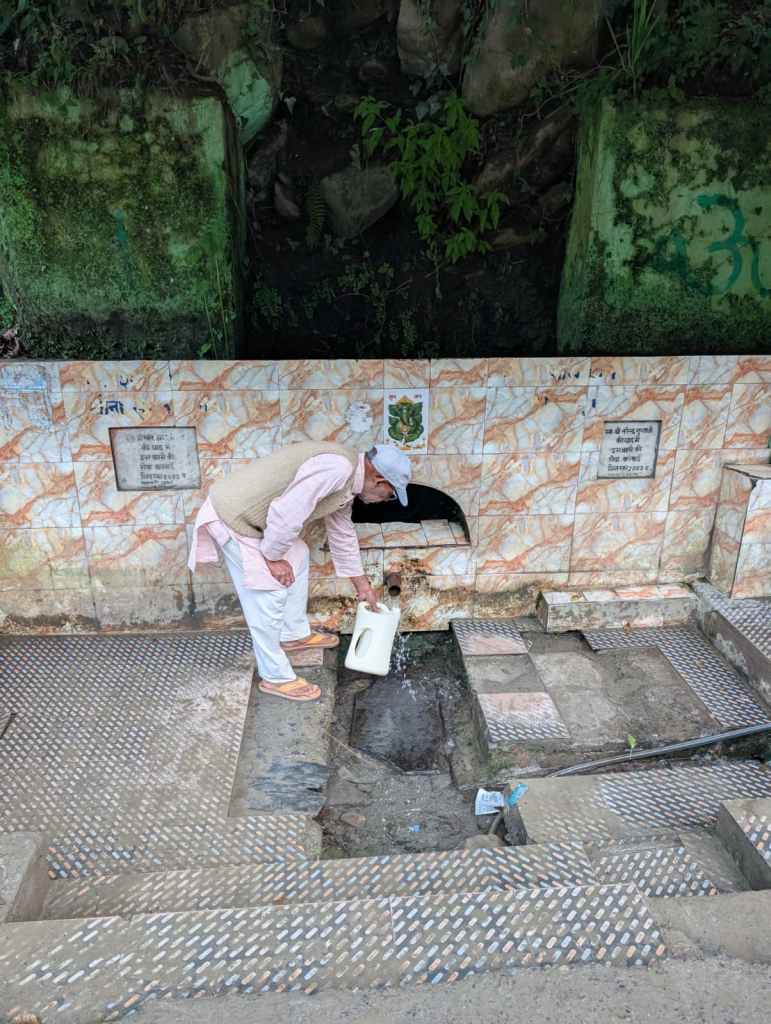
“Chhatradi?” I ask. “Yes, it’s on your way to the source of Ravi. It has a row of Panihars. It’s very beautiful. It’s my village.” Aditya smiles holding on to several large water bottles he’s just filled.
And so we go to Chhatradi, perched at 1800 metres above sea level on the left bank of Ravi, amidst beautifully terraced fields.
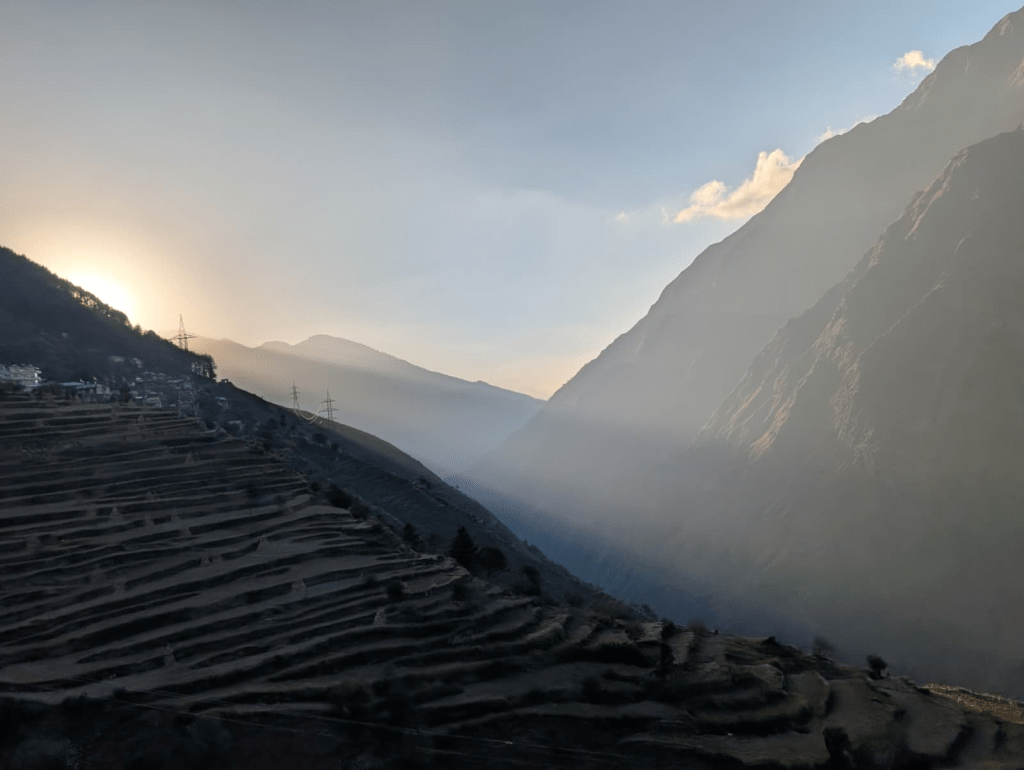
The first thing you notice in the village is the sound. Before you see the panihars, before you make sense of the moss-covered walls or the fern-green stone, you hear the gently trickling and flowing water. The village lane is lined with chestnut, walnut and apricot trees.
Chhatradi is a small community of about 1,200 people, overlooking the ravine of Ravi where the river runs silver far below. Chhatradi’s most celebrated landmark is the Shakti Devi Temple, built in the late 7th or early 8th century by King Meru Varman during the foundational Brahmapura era. The temple, with its vast cobbled grounds overlooking the Ravi, is built of fragrant Devdar wood and is considered one of the finest and oldest specimens of Himalayan temple architecture. It is supposed to be the last work of the legendary craftsman Gugga. The art historian Hermann Goetz wrote of this valley: “The magnificent stone temples of Kashmir which once adorned the banks of Vitasta, are in desolate ruins. The valley of the Ravi, on the contrary, owing to its more sheltered situation, still contains numerous well preserved temples, brass images of excellent workmanship and an incredible number of Sanskrit inscriptions on rocks, stone slabs and copper-plates.”
In the sanctum sanctorum of the temple stands a slender, 4-foot-6-inch brass statue of Goddess Shakti, framed by Gandharvas, Airavat and river goddesses Ganga and Yamuna. The temple complex is crowded with thousands of devotees during the famed Manimahesh Pilgrimage.
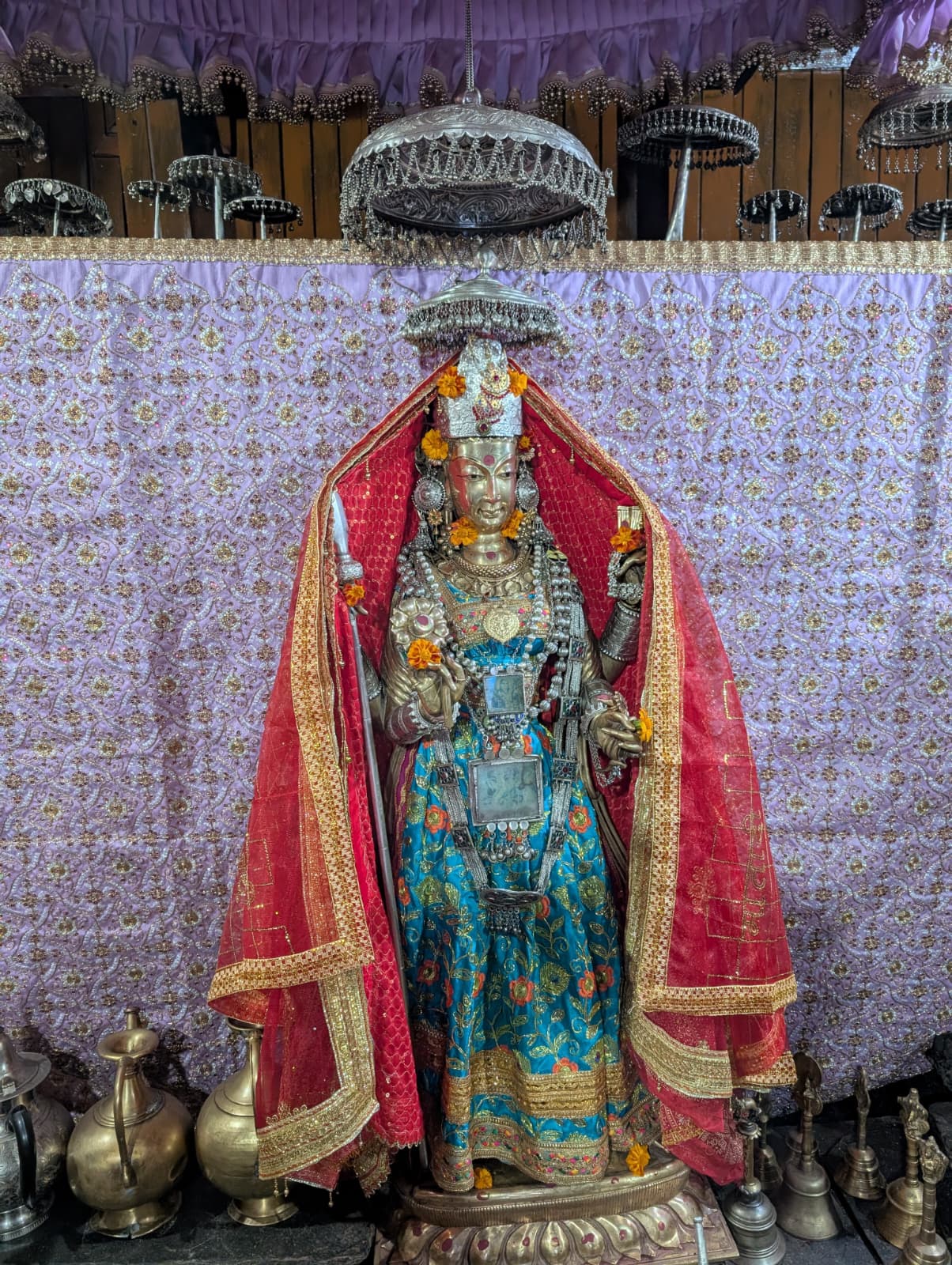
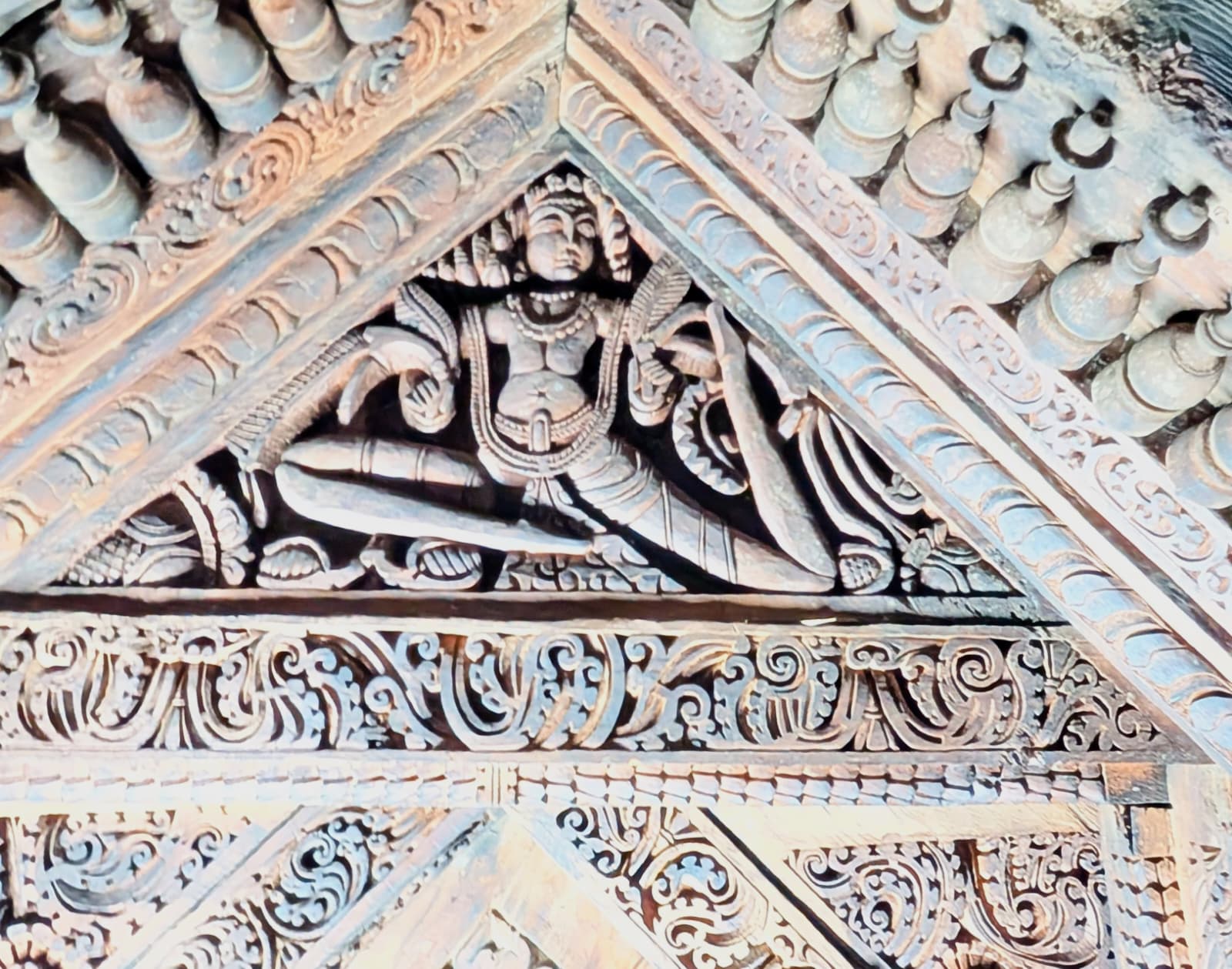
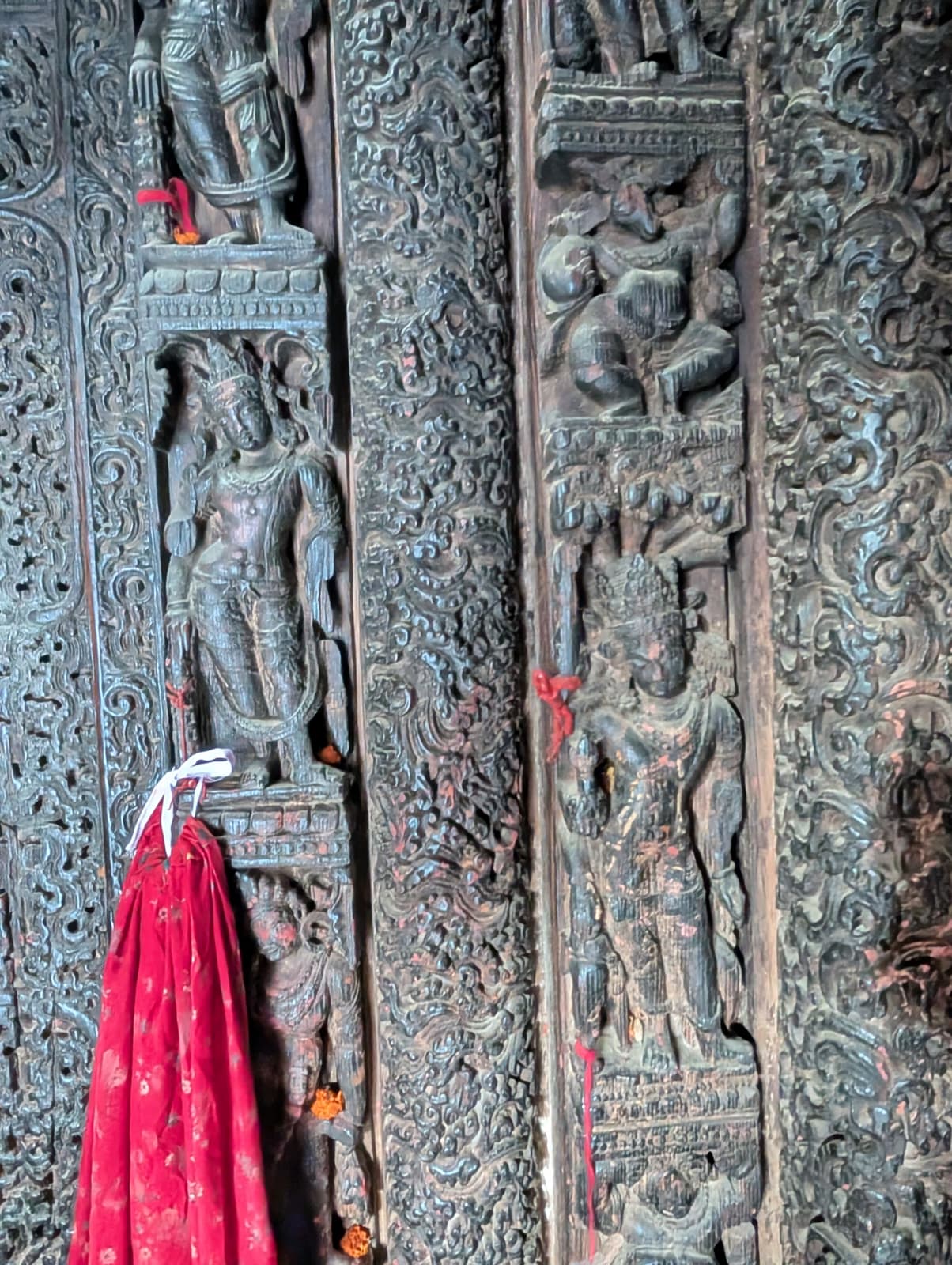
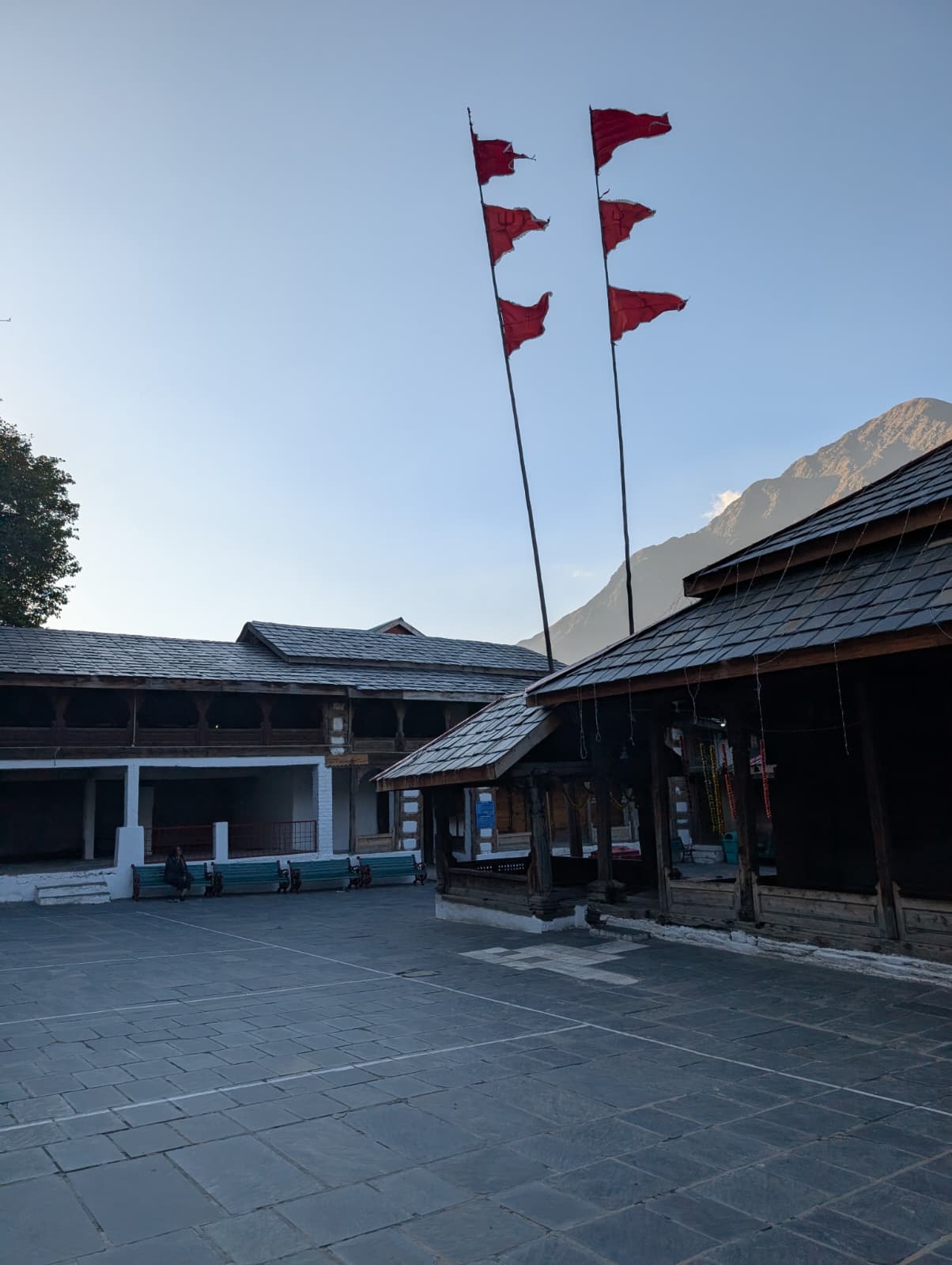
Shiv Shakti Temple, Chhatradi
But Chhatradi has another claim to fame, less celebrated but equally mesmerizing.
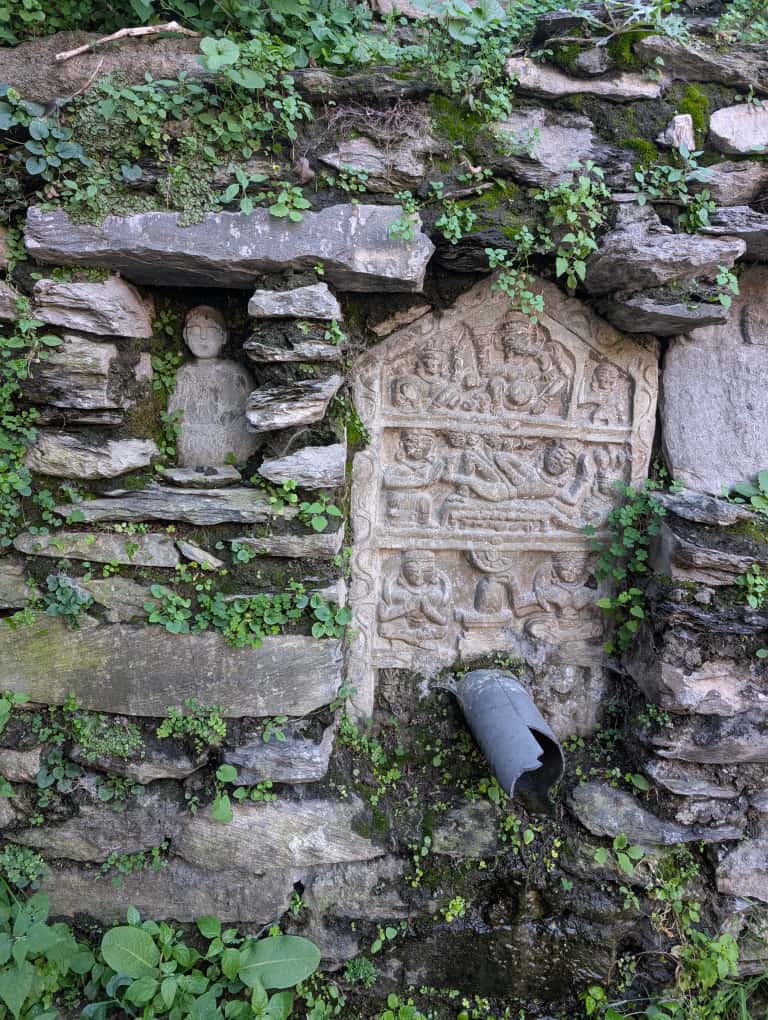
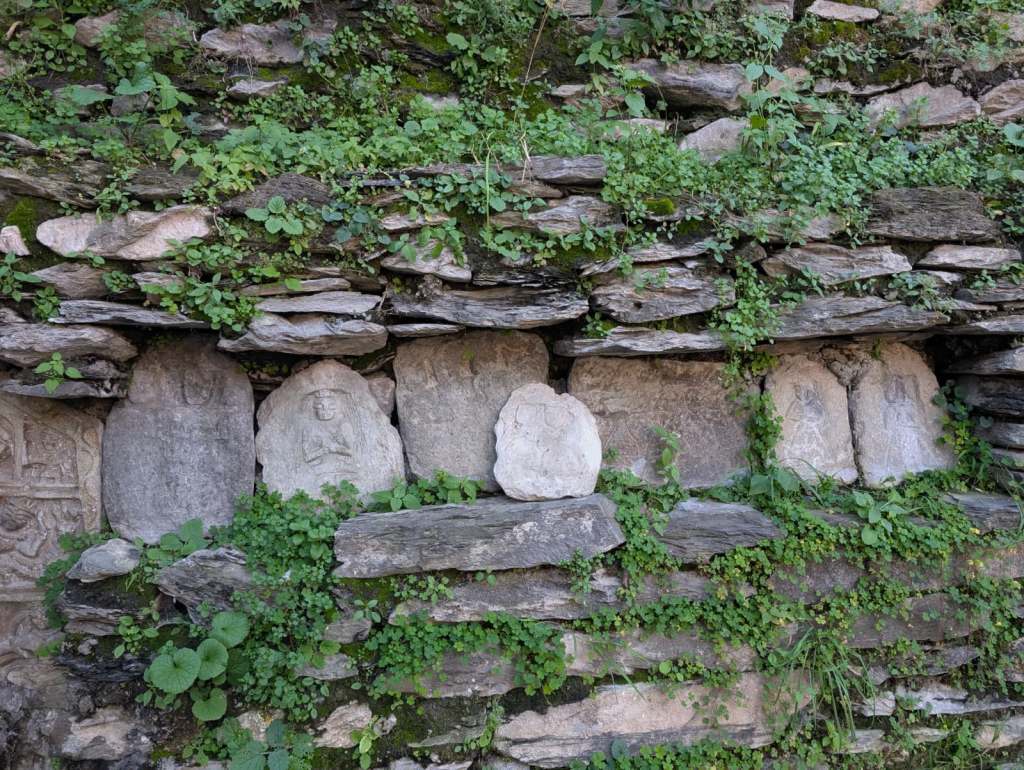
The village is home to multiple groups of beautifully carved spring fountains, panihars (literally meaning holding or carrying water), providing drinking water to more than a thousand people and their livestock. These intricately carved lithic (of the nature of or relating to stones) slabs were installed around the 12th century, consecrating and celebrating the Himalayan springs. Over 800 years old, many of the panihars reclining against fern-green walls are covered in moss and flowering balsam (an aromatic resinous substance, such as balm, exuded by various trees and shrubs). Water trickles from some, while it gushes from others. The entire area hums with the sound of gently flowing water. The place feels rich and luxuriant in the way only a well-watered place can.
When more and more springs are drying in the Hindu Kush Himalayan Region, places like Chhatradi are nothing less than astonishing.
As we walked through this leafy village, we watched the panihars breathe with the village’s daily rhythm. At the biggest panihar, across from the Shiv Shakti Temple, a schoolboy filled his water bottle, followed by a brightly dressed woman with several steel flasks, then a busy shepherdess who drank her fill. “This place gets crowded in the evening, so I’m here a bit early today,” said a woman hurrying along with her flasks.
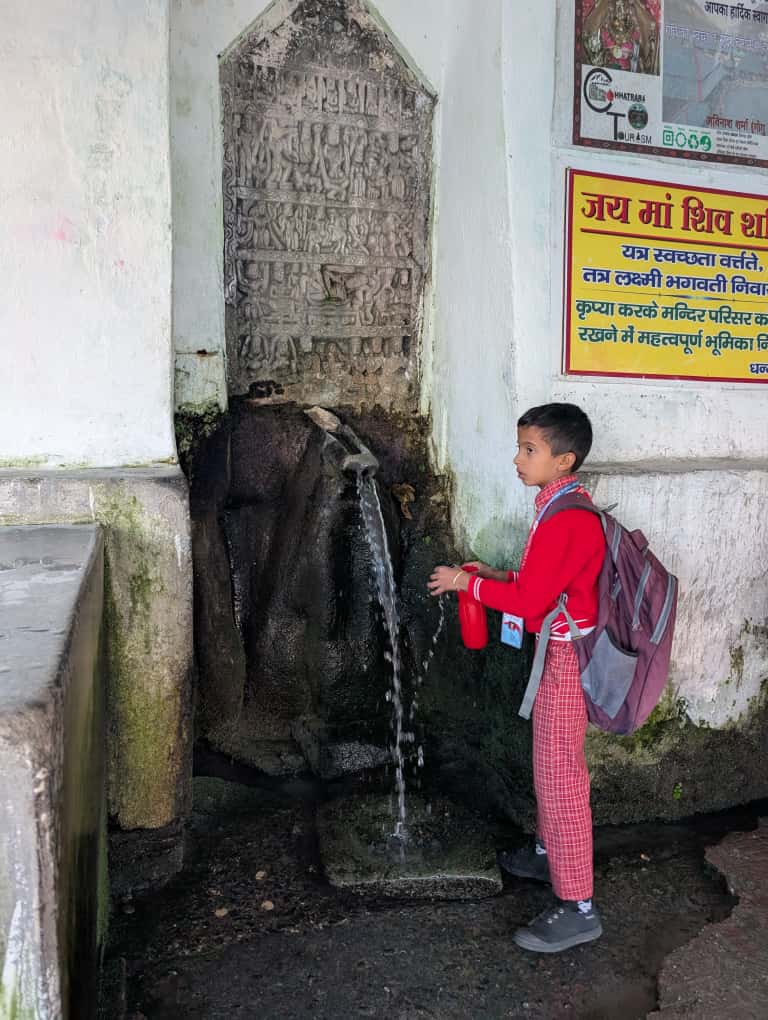
The largest panihar holds seven fountain slabs, each with a different story carved on them. Below the intricate carvings are spouts in the shape of a lotus or Makar, from where water gushes out. While the largest panihar has the story of Vishnu carved on it, the neighbouring one is homage to Lord Varun, the god of rain and rivers. Other reliefs depict Navagrahas (the nine planets), departed beloveds, and devotees in worship of Shiva. Below the fountains are troughs which collect some of the flow for washing clothes and for animals.
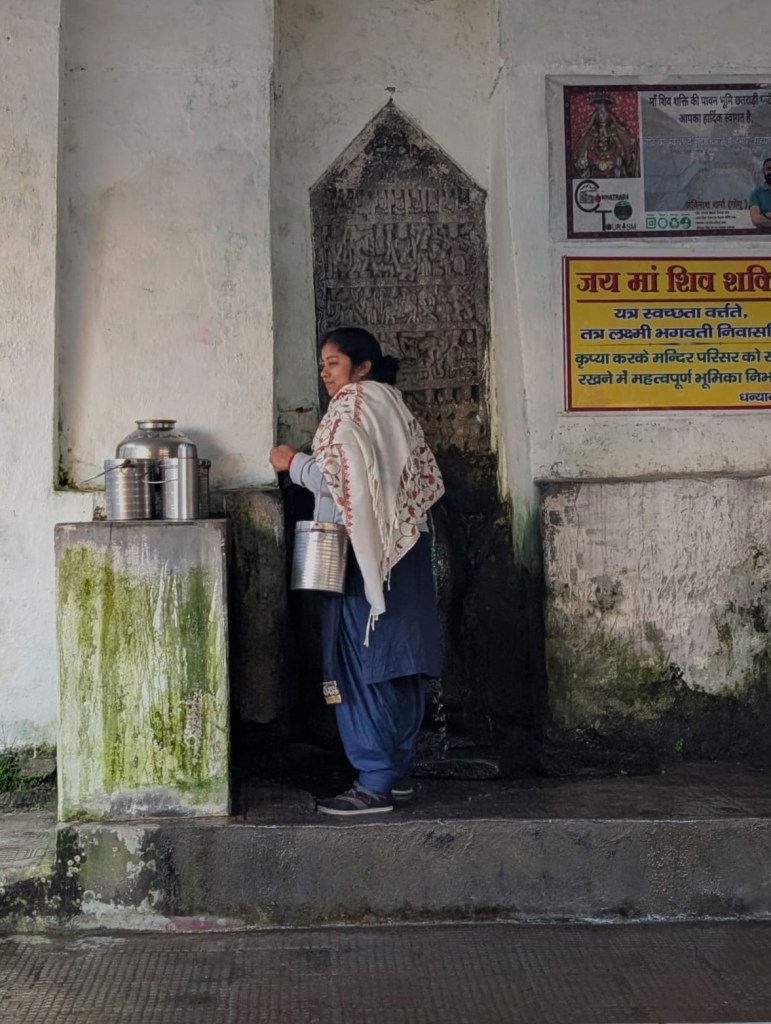
The panihar complex is sheltered under a recently built structure, its whitewashed walls and brightly painted boards about keeping the area clean standing in testimony to the love the place receives. At the village’s other edge, some fountains have been modernised, and ancient spouts and carvings now sit amidst cement tiles instead of mossy walls, looking curiously out of place.
We were accompanied by Avinash Sharma, whose pride in Chhatradi’s heritage is palpable. Guiding us through the village’s hidden hydrologies, he says: “These intricately carved slabs are our pride and lifeline. The community maintains them collectively. We have separate chambers, for drinking water, for washing clothes, for animals. It is a temple and a watering place together. When a newlywed bride comes to the village, she is brought here for her first ritual. And every morning, water collected from the panihars is used for the ritual bath of the deity.”
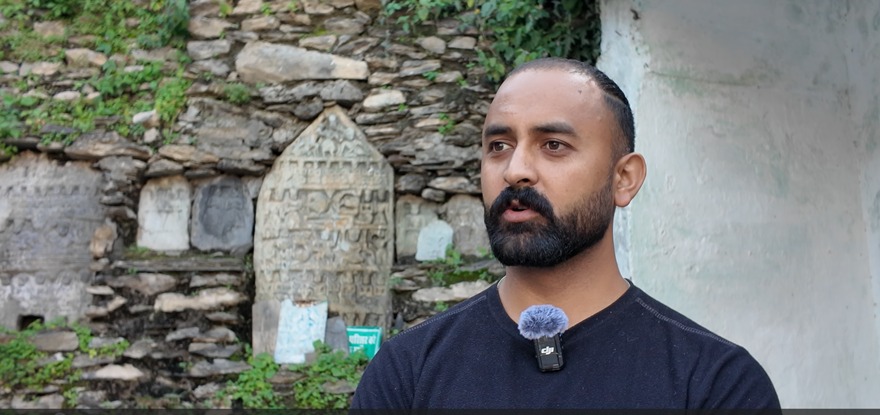
The panihars here are the main drinking source of over 1000 people who live in and around Chhatradi. Although most homes are supplied with tap water, they all trust only the Panihars for drinking water. Water from here goes to the nearby colleges and staff colonies too.
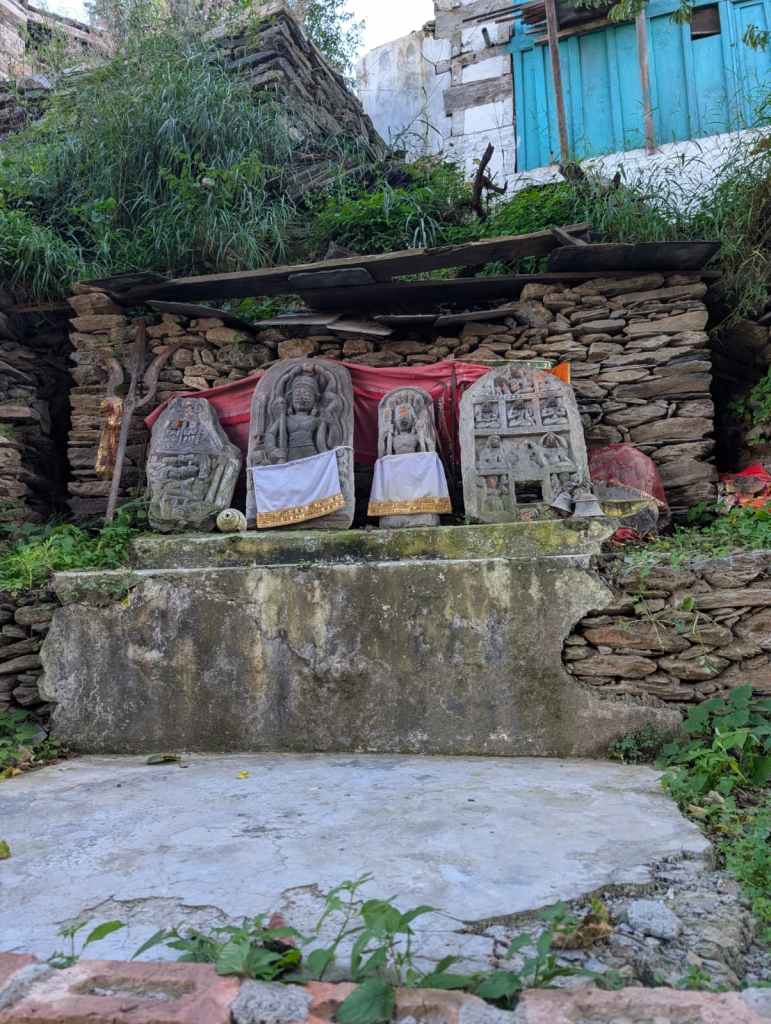
Avinash takes us to a small and modest shrine next to a Panihar and tells us the lore of the place: “The story goes that a seeker meditated in our village. Once, his disciple descended to the Ravi to fetch water, as there were no water sources in the village. But on his climb back, he was mauled by a bear and died. In rage, the grieving seeker struck the earth thirty-six times with his trident, and water erupted from every strike, giving the village its name, Chhatradi, which means thirty-six.”
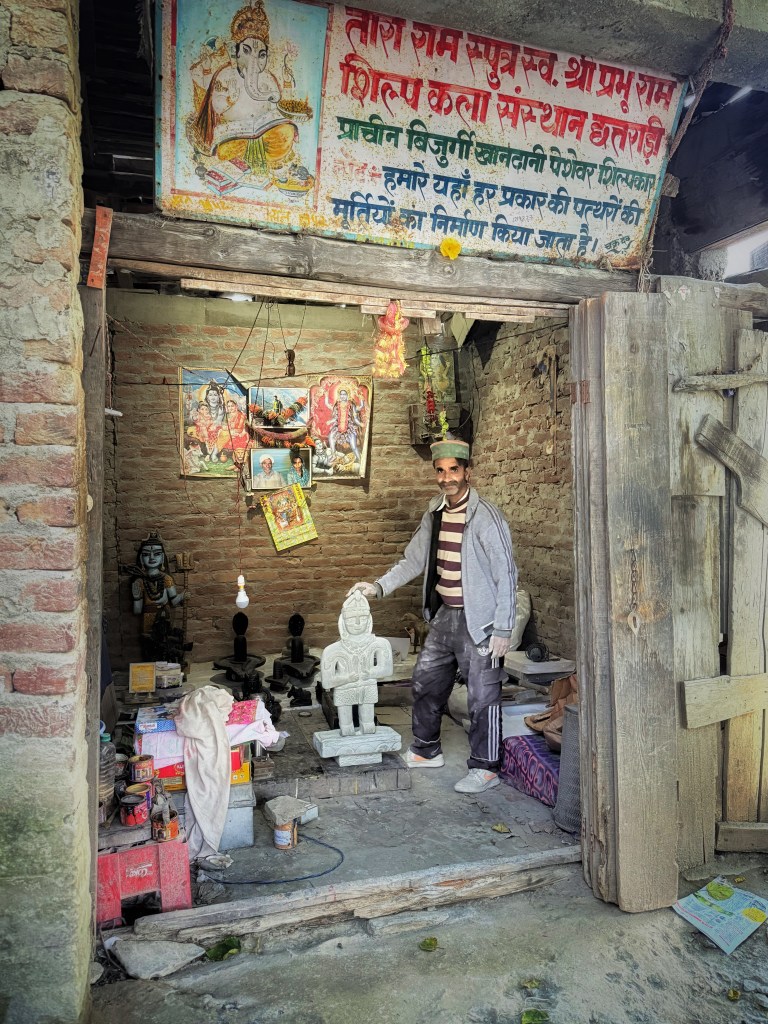
Near one of the panihars, Tara Ram, a sculptor who fashions stone statues close to the flowing water, says “The water from the springs remains cool in summers and warm in the winter. It does not dry up in the summers, and that is a blessing for this village.”
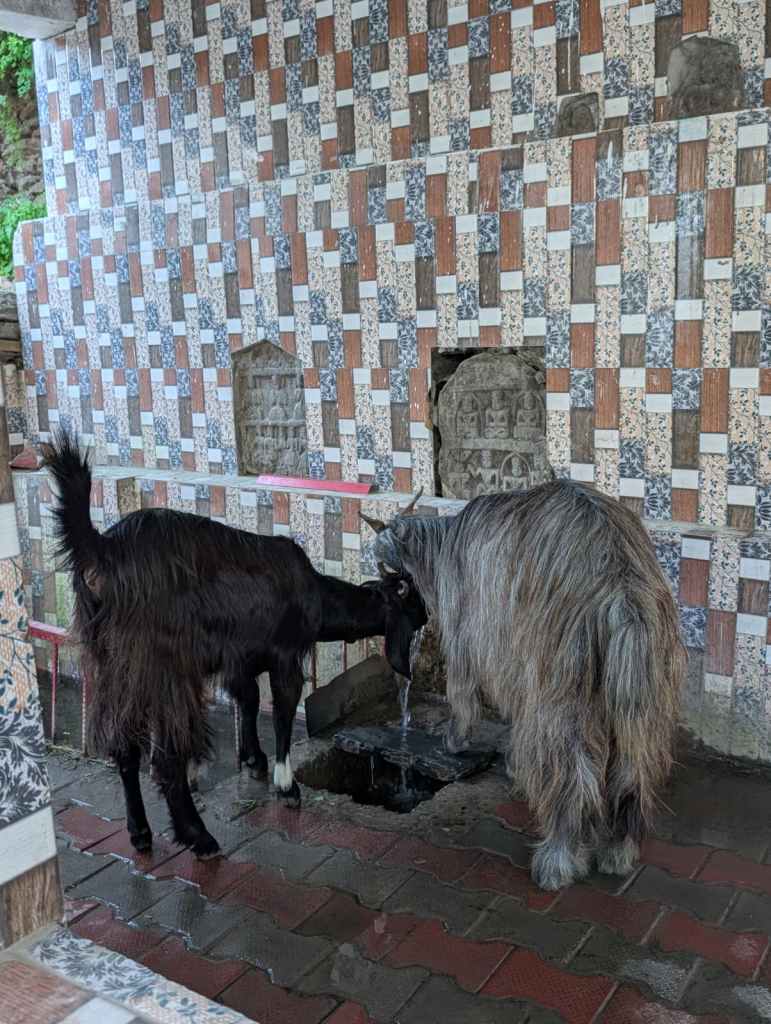
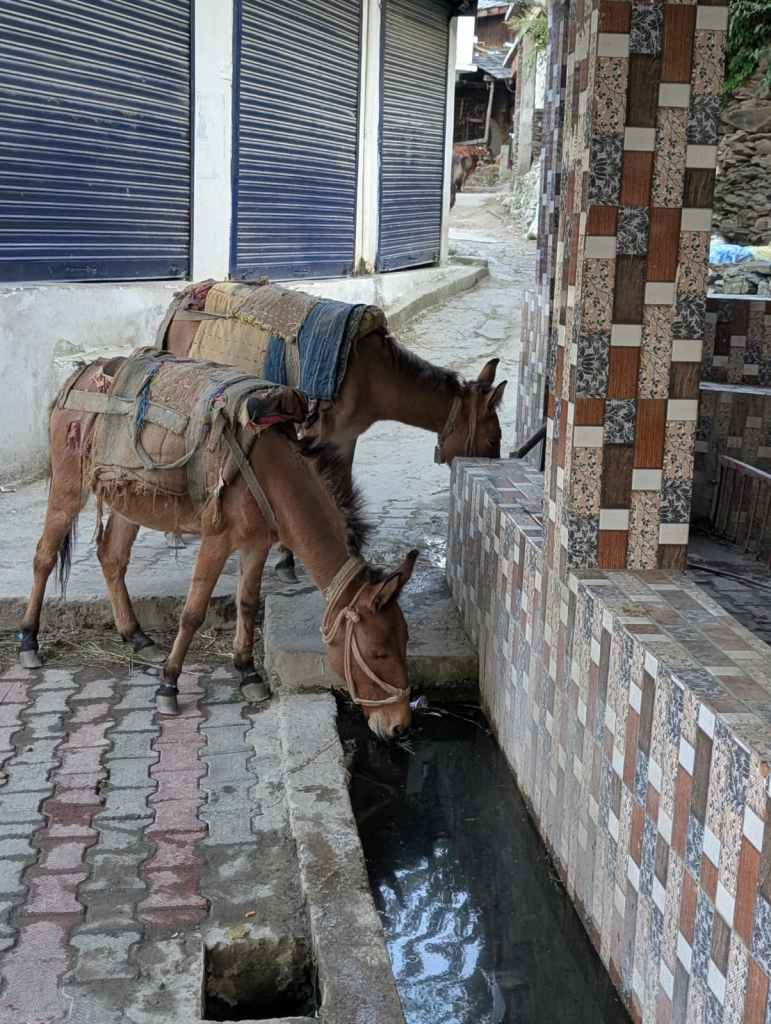
As we walked around the last panihar, a group of goats broke from their herd, headbutting each other to drink directly from the spout. Just as they finished, a tottering pack of mules ran to drink their fill from the stone troughs below, followed by cows and sheep. The panihar was a lively meeting spot where species and stories converged. It’s a painful reminder of how exclusionary our water supply systems have become. We have no space for the thirsty goats and cows and mules anymore.
Chhatradi panihars all overflow and join the local Nallah before flowing into Ravi, bringing an infusion of life to the river.
Living Heritage of Ravi
Such water fountains: Nauns and Panihars are among the most distinctive features of the Ravi basin. During the devastating floods of 2025, these decentralised sources became lifelines for communities cut off from the outside world. And yet, no systematic effort has been made to document, map, or protect this water heritage.
The absence of proactive governance has taken a quiet but steady toll. Several panihars have been lost to road widening, construction, and neglect. Others are simply drying up.
Springs are the unsung heroes of water security across the Hindu Kush Himalayan region. They are the primary source of water for millions, supplying over 90% of domestic and productive needs in the mid-hills (Scott et al., 2019) and at least 60% domestic water supply in the Indian Himalayas (NITI Aayog, 2018). At higher elevations, many have direct connections with glaciers and permafrost. They sustain biodiversity, flora, and fauna and, as places like Chhatradi make vivid, they sustain culture. Yet since the 1990s, nearly half of three million springs in the Indian Himalayas have either dried up or are disappearing (NITI Aayog, 2018).
The 2024 Groundwater Report for Kangra-Chamba Districts by CGWB (Central Ground Water Board) acknowledges that spring monitoring is essential. And yet it fails to name a single significant spring in the region: not Raj Naun or Fulmutala in Chamba, not Chhatradi, not Brehi. The report recommends developing springs that lack collection chambers, apparently unaware that most of Bharmour’s and surrounding villages water supply already flows from a spring tank at the Bharmani Mata Shrine, high in the mountains.
For Chamba and Ravi basin, a region so profoundly dependent on groundwater, and so richly endowed with living spring heritage, this silence is more than an oversight.
While these fountains have been documented by the Dutch Sanskritist and archaeologist J. Ph. Vogel in his 1911 Antiquities of Chamba State, Part I: Inscriptions of the Pre-Muhammadan Period (Archaeological Survey of India), there has been no recent documentation of the water yield of these springs, nor of trends in quality or quantity. Avinash’s foundation, Snow Valley Chhatrari Warriors helps raise awareness about the region’s heritage. It is the kind of local custodianship that no groundwater report will capture, but without which places like this cannot survive.
Chhatradi is part of the living, flowing heritage of Ravi. May it keep flowing.
Story: Parineeta Dandekar, SANDRP; Photos: Abhay Kanvinde
NOTE: This piece is a part of the Ravi Basin Report, River Ethnographies Project funded by the Ohio State University

 SANDRP