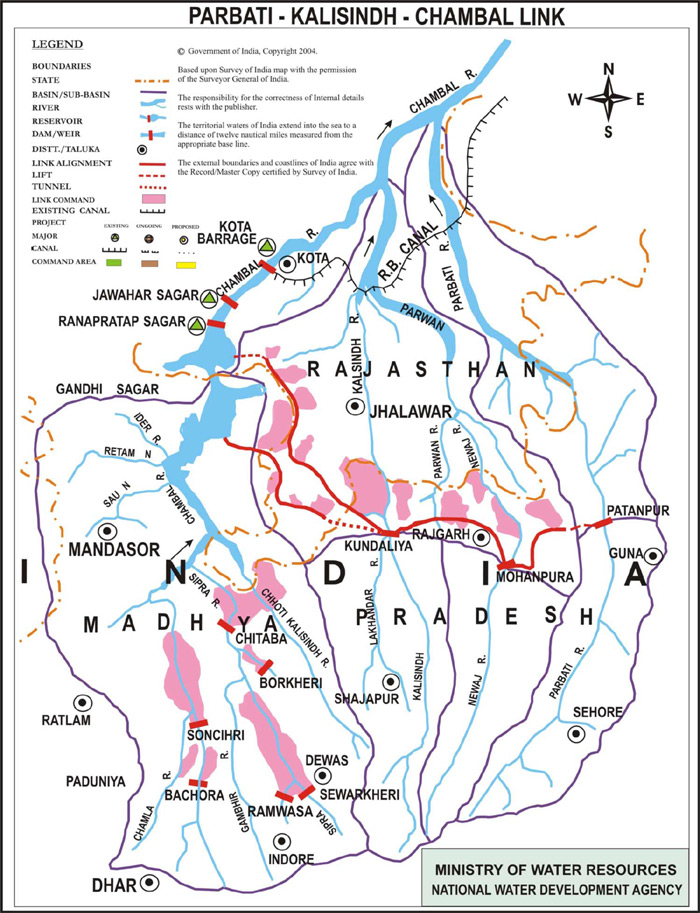
(Feature Image: Index map of Parbati-Kalisindh-Chambal River Interlinking Project. Souce: NWDA)
Two critical developments over the past month have once again highlighted the scale of threats undermining the ecological integrity of the Chambal, the largest tributary of the Yamuna. The rich aquatic life in the Chambal Sanctuary has already been adversely affected by the gradual decline in river flows and unabated illegal sand mining.
First, concerns have been raised at a recent meeting of the National Board for Wildlife regarding flow diversion projects such as the Parbati-Kalisindh-Chambal rivers interlinking, which propose to divert water from tributaries like Banas, Kuno, Parbati, and Kalisindh without credible cumulative impact assessment. Surprisingly, the Union Environment Ministry is learnt to have asked Central Water Commission (CWC) to recommend ways to maintain continuous environmental flows in the Chambal River to protect endangered Ganges River dolphins, especially during lean seasons.
The decision is counterintuitive as the CWC is part of a system that has long history of prioritizing large-scale water diversion and dam projects on rivers across the country without adequate ecological assessment. This also shows deep flaws in river governance because CWC mainly functions more as a technical facilitator of dams and water diversion projects and has very poor track record when it comes to protecting river eco-systems and ensuring adequate flows in the rivers.
Secondly, the Supreme Court last week has stayed Rajasthan Govt decisions to de-notify 732 ha of National Chambal Sanctuary area. Previously, the National Green Tribunal (NGT) had questioned a similar plan from Madhya Pradesh govt. Notably, the de-notification moves are being pushed to facilitate riverbed mining plans inside sanctuary areas which is prohibited by the SC itself since 2006.
However, illegal sand mining activities have been going on unabated in Chambal sanctuary with detrimental impacts on aquatic eco-system of the river. Several judicial orders passed in this regard have been ineffective due to weak enforcement. So, be it ensuring environmental flows or stopping illegal sand mining, the survival of the sanctuary depends on decisive and timely actions by the central & state govts and also judiciary.
Govt asks CWC to advise on continuous Chambal flows to protect dolphins The Ministry of Environment, Forest and Climate Change has instructed the Central Water Commission (CWC) to provide recommendations on how to sustain environmental flows in the Chambal River during the lean season, ensuring that conservation efforts related to the Ganges River dolphin are not adversely affected. Concerns arose following the initiation of a series of dam constructions under the East Rajasthan Canal Project (ERCP) over the tributaries of the Chambal River, including the Banas, Kuno, Parbati, and Kalisindh rivers in Madhya Pradesh and Rajasthan. No environmental impact assessment has been conducted to evaluate how the project will affect dolphin conservation and potentially affect other aquatic life including Gharials and Turtles.
According to a study by the Wildlife Institute of India (WII), dolphins require a minimum depth of three metres in flowing rivers to survive during lean seasons. The WII study highlighted that the decreasing flow of the Chambal River has been affecting dolphin movement. During the lean season, dolphins tend to concentrate in the deeper pools of the river. The WII’s study analysed field data on the distribution of Ganges River dolphins, gharials, and other important aquatic life, including turtles. It also assessed water depth, water quality, and seasonal river flow patterns based on 10-day flow data from CWC.
The findings underscored the importance of maintaining adequate environmental flows in the Chambal River to support aquatic biodiversity and ecological integrity. During recent discussions at the National Wildlife Board meeting, it was noted that the issue involves aspects of river flow regulation and water management, which fall under the CWC’s mandate.
SC stays Rajasthan Govt decision to denotify areas in Chambal Sanctuary The Supreme Court on Apr 2 2026 stayed the notification by the Rajasthan Govt, which de-notified 732 ha of the National Chambal Sanctuary without taking prior approval of the Court. A bench of Justices Vikram Nath and Sandeep Mehta was dealing with the suo motu case taken up over illegal sand mining in the National Chambal Sanctuary and the threat to endangered aquatic wildlife, including gharials.
Justice Mehta added that the state govts can easily use the provisions of preventive detention to deal with the mafia. “The problem is, the state government has completely forgotten that there is a law called Prevention Detention…” Justice Mehta explained that when the mafia was prevalent in Jaisalmer, once the preventive detention was used, it came under control.
The bench granted 4 weeks to Madhya Pradesh to file its affidavits in the matter. The bench also requested the counsel of the Ministry of Environment and Forest to take instructions and inform the bench in the next hearing. The Court also transferred to itself the illegal land mining matter of 2022 pending before the NGT. The bench will now hear the matter on May 11.
While hearing the matter on March 20, the apex court had taken serious note of the destruction of habitats of aquatic animals due to rampant illegal sand mining in the National Chambal Sanctuary. The SC on March 13 took suo motu cognizance of illegal sand mining in the NCS.
CEC flags illegal mining in Chambal The absence of a robust inter-state enforcement mechanism has significantly weakened conservation efforts within the sanctuary and has allowed illegal mining networks to operate with relative impunity,” CEC said.
The Chambal River bridge on NH 44, connecting Madhya Pradesh and Rajasthan, is in danger due to illegal sand mining. The ongoing excavation has created pits 20 to 50 feet deep around the pillars. Experts say if this situation continues, the pillars could collapse.
DAMS & HEPs IN YAMUNA BASIN
Renuka Dam oustees stall groundwork, reject Resettlement sites Oustees of the Rs 6,947-crore Renuka multipurpose dam project have intensified their protest, rejecting the land parcels earmarked for their rehabilitation at Amboya and Tokya villages in the Renuka sub-division of Sirmaur district. The agitation intensified when villagers prevented project authorities from digging 14-foot trenches to collect soil samples, an initial step towards commencing construction. The move was seen by locals as a precursor to forced displacement. Residents of Dungi Kanyod and Panar Kalyan villages, who fall in the first phase of displacement, fear imminent eviction once work on diversion tunnels begins. Authorities have already sought affidavits from six villagers, adding to the anxiety.
Delhi pushes for upstream Yamuna dams Once completed, the Lakhwar dam will supply 135 mgd water to Delhi. The Renukaji and Kishau projects have the potential to provide the city with 275 mgd and 372 mgd of water respectively. The construction of the Lakhwar dam is underway, Renukaji is in tendering phase, while Kishau is in interstate agreement stage, estimating that they may be commissioned between 2031 and 2033. A fourth proposed dam was envisioned after the 2023 floods at Yamunanagar, 4.5km upstream of the Hathnikund barrage, at a cost of ₹6,134 crore.
Relevant decisions of FAC meeting held on Feb 27 2026 Diversion of 520.66 ha forest land for 1800 Mw Panari Standalone Pumped Storage pumped storage project in (308.96 ha under Satna Forest Division, Satna district and 211.70 ha under North Panna Forest Division, Panna district) on Baghain river in MP: More Info Sought.
INTERLINKING OF YAMUNA RIVERS
Ken Betwa Project: Patwari caught taking bribe from displaced tribal woman A patwari, Rahul Agrawal, was caught taking a ₹50,000 bribe in Chhatarpur by the Madhya Pradesh Lokayukta Police from Sagar. He allegedly demanded ₹1.50 lakh from a woman to release ₹12.50 lakh compensation linked to the Ken-Betwa Link Project. The accused, Rahul Agrawal, was arrested from the collectorate premises while allegedly accepting the bribe from 43-year-old Shagunti Bai Saur from Neguwan village in the Kishangarh area whose village is affected by the Ken-Betwa Link Project. A case has been registered against the accused under the Prevention of Corruption Act, and further investigation is underway.
Allegations of corruption in MP irrigation projects According to this Dainik Bhaskar report of Mar 11 2026, Congress persons have made serious allegations about corruption in awarding contracts for irrigation & other projects in MP, including Ken Betwa Project.
YAMUNA WATER SHARING DISPUTES
DJB ties up with IIT-Roorkee to assess rising water requirements The govt has commissioned a study by the IIT, Roorkee to assess the water requirement of the city to renegotiate the 1994 Yamuna water sharing agreement between North Indian states.
According to the DJB, the per capita water requirement in Delhi is approximately 272 liters per day (LPCD)—a figure that stands higher than that of other major metropolitan cities. Currently, Delhi’s population hovers around 25,000,000. Based on this calculation, the daily water supply in Delhi ought to be in the vicinity of 1,300 MGD. The actual supply stands at 1,000 MGD.
By 2031, the demand for water is projected to rise to around 1,746 MGD. To meet both current and future water requirements, Delhi intends to present a fresh demand for water during the upcoming negotiations on the Yamuna water-sharing agreement, which is scheduled to take place over the next year.
Delhi in talks for more water from Haryana, UP for summer As per a water sharing arrangement between north Indian states, Haryana is expected to provide approximately 1,133 cusecs of water to Delhi via Munak Canal and the Yamuna. However, there is a significant water loss in transmission from Haryana. Delhi is talking to the neighboring governments to also repair major canals through which water is received.
The government has also written to Haryana, demanding the release of 51 cusecs of water- originally allocated for irrigation-which Delhi has not received for several years. The government is also requesting 140 MGD (270 cusecs) of water from Uttar Pradesh. In exchange, the government has proposed supplying treated water to UP for irrigation.
Delhi proposes to purchase additional water from Haryana A senior DJB official, who did not wish to be named, said that talks were held with the Haryana irrigation department in Chandigarh, during which the proposals were made. Officials from the water utility said that the city needs the water for the May-June period, when the water crisis in certain pockets of the Capital worsens.
The 2025-26 economic survey tabled in the Delhi assembly states that the DJB now estimates the city’s water demand at 1250mgd, with projected peak supply in summer estimated at 1,002mgd, leaving a demand-supply gap of 248mgd.
YAMUNA RIVERS
Kanh to flow underground to keep Kshipra clean for Simhastha 2028 A 12 km underground tunnel is part of the Rs 919 crore Kanh (Khan) Diversion Close Duct Project, designed to ensure that the Kshipra river remains clean when an estimated 30 crore devotees gather for Simhastha 2028. Under the new system, the Kanh river’s water will be diverted from Jamalpura village near Indore Road through a 30-km-long pipeline that includes a 12-km underground tunnel and an 18.15-km cut and cover section. The diverted water will be cleaned along the way and released downstream of the Gambhir river near Singawda village in Ghatiya tehsil, far from Ujjain city limits.
“This diversion will permanently solve that problem and keep the Kshipra river clean naturally. The project is progressing steadily and will be completed by Sept 2027,” WRD executive engineer, Ujjain, Mayank Singh said. So far, 6 km of the 12-km tunnel has been completed, and overall progress has reached around 40%. The maximum carrying capacity of the diversion is 40 cusecs, and it will pass through more than a dozen villages between Jamalpura and the Gambhir. Four shafts will be built along the tunnel stretch to provide maintenance and inspection access.
Gayatri Ganga pollution Drains leading to River Gayatri Ganga in Hamirpur district of Uttar Pradesh were untapped and no temporary phytoremediation / bioremediation measures were in place, stated the affidavit filed by Uttar Pradesh Pollution Control Board (UPPCB). The UPPCB report of Feb 27, 2026 was in compliance to the NGT order of Dec 12, 2025. The district magistrate of Hamirpur constituted a committee to inspect the relevant sites as per the NGT’s order. The joint committee inspected the sites during Feb 3-5, 2026 and the National Mission for Clean Ganga prepared an inspection report.
Zero DO at Hindon stretches: Survey An ongoing five-day research survey of the Hindon river has raised serious concerns about water quality, with preliminary tests showing zero DO levels at several locations, rendering the water “uninhabitable” for most aquatic life. The survey, conducted during March 15-19 as part of the Hindon River research expedition, involved participants travelling along the river & engaging with local communities, public representatives and civil society.
Contaminated rivers pose heightened risk: Study A study by the Birbal Sahni Institute of Palaeosciences highlights that children are highly vulnerable to toxic metal contamination in rivers, especially at the Betwa–Yamuna confluence. It found dangerous levels of metals like arsenic, lead, and cadmium, which can severely impact health. Using advanced risk modelling (Monte Carlo simulations), the study showed that in about 67% of cases, exposure levels exceeded safe limits for children—much higher than for adults.
DJB aims at limiting pollution in Najafgarh drain DJB has drawn up a two-year roadmap to ensure that untreated waste is prevented from entering Najafgarh drain. As part of the plan, the entire stretch of the drain has been divided into 22 segments, each assigned to dedicated teams, aligned broadly with assembly constituencies. These teams will monitor pollution levels at both inlet and outlet points every month.
9.1 MCM silt choking Najafgarh drain A govt-commissioned bathymetric survey has found that over 150 sub-drains from Delhi and Gurugram empty into the 57km channel, while nearly 9.1 million cubic metres of silt have accumulated on its bed. The findings have laid bare the scale of deterioration and are now guiding an ambitious clean-up under “Mission Sahibi”. “We are using 32 advanced machines for the desilting work, which will restore the original water-carrying capacity of the drain,” the official said. Earlier interventions focused primarily on 32 major feeder drains and 74 smaller sub-drains, while the main channel continued to choke.
YAMUNA FLOWS
Yamuna appeared relatively ‘cleaner’ during Chhath In 2025, just before the Chhath Puja, excess water discharged into the holy river from Hathnikund Barrage in Haryana diluted the pollutants & made the water appear relatively ‘cleaner’. This excess discharge was stopped towards the end of the festivities causing the water quality to return to hazardous levels.
YAMUNA FLOODPLAIN
Building in Floodplain? NGT Seeks Response This matter has been registered based on a letter petition dated Aug 13, 2025, filed by Rohit Tyagi, a resident of Wazirabad village. The petition alleges that construction work for a multi-story building is being undertaken in the Majnu Ka Tila area by encroaching upon the river’s floodplain. According to the petition, the site in question falls within a designated ‘Green Belt’ area and is classified under the ‘O’ Zone as per the Delhi Master Plan 2021. Construction is not permitted at this location. The Registry has been directed to issue notices to the respondents. Next hearing on April 20, 2026.
5km-long flood wall along river A nearly 5km-long flood wall from Majnu Ka Tila to Kashmere Gate along the Yamuna has been planned to prevent flooding of vulnerable areas in north Delhi during heavy monsoon. The project, with a sanctioned estimate of around Rs 50 crore, seeks to create a protective barrier along Ring Road to stop floodwater from entering nearby low-lying city areas and causing widespread damage. After receiving administrative approval, it was cleared by Yamuna Standing Committee in Feb 2026.
A boundary wall will be built from Magazine Drain to Old Railway Bridge. The flood wall will run for a length of 4.72km. Of this, around 850 metres will be built as a reinforced cement concrete retaining wall, which is a stronger structure designed to hold back soil and water pressure in more vulnerable sections near the river. The remaining 3,870 metres will be constructed as a boundary wall using brick or stone masonry, which will act as a protective barrier to prevent floodwater from entering city areas, said officials.
DDA may ease rules for ‘O-zone’ curbs in Southeast Delhi: MP Major stretches of land along the Yamuna in southeast Delhi, currently falling under a category that deems it “environmentally sensitive” open zones, may soon receive regulatory relief and clearer land use guidelines, senior DDA officials and local representatives said after a meeting. The discussion, attended by South Delhi MP Rambir Singh Bidhuri, local MLAs, and DDA officials, focused on land use issues, implementation of land pooling, and progress of the long-pending Delhi Master Plan 2041, which is likely to be notified soon. Environmental activists caution that a larger O-zone is needed for regulatory protection of environmentally sensitive areas.
Okhla landfill waste dumped near Yamuna One of Delhi’s three garbage mountains — the Okhla landfill — is supposed to be flattened in the next four months. But where is the waste going? In an open piece of land nearly 10km away. The dumping ground is a few hundred metres from the Yamuna, and close to Madanpur Khadar Extension in southeast Delhi. This indiscriminate dumping is effectively shifting the crisis rather than resolving it. A senior official denied that they had any information about waste being dumped in an unauthorised location. He said that refuse derived material is being transported and dumped at designated sites with due permission.
Waste dumping on Yamuna banks The NGT on April 7, 2026 took up the matter of the dumping of domestic dry and wet garbage, commercial waste and other debris on the bank of River Yamuna near Pusta Road and its ghats near Wazirabad and Jagatpur village. Counsel for the applicant has disputed the averment that garbage from the site concerned has been cleared. The counsel sought time to place on record the rejoinder along with the relevant material. The case has been next scheduled for hearing on July 23, 2026.
DJB seeks NGT permission to use borewells on floodplains The Delhi Jal Board (DJB) has approached the NGT seeking permission to operationalise over 100 borewells installed along the Yamuna floodplains, in the Capital’s O-zone, to augment water supply ahead of the peak summer. However, with over 40% of Delhi’s groundwater already “overexploited”, experts warned against excessive GW use.
Govt to create 2,500 acres of reservoirs to prevent floods The government is deliberating on a ₹21,068 cr ‘Urban Flood Mitigation Program Delhi’. The plan includes creating three ‘off channel’ reservoirs — two 1,000-acre facilities in Palla and Mayur Vihar, and a 500-acre reservoir in Okhla along the Yamuna floodplains — at a total cost of ₹90 crore.
The irrigation and flood control (I&FC) department found that creating reservoirs to store excess floodwater during monsoon in Delhi is not feasible, citing high siltation level during flooding cycles, poor land availability and very high land rates. The previous Delhi government in 2019, initiated the Palla floodplain project to tap excess water during the monsoon flooding. The previous government estimated that the pilot reservoir led to groundwater recharge of 2,280,000 cubic metres in 2023 alone. However, the project was not expanded to cover 1,000 acres at full scale due to high costs and high silt levels.
YAMUNA RIVERFRONT
Millennium Depot riverfront project put on hold Delhi Development Authority’s (DDA) proposal to develop a riverfront at the old Millennium Depot on the Yamuna floodplain is unlikely to move forward, with officials indicating that the plan has been put on hold. The proposal, inspired by the Sabarmati riverfront in Gujarat, was first announced by former lieutenant governor VK Saxena in 2023. However, officials now say the site is likely to be repurposed by the Centre, through the Union ministry of housing and urban affairs (MoHUA), for developing a parking facility to ease congestion in the Kartavya Bhawan area.
Riverfront among new LG’s big tasks The riverfront project is also part of the DDA’s plans to redevelop the 22-km stretch of the Yamuna between Wazirabad barrage and Okhla barrage. Eleven floodplain projects are to be developed on the floodplains on 1,500 ha, out of which five are ready. Work is still on for the Kalindi Biodiversity Park adjacent to the DND Flyway; the Mayur Nature Park near Nizamuddin Bridge; a new Eco-tourism area near Rajghat; Yamuna Vansathali; and Hindon Sarovar.
YAMUNA POLLUTION
Yamuna in Delhi: Is there hope for the River? Despite over three decades of efforts, Yamuna continues to be increasingly polluted through its passage across Delhi. Yamuna is now one of the most polluted major rivers in the country. Despite the scrutiny of the Supreme Court and the NGT, the quality of the river passing through Delhi is nowhere close to even bathing standards. A parliamentary panel in its report last year likened Yamuna to an almost dead river saying its capacity to sustain life is almost non-existent in the Delhi stretch.
In July 2025, Union Home Minister Amit Shah directed the Delhi government to nearly double its sewage treatment capacity from 764.2 MGD to 1,500 MGD by 2028 to make sure that no untreated sewage enters the Yamuna. Under the new plan, apart from the sewage treatment, different options, including diverting water from Ganga to dilute the pollution in the Delhi stretch of Yamuna are being considered. “Earlier, there was a lack of coordinated efforts and monitoring at the highest level, even though courts were directing to do it,” a senior central government official said on why there is a renewed hope now.
However, Himanshu Thakkar of SANDRP is skeptical pointing out the lack of accountability despite numerous court orders over the last three decades to clean Yamuna. “If the river has to be cleaned, governance has to be fixed and there should be accountability and transparency,” Mr. Thakkar says, adding “with the current system and situation, there is no hope in cleaning Yamuna.”
CAG Report on DJB indicates fundamental issues Unfortunately, CAG stops short of reaching the conclusion that lack of National Urban Water Policy and lack of accountable governance are the fundamental issues also plaguing DJB like other Urban Water Bodies in India. While under estimation of sewage by around 20% and non-materialization of the planned STP capacity for four years, not testing faecal coliform in STP outlets are gross and fundamental flaws of DJB functioning as identified by CAG, the key point is that no one will be held accountable for any of these.
DJB underestimated sewage by around 20%: CAG report The DJB underestimated the capital’s overall sewage generation by nearly a fifth, compromising efforts to clean the Yamuna, shows data from a Comptroller and Auditor General (CAG) report that examined the utility’s functioning from 2017 to 2022. The report, tabled in the Delhi Assembly on March 23, warned that without realistic figures on the sewage generated within the capital, an effective treatment plan to reduce the pollution load on the Yamuna, where all of the sewage is discharged, would remain elusive.
A March 2022 report by DPCC estimated outfall into Yamuna at 892.22 MGD, including 155 MGD sewage received from Haryana and Uttar Pradesh, according to the CAG report. DJB, meanwhile, estimated that 594.25 MGD of sewage generated in Delhi ends up in the Yamuna. “Thus, there is a clear gap of 142.97 MGD in the sewage/waste-water generation estimates of DJB and that of DPCC,” the report concluded.
25% of sewage treatment capacity unused in Delhi The Delhi Economic Survey released on March 23 reveals that over 25% of STP and 67% of CETPs remain unused. This significant underutilization allows large amounts of untreated waste to pollute the Yamuna River, despite existing infrastructure and ongoing plans to increase treatment capacity and intercept drains.
14 of 37 STPs in Delhi not operational or substandard According to the latest report of the Delhi Pollution Control Committee (DPCC) published on March 6, the STPs which failed to meet the criterion include Delhi Gate phase 1 and 2; Sen Nursing Home Phase 1 and 2; Okhla (old); Okhla (new) Yamuna Vihar-3; Yamuna Vihar Phase-1; Vasant Kunj1 and 2, Ghitorni; Mehrauli; Rithala Phase-2 and Keshopur-1. The number of STPs failing to meet the parameters has increased, with nine such plants flagged by the DPCC in its September and October reports, 12 in December 2025 and 14 in February 2026.
The government stated that of the 37 STPs, 28 have been upgraded and work continues on the remaining 9. “Tenders have been completed for 35 decentralised STPs costing ₹2,400 crore, and plans for 12 additional STPs worth ₹7,200 crore are underway. Treatment capacity has been increased from 700 MGD to 814 MGD,” the government said.
4 CETPs failed to meet norms in Feb The DPCC’s monthly assessment of the common effluent treatment plants (CETP) in Delhi’s industrial areas has found that four of the total 13 plants failed to meet the water treatment standards for the month of February, while reports for two others were not available. Of the 28 approved industrial areas in the national capital, only 17 are connected to the 13 CETPs that collect and treat industrial wastewater. The remaining areas, as well as 26 unplanned industrial areas, dispose of their waste into stormwater drains, which eventually flow into the Yamuna River, contributing to its pollution.
675 slum clusters in Delhi without sewers Two civic bodies, the Delhi Urban Shelter Improvement Board (DUSIB) and the Delhi Jal Board (DJB), have washed their hands off the responsibility to lay sewer lines in Delhi’s slums, filings before the NGT show. Both bodies have told the NGT that it is the responsibility of the other to lay the sewers. Consequently, 675 slum clusters in Delhi remain with no sewers. While the DUSIB has said that laying sewer lines is DJB’s job, the latter has maintained that it cannot build sewage treatment plants in those areas without DUSIB first laying that very network.
18% of Delhi has no sewer network The Economic Survey 2025-26 has revealed that 18% of Delhi is without sewer network, with entire uncovered area lying in the 1,799 unauthorised colonies. At present, the drain coverage stands at 82%. The economic survey highlighted that sewer has been laid at 1,235 colonies, while the process was underway at 145 other sites. It further mentioned that the NOC was awaited for 99 colonies and work was at estimate, tender and award stage at 270 sites.
Janakpuri sewer line work to be over by April 30 Delhi Jal Board has told NGT that out of 1,140 metres of sewer lines to be laid in Janakpuri’s A Block, it has replaced around 450 metres, and the remaining will be done by April 30.
Sewage leakage in Palampur raises concern A chronic sewage leakage from a drain near the Nehru Chowk, outside the Press Club in Palampur, has become a serious health concern.
DPCC finds deficiencies at Okhla CETP A day after a video of untreated wastewater being discharged from the Okhla common effluent treatment plant (CETP) into a drain was widely shared on social media, the Delhi Pollution Control Committee (DPCC) inspected the facility and found several operational deficiencies, including choked bar screens, floating sludge, and non-functional filtration units. Earth Warriors, on March 16 wrote a letter to the DPCC and CM Rekha Gupta, urging them to take action against the textile industries that have allegedly contributed to the toxic pink froth noticed in the Yamuna river.
Yamuna remains foul One year since the BJP came to power in Delhi, promising a cleaner Yamuna, the stench and situation remain the same. According to Bhim Singh Rawat SANDRP, the situation, rather than improving, has further deteriorated. “The river governance, which was already in a poor state, has worsened,” he said. Rawat points to the Delhi Pollution Control Board (DPCC), which publishes monthly analyses of the Yamuna’s water quality.
Yamuna covered in pink froth Yamuna activist Pankaj Kumar from the NGO Earthwarrior said that pink froth blanketing the Yamuna downstream of Okhla barrage is a glaring sign of untreated industrial waste and toxic effluents being dumped into it. Yamuna activist Bhim Singh Rawat from the SANDRP said that although there is no detailed study yet confirming the exact cause, industrial effluents containing dyes could be responsible for the unusual colour. He pointed out that similar incidents of froth were reported earlier in 2016 and 2023 in other parts of the Yamuna in Delhi, showing that the problem has existed for years.
Froth at Wazirabad raises alarm Yamuna activist Pankaj Kumar posted visuals of the froth at Wazirabad on X, tagging government functionaries, and wrote: “Normally, the stretch downstream of Wazirabad does not have this kind of visible toxic froth. Now, there is visible foam appearing upstream of the Najafgarh drain confluence point, and this same water is being treated and supplied to the people of Delhi. What is the reason for this froth in the upstream sections?”
Govt Actions: STP capacity increased The Delhi govt in its economic survey (2025-26) tabled on March 23 has stated that the STP capacity of Delhi’s STPs has been increased from 742 MGD in Dec 2024 to 794.26 MGD in 2025. Projects have been initiated to increase the capacity to 964.5 MGD by Dec 2026 including rehabilitation of old plants, and new plants at Delhi Gate and Sonia Vihar.
₹6.2-cr tender for 2 VIP boats The Delhi govt is procuring two high-end boats with air-conditioned cabins at a total cost of around ₹6.2 crore for VIP inspections of the Yamuna, according to a tender notice issued by the government’s irrigation and flood control (I&FC) dept. The tender notice, dated March 12, specifies that the government will procure two “air-conditioned boats with enclosed cabin for VVIPs/VIPs,” each priced at approximately ₹3.10 crore (₹3,10,16,254). A day after HT report, the office of the Irrigation and Flood Control (I&FC) minister Parvesh Verma on March 18 said that the minister has “sought a detailed inquiry into the tender and the circumstances under which it was issued”. Sources said that the department has been told that any procurement of boats will strictly be need-based and limited to essential functions of the department, such as surveillance, pollution monitoring and other similar operational requirements.
Delhi to track Yamuna water quality in real time from May A tender for 41 online monitoring stations (OLMS) was awarded last month, with work expected to be completed by the end of April. The project includes six monitors along the Yamuna and 35 across major drains. A notable exclusion from the list of OLMS was Wazirabad, where Delhi sources its drinking water, is not among the 6 new monitoring points. The OLMS will not measure faecal coliform. Previously, similar bids were made in 2024 and 2025, and tenders were floated but remained inconclusive. The tenders stated that the project will include five years of operation and maintenance, ensuring round-the-clock monitoring and transmission of data to the DPCC server. The manual monitoring of river & drains will continue regardless of the OLMS.
38 machines to clean river The I&FC department has procured 38 specialised machines for desilting, weed removal and drain maintenance to intensify cleaning of the Yamuna, water minister Parvesh Verma said, as part of the Delhi government’s aim to restore the water quality of the river by 2028. The procurement plan for 2025-27 includes nine categories of machines designed to address different aspects of river and drain cleaning.
Take action on polluting units Minister Parvesh Verma on March 18 directed DPCC officials to intensify monitoring and take immediate action against any source polluting the Yamuna, including illegal discharge points. Officials said the total STP capacity is being enhanced to 1500 MGD. Decentralised sewage treatment plants (DSTPs) are being developed in key areas, while in-situ treatment at major drains is being done too.
Delhi Plans 100 TPD Biogas Plant The MCD plans to set up a 100 tonnes-per-day (TPD) compressed biogas plant in the Civil Lines area to manage cattle waste and prevent it from polluting the Yamuna River. The plant will be built on an 8-acre site between the Bhalaswa and Jharoda dairy clusters. Around 6,000 cattle in the area generate large quantities of waste, with the facility designed to process 50 TPD from each dairy cluster.
Rivers national assets, need to be protected: SC Concerned over reports of untreated effluents flowing from Delhi, Noida and Ghaziabad into the Yamuna, the Supreme Court on March 19 appointed senior advocate K Parmeshwar as amicus curiae to help frame a comprehensive treatment plan before discharge. A bench of justices Manoj Mishra and Manmohan was hearing civil appeals filed by the Noida Authority and the Delhi Jal Board. The matter will next be heard on April 29.
On Feb. 24, the apex court directed the UP govt to ensure that land earmarked for a STP in Khoda, Ghaziabad, is cleared of encroachments and that a clear timeline for the project is submitted to the court. During the hearing, the SC noted that the state govt had filed an affidavit dated Feb 23, complying with earlier directions issued on Dec 3, 2025, and Feb 4, 2026. According to the affidavit, the executive officer of Khoda Nagar Palika Parishad transferred 16,000 sqm of land to the UP Jal Nigam (urban) for the STP.
The SC has been hearing a plea by Noida Authority and DJB challenging NGT’s Rs 150-crore environmental compensation over alleged sewage discharge into the Kondli irrigation canal. The case took over from an NGT judgment from Aug 2022 in connection with an application filed by environmentalist Abhisht Kusum Gupta. While the Authority faces a penalty of Rs 100 crore, DJB has been asked to pay Rs 50 crore. The apex court, while staying NGT’s direction, asked Noida to comply with the tribunal’s directives set up functional STPs to arrest the flow of untreated water into the Kondli canal.
Blue ‘chemical cocktail’ in a Noida Residents of Gali 7 in Noida’s Mamura encountered a surreal sight in the locality’s drains this week: dark blue water spilling onto the roads, filling potholes, and disrupting daily life. The reason? A small dyeing factory in the village lanes that has been discharging untreated water for the last two days. Residents said the water has been overflowing because of a sanitation workers’ strike for the past four days. The workers generally clean the drains and flush out the dyed water.
NGT finds ‘glaring’ pollution lapses at Haryana industrial unit The NGT came down heavily on the state govt over a matter pertaining to an industrial plant and has demanded a fresh action-taken report within six weeks. The matter was to be heard on May 15. The NGT rap on Feb 25 comes after a joint committee report that flagged a series of “glaring” pollution-control failures at the cement plant – from missing green belts to dust clouds drifting into a nearby village.
15-day deadline for STP sampling in Haryana State Pollution Control Board (HSPCB) has set timelines for interventions under Yamuna Action Plan, directing officials to complete fresh sampling of STPs within 15 days and finish mapping of all pollution sources within three months. The directions were issued during a review meeting chaired by HSPCB member secretary Yogesh Kumar at Vikas Sadan on March 27, where the progress of ongoing works to curb pollution in drains flowing into the Yamuna was assessed.
Report flags Panipat textile recycling industry pollution “Panipat Textile Recycling – Sustainability Readiness Report” has identified a wide range of solid, liquid, and semi-solid wastes generated by the recycling and processing activities in Panipat across different stages of production including fibre residues, dye sludge, boiler ash, packaging plastics, and contaminated non-recyclables – each posing distinct environmental management challenges.
Gurugram’s pollution reaching Yamuna The satellite city of Gurugram alone is responsible for nearly 70 per cent of the pollution entering the Yamuna from Haryana shows fresh data by Haryana State Pollution Control Board (HSPCB) between 2021 and 2025. This isn’t just a slight overstep; it is a total environmental failure. The city’s waste travels through a massive network of conduits, primarily the Najafgarh drain legs I, II, and III, alongside the Basai and Badshahpur drains. Pollution board data also shows a widening chain of sewage and industrial discharge from Sonipat, Jhajjar, Bhiwani and Faridabad as well, turning the river into a heavily contaminated and preventing the river from recovering downstream.
Gurugram to get Rs 166-cr STP at Dhanwapur Gurugram Metropolitan Development Authority (GMDA) has initiated plans to set up a 100 MLD STP along with a main pumping station and a Bio-Compressed Biogas (Bio-CBG) facility at Dhanwapur. The project, estimated to cost Rs 166.96 crore, will be placed before the High-Powered Works Purchase Committee for approval. Officials said once the project is awarded, it is expected to be completed within 24 months. The contract will include operation and maintenance of the project for 10 years.
At present, the existing STP at Dhanwapur has a capacity of 218 MLD, which will increase to 318 MLD once the new plant becomes operational. The upcoming plant will use Sequencing Batch Reactor technology, considered an advanced wastewater treatment system capable of meeting the standards prescribed by the NGT. The treated water will be suitable for reuse in horticulture and other non-potable applications, helping reduce dependence on fresh water.
Faridabad Micro STP plan Faridabad Metro Development Authority has planned to set up a micro STP in each of the six city sectors where the currently untreated sewage will be treated to recycle for irrigating the over 700 local parks and over 2000 green belts. These parks and green belts currently use either drinking water or groundwater. Such water use will be curtailed if the micro STP plan succeeds.
As per Oct. 2025 report, the FMDA had launched a project to establish six micro STPs under the Master Sewerage Plan. Under this scheme, treated water will be utilized for irrigation in parks and green belts. This will not only conserve water but also promote environmental conservation. The Aug 2025 report mentions about setting up 11 such STPs in the city. Nov. 2023 report mentions that the plan formulated two years back failed to materialize due to the unavailability of land. Over the past two years, only three out of the eight proposed STPs were installed. A budget of ₹64 crore was sanctioned for this initiative. Aug 2025 report on MCD approving 50 MLD STP at Surajkund parking land.
The CM has approved the upgrading of 3 STPs including 90 MLD in Pratapgarh, 70 MLD in Mirzapur, and 45 MLD in Badshahpur. Approximately ₹85 crore will be spent on this project. This work will be executed by the Faridabad Metropolitan Development Authority (FMDA).
YAMUNA RIVERS BIODIVERSITY
Inside Yamuna Biodiversity Park How Scientists Saved Delhi’s Ecosystem
MINING IN YAMUNA RIVERS
Morena forest guard killed by sand mafia: Police A forest guard was allegedly killed after being run over by a tractor-trolley carrying illegally mined sand in the Ambah area of Madhya Morena district on April 08 morning. The deceased has been identified as Harikesh Gurjar, a resident of Morena district. CCTV footage from a nearby petrol pump captured the suspect. Two names have surfaced as owners of the tractor that killed Forest Guard Harkesh Gurjar.
Villagers oppose Iron ore mining along Girjan river Deepawas residents in Rajasthan’s Sikar district are losing sleep over an iron ore mine that came up on the banks of the river in 2024. They’ve seen what mines have done to other rivers in the landscape, and know the worrying transformations the Girjan, and their now-productive lands, could undergo. The villagers were clear: they would not let the mine endanger their homes by felling trees, slicing up hills and polluting their river. They petitioned the Supreme Court. In response, the Rajasthan government finally agreed that the mine was located in an area defined as the Aravallis, as per a delineation by the Forest Survey of India in 2010.
How mining has killed Kasawati river The banks of the Kasawati river near Neemod in Sikar district in Rajasthan are a striking contrast to those of the Girjan at Deepawas, just about 20 km away. This is an example of what Deepawas could become – if illegal mining is allowed to flourish. The Kasawati, or the Krishnavati river, is a tributary of the Sahibi river, a part of the Ganga river basin. Running almost parallel to some stretches of the Kasawati is the Nim Ka Thana-Kotputli Rajasthan State Highway 37B. Between the villages of Neemod & Dokan – a 7 km stretch – mining, stone crushing and washing units line either side of the road in shocking frequency.
MoEF backs 10-member expert panel to define Aravalli hills In an affidavit filed before the top court, the Ministry has endorsed the names suggested for the high-powered expert committee comprising in-service and retired bureaucrats associated with the Forest Survey of India (FSI), Geological Survey of India (GSI) and Survey of India, along with academicians. The SC on Feb. 26 had asked MoEF and other stakeholders to suggest names of domain experts for the panel which would define the Aravalli hills and ranges and observed that only lawful mining would be allowed in the region. It remarked that there was a need to resolve “critical ambiguities”, including whether the criteria of 100-metre elevation and the 500-metre gap between hills would strip a significant portion of the range of environmental protection.
Uttarakhand HC orders transfer of police staff over mining mafia FIR Uttarakhand high court (HC) on March 14 came down heavily on state govt and police for registering an FIR against a forest department official based on a complaint filed by an alleged mining mafia member. The court ordered the suspension of the officer who registered the FIR and directed the transfer of the entire staff of Vikas Nagar police station.
Calling the circumstances “very strange”, the bench questioned the state’s handling of the case and remarked, “What exactly is going on here? You are unable to even protect your own official.” The HC directed the DGP and SSP to ensure the transfer of the entire police station staff and ordered a probe into possible collusion with the mining mafia. “Who is colluding with the mining mafia?” the bench asked. It emphasised that mining activities in the region must cease completely & asked the state counsel to get instructions from the govt in this regard.
Shamli DM get NGT notice over Yamuna mining The NGT on March 23 issued notices to the UP govt, pollution control board and Shamli district magistrate over illegal mining on the Yamuna floodplain, directing them to file a reply at least a week before the next hearing on July 3. The directions were issued while hearing an application filed by Amit Kumar, who alleged that M/s Yamuna Mines carried out mining activities in the villages of Nai Nangla and Manglaura without obtaining mandatory environmental clearance and consent to establish or operate from the competent authorities. Kumar said that despite complaints lodged with the UPPCB, the DM, and the local police, no action was taken to stop the activity.
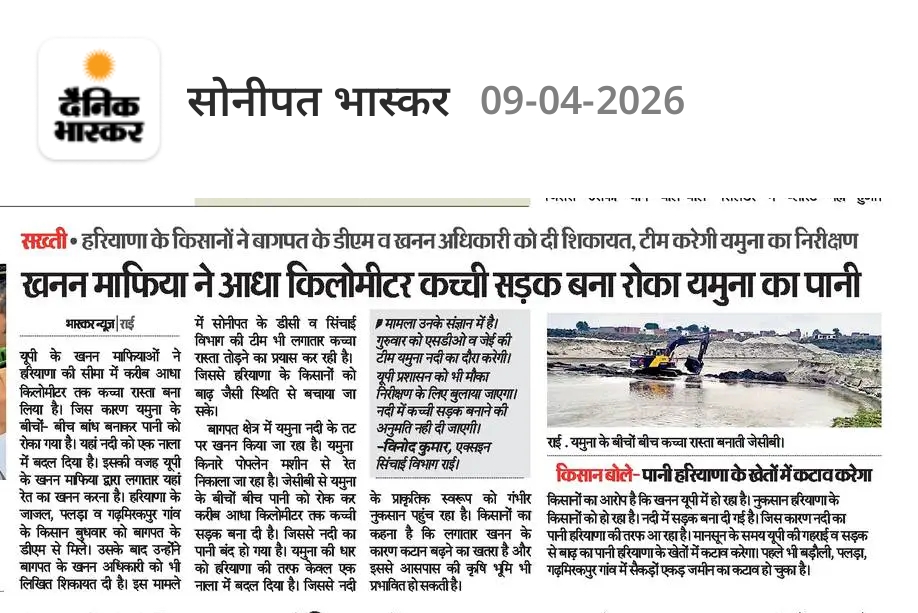
In Sonipat sand mining miners have blocked Yamuna’s course by created cross sectional bunds.
YAMUNA WETLANDS, LAKES, WATER BODIES
NGT flags noncompliance with directions regarding Tikamgarh Wetlands The National Green Tribunal (NGT) has expressed displeasure at the failure of authorities to comply with its earlier directions for the protection and conservation of wetlands in Tikamgarh (MP). The Tribunal observed that no sincere efforts had been made by the concerned authorities to implement the Wetland Rules, 2017, particularly in relation to the removal of encroachments, prevention of discharge and other aspects.
The NGT Central Zone Bench has taken strict action regarding the neglect of six key wetlands in Tikamgarh—Mahendra Sagar, Brandavan Talab, Gwal Sagar, Hanuman Sagar, Maharaj Sagar, and Shell Sagar. The violations were also flagged in the report of the joint committee constituted by the NGT to examine the status of the six Tikamgarh wetlands.
Acting on the report, the NGT, in Aug, 2025, passed directions to the district collector, the chief municipal officer of Tikamgarh and the WRD to ensure safeguarding of these wetlands. “No sincere efforts are being made by the Tikamgarh collector, WRD and the chief municipal officer to comply with the directions of this tribunal in implementation of the Wetland rules, 2017, with regard to the protection and conservation of six wetlands,” the NGT had observed then.
The NGT has directed formation of Task Force for effective protection of wetlands. NGT has directed the state wetland authorities (SWAs) in Madhya Pradesh, Chhattisgarh and Rajasthan to complete the demarcation process and raise boundary walls on priority. The green tribunal also sought a progress and compliance report by the next hearing on May 11.
NGT raps NHAI for flyover over protected pond, orders penalty NGT noted that the pond in Goyla Khurd village is officially listed as a protected wetland under the Wetland Authority of Delhi, rendering any construction activity within it legally impermissible. Despite this, NHAI constructed a flyover across the water body, installing eight pillars within the pond and affecting about 20.36 sq m area. While this constitutes a small fraction of the total pond area, the tribunal said any encroachment into a protected wetland amounts to a violation of law.
A key concern flagged by the tribunal was the lack of full disclosure during the environmental clearance process. The tribunal directed the MoEF&CC to examine the violation of environmental clearance conditions and take appropriate action within six months. It also ordered a joint inspection by DPCC and NHAI to assess damage to the pond, including any dumping of construction debris and to recommend restoration and protective measures, which NHAI must implement within six months. DPCC has also been tasked with assessing environmental damage compensation after giving NHAI an opportunity of hearing and ensuring recovery of the amount in accordance with law, the order stated.
Reviving water bodies in Delhi difficult, NGT told The revival of several water bodies in the Delhi is proving difficult, with many excessively encroached or having completely dried up, according to the Delhi State Wetland Authority (DSWA). DSWA is carrying out an exercise to identify & demarcate the over 1,300 water bodies Delhi has, on paper, on the direction of NGT.
In a fresh affidavit, dated March 9, the body said it has received information from land-owning agencies regarding Delhi’s water bodies, finding that multiple water bodies under the Delhi Development Authority (DDA), the revenue department, and the Archaeological Survey of India (ASI) have either been encroached upon or have completely dried up.
How Delhi’s vanishing wetlands are choking on bureaucracy While the State Wetland Authority (SWA) – which was constituted in 2019 and functions under the Delhi Parks and Gardens Society (Department of Environment) — has identified 1,045 water bodies, actual on-the-ground work appears stagnant. According to information on its website, the SWA last met in 2022. Furthermore, while a budget of Rs 35 lakh each was allocated for 2023-24 and 2024-25, there is no clarity on actual expenditure.
Old maps reveal lost north Delhi lake A nearly two-mile-long lake that once stretched across north Delhi has resurfaced; not on the ground, but on old maps. While examining 19th & early 20th century maps for a recent exhibition of old charts and atlases, the Intach identified traces of a massive water body north of Bhalswa Lake, much of which has been built over, though parts may still be revived, Intach officials said. A comparison of a 1932 map of Delhi, which shows the water body spread across Qadipur and Nagli-Puna (present-day Kadipur), with current satellite imagery indicates that most of the area has now been built upon.

Death of a Delhi wetland This is a wetland in a Karawal Nagar, East Delhi. Once a place where water and wildlife thrived, plastic now dominates. The wetland now lies buried under layers of garbage as people dump waste along its edge. Scientists warn that the loss and degradation of wetlands in Delhi is weakening natural flood control, biodiversity habitats and groundwater recharge systems.
EC received on illegal GW extraction to be used for revival of water bodies The DPCC has informed NGT that over Rs 70 cr in environmental compensation has been levied on illegal GW extraction in the city so far. The funds are proposed to be used for rejuvenation of water bodies in Delhi. The report dated March 17 said, “The EC funds will be allocated to the restoration of waterbodies that are not restored under the Gramodaya scheme. The expenses shall be in accordance with the water body area & the guidelines of the govt of India”.
Uttar Pradesh is establishing a Sarus Circuit, officials said on March 6. It will include the wetland areas of Kirthua, Sahas, Kurra Jarawan, Soj and Saman in Mainpuri & Sarsai Nawar and Parauli Ramayan in Etawah, the UP govt said.
YAMUNA WATER OPTIONS
Soil and Water Conservation in Bundelkhand About two decades back Arunoday Sansthaan (AS) as a young organization was confronted with the challenge of taking up the task of soil and water conservation in the dune like conditions of Kutra village (Mahoba district, UP). This was to be taken up on a low budget. The organization was able to complete this work to the satisfaction of experts & people on a low budget, securing community support.
AS has by now been involved with the de-silting and cleaning work of nearly 210 water tanks in widely scattered villages, most of these being in Chhattarpur district (MP). AS has also made efforts to improve the water situation in several villages by digging standardized ditches called dohas in water channels, repairing of existing structures like check dams, renovation of wells, digging of farm ponds and construction of field bunds. According to Abhishek Mishra, director of AS, so far about 2 lakh trees have been planted, with overall a good survival rate. This is a climate resilience that ordinary farmers are happy to accept. (By Bharat Dogra)
Ghaziabad mandates rooftop Solar & RWH in building plans Officials said the step follows a similar initiative previously implemented in Auraiya and is being considered as a model that could potentially be adopted in other parts of UP. Solar rooftop systems and rainwater harvesting structures will need to be included in residential construction projects once building plans receive official approval. The initiative has been introduced through an order issued by the district administration. Municipal institutions may also adopt the requirement by passing resolutions in their respective board meetings. Once adopted, developers and homeowners would be required to install rooftop solar panels and RWH facilities during construction phase.
Narela’s Rani ka Talab among 63 water bodies to be revived Govt agencies are conducting topographical surveys across 60 villages to prepare an action plan for rejuvenating 63 water bodies in the city’s rural areas, officials said on March 16. The project aims to restore water bodies impacted by unplanned construction. The DDA will rejuvenate the historic Rani ka Talab in Narela, and this model will be replicated across other rural water bodies. The survey will culminate in April. These villages include Tikri Khurd, Ghewra, Jat Khor, Sannoth, Jaunti, Akbarpur Majra, Nangal Thakran, Mukhmelpur among others.
Delhi’s forgotten Anangpur dam Hidden in the Aravallis stands a dam built around 1,100 years ago, a structure that tells the forgotten story of early Delhi and the Tomars, among the region’s earliest known rulers. Constructed of large stone-masonry blocks, the dam reflects an early method of water control adapted to rocky terrain. The placement between hill slopes allows runoff to collect within a natural basin. The structure measures about 101 metres in length. The width varies, approximately 19.8 metres at the top and nearly 27.4 metres at the base. The height rises to over 10 metres from its base, though the surrounding terrain gives the impression of greater elevation in parts.
GROUNDWATER IN YAMUNA BASIN
Haryana’s GW extraction stands at around 136% of its annual recharge. The state has an annual extractable groundwater of about 9.3 lakh ham, extraction is around 12 lakh ham.
Panipat recorded one of the highest extraction levels at 217.8%, followed by Karnal at 196.9%. Other districts with high extraction levels include Fatehabad (175.3%), Mahendragarh (156.8%), Faridabad (139.6%) and Ambala (130.1%). Some districts, however, remain in relatively safer categories. Rohtak recorded an extraction stage of 48.8%, Panchkula 62%, Jhajjar 72.7% and Nuh (formerly Mewat) 72.3%, indicating comparatively lower GW stress.
CGWB assessment evaluated 143 groundwater assessment units across Haryana, of which 88 (61.5%) were classified as “over-exploited”, 11 as “critical” and eight as “semi-critical”. 36 units (25.1%) fell in the “safe” category.
NGT pulls up Haryana for illegal groundwater use The NGT slammed Haryana govt for not acting against rampant illegal extraction of groundwater in the Gurugram city and ordered an inspection of construction sites, farmhouses, industrial units, educational institutions and pharma units to check if they are illegally drawing groundwater. The data by National Compilation on Dynamic Groundwater Resources shows the city extracted groundwater over twice its permissible limit in 2023 and 2024.
195% more groundwater drawn by Gurgaon The city extracts 194.6% more than the permissible limit, according to the latest National Compilation on Dynamic Ground Water Resources of India, 2025, by CGWB. In 2024 extraction stood at 195%. In 2023, the figure was even higher, at 212%. The report shows that the city drew 40,396 hectare-metres (ham) of groundwater against a sustainable extractable resource of 22,923 ham.
The city currently receives about 570 MLD of treated surface water, which falls short of its peak summer demand of around 675 MLD, forcing residents and industries to increasingly depend on groundwater. The data also shows that industrial demand forms a significant share of groundwater extraction. Of the total withdrawal, about 17,142 ham is attributed to industrial use, while around 5,191 ham is used for domestic consumption. Irrigation accounts for 21,267 ham, largely in peri-urban villages of the district.
FMDA plans to treat groundwater from rainy wells Groundwater from several rainy wells situated along the banks of the Yamuna in Faridabad no longer meets prescribed purity standards; specifically, it contains excessively high levels of arsenic and manganese. Among these, Renney well Line No. 5 (originating from Kabulpur) and Lines No. 20 and 22 (originating from Dadsia) contain the highest concentrations of this heavy metal. These three wells collectively supply 30 MLD of water, catering to a population of approximately 500,000 people. Hence, the Faridabad Metropolitan Development Authority (FMDA) is now formulating a ₹21.24 cr plan to treat the water from these specific wells.
The FMDA currently operates a total of 22 rainy wells, extracting approximately 200 MLD of water. In addition to these wells, around 1,600 tube wells also contribute to the city’s drinking water supply. Currently, 2 additional wells have become operational in Mothuka, and a third is slated to commence operations shortly. Furthermore, five more wells are currently being installed, with four others scheduled for installation in the subsequent phase of the project.
55% of Delhi’s groundwater ‘unfit’ for drinking: CAG report The report, tabled in Delhi Assembly on Mar 23 flags glaring lapses in water testing, monitoring & infrastructure including use of carcinogenic polyelectrolytes in treatment process. The CAG report “Functioning of Delhi Jal Board”, said, “Quality testing of groundwater was carried out on 16,234 samples by 8 zonal laboratories of the DJB during 2017-18 to 2021-22. Out of the samples tested, 8,933 samples (55 %) were found unfit for potable purposes. Supplying groundwater from areas where samples were found unfit poses serious health risks to the public,” it added.
YAMUNA URBAN WATER
Delhi 44% tap samples fail safety test A seven-day sampling exercise at 18 complaint-prone locations found that nearly 44% of the samples violated basic microbiological safety standards. For now, the data does not suggest a citywide collapse. 10 of the 18 samples were clean. But nearly half violated zero-tolerance safety norms, and the contamination was confined to domestic taps, should raise dangerous alarm bells for residents and officials alike.
₹9,000cr for water supply infra, new STPs In Delhi budget presented on Mar 24, CM Rekha Gupta, said the allocation of ₹9,000 crore – about 8.68% of the total expenditure – was meant to operationalise new water treatment plants, expand supply networks and replace ageing transmission lines. Of this, around ₹1,500 crore will go towards constructing STPs with a combined capacity of 480MGD, with central assistance under the NMCG.
Gupta said her government has set an ambitious target of reducing non-revenue water (NRW)—losses due to leakages and theft—from 45% to 15%. Two major infrastructure upgrade projects in the catchment areas of the Wazirabad and Chandrawal water treatment plants, covering around 19 assembly constituencies, are also planned. A provision of ₹475 crore has been made for the Chandrawal project. The CM said Delhi’s installed STP capacity has increased from 707 MGD to 814MGD, with a target of reaching 1,500 MGD.
DJB to target 1002 MGD water supply Water Minister Parvesh Sahib Singh on March 31 launched the DJB’s annual ‘Summer Action Plan’, focusing on improving the water distribution system, AI integration & long-term planning. Singh said that the Delhi Jal Board has deployed 1,221 water tankers this summer and increase water production through additional tubewells. All the tankers will be tracked through the GPS.
Water production target of 1002 MGD has been set this year. The DJB will install 436 additional tubewells, after which about 6290 tube-wells will be in operation. Additionally, 500 water ATMs will also be installed at places with high footfall, providing drinking water.
Dwarka WTP: Groundwater, diversions could supply new plant The new 50 MGD WTP in south-west Delhi’s Dwarka is now ready, and the DJB is planning a series of diversions, coupled with groundwater extraction through tube wells, to source raw water for the facility. The plant’s operationalization hinges on a nod from the NGT panel for extracting GW against the objections raised by Haryana.
A senior DJB official said the plant in Sector 16 will benefit Dwarka sub-city and surrounding areas. “To secure additional water to run the second unit at Dwarka, 30MGD of raw water — sourced from the Haiderpur-Munak Canal and currently supplied to three other treatment plants — will be partially diverted to the new plant,” the official said.
RELEVANT REPORTS
SC closes 2021 Suo Motu case on river pollution The Supreme Court on Feb. 24 closed suo motu proceedings initiated in January 2021 on the issue of polluted rivers, with Chief Justice of India Surya Kant observing that little progress had been made since the Court took cognizance of the matter and that the responsibility should primarily rest with the NGT. The Chief Justice added that the tribunal had erred in closing the original proceedings in 2021 in haste and said the issue required sustained monitoring rather than one-time adjudication.
The suo motu case had originated from concerns about rising pollution levels in the Yamuna river. Holding that the NGT remained the appropriate forum for monitoring river pollution issues, the Court ordered closure of the suo motu proceedings while permitting revival of proceedings before the tribunal. “Is it possible for this court to look at all polluted rivers? We can look at it one by one. We also keep entertaining so many matters and issue directions. …we also have to see that we entertain matters together. Why to have a multiplicity of issues like this?” CJI remarked.
CAG flags Namami Gange implementation in Uttarakhand The CAG report, presented during the ongoing budget session, notes several irregularities found in this project, including defective designs of STPs, poor maintenance of infrastructure, failure to tap drains discharging into the Ganga, and the dumping of waste near rivers and smaller streams.
The CAG observed that the DPR for Forestry Interventions for the Ganga (FIG) included a budgetary provision of Rs 885.91 cr and a plantation target of 54,855.43 ha. However only Rs 144.27 cr-amounting to just 16% of the allocated funds – was actually utilised. The scheme failed to achieve the specific objectives related to the rejuvenation of the Ganga.
Of the 44 STPs inspected by the CAG in 2023, only three to five were found to be compliant with the norms set by the NGT, while merely six to twelve were found to be in compliance with the standards of the MoEF and other relevant criteria. The report states that this reveals widespread non-compliance and a substandard level of sewage treatment.
Mussoorie following Joshimath crisis? NGT notice over ‘inaction’ The NGT has issued a notice to Uttarakhand’s chief secretary over “continued inaction” on environmental concerns in Mussoorie, despite the issue being flagged in the aftermath of the 2023 Joshimath crisis. The tribunal has directed the chief secretary to file a comprehensive affidavit within four weeks detailing steps taken to implement its earlier orders. It has also asked counsel for the Uttarakhand Pollution Control Board to submit a response.
On March 24, the bench observed that despite its earlier directions, “no concrete action appeared to have been taken on the ground”. It also examined a report submitted by the additional secretary and found that it “failed to adequately address the key issues flagged in the tribunal’s May 8, 2025 order.” The matter is scheduled to be heard next on July 14.
Ganga among 46% of global rivers unfit for human use According to a recent study by the Federal University of São Paulo, 46 per cent of the world’s rivers, including the Ganga and the Yamuna, are now so polluted that their water is unfit for both drinking and bathing.
The report states that nearly 6 lakh tonnes of waste are dumped into the Ganga every year. In Dehradun, rivers such as the Rispana, Bindal, Asan and Sasua, once primary water sources, are now heavily polluted with plastic waste and industrial effluents. Experts attribute the degradation to unregulated urban expansion, riverside encroachments & industries.
Carrying capacity of Uttarakhand pilgrimage centres NGT on April 07 directed govt to file a report on the carrying capacity of pilgrimage centres in Uttarakhand at least one week before the next date of hearing on July 21, 2026. An execution application was filed seeking execution of the order dated February 8, 2023. The matter related to large-scale unregulated violation of environmental norms along the pilgrim tracks of Kedarnath, Hemkund Sahib, Yamunotri and Gomukh pilgrimage centres in Uttarakhand.
Open Letter to Uttarakhand CM Dehradun is grappling with waste management – a crisis visible in every overflowing drain, every littered riverbank, and every hillside stained with plastic. As the Solid Waste Management Rules, 2026, comes into effect from April 1, and the Char Dham season soon begins, Anoop Nautiyal, a concerned citizen of Dehradun, writes an open letter to the Chief Minister of Uttarakhand with five concrete, actionable points to make the city cleaner and the authorities accountable.
SANDRP
Also see: YM July 2025 and YM June 2025
Follow us on: www.facebook.com/sandrp.in; https://twitter.com/Indian_Rivers

 SANDRP