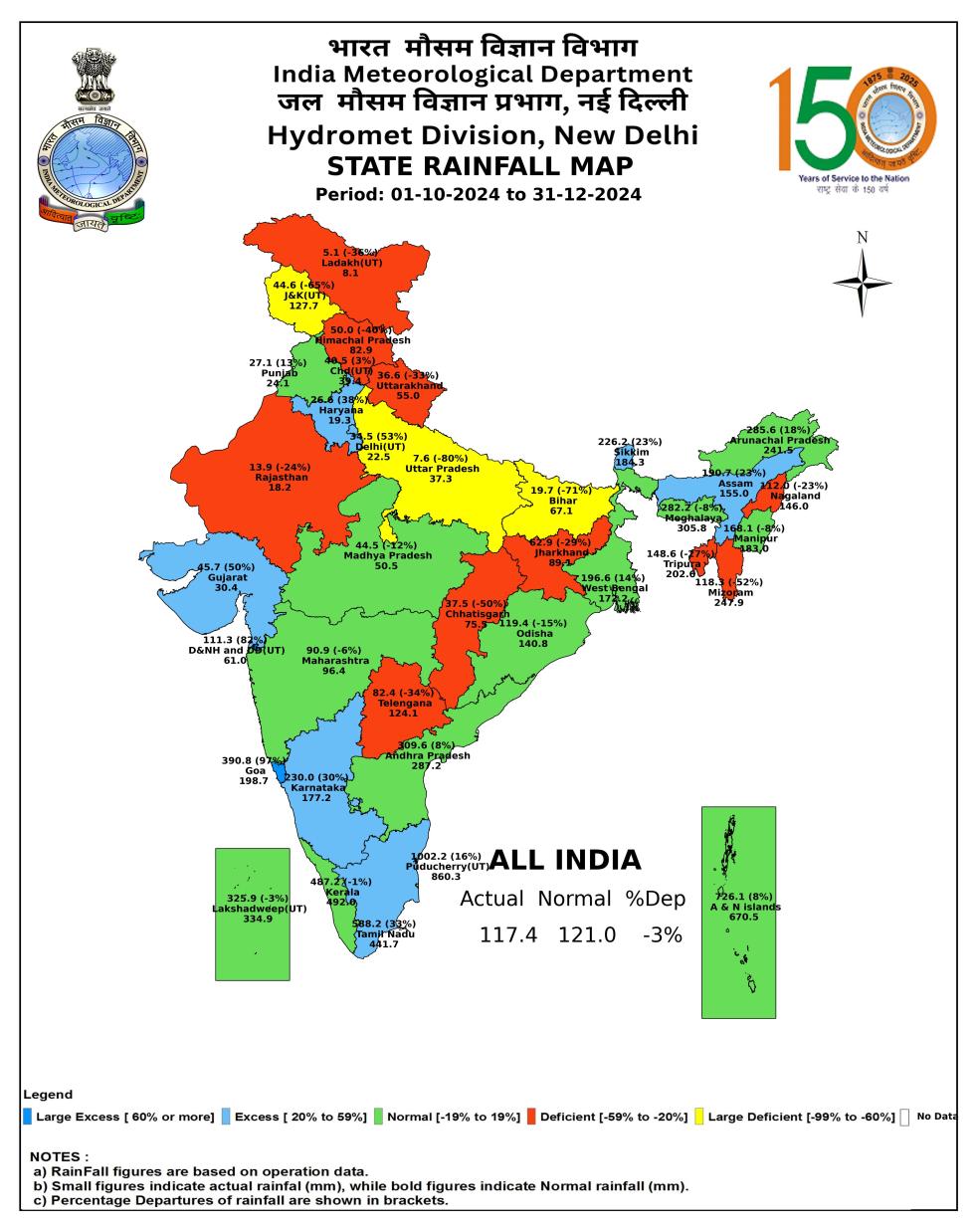
According to India Meteorological Department (IMD), during the Post Monsoon Rainfall for 2024, that included rainfall during the three Oct-Dec 2024 months, India received 117.4 mm rainfall, 3% below normal (110.7 mm, 9% below normal in Post Monsoon 2023[i], 144.1 mm, 19% above normal in Post Monsoon 2022[ii] and 177.7 mm rainfall, 43.54% above normal in Post Monsoon 2021[iii]) rainfall of 121 mm. In the same period in 2020, India received 124.6 mm rainfall, 0.64% above the normal rainfall. As per IMD[iv] definition, the rainfall in Post Monsoon 2024 was in Normal Rainfall category.
This three-month period from Oct 1, to Dec 31 includes the North East Monsoon that mainly affects parts of South India including Tamil Nadu, Puducherry, Rayalseema, parts of Karnataka and Kerala. However, since the South West Monsoon had not yet withdrawn from the country by Sept 30, a significant proportion of the rainfall in October was contribution of the SW monsoon. This was similar situation in Post Monsoon 2019, 2020[v], 2021, 2022 and 2023.
The period also includes the rainfall and snowfall that most of North India gets from western disturbances, but that contribution has been relatively low this year. Prevailing conditions of mild La Nina has not been able to make significant contribution in the rainfall. In contrast, it was mild El Nino that prevailed during Post monsoon 2023 and La Nina that prevailed during Post Monsoon 2022 and 2021, but not in 2020.
In Post Monsoon season of 2019, India received 160 mm rainfall[vi] in this season, 29% above normal, when 2019 was not a La Nina year.
Monthly rainfall The distribution of rainfall for the three months of Post Monsoon 2022 season as per IMD is as follows.
| Month | Actual Rainfall, mm | Normal Rainfall, mm | % Departure from Normal |
| Oct 2024 | 75.7 | 75.4 | +0.4 |
| Nov 2024 | 13.6 | 29.7 | -54.2 |
| Dec 2024 | 28.1 | 15.9 | +76.7 |
| Post Monsoon 2024 | 117.4 | 121 | -3.0 |
As can be seen from the table, it is the deficit in Nov 2024 that is leading to deficit in Post Monsoon 2024 rainfall.
Major unknown One major unknown, here is that it is not clear if IMD’s these reported figures include the contribution from snowfall and if so, what is the contribution of snowfall. It is not even known looking at the IMD website if IMD even monitors the snowfall figures and if so, what are they. We cannot find any reporting of the snowfall figures in any case. This is worrying since snowfall is expected to make a significant contribution during winter months and we seem to be in total dark as to what is the quantum of snowfall in different districts, states, in different months & years.
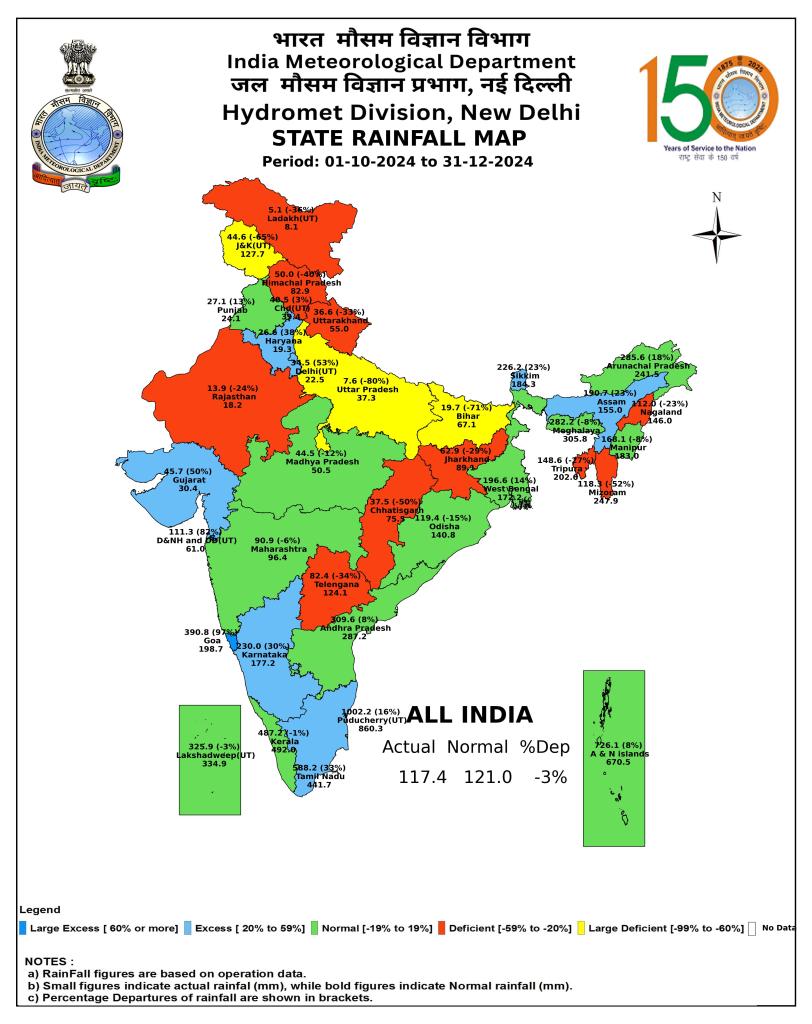
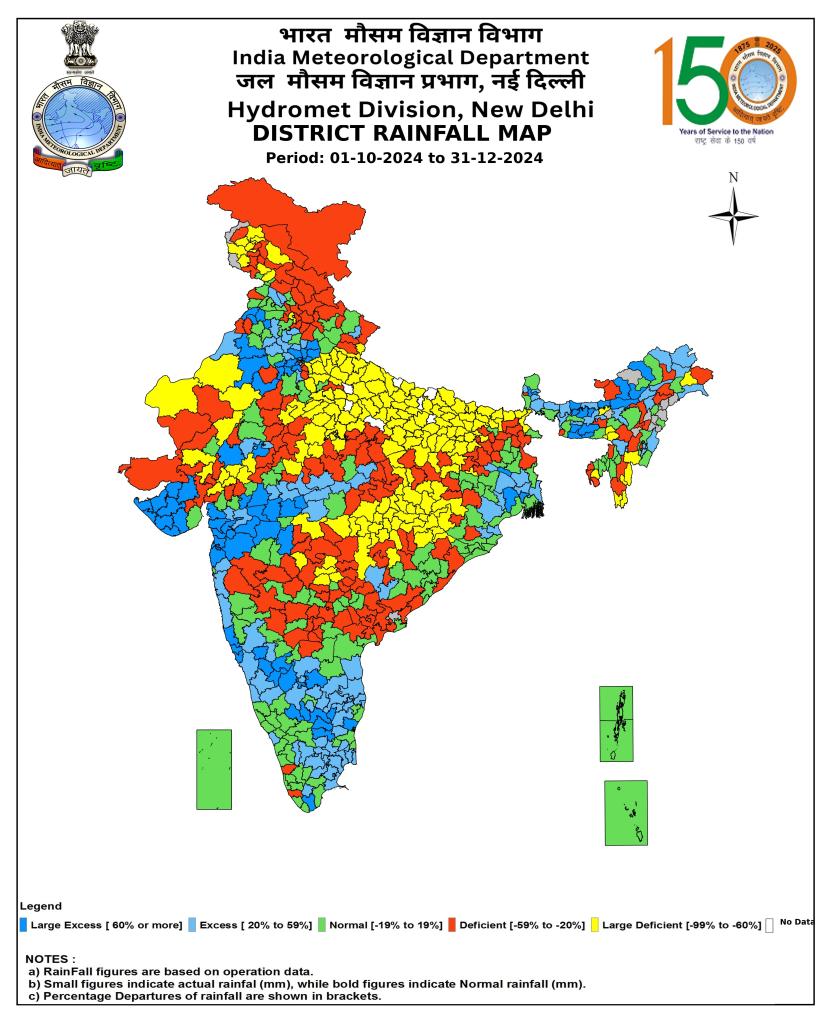
ALL INDIA: State wise rainfall Two (Goa, Diu-Daman-Dadar-&-Nagarhaveli) States and Union Territories (UTs) had Large Excess Rainfall (more than 60% above Long Period Average or LPA), 7 (TN, Karnataka, Sikkim, Gujarat, Haryana, Delhi and Assam) had Excess (20-59% above LPA), 14 had normal (19% below to 19% above normal) and 10 states and UTs had Deficit Rainfall (20 to 59% below normal) and Three (UP, Bihar, J&K) had Large Deficit (deficit over 60% of normal) during Oct Dec 2024 period in India among the 36 states and UTs. Here LPA is Long period average, taken as average of the rainfall during 1971-2020. Uttar Pradesh had the highest deficit at 80% and Goa had the highest surplus at 97%. Pondicherry, like in Post Monsoon 2022 and 2023, had the highest rainfall at 1022.2 mm, way above the 2nd highest rainfall in Andaman & Nicobar Islands at 726.1 mm.
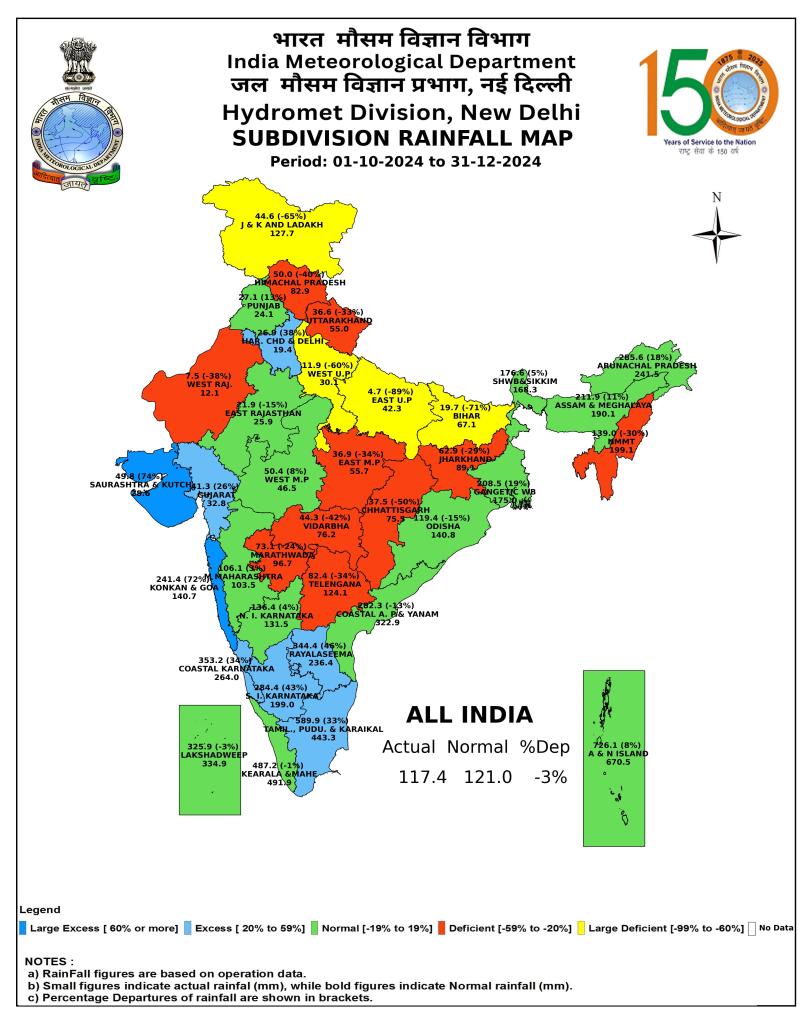
Sub-Division wise rainfall Among IMD’s 36 sub divisions, 2 (Saurashtra-Kutch and Konkan-Goa) received Large Excess, 6 received Excess, 14 received Normal, 10 received Deficit rainfall and 4 (East UP, West UP, Bihar, J&K-&-Ladakh)) had large deficit. Like in 2020, 2021, 2022 and 2023, Andaman and Nicobar Islands received the highest sub-divisional rainfall at 726.1 mm.
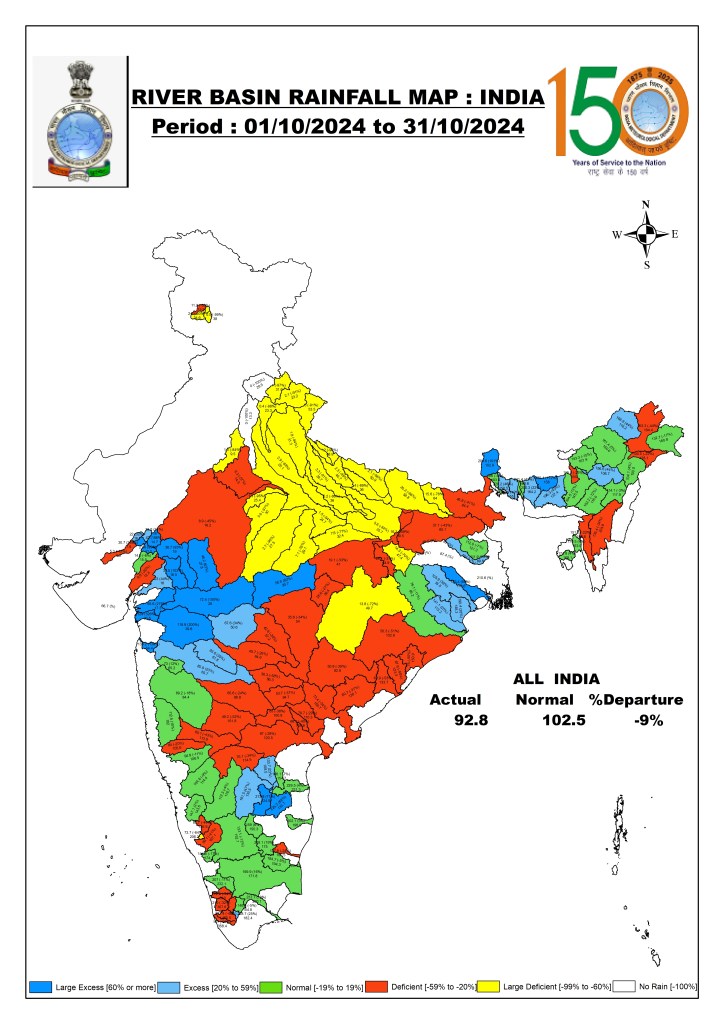
River basin wise rainfall The IMD also reports river basin wise rainfall, which is actually the most important way to report rainfall. But this year too IMD unfortunately has done a rather callous job of it. During Post Monsoon 2024 season, IMD reports no data or ZERO rainfall in several basins!
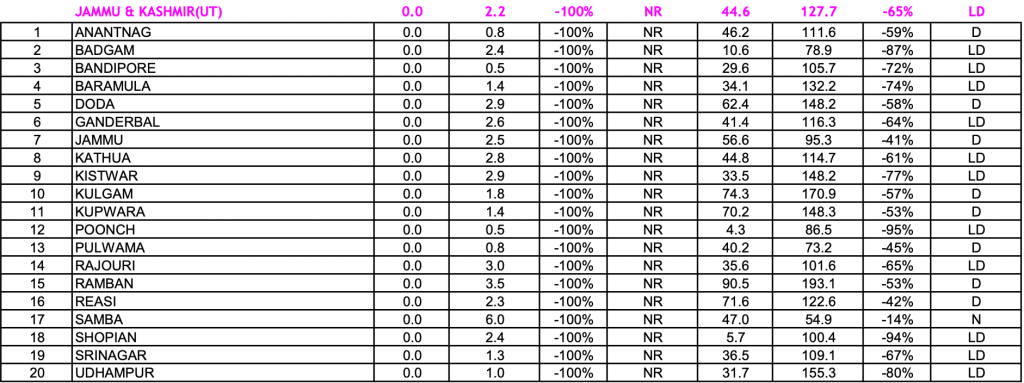
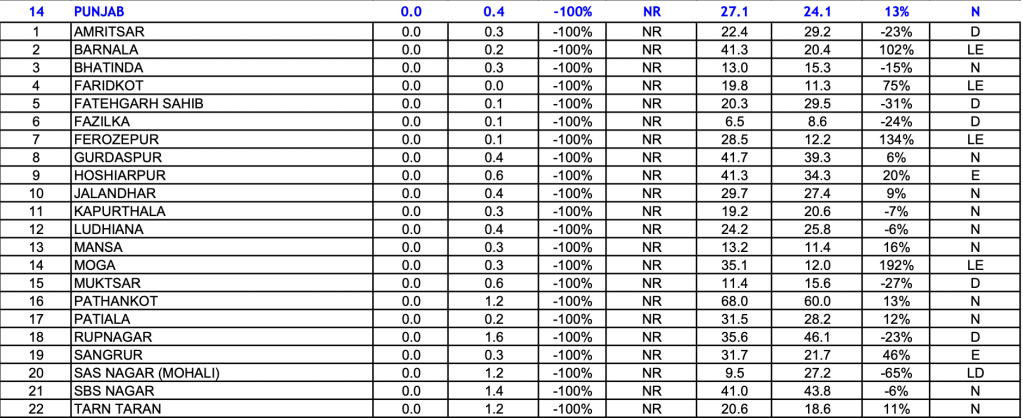
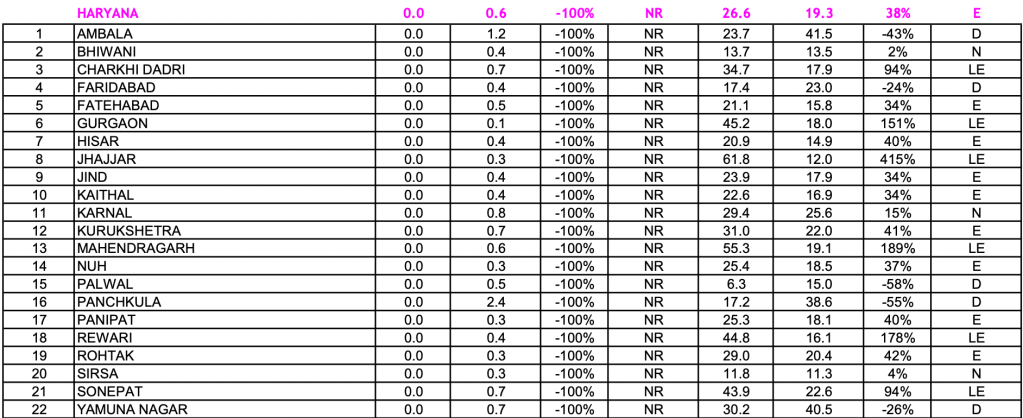
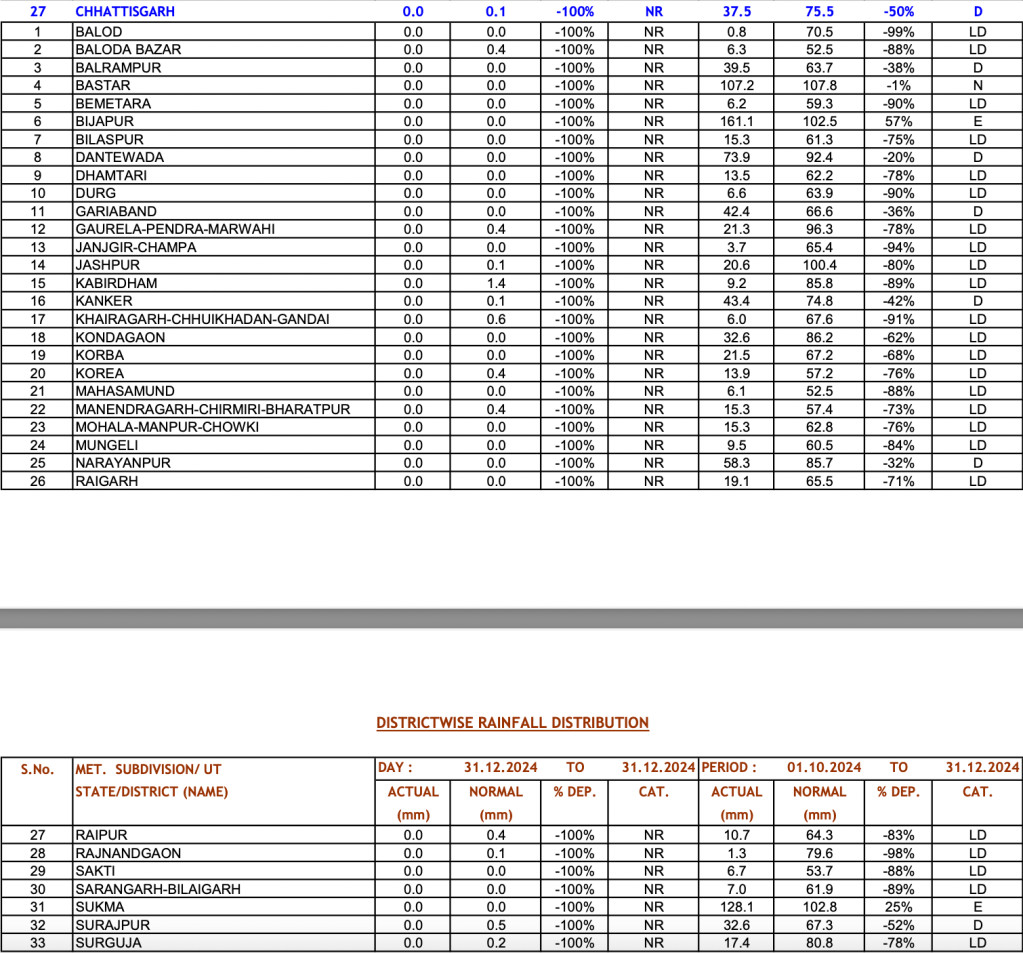
STATE WISE DISTRICT WISE RAINFALL:
NORTH ZONE: Jammu and Kashmir
Ladakh

Punjab
Haryana
Delhi

Himachal Pradesh
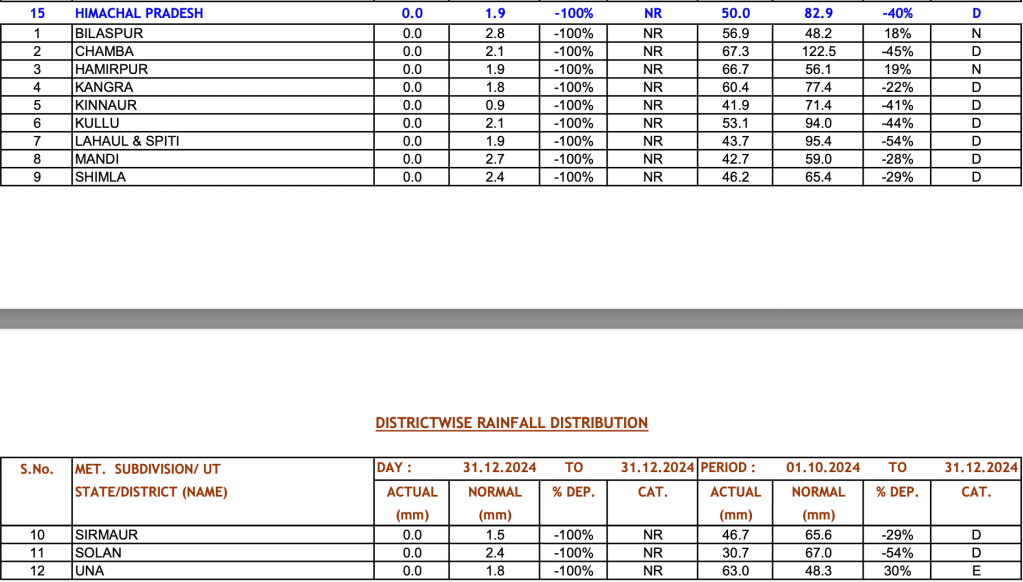
Uttarakhand
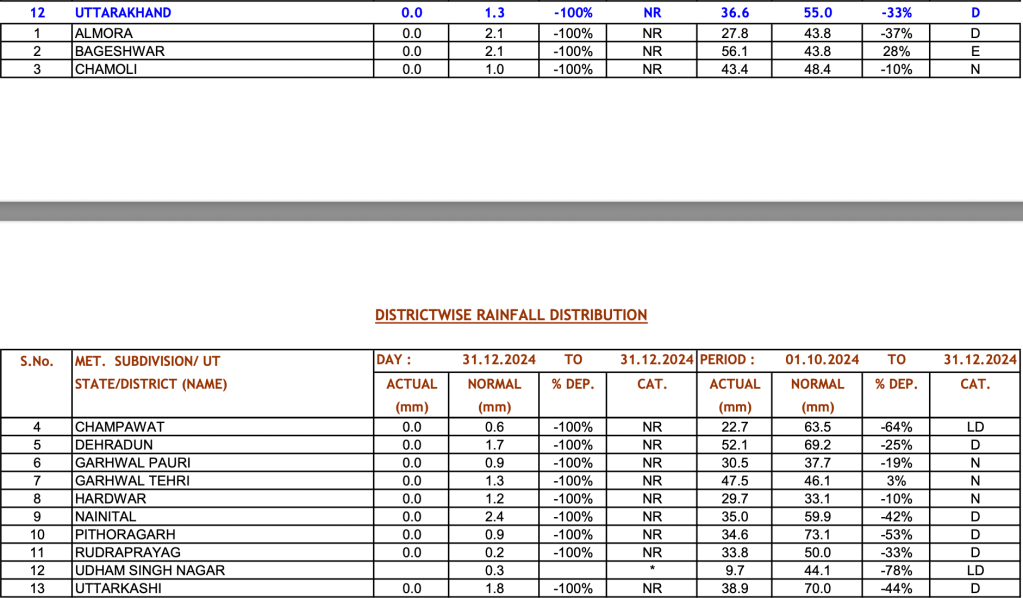
Chandigarh

EAST ZONE: Uttar Pradesh
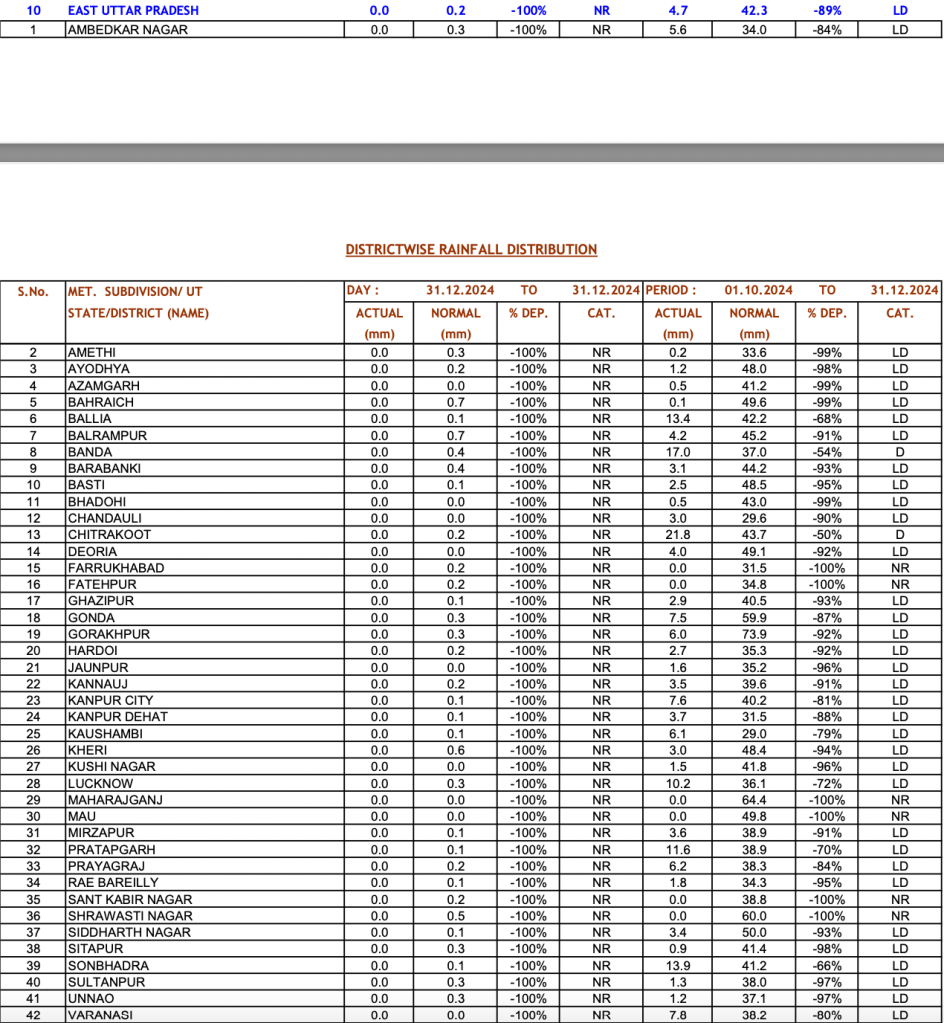

Bihar
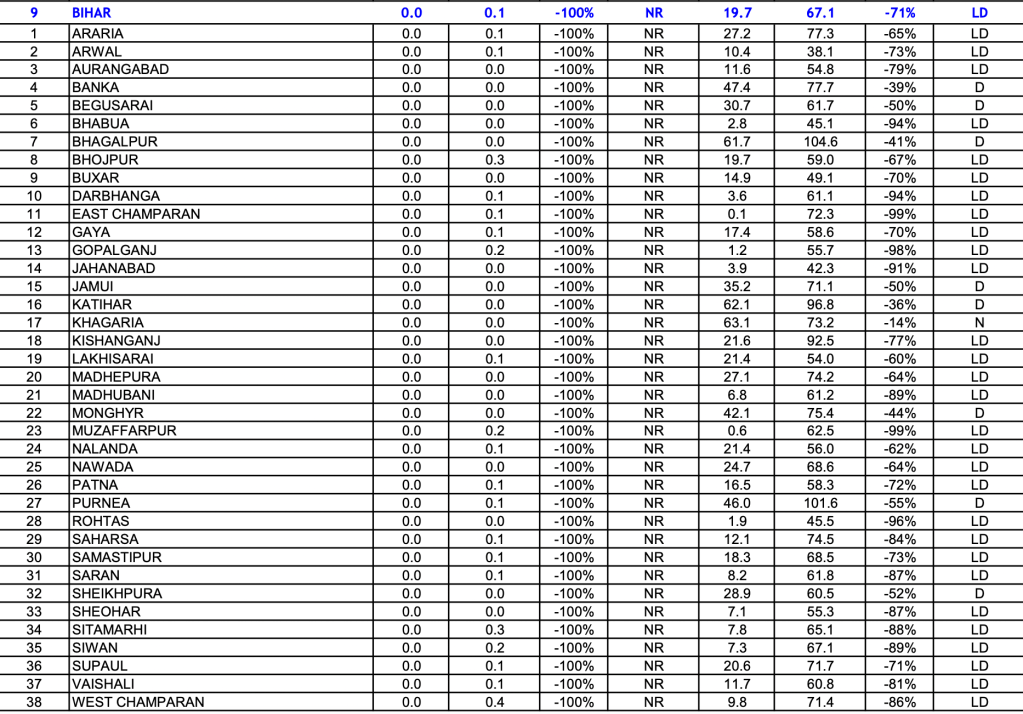
Jharkhand
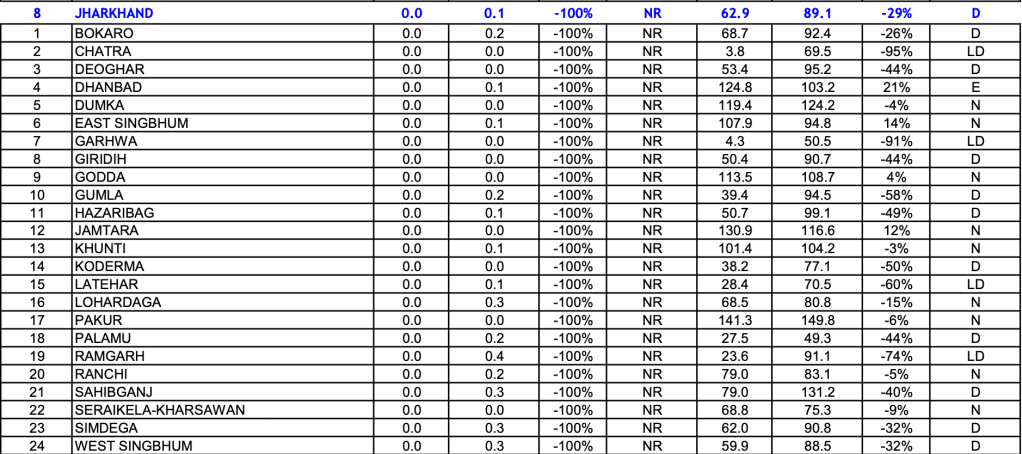
Odisha
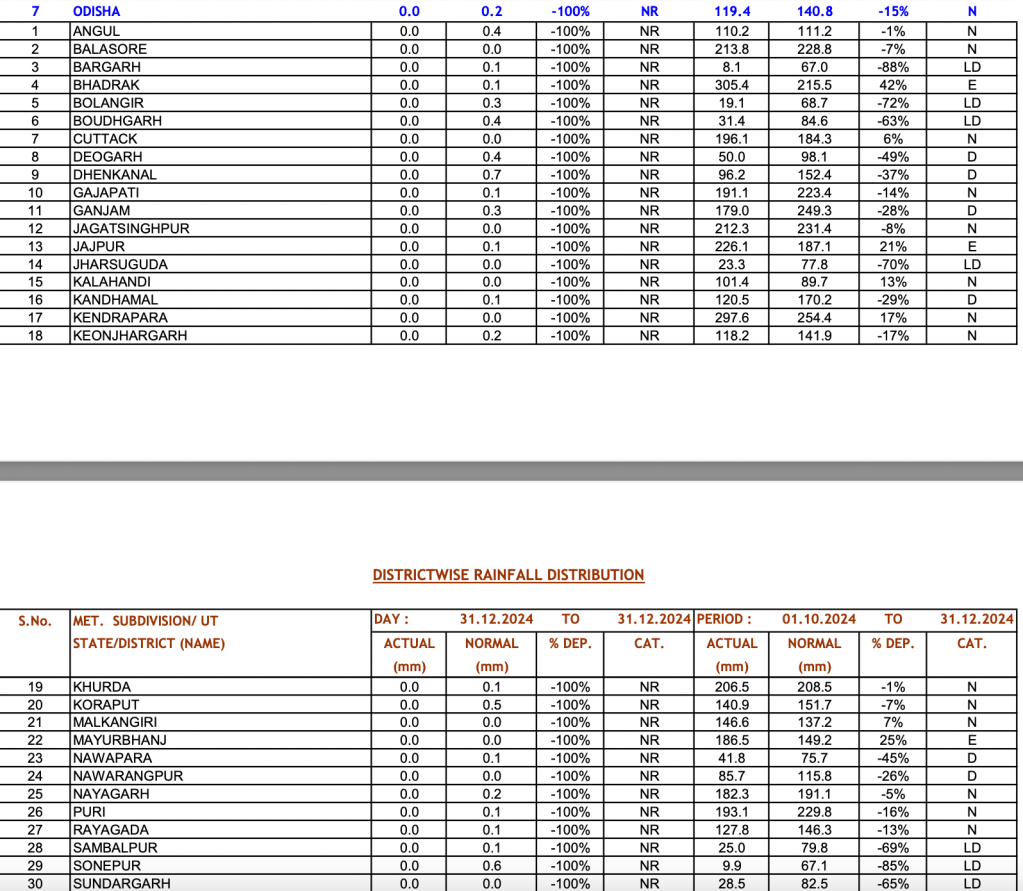
West Bengal
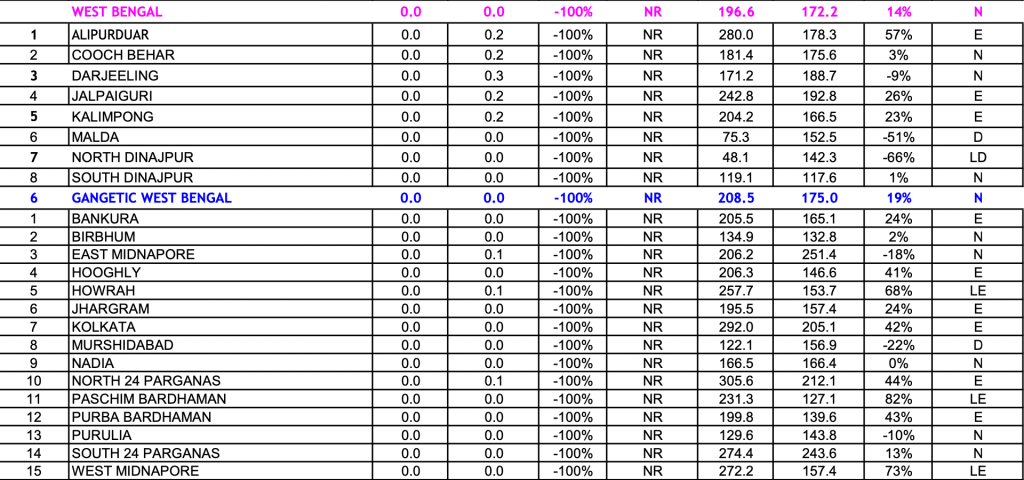
Chhattisgarh
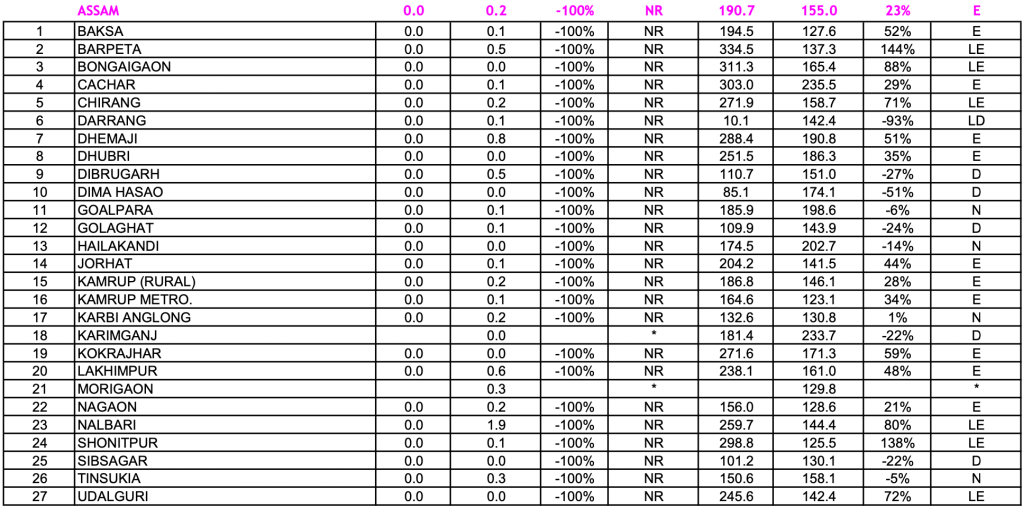
NORTH EAST ZONE: Assam
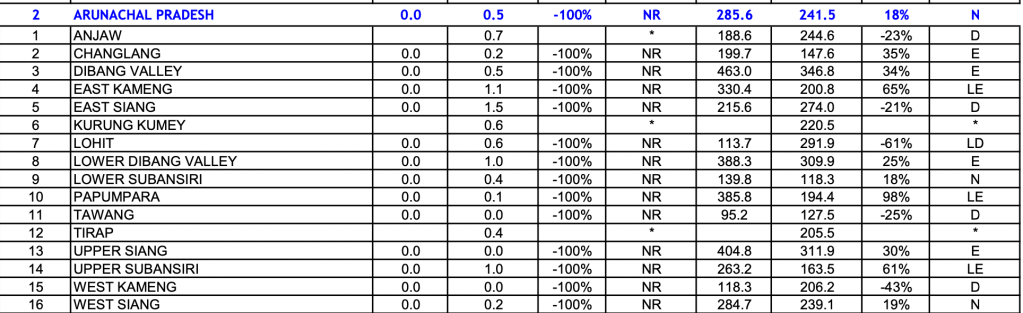
Arunachal Pradesh
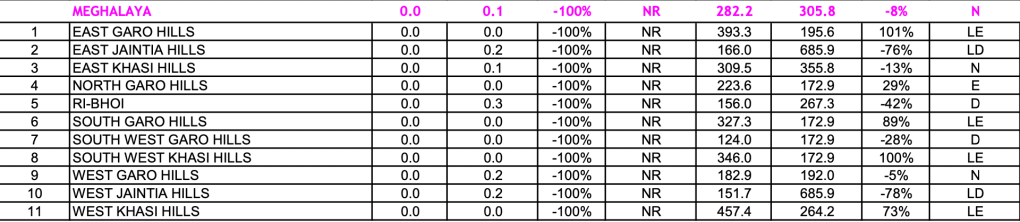
Meghalaya
Mizoram

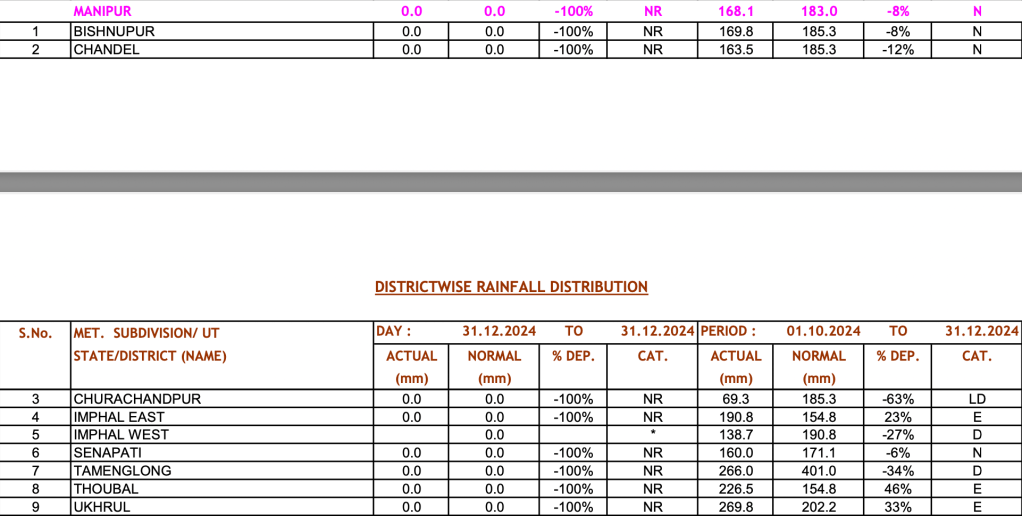
Manipur
Nagaland
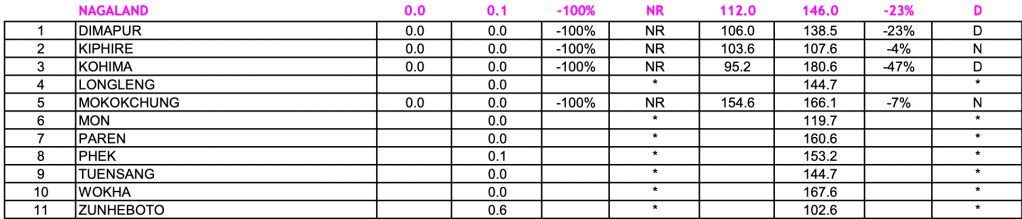
Sikkim

Tripura

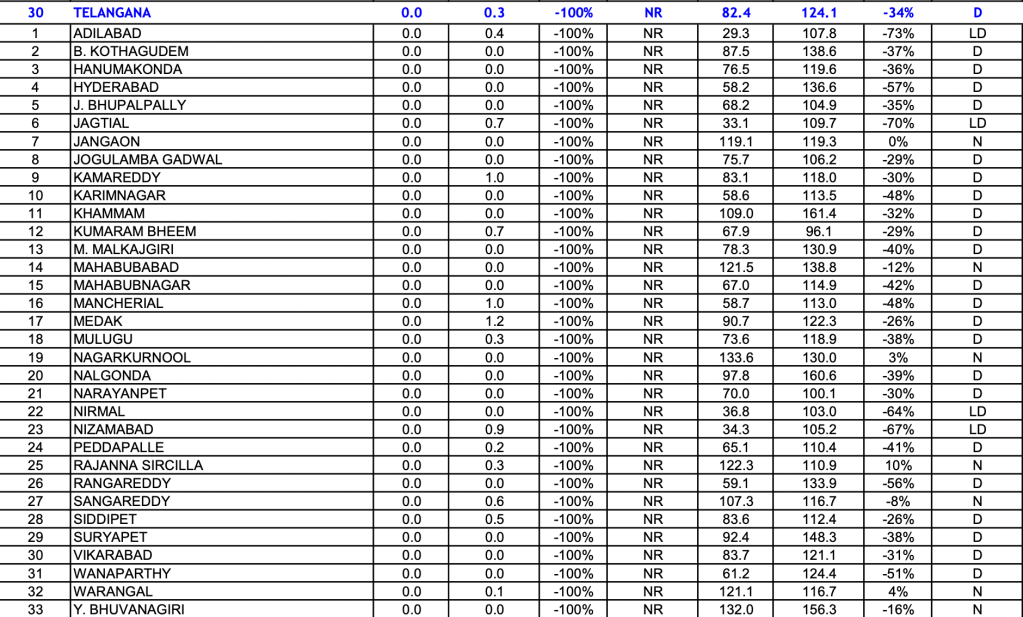
SOUTH ZONE: Telangana
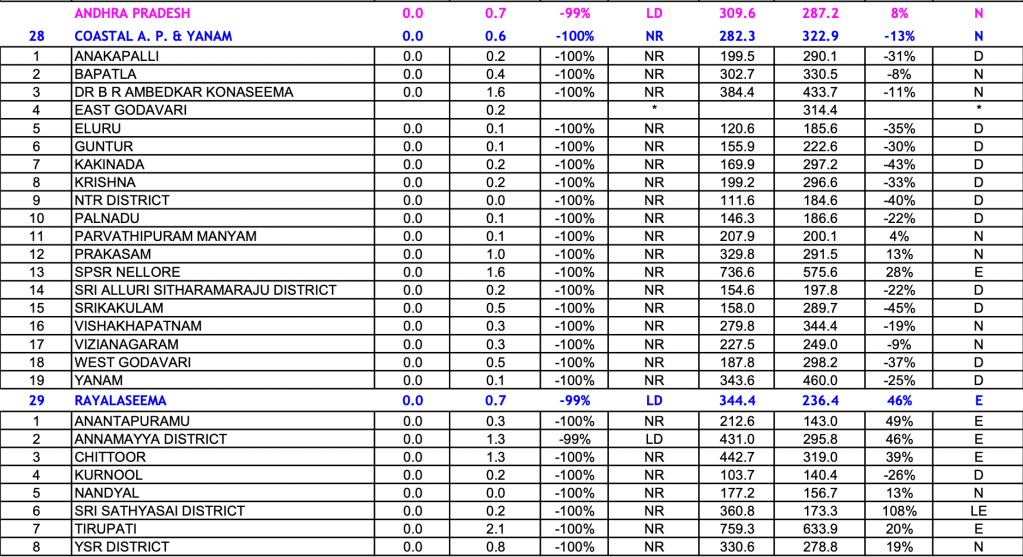
Andhra Pradesh
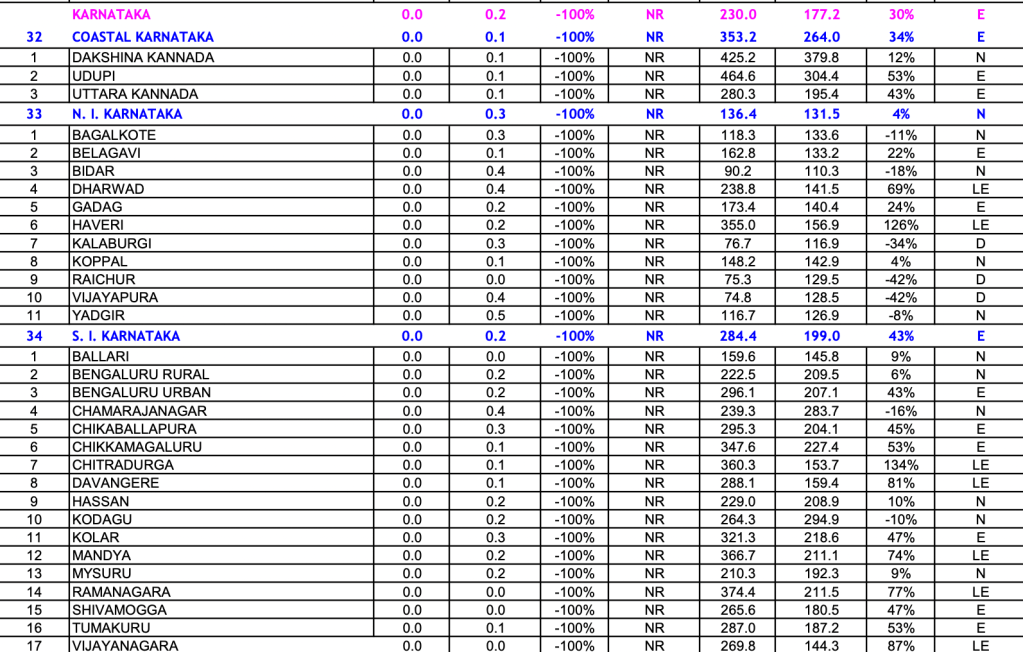
Karnataka
Kerala
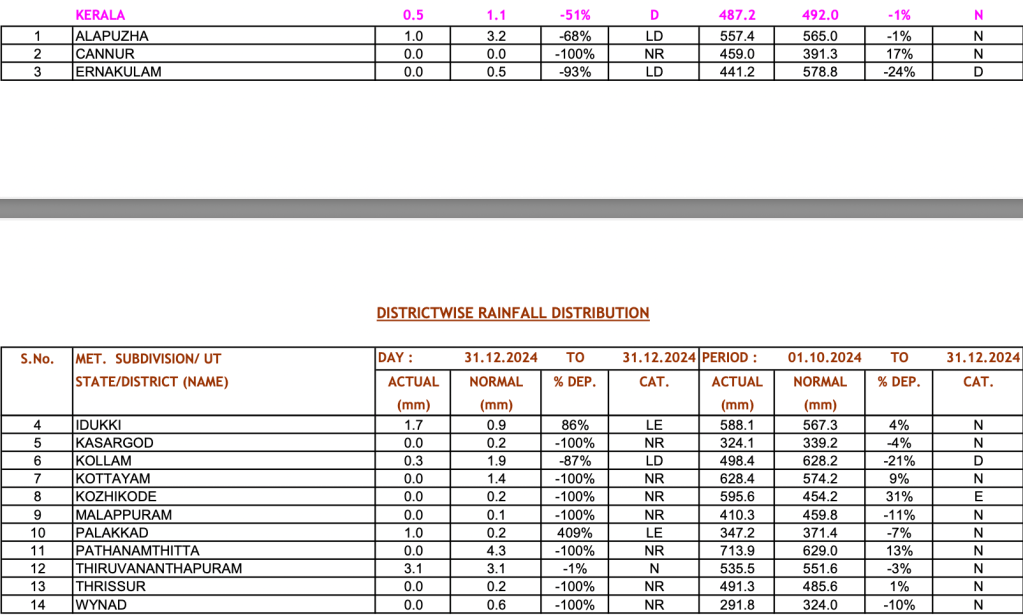
Tamil Nadu

Puducherry

Andaman & Nicobar Islands

Lakshadweep

WEST ZONE: Maharashtra
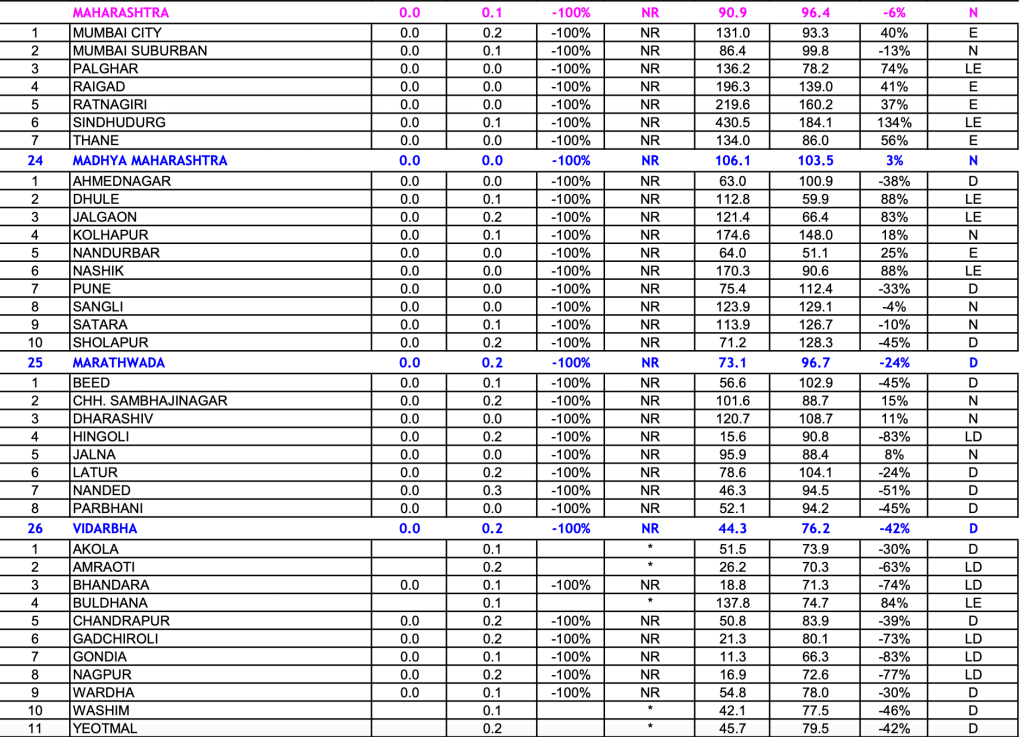
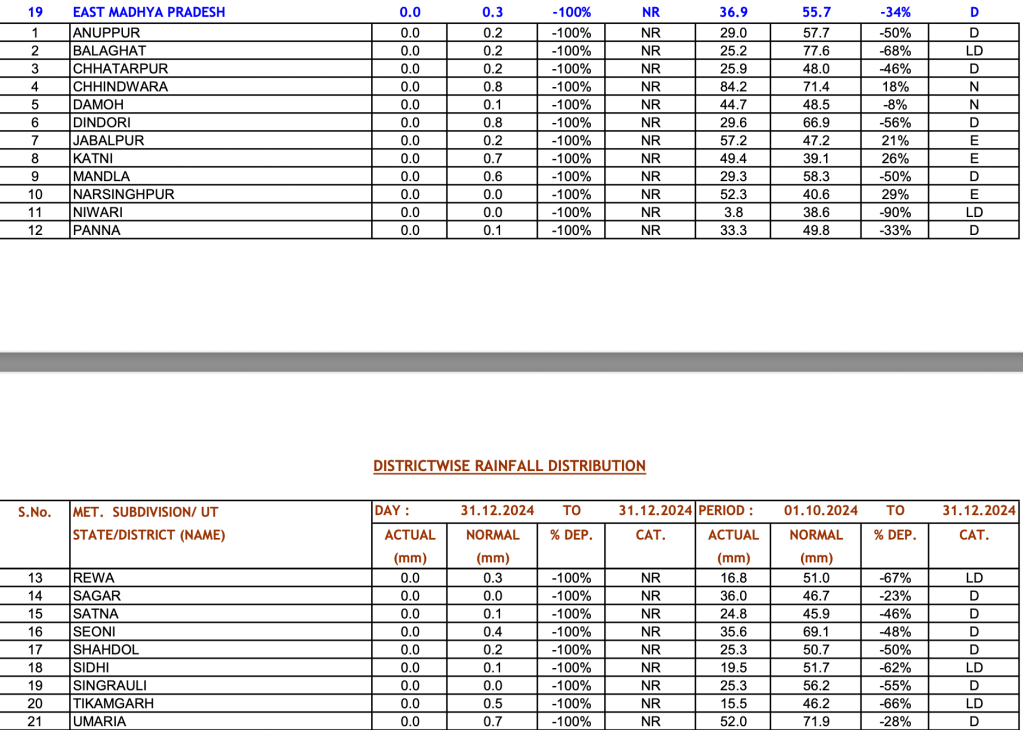
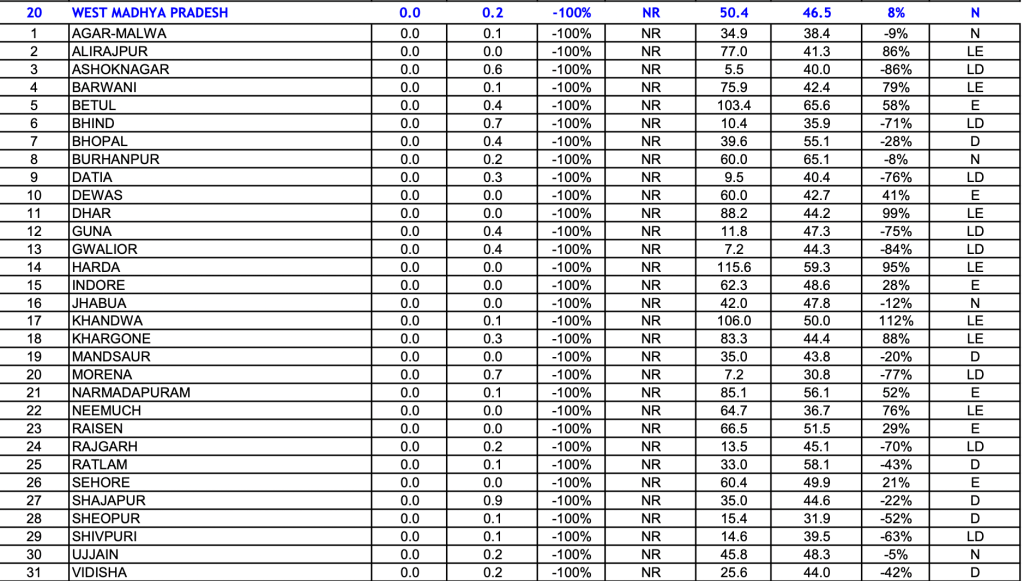
Madhya Pradesh
Gujarat

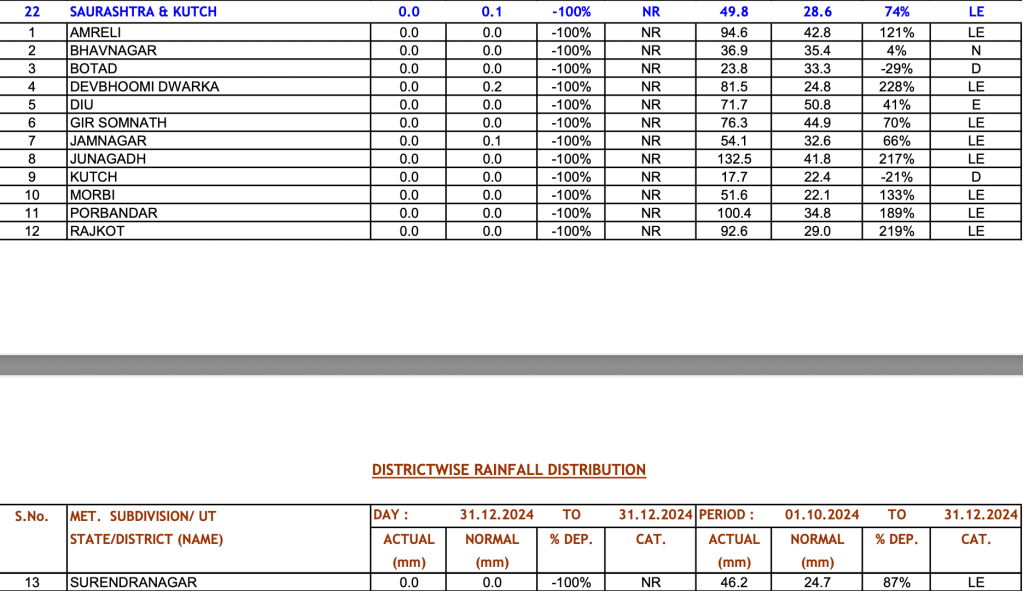
Saurashtra and Kutch:
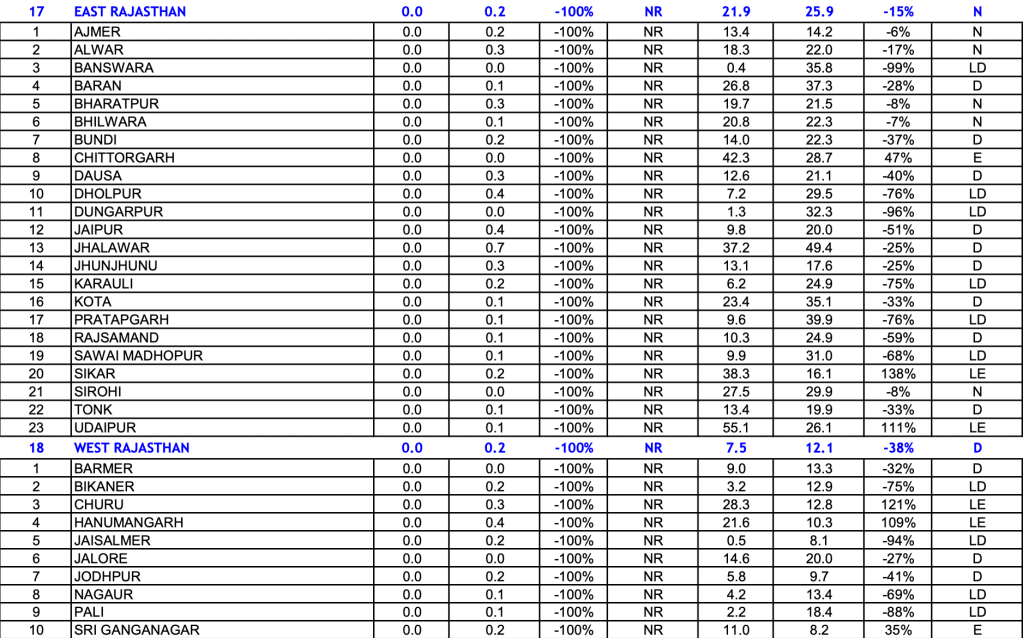
Rajasthan
Diu, Daman, Dadar & Naharhaveli

Goa

SANDRP (ht.sandrp@gmail.com)
END NOTES:
[i] https://sandrp.in/2024/01/01/post-monsoon-2023-district-wise-rainfall-in-india/
[ii] https://sandrp.in/2023/01/01/post-monsoon-2022-district-wise-rainfall-in-india/
[iii] https://sandrp.in/2021/12/31/post-monsoon-2021-district-wise-rainfall-in-india/
[iv] India Meteorological Department (IMD) divides a water year (June 1 to May 31) into four seasons: Monsoon: (June 1 to Sept 30), Post monsoon (Oct 1 to Dec 31), Winter (Jan 1 to Feb 28/9) and Pre-Monsoon (March 1 to May 31). For rainfall during all these seasons, IMD’s hydro-meteorological website provides a lot of data on daily basis, including daily district wise, state-wise, sub division wise and river wise rainfall maps among many other weekly, monthly and seasonal products. However, one problem with it is that none of this information is achieved. So if you missed seeing or downloading available data on any date, there is no way to look at it even next day. This is even true of the seasonal rainfall maps, unfortunately.
[v] https://sandrp.in/2021/01/01/state-wise-post-monsoon-2020-rainfall/
[vi] https://sandrp.in/2020/06/05/india-received-20-excess-rains-in-pre-monsoon-2020/

 SANDRP