The decision of National Board of Wild Life (NBWL) not to clear any projects affecting wildlife areas till there is compliance certificate from previous such projects is certainly welcome, was long overdue. We hope NBWL comes out with clearly defined norms for implementing this decision and also implements the decision in letter and spirit. Needless to add, the compliance certificate must come through an independent assessment done by a body that involves no conflict of interest and has independent track record.
Unfortunately, the news this week that NBWL has given green light to the Jamrani Dam in Uttarakhand without a clearance from National Tiger Conservation Authority (NTCA) is a significant dampener. Similarly, the past track record of NBWL, including the way it gave clearance to Ken Betwa River Link Project does not inspire too much confidence that NBWL is serious about this.
In fact, this principle of no further clearance till past projects produce confidence inspiring certificates through independent assessments also needs to be followed by other clearance giving authorities like the Expert Appraisal Committee of MoEF on River Valley Projects and also the Forest Advisory Committee of MoEF.
NBWL No clearance for projects in sanctuaries without compliance certificates Project proposals in and around wildlife sanctuaries and national parks will not be considered for wildlife clearance unless states submit certificates of compliance to the conditions prescribed by the standing committee of the national board for wildlife (NBWL) for previously permitted projects, the committee has decided. In the last five years, 718 project proposals in wildlife sanctuaries and protected areas have been granted wildlife clearance by NBWL. The minutes of the standing committee of NBWL’s 77th meeting released on February 7 revealed that there is hardly any compliance of the precautionary conditions prescribed by NBWL for infrastructure and development projects that have been allowed to come up in national parks and sanctuaries.
– “The Standing Committee decided that the compliance of conditions of the project proposals recommended or approved by the Standing Committee in the last two years shall be monitored by the Regional Offices of the Ministry. The Chief WildLife Wardens shall give the compliance certificates within one month and thereafter within one month the Regional Offices of the Ministry shall submit the compliance reports to the Ministry… the Standing Committee decided that the Ministry shall inform all the States that the project proposals shall not be considered unless certificate of compliance of conditions in case of previously recommended/approved project proposals have been received,” the minutes said.
– In the 59th NBWL meeting held on October 5, 2020, the standing committee recommended a protocol for effective monitoring of projects. It decided that the chief wildlife warden shall submit an annual certificate for compliance of the conditions imposed by the standing committee for all proposals and that the integrated regional offices shall carry out monitoring of the conditions imposed by the standing committee. HS Singh, NBWL member and a retired Gujarat forest officer, said the situation pertaining to compliance of conditions imposed while recommending or approving project proposals on the ground is quite serious. Several non-compliance issues were observed in previous projects, he said. One of the conditions that was not complied with was deposition of funds with the chief wildlife warden for restoration. https://www.hindustantimes.com/india-news/no-wildlife-clearance-for-projects-in-sanctuaries-without-compliance-certificates-says-nbwl-101707936065262.html (15 Feb. 2024)
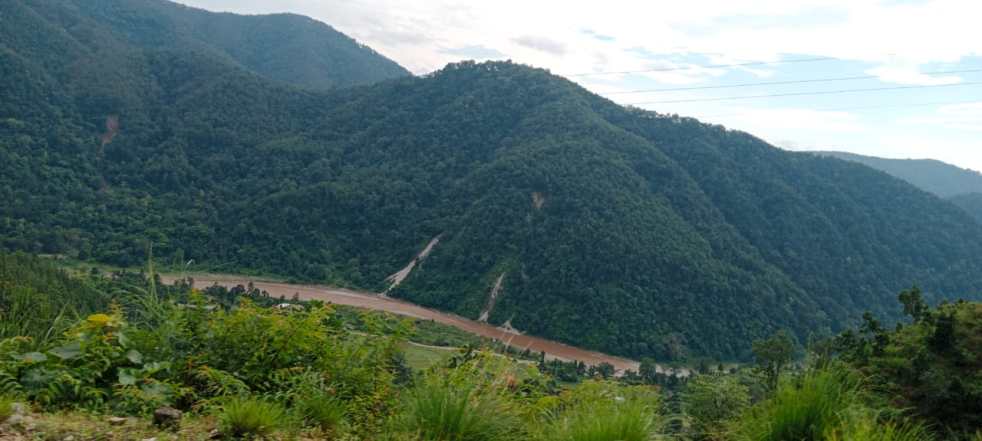
Uttarakhand Jamrani dam project in tiger corridor gets nod despite conservation concerns The Centre has approved a proposal for the use of nearly 400 hectares in the Dudhwa-Lagga tiger corridor in Nainital district to construct the Jamrani Drinking Water Multipurpose Project, despite the lack of a recommendation from the National Tiger Conservation Authority (NTCA). The project involves a 480-metre-long and 150.60-metre-high gravity dam across the Gola river in Jamrani village.
– The Standing Committee of the National Board for Wildlife (NBWL) discussed the proposal in its 77th meeting on January 30 and granted in-principle approval to it. An NBWL member said the project is critical for drinking water supply to Haldwani town and proposed reducing the dam’s height and dropping the construction of a powerhouse. The NBWL member secretary mentioned that the NTCA had not recommended the project and sought its comment on a site inspection report. The environment ministry accorded environmental clearance for the Jamrani Dam Multipurpose Project in December 2019 with a condition to obtain a no-objection certificate from the NTCA.
– In December 2022, the NTCA requested the Wildlife Institute of India (WII) to assess the ecological impacts of the proposed dam. The WII team set up for this purpose submitted the report to the NTCA in May last year. The report presented two decision-making scenarios: keeping the Dudhwa-Lagga tiger corridor intact and conserving this as of utmost importance or balancing the interests of both development and conservation values. “Should the first objective be chosen, then the proposal has to be rejected, and if the second objective is chosen, then stringent compliance conditions have to be stipulated,” it said.
– The best mitigation measure for the project is the avoidance of any developmental project in the identified tiger corridor area, the WII report said. The total submergence area of the proposed reservoir is 4.28 sq km (about 17.85 per cent of the corridor area of 24 sq km). “This 17.85 percent of the area will be affected at the full reservoir level. If we have to save this area without any anthropogenic intervention, the area has to be left alone, and status quo has to be maintained without any developmental activities in the corridor,” the report read. https://theprint.in/india/dam-project-in-uttarakhands-tiger-corridor-gets-nod-despite-conservation-concerns/1964999/ (13 Feb. 2024)
HYDRO POWER PROJECTS
Himachal Pradesh A fraudulent compensation scam, amounting to Rs 15 lakh, has been exposed by the vigilance dept in the 100 MW Sainj Hydro Power Project. The investigation has led to the registration of an FIR against seven individuals, including three retired engineers of HPPCL. The case pertains to payments made in 2007-08 for two houses that did not exist. https://bnnbreaking.com/politics/himachal-pradesh-hydro-power-project-scam-unraveling-a-web-of-fraud (18 Feb. 2024)
Sources said landowners Radhey Shyam and his sons Gaurav Kapoor and Gunjan Kapoor allegedly pocketed extra compensation of Rs 15 lakh for showing two houses on their land which never existed. They had hired engineer BD Gupta, who had prepared the estimate. Three engineers, including a manager and a deputy manager of the HPPCL, all now retired, allegedly assisted the owners. An FIR in the case, which was being investigated by the Vigilance for long, has been registered at Vigilance police station in Kullu. https://www.tribuneindia.com/news/himachal/hp-power-corp-paid-15-lakh-for-fake-houses-7-booked-592201 (19 Feb. 2024)
Jammu & Kashmir Dr Raja Muzaffar Bhat speaks about the environmental issues of Kashmir Valley including indiscriminate sand mining, hydro projects, roads and railways and alternatives.
https://www.youtube.com/watch?v=0m9MxNNDQlo (19 Feb. 2024)
NHPC Why shares up 8% after 20% fall in 2 sessions Shares of NHPC went up 8% in Feb 13 after falling over 20% in the past two sessions after the company announced an interim dividend for 2023-24. Despite a weak third quarter earnings, the board has approved an interim dividend at the rate of ₹ 1.40 per share, on the face value of ₹10 each for FY24.
– According to domestic brokerage JM Financial, underperformance and sharp variance in Q3 were due to flash floods in river Teesta (Oct’23) resulting in material damage & consequential business loss (INR ₹490 crore) in Teesta- 4,5 power stations, both of which are majorly recoverable post insurance settlement expected by Q1FY25. https://www.fortuneindia.com/investing/nhpc-shares-up-8-after-20-fall-in-2-sessions-heres-why/115784 (13 Feb. 2024)
Tata Power Company Ltd is looking to set up pumped hydro storage projects of 2,800 MW capacity by 2028-29 with an investment of ₹15,000 crore, said its chief executive Praveer Sinha. https://economictimes.indiatimes.com/industry/renewables/tata-power-to-set-up-2800-mw-pumped-storage-projects/articleshow/107802020.cms (19 Feb. 2024)
MoEF Agenda of EAC on River Valley Projects meeting to be held on Feb 28 2024: Meeting to be held for SINGLE agenda item:
– Kandhaura Pumped Storage Project (1680 MW) at Village: Sashnai, Taluka: Obra and Villages: Markuri & Cherue Taluka: Robertsganj, District: Sonbhadra, Uttar Pradesh by M/s. JSW Energy PSP Six Ltd: TOR https://parivesh.nic.in/utildoc/47342350_1708089721650.pdf
DAMS
Kaleshwaram Project CM trashes 3 KLIP barrages, vows action on Medigadda CM Revanth Reddy on Feb 13 2024 said three barrages – Medigadda, Sundilla and Annaram that were constructed on Godavari river as part of Kaleshwaram Lift Irrigation Project (KLIP) by the previous BRS govt – were of no use, claiming that the govt cannot store water in the upcoming monsoon season.The CM, his cabinet colleagues and MLAs on Tuesday were on a day-long visit to the Medigadda barrage whose piers had sunk last year. Revanth Reddy said the govt would take the help of National Dam Safety Authority (NDSA) on technical issues, safety of the barrages and how to tackle the mess. He said action will be taken against officials responsible for Medigadda damage. https://timesofindia.indiatimes.com/city/hyderabad/cm-trashes-3-klip-barrages-vows-action-on-medigadda/articleshow/107681525.cms (14 Feb. 2024)
“In 2015 different surveys were undertaken by the five-member committee on changing the project site from Tummidihatti to Medigadda. Following that the Committee in its 14-page report suggested that Medigadda will not be a suitable place,” CM said. https://www.newstap.in/telangana/defying-engineers-advice-kcr-chose-medigadda-alleges-revanth-reddy-1521149 (17 Feb. 2024)
Panel of retired engineers panel formed by KCR too was against barrage at Medigadda: CM. https://www.thehindu.com/news/national/telangana/panel-of-retired-engineers-panel-formed-by-kcr-too-was-against-barrage-at-medigadda-cm/article67857215.ece (17 Feb. 2024)
Annaram barrage develops leak Irrigation minister N. Uttam Kumar Reddy on Feb. 17 2024 announced in the Legislative Assembly that the Annaram barrage — one of the three key constituents of the Kaleshwaram lift irrigation scheme (KLIS) — has now sprung a major leak, after the Meddigadda barrage sunk last year. Uttam Kumar Reddy, played a short video clip that showed the extent and force of the leak. He said irrigation officials were told to empty all the water at Annaram barrage to try and prevent further damage, or face a potential disaster, like the one at Medigadda.
– “We have written to the National Dam Safety Authority to do a thorough investigation into all the three Kaleshwaram barrages, Medigadda, Annaram and Sundilla” he said. Irrigation engineers said that the matter was not just serious but also dangerous. The large leak took place under Pier 35 of the Annaram barrage and was first noticed on Feb 16 night. By Feb 17 morning, it grew in strength and the velocity of the water gushing through from under the barrage’s foundation increased.
– The latest leak is in a new area of the barrage, as the previous leaks at Annaram were plugged by the contractor a few days after they were found, more or less simultaneously when a portion of the Medigadda barrage cracked and sank on October 21, 2023. As of Feb 17 morning, 2.7 tmc ft of water was stored at Annaram, and water was being released from there to reduce the pressure on the barrage and to prevent any damage from the leak. https://www.deccanchronicle.com/nation/annaram-barrage-develops-leak-in-serious-trouble-882496 (17 Feb. 2024)
The Water Resources minister said the govt had requested the NDSA to inspect the leaking Annaram barrage, part of Kaleshwaram Project and suggest corrective steps immediately. The NDSA authorities have asked us to immediately empty the barrage and they would inspect it in two days, he added. Speaking in the assembly on the white paper on irrigation projects, the minister said: “Unless the NDSA gives us way forward on the three barrages, the govt will not go ahead with corrective measures.” Uttam declared that the state govt would act on the inquiry reports by Vigilance and Enforcement (V&E), NDSA and Comptroller and Auditor General (CAG) and take action. https://timesofindia.indiatimes.com/city/hyderabad/after-medigadda-seepage-noticed-now-at-annaram-project-says-uttam/articleshow/107788454.cms (18 Feb. 2024)
Soil test to check if Medigadda barrage is fit to use Top Vigilance officials have said that only a thorough assessment of the substrata of sand below the Medigadda barrage can reveal the actual extent of the damage to it. The National Dam Safety Authority will assess the level of sand erosion and check how much of the barrage is free-standing. The NDSA report will reveal if the barrage is stable enough and fit for use. Doubts about the stability of the barrage grew stronger after images of huge cracks, rusted steel, sunken reservoir bed and water seeping from the piers in the Medigadda barrage were made public following the recent visit by a delegation of legislators, led by Chief Minister A Revanth Reddy.
– “If there is a gradual sinking of the piers, then it is still manageable. We can control the dam and open/close gates to manage the water level,” Director General (Vigilance) Rajiv Ratan said. “God forbid if there is a big hollow under the raft and the raft breaks, then there is a possibility of heavy floods downstream.”
– Noting that Sundilla and Annaram, the other two barrages, have some visible erosion of CC blocks, Ratan said: “The damage is progressive. The other barrages were also built with an identical design. CC blocks control the flow of water. But if they are not maintained and are standing on a hollow space and without any support, then they are also likely to sink in a similar manner.”
– The officer admitted that the preliminary report submitted by the Vigilance team does not have any earth-shattering observation that was not already made by the NDSA. In his words: “This is more of a damage report.” While the causes of failure are many, the most glaring cause is the abandonment of the barrage. “Abandonment is nothing but non-maintenance,” Ratan clarified. Most of this comes down to the engineer-in-chief, who Ratan said, was “not very diligent in his work”. The DG added, “He was issuing a lot of certificates in favour of the executing agency.” The V&E DG also suspected that the Irrigation department was focusing on cover-up. The officer added that the team was yet to completely inspect the other barrages. https://www.newindianexpress.com/states/telangana/2024/Feb/17/soil-tests-to-check-if-medigadda-barrage-is-fit-for-use (17 Feb. 2024)
Medigadda pillars sink due to defective design: CAG -Indicating that the piers of Medigadda sank due to defective designing and improper surveys while constructing the barrages of Medigadda, Annaram and Sundilla, CAG said the BRS govt’s claim that the contractor had agreed to rectify the damages was incorrect. CAG said the irrigation department admitted that the damages at Medigadda were first noticed in Nov 2019 itself, five months after inauguration of Kaleshwaram in June. L&T, the contractor, also wrote a letter about the barrage damages to the irrigation department in May 2020, it said. “In Nov 2019, these barrages received floodwater and water was released downstream. After closing the gates, it was found that the RCC wearing coat, part of cement concrete curtain walls, CC blocks got washed away, resulting in a loss of 180 crore,” the report said. Now, the govt may have to bear the expenditure for repairs. The audit agency said the irrigation wing’s studies had revealed that the reason for sinking of piers was due to high discharge velocities of the water released and inadequate provision of the energy dissipation works. L&T said the works were done as per the designs and drawings provided by irrigation wing. Hence, the contractors did not take any responsibility. https://timesofindia.indiatimes.com/city/hyderabad/medigadda-barrage-sinks-due-to-defective-design-auditor/articleshow/107737476.cms (16 Feb. 2024)
The CAG report also said that the department approached the contractor for taking up the repairs estimated to cost Rs 476.03 crore, but was told that the work was executed strictly as per designs and drawings approved by the department and under the supervision of the department engineers. The report said that although the department claimed that the contractor was liable to take up the repairs under the ‘defect liability period’ clause, the government’s contention was “not correct as more than three and half years elapsed,” by the time the rectification works were sought to be executed. https://www.deccanchronicle.com/nation/politics/design-defects-led-to-damages-to-kaleshwaram-barrages-cag-882325 (16 Feb. 2024)
The much-publicised Kaleshwaram project will require 8,459.1 MW power working out to 46.82% of the total installed capacity available in Telangana. The project would require a total of 14,344 million units of energy every year after completion. The peak energy demand when all the pumps are likely to be operated simultaneously during the pumping season works out to 203.02 MU per day. “This is more than the daily average energy availed in the entire State in 2021-22,” the CAG said. https://www.thehindu.com/news/national/telangana/cag-says-kaleshwaram-project-will-require-10374-crore-towards-energy-charges-every-year/article67848389.ece (15 Feb. 2024)
The CAG has expressed concern over the off-budget borrowings (OBBs) of the State government yet again. The constitutional audit institution said that the State was liable to pay principal and interest on account of OBBs to an extent of ₹1.18 lakh crore in addition to its total liabilities of ₹3.14 lakh crore at the end of financial year 2021-22. Taking into consideration the OBBs and other liabilities that are being serviced out of the State budget, the ratio of debt to GSDP would be 37.77 % which was 12.77 % higher than the 25 % target set in the TSFRBM Act. https://www.thehindu.com/news/national/telangana/cag-expresses-concern-over-obbs-by-telangana-government/article67853384.ece (16 Feb. 2024)
The CAG has come out with a damning report on Kaleshwaram project, which says it was economically unviable from the start and details the massive cost overruns, possible undue benefits accrued to contractors and the poor planning involved. The cost of the Kaleshwaram Project, touted as the world’s largest multi-stage lift irrigation project is now likely to exceed ₹ 1.47 lakh crore, as against ₹ 81,911 crore projected to the Central Water Commission (CWC), a new report by the CAG said on Thursday (Feb. 15). https://www.ndtv.com/india-news/comptroller-and-auditor-general-cag-report-says-telanganas-kaleswaram-project-economically-unviable-5066753 (15 Feb. 2024)
Telangana Govt presents white paper on irrigation projects Presenting a white paper on the irrigation sector in the assembly, irrigation minister N Uttam Kumar Reddy assured that pending irrigation projects, such as Kalwakurthy lift Scheme, Kodangal-Narayanapet, Chinna Kaleswaram, Alimineti Madhavareddy SLBC, Sripada Yellampalli Canal, Mid Manair, Komuram Bheem, and Devadula lift scheme, would be completed at the earliest. “As more than 50 per cent progress has been made in the Palamuru Rangareddy Lift scheme (PRLIS), the government would get central funds under Accelerated Irrigation Benefit Programme (AIBP) and PMKSY and complete the project expeditiously,” he said.
-Giving details of the money spent on irrigation sector in the last 10 years, the irrigation minister said the previous BRS government had spent ₹1.81 lakh crore and created irrigation potential for only 1.581 million acres, which comes to about ₹11.44 lakh per acre, which was only 38% compared to the ayacut provided before the formation of the state. “In 2023-24, it was proposed to provide irrigation to 17.21 lakh acres but only 500 acres of ayacut had been created,” he said.
-Referring to the claims of the previous BRS government on the new ayacut created under Kaleshwaram lift irrigation scheme on Godavari river, Reddy said ₹93,872 crore was spent on the project but only 98,590 acres of ayacut was provided irrigation. “Except building barrages, pump houses and sub-stations, there was no intention to provide water to the farmers. The work was done without any plan of constructing the necessary distributaries and canals to irrigate new ayacut,” he said. He further said the previous government had also spent ₹36,000 crore on irrigation projects, such as Palamuru-Rangareddy lift scheme, Sitarama lift scheme and Sitamma Sagar Project, with other capital expenditure and not even a single acre of irrigation facility had been provided so far.
-Reddy also alleged that the previous government had neglected the management of old projects. As a result, the survival of irrigation projects has become questionable in the last 10 years. “As many as 15 gates of Kadem project were washed away due to lack of management, forcing the authorities to announce crop holiday for 65,000 acres under the project in the current Rabi season,” he said. Similarly, in October 2019, the Musi project gates were washed away. On December 31 of the same year, Sarala Sagar Project in Wanaparthy district breached, he said.
The minister also pointed out that the previous government had not cleared payments for 28,412 bills for various irrigation works worth ₹10,455 crore. “Nearly 98% of them are below ₹1 crore, with a total value of ₹382.39 crore. Similarly, 304 bills ranging from ₹1 crore to ₹5 crore are pending. The total value of these is up to ₹575.73 crore and there are 349 bills worth more than ₹5 crore and the outstanding amount is ₹12,682.50 crore. Even if these huge arrears are paid, new works cannot be taken up,” he said. https://www.hindustantimes.com/india-news/irrigation-projects-to-be-completed-on-priority-telangana-govt-in-white-paper-101708197475012.html (18 Feb. 2024)
Nagpur 79 small trees felled, water being released to save Ambazari dam Almost four months after a flash flood damaged hundreds of properties situated downstream of Nag river, the Nagpur Municipal Corporation (NMC) has initiated corrective measures, beginning with fortification of the Ambazari dam. A senior NMC official privy to the development said, “The strengthening work of Ambazari dam has finally been taken up. Earthwork will be done to strengthen the dam’s embankment, followed by stone pitching.” For this, NMC’s garden department has started felling 79 trees on the flat area near the base of the dam as per suggestion from an expert committee. The committee was of the view that if these trees grow too big, they may loosen embankment soil. “The small cavities created after uprooting these trees will be filled. If large trees are cut, big cavities will be formed, so these trees would be left intact.
– In August 2017, the director general of Design, Training, Hydrology, Research & Safety, Maharashtra Engineering Research Institute in Nashik had declared the earthen dam unsafe. Considering the high cost involved, it was decided to carry out the dam strengthening work in three phases as per priority. Work for a shed near the Vivekananda statue was done at a cost of 4.50 crore. Also, a wall was constructed near a temple situated on the lake’s south side. But the protection wall was neglected.
– The work gained momentum after the September 23 disaster. “The first tender floated on November 17 found no bidders. Later, the irrigation department changed the criteria and floated the tender twice. Of the five private agencies which responded, BC Biyani Projects Pvt Ltd was entrusted with the reinforcement work,” said an irrigation department official. The project cost Rs4.6 crore and the time frame for completion the work is set for six months. https://timesofindia.indiatimes.com/city/nagpur/nagpur-municipal-corporation-fortifies-ambazari-dam-by-felling-79-small-trees/articleshow/107768138.cms (17 Feb. 2024)
Karnataka Govt proposes new dam on Tungabhadra Deputy CM D K Shiva Kumar while stating that the Tungabhadra Dam was silted announced that the government has prepared a plan to construct a balanced dam at Navali. Discussions regarding this project will involve the governments of Telangana and Andhra Pradesh, as all three states must collaborate to undertake this endeavour. Shiva Kumar stated that the project is slated for implementation in the next budget cycle.
-An irrigation department senior officer told Siasat.com that about 31 tmc ft of silt is accumulated on the Tungabhadra reservoir bed resulting in a reduction of its storage capacity. Thus, Karnataka Irrigation officials proposed to build a new dam for the Tungabhadra River in the Tungabhadra board meeting held in 2018. Officials said that due to silt buildup over many years, the capacity of the dam has declined considerably, and it is impossible to remove the silt. https://www.siasat.com/karnataka-proposes-new-dam-on-tungabhadra-river-akbar-owaisi-objects-2977386/ (14 Feb. 2024)
INTERSTATE WATER DISPUTES
Pennaiyar Water Dispute Centre again forms negotiation committee The Union government has set up a fresh negotiation committee in line with the request of the upper riparian State. This follows the Supreme Court’s nod for the move on Jan 23 2024 following a request from Karnataka. Headed by the CWC’s chairman Kushvinder Vohra, the panel is to hold its inaugural meeting in New Delhi on February 21. Apart from representatives of the two riparian States (Karnataka and TN), the committee consists of officials from the other two riparian stakeholders — Andhra Pradesh and Puducherry — and officials of the Union Ministries of Agriculture and MoEF. A director in the Department of Water Resources, River Development and Ganga Rejuvenation at the Union Ministry of Jal Shakti (MoJS) and the CWC’s chief engineer in charge of irrigation management organisation (IMO) are the other members of the panel.
– The dispute arose in the wake of Tamil Nadu’s complaint, filed in the Supreme Court in 2018, that Karnataka had taken up construction of a dam across the Markandeya river, a tributary of Pennaiyar, and diversion structures in violation of the Madras-Mysore Agreement of 1892. In November 2019, the lower riparian State approached the Centre to constitute a Tribunal. In January 2020, the Union government formed a negotiation committee, which met twice.. No understanding was reached during the deliberations. According to an official document of the Tamil Nadu government, the committee submitted the final report to the Centre on July 31, 2020, “in favour of the constitution of the Tribunal.” In 2021, the MoJS attempted to sort out the matter, by holding another round of two meetings with the two States. In December 2022, the Court gave the Centre three months to constitute the Tribunal and this was preceded by Tamil Nadu filing an additional affidavit in the Supreme Court, requesting for issuance of directions to the Union government. https://www.thehindu.com/news/national/tamil-nadu/centre-changes-stand-again-forms-negotiation-committee-for-pennaiyar-river-dispute/article67857224.ece (17 Dec. 2024)
IRRIGATION
Maharashtra CM okays 185cr to construct check dams As many as 25 check dams will be built in the backwaters of Koyna dam in Mahabaleshwar and Jawali tehsils of Satara district to address the water scarcity issue of the people residing in the hilly terrains. An approval for the project was given by Eknath Shinde on Thursday (Feb. 01) as special case. Sunil Chavan, secretary of soil and water conservation department, said, “These check dams will hold sufficient water five months before the advent of monsoon to quench the thirst of the residents and cattle. The total cost of project is nearly Rs 185 crore and 23 villages will be benefited from this.” A survey was also carried out by the officials from the water resources department (WRD) to fix the locations of the check dams that will be built using concrete.
Residents of the affected villages met Shinde in Dare Tam and claimed that they face severe water scarcity from February to May every year as the storage level of the dam starts declining. The backwaters is spread across two tehsils and the area does not have ground water resource. Hence, the residents depend on dam water which is available only for eight months in a year. This time, the water from the dam has already started receding owing to poor run of monsoon last year. https://timesofindia.indiatimes.com/city/kolhapur/cm-approves-185-crore-for-check-dams-construction-in-koyna-backwaters/articleshow/107376065.cms (03 Feb. 2024)
URBAN RIVERS
RFDs adversely affecting urban rivers Experts warn against cosmetic beautification rather than rejuvenation of a river. Beautifying a river without thought to its character, purpose and culture can create problems rather than solutions, says environmentalist Himanshu Thakkar from SANDRP. “For any redevelopment project, an impact assessment needs to be done or you cannot take an informed, democractic decision,” he says.
– The Sabarmati river front project has come under criticism from environmentalists for restricting the natural flow of the river’s path to a uniform width throughout the city of Ahmedabad. Thakkar says, “The floodplains and the riverbed were acquired. The river was not cleaned and, in fact, water from the Narmada river (which belongs to the water scarce region of Saurashtra, Kutch and North Gujarat) has been diverted. This effectively has converted the Sabarmati river into a reservoir. The project has killed the nutrients, biodiversity, livelihoods in and around the river.” In Jaipur too not only the floodplains but also the bottom of the rivers have been concretised.
“We are in a phase of advanced climate change and we need better flood carrying capacity. Instead, by reducing this, we are inviting trouble. That is why we are suffering from contradictions like flooding and water scarcity in the same region,”, Thakkar adds. https://timesofindia.indiatimes.com/india/from-kashmir-to-kota-indias-riverfronts-are-undergoing-a-makeover/articleshow/107784236.cms (19 Feb. 2024)
Mula-Mutha; Pune Bloodworm infestation allegedly in river water A viral video has is surfacing on social media showcasing Bloodworm Infestation in water supply system of societies in Wakad & Hinjawadi, which is supplied through Mula-Mutha river.
As per further information from the X handle of Jaideep Baphna, Core Member, Pune River Revival “Pune Drinking Water Alert, Mula River – Mutha River Pollution, Coming Soon to Your Neighborhood. This is Chironomid larvae, a part of the Chironomidae family commonly called “non-biting midges” in the adult stage and “bloodworms” in the larval stage. If these mosquito cousins have reached Wakad and Hinjewadi, it means the river is slowly losing its capacity to fight back. Dark red color usually indicates poor water quality. Just to give an idea of scale, at least 20% of the 800 flats in Blueridge township in Hinjawadi have found them in the tap water.”
The tweet further continues “While this is happening, instead of the PMC cleaning the water, they are focused on useless concretization under Riverfront Development (RFD). Such projects destroy riparian ecology and worsen these issues. The PMC has repeatedly ignored citizen pleas to stop the destruction of riverbanks through RFD and prioritize water, sewage, drainage, garbage, hyacinth, mosquitoes, malaria, dengue, and numerous other issues. But he and the Additional Commissioner are engaged in promoting RFD through slick marketing videos that misinform citizens. They are ignoring the real priorities.” https://www.mypunepulse.com/viral-video-from-pune-bloodworm-infestation-allegedly-in-mula-mutha-river-water-in-wakad-hinjawadi/ (15 Feb. 2024)
River pollution reason behind ‘mosquito tornado’ However, experts have clarified that the ‘mosquito tornado’ is actually a swarm of Chironomus larvae, also known as bloodworms, which are not harmful to humans or animals, but rather a natural phenomenon that occurs when the larvae emerge from the water and take flight. The Chironomus larvae are a type of non-biting midge, which are closely related to mosquitoes but lack the wing scales and elongated mouthparts of the Culicidae. The larvae are bright red due to the presence of hemoglobin in their blood, which helps them survive in low-oxygen environments. The larvae form dense clusters and fly in a circular motion to disperse and find suitable habitats for their adult stage. The phenomenon is more common during the rainy season or when there is high humidity.
While the ‘mosquito tornado’ may not pose a direct threat, it is a clear indicator of the poor water quality and river pollution in the area. The Mula Mutha river, which flows through Pune, is one of the most polluted rivers in India, due to the discharge of untreated sewage, industrial effluents, agricultural runoff, and solid waste. The pollution has led to the depletion of dissolved oxygen, the proliferation of algae and bacteria, and the accumulation of toxic chemicals and heavy metals in the water. Therefore, the ‘mosquito tornado’ is a wake-up call for the authorities and the public to take urgent action to restore the health and beauty of the Mula Mutha river. https://timesofindia.indiatimes.com/etimes/trending/explained-the-truth-behind-mosquito-tornado-sighting-in-pune/articleshow/107711728.cms (15 Feb. 2024)
‘Mosquito tornadoes’: Need to address root cause of untreated sewage -“This is not an unusual phenomenon,” retired zoology professor Dr Hemant Ghate told The Indian Express, adding that untreated sewage is the root cause of the problem which is not being addressed. “Their larvae are like mosquito larvae but red due to the haemoglobin in their blood. These insects are abundant in waters polluted with organic matter and are present everywhere on the Mula-Mutha river.” Dr Ghate said the pupae (stage between larva and adult) of these insects evolve into adults at appropriate warm temperatures and hence a large number of mosquito-like adults emerge as swarms. “As a large number of adults fly above the water, their swarms sway in gentle wind, looking like waves. These do not bite but their abundance suggests sewage-polluted waters,” he explained. https://indianexpress.com/article/cities/pune/mosquito-tornadoes-pune-address-root-cause-untreated-sewage-expert-9158806/ (14 Feb 2024)
Experts said that hyacinth overgrowth have caused mosquito menace across city. Hemant Ghate, scientist and former head of the department of entomology at Modern College, said the insects seen in the viral video seem to be mosquito-like, but cannot cause diseases to human beings. These are indicators of serious sewage issues in waterbodies. Their presence suggests an immediate intervention for river cleaning, Ghate said. The untreated sewage water mixing into rivers and other waterbodies is leading to rising hyacinth and mosquito and other insect menace. https://www.hindustantimes.com/cities/pune-news/hyacinth-growth-leads-to-mosquito-menace-in-pune-101707756752536.html (12 Feb. 2024)
Indrayani Layer of toxic foam floats on river surface Toxic foam was found floating on the Indrayani River in Alandi on Sunday (Feb. 11). Despite repeated demand and assurance, pollution of the river has become a perpetual problem due to a lack of coordination and joint action by the local bodies involved.
-The river is reportedly polluted as a result of untreated industrial and domestic waste being discharged into the river. Pollution has been identified at various points along the river, from Lonavla to Alandi, which fall under the jurisdiction of several local authorities. https://www.hindustantimes.com/cities/pune-news/layer-of-toxic-foam-floats-on-surface-of-indrayani-river-in-pune-101707677343882.html (12 Feb. 2024)
-The Indrayani River is considered sacred among the Warkari community. It has witnessed a layer of toxic foam all over again in Alandi on Saturday and Sunday (Feb. 10-11). The MPCB officials, in a notice, stated that PCMC is releasing around 59 MLD of untreated domestic effluent into the three rivers.
-It was also claimed by the officials that the municipal corporation does not have STPs to treat effluent released from Chikhali, Talawade, Kudalwadi, and Moshi. The three MLD STPs of PCMC are inadequate, said MPCB officials. The MPCB has asked PCMC’s environment department to respond within 15 days. “Our work is underway to increase the number of STPs, and we are trying to ensure 100% treated water is released into the rivers,” Sanjay Kulkarni, joint engineer of PCMC, told TOI. https://timesofindia.indiatimes.com/city/pune/mpcb-notice-river-pollution-by-pcmc/articleshow/107645112.cms (13 Feb. 2024)
Musi; Hyderabad Rs 58,000-cr RFD will be a challenge Idea of redeveloping riverfront was first mooted in 1908 & pushed mid-1990 onwards, but saw little success due to challenges such as encroachment, fund crunch & inflow of sewage water. In Memoirs of My Working Life published in 1951, Visvesvaraya wrote that while suggesting storage facilities above the city to impound the flood water in excess of what the Musi river channel could carry, he had also proposed raising the river banks in stretches within the city and converting portions of them into “walks and gardens to give the banks an artistic effect along the riverfront”. While the Nizam built two reservoirs — Osman Sagar and Himayat Sagar — as a flood mitigation measure according to Visvesvaraya’s suggestion, the proposal to redevelop the riverfront did not take off. The 56-km stretch of the Musi flowing within the city has been reduced to a narrow, foul-smelling canal in almost the entire stretch, with only sewage water and industrial effluents flowing into the river. Massive encroachments in all shapes and sizes have come up in an approximately 20 km stretch of the dying river. With the Congress having come to power in Telangana last December, new CM A. Revanth Reddy has again announced that the Musi’s rejuvenation will be one of the signature projects of his government. He has also set a 36-month timeline to complete it, though urban sector experts are skeptical that a project of this magnitude and complexity can be completed in three years.
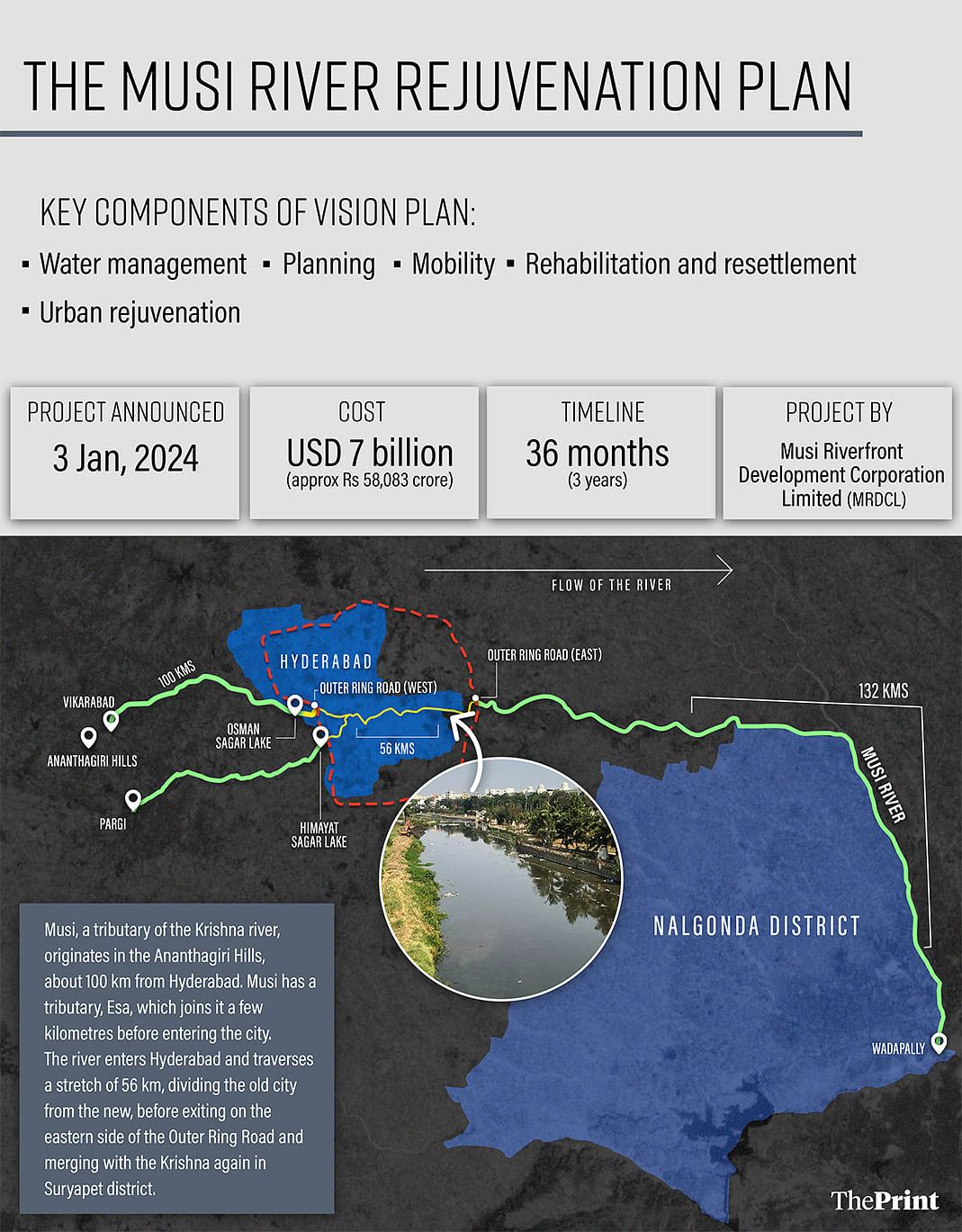
– Though at a very initial stage, senior Telangana government officials told ThePrint that the ambitious project is likely to cost approximately $7 billion (Rs 58,000 crore) and will be on the lines of the redeveloped Sabarmati riverfront in Gujarat. Earlier this month, the MRDCL invited global expression of interest for consultancy services for aggregate master planning for the Musi’s redevelopment. https://theprint.in/india/why-rs-58000-cr-musi-river-redevelopment-telangana-cm-reddys-signature-project-will-be-a-challenge/1964950/ (14 Feb. 2024)
Chambal; Kota RFD project violated green norms: Panel A joint committee, constituted by the NGT, has revealed that the Chambal Riverfront project proceeded without obtaining the mandatory environmental clearance, potentially violating regulations set forth by the Environment (Protection) Act, 1986.The committee comprising additional district magistrate (Kota) has highlighted the project’s potential violation of the EIA Notification, 2006, also. The report, which has been submitted to the NGT, states, “The notification specifies that projects within 10km of a National Park/Wildlife Sanctuary may require clearance from the Standing Committee of the NBWL. The dimensions of the Chambal Riverfront project suggest that it may fall below the threshold requiring EC, as specified in the EIA Notification, 2006.”
The report reads, “Despite its location near a protected area, the project commenced without securing clearance under Section 7 of the 1986 Act. Records indicate that the project’s total developed area spans approximately 39.5489 hectares, with a built-up area of 19,218.15 sqm across both banks of the Chambal River in Kota. This riverfront area is now designated for commercial activities like tea shops, khadi shops, apparel stores, bookstores, souvenir shops, and restaurants.” https://timesofindia.indiatimes.com/city/jaipur/chambal-riverfront-project-violated-green-norms-panel/articleshow/107738395.cms (16 Feb. 2024)
Tapi; Surat RFD project on paper, cost doubles in 8 years Rising cost of Tapi riverfront project to almost double as compared to the estimated cost eight years ago, is likely to become a major challenge in realization of the project. For the 33km-long river path from Kathor near Kamrej to Rundh Bhatha barrage, the project cost is estimated to total Rs 7,882 crore which was Rs 3,900 crore eight years ago when the project was proposed. The project got delayed for over 10 years since it was proposed.
Surat Municipal Corporation (SMC) has put up the proposal for approval in the standing committee meeting on Thursday (Feb. 15). Following nod, the project will be sent for approval from the state government. According to the fresh estimates, the project is to be executed in two phases. In the first phase of Rs 6,713 crore, the riverfront infrastructure will be developed; while the second phase storm drainage outlet and natural storm outlet are to be diverted at the cost of Rs 1,169 crore.
It was proposed for Rs 1,991 crore loan from World Bank as per the previous cost estimates. But following the revised estimates it is proposed to get a Rs 5,290 crore loan from the World Bank. Currently, the SMC is developing the Dumas seaface project for recreational activity and leisure at a cost of Rs 174 crore for the first phase. The project got delayed for over 10 years since it was proposed. https://timesofindia.indiatimes.com/city/surat/tapi-riverfront-project-cost-doubles-in-8-years/articleshow/107706945.cms (15 Feb. 2024)
Chennai Buckingham Canal remains choked with garbage, sewage A bed of waste, including plastic, thermocol, rubber, and wrapper, blocks the channel for a stretch of 100 metres near Chepauk MRTS station. The original depth of the canal should be 6 feet below sea level, but due to silt and sewage piling up, it is now 3 feet above sea level. Residents said this leads to swelling of the canal after a spell of rain. There are about five macro-storm water drain outlets into the canal from Chepauk to Triplicane. Experts said the constant inflow of sewage into the canal can further pollute groundwater. The Greater Chennai Corporation has neither plugged the outfalls nor fined the polluters.
Civic activist and GIS expert Dhayanand Krishnan said the civic authorities can place shutters in the drain and use sewage interceptors to divert water. “This is being successfully implemented in the Chitlapakkam Lake,” he said. GCC officials said they plan to install CCTV cameras along the 33 waterways in the city to identify polluters. “We have plugged more than 20,000 illegal sewage outfalls in 2023, and the drive will continue,” said a corporation official. https://timesofindia.indiatimes.com/city/chennai/buckingham-canal-choked-with-garbage-and-sewage/articleshow/107805223.cms (19 Feb. 2024)
RIVERS
Report Robot boats to clean waterbodies Hong Kong-based marine tech startup Clearbot is deploying its fleet of autonomous vessels in Indian rivers and oceans, aiming to tackle the ever-growing problem of waste and contamination. According to a report by South China Morning Post, Utkarsh Goel, the startup’s co-founder and CTO, said “We want to build these boats that do this dirty, dirty job that is happening with [manned, diesel] boats around the world and automate them and make them more sustainable.” The startup has already deployed 13 boats in India and Hong Kong, collecting tons of waste, claims the report. In September, Clearbot conducted a pilot project in the northeastern city of Shillong, India, demonstrating its capacity to remove between 600kg to 700kg of waste from a local lake within three days. Additionally, the organisation is actively engaged in a project in Bengaluru. https://timesofindia.indiatimes.com/gadgets-news/robot-boats-a-technological-solution-for-cleaning-indias-polluted-waters/articleshow/107647180.cms (13 Feb. 2024)
CAUVERY Tamil Nadu Receding water reveals trash in river With water flow at Hogenakkal dwindling to 300 cusecs, the damage caused to the Cauvery river by pollution has come to the fore. The river presents a sorry sight of clothes, plastic waste and even worn-out footwear dumped by tourists. Hogenakkal regularly attracts tens of thousands of tourists from across the country at its peak season.
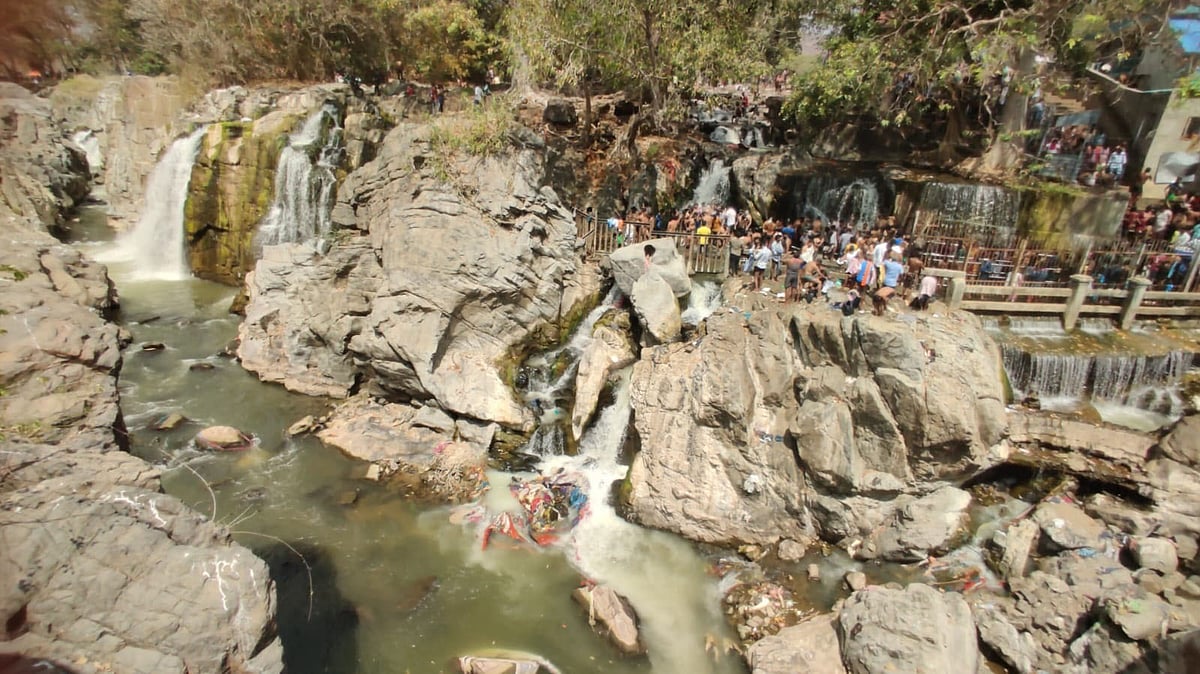
G Madhappan, a resident of Hogenakkal, said, “Tourists throw away all the waste and this has led to the accumulation of plastic waste. As far as the clothes are concerned, people who come here to perform religious ceremonies discard them in the river. Tourists must be more sensible and take care not to pollute the area.” Officials in the tourism development department said, “We have spoken to boatmen in Hogenakkal to offer assistance in cleaning up the Cauvery river. To evolve a permanent solution, we will hold a district-level meeting in the upcoming days.” https://www.newindianexpress.com/states/tamil-nadu/2024/Feb/13/receding-water-level-reveals-trash-in-cauvery-river-at-hogenakkal (13 Feb. 2024)
NARMADA Madhya Pradesh History, significance of Narmada jayanti -Narmada Jayanti the birth of the holy river Narmada is celebrated annually on Shukla Paksha Saptami in the Magha month of the Hindu lunar calendar. This year the significant occasion of Narmada Jayanti will be observed on Friday, February 16, 2024. On this day, devotees honour the Narmada River as they believe that the river brings prosperity and serenity to their lives. The famous destination for Narmada Jayanti is Amarkantak.
-According to the legend, Lord Shiva created the Narmada to cleanse the devas, or celestial beings, of their sins while fighting demons. The river’s name itself has deep significance: the words “Narm” and “da” mean “happy” and “giver,” respectively, designating the river as a source of happiness. Another story says that during Lord Shiva’s long meditation, Mother Narmada materialised from his sweat. She was so beautiful that even Shiva and Parvati were in awe. To show his happiness at her conception, Shiva gave her the name Narmada.
-According to another birth mythology, Lord Shiva created a divine lady named Narmada on Mount Maikhal. Because of her magnificent form, gods such as Vishnu gave her the name Narmada. Lord Shiva bestowed special blessings on this celestial lady and elevated her to the status of a unique and sacred river after a penance of 10,000 glorious years on the banks of the Uttara Vahini Ganga in the Panchkroshi district of Kashi.
-According to the Vishnu Purana, the Narmada River was collectively blessed by the Nag Rajas, guaranteeing that anyone who bathes in its sacred waters and prays to them will be freed from all sins and diseases. Like Mother Ganga, Mother Narmada is revered as the bestower of liberation. Through rituals, prayers and a strong sense of devotion, devotees connect with the Almighty on this day, which is more than just a celebration. https://www.hindustantimes.com/lifestyle/festivals/narmada-jayanti-2024-date-puja-timings-history-and-significance-of-the-day-101707984374367.html (16 Feb. 2024) https://epaper.subahsavere.news/clip/9869
GANGA Report NMCG: Delay in achieving targets In 2014, the Modi government launched the flagship Namami Gange Programme with an outlay of Rs 20,000 crore to clean and rejuvenate the Ganga river. The program has been marked by significant implementation delays. Uttarakhand and Uttar Pradesh used only 7% of the allocated budgets in 2022-’23. The program has had limited impact: 71% of the monitoring stations on the river reported alarming levels of faecal coliform, the presence of which indicates presence of human or animal faecal matter in the water. https://scroll.in/article/1063068/a-decade-under-modi-environmental-protections-diluted-cheetah-project-falters (12 Feb. 2024)
Uttarakhand Villagers stage protest over damage to houses due to tunnel construction -A number of families in Baldiyakhan village of Nainital district affected by the cracks developing in their houses due to tunnel-construction work have been staging a protest since January 21, urging authorities to intervene and look into the problems faced by them. A protester said that due to the Rishikesh-Karnaprayag railway tunnel construction work which also involves the process of conducting controlled blasts, their houses have developed cracks, while they have also been dealing with water scarcity for the last two years. https://www.thehansindia.com/news/national/uttarakhand-villagers-stage-protest-over-damage-to-houses-due-to-tunnel-construction-work-853676 (24 Jan. 2024)
YAMUNA Haryana agrees to give excess monsoon water to Rajasthan The issue has been a point of contention for over two decades, since the signing of an MoU on May 12, 1994, allocating water share among the co-basin states. The MoU was signed after a meeting between CM Manohar Lal Khattar and Rajasthan CM Bhajan Lal Sharma Feb. 17. The meeting was chaired by Union Jal Shakti Minister Gajendra Singh Shekhawat. After deliberations, a consensus was arrived for the joint preparation of DPR for the transfer of water through underground pipelines.
The state governments will finalise the DPR for the transfer of water through underground pipelines during July-October for drinking water supply and other requirements for Churu, Sikar, Jhunjhunu and other districts of Rajasthan after utilisation of full capacity (24,000 cusecs) of the Western Yamuna Canal by Haryana, including Delhi’s share, at Hathnikund under Phase 1 of the project. Both states shall extend full cooperation in preparation of the DPR within four months, as per the MoU.
According to an official, one of the key decisions arising from the meeting was the agreement to create facilities for the optimal utilisation of the Yamuna waters by Rajasthan and Haryana as per their allocations specified in the MoU of 1994. After construction of three identified storages in Upper Yamuna Basin, namely Renukaji, Lakhwar and Kishau, the corresponding share of Rajasthan at Hathnikund during the rest of the period shall be conveyed through the same system for drinking water and irrigation purpose to the extent possible. https://www.tribuneindia.com/news/haryana/state-agrees-to-give-excess-monsoon-water-to-rajasthan-591901 (18 Feb. 2024)
Haryana, Rajasthan sign agreement for utilising surplus water Haryana CM ML Khattar said that during the monsoon season, a significant amount of rainwater flowing through the Yamuna river gets wasted as it empties into the sea. Recognizing the need for sustainable water management and flood control measures, both states have committed to developing a comprehensive strategy by preparing a detailed project report. Under this MoU, the surplus water used in the water deficit areas of Haryana will also be provided to Rajasthan, an official spokesperson said. This water can be used in the areas of Haryana’s border districts of Bhiwani, Charkhi Dadri, and Hisar.
The CM said that apart from the districts situated on the state’s border, the entire Haryana will receive more water from the increased capacity of the western Jamuna Canal (WJC), and Rajasthan will also get water. As per the agreement, four pipelines will be laid, three of which, with a capacity of 2500 cusecs, will be for Rajasthan, and the fourth pipeline will fulfil the water needs in the water-scarce areas of three districts of Haryana bordering Rajasthan – Bhiwani, Charkhi Dadri, and Hisar, the spokesperson said. https://www.hindustantimes.com/cities/chandigarh-news/haryana-rajasthan-sign-agreement-for-utilising-surplus-yamuna-water-101708195853962.html (18 Feb. 2024)
According to the agreement, the two states will prepare a detailed project report in four months for laying pipelines from Western Yamuna Canal of Hathnikund barrage. Three pipes would be meant for Sikar, Jhunjhunu and Churu districts, while an additional pipe will be laid to take water towards southern Haryana through Dadri district. The pact will not affect Haryana’s share of the share of Delhi. https://timesofindia.indiatimes.com/city/chandigarh/haryana-and-rajasthan-sign-pact-to-share-yamuna-water-latest-news/articleshow/107789403.cms (18 Feb. 2024)
Water sharing pact due for revision in 2025 According to the Union Jal Shakti Ministry, the water sharing agreement of 1994 among the riparian states of Uttarakhand, Himachal Pradesh, UP, Haryana, Rajasthan and Delhi is due for revision only in 2025.
The national capital generates 792 MGD of sewage. The 37 STPs in the city have a cumulative treatment capacity of 667 MGD. Presently, these STPs utilise only 71 per cent of their installed capacity, treating only 565 MGD of the 792 MGD sewage, with the rest flowing into the Yamuna river untreated. Only 237 MGD of the treated wastewater meets the prescribed standards which require that BOD and TSS in the treated wastewater should be less than 10 milligrams per litre. https://theprint.in/india/nih-recommended-e-flow-of-23-cumecs-inadequate-to-make-yamuna-fit-for-bathing-dpcc/1966128/ (14 Feb. 2024)
Delhi River, floodplain reason behind leakages in Pragati Maidan tunnel Due to constant water leakage from the walls, roofs and joints in the tunnel, problems like potholes and cracks have emerged on the surface. Recognising this as a major issue, the Public Works Department has sent a legal notice on these lacunae to L&T, the private firm responsible for the construction and maintenance of the road infrastructure.
Bhim Singh Rawat, a Yamuna activist and associate coordinator of South Asia Network on Dams, Rivers and People (SANDRP), pointed out, “The area where the Pragati Maidan tunnel is situated was originally the Yamuna floodplain. Over the years, infrastructural interventions both up and downstream greatly compromised the meandering function of the river. Otherwise, a free flowing Yamuna could easily reach the current tunnel site, the aerial distance from the riverbank to the tunnel being less than 200 metres.”
Other experts reiterated that a proper hydrogeological analysis should have been carried out before the tunnel was built. AK Gosain, professor emeritus, IIT-Delhi, noted, “A huge area around the Yamuna forms the river’s floodplain. However, the creation of embankments over the years have reduced the area of the floodplain. The Pragati Maidan tunnel is built on this very land and whenever the water level in the Yamuna rises, the water table in the adjacent area also goes up due to seepage from the river. This situation has also been observed in the Commonwealth Village which is also built on the floodplain.”
Activist Rawat, however, claimed that when the tunnel project was announced, some river watchers had expressed concerns about water seepage. “The stormwater drain running close to the tunnel site seems to be aggravating the leakage problem,” said Rawat. “Dredging the river alone will not be of much help. The planners and developers must undertake credible geo-hydrological assessment before starting such projects.”
But prima facie, there are flaws in the construction of the tunnel, felt professor Shashank Shekhar of the department of geology, Delhi University. “Historically, groundwater flows downgradient from Rashtrapati Bhawan to India Gate and past Pragati Maidan to the Yamuna river,” he explained. “Since the groundwater is likely to be shallow in the tunnel area and the basement is also shallow, saturated aquifers through which the tunnel is passing will force groundwater by leakage in the tunnel. Perhaps, proper hydrogeological investigations were not carried out before the construction of the tunnel began.” https://timesofindia.indiatimes.com/city/delhi/pragati-maidan-tunnel-from-inspiration-to-grief/articleshow/107737131.cms (16 Feb. 2024)
Amunay: A river story umay FASCINATING story of River Amunay, an imaginary tale, but so close to reality.
https://www.youtube.com/watch?v=z7PWrbl4jfI (09 Feb. 2024)
From the Ghats: Role and Resilience of Divers Vibhuthi Bhardwaj, PRC Abstract This essay explores the lives of Delhi’s traditional divers – Gotakhors, who navigate the depths of the Yamuna to construct an urban identity of rescuer. Through an in-depth interview with the community at ITO Chhat Ghat, the study delves into their perspectives on recognition within society, the politicization and religious dependence of their livelihoods, and their survival next to the river. Despite risking their lives daily to rescue drowning victims and perform vital rituals, they remain unseen and unheard. This is an attempt to amplify their voices and challenge the narratives that relegate them to the margins. https://drive.google.com/file/d/1Im-uwTU_RX5aH0LYz5_fBeoEAVcSJNXU/view ; https://prcindia.in/resources/urban-kaleidoscope-water-and-city-volume-2-february-2024/
₹6,856 cr spent in 5 years on river cleaning Nearly ₹6,856.91 crore was spent over five years, from 2017-21, to clean the Delhi stretch of river Yamuna, the Environment Department said in response (dated March 22) to a question raised in the Assembly. However, as per reports of the Delhi Pollution Control Committee (DPCC), most of this stretch remains polluted for nearly the entire year and is not even fit for bathing.
Manoj Misra, convener of the Yamuna Jiye Abhiyaan, a civil society initiative for the river’s rejuvenation, said the rejuvenation of the Yamuna depends on three things. “One, a single agency should be responsible for the rejuvenation to ensure accountability. Second, increasing the natural flow of the river has to be prioritised. Third, the floodplains should be protected. No developmental work should be allowed on them and they should be restored in an ecological manner,” he said. https://www.thehindu.com/news/cities/Delhi/over-6800-crore-spent-in-5-years-on-cleaning-yamuna/article66692782.ece/amp/ (03 April 2023)
Uttarkashi यमुना घाटी अपनी खूबसूरती के लिए जानी जाती है, लेकिन इसके साथ ही यहां की काष्ठ कला बेजोड़ है। दशकों पुराने लकड़ी के घर आज भी वैसे ही मजबूती से खड़े हैं। https://www.gaonconnection.com/gaon-connection-tvvideos/traditional-wooden-house-of-uttarakahnd-46414 (09 Oct. 2019)
RIVERS BIODIVERSITY
Tamil Nadu Critically endangered turtle species sighted in Cauvery -In a major breakthrough, a healthy breeding population of 31 individuals of elusive Leith’s soft-shell turtle (Nilssonia leithii), which is a critically endangered species protected under Schedule 1 of Wildlife Protection Act, were found in Cauvery river between Mekedatu and Hogenakkal. These are large freshwater turtle species endemic to peninsular India. So far, only sporadic sightings of this species was recorded in parts of the Thungabhadra, Ghataprabha, Bhavani, Godavari, Krishna, Chalakkudy, Cauvery, and Moyar Rivers. https://www.newindianexpress.com/tamil-nadu/2024/Feb/15/critically-endangered-turtle-species-sighted-in-cauvery (15 Feb. 2024)
Assam Two new mammal species identified in Kaziranga The small-clawed otter, the smallest otter species in the world, is the third otter species to be found in Kaziranga. The small-clawed otter, the smallest otter species in the world, has a wide distribution range, extending through India in South Asia to eastwards in Southeast Asia and southern China. In India it is found mostly in the protected areas of West Bengal, Assam, and Arunachal Pradesh and in Karnataka, Tamil Nadu and some parts of Kerala in the Western Ghats region.

It was previously reported from western Himalayas and parts of Odisha, however no recent records of its presence has been found in these regions. The species is listed under Schedule I of the Wildlife Protection Act 1972. It ics also classified as a vulnerable species in the IUCN Red List and faces threat due to habitat destruction, poaching for pelt and reduction in prey. https://india.mongabay.com/2024/02/two-new-mammal-species-identified-in-kaziranga/ (14 Feb. 2024)
UN Migratory species increasingly under threat -More than a fifth of migratory species under international protection are threatened with extinction, including nearly all nomadic fish, according to the first UN expert assessment. The report comes as governments gather for a summit in Samarkand, Uzbekistan, to discuss how to better protect the world’s migratory species. The convention covers migratory species that require international coordination to protect their survival. The report authors identified 399 threatened migratory species that are not listed under the convention. https://www.theguardian.com/environment/2024/feb/12/from-turtles-to-fruit-bats-migratory-species-increasingly-under-threat-says-un (12 Feb. 2024)
-The report provides a global overview of the conservation status and population trends of migratory animals, combined with the latest information on their main threats and successful actions to save them. The main focus of the report is the 1,189 animal species that have been recognised by CMS Parties as needing international protection and are listed under CMS, though it also features analysis linked to over 3,000 additional non-CMS migratory species. https://in.investing.com/news/landmark-un-report-reveals-shocking-state-of-wildlife-4015342 (12 Feb. 2024)
FISH, FISHERIES, FISHERFOLKS
ICSF A new roadmap A national platform of fishers met to assert the inalienable right of fishers and fishworkers to access water bodies, campaign for climate justice, and become a federation of unions through a new constitution. The national council meeting of the National Platform for Small-Scale Fish Workers (NPSSFW) was held in Kolkata, India, on November 6-7, 2023. The main objectives of the first day of the meeting were to discuss the issues and challenges faced by small-scale fishworkers in the country and to strengthen the organization’s efforts to address them. The primary objective of the second day of the meeting was to adopt the constitution of NPSSFW so as to provide a clear definition of small-scale fishworkers and indicate how the organization should operate at the state and national levels, with defined objectives and mechanisms to achieve the same. https://www.icsf.net/samudra/a-new-road-map/ (Dec. 2023)
Freshwater Blues At every step of the governance of the inland fisheries, small-scale fishers and fish farmers must be consulted since their engagement in inland fisheries is directly linked to the health of the freshwater biodiversity. Extension of rights to water bodies and inclusion of unions and organizations of small-scale fishers in planning and management of fisheries resources can be a step forward. It will help build up the adaptive capacities of small-scale fishers, also facilitating conservation and rejuvenation of aquatic and fish resources in freshwater ecosystems. Further, the relevant state departments and governing bodies must monitor that all small-scale fishers engaged in inland fisheries are identified and registered in the national statistics. That will pave the way to cover them under a comprehensive social security framework, ensuring the delivery to fishers of the benefits accruing from state and central fisheries policies and schemes. https://www.icsf.net/samudra/freshwater-blues/ (Dec. 2023)
Madhya Pradesh Omkareshwar solar project subject to final HC order The high court in an interim order said that work on Omkareshwar solar energy project would be subject to its final order. The court is hearing a petition filed by two fishermen’s societies challenging the project on the ground that it’s jeopardising their livelihood as they need to catch fish in the Omkareshwar dam reservoir and sell them to make a living. The court also issued notices to the state government and M/s Rewa Ultra Mega Solar Ltd, the company executing the project.
The fishermen’s cooperative societies — Maa Satmata Sailani Matyasodyog Samiti and Maa Kajalrani Vishthapit Adivasi Machhuara Sahkari Samiti — in their petition said that the state government is executing a 600 MW solar energy project in the reservoir of Omkareshwar dam and the contract for this has been given to Rewa Ultra Mega Solar Ltd. The company is installing solar panels on the reservoir, which has put fishing at risk and their livelihood in danger. The state government has no rehabilitation plan for them ready, they say.
Referring to the environment and social impact report on Omkareshwar solar energy project, they said that the report admits that it would put an end to the livelihood of hundreds of fishermen and they should be given financial assistance and jobs in the project as their rehabilitation. But no initiative in this regard has been taken nor they have been consulted on the issue ever, say the petitioners. They demanded that a rehabilitation plan involving a permanent job to them under the project and benefits of rehabilitation under rehabilitation rules 2013 be provided to them. https://timesofindia.indiatimes.com/city/bhopal/omkareshwar-solar-project-subject-to-final-hc-order/articleshow/107768320.cms (17 Feb. 2024)
याचिका में माँग की गई है कि प्रभावित मछुआरों को परियोजना में स्थाई नौकरी दी जाये और भू-अर्जन क़ानून 2013 के अनुसार पुनपुर्वास के लाभ दिये जायें. याचिका में यह भी माँग की गई है जब तक सभी मछुआरों को ये लाभ नहीं मिल जाते तब तक उनके क्षेत्र में सोलर प्लेट लगाने का कार्य स्थगित किया जाये। गत 12 फ़रवरी को उच्च न्यायालय की जबलपुर खंडपीठ में न्यायाधीश श्री मनिंदर सिंह भाटी के समक्ष याचिका पर सुनवाई के बाद न्यायालय ने राज्य सरकार और रीवा अल्ट्रा मेगा सोलर लिमिटेड को नोटिस कर जवाब माँगा है। साथ ही न्यायालय ने अपने आदेश में स्पष्ट किया है कि वर्तमान में जलाशय पर सोलर प्लेट् लगाने की करवाई इस याचिका के अंतिम निर्णय पर निर्भर करेगी. याचिका पर अगली सुनवाई 4 मार्च को है। https://www.spsmedia.in/dam-and-displacement/omkareshwar-solar-energy-project-notice-issued-to-government-on-petition-of-fishermen/ (14 Feb. 2024) जबलपुर हाईकोर्ट ने ओंकारेश्वर सौर ऊर्जा परियोजना से प्रभावित मछुआरों की याचिका पर राज्य सरकार और परियोजनकर्ता रीवा अल्ट्रा मेगा सोलर लिमिटेड को जवाब देने के लिए नोटिस जारी किया है। न्यायाधीश मनिंदर सिंह भाटी ने आदेश दिए कि परियोजना के तहत सोलर प्लेट लगाने का कार्य याचिका के अंतिम निर्णय पर निर्भर करेगा। https://www.bhaskar.com/local/mp/khandwa/news/notice-to-government-on-omkareshwar-solar-project-132586206.html (14 Feb. 2024)
Assam Boat making craft under threat in Majuli Land erosion, forest loss, and changes in river dynamics are threatening the indigenous craft of boat-making on the island in the mighty Brahmaputra.

https://www.indiaspend.com/climate-change/in-assams-majuli-climate-crisis-threatens-indigenous-craft-of-boat-making-894503 (13 Feb. 2024)
SAND MINING
Odisha NGT panel recommends Rs 42.45 cr penalty on private firm The committee formed by the NGT to probe illegal extraction of morrum and laterite stones in the Tangi-Choudwar tehsil area of Cuttack district for a railway project has recommended penalty of Rs 42.45 crore on the construction firm. The committee was constituted on November 23, 2023, by the NGT on the basis of a petition filed by one Srikanta Kumar Pakal and other residents of the area alleging illegal extraction of huge quantity of morrum and laterite stone from the area by the private party engaged for construction of earth bed for the third line railway track from Bhadrak to Nirgundi.
The committee had made onsite inspection and placed the report as part of an affidavit filed by SPCB, nodal body for the committee, on Monday (Feb. 12). In the affidavit, MS, SPCB Dr Kailasam Murugesan stated that the committee had recommended recovery of environmental compensation of Rs 1.20 crore and a penalty of Rs 42.45 crore from the private party. While confirming illegal mining, the committee had observed that the private party had excavated morrum and laterite from nine plots without obtaining environmental clearance from the SEIAA.
No Consent to Operate for extraction of morrum and laterite from the nine plots had been issued by OSPCB. The illegal extraction was also carried out from forest category land, Murugesan further stated in the affidavit. The NGT adjourned the matter to March 20 to consider the findings and recommendations of the committee and allowed time till then for the Railways to file an affidavit on the matter. https://www.newindianexpress.com/states/odisha/2024/Feb/13/ngt-panel-recommends-rs-4245-crore-penalty-on-private-firm-for-illegal-mining-in-odisha (13 Feb. 2024)
Kerala HC rejects corruption complaint against CM over sand mining A Kerala court has rejected a complaint alleging corruption by CM Pinarayi Vijayan and various officials back in 2019 in connection with a government order permitting removal of sand from the Thottappally coastal area in Alappuzha district. Enquiry Commissioner and Special Judge, Kottayam, M Manoj dismissed the complaint saying that prima facie none of the offences, under the Prevention of Corruption Act and the IPC, as alleged against the CM and others in the complaint were disclosed.
“The averments in the complaint do not disclose any offence under the Prevention of Corruption Act, 1988 or under any other law. “The complicity of the respondents in any of the alleged offences are not prima facie made out and disclosed as per the averments in the complaint.” the judge said in his order dated February 7.
The complaint was moved by the President of the Karimanal Khanana Virudha Ekopana Samithi alleging that atomic mineral sand extracted from Thottappally coastal area in the name of Kerala Minerals and Metals Ltd (KMML) was illegally supplied to the Cochin Minerals and Rutile Ltd (CMRL). The complaint, seeking a vigilance enquiry or probe, also claimed that due to the alleged illegal mineral sand mining, the state suffered a loss of over Rs 2,841 crore. The complainant had further alleged that the government order (GO) permitting KMML to mine the sand was issued on instructions that came from the CM’s Office. https://www.business-standard.com/india-news/kerala-court-rejects-corruption-complaint-against-cm-over-sand-mining-124021600318_1.html (16 Feb. 2024)
Telangana CAG: Irregularities in sand mining led to loss of ₹172cr The CAG report ‘Sand Mining with Special Emphasis on Initiatives Taken to Curb Illegal Mining’ was tabled in the legislative assembly. The audit covered the period of 2016-17 to 2020-21. The audit sample included three selected project offices of Telangana State Mineral Development Corporation Ltd (TSMDCL) in Jayashankar Bhupalpally, Bhadradri Kothagudem and Karimnagar. The audit found that TSMDCL entered into sand raising contracts with local registered tribal societies. These tribal societies in turn engaged non-local or non-tribal third parties for excavation of sand although sub-letting was prohibited in the sand raising contract. “Due to this, the objective of eliminating exploitation of mineral resources available in the scheduled areas by non-locals or non-tribals was defeated. The audit also observed that the tribal societies appointed third parties without following any tender process and the undue benefit enjoyed by the third party sub-contractors worked out to Rs 11.6 crore,” CAG said.
The audit also observed instances of delay in excavation of sand due to reasons like non-receipt of clarification from the state govt on the rate payable to the sand raising contractors (tribals) at Dummugudem anicut and lack of action plan on the part of TSMDCL to excavate sand as per the timelines agreed with the pattadars. As a result, the government was deprived of revenue of Rs 172 crore due to non-excavation of sand and consequent delay in commencement of sale, it said. CCTV cameras and weigh bridges were installed at very few sand reaches and stock yards, resulting in overloading of the vehicles at the time of their dispatch from the stockyard. Vehicles transporting sand were not provided with GPS and radio frequency identification devices to enable their tracking and monitoring the sand dispatch and delivery operations. TSMDCL did not evolve an appropriate stock policy and stock registers, stock balances were not maintained/recorded properly, CAG said in its report. https://timesofindia.indiatimes.com/city/hyderabad/cag-report-reveals-irregularities-in-sand-mining-resulting-in-172cr-loss/articleshow/107768046.cms (17 Feb. 2024)
Maharashtra New sand mining policy to allow for online sale of sand Less than a year after it introduced a sand mining policy which gave the government sole rights to excavate sand and sell it from its own depots, the state cabinet on Wednesday (Feb. 14), revised it to introduce the online sale of sand by the government. The cabinet also decided that the rate of sale should be on a no profit no loss basis. A single tender will be invited for the excavation of sand, its transport to the depot and the construction of the depot.
The royalty fees for the Mumbai metropolitan region will be Rs 1200 per brass (Rs 267 per metric ton) while that for regions excluding this will be Rs 600 per brass (Rs 133 per metric ton). Buyers will have to pay for the transport from the depots. There will be depots in all districts for storage and sale of sand. A technical committee at tehsil level would monitor the riverbed for excavation while a committee headed by collector would oversee the tendering and sale. The rulings of the NGT will be followed, officials said. https://timesofindia.indiatimes.com/city/mumbai/new-sand-mining-policy-to-allow-for-online-sale-of-sand-by-state/articleshow/107697746.cms (14 Feb. 2024)
Andhra Pradesh Illegal sand mining going on in state, MoEF tells HC The MoEF told the high court that illegal sand mining is taking place in Andhra Pradesh. In the joint inspections conducted along with CPCB following directions from the NGT, several irregularities were identified by the officials of MoEF. Arguing on behalf of MoEF, additional solicitor general Jupudi Yagnadat told the high court on Wednesday that they are going to submit a report to the NGT and if ordered, they will submit the report to the high court also. The high court directed the state govt to submit the details on sand policy, price of sand and modes of transportation of sand from reaches. Arguing on behalf the mining department, govt pleader Naveen said that no permissions were given for sand mining. https://timesofindia.indiatimes.com/city/vijayawada/illegal-sand-mining-in-andhra-pradesh-moefcc-tells-high-court/articleshow/107706700.cms (15 Feb. 2024)
Rajasthan ED turned up the heat on sand mafia The Enforcement Directorate (ED), on February 14, began extensive raids on illegal sand mining operators with alleged political connections.The new BJP government, led by Bhajan Lal Sharma campaign last month, from January 14 to 31, saw 613 cases being registered, 264 arrests being made and 439 illegal stocks being seized, as against 398 cases, 246 arrests, and 108 illegal stocks between April 1 last year and January 13, 2024. The campaign highlighted the scale of illegal mining of all sorts in the state.
The old players are after the government to keep the mining reserve price low even when sand blocks are auctioned at a very low rate than the market price. It is this pilferage that the new BJP government is out to plug, and the ED raids are seen as a welcome step in this direction. The sand mafia has been sabotaging the government’s attempts to find alternate sources of sand to limit the extensive damage that mining has caused to river beds in the desert state. Besides, the sand mining groups under scanner have also been accused of playing a role in elections. The raids will rattle many and if the ED takes the operation to its logical end, the unearthing of black money and nailing of prominent people cannot be ruled out. https://www.indiatoday.in/india-today-insight/story/how-ed-turned-up-the-heat-on-sand-mafia-in-rajasthan-2502170-2024-02-14 (14 Feb. 2024)
Punjab Urgent need to curb menace of illegal sand mining: HC Stating that “there is an urgent need to curb the menace of illegal mining to mitigate its rather detrimental effects on the environment and the society, apart from interrogating the petitioner”, the Punjab and Haryana High Court has dismissed the anticipatory bail plea of a Punjab resident booked in a case filed under sections of Mines and Minerals (Development and Regulation) Act. As per the case, an FIR was registered against the petitioner (Kuldeep Singh) under Section 304 of IPC and Sections 21(1) and 21(2) of Mines and Minerals (Development and Regulation) Act on November 27, 2023, at Sri Hargobindpur police station, police district Batala (Gurdaspur) at the instance of a mining inspector.
A complaint was received by the mining inspector which alleged that the petitioner was carrying out illegal mining at Marri Panuan village in Batala tehsil of Gurdaspur district. The complaint also stated that one Gurjit Singh, an employee of the petitioner, had died during the mining operation. The complaint alleged that Gurjit Singh, who was operating a JCB at the excavation site, died from suffocation when mounds of sand at the site fell on him and he was buried under it (sand). The petitioner through a counsel contended that he has been implicated in the case out of political vendetta and the allegations in the FIR are vague in nature. After hearing the matter, Justice Harpreet Singh Brar held that while the investigation is in a nascent stage, one person has lost his life due to the greed (for sand) and gross negligence of the petitioner. https://indianexpress.com/article/cities/chandigarh/curb-menace-illegal-sand-mining-punjab-haryana-high-court-9080755/ (24 Dec. 2023)
Tamil Nadu HC takes up beach mineral mining cases for hearing The decade-old beach sand mining public interest writ proceedings, initiated by Madras high court suo motu to prevent illegal beach mineral mining and to recover thousands of crores of royalty evasion by miners, is likely to reach finality as the high court has commenced the final hearings in the matter. On Monday (Feb. 12), the first bench of Chief Justice Sanjay Vijaykumar and Justice D Bharatha Chakravarthy refused to stay operation of notices issued to recover the more than 5,800 crore loss caused to the exchequer. The bench refused to pass any interim orders and adjourned the case to March 11 for further hearing. https://timesofindia.indiatimes.com/city/chennai/hc-takes-up-beach-mineral-mining-cases-for-hearing/articleshow/107643818.cms (13 Feb. 2024)
When the cases pertaining to illegal mining of beach sand minerals came up for hearing before the first bench of Chief Justice SV Gangapurwala and Justice D Bharatha Chakravarthy, senior counsel Aravind Datar submitted that the Tamil Nadu government has quantified the volume of the illegal mining and export of minerals, which included atomic minerals and semi-precious minerals, based on the reports of IAS officers Gagandeep Singh Bedi, Satybrata Sahoo and the amicus curiae, V Suresh, appointed by the court.
However, senior counsel Srinath Sridevan, representing VV Minerals, stated that the mining companies disagree with the report of the Bedi committee, which was stayed by a single judge, and a retired judge was appointed to hold the exercise. He alleged that an attempt is made to show all the mining companies in poor light. Though Srinath Sridevan sought the court to stay the notices issued for recovery of the royalty amount, the bench declined saying all petitions on this issue could be heard on March 11, the final hearing. https://www.newindianexpress.com/states/tamil-nadu/2024/Feb/13/beach-sand-mining-madras-hc-refuses-to-stay-recovery-notice-over-evasion-of-royalty (13 Feb. 2024)
WETLANDS, LAKES, WATER BODIES
Tamil Nadu Temple being rebuilt encroaching lake A section of residents at Thamaraikulam in the district oppose the reconstruction of a Perumal temple by a group of villagers complaining that it was encroaching upon a lake. The temple, which sources said stood on the bunds of Thamaraikulam lake for about 50 years, was razed in January last year to widen the Ariyalur-Sendurai four-lane road. A group of villagers then decided to rebuild it from scratch, about 75 feet away from the original spot. Accordingly, its construction has been under way for the past three months, sources said.
However, a section of residents opposes the temple “encroaching” upon the lake, which is said to be largely rain-fed, and even submitted petitions raising the matter at the gram sabha, and with the district collectorate, the revenue and rural development departments. T Elavarasan, who was among those who submitted the petitions, said, “The lake, spanning 15 acres, is under the rural development department. There are encroachments at many of its spots already. Some are trying to build the temple encroaching upon it. The lake is used for drinking water purposes and also to quench cattle’s thirst. If the temple comes up, the lake will not be able to store enough water.” https://www.newindianexpress.com/states/tamil-nadu/2024/Feb/18/tamil-nadu-temple-being-rebuilt-encroaching-lake-complain-ariyalur-villagers (18 Feb. 2024)
Farmers opposing govt plan to acquire agricultural wetlands The arrest and detention of 20 farmers from Tiruvannamalai for over 10 days for protesting against the proposed acquisition of agricultural wetlands for the MELMA SIPCOT project has drawn widespread condemnation. Opposing the detention, social activist Aruna Roy in a statement on Tuesday (Nov. 14, 2023) urged the authorities to immediately release the farmers and drop all charges against them.
The release said, “The farmers were engaged in a peaceful sit-in protest on their patta land for over 125 days, opposing the government’s plan to acquire 3,200 acres of agricultural wetlands for leasing to private industries. Police arrested them from their houses in the early hours of November 4 based on an FIR filed in August. The report, among various charges, also blamed them for unlawful assembly, carrying a maximum punishment of five years. Five of these farmers have been transferred to various jails across Tamil Nadu, which is a form of harassment. The farmers also face a second FIR filed in July, which might prolong their incarceration. We urge the government to drop all the charges, release the farmers and stop all forceful methods of land acquisition.” https://www.newindianexpress.com/states/tamil-nadu/2023/Nov/15/tamil-nadufarmers-opposing-govt-plan-to-acquire-agricultural-wetlands-for-leasing-to-private-industries-detained-for-10-days-activists-bristle-2632947.html (15 Nov. 2023)
WATER OPTIONS
Bengaluru Water scarcity is a governance crisis Excellent interview of Vishwanath Srikantaiha on Bangalore water issues. Great to see him also say Bangalore does not need Mekedatu and needs to take its responsibility not only for water within the city, but far beyond its boundaries, including Cauvery catchment, western ghats and also Kolar, Chikballapur etc. Fantastic clarity of thought.
https://www.youtube.com/watch?v=FTywNe1Bl-0 (15 Feb. 2024)
India’s ‘lake man’ cleans up critical water supplies -“Lakes are lungs of the earth,” said the 43-year-old mechanical engineer Anand Malligavad, known to some as the “lake man” for his campaign to bring scores of them back to life. “I tell people if you have money, better to spend it on lakes. Decades later, it will serve you.” Malligavad’s first target was a trash-filled and dried-out site he passed on his way to work at an automotive components maker. “I thought instead of inspiring people… let me start doing it,” Malligavad said. “Let it start with me.”
-He began by studying the skills used during the centuries-long rule of the medieval Chola dynasty, who turned low-lying areas into shallow reservoirs that provided water for drinking and irrigation. The lakes stored the heavy monsoon rains and helped to replenish groundwater.
-The restoration process is simple, Malligavad said. He first drains the remaining lake water and removes the silt and weeds. Then he strengthens the dams, restores the surrounding canals and creates lagoons, before replanting the site with native trees and aquatic plants. After that, he says: “Don’t put anything into it. Naturally, rain will come and naturally, an ecosystem will be built.”
-His initial success eventually led him to work full-time in cleaning lakes, raising cash from company corporate social responsibility funds. So far, he has restored more than 80 lakes covering over 360 hectares in total, and expanded into 9 other Indian states. The renewed reservoirs help supply water to hundreds of thousands of people, according to Malligavad.
-Malligavad, trekking out to visit more than 180 ancient lakes, said he saw the “simple cost” they had taken to construct. They did not use expensive materials but only “soil, water, botanicals (plants) and canals”, he said. He persuaded his company to stump up around $120,000 to fund his first project, the restoration of the 14-hectare (36-acre) Kyalasanahalli lake. Using excavators, Malligavad and his workers took around 45 days to clear the site back in 2017. When the monsoon rains came months later, he went boating in the cool and clean waters.
-Malligavad said his work has carried some risk — he has been threatened by land grabbers and real estate moguls, and was beaten by a gang wanting him to stop. But the sight of people enjoying a restored lake gave him his “biggest happiness”, he told AFP. “Kids are swimming and enjoying it”, he said, beside a restored lake. “More than this, what do you want?” https://www.forbesindia.com/article/lifes/anand-malligavad-indias-lake-man-cleans-up-critical-water-supplies/91385/1 (12 Feb. 2024)
Tamil Nadu Remains of 1,000-year-old check dam found -Students from Palani Andavar Girls College during a field trip have found traces of a 1,000-year-old check dam across the river Suruli river in Porundhal near Palani under Dindigul district. The Suruli is a tributary of the Shanmuganathi that flows in the region. It is called the Suruliyaru by locals. It originates from the Western Ghats, as a forest river and flows for a few kms north and then flows towards the Patchaiyaru with which it merges. Before the merger, it flows down a small hillock known as Sundaikaithatti Karadu towards east. It is in this place that the structure was constructed to divert the course of the river. It was constructed for a distance of 2 kms along the eastern bank of the river. It is now dilapidated and only traces can be found.
-Archaeologist V Narayanamoorthy said the check dam could have been constructed in a move to make it flow directly towards north into the tanks known as Ammapattiyan Kulam and Kumarasamudira Kulam, which helps irrigate a large area of land in the region. Also, there are three tanks on the eastern side of the river. He said that these tanks would have been filled through the sluices on this check dam. Now, there are remains of only one sluice. Five sluices could have existed, he said. The river experiences heavy flash floods which could have destroyed the other sluices. What remains of the dam now is a 50-metre stretch.
-The check dam was constructed with huge rocks and bricks. The size of the bricks measured 23X12X5 cm. Bricks with this measurement size appear in the 10th century constructions in this region. Hence, it can be determined to belong to the 10th century AD, he said. Also, he said that there was the presence of iron ore (hematite) having been poured, in boiling form in some places along the course of this river. It may indicate that the builders used it at the points, where this river turns, to prevent erosion. This dam is an example for the water management skills of the ancient people who lived here, he said. https://timesofindia.indiatimes.com/city/chennai/remains-of-1000-year-old-check-dam-found-in-tamil-nadu/articleshow/107759430.cms (16 Feb. 2024)
GROUNDWATER
Kerala HC calls for sustainable regulations The High Court has underscored the vulnerability of groundwater and emphasized the need for regulations that prioritize rationality, control, safety, sustainability, and concern for future generations. Justice Devan Ramachandran highlighted that uncontrolled usage of groundwater, despite its replenishable nature, can have adverse effects on ecosystems, making stringent regulations imperative.
In a specific case, the petitioner challenged conditions imposed by the Director of the Ground Water Department for constructing a bore well. The petitioner had obtained a No Objection Certificate for extracting groundwater for domestic purposes but faced challenges from a residents association. The court emphasized the importance of disclosing the nature of construction and clarified that the NOC could not be granted without such details. The Court quashed the Director’s order and allowed the petitioner to submit a fresh application with all relevant details for consideration based on statutory prescriptions and applicable rules. https://www.lawinsider.in/news/kerala-high-court-emphasizes-on-groundwater-vulnerability-calls-for-sustainable-regulations (05 Feb. 2024)
The Petitioner argued that he had obtained NOC from the District Officer before the construction work of the bore well for domestic use. In that area, the residence association contended and filed an appeal challenging the NOC and permission given for construction of borewell in that region. The Respondent argued that the maximum water extraction due to the construction of bore wells is not mentioned by the petitioner.
The Court stated that the regulations are mandatory not optional. Justice Devan Ramachandran held that the NOC is invalid because the intention and purpose for the construction of the borewell is not mentioned and notified by the petitioner. So, the petitioner had to file a fresh application to construct a borewell in that region. https://www.waterlabindia.com/post/kerala-high-court-the-court-identifies-that-the-groundwater-is-at-risk-and-makes-regulations-for-th (05 Feb. 2024)
Punjab Farmers scramble for solutions Even after spending ₹274 crore (roughly USD 40 million) on the crop diversification program (CDP) between 2014 and 2019, the sown area of rice has increased by 7.18 per cent in Punjab at the cost of other crops, found an audit report by the Comptroller and Auditor General of India. In March 2022, canal water accounted for 21 per cent of Punjab’s irrigation, while the remaining 79 per cent relied on groundwater extraction, according to data shared by Punjab’s Water Resources Minister. https://www.fairplanet.org/story/as-indias-groundwater-evaporates-farmers-scramble-for-solutions/ (11 Feb. 2024)
Haryana What works for conservation? Evidence from a field experiment Abstract In a randomized field experiment, we test whether training medium scale farmers in an agricultural water reduction practice reduces water use from common aquifers. We find that training farmers in a water reduction technique, Alternate Wetting and Drying (AWD), reduced pumping hours by 22% during peak pumping weeks without affecting their yields. In addition, we also incorporate the use of social comparison messages. We argue that farmers will adopt AWD despite flat fee tariffs if farmers own their pumps and if their crops can reach their varietal potential. This is because there are diminishing returns to irrigation and irrigation costs rise as water levels drop. https://www.sciencedirect.com/science/article/pii/S0095069623000207 (May 2023) https://blogs.worldbank.org/water/what-works-water-conservation-insights-study-haryana-india (13 Feb. 2024)
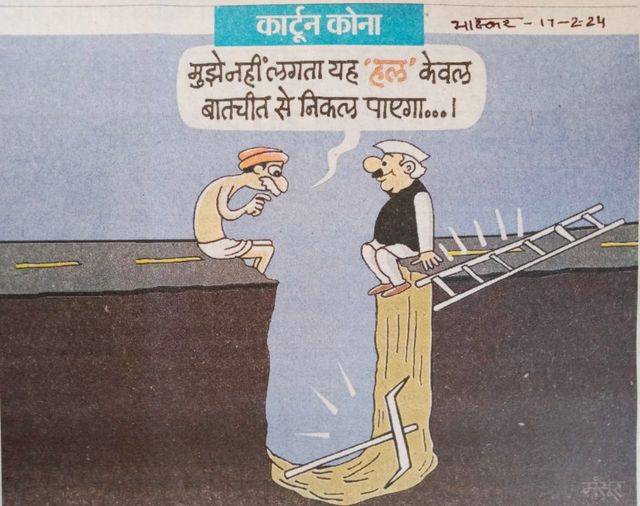
Report MSP law is linked to groundwater crisis Crop diversification could address the problems caused by intense wheat and rice cultivation but the lack of government support makes it a risky prospect. https://scroll.in/article/1063821/the-farmers-demand-for-an-msp-law-is-linked-to-an-environmental-crisis-heres-how (17 Feb. 2024)
Opinion The toxic legacy of the green revolution Jayati Ghosh While the introduction of high-yielding seed varieties has saved hundreds of millions of people from hunger, it has diminished the nutritional quality and increased the toxicity of staple grains. To establish a sustainable and nutritiously rich food system, countries should adopt agroecological practices based on smallholder farming. https://www.project-syndicate.org/commentary/agribusiness-harms-nutrition-increases-disease-lessons-from-india-by-jayati-ghosh-2024-02 (12 Feb. 2024)
URBAN LAKES, WETLANDS
Gurugram NGT slaps Rs 45 cr compensation on NHAI for damaging pond -The NGT has referred to this encroachment of stormwater drains, which the joint committee has also recorded, as a “serious violation” that would have “deserved a direction for demolition of the construction raised… but since it will affect the entire project and may cause damage to public revenue and public interest in other way also, we have to balance interest of villagers as also the general public using the road…”
-The NGT has estimated the compensation amount as 5% of the project cost of Rs 908 crore, which is Rs 45 crore. The NHAI has been directed to deposit this amount with the Haryana State Pollution Control Board in three months. The NGT has referred to this encroachment of stormwater drains, which the joint committee has also recorded, as a “serious violation” that would have “deserved a direction for demolition of the construction raised… but since it will affect the entire project and may cause damage to public revenue and public interest in other way also, we have to balance interest of villagers as also the general public using the road…”
-The NGT has estimated the compensation amount as 5% of the project cost of Rs 908 crore, which is Rs 45 crore. The NHAI has been directed to deposit this amount with the Haryana State Pollution Control Board in three months. https://indianexpress.com/article/cities/delhi/ngt-slaps-45-crore-compensation-on-nhai-gurgaon-nuh-expressway-9161981/ (15 Feb. 2024)
Chennai GCC may alter design of Perungudi eco-park in Pallikaranai marshland Following protests by residents at a recent public hearing, the Greater Chennai Corporation (GCC) has decided to alter the design of the proposed eco-park in Perungudi inside Pallikaranai marshland. It could even drop the plan as it is studying the feasibility of increasing the water spread area to 100%, sources said. The work on implementing the revised design for the eco-park is expected to be taken up only after brainstorming sessions involving engineers and environment experts and another round of public consultation with the residents. At a meeting of public stakeholders last week, residents had opposed the eco-park project.
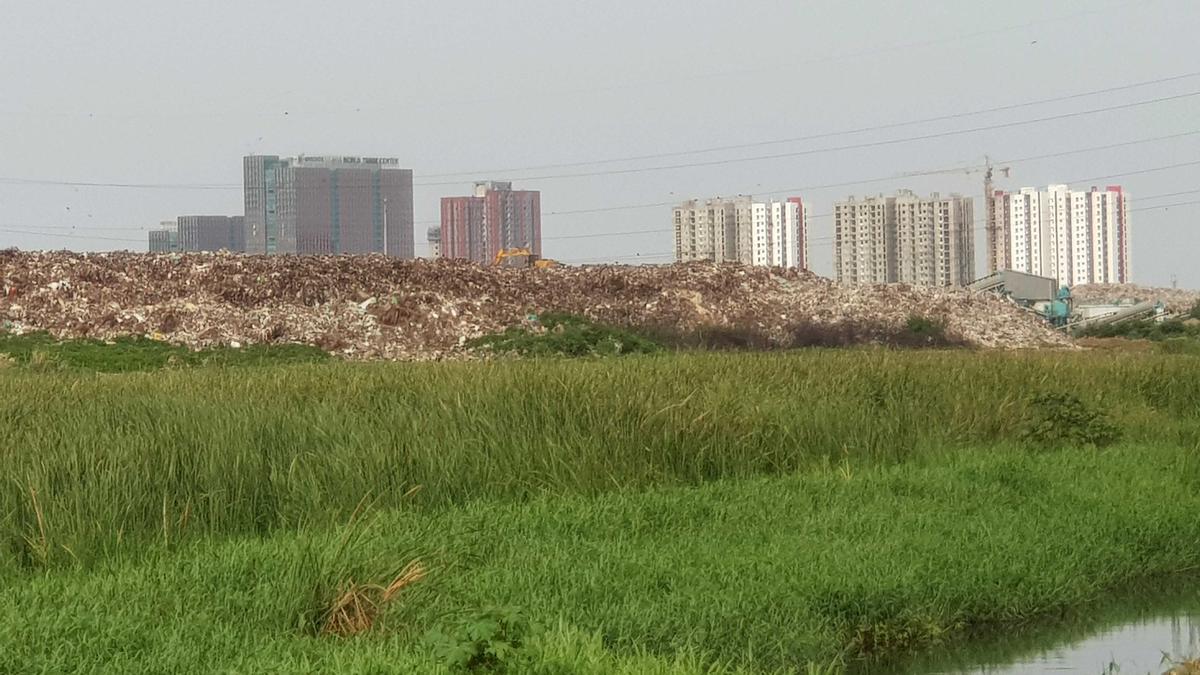
Last year, the State government announced the project, saying it will be modelled after the 358-acre Tholkappia Poonga in Adyar Creek, with an estimated cost of ₹185.42 crore. Of the three options provided by the consultant, the GCC selected the option with the most water spread area. The project proposal included six ponds, watchtowers, public toilets, and parking facilities. The civic body has already rejected the proposal for ‘Ainthinai Poonga’ and wetland reclamation with recreational hubs, which adopts the urban forestry concept. Since residents rejected the concept and demanded priority for flood mitigation, the new proposal is expected to get 100% water spread area, after clearance from various agencies, civic officials said. https://www.thehindu.com/news/cities/chennai/greater-chennai-corporation-may-alter-design-of-perungudi-eco-park-in-pallikaranai-marshland/article67835714.ece (11 Feb. 2024)
Mumbai Alert resident prevents illegal debris dumping The vigilant actions of a concerned resident averted an environmental catastrophe on Feb. 14 as illegal debris dumping in Lotus Lake was thwarted. Lotus Lake, situated in sector 27, Nerul, has been continuously threatened by unlawful dumping activities. Despite persistent efforts, debris dumping still occurs, often under the cover of darkness along the lake’s banks. Members of the Save Lotus Lake group expressed outrage upon seeing the photographic evidence of debris dumping and demanded immediate action, including the confiscation of the JCB machine. They also called for stringent measures against the debris mafia, urging the NMMC and CIDCO to adhere to Bombay High Court orders to prevent further dumping in Lotus Lake.
Sunil Agarwal, another member, presented key demands to the NMMC, emphasizing the need for enforcement of court orders to protect wetlands from encroachment and destruction. He highlighted instances of negligence, such as the absence of patrolling and fencing around wetlands, and failure to address illegal construction activities despite court directives. The group also criticized CIDCO’s issuance of commencement certificates for projects without proper environmental safeguards and called for immediate action to protect sensitive ecosystems. https://www.newsband.in/article_detail/alert-resident-prevents-illegal-debris-dumping-in-lotus-lake (15 Feb. 2024)
Authorities turn blind eye to steady destruction of Juhu Koliwada mangroves Once a green haven, the lush mangrove thicket on Juhu Koliwada Beach has slowly but steadily been destroyed over the years by debris dumping and encroachments. Upset Juhu Koliwada residents and a local citizen-led group called ‘Juhu Buzz’ have released photos captured by the Google Earth Pro app in 2018 to show how the mangrove patch has been ravaged. Residents said they had been writing to the BMC, district collector, forest department and the mangrove cell, but apart from some temporary encroachment removal, no firm action was taken. “This place was covered with mangroves,” said Nicky Dsouza, who remembers playing at the spot with friends in his childhood. “Things have changed drastically since the lockdown. People began dumping debris from construction sites one by one and have now built farmhouses.”
Nicky added that some of the people claimed the farmhouses had existed for many years, but earlier satellite images, which showed only greenery, nailed their lies. “These are all made-up stories,” he said, adding that the land belonged to the collector and forest department, yet encroachment was on in full swing, with the encroachers ignoring all the boards that were put up. Environmental activist Zoru Bhathena revealed that he had written letters to all the possible authorities. “One FIR was filed in 2022 but no substantial action was taken,” he said. “The authorities—the BMC, forest and district collector—are not sure whose responsibility it is to remove the debris and the illegal landfill.” Bhathena added that the area was a notified reserved forest but despite this, the authorities had not acted on the encroachment. https://www.hindustantimes.com/cities/mumbai-news/authorities-turn-blind-eye-to-steady-destruction-of-juhu-koliwada-mangroves-101708193990492.html (18 Feb. 2024)
Noida Drying trees in Surajpur wetlands: UPPCB gives clean chit to bike company The UPPCB has given a clean chit to Yamaha Motor as it prime facie did not find evidence that the company’s Surajpur unit, near the eastern arm in Kasba village, was discharging untreated effluents into the wetland. In Jan, the company was served a notice by the pollution department after over a dozen trees died allegedly due to the chemicals flowing into the wetland. The pollution department, meanwhile, has blamed the nearby villages which do not have STPs were polluting the wetland. Officials said they will tap the drains coming through these villages to stop the dirty water flowing into the wetland within a month.
Environmentalist Vikrant Tongad, who recently wrote to the Centre about the destruction of trees at Surajpur, said, “The pollution department is clearly protecting the industry. While their samples failed last year, this time the joint committee gave them a clean chit saying it is within their norms. This is an eyewash. Now, we will go and collect the samples from the industry pipeline and get it done from some private lab.” Tongad said they have seen the frothy water from the pipeline of the industry enter the wetland. https://timesofindia.indiatimes.com/city/noida/clean-chit-to-yamaha-motor-as-up-pollution-control-board-finds-no-evidence-of-waterlogging-causing-tree-deaths-in-wetland/articleshow/107705674.cms (15 Feb. 2024)
Bengaluru Fading green near lake causes alarm Residents living around Seetharampalya Lake in Whitefield have raised concerns about tree felling activity on a plot adjacent to the water body. Locals say a green patch next to the lake boundary has been gradually razed over the last couple of years. Residents have raised the complaint with BBMP, Forest Department alleging the trees have been removed without permission from the authorities. According to locals, erasing a huge green patch adjacent to the lake is a matter of concern as it may impact the lake’s biodiversity. https://bangaloremirror.indiatimes.com/bangalore/civic/fading-green-near-lake-causes-alarm/articleshow/107762521.cms (17 Feb. 204)
URBAN WATER
Chennai Can city reclaim its relationship with the water commons? Water commons include all waters that rest and flow — in the form of lakes, wetlands, rivers, canals, and groundwater — which are principally non-exclusionary in terms of access and require high forms of participatory governance for their successful management.
This requires looking beyond just stormwater infrastructure to ask deeper questions about reducing our exposure versus treating vulnerabilities in the aftermath of such devastating events. We must turn to our traditional ery (lake) systems — interconnected, cascading, man-made water bodies built across the city’s landscape to guide the water slowly towards the sea, making sure it ‘walks’ slowly rather than rushes uncontrollably.
Reviving the wisdom of this hydrological approach could transform how Chennai withstands floods in the future Retrofitting strategies for stormwater planning and downstream displacement must occur within a broader attempt to revisit how we understand, measure, plan for and govern our waters — and what this means for our lakes and wetlands. The city must learn again, how to live with water.
Bottom-up civic participation reinforces top-down mapping and policies to integrate the city’s hydrology into its urban planning and development plans. The state, civil society and other local stakeholders must unite to uphold such an approach and hold political will accountable for steering us onto this path.We must adopt a holistic and sensitive approach to urban water governance, which leaves room for overflow, restores lakes and wetlands’ retention capacity, and ensures marginalised settlements are out of harm’s way. https://citizenmatters.in/looking-back-for-answers-can-chennai-reclaim-its-relationship-with-the-water-commons-43973 (12 Feb. 2024)
Pune Study links parched villages to gw use in urban areas The joint research done by the Indian Institute of Science, Education and Research (IISER), Pune, the Society for Promoting Participative Ecosystem Management, Pune (SOPPECOM) and the International Institute for Applied Systems Analysis (IIASA) in Austria said that water scarcity is due to high urban use of groundwater, poor irrigation facilities and biodiversity reduction in the upper Bhima sub-basin affecting the livelihood of local communities. The scientists primarily suggested that water, forests as well as agriculture in the Upper Bhima Basin have to be looked at in an integrated manner when forming policies and projects relating to the area.
Due to a lack of infrastructure for the adequate supply of water, urban areas as well as industries depend excessively on groundwater for their requirements, the study said. “There has been an increased dependency on groundwater by farmers, which has been the cause for the level of groundwater to decrease so rapidly,” Bejoy Thomas, the co-author of the study and associate professor at IISER Pune, said.
Over the years, rapid changes have resulted in loss of forest cover and led to surface water run-off, decrease in groundwater recharging systems and water availability. “The increase in paved surfaces or concreting in our cities has led to more surface run-offs in urban areas without any water percolation and this will, in time, be the cause of flash floods. Diversion of water from irrigation for urban areas also leads to this conflict,” founder of SOPPECOM and co-author KJ Joy said.
It has threatened the livelihood of hirda farmers in the upper sections of the sub-basin who depend on a single crop as they lack irrigation facilities. Construction of dams has led to submergence of forest cover and loss of terrestrial biodiversity. Structural interventions like barrages have impacted the ecosystem. “Now, exotic species of fishes such as tilapia have taken over instead of native species,” Radhika Kanade, lead author and researcher at Soppecom, said. https://timesofindia.indiatimes.com/city/pune/study-links-groundwater-use-in-urban-areas-of-pune-dist-to-parched-villages/articleshow/107807467.cms (19 Feb. 2024)
Ahmedabad Salinity, fluoride, iron and lead levels high in groundwater Data from the Union Ministry of Jal Shakti shows that more than half of Gujarat districts are affected by salinity, fluorides and nitrites in their groundwater. Groundwater in Ahmedabad was found to have excessive levels of salinity, fluoride, nitrate, iron and lead.
– The CPCB using National Water Quality Monitoring Program (NWMP) data for 2023 including data from 88 monitoring wells in Gujarat stated that 73 of these wells were monitored in 2023 and the water in 52 of them were found to have fluoride content within safe limits, while the other 21 were ‘non-complying’. The data shows that of the 33 districts in Gujarat, 28 have relatively high salinity levels, 30 have high fluoride levels, 32 nitrites, 12 arsenic, 14 iron and one has excessive lead. While salinity renders water hard to use for drinking and irrigation, the other ions can cause several health issues. https://timesofindia.indiatimes.com/city/ahmedabad/salinity-fluoride-iron-and-lead-levels-high-in-abad-groundwater/articleshow/107644414.cms (13 Feb. 2024)
Gurugram Most micro-STPs installed at parks out of order Sad news that 49 micro STPs set up in Gurugram to provide treated water for irrigating the parks between 2015 and 2020 are not working properly and yet all payments have been approved about them. No one held accountable so far.
https://www.tribuneindia.com/news/haryana/most-micro-stps-installed-at-gurugram-parks-out-of-order-590294 (13 Feb. 2024)
Delhi DJB audit: CAG report ‘flags irregularities’ -The CAG report yet to be tabled in the Legislative Assembly, is learnt to have pointed out instances of the utility understating its expenditure, hence losses. One instance of this was the discrepancy noticed between the data given by the revenue section, and the accounts in the outstanding dues against bulk and retail water. The report, it is learnt, states that while the revenue section listed the dues as around Rs 9,000 crore, this figure was around Rs 2,800 crore in accounts — a gap of over Rs 6,000 crore.
-Officials said that the report also talks about the current accounts, and mentions that there was a difference of over Rs 1,000 crore between the balance as per the bank records and the financial statement. “Both these figures are in overdraft. The report states that this discrepancy could be pointing to fraud or misappropriation of funds,” the official added.
-Delhi’s flagship scheme of providing free water up to 20 kilolitres to each household per month also finds mention in the report, sources said. “While DJB received compensation grants of around Rs 425 crore, for subsidy, records state that an amount to Rs 400 crore was provided but this does not reflect in the Income and Expenditure Account. The reasons for this have also not been disclosed,” said an official.
-Another alleged irregularity in accounts flagged in the report, it is learnt, is regarding expenditure on advertisements. “While the expenditure under this head is stated to be around Rs 12 crore, the report states that files or records related to this expenditure were available only for around Rs 3 crore. Even out of this amount, around half was for between 2015 and 2016,” the official stated. https://indianexpress.com/article/cities/delhi/irregularities-in-djb-flagged-in-cag-report-9162258/ (15 Feb. 2024)
JJM/ RURAL WATER SUPPLY
Maharashtra Water-starved village on edge after shark attack Last week’s shark attack on 34-year-old fisherman Hitesh Govari in Palghar district has aggravated the water crisis in Manor-Dongar village, where residents solely depended on the nearby Vaitarna river. However, following the shark attack, the villagers, facing acute water shortages, are now scared to go to the river, fearing sharks. They mentioned that they used to go to the river every day to bathe, wash clothes, and utensils, due to inadequate water supply with no fixed timing. The tap often runs dry for over 48 hours as water is supplied every alternate day.
Govari’s village is located on a hill along the Vaitarna river, which is connected to an open sea at Arnala in Virar. There is no tap on the pipeline, which ends nearly 30 metres before reaching the boundary wall of Hitesh’s recently constructed pucca house. “Despite living in close proximity to a huge water body, we are still facing huge water scarcity as there is inadequate supply of water,” said Shayna Birwatkar, a local resident of Manor-Dongar village. In the village, defunct water storage tanks, perched atop rusty iron stands, seamlessly blend with the deplorable surroundings. These tanks, never connected to the water pipeline, have been lying unused since their inauguration, according to villagers.
The painful ordeal of water-stressed villagers punctures the lofty claims of the Central government’s ambitious project ‘Jal Jeevan Mission’ (to install taps at every household by 2024), as the women and adolescent girls of this village are often carrying jerry cans loads of water on their heads negotiating thorny and rocky paths of the hill to fetch water. But, the proliferation of local strongmen-supported water businesses near the village exacerbates the residents’ plight, who endure drought-like conditions that worsen during summer days.
An honorary wildlife warden of Palghar district, Hardik Soni, said, “….only one bull shark entered into the shallow water in Vaitarna river apparently to give birth in the freshwater, or it might be food-starved. Sharks are very aggressive fish.” “The movements of sharks can be ascertained if satellite tagging is installed on the sea turtles near Arnala, where the Vaitarna river meets the sea. But for that, the forest department needs to have permission from its head office in Nagpur,” said Soni, who was present at the spot when the dead shark was being loaded into a van from Manor to Dahanu. https://www.mid-day.com/mumbai/mumbai-news/article/exclusive-maharashtra-water-starved-village-on-edge-after-shark-attack-23335835 (19 Feb. 2024)
WATER POLLUTION
DTE Weak Water Act further diluted by latest amendments: Experts The Water (Prevention and Control of Pollution) Act, 1974 was a failure and needed a revamp, but the latest changes introduced to the Act by the central government are exactly the opposite of what was required, according to environment experts. “Since the Act is 50 years old, there is no doubt that significant changes were required to its provisions. But the changes we have received are the opposite of what we needed,” said water expert Himanshu Thakkar. “We need decentralisation and stricter laws, but we are getting the opposite — more centralisation and diluted provisions.”
Environment lawyer Ritwick Dutta also claimed the environment laws in the country, including the Water Act, have largely failed to deliver so far. “As per the National Crime Records Bureau’s 2022 reports, only 78 criminal cases were recorded under Water Act and Air (Prevention and Control of Pollution) Act, 1981. Most states did not register even a single case,” he said, pointing to the need for stronger penal actions. “The latest bill is designed to dilute the Water Act, which was already ineffective,” said KJ Joy, a senior fellow of Society for Promoting Participative Ecosystem Management from Pune. The latest amendments, proposed in the name of ease of doing business, would instead provide a licence to pollute rather than be a deterrent. https://www.downtoearth.org.in/news/environment/centralisation-of-powers-diluted-laws-weak-water-act-further-diluted-by-latest-amendments-say-experts-94487 (17 Feb. 2024)
जल अधिनियम में संशोधन: विशेषज्ञों ने उठाए सवाल जल विशेषज्ञ हिमांशु ठक्कर ने कहा कि पिछले 50 वर्षों में जल अधिनियम के तहत सफलता की कुछ ही कहानियां सामने आई हैं और इसके प्रावधानों में महत्वपूर्ण बदलाव निस्संदेह आवश्यक थे, लेकिन जो परिवर्तन किए गए हैं, वे आवश्यकता के विपरीत हैं। हमें विकेंद्रीकरण और सख्त कानूनों की आवश्यकता है, लेकिन हमें इसके विपरीत मिल रहा है। केंद्रीकरण को बढ़ाया जा रहा है और प्रावधान कमजोर किए जा रहे हैं। https://www.downtoearth.org.in/hindistory/pollution/water-pollution/water-act-is-being-amended-to-benefit-whom-experts-raised-questions-94498 (16 Feb. 2024)
In regressive step, the amended Water Act exempts certain industries from effluent release norms. https://www.deccanherald.com/opinion/act-that-affects-water-resources-2900032 (19 Feb. 2024)
Amendments to Water Act is a greenwashing attempt The MoEF proposed amendments to several environmental laws in July 2022, including the Water (Prevention and Control of Pollution) Act, 1974. The amendments aimed to reduce the burden of compliance and structuring funds, among others. The amendments proposed decriminalising environmental violations by bringing in stiffer penalties instead of imprisonment. The rationale was “to weed out the fear of imprisonment” for simple infractions, according to MoEF.
Many environmental activists and lawyers argued against this move, as criminal proceedings are one of the few deterrents threatening violators. On the other hand, some environmental lawyers spoke for decriminalization as even with the criminal provisions, not many cases are registered under these acts. “These amendments mean that pollute and pay principle has effectively become pay and pollute principle. And that is why it is important that imprisonment must be a possibility at least for extreme and egregious cases,” noted an academician and legal policy scholar.
What is required to improve water bodies in the country is a focus on improving the enforcement and monitoring capabilities of the board. As stated by a legal policy scholar, “If systemic weaknesses associated with the governance structure are not addressed, there is not going to be any benefit from any amendments. Because if they are not going to be implemented, what are the points of these amendments?”. India needs a robust monitoring and enforcement system that can detect and arrest pollution at the source. So rather than creating inscrutable new black boxes and watered-down legislations, amendments must ensure strong, transparent, and accountable mechanisms that strengthen the policy and help it achieve its objectives. https://www.downtoearth.org.in/blog/governance/pollution-control-amendments-to-water-act-is-a-greenwashing-attempt-88249 (15 March 2023)
MONSOON 2024
Agromet units to wind up on March 1 The Kodagu district agromet unit at Gonikoppa, which was providing agrometeorological advisory service to hundreds of farmers, will stop functioning on March 1. It was functioning under Gramin Krishi Mausam Sewa Scheme, at 12 such kendras in Karnataka, started in 2019. It was providing advisories at Taluka/ block level every Tuesday and Friday for the next ten days. Rajya Raitha Sangha president criticised the decision of closing down the units, saying more such units were required. https://www.deccanherald.com/india/karnataka/dark-clouds-over-weather-forecast-agromet-units-to-wind-up-on-march-1-2894997 (15 Feb. 2024)
ENVIRONMENT GOVERNANCE
MoEF Environmental audits: Experts not impressed with draft notification Himanshu Thakkar, coordinator, SANDRP told The WEEK, “The audits, no doubt, are important to check compliance. But, a lot would depend on the independence of the agency doing the audits, who makes the payment and who scrutinizes.” “Years ago, the Environment Impact Assessment (EIA) came as an important tool for informed decision-making but now it is just a tick mark in the scheme of things. In so many cases, criticism of the projects are communicated but no action is taken. There are a number of EIAs that are extremely bad in quality but not even one agency has been blacklisted so far.”
– Thakkar fears that the new proposed environment audits would most likely end up being just another “tick mark.” Some of the aspects of the notification, in fact, engender scepticism. The audits are exclusively a voluntary mechanism and not intended to be made mandatory for those entities who want to continue within the existing framework, reads the notification. https://www.theweek.in/news/india/2024/02/15/environmental-audits-why-experts-not-impressed-with-draft-notification.html (15 Feb. 2024)
Govt-certified auditors can assess environment projects Government-certified environment auditors can review projects and activities approved by the environment ministry, to ensure that norms and stipulated conditions are complied with, according to a draft notification issued by the ministry last month. The audit, the draft notification claimed, will encourage “self-compliance” of environmental norms by industries.
– “Authorized Environment Audit‖ means Environment Audit undertaken by registered Environment Auditor under the extant notification; and prior to the extant notification, Environment Audit undertaken by government recognized Environment Auditor, and/or by the Environment Auditor duly engaged by the Government or its agencies,” the draft notification titled “Environment Audit Notification” and published on January 29 said. The proposed third party (first part is government, second party is the company) environment audit is exclusively a voluntary mechanism and not intended to be made mandatory for those entities who want to continue within the existing framework, the draft notification said. “The proposed third party environment audit is not an alternate to the existing system of compliance and monitoring through government agencies but is only to supplement the efforts of the government agencies, which will continue with their existing role of random inspection and verification,” the ministry said.
– According to the government, the environment auditors will be assigned to a particular project randomly through a computer-based online software programme integrated with the Parivesh portal of the environment ministry. The draft notification will be taken into consideration on or after March 29, after the expiry of a period of 60 days since the draft was published (January 29). https://www.hindustantimes.com/india-news/govtcertified-auditors-can-assess-environment-projectsministry-101707937809008.html (15 Feb. 2024)
Telangana Draft EIA report for Yadadri thermal plant lacks professional integrity: Experts The draft Environment Impact Assessment (EIA) report prepared by the Telangana State Power Generation Corporation (TSGENCO) for seeking environmental clearance for the Yadadri Thermal Power Plant in Damarcherla of Nalgonda district is fraught with errors and inaccuracies, which could further delay the project, experts on environment contend.
An analysis on the draft EIA report by the Scientists for People, a collective of retired scientists, pointed out that the faulty assessment report has resulted in understatement of pollution. The 829-page draft rushed through within six weeks after obtaining additional Terms of Reference as per the order by the NGT, shows lack of diligence and professional integrity, alleged K. Babu Rao, a retired scientist from Indian Institute of Chemical Technology (IICT), who is part of the collective.
“Considering the heavy expenditure to be incurred for construction of new stacks, the project is likely to be built without FGD units and end up polluting heavily, which defeats the very spirit of the NGT order to protect the Amrabad Tiger Reserve,” Mr. Rao said. The faulty stack design will render the cumulative ground level concentrations presented in the EIA invalid, he said.
The consultant indulged in ‘deception through omission’ by not including any impacts reported in the literature, Mr. Rao alleged and called the report ‘full of scientific dishonesty’. “The draft EIA should be revised first with correct information before public hearing is held,” he demanded. The earlier Environmental Clearance granted by the MOEF was suspended by the NGT in 2022, which directed for the project to be reappraised, on the counts of change in coal consumption and the impact on the tiger reserve. https://www.thehindu.com/news/national/telangana/draft-environmental-impact-assessment-report-for-yadadri-thermal-plant-lacks-professional-integrity-say-experts/article67857832.ece (17 Feb. 2024)
Chhattisgarh Caol mining project a threat to Adivasi homes, water, livelihoods As the union and state governments clear the second phase of mining operations at a controversial coal mine, over 15,000 trees were cut, in addition to 81,000 cut since 2012. Activists say this is an undercount, estimating that another 399,000 trees face the axe for mining coal in the lush forests of Hasdeo Arand. Adivasis worship the trees as deities, depending on them for livelihood. As protests sweep the villages nearby, the removal of trees has intensified elephant-human conflict. https://article-14.com/post/in-lush-ancient-chhattisgarh-forest-thousands-of-trees-cut-to-mine-coal-for-rajasthan-threatening-adivasi-homes-water-livelihoods–65d2bdd0e264a (19 Feb. 2024)
Opinion India weakening the Global Plastics Treaty? Satyarupa Shekhar Communities worldwide bear the brunt of this crisis, with marginalised populations disproportionately affected. Those most affected by the plastic crisis, such as fishers, farmers, and Indigenous Peoples, are often those with the least power to influence change. Despite the mounting evidence linking plastics to climate change, health hazards, and social injustice, awareness remains low, particularly among vulnerable groups lacking access to information and resources.
Ultimately, India’s position in the United Nations Plastics Treaty negotiations reflects a prioritisation of short-term economic interests over long-term environmental sustainability and public health. To truly address the interconnected challenges of climate change, plastic pollution and destabilised Earth systems, India must reassess its stance and commit to ambitious, science-based measures that prioritise the well-being of both current and future generations. https://www.thethirdpole.net/en/pollution/opinion-why-is-india-weakening-the-global-plastics-treaty/ (08 Feb. 2024)
CLIMATE CHANGE
Ladakh Pangong lake freezing facing delays Pangong Lake’s freezing was delayed by three weeks in 2024. Remote sensing data analysed by India Today’s Open-Source Intelligence (OSINT) desk reveal that the lake usually solidifies in the second or third week of January each year. However, in 2024, this event took place in the second week of February (between February 9 to 13). Most parts of Pangong Lake were in still liquid form of water till January 29.
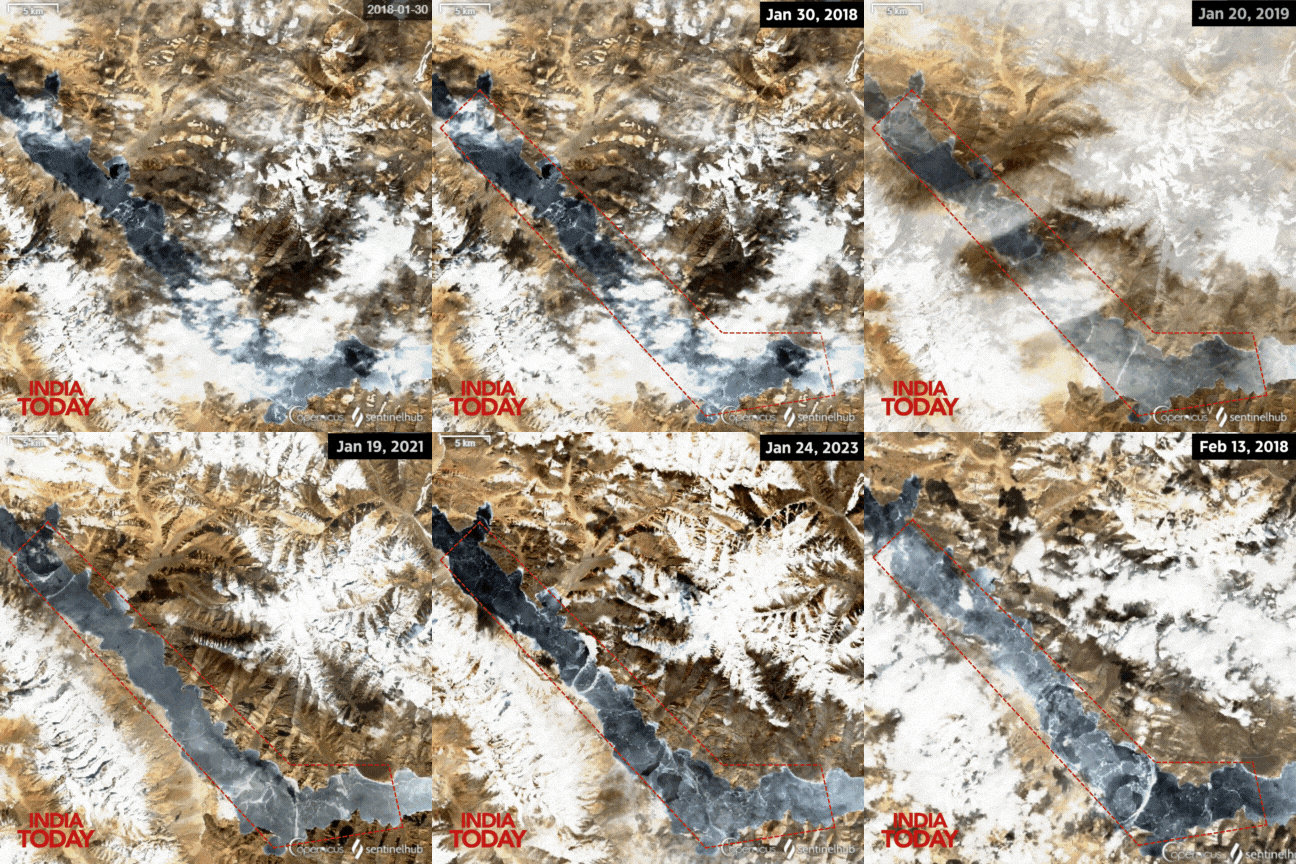
Historical data recorded by the European Space Agency (ESA) over the past six years indicate that the lake began forming a thin ice layer on February 8 this year. The 134-km long lake was completely frozen from January 19 to January 24 in 2023, from January 14 to January 24 in 2022, and from January 14 to January 19 in 2021, as established by spatial data analysis. It was enveloped in a dense layer of snow on January 30 in 2020. In a similar pattern, the waters solidified under sub-zero conditions from January 15 to January 20 in 2019 and from January 20 to January 30 in 2018.In 2004, the lake finished freezing between January 23 and January 26, according to data from NASA’s Moderate Resolution Imaging Spectroradiometer (MODIS). https://www.indiatoday.in/india/story/ladakh-pangong-lake-frozen-climate-change-frozen-marathon-osint-2503245-2024-02-16 (16 Feb. 2024)
SOUTH ASIA
IWT Pakistan urges ‘strict’ implementation A top Pakistani diplomat on Feb 13 2024 called for “strict” implementation of the 1960 Indus Waters Treaty (IWT). “Increasing water demand, coupled with climate change impacts, creates the potential for trans-boundary water disputes in several parts of the world,” Ambassador Munir Akram told the UN Security Council’s high-level debate on the impact of climate change and food insecurity on international peace and security. He was speaking in the course of the day-long debate, which was convened by Guyana, the president of the Security Council for February. Nearly 90 countries took part. https://www.app.com.pk/global/pakistan-urges-strict-implementation-of-indus-waters-treaty-an-indo-pak-water-sharing-pact/ (14 Feb. 2024)
Pakistan Living Indus Initiative ranked among UN’s flagship programs The United Nations named Pakistan’s Living Indus Initiative (LII) as one of the seven UN World Restoration Flagship programs that will restore more than 30 per cent of the Indus River Basin by 2030, the UN Environment Program (UNEP) announced on Tuesday (Feb. 13). The primary goal of the initiative is to safeguard, preserve, and rehabilitate the diverse natural ecosystems found in the Indus Basin, including terrestrial, freshwater, coastal, and marine environments. The basin-wide initiative has already restored 1,350,000 hectares. It encompasses 25 projects, and it is estimated to cost up to $17 billion. With its recognition as a World Restoration Flagship, the Living Indus initiative will now be eligible for additional technical and financial UN support, bolstering its plans to restore 25 million hectares of the river basin by 2030, encompassing more than 30 per cent of Pakistan’s area. https://www.dawn.com/news/1814047 (14 Feb. 2024)
The UN has named seven initiatives from across the world the World Restoration Flagships, a press statement on Feb 13, 2024, said. The projects revolve around revival and preservation of ecosystems. Together, they are expected to restore about 40 million hectares and create around 500,000 jobs. The award conferred by the United Nations Environment Programme (UNEP) and Food and Agriculture Organization (FAO) of the UN makes the initiatives eligible for technical and financial support.
The winning initiatives were announced ahead of the 6th session of the UN Environment Assembly, which is the world’s highest-level decision-making body for matters related to the environment. It will take place from February 26-March 1, 2024 at the UNEP headquarters in Nairobi, Kenya. Here’s a look at some of the projects that were honoured, among others:
– The Living Indus initiative received approval from the Pakistan parliament in the wake of the devastating 2022 climate change-induced floods. Its official launch took place at the 27th Conference of Parties to the UN Framework Convention on Climate Change in Sharm el-Sheikh. The initiative aims to restore 25 million hectares of the river basin by 2030, encompassing 30 per cent of Pakistan’s surface area through the implementation of 25 high-impact interventions for policymakers, practitioners and civil society. It designates the Indus River as a living entity with rights.
– The Terai Arc Landscape initiative aimed to restore the forests of critical corridors of the Terai Arc Landscape in collaboration with local communities working as citizen scientists, community-based anti-poaching units, forest guards, among others. Measures like the restoration of 66,800 hectares of Nepal’s forests, among others, were said to improve the livelihoods of about 500,000 households in the country, the UN bodies observed. “It also supported the tiger population in the landscape shared by India and Nepal, which increased today to 1,174. This figure is more than double of what was its lowest number when the programme launched in 2001. Development is expected to continue as almost 3,50,000 hectares will be restored by 2030.”
– The Sri Lanka Mangrove Regeneration initiative is a science-driven programme co-led by local communities. It focuses on the restoration of natural balance in the ecosystem. Since its launch in 2015, efforts have led to 500 hectares of restored mangroves, according to the UN statement.
– The Restoring Mediterranean Forests Initiative involves the countries of Lebanon, Morocco, Tunisia and Türkiye. https://www.downtoearth.org.in/news/world/from-restoring-forests-to-river-basins-seven-conservation-initiatives-across-continents-recognised-by-un-94424 (13 Feb. 2024)
Nepal JV hydel licensing without bidding draws flak A provision in the electricity bill allowing the government to grant a licence without competition to any joint venture entity between Nepal and foreign government entities to develop hydropower projects over 100MW has invited the ire of Nepal’s private sector. They are of the view that the provision not only deprives the domestic private sector of an opportunity to develop medium-sized projects but could increase the entry of the Indian state-owned companies at the expense of the domestic private sector. “Nepali developers are themselves capable of developing projects upto 500MW,” said Ganesh Karki, president of the Independent Power Producers’ Association of Nepal (IPPAN). “Why grant a licence without competition for projects above 100MW?”
– The Nepal Electricity Authority (NEA) and the SJVN Limited have signed a memorandum of understanding (MoU) to develop the 490MW Arun 4 hydropower project while India’s NHPC Limited and Nepal’s Vidhyut Utpadan Company Limited have agreed to develop the 480MW Phukot Karnali hydroelectric project. These agreements were signed based on government-to-government understandings. The government had handed over the survey licence of the 669MW Lower Arun Hydropower Project to the SJVN Limited. Likewise, the licence for the development of 750MW West Seti Hydropower Project and the 450MW Seti River (SR-6) was granted to the NHPC Limited without competition. https://kathmandupost.com/national/2024/02/18/joint-venture-hydel-licensing-without-bidding-draws-flak (18 Feb. 2024)
Bangladesh Sundarbans farmers find new hope in soft-shell crabs Now, many locals like Fatema’s son have found employment in soft-shell crab farming. Satkhira is a leading district in Bangladesh for soft-shell crab production, with around 30,000 locals now involved in crab farming, according to Fisheries Office data. Crab farming in Satkhira began as an individual initiative five years ago and has been steadily growing. Lately, new farms have been popping up every year to meet the growing international demand.

Bangladesh is home to around 15 species of crabs found in both fresh and saltwater. Among them, rock crabs are commercially farmed. These crabs shed their shells 14-16 times during their lifetimes, staying shell-less for over three hours during molting with just a soft covering inside. This is when they are harvested for sale. https://www.tbsnews.net/features/panorama/sundarbans-farmers-find-new-hope-soft-shell-crabs-791934 (13 Feb 2024)
THE REST OF THE WORLD
American Rivers Saying Adios to 80 dams in 2023 As many have heard by now, 2023 was a major milestone year for dam removal in the U.S., with the initiation of the largest dam removal project in the country on the Klamath River in California. However, you may not have heard about the 79 other dams that were removed, reconnecting 1,160 upstream river miles. These projects reestablished migration corridors, made natural and human communities more resilient to climate change, improved access to habitat to promote biodiversity, eliminated safety hazards and maintenance costs, enhanced access to rivers for local communities, reestablished natural processes for healthy rivers, and many other benefits.
As a nationwide leader in river restoration, American Rivers tracks dam removal trends and maintains a national dam removal database. A total of 2,119 dams have been removed in the U.S. since 1912. American Rivers is building a movement to remove 30,000 dams by 2050, in partnership with communities, Tribal Nations, and state and federal agencies, to ensure that rivers can continue to sustain life. https://www.americanrivers.org/2024/02/saying-adios-to-80-dams-in-2023/ (13 Feb. 2024)
Africa Mystery groundwater upsurge floods homes in Libyan coastal town Much of Libya is bone-dry desert but one Mediterranean coastal town is suffering the opposite problem – its houses and fields have been inundated by a mysterious upsurge of groundwater. Stagnant water and squishy mud have flooded houses, streets and palm groves around the northwestern town of Zliten, spreading a foul smell and creating breeding grounds for mosquitoes. Many residents have fled their homes, where walls have cracked or collapsed, amid fears of a worsening environmental crisis in the area about 160km (100 miles) east of the capital, Tripoli.
PM Abdul Hamid Dbeibah promised this month to “remediate this crisis in a scientific and rapid manner” and urged authorities to compensate or relocate displaced families. But there is no consensus yet on what has caused the flooding. Catastrophic floods ravaged Libya’s eastern city of Derna in September when two dams collapsed. The gigantic flood surge killed more than 4,300 people and left more than 8,000 missing, according to the United Nations.
Locals in Zliten say the groundwater flooding is not new, and point to reed-covered areas from years-old inundations. But they also say the phenomenon has now hit them on a previously unknown scale. Media reports have pointed to a variety of possible causes, from poor drainage infrastructure to damaged pipelines and heavy winter rains. Libyan authorities have, meanwhile, denied any link between the flooding and the so-called Great Man-Made River, a giant Gaddafi-era network of pipes that channels water from an aquifer deep below the southern desert to irrigate coastal farming areas. https://www.aljazeera.com/gallery/2024/2/16/mystery-groundwater-upsurge-floods-homes-in-libyan-coastal-town (16 Feb. 2024)
USA California braces for intense ‘atmospheric river’ storms A pair of storms are drenching California again this weekend, delivering additional rounds of heavy rain that raises worries about high risks of flooding and mudslides. The National Weather Service (NWS) predicted that a plume of moisture from the Pacific Ocean will surge across the region on Saturday (Feb. 17). The rain will begin in southern Oregon and northern California and then spread down into central and southern California, which may increase flooding and landslides, particularly in Southern California, Fox News Weather reported. From the San Francisco area south to the some parts of Los Angeles, the NWS has issued a Flood Watch for the majority of California’s coastline, which includes roughly 27 million people. The first storm is forecast to be lighter than the second, but “will act as a primer, increasing soil moisture and causing streams and rivers to rise before the heavier rain on Sunday (Feb. 18)” from the second storm, according to the NWS. https://www.hindustantimes.com/world-news/us-news/california-braces-for-intense-atmospheric-river-storms-evacuation-and-flood-warnings-issued-101708260395073.html (18 Feb. 2024)
SANDRP
Also see: DRP 12 Feb. 2024 & DRP 05 Feb. 2024
Follow us on: www.facebook.com/sandrp.in; https://twitter.com/Indian_Rivers

 SANDRP