This provides an overview of Dams, Rivers & People related issues in Napel in just concluded 2023. While export of hydropower to India is central this year following Nepal PM’s June 2023 visit to India. Pancheshwar, the most ambitious of the projects have seen no real progress in spite of repeated statements. An agreement signed with India to export upto 10000 MW of hydropower in ten years has raised lot of hopes in both countries. The electricity trade has indeed expanded significantly in 2023. There is also renewed hope for Nepal succeeding in export of hydropower to Bangladesh via India, but this still needs some concrete success.
However, most interesting is the vibrant debate in Nepal media about adverse economics, impact on environment, biodiversity and disasters, in addition to displacement risk for thousands of people. Some called it costly madness. It also notes that climate change does not even figure in decision making process. The overview begins with that debate.
Saving a lifeline & a majestic fish Bijay Bashyal: Unlike bird migration, fish migration is intricately tied to the availability of free-flowing waters. This crucial journey is being jeopardized by a rapid development of hydropower projects and river modifications. These engineering feats are disrupting the natural flow of the river, obstructing the Mahseer’s migration cycle and driving them toward extinction.
Nepal rivers flow through varied ecological realms, hosting many indigenous, rare and endangered fish species. Unfortunately, the migration behavior of these species remains understudied and misunderstood. This knowledge gap has contributed to overlooking the impact of hydropower and irrigation projects. Recent reports from the Asian Development Bank (ADB) reveal that dam locations are selected without considering the cumulative impact on fish migration routes.
Most of Nepal’s river systems are already obstructed by dams, restricting seasonal fish migration to the upper reaches for spawning and feeding and returning. The consequences extend beyond the blockage of migratory paths, affecting water discharge downstream, breeding grounds, limnological parameters, nutrient flows and the overall ecological balance. The barrier effect is responsible for a sharp decline in fish populations in rivers with dams.
The implementation of mitigation measures such as fish passages, environmental flow, restriction on fishing and sand mining from rivers is crucial for the conservation of fish species. Unfortunately, their effectiveness has been compromised by poor implementation and lack of monitoring. https://theannapurnaexpress.com/story/46875/ (13 Dec. 2023)
Exotic and invasive fish thrive in water hyacinth The once-pristine lakes face a host of pressures due to land use changes and water pollution and contamination that is helping water hyacinth grow. https://scroll.in/article/1058850/exotic-and-invasive-fish-thrive-in-water-hyacinth-in-nepals-water-bodies (17 Nov. 2023)
Illegal mineral mining Unclear laws, overlapping jurisdictions, and limited means to monitor has left victims with nowhere to turn. https://www.thethirdpole.net/en/livelihoods/no-respite-from-illegal-mineral-mining-for-nepalis/ (11 Dec. 2023)
Revisiting water-induced disaster Dipak Gyawali: The kind of “flood” Kathmandu and other cities experience, with streets running full of water as if it were a river, is not because of too much rainfall: indeed, during the most recent flooding one saw in Kapan rainfall was not the extreme of cloudbursts but a normal monsoon event.
That state of affairs might finally be changing with two maverick non-party mayors – Balen Shah in Kathmandu & Harka Sampang in Dharan. The former has made it his mission to reverse river bank & flood plains encroachment by demolishing structures (built illegally & with a lot of land mafia corruption underlying them) built on such lands. The latter has had exemplary success in bringing water to his city with off-beat schemes that never entered into the thinking of central agencies in Kathmandu. https://www.spotlightnepal.com/2023/08/16/revisiting-water-induced-disasters/ (16 Aug 2023)
Impact of sediment flux on flood risk in Kathmandu Valley This paper presents a model that explores the impact of sediment grain size and future climate change on bed morphology and flood inundation in a Himalayan River. Detailed analysis of the role of sediment on flood risk is critical in sediment-rich mountain catchments, particularly where urban development impacts land-use change incorporating industries such as sand mining. To achieve this, it uses the CAESAR-Lisflood landscape evolution model applied to a 10 m DEM data set of the Nakkhu River in the Kathmandu Valley.
The principal results show that inclusion of sediment transport in numerical models leads to modifications of river channel morphology & results in increased flood inundation over the floodplain for modelled small & large flood events. In addition, sediment flux through the model river increases approximately linearly with discharge, particularly for high flow events. Grain size distribution affects inundation extent, with the effect most pronounced for annually recurring events that predominantly transport fine sediment rather than coarse sediment. During less frequent (higher magnitude) flood discharge, all grain sizes are mobilised and the impact of grain size distribution on river morphology and inundation is diminished. This broadly implies that fine-grained sediment-rich rivers are most sensitive to changes in flood inundation. https://onlinelibrary.wiley.com/doi/10.1002/esp.5731 (1 Nov 2023)
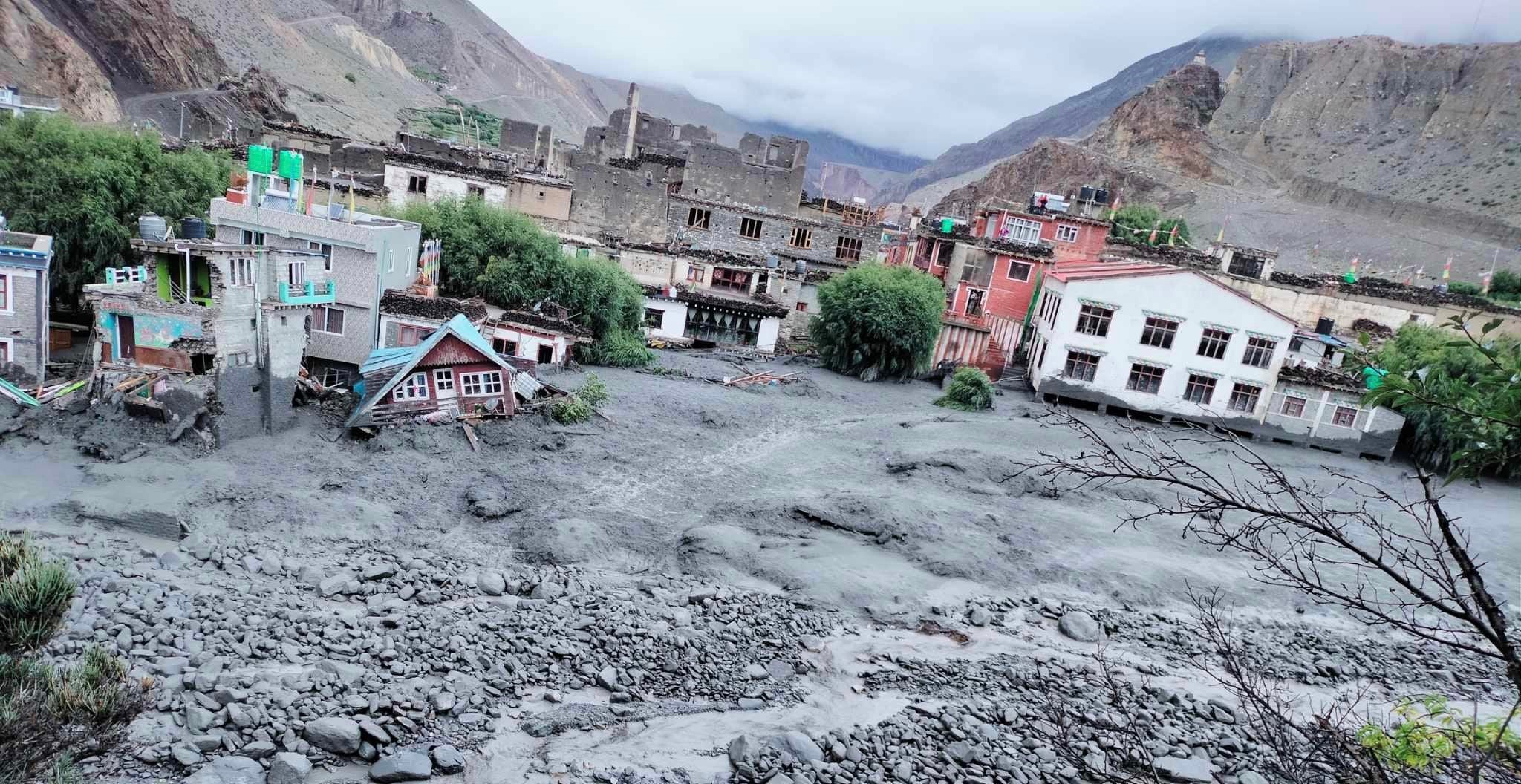
Landslide Dam Flood in Kagbeni River A flood in the Kagbeni River on Aug 11 washed away 29 houses and displaced more than 150 people.

The disaster occurred after the river, dammed upstream by a landslide, burst flooding the lower reaches. As per the preliminary disaster report of the District Disaster Management Committee, the floods swept away 29 houses, a motorable bridge along the Jomsom-Korala road section; a suspension bridge, 12 vehicles—including an excavator at the bridge construction site—and three temporary bridges. https://kathmandupost.com/gandaki-province/2023/08/14/flood-washes-away-10-houses-in-kagbeni (14 Aug. 2023)
This situation occurred when the Kaligandaki river was blocked due to a landslide, causing an initial halt in water flow followed by a subsequent increase. Although rainfall data from the nearest monitoring station, Jomsom, shows that rainfall is high, there is not enough information on the impact of the high-altitude rains. https://naturekhabar.com/en/archives/17695
Melamchi flood disaster of June 2021: threats not over yet Researchers are still investigating the causes of the devastating flood and the contribution of different factors but most research offers the view that the massive disaster was the result of a series of compounding events. A study by ICIMOD in 2021 on the Melamchi Flood Disaster attributes its cause to multiple processes along the Melamchi River including massive 21 million metric tonnes of debris dumped in the upper part of the Melamchi River; of this, four million metric tonnes trickled down during the flood which means that the remaining is lodged in the upper part of the mountain region around Bhemathang. Therefore, the danger is not over yet, says the ICIMOD study.

Ranjan Kumar Dahal, a leading geologist and climate researcher who studies Melamchi area, confirmed that around 15-metre-high debris has piled up at the Melamchi Water Supply Project site and the clean-up work could cost Rs 300-350 million. “The floods damaged the roads and bridges to the project site and washed away the campsite and construction materials,” said Dahal.
Some studies have indicated the overflow of the Pemdan glacial lake located upstream in Melamchi catchment which resulted in the destruction of the natural dam of the Bhemathang area, ultimately eroding the riverbed. The origin of this disaster can be traced to, among other factors, the 2015 earthquake which triggered multiple landslides in the Melamchi River catchment increasing its susceptibility to slope instability. Another noticeable factor, linked to Climate Change was the perceptible five to nine degrees Celsius rise in temperature that month which melted the glaciers and cascaded unimaginable torrents into Melamchi area. https://questionofcities.org/nepals-melamchi-still-recovering-from-2021-flood-shows-multiple-risks-of-rapid-urbanisation/ (25 Aug. 2023)
Massive landslide threatens Chhededaha Lake Around 120 families owned land in the Padnapani area. Most of them have already lost their farmlands. Around three years ago, the landslide spreading in Padnapani and Paripatal swept away the intake of a drinking water project leaving 15 households in Bhugadi village without clean drinking water. “Around 75% of the village and 25 % of the community forest area were engulfed by the landslide. The landslide swept away the locals’ farmlands, water source, forest and foot trails. The landslide is spreading and it will soon devour the entire settlement if not controlled,” said Dal Bahadur Dhami, chairman of ward 4 of Khaptad Chhededaha.

Khaptad Chhededaha Lake, a major tourist attraction in Sudurpaschim Province, is also at risk. Tourism entrepreneurs who invested in hotels and lodges are worried as the landslide has almost reached the lake. The rural municipality is planning to plant some 20,000 samplings in the landslide-prone area in the current fiscal year. https://kathmandupost.com/sudurpaschim-province/2023/12/28/massive-landslide-threatens-bajura-s-chhededaha-lake-and-surroundings (28 Dec. 2023)
Challenges in Small Transboundary Rivers Study by Ajaya Dixit et al: This study highlights how structural interventions and dysfunctional policies that neglect and free-ride the terrestrial and freshwater biodiversity of Chure Basin (CB) districts in Nepal have cascade impacts on the well-being of humans and nature.

CB rivers, dependent on the monsoon and the Chure range, which is hydro-morphologically diverse, behave uniquely and respond differently from climate and land use/ landcover changes, and other human interventions. https://isetnepal.org.np/catalyzing-change-for-resilience-across-boundaries-challenges-in-nepals-small-transboundary-rivers/ (9 June 2023)
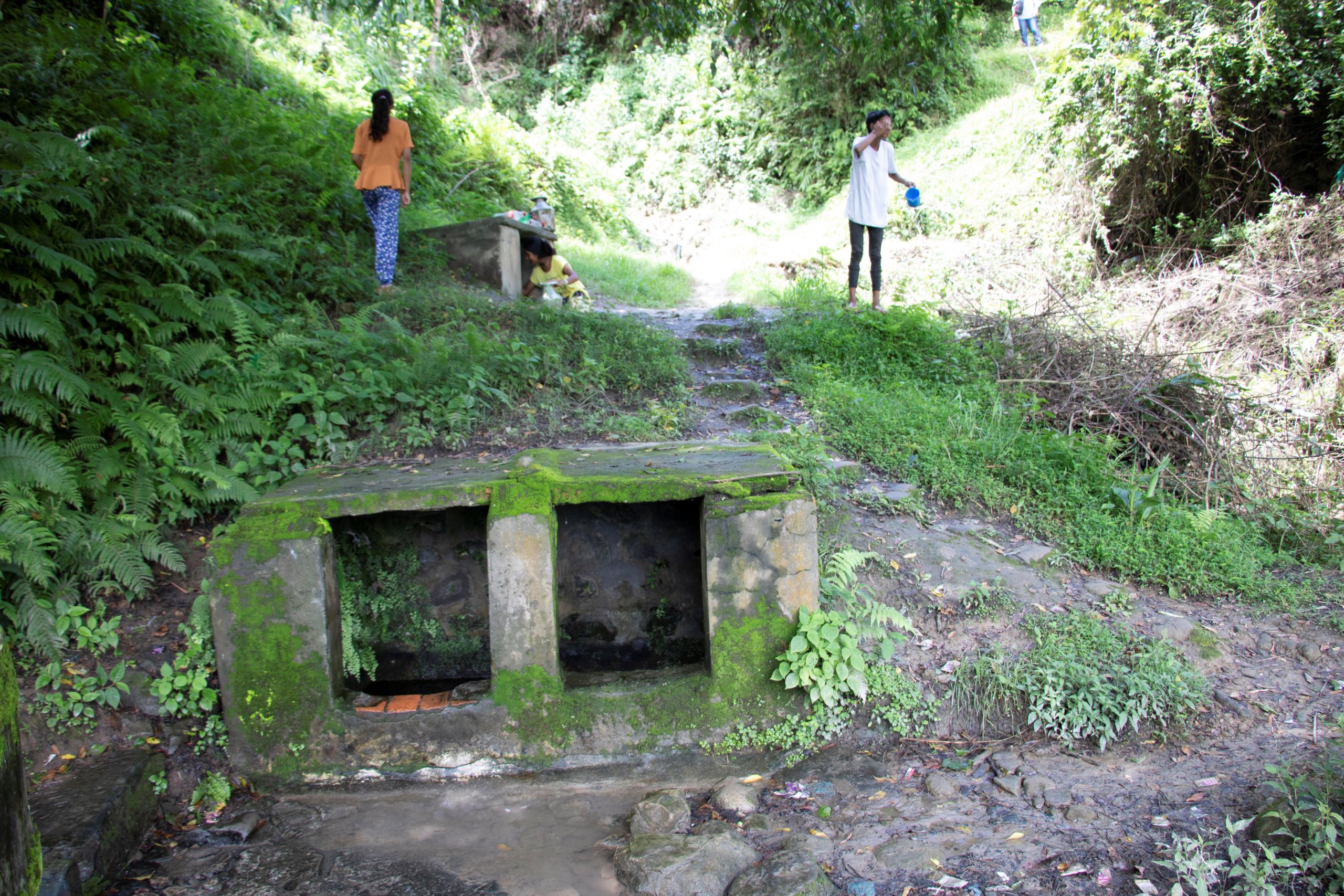
Opinion: Bore wells are not the answer to springs crisis

As natural springs dry up across Nepal, many municipalities are pushing for deep bore wells as a solution – but this short-term approach may make things worse. https://www-thethirdpole-net.cdn.ampproject.org/c/s/www.thethirdpole.net/en/nature/opinion-bore-wells-are-not-the-answer-to-nepal-springs-crisis/ (31 March 2023)
HYDROPOWER PROJECTS
Environmentalists push back against hydropower plans in protected areas The Ministry of Forest and Environment has proposed a new procedure that would allow large-scale hydropower development inside protected areas, with fewer environmental safeguards and more legal loopholes. Conservationists and legal experts have criticized the proposal as going against the Constitution and the National Parks and Wildlife Conservation Act as well as risking the biodiversity and ecosystem services of Nepal’s protected areas. They have also warned that the proposal could undermine the balance between development and conservation and expose the country to more climate change impacts such as floods and landslides.
Nepal is home to 12 national parks, a wildlife reserve, a hunting reserve, six conservation areas & 13 buffer zones extending from lowland Terai to high mountains, covering 23.39% of the country’s total land area, according to Dept of National Parks & Wildlife Conservation.
The new document is intended to replace its predecessor framed and implemented 15 years ago. The old document bans the development of any power project that entirely occupies an area inside a national park or a protected area. However, the old document allows a concession to local communities to build plants of up to 1 MW (provided they are not connected to the national grid) for local use. It states that at least 50 per cent of the monthly natural flow should be maintained in the river during the peak dry season after the water passes through the hydropower plant. According to the new document, hydropower projects with an installed capacity of 100 MW or above falling entirely within a conservation area will be allowed to release as little as 10 per cent of water in the river during the peak dry season. https://english.onlinekhabar.com/hydropower-protected-area-nepal.html (31 Oct. 2023)
Hydropower threatening biodiversity A massive landslide in Jure of Sindhupalchok district on August 2, 2014 destroyed the towers of the 45 MW Upper Bhotekoshi Hydropower Project and shut it down. Power supply resumed only after six months, but the April 25, 2015 earthquake ruptured the penstock pipes and flooded the power house. Around 80 percent of the reconstruction work had been completed when the disaster struck. Again in July 2016, a glacial lake outburst flood (GLOF) brought the project to a standstill.
This domination of hydropower has not only led to unwarranted impacts on the river ecology and the livelihoods of millions of people, but also triggered many disasters in the past decades, besides bringing displacement. Examples of this include the haphazard construction at the hydropower projects on the Trishuli and Bhotekoshi rivers in Nepal.
More than 30 hydropower projects (6 operating, 7 under construction and about 2 dozen in licensing process) were being built on the Trishuli River and its tributaries in Rasuwa, including two plants within Langtang National Park and the buffer zone, and they had impacted the local biodiversity. The projects have impacted the river flow as water is being diverted through tunnels every few kilometres. Besides, residents of old Syaphrubesi have been displaced while villagers in Sindhupalchok fear displacement. The projects had become a threat to tourism business as the water level has decreased alarmingly in the Bhotekoshi, which is regarded as one of the top rafting destinations in the world. Besides, local fishing communities in and around Dolalghat said that the projects and the increasing number of crusher plants had badly affected the aquatic environment of the local rivers.
BETTER OPTIONS The solar potential in Nepal is 50,000 terawatt-hours per year, which is 100 times larger than its hydro resource and 7,000 times larger than its current electricity consumption. https://kathmandupost.com/columns/2023/04/23/hydropower-threatens-biodiversity (23 Apr 2023)
Not just fish: Rhinos need Rivers too Jeff Opperman The dynamic process of habitat creation also reveals how terrestrial animals such as rhinos can be vulnerable to dam development. While we typically think of species such as salmon or the Mekong giant catfish being vulnerable to the disruptions caused by dams, rhinos are vulnerable as well. A proposed hydropower dam on the Karnali River, for example, could reduce flood levels, resulting in a less exuberant river and reduced rates of channel migration.
In fact, rivers that support complex habitat corridors—with a mosaic of channels and islands and habitat types ranging from young grassland to mature forest—often transition to simple, single-thread channels after they are dammed. The post-dam rivers lack the energy to change the habitats around them. If the proposed major dam on the Karnali were to be built, one of its major environmental impacts would be the loss of rhino habitat dozens of kms downstream. https://www.forbes.com/sites/jeffopperman/2023/04/27/not-just-fish-rhinos-need-rivers-too/ (27 Apr 2023)
Thousands of people at risk of being displaced by hydropower The women are all indigenous residents of Purano Syabrubesi village, in central Nepal’s Bagmati province. In August 2021, they had to flee their homes, which were in the path of massive boulders brought down by a landslide. The women and their families are still living with the consequences of the disaster. After the landslide “all of a sudden, we became homeless”, 42-year-old Tamang tells. Thirty-two households were affected, and more than 100 people are still living in two temporary shelters in Dec 2022. The women tell they believe that the landslide was triggered by explosions to create a tunnel for the 20 MW Langtang Khola hydropower project, just a few hundred metres from their village. The plant is being built on the Bhotekoshi River, which flows into the Trishuli River.
Nepal plans to reach 15,000 MW of installed hydropower capacity by 2030. There are 123 large hydropower plants (with a capacity over 1 MW) operating in Nepal, with a total capacity of nearly 2,150 MW. Data from the Department of Electricity Development shows that projects with a combined capacity of 3,280 MW are being built. A further 100 projects with a total capacity of nearly 7,620 MW are waiting to be granted construction licences, as of 3 March 2023.
Central Nepal is a particular hotspot for hydropower: more than 60% of large plants in the country are in Bagmati or Gandaki provinces. Of the projects awaiting construction licences, there are about 1.3 times more proposed projects in Gandaki and Bagmati than the remaining five provinces combined. Gandaki and Bagmati have large rivers that carry substantial volumes of water, have high base flows and other favourable conditions for hydropower, as well as access to infrastructure like roads and transmission lines.
Just on the Bhotekoshi and its tributaries, seven hydropower projects are currently in operation and at least three others are under construction, according to an official from the Sindhupalchowk District Coordination Committee. As of 2018 – the latest year for which comprehensive data is available – there were plans for 36 hydropower projects on the Trishuli river and its tributaries, with 23 at the planning stage with survey licences issued. https://www.thethirdpole.net/en/livelihoods/thousands-of-people-at-risk-of-being-displaced-by-hydropower-central-nepal/ (15 March 2023)
Thousands of people at risk of being displaced by hydropower Dipak Gyawali, one of the top water experts in South Asia and Nepal’s former minister of water resources, is of view that disasters are often created by ‘bad development’ practices. “Disasters are unfinished business of maldevelopment. What happens between disasters is more important than what happens after the disasters,” he tells The Third Pole.
With the rivers going dry and springs drying up, Gyawali feels the recent Joshimath disaster in the Indian state of Uttarakhand is already being replicated in Nepal. “It’s just that the authorities don’t care. Nobody desires environmental studies in Nepal. It’s limited to formalities… The current scale of hydropower development in Nepal is absolute madness. Being self-reliant in energy is fine, but developing hydros just for future trade with other countries raises practical questions like ‘Is it feasible? Is it realistic?’” Gyawali says. https://www.thethirdpole.net/en/livelihoods/thousands-of-people-at-risk-of-being-displaced-by-hydropower-central-nepal/ (15 March 2023)
Questionable economics of hydro projects The article raises some pertinent questions about economics of hydropower projects, electricity prices for industries and in markets, power export and lack of PPAs after constituting Electricity Regulator when there is just one buyer of Power: NEA. https://kathmandupost.com/columns/2023/04/10/hydropower-un-economics (11 April 2023)
Task force for relaxing provisions on optimisation of hydro generation capacityThe NEA board on Feb 9 2023 had formed the task force to recommend ways to sign power purchase agreement (PPA) with developers of projects having optimised generation capacity. A report recently prepared by the task force states that the door should be opened for operating power plants at their optimum capacity. “For this, the current provision of Q40 criteria of Probability of Exceedance (PoE) needs to be revised,” it says.
While designing projects in Q40, projects should be able to supply power in full capacity for at least 4.8 months (40% of the year). However, as they have to operate the plants for a longer period, the capacity of projects would need to be lowered, eyeing the hydrological capacity of such projects during the dry season when water level in the river remains low. When the percentage of PoE is reduced, the project’s capacity can be optimised, according to the report. For example, a 100MW project with Q40 criteria can be optimised to 185MW by adopting Q25 criteria. https://kathmandupost.com/national/2023/08/16/task-force-for-relaxing-provisions-on-optimisation-of-hydro-generation-capacity (16 Aug 2023)
Protests at Likhu Khola 2 hydro project In a statement on May 25, 2023, Independent Power Producers’ Association – Nepal (IPPAN) has stated that a few people had reached the office site of the 55 MW Likhu Khola 2 Hydropower Project and affected the project work by obstructing the operation of the project, padlocking it and harassing the employees working at the site. People were protesting against the impacts of the project. https://thehimalayantimes.com/business/ippan-denounces-vandalism-at-likhu-khola-2-hydro-project (26 May 2023)
Work on Arun III hydro project’s powerhouse halts Work on the under construction powerhouse of 900 MW Arun III hydropower project in Sankhuwasabha has come to a halt. The local people have stopped the construction for around three weeks demanding compensation for the land to be acquired along the Chhyangkuti-Diding Pukhuwa approach road of the Arun III project site. As a result, the work of the project powerhouse & the entrance route has stopped. https://english.khabarhub.com/2023/20/319120/ (20 Sep 2023)
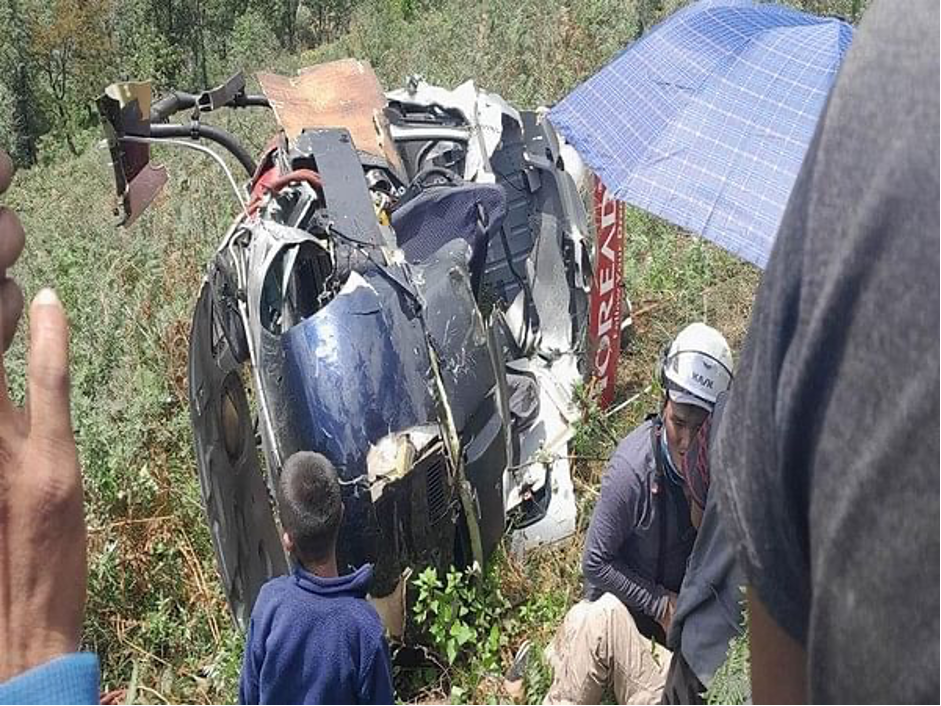
Helicopter carrying Arun-3 project materials crashes The helicopter was ferrying construction material for the Arun-III hydro-electric project which is co-funded by India and was approved by the Centre in 2017. One person died and 4 were injured in the crash. https://www.cnbctv18.com/world/helicopter-crash-nepal-arun-3-hydro-project-simrik-air-rescue-pilot-casualties-sankhuwasbha-16579631.htm (5 May 2023)
Arun III HEP worker dies, 2 injured A worker of the under-construction 900 MW Arun III Hydropower Project died after he was hit by a falling rock inside the project’s audit-2 tunnel. The incident occurred during May 2 night and Rai breathed his last this morning while undergoing treatment at Sankhuwasabha District Hospital. Two other people who were injured in the incident are from Guwahati and are under treatment.
Over 300 workers including those from India have been hired for the project. The lack of a health facility at the project site has caused problems. In some cases, they are likely to face life-threatening circumstances in the absence of timely treatment. The workers also demand regular health-checkup. https://myrepublica.nagariknetwork.com/news/arun-iii-hydropower-worker-dies-two-injured/ (3 May 2023)
Govt seeks $1 billion from World Bank, others for Upper Arun Nepal seeks an investment of around $1 billion (Rs 130 Billion) from the World Bank and other international financial institutions to develop the US$ 1.75 Billion, 1,061MW Upper Arun Hydroelectric Project as the WB tries to return to an Arun river project after a gap of 28 years, after withdrawing from Arun III project in 1995 following strong protests. “The World Bank could inject $550 million,” said Kul Man Ghising, managing director of NEA, the project developer. “The WB is expected to attract international financial institutions such as the European Investment Bank and others to inject more funds to take the total international financing up to $1 billion.”
This is the first time the World Bank is prepared to fund an NEA-led hydropower project. In 2014, the WB approved $84.6 million to finance the Kabeli-A Hydroelectric Project developed by the private sector. In 2019, its private sector arm—the International Finance Corporation (IFC)—had led international creditors to invest $453 million in the 216 MW Upper Trishuli 1 Hydropower Project. A South Korean consortium is developing this project. The World Bank has been helping Nepal build transmission line projects. https://kathmandupost.com/national/2023/10/15/nepal-seeks-1-billion-from-world-bank-others-for-upper-arun (15 Oct. 2023)
Nepal-Bangladesh Govts to discuss investment modality for Sunkoshi-3 HEP The officials will be finalizing the investment modality for the Sunkoshi-3 Hydropower Project in the 2-day bilateral energy talks that will kick off on May 15, 2023 in Bangladesh. The joint-secretary level meeting will be followed by secretary-level talks.
Nepal has already provided the feasibility study and environmental impact assessment to Bangladesh. The two countries are looking to establishing a joint company for the Sunkoshi-3. The meeting will also focus on finalizing a Memorandum of Understanding between NEA and Bangladesh Power Development Board to start electricity trade. There will be discussion on the investment of Bangladesh’s private sector investment in hydro projects in Nepal. https://myrepublica.nagariknetwork.com/news/nepal-and-bangladesh-to-discuss-investment-modality-for-construction-of-sunkoshi-3-hydropower-project/ (12 May 2023)
Karnali Chisapani HEP to cost Rs 1.147 trillion Nepal Electricity Authority (NEA) has initiated a 3 year long new study of the 10800 MWKarnali Chisapani Hydropower Project, arguably the largest hydropower project of South Asia, using its own resources. As per the current price estimates, the project is expected to cost Rs 1147 billion.
The reservoir of the proposed project would be two kilometres above the Karnali Chisapani bridge that connects Bardiya and Kailali districts. A 270-m tall dam would be built on the Karnali River. NEA’s current study says that it would be a ‘rock fill dam’. The reservoir would be 167 kilometres long – 100 kilometres on the Karnali river, 45 kilometres on the Bheri river, 16 kilometres on the Seti river, six kilometres on the Thuligad river. The project will affect the settlements and structures located near the river in Bardiya, Kailali, Surkhet, Achham and Doti districts. As per a study in 1989, the project will affect a total 11,570 ha area and 54,600 locals. https://myrepublica.nagariknetwork.com/news/karnali-chisapani-hydropower-project-estimated-to-cost-around-rs-1-147-trillion/ (30 Dec. 2023)
Rs 36.37 B approved for four hydro projectsThe Investment Board Nepal has approved investments worth a total of Rs 36.37 billion for four hydropower projects: Rolwaling Khola (22 MW), Chhujung Khola (63 MW), Dana Khola (49.95 MW) and Sanibheri Hydropower Project (44.52 MW). https://kathmandupost.com/national/2023/08/25/investment-board-approves-investment-of-rs36-37-billion-for-four-hydroprojects (25 Aug. 2023)
2 dead, 28 missing in floods, hydro project affected Two people were killed and 28 are missing after major flooding and landslides caused by monsoon rains in eastern Nepal. A worker at a hydropower project under construction on the Hewa River in Sankhuwasabha district was found dead, while 17 other staff were missing. Machinery and equipment for the hydropower project have been swept away. There are also reports of houses being damaged, assistant chief district officer said. https://www.hindustantimes.com/world-news/nepal-floods-2-dead-28-missing-in-nepal-floods-worst-not-over-yet-forecasters-warn-101687085180712-amp.html (18 June 2023)
INDIA NEPAL: Shared Hydro Projects, Sharing Hydro Electricity, Concerns
Apr 2023 Power export deals The Independent Power Producers Association of Nepal said that deals were initiated for selling 2,200 MW of electricity to India during the two-day power summit that concluded on Apr 19 2023 in Kathmandu. India’s Manikaran Power Ltd signed an MoU to purchase 200MW of electricity directly from the hydropower projects. During the closing ceremony of the event, IPPAN Vice-President Ashish Garg said that Vedanta India had initiated the process of signing a long-term power purchase agreement (PPA) to buy 2,000MW of electricity from Nepal. https://kathmandupost.com/national/2023/04/20/indian-firms-to-buy-2-200mw-of-electricity-from-nepal (20 April 2023)
Nepal hydropower drive puts India over China Nepal has 124 operating hydropower plants, with a combined capacity of 2,600 MW, and a further 235 are under construction. Together they will able to generate a total of 8,667 MW, according to the Department of Electricity Development. Indian companies have contracts to build and operate 10 plants, while Chinese developers have such contracts for five, said Durga Narayan Bhusal, an engineer at the department. Nepal generates about 2,700 MW of electricity – the vast majority from hydropower – said the NEA, which is above the nation’s demand of 1,700 MW. https://www.eco-business.com/news/nepal-hydropower-drive-puts-india-over-china-but-whats-the-risk/ (25 May 2023)
Nepal approves L Arun hydropower project to be developed by IndiaNepal has decided to allow India’s Satluj Jal Vidyut Nigam (SJVN) Ltd to develop a 2nd hydropower project. A meeting of the Investment Board Nepal (IBN) chaired by Prime Minister Pushpa Kamal Dahal Prachanda approved the draft project development agreement (PDA) to be signed with SJVN to develop the 669 MW Lower Arun Hydropower project in eastern Nepal.
The development comes days before PM Prachanda’s visit to India starting May 31. The draft needs to be endorsed by the Council of Ministers before it gets implemented. The previous meeting of the IBN had approved Rs 92.68 billion investment for the project. https://www.moneycontrol.com/news/india/nepal-approves-second-hydropower-project-to-be-developed-by-india-10680901.html (29 May 2023)
June 2023: Dahal’s Delhi trip: Some hits, many missesNepal was pushing for an umbrella trade agreement for 25 years to export its electricity. The two sides reached an agreement in principle at the prime minister’s level, but they are yet to sign an agreement and exchange letters towards this end. “The Indian side was against signing an agreement on the electricity deal till May 31 night. But the two sides reached an understanding on June 1 due to Nepal’s resolute stand on the Lower Arun and Phukot Karnali,” a high-level Nepali official accompanying Dahal on the trip said. “As the Indian Council of Ministers is yet to approve the agreement, there could be no exchange of letters. Energy secretaries of the two countries signed a symbolic agreement. The goal is to exchange letters amid a function in the near future”. Currently, Nepal is allowed to sell 452.6 MW of electricity generated by 10 hydropower projects in the Indian power markets. And, every year Nepal needs to renew the approval for a particular project to export power to India.
“The companies of Nepal and India can now directly sign medium- and long-term agreements on electricity import and export as per the umbrella agreement. So far, we had to renew the agreement every year to export electricity from a hydropower project in Nepal,” said Kulman Ghising, managing director of NEA. “Moving forward, we don’t have to do that. Now the new deal has paved the way for the buyers and sellers from the two countries to sign agreements for five to 25 years.”
The Pancheshwar Multipurpose Project was Nepal’s third important agenda item of Dahal’s India visit. India, however, reiterated the same old commitment on the project. Even after 26 years after the signing of the controversial Mahakali Treaty, even the DPR of the project has not been prepared. https://kathmandupost.com/national/2023/06/02/dahal-s-delhi-trip-some-hits-many-misses (2 June 2023)
Phukot Karnali HEP India & Nepal have signed a MoU to develop the Rs 92.3 B Phukot Karnali Hydro-Electric Project (480 MW) in Nepal in the presence of Prime Minister Narendra Modi and his counterpart Pushpa Kamal Dahal in New Delhi on June 1, 2023. “NHPC Ltd of India and Vidhyut Utpadan Company Ltd, Nepal signed an MoU (Memorandum of Understanding) for the development of Phukot Karnali Hydro Electric Project (480MW) in Nepal,” the Ministry of Power said.
Key features of the project include a 109-m-high RCC dam and an underground powerhouse, to utilize minimum environmental release one Surface Power House of 2 X 3 MW. https://www.firstpost.com/india/india-nepal-sign-mou-to-develop-phukot-karnali-hydro-electric-project-12679642.html (1 June 2023)
“This madness will be costly”: Overlooking climate change, environmental issues while signing hydropower deals Nepal is sacrificing its ecology and neglecting domestic priorities to build economic ties with India, says Ramesh Bhushal. High-profile intergovernmental discussions between India and Nepal usually overlook climate change. In 2014, the countries jointly issued a 35-point press release on Narendra Modi’s first prime ministerial visit to Nepal that did not mention climate change. During the intervening 14 such visits between the two nations, climate change has never been officially discussed.
As of 28 June 2023, Nepal’s Department of Electricity Development had 241 construction licenses issued for hydropower projects with a capacity of 1MW or more, representing more than 8,820MW in total. In addition, hydropower construction applications awaiting approval amounted to more than 8,680MW. India is now funding the construction of projects with 4,000 MW and a further 1,100MW was signed off by Dahal and Modi in June.
Megh Ale, president of the Nepal River Conservation Trust, says: “Imagine what will happen to these rivers if you just think about electricity. In the last two decades, we have dammed almost all our major river systems except Karnali. We should also think about ecology and ecosystems while not undermining the need for electricity. The current madness will be costly.” https://www.thethirdpole.net/en/regional-cooperation/analysis-india-and-nepal-overlooking-environmental-issues-while-signing-hydropower-deals/ (16 August 2023)
Climate crisis ignored in India-Nepal river talks The Bilateral negotiations disregard impact of the climate crisis in new hydropower deals. High-profile bilateral discussions between India and Nepal usually overlook climate change and other environmental concerns. In 2014, the countries jointly issued a 35-point press release on Narendra Modi’s first prime ministerial visit to Nepal that did not even mention climate change. During the next four visits Modi has made, the climate crisis has never come up.
Nepal needs better transmission infrastructure Most of Nepal’s hydropower is generated by private investors, and one such is the Super Dordi in Lamjung district. The Dordi River is in full spate because of heavy rains this month, but the scheme with an installed capacity of 54 MW is only generating 10 MW. Says Super Dordi’s Ganesh Karki: “If we had a transmission line, we could run at full capacity.” The reason for power outages this monsoon is not because there is not enough electricity, but because inadequate transmission lines means the power generated cannot be distributed to the load centres, leading to frequent tripping. https://www.nepalitimes.com/here-now/india-nepal-ignore-climate-crisis-in-river-talks (26 Aug. 2023)
India’s MoP Notification opens doors for more hydro export to India Nepal will have a chance to export more hydroelectricity to India as India introduced a new rule allowing Indian distributors to incorporate imported hydropower into the renewable energy quota set for them. In a new notification issued last week, India’s power ministry set a new quota of renewable energy that distribution companies should meet starting from the fiscal year 2024-25. Minimum quotas related to wind energy, hydro renewable energy, distributed renewable energy and other renewables have been set. While setting the quota, the ministry also told the distribution companies that they can also meet the hydro quota by importing hydropower, this will be approved by the Central Govt on case by case basis.
As per the latest notification, it aims to maintain the share of renewable energy to a minimum 29.91 percent in 2024-25 and increase it to 43.33 percent by the 2029. The quota of hydroelectricity has been fixed at 0.38 percent for the fiscal 2024-25. This must be jacked up to 1.33 percent by fiscal 2029-30. https://kathmandupost.com/money/2023/10/29/nepal-s-power-could-light-more-of-india-after-new-import-rule (29 Oct. 2023)
Narrow lens Even as India pledged to import over 10,000 MW from Nepal over the next decade during Prime Minister Pushpa Kamal Dahal’s recent India visit, it has been putting up additional hurdles to making that happen. India now seeks financial closure details of all prospective hydropower projects in Nepal from which it is considering importing electricity. (Earlier it sought details only on investors of particular projects.) India may now seek such details in the case of the 10 projects in Nepal from which it is already importing electricity.
Take the case of the 456 MW Upper Tamakoshi hydropower project, which was developed by the NEA entirely through domestic resources. But a Chinese contractor was involved in some of its civil engineering works. This apparently makes it ineligible for power-import in the Indian eyes. The problem is that Nepal’s public procurement laws bars a public entity like the NEA from discriminating against contractors from any country. The chances of Nepal exporting a large volume of electricity to India—or to a third country like Bangladesh via India—are low despite the euphoria created by the announcement of buying 10,000MW. As Nepal continues to await India’s approval for export from 18 new power projects with a total capacity of over 1,000MW, some of its generated power is going to waste. https://kathmandupost.com/editorial/2023/07/17/narrow-indian-lens (17 July 2023)
River deals need a thorough revision Dipak Gyawali: “Take the case of the Mahakali Treaty. It has a provision for revision every 10 years. But none of the leaders have bothered to press for a revision in Nepal’s favor all these years. This is because such a move will leave them red-faced as none of their promises—a new dawn from the west, earnings of trillions of rupees every year—have materialized.”
“Recently though, Bhutan said no to the Indian proposal to develop the Sunkoshi project. This example should inspire us to put our national priorities first… As for the Indians, they are very clever, they take their national interest seriously. When it comes to water-sharing arrangements with Nepal, they refuse even to abide by the Helsinki Convention, leave alone the guidelines of the World Commission on Dams.”
“For Nepal, India is a monopsony market, meaning that Nepal cannot command price for its green energy in the Indian market. This is because per unit hydropower generation cost in Nepal is higher than in India and other countries. We cannot sell it cheap, given a high cost of power generation.”
On export of hydropower from Nepal to Bangladesh: “If such projects materialize, Nepali territories coping with seasonal floods and inundation will have to deal with floods and inundation all year round. Even this is okay, I say to them, provided they are willing to foot the associated costs, including the cost of inundation of our territories for the sake of protecting Bangladesh from flooding and inundation. I don’t think India will allow the use of its territories for the transmission of hydroelectricity generated in Nepal to Bangladesh.”
“India has introduced provisions stating that it will not purchase power generated with Chinese investment. Despite a toughening of stance, India sold the Upper Marsyangdi hydel license to a Chinese company. On the contrary, India is weaponizing water through such provisions, not Nepal, by taking it as a strategic asset.” https://theannapurnaexpress.com/news/dipak-gyawali-nepal-india-river-deals-need-a-thorough-revision-41793 (1 May 2023)
Bihar minister asks PMO to clarify on Kosi high damIn view of the visit of Nepal PM to India, Bihar’s Water Resource Development Minister Sanjay Jha on Jun 2 asked the PM Modi’s Office to clarify the status of Kosi high dam. “There is a treaty between India and Nepal over Kosi high dam. An office was also opened in Viratnagar where engineers of Bihar and Nepal are deployed but have not prepared the DPR (detailed project report) so far. Hence, we want to know whether the discussion on this point had happened between two leaders or not” Jha said. https://www.daijiworld.com/news/newsDisplay?newsID=1085991 (2 June 2023)
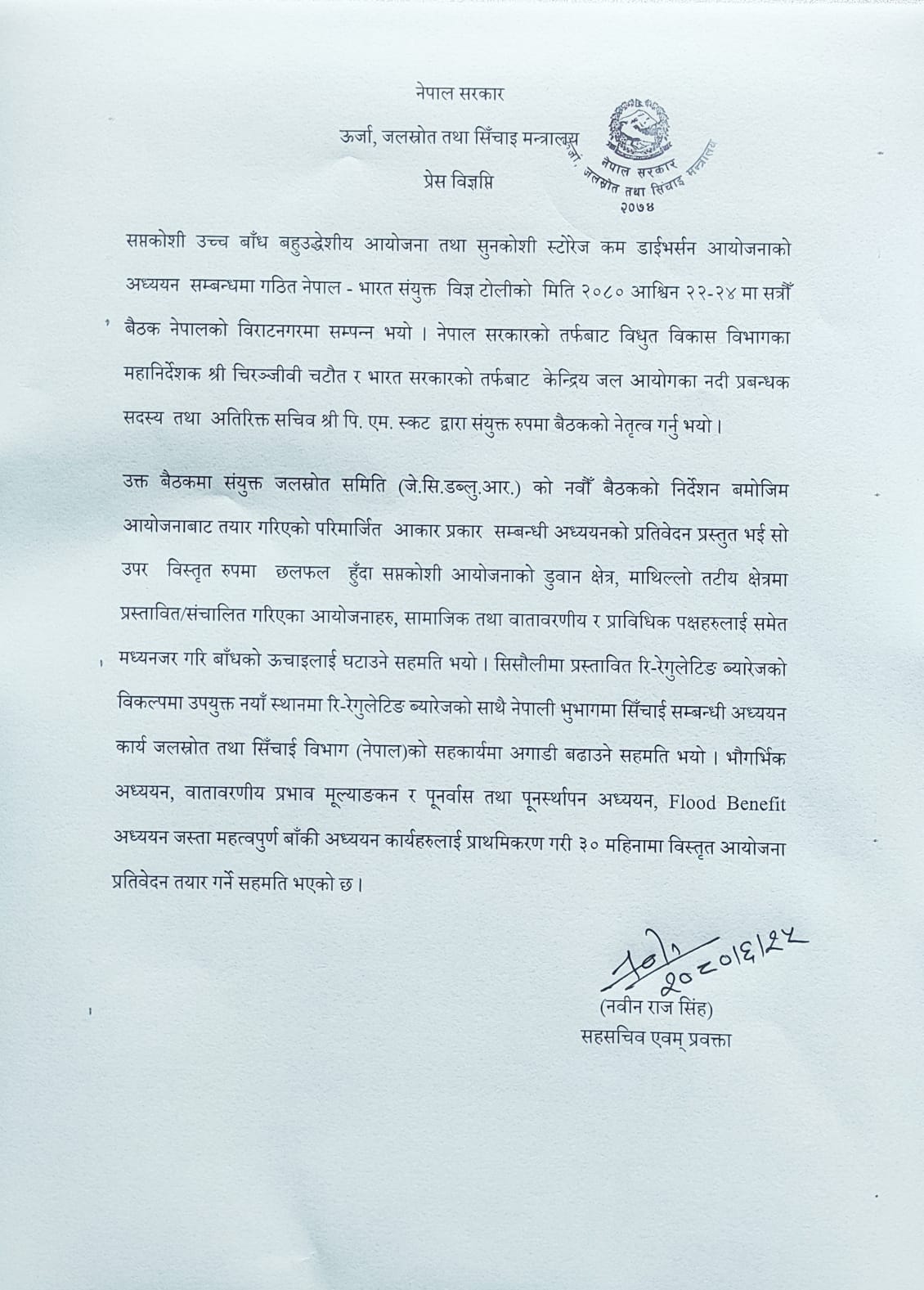
Agree to reduce the height of the proposed Saptakoshi High Dam (from 337 m to 304.8 m) amid concerns in Nepal over the potential inundation of a large swathe of land upstream of the dam. The high dam project stuck for several years due to local protests. Installed Hydro capacity will go down from 3000 MW to 2300 MW.
During the 17th meeting of the Nepal-India Joint Team of Experts for the Saptakoshi High Dam Multipurpose Project and the Sunkoshi Storage and Diversion Project held in Biratnagar on Oct 9-11, two sides agreed to also change the location of the re-regulating dam about 4 km upstream from present location, the Ministry of Energy, Water Resources & Irrigation said. (https://moewri.gov.np/storage/listies/October2023/press-release-2080-06-25.jpeg).
A 756 MW Tamor Storage Hydroelectric Project has been planned on the Tamor river while the 635 MW Dudhkoshi Hydropower Project is also in the pipeline. Nepal and Bangladesh have agreed in principle to develop the 683 MW Sunkoshi 3 Hydropower Project. “Besides these hydel projects, Sunkoshi Marin Diversion Multi-Purpose Project, upstream of the proposed dam site, will also reduce the flow in the Saptakoshi river and higher dams may not be required,” a senior official said last year. The DPR is to be made in about 30 months. https://kathmandupost.com/national/2023/10/16/nepal-india-agree-to-reduce-height-of-saptakoshi-dam (16 Oct. 2023)
Court allows GMR to continue Upper Karnali financial closure works The Supreme Court’s constitutional bench has paved the way for India’s GMR energy to continue its work on the 900 MW Upper Karnali Hydropower Project. The court on May 7 2023 rolled back its interim order of Nov 2022 that had suspended the government’s decision of July 15, 2022 to extend the deadline for GMR Energy to complete the financial closure.
Bangladesh has already issued a letter of intent to the GMR Group expressing its interest to enter into a contract to purchase 500 MW of electricity from the project. The power purchase agreement rate was also agreed upon between GMR Energy & Bangladesh at 7.712 cents per unit for 25 years. https://kathmandupost.com/national/2023/05/09/supreme-court-opens-for-door-gmr-to-continue-works-towards-financial-closure-to-develop-upper-karnali-hydropower-project (9 May 2023)
Pancheshwar
July 2023 meeting India and Nepal have agreed to hold an experts’ meeting to conclude the detailed project report (DPR) for the 6,480MW Pancheshwar Multipurpose Project on the Kali river. The decision was taken in the two-day meeting at Pokhara on July 6-7, and follows the recent agreement between the PMs of India and Nepal to finalise the DPR within three months. Nepal PM Pushpa Kamal Dahal had come to Delhi for a four-day visit from May 31 to June 3. Four years after the third meeting of the team of experts was held in Kathmandu in Feb 2019, the two sides have agreed to hold the fourth meeting. The two sides also agreed that the next meeting of the team of experts will be organised within 10 days to sort out differences on the DPR. WAPCOS submitted a DPR draft in 2016. Before that, both the countries had prepared separate project reports, which were later merged. https://timesofindia.indiatimes.com/city/dehradun/nepal-india-to-finalise-dpr-for-pancheshwar-project-in-expert-meet/articleshow/101605287.cms (09 July 2023)
WAPCOS prepares Draft DPR The fourth meeting of the team of experts held in late July had instructed India’s Water and Power Consultancy Services (WAPCOS) Ltd to revise the DPR in line with the understanding reached in the fourth and earlier meetings. WAPCOS recently submitted a draft DPR to both sides.
As per the WAPCOS DPR draft, India enjoys 65% benefit in irrigation and 82% benefit in flood control. India has a larger land mass to irrigate from the water of Mahakali while the dam to be built to develop the hydroelectric project will help to regulate the flow of water minimising the flood risks for India as a downstream country. https://kathmandupost.com/national/2023/09/16/will-nepal-and-india-conclude-pancheshwar-project-report-this-time (16 Sept. 2023)
Govts fail to finalize DPR Nepal and India have failed to finalise the detailed project report (DPR) of the Pancheshwar Multipurpose Project. Nepali officials claimed they had sorted most of their differences during a bilateral meeting of experts held in Kathmandu on Oct 6-7 2023. They took one more day to prepare the minutes.
“Once again, we could not reach a conclusion on determining the benefits to each side from the project,” said Nabin Raj Singh, spokesperson for the Ministry of Energy, Water Resources and Irrigation. “Our point was that we get negligible benefits from this project in areas of irrigation and flood control while the Indian side wants to keep the benefits for itself.” Two sides agreed to call another meeting soon. https://kathmandupost.com/money/2023/10/09/nepal-india-fail-to-finalise-pancheshwar-detailed-project-report (09 Oct. 2023)
SANDRP (ht.sandrp@gmail.com)

 SANDRP



Before these chain of hydropower projects came into being, there were never such severe damages anywhere in Nepal or India because these projects alter river courses, creating maximum destruction in the areas by deforestation, cutting slopes and usage of blasting as easier less time consuming methods, to gain maximum profit. In Uttarakhand alone, experts claim more than 150 new zones of landslides have become active during monsoon. Under whose direction, this draining of public funds taking place, is my only question. And if as scientists are exhibiting evidences of catastrophic level of less snowfall this winter in Indian Himalayas, where will the snow-fed rivers get their water and how are these mega hydro projects survive ie generate electricity as they are claimed during planning and what would happen to the environment which is going through an irreparable damage?
LikeLike