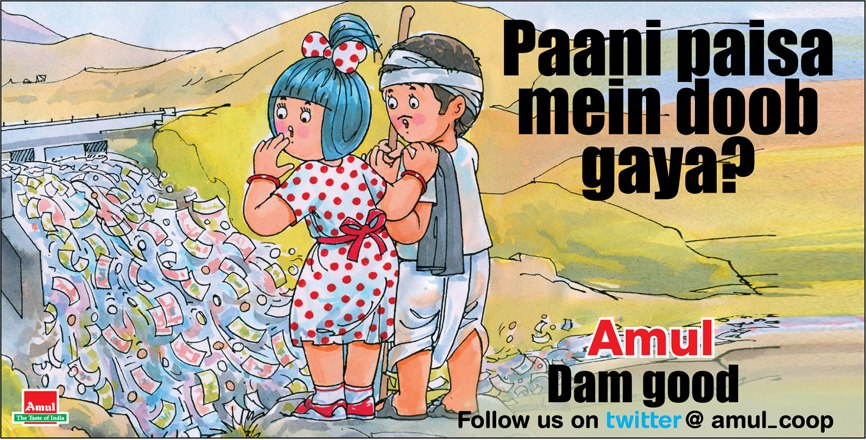
(Feature Image: A decade old Amul caricature on Rs. 70, 000 crore irrigation scam in Maharashtra.)
It’s not very frequent that irrigation scams come to light. Somewhat inadvertently, the Karnataka irrigation scam seems to be getting exposed when the newly elected state government stopped two irrigation projects in the constituency of the irrigation minister of the previous state government, the Gatti Basavanna Dam and the Ammajeshwari Lift Irrigation Project. In both cases, the department officials are saying that they prepared the project reports based on instructions from above. In both cases, the costs proposed at one stage were 3 to 9 times higher than the revised estimated cost.
One only hopes that the government, media and the judiciary will go to the bottom of these revelations and bring to light the full dimensions of what seems like a tip of the Karnataka Irrigation Scam. It is public knowledge that Karnataka has been spending tens of thousands of crores each of the last few years in the name of big irrigation or dam projects, without commensurate benefits.
Karnataka govt to halt 2 irrigation projects According to government officials, those responsible for overseeing the projects discovered that the estimated costs provided by Jarkiholi were significantly higher than the actual costs. An official from the project section of the irrigation department, who preferred to remain anonymous, said that the section simply drafted the projects according to the instructions given by higher authorities.
One of the projects approved by Gokak BJP MLA and former minister Ramesh Jarkiholi was the Gatti Basavanna Dam on the Markandeya River in his constituency. The major irrigation department initially estimated the cost at ₹969 crore, while the revised estimated cost was around ₹300 crore. Similarly, the Ammajeshwari lift irrigation project was estimated to cost no more than ₹80 crore, but the department had estimated it at ₹747 crore during the BJP rule, said officials. Due to the substantial discrepancies in the estimated costs, the govt decided to halt the projects. https://www.hindustantimes.com/india-news/cong-to-halt-2-irrigation-projects-approved-by-bjp-say-officials-101686251368654.html (9 Jun 2023)
HYDRO POWER PROJECTS
Electricity generation from hydro power sources has fallen in Asia, Europe and North America over the opening months of 2023 from the same period in 2022, crimping a key source of clean power generation for electricity providers. In the opening quarter of 2023, global hydro-powered electricity generation dropped by close to 4% from the same period in 2022.
– China, the top global hydro power, alone has 30% of global capacity, but in the opening months of 2023 has seen hydro generation fall 7.2% from the same period in 2022 due to reduced precipitation and hot, dry conditions in key hydro hubs in the Yunnan province. India, Asia’s next largest hydro producer and the sixth largest overall, has seen output fall by nearly 5% in early 2023 from early 2022, also due to dry, hot weather. Vietnam, the ninth largest global hydro producer, is currently in the grips of an extended heatwave, and has seen output drop by 10.5% in the opening quarter of this year from the year before.
– Norway, Sweden, France, Turkey (Biggest decline) and Italy and all major hydro producers, and have seen their collective output decline by around 8% in the first quarter of 2023 from 2022.
– Drier than normal conditions in Washington, Arizona, Nevada and Colorado – all key hydro states – have dragged overall hydro generation 17% lower in the opening four months of 2023 from the same period in 2022. https://www.nasdaq.com/articles/column-hydro-power-hotspots-hit-by-hot-and-dry-weather (09 June 2023)
IHA’s World Hydropower Outlook released on June 8 2023: https://indd.adobe.com/view/92d02b04-975f-4556-9cfe-ce90cd2cb0dc
Himachal Pradesh Tandi sangharsh samiti opposes power projects in Lahaul-Spiti Concerned over their impact on environment in eco-fragile Lahaul valley, the Tandi Bandh Sangharsh Samiti has opposed the decision of the state government to bring ‘Open Hydel policy’ in Himachal to set up power projects in Lahaul-Spiti. Samiti members have submitted a memorandum in this regard to CM Sukhvinder Singh Sukhu through Lahaul and Spiti MLA Ravi Thakur.
– “This decision of the state government has worried the residents of the tribal district of Lahaul and Spiti, where around 15 mega and 40 micro hydel power projects are proposed by the state government on the Chenab (Chandrabhaga) river basin in Lahaul and Spiti to generate electricity. Five mega projects (Tandi 104 MW, Rashel 102 MW, Bardang 126 MW, Miyad 90 MW and Jispa 300 MW) were allotted recently. Other projects that were awaiting allotment are at Chhatru (108 MW), Shelly (400MW) and at a few other places,” Mohan Lal Relingpa, member of the samiti said. He said, “Lahaul and Spiti district is an eco-fragile area, where power projects will bring disasters to the area.” https://www.tribuneindia.com/news/himachal/tandi-sangharsh-samiti-opposes-power-projects-in-lahaul-spiti-514885 (07 June 2023)
Uttarakhand Joshimath: Work on Helang bypass resumes Construction work on the key Helang-Marwari bypass near Joshimath resumed on Monday (June 05) after a five-month gap, according to Border Roads Organisation (BRO) officials. The construction on the bypass and a nearby hydroelectric plant run by NTPC was suspended on January 5, days after land subsidence hit Joshimath and quickly spread, with residents blaming blasting and tunnelling work on these two projects for the cracks. https://timesofindia.indiatimes.com/city/dehradun/after-5-month-gap-work-on-helang-bypass-resumes/articleshow/100806243.cms (07 June 2023)
Residents return to their “unsafe” homes For those living in temporary shelters, earning a livelihood is turning out to be a major challenge. Joshimath residents are therefore, returning to their homes that have developed cracks after the town started ‘sinking’ in January 2023. Due to the non-disclosure of the investigation reports of the Joshimath crisis, an atmosphere of fear has gripped the town. There is panic among local residents and the tourists. The impact on tourism, has been affecting the livelihoods of people. https://india.mongabay.com/2023/06/joshimath-residents-return-to-their-unsafe-homes-four-months-after-the-sinking-crisis/ (06 June 2023)
Centre CEA fast-tracks approval mechanism for pumped storage projects The Central Electricity Authority (CEA) has accorded concurrence to Upper Sileru Pumped Storage Project (PSP) of 1350 MW being developed at Sileru, Alluri Sitharama Raju district of Andhra Pradesh by APGENCO (A Government of Andhra Pradesh Undertaking) in 70 days against the stipulated timeline of 90 days.
– To expedite the process of concurrence of Hydro PSPs, the Central Electricity Authority has recently revamped the process for concurrence of Detailed Project Report (DPR) of these projects. One, the CEA has established a Single Window Clearance Cell for this purpose. Two, the Central Water Commission (CWC) has nominated nodal officers for fast-tracking the clearance of design aspects. It has also designated more groups for examination of design aspects of DPRs to further fast-track the clearances. Thirdly, the Geological Survey of India (GSI) has also nominated nodal officers for fast-tracking the clearance of geological aspects of DPRs, and CEA has requested GSI to involve their subordinate and field offices in states to further fast-track the clearances.
– The Ministry of Environment, Forest & Climate Change (MoEF&CC) has agreed to appraise Off Stream Closed Loop PSPs with specific Terms of Reference (ToRs). MoEF&CC has also notified to appraise PSPs (on existing reservoirs) under B2 category (wherein no Environmental Impact Assessment is required), subject to certain conditions. These considerations will drastically reduce time in getting Environment Clearance for these PSPs.
– 8 PSP projects (4.7 GW) are under operation, 4 projects (2.8 GW) are under construction, CEA has given concurrence for 2 projects (2.3 GW) and construction of these two projects is slated to start shortly.
– Further, 33 projects (42 GW) are under Survey & Investigation for preparation of DPRs. Out of these 33 projects, the Ministry of Environment, Forest & Climate Change has already given Terms of Reference to 22 projects.
– 39 Hydro PSPs of 47 GW are being pursued to be commissioned by the year 2029-30. https://pib.gov.in/PressReleaseIframePage.aspx?PRID=1930831 (08 June 2023)
Maharashtra Govt signs Pump Storage hydropower MoUs for Rs 71,000 cr The government on June 6, 2023 signed a memorandum of understanding with a group of public and private companies for the production of 13,500MW of pumped storage hydropower (PSH). The project will need an investment of Rs 71,000 crore.
– The National Hydropower Corporation (NHC), a Union government-undertaking, will invest Rs 44,000 crore for the projects of 7,350MW capacity. Torrent Power, a private player, will set up a capacity of 5,700MW by spending Rs 27,000 crore. The NHC has been given sites in Savitri (2,250MW), Kalu (1,150MW), Kengadi (1,550MW) and Jalond (2,400MW). Torrent will build PSH plants in Karjat (3,000MW), Maval (1,200MW) and Junnar (1,500MW). https://www.mid-day.com/mumbai/mumbai-news/article/maharashtra-state-govt-signs-hydropower-mous-for-rs-71-000-crore-23290843 (07 June 2023)
Madhya Pradesh NHDC Ltd is going to construct a Rs 4200 Cr 525 MW Pumped Storage Project (PSP) near Indira Sagar Dam, Khandwa, using the existing reservoirs Indira Sagar and Omkareshwar of the Indira Sagar Project. https://www.outlookindia.com/business/nhdc-to-invest-rs-4200-crore-to-develop-525-mw-pumped-storage-hydro-power-project-in-mp-news-293453 (09 June 2023)
MoEF Decisions from minutes meeting of FAC on River Valley Projects held on Apr 26 2023:
1. Narihalla PSP (300MW) by JSW ENERGY PSP THREE Ltd at BALLARI, KARNATAKA for TOR: APPROVED
2. Kurha-Vadhoda Islampur Lift Irrigation Scheme, UPSA Sinchan Yojna with CCA 32372 Ha by M/S TAPI IRRIGATION DEVELOPMENT CORP, JALGAON at JALGAON, MAH: FOR EC: APPROVED
3. Sirohi Pumped Storage Project (1200MW) by JSW ENERGY PSP ONE Ltd at SIROHI, RAJASTHAN FOR TOR: APPROVED https://parivesh.nic.in/newupgrade/#/cms/agenda?committee=EAC&ref_type=MOM
DAMS
Polavaram Project Rock toe-wall abutting spillway develops bend The toe wall built with rocks abutting the spillway to manage the course of the Godavari river has developed a bend over a stretch of nearly 150 metres at the Polavaram irrigation project site in Andhra Pradesh. The total length of the toe wall is 500 metres. It guards the spillway through which the natural course of the river has been diverted as part of the construction of the project.
– “On Saturday (June 03), we noticed the bend developed on the toe wall over a stretch of 150 metres. We do not have any scientific clue yet for the development of the bend,” Polavaram Project Superintending Engineer K. Narasimha Murthy said. “We have communicated the issue to the dam design experts and Polavaram Project Authority (PPA). We are expecting a reply from them within a week on how to proceed with the toe wall”.
– The preliminary field report submitted by the irrigation engineers contains the details of the soil behaviour at the spillway and the toe wall. The technical glitch at the spillway poses a major challenge for irrigation engineers when it comes to managing the water inflow during the Godavari flood, a regular phenomenon in July. https://www.thehindu.com/news/national/andhra-pradesh/rock-toe-wall-abutting-polavaram-project-spillway-in-andhra-pradesh-develops-bend/article66934418.ece (05 June 2023)
Karnataka Almatti storage capacity may be hit as trash fills backwaters The unabated dumping of hundreds of truckloads of mud, construction debris and trash in the backwaters of Almatti Dam (Lal Bahadur Shastri Dam) is likely to affect the water storage capacity of the reservoir in the district. The Karnataka Engineering Research Station has conducted a survey with regard to the accumulation of silt in the dam, but a report is yet to be submitted to the CWC.
In 2008, Delhi-based Tojo Vikas International Pvt conducted a study and submitted a report that 2.78 tmcft of silt had accumulated in Almatti Dam. In Tungabhadra Dam, more than 30 tmcft of silt is accumulated significantly reducing the water storage capacity. A situation has arisen where it is neither possible to remove the silt from the dam nor construct a balancing reservoir to store the water that has been lost due to accumulation of silt. As a result, area under irrigation is decreasing.
Incidentally, the work on the four-laning of the national highway between Shirur Cross and Gaddankeri Cross is under progress and construction materials like stones and sand have been dumped in the empty backwaters. This has prompted the residents to dump construction debris at the site. The sewage water from Bagalkot is also entering Almatti dam, through River Ghataprabha. Incidentally, the dam supplies drinking water to Bagalkot town and other villages. https://www.deccanherald.com/state/karnataka-districts/karnatakas-almatti-dam-storage-capacity-may-be-hit-as-trash-fills-backwaters-1226735.html (11 June 2023)
Tamil Nadu Mettur dam: Centenary of a milestone Cauvery agreement This year, Tamil Nadu will witness the centenary celebrations of M. Karunanidhi (1924-2018), one of its tall leaders and a prominent son of the soil from the Cauvery delta region. This year will also mark the centenary of a historical event concerning the river. In the age-old dispute between Tamil Nadu and Karnataka over the sharing of Cauvery water, the 1924 agreement, signed by the predecessors of the two southern States in February that year, is into the 100th year.
Though the final order of the Cauvery Water Disputes Tribunal, of Feb 2007 has superseded the agreement, one of the key effects of the agreement is the Mettur dam. It will be opened for irrigation on Jun 12. https://www.thehindu.com/news/national/tamil-nadu/mettur-dam-and-the-centenary-of-a-milestone-cauvery-agreement/article66947707.ece (08 June 2023)
INTERSTATE WATER DISPUTES
Krishna Water Disputes KRMB has nothing to offer as solution The tussle over the ratio of Krishna water sharing has started heating up once again and the river management board (KRMB) seems to have nothing to offer as a solution before the issue boils over. Both the Telugu States, Telangana and Andhra Pradesh, were at loggerheads on the issue at the last meeting of the River management board held on May 10.
In the absence of a consensus, the board, as a way out, sought to facilitate a solution formula hammered out soliciting the intervention of Ministry of Jal Shakti. But no headway could be made on this count too, even a month after the Board met with the water sharing issue on the agenda. Telangana has been left clueless so far on the Board’s response.
Since the new water year has already commenced and the irrigation schedule has to be notified in advance for the benefit of the farmers in the command of the joint projects in Krishna basin, the government of Telangana has reminded the board over the issue. https://telanganatoday.com/conflict-over-krishna-water-sharing-heating-up-krmb-has-nothing-to-offer-as-solution (11 June 2023)
IRRIGATION
Jharkhand Irregularities in micro-irrigation scheme The agriculture department’s director has ordered registration of FIRs against any Nabcons employees as well companies or vendors that may allegedly be responsible for irregularities in implementation of “Per Drop More Crop” — a key element of the Centre’s ambitious Pradhan Mantri Krishi Sinchayee Yojana — in the state. The letter, dated June 9, comes almost three weeks after the department ordered reverification of 12 beneficiaries, and on the same day an investigation by The Indian Express exposed how the scheme’s benefits were not reaching farmers.
Nabcons, a subsidiary of National Bank for Agriculture and Rural Development (Nabard), is responsible for verifying whether drip irrigation has indeed been installed at the farms of listed beneficiaries. However, in an investigation spanning a month-and-a-half and tracking 94 farmers in three blocks in Hazaribagh, The Indian Express found that for most, benefits were only on paper. Among the findings of the investigation were misuse of Aadhaar cards to create beneficiaries and some farmers not even aware that money had been collected by private companies in their name. https://indianexpress.com/article/india/micro-irrigation-jharkhand-seeks-firs-against-private-firms-verifying-agency-8656532/ (11 June 2023)
Andhra Pradesh ₹252 cr. sanctioned for lift irrigation project from Gandikota to Putlur, says MLA. Chief Minister allocates 1.35 TMCFT irrigation water for 45 tanks through the Handri-Neeva project, says Jonnalagadda Padmavathi. https://www.thehindu.com/news/national/andhra-pradesh/252-cr-sanctioned-for-lift-irrigation-project-from-gandikota-to-putlur-says-mla/article66954427.ece (10 June 2023)
URBAN RIVERS

Mula-Mutha; Pune RFD a question of social justice The river rejuvenation project (RRP) planned on the Mula Mutha by the PMC provides an example of how social injustice prevails in cities and how public infrastructure can be skewed towards some sections of society, argues Dr Gurudas Nulkar. https://www.indiawaterportal.org/articles/punes-river-rejuvenation-project-question-social-justice (07 June 2023)
Webinar Riverfront Developments
The systematic manipulation of the rules to include riverfront in the mainstream planning and manufacturing of a hyped economic gains have huge environmental costs which goes unaccounted in RFD projects. https://www.youtube.com/watch?v=uF5Mu2Lcg9Y (29 Sept. 2021)
RIVERS
SANDRP Blog From River to Cup: History of Assam’s Tea Plantations & the role of Brahmaputra Guest article by Anantaa Ghosh . As our thinking increasingly embraced utilitarianism and an unwavering focus on human interests, the river underwent a profound transformation, largely due to our own interventions and their consequences. We have recorded the changes that were taking place amongst us, the humans and the places where we live or the things that we have built, but forgot to record the changing environment around us. Hence, the same rivers who have nourished our ancestors now seem so unkind, violent and a complete stranger to us. https://sandrp.in/2023/06/09/from-river-to-cup-history-of-assams-tea-plantations-and-the-brahmaputra/ (09 June 2023)
The Natural Water Systems that Make Ken a Living River An important lesson learned from the walk is that while manmade water extracting schemes of tube wells, stop dams, lift irrigation, dam projects are struggling to deliver intended objectives apart from impacting the river eco-system adversely; the natural dams (Dahar), water pools (Dabra, Dabri) and groundwater hydrology in the form of springs (Jhira, Jhina) are keeping the river alive.
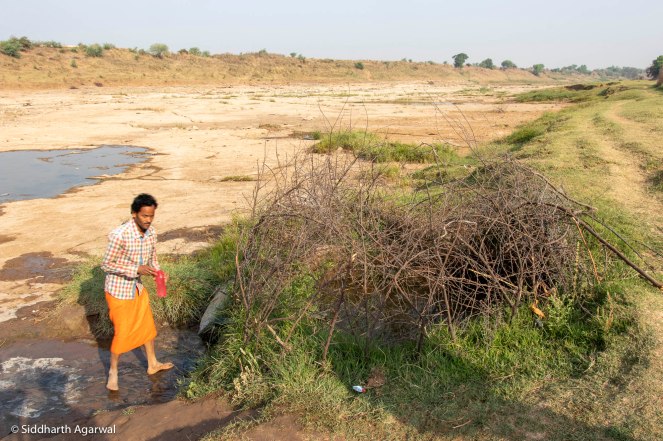
But for past many years, the existence of the natural heritage is under constant threats on account of built and proposed dams, water extracting schemes, increasing sand mining, etc. https://sandrp.in/2023/06/06/the-natural-water-systems-that-make-ken-a-living-river/ (06 June 2023)
Report Causes, cures of drying rivers discussed on environment day “In India, rivers are flooding, and ponds are dry which makes understanding different flow types of each river important. India is the world’s biggest consumer of groundwater but how can we not see perennial rivers turning seasonal gradually,” said Venkatesh Dutta, professor, Babasaheb Bhimrao Ambedkar University, Lucknow, who is also known as the Water Man. Dutta was speaking as guest speaker at an event titled ‘Beat the plastic pollution’ which was held on Monday, World Environment Day, by CSIR- National Botanical Research Institute of Lucknow.
“Many rivers of India are becoming seasonal from perennial. The connectivity of groundwater with the river is being broken by concrete structures. There is a massive volumetric loss of groundwater which is running our rivers dry,” he said. Dutta also mentioned some ways through which a river can be restored. “During our ongoing restoration of rivers, we have stressed on phase-wise work with three steps in the first phase: (i) identification and marking of encroachment on the 2 km-buffer on both sides of the river(s) on the drainage map using revenue/cadastral maps (ii) identification of the critical stretch which needs immediate attention such as channel obstruction, channel fragmentation, etc. (iii) marking of origin points of a river/stream as well as confluence points in the respective districts for special conservation zoning/priorities,” he said. https://www.hindustantimes.com/cities/others/causes-cures-of-drying-rivers-discussed-on-environment-day-101685984440782.html (05 June 2023)
Telangana Best waterfalls Kuntala Waterfalls is located on the Kadam river in the Neredikonda region of the Adilabad district. It falls from a height of 150 metres, one of the highest in the State. This place offers a spectacular sight particularly when the river is flush. Bogatha Waterfalls is located on the Cheekupally Stream in the Mulugu district is one of the most beautiful waterfalls and also the second biggest in the State. https://telanganatoday.com/four-best-waterfalls-to-visit-in-telangana-this-monsoon (09 June 2023)
Jharkhand Part 1 of article on rivers. https://www.prabhatkhabar.com/state/jharkhand/world-environment-day-2023-jharkhand-is-state-of-primitive-rivers-zzz (05 June 2023)
NARMADA Madhya Pradesh Hindi report on discussion over exiting and looming threats on river Narmada including dams, mining and pollution. https://www.spsmedia.in/people-movement/narmada-river-will-end-in-next-fifty-years/ (08 June 2023)
GANGA West Bengal Malda admin to survey islets on Ganga river The Malda district administration will survey the patches of dry beds or islets that have come up on the Ganga river near Jharkhand on its right bank. The decision was made at a meeting here on Wednesday (June 07). Over the years, Ganga has been eroding chunks of land in Malda district, which is on the left bank, and also in some areas of Murshidabad, on the right.
“Simultaneously, dry patches of land or islets, commonly known as char have come up close to the right bank of the river, close to Jharkhand. A number of erosion victims, who lost their land in erosion, have settled in these islets. It was a longstanding demand of the islet dwellers that they get all necessary services and benefits like any other resident of Bengal,” said Tarikul Islam, a representative of the Ganga Bhangan Action Pratirodh Committee (GBPAC). https://www.telegraphindia.com/west-bengal/malda-district-administration-to-survey-islets-that-have-come-up-on-ganga-river-near-jharkhand/cid/1943260 ( 08 June 2023)
Bihar Under construction bridge collapsed for 2nd time The Sultanganj four lane concrete bridge on Ganga river has collapsed twice since construction began in 2017, the first time in April last year before Sunday’s (June 04) catastrophic failure once again raising questions about the quality of its construction. It’s not clear why the bridge collapsed last year or if those problems had been rectified. https://edition.cnn.com/2023/06/06/india/india-bihar-bridge-collapse-intl-hnk/index.html (06 June 2023)
Uttar Pradesh 10-member PMC panel to check burial of bodies on Ganga ghat To check the unabated practice of burying the dead in the sandy banks of Ganga at Phaphamau, the authorities of Prayagraj Municipal Corporation (PMC) on Saturday (June 10) deputed a 10-members monitoring team who would advise families against burying bodies on the banks of Ganga. PMC is also working on a proposal to perform last rites of buried bodies lest they are exposed and flow away in the Ganga during monsoons.
It may be recalled that during peak Covid time (June 2021), thousands of bodies were found buried between the two banks of Ganga—from the city side of Sangam city (Teliyarganj) and Phaphamau. Although the district administration had instructed not to bury bodies on the banks, villagers of trans-Ganga areas continued with the practice. https://timesofindia.indiatimes.com/city/allahabad/10-member-pmc-panel-to-check-burial-of-bodies-on-ganga-ghat/articleshow/100908776.cms (11 June 2023)
Uttarakhand 45K tonnes of plastic waste generated in ’21-22 The mounds of plastic waste in the Himalayan state have snowballed to 45,000 tonnes in the financial year 2021-22, as per data exclusively accessed by TOI. Total plastic waste generation stood at 31,000 tonnes during the pre-pandemic years 2018-19 and within a span of just three years, a spike of 45% has been observed. https://timesofindia.indiatimes.com/city/dehradun/45k-tonnes-of-plastic-waste-generated-in-ukhand-in-21-22/articleshow/100781228.cms (06 June 2023)
YAMUNA Tribute मनोज मिश्र: नदियों के संरक्षण को समर्पित एक वनाधिकारी मनोज जी के नदी संरक्षण कार्य केवल दिल्ली तक ही सीमित नहीं रहे अपितु उन्होंने पूरी नदी और इसके अधिकांश जलागम क्षेत्र की यात्रा कर एक दर्ज़न से अधिक यमुना नदी मित्र मंडलियों को स्थापित किया। 2009 से 2013 तक मनोज जी ने इन समूहों को नदी हितैषी जीवनशैली और स्थानीय स्तर पर पर्यावरण संरक्षण कार्यों को करने के लिए प्रशिक्षित एवं प्रेरित किया।

ये देश में अपनी तरह का एक सफल प्रयोग है जहाँ इतनी लम्बी नदी के किनारे बसे लोग एक जगह संगठित हैं और आज भी अपने स्तर पर नदी सम्बंधित सूचनाओं का आदान प्रदान कर रहे हैं। ये नदी मित्र विशेषकर बाढ़ के समय एक दूसरे को सचेत करते हैं। वास्तव में मनोज जी का जीवन एक स्वस्थ नदी का प्रतिबिम्ब है जो बाहर से सहज, सुन्दर दिखती है और अंदर से धीर, गंभीर और गहरी। हम सब पर उनके विचारों, कार्यों की अमिट छाप है। पर उनके जाने से नदी संरक्षण समाज के सामने जो शून्यता बनी है उसकी पूर्ति असंभव है। https://shorturl.at/bdAJM (10 June 2023)
Manoj Misra: The Defender of Yamuna K.J. Joy; Shashi Shekhar He was a critic of the Interlinking of Rivers (ILR) project and especially the Ken Betwa link project. Manoj cited three main arguments. One, the Wildlife Clearance granted by the Standing Committee of NBWL is illegal. Two, the project would sound the death knell of the Panna Tiger Reserve. Three, there are cheaper, faster and more sustainable alternatives to the project available. To develop such an alternative, Manoj helped bring together a few concerned organisations and experts. Unfortunately, this remained an unfinished task. https://www.thehindu.com/opinion/manoj-misra-the-defender-of-yamuna/article66945138.ece (08 June 2023)
Nivedita Khandekar:- Misra was working on a trilogy of books on three of India’s seminal legal provisions. The first one, ‘Wildlife India @ 50,’ a compendium marking the completion of 50 years of the Wildlife (Protection) Act of India, was published in September 2022. He was working on a similar volume on the Water Act, and the third planned book was about the Environment Act. Additionally, there was a book on Yamuna that Misra had planned but that too would remain unfulfilled just like his dream of a clean Yamuna. https://www.news9live.com/india/yamuna-crusader-manoj-misras-death-leaves-void-in-indias-river-revival-community-2168200 (06 June 2023)
Kaushik Das Gupta:- Manoj Mishra had cautioned against the pitfalls of the cleaning the river approach. Mishra did not underestimate the importance of pollution abatement. But he also underlined that the river needs to have enough water and its floodplains shouldn’t be obstructed from recharging groundwater. The Yamuna, as he wrote in several places, was not just about the water body that flows through Delhi — for rejuvenating it, attention should be given to what happens upstream and care should be taken of the needs of the people who depend on it downstream.
A day after Mishra’s demise, Delhi’s Lt Governor launched the Yamuna Vatika project to “restore the ecological character of the floodplains.” Very often, such initiatives end up as nothing more than beautification projects. It would be a dishonour to the memory of Manoj Mishra if the Yamuna Vatika project too goes this way. https://indianexpress.com/article/opinion/columns/what-manoj-mishra-got-right-about-yamuna-restoration-8653364/ (09 June 2023)
Pranab J Patar:- Despite representing the government and serving in the Indian Forest Services for over 20 years, Misra would often clash with government agencies solely for the interest of the environment, and out of concern for the Yamuna river. He never shied away from voicing his opinion for matters close to his heart.
British Author George Eliot once said, “Our dead are never dead to us, until we have forgotten them”. As we pay tribute to Misra, let us renew our vows and continue to work towards the conservation of the Yamuna river and beyond. https://www.thequint.com/opinion/manoj-misra-dies-tribute-yamuna-conservation-movement-crusader (05 June 2023)
Nidhi Jamwal: – The monsoon clouds this year brought memories of Manoj Misra ji, the river warrior, with whom I have enjoyed informed conversations about rivers, monsoon and rainfall. He passed away on June 4, leaving behind a void in the environment conservation movement in the country. https://www.gaonconnection.com/lead-stories/obituary-manoj-misra-river-conservationist-environment-52206 (12 June 2023)
While pollution in the Yamuna had become a national concern in 1994, it was Misra’s leadership that brought environmental flow and the river’s floodplains into the spotlight. https://www.newindianexpress.com/nation/2023/jun/04/environmental-crusader-and-ex-ifs-officer-manoj-misra-of-yamuna-jiye-abhiyan-fame-dies-at-68-2581815.html (04 June 2023)
LG claims improvement in river water quality Experts argue that using BOD as the sole parameter to assess river health is inadequate as it varies based on seasonal factors, periodic rainfall, and the volume of water in the river. They explain that BOD is typically low during summers due to lower water volume, while the opposite is observed during winters when water demand is low. https://www.timesnownews.com/delhi/delhi-govt-l-g-claim-water-quality-of-yamuna-has-improved-experts-skeptical-article-100910300 (11 June 2023)
The turf war between the LG and the government in Delhi has intensified ever since the promulgation of an ordinance by the Centre which seeks to restore control of the LG over bureaucrats in the state government, effectively nullifying a May 11 Supreme Court ruling which said that the transfer and posting of the officials came under the purview of the elected dispensation. https://www.hindustantimes.com/cities/delhi-news/delhi-government-accuses-lieutenant-governor-of-taking-credit-for-work-to-curb-pollution-in-yamuna-river-101686416366523.html (10 June 2023)
DDA is developing a new ghat on the western bank of Yamuna, which will be called Vasudev Ghat on PM Modi’s suggestion, where at least 1,700 native trees will be planted. The DDA VC said it will be built between the existing Yamuna ghat and Nigam Bodh Ghat. Spread over 16 hectares, DDA said it has started cleaning the area and planting of saplings. https://www.hindustantimes.com/cities/delhi-news/delhi-to-develop-200km-of-cycle-tracks-across-the-city-at-a-cost-of-550-crore-officials-announce-101686334627517.html (10 Jun 2023)
Hundreds of environmental activists formed a human chain along one of India’s holiest rivers, the Yamuna, to raise awareness about pollution ahead of World Environment Day. https://www.euronews.com/video/2023/06/05/watch-hundreds-join-human-chain-to-save-yamuna-river (05 June 2023) Interestingly, even as activists and media continue to spread awareness about how dangerous a health concern the river water can become, people, including kids, continue to take dips into the Yamuna which apart from being known as one of India’s holiest rivers, is also one of the most polluted ones. https://www.moneycontrol.com/news/trends/world-environment-day-families-bathe-in-toxic-foam-floating-on-yamuna-check-pics-10746101.html (05 June 2023)
Noida Admin razes 32 farmhouses in floodplains 32 illegal farmhouses, some with swanky swimming pools and lawns, encroaching upon 27 acres of Yamuna floodplains at Nagli Nagla, Asadullapur, Chhaprauli Bangar, and Dostpur Mangrauli villages in Sector 135 were razed by the Noida Authority on Tuesday (June 06). The land has an estimated market value of Rs 40 crore. Since May last year, Noida has demolished nearly 200 illegal structures, including 190 farmhouses, built on the river’s floodplain.
In June 2022, it issued a public notice prohibiting any construction on the floodplains of the Yamuna and Hindon in Noida. The Authority warned that the costs of the demolition drives would also be recovered from the owners of such illegal farmhouses. Over 100 employees of Noida, three earthmovers and five dumpers were involved in the operation that encountered occasional protests. The drive is a part of Noida’s sustained efforts to crack down on illegal constructions on the floodplains of the two rivers that were accorded protected status by the UP irrigation department in 2015.
Earlier in February, some farmhouse owners had approached the Allahabad High Court seeking a stay on the demolition drives by Noida. The court granted them 10 days to file objections while also instructing the Authority to maintain a status quo during the period. The Authority received over 300 objections. After responding to them, it announced that no concessions would be given to owners of farmhouses constructed in the floodplain zone. An earlier survey, conducted by the Noida Authority, had revealed there are around 1,000 farmhouses along the Yamuna. https://timesofindia.indiatimes.com/city/noida/with-police-cover-noida-razes-32-farmhouses-on-yamuna-floodplains/articleshow/100807292.cms (7 Jun 2023)
Agra Ahead of Tuesday’s (May 30) popular river festival, Ganga Dussehra, devotees in Agra, Mathura, Vrindavan have expressed deep disgust and anger at the pathetic state of the Yamuna river, considered the lifeline and a centre of faith in the Braj mandal. https://www.daijiworld.com/news/newsDisplay?newsID=1084315 (29 May 2023)
RIVERS BIODIVERSITY
Karnataka Sharavathi river under siege from microplastics A study finds that microplastic pollution in the river Sharavathi originating in the Western Ghats is growing. Urgent efforts to protect this biodiversity hotspot are needed.
River sediments are likely to be a sink for MPs rather than acting as carriers into the oceans. Highly dense MPs can quickly sink through the water column and mix with the sediments while less dense MPs can get deposited after forming a biofilm on their surface, increasing their density. https://www.indiawaterportal.org/articles/river-sharavathi-under-siege-microplastics (16 Dec. 2022)
Jammu & Kashmir Waste dumping polluting Jhelum with microplastics The presence of microplastics in the Jhelum river was noted by a recent study by researchers of the National Institute of Technology Srinagar. It is important to note that Srinagar currently has one dumping site called Achan dumpsite. The 37-year-old dumpsite is not constructed and operated sustainably and is receiving around 400-500 tonnes of waste generated in the city daily. Until 1983, Achan was a flourishing wetland ecosystem and home to numerous species of birds close to the second-largest lake in Kashmir — the Anchar lake. The then-Governor ordered landfilling of the wetland and converting it into a waste dumping site. In the peri-urban and rural areas, the collection efficiency is low and the waste produced eventually ends up on the banks of the Jhelum.
Until recently, microplastics have not received adequate attention in plastic pollution monitoring by scientific communities and policymakers. However, in the last few years, microplastics have been reported from various ecosystems, including lakes, rivers, ponds, wetlands, mountains and oceans worldwide. In India, recent research has shown clear evidence of microplastic accumulation in the Himalayan mountains and adjoining ecosystems, rivers and major rivers such as the Indus, Brahmaputra and Ganga. The presence of microplastics in the sediments of the Brahmaputra and Indus rivers was reported by another study published in the journal Science of Total Environment. https://www.downtoearth.org.in/news/waste/world-environment-day-2023-waste-dumping-is-polluting-the-jhelum-in-kashmir-with-microplastics-89819 (05 June 2023)
Uttar Pradesh बाँदा ज़िले में केन नदी मे दक्षिण अमेरिकी अमेजन नदी मे पाई जाने वाली कैटफिश प्रजाति की सुकरमाउथ मछली ने दस्तक दी है। बीते 3 जून को ज़िले के सदर तहसील की ग्रामपंचायत कहला रहवासी शिवनायक निषाद को यह दुर्लभ मछली प्राप्त हुई थी। वे बतलाते है रात्रि मे मछली के लिए डाले गए जाल मे इसका फंसना हुआ था। सुबह जब देखा तो इसकी प्रजाति का अनुमान न होने से क्षेत्र मे चर्चा फैल गई। गतवर्ष बनारस और बिहार की गंगा नदी मे यह देखने को मिली थी। इसकी अनुमानित जनसंख्या भारतीय नदियों मे कितनी है यह आंकड़ा सरकारी महकमों में नहीं है। उल्लेखनीय है कि बुंदेलखंड के परिवेश और पर्यावरण जैवविविधता के विपरीत यह मछली यहां की नदीयों मसलन केन के पर्यावास हेतु अच्छे संकेत नहीं है। https://dashanan.in/national-news/kane-river-in-banda-found-suckermouth-fish-today-live-6857/ (05 June 2023)
FISH, FISHERIES, FISHERFOLKS
Jammu & Kashmir Alligator gar fish found in Dal lake raises concerns Experts are yet to establish the reason behind the presence of the alligator gar in Kashmir and say that this particular case could have been of an aquarium release.
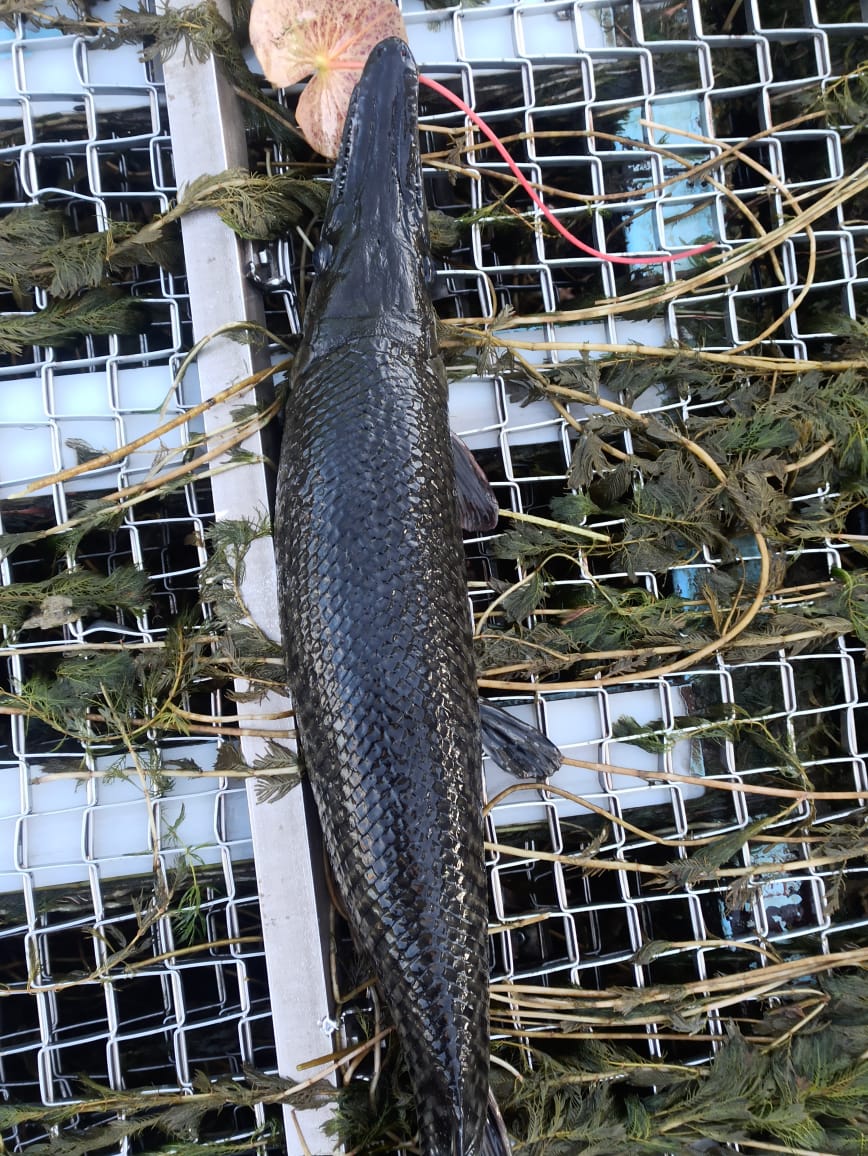
“I would say this is very likely an aquarium-release fish,” says David. “The fish captured in Kashmir is larger than the size alligator gars are usually purchased in the pet trade (which is usually around 15 centimetres), and is about the size at which pet owners release the fish when it is growing too large for their home aquarium.”
Over the past few years, there have been several instances of sighting and capturing of alligator gar in India. It has been spotted in West Bengal, Odisha, Maharashtra and Kerala with experts suggesting that they have been found in water bodies of India through ornamental fish trade. https://india.mongabay.com/2023/06/alligator-gar-fish-found-in-dal-lake-raises-concerns/ (05 June 2023)
West Bengal Fishers duped of subsidy money Hundreds of fishers of East Medinipur district have been duped under the Behundi scheme, a joint venture of the National Cooperative Development Corporation (NCDC) and the West Bengal Fishermen (Benfish) Cooperative Federation. https://www.newsclick.in/wb-fishers-duped-hundreds-crores-subsidy-money-major-scam (10 June 2023)
SAND MINING
Uttar Pradesh 8 drown in 15 days in sand mining pits in Yamuna A 30-year-old man in Shamli is feared to have drowned in a deep pit in Yamuna riverbed caused by illegal sand mining on Friday (June 09). This is the eighth such incident in the last 15 days, and two bodies are yet to be recovered. Out of the total deaths, five were minors. In view of the recent incidents, the district administration has now banned people from taking a bath in the river here. “Signboards have been put up prohibiting bathing on the ghats,” said sub-divisional magistrate (Shamli) Vijay Shankar Mishra. Assistant superintendent of police OP Singh said cops are ensuring that people don’t take bath on the stretch of the river here.
Friday’s (June 09) victim has been identified as Bindar Kumar of Udpur village. His brother Sanju Kumar said, “My brother died after falling into a deep pit while giving a bath to his cattle. Officials reached the spot for inspection but no search operation was conducted. Local villagers and divers searched for the body till evening, but it could not be found.” Major Singh, a Haryana-based farmer from Tarawadi village who had come to UP to take bath in the river as part of a religious ritual along with his family, lost both his sons — Sushant (15) and Sagar (18) — on June 3. “It was too traumatic for me to have witnessed my children drown in front of my eyes. One body was recovered on June 5 and the other two days later,” Singh told TOI.
Accusing the authorities of “being hand-in-glove with the mining mafia,” former village head Mahipal Singh from Nai Nangla village said “increased mining activities in the river by the mafia pose a threat to people’s lives.” An official on the condition of anonymity said, “Tenders are issued by the government for sand mining, but miners tend to flout the rules and ravage the area leading to over extraction, particularly a couple of months before monsoon. During pre-monsoon, the activity increases as sand extraction becomes impossible due to swollen rivers in the rainy season.” https://timesofindia.indiatimes.com/city/meerut/8-drown-in-15-days-in-sand-mining-pits-on-yamuna-riverbed/articleshow/100887930.cms (10 June 2023)
7 drowned in Ganga Sanket Prajapati (14) and Mandeep (16), who had gone to bathe in the river at Diha Ghat under the Karchhana police station area on Jun 4, ventured into deep waters and are feared drowned.
In another incident, five people drowned while bathing in Triveni Sangam under the Daraganj police station area. ACP Jhansi Chirag Jain said some people, who were bathing in Sangam this evening, were swept by a strong current and are feared drowned. They have been identified as Sumit, Vishal, Maheshwar, Utkarsha and Abhishek. Police officials said that divers have been pressed in to search for those feared drowned in the Ganga. https://www.ndtv.com/india-news/7-feared-drowned-in-ganga-in-separate-incidents-in-up-4094340 (05 June 2023)
Flouting many laws, sand-mining is rampant on the banks of Yamuna Estimates suggest unsustainable mining on the banks of Yamuna fetch mining companies up to two billion rupees annually. https://scroll.in/video/1050707/eco-india-flouting-many-laws-sand-mining-is-rampant-on-the-banks-of-yamuna (11 June 2023)
Haryana NGT seeks ATR in illegal mining case The principal bench of the NGT has constituted a factfinding committee to collect factual information and submit an action taken report on alleged illegal mining on the Yamuna river bank in Sonipat district. The bench of Justice Sudhir Agarwal, Dr. A. Senthil Vel said, “In our view, the allegations made in the complaint give rise to a substantial question relating to the environment due to implementation of Scheduled Enactment under NGT Act, 2010 has arisen.” “However, before taking any further action in the matter we find it appropriate to obtain a factual report for the purpose whereof we constitute a Joint Committee comprising State PCB, District Magistrate, Sonipat and Director, Mines and Minerals who shall visit the site, collect relevant information and submit a factual as well as action taken, if any, report within two months…,”the bench added.
The Tribunal was hearing an application filed by a resident of Sonipat District alleging that the company M/s Yodha Mines and Minerals is engaged in illegal mining on the Yamuna river bank at Village Jainpur, District Sonipat, by using heavy machinery and transporting illegally mined minerals by trucks and tractors.Vehicles transporting minerals are heavily overloaded, causing damage to the road. Additionally, by means of illegal mining, the proponent is causing significant damage to the environment, he stated. Considering the allegations the tribunal passed the above directions and listed the matter to August 3. https://www.livelaw.in/environment/national-green-tribunal-illegal-mining-yamuna-sonipat-230362 (09 June 2023)
Kerala Protest against mining at Thottappally completes 2 years The indefinite relay satyagraha being staged under the aegis of Karimanal Ghanana Virudha Ekopana Samiti against mineral sand-mining at Thottappally in Alappuzha completed two years on Saturday (June 10). On the occasion, members of the samiti held a torchlight protest at Thottappally. It was inaugurated by former MLA V. Dinakaran. The samiti demanded an immediate halt to mining activities. They alleged that indiscriminate mineral sand-mining at Thottappally pozhi on the pretext of flood mitigation in Kuttanad and at Thottappally harbour in the name of its development had destroyed the shoreline.
In a statement issued here, KGVES chairman Suresh Kumar S. said that 456 houses had been destroyed in the region due to coastal erosion. “Single point dredging at Thottappally pozhi has resulted in the intrusion of seawater and destruction of paddy cultivation in large tracts. Despite knowing the environmental hazards of sand-mining, authorities have recently deployed dredgers at pozhi and began deep mining,” Mr. Kumar said.
Although the local residents, especially the fishermen community, are not against sand removal from the pozhi, which is an annual process to ensure the flow of floodwaters into the sea, they are up in arms against the transportation of the mineral-rich sand to Kerala Minerals and Metals Ltd. and Indian Rare Earths Ltd. Earlier this year, the KGVES moved the Supreme Court against the mineral sand-mining on the Alappuzha coast. The case is pending before the apex court. https://www.thehindu.com/news/national/kerala/protest-against-mineral-sand-mining-at-thottappally-completes-two-years/article66954570.ece (10 June 2023)
WETLANDS, LAKES, WATER BODIES
Centre PM launches 2 schemes for wetland, mangrove conservation On the occasion of World Environment Day, PM Modi on Monday (June 05) launched two schemes–Amrit Dharohar and MISHTI (Mangrove Initiative for Shoreline Habitats and Tangible Incomes)–aimed at reviving the country’s wetlands and mangroves. The country also accounts for about 3% of South Asia’s mangrove population. Apart from the Sundarbans in West Bengal, the Andamans region, the Kachchh and Jamnagar areas in Gujarat have substantial mangrove cover.
The launch of Amrit Dharohar Yojana will ensure the conservation of the existing Ramsar sites through public participation, and these sites will become the centre of eco-tourism and a source of green jobs for thousands of people, the prime minister said. The MISHTI scheme will help revive and protect the mangrove ecosystem in the country. With this, the mangrove cover will be restored in nine states across the country and help in mitigating the threat to lives and livelihoods in coastal areas from rising sea levels and disasters like cyclones.
While Amrit Dharohar aims to achieve sustainable ecosystem development with the help of local communities over the next three years, MISHTI envisages comprehensively exploring the possible area for development of mangroves covering nearly 540 sqkm, spreading across 11 states and two union territories over five years, starting FY24. The primary objectives of the MISHTI scheme are sharing of best practices on plantation techniques, management practices, conservation measures and resource mobilisation through public-private partnership. The Centre will cover 80% of the project cost, state govts will contribute 20%. https://www.livemint.com/news/india/world-environment-day-pm-modi-launches-2-schemes-for-wetland-mangrove-conservation-11685966128412.html (5 Jun 2023)
Tamil Nadu Redo Ennore coastal zone management Plan The NGT has directed Tamil Nadu Coastal Zone Management Authority (TNCZMA) to redo the ‘faulty and incomplete’ draft Ennore Coastal Zone Management Plan (CZMP) map for omitting large tracts of salt pans and water bodies risking further degradation of critical coastal wetlands.
The green bench comprising judicial member Justice Pushpa Sathyanarayana and expert member K Satyagopal said, “TNCZMA has not adverted to the direction issued by this tribunal on February 22, 2021, besides stating that preparation of the latest CZMPs based on 2011 and 2019 CRZ notifications would be more scientific and technical. TNCZMA should have followed the direction, rather than coming up with some excuses that too only after the applicant filed an application alleging non-compliance. We deplore the attitude of the authorities.”
In February 22, 2021, the NGT had specifically directed TNCZMA to consider the 1996 approved plan as far as Tiruvallur district is concerned, while preparing the plan under CRZ notification 2019. However, TNSCZMA has not complied with the order inviting the wrath of the tribunal. https://www.newindianexpress.com/states/tamil-nadu/2023/jun/07/redo-ennore-coastal-zone-management-plan-ngt-2582583.html (07 June 2023)
Madhya Pradesh IMC gets Ramsar site certs for Sirpur, Yashwant Sagar Indore Municipal Corporation (IMC) officials received certificates for Indore’s two new Ramsar sites — Sirpur Wetland and Yashwant Sagar — on Monday (June 05). Sirpur Wetland and Yashwant Sagar were declared as Ramsar sites in August last year. IMC has chalked out a plan to remove hyacinth from the ponds along with stopping illegal fishing, removing encroachment and further developing the Ramsar sites as per set guidelines. https://timesofindia.indiatimes.com/city/indore/imc-gets-ramsar-site-certs-for-sirpur-wetland-yashwant-sagar/articleshow/100780565.cms (06 June 2023)
Chandigarh A demolition drive was carried out in the catchment area of Sukhna Lake at Kaimbwala village on June 10. As many as 34 illegal structures, both temporary and permanent, were demolished during the drive. Such drives will continue in the coming weeks as well to check the growth of unauthorised structures in violation of the Periphery Act. https://www.tribuneindia.com/news/chandigarh/34-structures-razed-in-sukhna-catchment-area-516107 (11 June 2023)
Uttar Pradesh Wetlands in Bijnor to be developed for Sarus conservation According to the forest department officials, there are 117 Sarus cranes in the district which are spotted in more than 50 large wetland areas. The programme is scheduled to start in July this year and will be undertaken at a cost of Rs 1.56 crore. “As per a census carried out last year, there are over 17,000 cranes in Uttar Pradesh. Of them, the highest number of cranes are found in districts Etawah (3,293), and Mainpuri (2,737).” https://www.daijiworld.com/news/newsDisplay?newsID=1087195 (06 June 2023)
Maharashtra Don’t allow concrete jungle on Panje wetland Environmentalists have stepped up their campaign to save the Panje wetland from being converted into a concrete jungle, destroying the rich biodiversity. On the occasion of International Biodiversity Day, NGOs NatConnect Foundation and Sagarshakti sent out an email on Monday (May 22) to CM Eknath Shinde reminding him of his promise to conserve the environment.
Environmentalists have raised concerns over a number of projects near the wetland. “The IT hub planned by a big corporate house should not lead to the destruction of Panje’s biodiversity as the wetland attracts over 80 species of birds, as per a Bombay Natural History Society (BNHS) report,” said B N Kumar, Director of NatConnect Foundation.
“Panje is the ideal location for building a biodiversity park. All that the government has to do is to strictly tell the City and Industrial Development Corporation (CIDCO) not to obstruct intertidal water flow,” says Nandakumar Pawar of Sagarshakti. Panje has been under attack for about five years with the intermittent blocking of tidal water, alleged Pawar. As a result of this the migratory bird population, which used to be 2.5 lakhs, has drastically dwindled. Panje biodiversity must be rebuilt now and the Navi Mumbai Special Economic Zone (NMSEZ) township be stopped, he said. https://www.freepressjournal.in/mumbai/dont-allow-concrete-jungle-on-panje-wetland-activists-to-govt (22 May 2023)
Kerala Turtles die as fire breaks out in wetland in Kasaragod 56 turtles were found burnt to death after a fire broke out in a 5-acre wetland at Payyanki, near Charvathur, in Kasaragod on Sunday (June 04). The fire has been burning in the private plot, which has paddy, trees, and shrubs, for the past two days.
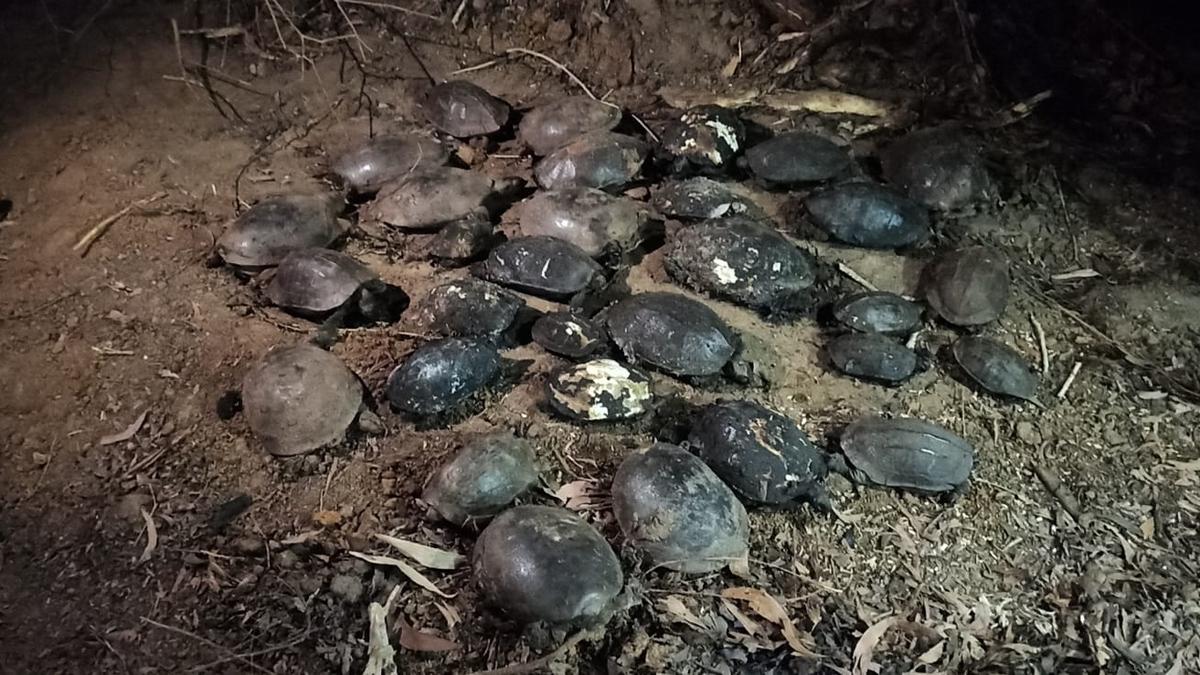
Twenty-two Indian flapshell turtles and 34 black turtles, which come under Schedule I and Schedule II of the Wildlife Protection Act, were found burnt to death when local people and Forest department personnel arrived at the site to extinguish the fire, according to Kanhangad Forest Range Officer A.P. Sreejith. Local people say the area is a habitat for several turtles and many more would have died. https://www.thehindu.com/news/national/kerala/turtles-die-as-fire-breaks-out-in-wetland-in-kasaragod/article66930529.ece (04 June 2023)
Gujarat Crocodile population across wetlands of Charotar region triples in a decade The latest crocodile count carried out by Vallabh Vidyanagar-based Voluntary Nature Conservancy (VNC) has revealed that wetlands in the lush green twin districts of Anand and Kheda has as many as 303 crocodiles. This is the highest number of crocodiles among all the counts carried out in these rural heartlands so far. The previous count carried out in winter has recorded presence of 248 crocodiles in Charotar wetlands.
VNC (formerly known as the Vidyanagar Nature Club) carries out crocodile counts twice a year – during winters and summers – to know about the reptile population in the wetlands. The summer count this year was carried out as ‘wetland watch’ for three consecutive nights between May 19 and 21 in the wetlands across 32 villages. The count has revealed health population of crocodiles in Heranj, Traj, Deva and Petli villages of the fertile belt. https://timesofindia.indiatimes.com/city/vadodara/crocodile-population-across-wetlands-of-charotar-region-triples-in-a-decade/articleshow/100489707.cms (25 May 2023)
WATER OPTIONS
Himachal Pradesh Drive to desilt Kangra dams, canals kicks off The district administration of Kangra has started a campaign to clean all check dams and kuhls (traditional irrigation canals) in the district before the monsoon. There are about 1,200 check dams and kuhls in Kangra district. https://www.tribuneindia.com/news/himachal/drive-to-desilt-kangra-dams-canals-kicks-off-514547 (06 June 2023)
GROUNDWATER
Opinion Increased rainfall alone will not help groundwater recovery The projected increase in groundwater use for irrigation can cancel the benefits of increased rainfall from warming climate R Prasad.
The study provides two critical insights — the periods of high precipitation will help in partial recovery of groundwater even when groundwater extraction continues or even increases. However, the projected increase in precipitation may not directly translate to an overall increase in groundwater storage. The opposing influence of evapotranspiration will become dominant in the far period and at higher warming levels.
“There can even be more challenging situations in future despite the projected increase in rainfall due to climate change. There is a compulsion to make irrigation more efficient and shift crop growing and procuring areas,” he says. “The focus should thus be to promote groundwater conservation to ensure long-term sustainability as it plays an important role especially during periods of drought. This applies even when increased rainfall can increase the recharge of groundwater.” https://www.thehindu.com/sci-tech/increased-rainfall-alone-will-not-help-groundwater-recovery/article66925433.ece (03 June 2023)
Punjab Residents protesting for clean water for a year Residents of some 40 villages in the Zira town of Ferozepur district have been protesting for almost a year against an alcohol distillery unit in the town. The villagers have been suffering a host of health issues and blame the factory for polluting their groundwater. Villagers allege that Malbros International Pvt Ltd has been carrying out reverse boring, where untreated effluents are pumped into the underground aquifers. The factory began functioning in 2008. https://www.downtoearth.org.in/news/pollution/poisoned-punjab-residents-from-40-villages-in-this-town-have-been-protesting-for-clean-water-for-a-year-89945 (09 June 2023)
URBAN WATER
Bengaluru Factors behind Bellandur’s infamous foam The mystery of the unpredictable and heavy foaming in Bellandur lake has baffled scientists, regulators and citizens. Several theories have been put forth, and control measures taken, yet the foam continues to form year after year. A team from the Centre for Sustainable Technologies (CST), Indian Institute of Science (IISc), has been monitoring this foam continuously for the last four years in order to unravel this mystery.
One of the reasons why the foaming has puzzled scientists is because it counterintuitively increases only after heavy rains, which are supposed to dilute pollutants in the lake that may be causing the foaming. In a study published in Science of the Total Environment, the researchers have uncovered the reason behind this peculiarity. https://iisc.ac.in/events/factors-fomenting-bellandur-lakes-infamous-foam/ (06 June 2023)
Once a cesspool, Veerasandra lake is now a pristine waterbody. https://indianexpress.com/article/cities/bangalore/lakes-of-bengaluru-cesspool-veerasandra-lake-now-pristine-waterbody-8656229/ (11 June 2023)
Deputy CM and Bengaluru Development Minister D K Shivakumar has instructed BBMP Chief Commissioner Tushar Girinath to suspend the officers and engineers involved in the illegal construction of a road on Hosakerehalli lake. In March this year, residents had protested against the project stating that the road was being built to facilitate connectivity to an apartment in the vicinity of the lake. However, the Bruhat Bengaluru Mahanagara Palike (BBMP) had said then that it was only a temporary mud road built to desilt the lake. https://indianexpress.com/article/cities/bangalore/dks-bbmp-suspend-officers-construction-unauthorised-road-hosakerehalli-lake-8647078/ (05 June 2023)
127 fall sick due to contaminated tanker water At least 127 residents – including 88 children – fell sick allegedly after drinking water supplied to their apartment complex by a water tanker supply service in Electronic City on Monday, officials said on Friday (June 09). This is the fourth such incident in Karnataka in a month. On May 24, a three-year-old died and 26 people fell ill after drinking contaminated water in Rekalmardi village in Raichur district, officials said.
The apartment building – which is still under construction – has been involved in a dispute between the builder and the apartment owners about the provision of facilities, officials said, adding that the apartment complex uses water for daily needs from four borewells, along with private tankers. BBMP has meanwhile filed a complaint against the builder at Parappana Agrahara police station, alleging that the water tank was not cleaned. An FIR has been registered under sections 277 (fouling water of public spring or reservoir), 338 (causing grievous hurt by act endangering life or personal safety of others) and others of the Indian Penal Code (IPC). https://www.hindustantimes.com/india-news/127-fall-sick-in-bengaluru-due-to-contaminated-tanker-water-101686338711321.html (10 June 2023)
Lokayukta files suo motu case over water crisis in Whitefield The Karnataka Lokayukta registered a suo motu case on June 3 in connection to problems faced by residents of Ramagondanahalli near Whitefield, where many villagers are shelling out ₹10,000 per month for water. Residents of Ramagondanahalli, Siddapura, and Thubarahalli villages do not have Bangalore Water Supply and Sewerage Board (BWSSB) connection, due to which they are dependent on water tankers.
In the last five months, many villagers have spent nearly ₹50,000, and a large chunk of their earnings goes into arranging water for day-to-day needs. While earlier, their average spending was ₹500 to ₹600 per month, the situation changed after a water supply agent started to transport water to urban areas from these villages from borewells dug rampantly. https://www.thehindu.com/news/cities/bangalore/lokayukta-files-suo-motu-case-over-water-crisis-in-whitefield/article66951207.ece (09 June 2023)
Although coastal Karnataka receives abundant rainfall (3m-4m), water scarcity during the summer months is a common problem that is faced by cities every year. Unfortunately, the problem only seems to get worse year on year. With declining levels of water is dams, receding groundwater levels, dry and contaminated wells are hindering access to safe drinking water. https://www.daijiworld.com/chan/exclusiveDisplay?articlesID=6116 (06 June 2023)
Chennai Buckingham Canal: A waterway once is sewage-carrier now It has been 217 years since the Cochrane’s Canal, which later became the Buckingham Canal, came into existence. The canal’s construction, covering its entire stretch of roughly 420 kilometres from Pedda Ganjam in Andhra Pradesh to Marakkanam in Tamil Nadu, happened in phases throughout the major part of the 19th Century from 1806 to 1882.
Its importance as a major waterway diminished since the early 20th Century, mainly because of the expansion of the railways. There were significant spurts during the World Wars. But it remained a means for goods transport even till the 1960s. An official document had recorded that the value of goods transported through the entire stretch of the canal in 1951-52 was at least ₹20.73 crore, a remarkably high amount for those days. https://www.thehindu.com/news/national/tamil-nadu/buckingham-canal-a-waterway-once-is-sewage-carrier-now/article66955503.ece (11 June 2023)
Private sewage lorries go on strike Private sewage lorries in some parts of Chennai stayed off roads on Saturday (June 10) in protest of new regulations. T.S. Arunkumar, president, Chennai Private Sewage Lorry Operators Association, said about 300 lorries in various localities like Sholinganallur and Nesapakkam had stopped operations. This was in protest of the new regulation of the Municipal Administration and Water Supply Department instructing them to operate trips only through the 14420 helpline. The department must not restrict direct calls from consumers for sewage disposal, he added. https://www.thehindu.com/news/cities/chennai/private-sewage-lorries-go-on-strike-in-some-parts-of-chennai/article66955400.ece (11 June 2023)
Hyderabad Hussainsagar water quality deteriorates For all the efforts at keeping it clean, pollution has increased in the past four months in the Hussainsagar and the water quality has degraded, according to the latest report of the SPCB. This comes on the back of renewed tourist interest in the lake, such as the musical fountain, and its surrounding where the new Secretariat and the giant statue of Dr B.R. Ambedkar were inaugurated and the Telangana Martyrs Memorial is getting ready. Besides, there is the summer rush of tourists.
Experts raised serious concerns over the untreated sewage water which was released in the lake, citing it as the main reason for the pollution. Dr B.V. Subba Rao, environmentalist and member technical of Water Domain, Bureau of Indian Standards, told Deccan Chronicle, said, “Hussainsagar needs catchment sanitation and strict regulation of the catchment area. How do we reorient the urban planning is the most important thing.” Experts also said that since raw faecal matter was being released in the lake, it indicated that the city did not have enough STPs for sewerage treatment. https://www.deccanchronicle.com/nation/current-affairs/060623/hussainsagar-water-quality-pollution.html (07June 2023)
Pune Water release from Khadakwasla dam for crops to stop in a week The state irrigation department plans to stop water release from the Khadakwasla dam for crops in about a week to meet drinking water requirements in the city and rural areas. The collective stock in four dams in the Khadakwasla circle on Saturday (June 10) was 5.61 TMC (19.2%). As per estimates, about one TMC water will flow out from the dams in the next one week, which will bring down the collective storage to around 4.5 TMC. The city lifts around 1.5 TMC water from Khadakwasla dam every month. Hence, 4.5 TMC water stock is likely to meet the city’s water requirements for at least two months, if not more, said an official.
An irrigation department official said that the four dams collectively hold 0.90 TMC more water this year as compared to last year’s stock of 4.7 TMC, but considering the probability of weak rainfall in the initial phase of monsoon, there is a plan to stop water release for crops around June 15 to meet drinking water requirements. Water release for crops has been underway for the last one-and-a-half months. The civic administration has saved 0.25 TMC water during the month-long once-a-week water closure, an official of the PMC’s water supply department said. A civic official said that there was no immediate plan to withdraw the closure. “We will review the water supply situation jointly with the irrigation department in the next few day,” the official said. https://timesofindia.indiatimes.com/city/pune/water-release-from-punes-khadakwasla-dam-for-crops-to-stop-in-a-week/articleshow/100910039.cms (11 June 2023)
Navi Mumbai Ransai Dam Reaches Unusable Content Level A major water crisis is looming over Uran that houses major public oil companies and Defence establishments. The water level of Ransai Dam, located in Dighode village in Uran can supply water for the next four to five days as its level has depleted sharply. Uran is likely to face a difficult situation if there is a delay in the arrival of monsoon by a week, according to a Maharashtra Industrial Development Corporation (MIDC) engineer. The Ransai Dam was built by MIDC around 50 years ago and it is the prime source of water for 25 Gram Panchayats, Uran Municipal Council, JNPT township, ONGC, BPCL colonies, and government establishments like Defence among others. https://www.freepressjournal.in/mumbai/navi-mumbai-water-crisis-looms-over-uran-as-ransai-dam-reaches-unusable-content-level (10 June 2023)
Frequent water cuts, irregular supply irk residents Repeated water shutdowns, weekly half-day supply cuts and irregular supply along with low pressure have upset the residents of Navi Mumbai, who are accustomed to regular and abundant water supply over the years. The civic body has resorted to weekly half-day cuts for some time now. There are also regular unofficial water cuts and inadequate water supply issues, residents of several areas have been complaining.
To add to the misery, the civic body seems to complete shutdown of water supply every month now. It declared a third shutdown for June on Wednesday. The civic body stated that there will be no water supply for 12 hours from 10am to 10pm on the day. It announced that there will be no water supply to the city on Wednesday (June 07) evening while the supply on Thursday morning will be low pressure. Residents, however, complained that the water supply on Thursday morning was negligible. The announcement led to the residents scrambling to store water from the available supply. https://www.hindustantimes.com/cities/mumbai-news/frequent-water-cuts-irregular-supply-irk-residents-of-navi-mumbai-101686249740552.html (09 June 2023)
Pipeline rupture likely to affect water supply According to the Navi Mumbai Municipal Corporation (NMMC), a sudden increase in water pressure from Bhokarpada Filtration Plant led to a portion of the pipeline getting damaged at 11.20 am. The NMMC swung into action and carried out a 14-hour-long repair to fix the pipeline. Sanjay Desai, city engineer, said, “A portion of the pipeline around 12 kms away from the NMMC headquarters was ruptured owing to the sudden increase in pressure. As soon as the corporation was informed about the fault, the water supply from Morbe dam was discontinued and the pipeline was drained to undertake repair, involving welding a whole new unit of pipeline.” A new segment of two-metre pipe was transported from the dam to take up the works, involving 70 labourers. “As the base of the pipeline was ruptured, it was decided to replace the entire segment,” Desai added.

The civic body supplies 429 MLD of water, of which 231 MLD is supplied in residential areas and 26 MLD goes to the commercial sector. Around 93 MLD is provisioned to villages and slum zones. Meanwhile, though former corporators and the administration issued an alert about the impending work, residents were irked over repeated issues with the water distribution. The locals also questioned the poor condition of the pipelines. “The pipeline is rusted and even the line damaged on Saturday was extensively rusted. Whose to look into the quality of the pipeline?” questioned Madhukar Bhosale, a senior citizen from Sanpada. https://www.hindustantimes.com/cities/mumbai-news/water-supply-in-navi-mumbai-affected-for-two-days-after-pipeline-rupture-near-mumbai-pune-expressway-101686424168236.html (11 June 2023)
Kharghar Residents complain of contaminated water The woes of Kharghar residents about water supply don’t seem to end. After facing acute water shortage over the past 10 days, five sectors comprising 50 odd residents housing societyies are receiving water that is yellowish in colour. The issue is being consistently raised by individuals on Twitter seeking CIDCO’s intervention. Kharghar receives water from Hetwane Dam situated at Pen. Residents said the water was non-potable and emitted foul smell as well. Society groups are expressing concerns about the contaminated water’s health implications. Over the weekends, some societies are planing to get the water tested from a private laboratory as well. https://www.hindustantimes.com/cities/mumbai-news/kharghar-residents-complain-of-contaminated-water-101686416065554.html (10 June 2023)
Guwahati How urban ponds can revive the ecosystem Ponds, locally known as “Pukhuris”, once dotted the landscape of the fertile land of Assam. However, with rapid urbanisation the water bodies are shrinking and posing a serious threat to the ecosystem. This ultimately results in artificial floods that have been leaving a disastrous impact in the urban landscape.
-Ponds can be home to several species from the unusual inhabitants to the unexpected ones. Both flora and fauna thrive around ponds which in itself is an ecosystem. It has the potential to reduce the risk of flooding and erosion damage from excess storm water runoff. Moreover, it also acts as a carbon sink in your backyard. https://assamtribune.com/assam/how-urban-ponds-can-revive-the-ecosystem-of-guwahati-1479430 (05 June 2021)
Mussoorie प्रदेश की 18 किलोमीटर लंबी और 1.2 किलोमीटर ऊंचाई वाली यमुना-मसूरी पेयजल योजना के पानी के सैंपल जल संस्थान ने पास कर दिए हैं। शनिवार से इस परियोजना से मसूरी को पानी की आपूर्ति शुरू हो जाएगी, जिसके तहत रोजाना दो से चार एमएलडी पानी मसूरीवासियों को मिलेगा। महज तीन साल में 144 करोड़ की परियोजना से सफलतापूर्वक पानी चढ़ने से मसूरी को 30 साल तक पेयजल की किल्लत नहीं होगी। https://www.amarujala.com/dehradun/sample-pass-mussoorie-will-get-yamuna-water-from-today-dehradun-news-c-5-vns1008-175182-2023-06-10 (10 June 2023)
Work on the central government’s ambitious Yamuna-Mussoorie drinking water pumping scheme, costing Rs 144 crores, is almost complete. With the completion of this scheme, Mussoorie will not have the problem of drinking water for the next 40 years. Drinking Water Corporation Executive Engineer Praveen Rai said that a 10 km long pipeline has been laid in the four-stage pumping scheme from Yamuna River.
With the implementation of the drinking water scheme, 15 MLD water will be provided to Mussoorie. Mussoorie consumes 7 MLD of water on normal days and 8 MLD on weekends. On the other hand, during summer, the consumption of water increases to 14 MLD. Mussoorie currently has a capacity of 7.5 MLD drinking water, of which 4 MLD is supplied to the local people and the rest to the hotels here.
Executive Engineer of Mussoorie Jal Nigam Praveen Kumar Rai said in the first phase, 3 MLD water would be made available to the residents of Mussoorie. Daily, 12 MLD water will be available to the people of Mussoorie. In future, if there is excess water in Mussoorie, water under this scheme can also be supplied to Rajpur and Dehradun. https://garhwalpost.in/rs-144-cr-yamuna-mussoorie-drinking-water-scheme-nears-completion/ (15 May 2023)
“The project was supposed to be completed in January 2022 but the pace of work has been slow,” said Sandeep Sahni, president of Uttarakhand hotels’ association. Residents are also angry over the poor execution of work. https://timesofindia.indiatimes.com/city/dehradun/delay-in-rs-124-crore-yamuna-mussoorie-drinking-water-project-irks-residents/articleshow/98348024.cms (02 March 2023)
Ludhiana Down To Earth reports from ground zero in Giaspura and goes behind the scenes to find out how the city manages its water, waste and industrial pollution. https://www.downtoearth.org.in/video/pollution/dte-ground-report-how-toxic-industrial-gas-killed-11-people-in-just-15-minutes-in-ludhiana-89790 (03 June 2023)
Noida Over 15,000 residents of Paras Tierea apartments in Sector 137 have been suffering due to erratic water supply since the past five days, after the society maintenance was handed over from the developer to the apartment owners’ association (AOA), residents said on Monday (June 05). https://www.hindustantimes.com/cities/noida-news/over-15-000-residents-of-paras-tierea-apartments-in-noida-suffer-due-to-erratic-water-supply-after-maintenance-handover-101685990618785.html (06 June 2023)
WATER POLLUTION
Rajasthan 3 sanitation workers die of suffocation Out of the four workers who had entered the chamber, one of them survived and was rushed to a hospital, they said. The incident occurred between 3.30 pm and 4 pm on Tuesday (June 06) afternoon, they added. The deceased, identified as Kamal, (25), Kiresi (26), Galiya (24) — all from Jhabua district in Bihar — were employed by a contractor of Rajasthan Urban Infrastructure Development Programme (RUIDP), police said. The four men had climbed down the chamber for initial cleaning of the chamber with a sewer jetting machine, superintendent engineer, RUIDP Rakesh Garg said. https://www.ndtv.com/india-news/3-sanitation-workers-die-of-suffocation-while-cleaning-sewage-in-rajasthan-4099993 (06 June 2023)
Report Disposal of sanitary napkins a huge concern, experts Stain-free, stay-in-place, no leakage, comfortable to wear, and light on the pocket are women’s top priorities when they buy commercial sanitary napkins. But what they don’t consider is their safe disposal, and how over 12 billion of these non-biodegradable pads are filling our landfills, and even our sewerage system, water bodies and fields, posing colossal environmental and health risks. https://www.newindianexpress.com/nation/2023/jun/06/disposal-of-sanitary-napkins-a-huge-concern-experts-2582270.html (06 June 2023)
WATER
Haryana Govt plans to cut water deficit by 50% in 2 years CM Manohar Lal Khattar on June 09 launched the biennial Integrated Water Resources Action Plan (2023-25), under which four major departments have a target of reducing water deficit by 50% in 2 years. “The plan aims to meet the twin challenges of water depletion and waterlogging,” said Khattar. Holding a press conference, Khattar said the total water availability of the state was 20,93,598 crore litres, whereas the total water demand is 34,96,276 crore litres, making a water deficit of 14 lakh crore litres.
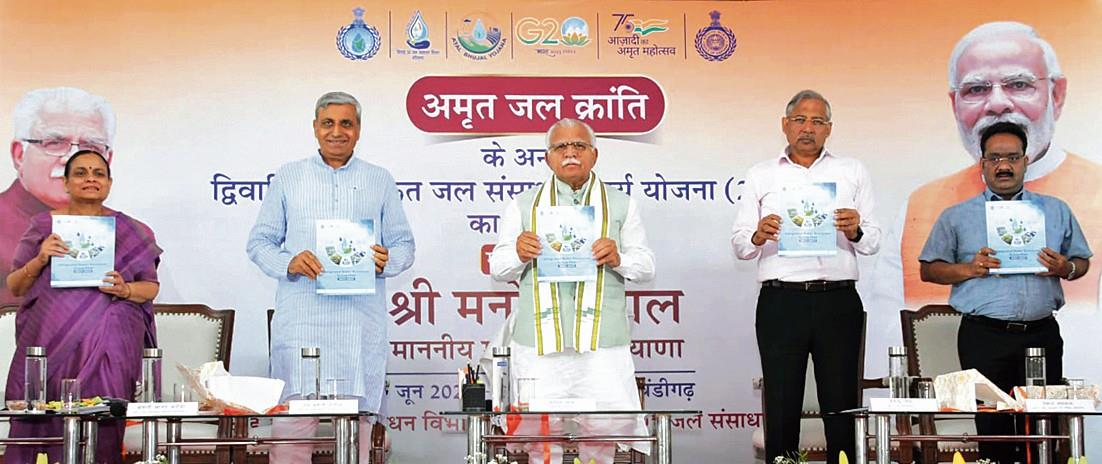
Three dams — Renuka, Lakwar and Kishau — were being built so as to ensure the regulation of water. With the construction of these dams, the water needs of the state would certainly be addressed, said the CM. He said at present, 250 cusec water was being given to Delhi as per the Supreme Court orders. https://www.tribuneindia.com/news/haryana/state-plans-to-cut-water-deficit-by-50-in-2-years-515768 (10 June 2023)
MONSOON 2023
IMD High Rainfall districts:- [Bone on June 3, 4, 5, 6, 7];
-June 8, 2023: 50-100 mm: South Andaman, Ernakulam (Kerala). [2];
-June 9, 2023: 50-100 mm: N & Middle Andaman, West Tripura [2];
-June 10, 2023: 50-100 mm: Barpeta & Chirang (Assam), Serchhip (Mizoram) [3];
– June 11, 2023: 50-100 mm: Lower Dibang Valley, Papum-pare, Upper Siang, West Siang (Arunachal Pradesh), Darrang, N C Hills, Udalgiri (Assam), East Khasi Hills, SW Khasi Hills, W Garo Hills (Meghalaya), Dimapur, Mokokchung (Nagaland), Ukhrul (Manipur) [13];
100-150 mm: North and Middle Andaman, Nalbari (Assam), E Jaintia Hills (Meghalaya) [3]
– June 12, 2023: 50-100 mm: North & Middle Andaman, South Andaman, Papum-Pare (Arunachal Pradesh), Golaghat, Karimganj, Lakhimpur (Assam), West Sikkim, Darjeeling, Kochbihar, Malda, Uttar Dinajpur [11]
Source: IMD’s daily district wise rainfall report. https://mausam.imd.gov.in/responsive/rainfall_statistics.php
High Rainfall districts on June 11, 2023:- 50-100 mm: Lower Dibang Valley, Papum-pare, Upper Siang, West Siang (Arunachal Pradesh), Darrang, N C Hills, Udalgiri (Assam), East Khasi Hills, SW Khasi Hills, W Garo Hills (Meghalaya), Dimapur, Mokokchung (Nagaland), Ukhrul (Manipur) [13] 100-150 mm: North and Middle Andaman, Nalbari (Assam), E Jaintia Hills (Meghalaya) [2] Source: IMD’s daily district wise rainfall report for June 11, 2023.https://mausam.imd.gov.in/responsive/rainfall_statistics.php?PAGE=4
NOAA El Nino could cause more damage El Nino has arrived, according to the National Oceanic and Atmospheric Administration of USA. “El Nino conditions are present and are expected to gradually strengthen into the Northern Hemisphere winter of 2023-24,” the National Weather Service Climate Prediction Center wrote. NOAA predicts that there is an 84 per cent chance of greater than a moderate strength El Nino and a 56 per cent chance of a strong El Nino by winter. https://www.downtoearth.org.in/news/climate-change/el-nino-is-here-could-cause-more-damage-depending-on-its-strength-this-winter-noaa-89918 (8 Jun 2023)
CLIMATE CHANGE
Report Increase in GLOFs threat Over the last four decades, the Himalayas exhibited more GLOF events than any other mountainous area with a frequency of 1.3 GLOFs per year. The topography and climatology of Himalayan glaciers make it more susceptible to these events.

The changing climate has increased glacier thinning and heterogeneous mass loss globally. In the Himalayan region, it has led to retreating glaciers, declining snow patterns and extreme rainfall. https://india.mongabay.com/2023/06/glacier-recession-in-the-himalayas-increases-threat-of-catastrophic-outburst-floods-says-new-study/ (09 June 2023)
SOUTH ASIA
India-Bangladesh Govts must review safety on transboundary rivers Avli Verma a researcher with Manthan Adhyayan Kendra:- A 2.5-year legal battle in NGT over how fly ash is transported between India and Bangladesh has revealed significant problems in how transboundary shipping is regulated. In 2020, the West Bengal fishers organisation – the Dakshinbanga Matsyajibi Forum (DMF) – appealed to the NGT after a series of boat collisions and sinkings on the rivers and estuaries that they depend upon for their income and survival. The DMF argued for better regulation of barges carrying fly ash, a residue from coal burning that contains toxic heavy metals and other pollutants. When fly ash is spilled into rivers, these can contaminate water and harm aquatic life.
– The Tribunal’s final judgment on 20 March contained two positive elements. First, it acknowledged the harm caused by fly ash barges capsizing, and said that victims must be compensated on the principle of absolute liability. Second, the Tribunal noted the potential for damage to fisheries and the “need to take mitigation measures against such incidents in future.” “This requires revisiting the applicable regulatory framework,” it said, issuing a broad hint that the existing regulatory regime is not adequate. Less positively, the Tribunal did not exert any significant pressure on regulators to make changes. https://www.thethirdpole.net/en/regional-cooperation/india-bangladesh-must-review-safety-transboundary-rivers/ (02 June 2023)
ASIA
Ukraine Floods after key dam blown up A dam at the Kakhovka hydropower plant in Southern Ukraine has become the latest casualty in the Russia-Ukraine conflict, with both countries accusing the other of the attack. The dam blowing up during June 5-6 night has unleashed floodwaters in the war zone. The head of Ukraine’s presidential administration on Tuesday described the blast as an “ecocide” committed by Russian forces. Russia blamed Ukraine for the incident. https://www.ndtv.com/world-news/nova-kakhovka-dam-blown-up-ukraine-dam-near-nuclear-plant-destroyed-zelensky-calls-urgent-meet-4098087 (06 June 2023)
The collapse of the Nova Kakhovka dam in southern Ukraine has sparked fears of an ecological catastrophe, with Ukrainian President Volodymyr Zelensky describing the situation as “an environmental bomb of mass destruction.” https://edition.cnn.com/2023/06/07/europe/ukraine-nova-kakhovka-dam-environment-damage-intl-hnk/index.html (07 June 2023)
THE REST OF THE WORLD
USA Grand Canyons losing its River The rocks of the Grand Canyon seem untethered from time. The oldest ones date back 1.8 billion years, not just eons before humans laid eyes on them, but eons before evolution endowed any organism on this planet with eyes. The Grand Canyon is a planetary spectacle like none other — one that also happens to host a river that 40 million people rely on for water and power.
– For the canyon is not just deep. It is broad, too — 18 miles, rim to rim, at its widest. This is no mere cathedral of stone. It is a kingdom: sprawling, self-contained, an alternate reality existing magnificently outside of our own. And yet, the Grand Canyon remains yoked to the present in one key respect. The Colorado River, whose wild energy incised the canyon over millions of years, is in crisis.
– The Colorado flows so far beneath the Grand Canyon’s rim that many of the four million people who visit the national park each year see it only as a faint thread, glinting in the distance. But the river’s fate matters profoundly for the 280-mile-long canyon and the way future generations will experience it. Our subjugation of the Colorado has already set in motion sweeping shifts to the canyon’s ecosystems and landscapes.
– John Weisheit, who helps lead the conservation group Living Rivers, has been rafting on the Colorado for over four decades. Seeing how much the canyon has changed, just in his lifetime, makes him “hugely depressed,” he said. “You know how you feel like when you go to the cemetery? That’s how I feel.” Still, every year or so, he comes. “Because you need to see an old friend.”
– “I would think the future is going to be one moving toward, as they said in war, long periods of boredom interrupted by short episodes of total, absolute terror,” Victor R. Baker, a geologist at the University of Arizona said.
– Since 1996, the Bureau of Reclamation, which owns Glen Canyon Dam, has occasionally released blasts of reservoir water to kick up sand from the riverbed and rebuild the canyon’s beaches. The effects are noticeable. But the bureau conducts these “high-flow experiments” only when there’s enough water in Powell to spare. In April, it held its first one in five years.
– Other issues, though, are so entrenched that addressing them just creates other problems. Take the spread of tamarisk, an invasive treelike shrub that has displaced native vegetation in the canyon and around other Western rivers. About two decades ago, officials decided to fight back by releasing beetles that loved eating tamarisk leaves. But the beetles loved those leaves so much, and their numbers grew so quickly, that they began threatening the Southwestern willow flycatcher, an endangered bird that nests in tamarisk.
– “There’s been a mentality that we will mess this up and the future generation will have more tools to fix this.” Instead, she says, we’ve found that the consequences of many past decisions are harder to cope with than expected. https://www.nytimes.com/interactive/2023/06/06/climate/grand-canyon-colorado-river.html (06 June 2023)
Herring using habitat reopened by Bloede Dam removal In 2018, NOAA and partners removed Bloede Dam from the Patapsco River, opening up miles of free-flowing habitat to migratory species. A recent study has shown river herring are using the habitat upstream of the former dam. This news highlights the importance of dam removals in NOAA’s work to support migratory fish. https://www.fisheries.noaa.gov/feature-story/river-herring-are-using-habitat-reopened-bloede-dam-removal (01 June 2023)
Report Using electric water heaters to store renewable energy could do the work of 2 million home batteries – and save us billions About half of Australian households use electric water heaters, while the rest use gas. Electric water heaters offer a cheap way to store large amounts of energy, in the form of hot water. A heater with a 300-litre tank can store about as much energy as a second-generation Tesla Powerwall – at a fraction of the cost. Australians could use household electric water heaters to store as much energy as over two million home batteries of that kind. This could eventually save over AUSD 6 billion a year on energy bills while getting closer to net-zero carbon emissions.
– Smart heaters can be switched on and off in response to changes in electricity supply and demand across the grid. These heaters can soak up excess “off-peak” renewable energy, particularly from solar, and so help solve two key problems at once. They can help reduce and eventually eliminate greenhouse gas emissions. And they can make our electricity grid more stable by providing flexible demand that helps balance out the fluctuating supply from renewable sources. https://www.theweek.in/wire-updates/business/2023/06/05/fgn14-energy-electric-heaters.html (05 June 2023)
SANDRP
Also see: DRP 05 June 2023 & DRP 29 May 2023
Follow us on: www.facebook.com/sandrp.in; https://twitter.com/Indian_Rivers

 SANDRP