
As this report narrates, a great volunteer effort is underway in Mumbai to clean up Mithi river. What they have achieved is just about 350 m of clean river, after labouring over weekends for several months. But this is such a daunting task to even venture to start. They have not only started, but made visible progress. Let us hope it will achieve all its objectives.
Continue reading “DRP: 18 Feb 2019: Salutes to the Mithi River Clean up Effort”Tag: Pollution

DRP: 11 Feb 2019: Questions over legitimacy of Dam Bachao Abhiyaan
The Dam Bachao Abhiyaan has been coming up in various forms. They blame the upstream water use in the catchment for dams not filling up. The catchment area could be using the water through groundwater (e.g. Hussain Sagar in Hyderabad), Johads (e.g. Sahibi catchment in Alwar), Tanks (e.g. Cauvery catchment in Karnataka), or check dams (e.g. Gandhisagar catchment in Madhya Pradesh, Bisalpur and Ramgarh catchment in Rajasthan), the latest episode reflected in the news below.
One key question that is never answered is, does the construction of dam extinguish all the rights of the catchment area to harvest and use any water for even basic needs and livelihoods? Does the very existence of the dam make all such water use in the catchment illegitimate? What about the right to water and livelihood of the catchment area? Should dam filling be so sacrosanct as to not allow any legitimate water use in the catchment? Hope the court and the government resolves these issues. Hope there is debate on this to decide in which circumstances there will be legitimacy to such Dam Bachao Abhiyaan.
Continue reading “DRP: 11 Feb 2019: Questions over legitimacy of Dam Bachao Abhiyaan”
DRP: 4 Feb 2019: Bangladesh stops playing blindman’s buff over protection of Rivers. Will India learn?
In a historic judgement, the High Court (HC) of Bangladesh has said that river encroachers cannot run in any elections or get bank loans. The HC also ordered the government to make a list of every grabber in the country and publish the list in the media to expose them to the public. The grabbers include powerful individuals, businesses and, ironically, government offices. The Gazipur City Corporation is among the grabbers, a judicial inquiry has found.
After the verdict, the government now will have to amend the National River Protection Commission (NRPC) Act 2013 with provisions for punishment and fine for river grabbing. The current NRPC Act does not have provisions for punishment. The government must report to the court in six months on its action in this regard. The HC also declared the NRPC as the legal guardian of all rivers and act like their “parents”.
The landmark verdict comes when river grabbing by influential groups seems unstoppable. Often, grabbers return to steal river land soon after being evicted. The HC delivered the judgment in response to a petition by Human Rights and Peace for Bangladesh. The writ petition was filed on Nov. 7, 2016.
Continue reading “DRP: 4 Feb 2019: Bangladesh stops playing blindman’s buff over protection of Rivers. Will India learn? “
DRP: 21 Jan 2019: NGT Asks For Audit of Pollution Control Regulation, But Fails on EIA
Two interesting orders from National Green Tribunal (NGT) marked important developments on water-environment issues this week. NGT asking for PERFORMANCE AUDIT of pollution Control Mechanism is indeed long overdue necessity, considering the complete, abject failure of the pollution control mechanism in India. The hopes of effective action, like in the past, however, were dashed since CPCB, which is PART OF THE PROBLEM has been asked to do the audit. An independent audit, in addition to one possibly by CAG may have helped. https://www.thehindu.com/news/cities/Delhi/ngt-slams-state-pollution-bodies/article26008687.ece (17 Jan. 2019)
Whatever positive signs were available by this order were further dashed by another NGT order in which it declared that EIAs (Environmental Impact Assessment) reports are already taking climate change into account, while the tribunal dismissed a petition asking that all development activities be screened/ regulated keeping climate change in mind.
This is totally WRONG contention. Just to illustrate, SANDRP has been pointing out to the EAC, MoEF and the developers how the EIAs of dams and hydropower projects are ignoring the climate change related issues and impacts. In response the consultants and developers have responded, approved by the silent or spoken nods by the EAC and MoEF that these were not even part of their TORs! One only wishes NGT was most discerning before making such claims and would have gone through a few EIAs to see if at all EIAs are dealing with these issues with any rigour or credibility. https://www.business-standard.com/article/pti-stories/climate-change-already-covered-under-environment-impact-assessment-ngt-119011600897_1.html (16 Jan. 2019)
Continue reading “DRP: 21 Jan 2019: NGT Asks For Audit of Pollution Control Regulation, But Fails on EIA”
DRP: 7 Jan 2019: NGT REJECTS FLAWED GROUNDWATER NOTIFICATION
Good to see NGT rejecting the flawed Groundwater notification dated Dec 12, 2018 from CGWA that was also critiqued by SANDRP: https://sandrp.in/2018/12/31/groundwater-governance-why-dec-12-2018-cgwa-notification-would-be-disastrous/. However, NGT should have asked an independent panel to formulate the policy for sustainable groundwater use, rather than a committee of the same government persons. Besides, there is also need for restructuring of currently totally ineffective CGWA and make it COMPLETELY INDEPENDENT of government.
Continue reading “DRP: 7 Jan 2019: NGT REJECTS FLAWED GROUNDWATER NOTIFICATION”
DRP: 24 Dec 2018: MoEF & WII’s Compromises for Hydro Interests
In a shocking revelation, Jay Mazoomaar in this Indian Express report exposes how Wildlife Institute of India not only accepted consultancies from hydropower companies, but also diluted the mandate for the studies for given by statutory bodies like NGT, NBWL and FAC, but also provided compromised reports catering to the interests of the hydropower developers, thus trying to clear the way for the two controversial mega hydropower projects, one each in Dibang and Lohit river basins in Arunachal Pradesh. https://indianexpress.com/article/north-east-india/arunachal-pradesh/wildlife-institute-all-for-hydel-projects-in-arunachal-pradeshs-tiger-zone-5499656/
In case of the 3097 MW Etalin project being developed by Jindal and Arunachal Pradesh govt, the IE report says: “the WII was asked by the Ministry (MoEF) to assess the feasibility of the plan that requires 1,166 hectares of forestland in the valley. The Ministry’s move followed a recommendation from its Forest Advisory Committee (FAC) to conduct an environment impact assessment study. Instead, the WII initiated a study to find how the project’s impact on wildlife can be minimised”. Thus instead of doing the mandated scientific impact assessment, the WII initiated a study to minimise the project’s impact.
Continue reading “DRP: 24 Dec 2018: MoEF & WII’s Compromises for Hydro Interests”
DRP: 17 Dec 2018: Dam Safety Bill Introduced, TN, Odisha Oppose; Why No Role For Independent Experts?
On Dec 12, 2018, The government introduced the Dam Safety Bill amid din in the Lok Sabha on Wednesday even as Biju Janata Dal group leader Bhartruhari Mahtab questioned the legislative competence of the House on the matter.
The Bill provides for “surveillance, inspection, operation and maintenance of specified dams for prevention of dam failure related disasters and to provide for institutional mechanism to ensure their safe functioning”. There are over 5,200 large dams in the country and about 450 are under construction. There are also thousands of medium and small dams whose safety remains a matter of concern due to lack of legal and institutional safeguards. https://indianexpress.com/article/cities/delhi/parliament-winter-session-govt-introduces-dam-safety-bill-5490911/ (13Dec.2018)
Continue reading “DRP: 17 Dec 2018: Dam Safety Bill Introduced, TN, Odisha Oppose; Why No Role For Independent Experts?”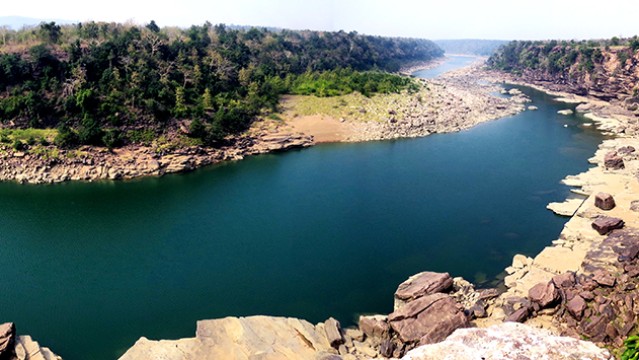
DRP: 3 Dec. 2018: Ken Betwa Link-Push to Dilute Forest Clearance Conditions
Ken Betwa river interlinking project is back to drawing board with Union water resources ministry approaching the ministry of environment and forest to relax conditions imposed as part of forest clearance accorded in May 2017 for diversion of forest in the Panna Tiger reserve (PTR).
Forest Advisory Committee (FAC) while according Stage-I clearance to the project had recommended that the project proponent and state govt should consider equivalent non-forest area (6,017 ha) adjoining to PTR from the revenue and private land and add to the PTR as a part of core/corridor (for tiger movement) with other areas or satellite core area. According to water resources ministry, they are unable to find land adjoining to PTR.
Will the forest department buckle under pressure to dilute the forest clearance conditions? http://www.newindianexpress.com/thesundaystandard/2018/nov/25/first-river-linking-project-coming-undone-1902890.html (25 Nov. 2018)
Continue reading “DRP: 3 Dec. 2018: Ken Betwa Link-Push to Dilute Forest Clearance Conditions”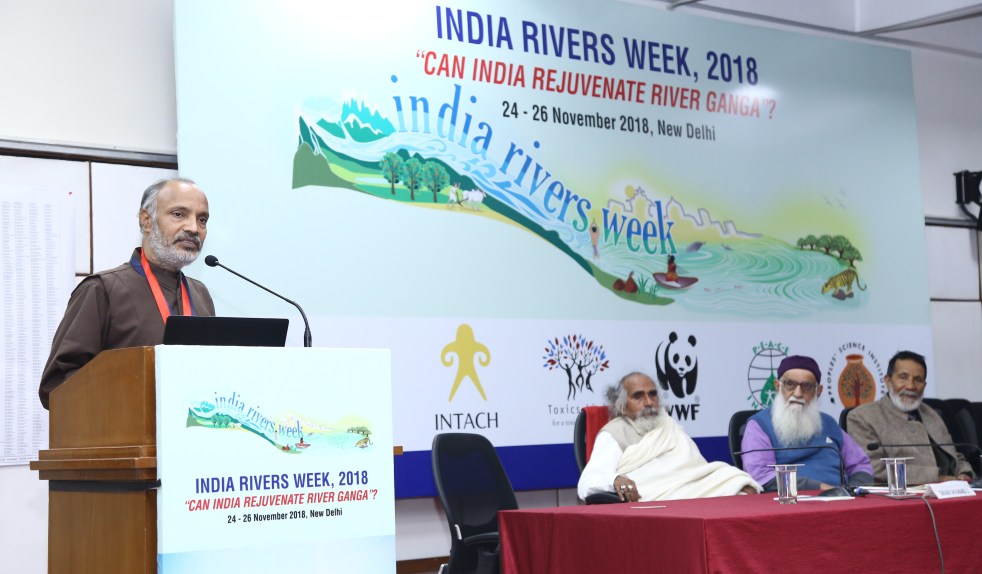
अनुपम मिश्र मेमोरियल मैडल 2018 से सम्मानित अरुण तिवारी जी से बातचीत
श्री अरुण तिवारी जी वरिष्ठ पत्रकार-लेखक हैं। आप लगभग पिछले तीन दशकों से नदियों को बचाने और जल संरक्षण के लिए उल्लेखनीय लेखन कार्य करते आ रहे हैं। आपका पानी पोस्ट हिंदी ब्लॉग काफी चर्चित है जिसपर आप नियमित तौर पर नदियों और पानी से जुड़े विभिन्न पहलुओं और समकालीन विषयों पर जानकारियां साँझा करते रहते हैं। आपके अनवरत प्रयासों को देखते हुए आपको 25 नवंबर 2018 को अनुपम मिश्र मेमोरियल मैडल से सम्मानित किया है। आपके विचारों को अधिक से अधिक लोगों तक पहुँचाने के लिए, प्रस्तुत है, भीम सिंह रावत, SANDRP द्वारा आपके साथ ईमेल के जरिये हुए बातचीत के प्रमुख अंश।
अनुपम मिश्र मेमोरियल मैडल देश में नदी संरक्षण पर उत्कृष्ठ मीडिया काम के लिए प्रदान किया जाता है। यह सम्मान प्रख्यात पर्यावरणविद और गांधीवादी स्व. अनुपम मिश्र की स्मृति में, वर्ष 2017 से, इंडिया रिवर्स फोरम (भारतीय नदी जनसभा) के द्वारा वार्षिक तौर पर आयोजित भारतीय नदी दिवस के अवसर पर दिया जाता है।
भीम सिंह रावत: अनुपम मिश्र मैमोरियल मैडल के लिए बधाई। आप पिछले तीन दशकों से निरंतर अपने लेखन से नदियों की दुर्दशा और संरक्षण की ज़रूरत का मुद्दा उठाते रहे हैं। आज नदियों की क्या स्थिति है ? नदियों पर मुख्य संकट क्या है ?
अरुण तिवारी – नदियां, पृथ्वी की नसें हैं। ये नसें निरंतर सिकुड़ रही हैं। नीली की बजाय, काली, पीली और भूरी पड़ती जा रही हैं। भारत में यह चित्र तेजी से बढ़ रहा है।
नदी संकट के नाम पर प्रदूषण, वैश्विक तापमान में वृद्धि आदि कई कारणों को गिनाया जा सकता है, लेकिन भारतीय नदियों पर आसन्न प्रमुख संकट यह है कि हम नदियों की बहने की आज़ादी को तेज़ी के साथ छीनते जा रहे हैं। नदियां आज़ाद बहें; इसके लिए ज़रूरी है कि हम अपनी नदियों को उनका प्रवाह, उनका वेग, उनकी भूमि तथा प्रवाह के उनके साथी वापस लौटाएं।
Continue reading “अनुपम मिश्र मेमोरियल मैडल 2018 से सम्मानित अरुण तिवारी जी से बातचीत”
DRP: 26 Nov. 2018 (INDIA RIVERS WEEK 2018: BPS to Rainman Vishwanath; AMM to River Journalist Arun Tiwari)
At a well-attended function at India Rivers Week {IRW} 2018 at WWF-India in Delhi on Nov 25, 2018, the hall reverberated with resounding claps from the audience when suspense over who gets this years’ Bhagirath Prayas Samman (BPS) and Anupam Misra Medal (AMM) was broken. Vishwanath Srikantaiah, popular as Zen Rainman was the unanimous choice of the IRW Jury for the exemplary work on River conservation over the last 25 years.
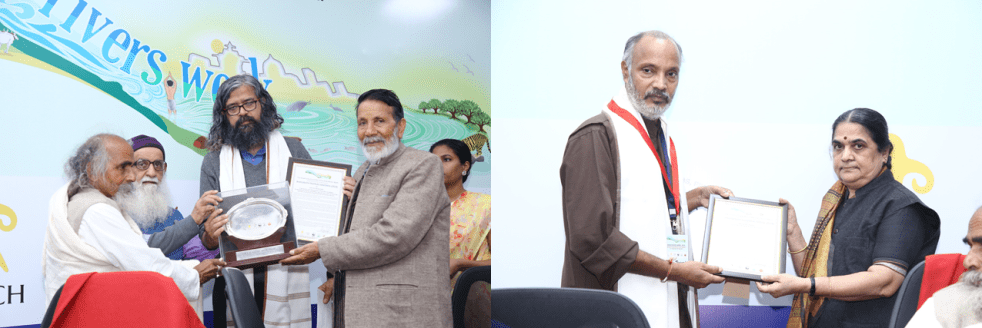
The Anupam Misra Medal for path breaking media work on Rivers with focus on Ganga, the theme of IRW 2018, was given away to Shri Arun Tiwari by late Anupam ji’s life partner Manju Misra ji. Abhilash Khandekar, a well known journalist, also member of IRW organising committee and also member of BPS-AMM Jury, while interacting with the award laureates, called Arun Tiwari as INDIA’sRIVER JOURNALIST OF 2018.
Famous Chipko leader Shri Chandi Prasad Bhatt, giving the BPS award to Vishwanath, including Citation, Shawl and Plaque and, congratulated the six organisations that are in the organisation committee of IRW, said the India Rivers Week needs to be celebrated by every household and family.
Continue reading “DRP: 26 Nov. 2018 (INDIA RIVERS WEEK 2018: BPS to Rainman Vishwanath; AMM to River Journalist Arun Tiwari)” SANDRP