Dams · Wetlands

Ramsar Wetlands in Crisis 2020: North India

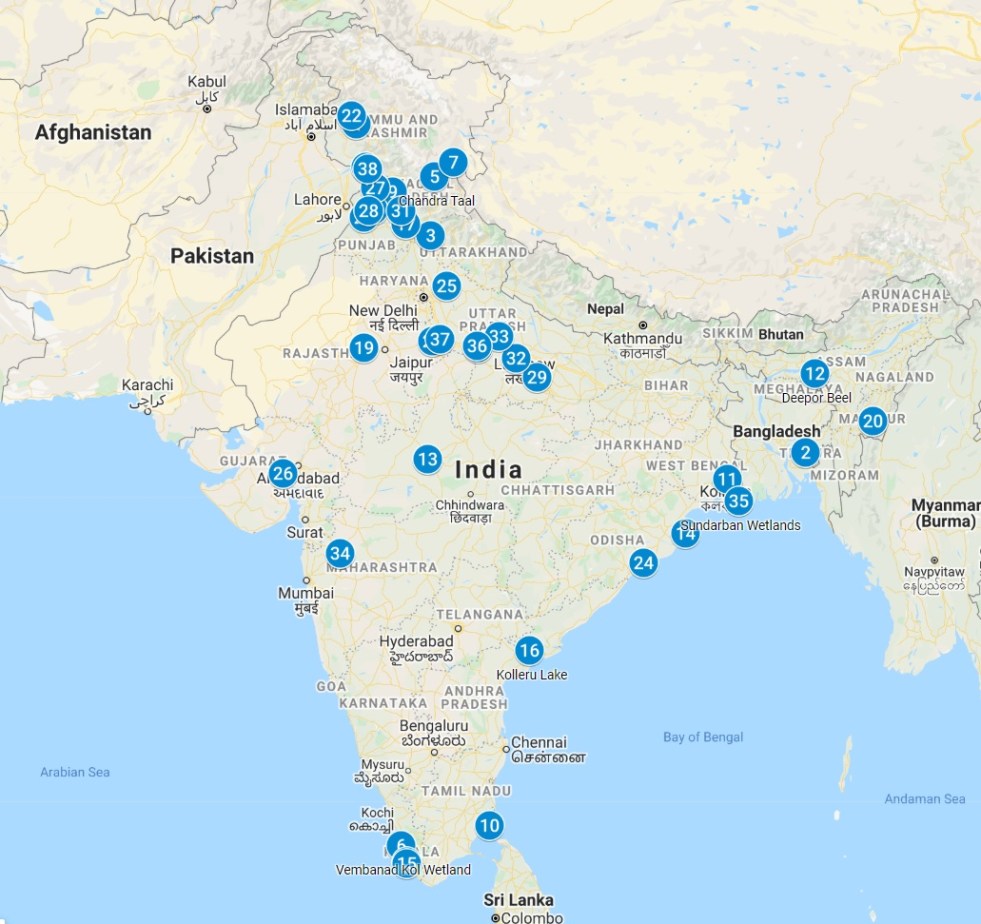
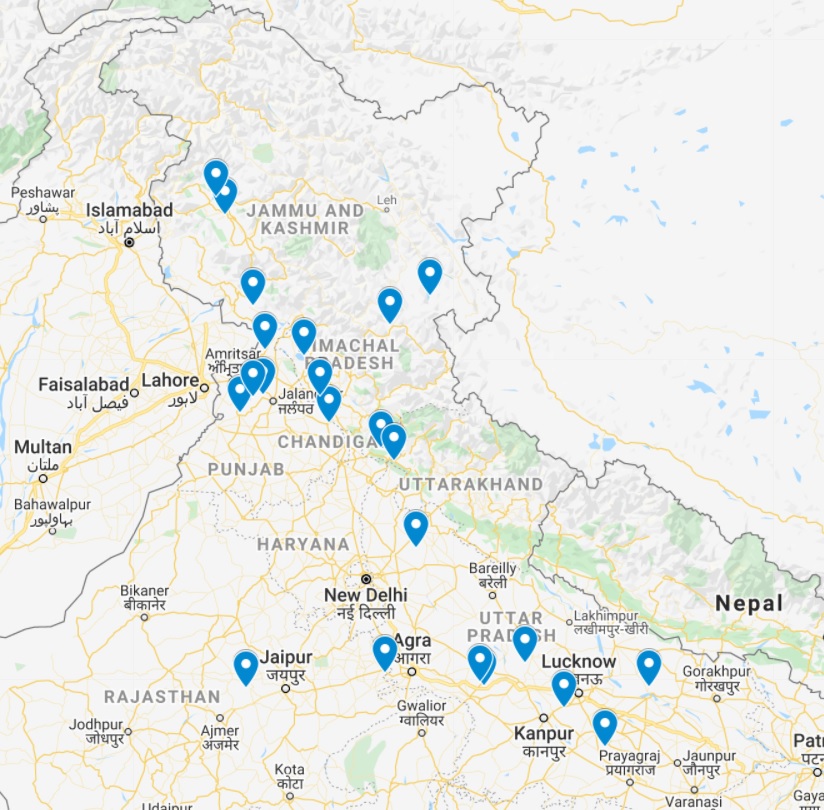
In the second half of 2019, ten additional wetlands of India have been recognized as Ramsar sites taking the total tally of such wetlands from 27 to 37. Does getting Ramsar tags really help the cause of wetlands protection? Here we try to show the present conditions and threats the Ramsar wetlands sites have been facing in North India. The subsequent compilation would share details of Ramsar sites in other zones of India.  

Continue reading “Ramsar Wetlands in Crisis 2020: North India”

Dams · Yamuna River

Despite NGT order and Yamuna Monitoring Committee-CPCB-DDA responses, action awaited about dumping on Yamuna floodplain

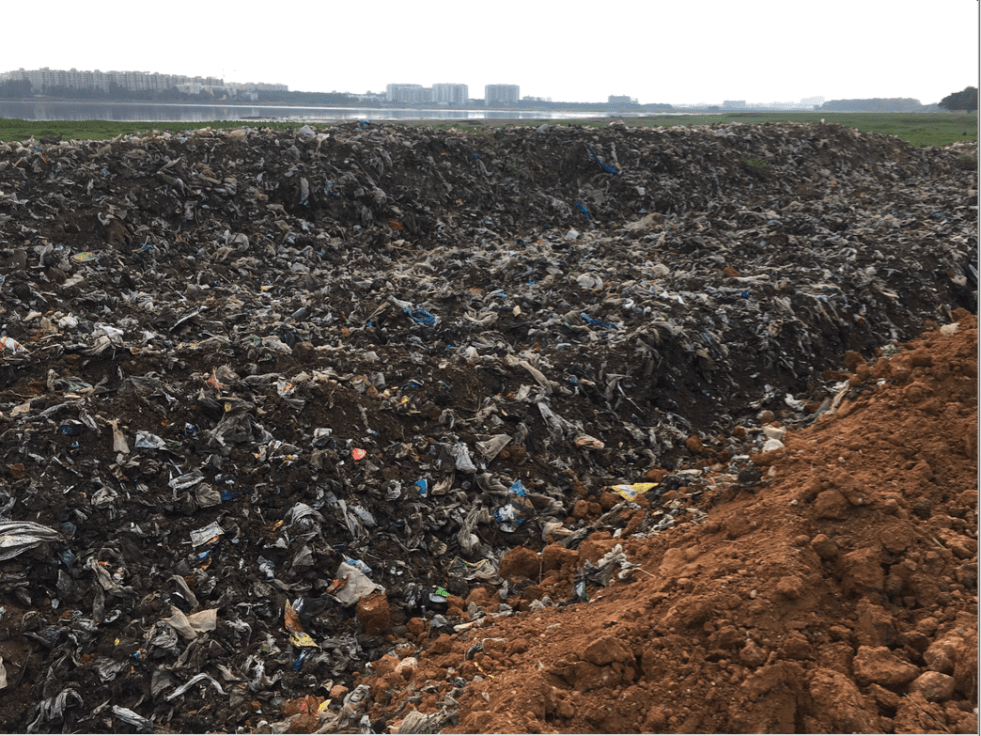
The floodplains of Yamuna in Delhi have been facing encroachment threats for long. In the latest incident a huge portion of riverbed underneath Nizammudin bridge towards Games village was found turned into a dumping ground on February 16, 2020. This was happening despite the protection of floodplains from encroachment and waste dumping were among key concerns of remarkable National Green Tribunal (NGT) judgement “Maili Se Nirmal Yamuna” of January 13, 2015. Continue reading “Despite NGT order and Yamuna Monitoring Committee-CPCB-DDA responses, action awaited about dumping on Yamuna floodplain”

Urban Water Bodies

Open letter on Bengaluru’s Bellandur & Varthur Lakes’ Rejuvenation

[SANDRP is happy to publish this open letter dated Feb 11, 2020 from Bangalore Environment Trust on the above subject. The letter is addressed to: The Chief Secretary & Additional Chief Secretary, Government of Karnataka; The Development Commissioner, Government of Karnataka; The Additional Chief Secretary, Urban Development Department; The Commissioner, Bengaluru Development Authority; The Commissioner, Bruhat Bengaluru Mahanagara Palike; The Chairman, Bangalore Water Supply and Sewerage Board; The Chairman & Member Secretary, Karnataka State Pollution Control Board; The Chairman & Member Secretary, Central Pollution Control Board; Regional Directorate (South), Central Pollution Control Board; Director General & Deputy Director General of Forests, MOEFCC; Regional Office (Mahadevpura zone), Karnataka State Pollution Control Board, Justice N Santosh Hedge, NGT appointed expert committee Chairman, Engineering Member, Bangalore Development Authority. The full text of the letter along with annexures is carried here.]

We are very glad that Karnataka Government is working hard under the ambit of NGT (National Green Tribunal) to rejuvenate Bellandur and Varthur Lakes. While we wholeheartedly thank you, for all your efforts to save the lake, we would also like to join hands with you.

We are putting forth some feedback on the process of rejuvenation. By doing that, we sincerely hope that the government will pause to assess the effectiveness of the actions taken so far and adjust future actions, in collaboration with citizens. Continue reading “Open letter on Bengaluru’s Bellandur & Varthur Lakes’ Rejuvenation”

Culture · Narmada

Experience of Narmada Parikrama in 2020: a 3500 km pilgrimage along the river

Guest Blog by Jubin Mehta

Narmada is a sacred river originating in the Maikal Hills of central India from a place called Amarkantak. Parikrama is a Sanskrit word derived from the root ‘pari‘ meaning around and ‘krama‘ meaning going. And hence, Narmada Parikrama means circumambulating the river. This is a spiritual/religious tradition of the Hindus existing from centuries wherein pilgrims start walking from any point along the river after collecting Narmadaji’s water in a vial and start walking with the river to their right.

If a person has started from the north bank, they’d walk upstream to the origin of the river in Amarkantak, cross over from beyond the origin point, come to the south bank and walk downstream till the point where the river meets the ocean in south Gujarat. From here, pilgrims board a large boat for an estimated four to seven hours to cross over and reach back to north bank at a place called Mithi Talai. From here, the pilgrim starts walking upstream again to arrive again at the point where they started from. At the end of the journey, pilgrims go to the super sacred Omkareshwar which is one of the 12 ‘Jyotirlingas’ and also a river island which means a person cannot go to this point during the parikrama. One of the rules of the walk is that a person cannot cross over the river and go to the other bank or in the middle. At Omkareshwar, the pilgrim pours back the water that she collected in a vial when she started the walk and completes the parikrama. Continue reading “Experience of Narmada Parikrama in 2020: a 3500 km pilgrimage along the river”

DRP News Bulletin

DRP: 3 Feb 2020: Some welcome news on Pinjal & other dams

A number of welcome developments around dams appear in this week’s DRP News Bulletin from SANDRP. The prominent is the Brihanmumbai Municipal Corporation declaring that it may not need Pinjal Dam, which SANDRP had said in its report way back in 2012-13 and the then BMC commissioner had agreed to in an interview to NDTV. This should also lead to cancellation of the Damanganga Pinjal River Link proposal. The Maharashtra govt decision to review the need for Human dam is also welcome. The Kerala State Information Commissioner’s decision to direct that the Dam Break Analysis should be in public domain is also a useful precedent that all states and CWC need to follow immediately and also amend the proposed Dam Safety Act to include a provision that all Dam Safety related information, including meeting minutes, agenda, decisions, status reports etc will be in public domain.

Continue reading “DRP: 3 Feb 2020: Some welcome news on Pinjal & other dams”
Wetlands

World Wetlands Day 2020: Positive Stories from India

On February 2, the World Wetlands Day is celebrated globally. The theme of 2020 is Wetlands and Biodiversity to emphasize the critical roles the wetlands plays for wildlife, aquatic life, and native vegetation. They also play crucial role in harvesting rainwater, recharging groundwater, providing livelihoods, acting as carbon sinks and providing cushion against flash floods thus they hold immense significance in changing climate.

This compilation puts together some of the positive developments related to wetlands that took place in 2019. It also includes few individual initiatives of lakes and water bodies cleaning from greater Noida, Chennai and Udaipur. There have been some fruitful efforts by citizen and community groups in Maharashtra, Goa and Kerala.

Continue reading “World Wetlands Day 2020: Positive Stories from India”

Wetlands

J&K Wetlands Overview 2019: New Threats Looming, Old Remain Unresolved

Jammu and Kashmir has many wetlands of national importance and international recognition. These water bodies are critical source of livelihood and job opportunities for a large number of population in form of fishing, farming, tourism etc. Moreover, most of the wetlands in the region fall under Central Asian Flyway Zone (CAF) and visited by lakhs of migratory and endangered birds during their annual migration march. These wetlands areas also provide safe refuge to native vegetation and wild animals. Their protection is crucial to combat the dual impact of climate change, water scarcity and flooding.  

Continue reading “J&K Wetlands Overview 2019: New Threats Looming, Old Remain Unresolved”

DRP News Bulletin

DRP: 23 Dec 2019: Monsoons are more powerful than Wars

A new study has shown how powerful the monsoons and their abnormalities are: It’s these abnormalities that ended reigns of multiple dynasties in medieval India, not wars. But the society does not seem to understand this basic reality today, and we are not only doing everything in our power to make the monsoon abnormal through human induced climate and natural world changes, but not even valuing the rainwater in our water policies, programs and practices. The changes we are bringing in natural world is making even the smaller monsoon abnormalities bring catastrophic impacts as the capacities of the people and societies to cope with the changes is decreasing. These studies are another wake up call, if only we were interested one.

Continue reading “DRP: 23 Dec 2019: Monsoons are more powerful than Wars”
DRP News Bulletin

DRP: 16 Dec. 2019: Why the first NGC meeting signifies Govt’s Failure on Ganga

The Prime Minister finally found time to have the first ever meeting on National Ganga Council, over three years after the Ganga Notification of Oct 7, 2016. The meeting happened at Kanpur, where the NGT recently fined the state government for continuing to release untreated effluents into the Ganga. In fact NGT in recent weeks have taken several decisions that also shows how abysmally the govt has failed on Ganga front. And now after the first NGC meeting, the Prime Minister, in an effort to divert attention from Namami Gange failure, is proposing the new slogan of Arth Ganga, which basically seems to suggest focus on Money, which is Exactly what is not going to help the cause of Ganga. The Ganga is still on the lookout for the Ganga putra that promised a clean Ganga in May 2014.

Feature image above is of first NGC meeting, source is: PIB PR: https://www.pib.gov.in/PressReleasePage.aspx?PRID=1596482&reg=3&lang=2

PS: Second meeting of NGC happened on Dec 30 2022 in Kolkata, where the PM participated through video conferencing. No further meetings have happened till date (March 5 2026).

Continue reading “DRP: 16 Dec. 2019: Why the first NGC meeting signifies Govt’s Failure on Ganga”
DRP News Bulletin

DRP: 9 Dec 2019: CITIZENS REPORT ON WHAT AILS GANGA REJUVENATION

 The Hindustan Times editorial on Nov 27, 2019 has rightly said the following about “a recently-released Rejuvenating-Ganga River – A Citizen-Report, by the India Rivers Week, a consortium of seven NGOs”.

“A key reason for the failure of the river cleaning projects (Ganga and Yamuna action plans), says a recently-released citizen’s report, Rejuvenating Ganga,by the India Rivers Week, a consortium of seven NGOs, was their single-point focus on the main stem of the river, while the Ganga basin actually has eight major rivers (Yamuna, Son, Ramganga, Gomti, Ghaghra, Gandak, Kosi and Damodar). The majority of the funds were spent on pollution-abatement measures on the main stem of the Ganga and on the upper Yamuna basin, which constitute just 20% of the Ganga basin.”

Continue reading “DRP: 9 Dec 2019: CITIZENS REPORT ON WHAT AILS GANGA REJUVENATION”