Dams · DRP News Bulletin

DRP: 10 August 2020: CANCEL EIA 2020!

Anyone who cares for India, its people and their future and who even remotely understands environmental governance and democratic process will come to just one conclusion about the Draft EIA (Environment Impact Assessment) 2020: CANCEL IT.

We certainly need change in the current EIA process. The whole thing is a major fraud at every stage, from the exclusion from large number of activities from the scope of EIA process, to scoping to quality of EIA, to the track record of the EIA consultants, to the process of selection of EAC (Expert Appraisal Committee) and its functioning, to public hearing and consultation process, to the complete absence of capacity or even will to monitor and achieve compliance of the approved project, every step needs strengthening, from the current EIA process based on the 2006 notification.

Continue reading “DRP: 10 August 2020: CANCEL EIA 2020!”
Dams · Yamuna River

DDA visits Yamuna with SANDRP

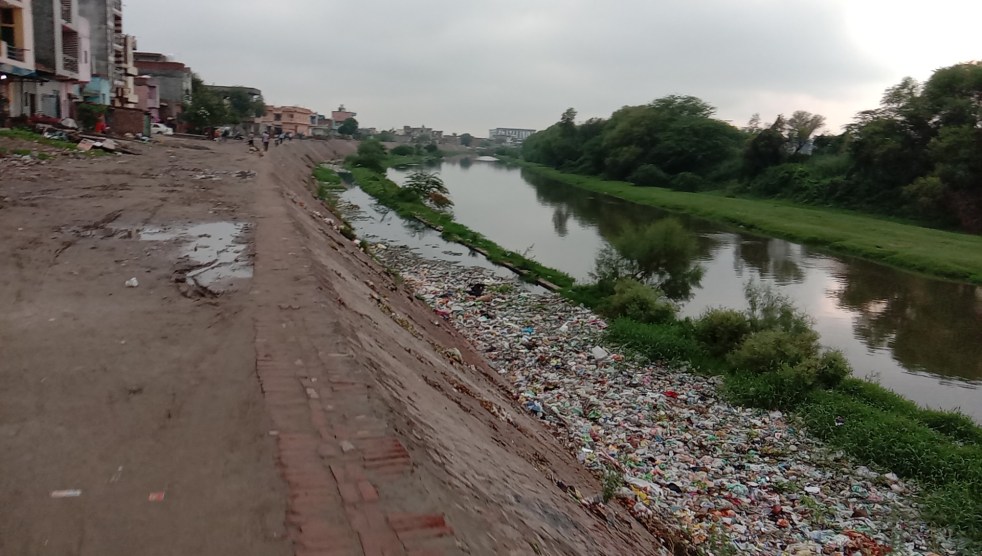
Following a visit to Yamuna on July 25, SANDRP had written to the Delhi Yamuna Monitoring Committee (DYMC) and concerned agencies about the dumping of construction debris and encroachments on Yamuna riverbed, floodplain at Signature Bridge, Nizamuddin Bridge (Mayur Vihar, Kale Khan side). DYMC has promptly asked Delhi Pollution Control Committee (DPCC, we accompanied them for the inspection visit to the flood plain on July 27, 2020) and Delhi Development Authority (DDA).

On Aug 4, as per the request of DDA, SANDRP accompanied them to the Yamuna floodplain and riverbed along with their official photographer, videographer and measurement team.

Continue reading “DDA visits Yamuna with SANDRP”

Dams · DRP News Bulletin

DRP: 03 Aug 2020: India needs to demand info from China on Brahmaputra issues

Two important developments this week underline once again the need for Indian govt to demand clear responses from China. One is about the threat of landslide outburst flood that may enter India via Siang. A landslide dam has been formed on the Jianpu glaciers that feeds the Yigong Tsangpo, a tributary of Yarlung Tsangpo, as Siang is known by that name in Tibet. This landslide dam can breach anytime, and bring a high wave of sudden & destructive flood in Arunachal Pradesh. Chintan Sheth, who monitors this area through use of satellite imagery, has once again (his warnings on such landslide outburst dams in the past has been very accurate and useful) warned us about this through an excellent and detailed article quoted below, in Arunachal Times. Such information should actually be coming from Govt of India’s elaborate satellite imagery capabilities. At least now the Govt of India needs to ask China to share all information about this landslide dam and share that information with the people of Arunachal Pradesh at greatest risk due to such floods.

Continue reading “DRP: 03 Aug 2020: India needs to demand info from China on Brahmaputra issues”
Dams · Yamuna River

Yamuna river, floodplain Abused in Delhi

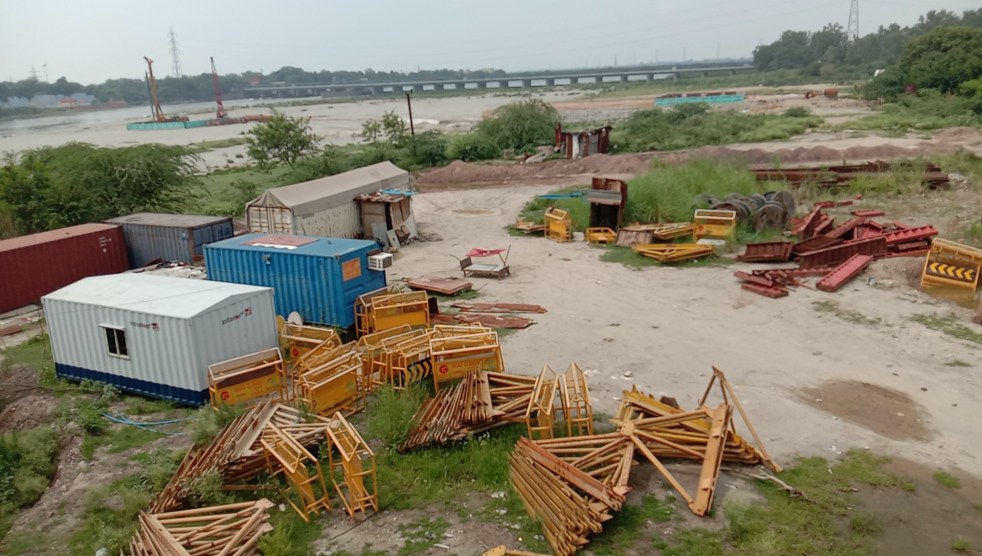
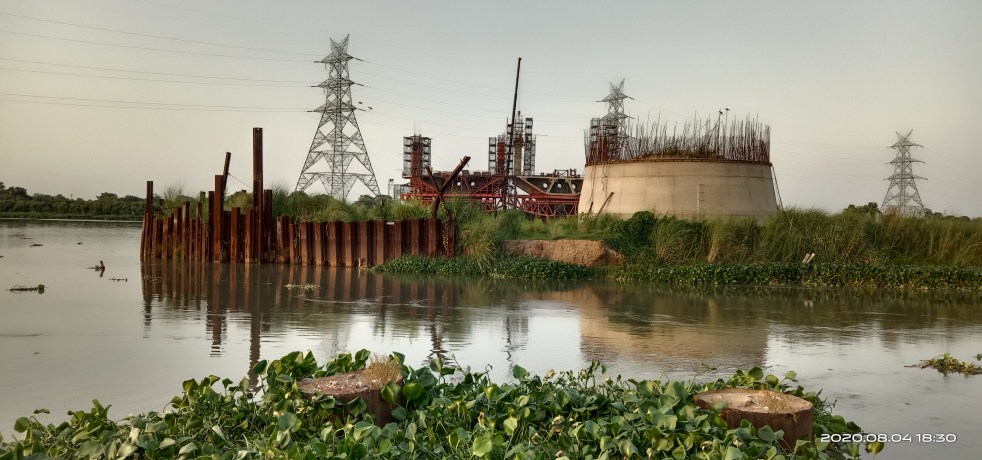
Feature image Signature bridge equipment, facilities still occupying large chunk of Yamuna riverbed as seen on July 25, 2020. In the backdrop DMRC phase IV bridge work has started raising, leveling large chunk of riverbed further. (Bhim Singh Rawat/SANDRP)  

On February 16, 2020[i], SANDRP had raised the issue of large scale construction debris left and dumped in the riverbed of Yamuna along the bridges on NH 24 in Mayur Vihar. The area is opposite Sarai Kale Khan and close to Common Games Village.

Following this, the Delhi Yamuna Monitoring Committee (DYMC) constituted by National Green Tribunal (NGT) asked Delhi Development Authority (DDA), Central Pollution Control Board (CPCB) to take action against the violation and submit Action Taken Report (ATR). In the following days a series of tweets were made by respective agencies with an assurance to look into the issue. After pursuing the matter persistently for three weeks, finally the DYMC informed that the debris have been removed from the site.

Continue reading “Yamuna river, floodplain Abused in Delhi”

Dams · Urban Water Sector

Delhi Drinking Water Canal gets toxic mix

In May 2019 SANDRP wrote, with photo evidence, after a visit to the Drain No 8 that brings Delhi’s drinking water that it is running next to drain no 6 carrying untreated industrial toxics from Haryana, with only sand bags separating the two. A visit on 21st July, 2020 provided video proof that water from drain no 6 is still happily mixing with drain no 8 at several places.

A visit to drain number 8, one of prominent canal carrying potable water supply of national capital can be shocking experience to anyone concerned with water quality and health of people. The canal (called escape) flows close to Delhi Haryana border in Sonipat district. The drinking water in the escape is being repeatedly contaminated with all sorts of industrial effluents.

Continue reading “Delhi Drinking Water Canal gets toxic mix”

Dams · Sand Mining

Bihar Sand Mining 2020: Ruining rivers; aggravating floods

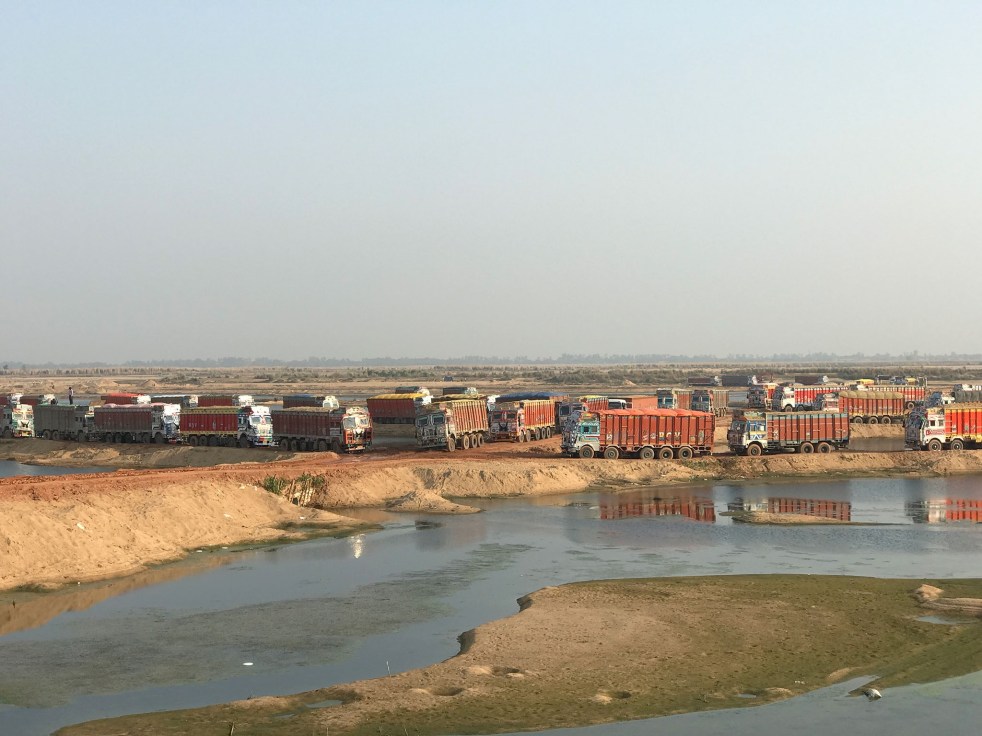
{Feature image: Up to 300 trucks a day take their fill of sand at a mine on the Sone River in Bihar state. India’s construction boom is stripping large volumes of sand, a vital ingredient in concrete, from its rivers. Environmentalists say the extraction is unsustainable, harming local hydrology and wildlife. Paul Salopek}

The 2018 review of sand mining[i] for Bihar highlighted how mismanagement by govt and then National Green Tribunal (NGT) ban on sand mining in Ganga river, Son rivers particularly during monsoon months resulted in sand scarcity and soaring prices affected public and livelihoods of mining laborers.

The video report featuring local people revealed that illegal mining was causing floods in West Champaran by damaging embankments. Similarly, the report on Gaya mentioned sand mining among reasons behind increasing air pollution. The death of four kids by drowning into sand mine pits was shocking. This compilation presents the situation after 2018 so far.

Continue reading “Bihar Sand Mining 2020: Ruining rivers; aggravating floods”

Dams · DRP News Bulletin

DRP: 6 July 2020: Dear NGT, Yamuna Monitoring Panel needs extension

In July 2018, the National Green Tribunal appointed a Yamuna Monitoring Panel for Delhi, the term of this panel is over and it has submitted its final report. NGT had also appointed similar committees for Haryana and Uttar Pradesh stretch of Yamuna, but those panels never functioned as actively as did the Delhi panel. We urge NGT to accept the petition now filed by Manoj Mishra to give extension to the Delhi Yamuna Monitoring Committee (DYMC) and direct that this committee will continue to function and monitoring and compliance panel for Yamuna river in Delhi.

There is a lot one can say positively about this committee, but arguably the biggest factors are its activeness, responsiveness and transparency. This can be easily seen visiting its website or its twitter page (https://twitter.com/ngtmcyamuna2). The committee also acted as a bridge between various institutions dealing with Yamuna in Delhi and ensured better coordination. The committee’s work is also evident in the number of reports it has submitted, all available on its website. There is always room for improvement in functioning of any such organisation, but this a lot and there are very few cases where one can say this.

Continue reading “DRP: 6 July 2020: Dear NGT, Yamuna Monitoring Panel needs extension”
Dams · DRP News Bulletin

DRP: 22 June 2020: Seven years after Uttarakhand Disaster: Any lessons learnt?

This past week we just completed seven years since the worst ever flood disaster in Himalayas, the Uttarakhand-Himachal Flood disaster that got launched with the massive unseasonal rainfall during June 15-17, 2013, along with the Glacial Lake Outburst Flood from Chorabari glacier upstream from Kedarnath. It was a massive wake up call.

To briefly recall, that unprecedented rainfall occurred when monsoon had not even set in Uttarakhand and neighbouring Himachal Pradesh. The first thing that strikes about this disaster where by official accounts over 6000 people died and by unofficial accounts over 20 000, is that we do not even have a comprehensive report from the government about this disaster. It would have told us a lot of things, including what we can learn from this disaster.

Second big thing that strikes is that big dams and hydropower projects, both due to their construction and operation impacts, both completed and under construction projects played a big role, as brief SANDRP video films in English and Hindi shows. But we continue to play with the Himalayas, the Ganga and lives of the lakhs of people by pushing more dams and such destructive activities (e.g. Char Dham Highways) in the fragile mountains without even honest impact assessments.

Continue reading “DRP: 22 June 2020: Seven years after Uttarakhand Disaster: Any lessons learnt?”
Dams · Sand Mining

Telangana Riverbed Mining 2020: Tribals, Godavari robbed

In 2019 overview, we found at least three people had died in Telangana due to illegal sand mining related incidents amid growing number of cases of illicit excavation of riverbeds. The state govt was seen laying stress on technological solutions to curb illegal sand mining and even reportedly had taken significant steps towards manufacturing and use of M-sand as a viable alternative, while its viability and impacts on environment during production remain to be fully studied and understood.  https://sandrp.in/2019/02/26/sand-mining-2018-telangana-and-andhra-pradesh/ Here we track the key developments in the state since then.

Continue reading “Telangana Riverbed Mining 2020: Tribals, Godavari robbed”

Dams · Sand Mining

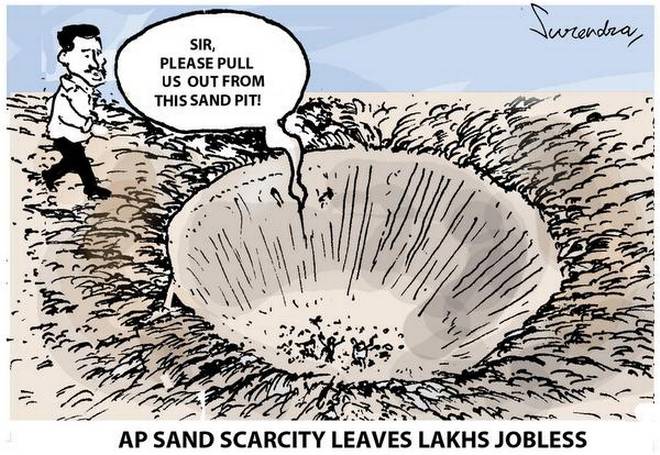
Andhra Pradesh Riverbed Mining 2020: Quicksand of mismanagement

In 2019 overview, we saw the state of Andhra Pradesh experiencing all the key problems associated with sand mining; growing demand and prices, inadequate supply, illegal excavation affecting rivers and villagers and inactive govt bodies. Reports revealed Krishna and Vamasdhara rivers facing large scale mechanized mining while indiscriminate mining in Nagavali river affecting drinking water schemes in Regidi mandal. Srikakulam district and beaches particularly suffered.

There were reports showing political parties involved or facilitating illegal mining. Like other states, the Andhra govt was seen rallying on technological solutions to manage the mining. https://sandrp.in/2019/02/26/sand-mining-2018-telangana-and-andhra-pradesh/

The following overview since then show a whole range of developments. Unsustainable excavation of riverbed minerals & mismanagement show no end.

Continue reading “Andhra Pradesh Riverbed Mining 2020: Quicksand of mismanagement”