DRP News Bulletin

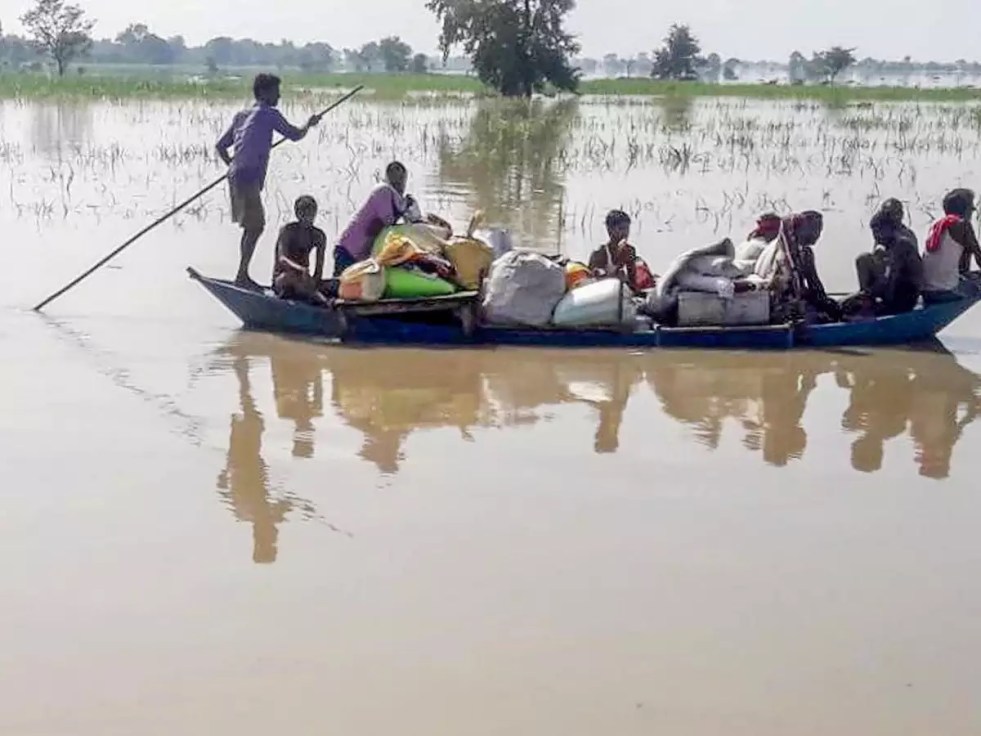
DRP NB 26 Oct 2020: Why Floods is not big issue in Bihar elections?

Or may be it is a major issue at a number of places. Like in Kishanganj district along Mahananda river in North East Bihar, as the report here mentions. We hope it is. Since floods and how they are managed affect so fundamentally and in so many different ways so many people, it should be an election issue. Particularly when the incumbent Chief Minister Nitish Kumar is fighting to be voted in after being the Chief Minister of the state for 15 years since Nov 2005 (except brief ten month period in 2014-15).

15 years is long enough time to have been able to make at least some dent in flood management. On ground, the situation seems to have only gone worse. It was in this 15 year period that the unprecedented Kosi floods happened after the Kusaha breach in 2008. But the word unprecedented has been used for several more floods in these 15 years, including by Nitish Kumar. He also raised a number of pertinent issues in this period, including impact of Farakka barrage on Bihar floods, need for its decommissioning, Bihar’s right to get Ganga water from the headwaters in Uttarakhand [currently it gets none except during monsoon]. He is currently silent on these issues, but voters and media do not have to be silent.  

Continue reading “DRP NB 26 Oct 2020: Why Floods is not big issue in Bihar elections?”
DRP News Bulletin

DRP NB 12 Oct 2020: Why is India’s flood forecasting system ineffective?

This scholarly article shows why India’s flood forecasting system is ineffective. It is not location specific, provides too short a time, it does not provide the intensity of flooding, it is not comprehensive, there is no independent assessment. As far as dams are concerned, its performance is worst, and is unable to either expose wrong dam operations or take action against such operations. Its inflow forecasts are most of the time non existent. It makes numerous errors, but fails to correct them for long time. Its website is slow, sometimes totally non functional. It keeps changing the monitoring sites, their HFLs and provides neither consistency nor reasoning for many of its actions. In the middle of the monsoon it decided to curtail the hydrographs and information display system. Read on.

Continue reading “DRP NB 12 Oct 2020: Why is India’s flood forecasting system ineffective?”
DRP News Bulletin

DRP NB 5 Oct 2020: Nominations Invited for the 2020 Bhagirath Prayas Samman & Anupam Misra Medal

INDIA RIVERS WEEK 2020 invites Nominations for the Bhagirath Prayas Samman (BPS) and Anupam Misra Medal.BPS was constituted in 2014 with Late Shri Ramaswamy Iyer as the Chair of Jury. BPS aims to recognize the unsung heroes for their outstanding and sustained efforts towards protection and conservation of rivers. Shri Anupam Mishra Memorial Medal (AMM) constituted in 2017 aims to celebrate journalists and media professionals who have established an exceptional body of credible work on various aspects of rivers leading to changes in behaviour, public discourse, law and policy. Based on well defined criteria, the Jury of the BPS & AMM selects the awardees. Nomination forms can be submitted to any of the following e-mail addresses: indiariversweek2014@gmail.com or mpuri@wwfindia.net, with the subject line: BPS/ AMM 2020 Nomination. The last date for the submission of nominations is October 25, 2020. Forms are available at: https://indiariversforum.org/nominations-open-for-bps-amm-awards-india-rivers-week-2020/  

Continue reading “DRP NB 5 Oct 2020: Nominations Invited for the 2020 Bhagirath Prayas Samman & Anupam Misra Medal”
Delhi · Yamuna River

Sau sunar ki aur ek lohar ki – How a single decision sealed Yamuna’s fate

Guest Article by Shri Manoj Misra

Delhiites in early-mid April 2020 were pleasantly surprised to find a much healthy river Yamuna in their city. Social media was full of pictures and videos. Many had resigned not to find a living Yamuna in the city in their lifetime. But the pleasant fact was that the river in the city had indeed as if by magic come alive and presented a picture that was hard to believe. There was a river side which did not stink and looked cleaner than usual.

Continue reading “Sau sunar ki aur ek lohar ki – How a single decision sealed Yamuna’s fate”
Free flowing rivers

World Rivers Day 2020: Celebrating Rivers across the world

The World Rivers Day[i] (WRD) is celebrated annually on the fourth Sunday of September. The event strives to highlight the invaluable ecological, hydrological services and cultural, recreational values offered by the rivers. Indeed, the most of the once wild, scenic, free flowing rivers across the globe are facing existential crisis on account of various anthropogenic activities hastened over the past century.

However, there are small but significant steps being undertaken by individuals, organizations and governments to restore some of the flowing eco-systems. This account attempts to compile some such positive developments that have taken place in the one year.

We have already published a compilation of the positive river stories of India on the occasion of International Day of Actions for Rivers being held on March 14 2020. In addition to Indian rivers, this compilation also covers some remarkable development concerning river conservation worldwide. There could be many more stories and developments happening, we invite readers to send us such stories they know about. 

Continue reading “World Rivers Day 2020: Celebrating Rivers across the world”
DRP News Bulletin

DRP NB 21 Sep 2020: IHA President accepts-Hydro faces massive slowdown & worse

International Hydropower Association (IHA) is essentially global leader of hydropower lobby. So when IHA President Roger Gill speaks about the problems hydro industry is facing, it becomes very interesting for all concerned.

In this interview the Roger Gill makes it clear that Hydro investments have been slowing down in last five years when compared with investments in immediate earlier decades. It has further slowed down in 2019 and has been further majorly affected by Covid-19 pandemic. Gill also accepts that the hydro is perceived as much more risky compared to solar and wind. The claim he makes of low levelised cost of electricity from hydro projects is a bit of fiction, since cost of any under construction or new hydro will be hugely costlier than solar and wind power projects. The IHA president is catching at the straws when he takes encouragement from investments in existing hydro projects and pump storage, though he keeps making it clear that market is still unclear as far as pump storage tariffs are concerned. A friendly interview also reveals a lot!!

It is high time that the Indian hydropower lobby led by NHPC and power ministry takes due note of the realities and would not push unjustified, unviable and destructive hydropower projects down the throats of reluctant states and people, using scarce public resources.https://energy.economictimes.indiatimes.com/news/power/hydro-power-requires-100-bn-investment-annually-roger-gill-international-hydropower-association/78131561 (17 Sep 2020)

Continue reading “DRP NB 21 Sep 2020: IHA President accepts-Hydro faces massive slowdown & worse”
Delhi · Rivers · Urban Rivers

NAJAFGARH JHEEL – SAGA OF A FORGOTTEN RIVER

Guest Article by: Ritu Rao

A short drive on the Golf Course Road in Dwarka followed by a turn towards Goyla Dairy and subsequently a sharp left just short of Goyla Dairy brings us to the famous Inspection Road /Embankment Road. Flanked by Najafgarh Drain on one side and the arable lands of Delhi on the other, the embankment road was constructed after the 1964 floods of Delhi. The thick mud embankments are covered with trees and shrubs which provide the much-needed habitat for the local flora and fauna to thrive. This thicket starts clearing off after Jhatikara crossing (say after about a half an hour drive on this road) and the Najafgarh drain suddenly transforms into a vast expanse of water known as the Najafgarh jheel. This spectacular sight continues for a good 5-6 kms before it once again narrows down into a stream. The road meets the now extinct Sahibi Nadi and Outfall from Drain No.8 at Dhansa, 5 km upstream of the jheel. The Sahibi Nadi which originates in Jaipur district and drains parts of Rajasthan, Haryana and Delhi, now has diminished flow and disappears in the arid soil near Dharuhera after the Masani Barrage in Haryana. Once fed by the Sahibi nadi and storm water runoff from the surrounding areas, the Najafgarh jheel is now fed primarily by the waste water from the Badshahpur Drain and the Outfall Drain No.8 and the rain water in monsoons.

Continue reading “NAJAFGARH JHEEL – SAGA OF A FORGOTTEN RIVER”
Dams · DRP News Bulletin

DRP NB 14 Sep 2020: How should we define a Normal Monsoon?

IMD is happy to declare a monsoon as normal as long as total quantum of rainfall at national scale is within 4% of what is defined as normal monsoon rainfall during June 1 to Sept 30. Even if this means there is spatially or temporally or both spatially & temporally, the total rainfall or its distribution is abnormal in large parts of the country. It was good to see a national newspaper, asking question if the monsoon is normal even though it’s not temporally normal as was the case in large parts of the country this year.

The IMD normal only assures meteorological normal of national monsoon rainfall within given period. It does not assure hydrologic normal nationally or in different parts of the country, nor agricultural normal rainfall nationally or in different parts: sub divisions, states, river basins, districts, talukas/ tehsils or villages and wards. We clearly need much more realistic and nuanced definition of even meteorological Normal monsoon rainfall, which IMD needs to work on. But as far hydrological or agricultural normal rainfall is concerned, both temporally and spatially, those concerned outside IMD will need to work on.

Continue reading “DRP NB 14 Sep 2020: How should we define a Normal Monsoon?”
DRP News Bulletin

DRP NB 7 Sep 2020: On Himalaya Diwas, will Supreme Court stop destruction of Himalaya by Char Dham Road?

The people and state government of Uttarakhand would be celebrating Himalayan Diwas on September 9; the Supreme Court of India would be hearing the issues related to the controversial Char Dham Road project a day before it on September 08. During the last hearing on August 31, the apex court has rescheduled the case by extending the hearing date by a week amid concerns of recurring landslides raised by the petitioners.

The ongoing adverse impacts on forests, rivers, streams, soil covers, hills and people continue to concerns scientists, geologist who are alarmed by the scale of destruction and shocked by the brazen manner the state and central governments have been marching ahead without bothering to assess the impacts or address the genuine issues being raised by all concerned.

Multiple reports have been showing that the deliberate dilution of environmental rules and violations of already weakened norms applied by none other than governments themselves to avoid scientific scrutiny and push the project through climatically and ecologically sensitive mountains is proving to be a Himalaya blunder. There is still time to pause, ponder, review the project, assess the impacts, reduce road width and prepare an action plan to restore the damages and pay heed to scientific suggestions before the blunder leads to another inevitable disaster of Kedarnath or larger scale. Hope the apex court would not fail Himalayas.  

Continue reading “DRP NB 7 Sep 2020: On Himalaya Diwas, will Supreme Court stop destruction of Himalaya by Char Dham Road?”