
This letter from SANDRP to MoEF and ETC on Etalin Project highlights how poor has been the EIA and E-flows reports of the Etalin Project and how flawed has been the Environmental Appraisal Process by the EAC. It also shows the shoddy Dibang Basin study for Cumulative Impact Assessment cum Carrying Capacity Study, shockingly done by the same consultant that also did the Etalin EIA, showing clearly that MoEF, EAC and CWC, all of whom were involved in the process, do not understand what is conflict of interest. The E flows study done by the CIFRI (Central Inland Fisheries Research Institute) does not even provide the list of fish they found in the Etalin project area! And shockingly, the EAC approved the biggest ever hydropower project of India based on such shoddy documents. The Environment Clearance approval needs to be reviewed, the EIA, E-flows and Dibang Basin CIA needs to be rejected and fresh studies need to be commissioned. https://sandrp.in/2020/05/23/open-letter-to-moef-river-valley-eac-review-recommendation-to-grant-ec-to-etalin-hep/ (23 May 2020)
Continue reading “DRP: 25 May 2020: Review Environment Clearance Approval for Etalin Project”Tag: Narmada

DRP: 18 May 2020: Signs of Impending Dam Floods in SW Monsoon 2020?
These are rather ominous signs. As per the latest reservoir storage bulletin of Central Water Commission dated May 14, 2020, the 123 reservoirs monitored by CWC has massive, 64.6 BCM (Billion Cubic Meters) in live storage capacity, which is about 165% of the capacity on same date last year and average of last ten years, even as monsoon is just weeks away. Most dams known to create DAM INDUCED FLOODS in the past, including Bhakra dams (we wrote about it earlier this month: https://sandrp.in/2020/05/07/are-we-ready-to-use-more-water-from-snow-melt-in-indus-basin-this-year/), Narmada dams, Odisha and W Bengal dams (Cyclone AMPHAN is going to bring a lot of water here in next few days, even before the monsoon), Krishna basin dams, Cauvery basin dams, Bansagar and Gandhi Sagar Dams, and Kerala dams among others. All these dams have above average storage situation.
Continue reading “DRP: 18 May 2020: Signs of Impending Dam Floods in SW Monsoon 2020?”
DRP: 11 May 2020: Jindal accepts Etalin HEP is unviable!
This must be the defining (and predictable, this was the lead story in our DRP NB of April 27, 2020, see: https://sandrp.in/2020/04/27/drp-nb-27-april-2020-for-whom-is-this-unviable-etalin-project-being-pushed/) moment in the campaign to save the Dibang Valley now from the proposed 3097 MW Etalin Hydropower Project. The CEO of Jindal Power Ltd has said in so many words that project is NOT an attractive investment, they will struggle to find buyers for the costly power and only support from government can help make the project viable. The CEO seemed to suggest that they would be happy to sell the project to NHPC or form a joint venture with NHPC to get the govt funding for the project. Again completely on predictable line. The question then is why should government spend previous public money on such an unviable project?
So the question remains the same, the one we asked on April 27, 2020: For whom is this unviable Etalin Project being pushed?
Continue reading “DRP: 11 May 2020: Jindal accepts Etalin HEP is unviable!”
DRP: 04 May 2020: Wildlife Institute of India doing quid pro quo with hydro developers?
WII skips multi-seasonal study on Etalin, cheats its way to compile a conservation plan; MoEFCC and FAC ignore all FANTASTIC REPORT The Wildlife Institute of India (WII) spent only four months on field while compiling a multi-seasonal replicate study on the Jindals’ 3097 mw Etalin Hydro Electric Power Company Ltd (EHEPCL) in Dibang Valley in Arunachal, and it relied on earlier studies conducted in the region. The forest advisory committee (FAC) of the union ministry of environment, forests & climate change (MoEFCC) and the ministry itself did not bother to ask any questions as to how the study was compiled, even though one of its own reports states that four months’ study was carried out. Instead, the FAC formed a subcommittee to look into the “concerns related to tree enumeration process and the aspects highlighted in biodiversity assessments study by WII.” The wildlife study done by the WII is accepted in toto by the subcommittee, the subcommittee report says. The subcommittee included a member of the WII who was part of the team that cheated its way to compile a questionable report on Etalin. https://arunachaltimes.in/index.php/2020/05/03/wii-skips-multi-seasonal-study-on-etalin-cheats-its-way-to-compile-a-conservation-plan-moefcc-and-fac-ignore-all/ (03 May 2020)
Continue reading “DRP: 04 May 2020: Wildlife Institute of India doing quid pro quo with hydro developers?”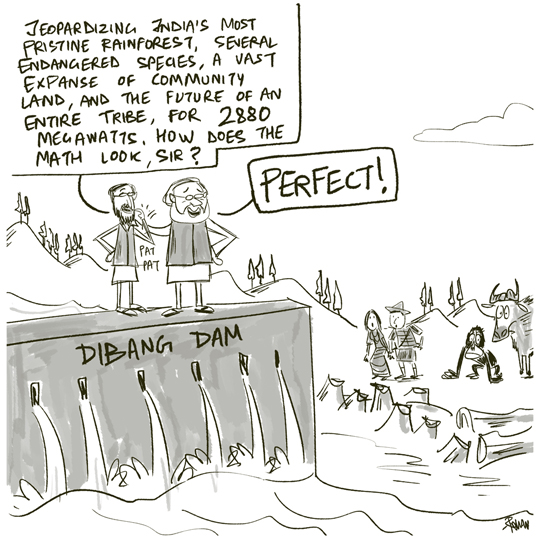
DRP: 27 April 2020: For whom is this unviable Etalin project being pushed?
In the ongoing debate on forest clearance for the controversial Etalin Hydropower project in Dibang Valley in Arunachal Pradesh between the Forest Advisory Committee, The Hindustan Times’s consistent reporting and Sanctuary magazine launching a campaign along with others, one (of the many) key question that remains unanswered is: for whom this economically (in addition to socially, environmentally and from climate change perspective) unviable, massively expensive project being pushed in a power surplus country?
Electricity from hydropower projects is no longer economically viable, since cheaper options are available. Some misguided people are claiming virtue in hydropower project claiming it provides peaking power. The fact is India is today not only power surplus, the peak power deficit has been just around 1% or less for long time. This when there is no attempt to either monitor as to how much of the electricity produced from existing hydropower projects provides peaking power, nor is there any attempt to achieve optimisation of operation of existing hydro projects to produce maximum possible hydropower. Nor is there any attempt to even manage the peaks either through pricing or other policy measures. In such a situation there is clearly no justification for more hydro for peaking. Moreover, the storage option is becoming increasingly cost effective, reducing the peaking power needs. So then for whom this project whose cost won’t be less than Rs 30000 crores at most conservative estimates, being pushed? The contractors, the equipment suppliers, the hydro lobby, the consultants, the timber lobby, the dam lobby, or the kickbacks?
Continue reading “DRP: 27 April 2020: For whom is this unviable Etalin project being pushed?”
DRP: 13 April 2020: Check dams revival in Dakshina Kannada
Zilla man, students revive check dams For the first time in decades this February, Sundara Gowda, a 55-year-old farmer in the Dakshina Kannada district, doesn’t have to spend Rs 6,000 to mine water. In the past he has had to hire an earthmover to do the digging because the rivulet that runs by his farm would dry up. This year, to his surprise, the rivulet, a tributary of the Phalguni river, didn’t dry up. Miraculously, it had plenty of water. A check dam had been built upstream at Paldyaru.
The check dam was one of many such structures built by Paljal Dharanendra Kumar, a zilla parishad member from Venoor village, with the help of student volunteers. The check dams have resulted in water in the river rising six feet for a distance of 2.5 km. The river now has 90 million litres of water and rivulets which used to run dry have come back to life. Dharanendra and his student volunteers have been zealously building check dams, called kattas, from December to February. The dams have been built at absolutely no cost to the exchequer. https://www.civilsocietyonline.com/environment/zilla-man-students-revive-check-dams/ (24 March 2020)
Continue reading “DRP: 13 April 2020: Check dams revival in Dakshina Kannada”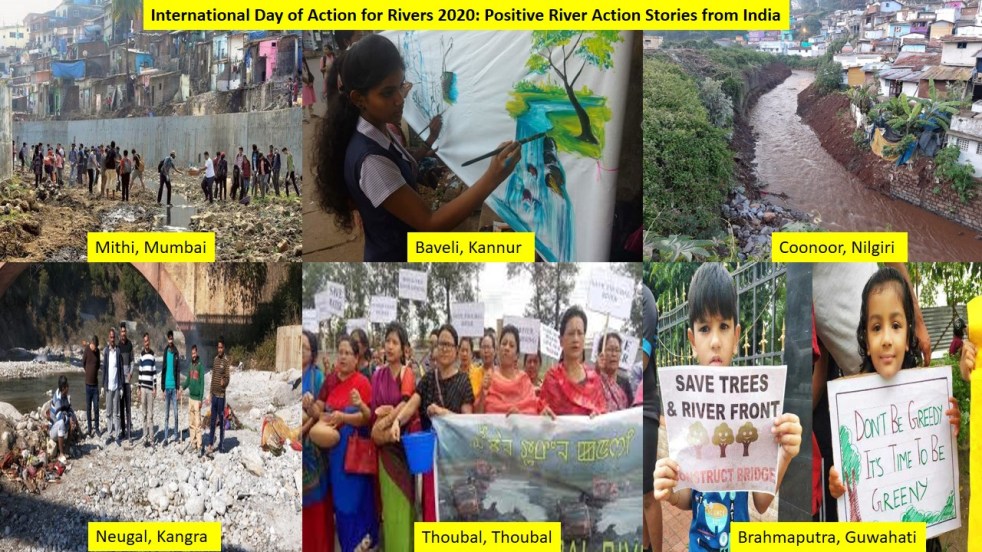
International Day of Action for Rivers 2020: Positive River Stories from India
On the occasion of International day of action for rivers which is annually celebrated on March 14, SANDRP put together some positive citizens and community led actions taken in last one year to protect and revive the rivers in different parts of India.
Continue reading “International Day of Action for Rivers 2020: Positive River Stories from India”
DRP: 9 March 2020: High Court Directions for Sukhna Lake
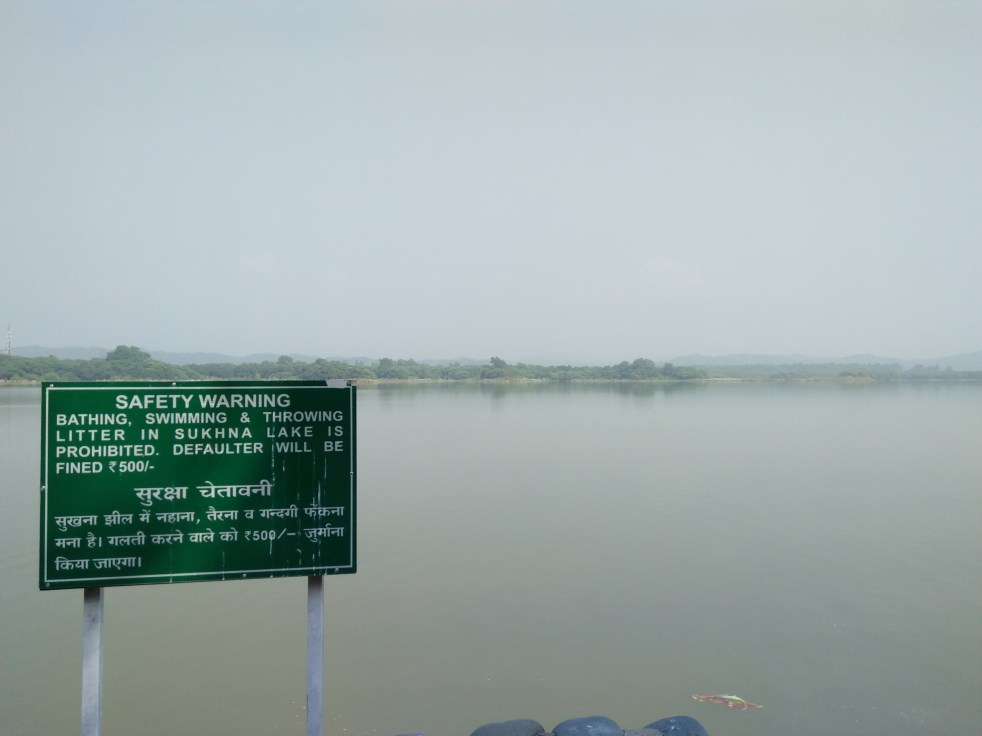
The March 2, 2020 directions of Punjab and Haryana High Court for the sustained conservation of Sukhna wetland are welcome, though the directions are likely to be appealed against in the Supreme Court, considering the far reaching implications of the lake. One hopes the Supreme Court takes a view that helps sustain the Sukhna lake and the wetlands in a confidence inspiring way.
Punjab & Haryana HC Issued Slew Of Directions For Protection Of Sukhna Lake. https://www.livelaw.in/news-updates/punjab-haryana-hc-issues-slew-of-directions-for-protection-of-sukhna-lake-in-chandigarh-read-judgment-153386 (2 March 2020)
This is a far reaching judgement on protection of watersheds, water bodies. Any government authority which ignores the environmental damage caused by unplanned development will have to face the music. The court also declared all commercial, residential and or other structures constructed in the catchment area falling in the areas of Punjab, Haryana and Chandigarh as delineated in the map prepared by the Survey of India on 21.9.2004 were declared illegal and unauthorised and ordered to be demolished within three months. https://www.thehindu.com/news/national/hc-declares-chandigarhs-sukhna-lake-living-entity-fines-punjab-haryana-100-cr-each-for-damaging-catchment-area/article30969711.ece (03 March 2020)
Continue reading “DRP: 9 March 2020: High Court Directions for Sukhna Lake”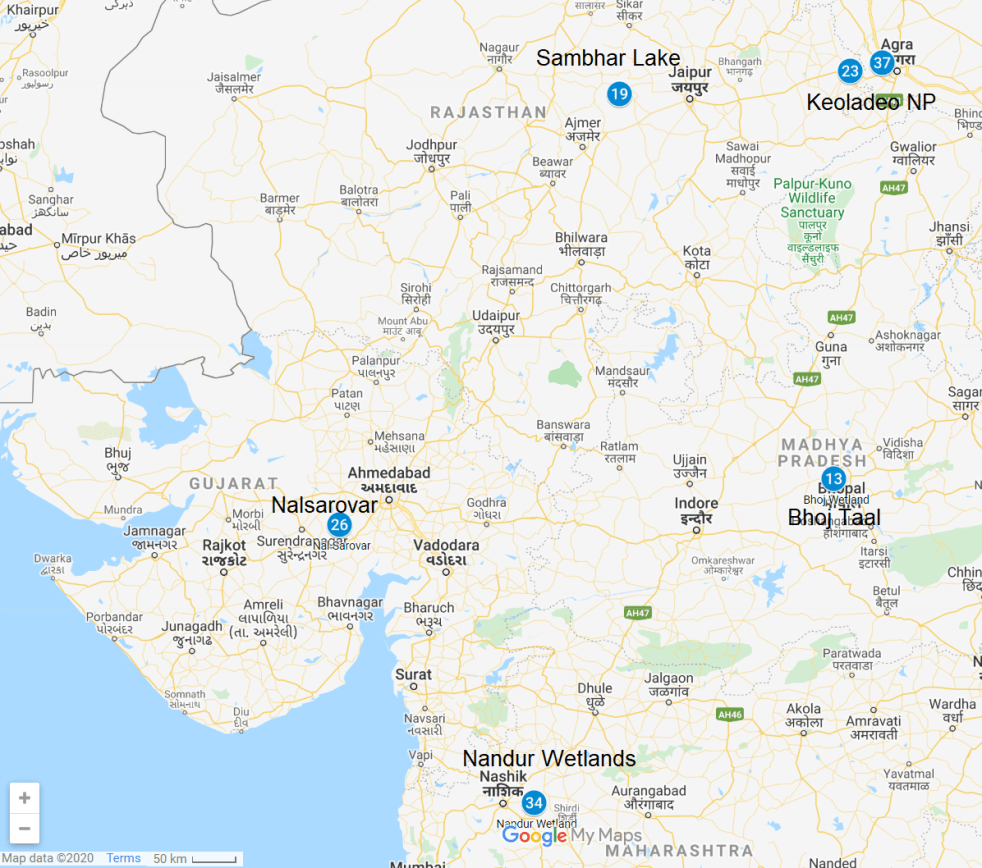
Ramsar Wetlands in crisis 2020: West India
The four state of West India have only five Ramsar sites of international importance. These includes Sambhar lake and Keoladeo NP in Rajasthan, Nalsarovar in Gujarat, Bhoj Taal in Madhya Pradesh and Nandur Madhmeshwar Wetlands in Maharashtra. There is no Ramsar site in Goa state.
Continue reading “Ramsar Wetlands in crisis 2020: West India”

DRP: 3 Feb 2020: Some welcome news on Pinjal & other dams
A number of welcome developments around dams appear in this week’s DRP News Bulletin from SANDRP. The prominent is the Brihanmumbai Municipal Corporation declaring that it may not need Pinjal Dam, which SANDRP had said in its report way back in 2012-13 and the then BMC commissioner had agreed to in an interview to NDTV. This should also lead to cancellation of the Damanganga Pinjal River Link proposal. The Maharashtra govt decision to review the need for Human dam is also welcome. The Kerala State Information Commissioner’s decision to direct that the Dam Break Analysis should be in public domain is also a useful precedent that all states and CWC need to follow immediately and also amend the proposed Dam Safety Act to include a provision that all Dam Safety related information, including meeting minutes, agenda, decisions, status reports etc will be in public domain.
Continue reading “DRP: 3 Feb 2020: Some welcome news on Pinjal & other dams” SANDRP