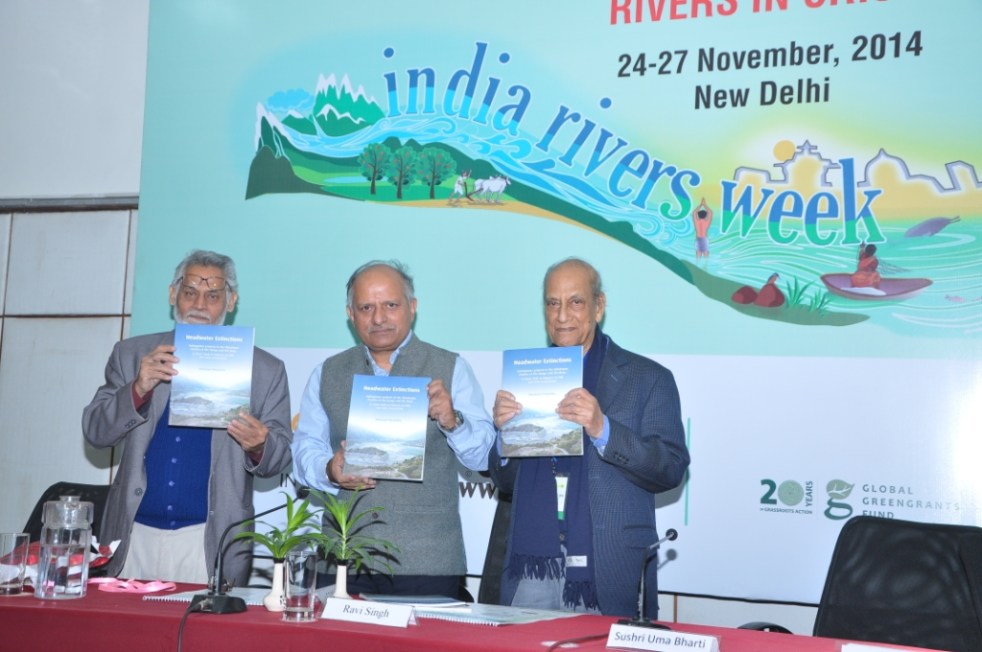
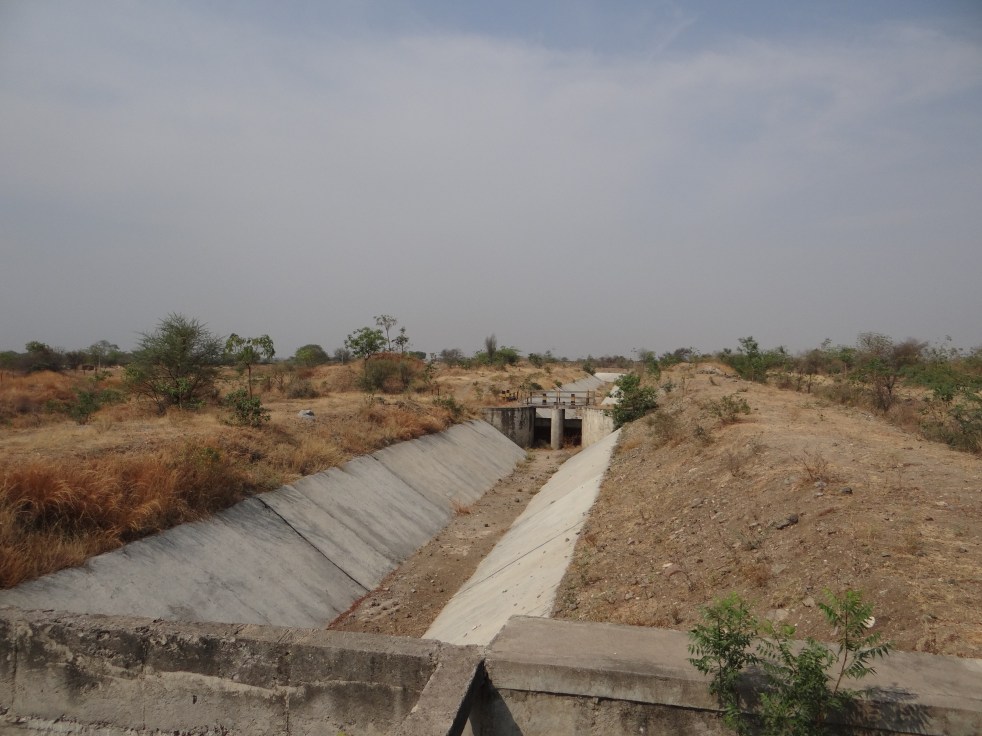
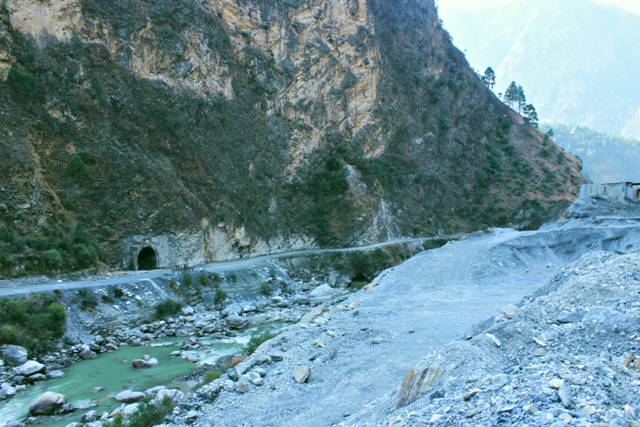
SANDRP has just published a new report: “Headwater Extinctions- Hydropower projects in the Himalayan reaches of the Ganga and the Beas: A closer look at impacts on fish and river ecosystems”, authored by Emmanuel Theophilus. The report[i] was released at the India Rivers Week held during Nov 24-27, 2014.
Front Cover of the report HEADWATER EXTINCTIONS
Headwater Extinctions deals with impacts of hydropower projects in Beas basin in Himachal Pradesh and Alaknanda-Bhagirathi basins in Uttarakhand on river ecosystem and its components, mainly fish. While the harrowing impacts of hydropower projects on local livelihoods and social systems are being realized gradually, we are yet unclear about the extent of impacts of these so-called green projects have on fish and aquatic biodiversity.
Environmental Impact Assessments of large hydropower projects (> 25 MW as per EIA Notification 2006[2]) are supposed to assess ecological impacts of such projects, but we are yet to come across any comprehensive effort in this direction from EIA reports that we have assessed so far.
The Expert Appraisal Committee (EAC) of Union Ministry of Environment, Forests and Climate Change (MoEF & CC) which is entrusted with appraising these projects and their EIAs has paid very little attention to this issue. Since over a decade, the EAC has had expert members from Wildlife Institute of India (WII) and Central Inland Fisheries Research Institute (CIFRI). Both these institutes are supposed to have expertise on fish and aquatic biodiversity. But sadly, their presence has not helped fill the serious lacunae in appraisal and EIAs of the hydropower projects.
SANDRP had been trying to highlight the impact of hydropower on fish and the long standing problems in the so-called mitigation measures being recommended by the EAC. We thought that it may be useful to bring out a first-hand report bring out ground realities of what is happening to our rivers. Emmanuel Theophilus, based in the Dhauliganga Valley and who is an avid mountaineer, storyteller, ecologist and our ally was commissioned by SANDRP to study the impacts of hydropower on fish and ecosystems, review the EIAs as well as mitigation measures recommended by EAC as a part of Environment Management Plans of hydropower projects. We are very glad to publish the report as a first of the hopefully many steps to be taken to understand and address this important issue.
Headwater Extinctions has been written in an eminently readable style that Theo is known for, as could be seen from the earlier blogs[3] he wrote for us! The report has a section on ‘Travelogue’ which records Theo’s travels and thoughts as he visits Bhagirathi and Alaknanda sub basins in Uttarakhand and Beas basin in Himachal Pradesh. The report also brings illuminating photos from these trips. The fact that the travels happened within months of the Uttarakhand disaster of June 2013 could be seen in his photos and travel reports. It further substantives the role hydropower projects played in increasing the proportions of the disaster.
Travelogue is followed by discussions in two parts: Discussions on the impact of hydropower projects on fish and aquatic habitats along the two sub-basins and the role of EIAs, EMPs, Fisheries Plan and the government approval process. The findings of this report are valid for all Himalayan states & rivers.
Back Cover of the report HEADWATER EXTINCTIONS
Headwater Extinctions ends with some striking insights. Sample this: “We are in the midst of river extinctions in the Himalaya, but are surrounded by a tragic drama of double-speak and equivocation. And a horde of jostling brokers. Ranging from reputed universities, government departments, research institutions, everyday bureaucrats, and of course, politicians and contractors from within ‘the community’[4] along the developers and regulators. They not only write the script of this drama, they even play all the part”.
The inside covers of the report have detailed maps of the two basins with locations of hydropower projects, with annexures containing lists of hydropower projects in Upper Ganga and Beas basins and also list of fish found in Upper Ganga basin.
Theo has completed this report on a stringent timeline and budget, which meant that all the proposed and implemented fisheries management plans could not be assessed. We hope Headwater Extinctions provides sufficient material and compelling reasons to overhaul the way impacts of hydropower projects on fisheries and aquatic biodiversity are treated by EIAs, EMPs and government committees. We would also urge agencies like WII and CIFRI to do justice to their work inside EAC and beyond. That they are not doing that is apparent.
For EAC and MoEF&CC, we certainly would like them to ensure proper and full impact assessment of projects on aquatic biodiversity in the EIAs. The EAC also needs to stop approving completely ineffective fish hatcheries. They could initiate a credible independent study of the costs, benefits and performance of the fisheries development plans they have been approving in recent projects. It does not only smell fishy, but more like a scam! Here is a relevant quote from the report: “I can’t help see a few things here, as perhaps you do? Bluntly put, I see slush funds being dangled to a whole range of possible collaborators. The kindest term I can find for them is ‘brokers’.”
We look forward to your comments and suggestions on all aspects of Headwater Extinctions. If you would like a hard copy, please write to us.
[2] We have been saying this for long and this report helps substantiate our contention that the assumption that projects below 25 MW are benign and do not need EIA-EMP or environmental monitoring and public consultations is wrong.
The Report of the High Level Committee to review various Acts administered by MoEF & CC (the report hereafter) has been submitted[1] on Nov 18, 2014[2], though it has been made public only in early Dec 2014. The High Level Committee (HLC) headed by former cabinet secretary T. S. R. Subramanian faced a lot of well deserved criticism from its inception[3]. While a comprehensive critique of the 106 page HLC report will take time, some critiques have already been published[4].
At the outset it should be mentioned that the HLC report is replete with recommendations for expediting environmental clearance, fast tracking projects and they show anti environment bias, as reflected in its use of “Single Window clearance”, “Fast track clearances”, “making business easier”, “utmost good faith” to name only a few phrases frequently used by HLC. However, this article is limited to commenting on the direct and indirect implications of the HLC report on climate change concerns.
While the mandate of the HLC report was “to review various Acts administered by MoEF & CC”, as the title page of the report says, the report rightly acknowledges that such a review would entail analysis of functioning of the environmental governance in India. And any review of environmental governance would be considered grossly inadequate in 21st century, when climate change is the biggest over arching environmental concern of our times that is also dictating the developmental priorities and options. As the world moves from deeply disappointing negotiations at Lima (Peru), symbolizing the continued let down of recent COPs (Conference of Parties) under United Nations Framework Convention on Climate Change, to the next (21st) COP at Paris in 2015, it would be useful to see the HLC report through the climate change lenses.
HLC is climate blind Scanning through the report for the phrase “climate change”, one finds that it appears just once in the report outside the name of the commissioning ministry (Ministry of Environment, Forests & Climate Change), in para 1.3 in preamble chapter, where it says: “We need to take heed of the very recent Intergovernmental Panel on Climate Change (IPCC) call from Copenhagen that the earth is flirting with danger – the alarm flag has been hoisted.” That reference, one would have thought would lead HLC to give more importance to Climate Change, but that hope is belied when we read through the report. Even the word climate appears just one other time in the report (para 7.10.4 (e)) but that has nothing to do with climate change.
The other phrase generally used synonymously with climate change is global warming. This phrase appears in the report just once in preamble chapter, in para 1.7, which generates some hope: “Global warming, environmental degradation, loss of biodiversity and potential for conflict growing out of competition over dwindling natural resources are the current focus of humanity and should occupy the centre stage in policy formulation.” Indeed, Climate Change is “current focus of humanity and should occupy the centre stage in policy formulation”. But the HLC has nothing to do with that concern as the report does even care to mention that in any of its analysis or recommendations!
That shows that as far as direct reference to climate change is concerned, HLC has shown not referred to it in its analysis or recommendations. It would seem from this that may be HLC report is blind to climate change concerns.
But how can it be blamed for inviting a climate disaster? Let us see how.
Indian government is proud of its National Action Plan on Climate Change which is supposed to drive our developmental plans and priorities during the ongoing 12th Five year plan and beyond. There are several national missions, including National Mission for a Green India, National Mission for Sustaining the Himalayan Ecosystem, National Solar Mission, National Water Mission, National Sustainable Agriculture, National Mission for Enhanced Energy Efficiency and National Mission for Sustainable Habitat, all of which have far reaching implications for environment governance and climate change. The prime minister himself chairs the PM Council on Climate Change, which is a policy making and national monitoring body.
The 12th Five Year Plan specifically gives importance to climate change when it says (para 1.42): “It is known that India will be one of the countries most severely affected if global warming proceeds unchecked and as such appropriate domestic action is necessary. A National Action Plan for climate change has been evolved with eight component Missions. Implementation of these missions must be an integral part of the Twelfth Plan.”
But HLC takes no cognizance of any of these. Nor does it see the ecology, forests, rivers, biodiversity from climate change perspective and how vulnerable groups from climate change point of view would be affected by projects that would adversely impact the ecology, forests, rivers, biodiversity & other natural resources. In fact HLC completely ignores the fact that millions of Indians directly depend on these natural resources. HLC seems to have no clue about this.
Here it will be illuminating to quote what the HLC chairman said recently[5]: “Villages in Gujarat could have got the water five years earlier had there been no andolan. Though some people lost their land in Madhya Pradesh (MP), the result is that half of MP and three-quarters of Gujarat today has access to water. So, there is some cost attached to everything. Some larger force will have to look at it. Ultimately, it is all about striking a balance. We are suggesting that the government should not go after development blindly but also not let people of one village blackmail it by shouting “my right, my right”. Mr Subramanian here is clearly referring to Narmada Bachao Andolan agitation against the Sardar Sarovar Dam on Narmada River. This is not only grossly ill informed opinion, it shows his shocking anti people and anti people’s movement bias.
The HLC was expected to consider populations that are vulnerable due to climate change and also affected by destruction of environment. In fact the entire HLC report has nothing to do with people or populations, leave aside identifying the vulnerable populations and giving affected people any effective say in environmental decision making process. Absence of such role for people is one of the key reasons for current environmental problems in India, as is apparent in any of the environmental and natural resources conflict. But HLC analysis not only ignores this lacuna, HLC recommendations are for further reducing say for the people by suggesting that public consultations can be done away with in most projects.
Let us see some further direct implications of HLC recommendations with respect to climate change. HLC is essentially dealing with forests (chapter 5), wildlife (chapter 6), biodiversity (chapters 5, 6 & 7), environmental governance (chapter 7). It makes a large number of recommendations on these issues and all of these have implications for climate change and how the populations vulnerable to climate change would become further vulnerable when these resources are taken away from them. But here again HLC sees no need to mention climate change. For example, forests are a major storehouse of carbon and HLC recommendations are going to lead to massive deforestations, thus increasing the release of stored carbon and reducing the carbon absorption, besides taking away the adaptation capacity of the forest dependent communities, but HLC finds no merit or reason to mention that. Even in section 7.9.2 where HLC mentions the kind of expertise NEMA (National Environmental Management Authority), there is no mention of climate change.
It is in this context that we need to view the HLC recommendations for faster and single window clearances with advocacy for utmost faith in the project developers, for relaxing the environmental governance on several counts, for fast track clearances for mining, power, line projects and large number of other projects, for recommending relaxation of public consultation process in most of the projects, for insulating the officials and the ministers (the executive) from environmental governance, for delaying the legal challenge process to clearances and also for debarring the legal challenge on merit. These HLC recommendations are all going to help relax the environmental governance and hence invite greater environmental disaster and by implication, climate disaster for India.
The claim of HLC chairman that HLC had tried “to optimize the efforts to balance developmental imperatives causing least possible damage to environment” is clearly unfounded. The remarks of the Union Environment Minister Prakash Javdekar, while accepting the report from HLC, that “the Report was a historic achievement that would strengthen processes to balance developmental commitments and environment protection. The recommendations of the Report would enhance Ministry’s efforts to avoid undue delays and ensure transparency in clearances and implementation of projects” is deeply disappointing and seems to begin an era where environmental conflicts will only increase and deepen.
It is thus clear that HLC report will invite greater climate disaster for India, particularly for those who are poor and already vulnerable to climate change implications. The HLC report should be rejected for this reason alone, besides its other acts of omissions and commissions.
Guest Blog by: : Karthik Teegalapalli(kartix@gmail.com) a researcher with the Nature Conservation Foundation
In April 2014, the Forest Advisory Committee (FAC) decided to deny clearance to the 3000 MW Dibang Multipurpose Hydro-electric Project, the largest capacity hydro project in the country proposed to be developed by the National Hydropower Power Corporation (NHPC) in the biodiversity-rich Arunachal Pradesh State (Saikia 2014). The project was also denied clearance in July 2013. More recently though, the project has been recommended forest clearance by the FAC and Environment Clearance by the Expert Appraisal Committee. Therefore it is pertinent to look at the impacts the project may have in some detail.
Ecological impacts The project, in its earlier version involved diversion of more than 5000 hectares of relatively undisturbed grassland and tropical forest habitat. These and the adjoining forests harbour endangered species such as tiger, leopard, serow as well as the critically endangered takin, all of which are protected under Schedule I of the Wildlife (Protection) Act, 1972 (these species are also listed as present in the area in the Environmental Impact Assessment report of the project, undertaken by National Productivity Council, Guwahati). The grasslands in the area harbour the critically endangered Bengal Florican, a grassland habitat specialist (Sinha et al. 2014). Other species recorded from the area include the critically endangered white-rumped vulture, the slender-billed vulture and the white-winged wood duck. The project site lies in an area identified by the Bombay Natural History Society as a Ramsar site and an Important Bird Area (Islam & Rahmani 2004). The habitat of six endangered plants (Aconitumferox, Coelogynemossiae, Dendrobiumaurantiacum, Paphiopedilumfairieanum, Paphiopedilumvenustum and Vandacoerulea) will be submerged by the reservoir (Chernaik 2007).
The project will also affect aquatic species; the dam will block the breeding migration of four species of fish: the Vulnerable snow trout Schizothoraxrichardsonii, Endangered golden mahseer Torputitora, Near-Threatened mahseer Tortor, and chaguni Chaguniuschagunio. The recommendation of the Environmental Management Plan of the Project to establish fish hatcheries for these species is impractical and can have further damaging effects on the species due to collection of eggs and spawn from the wild population.
The project will have other collateral damages such as through Compensatory Afforestation (CA) that often involves converting an area with diverse native species into monocultures, as has been shown for other dams such as the Sardar Sarovar Dam on the Narmada river (Bhatnagar 2004). The project involves CA of a relatively large area of over 100 sq. km (double the area of forest being affected by the project). The ill-effects of this conversion particularly for the project can be expected to be higher if tree-less natural grassland habitats in Dibang Forest Division, Namsai Forest Division and Anini Social Forestry that harbour grassland habitat specialists are planted with undesired native or non-native tree species. Perhaps the irreversible loss of biodiversity in the forests and grasslands that will be diverted for the project could never be ‘compensated’.
During the construction phase of the project, an estimated 32 lakh truckloads of boulders and 16 lakh truckloads of sand is to be extracted from the Dibang river basin. Unsustainable extraction of sand and boulders has significant negative effects on geomorphology, bank stability, flood character of the river, water quality, river flow, and the biodiversity in the river basin (Padmalal et al. 2008). The project during the construction is to generate 198 lakh cubic meters of muck which will be disposed in the river bank which will cause further loss of 120 ha of river habitat. Construction of new roads (64 km) and widening of existing roads (19.5 km) will also lead to removal of trees and increase the vulnerability of the region to landslides and erosion (Chernaik 2007).
Social impacts The Lower Dibang valley is currently a region of relatively low human population density (~14/km2); the entire population of the Idu-Mishmi tribe is about 12,000. The influx of approximately 6,000 project staff (which is very likely an underestimate) for a period of 8 years or more will affect their way of life, their culture and their tradition as well as open up access to relatively moderately disturbed habitat and biodiversity in the region.
Downstream effects include those on fisheries, agricultural lands and wetlands (beels) and the dam will also increase the vulnerability of the region to flash floods. For instance, in the year 2007, flash floods caused due to sudden release of water from the relatively smaller 405 MW Ranganadi project in the Lower Subansiri district in Arunachal Pradesh swamped 83 villages and caused huge loss of lives and property in the Assam State. The project will have a considerable impact on the Dibru-Saikhowa National Park in Assam which has not been studied in detail in the EIA.
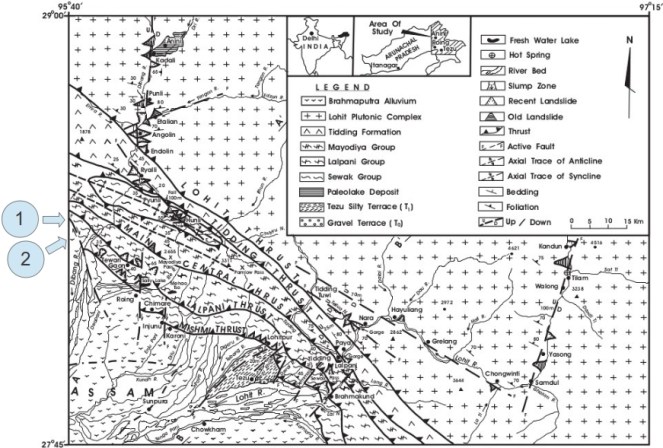
On shaky grounds A critical issue with the project is that the site lies close to an active Fault Line in the Mishmi Thrust of the Mayudia Group in Eastern Arunachal Pradesh with a history of several seismic activities including the Great Assam earthquake of 8.6 magnitude in 1950 (Figure 1, Misra 2009). In the event of an earthquake, the project poses a risk of catastrophic submergence of several villages and vast areas of forests downstream. The recommendations of the Environmental Impact Assessment (EIA) report of the project are cursory and suggest further research on the natural seismicity of the region as well as reservoir-induced seismicity, which should be the basis for the decision about the project.
Figure 1 (Modified from Misra, 2009) showing the location of the fault lines around the proposed project site. 1 is the location of the Fault line and 2 is the location of the proposed site.
Notwithstanding these, in Oct 2014 the project was cleared by the FAC constituted by the new Government, although the committee still had four of the six members who had earlier twice recommended rejection of clearance. Is this decision driven by changes made by NHPC in their project plan? Clearly not. Diversion of forests has now been reduced by a mere 9% to about 4600 hectares; instead of 3.55 lakh trees, the felling has been reduced to 3.24 lakh trees, the power generation capacity has been reduced by 2.3% and the height of the proposed dam reduced by 10 m. In fact, the FAC rejection of April 2014 was for this 10 m rejection proposal!
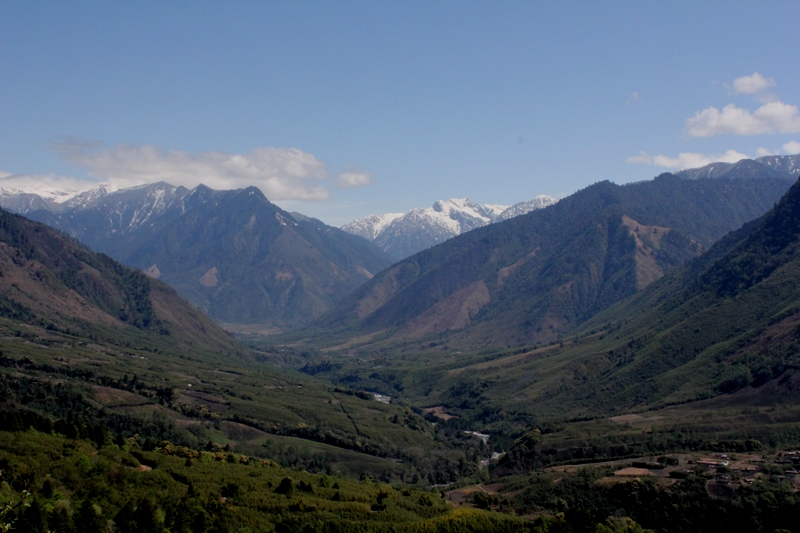
The beautiful Dibang valley, that faces the threat of submergence due to the Dibang Multipurpose Project (Photography by Soumya Dasgupta).
NHPC misleadingly and baselessly claimed that they ‘were not in a position to reduce the height of the dam any further, as it would significantly affect the power generation’. The decision to provide clearance to the project seems like a hasty one driven by the blinders of development and the consequences of such projects is evident from the fate of the Lower Subansiri Hydropower Project in the same State, also by NHPC. After 12 years since the LSHP was initiated and after an expenditure of over Rs. 5000 crores, the work has been on a standstill for the last 35 months as a result of India’s biggest anti-dam people’s movement (Dandekar & Thakkar 2014). Considering the economic, ecological, environmental and social costs of the project as well as the geophysical risk it poses, it would be prudent to withdraw the project till a credible, detailed cumulative study covering these aspects is undertaken in a transparent and participatory way. While the rest of the world is recognising the ill-effects of dams, with the largest dam removal project on the Elwha river in the United States completed just three months back, it is paradoxical that we are heading in the other direction; of building the highest dam in the country and largest capacity reservoir of the North East India without even basic studies, credible impact assessment and democratic decision making process.
References:
Bhatnagar, D. (2004) Uprooting Forests, Planting Trees: Success of Compensatory Afforestation Measures Mitigating the Deforestation for the Sardar Sarovar Dam, India. University of California at Berkeley.
Islam, M. Z. & Rahmani, A. R. (2004) Important bird areas in India: priority sites for conservation. Indian Bird Conservation Network, Bombay Natural History Society and BirdLife International (UK).
Misra, D. K. (2009) Litho-tectonic sequence and their regional correlation along the Lohit and Dibang Valleys, Eastern Arunachal Pradesh. Journal of the Geological Society of India, 73: 213-219.
Padmalal, D., Maya, K., Sreebha, S. & Sreeja, R. (2008) Environmental effects of river sand mining: a case from the river catchments of Vembanad lake, Southwest coast of India. Environmental Geology, 54(4): 879-889.
Saikia, P. J. (2014). Six years after PM laying the foundation ston: No clearance, no work for 3000 MW Dibang Dam.
Sinha, A., Hoque, J., Pradhan, T., Bakshi, M. K., Pulu, J., Singh, A. K. & Ahmed, F. (2012) Sighting record of Bengal Florican Houbaropsisbengalensis (Gmelin, 1789) (Aves: Gruiformes: Otididae) in Lower Dibang Valley District, Arunachal Pradesh, India. Journal of Threatened Taxa, 4(14): 3375-3376.
In a shocking development, Consortium of Indian Institute of Technology (IITC) has submitted a report that is a shot in the arm for the hydropower lobby in Ganga basin in Uttarakhand. This IITC report is being used by the Union Ministry of Environment, Forests and Climate Change (MoEF&CC) to push ahead 24 Hydropower Projects in Uttarakhand which were recommended to be cancelled by two official expert reports, both commissioned on the orders of the Supreme Court of India. It seems the authors of the IITC report are jeopardizing the formidable reputation of the IITs and over a dozen other institutes which are a part of IITC, possibly for some short term gains.
Sounds ridiculous? Read on..
WII report The first expert report mentioned above is the report of the Wildlife Institute of India (WII), commissioned by the MoEF & CC to assess the cumulative impact of some 70 hydropower projects in Alaknanda-Bhagirathi basin in Uttarakhand. WII submitted the report to MoEF&CC in April 2012 and among other recommendations, said that 24 of these projects should be dropped due to their irreversible & long term impact on aquatic and terrestrial biodiversity. At the outset it should be mentioned that the WII (“an internationally acclaimed”, “autonomous institute of MoEF&CC”, see: http://www.wii.gov.in/) recommendation of dropping 24 projects was based on assessment of aquatic and terrestrial biodiversity impacts of the series of hydropower projects in Bhagirathi-Alaknanda basins in Uttarakhand. WII was commissioned to do this study by the MoEF&CC following an earlier SC order based on CEC (Central Empowered Committee) recommendation.
MoEF&CC, did not want to take the recommended action, so it sat on the recommendation of the WII report.
EB report following SC directions to Ministry to take stand on WII report On Aug 13, 2013, following the Uttarakhand disaster of June 2013, the Supreme Court directions, among other things included, “MoEF is directed to examine, as noticed by WII in its report, as to whether the proposed 24 projects are causing significant impact on the biodiversity of Alaknanda and Bhagirath River basins.” Again, MoEF&CC did not want to do any such examination on its own. Since MoEF&CC was setting up an expert body to examine the role of hydropower projects in the Uttarakhand disaster as per other directions of the same SC order of Aug 13, 2013, the ministry included such examination also in the Terms of Reference of the Expert Body (EB) under chairmanship of Dr Ravi Chopra.
The EB terms of reference were even wider than that of WII study and the expertise available with EB was also wider. With such expertise and terms of reference, the EB report (by 11 of the 13 members of EB) submitted to MoEF&CC in April 2014 came to the conclusion that 23 of the 24 projects in WII list should be dropped and even the 24th project, namely the Kotli Bhel 1A should go ahead only after significant modifications. Thus, essentially, EB too endorsed the WII recommendation.
It should be noted here that the WII recommendations were peer reviewed (during the work of Expert Body in 2013-14) by renowned biodiversity expert Dr Brij Gopal. Dr Brij Gopal too endorsed WII recommendation that the 24 projects should be dropped. The peer review was sought by the Central Water Commission representative at the 2nd EB Meeting. Despite objections from some EB members, the Chairman agreed to such a review and proposed the name of Dr. Brij Gopal which was promptly seconded by the Vice-Chairman, Dr. B.P. Das – a former Chief Engineer (Irr), Govt of Odisha and former Vice Chairman of the MOEF&CC’s Expert Appraisal Committee on River Valley Projects. In fact Dr. Brij Gopal suggested that more projects needed to be dropped.
MoEF&CC still did not want to take action on the 24 projects. So using the dissenting report by two government agencies which were largely toeing their official position in EB, the MoEF&CC suggested to the Supreme Court of India on May 7, 2014 that it wants to set up another committee. Seeing no validity in this, the Honorable SC rejected this suggestion and asked MoEF&CC to take a stand. SC has also since then put a stay on any further work on these 24 projects.
Still not ready to take a stand, MoEF&CC, used the reason that since IITC was already working on Ganga River Basin Management Plan (GRBMP) for the ministry since 2010 went ahead and gave the task of reconciling the two EB reports to IITC. In effect this is tantamount to violating the SC directions of not appointing another committee. However, unlike the picture it tried to give to SC, this task was not part of GRBMP work, but given to IITC through a fresh TOR.
Perturbed at not receiving any serious required response from MoEF&CC after repeated orders, the apex court judges of the Supreme Court rightly said the ministry was behaving like Kumbhakarna and Rip Van Winkle.
On Oct 9, 2014, the MoEF&CC submitted an affidavit to the SC, relying entirely on a report from IITC. And lo and behold, IITC had provided a report to the MoEF&CC, certifying that with some vaguely defined criteria, all the 24 projects can go ahead and there is no need to cancel any project! Serendipitously, this is exactly what the MoEF&CC & the hydropower lobby wanted!
It needs to be stated here that IITC had no mandate to submit such a report and the report is unprofessional, inadequate, unwarranted and inconsistent.
Let us see how.
Authors of the IITC report IITC report was authored by eight persons: Dr Vinod Tare (Civil Engineering Dept, IIT Kanpur, see: http://www.iitk.ac.in/ce/CIVIL/faculty.htm), Dr I M Mishra (Department of Chemical Engineering, IIT Roorkee, see: http://www.iitr.ac.in/departments/CH/pages/People+Faculty+imishfch.html#), Dr Purnendu Bose (Civil Engineering Department, IIT Kanpur, see: http://www.iitk.ac.in/ce/CIVIL/faculty.htm), Dr Ligy Philip (Civil Engineering Dept, IIT Madras, see: http://www.civil.iitm.ac.in/people/faculty/ligy/about.html), Dr B S Murty (Civil Engineering Dept, IIT Madras, see: http://www.civil.iitm.ac.in/?q=murty_edu), Dr R P Mathur (formerly Prof of Civil Engineering, University of Roorkee), Dr M Jawed (Dept of Civil Engineering, IIT Guwahati, see: http://www.iitg.ac.in/jawed/homepage/index.html) & Dr Gautam Roy (Consultant GRBMP and former student of Civil Engineering Department at IIT Kanpur). A perusal of the available information on professional background of these persons shows that none of them have expertise on the aquatic and terrestrial biodiversity of the Bhagirathi-Alaknanda basin, to decide on the appropriateness of the WII recommendations. Hence at the outset it seems inappropriate for IITC to sit on judgment over recommendation of an expert body, on subject matter of which IITC has no expertise.
The IITC team of 8 persons listed above, all with essentially engineering background have now also reviewed the EB report and made their own recommendations, again without having the expertise that was available at EB command. It is thus inappropriate for IITC to comment on the recommendations of the EB which had two biodiversity experts from FRI (Forest Research Institute) and WII, besides experts from Uttarakhand in various other disciplines. IITC is thus being unprofessional.
What does IITC report say The IITC report essentially says that ALL the 24 projects can go ahead if they satisfy three criteria: Aviral Dhara, Environmental flows and longitudinal connectivity. The first thing that strikes about these three terms is that they are all vaguely defined and can have flexible interpretations. They are also interconnected and not necessarily independent of each other. Most importantly, they do not take care of the issues based on which the two expert reports said that these 23 projects should be dropped and even the 24th Project, namely the Kotli Bhel 1A may be dropped or modified. But first let us understand these three vaguely defined, flexible and interconnected terms.
Aviral Dhara: According to the IITC report para 2.1 (see also: “Ganga River Basin Management Plan Extended Summary” of June 2014 available at: http://gangapedia.iitk.ac.in/sites/default/files/2014-06-12_GRBMP_Extended%20Summary.pdf): “Aviral Dhara in this context means that the flow of water, sediments and other natural constituents are continuous and adequate over the entire length of the river throughout the year.” There is no definition of what is adequate here, nor it is clarified as to adequacy is from what point of view. Here it should be noted that Aviral literally means uninterrupted, but neither IITC nor MOEF&CC provide this interpretation. According to MOEF&CC affidavit of Oct 9, 2014 (para 8(c)), Aviral means “to flow round the clock” or “continuous flow”.
Environment Flows: For Environmental flows, the “objective” of GRBMP is (see p 9 of the GRMBP Extended Summary) “Environmental Flows shall be maintained in all rivers and tributaries of Ganga River System to fulfill their geological, ecological, socio‐economic and cultural functions.” The E-flows thus would than depend on identifying functions of the river from geology, ecology, socio-economic and cultural perspectives, which can vary. The GRMBP extended summary does not provide clarity on e-flows for any of these aspects and how to go about arriving at required environment flow. It should be mentioned here that to arrive at environment flows, there are about 200 methodologies available globally. The IITC report attached with the MOEF&CC affidavit remains even vaguer as it says maintenance of E-flow should lead “to river stability and ecological balance in the downstream areas.”
Clarity on environmental flows is crucial as the affidavit from MOEF&CC itself agrees that MOEF&CC did not address the issue of eflows adequately while granting environmental clearances in Uttarakhand. One of the basic reasons behind this was lack of clarity on the issue and the same mistake is being repeated in the IITC Report.
Longitudinal Connectivity: In MOEF&CC affidavit of Oct 9, 2014, it is stated (para 6(b)/ 8(b)) that longitudinal connectivity is necessary to ensure “non-disruptive biota movement and silt transportation along the river course that are essential ingredients of a river ecology and its wholesomeness. Otherwise, a fragmented river stands to lose its basic character along with its native aquatic bio-diversity and ecological integrity.”
One of the two places where the term longitudinal connectivity appears in the GRMBP Extended Summary quoted earlier, says: “For dams and barrages, a precondition is essential that they cannot violate the longitudinal connectivity in River Ganga and her major tributaries. Besides they must allow E‐Flows (Environmental Flows) all along the river. A potential method for ensuring river connectivity through dams/ barrages has been suggested.”
The only other place in the GRBMP Extended Summary where the term longitudinal connectivity appears is interesting as it connects all the three terms that IITC has used: “Thus, while longitudinal connectivity in river network is an essential first step to maintain “Aviral Dhara”, having adequate river flows depends much on basin’s overall water status.” This statement is thus also making all three terms even more flexible, subjective and vague since they are dependent on “basin’s overall water status”. This leaves the door open to later reduce the quantum of E-Flows.
It is thus clear that the IITC report annexed by the MOEF&CC with their Oct 9, 2014 affidavit says that if these three vaguely defined terms that are flexible and prone to subjective interpretations are satisfied, then all the 24 projects can go ahead.
While these three, when clearly defined and properly implemented, are necessary conditions for any hydropower project, to say that they are sufficient condition is not only misleading, but also showing lack of understanding of the environmental issues related to hydropower projects. The MOEF&CC affidavit of Oct 9, 2014 relies exclusively on this IITC report and wants to allow all 24 project based on these three vaguely defined, flexible criteria from IITC report.
However, these three criteria are not sufficient to take a decision about these 24 projects as they exclude large number of criteria that the two expert reports considered, including: terrestrial biodiversity (completely absent in IITC report), cumulative impact (completely absent in IITC report it only looks at project specific issues), projects’ location in hazardous zone, projects increasing the disaster potential of the area, among many others.
The SC’s original direction was to examine if the 24 projects would have significant impact on the biodiversity. So the examination for these 24 projects must be done from the total biodiversity aspect and not on the basis of flow alone. The IITC itself has said in the GRBMP Interim Report of Sept 2013 that if biodiversity impact is significant then the project should be disallowed. It is clear IITC has again been inconsistent.
IITC is inconsistent It should be added here that in table 4.2 of their “Interim GRBMP” of Sept 2013 (see: https://nmcg.nic.in/writereaddata/fileupload/25_GRBMPInterim_Rep.pdf), IITC provides larger set of criteria for deciding permissibility of dams and barrages in the Ganga Basin, which include criteria like threat to terrestrial biodiversity, rare, endangered and threatened (RET) species, geological hazards, loss of historical, religious and cultural sites, among others. But these are no longer considered by the IITC in their current report under discussion. The IITC is also being inconsistent, besides being unprofessional and vague.
IITC report shows lack of understanding on basic environmental issues It is also disturbing to read the IITC report saying (section 2.1, last but one para), “However, projects on streams/ rivers with negligible biota may be allowed to proceed as per the environmental and other clearances already given to such projects provided that adequate provision is made to ensure the mandated E-flows. The adverse environmental impacts of such projects on the Ganga river system as a whole are expected to be negligible. Such projects may, therefore, be kept out of Cumulative Environmental Impact Assessment (CEIA) for their approval.”
Firstly, this shows that IITC is out-rightly overruling the recommendation of the WII and EB on criteria of terrestrial biodiversity, geological stability and so on. IITC is doing that too without providing any reasoning or basis. Significant number of the 24 projects have been recommended for rejection by WII and EB based on these criteria. Such baseless rejection of the recommendation by IITC not only shows their poor understanding of environmental and geological issues, but also shows their pro hydro bias.
Secondly, IITC makes the contention that the adverse environment impacts of such projects on Ganga river system is expected to be negligible, without providing any basis or scientific logic or reasoning.
Thirdly, suggesting that all such projects may be kept out of the CEIA seems to show poor understanding of the basics CEIA by the authors of IITC report. Large number of even so called low impact interventions can also cumulatively have big impacts and to exclude them is against the very spirit of CEIA. It also then raises doubts about competence of IITC to prepare GRBMP, since GRBMP is supposed to also look at the cumulative impact assessment and carrying capacity of major interventions in the Ganga Basin. IITC authors do not seem to understand that even aquatic biota gets affected by geological and other factors, that fish is not the only aquatic biota and that there is upstream downstream linkages in lifecycle of the aquatic biota and that there are linkages between aquatic and terrestrial biota life cycles, affected by hydrology.
The above stated issues raise serious doubts about the appropriateness of the IITC report and MOEF&CC’s attempts to push ahead with the 24 hydropower projects in fragile and disaster prone Bhagirathi-Alaknanda basin based on the inappropriate IITC report. Particularly when these projects were to be cancelled as per two expert reports, both commissioned following two separate apex court orders.
Issue of cumulative impacts cannot be taken care of through project specific actions Here it should be noted that the WII report has made its recommendation about dropping 24 HEPs based on cumulative impact assessment of all the operating, under construction and planned projects in the Bhagirathi-Alaknanda River basins. The same is true with respect to EB recommendation. The conclusions arrived at based on cumulative impact assessment by the WII and EB cannot and should not be sought to be addressed by looking at project specific steps or actions as MOEF&CC affidavit and IITC reports are doing.
Did Project Management Board allow IITC to do this report? The IITC task of GRBMP is being overseen by a Project Management Board (PMB) comprising of senior persons of all the seven IITs and some invited members. The IITC report dated July 21, 2014 mentions, “The PMB in its fifth meeting held on Tuesday, June 24, 2014 at IIT Delhi agreed to examine the two reports in the broader framework developed for GRMBP.”
While this is what IITC claims in its July 21, 2014 report, this claim is not supported by the Minutes of the relevant meeting of PMB, as we see below. From the reading of the minutes, it seems that the IITC had no mandate or clearance to do this report.
In the minutes of the fifth meeting of PMB held on June 24, 2014, para 7 seems to be the only relevant para in this context, which reads as follows: “Project Coordinator sought the directions from PMB about the modus operandi for follow-up actions after submission of the final draft of GRBMP – such as responding to queries and comments on GRBMP and dealing with requests for other inputs on Ganga Basin received from government and other agencies. He mentioned that IITC is obliged to respond to such requests based on the work done in preparing GRBMP, and the help of only active contributors of IITC would be needed rather than the existing mechanism of going through PICC and PMB. Professor Manna, Director, IIT Kanpur stated that IIT Kanpur is willing to take the responsibility on behalf of IITC of such matters and Project Coordinator may take the help and advice of concerned IIT Team members as and when needed. It was opined that each IIT may compile the list of new faculty members who may have joined after GRBMP project was started and communicate the same to the Project Coordinator. Professor Khakhar suggested that Directors of the 7 IITs may discuss the matter and communicate the decision to the Project Coordinator on modus operandi for submission of first version of GRBMP, and responding to queries and comments on GRBMP and dealing with requests for other inputs on Ganga Basin received from government and other agencies.”
The first thing that strikes about this para is that the Project Coordinator (Dr Vinod Tare) raised this in the context of “follow-up actions after submission of the final draft of GRBMP”, which is not the case with respect to current issue, since the final draft of the GRBMP is yet to be submitted. There is nothing in this para to support the contention quoted above from the preface of the IITC report that PMB “agreed to examine the two reports in the broader framework developed for GRMBP.”
If this is the only para that is relevant in the context of IITC report to MOEF&CC dated July 21, 2014 and if this para is not applicable at this stage since it is applicable only after submission of final draft of GRBMP, then the question arises, if the IITC had the permission from PMB to submit such a report and if the MOEF&CC should have submitted this report as authorized IITC report? These questions can be answered by only the IITC, its PMB and MOEF&CC, but they are relevant since it is this report purportedly from IITC that is sought to be used by MOEF&CC to ensure that all the 24 projects under discussion go ahead. In fact PMB and all concerned from IITC should quickly clarify that this report cannot be called IITC report, but only from the specific 8 persons listed above. The authors should be asked to remove the claim that this is IITC report.
IITR has poor track record and conflict of interest Here it is pertinent to note that of the four IITs involved in this report of IITC, IIT Roorkee (IITR) has already proven to have a poor and biased track record and should not have been involved in any case. The IITR was in fact commissioned in July 2010 by MOEF&CC to do cumulative impact assessment of the hydropower projects in Bhagirathi-Alaknanda basin. The report submitted by IITR was so pathetic that it was not accepted and it invited adverse comments from official agencies like the Expert Appraisal Committee on River Valley Projects, the Inter Ministerial Group on Ganga Basin Projects and also the Supreme Court of India in Aug 2013 order. (The report was also criticized by other organisations[1].)
Thus, IITR stands discredited on the precise issue of cumulative impacts of hydropower projects in Bhagirathi-Alaknanda basin. To include such an institute for another IITC report now on the same issue not only brings discredit to the whole effort, but raises the issue of conflict of interest.
While some issues are based on procedures and propriety, other issues relate to merit of IITC recommendations as they do not hold the experience or expertise to deal with serious problems related to cumulative impacts, terrestrial biodiversity and RET species, deforestation, and disaster potential of the region.
Thus, on both these counts (technical and merit based), the IITC Report is under cloud and does not hold enough ground to base further informed decisions.
Conclusion In view of the above, it is clear that IITC report is not adequate, reliable, or consistent to take a decision about 23 hydropower projects which have been recommended to be dropped and 24th project, namely the Kotli Bhel 1A project which has been recommended to be dropped/ modified by the WII and EB. IITC had neither the expertise nor the mandate to submit such a report. The MOEF&CC should not be relying on this report and rather coming out with its own position as directed by the Supreme Court of India repeatedly, keeping in mind the issues and merits of the two expert reports, both submitted following two separate apex court orders.
It is unfortunate that IITC has submitted a report that is obviously music to both hydropower developers and government. MoEF&CC has already offered more such work to IITC. We hope IITC will go beyond such short term interests and be more consistent, professional and work towards rejuvenation of the Ganga and other rivers.
This current work is discrediting their future work of GRBMP too.
-Himanshu Thakkar, SANDRP (Being an IIT Mumbai alumni myself, I am writing this with a sense of sadness)
Reaching exasperating lows of environment decision making, the Forest Advisory Committee (FAC is a statutory body of the Ministry of Environment Forests and Climate Change (MoEFCC) formed under the Forest Conservation Act of 1980. FAC appraises Forest diversion proposals) has recommended Forest Clearance to the 3000 MW Dibang Project on Dibang river in Arunachal Pradesh.
While we had already written against this recommendation, what is nearly unbelievable is that this recommendation has come at just 10 meters height reduction of the dam from the proposed 288 meters.
This was the very same NHPC proposal which was rejected twice by the FAC in the past,[1] despite this token 10 meter height reduction. In fact in April 2014, the FAC said that 10 mt reduction does not take care of any pertinent impacts for which the proposal was rejected in the first place in July 2013! A 10 m reduction would still mean destruction of 3.24 lakh trees and submergence of 4577.84 hectares, nearly 12000 acres, of rich bio-diverse forest.
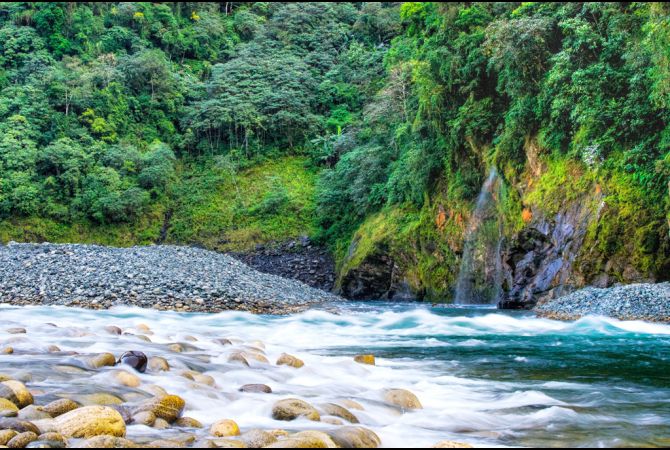
Dibang River. Photo with thanks from Global Post, Scot Ligare
The usually reticent MoEFCC (Ministry of Environment, Forests and Climate Change, MoEF earlier) too had issued a strong-worded rejection to this scheme in August 2014, stating that 10 meters reduction is nothing in the face of what is being lost. The rejection letter stated: “Such a marginal reduction in requirement of the forest land (445 hectares reduction, reducing forest requirement from 5056 hectares to 4577 hectares) for the project may not be able to reduce the adverse impact of project on such a biodiversity-rich mature forest ecosystem to the extent which could make the project environmentally as well as socio-economically viable in forest dependent tribal society of Arunachal Pradesh”.
This letter from the same ministry certified that the 10 m reduction proposal still leaves the project environmentally, socio-economically unviable. So an environmentally and socio-economically unviable project has been recommended clearance by the statutory FAC (and also the separate recommendation a week earlier by the same MEFCC’s Expert Appraisal Committee on River Valley Projects)!
This shows that the decision of FAC is devoid of merits, will invite huge opposition from Arunachal Pradesh, Downstream Assam, North East India, and even beyond and will not pass legal scrutiny. The decision seems to have been taken under pressure from the political masters. Union Power Minister Piyush Goyal has been dreaming of clearance to this project, as is clear from his road map published on completion of 100 days of office for the new NDA government[2]. He has also been pressurizing the MoEFCC to clear the project by hook or by crook. The FAC was reconstituted and the reconstituted FAC has obliged the minister in its very first meeting. In the process, the entire FAC has violated its mandate and should be held accountable for this.
Regrettably, MoEFCC seems to have become the willing punching bag of not only above-mentioned ministries, but even unrelated ministries like Ministry of Mines and Minerals, Ministry of Steel ,etc., whose ministers and Secretaries were present for the meeting: “to Expedite Clearances”. (Incidentally, when was the last time we heard MEFCC resisting such arm-twisting, or forthrightly suggesting any pro-environment measures to other ministries?)
Before the minutes of the September FAC meeting were out on Oct 22, 2014 (there was an inordinate delay this time, raising suspicion of negotiated minutes and again breaking all norms of conduct), there was discussion in media that Dibang was cleared, but even the hard-core skeptics believed that this recommendation must have come after a 20 meter or 40 meter height reduction, for obvious reasons.
But the FAC seems to have outdone itself. As stated above, the recommendation has come at 10 mts height decrease, for which the FAC had rejected the project and MoEF had issued a rejection letter in the past.
As we discussed in detail in our last blog on Dibang project, the twice-rejected project was up for discussions again in Sept 2014 only after considerable arm-twisting of the MEFCC by the Cabinet Committee of Investment, Ministry of Power, Project Developer NHPC and Arunachal State Government. This time it was for a supposed sensitivity analysis (done by the developer!)for studying the feasibility of reducing the height of the project upto 40 meters from its original height of 288 meters.
This sensitivity analysis was not shared with anyone, not even the FAC members till the day of the FAC meeting, breaking all codes of conduct of transparency, participation and informed decision making in governance. SANDRP wrote about this to the Minister and Secretary of MoEFCC as well as the Member of the FAC, but received no response.
Looking at the minutes, it is clear that the FAC members have lapped up the logic presented by the developer and the Ministry of Power which in a nutshell says that “10 meters reduction is sufficient as the ratio of forest land required per MW is lowest at 10 meters reduction.” This twisted logic reduces all decision making related to forests, even biodiversity-rich forests supporting endemic, unstudied species, local protests, downstream impacts etc., to mere number crunching of forest per MW. This criteria alone cannot be the basis for decision for forest appraisal committee.
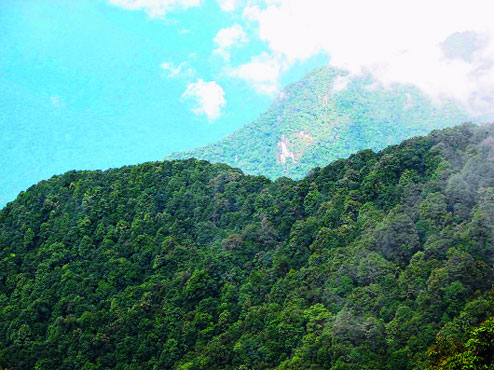
Dibang Valley Forests Photo: The Telegraph
As per the sensitivity analysis by NHPC, the ratio forest land required per MW for 40 meters reduction is 1.67 MW/ hectare, which is same as no height reduction and 1.78 MW/ hectare in case of 20 meter reduction. In terms of tariff, for 40 meters reduction, the power tariff will be 6.24 Rs./unit while it is 5.66 Rs/unit 10 meters reduction, 5.94 Rs./unit 20 meters reduction and 5.64 Rs. at zero reduction. The installed capacity will reduce by 120 MW (4%) MW for 10 meters reduction, 600 MW (20%) for 20 mt reduction and 780 MW (26%) for a 40 meter reduction.
Height Reduction
Forest land required
MW capacity per ha Forest lost
First Year Tariff: Rs per unit
Reduction in installed capacity
Nil (288 m)
5056 Ha
1.67
5.64
None
10 m
4578 Ha
1.59
5.66
120 (2880 MW)
20 m
4284 Ha
1.78
5.94
600 (2400 MW)
40 m
3703 Ha
1.67
6.24
780 (2200 MW)
The proponent said: “Decrease in dam height and consequent sacrifice of power generation beyond 10 mt is not commensurate with saving forest land.”
How did NHPC reach this conclusion? What is the value of the mature, old growth forest land considered by NHPC? Without knowing this, how can this conclusion be acceptable to the FAC? It has to be remembered that Dibang is not an exclusive hydropower project, but a multipurpose project with a flood moderation component and costs have to be borne for this.
While the proponent and Ministry of Power did their best for pushing the project, the FAC did not do its duty of stating that the sensitivity analysis put forth by NHPC is a sham as it does not consider the worth of the forest being lost.
In this sabji-mandi haggling, when FAC had all the watertight justifications for rejecting the project, it did not bat for even a 40 meter reduction, which could have saved nearly 1355 hectares of forests and would have had a marginal impact on other factors. Its unclear why this happened.
Only one of the FAC members tried to battle the case saying that 10-40 meter reduction still does not address the upstream and downstream impacts, especially considering the biodiversity rich area. The minutes do not disclose the name of this member, but it seems the brute majority (majority of FAC members are govt officials) took the official line, alleging “subjectivity” and said that “To reduce subjectivity, it is important to analyse the issue objectively on objective parameters”. Forgetting that this is Forest Appraisal committee, not Power Developer Committee.
This is ironical. It was indeed the duty of the FAC to appraise the project “objectively” based on issues like destruction of 3.24 lakh trees, invaluable forests, unstudied biodiversity, rich wildlife and several Schedule I species, community dependence, traditional rights, downstream impacts, climate change impacts, options assessment, etc. But it did nothing of that and has in fact recommended the project “subjectively”, bowing to pressures outside their ambit.
Clearly, per MW forest land required and per Unit Tariff from a project are anything but objective criteria for FAC. FAC is supposed to apply its mind to a number of issues like the ones above. If FAC was not supposed to apply its mind to these aspects and its judgment, there was no need for an FAC, Power ministry and developer could have taken the decision independently.
The FAC decision does not address any pertinent issues raised by the same FAC while rejecting the project, it also does not address downstream impacts on Assam or assume any value for a rich forest. There is no discussion why 20 meters or 40 meters reduction is not seriously considered by FAC. Decision-making based on such biased, proponent-driven criteria is bound to be open to legal challenge and public protests.
Sham consideration of Downstream Impacts About Impact of the project on Dibru-Saikhowa National Park, the User Agency said that the issue was considered by EAC in its meeting on the 16th September (Please note this is just 6 days and 5 working days back from FAC meeting. There is no chance of minutes being firmed up by then. They were not in open domain in any case) and the EAC has recommended clearance based on the fact that there is less than 1 meter level fluctuation at DSNP.
This claim in any case is patently incorrect, again a case of project-friendly, anti-environment decision-making. The level fluctuation at DSNP can go way higher than a meter, anywhere from 7-8 feet every day in lean season, according to the studies considered by the EAC of the MEFCC itself. This has been pointed out by SANDRP to the EAC as well. There has been no study of the impacts of this project on downstream Arunachal Pradesh or Assam. The developer seems to assume that Dibru-Saikhowa is the only part of Assam worth considering.
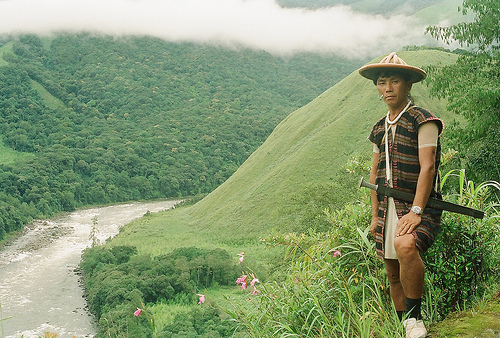
Dibang Valley tribes Photo from go ibibo/dibangvalley
There is no compliance under Forest Rights Act (2006) for such a massive project and despite this, FAC under some supposedly progressive members working on tribal issues, does not bat an eyelid before recommending clearance!
To conclude, pricing mature, biodiversity-rich forests in terms of per MW terms is an insult of those forests, the communities that depend on them and to the mandate of FAC. Downstream impacts of Dibang project are not studied, the impacts on Dibru-Saikhowa are based on compromised studies.
There is no merit in this decision from the newly appointed FAC which includes members also from reputed environment protection organizations in North East and from Tribal Welfare groups like Friends of Baripada. It is also sad to see that there is no dissenting note from a single member. The unnamed member who expressed dissent in the meeting has not written anything about this in public domain.
Decisions like Dibang lay further foundations for poor, pro-developer, anti-people, anti-environment decisions taken due to pressure from proponent and other ministries. Such decisions will not be legally tenable, nor acceptable to affected communities, nor good for sustainability and equity. In fact, by such reversals, FAC decisions are losing their sanctity. FAC has done this in the past too in case of Kalu Dam in Western Ghats which would submerge 18 villages and 1000 hectares forest.
Isn’t it ironical that the new government changed the name of the MoEF to MoEFCC but is sanctioning massive projects like Dibang which will have far reaching impacts on Climate Change as well as adaption and mitigation abilities of the affected communities? Without even considering these aspects or even mentioning them?
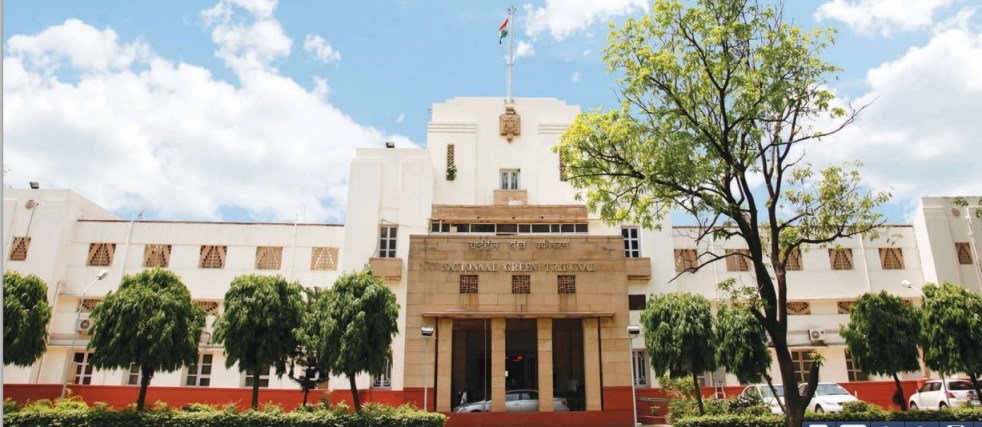
The National Green Tribunal, NGT marked its 4th Foundation Day on 18 October 2014, with an impressive fanfare. A full day function was organized at the Plenary hall of the capital’s iconic Vigyan Bhawan. NGT in this short span has acquired a formidable reputation as a unique, vibrant, active institute with independent & unbiased mind and forthright, quick redressal of petitions that come to it.
The function in two separate sessions, one in the forenoon and the other in the afternoon (a Seminar) was attended by large number of government officials, judicial officers, advocates, law school students, NGT petitioners and office bearers and members of the NGT Bar association.
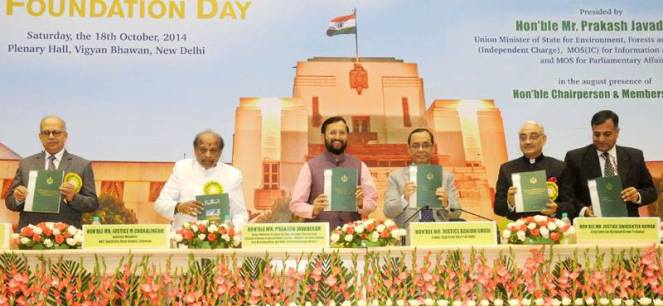
NGT Foundation Function on Oct 18, 2014 (Source: FB page of Information and Broadcasting Ministry)
Invited dignitaries included Mr Justice Ranjan Gogoi (Judge, Supreme Court), Prakash Javadekar (Union Minister of State for Environment, Forests and Climate Change) and Ashok Lavasa (Secretary, MoEF&CC) in the forenoon session and Mr Justice Sudhanshu Jyoti Mukhopadhaya (Judge, Supreme Court) and Piyush Goyal (Union Minister of state for Power, Coal and new and renewable energy). Mr Justice Swatanter Kumar, the Chairperson of the NGT, Mr Justice Dr. P. Jyothimani, Judicial Member, Principal Bench, NGT, Prof. R. Nagendra, and Dr. D.K. Agarwal, Expert Members at the NGT also spoke and graced the dais.
The function included, in addition to the addresses by the invited dignitaries, the release of 2nd issue of NGT International Journal; the launch of new NGT Website (in the first session) and address by invitee experts (in the second session).
In the first session Mr Javadekar informed the gathering about his political beginnings from a water pollution struggle activist against factory pollution and Mr Lavasa categorically stated that the NGT is playing an extremely crucial role and that there is no move to dilute its powers in any manner. It was in the second session that very controversially one Mr M.K. Pandit was invited to speak as an invited expert.
The Minister of State for Environment, Forests and Climate Change (I/C), Shri Prakash Javadekar lighting the lamp at the 4th Foundation Day function of the National Green Tribunal, in New Delhi on October 18, 2014. The Secretary, Environment, Forests and Climate Change, Shri Ashok Lavasa and the Judge, Supreme Court of India, Mr. Justice Ranjan Gogoi are also seen (Source: FB page of I&B Ministry)
Mr Pandit began with highlighting how recent and how fragile the Himalayas were and that a 8+ richter scale earthquake in central Himalayas was round the corner that could flatten Dehradun. Very soon in his almost 25 minute speech changed track as if on a cue to how great the hydropower dam projects in the Himalayas were for the power security of the country. The Union Power Minister had by then just joined the function to nod in full agreement with all that the Mr Pandit was narrating. The audience on the other hand was left perplexed as to what was happening?
An invited speaker was eulogizing the great merits of high dams receiving approving glances from the power minister on an NGT seminar whose topic was “Natural Disasters, Environment & Role of NGT with special reference to Uttarakhand, J&K, Assam & Himachal Pradesh”. Clearly something was amiss, somewhere?
Secondly, Mr Pandit is not a neutral expert, but an interested party. As leader of scores of pro hydro Environmental Impact Assessments that he has led as part of the CISMHE[1] team (Center for Inter-disciplinary studies of Mountain and Hill Environment) has earned them millions as they also continue to mint more money. Typical of Indian EIAs, no EIA done by CISMHE has ever raised any difficult questions for the developers. It has also never concluded that any of the projects is unviable. CISMHE EIAs are as shoddy, incomplete and inadequate as any other[2]. For example on Luhri HEP, the CISMHE EIA was so problematic that even the Ministry of Environment, Forests and Climate Change’s Expert Appraisal Committee on River Valley Projects and the World Bank found it inadequate and unreliable.
Interestingly, CISMHE website says: “Ministry of Power, Government of India established CISMHE as an R&D Centre in power studies in environment in recognition of its excellent past performance”. This means that there is also conflict of interest here in CISMHE doing EIAs, since it has been set up as an R&D Centre by Ministry of Power, that is itself a promoter and developer of hydropower projects. No wonder, Mr Pandit said what the Power Minister wanted to hear and Power Minister made no efforts to hide his approval of what Mr Pandit was saying.
Very strangely, Mr Piyush Goyal claimed that Tehri dam was an example of good project in the Himalayas that saved Uttarakhand in the floods of June 2013. Mr Goyal should know that this claim had absolutely no basis and even an Expert Body appointed by the Supreme Court of India has shown, after listening to THDC, CWC and others that such a claim has no scientific foundation. Mr Pandit did try to support the unfounded contention of Mr Goyal, but the minister asked him to keep quite.
It became clearer, when a pointed question asked by Shri Manoj Misra of Yamuna Jiye Abhiyaan about what would have been the Tehri dam scenario if the Uttarakhand high rainfall event had occurred in the peak monsoon months of July, August or September and not on 16 June 2013 (as in fact happened in Sept 2010, when Tehri created a havoc in the downstream, damaging its own Koteshwar project[3]), when the dam was almost empty and only beginning to get filled, elicited an evasive response first by the Union Minister (we cannot have structures planned for every 365 days in a year). And later when Pandit ji tried to answer, he was asked to shut without him being able to even respond to the other two questions relating to how does he reconcile to the fact of a high intensity earthquake visiting a region where he had been advocating the dams; why was USA (as also some other countries), the mecca of large Dams bringing many of its dams down?
In any case, Mr Maharaj Pandit was contradicting himself, because he said something totally different in his article in The Hindu soon after the Uttarakhand disaster of June 2013: “Most downstream damage in otherwise flood-free areas is caused by dams and barrages, which release large volumes of water to safeguard engineering structures. Dam operators often release more water during rains than the carrying capacity of downstream areas, causing floods… Hydropower policy must consider building fewer dams and prioritise those that have the least environmental and social costs. Independent and serious monitoring of the catchment area treatment plans proposed by Forest Departments with funds from hydropower companies needs to be carried out and reported to the Green Tribunal.” In fact then in June 2013, he was on TV channels almost every night, talking about how Himalayas have the highest dam density in the world and that is such a big invitation to disaster! But he seems ready to change his stand to please the minister or the hydro project developers.
It seems as if Mr Pandit had been invited to justify the building of dams in the Himalayas in front of a large gathering of impressionable judicial officials and young student minds. It is possible that it was also intended to influence the minds of NGT members (judicial and experts) and other persons from judiciary in the face of a number of proposed dams being challenged before the various NGT benches and courts.
If a proper seminar was indeed planned on such an important matter, then there should have been several speakers on wide range of perspectives and topics and not just one speaker with conflict of interest and a clear agenda? The only other technical speaker, Dr R. Nagendran, an expert member with NGT southern bench spoke sensibly on how unscientific management of sanitary projects in hilly regions lead to parallel “Faeco-microbial disaster” which is difficult to tackle.
Mr Ritwick Dutta, secretary of NGT bar association said that the information about Mr Pandit speaking from NGT platform was not available in public domain and it is not clear how he was selected as a speaker.
Such blatant pro hydro bias in an NGT foundation day meeting is certainly unwarranted and out of place for an NGT function. An NGT platform should not have been allowed to be used for such biased presentation. We hope the bias apparent in this aberration is just that, an aberration and does not run deeper, considering that some hydropower professionals have been appointed on NGT benches.
We hope that at least in future the NGT, a statutory judicial body, otherwise doing a great job for the protection of environment, would be more careful in not letting its platform get used by the vested interests. The formidable reputation that NGT has acquired with a lot of remarkable orders should not be allowed to be affected by this one incident. NGT indeed needs to be strengthened in every way and not weakened in any manner.
It would also help if the NGT were to distance itself from this biased episode.
Pushp Jain, EIA Research and Response Centre (http://www.ercindia.org/, Pushp Jain pushp@ercindia.org) & SANDRP (based on interviews with those who were present at the NGT foundation day meeting)
Even as the government is set to review 6 of the foundational environmental laws of India, the Union Ministry of Environment, Forests and Climate Change (MoEFCC, formerly MoEF) has been issuing a slew of orders, circulars and Office Memorandums (OM)[1] lately for “streamlining” Environmental and Forest Clearance process.
Having said that, there is no doubt that the system of Environment and Forest clearance needs to be made stronger, accountable, transparent, democratic and informed. Ironically, the only way the government has sought to do this is to make the system more industry-friendly. A vast majority of orders passed lately by MoEFCC are pro-industry and anti-environment. Drop by drop, such orders and circulars are making it impossible to rely on the original Environment acts and Notifications as the orders have interpreted Acts in convenient ways. At the same time, the misleading, non-compliance, hiding of information, willfully providing wrong information is rampant from project proponent side, with MoEF taking no firm action. We have illustrated this with very few examples below.
When this is a known case, accelerating clearance process, ignoring necessary studies and bypassing checks and balances is only accelerating our fall to the bottom.
Take an example of OM issued on the 7th October, 2014 titled “Seeking additional studies by EACs/ SEACs during appraisal of project beyond the Terms of Reference (ToRs) prescribed under EIA[2] Notification 2006”(No. 22-A3/ 2O14-IA-III).[3]
In a nutshell, this OM states that “It has been brought to its notice” that Expert Appraisal Committees (EAC for short. EAC is at the center, considering Environmental Clearances for bigger projects) and State Expert Appraisal Committees ( SEAC for short. SEAC is at State level, considering smaller projects for Environmental clearance) have been asking for “additional studies which do not form a part of TOR” and this “delays the whole process and is against the spirit of EIA Notification (2006)” It further says that EAC/ SEAC should address all issues at the primary scoping clearance stage [4]itself, based on Form I submitted by the proponent and meeting of proponent with EAC and should ensure that “no fresh issues are raised later” and that additional information/ additional studies should be asked only if it is proved to be “inevitable”.
This OM clearly seems to be brought out due to pressure from project-related ministries state and industry lobby. We need to understand that EACs and SEACs were asking for Additional Studies in very rare cases. EACs like the one on River valley and Hydropower projects have a clearance record of 100% and rarely asks for additional studies. So what was the need for this specific OM?
This OM does not serve any purpose other than discouraging the committees from asking additional information or studies post TOR stage and is a regressive step.
In reality, the very need for asking such additional studies or information is due to severely compromised information provided by the proponents themselves at the Scoping Clearance stage.
Looking at the EC process it seems hiding information, providing false information, misleading the EAC and even committing blatant violations has become the norm rather than an exception. In very rare cases, when this is exposed before EAC, they have asked for additional studies (instead of taking any strong action, for example rejecting the application or postponing decision till the studies are done, as per the Law and prudent decision making norms). The OM is effectively stating that EACs should process applications based on any shoddy information they receive and should close their eyes even when critical issues surface later in the process. This is like accelerating a flawed process, in a race to the bottom.
Rather than passing such OMs, the Ministry needs to ensure that all the steps of EC process are complied with. That’s not the case today and that’s a more pressing problem than the additional studies. It is this non-compliance that is damaging the “Spirit of EIA Notification 2006” about which the MoEF seems to be least concerned. There is no need for any additional OMs to fix these issues, only real concern for spirit of EIA Notification and other related laws.
Below we give a few examples which indicate the gaping holes in the current system is and how “not asking for fresh information or additional studies” will result in severely flawed environmental decision making.
Basic Project Information (Form I & PFR) has been incorrect, false or incomplete on many occasions:
The OM states that the EACs/ SEACs should base their TORs on basic project information (in the form of Form I & Pre-feasibility Reports – PFR) submitted by the proponent and a brief meeting with the proponent. (Note here that there is no role for any external agency and the Ministry is fully relying of the proponent for project information submitted at this stage.) Form I asks limited questions and a number of times, the answers provided by the proponent are incorrect, incomplete or misleading. Seems to be a sure way to make wrong decisions, doesnt it?
For example:
Sonthi Lift Irrigation Scheme in Karnataka, the Form I took the MoEF for a royal ride. The project was already significantly finished, in violation of the EIA notification and EPA (1986) when the officials approached MoEF for “Scoping” Clearance! And even after pointing out all the blatant violations, the MoEF accepted the project, with no action taken again the violators (Karnataka Neeravari Nigam Limited). We had pointed this out at many stages, see SANDRP’s submissions and notes: https://sandrp.in/Sonthi_Lift_Irrigation_Nov_2013.pdf
In case of 1750 MW Lower Demwe Project in Arunchal, which is part of a string of projects in Lohit Basin with huge cumulative impacts and downstream impacts on Assam, the Form I says “No cumulative impacts”.
In case of 72 MW Rolep project in Sikkim, Form I does not clarify that the project falls is a high landslide and flashflood zone, when landslides and flash floods have occurred at the site itself.
In case of Shirapur Lift Irrigation Scheme in Maharashtra, the Form I was a joke as the half-finished project with canals has been sitting idle for many years in Solapur, blatantly violating EPA,1986. Not only does the Form I hide that the project is nearly finished, is also states that the project “does not affect important ecological areas” or “areas for sensitive species”, when the canal of the project will take 92 hectares from Great Indian Bustard Sanctuary. Incidentally, the MoEF has a special plan for protection of the Great Indian Bustard! (See SANDRP’s submission at TOR Stage https://sandrp.in/irrigation/ShirapurLIS_SANDRP_Sbmsn_to_EAC_Jan2013.pdf)
These are only a few indicative examples and the violations are on a huge scale. We and others have pointed this out to the EAC and MoEFCC over the years, but no action was taken, thus encouraging the developers. We have not heard of a single instance when the MoEFCC has rejected the proposal based on problems with Form I/ PFR and as per the Clause 8 (vi) of EIA Notification 2006, which is reiterated in the present OM.
And now the Ministry wants EAC to take action only based on such information, and without any further studies!
No action is taken when EIA is prepared violating granted Terms of Reference (TOR):
The Ministry is saying that asking for additional information is against the spirit of EIA Notification 2006. The same Ministry does not bat an eyelid when projects are recommended EC (Environment Clearance) by EACs even when they violate the TORs based on which the project received first stage clearance! Is that not against the spirit of EIA Notification?
Here too, SANDRP has pointed this out a large number of times, but this has not been acknowledged in most cases. Some examples:
TORs issued for Sach Khas Project in Himachal Pradesh had specifically asked for study of impact of sudden release of huge quantities of water for generating hydropower (Peaking) on biology of the river. This was not done by WAOCOS, but the EAC and hence the MoEF did not consider this point, even after SANDRP made a specific submission on it. See SANDRPs note: https://sandrp.wordpress.com/2014/08/19/sach-khas-hydro-project-in-chenab-basin-another-example-of-wapcoss-shoddy-eia/
Again this is just an indicative list, showing the extent of real problems.
No action was taken when EIA was plagiarized
There have been multiple occasions when EIA is exceedingly shoddy and even plagiarized! In these cases too, although it has been brought to the notice of EAC/ MoEF, no action has been taken.
For example: In case of Mohanpura Irrigation Project in Madhya Pradesh, plagiarising in WAPCOS EIA was pointed out to the EAC by SANDRP and individual researchers (see : https://sandrp.wordpress.com/2013/11/15/mohanpura-dam-in-madhya-pradesh/) but the MoEF took no action against the agency.
No action was taken when EIA provided misleading information
There are several such examples but the most recent example, is 3000 MW Dibang Project in Arunachal. The EIA agency and Project Proponent has issued misleading information about the impact of the project on the downstream Dibru Saikhowa National Park in Assam. The report states that the water level rise or fall at Dibru Saikhowa due to sudden water release from all projects in the upstream Arunachal Pradesh will be less than one meter, when a different study also considered by EAC shows that this fluctuation when all upstream projects hold back and release water will be 7-8 feet (more two meters)! SANDRP had pointed this discrepancy, but the EAC did not even take a note of this in the meeting and actually recommended clearance to this project! (https://sandrp.wordpress.com/2014/10/06/manipulating-environment-forest-clearances-for-dibang-project-deja-vu-lshp-history-repeated-will-it-be-tragedy-or-comedy/)
To reiterate, the above is a brief, indicative list. SANDRP and other organizations routinely look at the EC process, and we are overwhelmed at the level of non-compliance happening at the proponent end as well as EAC and MoEF level.
The affected communities see how their submissions are either misrepresented in the EIAs, or just not considered by the EAC even when objections are loud and clear in Public hearing reports (like in case of Dibang EIA).
MoEFCC further denigrates the Public Consultation Process
By ordering that no additional information should be sought after TOR stage, the MoEF is deriding the importance of Public Hearing which take places as a part of the Environment Impact Assessment Study, after TORs have been granted. Like in the case of Dibang, major issues raised by affected people have not been raised either in Form I or in TORs or in the EIA and need additional studies.
Now by discouraging additional studies, the MoEFCC is suggesting that even public consultations are immaterial. No more studies, after TOR please! This is an insult of the public consultation process which should form the heart of appraisal and assessment process.
For the same reason, in many countries public hearing is conducted before granting Terms of Reference. In the absence of any such provision, simply stating that additional studies should not be recommended after TOR stage is a seriously regressive step.
Project application documents not availalble in public domain
For basic transparency in Environment appraisal process it is necessary that all the documents (Form 1 and PFR at TOR stage & EIA-EMP and Public consultation documents at EC stage) that accompany the application for environmental clearance are put out in public domain well in advance ( at least ten days) before the projects are discussed by EAC.
Ironically, MoEFCC does not have any legal requirement in this regard and it was Central Information Commission that in 2012 directed the MoEFCC to ensure that. But this is not happening. In fact the projects that are on the EAC agenda are many times not even listed on the relevant environment clearance website (http://environmentclearance.nic.in/).
When this was brought to the attention of the MoEFCC’s concerned officials and EAC, they have taken no action in most cases. The situation has particularly worsened since June 2014, after the new BJP-led government came to power at the centre. It is on areas like these that we need MoEFCC to be pro-active. ( Pass some OMs here!)
In the end The system of Environmental Appraisal and Clearance today lacks accountability, transparency, democratic norms and compliance. Some of the major reasons for asking for additional studies is when the Form I, PFR and EIA do not adequately address issues.
In order to bring in speed and accountability in the appraisal process, there is a need to:
Blacklist and debar EIA consultants which provide plagiarized, misleading or false data in EIA reports
Reject applications based on false or misleading Form I – PFR
Reject applications which do not conform with TORs granted
Consider submissions received from civil society and affected groups at the time of TORs and EC process carefully and consider these as inputs and help for a holistic appraisal, not as adversaries. Invite organisations/ individuals in the EAC meetings when those specific projects are discussed.
MoEFCC needs to ask EAC to show application of mind while appraising projects, submissions, public hearing processes and considering proponent’s response. This serious consideration by the part of EAC should be reflected unambiguously in the minutes of the EAC meetings.
MoEFCC needs to appoint as members and chairpersons of EAC only such persons with a track record indicating knowledge, experience and independence on environment issues. A recent NGT order asked MoEFCC to do exactly, this, but MoEFCC has yet to implement this order.
MoEFCC needs to ensure that all the relevant documents for projects on EAC agenda are put in public domain at least ten days in advance of the EAC meeting, as directed by the Central Information Commission. In absence of such documents in public domain, the EAC should not be considering the projects. (MoEFCC should in fact come out with a notification on this!)
Reject projects which have violated EPA (1986) and EIA Notification (2006). Here too, the MoEFCC regularizes blatant violations by passing OMs.
Most of the above is enshrined in the EIA Notification (2006) and the Environment Protection Act (2006) and there is no need for passing any OM for this, but such steps will automatically make the EC process not only efficient and swift, but also responsive, pro-environment and pro-people.
And this should be the main concern of Ministry of Environment, Forests and Climate Change.
[4] Scoping clearance stage is first stage of Environmental Appraisal Process when the EAC grants Terms of Reference (TOR) to the project based on which Environment Impact Assessment is carried out later
The state of Himachal Pradesh has a hydropower potential of almost 23,000 MW, which is about one-sixth of the country’s total potential[1]. In a bid to harness it, the state authorities seem to have gone all out without really even assessing the costs and impacts it will have on the local ecology and people. It has already developed about 8432.47 MW till now and is racing towards increasing that and in its way, displacing people, destroying forests and biodiversity, drying the rivers, disrupting lives and cultures in upstream and downstream, and flooding cultivable and forest land. The target of the State government for 2013-14 is to commissioning 2000 MW[2] capacity projects. The state and central governments are pushing for more and more projects, playing havoc with the lives of the locals and thus facing continuous agitations. This update tries to provide some glimpses in hydropower sector in Himachal Pradesh over the last one year.
The Ravi, Sutlej, Chenab, Beas & Yamuna, which form the major river basins of Himachal have been heavily dammed. These projects submerge and bypass the rivers, change the course, the flow and the silt carried by the rivers. The 27 proposed projects in the Chenab basin endanger the fragile ecosystem of the Lahaul-Spiti Valley. In the Sutlej, the nine major hydel projects of 7623 MW which are already running along the 320 km stretch include: 633 MW Khab (proposed), 960 MW Jangi Thopan & Thopan Pawari (re-bidding), 402 MW Shongtong Karcham (under execution), 1,000 MW Karcham Wangtoo (commissioned), 1,500 MW Nathpa Jhakari (commissioned), 412 MW Rampur (under execution), 588 MW Luhri (allotted)[3]. There are about 21 more proposed projects. The same is the case with the Ravi where about 30 projects are proposed to be built or are already functional.
From 1981-2012, more than 10,000 ha of forest land on which people had user rights, have been diverted for hydropower, mining, roads and other projects[4]. This does not include the thousands of hectares of forest land diverted towards projects like the Bhakra Dam before 1980.
On the one hand, the Ministry of Environment and Forests (MoEF) treats the locals like hindrances, saying that they cause damage to the environment by using the forests inefficiently, on the other hand, it approves big projects which cause hundred times more damage to the environment. There is no recognition of the ecological fragility of the landscape, and clearance from the MoEF seems like just a formality. Clearly, the MoEF and the state government are not interested in doing something for the people of the area, but in pushing project constructions to achieve targets at whatever cost it may require. This is also evident in the way the MoEF, without proper consultation, approved the state’s request for making the procurement of no-objection certificates (NOCs) from the Gram Sabhas a non requirement. MoEF itself had passed a circular in 2009, making it mandatory for project proponents to obtain NOCs of the affected Gram Sabhas and compliance to the Forest Rights Act 2006 before the diversion of forest land to non forest purposes. However, in 2012, the MoEF issued a letter which stated that there are no compliance issues with regard to FRA in Himachal Pradesh since the rights of the forest dwellers have already been settled under the Forest Settlement Process in the 1970s[5]. This is clearly wrong and not supported by facts or ground realities.
Taking away the rights of people on land without giving them adequate compensation has been a governmental trend. It is not enough to just grant monetary compensation to them. The land which could be put to various uses by the local is no longer his. The Gaddis, a shepherding community, rely a great deal on their rights over land as they need it for grazing. With the Forest Dept. making some areas inaccessible for them, their land has anyways decreased. In addition to this, projects like the Bajoli-Holi and the proposed dam at Bada Bhangal, which is sanctuary area now, and traditionally a grazing area for the Gaddis, will further take away from the available land.
But it is not only the loss of forest and private land which is the problem here. Another major issue is that of water. With the state giving increased priority to run-of –the –river projects, more and more water from the river is being diverted for longer stretches.
In the controversial Luhri project on the river Sutlej, the diversion of water into a 38 km long tunnel would mean the absence of free flowing river in stretch of almost 50 kms. The agreed amount of water to be left flowing in the river is 25% for the lean season and 30% in monsoon[6]. The project was initially supposed to be of 775 MW installed capacity and was to have two tunnels. This was challenged because higher environmental discharge was to be maintained in the downstream river. The capacity has been reduced to 600 MW and there will be only one tunnel[7].
But even this diversion would mean that villages falling within 50 km downstream of the project will not have access to its water like they used to. It will also lead to the warming up of the valley as the cool waters will be diverted into the tunnel. The environmental impact assessments (EIAs) have failed to address the effects of this. The EIA has also done no assessment of the impact of the tunnels on the land and people over ground. Locals have been agitating under the banner of Sutlej Bachao Jan Sangharsh Samiti, but the project is still on[8].
Another major drawback of the tunneling process is the danger it poses to the residing population and their groundwater sources. The Karcham Wangtoo project (1000 MW) in Kinnaur, which is the country’s largest hydropower project in the private sector (owned by the Jaiprakash Associates) was closed briefly in the December of 2012, due to leakage from the surge shaft and the water-conducting system, raising concerns about the safety of such projects and the absence of a monitoring body[9]. Because of the massive dam, the leakage was between 5-9 cumecs (cubic meters per second) or 5000-9000 liters per second, which is large enough to trigger massive landslides in the area. The company involved in the project will always try to get away saying that such things are unforeseen and it will take time for the project to stabilize. But in the meanwhile, who should be held accountable for the losses to life, livelihoods, habitats and environment due to this?
The same project involves a 17 km long tunnel passing under 6 villages The tunnell has affected water aquifers causing natural springs to dry up. This claim by the villagers was verified by the state’s Irrigation and Public Health department in a response to an RTI application. The official data showed that 110 water sources have been affected by this project. This information has come out only due to the proactive-ness of local people, but these issues are not even part of the impact assessments.
The concerns expressed by locals in the case of the 180 MW Holi-Bajoli project are quire serious. This project on the Ravi River has been given clearances under suspicious circumstances. It is being opposed by the local communities on issues of environment, violation of rights, and impacts on local livelihoods. People have also taken offense at the apathy shown to them by the state government. The tunnel for the project was supposed to be constructed on the right bank of the river, which is relatively devoid of habitation, but the powerhouse and headrace tunnel sites were later shifted to the left bank, on which rest most of the villages of the area. This decision was seen as flawed according to a report by the state-run Himachal Pradesh State Electricity Board Ltd (HPSEBL), which pointed out that it could have negative effects on the environment and the locals. The reason being cited for this is that construction on the right bank would take longer to be completed. GMR’s contention was that the right bank was weak and unsuitable, whereas the opposite has been confirmed by a Geological Survey of India report according to Rahul Saxena of the NGO Himdhara Environment Research Collective[10].
The protests which have been going on for four years now have been due to legitimate concerns raised by the locals of deforestation, loss of land and infrastructure and the loss of peace which would accompany the project. Earlier this year, women of four panchayats set up camp at the proposed site of the power house at Kee Nallah near Holi village to stage their protests. 31 of these women were arrested for protesting against the illegal felling of trees and the road construction of the project. They were taken to Chamba town which is almost 70 kms away from Holi and were detained for more than 24 hours despite appeals for their immediate release. Though they were released on bail the next day, they say that a lot of false charges have been filed against them. The district administration has taken no steps to resolve these issues[11]. In a letter to the Chief Secretary, the people have demanded that all charges be dropped against these women and justice be done about their demands. Despite continuous protests by the people the MoEF has given clearance to this project which requires the diversion of 78 ha of rich forest land and the felling of 4995 treesx.
The locals also say that change in the MoEF policy of NOCs enabled the Deputy Commissioner to issue a false certificate under FRA saying that no rights have to be settled on the land diverted for the project as it has already been done under the settlement process of 1970s.
Management glitches:
In the Chamera II and III projects on Ravi River, there has been much debate about the distance between the two being only 1.5 km without any water source in the middle. The operation of the Chamera II power station is completely dependent on the release by upstream Chamera III project. If the generation schedules of both are very different, there will be danger to the downstream areas. Last year it was observed that the schedules given by the Regional load Dispatch center were not coordinated, resulting in a dis-balance in the generation in both dams. In another instance, leakage was noted in the head race tunnel of Chamera III HEP.[12]
In a letter to the Chief Minister last year, environmental activists sought to know why there has been no committee set up by the State government for the control and monitoring of safety and water flows as is required by the Hydropower Policy 2006 of Himachal.
In another case of delay and mismanagement among many others, the Kol Dam on Sutlej River, the foundation for which was laid by former prime minister Atal Bihari Vajpayee in the year 2000, was due to be completed in 2008 but is not yet functional. The Majathal Wildlife Sanctuary area falls in the submergence area for the project and clearance was required from the National Board for Wildlife as the project would endanger 50,000 trees and the habitat of the ‘cheer pheasant’[13]. The project was finally granted approval by the Supreme Court in December 2013, given permission to drown the proposed parts of the sanctuary. The whole episode smacks of a scam when the project authorities say they forgot to get the clearance for submergence of the sanctuary and the forest & wildlife departments are ready to look away.
But due to continuous delays trigged by shoddy work and project management, the NTPC Dam project has still not been made functional. The delay is expected to be for at least another year, which would mean an additional loss of Rs. 150 crore. For about a year now the NTPC has been claiming that the filling of the reservoir would start, but they had to abandon that twice due to heavy leakages. There are also problems with the gates fitted inside the diversion tunnel and also additional repairs are needed in the tunnel.[14]
The Comptroller and Auditor General of India (CAG) has found that the hydro power projects are not adhering to the compensatory afforestation that was promised. Out of the projects it studied, it found that 58% of them have carried out no afforestation activities at all. According to the results of an audit, it was seen that only 12 companies had deposited compensation money out of which no work was done at all in seven of the projects. Even out of the 12, full afforestation was achieved on paper only in 2 of them[15].
Another major problem is that tunnelling and road construction generate huge amounts of muck and debris. These are not disposed off in the right manner. For example, in the Koldam, the net volume of muck generated is 2.27 crore cubic metres. If this was to be dumped in the Sutlej, it would lead to a raise in the level of the Sutlej by 2.20 metres along a length of 100 kms[16]. The project authorities, including the World Bank funded projects like Rampur and Nathpa Jakhri, find it easier to dump the muck into the river rather than transport and dump it properly. The MoEF, state government and all concerned are happy to not take any action against any of the projects for such blatant violations that everyone knows about and even when evidence of such violations are presented to them.
Small Hydel Projects (SHPs):
The view of the government regarding the non requirement of clearances for small projects is clearly unfounded, unscientific and unacceptable. If the authorities think that these projects cause no or little harm to the environment and the people, they are wrong. The fact is that a lot of the hydro power potential of Himachal Pradesh is envisioned to be realized through these small projects which are being indiscriminately built on even small tributaries of the major rivers, sometimes even the ones listed as negative (from fisheries perspective) for HEPs.
In a recent case, the 4.8 MW Aleo II project located on the Aleo nallah, a tributary of the Beas River, in Kullu district, made news due to the collapse of its reservoir wall in a trial run[17]. The Aleo II project was supposed to become functional in January 2014, but as the management started to fill the 12,000 cubic meter capacity reservoir, its wall collapsed when it was only 75% full. The water from the reservoir went straight into the Beas River, causing sudden rise in its levels till about 50 kms downstream. The management had not informed the panchayat or the public of Prini village which is situated next to the dam site before attempting to fill the reservoir, causing unforeseen danger to them and others downstream.
These small projects[18] also seem to be working without proper lease of land. In a report earlier this year, it was found that out of the 55 projects examined below the 5 MW capacity in Himachal Pradesh, about 47 of them are operating without proper lease of the forest land that they are using. It was found after an RTI was filed regarding this that about 35.973 ha of land in the Chamba district was being used without lease by 13 HEPs. The case was similar in Kangra with about 43.5035 ha being used without lease. This just goes to show that the State regulations regarding hydro projects are not strict and definitely faulty. The land is being ruthlessly exploited by private and public sector companies which have a bullying attitude towards the local population[19].
Excessive electricity? Reports suggest that the state requires about 1200 MW of power, but it is producing so much more that it has no buyers. It is not surprising to see that projects like the 1000 MW Karcham Wangtoo in Kinnaur are facing lack of buyers for electricity. The JPHL has not been able to sign long term Power Purchase Agreements (PPAs) with any power distribution company (discoms). As a result, it is selling electricity through short term agreements or at lower prices. This is the situation with a lot of other plants in the state, both private and public. Even the state is facing difficulties selling its surplus power and as a result has to sell it at lower prices. According to a 2012 report of the CAG, the revenue earned from selling surplus power in Himachal has dropped significantly over the past years. The reason given for this is mostly the increased cost of production which has made power more expensive and the discoms, which are already in debt are thus unable to buy it.[20] Even after facing such losses, why is it that the Himachal government is pushing for more and more projects, destroying the rivers, forests, biodiversity, livelihoods and environment?
To add to the worries of the local people and environmentalists, in a recent announcement, the Chief Minister has announced that there is no NOC required from the fisheries dept, IPH, PWD and the revenue dept for small projects[21] Also, to make things easier for the project developers, it was announced that the small projects below 2 MW installed cpacity, were now liable to give the government only 3% of free power for a period of 12 years, as opposed to the earlier 7%xvi.
In an interesting development of the first ever Cumulative Environmental Impact Assessment (CEIA) in the state, a study of 38 hydro electric power projects in the Sutlej basin, the recommendation has been to designate the “fish-rich khuds, mid-Sutlej, eco-sensitive Spiti, Upper Kinnaur area and 10 other protection areas as a no-go zone for hydro projects”[22]. The CEIA is incomplete, inadequate and makes a lot of unwarranted assumptions and uscientific assertions. Even if this recommendation implemented, several projects in the Sutlej basin are still under way and the government seems to be doing nothing to stop them. There is also an Environmental Master Plan (EMP) prepared by the Department of Environment and Scientific Technology, and approved by the government which claims to have identified the vulnerable areas of the State[23]. This EMP is being adopted by the State for its developmental planning for the next 30 years. But the impact of this is yet to be seen, assuming that it does not turn out to be one of those plans which are never implemented.
River Netravathi in the upper reaches Photo: Parineeta Dandekar, SANDRP
Like a many-headed serpent, Yettinahole (Netravathi) Diversion Project refuses to die. Every time one of its head is cut, it grows a new head.
Following criticism of the Project Report [i](based on which Karnataka Government had already made budget provisions in 2013), a new DPR of the project has been prepared in December 2013 by EIT RIP JV [ii] which tries to amend blatantly illegal stands taken earlier. However, after scratching the surface, it is clear that the DPR is just as illegal and dangerous as the interim Project Report was.
Yettinahole, or rightly the Netravathi Diversion Project has always been a political project, visualized to earn political mileage and brownie points. Veerappa Moily originally from Dakshin Kannada, moved to Chikkaballpur constituency in 2009, from when he started pushing the project strongly. As the Environment Minister, Moily also laid the foundation stone of the project in Chikkaballapur, just before the Loksabaha Elections in March 2014 [iii]. Strategically, the stone was laid in Chikkaballapur and not in Hassan, from where the water actually be diverted. No political party has opposed the project consistently.
Even before a complete DPR, Karnataka 12-14 Budget of the Congress Government allocated nearly 2800 crores for this scheme. The current govt lost no time and directly awarded contracts worth nearly 1000 Crores to Hindustan Construction Company, in a joint venture with GVPRL, without any clearances or any public consultations[iv].
Before the laying of the foundation stone of the project, SANDRP had presented a detailed analyses if the Project Report proving how the project is violating Environmental Protection Act by evading Environmental Clearance.[v] A number of eminent personalities from Karnataka had jointly written to the MoEF to appraise the Project for EC. In response to this, the MoEF had written to the Karnataka Govt and Karnataka Neeravari Nigam Limited (KNNL), seeking clarifications on the nature of the project. Although this move was triggered due to the submission made by SANDRP and other groups, we never saw KNNL’s response despite specifically asking for it. We only saw MoEF’s lame justification, bailing out KNNL and Karnataka Government and turning a blind eye to the huge impacts of the project.
Students protesting against Yettinahole Project Photo: DaijiWolrd
When Karnataka CM Siddramaiah was about to lay the foundation stone along with Mr. Moily, SANDRP wrote an open letter to him[vi], as the Environment Minister, asking a direct question as to how can he himself formally initiate a scheme which is blatantly violating laws governed by his own Ministry. Following this, the ceremony was cancelled[vii], only to be held surreptitiously later.
During all this, there was huge and unprecedented opposition to the project from Dakshin Kannada and Mangalore. Farmers, students, workers, women groups all came together, united in their opposition against a project that would divert their Netravathi. People stopped trains, organized hundreds of dharnas, boycotted voting, organised signature drives, etc. Leaders in all hues came together in a rare show of discontent. On the day of foundation stone laying, people in Dakshin Kannada voluntarily observed a strict Bandh. Funnily enough, even the beneficiary district of Chikkaballpur opposed the project as the 2.82 TMC water that it would be getting after so much of fanfare was too meager, in the face of the grand promises of lush fields and no worries.
More Protests against the Project Photo: The HinduProtest in Hassan against Yettinahole Photo: The HinduProtesters stopping a train Photo: News Karnataka
Despite these unprecedented protests and in the face of 2014 Loksabha Elections, foundation stone was laid on a dais in Chikkaballapur. The dais was burgeoning under the weight of several political strongmen.
This event stands out as an example of undemocratic behavior for an elected government.
Foundation Stone laying Ceremony Photo: The Hindu
The Government of Karnataka did not hold a single public meeting in Dakshin Kannada, trying to understand and address people’s apprehensions. When eminent personalities from Dakshin Kannada planned to hold a National Consultation on Yettinahole Diversion in NIT Suratkhal in August 2013, the meeting was cancelled at the last minute due to political pressure on the organizers.
As things stand now, the project does not have Environmental Clearance, Forest Clearance, Wildlife Clearance, has not started rehabilitation and resettlement of over 10 villages that it will submerge, but its work can start at any moment.
SANDRP accessed the Detailed Project Report (DPR) of the Project from local activists, who obtained it under RTI. Analysis of the DPR reveals a number of issues. KNNL has drastically changed the initial Project Report, avoiding mention of contentious issues we had raised like hydropower generation, irrigation component, etc., thus strongly vindicating the objections raised. However, going further, it is clear that these changes are cosmetic. Deeper problems and severe unstudied impacts of the scheme remain.
SANDRP analyzed 4 volumes of the DPR and Annexures of the Project. What follows is some myth busting about the Yettinahole Detailed Project Report.
1. What is the Current Project? Is it different from the last Project Report?
While the Project Report of June 2012 was titled: ‘Scheme for diversion of flood water from Sakleshpura (West) to Kolar/ Chikkaballapura Districts (East)’, the DPR dated December 2013 has taken out all the random stuff on Kolar and Chikkaballapura and simple calls it as “Yettinahole Project”.
Current Project as per the DPR, is divided in Two Phases.
Phase I: 8 weirs will be built in the Western Ghats, on the streams Yettinahole, Kerihole, Kadumanehole and Hongadahalla. It also includes several pump houses next to weirs, raising mains that run for several kilometers are nearly 5 kms wide, 3 Delivery Chambers (DC) and a gravity canal taking waters from Weirs 3, 4 and 5 to Doddanagara (DC 3) in the Western Ghats forests.
From the weirs, 85 cumecs (Cubic Meters per second) water will be drawn 24*7 in the six months of June-November.
This will be delivered through 4 Delivery Chambers with the last DC: DC 4 at Haravanahalli.
Phase II: From DC 4, water will be diverted to a canal running 274 kilometers, cutting across the ridge line dividing Cauvery and Krishna Basins and culminating at a Balancing Reservoir at Byragondlu and Thumbadi, in Koratgere Taluk. Thumbadi Reservoir will store about 3 TMC water and will submerge nearly 700 hectares of land and three villages[viii] while Balancing Reservoir at Byragondlu will store 5.7 TMC water and will submerge 7 villages [ix]and an area of about 2000 hectares. The Reservoir at Devaranyadurga, which was proposed in the Project Report has been replaced by these two.
It includes construction of several storage tanks and reservoirs for en route water supply. It will also delivery water to T.G. Halli and Hesarghatta Reservoirs, which supply water to Bangalore. It also plans to supply water to Devanhalli Industrial Area.
The project envisages constructing 7 additional storage reservoirs and 10 major canals. Water will also be used to fill morethan 500 Minor Irrigation (MI) Tanks in many districts and taluks.
It is amazing how the project envisages filling MI Tanks to 50% capacity: The DPR says that water will be pumped and released to the highest point and an additional sluice gate will be made to all MI tanks to let water flow into the cascading MI tank. This sounds highly impractical.
The project also includes constructing over 100 bridges in villages and nearly 100 road brides on major roads.
So although details have changed, the basic of the project remain the same. There is no change in Western Ghats, except for the fact that not 24 TMC, but 47 TMC water will be pumped now!
Survey markings in Sakaleshpur on peoples homes. People had no idea why the survey was carried out and no information was given. Photo: Parineeta Dandekar
2. What is the cost of this current Project? Can the cost be borne easily by KNNL or Karnataka Government?
The cost of the Project as per DPR stands at nearly 13000 Crores as per 12-13 price line. This exceeds the entire 13-14 years’ budget of the Karnataka Water Resources Department, which stands at 8007 Crores and is nearly five times the annual budget of KNNL, the implementing agency.[x] This is a colossal amount of money to spend to convey approximately 7 TMC water to Kolar and Chikkaballapur and other nonspecific projects.
3. Who are the Main Beneficiaries? Will Kolar and Chikkaballpur really get 24 TMC water as promised?
The supposed beneficiaries of the project are several towns, villages, cities and industrial areas[xi] and No, Kolar and Chikkaballapur again lose out and get only about 7 TMC water.
4. Then who will be getting this water?
The DPR puts out a diffuse list of beneficiaries ( see Annex below) including Bangalore urban area through TG Halli and Hesarghatta Reservoir and the Devanhalli Industrial Hub. There are no population projections or future need calculations for this region like all other regions and at no place does the DPR say that water will go to Bangalore. However, TG Halli and Hesaraghtaa reservoirs are both used by the Bangalore Water Supply and Sanitation Board [xii]for Bangalore City and in the last Budget, the government had itself stated that water will be used for Bangalore Urban Area’s needs.
How Bangalore treats its local water bodies Photo: The Alternative
A review of beneficiaries:
Bangalore gets 3 TMC water: The DPR says that about 3 TMC water will be released to TG Halli and Hesargahtta Reservoirs and for the Devanhalli Area.
Minor Irrigation Tanks and hence irrigation gets maximum water at 9 TMC: Nearly 9 TMC water will be used for filling more than 500 MI tanks upto 50% of their live storage capacity. This water will be supposedly used for “groundwater recharge”. There are several participatory, cheap and sustainable ways for recharging groundwater, which seem to have been rejected in favor of long distance transfer. In any case, this groundwater recharge will be used for agriculture, as most of the agriculture there depends on groundwater and hence, the project qualifies for Environmental Clearance.
The project is being pushed for the drought affected taluks in Kolar Chikkaballapur and Tumkur and even a brief glance at the calculation shows that even in 2023-24, the drinking water demand of these places cumulatively will be just 12 TMC! Then why are we diverting 24 TMC water, double of the ten years’ estimate?
5. What is the basis for diverting 24.01 TMC?
The report provides no justification about why 24 TMC is supposed to be diverted. In fact, after population calculations and making provisions for drinking water supply for the beneficiary districts and villages, the DPR simply states : “This has resulted in a balance availability of 8.9 TMC” . This is a strange statement to make. What is meant by “balance availability”? Is there compulsion for diverting 24 TMC by hook or by crook from the Western Ghats?
6. 24 TMC Diversion? No 47 TMC Diversion!
The project envisages diverting 85 cumecs (Cubic Metres per second) water[xiii], purportedly for six months of June-November. The DPR states that pumps will function 24*7 during this period. Even a simple, back-of-the-envelope calculation indicates that 85 cumecs diversion leads to nearly 47 TMC diverted over six months and not 24 TMC, as is claimed.
7. Was there a detailed hydrological study to arrive at 24 TMC diversion?
The proponents have no flow data from individual streams. The 13,000 Crores project is to be based on shoddy hydrology data.
They have used gauge data from Bantwal across Netrvathi, which is approximately 60-70 kilometers downstream and in a completely different eco-region from the hills. This gauge data is simply extrapolated based on catchment area of each stream. This is highly unscientific.
The earlier Project Report used an entirely different method for calculating this yield, based in rainfall in individual catchments. Interesting to see that although to different methods were used by two different reports, divertible yield is exactly the same to the last decimal point of 24.01 TMC!
The fact of the matter is that there have been no scientific studies to find out the level of safe diversion. The DPR makes a fantastic statement in conclusion to the effect that:
“According to the revised computations, the divertible yield has been assessed as 22.14.TMC. However, Prof.Rama Prasad , who has conducted the Hydrology studies has opined that the yield of 22.14 TMC at 50% dependability is very much on a conservative side and 24.01 TMC of divertible yield is available across the streams. This has been taken note off and for the present proposal, 24.01 TMC of water has been considered as the divertible yield from the selected streams to proceed further regarding finalization of the scheme in total.”
This just shows the random way in which divertible yield has been fixed!
8. How about the downstream Impacts of this diversion, which was the main reason for protests in Dakshin Kannada and Mangalore? Were the impacts studied?
There has been NO assessment of downstream water needs or impacts of this diversion on the downstream people or ecosystems. The DPR just ‘assumes’ that there will not be any impact on downstream users of ecology!
This is evidently misleading. One example of the problem in such assumption is that the flow data of Hongadahalla maintained by KPCL (given in Annex) indicates that flow in streams like Hongadhalla in August near the gauging point, has not exceeded even 20 cumecs. However, the according to the DPR[xiv], arrangement has been made to divert a whopping 30 cumecs from Hongadhalla from Weir 7 during June-November. This means that in the downstream, the rivulet will be rendered dry.
9. Was Impact Assessment for Western Ghats conducted?
The project proponent has not even clarified as to what will be forest land required for diversion. The section on Impact Assessment in the EMP deals largely with the beneficiary region without dealing with impacts on Wesetrn Ghats at all. There has been no study on eflows as per the HLWG (High Level Working Group on Western Ghats/ Kasturirangan Committee Report)report, no study of estuarine fisheries, no study of drinking water needs.
Cornered Wildlife in Sakaleshpur, leading to crisis Photo: News 24 7
10. Will there be profound impacts in the downstream region?
Yes. Yettinahole Project will “divert” water out of the basin and unlike most other irrigation or hydropower projects, the water will be permanently lost from the basin. The ecosystem and livelihoods in the downstream are closely linked to the hydrology of the Netravathi. In fact even in June, which is supposed to be a “peak season” for diversion, Mangalore and other parts of Dakshin Kannada have been facing water shortages[xv]. In addition, there are several estuarine and riverine fishermen dependent on the Netravathi for their livelihoods. There are many industrial areas, SEZs coming up in Mangalore which will be needing more water. While there has been a prospective study of the population and water demand growth of the beneficiary region in the DPR, there has been not even a mention of Mangalore and its increasing needs in the future in the DPR, highlighting the bias of the proponents.
There are several functioning mini hydel projects on the individual streams as well as tributaries which depend on the assured flow from upstream. They have not even been consulted before this decision was taken.
Drying Thumbe Dam which supplies water from Netravthi to Mangalore town Photo: The Hindu
11. Will there be a severe impact on Ecology and Wildlife?
The project falls within 10 kms boundary of the Pushpagiri Sanctuary, one of the specific World Heritage Sites in the Western Ghats[xvi]. The entire region has exceptional biodiversity. The project also affects the Mysore Elephant Reserve.
The region has exceptional fish biodiversity, with several new species [xvii]being discovered from the region. There have been efforts to declare this area as a specific fish sanctuary.[xviii]Despite this, the Environmental Management Plan of the DPR states that the fish diversity in most streams is “Poor”. This is a very irresponsible and misleading statement.
Man Animal Conflicts in Sakaleshpura are on a rise. Mega infrastructural activities envisaged in Yettinahole Project will worsen the situation further. There has been no mention of this.
Canara Pearlspot, an endangered fish of many such species found in Netravathi Photo: Arkive.org
12. Considering the impacts and the strong opposition from Dakshin Kannada, were any public consultations held?
No. there has not been a single open public consultation held by the proponents or the Karnataka Government in the affected region. This indicates lack of respect for democratic values and transparency. Shockingly to the question: “ Have-public debates about utility of projects been held and the response thereof outlined in the Report?” has been answered as “Yes” in the DPR.
In fact there has been no such report in the DPR.
The DPR also states: 1.14: “Many public meetings have been held by the Govt. to make the people aware of the importance of the scheme both in the initial reaches and the end reaches of the project.”
More protest Marches in Mangalore Photo: Daiji World
This is entirely false as no such meeting has been held on Dakshin Kannada where informed discussions can be held.
To conclude:
Yettinahole diversion or Netravathi Diversion Project is an extremely costly ( 13000 Crores +) project of the Karnataka Government. It has been based on weak hydrology, nonexistent impact assessment of the downstream region, no Forest Clearance, no Wildlife Clearance and no public consultations. It is violating Environment (Protection) Act 1986, Forest (Conservation) Act 1980 and Wildlife (Protection)Act 1972. As has been proved by SANDRP, Karnataka has violated Environmental Laws in the recent past[xix].
The project provides no justification for diverting 24 TMC, plans to divert more volume than that, most of which is meant for urban areas and irrigation, without options assessment of cheaper and more sustainable options.
The project has illegally awarded tenders worth Rs 1000 crores without clearances.
In the interest of ecology, downstream population of Dakshin Kannada, public resources, wildlife, World Heritage sites and even future generations, at least until we have basis for informed decisions including a credible EIA, SIA, Options assessment and participatory decision making process, Projects like Yettinahole need to be shelved. Already multiple PILs against the project have been filed in the High Court and routed to the NGT. We hope NGT will also take a strong view on the serious issues involved here.
Severe downstream impacts and drying up of streams due to Yettinahole project reminds one of the tale of Sage Durvasa, meditating on the banks of the Tunga, not very far from Dakshin Kannada. Durvasa loved the river and was known for his short temper. As Bheema dammed the flowing River, Durvasa was agitated to see dried up river bed in the downstream. Yudhishthira saw this and advised Bheema to break the dam himself, to avoid the wrath of Sage Durvasa. Bheema relented and broke the dam, to allow the free flow of the river once more. (One of India’s first decommissioned dams?)
Let us hope that Netravathi flows unhindered and continues to support human and non-humans alike like she has been doing for centuries. Even for the areas claimed to be benefiting from the project, there are cheaper, sustainable and credible options available than this mega project.
Tumkur district comprising of areas in Palar and Pennar basins including Chiknayakanahalli and Sira Taluks along with selected villages in Tiptur and Gubbi Taluks.
Hassan district comprising of villages in Arasikere taluk
Chikamagalore district comprising of selected villages in Kadur taluk
Ramanagara district
Bangalore Rural district comprising of Nelamangala, Doddaballapura, Devanahalli and Hoskote Taluks
Augmenting the water to T.G.Halli reservoir
Augmenting water to Hesaraghatta reservoir
Drinking water supply to Devanahalli Industrial area and surrounding areas
Providing water for tank filling purposes to fill selected M I Tanks to their 50 % capacity (average) in the M I tanks falling under Palar and Pennar basins and Arasikere taluk
During Sept 4-6, 2014 Jammu and Kashmir in North India is facing one of the worst floods. NDTV[1] has reported that these are the worst floods in 60 years (The Times of India reported that this was worst flood of the state since independence based on number of casualties.). More than 160 people have died and some 2500 villages are affected (1615 in the valley, rest in Jammu), out of which 450 are completely submerged (390 in valley)[2]. Over 10 000 people are stranded across the state. The flood has affected almost all 10 districts in the Jammu region. J&K Chief Minister admitted that the rescuers have yet to reach the worst affected South Kashmir region. Jammu Srinagar Highway has remained blocked for over three days. Several rivers have been flowing above the danger mark and most parts of south Kashmir, including Pulwama, Anantnag and Kulgam districts have been submerged. Jhelum was flowing at 30.7 ft in South Kashmir, 7 ft above the danger mark. Chenab river was also flowing above the danger mark at several places.
Authorities have declared the bridge over the Chenab in Akhnoor unsafe for traffic. Source: Vinay Saraf’s facebook post
Unprecedented floods Landslides triggered by heavy rainfall have damaged roads, dozens of bridges, buildings and crops. As many as 40 people went missing after a landslide in Thanamandi area of Rajouri district in Jammu region. Heavy rain in the catchment areas of Jhelum river has so far submerged more than 100 villages in the south Kashmir districts of Anantnag, Kulgam, Shopian, Pulwama, where the river was still rising, as well as the north Kashmir districts of Ganderbal, Srinagar and Badgam[3]. The flood has surpassed the 1992 memories and revived the 1959 flood memories[4].
Flood Forecast map of CWC has no sites to forecast floods in J & K
Vehicular traffic has been stopped on the Jammu-Pathankot highway due to incessant rain. Jammu is on red alert and Tawi bridge is also in danger.
Flood image from Vinay Saraf’s Facebook post
State Finance Minister Abdul Rahim Rather said Chenab was flowing at 38 ft at Akhnoor which is four ft above the danger mark cumulatively discharging 2.75 lakh cusecs, a quantum of discharge which equals all other rivers of the state.
The situation is very grim indeed: “According to the Army, the situation in the state is as grim as it was in Uttarakhand last year.” Union Home Minister has visited the state and the prime minister has expressed grief.
VERY HEAVY Rainfall during Sept 3-6 The state received massive 250 mm of rainfall in just three days between Sept 3-4, out of its seasonal monsoon rainfall of 568 mm till Sept 6, 2014. Rainfall just on Sept 6 was 106 mm, which is unbelievable 3116% of the normal rainfall for that date for J&K.
Rainfall Map from IMD showing that J&K received 558 mm rainfall till Sept 6, progressing to excess rainfall category in three days from deficit category on Sept 3, see the next map below
It can be seen from the season rainfall map see above of India Meteorology Department as on Sept 6, 2014 that J&K had received 558 mm rainfall till that date, progressing to Excess Rainfall category (blue colour code) from Deficit season rainfall of 308 mm as on Sept 3, 2014 (see IMD map below), in just three days.
IMD Map of Sept 3, 2014, showing J&K in deficit rainfall category (brown colour) with seasonal rainfall of 308 mm
CWC has no flood forecasts for J&K However, shockingly, India’s premier water resources body, Central Water Commission, responsible for flood forecasting and providing advisory to the states for tackling floods, has no flood forecast for any place in the state. The CWC’s flood forecast list[5] on Sept 6, 2014 has 18 level forecasts and 8 inflow forecasts, but NONE from J&K. CWC’s Flood forecast site has another option[6] that provides hydrographs for various rivers and location. Again for J&K it provides NO hydrographs. The options on CWC’s Flood Forecast site for list based selection[7] and map based selection[8] again has no information about Jammu & Kashmir.
J&K Flood Control Chief Engineer called the situation Alarming. Photo Source – NNIS
This seems like shocking omission on the part of CWC, which functions under Union Ministry of Water Resources and reminds one that CWC completely failed to provide any flood forecast when Uttarakhand faced its worst floods in June 2013[9]. We hope CWC will urgently include the flood vulnerable sites of J&K in its flood forecasting and also explain to the people of J&K and rest of the country why these sites were not included so far.
Akhnoor flood image from Vinay Saraf’s Facebook post
Mismanaged hydro projects increase the damage In this context, media has reported[10] that Dulhasti Hydropower project on Chenab river decided to open its flood gates DURING the worst flood period, which lead to further increase in flood levels in the downstream areas: “Release of water by NHPC dam is expected to increase the levels of the Chenab massively between Kishtwar and Ramban. Surged level can lead to submergence of the highway.” Such additional floods could have been avoided if the gates were kept opened in anticipation of floods. Such opening of gates during the floods can lead to catastrophic consequences for the downstream areas as happened in case of Srinagar Hydropower project in Uttarakhand in June 2013.
Kids crossing flooded bridge in flood hit J&K Photo Sources – NNIS
MoEF’s wrong decisions The Union Ministry of Environment and Forests have been clearing hydropower projects in the Chenab basin even without proper social and environment impact assessment as was evident in case of Sach Khas project most recently. As SANDRP pointed out in a submission to the Expert Appraisal Committee[11], the EIA and public hearing process of the Sach Khas HEP has been fundamentally inadequate and flawed and yet without even acknowledging the issues raised in this submission the EAC has recommended approval of the project. This is bound to be legally untenable decision. Such decisions by the EAC and MoEF are likely to add to the disaster potential in Chanab and other basins in J&K. There is also no cumulative impact assessment of such massive number of big hydropower projects any basins of J&K.
It is well known, as witnessed in case of Uttarakhand in 2013, that hydropower projects hugely add to the disaster potential of the vulnerable areas. We hope the J&K and central governments make this assessment on urgent basis and we hope the apex court does not have to intervene for such assessment as the Supreme Court had to do through its order of Aug 13, 2013 in case of Uttarakhand.
SANDRP
POST SCRIPT: This is one possible fall out of this, also flashed by several newspaper and following CWC questioned by media: http://www.cwc.nic.in/main/webpages/Flood%20Forecasting%20in%20uncovered%20Himalayan%20and%20interstate%20inflow%20forecasting%2011092014.pdf
Stumbled upon this on January 14, 2015. Hope the government will be now implementing this.