Dams · Floods

Overview of CWC Flood Forecasting Sites 2018: WEST INDIA

Central Water Commission is the only agency doing flood forecasting in India. As per CWC’s Flood Forecasting website[i] the Data Flow Map has information about 226 Flood Forecast Sites in the country comprising of 166 Level Forecast Sites and 60 Inflow Forecast Sites. It also monitors 700 other sites, information is made available through List Based Exploration and Hydrograph View, but no flood forecasting is done for these sites.

In order to better understand the CWC’s flood monitoring and forecasting work, in this article, we have given an overview of CWC’s flood forecasting and monitoring sites in West India. It includes state wise list of CWC’s Level Forecasting, Inflow Forecasting and level monitoring sites in 5 States in West India. Similar report has been published for North India[ii] and North East India[iii] and East India[iv] and South India[v]. This is the last part in the series.  Continue reading “Overview of CWC Flood Forecasting Sites 2018: WEST INDIA”
Monsoon

The mirage of normal monsoon

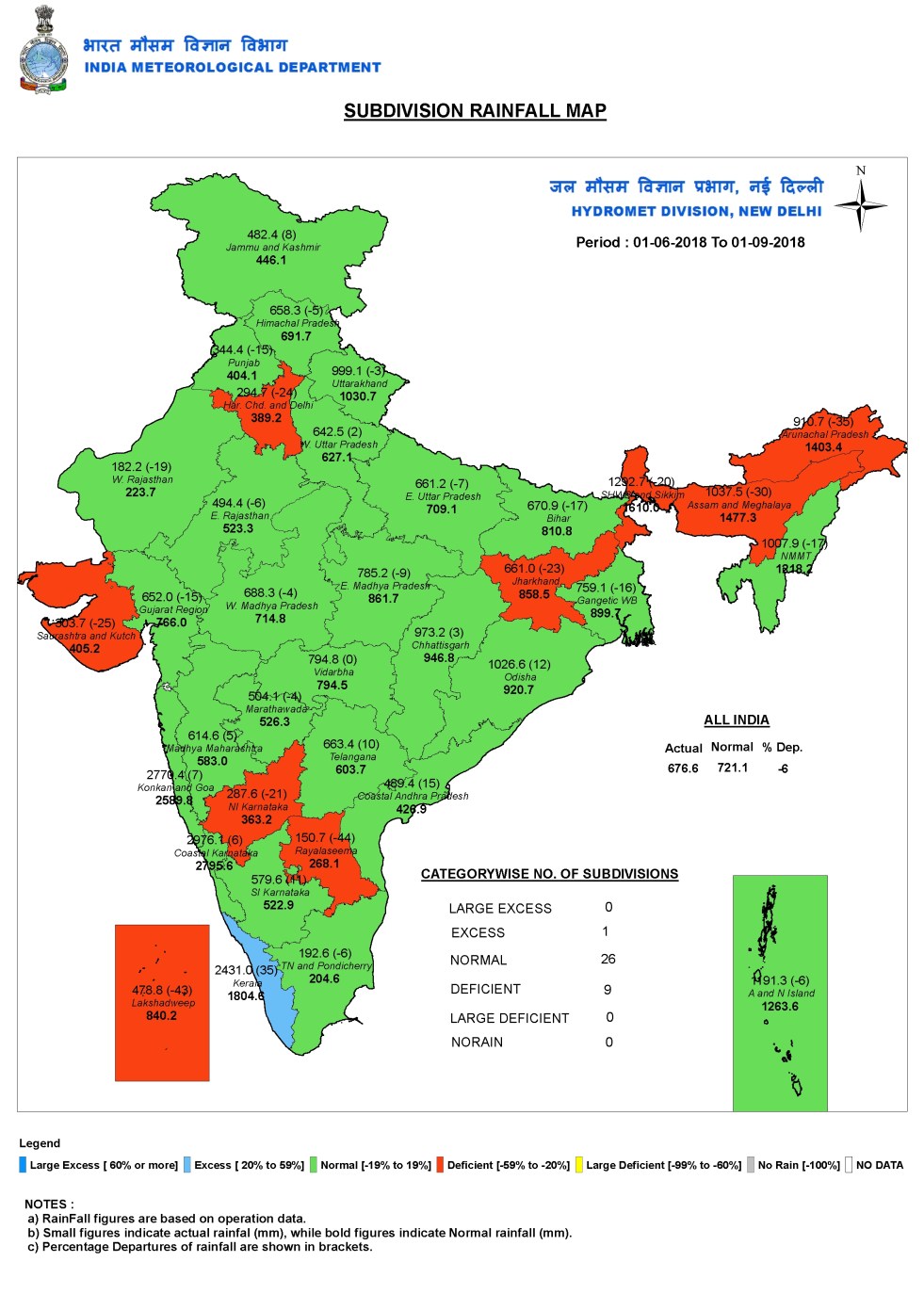
According to IMD, India is having normal monsoon this year, so far, as per rainfall till date (Sept 1, 2018). Against normal rainfall of 721.1 mm, India has received 676.6 mm rainfall, which is 6.2% below normal, considered within normal rainfall definition as per IMD. So India is having normal monsoon rainfall, says IMD. Let us check this against some ground realities.

However, East and North East India, one of the four regions for which IMD provides rainfall data, has so far had 27% below normal rainfall, while South India had 9% surplus rainfall.  Thus, while at all India level, what seems all normal, is average of different, though serious departures from normal rainfall. Let us say this is first level of mirage of normal rainfall. Continue reading “The mirage of normal monsoon”

Maharashtra · Monsoon

Maharashtra Monsoon Musings – July 2018

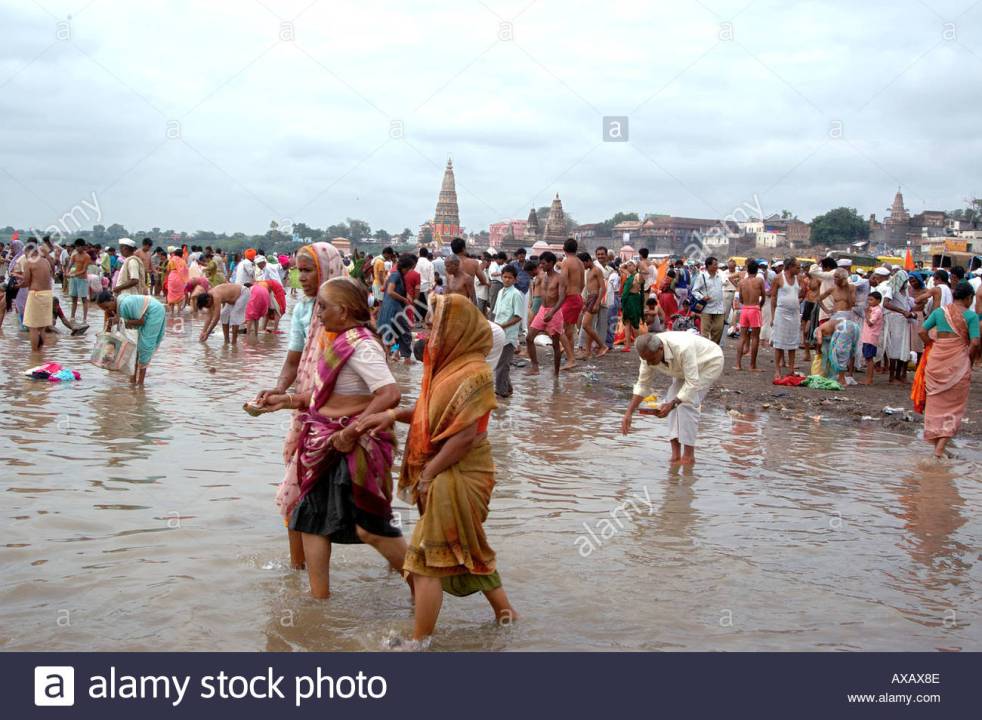
Maharashtra celebrates Ashadhi Ekadashi today[i], also called Dev Shayani Ekadashi, when god Vishnu went to sleep. Ashadhi Ekadashi is a cultural phenomenon in Maharashtra, holding a special place in the hearts of devotees and atheists alike. This is the day when the Vaari, a travelling caravan of devotees reach Pandharpur, the abode of Pandurang or Vitthal from various places in the state. Pandurang is a special god himself. He is the loving god of the farmers and cattle herders and the toiling masses of the state.  People travel to Pandharpur with tradition attire and gaiety. Ashadhi Ekadashi is supposed to fall right in the middle of monsoon as coughing Parineeta told me in the morning, enjoying the Pune rains. She also said that Farmer leader Sharad Joshi used to be unhappy with this festival as farmers left behind their fields right in the sowing season to go for the Pandharpur Vaari, away from their fields for days at end. Festivals are always fun though. Continue reading “Maharashtra Monsoon Musings – July 2018”

Maharashtra · Rivers · Urban Water Sector

India Urgently Needs Urban Water Policy: River Front Development Kills the Rivers

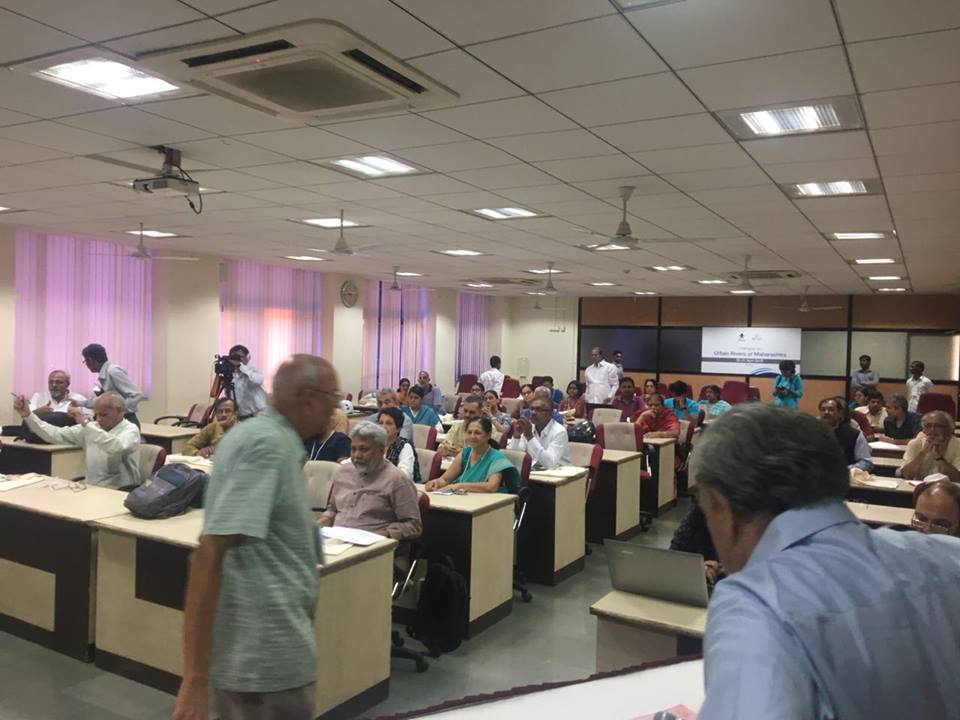
In the conference, “Dialogue on Urban Rivers of Maharashtra”, experts on water and rivers from all over the country strongly expressed their views and unanimously agreed that, “Pune River Front Development Project is certainly going to cause a disaster.” The conference also underlined the need for and decided to work for Urban Water Policy for Maharashtra and India.

The conference was jointly organised on 20 and 21st April at YASHADA by Indian National Trust for Art Culture and Heritage (INTACH – Pune Chapter) and South Asian Network for Rivers Dams, Rivers and People (SANDRP). Experts from Delhi, Andhra Pradesh, Gujarat, Madhya Pradesh, Karnataka and various parts of Maharashtra attended the conference. Continue reading “India Urgently Needs Urban Water Policy: River Front Development Kills the Rivers”

Maharashtra · Rivers · Urban Water Sector

Pune Dialogue on Urban Rivers of Maharashtra on April 20-21, 2018

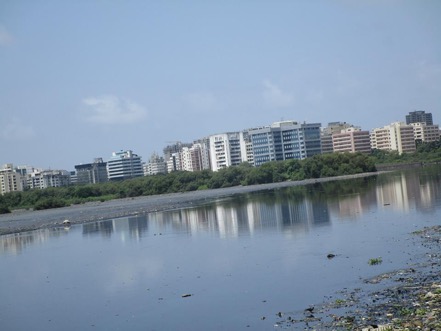
The health and future of our country is critically dependent on the health of our rivers. To compromise upon our rivers’ health is to endanger our own existence and future. Most of the urban rivers[1] in Maharashtra are in poor state affected by problems like pollution, with little or no biodiversity, little or no flow during most of the year, encroachment, dumping of waste, concretization and sometimes even mining. Water pollution from Urban Industrial effluents is a serious problem for the river, floodplain as well as ground water. With unplanned development, as the floodplains and riverbeds are being encroached, we are experiencing increased intensity and frequency of floods and flash floods. This can lead to an increasing possibility of water scarcity, depletion of groundwater levels and drought in spite of rains. Continue reading “Pune Dialogue on Urban Rivers of Maharashtra on April 20-21, 2018”

Dams

WORLD WATER DAY 2018: INDIA’S POSITIVE WATER STORIES

On occasion of World Water Day 2018, SANDRP put together reports of remarkable water conservation work done by individuals, villager community and organizations across the country.

Good that UN report this WWD says[i]: “The efforts by local communities in India to improve water availability have been lauded in a UN report that highlights the importance of finding nature-based solutions to meet global water challenges…. The report notes that reservoirs, irrigation canals and water treatment plants are not the only water management instruments at disposal. It also cited the example of China’s Sponge City which aims to recycle 70 per cent of rainwater.”

Image result for un wwd 2018 nature based water solution report

But the UN report[ii] does not mention that local options should be the top priority and should be exhausted before going for large projects. Unfortunately, Indian water resources establishment’s priority is Large dams and river linking. The UN report also does not say that local systems are bound to be neglected and destroyed in the shadow of large projects and where the governance is top down, unaccountable, non transparent and non participatory.

Continue reading “WORLD WATER DAY 2018: INDIA’S POSITIVE WATER STORIES”

Dams · DRP News Bulletin

DRP News Bulletin 19 March 2018 (PM Abandons Inauguration of Mapithel Dam in Manipur Following Protests)

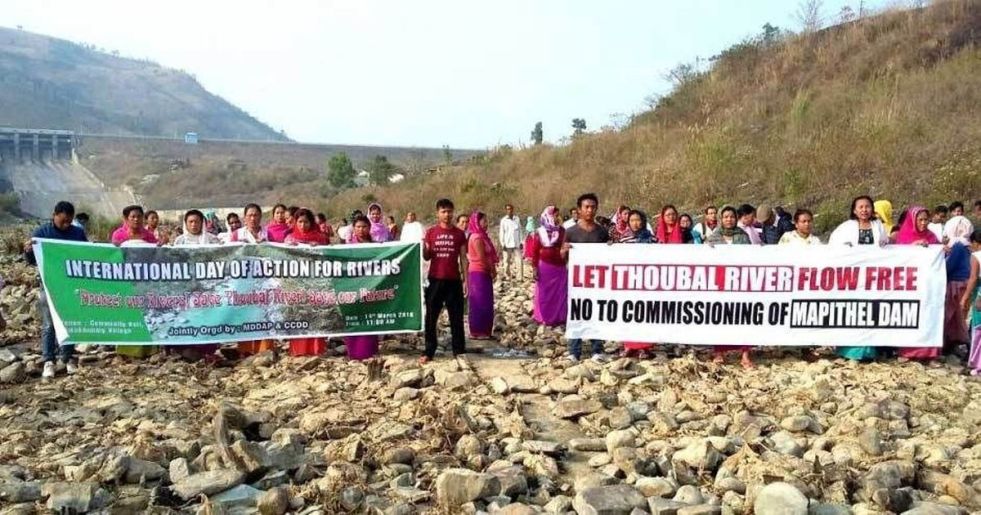
In an important development in Manipur this week, PM Narendra Modi could not commission the controversial Mapithel dam due to local protest. As per, the official statement notifying The PM was  was supposed to launch is the Mapithel dam, part of the Thoubal Multipurpose Project.

As per CRA Manipur blog report, the forum of Mapithel dam affected “Joint Action Committee Against Forced Inauguration of Mapithel Dam had threatened a 48-hour shutdown to coincide with the dam’s scheduled inauguration by Modi. The committee withdrew its call late on March 14, reportedly after the Manipur government agreed to shelve the inauguration.

The action committee is primarily demanding compensation for the people displaced by the project as mandated by the Right to Fair Compensation and Transparency in Land Acquisition, Rehabilitation and Resettlement Act, 2013.

Apart from complaints of inadequate compensation, opposition to the commissioning of the dam itself has grown louder over the years. Local communities claim the project violates the Forest Conservation Act of 1980 and its new avatar, the Forest Rights Act of 2006.  https://cramanipur.wordpress.com/2018/03/16/as-local-communities-protest-manipur-government-cancels-plan-of-modi-inaugurating-mapithel-dam/

Continue reading “DRP News Bulletin 19 March 2018 (PM Abandons Inauguration of Mapithel Dam in Manipur Following Protests)”

Dams

Maharashtra Rivers Review 2017: Multi-colored Rivers!

About Rivers Pollution and Pollution Control Board

Highest number of polluted rivers Maharashtra state has 49 polluted river stretches, highest in the country, which including Mithi, Ulhas, Vaitarna, Godavari, Bhima, Krishna, Tapi, Kundalika, Panchganga, Mula-Mutha, Pelhar and Penganga. 3,000 MLD of untreated sewage and industrial effluents are discharged into the state’s water bodies daily. http://www.hindustantimes.com/mumbai-news/pollution-in-three-maharashtra-rivers-is-nine-times-permissible-limit/story-RCuTrl8zi8tmFoOvgKR2zI.html(Hindustan Times, 16 Nov. 2017) 

According to a report by Union Environment Ministry, Maharashtra generates about 8,143 Million Liter per Day (MLD) which is almost 13 per cent of the country’s sewage, butclaims to treats 5,160.36 MLD.In this way Maharashtra is releasing at least 3000 MLD untreated sewage in rivers, creeks and wetlands areas. http://www.hindustantimes.com/mumbai-news/834-factories-across-maharashtra-shut-down-in-2-years-for-causing-pollution-mpcb/story-MrmmXa9XH9Vdkzu2wKSdcL.html (Hindustan Times, 22 Dec 2017)

Continue reading “Maharashtra Rivers Review 2017: Multi-colored Rivers!”

Maharashtra · Mithi · Mumbai

The Hype, Hypocrisy and reality of Mumbai River Anthem

Above: Dahisar river inside SGNP Photo Aslam Saiyad

Guest Blog by Aslam Saiyad

While documenting the work of the River March organisation[i], whose goal was to rejuvenate Mumbai’s rivers, I came across Adivasi communities who lived inside the Sanjay Gandhi National Park (SGNP). I noticed some children standing in school uniforms a few kilometers inside the park. They were getting ready to go to a school which was 7km away. And it surprised me because people living in one of the world’s richest municipalities didn’t have a basic mode of transportation to go to school. Continue reading “The Hype, Hypocrisy and reality of Mumbai River Anthem”

Dams

India’s National Register of Large Dams: Shows how little we know about our dams

The Central Water Commission (CWC) of India’s Union Ministry of Water Resources periodically updates India’s National Register of Large Dams (NRLD), the latest edition seems to have been put up recently[i]. Significantly, this latest edition reports huge jump in number of large dams in India, compared to the previous editions from 2009 that SANDRP has been monitoring. The 2009 edition of NRLD had 5100 large dams and the editions from 2012 to 2016 had listed 5190 to 5170 large dams, but the 2017 edition suddenly reports that now India has 5701 large dams, a jump of over 510 from the editions in last five years. This shows that neither states had been reporting correct figures of number of large dams in India, nor was CWC bothered to collect correct basic information about large dams. Continue reading “India’s National Register of Large Dams: Shows how little we know about our dams”