Dams

Open Letter to Chief Minister of Maharashtra: Stop Westwards diversion of water from Krishna basin

OPEN LETTER TO HON. CHIEF MINISTER OF MAHARASHTRA:

Water Diversion from Krishna basin by Koyna and Tata Dams:

Maharashtra is violating Human Rights, National & State Water Policy

August 18, 2015

Dear Shri Devendra Fadnavis,

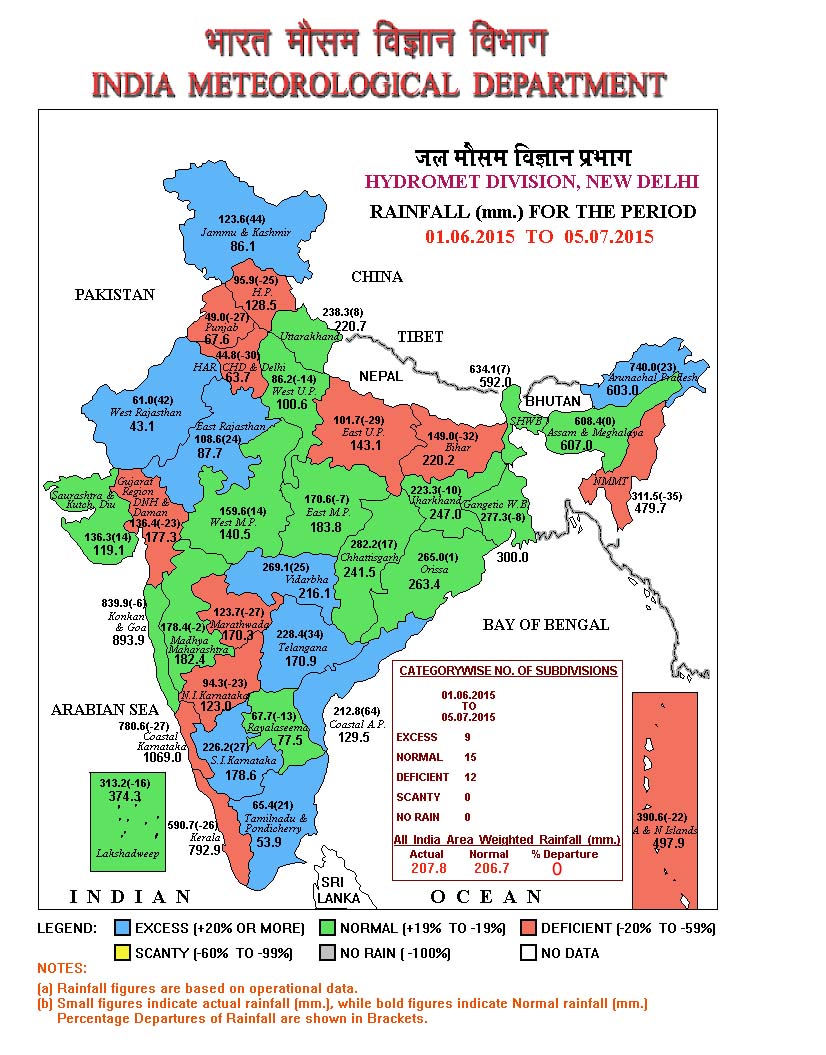
As we all know, large parts of Maharashtra, including Marathawada and Western Maharashtra (part of IMD division called Madhya Maharashtra) are in the grip of biggest monsoon deficit in the country with deficits of 48% and 33% respectively at the end of August 17, 2015 as per IMD[1]. Even beyond the state border, North Interior Karnataka has monsoon deficit of 45%, Rayalseema 36% and Telangana 23%.

Farmers in all these regions are in distress, rainfed Kharif crop, the only crop for most of them, may have been jeopardised for almost all of them. Most of the reservoirs have paltry storages, the biggest in the Krishna basin, Ujani in Maharashtra and Nagarjunsagar in Telangana (also catering to parts of Andhra Pradesh) have zero % in live storage, Srisailam has paltry 9%[2]. Millions of farmers and people are facing the prospects of livelihood loss and severe water scarcity.

While the situation is this serious in Krishna River Basin and adjoining basins, in Maharashtra, huge amounts of water is being diverted from the Krishna basin to the water surplus Konkan region which has seen close to 1600 mm rainfall already. This westward diversion of water from the east flowing Krishna-Bhima basin ultimately takes the water to Arabian Sea, while the Krishna basin, which should have the first right over this water, remains plunged in massive water scarcity. Krishna basin is thus being deprived of its water. Continue reading “Open Letter to Chief Minister of Maharashtra: Stop Westwards diversion of water from Krishna basin”

Dams

Tata Power responds on the issue of Tata dams diverting water from Drought hit Bhima Krishna basin to Konkan, but it is a vacuous, insensitive response

On the 7th August 2015, SANDRP published a Press Release titled “As Krishna Bhima basin farmers in Maharashtra, Karnataka, AP & Telangana face drought, crop failure, Water scarcity, Maharashtra DIVERTED 350 MCM water from the basin & stored another 2535 MCM reserved to release, literally to sea!”[1]. On August 9, 2015[2], DNA, a leading newspaper in Mumbai published a report based on this story as their front page top story titled “Drought? Last month alone Maha govt drained 350 MCM water into sea!” Continue reading “Tata Power responds on the issue of Tata dams diverting water from Drought hit Bhima Krishna basin to Konkan, but it is a vacuous, insensitive response”

Fish Sanctuaries · Maharashtra · Western Ghats

White Elephant, Black Fish

How a 15 MW project with 55 mts high dam threatens 5 villages and a fish sanctuary

After an analysis of a particularly nasty dam, I felt like going back to flowing rivers. It is monsoon after all. The plan was to visit Kal River in Western Ghats of Raigad District in Maharashtra to understand how a community in a small village called Walen Kondh is protecting the river and Mahseer fish. Mahseer (Deccan Mahseer, Tor tor) is classified as endangered as per IUCN classification and most wild Deccan Mahseer populations have been wiped out in India. And hence a small, out of the way place, protecting these fish as well as the river voluntarily was like a breeze of fresh air. Continue reading “White Elephant, Black Fish”

Dams

NHPC’s Chutak power house submerged in Kargil: NHPC clueless two weeks after the disaster

Power house of NHPC’s 44 MW Chutak hydropower project on Suru River in Kargil in Jammu & Kashmir was submerged on the night of June 28, 2015, two weeks later India’s premier hydropower company is still clueless about the cause. One of the costliest hydropower projects of India, the project in Indus basin was dedicated to the nation by Prime Minister Narendra Modi less than a year back on August 12, 2014. For several hours after the water started filling the powerhouse, the project officials were in the dark and media reported that it was locals who alerted the officials. Continue reading “NHPC’s Chutak power house submerged in Kargil: NHPC clueless two weeks after the disaster”

Hydropower · Uttarakhand

Why Vishnuprayag and other Uttarakhand Hydro Projects continue to affect two years after the June 2013 disaster

In the last week of June 2015, there were widespread rains in Uttarakhand, accompanied by warning by the Dehradun Met Department. The pilgrimage to Kedarnath and Badrinath was affected with massive landslides damaging roads and bridges. But strangely there was little news about the hydropower projects. It was only when Vimalbhai informed me y’day that power generation at Vishnuprayag hydropower project has stopped that I decided to dig deeper into this issue. Continue reading “Why Vishnuprayag and other Uttarakhand Hydro Projects continue to affect two years after the June 2013 disaster”

Dams · Dams, Rivers & People

Dams, Rivers & People: July 06, 2015

HYDROPOWER

NORTH-EAST: ARUNACHAL PRADESH: 4 hydroelectric projects including 2000 MW Subansiri denied environmental clearance (02 July 2015) ” The committee also noted that public hearings for the projects had not been conducted and asked the power developers to submit response to the various issues raised by the New Delhi-based NGO South Asia Network on Dams, Rivers and People.” http://www.telegraphindia.com/1150702/jsp/northeast/story_29019.jsp#.VZXfvqRdz5d Continue reading “Dams, Rivers & People: July 06, 2015”

Alaknanda · Bhagirathi · Floods · Ganga · Mandakini · Ministry of Environment and Forests · Uttarakhand

Two years of Uttarakhand Flood Disaster of June 2013: Why is state & centre gambling with the Himalayas, the Ganga & lives of millions?

Its two years since Uttarakhand faced its worst ever flood disaster during June 15-17, 2013. We remember such tragedies to ensure that we learn the necessary lessons. So that in future such tragedies are not repeated or their dimensions are reduced. One of the enduring debates since that the Uttarakhand tragedy has been about the role of existing and under construction hydropower projects in increasing the proportions of the disaster.

A lot of water has flown down the Ganga in these two years, so let us revisit the important milestones of that debate. Within two months of the disaster, a bench led by Justice Radhakrishnan gave an order on Aug 13, 2013[1], asking the Union Ministry of Environment, Forests & Climate Change (MoEF&CC) to appoint an independent panel to assess the role played by existing and under construction hydropower projects in the disaster. Continue reading “Two years of Uttarakhand Flood Disaster of June 2013: Why is state & centre gambling with the Himalayas, the Ganga & lives of millions?”

Nepal

Nepal’s Everest sinking 7.9 Earthquake of April 25-2015: Himalayan warning

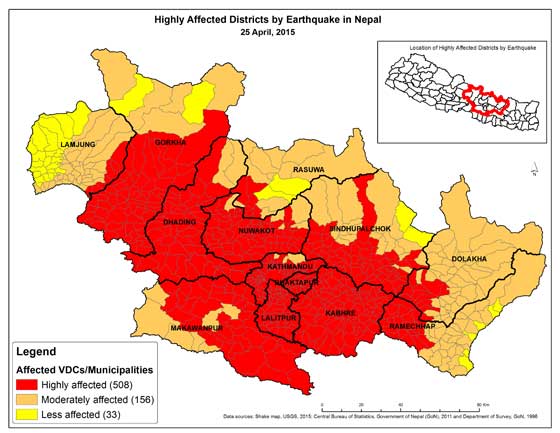
The massive Nepal earthquake of 7.9 intensity (Richter scale) on April 25, 2015 with epicenter 77 km north-west of Kathmandu in Nepal is a major noteworthy event in the Himalayas which also has warnings for what is in store for future. The earthquake left a major trail of destruction affecting over 20 districts of Nepal, of which 8 million live in 11 severely affected districts. Besides, it affected areas of India (Bihar, UP, W Bengal, Sikkim, Assam), Bangladesh, Tibet. The earthquake has now been given the official name of Gorkha Earthquake.

Continue reading “Nepal’s Everest sinking 7.9 Earthquake of April 25-2015: Himalayan warning”

Bhutan · Hydropower

Changing profile of India’s Hydro Power Import from Bhutan

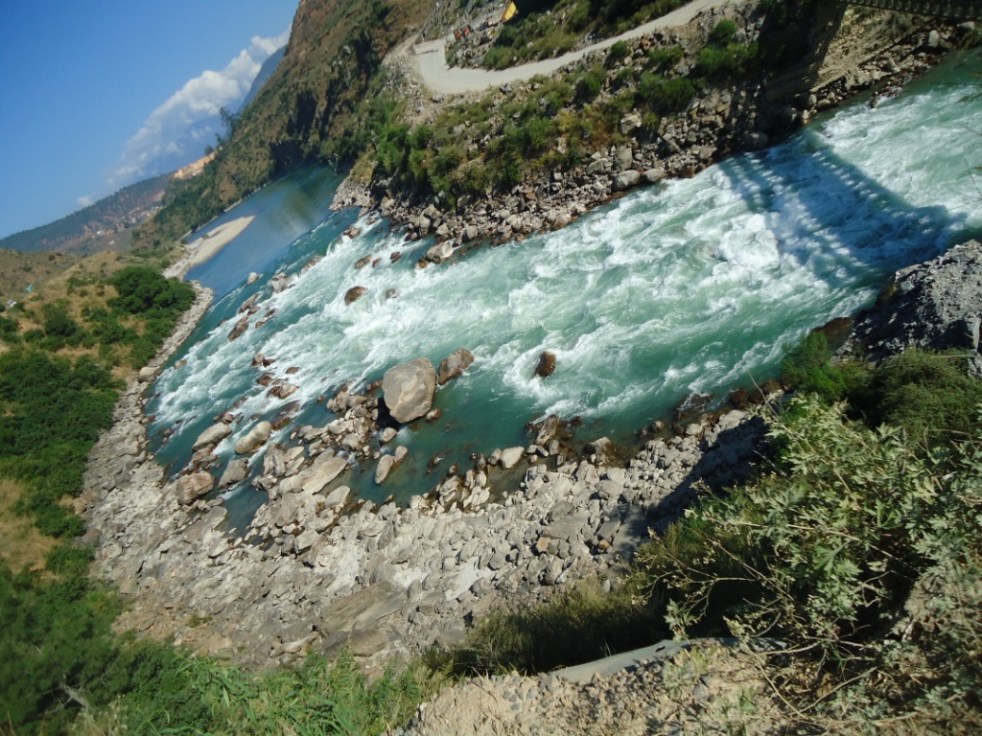
Punatsanghchu River in Bhutan, All Photos by SANDRP

Prime Minister Narendra Modi has been saying to Nepal and others that Bhutan is a good example to show how a country can prosper from hydropower generation and export. During his trip to Bhutan in June 2014, soon after taking over as Prime Minister of India, he said, “Our Hydropower cooperation with Bhutan is a classic example of win-win cooperation and a model for the entire region.”

However, this hydropower import by India from Bhutan is not a new development. Central Electricity Authority under Union Ministry of Power provides[1], in its monthly reports, power import from Bhutan, these figures are available since 2005-06. Continue reading “Changing profile of India’s Hydro Power Import from Bhutan”

Hydropower Performance

Diminishing Returns from Large Hydropower projects in India

 Above: Graph showing how the power generation per MW installed Hydro Capacity has been doing down over the last two decades

As per the latest power generation figures just released by the Central Electricity Authority[1] the hydropower generation during the just concluded Financial Year 2014-15 was 4.25% lower than the previous year’s generation even though the installed capacity has gone up. Average generation per MW of hydro capacity in India in 2014-15 was over 20% less power than what our average generation was in 1993-94. More worryingly, the hydropower generated per MW installed capacity continues its downward slide, the downward slide has been going on for now over two decades. Continue reading “Diminishing Returns from Large Hydropower projects in India”