Dams · DRP News Bulletin

DRP News Bulletin 22 October 2018: Looming Drought in Western India

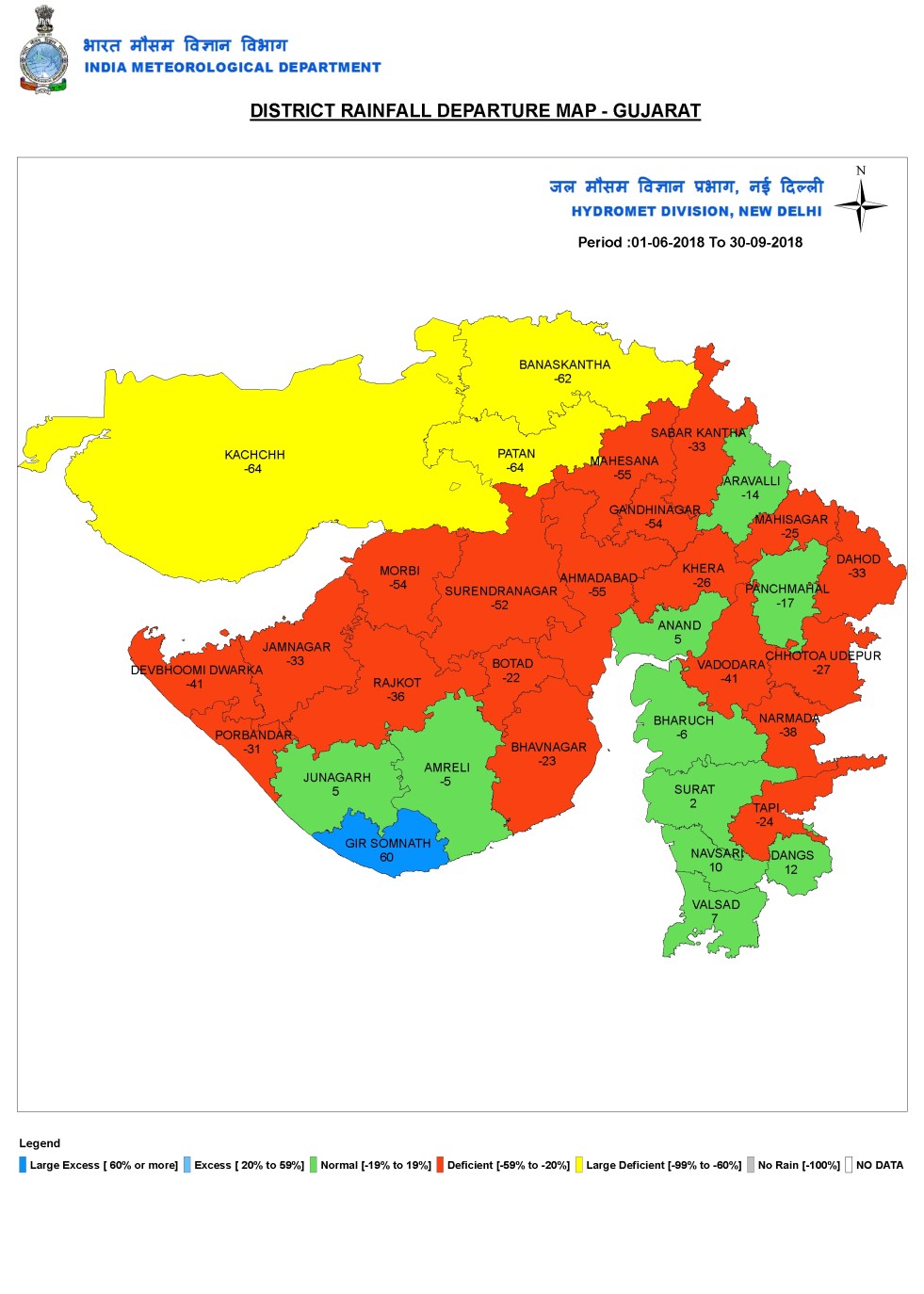
(Feature image Gujarat state cumulative rainfall during SW monsoon 2018; Source: IMD)

Maharashtra State’s groundwater surveys and development agency (GSDA) has warned of a water scarcity in 11,487 villages of 167 tehsils in the State. In its 2018-19 report, the GSDA, which comes under the department of water supply and sanitation, has said the study of the groundwater level (in comparison to the level in October in the last five years) has shown that of the 353 tehsils in the State, 13,984 villages in 252 tehsils have shown a decrease by more than one metre.

Between October 15 and 21, 380 tankers were used across the State, against 91 tankers in the corresponding period last year. A week prior to that the number was 354, and 329 tankers were used in the first week of October.

Continue reading “DRP News Bulletin 22 October 2018: Looming Drought in Western India”

Dams · Ganga

HOW MODI GOVERNMENT WENT HORRIBLY WRONG ON GANGA REJUVENATION

Guest Blog by Manoj Misra

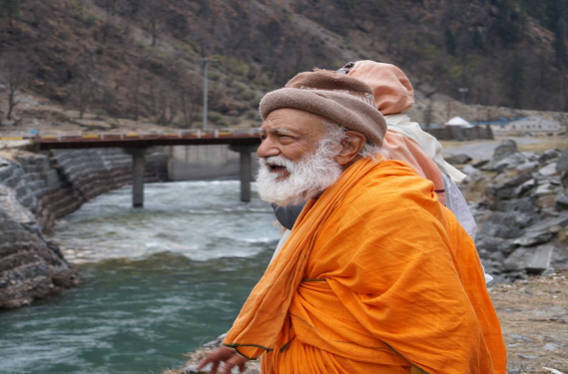
Allowing Swami Gyan Swarup Sanand (formerly Prof. GD Agarwal) to die unheard is perhaps the most tragic but not the only serious faux pas committed by Prime Minister Modi and his team in the matter of Ganga rejuvenation. It was actually the culmination of a series of missteps that began early in his tenure.  

It can reasonably be presumed that candidate Modi was sincere and serious when he made those famous statements at Varanasi during his campaign (and even later) regarding Ganga rejuvenation. They seemed straight from his heart and seemed to be convincing to many. Everybody thought, “Here is a Prime Minister, who does not – contrary to his predecessor – need goading to make all the right noises”. Hopefully these noises shall result into right actions as well. So much so that Swami Sanand waited almost four years before making his discomfort on lack of any worthwhile progress on Ganga rejuvenation known directly to the Prime Minister. He wrote a number of letters before and after embarking (beginning 22 June 2018) on his legendary 111 day fast that ultimately led to his martyrdom on 11 Oct 2018.

Continue reading “HOW MODI GOVERNMENT WENT HORRIBLY WRONG ON GANGA REJUVENATION”

Dams · DRP News Bulletin

DRP News Bulletin 15 October 2018: Reuters Corroborates that Dams Played Major Role in Kerala Floods

International news agency, after independent research, have corroborated what SANDRP has been saying: Mismanagement of dams played big role in worsening Kerala floods.

-“The release could have started earlier so that by Aug. 9 there would have been left-over capacities in the reservoirs to store the water,” said Biswajit Mukhopadhyay, director of water resources at U.S-based engineering firm IEA, who analysed some of the publicly available data at the request of Reuters.

– Still, dozens of flood victims interviewed by Reuters, who live in villages dotting the banks of Kerala’s biggest river, the ‎244 km Periyar, say they faced no floods despite torrential rain in late July and early August. All of them said waters only rose overnight on Aug. 15. That was when more intense rainfall forced KSEB to rapidly ramp-up releases of water from Idukki and Idamalayar reservoirs, which feed into the Periyar.

– Kerala’s revenue secretary and head of disaster management, P.H. Kurien, told Reuters he has twice written to KSEB requesting EAPs and has yet to receive them. KSEB’s Pillai said EAPs and dam operation manuals were still being prepared. CWC said it was working with Kerala’s government to speed this up. The Kerala Chief Minister’s office did not respond to requests for comment. https://widerimage.reuters.com/story/did-dams-make-indias-once-in-century-floods-worse  (11 Oct. 2018)

And this fantastic infographic: https://fingfx.thomsonreuters.com/gfx/rngs/INDIA-FLOOD/010080MF18N/index.html  (11 Oct. 2018)

Continue reading “DRP News Bulletin 15 October 2018: Reuters Corroborates that Dams Played Major Role in Kerala Floods”

Dams · DRP News Bulletin

DRP News Bulletin 8 October 2018: “WELCOME CHANGE! Kerala Depletes Reservoir in Anticipation of Deluge from Cyclone”

In spite of all the protests against criticism of Floods worsened by Dams in Kerala in Aug, its refreshing that Kerala now accepts needs for better operation of dams with IMD red alert in three districts:

– Senior officers expressed confidence that the dams can contain the flood waters even if it rains continuously for four days. Better late than never, commented experts on the Kerala State Electricity Board’s (KSEB) decision to keep the water level low. “We’re prepared to face any eventuality. There won’t be any need to open the dam shutters even if it rains continuously for four days. We’re maintaining the water level low in major dams. The water level in Mattupatty dam is close to the full reservoir level and we’ve decided to release water from Thursday. The situation is under control and there’s no need to panic,” said KSEB chairman N S Pillai. Continue reading “DRP News Bulletin 8 October 2018: “WELCOME CHANGE! Kerala Depletes Reservoir in Anticipation of Deluge from Cyclone””

Dams · DRP News Bulletin

DRP News Bulletin 24 September 2018: If NGT Can’t Provide Environment Justice…

Unless immediate corrective action is taken, the NGT which has till recently served as an institution to provide environmental justice, will increasingly become an institution to perpetuate environmental injustice. If this is to happen, it will be a sad day for both India’s environment and democracy; writes Ritwick Dutta.

– Last few months have seen a massive decline in public confidence in the NGT. The first wake-up call was in July when the new chairperson of the NGT commented that around 50% of the petitions before the tribunal were filed by “blackmailers”. Nothing could be more distressing because this comes from an institution that was created to protect the rights of the people. Recently, the decision of the chairperson of NGT to rehear 18 cases, which were reserved for judgment, has raised concerns about both propriety as well as legality.

– The NGT, over the last two months, seems to have evolved four approaches to deal with litigations. First, dispose of existing cases. Second, form committees, comprising mostly people who were responsible for the problem, and outsource even adjudicatory functions. Third, refuse to entertain matters on the ground that the govt has approved the project or other hyper-technical grounds. And finally, rehear cases which were earlier reserved for judgment.

– One is not expecting the NGT to always give judgments in favour of those who approach it for protecting the environment. Rather, the cause for concern is the general reluctance of the tribunal to hear matters on merit, to consider the decision of the govt as virtually sacrosanct and submissions of project proponents as cast in stone. It must not be forgotten that the NGT is not a special tribunal, but a specialised tribunal set up to adjudicate on complex environmental issues through the use of both judicial and technical expertise.

Continue reading “DRP News Bulletin 24 September 2018: If NGT Can’t Provide Environment Justice…”

Dams · DRP News Bulletin

DRP News Bulletin 10 September 2018: NIDM Lecture on Role of Dams in Kerala Floods

National Institute of Disaster Management, Ministry of Home Affairs, Govt of India invited Himanshu Thakkar, Coordinator of SANDRP,  to speak on the topic at IHC on Saturday. At the packed hall with participants that included members from Central Water Commission, National Disaster Management Authority, Embassies, Media and Civil Society,  the speaker explained how unwise and  unaccountable operation of dams, violating all norms, hugely contributed to the proportions of the Kerala flood disaster. Giving the example of Idukki dam, he showed, how if the dam was operated as per rule curve,  its contribution to the floods could have been reduced by over 50%. Similar is the story of other dams in Kerala.

Continue reading “DRP News Bulletin 10 September 2018: NIDM Lecture on Role of Dams in Kerala Floods”

Dams, Rivers & People

DRP News Bulletin 20 August 2018: While Kerala Is Recovering From Unprecedented Flood Disaster, Will It Be Cauvery Or Krishna Basin Next?

Well-known ecologist Madhav Gadgil, founder of the Centre for Ecological Sciences at the Indian Institute of Science, Bengaluru, has described the devastating floods in Kerala as a man-made disaster and a reaction to the illegal excavations and stone quarrying done over a decade. https://www.hindustantimes.com/pune-news/illegal-forest-land-acquisition-major-reason-for-floods-in-kerala-says-ecologist-madhav-gadgil-calls-it-man-made-disaster/story-vMHPKUH623GEnjyQHI09NP.html  (19 Aug. 2018)

Further speaking to various regional media, Madhav Gadgil has said that irresponsible environmental policy is to blame for the recent floods and landslides in Kerala. He also called it a “manmade calamity”. He said that the committee report had recommended to protect the resources with the cooperation of local self-govt and people, but those recommendations were rejected.

He also pointed out that quarrying is a major reason for the mudslides and landslides. Other environmentalists also point fingers at the extensive quarrying, mushrooming of high rises as part of tourism and illegal forest land acquisition by private parties as major reasons for the recent calamity. https://energy.economictimes.indiatimes.com/news/power/kerala-floods-the-ghost-of-past-environment-policy-returns/65436707  (17 Aug. 2018)

Dams should never be filled before the end of the monsoons. Because then one doesn’t have any solution but to release the water in the surrounding areas: Himanshu Thakkar, SANDRP says as one of panellist discussing role of dams in aggravating Kerala floods.

https://twitter.com/ETNOWlive/status/1030487469320355840

Also see, NDTV discussion on Kerala flood crisis, it included SANDRP coordinator:

https://special.ndtv.com/kerala-floods-42/video-detail/kerala-floods-non-stop-special-coverage-of-the-unfolding-crisis-491815  (19 Aug. 2018)

Here is NDTV Hindi discussion on Kerala flood crisis, included SANDRP coordinator:

https://khabar.ndtv.com/video/show/ndtv-special-ndtv-india/ndtv-special-coverage-on-kerala-rain-crisis-491820  (19 Aug. 2018)

Here is admission about sudden, excessive releases and not foreseeing the coming disaster. The Kerala crisis could have been contained had the state “gradually released” waters from at least 30 dams, officials said, adding that the local authorities failed to foresee the imminent danger with high rain prediction. “Such floods have probably recurred after 100 years, exposing the state’s unprofessionally run reservoir management system and unpreparedness on disaster mitigation and disaster resilience, an official pointed out. https://timesofindia.indiatimes.com/city/kochi/gradual-dam-water-release-could-have-contained-crisis/articleshow/65436339.cms  (17 Aug. 2018)

Continue reading “DRP News Bulletin 20 August 2018: While Kerala Is Recovering From Unprecedented Flood Disaster, Will It Be Cauvery Or Krishna Basin Next?”

Dams · DRP News Bulletin

DRP News Bulletin 13 August 2018: Existing Sediment Management Draft Policy Promoting Navigation & Not Rivers’ Health

Traditionally, our river management strategies are mainly focused on the water flows, including flood management, and these have resulted in various interventions such as dams, barrages, canals and embankments. Most of these interventions have had very little consideration for sediment transfer and even if they did, they were generally defunct within a few years of their operations either due to improper design or inadequate maintenance.

A long-term sediment management strategy has never been a part of any protocol of river management, not just in India, but in several other parts of the world. It is amply clear that sediment management must form an important component of management strategies for the Himalayan rivers. The Union Water Ministry has recently circulated a draft policy on sediment management.

Continue reading “DRP News Bulletin 13 August 2018: Existing Sediment Management Draft Policy Promoting Navigation & Not Rivers’ Health”

Dams · DRP News Bulletin

DRP News Bulletin 6 August 2018 (2018 is Deficient Monsoon for Lakhs of Farmers)

(Feature Image: IMD Sub-Division wise Weekly Rainfall Map 26 July – 1 Aug. 2018)

Amid news of monsoon being normal, farmers in several parts in the country have started facing irrigation water problems affecting sowing of Kharif crops. Apart from, insufficient rainfall, mismanagement of water resources is turning the situation grim for them.  

As per reports, water levels in Bhakra and Pong dams in Himachal has plunged to lowest in decades. As a result dam authority has issued advisory to lakhs of farmers in Haryana, Punjab and Rajasthan to use water judiciously. Some official also said that the beneficiary states lacks efficient water management practices which is making the situation tough for them.

The Sri Ram Sagar Project in Telangana has no irrigation water. As per state water minister, a Rs. 1100 crore work was going on to renovate the dam. Meanwhile farmers of about 24 villages have started protest demanding irrigation water form SRSP for their standing crops. Given the tense situation, the State Govt has deployed heavy police forces to control farmers agitation.

At the same time, farmers in North Gujarat farmers have lost 40% of sown crops particularly in Ahmedabad, Morbi and Surendranagar. Non availability of Narmada waters have added to the problems. It is worth to mention that mismanagement of water during past four months in Narmada dam by the authority, has worsened the plight of farmers. Meanwhile, there are reports of furious Surendranagar farmers themselves opening the dam gates going against authority.

Similarly, lack of rainfall in Beed district which is part of Marathwada in Maharashtra has affected the rural population badly. In fact, the rainfall situation in a fourth of India, including Bihar and Uttar Pradesh, was in stark contrast to the rest of the country. Overall, the southwest monsoon in 2018 was only 2 % below normal by July, 27.

The southwest monsoon in Bihar was almost 40 % below normal till July 27 and the state was set to be formally declared ‘drought-hit’. It is worth to mention that the monsoon scenario seems less than reassuring, based on Skymet latest forecast and reading between the lines of IMD Aug. 3, press release.

Continue reading “DRP News Bulletin 6 August 2018 (2018 is Deficient Monsoon for Lakhs of Farmers)”

Dams · DRP News Bulletin

DRP News Bulletin 23 July 2018: Landmark CAG Reports on DAM FLOODS & Ineffective; Costly Mega Irrigation Projects

In its latest report, the Comptroller and Auditor General (CAG) has questioned implementation of sixteen National Irrigation Projects. Before this, the CAG has held mismanagement in dams’ operation responsible for Chennai floods in 2015. Both these reports are available on its website now.

The CAG report on National Irrigation Projects, tabled in Parliament on July 20, has revealed that sixteen major multi-purpose water projects, taken up on an expeditious basis about a decade ago, are nowhere near completion, with no work being undertaken in as many as 11 projects despite the incumbent govt’s much-wanted focus on improving irrigation facilities in the country.

The report also mentioned that out of the 16 projects, undertaken under the Accelerated Irrigation Benefits Programme (AIBP) in Feb 2008, only five projects with estimated irrigation potential of 25.10 lakh hectares were under implementation and even these projects suffer from 8 to 99 per cent shortfall in physical progress, the CAG said. The remaining 11 projects with estimated irrigation potential of 10.48 lakh hectares are yet to commence and are at different stages of approval.

Continue reading “DRP News Bulletin 23 July 2018: Landmark CAG Reports on DAM FLOODS & Ineffective; Costly Mega Irrigation Projects”